Acta Med. Nagasaki. 19: 19-35
Biosynthesis of Phosphoglycerides and Neutral Glycerides in Rabbit Lung
Hidetaka KOGA*
Second Department of Internal Medicine, Nagasaki University School of Medicine, Nagasaki, Japan
Received for publication, January 30,1975
Biosynthesis pathway of phosphoglycerides and neutral glycerides in the lung was studied in this paper. Especially, the time course of incorporation of 14C-glycerol into triglyceride (TG), diglyceride (DG), phosphatidylcholine (PC), phosphatidylethanolamine
(PE), phosphatidic acid (PA) and glycerophosphate (GP) were studied in order to make clear the pathway of biosynthesis of these lipids in the lung, and they were com- pared to the liver. The following observations were made: 1) the amount of 14C-glycerol that was incorporated into hole lipids of the lung slices for 120 minutes was about 1/3 of that of the liver slices. 2) In the liver slices, TG synthesis was the most. In the lung slices, on the other hand, PC synthesis was the most but TG synthesis was very low.
The biosynthesis of PC of the lung slices was equal to, or might be slightly excellent to that of the liver slices in the same wet weight. 3) The time course of incoporation of the isotope into DG of the lung slices suggested strongly that DG was a direct precursor of TG, PE and PC. But it seemed that PA might not be a precursor of these glycerides in the lung slices, according to it's time cuorse. 4) From the point of the time cuorse of incorporation of the isotope into PA in the lung homogenates, it became to be almost sure that PA was a precursor of TG, PE and PC. The time cuorse of radioactivity of glycerol, GP and PA, and the relation of the each time cuorse strongly suggested that
there was a pathway as follows: glycerol → glycerophosphate → phosphatidic acid. 5)
These findings suggest that the pathway of de novo synthesis of lipids in the lung is as
follows: glycerol → glycerophosphate → phosphatidic acid → diglycerid → triglycerid and
phosphoglycerides. Namely, it becomes sure that phosphoglycerides and neutral glycerides of the lung are producted through Kornberg's pathway and Kennedy's pathway as same as the liver.
*古賀 秀 隆
INTRODUCTION
The lung is the sole organ that performs external respiration, and on this problem many investigations have been done. Recently, it has become to be discussed frequently that the lung has a considerable activity in metabolism of some important substances. Lipid metabolism in the lung"') is one of the important problems which must be made clear. Neutral lipids are important substances for energy of work of cells, and phospholipids are also important substances to constitute cell wall and membrane of subcellulal organera. Moreover, in the lung, phospholipids (especially phosphatidyl- choline) is the most important element of pulmonary surfactants3)4>5)s>7>s>
Biosynthesis pathway of neutral glycerides and phosphoglycerides of the liver was almost established by K ORNBERG A9) . , KENNEDY A. E10) . , LANDS W. E. M11). and MARINETTI G. V12). as follow : glycerol -+glycerophosphate---phosphatidic acid -+diglyceride -+triglyceride and phosphoglycerides . BJORNSTAD P13). suggested that lecithine was synthesized in rat lungs, by using labeled choline.
SPITZER H. L.14). suggested that Kennedy's pathway was the main pathway of lecithine biosynthesis in the lung.
ABE M. and AKINO T.15>'6 investigated the heterogenesity of lipid biosynthesis between the liver and the lung. They advocated that dipalmitoillecithine might be synthesized by the way of the pathway of transacylation between two lysolecithine molecu- les, but Kornberg's pathway was not made clear in the lung.
Namely, roles of glycerophosphate and phoshatidic acid as precursors in lipid bio- synthesis of the lung were not suggested in any literature. WIELAND 017). states in his literature that glycerokinase activity is scanty in the lung, and MARINETTI G. V18 points out it. KATOH Y19). observed that phosphatidic acid increased in troiolein-fed rat lung.
This paper describes the investigation on a lipid biosynthesis pathway in the lung, especially on roles of glycerophosphate and phosphatidic acid in the pathway, and they are compared to the liver.
METHODS Preparation of slices and incubation
Adult male white rabbit, weighing from 1.2 kg to 1.4 kg, were selected for the present investigation, and were fed with regular stock diet. They were anesthetized with sodium pentobarbital (25-30 mg per kg) intravenously and killed by exanguination after fasting for 36 hours. The lung or the liver were removed and immediately washed twice with cold Krebs-Ringer bicarbonate buffer (KRB buffer, pH 7.4).
These organs were caved to several blocks and then sliced by means of a Stadie- Riggs tissue slicer. The tissue slices were rinsed twice in ice-cold KRB buffer and weighed after excess buffer have been removed by blotting with filter paper.
The basic incubation system. consised of the following : 500 mg of tissue slices, 2.5
uMols of (1-14C) -glycerol, 5 ml of KRB buffer.
Incubation was carried out under a 02-C02 (95 : 5 v/v) atmosphare at 37C in 50 ml test tube in a shaking apparatus at 100 strokes per minute. Eight systems were made and stopped the incubation respectively at 5, 10, 20, 30, 45, 60, 90, 120 minutes after the start by dipping the slices in ice cold chloroform -methanol solution.
Preparation of the homogenates and incubation
The treatment of rabbits was same as previously descrived. After anesthetization, the rabbits were incised their abdomens, and a catheter was inserted into near the right atrium through the abdominal caval vein, and the potal vein was ligated. The abdomi- nal aorta was cut off while blood of the heart and the lung was washed out with 50 to 100 ml of cold sucrose solution (0.25 Mol) injected from the catheter. Then, the blood poor and white lungs were removed, washed with cold sucrose solution and weighed after the excess sucrose solution had been removed by blotting with a filter paper. Each lung was minced with scissors and homogenated at 0°C in a glass tube with a stainless homogenizer (ULTRA-TURRUX TP 18-10) in sucrose solution (4 ml of 0.25 Mol
sucrose solution per gram wet weight). The homogenate was filted through a double layer of gauze, and the pH of the filted homogenate was adjusted to pH 7.4 with 0.5 Mol tris solution.
The basic incubation system consisted the follswing : 2.5 ml of the lung homoge- nate, 0.5 ml of (1-14C) -glycerol (10 uCi, 0.175 uMols), 1.0 ml of ATP solution (100 uMols) and 1.0 ml of sucrose solution, giving a total volume of 5.0 ml. Incubation was carried out under air at 37C in 50 ml test tube in a shaking apparatus at 100 strokes per minute.
Reagents
The following reagents were used : (1-14C) -glycerol (57 uCi/uMol) from Dai- ichi Kagaku Corp., glycerol from Nakarai Nagaku Corp., ATP from Sigma Corp., The reagents were adjusted to pH 7.4 before use.
Extraction of lipids
Extraction of lipids was performed according to the method of Folch, Less and Slone-Stanley20) . Lipids of slices were extracted by using 20 ml of chloroform-methanol (2
: 1 v/v) solution in a 50 ml centrifugal tube and washing method was performed
only once. Lipids of the lung homogenate were extracted by using 100 ml of chloroform-
methanol solution, and it's crude lipid solution was evaporated to driness. It was trasfered
to a 50 ml centrifugal tube with 20 ml of chloroform-methanol solution and 4 ml
of water, centrifuged after shaking, and then lipids were extracted. Nemely, Folch' s
extractive method of lipids was done twicely. The resulted lower layer was washed 4
times with clean upper layer which had been made previously, cetrifuging the tube after
each washing procedure. By means of this procedure, (1-14C) -glycerol which had not
been converted to lipids and other labeled water soluble substances could be removed
almost. Finally, the extracted lipids were dissolved with 10 ml of chloroform and
transfered into 12 ml stoppered tube, and stored.
Chromatographic analysis
Lipids. The thin layer plate of silicic acid with Ca binder (Kiesergel 60 F245, Merk Corp.) and silicic acid impregnated filter paper that was made according to the method of Marinetti G. V21). were employed for analysis of the lipids. 500 ug of lipids were applied on a 20 x 20 cm thin layer plate, and it's 300 ug were applied on a 20 x 20 cm silicic acid impregnated filter paper. Ascending chromatography was carried out in a wide mouth jar at room temperature. Phospholipids were separated on a thin layer plate using chloroform-methanol-acetic acid-water (80: 13: 8: 0.3 v/v) solvent22) and / or chloroform-methanol-water. (65: 25: 4 v/v) solvent23) . The separated phospholipids by these solvent systems were PA, PE, PC, LysPC and sphingomyeline.
These phospholipids were separated also on a silicic acid impregnated filter paper using di-isobutylketon-acetic acid-water (40: 20: 1 v/v) solvent21) . Neutral lipids were re- solved to TG, DG, monoglyceride, free fatty acid, cholesterol and cholesterol-ester by using petroleumether-ether-acetic acid (80: 30: 1 v/v) solvent24) on a thin layer plate. Heptan- di-isobutylketon-acetic acid (96: 6: 0.5 v/v) solvent 18) was used to resolve neutral lipids on a silicic acid impregnated filter paper.
Water soluble components. Paper chromatography was employed for analysis of water soluble components of the lung homogenate. Aliquots (10 ul) of a incubation system (lung homogenate) were applied directly on a 20 x 20 cm Whatman No. 1 filter paper which had been treated previously with 2N acetic acid according to the me- thod of Hanes and Isherwood25j
Ascending chromatography was carried out in a wide mouth jar, using propanol- ammonia-water (60: 30: 10) solvent"). By this solvent system, glycerol, GP and other unknown wather soluble substances were resolved.
Autoradiography and counting method
Autoradiogram was made of the chromatogram which was glued to X ray film (Sakura X ray film for industrial use, type N). The exposure time for the chromato- gram of the lipids was altered proportionaly to the radioactivity of the lipids. When the radioactivity of the 'lipids applied on a plate or a filter paper was about 15,000 cpm, the exposure time was 3 to 4 days. The exposure time of the chromatogram of water soluble substances was 3 days.
Aliquots (0.1 ml) of total lipids solution were evaporated in glass tube and dissolved with 15 ml of scintillator, and it's radioactivity was counted in a scintillation counter (Packard Model 3324 Tri-Carb Liquid Scintillation Spectrometer). In order to count the radioactivity of each neutral glycerides and phosphoglycerides and water soluble substances, the chromatograms were superimposed on the autoradiograms. The radioactive spots were carefully deliniated, cut off, sank in scintillator directly and were counted their radioactivity in the liquid scintillation spectrometer.
The scintillator consisted of the following : 4.0 g of DPO, 0.1 g of POPOP and
1,000 ml of toluen.
The cpm of the isotope on the chromatographic filter paper was almost equal to the cpm of the isotope dissolved directly in scintilltor, and it was not influenced by the size or the form of the paper.
Identification of the lipids and the water soluble substances
The radioactive neutral glycerides and phosphoglycerides were identified according to thin layer and paper chromatographic mobility, it's comparison to known standards, co- chromatography with them, column-chromatographic propaties and specific stainning re- actions. Glycerol and GP were identified according to paper chromatographic mobility and co-chromatography with standards. Three substances that had not been identified were named "unknown 1" , "unknown 2" and "unknown 3" according to MARINETTI' S literliture 181 . DG (1, 2 DG and 1, 3 DG) were overlapped cholesterol on a thin layer
chromatography, but cholesterol did not concieve the isotope. PA overlapped PC on the thin layer chromatogram when chloroform-methanol-water (65: 25: 4 v/v) solvent was used, and they were separated clearly when chloroform-methanol-acetic acid-water (80: 13: 8:
0.3 v/v) solvent was used. On a chromatogram with silisic acid impregnated filter paper, PA moved near the solvent front.
RESULTS
Incorporation of (1-14C)-glycerol into lipids of the rabbit lung and the liver slices
Fig. 1 Incorporation of 14C-glycerol into total lipids of the liver
slices and the lung slices (cpm per 0.5g wet weight).
The time course of incorporation of (1-14C)-glycerol into total lipids of the lung slices was shown in Fig. 1, comparing with the liver slices. The radioactivity of the lipids of both tissue slices increased with the incubation time. At 120 minutes, the radio- activity of the lipids of the lung slices was 1734 x 102 cpm (20.06 nMols of glycerol) per 0.5g wet weight. On the other hand, that of the liver slices was 5199 x 102 cpm (61.15 nMols of glycerol) per 0.5g wet weight. The amount of glycerol converted to the lipids in the lung slices was about one-third of the liver slices.
Table 1 Incorporation of 14C-glycerol into lipids of the liver slices
(nMols / 0.5g wet weight)
incubation time (min.) 5 10 20 30 45 60 90 120
Phosphatidic acid 0.86 1.45 1.29 0.96 1.22 0.89 0.74 0.81
Diglyceride 0.14 0.65 1.29 1.31 1.71 1.42 0.88 1.05
Phosphatidy1choline 0.11 0.41 1.03 1.83 2.39 3.35 4.87 6.10
Phosphatidylethanolamine 0.00 0.18 0.43 0.90 1.70 1.79 2.94 4.75
Triglyceride 0.37 2.27 6.90 11.76 20.03 21.71 25.44 33.08
Fig. 2 Incorporation of 14C-glycerol into neutral glycerides and phosphoglycerides
in the liver slices (a) and the lung slices (b) (cpm per 0.5g wet weight).
The system consisted of 0.5g of the tissue slices, 10 uCi (2.5 uMols) of
14C-glycerol and 5 ,0 ml of KRB buffer.
Fig .3 Autoradiogram of 14C-labeled neutral glycerides and phosphoglycerides
of the liver slices. (System as in Fig.2 (a))
The radioactivity of each specific lipid of the liver slices and their time course were studied (Fig. 2a, Fig. 3, Table 1). The labeled glycerol was rapidly in- corporated into phosphatidic acid. At 10 minutes, the radioactivity of PA reached a peak (12542 cpm, 1.45 nMols of glycerol) and then decreased gradually. TG, DG, PE and PC, on the other hand, increased their radioactivity and exceeded PA later.
Fig. 4 Autoradiogram of 14C-labeled neutral glycerides and phosphoglycerides
of the lung slices. (System as in Fig. 2 (b))
Table 2 Incorporation of 14C-glycerol into lipids of the lung slices
(nMols / 0.5g wet weight)
incubation time (min.) 5 10 20 30 45 60 90 120
Phosphatidic acid 0.07 0.06 0.07 0.12 0.15 0.20 0.17 0.23
Diglyceride 0.14 0.30 0.21 0.30 0.42 0.43 0.41 0.53
Phosphatidylcholine 0.07 0.11 0.66 1.42 2.46 4.21 4.66 8.23
Phosphatidylethanolamine 0.01 0.01 0.06 0.08 0.26 0.29 0.27 0.58
Triglyceride 0.07 0.18 0.58 0.90 1.39 1.71 2.21 3.27
Besides, DG had higher radioactivity than PC until 20 minutes and than PE until 60 minutes. TG increased it's radioactivity very rapidly, exceeding PA at 10 minutes, and at 120 minutes reached 285890 cpm (33.08 nMols of glycerol) per 0.5g wet weight.
The radioactivity of PC at 120 minutes was 52709 cpm (6.10 nMols of glycerol) per 0.5g wet weight.
The same study of the lung slices were shown in Fig. 2b, Fig 4 and Table 2.
The most rapid incorporation of the isotope was observed at early stage in DG, almost of which was 1,2-diglyceride as shown in autoradiogram. The radioactivity of TG, PE and PC were lower than DG until at 10 minutes and then they increased constantly.
Fig. 5 Incorporation of 14C-glycerol into neutral glycerides and phosphoglycerides
in the liver slices (a) and in the lung slices (b) (cpm per 0.5g wet weight). The system consisted of 0.5g of the tissue slices, 10 uCi (2.5
uMols) of 14C-glycerol, 50 uMols of ATP and 5.0 ml of KRB buffer.
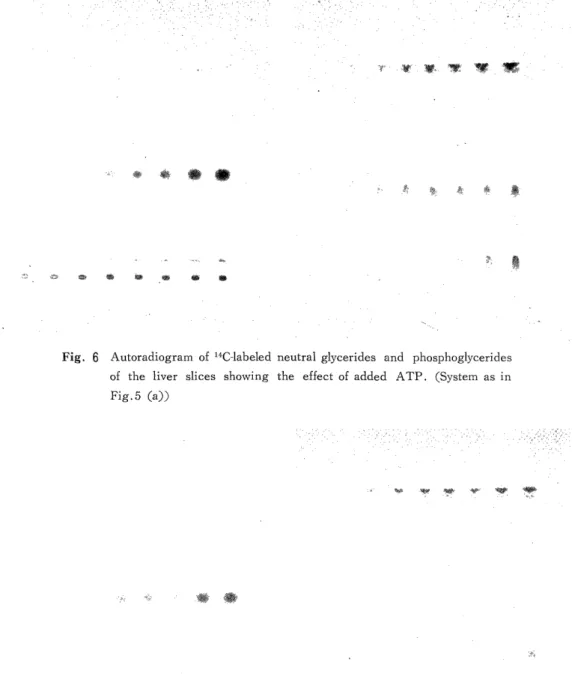
Fig. 6 Autoradiogram of 14C-labeled neutral glycerides and phosphoglycerides
of the liver slices showing the effect of added ATP. (System as in Fig.5 (a))
Fig. 7 Autoradiogram of 14C-labeled neutral glycerides and phosphoglycerides
of the lung slices showing the effect of added ATP. (System as in
Fig. 5 (b))
The amount of the labeled glycerol converted to PC was the most among the lipids of the lung slices. The radioactivity of PC at 120 minutes was 71119 cpm (8.23 nMols of glycerol) per 0.5g wet weight. The radioactivity of TG at 120 minutes was 28263 cpm (3.27 nMols of glycerol) per 0.5g wet weight. The radioactivity of PA was very low throughout incubation periods and never exceeded the other lipids but PE.
Effects of ATP
50 uMols of ATP was added into incubation system of the liver and the lung slices, and the same studies as descrived above were carried out (Fig. 5, Fig. 6, Fig. 7). Incorporation of the labeled glycerol into hole lipids of the liver slices was almost equal to that in the experiment without added ATP. But it was lowered remark- ably by added ATP in the experiment of the lung slices.
Among the each fruction of lipids of the liver slices, TG and PE were lowered in their radioactivity but incorporation of the labeled glycerol into PC was stimulated by added ATP. And besides, it seemed that PC, PE and DG were delayed to increase their radioactivity for about one hour, and then rapidly increased later. The most remark- able effect of added ATP was stimulation of incorporation of the isotope into PA. The radioactivity of PA exceeded all the other lipids until 30 minutes. On the other hand, in the lung slices, all of the specific lipids had lower radioactivity than in the experiment without added ATP. Incorporation of labeled glycerol into PA was not stimulated even by added ATP.
Incorporation of (1-14C)-glycerol into the lipids of the rabbit lung homogenate
The hole homogenate of the lung was used as an enzyme system to study on incor- poration of glycerol into each specific lipids of the lung (Fig.8, Fig. 9a, Table 3). The incubation was carried out with or / and without added ATP in the enzyme system.
Little of the labeled glycerol was converted to the lipids in the system without added ATP. Several experiments were carried out in order to examine an increase in incorpo- ration of the isotope, adding different doses of ATP. This paper describes the results from the experiment that 100 uMols of ATP was added to the incubation system. How- ever, incorporation of the labeled glycerol was very scanty in comparison with the case of the lung slices even though the amount of tissue that used in the both experiment was almost equal.
Table 3 Incorporation of 14C-glycerol into lipids of the lung homogenate (x 10-2 nMols / 2.5 ml of homogenate)
incubation time (min.) 5 10 20 30 45 60 90 120
Phoophatidic acid 1.36 3.20 9.99 22.69 26.23 31.90 23.98 21.15
Diglyceride 0.11 0.23 0.76 1.43 2.98 4.24 7.70 10.37
Phosphatidylcholine 0.64 0.82 1.45 1.60 1.88 2.20 3.42 3.85
Phosphatidylethanolamine 0.41 0.48 0.67 0.79 1.28 1.33 2.64 1.79
Triglyceride 0.35 0.52 1.24 1.89 1.67 2.82 2.59 3.38
Fig. 8 Incorporation of 14C-glycerol into neutral glycerides and phosphoglycerides
of rabbit lung homogenate. The system consisted of 2.5 ml of the lung homogenate, 10 uCi of 14C-glycerol (0.175 uMols) and 100 uMols of ATP.
Additional 0.25 Mol sucrose was added to make a total volume of 5.0 ml.
Fig. 9 Autoradiogram of 14C-labeled neutral glycerides and phosphoglycerides
(a) and water soluble substances (b)/ (System as in Fig. 8).
Among the specific lipids, PA incorporated the labeled glycerol most rapidly and it's radioactivity occupied a greater part of the radioactivity of the hole lipids throughout the incubation period. At 60 minutes, the radioactivity of PA reached a peak and then tended to decrease gradually. DG, TG, PE and PC incorporated a little of the glycerol and increased their radioactivity very slowly with time. DG increased it's radio- activity slightly faster than the other lipids later.
The sum of radioactivity of DG, PE and PC that increased from 60 minutes to 120 minutes was nearly equal to the radioactivity of PA that decreased for the same period.
Study on the water soluble substances of the lung homogenate was shown in Fig.
9 b. The almost of the added glycerol was converted to number of water soluble sub- stances and lipids at 120 minutes. The labeled glycerol decreased rapidly throughout the all incubation period, and approximately at 120 minutes it almost disappeared. Radioactive GP appeared already at 5 minutes and reached a peaked activity approximately at 10 min- utes, and the amount of glycerol converted to GP at it's peak was 7.06n Mols per 2.5ml of homogenate. The radioactivity of GP decreased after that time and tended to dis- appear at 90 minutes. Other water soluble components constantly increased their radioactivity throughout the incubation period.
DISCUSSION
The results in these experiments reaffirm the role of biosynthesis of lipids in the liver that have been observed by number of investigators. And the role of biosynthesis of lipids in the lung is studied, and it is compared to the liver.
The amount of 14C-glycerol that was converted to total lipids of the lung slices was samller than that of the liver slices. However, the form of the incorporation of the isotope into the specific lipids of the lung slices differed distinctly from that of the liver slices. In the liver slices, TC synthesis was the most among the lipids. In the lung slices, on the other hand, PC synthesis was the most and TC synthesis was smaller than PC. Besides, the amount of labeled glycerol in PC of the lung slices was equal or slightly exceeded the amount of the isotope in PC of the liver slices throughout the incubation period (Fig. 10). This findings suggest that the lung has a equal or slightly excellent activity to synthesize PC from glycerol in a comparison with the liver , in the same wet weight of the tissue.
In the experiment of the liver slices, the time course of radioactivity of RA suggests that PA is a precursor of DG, PE and PC, and the time course of radioactivity of DG suggests that DG is a direct precursor of PE and PC. It seems that DG may not be a direct precursor of TG in this experiment. But, the character of PA as a pre- cursor of TG was confirmed in the other experiments that have been not discribed in this paper.
Then, the de novo synthesis pathway of neutral glycerides and phosphoglycerides
Fig. 10. Incorporation of14C-glycerol into PC and TG showing a comparison between the lung slices and the liver slices. • the liver slices
o ... o the lung slices
in the liver that has been identified by KORNBERG A9). and Kennedy E. P10). is reafirmed as follows.
glycerol-+GP-*PA-DG-APE, PC I
TG
On the other hand, the radioactivity of PA of the lung slices was very low
throughout the incubation period. It seems that PA of the lung slices dose not play a
role of a precursor of neutral glycerides and phosphoglycerides. However, the radio-
activity of DG of the lung slices exceeded the other glycerides at the early incubation
period as seen in the experiment of the liver slices. The findings suggests that DG plays a role of a direct precursor of TG, PE and PC in the lung slices also.
Giving a mind of the concept of biosynthesis of lipids in the liver, the movement of the labeled DG suggests that the lipid biosynthesis pathway in the lung may be simi- lar to the pathway in the liver. But it will not be able to decide unless the character of PA as a precursor of the lipids is confirmed as like as seen in the experiment of the liver slices. The results of the experiment of the lung homogenate are offered to resolve this problem. In the experiment of the lung homogenate, the radioactivity of PA extreemly exceeded the other lipids. And the radioactivity of PA that decreased from 90 minutes to 120 minutes was nearly equal to the sum of radioactivity of DG, TG, PE and PC that increased for the same period. The later finding means that the labeled PA was converted to these lipids. These findings strongly suggest that PA is a precursor of DG, TG, PE and PC.
The time courses of glycerol, GP and PA, and the relations among them suggest that the following pathway is there : glycerol-- GP-SPA. Then, it has become to be almost sure that the lipid biosynthesis pathway in the lung is the same that has been established in the liver by Kornberg A. and Kennedy E. P. as described above.
Generally, thinking a pathway at the steady state as follows ; substance (a) substance (b) -substance (c)-->.; the time courses of the specific radioactivity of these substances are shown as a model in Fig. 11, if the substance (a) is labeled with an isotope. The radioactivity of the each labeled substance is given as follows.
Sa•A, Sb•B, Sc•C
A, B, C : the pool size of substance (a), (b) and (c).
Sa, Sb, Se : the specific radioactivity of substance (a), (b)
and (c).
When the substance (c) is the final substance in the metabolism, the radioactivity of substance (c) is given as follows.
v• fsb•dt ... 1)
Fig. 11. Fig. 12.
v: the turnover rate
The time courses of the radioactivity of the substance (b) and (c) are shown in Fig. 12. At the time (T) when the radioactivity of the substance (c) becomes to be equal to the radioactivity of the substance (b), the following equations are given.
T
SbT • B=v • f 0 Sb • dt ...2)
T