• 検索結果がありません。

Results of Postoperative Treatments in View of the Surgical Stage of Uterine Endometrial Carcinoma

N/A
N/A
Protected

Academic year: 2021

シェア "Results of Postoperative Treatments in View of the Surgical Stage of Uterine Endometrial Carcinoma"

Copied!
7
0
0

読み込み中.... (全文を見る)

全文

(1)

Acta Med. Nagasaki 42 : 37-43

Results of Postoperative Treatments in View of the Surgical Stage of Uterine Endometrial Carcinoma

Hisayoshi NAKAJIMA 1) , Shingo MORIYAMA 1), Hidetaka SAKAI 1) , Tadayuki ISHIMARU 1) , Tooru YAMABE 2) 1) Department of Obstetrics and Gynecology, Nagasaki University School of Medicine

2) Sasebo City General Hospital

Background : The indications for and the optimal mode of adjuvant therapy in surgically operated endometrial cancer patients have not yet been established. We studied the indica- tions for the postoperative treatment of endometrial carci- noma patients based on their surgical stages (FIGO, 1988) .

Methods : We retrospectively restaged the cases of 178 endometrial carcinoma patients who underwent hysterec- tomy with pelvic lymphadenectomy between 1965 and 1992 and who were followed-up longer than 3 years. The patients were subdivided into low- and high-risk groups, and we investigated the relation between their postoperative treat- ment and recurrence rates. Postoperative treatment was divided into the three groups of no/incomplete, external whole-pelvic irradiation (EWPI) and chemotherapy.

Results : The 79 patients in Stage Ia or Ib had no/incom- plete postoperative treatment, but only 1 (1.3%) had a recurrence. Four Stage IIa patients had no recurrence and all 3 low-risk patients had no postoperative treatment. Of the 5 Stage IIb, low-risk patients, 1 of the no postoperative- treatment group had a recurrence. The recurrence rate among the Stage IIb patients of the high-risk group was 40%

(2/5) in the incomplete postoperative treatment group. The six Stage IIIa patients with EWPI. had no recurrence. In contrast, 14 of the 15 Stage IIIb and IIIc patients underwent postoperative EWPI, and 11 of them (78.6%) had a recurrence including 8 (81.8%) with a recurrence in distant regions.

Conclusion : Postoperative treatment may be well omitted for many patients at Stage Ia or Ib and the low-risk group at Stage IIa based on surgical staging criteria. Patients in other surgical stages seemed to require to identify best postopera- tive treatment , but further randomized prospective studies will be required to identift the best mode of treatment.

Key words : Endometrial carcinoma, Surgical stage, Post- operative treatment, Recurrence

Introduction

In 1988, the International Federation of Gynecology and Obstetrics (FIGO )1) issued a system of surgical staging for endometrial carcinoma. According to this system, a determination the surgical stage is made based on the findings by laparotomy as well as on the routine clinical

examinations. Thus, laparotomy, hysterectomy and biopsies of all suspicious sites form the bases for staging.

The final histologic findings after surgery (and cytologic findings when available) are also to be considered in the staging. However, the previously accepted FIGO guidelines for clinical staging (1983) are still relevant and should be used for the patients not primarily operated and those treated with radiation and/or chemotherapy. Accordingly, the surgical staging is not a substitute for the clinical staging. The clinical staging system has already been applied widely in Japan, and the surgical staging system was also accepted by the Committee on Gynecology and Oncology of the Japan Society of Obstetrics and Gynecology') in January 1996.

Since the surgical stage refers to the presence and degree of the major prognostic factors obtained histologically in endometrial carcinoma"), the surgical stage is considered to reflect prognosis better than the conventional clinical stage and can be used to individualize an appropriate postoperative therapy. In the present study, we retrospec- tively analyzed a series of endometrial carcinoma patients to determine the relationship between postoperative treatments and recurrences by surgical stage.

Patients and Methods

As histological prognostic factors for endometrial carcinoma, the presence of vessel permeation,"") and specific histologic types"',"') (adenosquamous carcinoma, clear cell adenocarcinoma, serous adenocarcinoma, muci- nous adenocarcinoma, squamous cell carcinoma, undiffer- entiated carcinoma, and carcinosarcoma) have been established in addition to the factors involved in the surgical staging (histologic differentiation, depth of myometrial invasion, cervical involvement, vaginal or adnexal invasion, and lymph node metastasis). Thus, for the carcinomas at the same surgical stage, the presence of vessel permeation and specific histologic types may be important prognostic factors histologically.

We examined the cases of 178 patients who underwent

(2)

hysterectomy with pelvic lymphadenetomy for endo- metrial carcinoma between 1965 and 1992 at the Nagasaki University School of Medicine. The patients were 25-76 years of age, mean 53.0±10.6 years. We performed a surgical staging on the 178 cases retrospectively, and for each stage (Stage I in 126 cases, Stage II in 27 cases, and Stage III in 25 cases), the relation between postoperative treatments and recurrence was studied in two groups, the low-risk group and the high-risk group (Table 1), which were based on the histological prognostic factors not directly related to staging. This patients series included neither the cases in the low-risk group under Stage III nor those under Stage IV by surgical staging.

The histologic types and histologic differentiation were diagnosed according to the histologic classification of

"The General Rules for Clinical and Pathological Manage - ment of Uterine Corpus Cancer"'). For the sake of conven- ience, the cases which corresponded to recurrence and relapse as definded in "The General Rules for Reporting on

Clinical Oncology"") were studied collectively as the recurrent cases in this study.

For the 151 patients treated in or after 1972, as a rule, the selection was made regarding the mode of operation and postoperative external irradiation ('Co whole-pelvic irradiation) based on clinical stages and histologic differ- entiation (Table 2). For some of the patients among them, chemotherapy mainly consisting of Mitomycin C (MMC) [MMC alone or MMC+gestagen (4 patients), and 5- fluorouracil+Cyclophosphamide+MMC in combination (FAM) or FAM+gestagen (5 patients)] was applied as a substitute for the external irradiation. For the 27 patients treated in or before 1971, simple hysterectomy and bilat- eral adnexectomy, as well as the combination of these modes of operation with pelvic lymphadenectomy or radical hysterectomy, were performed, wherein 9 patients had external irradiation (8 patients) and MMC admini- stration (1 patients), additionally. The patients who underwent extrapelvic radiation therapy in a total dosage

Table 1. Endometrial carcinoma patients treated between 1965 and 1992 at the Nagasaki University School of Medicine : low-and high-risk groups at each surgical stage.

Surgical stage Histological prognostic factor Groups (Cases) (Cases) Depth of myometrial Histologic

invasion differentiation Vessel permeation Histologic type

Stage I Stage la (none), Grade 1 _ Endometriod, Low -risk group* (70)

(126) lb (51/2)

or Adenoacanthoma

Ic (>1/2) Grade 2,3 + Specific type High-risk group* *(56)

Stage II N

one, 51/2 Grade 1 _ Endometriod, Low-risk group* (8)

(27) Ad

enoacanthoma

>1/2 Grade 2,3 + Specific type High-risk group" (19)

Stage III N

one, 51/2 Grade 1 _ Endometriod, Low-risk group* (0)

(25) Ad

enoacanthoma

>1/2 Grade 2,3 + Specific type High-risk group" (25)

Consisting of cases that met all of the histologic prognostic factors.

* * Consisting of cases in which one or more prognostic factor was associated.

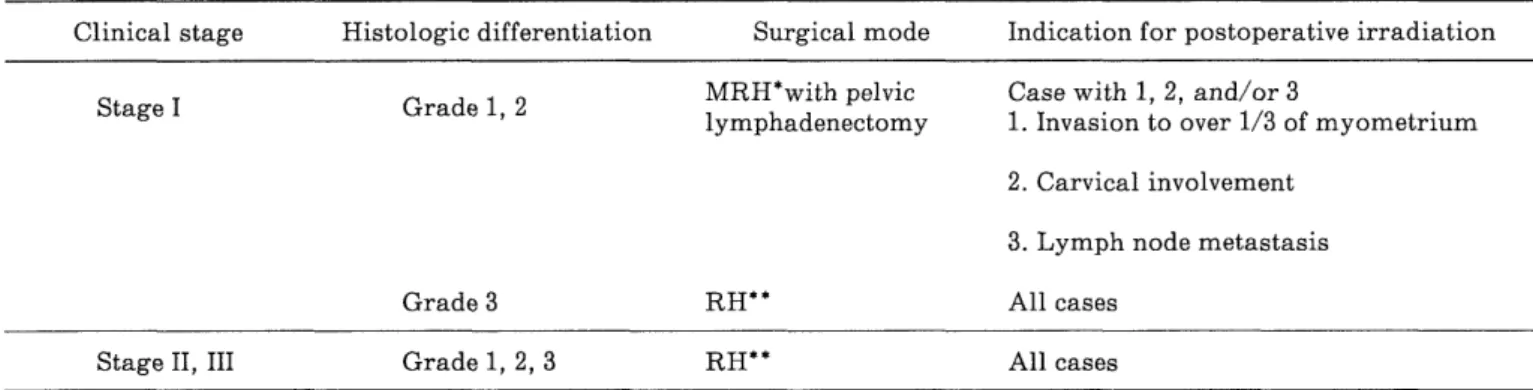
Table 2. Selection of the surgical mode based on clinical stage and histologic differentation, and indication for postoperative irradiation.

Clinical stage Histologic differentiation Surgical mode Indication for postoperative irradiation

Stage I Grade 1, 2 MRH*with lymphadenectomy pelvic Case with 1, 2, and/or 1 . Invasion to over 1/3 of myometrium 3

2. Carvical involvement

3. Lymph node metastasis

Grade 3 RH* * All cases

Stage II, III Grade 1, 2, 3 RH** All cases

* MRH : Modified radical hysterectomy

* * RH : Radical hysterectomy

(3)

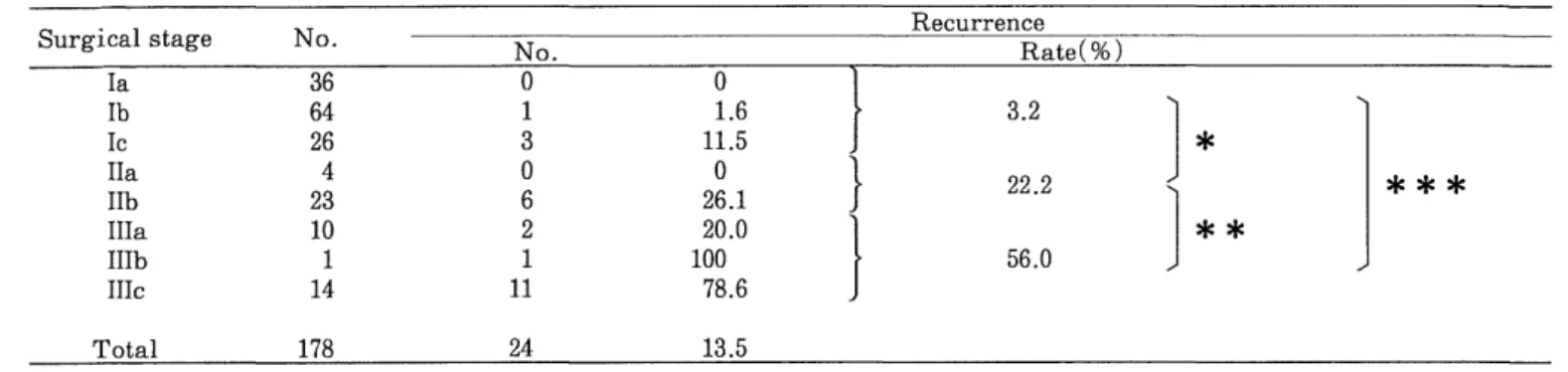
Table 3. Recurrence rate at each surgical stage among 178 endometrial carcinoma patients.

Surgical stage No. No . Recurrence Rate(/o) 0

la 36 0 0

lb 64 1 1.6 3.2

IC 26 3 11.5 ~k

IIa 4 0 0 } 22 .2

IIb 23 6 26.1

IIIa 10 2 20.0 ~k *k

IIIb 1 1 100 56.0

IIIc 14 11 78.6

Total 178 24 13.5

* p=0.0023, * *P=0.0217, * * *P<0.0001

Table 4. Recurrence in the Stage I (low-risk group) patients by postoperative treatment.

Surgical No/incomplete External irradiation Chemotherapy Total

stage N

o No. of recurrences No No. of recurrences No recurrences No. of No No. of recurrences

Stage Ia 24 0 1 0 0 25 0

Stage Ib 27 0 7 0 3 0 37 0

Stage lc 2 0 5 0 1 0 8 0

Total 53 0 13 0 4 0 70 0

of not more than 50 Gy (at point A) and those who underwent the MMC chemotherapy in a total dosage of not more than 40 mg were both included in the no/incom- plete postoperative therapy group.

Thus, the postoperative therapy was studied after dividing the patients into 3 groups, namely, the extra- pelvic radiation therapy group (70 patients), the chemo- therapy group (10 patients), and the no/incomplete postoperative therapy group (98 patients).

Results

The prognosis for at least 3 years or longer was con- firmed in all 178 of the patients enrolled as subjects in this study, wherein 24 patients (13.5%) revealed a recurrence histologically or clinically. Recurrence in the surgical stage was noted in 4/126 patients (3.2%) in Stage I, 6/27 patients (22.2%) in Stage II, and 14/25 patients (56.0%) in Stage III, with a significant difference among these 3 groups (Fisher's exact method) (Table 3). Further, when subdivided to each stage, an increasing trend of recurrence was noted according to the development of the lesion.

Based on the surgical stages, the results studied in com- parison with the postoperative therapy administered are explained below.

1. Surgical Stage I

1) Low-Risk Group in Stage I

In the low-risk group in the Surgical Stage I (70 pa- tients), no recurrence has been noted to date, and a fairly good number of patients, i.e., 24 of the 25 patients in Stage Ia and 27 of the 37 patients in Stage Ib have been treated by surgical operation alone (Table 4).

Among the patients in whom the depth of myometrial invasion was over % (Stage Ic), 5 of the 8 patients re- quired external whole-pelvic irradiation and 1 patient needed MMC administration additionally, even though they belonged to the low-risk group, and no recurrence has been noted in them so far. Recurrence was also not noted in the 2 patients of the no/incomplete postoperative therapy group.

2) High-Risk Group in Stage I

Eleven patients of the high-risk group at Stage Ia have not shown recurrence yet, including 10 patients treated with a surgical operation alone (Table 5).

In contrast, of the 18 patients at Stage Ib and 6 at Stage Ic, who underwent no or incomplete additional postopera- tive treatment, one patient (5.6%) and 2 patients (33.3%) showed recurrence, respectively (Table 5). Of the 21 patients with additional external whole-pelvic irradiation or MMC administration, recurrence has been observed in only 1 patient (4.8%).

2. Surgical Stage II

Among the Stage IIa patients, 3 of the low-risk group

patients had no postoperative treatment at all, and 1

patient of the high-risk group had postoperative treatment

(4)

Table 5. Recurrence in the Stage I (high-risk group) patients by postoperative treatment.

No/incomplete External irradiation Chemotherapy Total

Surgical

stage N

o. Recurrence No. Recurrence No. Recurrence No. o. Recurrence

No. Rate(%) No. Rate(%) No. Rate(%) No. Rate(%)

Stage Ia 10 0 0 1 0 0 0 11 0 0

Stage Ib 18 la 5.6 9 0 0 0 27 1 3.7

Stage Ic 6 2b 33.3 11 11 9.1 1 0 0 18 3 16.7

Total 34 3 8.8 21 1 4.8 1 0 0 56 4 7.1

` Recurrence in distant region

b Recurrence in pelvic cavity (1 patient)

, and recurrence in distant region (1 patient)

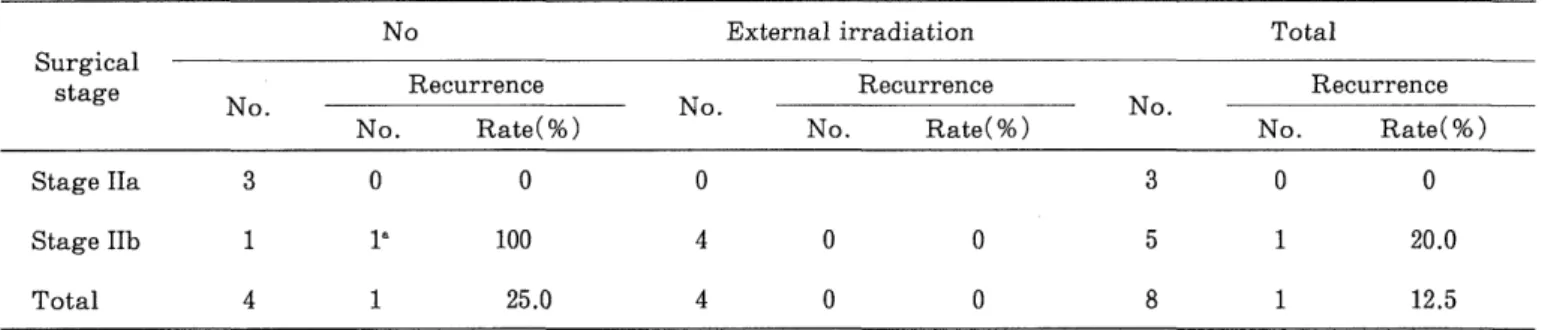
Table 6. Recurrence in the Stage II (low-risk group) patients by postoperative treatment.

No External irradiation Total

Surgical

stage N

o . Recurrence No. Recurrence No. Recurrence

No. Rate(%) No. Rate(%) No. Rate(%)

Stage IIa 3 0 0 0 3 0 0

Stage IIb 1 18 100 4 0 0 5 1 20.0

Total 4 1 25.0 4 0 0 8 1 12.5

8 Recurrence in vagina

Table 7. Recurrence in the Stage II (high-risk group) patients by postoperative treatment.

No/incomplete External irradiation Chemotherapy Total

Surgical

stage N

o. Recurrence No. Recurrence No. Recurrence No. Recurrence

.
No. Rate(%) No. Rate(%) No. Rate(%) No. Rate(%)

Stage IIa 0 1 0 0 0 1 0 0

Stage IIb 5 2a 40.0 11 2b 18.2 2 1` 50.0 18 5 28.7

Total 5 2 40.0 12 2 16.7 2 1 50.0 19 5 26.3

a Recurrence in distant region (1 patient) , and recurrence in pelvic cavity (1 patient) b Recurrence in pelvic cavity (1 patient)

, and recurrence in distant region (1 patient) Recurrence in vagina

by external whole-pelvic irradiation, and no recurrence has been observed in any of these four patients (Tables 6 and

7).

Of the 5 cases in Stage IIb of the low-risk group, 1 patient with no postoperative treatment had a vaginal recurrence, but the other 4 patients with external whole- pelvic irradiation showed no recurrence (Table 6). Of the

18 cases in Stage IIb of the high-risk group, 3 of the 13 patients (23.1%) who underwent irradiation or chemo-

therapy had recurrence (Table 7). Two of these 3 patients with a recurrence had postoperative treatment by whole-

pelvic irradiation, but both of them developed the recur- rence in the pelvic cavity of the irradiated field.

3. Surgical Stage III

All of the 25 patients at surgical Stage III belonged to

the high-risk group and included no patient in the low-risk

group (Table 1). Of these 25patients, 23 completed postop-

erative treatment by external whole-pelvic irradiation or

FAM therapy, and 13 of these 23 patients with postopera-

tive treatment (56.5%) had a recurrence. For 6 patients in

Stage IIIa with external whole-pelvic irradiation, no

recurrence has been observed so far (Table 8).

(5)

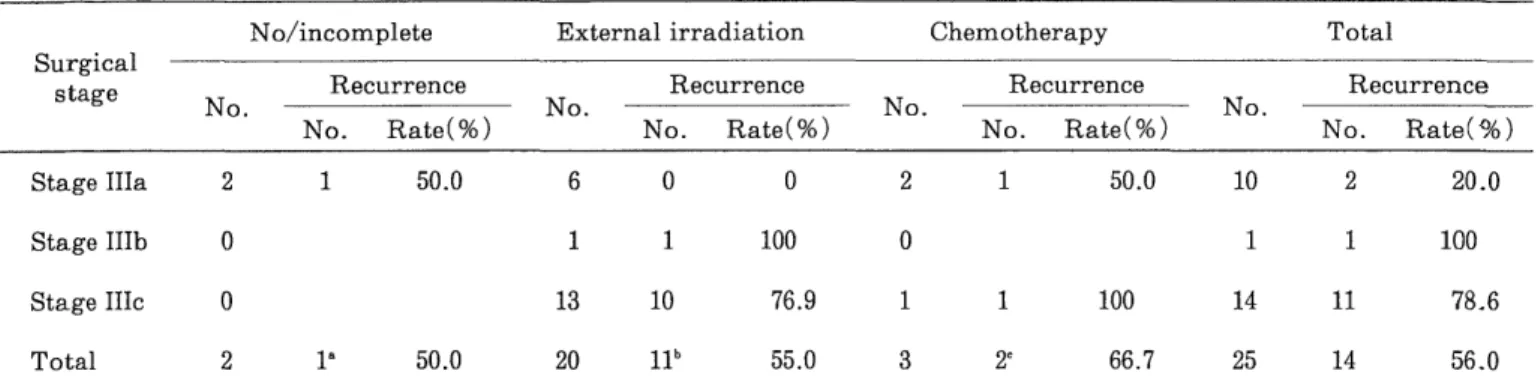
Table 8. Recurrence in the Stage III (high-risk group) patients by postoperative treatment.

No/incomplete External irradiation Chemotherapy Total

Surgical

stage N

o. Recurrence No. Recurrence No. Recurrence No. o. Recurrence

No. Rate(%) No. Rate(%) No. Rate(%) No. Rate(%)

Stage IIIa 2 1 50.0 6 0 0 2 1 50.0 10 2 20.0

Stage II1b 0 1 1 100 0 1 1 100

Stage IIIc 0 13 10 76.9 1 1 100 14 11 78.6

Total 2 la 50.0 20 116 55.0 3 2` 66.7 25 14 56.0

8 Recurrence in pelvic cavity

b Recurrence in distant region (7 patients) , distant region and pelvic cavity (2 patients), pelvic cavity (1 patient), and unknown (1 patient)

Recurrence in distant region and pelvic cavity (1 patient), and recurrence in pelvic cavity (1 patient)

In the Stage IlIb and IlIc groups, postoperative treatment was applied to all 15 patients, and 14 of them had external whole-pelvic irradiation. However, 11 of these 14 patients (78.6%) had a recurrence, and 9 of them (81.8%) were in the distant region and, in some cases, included a pelvic cavity recurrence (Table 8).

Discussion

The optimal mode of treatment for endometrial carci- noma has not yet been established by a unified consensus, which is different from the situation for cervical carci- noma or ovarian carcinoma. For instance, in Europe and the U.S.A., preoperative irradiation for endmetrial carci- noma has been applied frequently, which, however, has often reviewed negatively regarding its usefulness, because of the changes caused in the pathohistological images useful for the selection of treatment and as prognostic indicators, and because it does not much improve the therapeutic results compared with those by postoperative irradiation',"-"). The indications or mode of postoperative treatment for endometrial carcinoma have also not been established. To prevent such chaos in the management of endometrial carcinoma, it is necessary to use the FIGO surgical staging system, which incorporates important histopathological prognostic factors and accurately reflects prognosis, as confirmed by many researchers'-') and our present results; it is also important to prospectively compare, based on the FIGO system, the results produced by various modes of treatment.

Ackerman et al'). analyzed the relapse pattern in clinical Stage I endometrial carcinoma patients and indicated the inappropriateness of applying adjuvant pelvic irradiation as a routine technique to the patients with Grade 1 or 2 endometrial carcinoma with less than 1/2 myometrial invasion or Grade 3 tumors confined to the endometrium.

In our present study, of the 79 patients at surgical Stage Ia (tumor limited to endometrium) and Ib (invasion to s1/2 myometrium) treated surgically (simple or modified radical hysterectomy with pelvic lymphadenectomy) with no/incomplete postoperative treatment, only one patient (1.3%) had recurrence. This recurrent patient (surgical Stage Ib, Grade 2 endometrioid adenocarcinoma) was in Stage Ib of the high-risk group and was one of the 18 patients (5.6%) with no/incomplete postoperative treat- ment. These results indicate the possibility that the patients diagnosed as Stage Ia or lb by surgical staging can often be cured without postoperative treatment regardless of the grade of histologic differentiation, presence or absence of vessel permeation, or histologic type.

In the surgical Stage Ic (invasion > 1/2 myometrium ) gruop, 8 patients of the low-risk group had no recurrence regardless of the presence or absence of postoperative

treatment. However, the sample number of this group was too small to make a definite conclusion, and we are thus now administering adjuvant whole-pelvic irradiation to all similar patients, as a rule. In Stage Ic of the high-risk group, 2 of the 6 patients with incomplete postoperative treatment had a recurrence, and 1 of the 12 patients with postoperative treatment had a recurrence. The number of samples for these results is too small to draw a conclusion, but it seemed necessary to apply postoperative treatment to surgical Stage Ic carcinomas in the high-risk group.

However, some researchers indicate that postoperative adjuvant pelvic irradiation may be unnecessary in the patients with deep myometrial invasion by surgical staging, but without extrauterine invasion"',"). Thus, the significance of postoperative treatment in Surgical Stage Ic should be further examined.

Surgical Stage II is subdivided into IIa (endocervical

glandular involvement only) and IIb (cervical stromal

invasion) by cervical involvement. Therefore, the degree of

myometrial invasion should be considered in classifying

(6)

risk groups in surgical Stages IIa and IIb (Table 1).

Fanning et al"). treated 12 patients at surgical Stage IIa in the low-risk group by operation alone with no recurrence.

We also treated 3 Stage IIa patients in the low-risk group by operation alone and there has been no recurrence so far.

These results indicate that the impact of endocervical glandular involvement alone may be considerably small.

Therefore, in surgical Stage IIa, the indication of postop- erative treatment can be decided depending on the degree of myometrial invasion, i.e., in the same manner as in surgical Stages Ia, Ib and Ic.

In surgical Stage IIb, Fanning et al"). also reported a high incidence of recurrence (5 of 8 cases) (62.5%) treated by operation alone, which is in accord with our results.

Postoperative treatment seemed to be necessary in the surgical Stage IIb patients for both the low-risk and high-risk groups, and the problem remains as to what kind of technique should be used. In our results, external whole-pelvic irradiation was useful in the 4 Stage IIb patients of the low-risk group. Considering that all of the 5 recurrent patients in Stage IIb of the high-risk group reported by Fanning et a118). had extrauterine recurrence, it may be necessary to establish postoperative treatment for surgical Stage II patients.

In surgical Stage III, extrauterine invasion is found histopathologically and almost all the present such pa- tients belonged to the high-risk group by our definition ; the choice of postoperative treatment will thus be an essential question. Schorge et al'). noted that postopera- tive external whole-pelvic irradiation was not useful for surgical Stage llla (tumor invasion to serosa and/or adnexa and/or positive peritoneal cytology) or IIIb (vagi- nal metastasis) patients. Our study results suggest the usefulness of this technique in 6 Stage IIIa patients. Since Stage IIIa mainly refers to intrapelvic invasion, the significance of postoperative whole-pelvic irradiation is worth further investigation.

In the surgical Stage IIIb and Stage IIIc (metastases to pelvic and/or paraaortic lymph nodes) patients of the present study, the postsurgical external whole-pelvic irradiation group frequently had an extrauterine recur- rence ; extended-field irradiation or systemic chemother- apy would thus be a reasonable selection for postoperative treatment. Of the patients classified as surgical Stage IlIc by pelvic lymph nodes metastasis, 67% of the patients also have paraaortic lymph node metastases'), and extended- field irradiation including paraaortic lymph nodes and whole abdominal irradiation are recommended."-') How- ever, few randomized prospective studies have been con- ducted on postoperative systemic chemotherapy in endometrial carcinoma, and its usefulness has not been fully demonstrated. Recent phase II studies of advanced or recurrent cases found that the combinations of etoposide, cisplatin and 5-fluorouracil24), of paclitaxel and G-CSF, and of ifosfamide and mesna2&) were effective.

References

1) International Federation of Gynecology and Obstetrics. Annual report on the results of treatment in gynecological cancer. Int J Gynecol

Obstet, 28 : 189-190, 1989.

2) Japan Society of Obstetrics and Gynecology, The Japanese Society of Pathology, Japan Radiological Society (eds). The General Rules for

Clinical and Pathological Management of Uterine Corpus Cancer. 2nd

ed. (Kanahara publishers, Tokyo), 1996.

3) Creasman WT, Eddy GL. Recent advances in endometrial cancer.

Seminars in Surgical Onclolgy, 6 : 339-342, 1990.

4) Lanciano RM, Curran WJ, Greven KM, et al. Influence of grade, histologic subtype, and timing of radiotherapy on outcome among

patients with stage II carcinoma of the endometrium. Gynecol Oncol,

39: 368-373, 1990.

5) Nishiya M, Sakuragi N. Tanaka T, et al. An analysis of prognostic significance of new FIGO staging (1989) of endometrial cancer. Acta

Obstet Gynaec Jpn, 43: 451-457, 1991.

6) Gal D, Recio FO, Zamurovic D, Tancer ML. Lymphvascular space involvement, a prognostic indicator in endometrial adenocarcinoma.

Gynecol Oncol, 42: 142-145, 1991.

7) Yura Y, Tauchi K, Koshiyama M, et al. Parametrial involvement in endometrial carcinoma, its incidence and correlation with other

histological parameters. Gynecol Oncol, 63: 114-119, 1996.

8) Rotman M, Aziz H, Halpern J, Schwartz D, Sohn C, Choi K.

Endometrial carcinoma, influence of prognostic factors on radiation

management. Cancer (supplement), 71: 1471-1479 1993.

9) Fanning J, Evans MC, Peters AJ, Samuel M, Harmon ER, Bates JS.

Endometrial adenocarcinoma histologic subtypes, clinical and patho-

logic profile. Gynecol Oncol, 32: 288-291, 1989.

10) Wilson TO, Prodraz KC, Gaffey TA, Malkasian GD, O'Brien PC, Naessens JM. Evaluation of unfavorable histologic subtypes in

endometrial adenocarcinoma. Am J Obstet Gynecol, 162: 418-426, 1990.

11) Japan Society for Cancer Therapy (eds). General Rules for Reporting on Clinical Oncology. (Kanahara publishers, Tokyo), 1991.

12) Cassia LJS, Weppelmann B, Shingleton H, Soong SJ, Hatch K, Salter MM. Management of early endometrial carcinoma. Gynecol Oncol, 35:

362-366, 1989.

13) Garrett P, Pugh N, Ross D, Rate W. Adjuvant radiation therapy in endometrial carcinoma. Indiana Medicine, August : 560-562, 1990.

14) Bucy GS, Mendenhall WM, Morgan LS, et al. Clinical stage I and II endometrial carcinoma treated with surgery and/or radiation therapy,

analysis of prognostic and treatment-related factors. Gynecol Oncol,

33: 290-295, 1989.

15) Noren H, Granberg S, Friberg LG. Endometrial cancer stage II, 190 cases with different preoperative irradiation. Gynecol Oncol, 41:

17-21,1991.

16) Ackerman I, Malone S, Thomas G, Franssen E, Balogh J, Dembo A.

Endometrial carcinoma, relative effectiveness of adjuvant irradiation

vs therapy reserved for relapse. Gynecol Oncol, 60: 177-183, 1996.

17) Chen S. Operative treatment Stage I endometrial carcinoma with deep myometrial invasion and/or grade 3 tumour surgically limited to the

corpus uteri. Cancer, 63: 1843-1845, 1989.

18) Fanning J, Alvarez PM, Tsukada Y, Piver S. Prognostic significance

of the extent of cervical involvement by endometrial cancer. Gynecol Oncol, 40: 46-47, 1991.

19) Schorge JO, Molpus KL, Goodman A, Nikrui N, Fuller AF. The effect of postsurgical therapy on stage II endometrial carcinoma. Gynecol

Oncol, 63: 34-39, 1996.

20) Creasman WT, Morrow P, Bundy BN, Homesley HD, Graham JE, Heller PB. Surgical pathological spread of endometrial cancer, a

Gynecologic Oncology Group study. Cancer, 60: 2035-2061, 1987.

21) Boronow RC. Should whole pelvic radiation therapy become past history, a case for the routine use of extended field therapy and

multimodality therapy. Gynecol Oncol, 43: 71-76, 1991.

22) Potish RA, Twiggs LB, Adcock LL, Savage JE, Levitt SH, Prem KA.

Paraaortic lymph node radiotherapy in cancer of the uterine corpus.

Obstet Gynecol, 65: 251-256, 1985.

23) Martinez A, Schray M, Podratz K, Stanhope R, Malkasian G.

Postoperative whole abdominopelvic irradiation for patients with high

risk endometrial cancer. Int J Radiat Oncol Biol Phys, 17: 371-377,

1989.

(7)

24) Pierga JY, Dieras V, Paraiso D, et al. Treatment of advanced or recurrent endometrial carcinoma with combinatin of etoposide,

cisplatin, and 5-fluorouracil, a phase II study. Gynecol Oncol, 60:

59-63, 1996.

25) Ball HG, Blessing JA, Lentz SS, Mutch DG. A phase II trial of paclitaxel in patients with advanced or recurrent adenocarcinoma of

the endometrium, a Gynecologic Oncologic Group study. Gynecol Oncol, 62: 278-281, 1996.

26) Schorge JO, Molpus KL, Goodman A, Nikrui N, Fuller AF. The effect of postsurgical therapy on stage III endometrial carcinoma. Gynecol

Oncol, 63: 34-39, 1996.

Table  2.  Selection  of  the  surgical  mode  based  on  clinical  stage  and  histologic  differentation,  and  indication  for  postoperative  irradiation.
Table  3.  Recurrence  rate  at  each  surgical  stage  among  178  endometrial  carcinoma  patients.
Table  6.  Recurrence  in  the  Stage  II  (low-risk  group)  patients  by  postoperative  treatment.
Table  8.  Recurrence  in  the  Stage  III  (high-risk  group)  patients  by  postoperative  treatment.

参照

関連したドキュメント

Keywords: continuous time random walk, Brownian motion, collision time, skew Young tableaux, tandem queue.. AMS 2000 Subject Classification: Primary:

Inside this class, we identify a new subclass of Liouvillian integrable systems, under suitable conditions such Liouvillian integrable systems can have at most one limit cycle, and

Then it follows immediately from a suitable version of “Hensel’s Lemma” [cf., e.g., the argument of [4], Lemma 2.1] that S may be obtained, as the notation suggests, as the m A

This paper presents an investigation into the mechanics of this specific problem and develops an analytical approach that accounts for the effects of geometrical and material data on

We use the monotonicity formula to show that blow up limits of the energy minimizing configurations must be cones, and thus that they are determined completely by their values on

While conducting an experiment regarding fetal move- ments as a result of Pulsed Wave Doppler (PWD) ultrasound, [8] we encountered the severe artifacts in the acquired image2.

Optimal control will be attained when weeds are treated in the seedling stage (less than 4 leaf stage,.. to the list of established grasses that are tolerant to MOXY 2E.

• Informal discussion meetings shall be held with Nippon Kaiji Kyokai (NK) to exchange information and opinions regarding classification, both domestic and international affairs