I Introduction
Browning of the inner scales of onions (shingusare in Japanese; Fig. 1) appears to be caused directly by nematodes. The nematodes can secrete pectolytic enzymes, which loosen the cells and soften the tissues. The infested areas become brown, and infested onion bulbs usually develop bacterial rot (Rabinowitch and Brewster, 1990), likely caused by Pseudomonas gladioli (Tesoriero et al., 1982; Tanaka et al., 1990).
After harvest, onions affected by this browning can be easily identified and eliminated because juice is exuded when the neck is pressed. However, it is difficult to remove the brown inner scales, and consumers often return affected onions to the merchant.
Near-infrared (NIR) spectroscopy has been used as a practical and rapid non-destructive way to assess the internal quality of vegetables and fruits in Japan because of its low cost and high performance in a non-contact mode (Schaare and Fraser, 2000; Ito, 2007). The potential of this method for non-destructive detection of disorders of the outer scale of onions (hadagusare in Japanese) was
recently reported (Ito and Hattori, 2012). However, the potential for non- destructive detection of browned inner scales has not yet been reported.
If the browning of inner scales could also be detected non-destructively, returns of damaged onions to the merchant would decrease, leading to more confidence in products from the cultivation region. Therefore, the objective of this study was to assess the potential of NIR technology for non-contact, non-destructive detection of the browning of inner scales in onions.
II Materials and Methods
We obtained ‘Momiji 3’ onions from Japan's Hyogo Prefecture. We also obtained onions (of an unknown cultivar) grown in Hokkaido Prefecture from a merchant. Previous testing revealed that onions should be stored at a range of temperatures to facilitate analysis (Ito and Morimoto, 2007).
We therefore stored samples at 7 ˚C in a refrigerator (hereafter, the low-
Non-destructive Detection of Browning of the Inner Scales of Onions using Near-Infrared Spectroscopy
Hidekazu Ito and Susumu Morimoto
*(Accepted; October 3, 2013)
Vegetable Pest Management and Postharvest Division 360 Kusawa, Ano, Tsu, Mie 514-2392 Japan
*Kubota Corporation, 2-35, Jinmu, Yao, Osaka Japan
Fig. 1 Browning of the inner scales of the onion ‘Momiji 3’ (shingusare in Japanese).
The browning symptoms occurred in the second to sixth scales from the outside.
was placed on a support, 3 mm from the end of the fiber-optic probe (Ito et al., 2005; Ito, 2007; Ito and Morimoto, 2007). The side of an onion near the top was centered on the support (Fig. 3). The opposite side of the onion at the top was also measured to provide two spectral measurements per onion.
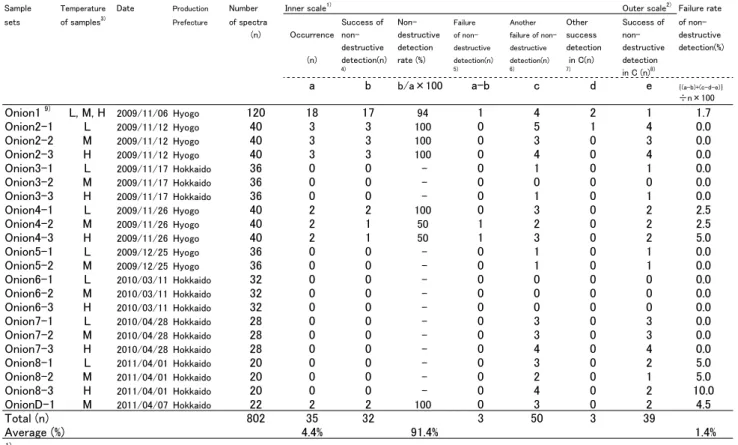
Table 1 Sample charachteristics and results of non-destructive detection of internal browning in onions
Following the optical measurements, each onion was cut vertically, and browning symptoms inside the area irradiated by the NIR beam was visually scored as 0 (sound, with no signs of browning) or 0.1 (with browning of the inner scales) and the cut surface was digitized (CanoScan 8600F, Canon, Tokyo, Japan).
Any browning or decay (water soaking) that occurred in the first scale was distinguished as browning of the outer scale.
To enable non-destructive detection of browning of the inner scales, we developed a multiple linear regression (MLR) equation using a calibration sample set (n = 120, ‘Momiji 3’ ). The independent variable was the 2nd derivative of the spectral absorption values at six wavelengths (810, 830, 844, 860, 862, and 910 nm). Next, the calibration was evaluated using a validation sample (n = 682) (Table 1).
III Results and Discussion
Browning of the inner scales occurs on the upper side of the onions (Fig. 1). Therefore, we used the NIR beam to illuminate the upper side of the onions during our measurements. The rate of browning was 4.4% (Table 1, column a).
MLR analysis of the visual scores and the spectral absorption values produced a calibration equation using the 2nd derivative of the absorption values at the six wavelengths (A) as the independent variables. The multiple correlation coefficient was strong and significant (R = 0.72**, n = 120). The calibration equation was as follows:
Browning score = 0.004 – 2435.648×A810nm + 874.647×A830nm + 255.533×A844nm – 6258.117×A860nm + 9955.718×A862nm + 1127.968×A910nm
We validated the MLR calibration using a different and larger sample of onions. The NIR method was able to detect 91.4% of the onions with symptoms when the threshold of the non-destructively determined browning score was 0.037. The calibration derived from onions grown in Hyogo Prefecture ( ‘Momiji 3’ ) was also able to non-destructively detect browning of the inner scales of onions (n = 2) grown in Hokkaido Prefecture (Table 1).
Wavelengths near 810 nm have been used for non-destructive evaluation of browning inside apples (Clark et al., 2003) and melons (Ito et al., 2004). A wavelength of 830 nm was used for non-destructive calibration of the soluble solids content of melons (Ito, 2007). The 2nd derivative of the absorption at 844 nm was negatively
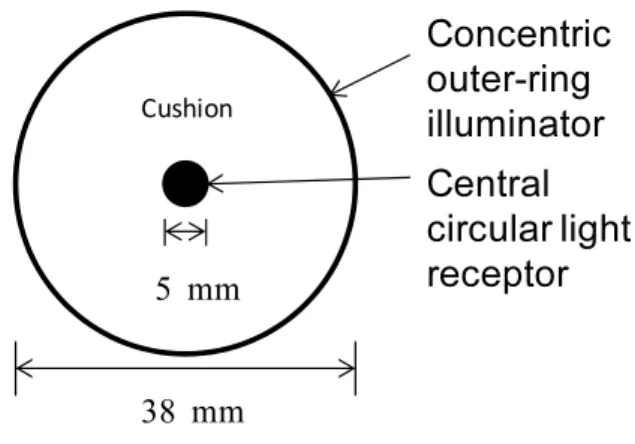
Fig. 2 Illustration of the end of the fiber-optic probe used with the K-BA100R spectrophotometer to obtain the NIR spectral samples.
Fig. 3 The measurement of the NIR spectrum of an onion using the K-BA100R spectrophotometer.
The onion is being illuminated with the NIR beam.
of browning of the inner scales in onions.
Summary
Consumers will return onions to the merchant if they detect browning of the inner scales (shingusare in Japanese). We tested whether this browning could be detected by use of the NIR absorption spectrum by placing onion samples 3 mm from the end of a fiber-optic probe (in non-contact interactance mode). Following the optical measurement, the onion was cut vertically, and browning of the inner scales inside the irradiated area was visually scored as 0 (sound, with no signs of browning) or 0.1 (browning detected). Multiple linear regression (MLR) analysis using six wavelengths (810, 830, 844, 860, 862, and 910 nm; n = 120) produced a strong and significant calibration equation using the 2nd derivative of the absorption values at the six wavelengths (R = 0.72**). We validated the MLR calibration equation using an independent sample of onions (n = 682) and found that the NIR method detected 91.4% of the onions that exhibited browning symptoms.
Literature Cited
1) Birth, G. S., G. G. Dull, W. T. Renfore and S. J. Kays (1985): Nondestructive spectrophotometric determination of dry matter in onions. J. Amer. Soc. Hort. Sci., 110, 297-303.
2) Clark, C. J., V. A. McGlone and R. B. Jordan (2003): Detection of brownheart in ‘Braeburn’ apple by transmission NIR spectroscopy. Postharvest Biol. Technol., 28, 87-96.
3) Ito, H. (2007): Development of a non-destructive near infrared (NIR) spectroscopy method for determining the internal quality of melons. Bull. Natl. Inst. of Veg. Tea Sci., 6, 83-115. (In Japanese with English abstract, tables and figures)
4) Ito, H., N. Fukino-Ito and H. Horie (2005): Non-destructive determination of soluble solids content in strawberries using near infrared (NIR) spectroscopy with fiber optics in interactance modes. : What is needed for the instrument? Acta Hort., 687, 271- 276.
5) Ito, H., N. Fukino-Ito, H. Horie and S. Morimoto (2004): Non-destructive detection of physiological disorders in melons using Near Infrared (NIR) spectroscopy. Acta Hort., 654, 229-234.
6) Ito, H. and G. Hattori (2012): Potential of non-destructive evaluation of internal disorder, browning of outer scale in onions using near infrared (NIR) spectroscopy. Acta Hort., 969, 197-202.
7) Ito, H. and S. Morimoto (2007): Non-destructive determination of nitrate ion in leaf stalks of Brassica chinensis using visible-near infrared (NIR) spectroscopy: Potential for sample temperature compensation. Acta Hort., 746, 289-293.
8) Miyamoto, K. and Y. Kitano (1995): Non-destructive determination of sugar content in satsuma mandarin fruit by near infrared transmittance spectroscopy. J. Near Infrared Spectroscopy, 3, 227-237.
9) Rabinowitch, H. D. and J. L. Brewster (1990): Onions and Allied Crops, 2, 161, CRC Press, Inc., Boca Raton, Florida.
10) Schaare, P. N. and D. G. Fraser (2000): Comparison of reflectance, interactance and transmission modes of visible-near infrared spectroscopy for measuring internal properties of kiwifruit (Actinidia chinensis). Postharvest Biol. Technol., 20, 175-184.
11) Tanaka, T. and T. Aota (1990): Ann. Phytopath. Soc. Japan, 56, 393-394.
12) Tesoriero,L. A., P. C. Fahy and L. V. Gunn (1982): First record of bacterial rot of onion in Australia caused by Pseudomonas gladioli pv. allicola and associated with internal browning caused by Pseudomonas aeruginosa. Australasian Plant Pathology, 11, 56-57.
近赤外分光法を用いるタマネギの内部褐変の非破壊検出
伊藤 秀和, 森本 進
摘 要
タマネギの内部鱗片が褐色になる症状 (芯腐れ) は消費者からのクレームとなる. そこで, 近赤外分光法
(800-1000nm) を用いる芯腐れの非破壊検出法を検討した. スペクトルは高精度な非破壊計測が可能な非接触の
拡散反射モードで測定した. 芯腐れはタマネギの上部に発生するため, タマネギ上部のスペクトルは1球につき2 カ所測定し, さらに品温を3段階に変えて測定した. 非破壊計測用検量線 (重回帰式) は6つの説明変数
(810, 830, 844, 860, 862, 910 nmにおける2次微分値) を採用することにより0.72**(n=120)の相関係数を得た.
その他のn=682のタマネギを非破壊計測した結果, 芯腐れが発生したタマネギの91.4%を検出できた.
〒514-2392 三重県津市安濃町草生360 野菜病害虫・品質研究領域
平成25年10月3日受理