Distributed
Motion
Generation for
Carrying a
Ladder
by Two
Omni-Directional
Robots
Yuichi
Asahiro1
,
EricChung-Hui
Chang2,
AmolMali2
, SyunsukeNagafuji1
, Ichiro $\mathrm{S}\mathrm{u}\mathrm{z}\mathrm{u}\mathrm{k}\mathrm{i}2$,and
Masafumi
YAMASHITA1
1Dept.
ofComputerScience and Communication Engineering, Kyushu University6-10-1 Hakozaki, Higashi-ku Fukuoka, 812-8581, Japan
{as
$\mathrm{a}\mathrm{h}\mathrm{i}$ro@, nagafuji@tcslab. ,mak@}
$\mathrm{c}\mathrm{s}\mathrm{c}\mathrm{e}$.
kyushu-u.$\mathrm{a}\mathrm{c}.\mathrm{j}\mathrm{p}$2 Dept. of Electrical Engineering and Computer Science
University of Wisconsin-Milwaukee, Milwaukee, WI 53201, $\mathrm{U}.\mathrm{S}$.A.
{ecchang, mali, $\mathrm{s}\mathrm{u}\mathrm{z}\mathrm{u}\mathrm{k}\mathrm{i}$
}
$@\mathrm{C}\mathrm{s}.\mathrm{u}\mathrm{w}\mathrm{m}.\mathrm{e}\mathrm{d}\mathrm{u}$Abstract: The problem of moving a pairofomni-directional robots carrying a ladder using
distributed control is discussed. We first consider the case in which two robots that may
differ only in their maximum speeds are situated in an obstacle-free workspace, and present
two distributed algorithms. Next, a distributed algorithm is presented for the casein which
the workspace is a narrow corridor with a 90 degree corner and two robots
are.chosen
froma large pool of robots having different characteristics in terms of the maximum speed, path
generation strategy, sensitivity to the motion of the other robot, etc. The effectiveness of the
algorithms is evaluated using computer simulation.
Keywords: distributed control, mobile robots, transportation
1
Introduction
There are two general approaches for
control-ling multiple robots transporting an object. One
is the centralized approach in which the motion
of the robots is generated by an outside entity
that can observe the global state of the system
$[7, 12]$
.
The other is the distributed approach,where everyindividual robot hastodecide its
mo-tion based on thelocal information available to it
$[8, 9]$. This paper discusses the problem of
trans-porting a ladder, or any long object such as a
rocket and a bridge, using two omni-directional
robots under distributed control.
Within the framework of the centralized ap-proach, it is possible to compute a time-optimal motion of two such robots in an obstacle-free
workspace using optimal control theory, under
the assumption that the speed of the robots is
either $0$ or a given constant at any moment
dur-ing a motion $[5, 10]$
.
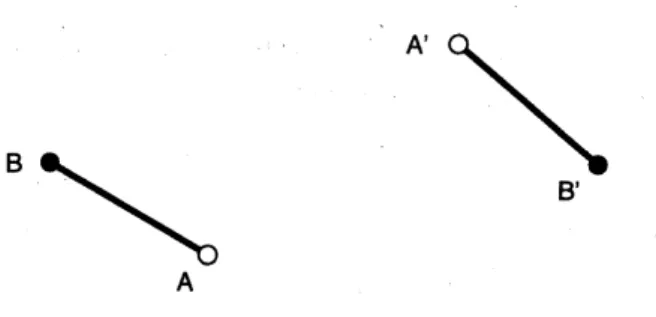
Fig. 1 shows a instance ofthis problem in which robots located at $A$ and $B$
must move to$A’$ and $B’$, respectively, and a
time-optimal motion for this instance obtained by this
method is shown in Fig. 2. Unfortunately, the
applicability of this method for actually moving
physical robots in optimal time is somewhat
lim-ited, because (i) the method uses complex
calcu-lation involving elliptic integral, and (ii) physical
robots cannot always execute a computed
mo-tion precisely –they can neither accelerate to
the maximum speed instantaneously, nor move
along a given trajectory precisely dueto
mechan-ical imprecision and the unpredictability of the
environment (suchas aslight incline of the floor).
In contrast, in the distributed approach the
robots can cope with unexpected perturbation by
continuously monitoring their progress and
dy-namically adjusting their trajectories. The
over-all motion resulting from such a distributed
strat-egy can be $\mathrm{n}\mathrm{e}\dot{\mathrm{a}}$
rly as efficient as an optimal
mo-tion $[1, 2]$
.
One should also keep in mind,how-ever, that good distributed algorithms are
usu-ally much harder to design than centralized algo-rithms. For instance, the fact that the path of
neither robot is straight in the optimal motion
of Fig. 2 indicates that efficient motion may not
be attainable distributively if either robot
sim-ply attempts to reach its destination as quickly
“adherence” to stay on the intended path, and reaction to the other robot’s motion.
Figure 1: An instance of the ladder carrying prob-lem.
Figure 2: Time-optimal motion for the instance
shownin Fig. 1.
A number ofdistributed algorithms for
carry-inga ladder using two identical omni-directional
robots (hence having the
same
maximumspeed)have been reported for the case in which there
are noobstacles in the workspace$[1, 2]$
.
The goalof this paper is to consider the problem under
the assumption that the robots are not
necessar-ily identical and the workspace is not necessarily
obstacle-free. Specifically:
1. We present two distributed algorithms for
thecase in which two robots possibly having
different maximum speeds are situated in an
obstacle-free workspace. The first algorithm,
ALGI, assumes that each robot knows the
maximum speeds of both robots, while the
second algorithm, ALG2, is for the case this
information is not available. The algorithms
are
evaluated using computer simulation.2. We then present and evaluate an algorithm
calledALG3for thecasein which two robots
must transport a ladder through a corridor
with a 90 degree corner. We assume that
the two robots
can
have differentcharac-teristics in terms of the selection of a path
through the corner, the maximum speed,
Due to space limitation we are not able to
present some of the details. The missing details
may be found in the references, orwill be reported
in forthcoming papers.
2
The
Model
The model of the robots we use is based on the
omni-directional robots developed at RIKEN [3].
We represent each robot $R$ as a disk. One end
of the ladder is attached to a force sensor that
we model as an ideal spring located at the center
of $R$
.
At any time during a motion the vectorfrom the center of $R$ to the tip of the ladder
at-tached to its force sensor is called the
offset
vec-$tor$, and is denoted $\mathit{0}arrow$
.
The termoffset
refers to$|\mathit{0}\neg=|(D-\ell)/2|$, where$D$ is the distancebetween
(the centersof) the two robots and $\ell$is the length
of the ladder.
An algorithm for robot $R$with maximum speed
$V$ is any procedure that computes a velocity
vec-$torvarrow \mathrm{w}\mathrm{i}\mathrm{t}\mathrm{h}|v\neg\leq V$, using available
informa-tion such as the robots’ current and final
posi-tions, the offset vector$\mathit{0}arrow$
, and the geometry of the
workspace. We assume that $R$ repeatedly
com-putes $v\mathrm{a}\mathrm{n}\mathrm{d}arrow$ movesto a new position with velocity
$v\mathrm{f}arrow \mathrm{o}\mathrm{r}$unit time.
We evaluate our algorithms by computer
sim-ulation. For simplicity we use discrete time and
assumethat both robotscomputetheirrespective
velocity vectors and move to their new positions
at time instants $0,1,$$\ldots$
.
3
Obstacle-Free
Workspace
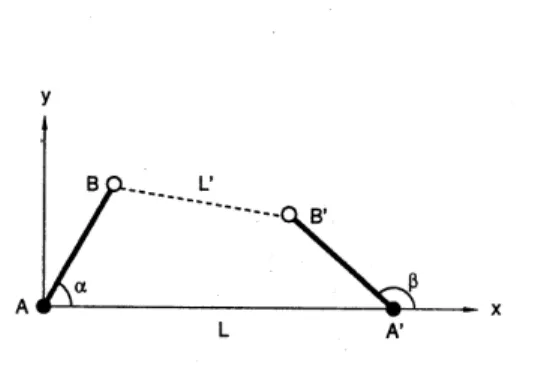
Consider two robots $A$ and $B$ in an
obstacle-free workspace with respective goal positions $A’$
and $B’.$ $A$ and $B$ may have different maximum
speeds. For convenience of discussion we set
up a Cartesian coordinate system as shown in
Fig. 3, where $A$ and $A’$ are at the origin $(0,0)$
and $(L, 0)$, respectively, and $\alpha$ and $\beta$ are the
an-gles that $AB$ and $A’B’$ make with the $x$-axis,
re-spectively. In this section, we assume $L’\leq L$
and $0\leq\alpha,\beta\leq 180^{\mathrm{O}}$, where $L=|AA’|$ and $L’=|BB’|$
.
Minor changes are needed in the following discussion for other cases.counterclockwise, whose directions are $\alpha+$
$\pi/2$ and $\alpha-\pi/2$, respectively.
Figure 3: The setup for ALGI and ALG2.
3.1
Distributed
algorithms
ALGIand
ALG2
In this section we introduce two distributed
al-gorithms ALGI and ALG2. ALGI is for the
case where the two robots’ maximum speeds are
known toboth robots, whileALG2 is for the
case
where neither robot knows the other robot’s
max-imum speed. In either algorithm we assume that
the robots’ current and goal positions are known
to both robots. (This assumption can be
expen-sive to realize in practice.)
Both algorithms are memoryless in the sense
that their output is afunction of the current state
(and is independent of the motions in the past).
Itis therefore sufficienttoview $A$ and $B$ of Fig. 3
as the robots’ current positions and specify how
the velocity vector is computed from $A,$ $B,$ $A’$
and $B’$
.
Algorithm ALGI
Both robots know the maximum speeds $v_{A}$ and
$v_{B}$ ofboth, as well as the positions $A,$ $B,$ $A’,$ $B’$,
and hence angles $\alpha,$ $\beta$ and their offset vectors $\vec{\mathrm{O}}_{A}$
and $0_{B}arrow$
.
$c_{1},$ $c_{2}$, and $s\geq 0$ are some constants.Since both robots have the same information we explicitly describe the procedure for both.
Step 1: Let $e_{A}=L/v_{A}$ and $e_{B}=L’/v_{B}$
.
Let $t_{A}arrow$and $t_{B}arrow$ be vectors directed from $A$
to $A’$ and
from $B$ to $B’$, respectively, such that
$\bullet$ $|t_{A}^{\sim}|=1$ and $|t_{B}|arrow=(e_{B}/e_{A})^{c_{1}}$ if $e_{A}\geq$
$e_{B}$, and
$\bullet$ $|t_{A}|arrow=(e_{A}/e_{B})^{c_{1}}$ and $|t_{B}^{\sim}|=1$ if $e_{A}<$
$e_{B}$
.
Step 2: Let $r_{A}arrow$ and $r_{B}arrow$ be “rotational vectors”
of length $c_{2}(\beta-\alpha)$ that rotate the ladder
$\mathrm{S}\mathrm{t}\mathrm{e}\mathrm{p}3:arrow$ Scale the offset vectors as $\vec{h}_{A}=SO_{A}arrow$ and
$h_{B}=so_{B}arrow$
.
Step 4: $\vec{T}_{A}=t_{A}+rA+\vec{h}arrowarrow A$ and$\vec{T}_{B}=t_{B}+r_{B}arrowarrow+\vec{h}_{B}$
.
Step 5: Output velocity vector
$\bullet$ $\overline{v}_{A}=v_{A}\vec{T}_{A/\max\{1\vec{T}|}A,$$|\vec{T}_{B}|$
}
for robot$A$, and
$\bullet$ $v_{B} arrow=v_{B}\vec{T}_{B}/\max\{|\vec{T}A|, |\vec{T}_{B}|\}$ for robot
$B$
.
In Step 1 ALGI tries to slow the robot that
would otherwise reach its goal sooner than the
other according to the estimates $e_{A}$ and $e_{B}$
.
Theconstant $s$ used in Step 3 isa parameter
indicat-ing how a robot reacts to the offset.
Algorithm ALG2
The robots have all the information available in
ALGI, except robot $A$ does not know
$v_{B}$ and
robot $B$ does not know
$v_{A}$
.
We use additionalconstants $v_{A}’$ and $v_{B}’$
.
Step 1: Robot $A$ runs ALGI using
$v_{A}$ and $v_{B}’$
in place of$v_{A}$ and $v_{B}$, respectively. Likewise
robot $B$ runs ALGI using $v_{A}’$ and $v_{B}$
.
Let$\overline{v}_{A}^{f}$ and $\overline{v}_{B}^{\mathrm{v}}$ the velocity vectorsobtained.
Step 2: Output velocity vector
$\bullet$ $v_{A}arrow=\overline{v}_{A}’$ if $|\overline{v}_{A}’|$ $\leq v_{A}$, and $v_{A}arrow=$
$v_{A}v_{A}\neg/|v_{A}|\neg$ otherwise, for robot $A$
.
$\bullet$ $\vec{v}_{B}=v_{B}^{\neg}$ if $|\vec{v}_{B}’|\leq v_{B}$, and $v_{B}arrow=$
$v_{B}v_{B}arrow/|\overline{v}_{B}^{l}|$ otherwise, for robot $B$
.
InALG2we use$v_{A}’$ and$v_{B}’$ asan estimate of
un-known $v_{A}$ and $v_{B}$, and the output ofALG2
coin-cides with that ofALGI if$v_{A}’\leq v_{A}$ and $v_{B}’\leq v_{B}$
.
We
assume
that $v_{A}’$ and $v_{B}’$ are constantssup-plied to ALG2, since it is one ofour basic goals
to keep the algorithms memoryless (memoryless
algorithms can tolerate a finite number of
tran-sient errors). Itwould be interesting, however, to
modify ALG2so that the robots will choose
suit-able values for $v_{A}’$ and $v_{B}’$ based on their recent
Figure 4: ALGI for $k=1,$ $\alpha=30^{\mathrm{o}},$ $L=200$
.
Figure 5: ALGI for $k=1,$ $\alpha=30^{\mathrm{o}},$ $L=400$
.
3.2 Experimental
results
bycomputer
simulation
Using the setup of Fig. 3 we evaluate the
per-formance of the algorithms in terms of the time
necessary for the robotsto reach their goals. The
length $\ell$ of the ladder is 100, and the radius of
the disks representing the robots is 10. We use
$v_{A}=1$ and $v_{B}=k$ (so $k$is the ratio of
$v_{B}$ to $v_{A}$),
andin the following discuss mainly the results for
the case $k\geq 1$
.
The parameters $c_{1},$$c_{2}$ and $s$ ofALGI areset to 3, 0.5, and 0.1, respectively, that
have been found to work well when $v_{A}=v_{B}[1]$
.
Toreduce the number of instances to examine, we
experiment with only two values of $L,$ $L=200$
$(=2\ell)$ and 400 $(=4\ell)$, while changing $\alpha$ in the
rangefrom $0^{\mathrm{o}}$ to $90^{\mathrm{o}}$ and setting $\beta=180^{0}-\alpha$
.
Fig. 4 and Fig. 5 show the motions generated by ALGI for $k=1$ and $\alpha=30^{\mathrm{O}}$, for $L=200$
and $L=400$, respectively. Fig. 6 and Fig. $7\mathrm{s}\mathrm{h}_{0}\mathrm{w}$
the same, for $k=3$ instead of 1. The finish times
for $L=200$ are 205 $(k=1)$ and 201 $(k=3)$, and for $L=400$ they are 404 $(k=1)$ and 401
$(k=3)$
.
Note that in Fig. 6 and Fig. 7 robot $B$initially slows down considerably, allowing robot
$A$to rotate morequickly than in Fig.4and Fig. 5.
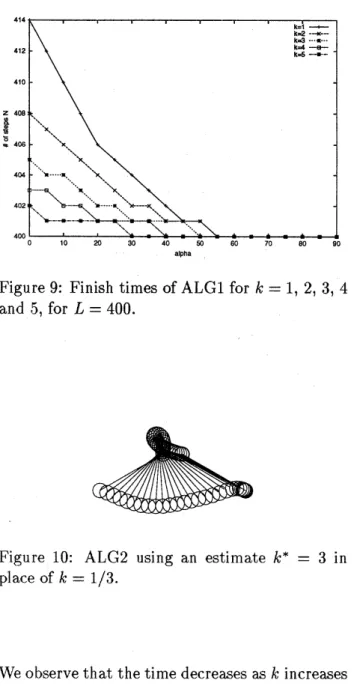
Fig. 8 and Fig. 9 show the finish times for $k=$
$1,2,3,4$and 5, for$L=200$ and 400, respectively.
Figure 6: ALGI for $k=3,$ $\alpha=30^{\mathrm{o}},$ $L=200$
.
Figure 7: ALGI for $k=3,$ $\alpha=30^{\mathrm{o}},$ $L=400$
.
Figure 8: Finish times of ALGI for $k=1,2,3,4$
Figure 11: ALGI with$k=1/3,$$\alpha=30^{\mathrm{o}},$$L=200$
.
Figure9: Finish times ofALGI for $k=1,2,3,4$
and 5, for $L=400$
.
Figure 10: ALG2 using an estimate $k^{*}=3$ in
place of$k=1/3$
.
Weobservethat the time decreases as $k$increases
when $\alpha\leq 60^{\mathrm{o}}$
.
This phenomenon is quitenatural,since smaller $\alpha$ implies more necessary rotation,
andlarger$k$ causes $B$ toslow down, thus allowing
$A$ to rotate more quickly.
Fig. 10 shows a motion generated by ALG2 for
$k=1/3,$ $\alpha=30^{\mathrm{o}}$ and $L=200$, where (for
sim-plicity) both robots use an estimate of$k^{*}=3$ in
place of the unknown $k$
.
(The estimates of $k$ by$A$ and $B$ may differ in real situations.) Note that
the robots successfully complete the task even
though their estimate $k^{*}$ is not at all close to
ac-tual $k$
.
However, the large discrepancy between$k^{*}$ and $k$ has resulted in a noticeable decline in
the performance in terms of the finish time –
the finish time ofALG2 in Fig. 10 is almost 28%
larger than that ofALGI in Fig. 11 for the same
instance.
4
Corridor with
a
Corner
The distributed approach works well also for the
case in which the robots must go through a 90
degree corner in a corridor avoiding both
robot-to-wall and $1\mathrm{a}\mathrm{d}\mathrm{d}\mathrm{e}\mathrm{r}- \mathrm{t}_{0^{-\mathrm{W}}}\mathrm{a}\mathrm{l}1$ collision. The motion
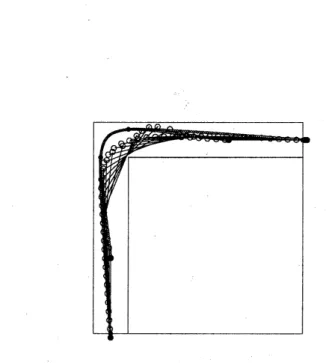
shown in Fig. 12 has been obtained by an
algo-rithm that is similar in spirit to the ones
pre-sented in the preceding section, with an
addi-tional step in which each robotcomputes a target
path through the corner before starting the
mo-tion. During the motion each robot attempts to
move along the path while adjusting its positions
based on both the $\mathrm{m}\mathrm{o}\mathrm{t}!\mathrm{o}\mathrm{n}$ of the other robot
ob-served through the force sensor and the need to
preventcollision. We assume that the robots can
detect how close they and the ladder are to the
walls, from their positions and the geometry of the workspace.
While the robots in the preceding section are
assumed to be identical in all aspects other than
their maximum speed, in this section we assume
that they may differ in a number of other
charac-teristics as well –(i) selection ofa path through
the corner (in, middle or out), (ii) the maximum
speed (high or low), (iii) adherence to the
in-tended path (high or low), and (iv) reaction to
the motion of the other robot (high, low, or
nonlin-ear). These variations result in atotal of36
differ-ent types of robots from which twoarechosen to
carry outthetask. Weassumethat the robots do
not know the characteristics of the other robot.
First, robot $R$ generates a path $P$ through the
corner as aKochanek-Bartels spline [6] that
trav-els either close to the inner walls of the corner
(in), close to the outer walls of the corner (out),
or somewhere in between the two (middle).
deter-Figure 12: Motion through a cornergenerated by
ALG3.
The robotsstart atthe bottom of thefig-ure and makes a right turn. The intended paths
of the robots
are
shown in small circles.mined by the following algorithm ALG3 that $R$
usesto computeits velocity vector. Itisassumed
that the offset$|\mathit{0}\urcorner$ can beaslarge as thethe radius
10 of the disk representing $R$
.
Algorithm ALG3
Step 1: $\vec{u}=(1/10)(\tilde{g}+f(\overline{o})+c\gamma$, where
$\bullet$ $\vec{g}$is avector of size 10directedfrom the
center of $R$toward the “current target
position”,
$\bullet$ $o\mathrm{i}arrow \mathrm{s}$the offset vector and $f$is afunction
that converts$\vec{o}\mathrm{i}\mathrm{n}\mathrm{t}\mathrm{o}$ anothervectorsuch
that$|f(\vec{O})|\leq 10$ (seedetails bel$o\mathrm{w}$),and
$\bullet$ $carrow$ is a suitable “correction vector”
needed to prevent collision. (We omit
the details of$c$)
$\sim$
.
The factor 1/10 effectively reduces the sizes
of$\vec{g}$and $f(\vec{o})$ to within 1.
Step 2: $\tilde{w}=\vec{u}$if $|\tilde{u}|\leq 1$, and $\vec{w}=\vec{u}/|\vec{u}|$ if $|\vec{u}|>$
$1$
.
That is, $\vec{w}$ is the result of “clamping”vector $\vec{u}$at length 1 so that
$|\vec{w}|\leq 1$
.
Step 3: Output the velocity vector $\vec{v}=V\vec{w}$,
where $V$ is the maximum speed of$R$
.
In our experiments the maximum speed $V$ of
$R$ can be either 2 (high) or 1 (low).
A robot with high adherence attempts to
re-turn to $P$ more quickly than one with low
ad-herence when it deviates from $P$
.
We control thead herence of$R$ bychoosingvector$\vec{g}$in Step 1
ap-propriately: If adherence is high then the “current
target position” (at which $\vec{g}$ is aimed) is chosen
to be a point on $P$ relatively close to the robot’s
current location. If adherence is low then $\tilde{g}$ is
di-rected toward a point on $P$ that is farther away.
(We omit the details of how such points are
ac-tually chosen in our experiments.)
Function $f$of Step 1 determines how$R$ reacts
tothe motion of the other robot observed through
$\tilde{o}$
.
We use the following three variations.1. high: $f(\vec{o})=\tilde{o}$
.
The robot is highly sensitiveto $\mathit{0}arrow$
.
2. low: $f(\mathit{0})arrow=0.5\tilde{o}$
.
The robot’s sensitivity islow.
3. nonlinear: $f(\vec{o})$ equals the zero vector $0arrow \mathrm{i}\mathrm{f}$
$|\mathit{0}\neg\leq 5$, and $2_{\mathit{0}^{\wedge}-}\tilde{O}/|\mathit{0}\neg$ if $|\mathit{0}\neg>5$
.
The robotreacts to $o\mathrm{o}\mathrm{n}\mathrm{l}arrow \mathrm{y}$ after its magnitude exceeds
5.
Note that $|f(\vec{O})|\leq|\mathit{0}\neg\leq 10$ holds in all three
cases.
The motion shown in Fig. 12 is obtained by
ALG3 where both robots use the same out path
and has the same low adherence. The robot in
front has high maximum speed and high reac-tion $(f)$, while the other robot has low maximum
speed and nonlinear reaction.
To evaluate ALG3 we randomly generate 100
pairs of robots from the pool of 36 robots and
ex-amine the probability that the task is completed
successfully (a motion is considered unsuccessful
ifthe offset exceeds 10). Thewidth of the corridor
is 200 and the ladder length $\ell$varies between 400
and 480. (The robots always fail when $\ell=490.$)
Thesuccess rate decreases from 100% for$\ell=400$
to 75% for $\ell=480$ if both robots are allowed
to choose a path that is either in, middle or out,
while the rate increasesto 100% for$\ell=480$if
nei-ther is allowed to choose an in path. However, if
we allow the robots’ adherence to be even higher
(than high), then the rate drops again to 57% for
$\ell=480$ even without in paths. The reader is
analysis of the effect of these parameters to the
overali
perfOrmanC.
$\mathrm{e}$.
5
Concluding Remarks
We have presented three distributed algorithms
for two robots carrying a ladder under various
conditions, and evaluated their performance
us-ing computer simulation. We arecurrently
work-ingon a detailed analysis ofALG3.
References
[1] Y. Asahiro, H. Asama, S. Fujita, I. Suzuki
and M. Yamashita, “Distributed algorithms
for carrying a ladder by omnidirectional
robots in near optimal $\mathrm{t}\mathrm{i}\mathrm{m}\mathrm{e}_{7}$” in Sensor
Based Intelligent Robots, H.I. Christensen,
H. Bunke and H. Noltemeier, Eds., Lecture
Notes in Artificial Intelligence, Vol. 1724,
Springer Verlag, Heidelberg, Germany, pp.
240-254, December 1999.
[7] Y. Kawauchi, M. Inaba and T. Fukuda,
“A principle ofdistiributed decision making
ofcellular robotic system (CEBOT),” Proc.
IEEE Int.
Conf.
on Robotics andAutoma-tion, pp. 833-838, 1993.
[8] K. Kosuge and T. Oosumi, “Decentralized
control of multiple robots handling and
ob-jects,” Proc. $IEEE/RSJ$Int.
Conf.
onIntel-ligent Robots and Systems, 556-561 (1996).
[9] N. Miyata, J. Ota, Y. Aiyama, J. Sasaki,
and T. Arai, “Cooperative transport
sys-tem with regrasping car-like mobile robots,”
Proc. $IEEE/RSJ$ Int.
Conf.
on Intelligent$Roh)ts$ and Systems, pp. 1754-1761, 1997.
[10] S. Nagafuji, Y. Asahiro, M. Yamashita and
I. Suzuki, “Time-optimal motion of two
heterogeneous robots carrying a large
ob-ject,” in Proceedings
of
1999 JointConfer-ence
of
Electrical and Electronics Engineersof
Kyushu (in Japanese), page 742, October1999.
[2] Y. Asahiro, H. Asama, I. Suzuki and M.
Ya-mashita, “Improvement of distributed
con-trol algorithms for robots carrying an
ob-ject,” in Proceedings
of
1999 IEEEInterna-tional
Conference
on$SystemS_{f}$ Man andCy-bernetics, pp. VI 608-613, October 1999.
[3] H. Asama, M. Sato, L. Bogoni, H. Kaetsu,
A. Matsumoto, and I. Endo, “Development
of an omni-directional mobile robot with 3
DOF decoupling drive mechanism,” Proc.
IEEE Int.
Conf.
on Robotics andAutoma-tion, pp. 1925-1930, 1995.
[11] J. Pearl, Heuristics - Intelligent Search
Strategies
for
Computer Problem Solving,Addison-Wesley, 1984.
[12] Z. Wang, E. Nakano and T. Matsukawa,
“Realizing cooperative object manipulation
using multiplebehavior-based robots,” Proc.
$IEEE/RSJ$ Int.
Conf.
on Intelligent Robotsand Systems, pp. 310-317, 1996.
[4] E.C.-H. Chang, “Distributed motion
coor-dination of two robots carrying a ladder
in a $\mathrm{c}\mathrm{o}\mathrm{r}\mathrm{r}\mathrm{i}\mathrm{d}\mathrm{o}\mathrm{r}_{7}$” MS Thesis, EECS
Depart-ment, University of Wisconsin-Milwaukee,
in preparation.
[5] Z. Chen, I. Suzuki, and M. Yamashita,
“Time optimal motion of two robots carrying
a ladder under a velocity constraint,” IEEE
Trans. Robotics and Automation 13, 5, pp.
721-729, 1997.
[6] D. Hearn and M.P. Baker, Computer