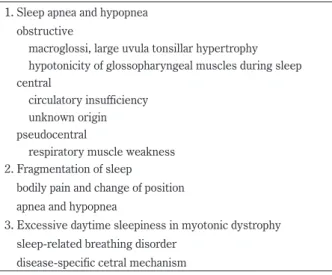
54:984 はじめに 筋力低下をきたすミオパチーや神経原性筋萎縮症などの神 経筋疾患にあらわれる睡眠障害は呼吸筋麻痺にともなう低酸 素血症と不可分の関係にある.比較的純粋な肺胞低換気を示 すデュシェンヌ型筋ジストロフィー(DMD)と中枢神経障害 もともなう筋強直性ジストロフィー(MD)を例にとりなが ら,神経筋疾患における睡眠障害について概要を述べる (Table 1). デュシェンヌ型筋ジストロフィーの睡眠・呼吸障害 呼吸筋力が低下して肺活量が減少しても,分時換気量を維 持することによって,直ちに低酸素血症と高炭酸ガス血症が 顕在化するわけではない.とくに DMD では骨格筋障害が高 度なために運動量が少ないこともあって日中に低酸素血症が 表れにくい.日中にはじめに低酸素血症が気付かれるのは食 事中である.食事中は一定時間息を止めなければならず,そ のために呼吸を調えなければならない.呼吸機能が低下する と予備力がなくなるので,食事前は酸素飽和度を維持できて も,食事開始とともに酸素飽和度は急激に低下しはじめる1). しかし一般的には初期の低酸素血症に気付かれるのは睡眠 中である.Smith らは DMD 患者 14 名に睡眠ポリグラフィー をおこなったところ,日中の血液ガス正常で睡眠関連呼吸症状 はなかったにもかかわらず,全員に無呼吸 / 低呼吸が出現し, 9名に酸素飽和度低下がみられた.また REM 期の 38%が低酸 素であったという2).尾方らによれば,%肺活量が 20%以下 に低下するころから睡眠中の低酸素血症が明らかとなる3). はじめは酸素飽和度の低下は REM 期に限られるが,進行に ともない非 REM 期にもあらわれる.睡眠ポリグラフィーは DMDに対して呼吸管理をおこなう上で重要であるといえる. DMDの夜間無呼吸/低呼吸が閉塞性であるか中枢性である かの判断は慎重でなければならない.筋力低下のために胸郭 の動きだけを観察していると閉塞性であっても中枢性と判断 されてしまう可能性があるからである.同時に測定した表面 筋電図や食道内圧が参考になる.一般には閉塞性無呼吸が主 体であると考えられているが,心筋障害にともなう循環不全 によりチェーン・ストークス呼吸があらわれることもある4). 10歳以前の患者に中枢性無呼吸が記録されたという報告も ある.閉塞性無呼吸の解剖学的な要因として,アデノイド・ 扁桃腺肥大などの年齢的要因,巨舌 咽頭狭小などの疾患特 異的要因,生理学的要因として,筋トーヌスの低下にともな
< Symposium 03-1 > 神経疾患における睡眠障害
神経筋疾患と睡眠障害
川井 充
1) 要旨: 神経筋疾患においては呼吸障害と睡眠障害は不可分の関係にある.デュシェンヌ型筋ジストロフィーで は低酸素血症がはじめにあらわれるのは REM 睡眠期で,進行すると持続的になる.呼吸筋力低下と上気道の閉塞 が原因である.主な症状は朝の覚醒不良,頭痛,食欲低下である.睡眠の分断は日中の過眠に結びつく.人工呼吸 器装着によって換気が保たれるとほとんどの問題が解決する.一方,筋強直性ジストロフィー 1 型では呼吸筋病 変に加えて中枢神経の異常による呼吸調節障害と睡眠障害が存在する.比較的呼吸筋病変が軽い段階から睡眠中 の低酸素血症が出現することがある.日中の過眠も重要な症状である.人工換気によって低酸素血症を是正しても 過眠は消失しない. (臨床神経 2014;54:984-986) Key words: デュシェンヌ型筋ジストロフィー,筋強直性ジストロフィー,睡眠障害,過眠,夜間低酸素血症 1)国立病院機構東埼玉病院〔〒 349-0196 埼玉県蓮田市黒浜 4147〕 (受付日:2014 年 5 月 21 日)Table 1 Sleep-related Problems in Neuromuscular Diseases. 1. Sleep apnea and hypopnea
obstructive
macroglossi, large uvula tonsillar hypertrophy hypotonicity of glossopharyngeal muscles during sleep central
circulatory insufficiency unknown origin pseudocentral
respiratory muscle weakness 2. Fragmentation of sleep
bodily pain and change of position apnea and hypopnea
3. Excessive daytime sleepiness in myotonic dystrophy sleep-related breathing disorder
神経筋疾患と睡眠障害 54:985 う軟口蓋,舌根の沈下をあげることができる. DMD患者が睡眠と関連して困ることの第 1 は入眠障害と 中途覚醒による睡眠の質の低下である.睡眠時無呼吸・低呼 吸のために日中の眠気を訴える患者は一部である.呼吸機能 低下はあるが呼吸不全にいたっていない DMD 患者のポリソ ムノグラフィーでは頻回の夜間覚醒による睡眠の断片化,睡 眠段階 1 の増加,REM 睡眠の減少,睡眠段階シフトの増加が 明らかになっている. DMDの予後推定に寄与する睡眠関連の指標は死亡あるい は鼻マスク人工呼吸開始をエンドポイントとすると,動脈血 炭酸ガス分圧,夜間最小動脈血酸素度,肺活量が相関するが, 観察開始年齢 BMI 口での吸気圧呼気圧は無相関であった という5). 夜間の低酸素・換気不全に対して非侵襲的人工呼吸などの 人工呼吸補助が必要である.薬物療法人工呼吸補助までの時 間稼ぎにすぎない.純粋な肺胞低換気に対して酸素単独投与 はおこなうべきではない. 筋強直性ジストロフィー 1 型の睡眠・呼吸障害 MDも高度の肺胞低換気にともなう低酸素血症と高炭酸ガ ス血症を呈するがその病態は DMD と大きくことなる.進行 する呼吸筋病変は確かに存在するが,夜間の低酸素血症の程 度と呼吸機能は相関しない3).中枢性の呼吸調節障害が存在 するためである.睡眠ポリグラフィーでは,無呼吸(中枢性 >閉塞性)と酸素飽和度低下,微小覚醒,むずむず脚症候群, 周期性下肢運動,REM 密度増加と REM 傾向,REM 調節障 害(筋活動低下をともなわない REM の増加),呼吸周期変動 大(覚醒時と軽睡眠期),1 回換気量変動大(覚醒時),軽睡 眠期に周期性呼吸などがみられるとされる6). MD患者の多くは高炭酸ガス血症が存在しても呼吸困難感 を訴えず,人工呼吸管理に対するコンプライアンスが低いの が特徴である.動脈血酸素分圧低下,炭酸ガス分圧の上昇に 対する換気応答が低下している.また過呼吸による炭酸ガス 分圧低下による呼吸抑制が高度で遷延する7). MD患者は日中の過眠を示すことが多い,睡眠断片化,睡 眠関連呼吸障害,周期的下肢運動などの睡眠障害が原因のひ とつとして考えられるが,人工呼吸管理によって夜間の低酸 素血症を是正しても必ずしも日中過眠は改善しない8).中枢 性の睡眠調節障害が存在すると考えられる.ナルコレプシー との類似性から髄液のオレキシン濃度がしらべられており, 低値を示す症例が存在するとの報告があるものの,オレキシ ンレベルは対照と有意差がなく,オレキシン受容体(HcrtR1 and HcrtR2)の mRNA スプライシングも対照と同じという報 告もあり,そのメカニズムは依然明らかではない9). 過眠に対する治療では,ナルコレプシーで有効なモダフィ ニルに関して,いくつかの比較的少数例のランダム化プラセ ボ対照クロスオーバー試験があり,日中過眠に対して効果が 示されているが,コクランレビューではルーチンで処方すべ きレベルのものではないとされている. MD患者にとって生活上の支障の原因は疲労と運動移動の 障害である.重大な自覚症状は手・腕の障害 93.5%,疲労 90.8%,ミオトニア 90.3%,睡眠障害または日中過眠 87.9% であった.訴えとして日中過眠を訴える患者はすべて疲労を 訴えるので,疲労の方が感度の高い症状であるといえる10). また両者があるととくに QOL の低下がいちじるしい. ※本論文に関連し,開示すべき COI 状態にある企業,組織,団体 はいずれも有りません. 文 献 1) 中山貴博,尾方克久,大城忠之ら.進行性筋ジストロフィー 患者における食事中低酸素血症.臨床神経 1999;39:436-440. 2) Smith PEM, Calverley PMA, Edwards RHT. Hypoxemia during
sleep in Duchenne muscular dystrophy. Am Rev Respir Dis 1988;137:884-888.
3) 尾方 克,久河野智,小宮 正ら.呼吸機能と夜間酸素飽和 度の対比からみた Duchenne 型および筋強直性ジストロ フィーにおける呼吸不全の相違 . 臨床神経 1996;36:850-853. 4) Lemay J, Sériès F, Sénéchal M, et al. Unusual repiratory
manifestations in two young adult with Duchenne muscular dystrophy. Can Respir J 2012;19:37-40.
5) Phillips MF, Smith PEM, Carroll N, et al. Nocturnal oxygenation and prognosis in Duchenne muscular dystrophy. Am J Respr Crit Care Med 1999;160:198-120.
6) Dauvilliers YA, Laberge L. Myotonic dystrophy type 1, daytime sleepiness and REM sleep dysregulation. Sleep Med Rev 2012;16:539-545.
7) 中山貴博,山本敦子,内山 剛ら.筋強直性ジストロフィー の呼吸調節機能異常.臨床神経 1999;39:1006-1009.
8) Guilleminault C, Phillip P, Robinson A. Sleep and neuromuscular disease: bilevel positive airway pressure by nasal mask as a treatment for sleep disordered breathing in patients with neuromuscular disease. J Neurol Neurosurg Psychiatry 1998; 65:225-232.
9) Ciafaloni E, Mignot E, Sansone V, et al. The hypocretin neurotransmission system in myotonic dystrophy type 1. Neurology 2008;70:226-230.
10) Heatwole C, Bode R, Johnson N, et al. Patient-reported impact of symptoms in myotonic dystrophy type 1 (PRISM-1). Neurology 2012;79:348-357.
臨床神経学 54 巻 12 号(2014:12) 54:986
Abstract
Neuromuscular disease and sleep disturbance
Mitsuru Kawai, M.D.
1)1)NHO Higashisaitama National Hospital