41
順天堂大学スポーツ健康科学部
School of Health and Sports Science, Juntendo University 41 順天堂スポーツ健康科学研究 第 7 巻第 2 号(通巻69号),41~91 (2016) 〈国際シンポジウム〉
「子どもの体力と運動・生活習慣に関する国際シンポジウム」報告
鈴木 宏哉A Report of ``International Symposium on Children and Adolescents:
Fitness Levels and Active Lifestyles''
Koya SUZUKI
Abstract
Unˆt, Inactive and Obesity are adequate terms to describe young people nowadays. Declining physical ˆtness and physical activity in children and youth around the world are recognized as global issues of com-mon concerns. In this symposium, we invited specialists of physical education and sports scientists from Asia and Africa. Invited speakers gave a presentation relating to physical ˆtness, lifestyle habit in each countries' children and adolescents based on the latest research ˆndings. We deepened a cooperative relationship between Asian and African researchers and got an advanced understanding of regional issues relating to children and adolescents through active discussion between speakers and participants. Invited speakers
Stanley Sai-chuen Hui(Professor, The Chinese University of Hong Kong, China)
Govindasamy Balasekaran(Associate Professor, Nanyang Technological University, Singapore) Jong Kook Song (Professor, Kyung Hee University, Korea)
Yiing Mei Liou (Professor, National Yang-Ming University, Taiwan) Dajiang Lu(Professor, Shanghai University of Sport, China)
Bee Koon Poh(Professor, The National University of Malaysia, Malaysia) Kallaya Kijboonchoo(Associate Professor, Mahidol University, Thailand) Abedalbasit Abedalhaˆz (Professor, The Hashemite University, Jordan) Grace Otinwa (Professor, University of Lagos, Nigeria)
Yoshiro Hatano(Professor emeritus, Tokyo Gakugei University, Japan)
. 国際シンポジウムの主旨 子どもの体力低下,不活動,肥満は世界的な問題 として認識されている.運動とスポーツによる子ど ものからだと心の健康づくりの方法論はグローバル な視点で捉える必要がある.平成27年度は順天堂大 学スポーツ健康医科学研究所の「子どもの健康づく りのためのスポーツ医科学研究拠点の形成(私立大 学戦略的研究基盤形成支援事業)」が最終年度を迎 える年であった.そこでこれまでの共同研究の成果 について,アジア・アフリカの研究者を招聘し,日 本人研究者との意見交換を通して,日本の子どもの 体力と運動・生活習慣の現状と課題を明らかにし, 多様な人種,多様な文化・教育の中で育つ子どもの からだと心の健康づくりの共通性と独自性について 理解を深めるきっかけとなるように国際シンポジウ ムが企画された.
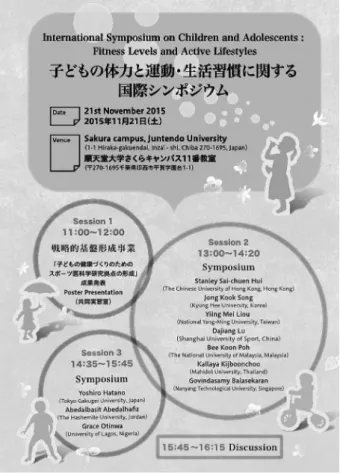
図 1 国際シンポジウムリーフレット表紙 . 開 催 概 要 国際シンポジウムは2015年11月21日(土)13時か ら順天堂大学さくらキャンパス11番教室において開 催された(図 1).国際シンポジウム開催に先立ち, 11時から「子どもの健康づくりのためのスポーツ医 科学研究拠点の形成(私立大学戦略的研究基盤形成 支援事業)」の成果発表として30演題のポスター発 表が行われた.国際シンポジウムは 2 つのセッショ ンとその後のディスカッションで構成された.
前半のセッションは「Reports from ``The Asia-Fit Study''」 で あ っ た . 発 表 者 は Stanley Sai-chuen Hui, Govindasamy Balasekaran, Jong Kook Song, Yiing Mei Liou, Dajiang Lu, Bee Koon Poh, Kallaya Kijboonchoo の 7 人であり,それぞれの国の子ども の体力,運動生活習慣,そして体育・スポーツ政策 について報告した.The Asia-Fit Study は香港中文
大学の Hui 教授が National University of Singapore (NUS) Initiative to Improve Health in Asia (NIHA) の研究助成を受けて実施された1215歳を対象とし た体力等の国際比較プロジェクトである.このプロ ジェクトに香港,ソウル,上海,台北,シンガポー ル,クアラルンプール,バンコクの研究者が参画 し,日本からは内藤久士教授(順天堂大学大学院) と私が参画した.
後半のセッションは「Reports from ``ICHPER・ SD Research Project''」であった.発表者は Yoshiro Hatano ( 波 多 野 義 郎 ), Abedalbasit Abedalhaˆz, Grace Otinwaの 3 人であり,波多野義郎名誉教授 ( 東 京 学 芸 大 学 ) か ら ICHPER ・ SD Research Project の概要説明があり,残りの 2 人は前半のセ ッションと同様に各国の様子について報告した. ICHPER・SD Research Project は現在,Internation-al Heは現在,Internation-alth-Related Children/Youth Physicは現在,Internation-al Fitness Test and Lifestyle Surveyが進行しており,波多野義 郎 名 誉 教 授 が Research Head , 私 が International Director として参画している.現在,トルコ,ナイ ジェリア,ヨルダンの調査が終了し,中国,中東地 区の調査が計画されている. 国際シンポジウムのディスカッションでは波多野 義郎名誉教授が司会進行を務め,フロアの参加者約 50名が議論を重ねた.特に,議論の焦点は日本人中 学生の持久力が高い理由に当てられ,日本における 学校体育の充実や運動部活動の特異性が話題のひと つにあがった. なお,国際シンポジウムにおける議論の一部は読 売新聞(2015年11月26日朝刊25面)に掲載されたの で参照されたい. . 招待講演者の発表内容及び寄稿論文 招待講演者の発表タイトルは下記の通りであっ た.また,招待講演者の一部からは講演内容をもと にした論文を寄稿して頂いた.その他の招待講演者 の発表内容については本人の許可を得た上で,発表 資料を掲載した.
43 43 順天堂スポーツ健康科学研究 第 7 巻第 2 号(通巻69号) (2016)
1) Stanley Sai-chuen Hui (Professor, The Chinese University of Hong Kong, China)
The Asia-Fit Study: Physical Activity, Fitness, & Obesity of Youth Among 8 Asian Metropolitan Ci-ties
2) Jong Kook Song (Professor, Kyung Hee Univer-sity, Korea)
Physical Activity, Physical Fitness and Obesity in Korean Adolescents aged 1215 years: The Asia-Fit Study
3) Yiing Mei Liou (Professor, National Yang-Ming University, Taiwan)
From Behavior to Environment: The Transitional Strategies of Physical Activity and Obesity Preven-tion in Taiwan
4) Dajiang Lu (Professor, Shanghai University of Sport, China)
Impact of physical activity level on physical health and life style of middle school boys in Shanghai 5) Bee Koon Poh (Professor, The National
Universi-ty of Malaysia, Malaysia)
Physical Activity and Fitness: Trends and Programmes for Children and Adolescents in Malay-sia
6) Kallaya Kijboonchoo (Associate Professor, Ma-hidol University, Thailand)
Physical Activity and Fitness, Lifestyle and Policy in Thailand
7) Govindasamy Balasekaran (Associate Professor, Nanyang Technological University, Singapore) Cardiovascular Fitness, Flexibility and Body Com-position association among Adolescents in Singapore 8) Yoshiro Hatano (Professor emeritus, Tokyo
Gakugei University, Japan)
Brief Outline of ICHPER.SD International Research Project
9) Abedalbasit Abedalhaˆz (Professor, The Hashe-mite University, Jordan)
Health, Physical Activity and Lifestyle of students in Jordan
10) Grace Otinwa (Professor, University of Lagos, Nigeria)
Physical Fitness Survey of Nigerian School Chil-dren: Pathway to Life-long Physical Activity and Quality Health . さ い ご に 日本の子ども達がおかれている環境や子ども達の 特徴は諸外国の子ども達のおかれている環境や諸外 国の子ども達の特徴を知ることで,より明確にな る.国内では子どもの体力は1985年頃をピークに 2000年頃まで低下し続け,現在に至るまで横ばい状 態かやや上昇していると指摘されているものの,ア ジア諸国の中では持久力に関してかなり高い水準に あることが明らかとなった. 国内では当たり前のように思えている教育環境が 他国からは特別に見える.各国の社会生活環境に合 ったヘルスプロモーションの在り方が求められてい ることは当然であるが,国際貢献が叫ばれる中,日 本が体育・スポーツ教育に関してアジア・アフリカ 諸国に貢献できることは多いのではないだろうか. 謝 辞 国際シンポジウムを開催するにあたり,ポスター 発表ならびにシンポジウム運営にご尽力いただいた 皆様,そして国際シンポジウムにご出席頂きました 皆様に感謝申し上げます.
45 45 Journal of Health and Sports Science Juntendo Vol. 7, No. 2 (No. 69) (2016)
47 47 Journal of Health and Sports Science Juntendo Vol. 7, No. 2 (No. 69) (2016)
49 49 Journal of Health and Sports Science Juntendo Vol. 7, No. 2 (No. 69) (2016)
51 51 Journal of Health and Sports Science Juntendo Vol. 7, No. 2 (No. 69) (2016)
53 53 Journal of Health and Sports Science Juntendo Vol. 7, No. 2 (No. 69) (2016)
55 55 Journal of Health and Sports Science Juntendo Vol. 7, No. 2 (No. 69) (2016)
57 57 Journal of Health and Sports Science Juntendo Vol. 7, No. 2 (No. 69) (2016)
59 59 Journal of Health and Sports Science Juntendo Vol. 7, No. 2 (No. 69) (2016)
61 61 Journal of Health and Sports Science Juntendo Vol. 7, No. 2 (No. 69) (2016)
63 63 Journal of Health and Sports Science Juntendo Vol. 7, No. 2 (No. 69) (2016)
65
Shanghai University of Sport, Shanghai 200438
65 Journal of Health and Sports Science Juntendo Vol. 7, No. 2 (No. 69) (2016)
Impact of Physical Activity Level on Physical Health and Lifestyle
of Middle School Boys in Shanghai
Lu Dajiang
Abstract
Objective: This study was conducted among third-grade junior middle-school boys using a physical health index test-covering body-shape, function and quality―and a questionnaire covering PE lessons, extra-curricular physical exercise, lifestyle, family sports participation, and self-awareness of physical health, on the basis of tests and questionnaires about Asian students' health, physical activity, and life habits.
Method: The subjects were 235 third-grade junior-middle school boys, aged 1415, from seven middle schools of four districts in Shanghai. They were divided into low, medium, and high level physical activity groups according to Physical Activity level classiˆcation and measured for height, weight, body fat, grip strength, number of sit-ups in one minute, a sit and reach test, and ˆfteen-meter progressive shuttle run times. The questionnaire included exercise habits, life conditions, and attitudes toward physical activity. This study was conducted during PE classes, employing the Asia Fitness Assessment Method, after obtaining signed consent from parents.
Result: This study assessed the impact of three diŠerent physical activity levels on indexes of body shape, function, and quality, revealing that the high level group had the lowest body fat percentage and BMI, while the low level group ranked highest in weight, fat percentage and BMI; the high level group performed best in body ante‰exion and 15-meter shuttle run times, and there was statistical signiˆcance (p<0.01) in the high aerobic capacity of the medium and low physical activity groups. When compared to the low physical activity group, the high physical activity group's daily diet (of water, fruit, vegetables, milk, meat, ˆsh, beans, and eggs) was more in accordance with knowledge of health and nutrition. The high and medium physical activity groups had a high percentage of students who participated in club activities, sports with friends, and exercised less than 30 minutes a day, and a small percentage who watched TV, and read while sitting. The high physical activity group was also more content with life than the medium and low physical activity groups.
Conclusion: Assessment of physical activity level among middle school students, by applying tests and questionnaires covering Asian students' health, physical activity and life habits, eŠectively re‰ects the relationship between the daily lifestyle and physical health of the students, indicating that the higher the daily physical activity level, the higher the positive eŠect on the teenagers' physical health.
Physical Activity and Energy Metabolism Research Group, Faculty of Health Sciences, Universiti Kebangsaan Malaysia, 50300 Kuala Lumpur, Malaysia
Physical Activity and Fitness: Trends and Programmes for Children and
Adolescents in Malaysia
Poh Bee Koonand Nor Izzati Anuar
Abstract
The prevalence of overweight and obesity among children and adolescents in Malaysia is rising, whilst physical activity levels are low and sedentariness is high. This paper aims to review the physical activity and ˆtness programmes, culture and environment that exist in Malaysia. The National Sports Policy and the One Student One Sport policy aim to improve the physical activity, ˆtness and health of Malaysians while cultivating a sport culture in the nation. Programmes include government initiatives at the school level, community and national levels as well as private sector initiatives. Commitment of the stakeholders and broad implementation may ultimately lead to more physically active and ˆtter Malaysians and consequently a healthier nation with a grounded sporting culture.
Keywords: child, physical activity, physical ˆtness, obesity, sports
Background
Malaysia has been named as the Asian country with the highest obesity rate based on data published in year 2014 by Ng et al.1)A secondary analysis of data from the National Health Morbidity Survey III
and found that prevalence of overweight among Malaysian primary school-age children (712 years) was high at 19.92). Among adolescents aged 13 to 17 years, the prevalence of overweight increased by
more than 10 in a decade, from 9.5 in 1997 to 19.6 in 20073).
Childhood obesity has become a matter of grave concern, which has been highlighted for many years, as its consequent long-term risks are serious. Childhood body mass index has been associated with type 2 diabetes, hypertension and coronary heart disease4). Also, Wee et al. reported that
Malaysian children aged 9 to 12 years who were overweight or obese had 16.3 times higher risk of developing metabolic syndrome as compared to normal weight children5).
In Malaysia, the increase in the overweight and obese population has been attributed to factors related to urbanisation6). The obesity phenomenon has been also been blamed on the obesogenic
environment7). In Malaysia, the over-abundance of food at any hour of the day or night8)9), and the
low physical activity and high sedentariness among its population10)11) is of particular concern.
Moreover, among primary-school aged children, Lee et al. reported that not only did 85 of children not meet recommended daily pedometer step counts, a majority of them were also sedentary with an average of 3.1 hours spent on screen time11).
Hence, this paper aims to review and highlight the health policies, programmes, culture and environment that are related to physical activity and ˆtness in Malaysia.
Health policies in Malaysia
According to WHO, health policy refers to decisions, plans, and actions that are undertaken to achieve speciˆc health care goals within a society12). In 2015, a review was conducted and found that
there was as yet no speciˆc policy for physical activity in Malaysia13). However, the Malaysian
67
Figure 1 Objectives of National Sport Policy Malaysia (Source: Ministry of Youth and Sports14))
67 Journal of Health and Sports Science Juntendo Vol. 7, No. 2 (No. 69) (2016)
population in its policies and strategies, including the National Sports Policy and the ``One Student One Sport'' policy14)15).
The National Sports Policy was developed to create a sport culture among Malaysians as the main goal14). This encompasses participation in sports and physical activities through Sports for All, High
Performance Sports and Sports as Industry. This policy outlines the objectives, strategies, roles and responsibilities of each government agency, non-governmental organisations, sports councils, institutions of higher learning as well as bodies and individuals involved in sports. Figure 1 shows the objectives of the policy to provide a basis for achieving the goal of a sports culture among Malaysians. Since sedentary behaviour often originates in childhood and adolescence may carry on into adulthood and lead to many adult chronic diseases16), the Malaysian government took an initiative to
develop a policy, which speciˆcally targets school children and adolescents. The ``One Student One Sport'' policy was introduced to the Malaysian education system in year 201115). This policy makes it
compulsory for every student to participate in at least one type of sport at school. The policy aimed to improve physical ˆtness, build self-esteem, provide a balance between academics and physical ˆtness, develop sports culture, and to provide a platform for excellence in sports for all school-going children and adolescents.
Physical activity programmes in Malaysia
There are many physical activity programmes that have been initiated and implemented in Malaysia. The programmes are not only conducted in schools or in the community, but also at the national and state levels.
School-based programmes
The school environment is an important setting for health education, intervention against physical inactivity and poor dietary intake and monitoring of body mass index17). Story et al. also reported that
physical activity can be added to the school curriculum without academic consequences and also can oŠer physical, emotional, and social beneˆts17).
Physical education is an important part of the school curriculum that provides the main opportunity for regular physical activity during school hours. A Ministry of Education directive that came into force in 1998 stated that the time allocation for physical education (PE) is 60 minutes a week for primary school children, and 40 minutes a week for secondary school children18). Apart from the
already limited amount of time allocated to health and PE in the school curriculum, there are many issues and challenges in the implementation of PE classes at the ground level.
According to Wee, many schools consider PE classes expendable, and the time is used to teach other subjects deemed to have more academic value, which is likely due to an examination-oriented school system19). Other challenges include teachers who are not PE majors, students (especially girls) that lack
enthusiasm for PE classes, and in some schools lack of facilities and equipment appears to be a constraint19). A study on physical activity and exercise among Malaysian adolescents found many
obstacles reported by school teachers, including a lack of ideas, skills, time and human resource to plan more programmes to promote a healthy school environment20). More disturbingly, there is a
widespread belief among Malaysian educators that active involvement in sport is the reason that student under-achievement21).
Apart from PE classes, there are several programmes that have been developed by various parties that aimed to improve the physical activity, nutrition and health of school-going children. The Ministry of Health has pioneered the My is Body Fit and Fabulous (MyBFF) programme, under which is a component for primary and secondary school children called the MyBFF@School22). Two other
programmes initiated by the universities are the Healthy Eating Be Active Trend (H.E.B.A.T!) programme targeted at primary school children23), and the Ceria, Respek, Gigih, Aktif, Sihat
(C.E.R.G.A.S.) programme, which translates to Cheerful, Respect, Determined, Active, Healthy24).
These programmes are development with the aim of managing childhood obesity, and are implemented either at school (MyBFF@School), or with a complement of overnight camps plus school-based and parental involvement (H.E.B.A.T! and C.E.R.G.A.S.). The intervention programmes included nutrition and health education activities, physical activity and exercise sessions as well as behaviour modiˆcation; and target outcomes related to body mass index and other anthropometric indicators as well as changes in dietary habits and physical activity.
National level programmes
At the national level, the Fit Malaysia programme was initiated in year 2014 by the Ministry of Youth and Sports25). It aims to facilitate the adoption of a healthy lifestyle by all Malaysians, and ultimately
turning the country into a sporting nation. The Fit Malaysia movement has been active since then with many groups planning their workouts together using a specially built ``Buddy'' application25).
The National Sports Day was declared by the Prime Minister of Malaysia in March 2015, and will be held on the second Saturday of October every year with the aim of instilling a sporting culture and lifestyle among Malaysians26). The inaugural National Sports Day was successfully observed on the 10th
69 69 Journal of Health and Sports Science Juntendo Vol. 7, No. 2 (No. 69) (2016)
the disabled, participating in more than 17,000 diŠerent sporting and ˆtness events organised by various stakeholders around the country26).
Apart from these two initiatives, there are many smaller programmes implemented and conducted by various stakeholders. These include Malaysia Cergas (``Fitness Malaysia''), a programme in existence since 198327); Sports for All Carnival since 199727), ``10,000 steps a day'' campaign introduced in
200928), 1Malaysia Health Ambassadors programme initiated by the Ministry of Health in 201129),
Jelajah Sihat (Healthy Exploration) carnival started in 201230), and the Nak Sihat (Want to be
Healthy) carnival in 201331).
Private Sector Initiative
One of the most successful private sector initiatives is the Jom Kurus 1Malaysia (Come Let's Be Lean 1Malaysia) challenge started by Kevin Zahri, an engineer turned personal ˆtness trainer32). The main
strengths of the very successful Jom Kurus challenge is that it provides a strong basis of health and nutrition education and community empowerment. Initiated in January 2014, this largest comprehensive weight loss challenge programme has over 150 participating locations in Malaysia. By January 2016, the 6-week Jom Kurus programme is already into its sixth season, and has already successfully reduced the weight and transformed the lives of a large proportion of its thousands of participants.
Conclusion
Malaysian children and adolescents are generally not physically active, and the prevalence of overweight and obesity is increasing at a worrying rate. There are many initiatives, strategies and programmes in place since decades ago that aim to improve the physical activity, ˆtness and health of Malaysians, both young and old. We opine that if the commitment of the stakeholders is good and the implementation and participation is broad, these eŠorts may lead to healthier lifestyles and a ˆtter Malaysia with a strong sport culture; otherwise the country may yet remain as the ``fattest'' in Asia.
References
1) Ng M, Fleming T, Robinson M, Thomson B, Graetz N, Margono C, et al. Global, regional, and national prevalence of overweight and obesity in children and adults during 19802013: a systematic analysis for the Global Burden of Disease Study 2013.The Lancet. 2014. 384(9945), 766781.
2) Naidu BM, Mahmud SZ, Ambak R, Mohd Sallehuddin S, Mutalip HA, Saari R, Sahril N, Abdul Hamid HA. Overweight among primary school-age children in Malaysia.Asia Paciˆc Journal of Clinical Nutrition. 2013. 22(3): 408 415.
3) Rampal GL, Sidik SM, Rampal S, Wong YD, Chow PL, Liew JS, Shum YS. Prevalence of overweight among secondary school students in Klang district, Selangor.Malaysian Journal of Nutrition. 2007. 13: 18.
4) Park MH, Falconer C, Viner RM, Kinra S. The impact of childhood obesity on morbidity and mortality in adulthood: a systematic review.Obesity Reviews. 2012. 13(11): 9851000.
5) Wee BS, Poh BK, Bulgiba A, Ismail MN, Ruzita AT, Hills AP. Risk of metabolic syndrome among children living in metropolitan Kuala Lumpur: a case control study.BMC Public Health. 2011. 11(1): 333.
6) Hazreen MA, Su TT, Jalaludin MY, Dahlui M, Chinna K, Ismail M, Murray L, Cantwell M, Sadat NA. An exploratory study on risk factors for chronic non-communicable diseases among adolescents in Malaysia: overview of the Malaysian Health and Adolescents Longitudinal Research Team study(The MyHeART study).BMC Public Health. 2014. 14(Suppl 3): S6.
7) Guthman J. Too much food and too little sidewalk? Problematizing the obesogenic environment thesis.Environment and Planning A. 2013. 45(1): 142158.
8) Khor GL. Food availability and the rising obesity prevalence in Malaysia.IeJSME. 2012. 6(suppl 1), S6168. 9) Lim SS. Obesity and dining out: An exploration of dietary trends in urban Malaysia. 2014. Thesis submitted for Masters
of Arts, University of South Florida, USA.
10) Baharudin A, Zainuddin AA, Manickam MA, Ambak R, Ahmad MH, Naidu BM, Cheong SM, Ying CY, Saad HA, Ahmad NA. Factors Associated With Physical Inactivity Among School-Going Adolescents Data From the Malaysian School-Based Nutrition Survey 2012.Asia-Paciˆc Journal of Public Health. 2014. 26(5 suppl): 27S35S.
other sedentary activities, are associated with measures of obesity during childhood. International Journal of Environmental Research and Public Health. 2014. 12(1): 14661.
12) WHO. 2010. Health Policy. http://www.who.int/topics/health_policy/en/ Accessed on 30 December 2015.
13) Hadiyani NZ. Development of the Malaysian Active Healthy Kids Report Card as a communication and advocacy tool for promoting physical activity among Malaysian children. 2015. Thesis submitted for Bachelor of Science, Universiti Kebangsaan Malaysia, Kuala Lumpur.
14) Ministry of Youth and Sports, Malaysia. National Sports Policy. 2009. Putrajaya, Malaysia: Department of Policy and Strategic Planning, Ministry of Youth and Sports.
15) Ministry of Education, Malaysia. One Student One Sport Policy. 2011. Putrajaya, Malaysia: Sports Division, Ministry of Education.
16) Schoˆeld G, Quigley R, Brown R. Does sedentary behaviour contribute to chronic disease or chronic disease risk in adults. New Zealand: Committee of Agencies for Nutrition Action. 2009. Pp. 128.
17) Story M, Nanney MS, Schwartz MB. Schools and obesity prevention: creating school environments and policies to promote healthy eating and physical activity.Milbank Quarterly. 2009. 87(1): 71100.
18) Ministry of Education, Malaysia. Directive on Implementation of the Physical Education and Health Education Subject. 1998. Kuala Lumpur, Malaysia: Director General of Education's O‹ce, Ministry of Education.
19) Wee EH. Contemporary Issues in the Teaching of PE in Malaysia.Journal of Physical Activity, Sports and Exercise. 2013. 1(1): 1720.
20) Hayati Adilin MA, Holdsworth M, McCullough F, Swift JA, Norimah AK. Whole school mapping to investigate the school environment's potential to promote a healthy diet and physical activity in Malaysia. Malaysian Journal of Nutrition. 2015. 21(1): 14.
21) Hashim HA, Golok F, Ali R. Proˆles of exercise motivation, physical activity, exercise habit, and academic performance in Malaysian adolescents: A cluster analysis. International Journal of Collaborative Research on Internal Medicine & Public Health. 2011. 3(6): 41628.
22) Aris T. My Body is Fit and Fabulous(MyBFF): Community-based intervention to combat obesity.Medical Journal of Malaysia. 2015. 70(Suppl. 1): 24.
23) Siti Sabariah B, Ruzita AT, Poh BK. Process evaluation of the H.E.B.A.T! Program: A randomized control trial intervention to combat childhood obesity in Negeri Sembilan. MASO 2015 Scientiˆc Conference on Obesity Abstract Book, 2015. Kuala Lumpur, Malaysia: Malaysian Association for the Study of Obesity. Pp. 35.
24) Lau XC, Poh BK, Ruzita AT, Wong JE, Lee XE, Koh D, Hazizi AS, Razalee S, Ng LO, Ahmad TJ, Hui SC. C.E.R.G.A.S programme improved health-related physical ˆtness in overweight and obese adolescents: A pilot study. MASO 2015 Scientiˆc Conference on Obesity Abstract Book, 2015. Kuala Lumpur, Malaysia: Malaysian Association for the Study of Obesity. Pp. 6869.
25) Ministry of Youth and Sports, Malaysia. Fit Malaysia. 2014. https://www.ˆt.my/content/about_us Accessed on 30 December 2015.
26) The Malaysian Insider. National Sports Day sets new record for biggest sporting event. 11 October 2015. http://www. themalaysianinsider.com/ citynews / greater-kl / article / national-sports-day-sets-new-record-for-biggest-sporting-event / national-sports-day-sets-new-record-for-biggest-sporting-event Accessed on 30 December 2015.
27) Singh S, Khoo S. Malaysia: Sport for All in Cultural Diversity. In: DaCosta LP, Miragaya A.(Eds.)Worldwide Experiences and Trends in Sport for All. 2002. Oxford, UK: Meyer & Meyer Sport (UK) Ltd.
28) The Star. 10,000 steps a day campaign to improve your health. 18 July 2009. http://www.thestar.com.my/story/?ˆle= 2F20092F72F182Fnation2F20090718204651 Accessed on 30 December 2015.
29) Bernama. Aznil Nawawi, Phoebe Yap, Uthaya Kumar Appointed 1Malaysia Health Ambassadors. 15 December 2011. http://www.bernama.com/bernama/v8/newsindex.php?id=634460 Accessed on 30 December 2015.
30) Sinar Harian. Karnival Jelajah Sihat Bersama Komuniti di 88 lokasi. 1 July 2012. http://www.sinarharian.com.my/ nasional/karnival-jelajah-sihat-bersama-komuniti-di-88-lokasi-1.62694 Accessed on 30 December 2015.
31) The Sun Daily. 70,000 join `Nak Sihat' campaign nationwide: Subramaniam, 7 September 2013. http://www. thesundaily.my/news/823464 Accessed on 30 December 2015.
32) CNN iReport. Jom Kurus: A Malaysian Weight Loss Success Story. 29 July 2015. http://ireport.cnn.com/docs/DOC-1260627 Accessed on 30 December 2015.
71
Institute of Nutrition, Mahidol University at Salaya, Phutthamonthon 4, Nakorn Chaisri, Nakorn Pathom 73170, THAILAND
71 Journal of Health and Sports Science Juntendo Vol. 7, No. 2 (No. 69) (2016)
Physical Activity and Fitness, Lifestyle and Policy in Thailand
Kallaya Kijboonchoo Ph.D, Wiyada Thasanasuwan MSc, Weerachat Srichan MSc, and Rittirong Unjana MSc.
Introduction
The available evidences suggest that the reduction of physical activity results in increaseing in obesity both in children and adult1). The energy imbalance (eat more energy from food and spend less energy
from physical activity), not having adequate exercise leads to fat accumulation and ends up with an obesity problem. This problem is known as the gateway to become the noncommunicable disease (NCDs) in the future. The report of the global situation in 2008 revealed that physical inactivity causes 9 (range 5・112・5) of premature mortality, ie., more than 5・3 millions of the 57 million deaths2). In
Thailand the report of health risk factor in 2009 showed that physical inactivity was number 8 health risk for Thai women that contributed 788,500 DALYs, and number 9 health risk for Thai men that contributed 581,220 DALYs3). It is imperative to see what has been done to promote physical activity
and ˆtness in Thailand.
Physical activity and physical ˆtness program in Thailand
In 1999, NutriFit program was carried out in school children in 2 settings, ie., in private and in government schools in Bangkok and the nearby province4). The physical ˆtness was measured at the
beginning of the program with the interpretation how ˆt they were, and the education materials and tools were provided to improve their physical ˆtness. Moreover, the pedometers were given to promote their daily physical activity. Then the rewards were given by the school authority for their success in improving their ˆtness at the end of the intervention.
The Minister of Public Health set up the in Health Promoting Schools Program in school setting5).
This was done by adopting health promoting policy in school both in primary and secondary schools throughout Thailand. It comprised of obesity management activity, raising awareness of weight control, healthy food provided in school canteen. Moreover, the physical activity promotion during the recess and during the physical education class are provided.
Later the CocaCola company launched the program called ``Thai Kids on the Move'' that emphasized the healthy lifestyle covered both physical activity and food/nutrition for health. From the year 20032008, this program covered 1 million school children in the 5th6thgrade in elementary school
in 4,000 schools all over Thailand.
Since 2004, Nestle (Thai) Ltd., in collaboration with the O‹ce of the Basic Education Commission, Ministry of Education, the Department of Health, and the Food and Drug Administration, Ministry of Public Health, jointly launched the ``Healthy Thai Kids'' program6). The program composed of the
``8-weeks Health Mission'' to improve Thai children's understanding of what makes a healthy diet and lifestyle. It provides educational materials under the concept ``Read, Adjust, Move, Change'' The simpliˆed educational materials for health promotion in creating the healthy lifestyle habit, proper food selection and increase in physical activity and ˆtness were provided through the interesting and fun games for school children. The content encourages them to change their habits and daily routines to be healthier. The program has distributed 23,570 sets of teaching materials to more than 13,000 schools
nationwide since the beginning of the program
The extension of the above program in 2015: ``The United for Healthier Kids (UFHK)'' is now focusing on behavioral change of the school children by emphasizing several stakeholders that in‰uence children's behavior such as mom's perception, the availability of the space and time in school to increase physical activity as well as the school policy.. Though it is still existing that the major physical activity barriers involving in academic achievement perception, too hot to play outside, and no time for playing after school due to the parents taking them to study more in academic tutoring schools.
This year Thai people enjoyed the celebrations of the very special occasion of Her Majesty the Queen's and His Majesty the King's birthdays that the ``Bike for Mom'' and ``Bike for Dad'' were organized and commemorated on August and December 2015, led by the Royal Prince of Thailand. The government provided full support in organizing the events that made people got access to the event, trained and joined the event throughout the country. More than half a million people participated in these occasions. This experience hopefully can get the participants to the habit of this biking activity, not only for the preparation but also for the last long activity.
Last but not least, due to funding by the NCDs' network under the Royal Thai Government and World Health Organization (WHO), In 2014 the Thai compendium of physical activity was carried out for Thai Physical Activity Guideline (TPAG)7). Later the information was disseminated and launched
through community health personnel. Training of trainer was carried out as a pilot study at the end of the year 2015 in order to investigate the eŠectiveness of physical activity promotion in the community8).
In the near future, Thai Health Promotion Foundation (ThaiHealth), has planned to host the 6th ISPAH Congress in partnership with International Society for Physical Activity and Health (ISPAH)9). Governed by an Executive Board that is chaired by the Prime Minister with revenues
derived from 2 of surcharged excise tax from the alcohol and tobacco industries annually, ThaiHealth has systematically driven health promotion over the country by means of sustainable ˆnancial mechanisms which has marked a milestone of health reform in Thailand. In line with AEC 2015 Health Promotion Policies, one of the key plans of ThaiHealth is to increase physical activity to 80 from the previous 2 years record at 68 by the year 202010).
In conclusions, several projects are now under way for physical activity promotion supported both from the government and the private sectors. It seems quite promising to see the improvement of the number of people who involved for their better heath and well being. It is challenging that at present the signiˆcant barrier is the availability of technology in social network that makes children even more sedentary than before. The sustainability in the long term to increase the number of Thai people doing physical activity is inevitably needed.
73 73 Journal of Health and Sports Science Juntendo Vol. 7, No. 2 (No. 69) (2016)
References
1) Kijboonchoo K. Energy balance and physical activity. Biomed Environ Sci. 2001 Jun; 14(12): 1306.
2) Lee IM, Shiroma EJ, Lobelo F, et al. EŠect of physical inactivity on major non-communicable diseases worldwide: an analysis of burden of disease and life expectancy. The Lancet 2012 Jul 21; 380(9838): 21929. doi: 10.1016/S01406736 (12)610319.
3) The O‹ce of Public Health. Report of the burden of disease and injury of Thailand in 2012.
4) Kijboonchoo K, Thasanasuwan W, Yamborisut U. NutriFit program to improve health-related ˆtness among young Thai school children. Food and Nutrition Bulletin 1999;(20)2: 231237.
5) Phaitrakoon J, Powwattana A, Lagampan S, et al. The diamond level health promoting schools(DLHPS) program for reduced child obesity in Thailand. Asia Pac J Clin Nutr 2014; 23(2): 293300.
6) www.Nestle.com
7) Jalayondeja C, Jalayondeja W, Vachalathiti R, Bovonsunthonchai S, Sakulsriprasert P, Kaewkhuntee W, et al. Cross-cultural adaptation of the compendium physical activity: Thai translation and content validity. J Med Assoc Thai 2015; 98 (Suppl. 9): S53S59.
8) www.pt.mahidol.ac.th/tpag 9) www.ispah2016.org
10) The O‹ce of Public Health. The ˆrst draft of National Strategy for Physical Activity Promotion in Thailand(2016 2020).
1 Nanyang Technological University, National Institute of Education, Physical Education & Sports Science, Human
Bioenergetics Laboratory, 1 Nanyang Walk 637616, Singapore
2 The Chinese University of Hong Kong, Shatin, Hong Kong
3 Concordia University Chicago, 7400 Augusta St, River Forest, IL 60305, United States
Cardiovascular Fitness, Flexibility and Body Composition association
among Adolescents in Singapore
Govindasamy Balasekaran1, Stanley Sai-Chuen Hui2, Dianna Thor1,
Victor Visvasuresh Govindaswamy3 and Ng Yew Cheo1
Abstract
Cardiovascular ˆtness(CF) is an important aspect of health-related ˆtness which is aŠected by lumbar and lower limb ‰exibility (LLLF), body fat percentage (BF) and body mass index (BMI). LLLF in young children increases their range of motion during running activities and may reduce injuries in sports. Purpose: To compare CF with LLLF, BF and BMI of adolescents in Singapore. Methods: One thousand ˆve hundred and sixty-one adolescents(841 males and 720 females, age: 13.5±1.2 years, height: 159.8±9 cm, weight: 51.8±12.8 kg, BMI: 20.1±4 kg・m-2and BF: 21.4
±10) from Singapore schools participated in this study. The Tanita BC81 Inner Scan was used to measure the participants' BF. The participants were also assessed for LLLF with the one-legged sit-and-reach test (SRT). Each limb was tested thrice and the best score for each limb was selected and averaged. CF was measured with a 15m youth PACER test(PACER). Results: The total cohort results were: SRT: 54.1±10.1 cm, BF: 21.4±10, BMI: 20.1±4 kg・m-2 and PACER: 40.9±
23.9 stages. Signiˆcant high correlation was found between total cohort BMI (20.12±3.98 kg・m-2)
and BF (21.37±9.96), r=0.794, p=0.00. Signiˆcant low correlation was found between total cohort SRT (54.09±10.15 cm) and PACER (40.82±23.81 stages), r=0.17, p=0.00, total cohort BF (21.37±9.96) and SRT (54.09±10.15 cm), r=0.092, p=0.00. Signiˆcant negative correlation was found between total cohort BF (21.37±9.96) and PACER (40.82±23.81 stages), r=-0.447, p=0.00. Scores for males in height, weight, BMI, BF and PACER stages were signiˆcantly diŠerent from that of the females except for SRT where there were no signiˆcant diŠerences: height (males: 162.54±9.83 cm, females: 156.53±6.48 cm), weight (males: 54.27± 14.35 kg, females: 48.75±10.02 kg), BMI (males: 20.4±4.3kg・m-2, females: 19.8±3.6kg・m-2),
BF (males: 17.6±10.3, females: 25.8±7.4), SRT (males: 53.00±52.30 cm, females: 55.36± 9.86 cm) and PACER (males: 50.6±26.5 stages, females: 29.3±12.7 stages) (p<0.05). Conclusion: Results indicate that males have higher CF as compared to females. Females have a higher BF that may hinder their performance in CF. An increase in LLLF in males with lower BF may assist in higher aerobic ˆtness due to the better range of motion and improved running economy. However, too much LLLF may also hinder aerobic ˆtness as it may interfere with repeated muscle contraction. BMI can be used as an indicative tool to monitor BF. In conclusion, LLLF, BF, BMI and CF are interrelated and may improve or hinder adolescents in their CF, which warrants further investigation.
Keywords: Body composition, Exercise Training, Children and Exercise, Exercise Prescription
Introduction
Flexibility and cardiovascular ˆtness (CF) are recognized as important aspects of health-related ˆtness in children and adolescents. According to American College of Sports Medicine (ACSM), ‰exibility is the ability to move a joint through its complete range of motion (ACSM, 2009). It is essential to maintain an adequate degree of ‰exibility as it is important to overall health and total well-being. Lumbar and lower limb ‰exibility (LLLF) in young children is important as it increases their
75
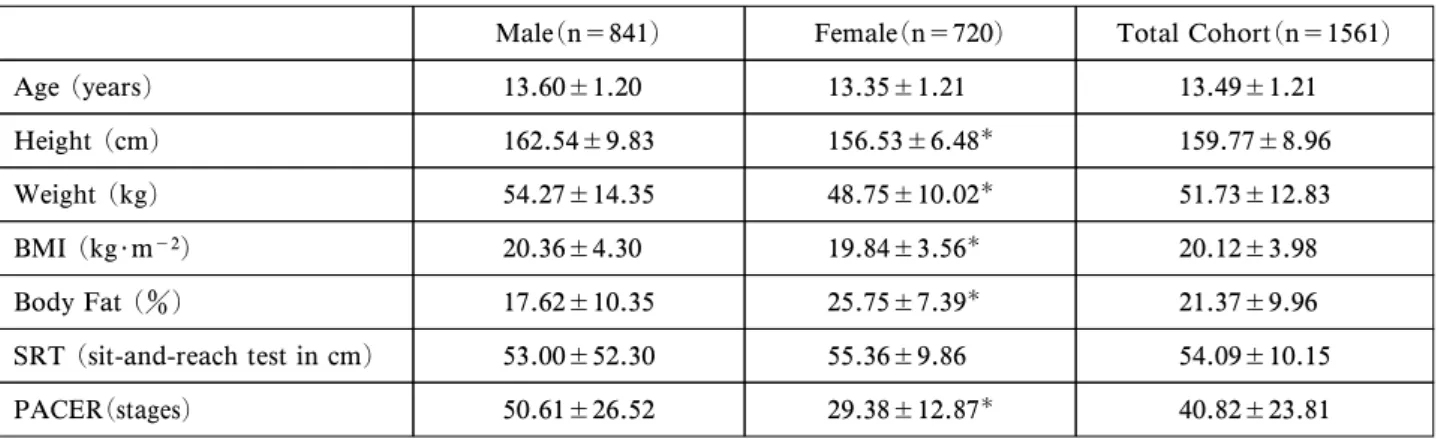
Table 1 Values in mean±SD, descriptive statistics of participants' age (years), height (cm), weight (kg), Body Mass Index(BMI (kg・m-2)), Body Fat Percentage (BF ()), One-legged Sit-and-Reach Test (SRT (cm)) and 15m youth
PACER test(PACER (stages)).
Male(n=841) Female(n=720) Total Cohort(n=1561)
Age(years) 13.60±1.20 13.35±1.21 13.49±1.21 Height (cm) 162.54±9.83 156.53±6.48 159.77±8.96 Weight(kg) 54.27±14.35 48.75±10.02 51.73±12.83 BMI(kg・m-2) 20.36±4.30 19.84±3.56 20.12±3.98 Body Fat() 17.62±10.35 25.75±7.39 21.37±9.96 SRT(sit-and-reach test in cm) 53.00±52.30 55.36±9.86 54.09±10.15 PACER(stages) 50.61±26.52 29.38±12.87 40.82±23.81
Indicates signiˆcant diŠerence p<0.05 between males and females
75 Journal of Health and Sports Science Juntendo Vol. 7, No. 2 (No. 69) (2016)
range of motion during running activities and may reduce injuries in sports especially those associated with ligaments, muscles and tendons. Tight muscles, ligaments, tendons and cartilage may restrict full range of movement during activities and may limit performance. Lack of ‰exibility in the lower back and posterior thigh regions may be associated with an increased risk for the development of chronic lower back pain (ACSM, 2000). Other studies have also shown signiˆcant prediction of lower back pain from impaired ‰exibility (Feldman, Shrier, Rossignol, & Abenhaim, 2001; Kujala, Taimela, Salminen, & Oksanen, 1994; Kujala, Taimela, Oksanen & Salminen, 1997).
Assessing CF in adolescents is also important, as having better CF is associated with lower cholesterol, lower blood pressure and lower risks to other related cardiovascular diseases. CF is related to the ability to perform large muscle, dynamic moderate-to-high intensity exercise for prolonged periods (ACSM, 2009). Having good CF in adolescents may lead to a healthier lifestyle, and if maintained; it may reduce the risk of cardiovascular diseases.
Body composition refers to the relative amounts of muscle, fat, bone and other vital parts of the body. Measuring the body fat percentage (BF) in adolescents allows the obesity rate in Singapore schools to be evaluated. BF has an impact on CF. Comparison of BF and one-legged sit-and-reach test (SRT) results may have an impact in improving CF among adolescents. BMI has been used in obesity and health risk assessment more frequently than BF. BMI is an easy-to-use assessment in schools but its eŠect on CF may be similar to BF as height and weight impacts the increase or decrease of oxygen consumption (Balasekaran et al., 2013).
Many studies have investigated ‰exibility and CF in adults but to date and according to the author's knowledge comparison between ‰exibility and CF in adolescents have not been investigated. In addition, the associations of CF with BF and BMI in adolescents in Singapore schools will be investigated.
Experimental Work
One thousand ˆve hundred and sixty-one adolescents from Singapore schools (841 males and 720 females) participated in this study. Body mass index (kg・m-2) was calculated based on their height
(cm) and weight (kg) assessed by standard methods as described in Balasekaran et al., (2012). The participants' BF was measured by Tanita BC-581 Inner Scan Body Composition Monitor. The test-retest reliability of BIA similar to Gupta et al., (2011) revealed no signiˆcant diŠerence between the trials of measurement of BF (r=0.99; p<0.01). The participants' descriptive statistics are presented
Table 2 Values indicate Healthy Fitness Zone results for One-legged Sit-and-Reach Test(SRT (cm)) or Back-Saver Sit and Reach in Boys and Girls, ages from 5 to>17.
Age Boys(inches) Girls(inches) Boys(cm) Girls(cm)
5 8 9 20 23 6 8 9 20 23 7 8 9 20 23 8 8 9 20 23 9 8 9 20 23 10 8 9 20 23 11 8 10 20 25 12 8 10 20 25 13 8 10 20 25 14 8 10 20 25 15 8 12 20 30 16 8 12 20 30 17 8 12 20 30 >17 8 12 20 30
Results highlighted in bold indicate that adolescents in Singapore have a healthy SRT range. Results are adapted from Fit-nessGram,The Cooper Institute. The cut-oŠ scores for the boys and girls have been reported by Looney and Gilbert (2012).
in Table 1.
The participants' maximal oxygen consumption (VO2max) was estimated through the 15m youth
PACER test (PACER), which measures CF. It involves running up and down 15m according to the timing of the beep signals that will increase in pace as the stages progress. Participants ran till volitional exhaustion and the last complete stage before exhaustion is recorded. Participants were given two verbal warnings before termination if they were unable to reach the 15m-mark when the beep sounded. The participants were also assessed for LLLF with SRT. This test is used commonly in schools to assess LLLF and it measures the ‰exibility of the left and right leg separately. Each participant had to remove his/her shoes, sit on the ‰oor with his/her leg straightened and the other knee bent. The outstretched foot was placed against the measurement box. Both hands were placed on top of each other with palms facing downwards; participant slowly reached out forward as far as possible along the measuring line. Participant repeated this three times each leg. The best scores from both limbs were averaged. The participants' measurements of CF, LLLF, BF and BMI were all taken during their Physical Education (PE) lessons. The tests were completed within two to three 1-hour PE lessons.
The investigation was approved by the Ethical Review Board of the Nanyang Technological University, Singapore and the Ministry of Education (MOE) Singapore. All participants and their parents/guardians were informed of the risks and beneˆts of the study, and gave their written consent to participate in it.
Data Analysis
77
Table 3 Healthy Fitness Zone results for 15m youth PACER test(PACER (stages)) in Males and Females, ages from 10 to 18.
PACER(15m Laps) Aerobic Capacity
Age Male Female Male Female
10 21 21 40.2 40.2 11 25 25 40.2 40.2 12 30 30 40.3 40.1 13 38 32 41.1 39.7 14 47 35 42.5 39.4 15 54 39 43.6 39.1 16 61 42 44.1 38.9 17 65 46 44.2 38.8 18 70 49 44.3 38.6
Results highlighted in bold indicate that male adolescents in Singapore have a healthy PACER test range. Results are adapt-ed from FitnessGram v10, The Cooper Institute. The ˆnal selectadapt-ed equation usadapt-ed to estimate aerobic capacity includes age and the number of laps performed(Mahar et al., 2013).
77 Journal of Health and Sports Science Juntendo Vol. 7, No. 2 (No. 69) (2016)
deviation (SD). Pearson product-moment correlation (r) and its P value were used to examine associations between the variables: SRT, PACER, BMI and BF. Mean diŠerences of variables between male and female participants was examined using the independent t-test. Statistical signiˆcance was accepted at the p<0.05 level. All analyses were performed using IBM SPSS Statistics for Windows 21.0 (2012) statistical package (Armonk, NY: IBM Corp.).
Results
Results indicate that there are signiˆcant diŠerences between male and female adolescents for BMI (kg・m-2), BF (), SRT (cm) and PACER (stages) (Table 4 and Figure 1). Table 4 indicates that
both males and females' SRT results (males: 53.00±52.30 cm, Females: 55.36±9.86 cm) have a healthy SRT range. Table 4 indicates that males' PACER results (males: 50.61±26.52 stages) have a healthy PACER test range.
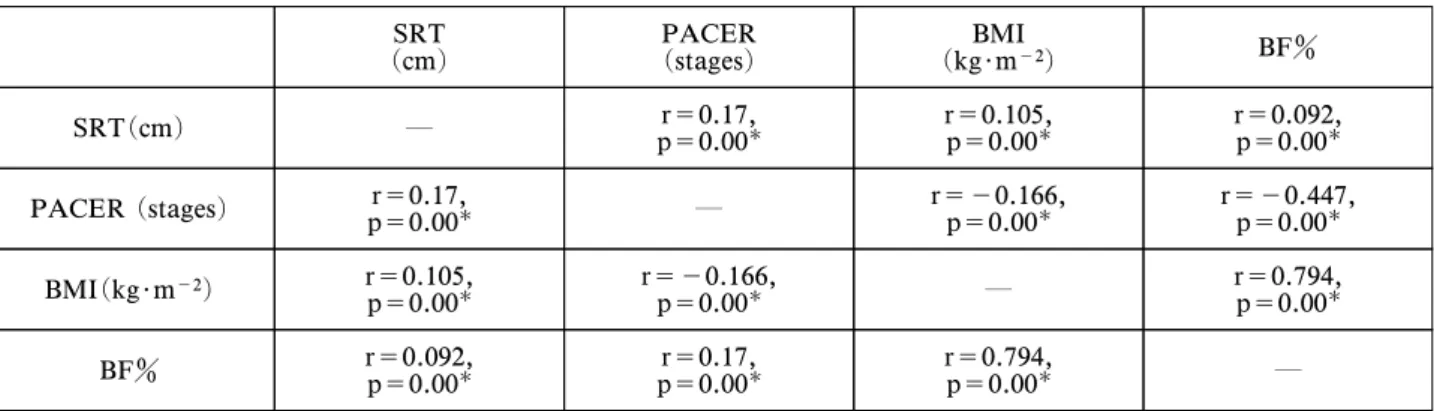
Correlation results showed that there was signiˆcant high correlation found between BMI (20.12± 3.98 kg・m-2) and BF (21.37±9.96), r=0.794, p=0.00 for the total cohort (Table 5). Signiˆcant
low correlation was found between SRT (54.09±10.15 cm) and PACER (40.82±23.81 stages), r= 0.17, p=0.00, BF (21.37±9.96) and SRT (54.09±10.15 cm), r=0.092, p=0.00 for the total cohort (Table 5). However, BF (21.37±9.96) had a signiˆcant negative correlation with PACER (40.82±23.81 stages), r=-0.447, p=0.00.
Discussion
Results from this study indicate that there is low signiˆcant correlation between SRT and PACER test in adolescents. Although the assessment of LLLF and CF here shows little associations between the variables, these two areas of ˆtness are still important to sports performance in adolescents. ACSM states that ‰exibility is important in athletic performance (e.g. ballet, gymnastics) and in the ability to carry out the activities of daily living. In addition, there are studies that have shown that reduced stiŠness in the elastic components of the upper body musculature has an impact on performance
Table 4 Table shows values in mean±SD of One-legged Sit-and-Reach Test (SRT (cm)), Body Mass Index (BMI (kg・ m-2)), Body Fat Percentage (BF ()) and 15m youth PACER test (PACER (stages)) in comparison between males
(n=841) and females (n=720).
Male(n=841) Female(n=720) Total Cohort(n=1561) SRT(sit-and-reach test in cm) 53.00±52.30 55.36±9.86 54.09±10.15
BMI(kg・m-2) 20.36±4.30 19.84±3.56 20.12±3.98
Body Fat() 17.62±10.35 25.75±7.39 21.37±9.96
PACER(stages) 50.61±26.52 29.38±12.87 40.82±23.81
Indicates signiˆcant diŠerence between males and females.
Figure 1 Values in mean±SD of One-legged Sit-and-Reach Test (SRT (cm)), Body Mass Index (BMI (kg・m-2)),
Body Fat Percentage (BF ()) and 15m youth PACER test (PACER (stages)) in comparison between males (n=841) and females (n=720). Refer to Table 4 for mean±SD.
Indicates signiˆcant diŠerence between males and females
improvement after ‰exibility training (Wilson, 1992). Tightness in muscles (e.g. hamstring muscles) has been observed to be weaker in eccentric contractions and in concentric contractions at low velocities (Johhagen, 1994). Moreover, maintaining ‰exibility of all joints facilitates movement; in contrast, when an activity moves the structures of a joint beyond a joint's shortened range of motion, tissue damage can occur (ACSM, 2009). In a study by Witvrouw et al. (2003), indicated that soccer players with hamstring ‰exibility of less than 90°have a signiˆcantly higher risk of injuries and should be advised to perform a thorough stretching program to decrease their injury risk. Two other studies (Cortez-Cooper et al., 2008; Yamamoto et al., 2009) have reported a connection between ‰exibility and arterial stiŠening. Both stretching training program and high sit-and-reach values have been linked with less arterial stiŠening.
Therefore, adolescents should continue to maintain good ‰exibility to improve their range of motion that will assist them in their performance in physical activity and activities during daily living. The results of this study (SRT: Males: 53.00±52.30 cm, Females: 55.36±9.86 cm; PACER: Males: 50.61 ±26.52 stages, Females: 29.38±12.87 stages) (Table 4) indicate that both males' and females' ‰exibility are above the health ˆtness index according to FitnessGram established by the Copper
79
Table 5 R values indicate low signiˆcant correlation between One-legged Sit-and-Reach Test (SRT(cm)) and 15m youth PACER test (PACER (stages)); Body Fat Percentage (BF) and One-legged Sit-and-Reach Test (SRT (cm)) for total cohort. R values indicate signiˆcant negative correlation between Body Mass Index (BMI (kg・m-2)) and 15m
youth PACER test(PACER (stages)); Body Fat Percentage (BF) and 15m youth PACER test (PACER (stages)). R values indicate high signiˆcant correlation between Body Mass Index(BMI (kg・m-2)) and Body Fat Percentage
(BF).
SRT
(cm) PACER(stages) (kg・mBMI-2) BF
SRT(cm) ― p=0.00r=0.17, r=0.105,p=0.00 r=0.092,p=0.00
PACER(stages) p=0.00r=0.17, ― r=-0.166,p=0.00 r=-0.447,p=0.00
BMI(kg・m-2) r=0.105,
p=0.00 r=-0.166,p=0.00 ― r=0.794,p=0.00 BF r=0.092,p=0.00 p=0.00r=0.17, r=0.794,p=0.00 ― Indicates signiˆcant correlations between variables.
79 Journal of Health and Sports Science Juntendo Vol. 7, No. 2 (No. 69) (2016)
Institute. In addition, the males' CF is above the health ˆtness index indicating that ‰exibility may have some impact on their CF.
CF, in terms of VO2max, is highly associated with lean muscle mass, and there is moderately high
negative correlation between BF and PACER (r=-0.447, p=0.00). The negative relationship of excess body weight carried in the form of body fat negatively impacts performance in the PACER test and thus, is related to decrease in the VO2max(Buskirk & Taylor, 1957). Studies conducted have shown that CF of obese adolescents was signiˆcantly improved by physical training as a consequence of a reduction on both visceral and total body adiposity (Gutin, 2002). With lower BF, there are increases in CF as the lean muscle, which is a metabolically active tissue, plays an important role in oxygen consumption. Increases in the volume of oxygen consumption will eventually lead to better performance in sports and physical activity. Adolescents with higher CF may have a reduced risk of possible cardiovascular diseases if CF is maintained during adulthood.
BMI can be used as an indicative tool to estimate students' BF, as BMI and BF are signiˆcantly correlated (r=0.794, p=0.00). However, the dual-energy X-ray absorptiometry (DEXA) has been validated against the four compartment model and has been proven to be gold standard for BF, bone mass density (BMD) and fat free mass (FFM) estimation (Balasekaran, 2010). As an inexpensive mechanistic method, BMI is a simple and free tool to use in schools for PE teachers and educators to use to monitor students' overall health and ˆtness. EŠectiveness of exercise programmes and PE classes in schools can be monitored with BMI since high BMI is indicative of higher BF. However, a rugby player or a student engaged in higher levels of exercise may weigh more than the ideal body mass based on height-weight norms and the extra weight of this rugby player could be attributed to greater muscle mass rather than fat (Balasekaran and Loh, 2009). Despite their heavier weights, their BF could be at acceptable health levels (Balasekaran, 2003).
Using BMI as an economical tool to estimate students' BMI, PE teachers can also adjust PE lessons accordingly to cater to students' needs to reach optimal and safe intensity during physical activities. Obese students need targeted intervention to reduce body fat and may not do well if activities are combined with students with higher ˆtness levels.
Performance of exercise or physical activity depends on the functional state of the respiratory, cardiovascular and skeletal muscle system (ACSM, 2009). Adolescents need a holistic regular exercise
regime to maintain good CF, ‰exibility, as well as, body composition. Conclusion
While it is conventional knowledge that BF is highly associated with CF, this study has shown this phenomenon even among adolescents. Although the assessment showed little correlation between LLLF and CF, LLLF plays an important part in running performance since the range of motion directly impacts one's running economy. However, too high LLLF may also impact running performance as it may adversely aŠect repeated muscle contractions due to too much range of motion like hyperextension. This high ‰exibility may decrease energy propulsion for stride frequency and stride length. This aspect of ‰exibility and their eŠect on CF warrants more controlled investigations.
Adolescents should continue to maintain good ‰exibility and with regular physical activity, it will reduce the risk of possible cardiovascular diseases in the later stages of life. High levels of CF are associated with higher levels of habitual physical activity, which in turn are associated with many health beneˆts (Blair et al., 1998, Sesso et al. 2000).
The results of this study may indicate to PE teachers to have a creative, fun and a holistic program catered to adolescents to increase CF and ‰exibility. The direct consequence of higher CF will be a reduction in BF and PE teachers can keep track of students' BF and obesity rate by using BMI as an indicative tool. However, this should be a cautionary approach as setting an age-related BMI cut-oŠ limit is one way to ˆt the measure on physical growth in children, which is inadequate as the developmental age is not factored in (Balasekaran and Loh, 2009). Also, students who are classiˆed overweight may not necessarily be obese as they may have higher muscle mass instead of higher BF (Balasekaran and Loh, 2009). Schools may want to consider including activities that consists of ‰exibility exercises during PE lessons. In addition, having continuous 20 minutes or 30 minutes (5 minutes rest in between 30 minutes) of a variety of modiˆed sports/games may help to improve CF in children (Balasekaran, 2014). This enables adolescents to gain health beneˆts and inculcate good lifetime exercise habits.
To conclude, CF, BF, BMI and LLLF are interrelated to improve or hinder CF in adolescents, however this warrants further investigation.
Acknowledgements
We thank all the participants who participated in this study.
This work was carried out with the aid of a research grant (NIHA20111007) from the NUS Initiative to Improve Health in Asia (NIHA) coordinated by the Global Asia Institute of the National University of Singapore and supported by the Glaxo Smith Kline-Economic Development Board (Singapore) Trust Fund.
References
1) American College of Sports Medicine. (2000). ACSM's guidelines for exercise testing and prescription 6th edition.
Lippincott Williams & Wilkins.
2) American College of Sports Medicine. (2009). ACSM's guidelines for exercise testing and prescription 8th edition.
Lippincott Williams & Wilkins.
3) Blair SN, Kohl HW, Barlow CE, et al. Changes in physical ˆtness and all-cause mortality: a prospective study of healthy and unhealthy men. JAMA. 1995; 273: 10938.
4) Blair SN, Kohl HW, PaŠenbarger Jr RS, et al. Physical ˆtness and all-cause mortality: a prspective study of helath men and women. JAMA. 1998; 262: 23952401.
5) Buskirk, E.R., & Taylor, H.L. (1957). Maximal oxygen intake and its relation to body composition, with special reference to chronic physical activity and obesity. Journal of Applied Physiology,11, 7278.
6) Balasekaran, G. & Loh, M. K. (2009). School Physical Education Programmes: Health & Fitness Issues and Challenges. In Aplin, N.(Ed.), An Eye on the Youth Olympic Games 2010: Perspectives on PE and Sport Science in
81 81 Journal of Health and Sports Science Juntendo Vol. 7, No. 2 (No. 69) (2016)
Singapore(pp. 5060). Singapore: McGraw-Hill.
7) Balasekaran, G., Gupta, N., Govindaswamy, V. V., Wang, P. K. & Bakri, A. Z.(2014). Physical Education Story: A Journey of Transformations in Singapore. IN Chin, M. K. & Edginton, G. (EDS.), Physical Education and Health: Global Perspectives and Best Practice(PP. 409420). Urbana, IL,: Sagamore Publishing LLC.
8) Balasekaran, G., N. Gupta, and V. V. Govindaswamy. Body composition: Assessment, components, and hydration. (2010).
9) Balasekaran, G. (2014). OMNI Scale of Perceived Exertion: Self-Regulation of Exercise Intensity in Youths and Pedagogical Approaches for Youths in Physical Education in Singapore.The Asian Journal of Youth Sport, 1(1), 4350. 10) Balasekaran, G., et al. OMNI Scale of Perceived Exertion: mixed gender and race validation for Singapore children
during cycle exercise. European journal of applied physiology 112.10(2012): 35333546.
11) Balasekaran, G., L. M. Keong., V.V. Govindaswamy., C. S. Juan. Omni Scale Perceived Exertion responses in obese and normal weight male adolescents during cycle exercise. J Sports Med Phys Fitness 2013; 53: 12.
12) Feldman, D.E., I. Shrier, M. Rossignol, & L. Abenhaim. (2001). Risk factors for the development of low back pain in adolescence. American Journal of Epidemiology,154, 3036.
13) FitnessGram. Back-saver Sit and Reach and Aerobic Capacity Test Results.The Cooper Institute 2010. https://www.hebisd.edu/uploaded/Departments/PE_Health/Fitnessgram/5_Flexibility.pdf
http://www.cooperinstitute.org/pub/ˆle.cfm?item_type=xm_ˆle&id=3739
14) Gupta, N., Balasekaran, G., Govindaswamy, V. V., Chia, Y. H., & Lim, M. S. (2011). Comparison of body composition with bioelectric impedance (BIA) and dual energy X-ray absorptiometry (DEXA) among Singapore Chinese. Journal of Science and Medicine and Sport, 14,(1), 3335.
15) Gutin, Bernard, et al. EŠects of exercise intensity on cardiovascular ˆtness, total body composition, and visceral adiposity of obese adolescents. The American journal of clinical nutrition 75.5(2002): 818826.
16) Heyward VH, Stolarczyk LM. Applied Body Composition Assessment. Champaign, IL: Human Kinetics 1996. 17) Jonhagen, Sven, Gunnar Nemeth, and Ejnar Eriksson. Hamstring injuries in sprinters the role of concentric and
eccentric hamstring muscle strength and ‰exibility.The American Journal of Sports Medicine 22.2 (1994): 262266. 18) Kujala, U.M., Taimela, S., Oksanen, A.,& Salminen, J.J. (1997). Lumbar mobility and low back pain during
adolescence: A longitudinal three-year follow-up study in athletes and controls. The American Journal of Sports Medicine, 25(3), 363368.
19) Kujala, U. M., Taimela, S., Salminen, J. J., Oksanen, A.(1994). Baseline anthropometry, ‰exibility and strength characteristics and future low-back pain in adolescent athletes and nonthletes: A prospective one-year follow-up study.Scandinavian Journal of Medicine and Science in Sports, 4, 200205.
20) Looney, M. A., & Gilber, J. (2012). Validity of alternative cut-oŠ scores for the back-saver sit and reach test. Measurement in Physical Education and Exercise Science, 16, 268283.
21) Mahar, M. T. et al.(2013). Estimation of aerobic ˆtness from PACER performance. Manuscript in preparation. 22) Protas EJ. Flexibility and range of motion. In: Roitman JL, editor. ACSM's Resource Manual for Guidelines for
Exercise Testing and Prescription. Baltimore (MD): Lippincott Williams & Wilkins; 2001. P. 381390.
23) Sesso HD, PaŠenbarger Jr RS, Lee IM. Physical activity and coronary heart disease in men: The Harvard Alumni Healthy Study. Circulation. 2000; 102: 97580.
24) Wilson GJ, Elliott BC, Wood GA. Stretch-shorten cycle performance enhancement through ‰exibility training. Med Sci Sports Med 1992 Jan; 24: 11623.
25) Witvrouw, Erik, et al. Muscle ‰exibility as a risk factor for developing muscle injuries in male professional soccer players a prospective study. The American Journal of Sports Medicine 31.1(2003): 4146.
83 83 Journal of Health and Sports Science Juntendo Vol. 7, No. 2 (No. 69) (2016)
The Hashmite University, dept. of coaching and sport management.
The level of participation in physical activity among Jordanian students
Abedalbasit Abedalhaˆz
Abstract
The purpose of this study was to examine the levels of physical activity among male and female Jordanian students from 1st grade to 9th grade. Nine hundred subjects from Zarqa educational area successfully completed the physical tests (‰exibility, muscular endurance, force, and power). Descriptive statistical techniques, person correlation coe‹cient, means, standard deviation and analysis of variance were used to analyze the study's results.
Results showed a moderate level of participation in physical activity in general, male students were physically more active than female because of some cultural issues and the volume of expectation from parents toward males, as well the encouragement that boys receive from parents in related to participation in physical activity. Also, results indicated that the PE classes at Jordanian schools for this stage of learning are one to two classes, which are insu‹cient to keep students healthy, and in some cases the teachers who teach PE classes are not specialized in physical education.
Researcher recommended conducting more research regarding participation in physical activity among other cities and educational stages at Jordan, also, trying to increase PE classes at Jordanian schools.
85 85 Journal of Health and Sports Science Juntendo Vol. 7, No. 2 (No. 69) (2016)
87
Department of Human Kinetics and Health Education, Faculty of Education, University of Lagos, Nigeria Department of Human Kinetics and Health Education, Faculty of Education, University of Ibadan, Nigeria
87 Journal of Health and Sports Science Juntendo Vol. 7, No. 2 (No. 69) (2016)
Original Paper
Physical Fitness Survey of Nigerian School Children: Pathway to Life-long
Physical Activity and Quality Health
Grace O. OTINWA, Ademola O. ABASS, Oladele I. OLADIPO, Mercy A.C. ONWUAMA, and Celina M. ADEWUNMI
Abstract
This study determined and compared the physical ˆtness status of school children/adolescents in two major cities in South-West Nigeria, using the International Health-Related Children/Youth Physical Fitness Test and Lifestyle Survey of the International Council for Health, Physical Education, Recreation, Sports and Dance. One thousand and thirty one primary and secondary school children who volunteered and gave consent served as participants. Fitness variables measured include: muscular strength, muscular endurance, aerobic capacity, explosive power and coordination, hip ‰exibility and body mass index. Results were presented as means, standard deviation and t-test along gender diŠerences and cities; simple percentage and frequency counts were used to analyze questionnaire on lifestyle. The ˆndings of this study indicated signiˆcant diŠerences in all the variables compared between female and male except in hip ‰exibility where female participants rated better than boys. Gender imbalance is seen in most of the ˆtness parameters all in favour of males. Possible reasons for these is diŠerence include social, cultural and recreational patterns of children. Signiˆcant diŠerences also existed between children classiˆed under urban and rural categories in physical characteristics and health related ˆtness components of muscular strength, muscular endurance, explosive power and coordination, ‰exibility and cardiorespiratory endurance. It has been recommended that an eŠective intervention programme that will lead to changes in the health related ˆtness levels of children are required in other to extend the lifespan of Nigerians. It is hoped that the present life expectancy at birth which is at 52 years would have improved as children and adolescents approach adulthood. Speciˆcally, the Federal and State Ministries of Education should embark on a review of the existing curriculum and co-curriculum programmes in the country in other to provide opportunities for children to be physically active during and after school hours.
Key words: Fitness, Lifestyle, Health, Physical Activity, Nigeria
1. Introduction
The human body evolved to be physically active and also requires activity to remain healthy. The pre-agrarian era was characterized by the survival of human species who depended on hunting, gathering of food supplies and pursuits that demanded prolonged and often strenuous physical activity. The advent of mechanization and modern technology in the last few decades has resulted in the human race becoming less physically active and ˆt than ever before (Otinwa, 2014). Today, computers and social media have decreased the need for and desire of children to move and play. Participation in physical activity also decreases with age, and this decline is greater in girls than in boys (American College of Sports Medicine ACSM, 2015). The decrease in physical activity has led to a global increase in the prevalence of overweight and obesity among children and adolescents.
Washington et al (2001) observed that the nature of children's recreational pursuits has changed dramatically over the last few decades. Whereas children spent much of their recreational time engaged