Introduction
A majority of dental patients fear dental treatment. Some
papers say that as much as 3% to 7% of the population suffer from high levels of dental anxiety, which leads to avoidance of dental treatment
1-4. Previous studies suggest that dental anxiety often leads to avoidance of dental treatment, deterio- ration of the patientʼs oral condition, elevation of the severity of dental treatment phobia. This threatens the patientʼs men- tal and general health in addition harming the patientʼs qual- ity of life
5-8. Furthermore, previous studies have reported some dental situations act as a trigger to induce dental anxi- ety, such as pain
5,7-9, a root canal treatment or injections
5,7-10, distress caused by the dentistʼs behavior
5,10-13, distress caused by emotional responses from dental treatment
7,12,14, and dis- tress caused by hearing stories about dental episodes from informants
11. However, this previous literature did not rely
on the criteria of post-traumatic stress disorder (PTSD) to identify the relationship between dental treatments and den- tal anxiety. PTSD is a psychiatric disorder that is caused by the experience or witnessing of traumatic or life-threatening events
15,16. PTSD carries the risk of chronic morbidity, mor- tality, increased physical problems, psychiatric disturbances or impairment of interpersonal-professional functioning. Al- though dental treatments are not life-threatening events, Mol et al. reported that both life-threatening events and traumatic events could generate PTSD symptoms (re-experience of trauma, avoidance, loss of interest or insomnia)
17. De Jongh et al. suggested about half of severe dental anxiety patients suffered from symptoms that are typically reported by pa- tients with PTSD
14. De Jongh et al. also suggested that pa- tientʼs expectations of repeating a negative experience dur- ing dental treatment caused them to feel apprehension and anxiety
14. Moreover of patients with a high level of dental
MS#AMN 07173
The denyning of patient’s appeal for additional local anesthesia is related to post-traumatic stress disorder symptoms about dental treatment.
Naoki Itoh1, takao Ayuse2
1 Assistant Professor, Nagasaki University Graduate School of Biomedical Science, Department of Clinical Physiology, Nagasaki, Japan
2 Professor, Nagasaki University Graduate School of Biomedical Science, Department of Clinical Physiology, Nagasaki, Japan
The aim of this study was to identify traumatic dental events that are related to post-traumatic stress disorder (PTSD) symp- toms. At a dental clinic, first-time visitors were given a questionnaire that asked patients to indicate whether they felt fear in dif- ferent dental situations. Patients’ dental anxiety was assessed using the short version of the Dental Anxiety Inventory (S-DAI).
Patients’ trauma from dental treatments was assessed using the Impact of Event Scale-Revised (IES-R). Scores indicated that 16.5% of patients suffered from PTSD symptoms. A weak positive correlation was observed between S-DAI scores and IES-R scores. In a logistic regression analysis, “Not being able to get an anesthetic injection despite reporting pain during treatment”
had independent effects on the PTSD symptom group. Our results suggest that a past experience with a dentist who denied a patient’s appeal for additional local anesthesia is related to the patient’s PTSD symptoms about dental treatment.
ACTA MEDICA NAGASAKIENSIA 60: 53−59, 2016 Key words: Dental treatment, Post-traumatic stress disorder (PTSD), Local anesthesia, Dental Anxiety, S-DAI, IES-R
Address correspondence: Takao Ayuse, Nagasaki University Graduate School of Biomedical Science Department of Clinical Physiology 1-7-1 Sakamoto, Nagasaki-shi, Nagasaki 852-8588, Japan
Telephone: 81-95-819-7714; Fax: 81-95-819-7715; E-mail: [email protected]
Received March 2, 2015; Accepted June 22, 2015
anxiety, 46.1% indicated suffering from one or more PTSD symptoms; in contrast, this percentage was 6% in the refer- ence group
18. Again, these reports did not utilize PTSD crite- ria to investigate a causal relationship between dental treat- ment and dental anxiety. Utilization of PTSD criteria is an effective approach to determine if dental anxiety is caused by dental treatment. As Davidson et al. suggest, traumatic event exposure is the presumptive primary factor for PTSD
19.
To research this concept, we evaluated the relationship be-tween dental treatment and PTSD symptoms in general den- tal patients on their first visit to a new dental hospital. The reason for studying new patients was that, new patients pro- vide the best opportunity to evaluate PTSD symptoms. In the time between scheduling an appointment and receiving treat- ment, patients feel anxiety and concern about visiting the dentist.
METHODS
ParticipantsAt a dental clinic affiliated with Nagasaki University Hos-
pital, first-time visitors of adult patients (20 to 74 years old) between September 21, 2010 and January 21, 2011 were ran- domly recruited before dental treatment. Patients who were too young or who had mental retardation were excluded be- cause they could not understand the aims of the study and were unable to explain their feelings. This study was done soon after patients arrived to the hospital. Patients were giv- en a questionnaire to complete on their own. We
first in-quired about age, gender and dental treatment experience. If they had no previous experience of dental treatment, we re- moved them from our study. Patients were adequately in- formed of the aim of this study by an accompanying letter.
The letter explained that patients were free to participate or not with the study, and the decision to participate had no ef- fect on their treatment. Patients filled out the questionnaire in the waiting room of the outpatient center of Nagasaki Uni- versity Hospital. They also signed a letter of consent for this study. The experiment protocol was approved by the Human Investigation Committee of the Nagasaki University Gradu- ate School of Biomedical Sciences.
Measures
This research was carried out using a questionnaire that
patientʼs completed on their own. The questionnaire investi- gated data such as age, gender, previous dental contact and history of previous psychiatric consultations. Dental anxiety
was assessed using the 9-item short version of the Dental Anxiety Inventory (S-DAI)
20. Responses to the S-DAI are scored from 1-5; as a result, total scores could range from 9 (not anxious at all) to 45 (extremely anxious)
21,22. The list of 45 traumatic dental situations in a dental office was cre- ated
23specifically for this study based on other studies
8,12. Patients could select multiple events that they had experi- enced and still feared. PTSD symptoms were assessed using the Japanese language version of the Impact of Event Scale- Revised (IES-R)
24. When scoring the IES-R, subjects were asked to indicate the frequency of their symptoms during the past 7 days. Patients were requested to keep in mind
“themost awful dental situation” during screening with the IES- R. The frequencies of each symptom were scored using a 5-point (0-4) response format with equal intervals, ranging from
ʻnot at allʼ (0) to ʻvery muchʼ (4). These scores wereadded to produce the total IES-R score (range, 0-88), with a higher score indicating a greater level of post-traumatic stress symptoms. For clinical purposes, a score of 25 is the suggested cut-off point for a clinically relevant level of PTSD
25. Cronbachʼs alpha for the IES-R in the present study was 0.953. We used the suggested cut-off point (25) in IES- R scores
24,25in order to divide the patients into two groups, those with groups of clinical PTSD symptoms and those without, in order to screen the PTSD symptom group or not based on the patients own specific distressing dental experi- ences. For the purpose of this study, patients with IES-R scores
≥ 25 were considered to be in the PTSD symptomsgroup, and patients with IES-R scores < 25 were in the non- PTSD symptoms group.
Statistical analysis
Statistical analyses were performed using SPSS Statistics
version 20.0.0 software (SPSS, IBM Japan, Tokyo, Japan).
Cronbachʼs alpha was used to analyze internal consistency of
S-DAI and IES-R. Welchʼs t-tests or Fisherʼs exact test were
used to identify differences in the level of dental anxiety and
PTSD symptoms in relation to age, gender and previous his-
tory of psychiatric consultations. Pearsonʼs correlation was
applied to determine the nature and degree of the relation-
ship between age and S-DAI scores or IES-R scores, and
between S-DAI scores and IES-R scores. Multivariable lo-
gistic regression analyses were used to analyze whether or
not specific conditions correlated with the PTSD symptom
group after controlling simultaneously for potential con-
founders. We initially wanted to establish the correlation be-
tween PTSD and independent variables, about age, gender,
psychiatric consultation history, S-DAI scores, and selected
dental situations that the patients had experienced and still feared. Age, gender, psychiatric consultation history and S- DAI scores were considered as the baseline data set. How- ever, to apply 45 dental situations to the date set in logistic regression analyses was too many to calculate, so that we selected the variables by using Chi-square tests, to determine the significance between the PTSD symptom group and pa- tient-selected dental situations. Adjustment for multicol- linearity was not done because this research is an explor- atory research. For each of the independent variables, it was assessed whether or not the variable added significantly to the explained logistic regression analysis of the PTSD symp- tom group. The Hosmer-Lemeshow goodness of
fit Chi-square test was used to calculate how well the data
fit themodels. P –values of < 0.05 or < 0.01 were taken to denote statistical significance.
RESULTS
The questionnaire was given to 332 patients who attended
the Nagasaki University Hospital outpatient dental clinic for the
first time, after obtaining their informed consent. Fourfemale patients were excluded from the study, because they had never experienced dental treatment.
Table 1 compares the two groups in terms of age, gender,
psychological consultation record, S-DAI scores and IES-R scores. The two groups were consists by a PTSD symptom group or not. Of the 328 patients, 230 patients (70.1%), in- cluding 155 women (67.4%) and 75 men (32.6%), complet- ed all parts of the questionnaire. Mean patient age (± stan- dard deviation) was 43.4 ± 15.1 years (range, 20-74 years).
No significant difference in age was apparent between wom- en and men [Mean Different (MD) = 2.710, 95% Confidence intervals (CI) -6.875 ~ 1.455, p = 0.201]. The 13 of them in
patients (5.7%) answered ʻyesʼ about history of previous psy- chiatric consultation, while 217 of them (94.3%) had no such past history. Mean S-DAI score was 24.7
± 9.0 (range,9-45). S-DAI scores differed by gender, with women show- ing higher scores than men [MD=4.724, 95%CI 2.405 ~ 7.039, p < 0.001]. S-DAI scores differed by psychiatric con- sultation history, with patients with a history of psychiatric consultation showing higher scores than those with no re- cords [MD = 5.082, 95%CI -9.826 ~ -0.339, p = 0.037].
There was no significant correlation between S-DAI scores and age (r = -0.038, p = 0.565). Mean IES-R score was 11.5
± 14.6 (range, 0-88), with 38 participants (16.5%) showing
IES-R scores ≥ 25 (the PTSD symptom group). IES-R scores did not differ by gender [MD = 1.416, 95%CI -2.640 ~ 5.473, p = 0.491] and psychiatric consultation record [MD = 8.086, 95%CI -19.837 ~ 3.665, p = 0.161]. There was no significant correlation between IES-R scores and age (r = 0.046, p = 0.565). A weak positive correlation was observed between S-DAI scores and IES-R scores (r = 0.378, p < 0.001). The patients with past psychiatric consultation history showing higher S-DAI scores than those with no records [MD = 5.082, 95%CI -9.826 ~ -0.339, p = 0.037], however, we did not
find significant, between past psychiatric consultationhistory factor and any other factor, i.e., age [MD = 7.340, 95%CI -1.287 ~ 15.967, p = 0.089], gender [Relative Risk = 0.974, 95%CI 0.916 ~ 1.037, p = 0.555] and IES-R scores [MD = 8.086, 95%CI -19.837 ~ 3.665, p = 0.161].
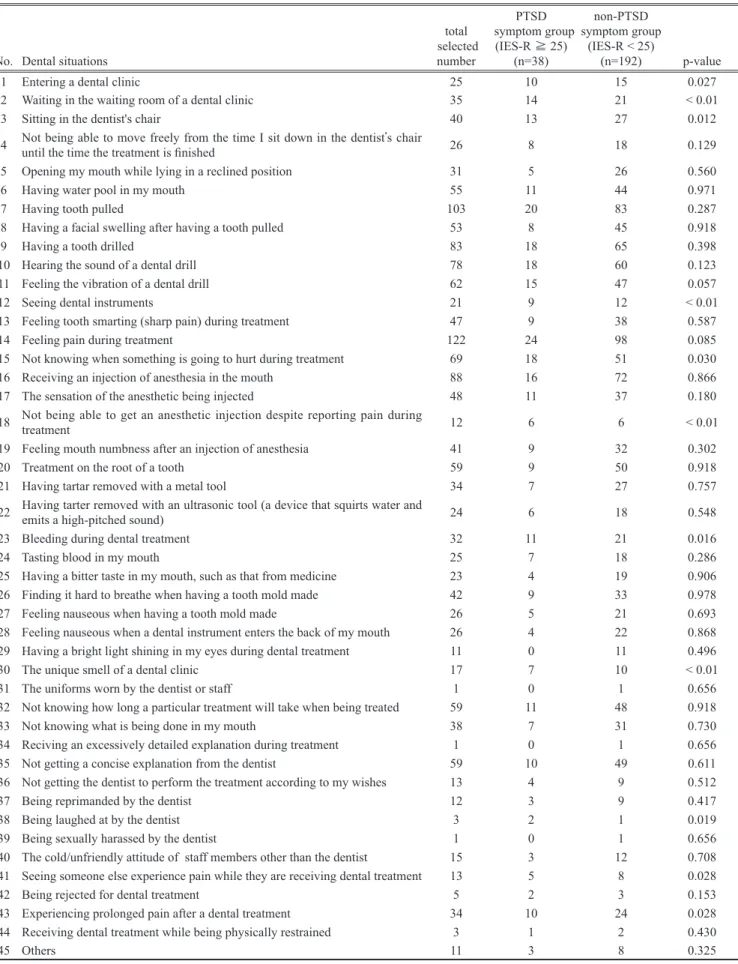
Table 2 presents frequency of anxiety-causing events in
dental situations that were indicated by patientsʼ experiences, and analysis between each events and “the PTSD symptom group or not” using Chi-square tests. On the basis of Chi- square tests (p < 0.01), we identified four dental situations, namely, dental situation number 2:
“Waiting in the waitingroom of a dental clinic”, number 12; “Seeing dental instru- ments”, number 18: “Not being able to get an anesthetic in-
Table 1. Demographic and clinical characteristics, total and PTSD symptom group or not (n=230)Total (n=230)
PTSD symptom
group (IES-R ≥ 25)
(n=38)
non-PTSD symptom
group (IES-R < 25)
(n=192) p-value Mean difference (95% Confidence) Gender(Male/Female) †
Psychiatric consultaion record (Yes/No) † age (Mean±SD) *
S-DAI scores (Mean±SD) * IES-R scores (Mean±SD) *
75/155 13/217 43.4±15.1
24.7±9.0 11.5±14.6
12/26 44.2±14.64/34
31.1±8.8 39.3±11.9
63/129 9/183 43.2±15.2
23.5±8.5 5.9±6.7
0.882 0.154 0.772
< 0.001
< 0.001
-0.955 (-6.235, 4.325) -7.621 (-10.623, -4.618) -33.32 (-36.338, -29.303)
† Fisherʼs exact test
* Welchʼs t-test
Table 2. Frequency of experiece dental situations, causing fearful to the patients, and comparing PTSD symptom group or not (n=230)
No. Dental situations
total selected
number
PTSD symptom group
(IES-R ≧ 25) (n=38)
non-PTSD symptom group
(IES-R < 25)
(n=192) p-value
1 Entering a dental clinic 25 10 15 0.027
2 Waiting in the waiting room of a dental clinic 35 14 21 < 0.01
3 Sitting in the dentist's chair 40 13 27 0.012
4 Not being able to move freely from the time I sit down in the dentistʼs chair
until the time the treatment is finished 26 8 18 0.129
5 Opening my mouth while lying in a reclined position 31 5 26 0.560
6 Having water pool in my mouth 55 11 44 0.971
7 Having tooth pulled 103 20 83 0.287
8 Having a facial swelling after having a tooth pulled 53 8 45 0.918
9 Having a tooth drilled 83 18 65 0.398
10 Hearing the sound of a dental drill 78 18 60 0.123
11 Feeling the vibration of a dental drill 62 15 47 0.057
12 Seeing dental instruments 21 9 12 < 0.01
13 Feeling tooth smarting (sharp pain) during treatment 47 9 38 0.587
14 Feeling pain during treatment 122 24 98 0.085
15 Not knowing when something is going to hurt during treatment 69 18 51 0.030
16 Receiving an injection of anesthesia in the mouth 88 16 72 0.866
17 The sensation of the anesthetic being injected 48 11 37 0.180
18 Not being able to get an anesthetic injection despite reporting pain during treatment 12 6 6 < 0.01
19 Feeling mouth numbness after an injection of anesthesia 41 9 32 0.302
20 Treatment on the root of a tooth 59 9 50 0.918
21 Having tartar removed with a metal tool 34 7 27 0.757
22 Having tarter removed with an ultrasonic tool (a device that squirts water and emits a high-pitched sound) 24 6 18 0.548
23 Bleeding during dental treatment 32 11 21 0.016
24 Tasting blood in my mouth 25 7 18 0.286
25 Having a bitter taste in my mouth, such as that from medicine 23 4 19 0.906
26 Finding it hard to breathe when having a tooth mold made 42 9 33 0.978
27 Feeling nauseous when having a tooth mold made 26 5 21 0.693
28 Feeling nauseous when a dental instrument enters the back of my mouth 26 4 22 0.868
29 Having a bright light shining in my eyes during dental treatment 11 0 11 0.496
30 The unique smell of a dental clinic 17 7 10 < 0.01
31 The uniforms worn by the dentist or staff 1 0 1 0.656
32 Not knowing how long a particular treatment will take when being treated 59 11 48 0.918
33 Not knowing what is being done in my mouth 38 7 31 0.730
34 Reciving an excessively detailed explanation during treatment 1 0 1 0.656
35 Not getting a concise explanation from the dentist 59 10 49 0.611
36 Not getting the dentist to perform the treatment according to my wishes 13 4 9 0.512
37 Being reprimanded by the dentist 12 3 9 0.417
38 Being laughed at by the dentist 3 2 1 0.019
39 Being sexually harassed by the dentist 1 0 1 0.656
40 The cold/unfriendly attitude of staff members other than the dentist 15 3 12 0.708
41 Seeing someone else experience pain while they are receiving dental treatment 13 5 8 0.028
42 Being rejected for dental treatment 5 2 3 0.153
43 Experiencing prolonged pain after a dental treatment 34 10 24 0.028
44 Receiving dental treatment while being physically restrained 3 1 2 0.430
45 Others 11 3 8 0.325
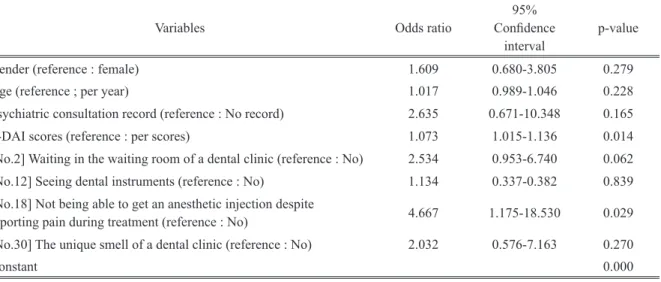
jection despite reporting pain during treatment” and dental situation number 30: “The unique smell of a dental clinic”, that were likely to be independent variables for logistic re- gression analyses. Table 3 displays the results of multivari- ate logistic regression analyses that were used to predict the positive diagnostic ability for the PTSD symptom group, us- ing the four baseline data sets and four dental situations as independent variables [goodness of fit Chi-square = 35.293, d.f. = 7, p < 0.001] [Hosmer-Lemeshow test = 4.258; p = 0.833]. Dental anxiety level (S-DAI scores) (OR = 1.073, p
< 0.05), and event number 18, i.e. “not being able to get an anesthetic injection despite reporting pain during treatment”
(OR = 4.667, p < 0.05) correlated significantly with the PTSD symptom group. The other variables did not show a significant correlation (p < 0.05).
DISCUSSION
Dental literature reported that several dental situations are
related to the risk of dental anxiety
5,7-14. However, an inter- esting aspect of our research was that by using criteria for PTSD, we could confirm only one dental situation that may be associated with dental anxiety, namely, “Not being able to get an anesthetic injection despite reporting pain during treatment”. De Jongh et al. found that just a small proportion of respondents reported a significant increase in S-DAI scores or IES-R scores (4.3%) at a 1-month follow up after third molar surgery
23. Their research results suggested that comparatively massive dental treatment, such as surgical re- moval of a third molar under local anesthesia, have minimal impact on dental anxiety or symptoms of psychological trau- ma. Hence, it is difficult to say that major invasive treatment, such as third molar surgery, is a cause of dental anxiety or PTSD symptoms. Armfield et al reported that the develop- ment of specific fears requires a perception of the stimulus as dangerous, disgusting, uncontrollable and unpredictable
26. Our research results suggest that “Not being able to get an anesthetic injection despite reporting pain during treatment”
could produce a patientʼs feeling of danger, disgust, helpless- ness and uncontrollability that results in the generation of fear
26. In support of this opinion, Oosterink reported that ret- rospective accounts of dental experiences involving help- lessness were most strongly associated with dental phobia
12.
Adequate local anesthesia to avert the feeling of pain cansignificantly mitigate the feeling of helplessness and give the patient a sense of being in control, thus potentially minimiz- ing dental anxiety. Some studies reported local anesthetic failure rates of 5-15%
27,28. These failures are probably due to
anatomic variations or the presence of infection; in addition, some studies said psychological factors cause local anes- thetic failure
27,29. Although local anesthetic failure is some- times unavoidable, we should not neglect the patientʼs ap- peal for local anesthesia during dental treatment. Maggirias et al. reported that patients should be encouraged to express their worries about pain, and dentists should be encouraged to respond to those patientsʼ concerns and modify their pro- cedures accordingly
30. In addition, Woda & Hennequin sug- gested that in persons showing a certain level of anxiety, exposure to dental treatment, particularly when repeated, constitutes an acute stress stimulus that may aggravate anxi- ety and render analgesic procedures more difficult
31. In ac- cordance with their suggestion, our results suggest that PTSD symptoms are related to nociceptive dental treatment performed without sufficient analgesia and to the dentistʼs neglect of the patientʼs pain and appeal for local anesthesia.
In our study, we found that 16.5% patients showed IES-R scores
≥ 25, indicating the possible occurrence of PTSDsymptoms based on the questionnaire. This result was not far from the other literature; one report showed that 20.8% of regular patients had IES scores above the cut-off point of 27 for diagnosis of the PTSD symptom group
14, while another study reported that the low-anxiety patients group had scores suggestive of the PTSD symptoms was 6% according to the NADSD (National Anxiety Disorder Screening Day 1997)
18. In addition, another study reports 14.3% of general patients scheduled for surgical removal of the mandibular third mo- lar reported higher scores of PTSD symptoms using IES-R at a 1-month follow-up
23. However, when IES-R scores in- dicate PTSD symptoms, we must remember the important difference between
“PTSD symptoms” and “post-traumaticstress disorder”. Exhibiting
“PTSD symptoms” does notmean suffering
“post-traumatic stress disorder”. Nemiahclearly emphasized this difference
32. Even if measuring symptoms by using questionnaire may have useful applica- tions, a questionnaire cannot substitute for complete diagno- sis of PTSD using a step-by-step diagnostic procedure. In our study, although we estimated PTSD symptoms by IES-R scores without using definitive diagnostic methods, such as the Clinician-Administered PTSD scale (CAPS)
33or Mini- International Neuropsychiatric Interview (MINI)
34, our re- sults showed relatively higher occurrence of PTSD symp- toms.
Age was not an independent variable for the PTSD symp-
tom group in our study. This result was similar to the other
literature, that suggested that in predicting dental anxiety,
the nature of these unpleasant experiences was more impor-
tant than the age when they occurred
35. Several important
issues must be considered in validating this study.
First, the selection process for participants in this study
must be mentioned. We only recruited adult patients (20-74 years old) who were new to our university hospital, and who had already been exposed to dental treatment in the past. Ap- proximately 47% of patients visiting the outpatient dental division of Nagasaki University Hospital are referrals from ordinary dental clinics. Patientsʼ reasons for referral from or- dinary dental clinics to university hospitals may vary widely, but it is reasonable to assume that these patients have already been categorized as needing special dental treatment such as more serious dental surgery. Thus, we cannot apply the re- sults to a population that attends ordinary dental clinics. We assume that a frequency of PTSD symptoms in patients in ordinary dental clinics is likely to be lower than at a dental clinic in university hospital.
Secondly, we should have checked the influence of gen-
eral PTSD. The chance to check the influence of general PTSD existed when we did the questionnaire research. In our study, four female patients (1.2% of the total number of participants) were excluded because they did not have any prior experience with dental treatment. We suppose that we should consider an alternate protocol for further screening of patients without any past dental treatment, in order to inves- tigate an influence of general PTSD. If we had asked these patients about general IES-R scores, it could have been a good reference for our research.
Thirdly, the accuracy of PTSD diagnosis must be men-
tioned. The diagnosis of PTSD consists of several core as- sumptions, particularly a premise that a distinct class of trau-
matic events is linked to a distinct clinical syndrome. With regard to the central role of trauma exposure as the presump- tive primary etiological factor for PTSD, the stressor crite- rion for PTSD, i.e., Criterion A
36, should be considered. Cri- terion A consists of several factors regarding the nature of trauma and its link to PTSD: (1) how broadly or narrowly should trauma be defined? ; (2) can trauma be measured reli- ably and with validity? ; (3) what is the relationship between trauma and PTSD? Given the limited ability of a question- naire to complete on respondents own, as was used in this study, we could not appropriately test these three questions for Criterion A. Thus reaching a definitive diagnosis of PTSD in this study was difficult. Further studies need to clarify the pathogenesis of PTSD symptoms in dentistry.
Fourth, we should examine the influence of the patientʼs
past psychiatric consultation records because mental disease was adequately considered to influence the patientʼs mental- ity about dental treatment. Our study indicates a significant correlation between past psychiatric factors and S-DAI scores [MD = 5.082, 95%CI -9.826 ~ -0.339, p = 0.037].
However, we did not
find significant correlations betweenpast psychiatric factors and any other factor, i.e., IES-R scores [MD = 8.086, 95%CI -19.837 ~ 3.665, p = 0.161] or logistic regression analysis (p=0.165) (table 3). Moreover, Abrahamsson et al. suggested that no significant differences exist in dental anxiety level between individuals with low versus high general fear
37. Therefore, it is difficult to predict the relationship between general psychiatric factors and den- tal anxiety at the current moment.
Table 3. Result of the multivariable logistic regression analyses. Dependent variable: PTSD symptom group or not (n=230)
Variables Odds ratio 95%
Confidence
interval p-value
Gender (reference : female) 1.609 0.680-3.805 0.279
Age (reference ; per year) 1.017 0.989-1.046 0.228
Psychiatric consultation record (reference : No record) 2.635 0.671-10.348 0.165
S-DAI scores (reference : per scores) 1.073 1.015-1.136 0.014
[No.2] Waiting in the waiting room of a dental clinic (reference : No) 2.534 0.953-6.740 0.062 [No.12] Seeing dental instruments (reference : No) 1.134 0.337-0.382 0.839 [No.18] Not being able to get an anesthetic injection despite
reporting pain during treatment (reference : No) 4.667 1.175-18.530 0.029 [No.30] The unique smell of a dental clinic (reference : No) 2.032 0.576-7.163 0.270
Constant 0.000
Model chi-square = 35.293; p < 0.001 Hosmer-Lemeshow test = 4.258; p = 0.833 Discrimination predictive value 86.1%
Our results suggest that a past experience with a dentist
who denied a patientʼs appeal for an additional local anesthe- sia is related to the patientʼs PTSD symptoms about dental treatment. Therefore, when providing dental therapy, we must pay attention to the adequacy of analgesia and heed patientʼs reported pain and appeal for local anesthesia.
References
1. Oosterink FM, de Jongh A, Hoogstraten J: Prevalence of dental fear and phobia relative to other fear and phobia subtypes. Eur J Oral Sci;
117: 135-43,2009
2. Moore R, Birn H, Kirkegaard E, Brodsgaard I, Scheutz F: Prevalence and characteristics of dental anxiety in Danish adults. Community Dent Oral Epidemiol; 21: 292-6, 1993
3. Hakeberg M, Berggren U, Carlsson SG: Prevalence of dental anxiety in an adult population in a major urban area in Sweden. Community Dent Oral Epidemiol; 20: 97-101, 1992
4. Nicolas E, Collado V, Faulks D, Bullier B, Hennequin M: A national cross-sectional survey of dental anxiety in the French adult popula- tion. BMC Oral Health; 7: 12, 2007
5. Berggren U, Meynert G: Dental fear and avoidance: causes, symp- toms, and consequences. J Am Dent Assoc; 109: 247-51, 1984 6. Cohen SM, Fiske J, Newton JT: The impact of dental anxiety on daily
living. Br Dent J; 189: 385-90, 2000
7. Moore R, Brodsgaard I, Rosenberg N: The contribution of embarrass- ment to phobic dental anxiety: a qualitative research study. BMC Psy- chiatry; 4: 10, 2004
8. Vermaire JH, de Jongh A, Aartman IH: Dental anxiety and quality of life: the effect of dental treatment. Community Dent Oral Epidemiol;
36: 409-16, 2008
9. Versloot J, Veerkamp JS, Hoogstraten J: Childrenʼs self-reported pain at the dentist. Pain; 137: 389-94, 2008
10. Liddell A, Gosse V: Characteristics of early unpleasant dental experi- ences. J Behav Ther Exp Psychiatry; 29: 227-37, 1998
11. Abrahamsson KH, Berggren U, Hallberg L, Carlsson SG: Dental pho- bic patientsʼ view of dental anxiety and experiences in dental care: a qualitative study. Scand J Caring Sci; 16: 188-96, 2002
12. Oosterink FM, de Jongh A, Aartman IH: Negative events and their potential risk of precipitating pathological forms of dental anxiety. J Anxiety Disord; 23: 451-7, 2009
13. Corah NL, OʼShea RM, Bissell GD, Thines TJ, Mendola P: The den- tist-patient relationship: perceived dentist behaviors that reduce pa- tient anxiety and increase satisfaction. J Am Dent Assoc; 116: 73-6, 14. de Jongh A, Aartman IH, Brand N: Trauma-related phenomena in 1988 anxious dental patients. Community Dent Oral Epidemiol; 31: 52-8, 15. American Psychiatric Association: Diagnostic and statistical manual 2003 of mental disorders 4th Text Revision. American Psychiatric Associa- tion, 2000
16. Iribarren J, Prolo P, Neagos N, Chiappelli F: Post-traumatic stress dis- order: evidence-based research for the third millennium. Evid Based Complement Alternat Med; 2: 503-12, 2005
17. Mol SS, Arntz A, Metsemakers JF, Dinant GJ, Vilters-van Montfort PA, Knottnerus JA: Symptoms of post-traumatic stress disorder after non-traumatic events: evidence from an open population study. Br J Psychiatry; 186: 494-9, 2005
18. de Jongh A, Fransen J, Oosterink-Wubbe F, Aartman I: Psychological trauma exposure and trauma symptoms among individuals with high and low levels of dental anxiety. Eur J Oral Sci; 114: 286-92, 2006 19. Davidson JR, Foa EB: Diagnostic issues in posttraumatic stress disor-
der: considerations for the DSM-IV. J Abnorm Psychol; 100: 346-55, 20. Ikeda N, Ayuse T: Reliability and validity of the short version of the 1991 Dental Anxiety Inventory (S-DAI) in a Japanese population. Acta Med. Nagasaki; 58: 67-71, 2013
21. Stouthard ME, Hoogstraten J, Mellenbergh GJ: A study on the conver- gent and discriminant validity of the Dental Anxiety Inventory. Behav Res Ther; 33: 589-95, 1995
22. Aartman IH: Reliability and validity of the short version of the Dental Anxiety Inventory. Community Dent Oral Epidemiol; 26: 350-4, 23. de Jongh A, van Wijk AJ, Lindeboom JA: Psychological impact of 1998 third molar surgery: a 1-month prospective study. J Oral Maxillofac Surg; 69: 59-65, 2011
24. Asukai N, Kato H, Kawamura N, Kim Y, Yamamoto K, Kishimoto J, Miyake Y, Nishizono-Maher A: Reliability and validity of the Japa- nese-language version of the impact of event scale-revised (IES-R-J):
four studies of different traumatic events. J Nerv Ment Dis; 190: 175- 82, 2002
25. Weiss DS, Marmar CR: The Impact of Events Scale-Revised, Assess- ing psychological traume and PTSD: A practitionerʼs hand book (pp399-411). Edited by (Eds) IJWaK. New York, Guilford Press, 26. Armfield JM: Cognitive vulnerability: a model of the etiology of fear. 1997
Clin Psychol Rev; 26: 746-68, 2006
27. Wong MK, Jacobsen PL: Reasons for local anesthesia failures. J Am Dent Assoc; 123: 69-73, 1992
28. Matthews R, Ball R, Goodley A, Lenton J, Riley C, Sanderson S, Singleton E: The efficacy of local anaesthetics administered by gen- eral dental practitioners. Br Dent J; 182: 175-8, 1997
29. Meechan JG: How to overcome failed local anaesthesia. Br Dent J;
186: 15-20, 1999
30. Maggirias J, Locker D: Psychological factors and perceptions of pain associated with dental treatment. Community Dent Oral Epidemiol;
30: 151-9, 2002
31. Woda A: The Place of Sedation in Dentistry: Controlling Acute Pain by Local Anesthesia Is Not the End of the Story. Journal of Orofacial Pain; 25: 2, 2010
32. Nemiah JC: A few intrusive thoughts on posttraumatic stress disorder.
Am J Psychiatry; 152: 501-3, 1995
33. Blake DD, Weathers FW, Nagy LM, Kaloupek DG, Gusman FD, Charney DS, Keane TM: The development of a Clinician-Adminis- tered PTSD Scale. J Trauma Stress; 8: 75-90, 1995
34. Sheehan DV, Lecrubier Y, Sheehan KH, Amorim P, Janavs J, Weiller E, Hergueta T, Baker R, Dunbar GC: The Mini-International Neurop- sychiatric Interview (M.I.N.I.): the development and validation of a structured diagnostic psychiatric interview for DSM-IV and ICD-10.
J Clin Psychiatry; 59 Suppl 20: 22-33;quiz 34-57, 1998
35. Locker D, Shapiro D, Liddell A: Negative dental experiences and their relationship to dental anxiety. Community Dent Health; 13: 86-92, 36. Weathers FW, Keane TM: The Criterion A problem revisited: contro-1996
versies and challenges in defining and measuring psychological trau- ma. J Trauma Stress; 20: 107-21, 2007
37. Abrahamsson KH, Berggren U, Carlsson SG: Psychosocial aspects of dental and general fears in dental phobic patients. Acta Odontol Scand;
58: 37-43, 2000