The Impact of Built Environment on Residents' Health from the Perspective of Physical
Activity
著者 趙 立珍
著者別表示 ZHAO LIZHEN journal or
publication title
博士論文本文Full 学位授与番号 13301甲第1928号
学位名 博士(工学)
学位授与年月日 2020‑09‑28
URL http://hdl.handle.net/2297/00061363
Dissertation
The Impact of Built Environment on Residents’
Health from the Perspective of Physical Activity
Graduate School of Natural Science and Technology Kanazawa University
Division: Environmental Design
Student ID No: 1724052011 Name: ZHAO LIZHEN
Chief Supervisor: Professor SHEN ZHENJIANG
June, 2020
Abstract
Rapid urbanization has made great contribution to the development of the world economy, and also brought various "urban diseases" to human beings, which seriously threaten the health of urban residents. In order to better solve urban problems and improve people's health, the World Health Organization put forward the concept of
“Healthy City”, which had become a global strategic action. China also determined the national strategy of "Healthy China" in 2016, and proposed to integrate health into the whole process of urban and rural planning, construction and governance. The relationship between built environment and public health has always been the focus of urban planning. Specific environmental characteristics, spatial characteristics and health activity have become new important areas of urban planning research. This PhD research focused on the interaction between the daily health behavior of residents and the built environment at the community scale. What are the influence factors of built environment on public health and how does it affect health of residents.
This dissertation took Fuzhou City of Fujian Province in China as the research object. The data of business, life service, catering, sports, green space, public transportation in Fuzhou were obtained through a map website. The data of daily physical activity, built environment perception, social capital and individual characteristic were obtained through network survey. The theoretical relationship between built environment and health of residents was established. Firstly, physical activity was used as the mediating factor. Using the method of multiple regression equation, this section studied the built environment factors that affected the traffic walking activity and leisure walking activity. This work has been published in the No.
3 of Vol. 11 of the journal "Sustainability" in 2019. Second, the study further
discussed the influence of subjective perception of the built environment on moderate
to vigorous physical activity of residents, as well as the influence path of the objective
characteristics and subjective perception of the built environment on moderate to
vigorous physical activity of residents. This work has been published in the No. 1 of
Vol. 12 of the journal "Sustainability" in 2020. Third, the study took the self-rated
health of residents as the explained variable and the built environment, subjective
perception, social environment and other factors as the explanatory variables to
research the impact of built environment on health of residents. Finally, through the
method of structural equation model, this dissertation discussed the influence path of
built environment on health of residents based on physical activity. In the whole process of the study, the different factors and paths of the built environment on the health of male and female were discussed. The conclusions were as follows.
First, the built environment had an influence on the traffic walking activity and leisure walking activity. Improving mixed use of land and increasing commercial facilities, living service facilities and catering facilities can promote the traffic walking activity of residents. The community with high facilities density, convenient sports facilities and green park are more conducive to promoting residents' leisure walking activity. Community safety, community life satisfaction affected the leisure walking activity of residents. Individual characteristics had no effect on traffic walking activity, but had significant effect on leisure physical activity. The built environment acted on moderate to vigorous physical activity through subjective perception. Security perception played a mediating role.
Second , built environment, subjective perception and social environment had an influence on residents' self-rated health. These factors included land use mixedness, convenience of life service facilities, convenience of sports facilities, convenience of bus stops, environmental quality perception, environmental facilities perception, community safety, community life belonging, community management satisfaction, length of medium and high intensity physical activity and love of sports. Building environment factors can directly affect the health of residents, but also through community security, social capital affect physical activity, and then affect health.
Third, it is found that the influence of built environment factors on male's and female's physical activity and health were quite different. For male and female walking activities, some influencing factors had opposite effects, and some influence factors had significant differences. For male, the objective characteristics of built environment had less influence on subjective perception. but it can directly affect the moderate to vigorous physical activity. Road connectivity and sports facilities accessibility can affect physical activity through community safety, and then affect health. It can also directly affect physical health through the role of social capital. For female, the objective characteristics of built environment had an influence on subjective perception, but not directly affected the physical activity. The intermediary role of community safety was significant.
Key Words: Built Environment, Physical Activity, Health, Community Safety, Social
Capital, Multiple Regression Analysis, Structural Equation Model
Acknowledgements
The three years of doctor's study and life were tense and unforgettable. As a student of the International Joint SPSD Lab of Fuzhou university and Kanazawa University, I often commuted between China and Japan. As a social student, I not only need to complete my job in Fuzhou University, but also study in the lab. Life is full and hard, but I have gained a lot.
First of all, I want to achnowledge my supervisor, Prof. Shen Zhenjiang. In the process of writing doctoral dissertation, Prof. Shen gave careful guidance. I will never forget his academic spirit of diligence and excellence. What I have learned from my teachers is not only solid professional knowledge and research methods, but also the earnest and self disciplined attitude of scholars. His teaching will benefit my whole life.
Secondly, I am very grateful to my examination committee members, Prof.
KAWAKAMI Mitsuhiko (Kanazawa University), Prof. ITOH Satoru (Kanazawa University), Prof. NISHINO Tatsuya (Kanazawa University), for their careful reading and valuable comments on this dissertation. Without their useful help, I would not finish this research work smothly.
Third, I want to achnowledge my husband, my son and my family. Because of their support and help me share the burden of my family, I can successfully complete my three-year doctoral study. As a wife and mother, the anxiety of the research process had brought great mental distress to my husband and family, and I feel deeply guilty.
Fourth, I would like to achnowledge my colleagues from the school of architecture and urban rural planning of Fuzhou University. They are Chen Xiaohui, Zhang Yanji, Peng Lin, Ma Yan, Fan Haiqiang, Liu Shuhu, etc.
Finally, I would like to achnowledge all the teachers, classmates and friends in
Japan and China. Thank them for their selfless care and help in work, study and life.
Contents
Abstract... I Acknowledgements... III Contents...IV
Chapter 1 - Introduction... 1
1.1 Research Background...1
1.2 Research Purpose... 4
1.3 Literature Review...5
1.3.1 The impact of built environment on physical activity and health... 5
1.3.2 The impact of environmental perception on physical activity and health8 1.3.3 The impact of built environment on social capital and social capital on health... 8
1.3.4 The impact of built environment and social capital on urban safety and urban safety on physical activity and health... 9
1.3.5 The impact of built environment and social capital on mental health..10
1.3.6 The impact of built environment on health based on gender perspective10 1.4 Organization... 11
Chapter 2 - Research approach...15
2.1 Study area...15
2.2 Data source...16
Chapter 3 The impact of the built environment on the walking activities... 20
3.1 Introduction... 20
3.2 Method and variables... 22
3.2.1 Method...22
3.2.2 Variables...23
3.3 Results... 26
3.3.1 Influence of built environment on traffic walking time... 26
3.3.2 Influence of built environment on leisure walking time... 27
3.3.3 Comparative analysis of the influence of built environment on the walking time of male and female... 30
3.4 Conclusion and discussion... 32
3.5 Chapter Summary...34
Chapter4 - The influence path of objective characteristics and subjective perception of built environment on moderate to vigorous physical activity...35
4.1 Introduction... 35
4.2 Method and variables... 37
4.2.1 Method...37
4.2.2 Variables...37
4.2.3 Construct structural model... 39
4.3 Results... 40
4.3.1 Results of multiple regression analysis... 40
4.3.2 Structural equation analysis results... 42
4.4 Conclusion and discussion... 50
4.5 Chapter Summary...51
Chapter 5 - The impact of built environment on residents' self-rated health... 53
5.1 Introduction... 53
5.2 Method and variables... 55
5.2.1 Method...55
5.2.2 Variables...56
5.3 Results... 58
5.3.1 Influence of built environment on self-rated health of all samples...58
5.3.2 Influence of built environment on self-rated health of male and female61 5.4 Conclusion and discussion... 63
5.5 Chapter summary... 64
Chapter 6 - The influence path of built environment on health of residents...66
6.1 Introduction... 66
6.2 Method and variables... 67
6.2.1 Analytical framework...67
6.2.2 Method...68
6.2.3 Variables...69
6.3 Results... 71
6.3.1 Influence path of community environment on health in all samples... 71
6.3.2 Influence path of community environment on health in male...74
6.3.3 Influence path of community environment on health in female... 75
6.4 Conclusion and discussion... 78
6.5 Chapter Summary...79
Chapter 7 - Conclusions... 80
7.1 Conclusions... 80
7.2 Further research...82
Reference...84
Chapter 1 - Introduction 1.1 Research Background
Rapid urbanization had made great contribution to the development of the world economy, and also brought various "urban diseases" to human beings, which seriously threaten the health of urban residents. Non-communicable chronic diseases have replaced acute infectious diseases and become the primary threat to urban public health (WHO, 2009). According to the World Health Statistics 2017 released by the World Health Organization, 71% of global deaths were caused by non-communicable diseases, which account for 41 million people (WHO, 2017). Health has become a major issue affecting future economic and social development. As early as 1946, the World Health Organization gave a definition of health. Health is not simply the absence of disease, but a state of complete physical and mental health and social well-being.Human mental health can not be ignored. In 2013, the UN Secretary General reported on the global suicide prevention day that there were 340 million people suffering from depression all over the world.
In order to cope with the severe challenges brought by the rapid urbanization process to human health, and to better solve the urban problems and comprehensively improve the health level of people, the World Health Organization put forward the new concept of "Healthy City" in 1984. In 1994, World Health Organization defined that “Healthy City” should be a city that constantly develops and improves the natural and social environment, and constantly expands social resources, so that people can support each other in enjoying life and giving full play to their potential. A healthy city is an environmentally friendly city. In 1986, the World Health Organization first proposed a global strategic action in Europe “Healthy City Project”. The Healthy City Project is a dynamic plan. After more than 30 years of development, the project has evolved into a long-term international project aiming to introduce health and its connotation into the urban decision-making process (WHO, 2003). Healthy city is a whole composed of healthy people, healthy environment and healthy society.
Cultivating healthy people is the starting point and foothold of healthy city construction.
As early as 1848, the United Kingdom promulgated the public health law to
improve the urban environment, which means that the urban planning department
began to pay attention to the built environment and public health. Since 1950, many
social problems caused by the low-density spread of American cities had made people
connect the built environment with public health again. In 1966, the U.S. Congress
passed the “National Health Planning Act” and carried out a research project on the relationship between health facility planning and urban planning. In 1986, “American Journal of Health Promotion” put forward the concept of “Health Promotion”, which referred to “a kind of science and art that can help people improve their way of life and achieve the ideal health effect”. Health Promotion is a public health concept, which is transferred from disease-centered to health-centered, from the intervention of disease to the intervention of risk factors affecting disease. In 1995, the Western Pacific Region Office of the World Health Organization published the “New Horizon of Health”, which pointed out that Health Promotion means that individuals, together with their families, communities and countries, take measures to encourage healthy behaviors and enhance people's ability to improve and deal with their own health problems. Health promotion is the core strategy of the second global health revolution, which focuses on the behavior change and environment change of individuals and groups. In 2003, two American journals published a special issue on built environment and health respectively. All these showed that the significance of the built environment for health had been recognized by the academic mainstream.
In 2005, the World Health Organization revised the definition of health promotion, and proposed that it is “a process of making people enhance their control over health and surrounding environment, so as to improve health”. Health promotion mainly involves five areas of activity, one of which is to create a supportive environment. Establishing a healthy supportive environment is one of the important goals of health promotion. The intervention of health promotion is the main means to create a material and social environment to support health, to promote people's behavior change and to establish a healthy lifestyle. In 2008, the Federal Department of Health and Human Services issued the “Physical Activity Guidelines Advisory Committee Report” and the “Physical Activity Guidelines for Americans: Be Active, Healthy, and Happy” to provide different age groups with information on the types and intensity of physical activity required for health, as well as relevant suggestions.
At the local government level, in 2010, the New York City Government began to advocate the promotion of physical activity and health through urban planning and design, and issued “Active Design Guidelines”. In the same year, the United States Department of Health issued “Healthy People 2020”. In 2018, the “U.S. Physical Activity Guide” was issued.
In China, the rapid industrialization, land expansion and economic oriented
development mode made great changes in the built environment, land use and spatial
quality of the city, and also had a huge influence on urban public health. According to
the “Report on Nutrition and Chronic Diseases of Chinese Residents (2015)”, from
2002 to 2012, the obesity rate of Chinese adults increased from 7.1% to 11.9%, and the overweight rate increased from 22.8% to 30.1%. In 2019, data from the China Health Commission showed that the death toll that caused by chronic non communicable diseases accounted for 88% of the total. Xiang et al. (2012) pointed out that the mental health problems of Chinese residents are also very prominent. All of these pose severe challenges to urban health, which the Chinese government attaches great importance to. In 1989, China began to carry out “Sanitation City”
creation activity. In 1996, Shanghai, Beijing, Chongqing and Haikou became pilot areas for Healthy City in China. After SARS in 2003, China's healthy cities had entered the stage of comprehensive development. In 2016, General Secretary Xi Jinping stressed the importance of "integrating health into all policies" and issued a call for building “Healthy China”. In October of the same year, the Chinese government issued the “ ‘Healthy China 2030’ plan outline”, which formally proposed that the construction of healthy cities and healthy villages and towns should be taken as an important starting point to promote the construction of Healthy China, and health should be integrated into the whole process of urban and rural planning, construction and governance. In October 2017, the Chinese government proposed
"Implementing Healthy China Strategy". Healthy China and Healthy City had become national strategies. In order to deal with the threat of urban development to public health, it is very important to reconstruct a built environment that is conducive to physical activity and health.
As a highly integrated and complex giant system, ensuring the public health and sustainable development of a city is one of the important goals of urban planning.
Maantay (2001) called on the urban planning field to fully understand and evaluate the potential influence of planning or construction projects on public health, and the public health field must also understand the decision-making of urban planning or land use planning. The organic combination of urban planning and health fields' respective professional advantages is conducive to jointly coping with chronic diseases and health problems in urban development.
One of the core issues of urban planning is to explore the performance and formation mechanism of urban lifestyle. The research on urban space has also shifted from focusing on material forms in the early stage to analyzing the economic, political and behavioral processes of urban problems and specific spatial forms(Leitaer, 1989).
As one of the important factors to promote physical activity and health, the built
environment is an important entry point for urban planning to actively intervene in
health (Lu and Tan, 2015). Due to the comprehensive influence of specific socio
economic conditions and personal use patterns, the influence mechanism of built
environment on people's health is relatively complex (Diez-Roux and Mair, 2010). It is difficult to establish a direct relationship between the built environment and health, which is usually studied through the behavior carrier as an intermediary element. At present, the research dimensions concerned by North America, Europe and Australia mainly involve physical activity, social interaction, eating behavior. Residents' health activity behavior is an important form to represent the quality of life of residents. Its interaction with the specific environment and spatial characteristics of residents' health activity behavior has become a new important field of urban planning research(Kwan, 2004; Miller, 2004).
The physical activity behavior of residents is not only affected by the built environment, but also by the social environment and socio-economic conditions of the residents. How to control the socio-economic characteristics of the residents and identify the impact path between built environment and residents' health can truly understand the interaction between built environment and physical activity.
Based on the interdisciplinary study of urban planning and behavioral geography, this dissertation analyzed the physical activity behavior of individuals in different spatial conditions according to the interaction between human and space , and further analyzed the complex relationship between human health and built environment.
Carry out the discussion on the influence path of the built environment on physical activity and health, consider how to optimize the urban physical environment and social environment to increase the health activity behavior of residents, put forward the space design suggestion of health promotion.
1.2 Research Purpose
Compared with the passive coping medical technology, the purpose of building environment optimization is to create a living environment conducive to physical activity and balanced diet through the space policy of active intervention. It has many advantages, such as the long-term effect, the universality of benefiting people, and the economy of social cost (Loon and Frank, 2011). Therefore, at the time of health crisis caused by urban sprawl, whether and how the built environment affects public health has become the common focus of health geography, urban and rural planning and preventive medicine research (Mitchell, 2012). The impact mechanism of urban built environment on health of residents is complex. Only by defining the influence mechanism of the built environment on health of residents in theory , we can provide effective strategies for healthy urban planning.
Chinese cities has their own characteristics, such as high-density and
high-intensity development of the built environment and a high proportion of public transport utilization. These are obviously different from the western countries. The research focused on Fuzhou City, Fujian Province, China. From the perspective of residents' behavior activities in the micro spatial scale, the PhD research aimed to the relationship between urban community built environment and residents' health, and its impact mechanism. Through this research, we try to achieve the following goals:
1. The quantitative relationship between building environment and individual healthy physical activity behavior is established. The relationship between building environment and different types of physical activity behavior is studied. And the internal mechanism of building environment influencing residents' activity behavior is studied.
2. From the perspective of physical activity, this dissertation studies the relationship and mechanism of the impact of built environment on health, and explores the intermediary role of social capital and community security in the process of influence.
3. Analyze the difference of the impact of the built environment factors on the physical activity behavior and health of male and female, identify the main factors affecting the physical activities and health of male and female in the built environment and the influencing path.
1.3 Literature Review
Built environment refers to man-made environment for human activities, including buildings and places built by people and the environment changed by people (Handy et al.,2002). It is composed of a series of elements such as land use, traffic network and space design (Frank et al., 2005). Physical activity is characterized by energy consumption produced by skeletal muscle contraction. Regular physical activity can control blood pressure, improve sleep and improve insulin sensitivity (US HHS, 2018). Sedentary behavior increases the risk of obesity, diabetes, cardiovascular disease (Thorp et al., 2011), and dyslipidemia (Zhou et al., 2017). It was estimated that physical activity not up to standard results in 6% of coronary heart disease, 7% of diabetes mellitus and 10% of premature death in the world (Lee et al., 2012). Modern health concept includes physical health, mental health, moral health, etc
1.3.1 The impact of built environment on physical activity and health
At the end of the 20th century, Cervero and Kockelman (1997) took density,
diversity and design as the main analysis elements of traffic environment, and put
forward the famous 3D model. Density includes population density, employment
density, land development intensity, etc. The diversity is usually evaluated by the entropy index of various land use, or the Hersheman-Hefndale coefficient. The design dimension includes not only the block scale and road accessibility at the macro level, but also the sketch design and street comfort at the micro level (Ewing et al., 2015).
On the basis of 3D, Ewing and Cervero (2001) added two dimensions of destination accessibility and distance to transit to form the 5D dimension of evaluating built environment. The former can be measured by the distance to CBD and the accessibility of facilities; the latter can be reflected by the distance to metro station and bus station or their density.
From the influence of urban density: high density compressed the space-time distance between various destinations, creating conditions for green travel and increased physical activity (Cao and Fan, 2012). On the contrary, the stronger the trend of the spread of the built area, the longer the commuting time, the obvious obstruction of walking behavior, and the increase of vehicle mileage per capita. This led to a continuous decrease in moderate to vigorous physical activity(short for MVPA) (Lopez-Zetina et al., 2006), and the significant increase of body mass index (short for BMI), obesity, hypertension, heart disease, diabetes and other morbidity (Ewing et al., 2003, 2014; Joshu et al., 2008; Kelly-Schwartz et al., 2004). For example, for every 1% increase in the spread index of American metropolitan areas, the risk of overweight and obesity will increase by 0.2% and 0.5% respectively (Lopez et al. 2004). It had also been pointed out that high density only affected the walking behavior and health status of the vulnerable groups such as the unemployed, retirees and poor health, but not significantly affected the rest of the population (Forsyth et al., 2009). In contrast, the survey of metropolitan areas in the United States showed that, due to the fact that too high density was easy to cause physical and mental stress and insecurity, residential density had an adverse effect on self perception of overall health status (Kelly-Schwartz et al., 2004). However, in Greece, the negative effect of high density had also been found (Chalkias et al.,2013). Some scholars in China thought that high density was not good for health. For example, Sun et al. (2016) believed that residents living in communities with high density and facility accessibility had a high probability of overweight. Zhang et al. (2018) believed that the utilization of high density soil had a negative influence on the overall health of residents.
From the influence of diversity: land function mixing had positive significance
for increasing physical activity and promoting physical health. The findings were
generally robust in various studies. The diversified spatial environment in a small
scale enriched the activity, enhanced the safety of residents and stimulates the vitality
of the city (Feng et al., 2010). The study of Atlanta showed that the mixed degree of land functions had a significant influence on residents' travel patterns. If you increase your driving time by one hour a day, your obesity rate will be increased by 6%; if you increase your walking time by one hour a day, your obesity rate will be reduced by 4.8% (Frank et al., 2004). Lathey et al. (2009) also believed that a single function will increase the dependence of citizens on mobile travel. Therefore, for the prevention of chronic diseases, it was more important to provide all kinds of non residential functions than whether the community location is located in the city center.
From the perspective of the impact of road network design: due to more traffic accidents and serious air pollution in the main roads, the adjacent high-speed roads and main roads were not conducive to the development of sports activity and green travel, resulting in the high incidence of obesity in the surrounding communities (Yu, 2015; Zhao, 2014; Joshu et al., 2008; Giles-Corti et al., 2003). If paves the sidewalk, sets the non motorized lane and installs the street lamp in the road system, it will help to promote the traffic microcirculation and increase the physical activity of the residents, and then play the role of inhibiting the chronic disease (Sallis et al. 2009;
Joshu et al.,2008). However, some studies had found that the influence of land use mixedness and road network structure on public health was not obvious among women and ethnic minorities (Frank et al. 2008). It was not significant in the suburbs with low urbanization rate (Wang et al. 2013). Their influence on BMI was different in different cities (Pouliou and Elliott, 2010).
From the perspective of the influence of destination accessibility and public transport accessibility: a large sample survey of 11 countries around the world showed that the accessibility of low-cost recreational facilities and bus stops was positively correlated with physical activity (Samimi et al. 2009). Increasing public facilities such as parks and stadiums can effectively reduce the incidence of obesity and chronic diseases. It was because of the spatial inequality in the accessibility of these facilities that the obesity rate in low-income and minority communities was on the high side (Xu et al., 2015; Gordon-Larsen et al., 2006; Giles-Corti et al., 2003). Studies in London and Marion County had also confirmed that public entertainment places or green open spaces around families will provide places for physical exercise, which can effectively control the rapid rise of BMI among teenagers (Gilliland et al., 2012;
Bell et al., 2008). As cultural and commercial facilities created more opportunities for
people's activity, they can significantly reduce the risk of obesity, metabolic disorders,
diabetes, hypertension and heart disease (Lattey et al., 2009). However, there was a
significant negative relationship between bus station density and subway station
density and BMI (Rundle et al., 2007). The use of public transport also had positive
significance for self-rated of health of residents, which was related to the accelerated calorie consumption of public transport travel (Samimi et al. 2009).
Other studies had focused on the influence of composite indices. It was found that the built environment suitable for walking had a significant positive influence on residents' green travel frequency and moderate to vigorous physical activity. This made people in walking friendly communities had lower BMI and less overweight probability (Saelens et al., 2003; Doyle et al.,2006), and more reasonable diastolic and systolic blood pressure ranges (Li et al. 2009). However, according to the prevalence of hypertension, diabetes, self-rated of health and doctors' evaluation, walking friendly environment only had a significant influence on long-term residents. This suggested that the effect of urban built environment on physical activity and body shape may be directly revealed, but in terms of chronic diseases and overall health, optimizing the effect of built environment needs a process of continuous accumulation (Doyle et al., 2006).
1.3.2 The impact of environmental perception on physical activity and health Environmental perception is people's subjective feeling and psychological judgment on the surrounding environment and its changes, and it is the psychological basis of people's environmental behavior (Peng and Zhou, 2001; Lin et al. 2016). A large number of studies showed that residents' environmental perception had a more significant influence on self-rated health than the objective environment (Bird and Fremont. 1991; Kim, 2016). Leslie and Cerin (2008) conducted an empirical study in Australia, and found that there were correlations between many factors of neighborhood satisfaction (such as safety, walkability, social network, traffic noise) and mental health. Kim (2016) conducted an empirical study on Columbus City in the United States, established a comprehensive data set of environmental perception, objective environmental characteristics and self-rated of health, and found that walking friendly neighborhood perception characteristics were significantly positively correlated with self-rated of health. Some scholars believed that subjective aesthetic perception had an effect on physical activity (Karmeniemi et al., 2018; Vojnovic, 2006; Humel et al., 2002). Zhang et al. (2019) believed that environmental quality perception, service facilities perception and sports and leisure facilities perception were related to health of residents to varying degrees.
1.3.3 The impact of built environment on social capital and social capital on health
Social capital refers to trust, norms and networks that facilitate collective action
(Putnam, 2001), including structural social capital measured by network scale and
interaction frequency and cognitive social capital measured by sense of belonging and trust (Moore and Kawachi, 2017). On the one hand, increasing the scale of social networks, the frequency of community activity, and the sense of trust and belonging can stimulate mutual aid behavior, consolidate social norms, and then promote physical activity (Ho et al., 2018), and improve self-rated of health (Pinillos-Franco and Kawachi, 2018); on the other hand, social capital may make members more susceptible to unhealthy hobbies through group pressure (Villalonga-Olives and Kawachi, 2017).
The accumulation of social capital depends on the interaction opportunities and emotional attribution brought by humanized space (Kim and Kaplan, 2004). 85%, 75% and 60% of the studies confirmed the positive effects of destination accessibility, road accessibility and functional diversity on social capital, and the influence of population density remains controversial (Mazumdar et al., 2018). Long distance commuting, car dependence and store shopping caused by low density spread reduce social interaction opportunities (Putnam, 2001). However, there was no significant difference in social time between urban and suburban residents (Morris and Pfeiffer, 2017), and dense mixed population will hinder social capital formation (Putnam, 2001).
1.3.4 The impact of built environment and social capital on urban safety and urban safety on physical activity and health
The safety level of the city is deeply influenced by the built environment. At the hardware level, street eye theory advocated open space with mixed functions and accessible road network, so as to achieve the purpose of natural monitoring through space use (Jacobs, 1961). However, defense space theory advocated a single function closed space to eliminate the invasion of mixed people (Newman, 1972). At the software level, the broken window theory attributed the safety risk to the environmental disorder in the maintenance and management links such as public property damage, dim street lights, and garbage everywhere. It believed that the out of order signals will attract potential criminals and worsen the safety perception (Foster and Giles-Corti, 2008; Collins, 2016).
Urban safety is also affected by social capital. Social deconstruction theory had
shifted from focusing on the negative effects of population heterogeneity and mobility
to integrating social capital theory (Bruinsma et al., 2013), emphasizing that
communities lacking trust, public participation and collective effectiveness will
weaken informal social control, thus increasing insecurity and crime rate (Collins,
2016). In the UK, the influence of social capital on the sense of resident safety was
stronger than that of built environment (Lorenc et al., 2013).
The quantitative analysis of the existing empirical results showed that the physical activity quantity of low community crime rate and high sense of safety samples was 28% and 27% more than that of high community crime rate and low sense of safety samples respectively (Rees-Punia et al. 2018).
1.3.5 The impact of built environment and social capital on mental health
The built environment can affect mental health by influencing individual behavior and stress release (Giles-Corti et al., 2016; Araya et al., 2007). Green space provided a place for residents' sports activity and social communication, which helped to reduce their mental stress, restore their attention and energy, and promote their physical and mental health (Markvych et al, 2017; Dong and Qin, 2017; Melis et al, 2015; Maas et al, 2006, 2009). Community service facilities are important factors affecting mental health. For example, Gute et al. (2006) found that residents' dissatisfaction with social and entertainment facilities will reduce their mental health level. Liu et al. (2017) also found that the high accessibility of cultural facilities had a significant positive influence on the mental health and happiness of the elderly. In addition, the accessibility of medical, sports, public transport stations and other service facilities was significantly related to residents' mental health (Li et al., 2019;
Tian et al., 2017; Chen et al., 2015). The higher the residents' satisfaction with the residential area, the better their mental health (Dong and Qin, 2017). This showed that the improvement of built environment can promote the formation of social relations among residents, improve the satisfaction of residents for the community, and promote the mental health of residents. In social capital, the level of residents' mental health was positively correlated with the number of types of social organizations and the proportion of frequent contacts among community residents. This showed that increasing community organization and increasing the frequency of communication can promote the level of mental health of residents.
Western researches believed that physical exercise can be used as the third intervention method besides drug therapy and psychotherapy. Aerobic exercise or anaerobic exercise can prevent or reduce depression, anxiety and other psychological symptoms (Brown et al, 2013; Jayakody et al, 2014). Not only that, physical exercise can also change personal physical conditions. Strong physique and beautiful line shape reshaped their charm and enhanced their self-confidence and self-efficacy psychologically (Elavsky, 2010).
1.3.6 The impact of built environment on health based on gender perspective
In the 1980s, feminist research on urban development and urban planning began
to enter the fields of geography and planning. It was to pay attention to how to treat the needs of male and female equally. (Hanson and Pratt, 1988). The density of residential area was negatively correlated with female's leisure walking(Inoue,et al., 2010), but positively correlated with male's walking(Sigmndova, et al., 2011).
Facilities accessibility (Santtos,et al., 2008) and environmental perception promote female's physical activity(Kondo,et al., 2009). In Australia, studies had shown that traffic safety was negatively correlated with walking in male and positively correlated with female.(Humpel, et al., 2004). Intersection density and population density only had positive effect on female physical activity(Troped, et al., 2010). Compared with male, female's physical activity level was more easily affected by the surrounding environment.(Santtos,et al., 2008). There were differences in the effects of physical activity on male and female. But the research on built environment based on gender is not systematic.
1.4 Organization
The paper is divided into seven parts. The third, fourth, fifth and sixth parts are the core chapters.
In the first part, we introduced the research background, research purpose and literature review to support research ideas.
In the second part, we introduced the research area and data sources. The object of this study was Fuzhou, a city in Southeast China. Fuzhou was the political and cultural center of Fujian Province, a famous historical and cultural city in China, with a permanent population of 4 million. It was representative in Southeast China. The research data mainly came from two aspects. First, urban open data, such as POI data of various facilities, population density data, etc. Second, social survey data, we used the network to carry out a social survey on the healthy life of Fuzhou residents. The survey contents included community built environment, social capital, physical activity, physical health, mental health and individual characteristics etc.
In the third part, starting with the intermediary element of physical activity, the chapter researched the impact of built environment on residents' walking activity. The research adopted multiple regression analysis method to explore the different effects of built environment factors on traffic walking behavior and leisure walking behavior.
Through the spatial data of density, mixing degree, facility accessibility, traffic
convenience, facility design and sample behavior activity data within the 500m radius
of the social survey sample, this chapter analyzed which built environment
characteristics will affect the physical activity of residents and how much influence
they will have. The study also considered the influence of individual characteristics.
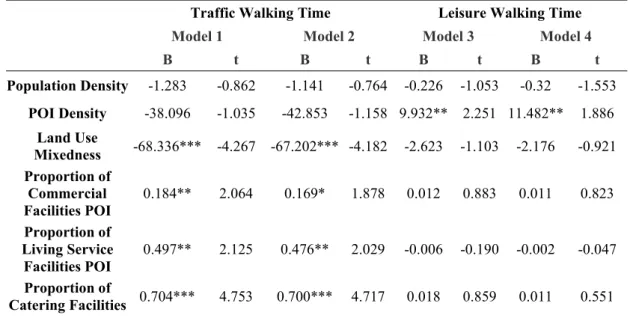
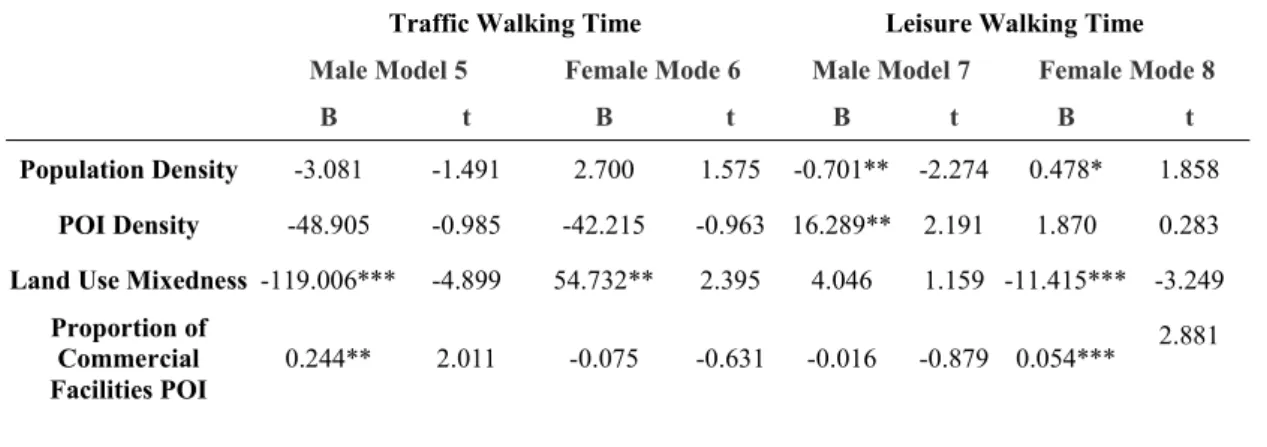
Traffic walking was mainly affected by land use mixedness, commercial facilities, living facilities, catering facilities, green facilities, main road density and access road density. The leisure walking behavior was affected by POI density, green space facilities, sports facilities and other factors. At the same time, we found that the sense of community safety, the richness of sports facilities and the satisfaction of community life also had an influence on leisure walking. The impact factors of the built environment on the walking activity of male and female were different. The mixed function, the proportion of POI in living service facilities and individual travel mode all had an influence on male's and female's traffic walking activity, but the influence was just the opposite. The proportion of POI in catering facilities, commercial facilities and green space facilities only affected male's traffic walking.
Road density only affected female traffic walking. Population density and community safety had an influence on male's and female's leisure walking activity, but the influence of population density on male's and female's leisure walking activity was just the opposite. POI density and community life satisfaction only affected male's leisure walking activity. Land use mixedness, commercial facilities, catering facilities and green space facilities only affected female's leisure walking activity. This work has been published in the No. 3 of Vol. 11 of the journal "Sustainability" in 2019.
In the fourth part, we introduced the environment perception factors to study the
influence path of the subjective and objective factors of the built environment on the
moderate to vigorous physical activity. Firstly, the influence of subjective perception
on moderate to vigorous physical activity was analyzed by multiple regression
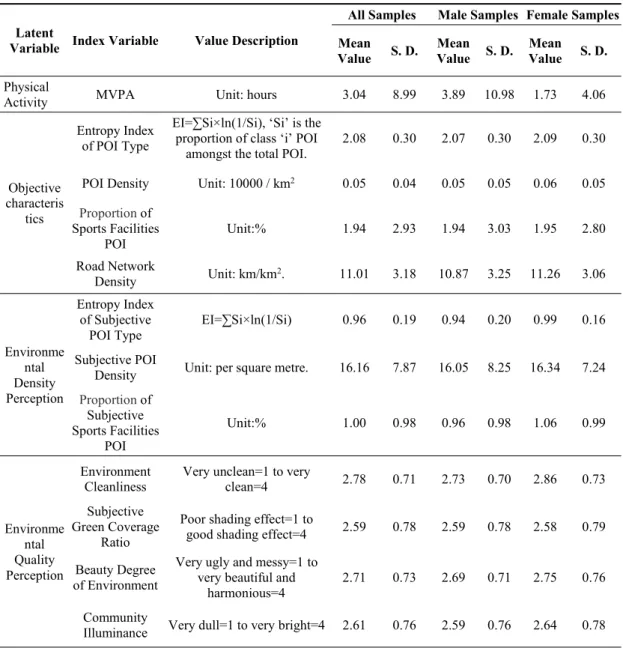
equation. After controlling individual characteristics, POI subjective density, POI
entropy index, environmental beauty, environmental cleanliness, convenience of
commercial facilities and community safety all had an influence on moderate to
vigorous physical activity. Then, using the method of constructing structural model
equation, this chapter analyzed the influence path of objective characteristics,
subjective perception and community safety on the moderate to vigorous physical
activity, and discussed the intermediary effect of environmental subjective perception
and safety perception. There were two paths. One was that the built environment
acted on moderate to vigorous physical activity through subjective perception
(environmental density perception and environmental facilities perception). Another
path was that the objective characteristics affected the community safety perception
through subjective perception (environmental density perception, environmental
facilities perception, environmental facilities perception), and then affected the
moderate to vigorous physical activity. Subjective perception and community safety
played an intermediary role in the influence path of built environment on physical activity. For male, the direct influence path of the built environment on the moderate to vigorous physical activity was obvious. At the same time, the built environment can also affect the moderate to vigorous physical activity through the sense of safety and convenience of facilities. The perception of environmental density had a direct influence on moderate to vigorous physical activity in male. The perception of environmental quality and convenience of environmental facilities affected the moderate to vigorous physical activity through safety perception. For female, the built environment influenced the moderate to vigorous physical activity through intermediary elements. The built environment affected the perception of environmental density, environmental quality and environmental facilities.
Environmental quality perception and environmental facilities perception affected female's moderate to vigorous physical activity through influencing safety perception.
This work has been published in the No. 1 of Vol. 12 of the journal "Sustainability" in 2020.
In the fifth part, we discussed the influence of built environment on self-rated health of residents. In this part, we expanded the built environment to three types:
objective elements, subjective perception and social environment. This chapter used multiple regression equation model to research the independent influence of built environment on self-rated health of residents under the control of individual characteristics, and the influence after increasing subjective perception and social environment. The results showed that the objective characteristics of built environment, subjective perception and social environment had different influence degrees on self-rated health. The influence degree of subjective perception was disturbed by social environment. Mental state affected self-rated health of residents.
The impact of built environment on self-rated health of male and female was not significant.
In the sixth part, structural equation modeling method was used to construct the theoretical relationship between the built environment and health of residents from the aspects of community built environment, social capital, physical activity, physical health and mental health, and to further explored its internal influence mechanism.
There were five main paths. First, the built environment had a direct influence on
physical health. Second, the built environment affected physical and mental health
through physical activity. Third, the built environment affected physical activity,
physical health and mental health through community safety. Fourth, the built
environment affected the community safety through social capital, and then physical
activity, thus affecting physical and mental health. Fifth, physical health promoted
mental health. The influence path of female was not different from that of the whole sample. For male, the built environment affected physical and mental health through community safety. In addition, the built environment affected physical health through social capital.
In the seventh part, we summarized the research conclusions of the doctoral
dissertation, and pointed out the limitations of the research and the problems that will
be solved in the future.
Chapter 2 - Research approach 2.1 Study area
The study area is Fuzhou. Fuzhou is located in East China, East Fujian, lower reaches of Minjiang River and coastal areas, across the sea from Taiwan. It is the political, cultural, scientific, educational and transportation center of Fujian Province, and an important city in Southeast China. The location of Fuzhou in China is shown in Figure 2-1. Fuzhou is located at 25°15’ ~ 26°39’ N and 118°08’ ~ 120°31’ E. it is a typical estuarine basin surrounded by mountains and rivers, with beautiful natural scenery. Fuzhou has Gu mountain in the East, Qi mountain in the west, Wuhu mountain in the South and Lianhua peak in the north. The terrain inclines from west to East. Minjiang River flows into the sea across the city. Fuzhou City covers a total area of 1786 square kilometers, of which the built-up area is 357 square kilometers.
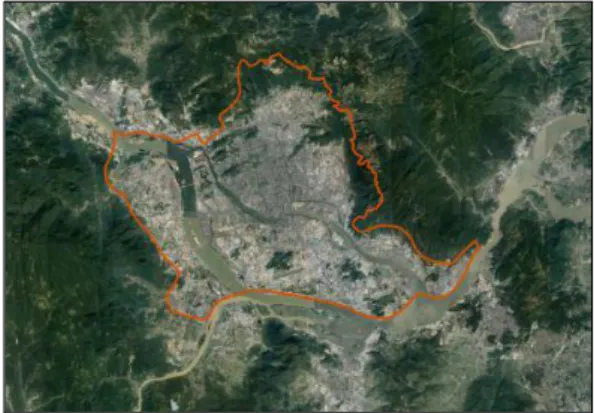
Fuzhou's central city has a permanent population of 4 million. See Figure 2-2 for the image of Fuzhou central city. Fuzhou has a comfortable climate, abundant sunshine, abundant rainfall, long summer and short winter. The annual average precipitation is 900-2100mm; the annual average temperature is 20-25°C.
According to the information on the government website, in 2017, the forest coverage rate of Fuzhou was 56%, the green coverage rate of the built-up area was 43.93%, and the per capita park green area of the urban area was 15.05 square meters.
Fuzhou has a good ecological environment and won the title of “National Forest City”.
In the “Notice on the evaluation results of National Healthy City” issued by the National Health Office in 2018, Fuzhou ranked first in the construction of Healthy City in Fujian Province and 13th in China.
Fujian Province also attaches great importance to the construction of Healthy
City. Fujian Province issued the “Implementation Plan of Healthy Fujian Action” in
January 2020. In the plan, all-round intervention on health influencing factors was
mentioned. They included national fitness, mental health promotion and healthy
environment promotion.
Figure 2-1 The location of Fuzhou in China Figure 2-2 Satellite image map of Fuzhou
2.2 Data source
The data of this study included social survey and open network data. The social survey data mainly came from the questionnaire survey conducted in the urban area of Fuzhou in 2017. This questionnaire adopted the way of network research. The questionnaire included personal information, community facilities, community communication, community satisfaction, eating behavior, physical activity, safety perception, physical health and mental health. After the completion of the questionnaire design, 2000 questionnaires were sent out by professional survey companies. After eliminating the questionnaires of home address, environmental assessment, personal health and other major information deficiencies, 1308 valid samples were finally obtained as the basic database of this study. After manual query and coordinate correction, obtained the spatial points of the residence of the interviewee (Figure 2-3). This study was based on the micro level of the community 。 In order to make the built environment elements and physical activity in a unified analysis scope and avoid the uncertainty of geographical background (Troped et al., 2010; Kwan, 2012), the built environment elements take the 500m space around the sample as the research scope. This distance is basically in line with the community scope of residents' walking comfortable life circle (Figure 2-4).
Figure 2-3 Distribution of sample residence Figure2-4 Sample community life circle
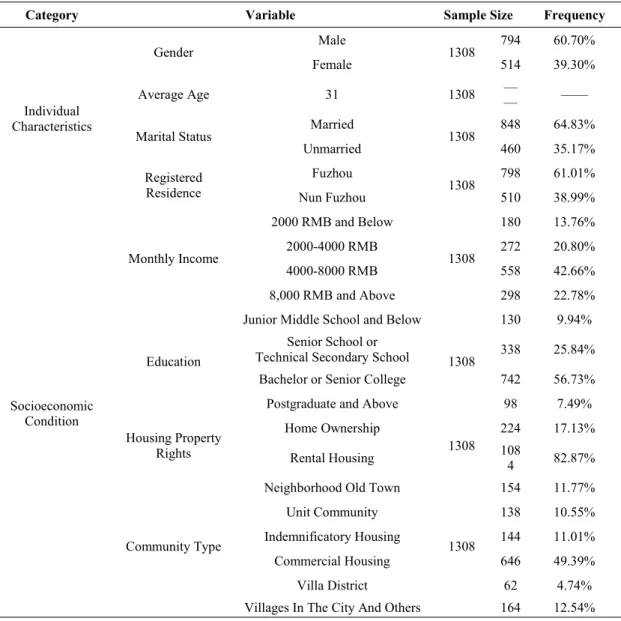
In terms of individual characteristics. The average age of the respondents was 31, mainly in the 20-40 age group. This was mainly because the social survey adopted the way of network, and the older residents paid less attention to the network survey information. Male made up 60. 7%, 39.3% female. Married or cohabiting accounted for 64.83%, unmarried accounted for 35.17%. 61.01% of them were registered in Fuzhou and 38.99% were not registered in Fuzhou. 64.22% had higher education and 35.78% had no higher education. At the same time, the monthly income, housing property rights and community types of residents were also investigated. See Table 2-1 for details.
Table 2-1 Basic information of respondents
Category Variable Sample Size Frequency
Individual Characteristics
Gender Male
1308 794 60.70%
Female 514 39.30%
Average Age 31 1308 —
— ——
Marital Status Married
1308 848 64.83%
Unmarried 460 35.17%
Registered Residence
Fuzhou
1308 798 61.01%
Nun Fuzhou 510 38.99%
Socioeconomic Condition
Monthly Income
2000 RMB and Below
1308
180 13.76%
2000-4000 RMB 272 20.80%
4000-8000 RMB 558 42.66%
8,000 RMB and Above 298 22.78%
Education
Junior Middle School and Below
1308
130 9.94%
Senior School or
Technical Secondary School 338 25.84%
Bachelor or Senior College 742 56.73%
Postgraduate and Above 98 7.49%
Housing Property Rights
Home Ownership
1308 224 17.13%
Rental Housing 108
4 82.87%
Community Type
Neighborhood Old Town
1308
154 11.77%
Unit Community 138 10.55%
Indemnificatory Housing 144 11.01%
Commercial Housing 646 49.39%
Villa District 62 4.74%
Villages In The City And Others 164 12.54%
Public services and public transport facilities spatial interest point data was the
data of Fuzhou City in 2017 downloaded from a map web site. These data included
the geographical location of business facilities, catering facilities, life service facilities,
sports and fitness facilities, green space facilities, and of bus stops. We imported POI
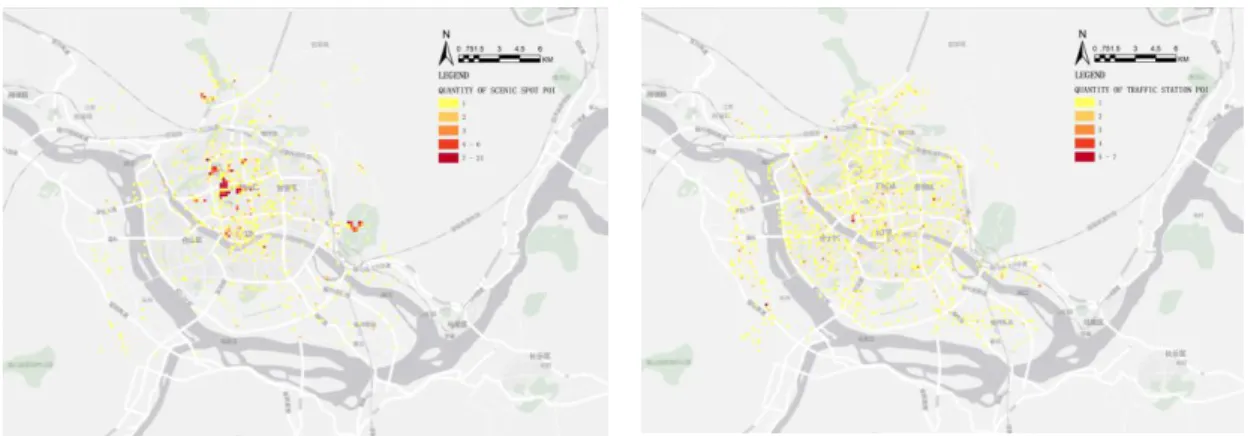
data into ArcGIS, and presented the spatial distribution map of various facilities in Fuzhou according to the spatial unit grid of 200 * 200m. Commercial facilities include supermarkets, convenience stores, hardware stores, pet stores, etc. (Figure 2-5). Life service facilities include hair salon, photo studio, laundry, computer maintenance, electric vehicle maintenance, etc. (Figure 2-6). Catering facilities include all kinds of restaurants, snack bars, etc. (Figure 2-7). Sports and fitness facilities include various fitness centers, yoga centers, activity centers, etc. (Figure 2-8). Green landscape facilities include various parks, cultural squares, etc. (Figure 2-9). See Figure 2-10 for the spatial distribution information of bus stops. In addition, the data of population density of each community and road network were obtained from the web site of Fuzhou government.
Figure 2-5 Distribution of commercial facilities
Figure 2-6 Distribution of living service facilities
Figure 2-7 Distribution of catering facilities Figure 2-8 Distribution of sports facilities
Figure 2-9 Distribution of green park Figure 2-10 Distribution of bus stops
Chapter 3 The impact of the built environment on the walking activities
3.1 Introduction
According to the research of the World Health Organization, many factors affect personal health together, among which heredity accounts for 15%, environment accounts for 17%, health service accounts for 8%, lifestyle and behavior accounts for 60%. A large number of scientific evidences proved that lack of physical activity was an important risk factor for chronic non communicable diseases besides unhealthy diet, smoking and drinking. It was the fourth major cause of chronic non communicable diseases (including heart disease, stroke, diabetes and cancer) in the world. Three million people lose their lives every year (Bull, 2011). Now, this phenomenon is not only in developed countries, but also in developing countries.
According to recent data, it was estimated that 60% of the world's population lacked the amount of physical activity needed to maintain health (WHO, 2009). According to the research of UK Health Department (2004), physical activity had significant effect on health from two aspects of prevention and treatment. Therefore, how to promote people's physical activity and encourage people to actively participate in physical activity had become the priority strategy of health promotion in most countries. At present, the research on the impact of built environment on the physical activity was a hot topic in many countries (Sundquist et al., 2011; Troped et al., 2010; Davison and Lawson, 2006)
Physical activity is generally divided into occupational, traffic, housework and leisure (Wang and He, 2008). This study focused on physical activity of transportation type and leisure type. Walking, as one of the most basic forms of physical activity to promote people's health, is an effective way to prevent and treat chronic diseases such as obesity, cardiovascular and cerebrovascular diseases, type II diabetes, bone and joint diseases and mental diseases (Xiang et al., 2009; Saelens and Handy, 2008). In the study of the relationship between built environment and physical activity, Susan et al. took walking as the research object (Berke et al. 2007; Susan et al., 2005). Owen et al. (2004) studied the total amount of leisure walking. Some Chinese scholars had also studied the relationship between walking volume and blood pressure level, triglyceride level, body weight, BMI, waist circumference, waist to hip ratio and other indicators, confirming the promotion effect of walking on health (Li et al. 2012).
Existing research on physical activity showed that the planning and design of
built environment, especially for land use and transportation system, can significantly affect the spatiotemporal behavior of residents and guide the transformation of traffic behavior and physical activity (He et al., 2014). Vojnovic (2006) found that convenient community connection and appropriate distance can promote residents to choose more healthy transportation modes, such as walking and cycling. Handy et al.
(2002) believed that density was an important built environmental feature affecting physical activity. Frank and Pivo (1994) thought that the density mainly affected the traffic walking activity. Forsyth et al. (2007) thought that density had not necessarily affect leisure physical activity. The higher the general density, the smaller the commuting distance between people's living, working, shopping and other destinations, and the lower the dependence on motor vehicle traffic (Cervero and Kockelman, 1997). With regard to the relationship between population density and traffic physical activity, most studies had found that community population density may be positively related to the total amount of walking and cycling of residents (Frank et al., 2007; Braza et al., 2004). However, some studies had found no correlation between the two (Pont et al., 2009). These studies were from the United States, where the relative population density was low.
It was believed that scientific land mixed use can encourage people to walk and bike more (Stock et al., 2012; Owen et al., 2010). Compact land development model can also enhance the vitality of street life and the supporting capacity of neighborhood business, thus promoting residents' walking (Feng, et al., 2010). Learnihan et al.
(2011) thought that land mixed use had the greatest influence on traffic walking activities, followed by other forms of physical activity. McCormack et al. (2010) pointed out that the public space is conductive to increasing traffic walking and leisure physical activity. For commercial facilities (Handy, 1992; Humel et al. 2004), entertainment facilities (Handy et al., 2006, 2008), public welfare facilities (Cao et al., 2009; Handy et al., 2006, 2008), bus stations (Lee et al., 2009; Brown and Werner, 2007) and other basic facilities, it had obvious effect on traffic physical activity. The accessibility of public spaces such as parks (Powell et al., 2003) and green spaces (Coombes et al., 2010) can increase walking physical activity. The correlation between street network connectivity and physical activity was not clear. Frank et al.
believed that improving street connectivity can promote physical activity (Boarnet et
al., 2008; Nelson et al., 2006; Frank et al., 2004). However, Handy et al., believed that
improving street connectivity can inhibit physical activity and may not affect physical
activity at all. (Larsen et al., 2009; Wells and Yang, 2008; Handy et al., 2005). Hou et
al. (2010) believed that road density was not related to walking, cycling, jogging
(male) or negatively related (female).
The street scale, pavement, greening and sketch facilities played a positive role in pedestrian activities (Boarnet et al., 2011; Borst et al., 2009; Krizek and Johnson., 2006; Nelson et al., 2006). A new study of the Czech United Nations found that when residents perceived the comfort of their surroundings, their daily steps will increase (Sigmundová et al., 2011). Inoue et al. (2010) also found that residents were more likely to walk in their leisure time when they perceived that the surrounding environment was beautiful. However, the Belgian study found that the residents' cognition of the surrounding environment beautification was negatively correlated with the physical activity level measured by the accelerometer(Van Dyck et al., 2011).
Hoehner et al. (2005) also proved that the surrounding environment beautification measured by the subjective and objective was negatively correlated with the traffic trip and physical activity.
The environment with better safety perception was more conducive to physical activity (Inoue et al., 2010; Nelson et al., 2006). Other studies had found that safety perception had a more significant influence on female (Humel et al., 2004). However, a Portuguese study showed that the public safety of the surrounding environment was not related to the level of physical activity (Santos et al., 2008).
Considering the differences of institutional environment and form, it is difficult to direct the healthy urban planning of developing countries based on the theoretical results of European and American countries. In this study, taking Fuzhou City as an example, we integrate social survey, land use, road network, spatial interest points and other data to explore the influence of built environment on walking physical activity at the community scale. The study observed the impact of built environment on traffic and leisure walking activity, and compared the differences between male and female.
3.2 Method and variables
3.2.1 Method
Firstly, all kinds of POI data within the 500m buffer range of the survey samples were extracted by ArcGIS software and imported into Excel software for data processing. Then with the help of SPSS software, the physical activity characteristics of the survey samples and the built environment elements data were described and counted. Finally, through the establishment of multiple regression model to calculate the correlation coefficient, analyzed and compared the influence degree of various factors.
The multiple regression analysis is a statistical quantitative analysis method,
which mainly studies the quantitative change of variables. It can help people
accurately grasp the influence degree of variables by one or more other variables. The first step of regression analysis is to determine which things need to be explained, that is the explained variables (Record as y). Which things are used to explain other things, that is, explanatory variables(Record as x). Multivariate linear regression analysis is to establish the regression equation of y on x, which is used to reveal the linear relationship between the explanatory variables and other explanatory variables.
Multiple linear regression mathematical model as formula 3-1.
x x
px
py
0 1 1 2 2(Formula 3-1)
This is a multiple linear regression model with P explanatory variables. It shows that the change of the explained variable y can be explained by two parts. First, the linear change of y caused by the change of p explanatory variables, i.e.
y=β
0+β
1x
1+β
2x
2+…+β
px
p。Second, the change of y caused by other random factors, i.e.
ε 。 β
0、β
1、β
2…β
pis the location parameter of the model, which is called regression constant and partial regression coefficient respectively. ε is called random error, which is also a random variable. If the expectation is found on both sides of formula 3-1, there is multiple linear regression equation 3-2.
p p
x x
x
y )
0
1 1
2 2 (
E
(Formula 3-2)3.2.2 Variables
3.2.2.1 Explained variable: walking activity
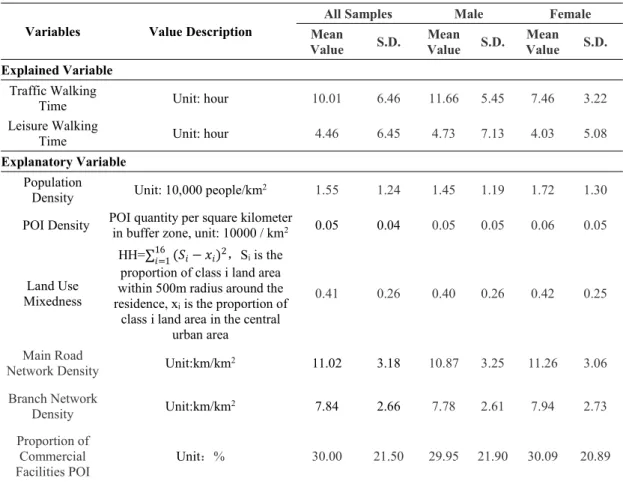
The study used walking to reflect the physical activity of residents. Two explanatory variables, the time length of traffic walking activity and the time length of leisure walking activity, were used to observe the residents' physical activity of traffic type and leisure type. Traffic walking refers to purposeful walking, including going to working, school and shopping. Exercise and stroll are leisure walking activities. The walking activity data was collected in the form of hours by using the length of walking time per week described by residents themselves.
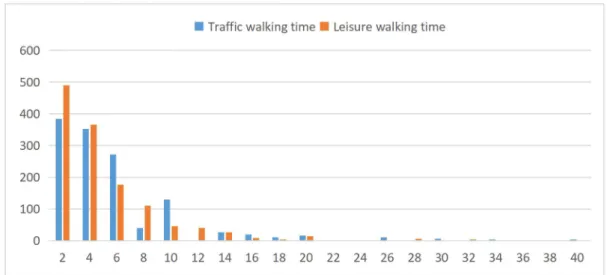
According to the survey, 29.81% of the respondents did not spend more than 2.5
hours of traffic walking activity per week (0.5 hours a day, 5 days). 66.15% of them
used private cars, taxis or e-bikes. 53.06% of the respondents did not walk more than
3.5 hours of leisure walking activity per week (0.5 hours per day, 7 days). When all
the walking time was added up, 22.71% of the respondents still walked no more than
3.5 hours per week (0.5 hours per day, 7 days). The walking time of respondents is
shown in Figure 3-1.
Figure 3-1 Length of walking activity per week