• 検索結果がありません。

Artificial Photosynthesis Sensitized by Tin Porphyrins

N/A
N/A
Protected

Academic year: 2021

シェア "Artificial Photosynthesis Sensitized by Tin Porphyrins"

Copied!
158
0
0

読み込み中.... (全文を見る)

全文

(1)

Artificial Photosynthesis Sensitized by Tin Porphyrins

By

ARUN THOMAS

Tokyo Metropolitan University

Doctor of Philosophy

2016

(2)

ii

(3)

iii

DECLARATION

I hereby declare that the Ph.D. thesis entitled “Artificial Photosynthesis Sensitized by Tin Porphyrins” is an independent work carried out by me at Department of Applied Chemistry, Graduate School of Urban Environmental Sciences, Tokyo Metropolitan University, Tokyo, under the supervision of Prof. Haruo Inoue and the same has not been submitted elsewhere for any other degree, diploma or title.

In keeping with the general practice of reporting scientific observations, due acknowledgement has been made wherever the work described is based on the findings of other investigators.

Tokyo

Arun Thomas

14.09.2016

Department of Applied Chemistry

Graduate School of Urban Environmental Sciences Tokyo Metropolitan University

1-1 Minami Oshawa, Hachioji-Shi Tokyo 192-0397, JAPAN

(4)

iv

(5)

v

ACKNOWLEDGEMENT

It is my pleasure to express my deep sense of gratitude and respect to my research supervisor Prof. Haruo Inoue, for inviting me to his group for doing my Ph.D course. I take this opportunity to thank him for his guidance, sincere advice, suggestions, constant support and encouragement in both research and daily life throughout my course of study.

I would like to thank to Prof. Hiroshi Tachibana for his valuable advice, discussion and efforts to carry out theoretical calculations to support my experimental results. I would like to thank Prof.

Shinsuke Takagi and Prof. Motowo Yamaguchi, Dept. of Applied Chemistry, Tokyo Metropolitan University for their supportive advices and suggestions for the successful completion of my thesis.

I would like to express my deep sense of gratitude and respect to Dr. Suresh Das, former Director of National Institute for Interdisciplinary Science and Technology (NIIST-CSIR), Trivandrum, India for introducing me to Prof. Haruo Inoue and his guidance, sincere advice, suggestions, constant support and encouragement during my early stage of research life.

I would like to thank Prof. Yu Nabetani, Tokyo Metropolitan University for his constant support, valuable suggestions and experimental helps during my research. Prof. Akira Fujishima, Emeritus professor at University of Tokyo for providing the Boron Doped Diamond electrodes for the electrochemical experiments. The precious efforts for glass blowing by Mr. R. Makishima, Tokyo Metropolitan University is deeply acknowledged. I wish to express my gratitude to Dr. John Maria Xavier, Dept. of Chemistry, Loyola College Chennai, Dr. R. Luxmi Varma, Dr. Mangalam S. Nair, Smt. Saumini Mathew of National Institute for Interdisciplinary Science and Technology (NIIST- CSIR), Trivandrum for their constant support and motivation provided in early stages of my research life.

I wish to express my gratitude to Dr. Fazalurahman Kuttassery, Dr. Daisuke Yamamoto, Dr.

Vivek Ramakrishnan and Dr. Youki Kou, Dr. Siby Mathew, Dr. Sebastian Nybin Remello, Dr. Bijal

Kottukkal for their valuable helps for both research and pleasant daily life in Japan. I would like

extend my sincere gratitude to Ms. Masae Asano for her helps and supports in academic as well

(6)

vi

as daily life in Japan. The helps from Mr. Hiroshi Tamaki, Project Manager of JST-PRESTO is deeply acknowledged.

I thank present and former members of Inoue laboratory especially Ms. Satomi Onuki, Mr. Syed Zahid Hassan, Mr. Shogo Sagawa, Mr. Takehiro Hirano, Mr. Haruo Horiguchi and Ms. Akino Uchikoshi for their experimental helps and valuable discussion.

I would like to express my sincere gratitude to all staffs of international house, Tokyo Metropolitan University especially Ms. Yuki Yamada, Ms. Rie Sasaki, Ms. Nakano Makiko and Ms. Akemi Oohira for smooth daily life in both University and Shimoyugi. The financial supports by Asian Human Resource fund by Tokyo Metropolitan Government, PRESTO project of JST, An Apple projects are deeply acknowledged.

I take this opportunity to pay respect to my teachers who taught me from my school days to present. I also wish to acknowledge my well-wishers who motivated me to carry out this research work, especially Sr. Shanet Poothampara, Br. Anoop Poothampara and Dr. Baby M.K for their prayers and support.

I would like to thank Dr. Suresh Das’s lab members Mr. Rahul M. Ongungal, Mr. Aneesh P.S, Dr. Deepak D. Prabhu, Dr. K.M Shefeek, Dr. Abdul Rahim, Dr. Karunakaran Venugopal and my friends for their help and support during my early stage of research.
Last but not the least I dedicate this Ph.D thesis to my beloved family. My family has always been a source of inspiration and encouragement. I have no words to express my feeling to my beloved parents Mr. A. J Thomas, Ms. Leelamma Thomas, Brother Mr. Praveen Thomas and sister Ms. Preethi Mol Thomas.

Arun Thomas

(7)

vii

Dedicated to My Family, Friends and Teachers……..

(8)

viii

(9)

ix

Table of contents

DECLARATION ... iii

ACKNOWLEDGEMENT ... v

ABBREVIATIONS ... xii

ABSTRACT ... xv

Chapter 1. Introduction ... 1

1.1 Solar energy for energy crisis... 1

1.2 Natural photosynthesis ... 2

1.3 Conversion of solar light into fuel; Solar cells and artificial photosynthesis... 5

1.4 Artificial photosynthesis ... 7

1.5 History of artificial photosynthesis ... 8

1.5.1 Semiconductor mediated water oxidation ... 10

1.5.2 Metal complex mediated water oxidation ... 12

1.6 Mechanistic approaches to artificial photosynthesis ... 16

1.6.1 One-electron water splitting ... 16

1.6.2 Two-electron water splitting ... 17

1.6.3 Four-electron water splitting ... 17

1.7 Bottleneck in artificial photosynthesis. ... 17

1.8 Two-electron activation of water ... 20

1.9 Photo oxygenation by earth abundant metalloporphyrins ... 23

1.10 Purpose of this research... 24

1.11 Strategies of water activation by tin porphyrins ... 26

1.12 Design of Tin porphyrins for water oxidation. ... 28

1.13 Preface ... 29

Chapter 2. Conventional & New facile synthesis and characterization of Tin porphyrins. ... 31

2.1 Conventional method of preparation of Tin porphyrins (SnTTP & SnTMP) ... 33

2.1.1 Synthesis of dihydroxy5,10,15,20-tetrakis(p-tolyl)porphyrinatotin(IV) : [Sn(IV)TTP(OH)

2

]... 34

2.1.2 Synthesis of dihydroxy tetra[(2,4,6-trimethyl) phenylporphyrinato]tin (IV) : [Sn(IV)TMP(OH)

2

] ... 35

2.2 New facile synthesis of water insoluble and water soluble cationic ... 36

(10)

x

2.2.1 Synthesis of trans-dihydroxy5,10,15,20-tetra(N-methyl-4'-

pyridiniumyl)porphyrinate Tin (IV): [Sn(IV)TMPyP(OH)

2

](Cl

4

) ... 36

2.2.2 Synthesis of trans-dihydroxy-5,10,15,20-tetra(4-pyridyl)porphyrinate Tin (IV): [Sn(IV)TPyP(OH)

2

] ... 41

2.2.3 Metallation reagent – (Behaviour of SnCl

2

in water) ... 44

2.2.4 The detailed investigation of reaction mechanism of new facile synthesis ... 45

2.3 Conclusion ... 52

Chapter 3. The nature of axial ligands and multiprotolytic equilibria of Tin porphyrins ... 53

3.1 Solvent axial ligand exchange by water molecule ... 54

3.2 Multiprotolytic equilibria of Tin porphyrins ... 56

3.2.1 pKa of SnTMP ... 57

3.2.2 pKa of SnTTP ... 60

3.2.3 pKa of SnTMPyP ... 64

3.2.4 pKa of SnTPyP ... 67

3.2.5 pKa of SnTCPP ... 74

3.3 pKa analysis by

1

H NMR spectroscopy ... 78

3.3.1 SnTMP ... 78

3.3.2 SnTTP ... 79

3.3.3 SnTMPyP ... 80

3.3.4 SnTPyP ... 81

3.3.5 SnTCPP ... 82

3.4 Excited state dynamics of Tin porphyrins ... 85

3.5 Conclusion ... 89

Chapter 4. Electrochemical behaviour of Tin porphyrins with change of pH – preliminary electrochemical studies ... 91

4.1 Cyclic voltammogram ... 91

4.1.1 Catalytic and noncatalytic cyclic voltammogram ... 92

4.2 Electrochemistry of Tin porphyrins ... 93

4.2.1 Catalytic and noncatalytic behavior of Tin porphyrins in different solvent system. 93 4.2.2 Pourbaix diagrams of Tin porphyrins ... 95

4.3 Conclusion ... 99

(11)

xi

Chapter 5. Electrochemical water oxidation by Tin porphyrins ... 101

5.1 Catalytic Turn over frequency of Tin porphyrins ... 101

5.1.1 TOF of SnTPyP... 105

5.1.2 TOF of SnTMPyP ... 106

5.2 Bulk electrolysis of Tin porphyrins ... 109

5.2.1 Bulk electrolysis of SnTMPyP... 110

5.3 Theoretical investigation of catalytic activity Tin porphyrins ... 114

5.4 Mechanism of two electron water oxidation ... 115

5.5 Detection of peroxo complex of Tin porphyrins by UV-Vis spectroscopy ... 116

5.6 Conclusion ... 117

Chapter 6. Photoelectrochemical water oxidation by Tin porphyrins ... 119

6.1 Photoelectrochemical studies of ionically coordinated Tin porphyrins ... 119

6.1.1 SnTCPP- SnO

2

/TiO

2

... 119

6.2 Photoelectrochemical studies of axially coordinated Tin porphyrins ... 125

6.2.1 SnTTP-SnO

2

/TiO

2

... 125

6.3 Conclusion. ... 128

Chapter 7. Conclusion ... 131

Summary ... 133

Future prospects ... 133

References ... 134

(12)

xii

ABBREVIATIONS

ADP Adinosine Diphosphate ATP Adinosine Triphosphate

BDD Boron Doped Diamond

BET Back Electron Transfer

CAN Cerium Ammonium Nitrate

CE Counter Electrode

CPE Controlled Potential Electrolysis

CV Cyclic Voltammetry

DFT Density Functional Theory

DMF Dimethyl Formamide

DSSC Dye Sensitized Solar Cell

EA Elemental Analysis

ESI-MS Electrospray Ionization Mass Spectroscopy

F.Y Faradic Yield

FTO Fluorine Doped Tin Oxide G3P Glyceraldehyde 3-Phosphate ITO Indium Doped Tin Oxide

NADPH Nicotinamide Adenine Dinucleotide Phosphate NHE Normal Hydrogen Electrode

NMR Nuclear Magnetic Resonance

OEC Oxygen Evolving Complex

(13)

xiii

OD Optical Density

PEMS Polymer Electrolyte Membrane Cell ppm Parts Per Million

PS I Photosystem I

PS II Photosystem II RE Reference Electrode Rpm Rotation per Minute

SHE Standard Hydrogen Electrode SOEC Solid Oxide Electrolysis Cell

TBAPF

6

Tetrabutylammonium hexaflourophosphate TLC Thin Layer Chromatography

TOF Turnover Frequency

TON Turnover Number

TPAI Tetrapropylammonium iodide

TW Tera Watts

UV-Vis Ultra Violet -Visible

WE Working Electrode

WOC Water Oxidation Catalyst

(14)

xiv

(15)

xv

ABSTRACT

Artificial Photosynthesis Sensitized by Tin porphyrins

Artificial photosynthesis, which enables chemical conversion of sunlight energy, has

attracted much attention as one of the most promising renewable energy systems. The real

bottleneck of artificial photosynthesis is the four-electron/four-photon water oxidation due to the

photon flux density problem. Our research on this field has been focused on a two-electron/one-

photon water oxidation sensitized by various metalloporphyrins. The objective of this study is the

utilization of tin porphyrins for water oxidation. A new synthetic methodology was developed

towards water soluble cationic tin porphyrins and the mechanism was well investigated. The

multiprotolytic equilibria of axially coordinated water molecule on various tin porphyrins has been

analyzed by absorption spectroscopy, emission spectroscopy and cyclic voltammetry. The

catalytic turn over frequency measurement indicates the pH versatility of tin porphyrins for water

oxidation. The direct electrochemical and photo-electrochemical water oxidation was carried out

by tin porphyrins. Hydrogen peroxide, oxygen and hydrogen were detected as the products of two

electron water oxidation catalyzed by tin porphyrin.

(16)

xvi

(17)

1

Chapter 1. Introduction

1.1 Solar energy for energy crisis

The basis of research on artificial photosynthesis and solar cell is the necessity of sustainable, abundant and accessible energy since the volume of the fossil fuels is decreasing day by day. The demand on our energy system is increasing in a critical condition of facing scarcity of nonrenewable energy sources.

1,2

85% of the current energy sources are from the fossil fuels from the earth’s crust. The consumption of these fossil fuels are increasing day by day as the population grows and their stock is decreasing rapidly. In addition to this increased consumption of these fossil fuels it would leads to severe environmental problems like global warming and green-house gas effects etc.

3,4

In order to overcome the energy crisis and severe environmental problems like global warming and climate changes we are forced to invent other alternative energy sources which are renewable and sustainable. The famous Italian scientist Giacomo Ciamician said over hundred years ago “grand challenge” for chemists is to find a convenient means for artificial conversion of solar energy into fuels. If chemists succeed to create an artificial photosynthetic process, “…

life and civilization will continue as long as the sun shines!”.

5

Sun is a singular remedy for our

future growing energy needs. Sunlight consists more energy in one hour than earth inhabitants

consumes in one year.

6

There is an enormous gap between our limited use of solar energy and its

total potential. The present global demand of energy is about ~16 TW a year whereas sun delivers

120,000 TW energy which is about 10000 times larger than the current demand.

4,7,8

Plenty of

research is going on for the conversion of solar energy into future energy options. Current research

based on solar cells are dye sensitized solar cells (DSSc), quantum dot solar cells (QDSc), silicon

solar cell and artificial photosynthesis etc. Among them artificial photosynthesis sensitized

(18)

2

by metalloporphyrins is a promising area due to the evolution of hydrogen. Hydrogen is a potential fuel that liberates lot of energy. The solar energy conversion into hydrogen and use of hydrogen is environment friendly. In addition to evolution of hydrogen in the reduction side, hydrogen peroxide which is a potential liquid fuel and oxygen can be evolved in their oxidation part.

1.2 Natural photosynthesis

Natural photosynthesis is the process happening green plants and other photosynthetic organism where they utilize light energy from sun for conversion into chemical energy.

carbohydrates such as sugar are synthesized from water and carbon dioxide in addition to the release of oxygen.

Photosynthesis maintains atmospheric oxygen levels and supplies all of the organic compounds and most of the energy necessary for all life on earth. Natural photosynthesis is occurring through a series of light induced multi electron transfer reactions in photosynthetic pigments such as chlorophylls, phycobilins and carotenoids etc. These pigments absorbs energy from sun and by transfer of electrons from their excited state to reaction centers where chemical energy is produced. In a simplified view natural photosynthesis can be denoted as follows.

Scheme 1.2.1 Processes in natural photosynthesis 6CO

2

+ 6H

2

O Sun light

48 C

6

H

12

O

6

+ 6O

2

(19)

3

The main components of natural photosynthetic system are 1 A sensitizer part to absorb sun light (Chlorophyll)

2 An electron donor, which supplies electrons to sensitizer (Mn Complex) 3 An electron acceptor which takes electron from sensitizer

Photosynthesis is taking place in chloroplast of plant leaf cell. The photosynthetic

system is divided into two, Photosystem I and Photosystem II. Light dependent reaction is

happening in chloroplast in the leaf in photosystem II. Light independent reaction i.e. dark reaction

is happening in photosystem I. The chlorophyll molecule i.e. the sensitizer absorbs the light. When

they absorbs sufficient excitation energy one electron is excited to the higher level. These electron

is shuttling through a series of electron transport chain. These electrons are finally transferred to

chlorophyll molecule in the Photosystem I by cytochrome complex. During this process an ATP

(adenosine triphosphate) molecules are synthesized by ATP synthase enzyme. The reached

electron in the photosystem I are again excited by chlorophyll molecule and shuttled through an

electron transport chain lowering energies of electron acceptors. The electron is used to reduce the

co-enzyme NADP, which has crucial role in the light-independent reaction. By the utilization of

ATP and NADPH carbon dioxide is converted into carbohydrates through glyceraldehyde 3-

phosphate (G3P) in well-known Calvin cycle.

2,7,9

The excited electrons lost from chlorophyll

in photosystem II are replaced electron generated from the water splitting by oxygen evolving

complex. The source of electrons in green-plant and cyanobacterial photosynthesis is water. Two

water molecules are oxidized by four successive charge-separation reactions by photosystem II to

yield

(20)

4

one molecule of diatomic oxygen and four hydrogen ions. The whole processes is called Z- scheme

10,11

since the energy level diagram of this whole process is in the shape of English alphabet

“Z”.

Figure 1.2.1 Schematic Representation of Z-scheme in Natural photosynthesis

The total processes in the natural photosynthesis can be summarized as

12H

2

O + 12NADP

+

+ 48h → 6O

2

+ 12NADPH + 12H

+

(1.1)

6CO

2

+ 12NADPH + 18ATP + 12H

+

→ C

6

H

12

O

6

+ 12NADP+ + 18ADP + 18Pi + 6H

2

O (1.2)

The oxidation of water is catalyzed in photosystem II by a oxygen evolving complex (OEC) that

contains four manganese ions and a calcium ion in a Mn

4

Ca

2+

complex. X-ray crystallographic

(21)

5

studies with resolution 1.90 A

º

reveals that this complex has a structure of cluster of Mn

4

CaO

5

with four water molecules attached on this complex

12,13

as shown in figure 1.2.2.

Figure 1.2.2 Crystallographic structure of OEC complex in natural photosynthesis

12

1.3 Conversion of solar light into fuel; Solar cells and artificial photosynthesis

Plenty of research is going on the conversion of solar energy into fuels. Solar cells and artificial photosynthesis are the most promising areas. Both are similar in terms of one electron process. Solar cells directly generate the electricity whereas in artificial photosynthesis chemical energy is generated in the form of hydrogen, oxygen, hydrogen peroxide and carbon monoxide etc.

A schematic representation of solar cell and artificial photosynthesis is given in fig. 1.3. In solar

cells upon excitation with light an electron is jumped to excited state and it is then relaxed to the

ground state. During the excitation a hole is generated, and the electronic neutrality is maintained

when the electron in the excited state recombines when it comes to the ground state. During this

process the charge separation and the electron hole recombination is cycling without change in the

(22)

6

light absorbing catalyst. An output electricity is generated during the charge separation followed

by the electron-hole recombination. The whole process is characterized by one-electron conversion.

Artificial photosynthesis is also a one electron conversion process but different from solar cells by no recombination of the excited electron with the hole in the ground state. It has both oxidation and reduction parts as in natural photosynthesis. In the oxidation side upon irradiation with light the sensitizer excite its electrons to the excited states and it passes through several mediators and finally reaches in the reduction part, where it is utilized for the two electron reduction of carbon dioxide into carbon monoxide or evolution of hydrogen from protons by two electron process. The electronic balance in the oxidation part will be maintained by sensitizer or OEC by extracting electron by water splitting. Water activation is carried out by four electron process into oxygen evolution and two electron process into hydrogen peroxide. In solar cell one electron conversion is utilized for the generation of electricity whereas in artificial photosynthesis is characterized by chemical conversion into fuels via multi-electron conversion.

14

Figure 1.3. Schematic representation of a) solar cell. b) artificial photosynthesis

14

(23)

7

1.4 Artificial photosynthesis

As the word implies artificial photosynthesis is the mimicking of the natural photosynthesis. There are two ways of approaches to artificial photosynthesis

i) Modification or improvement of the natural system through biological modification including biomass.

ii) Building completely new systems mimicking of natural one with same or better performance.

15

The latter approaches consists of two classification such as semiconductor and metal complex or organic dyes. In natural photosynthesis the light absorbing chlorophyll, electron transport by ferridoxine, cytochromes, and water oxidation by OEC i.e. the manganese complex are the key parts. The challenge in artificial photosynthesis is the replacement components in the natural one by efficient artificial components. A schematic representation of the artificial photosynthesis is given in figure 1.4.

Figure 1.4. Schematic representation artificial photosynthesis system

(24)

8

In comparison with natural photosynthesis, artificial photosynthesis consists of the following components

i) A metal complex which performs the role of sensitizer and water oxidation catalyst.

ii) A series of n-type and p type semiconductors for the electron transport.

iii) A zinc porphyrin and Rhenium complex dyad performing the role of sensitizer and CO

2

reduction catalyst.

16

1.5 History of artificial photosynthesis

The history of artificial photosynthesis started in late 20

th

century with ground breaking

findings in 1972 known as ‘Honda-Fujishima effect”. It was the water splitting upon irradiation of

a semiconductor with UV light. The experimental setup consists of a TiO

2

working electrode

connected with a counter platinum electrode. Upon irradiation with UV light dioxygen evolution

from TiO

2

and hydrogen evolution from platinum were observed. The history of artificial

photosynthesis started with this ground breaking findings by Honda and Fujishima.

17

The second

milestone findings was the pioneering work of T. J Meyer, which was the chemical oxidation of

the water by Ruthenium binuclear complex almost ten years after the Honda-Fujishima report.

18

The third milestone was the impressive work by Lehn in the field of carbon dioxide reduction.

19,20

On the basis of these milestones there are many challenges in realizing the artificial photosynthetic

systems. The two main approaches are i) modify or improve the system by understanding the

natural system ii) build completely new system artificially with similar or even better performance

than natural one. Recently researches have reached up to a state of irradiation of semiconductors

by visible light for water activation.

(25)

9

Figure 1.5a Experimental scheme of Honda-Fujishima effect

17

Figure 1.5b Blue dimer complex for chemical water oxidation by T. J Meyer et.al

18

(26)

10

1.5.1 Semiconductor mediated water oxidation

Figure 1.5.1.1 Schematic diagram of semiconductor mediated water oxidation

21

The Honda-Fujishima effect was the first report came in the field of semiconductor assisted water oxidation.

17

A schematic representation of a photochemical water splitting is given in fig 1.5.1.1. Recent years many researchers are contributing to photocatalysts for water oxidation.

The design of a semiconductor system for water activation should meet the following processes i)

electron-hole generation ii) electron-hole separation iii) electron-hole transfer in efficient

manner.

21

The band gap of TiO

2

is about 3 eV which can generate charge separation by UV-Vis

light. Visible light induced water oxidation can be achieved by band gap tailoring of the

semiconductor. For the practical application there are two approaches towards the semiconductor

system.

22

First one is the semiconductor based photovoltaics, where the oxygen and hydrogen

separation is difficult when they are produced simultaneously in the reaction system. Nowadays

this situation has been solved by separating the oxidation terminal and the reduction terminal by a

(27)

11

conducting membrane or salt bridge so that the oxygen and the hydrogen can be detected separately.

23,24

The second approach is the incorporation of some functional materials such as organic dyes or supramolecular systems to for the separate oxidation and reduction terminals.

22

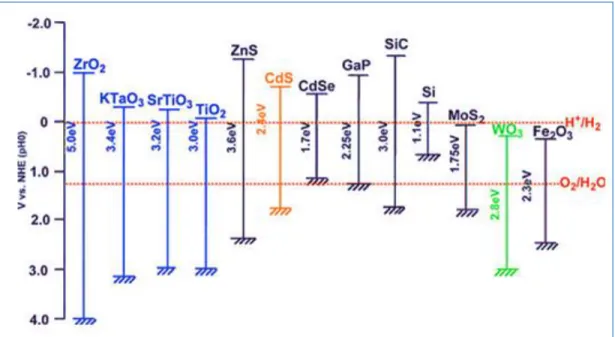
Figure 1.5.1.2 Relationship between band structures of semiconductors and redox potentials of water splitting

23

The design of the semiconductor is based on the band gap difference as a function of pH

according to the Nernst equation. The band gap of semiconductor is fixed to be 3 eV in order to

utilize the wavelength greater than 415 nm (for visible light). Researchers have developed various

metal oxide based semiconductor for water activation. Co-catalyst are also attached with the

catalyst to improve the efficiency. The recent reports on this field are TiO

2

/Pt, SrTiO

3

/NiOx,

NaTaO

3

/NiO, BaTa

4

O

15

/NiO

25-29

, BiVO

4

, Bi

2

MoO

6

, PbWO

4

, Zn

3

V

2

O

8

etc.

21,30-34

Although

semiconductor based photocatalysts shows good quantum yield in water splitting their preparation

is characterized by high energy input. It requires high temperature which is a major drawback

towards synthesis of photocatalysts for water splitting for future energy crisis.

(28)

12

1.5.2 Metal complex mediated water oxidation

Apart from the semiconductor assisted water oxidation researchers are actively contributing to water oxidation by metal complexes. This is a promising aspect towards because we can tune the properties by changing functional groups in the ligand in the metal complex. They are classified into porphyrins or phthalocyanines and non-porphyrins. These porphyrin metal complexes involves various metalloporphyrins by incorporation with various metals and transition metals such as Fe

35

, Cu

36

, Mn

37,38

, Co

39

, Ni

35

, Ru

40-46

, Sn

47

, Ge

48

, Al

14,49

, Si

50,51

etc. The nonporphyrin complexes consists of metal with various mono, bi, polydentate ligands such as bypyridyl and their derivatives. The metal complex assisted water oxidation are mainly classified into chemical, electrochemical, and photochemical water oxidation.

1.5.2.1 Chemical water oxidation

The second milestone in artificial photosynthesis i.e. the blue dimer complex assisted water oxidation was first report in this field.

18

For the last thirty years plenty of research have been carried out in the field of oxygen evolution by metal complex. In 1982 T. J Meyer et.al developed cis,cis [Ru(bpy)

2

(H

2

O)]

2

(µ-O)

4+

with TON 13 Ca and TOF 0.004 S

-1

in the presence of chemical oxidant (NH

4

)(NO

3

)(Ce

IV

).

18

The CAN i.e. cerium ammonium nitrate is considered to be one of the most investigated sacrificial electron acceptor for homogeneous water oxidation process.

18

Recently Licheng Sun et.al has developed molecular ruthenium complex with isoquinoline axial ligands with a TOF of > 300 S

-1

comparable with natural systems.

43,52

1.5.2.2 Electrochemical water oxidation

The electrochemical oxidation of the water into oxygen and hydrogen occurs at 1.23 V at

pH 0. This will vary by 0.05 x pH unit according to the pH of the solution. This is the

(29)

13

thermodynamic aspect. But in real case due to the complicated mechanism, and reactions happening in the electrode surface, temperature and other experimental condition and this potential may vary by 500-1000 mV higher than the thermodynamic potential. This potential difference is called “over-potential”. Researchers in the field of electrochemical water oxidation are trying to lower this over-potential to improve the efficiency. There are two main approaches in the electrochemical water oxidation i) homogeneous ii) heterogeneous. The former one consists of catalysts made in solution of electrolyte connected with electrodes. In the latter approaches the catalyst is adsorbed/coated on the working electrodes by suitable binding.

Various types of homogeneous and heterogeneous catalyst have been synthesized and their catalytic activity has been studied. Among those the metals complexes of Fe,

53

Co,

54,55

Cu

36,56,57

has shown good efficiency towards the four electron water oxidation. J. M Mayer et.al developed a Cu-bipyridine complex with water as axial ligand with catalytic turnover frequency 100 S

-1

. They observed oxygen evolution from CPE experiment on GC and ITO electrode with faradaic yield of

~35% and over potential of ~750 mV under basic pH.

36

(30)

14

Figure 1.5.2.2.1 Species of Cu-bpy complex with pH(top), irreversible CVs of Cu-bpy complex

(bottom left), Oxygen evolution catalyzed by Cu-bpy complex in basic condition (bottom right)

36

In heterogeneous electrocatalytic water splitting the catalyst is coated or adsorbed over

working electrode by suitable methods such as ionic or axial coordination or linkage through some

anchoring group. An example of heterogeneous electrocatalyst is modified GC electrode by

covalently linked Nickel complex

58

is given in figure 1.5.2.2.2. Homogeneous electrocatalysis is

the most developed approach in artificial photosynthesis but their stability and high over-potential

are the main concern in the practical point of view. Heterogeneous electrocatalysis is also having

similar stability drawbacks such as desorption from the electrode by means of pH change and long

experiment duration etc.

(31)

15

Figure 1.5.2.2.2 Modified GC electrode by Nickel complex

58

1.5.2.3 Photochemical water oxidation

Light induced water oxidation is achieved by the binding the catalyst to semiconductor by

suitable method. Upon excitation with light the catalyst will inject electrons to the semiconductor

connected with electrodes and these electrons will be used for the proton reduction. The

semiconductor/catalyst work only in the presence of sacrificial electron donors such as EDTA,

methanol and iodide etc. Recently researcher are contributing to the direct water oxidation by

photochemical way. Instead of sacrificial electron donors they are trying to utilize water oxidation

for oxygen evolution. Metalloporphyrins adsorbed on TiO

2

by ionic or axial coordination and

metal complexes sensitized TiO

2

are the some examples of systems in the field of photochemical

water oxidation. Shiragami et.al synthesized Germanium (IV) tetracarboxy phenyl porphyrin

sensitized TiO

2

. Upon irradiation with visible light (550 nm) they detected evolution of hydrogen

peroxide via two electron oxidation of water under acidic pHs.

48

(32)

16

Figure 1.5.2.3 Photocatalytic water splitting by Ge(IV) TCPP sensitized TiO

248

1.6 Mechanistic approaches to artificial photosynthesis

The way of incorporation of water molecule in oxidation part of the artificial photosynthesis system is crucial point to be understood.

15

Even though water oxidation can be achieved by photochemically or electrochemically their mechanism are different in electron transfer dynamics.

The electrochemical water oxidation proceeds through multi electron transfer catalyst to electrode surface. But in photochemical water oxidation photon flux density plays a crucial role. Whole the process proceeds through one-photon induced electron transfer from sensitizer to electrode under light illumination. Hence the whole electron transfer process is dependent on the photon flux density conditions.

15

The main approaches to artificial photosynthesis in mechanistic point of view of electron transfer dynamics are i) one-electron process ii) two-electron process iii) four-electron process.

15

1.6.1 One-electron water splitting

This approach is based on the one electron oxidation of hydroxide ion into hydroxyl radical

as shown in equation 1.6.1. This process requires the irradiation of the sensitizer with UV light

due to the high oxidation potential of OH

-

ions. Since the product of this process is hydroxyl radical

(33)

17

which is highly reactive and difficult to control and the researchers are restricted to the further development in this approach.

OH· + e = OH

-

, ~2.0 V (E

0

vs SHE) (1.6.1)

1.6.2 Two-electron water splitting

This approach is based on the conversion of hydroxyl ion or water molecule into hydrogen peroxide via two-electron process (equation 1.6.2a & equation 1.6.2b). Recently researchers are actively contributing to the two electron water oxidation to avoid the photon flux density problems

.

H

2

O

2

+ 2H

+

+ 2e

-

= 2H

2

O, ~ 1.77 V (E

0

vs SHE, at pH 0) (1.6.2a)

H

2

O

2

+ 2e

-

= 2OH

-

(1.6.2b)

1.6.3 Four-electron water splitting

This approach is similar to natural photosynthesis where molecular oxygen is liberated as the product of four electron oxidation of water or hydroxide ions as shown in equation 1.6.3a &

equation 1.6.3b. In natural photosynthesis the stepwise four electron water induced oxidation works smoothly whereas in artificial photosynthesis it is a bottleneck due to photo-flux density problems.

O

2

+ 4H

+

+ 4e

-

= 2H

2

O, ~ 1.23 V (E

0

vs SHE, at pH 0) (1.6.3a)

O

2

+ 2H

+

+ 4e

-

= 2OH

-

, ~ 0.41 V (E

0

vs SHE, at pH 14) (1.6.3b)

1.7 Bottleneck in artificial photosynthesis.

In natural photosynthesis four electron oxidation of the OEC catalyst i.e. Mn

4

CaO

5

cluster

initiates the water oxidation into oxygen in photosystem II. Upon irradiation with light PS II

(34)

18

generates electron-hole pair. The electron will be transferred into PS I leaving the hole to OEC to form the first oxidized state S

1

. Again holes are being transferred to OES step-wisely to form the next oxidized species. Thus the OEC will reach highly oxidizes state S

4

from S

0

state through four stepwise oxidation. This time period these whole process is too long comparing to the time scale of the highly oxidized species. The survival of the highly oxidized species is crucial for the efficient water oxidation.

14,15

Figure 1.7.1 Oxygen evolution mechanisms through five different oxidation states of oxygen evolving complex (OEC) in natural photosynthesis

12,13,15

Nature has its own mechanism for the survival of the highly oxidized species of sensitizer.

Recent studies x-ray crystallographic studies with resolution 1.90 A

º 12

reveals that the OEC

complex (Mn

4

CaO

5

) has a structure of five oxygen atoms bonds with the metal atoms through oxo

linkage and four water molecules are attached on this complex. This Mn

4

CaO

5

complex are in a

protein environment via extensive hydrogen bonding.

12

These protein environments protects

effectively the catalyst. Such a kind of environment for the stabilization of the catalysts would be

a proper solution for the survival of the highly oxidized species of the catalyst.

(35)

19

Consider tetraphenyl porphyrin Sn(IV)TTP as a sensitizer for a solar cell device. The number of photons at each wavelength per unit area and time can be plotted in figure 1.7.2 a) by the consideration of a typical light intensity to be an AM1.5 condition although the intensity of light vary depends on factors like condition of time of day, weather, region etc. The cross section of light absorption at each wavelength by SnTTP is plotted in figure 1.7.2b. The probability of light absorption by Sn(IV)TTP can be expressed in terms of cross section of light absorption in unit area where all photons are absorbed. This can be calculated from the molar extinction coefficient. From the product of number photons per unit area and time and cross section of light absorption by Sn(IV)TTP the excitation frequency of Sn(IV)TTP by incident photon can be calculated and this product is integrated from 300 nm to 800 nm.

14

Figure1.7.2 a) Photon flux density of sunlight AM1.5 b) Cross section of absorption by

Sn(IV)TTP

14

(36)

20

From above estimations the excitation frequency of SnTTP by photon was found to be 5.75 s

-1

or it can be explained as the sensitizer has to wait ca. 0.17 s for the excitation by next photon. Thus for the stepwise four electron process it requires 0.7 s. This time scale is too long when comparing to the timescale of the highly active oxidized state of the catalyst in the microenvironment such as in solvent or in adsorbed state on a solid state.

14

The oxidized state is more unstable than the reduced state. The impurities in the solute or solvent will consume the oxidized state. Hence the survival of the catalyst in normal microenvironment under long waiting for successive photon is difficult and this will leads to the decomposition of the catalyst. In natural systems the sensitizer is stabilized in special protein environment whereas in artificial systems the construction of such protective microenvironment is not developed to a great extent.

1.8 Two-electron activation of water

An alternative route for water activation which could solve the photon flux density problem has been proposed via two-electron process instead of four electron process. Light induced two electron activation of water produce hydrogen peroxide as shown in equation 1.6.2a. In addition to this if there is a substrate is present in the system that would leads to the two electron conversion of the substrate as shown in equation 1.8.

"S" + H

2

O + Pt(IV)Cl

6 hν, MP

→ "SO” + Pt(II)Cl

42-

+ 2HCl (1.8)

Here S denote substrates like alkene, MP is metalloporphyrins.

15,47,49-51,59-70

We have observed the

visible light irradiation of a reaction mixture of Co-coordinated tetra(2,4,6-trimethyl)

phenylporphyrinatoruthenium(II) (Ru

II

TMP(CO)) as a sensitizer, hexachloroplatinate (IV) as an

electron acceptor, and an alkene as the substrate in alkaline aqueous acetonitrile induces the highly

selective epoxidation of the alkene, with a high quantum yield (~60%) under deaerated conditions

(37)

21

as scheme in figure 1.8.1.

59,60

The laser plash photolysis analysis reveals the mechanistic aspect of this process that the water molecule is activated through the axial ligation to the one-electron oxidized Ru porphyrins to induce an oxygen atom transfer to substrate with two electron conversion, followed by the second electron transfer to the electron acceptor. Here water molecule is playing the role as both electron and oxygen donor.

Scheme 1.8.1 Photooxygenation of alkene sensitized by Ru(III)TMP(CO) in presence of

water

15,59,61

(38)

22

Scheme 1.8.2 Reaction mechanism of photooxygenation of cyclohexene sensitized by Ru(II)TMP in presence of K

2

PtCl

6

as the sacrificial electron acceptor and water as both electron and oxygen donor

14,61

The detailed reaction mechanism has been proposed from the laser flash photolysis studies.

The product selectivity depends on the nature of the axial water ligand. If it in O

-

form which leads

to the alcohol formation whereas the OH form will leads to the epoxide formation. DFT calculation

revels that the both cases of OH and it deprotonated form O

-

the spin density is located on the

oxygen of the axial ligand which leads to the two electron conversion.

(39)

23

Scheme 1.8.3 Spin density of the three one-electron oxidized form of RuTMP(CO) with water or hydroxide ion by theoretical DFT calculation (Gaussian 03 UB3LYP/LANL2DZ)

62

The intermediates in this process does not need to wait for the next photon because the single photon induces the whole processes. This one photon induced two electron conversion does not involves multistep process it is free of requirement of special protein environment and photo flux density.

1.9 Photo oxygenation by earth abundant metalloporphyrins

For the practical point of view of systemization of artificial photosynthetic system it would be preferable for the exploration of earth abundant and cost efficient metals rather than Ru, Re, etc. Recently we extended our vision to earth abundant metals such as Aluminum and Silicon.

Recently we observed that dihydroxy tetra(2,4,6-trimethyl) phenylporphyrinatoaluminium(III)

(40)

24

(AlTMP(OH)

2

) and dihydroxy tetra(2,4,6-trimethyl) phenylporphyrinatosilicon(IV) (SiTMP(OH)

2

) can efficiently act as a sensitizer, in the presence of hexachloroplatinate (IV) as an electron acceptor, and an alkene as the substrate in alkaline aqueous acetonitrile induces the highly selective epoxidation of the alkene. The product selectivity is varied with OH concentration in the reaction system.

Fig.1.9 Photochemical oxygenation of cyclohexene with water under alkaline condition sensitized by dihydroxy tetra(2,4,6-trimethyl) phenylporphyrin (where M= Si, Al)

14,49-51,64

1.10 Purpose of this research

We have already succeeded in photooxygenation of alkenes by various metalloporphyrins

via one photon induced two electron activation of water in the presence of sacrificial electron

acceptor hexachloroplatinate. Chloride ions can be generated from hexachloroplatinate and they

can attack at the meso position of the porphyrin which may lead to the decomposition of the

sensitizer. We employed hexachloroplatinate as sacrificial electron acceptor for photooxygenation

(41)

25

by metalloporphyins with meso protection. TiO

2

loaded with Platinum is well known for its nature as an electron acceptor and hydrogen evolution. The electrochemical studies carried out for earth abundant Aluminum and Silicon porphyrins shows their pH limitation. Aluminum and Silicon porphyrin exhibit high catalytic turn over frequency (~10

4

S

-1

) and good faradaic yield for controlled potential electrolysis in basic pHs and acidic pHs respectively. For practical purpose of device highly acidic or basic pH condition are not preferable. The pH versatility is an ideal criteria for any practical device. In this situation aim of this research is to investigate the utilization of another earth abundant Tin metalloporphyrins for direct water oxidation. They are well employed in various photocatalysis applications.

71-76

We successfully carried out the photooxygenation of cyclohexene and hydrogen evolution using Sn(IV)TCPP as sensitizer and Pt loaded TiO

2

as electron acceptor instead of hexachloroplatinate under visible light irradiation as shown in figure 1.10.1.

Figure 1.10.1 Photooxygenation by Sn(IV)TCPP sensitized TiO

247

A small amount of sulphuric acid was added to the reaction mixture to adjust the pH, while the

total yield of the oxygenated products was largest under neutral conditions (figure 1.10.2). When

(42)

26

the concentration of sulphuric acid exceeded 10

−4

M, Sn(IV)TCPP was desorbed from the TiO

2

surface owing to protonation of the carboxylic group of Sn(IV)TCPP. The quantum yield of hydrogen formation could not be estimated owing to a seriously large amount of light scattering by the reaction mixture.

Figure 1.10.2 Simultaneous photooxygenation and hydrogen evolution upon visible light irradiation of Sn(IV)TCPP sensitized TiO

2

/Pt

47

1.11 Strategies of water activation by tin porphyrins

Two strategies have been adopted for the water activation by tin porphyrins i) photochemical

substrate oxidation ii) direct water oxidation electrochemically as shown below.

(43)

27

Figure 1.11 Scheme of water activation strategies.

In the case of Aluminum and Silicon and porphyrins we were successfully observed the

visible light induced photooxygenation of the substrates in the presence of sacrificial electron

acceptor, whereas in the case of Tin porphyrins we successfully observed the hydrogen evolution

when TiO

2

/Pt is used as the electron acceptor instead of hexachloroplatinate. The reaction

mechanism and the intermediated are well analyzed by the laser flash photolysis. Hydrogen

peroxide is considered to a potential liquid fuel for the next generation fuel cells. The two electron

process leads to hydrogen peroxide at rather higher E (H

2

O

2

/H

2

O) = 1.77 V vs SHE than the water

oxidation via four-electron process which leads to dioxygen evolution at E(O

2

/H

2

O) = 1.23 V vs

SHE. The evolution of hydrogen peroxide from oxidation terminal and hydrogen evolution from

reduction terminal would be the key point of artificial the water oxidation.

77

(44)

28

1.12 Design of Tin porphyrins for water oxidation.

Efficient water oxidation can be achieved by tuning the oxidation potential. The oxidation potential of the metalloporphyrin can be tuned by proper meso substituent. The electron withdrawing substituent will decrease the oxidation potential whereas the electron donating substituent will increase the oxidation potential. The various substituent designed for tin porphyrins in this study are electron withdrawing pyridyl (SnTPyP) and pyridiniumyl (SnTMPyP) electron donating p-tolyl (SnTTP), mesityl (SnTMP), carboxyl (SnTCPP) given in figure 1.12.

Figure 1.12 Tin porphyrins designed for water oxidation.

(45)

29

1.13 Preface

Chapter 1. Introduction

Chapter 2. New facile synthesis and characterization of Tin porphyrins.

Water Insoluble tin porphyrins SnTTP & SnTMP were synthesized by following the conventional literature method under refluxing conditions with good yield and characterized by various spectroscopic techniques. A new facile method for synthesis of water soluble and water insoluble cationic Tin porphyrins (SnTMPyP & SnTPyP) in water as solvent at ambient temperature were investigated. The characteristic intermediate i.e. Tin(II) porphyrins successfully observed and the reaction kinetics were investigated. The whole reaction processes were successfully monitored by time dependent UV-Vis &

1

H NMR spectroscopy.

78

Chapter 3. Multiprotolytic reactions of Tin porphyrins.

The replacement of the axial solvent molecules in coordinating solvents by water molecule

were observed by UV-Vis spectroscopy. The multiprotolytic equilibria of Tin porphyrins were

analyzed by UV-Vis, emission, and

1

H NMR spectroscopy. pKa of tin porphyrins were estimated

from the plot of OD at a particular wavelength versus pH. Four pKa were observed for each tin

porphyrins in acidic pH corresponding to the stepwise protonation of the axial OH groups. The

excited state behavior of each axially ligated species of Tin porphyrins were analyzed by

picosecond laser flash photolysis studies which exhibits single exponential decay due to no

equilibration in excited state. In addition to the axial group protolytic reaction the functional group

protolytic reactions in the cases of SnTPyP and SnTCPP were also observed.

(46)

30

Chapter 4. Electrochemistry of Tin porphyrins

The non-aqueous CVs of Tin porphyrins were measured in dry solvents and reversible type noncatalytic peaks were observed. During water addition catalytic nonreversible peaks were found to be appeared due to the coupling of the metalloporphyrin oxidation with water. The Pourbaix diagram were constructed which was characterized by stepwise increase of oxidation potential supporting the stepwise protonation of axial and peripheral groups.

Chapter 5. Electrochemical water oxidation by Tin porphyrins.

The catalytic turn over frequencies were calculated for each species of Tin porphyrins by the modified Randless-Sevcik method.

36

SnTPyP exhibit excellent TOF in acid pHs and SnTMPyP exhibit high TOF in neutral and basic pHs. Controlled potential electrolysis were carried out by SnTMPyP under neutral, basic and buffered conditions. The experimental setup consists of two half cells coupled by a salt bridge. Hydrogen and oxygen were detected by GC-TCD and hydrogen peroxide were detected by TiTPyP method with good faradaic yield. The intermediate of two electron water oxidation i.e. Tin peroxo complex was detected by UV-Vis spectroscopy.

Chapter 6. Photoelectrochemical water oxidation by Tin porphyrins/semiconductor Hybrids.

Tin porphyrins and TiO

2

/SnO

2

hybrids were prepared by axial and ionic coordination. The

electron injection efficiency was investigated by Iodide experiments. It indicates that the tin

porphyrins can inject electrons more efficiently to SnO

2

than TiO

2

. Taking inspiration from these

experiments direct photoelectrochemical water oxidation was carried out by irradiating the SnP-

SnO

2

semiconductor hybrid. Hydrogen and hydrogen peroxide were detected quantitatively .

(47)

31

Chapter 2. Conventional & New facile synthesis and characterization of Tin porphyrins.

Introduction. The most common and conventional reported method of preparation of Sn(IV)porphyrin is reaction of SnCl

2

with free base.

47,73,75,79-82

The reaction takes place in organic solvents with high boiling point such as pyridine, DMF, Acetic acid etc. Then the crude product is dissolved in chloroform followed by the purification by column chromatography. The axial chloride ligands are hydrolyzed to hydroxyl group by reaction with K

2

CO

3

. Pyridine is not an environment friendly solvent and the workup procedure is to be done with care. The first Sn(IV) porphyrin was synthesized by Rothemund and coworkers in 1948 by reaction between SnCl

2

.2H

2

O and free base in pyridine under refluxing conditions and purification by column chromatography.

83,84

In 1970 and 1973 Adler and Gouterman respectively synthesized Sn(IV) porphyrins by refluxing freebase porphyrins and SnCl

2

.2H

2

O in DMF and glacial acetic acid.

84-86

Crossley and co-workers developed an new method to avoid the possibility mixture of axial chlorine and hydroxo ligand after column chromatography by pyridine method.

84,87

They treated the dichlorotin porphyrin with K

2

CO

3

in THF and water under refluxing condition for about three hours to ensure the complete conversion of axial chlorine ligands to hydroxo ligands.

In 2010 Vijayendra S. Shetti et.al developed an simple method to synthesize the various

Sn(IV) porphyrins.

84

They treated freebase porphyrins refluxed with SnCl

2

.2H

2

O in mixture of

chloroform and ethanol followed by basic alumina chromatography to attain both purification and

conversion of axial chlorine ligand to hydroxo ligands. This method has many advantages like it

does not requires high boiling organic solvents and requires low boing organic solvents which

makes the working up easier.

(48)

32

Although we succeeded in synthesis of Sn(IV) porphyrins in conventional method using benzonitrile as solvent instead of pyridine, we recently found that Tin metal can be inserted into water soluble cationic porphyrins like 5,10,15,20-tetra(N-methyl-4'- pyridiniumyl) and water insoluble neutral 5,10,15,20-tetra(4'-pyridinium) porphyrin in water as solvent under ambient temperature stirring as shown in scheme 2.2.1 and scheme 2.2.2. The free base H

2

TPyP is not soluble in water and made soluble by adding HCl. The reaction completes within an hour with good yield. This method was characterized by i) it does not require high boiling and environment not friendly solvents like pyridine, DMF acetic acid etc, ii) work up is easy iii) This is a promising route towards the synthesis of SnTMPyP as it requires no quaternization of SnTPyP.

88,89

More over water is used as solvent which is an ideal candidates with least energy inputs towards the synthesis of catalyst. The time dependent UV-Vis and

1

H NMR analysis were carried out to understand the reaction mechanism.

Measurements

UV-Visible spectra were measured on a Shimadzu UV-2550 spectrometer. ESI- MS spectra were measured using JEOL JMS T100LP spectrometer. NMR spectra were measured using BRUKER ULTRASHIELD 500MHz spectrometer.

119

Sn NMR was measured using SnMe

4

as standard for the chemical shift. The time dependent absorption spectral changes were recorded by USB2000 (Ocean optics Inc.). The chemical shift δ are given in ppm, multiplicity [singlet (s), doublet (d), multiplet (m)], integration, coupling constant in Hz.

Chemicals

Free base porphyrins were purchased from TCI chemicals Co. Ltd Japan. SnCl

2

was purchased

from Kanto chemicals. Co Japan. Deionized water used for the synthesis was made by passing

(49)

33

distilled water through an ion-exchange column (G-10, ORGANO Co.). The electrical conductivity of the water was below 0.1 μS cm

−1

. Acetone, dichloromethane and hexane were purchased from Kanto chemicals Co. Japan

.

2.1 Conventional method of preparation of Tin porphyrins (SnTTP &

SnTMP)

The conventional method of synthesis of SnTTP and SnTMP is given in Scheme 2.1.

82,87

Scheme 2.1 Synthetic scheme of SnTTP & SnTMP

(50)

34

2.1.1 Synthesis of dihydroxy5,10,15,20-tetrakis(p-tolyl)porphyrinatotin(IV) : [ Sn(IV)TTP(OH)

2

]

2.1.1.1 Synthesis of SnTTP(Cl)

2

The free base, H

2

TTP (150 mg, 0.225 mmol) and anhydrous SnCl

2

were dissolved in 100

ml benzonitrile and heated to reflux for three hours. The progress of the reaction was monitored by UV-Vis spectroscopy and TLC analysis. After completion, reaction mixture was cooled to room temperature and the organic phase is removed by rotary evaporation. The reaction mixture was dissolved in dichloromethane and washed several times with deionized water. The organic phase was collected and dried over Na

2

SO

4

. The product is recrystallized by hexane as violet crystals (yield 85%, 165 mg).

1

H NMR (500 MHz, CDCl

3

) δ = 9.23 (s, 8H, satellite J

Sn-H

= 15 Hz, β- pyrrolic), 8.23 (d, 8H, J = 5 Hz, meta), 7.65 (d, 8H, J = 10 Hz, ortho), 2.76 (s, 12H, tolyl methyl).

λ

max

: 428 nm in DCM, ESI

+

MS (m/z) 823 [M-Cl]

+

.

2.1.1.2 Synthesis of SnTTP(OH)

2

SnTTPCl

2

(120 mg, 0.139 mmol) and K

2

CO

3

(300 mg, 2.22 mmol) were dissolved in 40 ml THF and 10 ml water mixture and heated at reflux for 3 hours. The progress of the reaction was monitored by UV-Vis spectroscopy. The reaction mixture was cooled and the organic phase was removed by rotary evaporation and the aqueous layer was extracted into dichloromethane.

The crude product was washed with hexane several times to yield violet crystals (yield 80%, 95

mg).

1

H NMR (500 MHz, CDCl

3

) δ =9.19 (s, 8H, satellite J

Sn-H

= 10 Hz, β-pyrrolic), 8.27 (d, 8H,

J = 10 Hz, meta), 7.66 (d, 8H, J = 5 Hz, ortho ) , 2.79 (s, 12H, tolyl methyl), -7.41(broad singlet,

axial OH). λ

max

: 426 nm in DCM, ESI

+

MS : (m/z) 805 [M-OH]

+

. UV-Vis, ε = 6.9 x 10

5

M

-1

dm

-3

(51)

35

max

: 422 nm in MeOH), 1.76x10

4

M

-1

dm

-3

(λmax: 557 nm in MeOH). EA: found C 66.06 %, H 4.66 %, N 6.20 %, calcd for [Sn(IV)TTP(OH)

2

](H

2

O)

3

C 65.84%, H 5.07 % , N 6.40 %.

2.1.2 Synthesis of dihydroxy tetra[(2,4,6-trimethyl) phenylporphyrinato]tin (IV) : [Sn(IV)TMP(OH)

2

]

2.1.2.1 Synthesis of SnTMP(Cl)

2

The free base H

2

TMP (250 mg, 0.333 mmol) and anhydrous SnCl

2

were dissolved in 100 ml benzonitrile and heated to reflux for four hours. The progress of the reaction was monitored by UV-Vis spectroscopy and TLC analysis. After completion, reaction mixture was cooled to room temperature the organic phase was removed by rotary evaporation. The reaction mixture was dissolved in dichloromethane and washed several times with deionized water. The organic phase was collected and dried over Na

2

SO

4

. The product was recrystallized by hexane as pink colored crystals (yield 70%, 210 mg),

1

H NMR (500 MHz, CDCl

3

) δ = 8.96 (s, 8H, satellite J

Sn-H

= 15 Hz, β-pyrrolic), 7.43 (s, 8H, meta), 1.90 (s, 24H, ortho-methyl) , 2.67 (s, 12H, para-methyl). λ

max

: 427 nm in DCM.

2.1.2.2 Synthesis of SnTMP(OH)

2

SnTMPCl

2

(200 mg, 0.205 mmol) and K

2

CO

3

(681 mg, 4.92 mmol) were dissolved in 60 ml

THF and 15 ml water mixture and heated at reflux for 3 hours. The progress of the reaction was

monitored by UV-Vis spectroscopy. The reaction mixture was cooled and the organic phase was

removed by rotary evaporation and the aqueous layer was extracted into dichloromethane. The

crude product was washed with hexane several times to yield pink colored crystals (yield 80%,

170 mg),

1

H NMR (500 MHz, CDCl

3

) δ =8.90 (s, 8H, satellite J

Sn-H

= 10 Hz, β-pyrrolic), 7.43 (s,

8H, meta), 1.90 (s, 24H, ortho-methyl), 2.6 (s, 12H, para-methyl), -7.34 (broad singlet, axial OH).

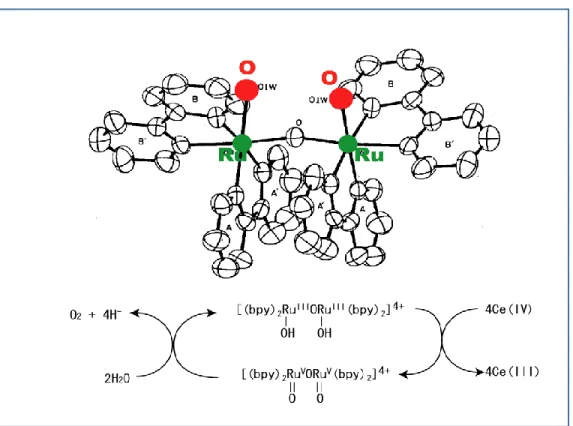
Figure 1.5b Blue dimer complex for chemical water oxidation by T. J Meyer et.al 18
Figure 1.5.1.2 Relationship between band structures of semiconductors and redox potentials of  water splitting 23
Figure  1.10.2    Simultaneous      photooxygenation  and  hydrogen  evolution  upon  visible  light  irradiation of Sn(IV)TCPP sensitized TiO 2 /Pt 47
Figure 2.2.1.1.1 UV-Vis spectra during the synthesis of SnTMPyP from H 2 TMPyP (4.4 x 10 -3  M)  and SnCl 2  (2.0 x 10 -2  M) in water at ambient temperature
+7

参照

関連したドキュメント

We study the basic preferential attachment process, which generates a sequence of random trees, each obtained from the previous one by introducing a new vertex and joining it to

A condition number estimate for the third coarse space applied to scalar diffusion problems can be found in [23] for constant ρ-scaling and in Section 6 for extension scaling...

In section 2 we present the model in its original form and establish an equivalent formulation using boundary integrals. This is then used to devise a semi-implicit algorithm

Theorem 4.8 shows that the addition of the nonlocal term to local diffusion pro- duces similar early pattern results when compared to the pure local case considered in [33].. Lemma

Moreover, it is important to note that the spinodal decomposition and the subsequent coarsening process are not only accelerated by temperature (as, in general, diffusion always is)

In this paper the classes of groups we will be interested in are the following three: groups of the form F k o α Z for F k a free group of finite rank k and α an automorphism of F k

Maria Cecilia Zanardi, São Paulo State University (UNESP), Guaratinguetá, 12516-410 São Paulo,

It turns out that the symbol which is defined in a probabilistic way coincides with the analytic (in the sense of pseudo-differential operators) symbol for the class of Feller