Japan Advanced Institute of Science and Technology
Title 学術図書館におけるサービスイノベーションのナレッ
ジマネジメント
Author(s) Islam, Md. Anwarul Citation
Issue Date 2016‑03
Type Thesis or Dissertation Text version ETD
URL http://hdl.handle.net/10119/13521 Rights
Description Supervisor:池田 満, 知識科学研究科, 博士
i n A c a d e m i c L i b r a r y Se r v i c e s
Md. Anwarul Islam
Japan Advanced Institute of Science & Technology
Doctoral Dissertation
Knowledge Management for Innovation in Academic Library Services
Md. Anwarul Islam
Supervisor: Mitsuru Ikeda
School of Knowledge Science
Japan Advanced Institute of Science & Technology
March, 2016
ii The advent of managing knowledge has positive impact on library services.
Creating knowledge, using that knowledge from inside and outside sources, transferring and sharing that knowledge for applying are the core areas of offering innovative services in academic libraries. In 21st century, the nature of libraries & library services are changing in line with the changing of library user behavior, demand, need and want. For change to be effective, libraries as well as library personnel must change. The key to change and growth is awareness, managing knowledge, sharing ideas, coming up with new and innovative ways of offering services with the user involvement. Many studies identified that managing knowledge for both employees and users; inviting users in the service process and applying modern technologies convert the challenges into opportunities. For the present study, we have examined academic libraries readiness to adopt KM, KM tools, user involvement in the service process and KM activities in their libraries. We have focused how KM (and value co-creation) facilitates service innovation activities in academic libraries. For theoretical reasoning, we have come up with comprehensive lists of KM tools in line with KM cycle that academic libraries can apply for their own settings. We have also conceptualized the value co-creation for service innovation in academic libraries. For examining and exploring the effect, we have conducted two Web-based survey as well as one e-mail interview. The methodology employed was a combination of qualitative and quantitative approaches. The survey of perceived usefulness of adopting KM using social media, most of the respondents thought that KM-using-social media would be useful for libraries and but they were not entirely sure if their libraries were ready to adopt KM. For managing user knowledge, most of the librarians manage their user knowledge through face to face meeting, social media, survey, tailoring user needs through inviting feedback. After managing knowledge, we identified that libraries work with their users to co-create value in areas such as project management, makerspaces, information literacy, design of library websites, etc. Despite some concerns, most of the librarians saw value co-creation as critical to the innovation of new services and the continuing success of their library. For investigating the effect of KM (and each phase of the KM cycle) on service innovation, librarians replied that knowledge capture/creation and knowledge application/use both significantly impact on service innovation in academic libraries. The effect of knowledge sharing and transfer on innovation was found to be insignificant. The results show that academic libraries with more capability of knowledge creation are likely to offer more innovative services to their user communities. Similarly, once the
iii the theoretical model, we propose that KM enablers determine the degree to
which KM can be implemented in an academic library setting. Knowledge management (different phases of the KM cycle) positively affect to offering innovative services in academic libraries. The positive effect of KM on service innovation is enhanced/expedited when the library employees involve the user in value co-creation. Value co-creation also has a direct effect on service innovation in academic libraries. Lastly, innovation in academic library services refer to new service concept, new/improved user interface, new/improving existing ways of providing services and using technologies to facilitate all of those activities. The study suggests that academic libraries should redefine it’s working role by promoting KM activities in their libraries and they should actively think of involving users in the academic library services. Lastly, we put some directions for the extended work for this study.
Keywords: knowledge management, value co-creation, service innovation, library services, academic libraries.
iv It has been a wonderful journey for writing this doctoral dissertation in Japan Advanced Institute of Science and Technology (JAIST). But this journey would not have been possible without the help of so many people in so many ways. With their support, guidance and help, the time in JAIST has been rewarding and a learning journey for me.
Firstly, I am extremely grateful to my supervisor Dr. Mitsuru Ikeda, for guiding me in the right direction, and for his honest criticism whenever he saw me deviating from the right track. Without his support and guidance, I would not have succeeded. I also would like to thank my second supervisor Dr. Hideaki Kanai and my minor research supervisor Dr. Vesa Matti Peltokorpi. They have supported and guided me in many ways. Thanks also go out to Dr. Naresh Kumar Agarwal, Simmons College, Boston, USA for all his help.
His infectious enthusiasm and unstinting support have been invaluable to me in more ways than can be seen in this dissertation.
My sincere gratitude is also due to the Doctoral Research Fellowship (DRF) authority at JAIST for considering me worthy of the fellowship, and to all JAIST officials. I would like to thank all members of Ikelab for their critique, suggestions and inspiration during the lab seminars and presentations. I deeply acknowledge the contribution of all my research participants across the world. A special note of thanks to Ikue Osawa, Liang Cui (Sai) & Wei Chen who made my life easier in Japan. They have never said no to me, and I have always felt fortunate to have had these people around me in JAIST.
Finally, I express my deepest gratitude to my family members. First and foremost in this list is my mother. She understands me completely and has been there for me no matter what. Her prayers have always shown me the right way to move ahead. My wife, Subarna Ferdous has been a source of immense strength throughout my journey at JAIST, giving up life as she knew, generously tolerating my absence, and moving all the way to Japan just for me. I always got her support and love, and compassionate listening ears when I had bad days. Thanks to my new born child Arham, who has already brought much joy and happiness in my life. To those listed above, to all those I have missed, and to the power that guides me, I extend my deepest gratitude.
v
Abstract ... ii
Acknowledgements ... iv
Table of Contents ... v
List of Tables ... xi
List of Figures ... xiii
Chapter 1: Background & Introduction ... 1
1.1 Background of the study ... 1
1.2 Statement of the problem ... 4
1.3 Purpose of the study ... 5
1.4 Research questions ... 5
1.5 Significance of the study ... 6
1.6 Research methodology ... 7
1.6.1 Document analysis ... 7
1.6.2 Quantitative ... 7
1.6.3 Qualitative ... 8
1.7 Definition of research terms ... 8
1.8 Structure of the dissertation ... 10
Chapter 2: Literature Review ... 11
2.1 Knowledge ... 11
2.2 Explicit and tacit knowledge ... 12
2.3 Knowledge management (KM)... 13
2.4 KM cycle ... 14
2.5 Types of knowledge applicable to libraries... 17
2.6 Knowledge management and academic library ... 18
2.7 KM enabling environment / readiness ... 20
2.7.1 Culture ... 21
2.7.2 Infrastructure ... 22
vi
2.7. 4 KM tools... 24
2.7. 5 KM and social media ... 28
2.8 Knowledge retention and transfer... 29
2.8.1 Knowledge retention ... 29
2.8.2 Knowledge transfer ... 30
2.8.3 Factors affecting knowledge retention and transfer ... 31
2.9 Service innovation ... 32
2.10 Service innovation and academic library ... 35
2.11 Innovation enabling environment in academic library services ... 36
2.12 KM and innovation in academic library services ... 38
2.13 Theoretical lens: KM for service innovation in libraries (KMSIL) ... 40
2.13.1 Looking externally ... 40
2.13.2 Looking internally ... 41
2.14 Value co-creation ... 41
2.14.1 Co-creation models ... 43
2.14.2 Value co-creation and innovation in academic library services ... 44
2.15 Summary of literature review ... 46
Chapter 3: Library Readiness to Adopt KM Using social media ... 47
3.1 Introduction ... 47
3.2 Objectives of the study ... 48
3.3 Research model ... 48
3.4 Hypotheses ... 49
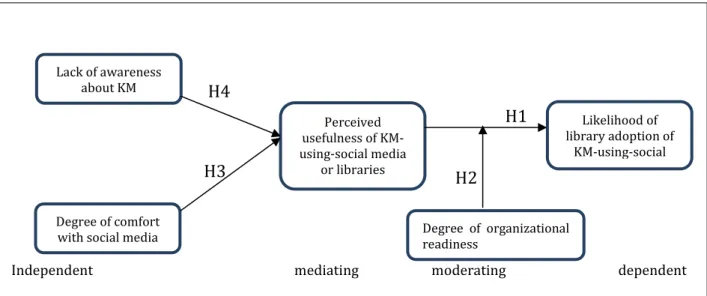
Likelihood of library adoption of KM-using-social media (dependent variable) ... 49
Perceived usefulness of KM-using-social media for libraries (mediator) ... 50
Degree of organizational readiness (moderating variable) ... 50
vii
Lack of awareness about KM (independent variable) ... 51
3.5 Methodology ... 51
3.5.1 Study population and sample ... 51
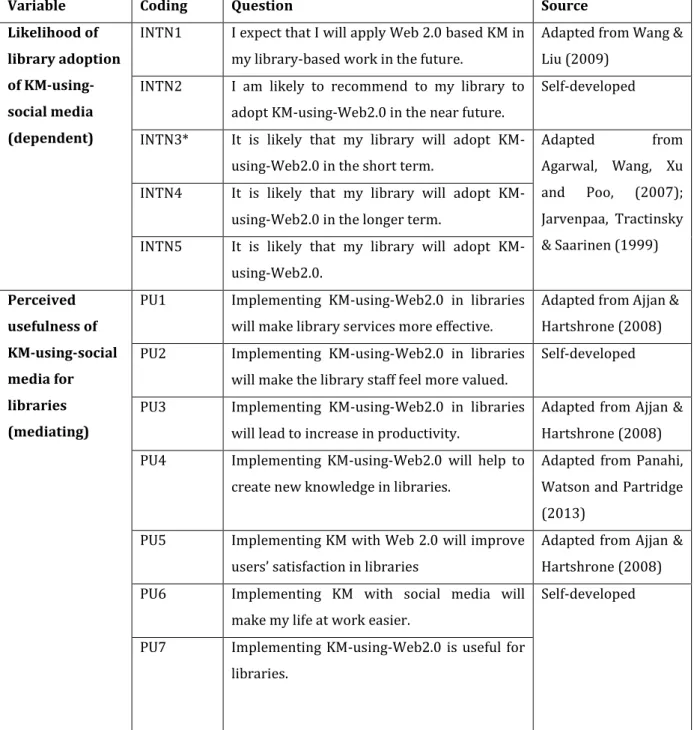
3.5.2 Instrument development ... 51
3.5.3 Data collection and analysis ... 54
3.6 Findings ... 56
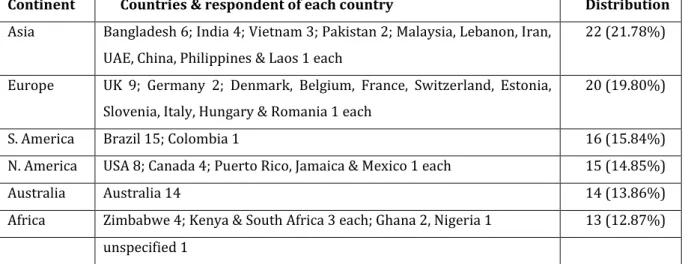
3.6.1 Demographics ... 56
3.6.2 Descriptive statistics and reliability analysis ... 58
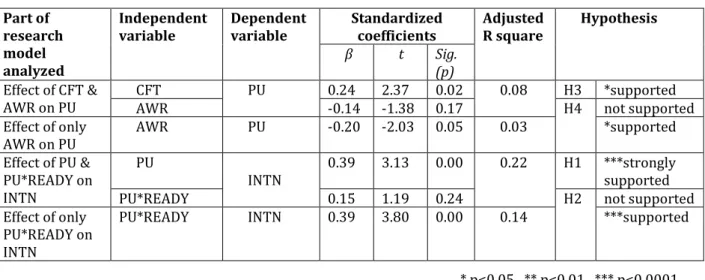
3.6.3 Hypothesis testing ... 59
3.6.4 Knowledge retention and transfer ... 62
3.7 Discussion and findings ... 67
3.8 Conclusion ... 73
Chapter 4: User Knowledge and Value Co-creation for Service Innovation ... 75
4.1 Introduction ... 75
4.2 Objectives of the study ... 4.3 Theoretical framework of value co-creation for service innovation in academic libraries ... 76
a. Book search ... 77
b. Web site design/development ... 77
c. Patron driven acquisition ... 77
d. Research and reference ... 77
e. Blogging and social media ... 77
4.4. Methodology ... 79
4.4.1 Study population and sample ... 79
viii 4.4.3 Analysis ... 80 4.5 Findings ... 80 4.5.1 Research questions (RQ) 1: (Q1-4) ... 81 Q1. What services does your library provide that you believe is of value to your users? ... 81 Q2. How does your library learn about the user (both current and potential users) and his/her needs? (knowledge about user) ... 82 Q3. What mechanisms does the library employ to disseminate relevant information to its users? (Knowledge for user)... 83 Q4. How does your library make use of the knowledge that your users possess?
(knowledge from user) ... 84 4.5.2 Research question (RQ) 2: (Q5-8) ... 84 Q5. How do you ensure user-library interaction? What are the mechanisms by which you engage your users in a two-way dialogue? What strategies do you employ to foster a sense of community among your users? ... 84 Q6. Are there areas in which your library works jointly with your users to co- create value or to design services and offerings? Please elaborate. ... 85 Q7. What do you think are the risks of users participating with the library in value co-creation? ... 86 Q8. What do you think are the benefits? Do you think involving the user in value co-creation helps in the innovation of new services in the library? ... 87 4.5.3 Research question (RQ) 3: (Q9-10) ... 88
ix
the most innovative in your library? ... 88
Q10. What do you think is the role or contribution of users in designing the services you mention above? ... 89
4.6 Discussion ... 90
4.7 Conclusion ... 93
Chapter 5: KM and Service Innovation in Academic Libraries ... 95
5.1 Introduction ... 95
5.2 Theoretical framework of KM for service innovation ... 95
5.3 Objectives of the study ... 99
5.4 Research model ... 100
5.5 Review of variables and hypotheses ... 101
Innovation in library services (dependent variable)... 101
Knowledge creation/capture (independent variable) ... 101
Knowledge sharing/transfer (mediating variable) ... 102
Knowledge application/use (mediating variable) ... 102
Value creation / co-creation (Control variables). ... 103
5.6 Methodology ... 103
5.6.1 Study population and sample ... 103
5.6.2 Instrument development ... 104
5.6.3 Data collection and analysis ... 107
5.6.4 Demographics ... 108
5.6.5 Exploratory factor analysis (EFA) ... 109
5.6. 6 Hypothesis testing ... 112
5.6.7 Post-hoc testing ... 113
x
Chapter 6: Discussion and Conclusions ... 117
6.1 Answers to the research questions ... 117
SRQ1: Are academic libraries ready to adopt KM using social media? ... 117
SRQ2: How can user knowledge and value co-creation be leveraged to innovate services in academic libraries? ... 119
SRQ3: How does knowledge management affect service innovation in academic libraries? ... 121
MRQ: What is the role of knowledge management (and value co-creation based on user knowledge) in facilitating service innovation in academic libraries?... 122
6.2 Theoretical model ... 124
6.3 Implications of the research ... 132
6.3.1 Implications for academic librarians & academicians ... 132
6.3.2 Implications for knowledge science ... 132
6.4 Limitations and future study ... 133
References ... 136
Appendices ... 156
Appendix A ... 156
Appendix B ... 165
Appendix C ... 171
Appendix D ... 173
xi
Table 2.1: Combining Phases of the KM Cycle 15
Table 2.2: IT& non-IT Tools for KM Cycle (applicable to libraries) 156 Table 2.2.1: Non-IT tools (knowledge creation and capture) 156 Table 2.2.2: Technology Tools (knowledge creation and capture) 158 Table 2.2.3: Non-IT Tools (knowledge sharing and dissemination) 160 Table 2.2.4: Technology Tools (knowledge sharing and dissemination) 161 Table 2.2.5: Non-IT Tools (knowledge application and use) 163 Table 2.2.6: Technology Tools (knowledge application and use) 164 Table 3.1: Variables and Items Included in the Questionnaire 52
Table 3.2: Demographics (Gender and Age) 56
Table 3.3: Demographics (Education, Experience & No. of Employees) 56
Table 3.4: Demographics (Library Location) 57
Table 3.5: Work Role/Position 57
Table 3.6: Department Working in 58
Table 3.7: Descriptive Statistics and Cronbach’s Alpha 59
Table 3.8: Effect of CFT and AWR on PU 59
Table 3.9: Effect of AWR on PU 60
Table 3.10: Effect of PU and PU * READY on INTN 60
Table 3.11: Effect of PU*READY on INTN 60
Table 3.12: Results of Hypothesis Testing 61
Table 3.13: Knowledge Retention and Transfer Strategies 72 Table 4.1: Demographics (No. Employees, Working year, Gender & Age) 81 Table 4.2: Demographics (Designation, Education and Location) 81
xii Table 5.2: Opportunities and Barriers for Service Innovation 98
Table 5.3: Constructs and Items Included in the Questionnaire 104 Table 5.4: Demographics (Gender, Age and Education) 108 Table 5.5: Demographics (Library Experience & No. of Employees) 108
Table 5.6: Demographics (Library Location) 109
Table 5.7: Position and Department 109
Table 5.8: Rotated Component Matrix 110
Table 5.9: Descriptive Statistics and Cronbach’s Alpha 111
Table 5.10: Effect of KC, KS and KA on SI 112
Table 5.11: Effect of KC on KS 112
Table 5.12: Effect of KS on KA 112
xiii Figure 2.1: Knowledge Creation in Organizations (Nonaka&Takeuchi, 1995) 13
Figure 2.2: Phases of the KM Cycle 15
Figure 2.3: A Revised Integrated KM Cycle (adapted from Dalkir, 2013) 17 Figure 2.4: Model for KM Tools and Their Adoption in Libraries 27
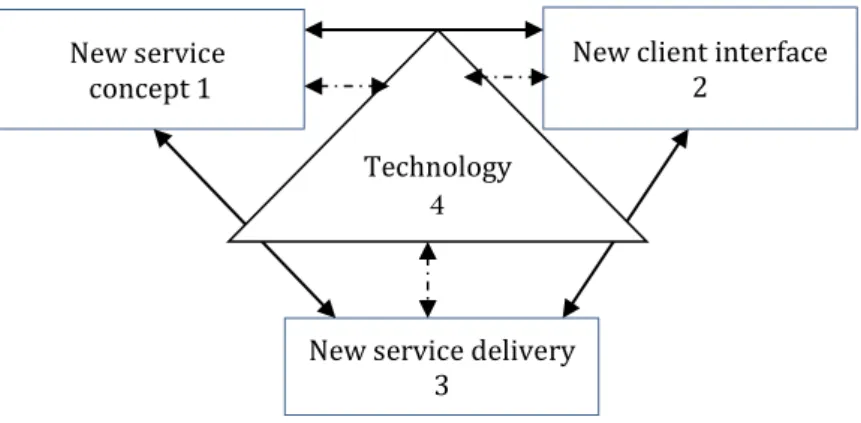
Figure 2.5: Service Innovation Framework (Hertog, 2000) 34
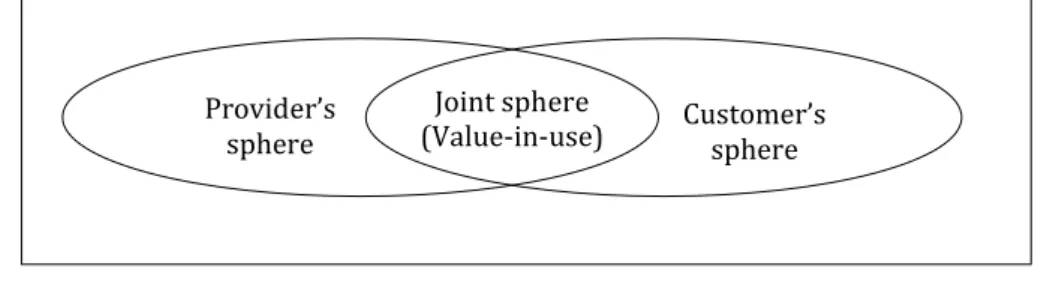
Figure 2.6: Elements of Value Co-creation 42 Figure 2.7: DART Model of Value Co-creation (Prahalad & Ramaswamy, 2004b) 43 Figure 2.8: Framework of Value Co-creation (Payne, et. al., 2008) 44
Figure 3.1: Research Model of KM Using Social Media 49
Figure 4.1: Value Co-creation for Service Innovation in Academic Libraries 78 Figure 5.1: A Theoretical Framework of KM for Service Innovation in Libraries 98 Figure 5.2: Research Model of KM Affects Service Innovation 100
Figure 5.3: Results of Hypothesis Testing 113
Figure 6.1: KM (and Value Co-Creation) for Service Innovation 125
Figure 6.2: KM (and Value Co-Creation) for Service Innovation (simplified) 130
1
C h a p t e r 1 : B a c k g r o u n d & I n t r o d u c t i o n
1.1 Background of the study
To support the research communities, faculties and speed up the students learning abilities and advancing their knowledge by offering many activities in the academic arena, academic libraries have been treated as the “heart” of the institution (Simmonds
& Andaleeb, 2001). For higher education, resources of a good quality library can help attract and retain academic high flyers and contribute to the prestige of an institution (Oakleaf, 2010). Academic libraries have been considered as a valuable part of the parent institutions as the store house of knowledge, processing knowledge and serve the society by disseminating this knowledge (Oakleaf, 2010). From this ancient practice, it is obvious that today’s libraries will not be the same in the future. Now academic libraries are facing challenges with the changing of global e-future. The incredibly exciting transformation demands that the libraries should re-define their role within traditional but changing environment (Brindley, 2006).
In the 21st century, we are witnessing clear transformations of academic libraries.
Lewis (2007) noted that this transformation is leading towards changing the nature of libraries as well as challenges. The undergoing changes occur in the format of information searching, storing, processing, and disseminating with the use of technology. Moreover, the information content is moving towards digital platform.
Lewis (2007) also identified that the major driver for change has been an increased shift of focus from the library as a service and a system, to the user as the central focus – especially with the changing habits and needs of the digitally-connected user. With Google and mobile apps on their fingertips, users today can choose the services they want (Islam, Agarwal & Ikeda, 2015b). Apart from these changes, academic libraries around the world are facing many challenges in maintaining usage and ensuring their development amidst unsustainable costs, declining usage, transition into digital services and increased demand for new types of services (Jubb, 2010; Johnson & Lilly, 2012).
Jubb (2010) identifies that challenges facing academic libraries right now are MOOCs (Massive Open Online Course) and the rise of online education, budget cuts, e-books,
2 patron privacy, variations of user requirements, expect to receive information faster than ever, expect to have no impediments to get the information they need, change management issues and so on. So, how can academic libraries address this? To answer this, we have taken managing knowledge using various strategies and value co-creation platform through which academic libraries can overcome these challenges. Firstly, we will focus on KM.
In academic libraries, librarians can drive for changes using the array of tools available to their libraries. Library personnel can embrace a broader view of their professional position and can break the restriction to offering only upon-request services. They can actively manage their (library’s explicit and tacit knowledge) resources rather than passively respond to requests (MacWhinnie, 2003). For the academic library to remain relevant to its users, managing employee knowledge, knowing the library users and coming up with strategies for greater user involvement will help in the reshaping of library services (Brindley, 2006). Jantz (2012) suggested that academic libraries must innovate and come up with new modes of services, redefine its role in the digital environment, leverage its strengths, focus on user involvement and close the gap between user expectations and the library’s ability to meet them.
In knowledge organizations such as libraries, KM is needed for managing user knowledge (their need, who to contact, information seeking), resource knowledge (sources, services, where these services are available, and other features) and personnel practice knowledge (expertise available, the quality of service they provide) (Agarwal &
Islam, 2014). Sutherland and Jordaan (2004) argue that the ability to retain organizational knowledge is a key characteristic for offering innovation in a successful organization. Similarly, new employees joining in the libraries face critical challenges in gathering knowledge relevant to their jobs. With depleting budgets and challenges of viability, retaining and transferring organizational knowledge effectively is necessary for the survival and growth of libraries (Agarwal & Islam, 2015). Libraries need to develop and implement programs for capturing and retaining this knowledge before their employees walk out the door for the last time, and transferring this knowledge to incoming employees. Apart from employee knowledge, utilization of user knowledge in libraries can enhance the service relating capability of libraries. Combining internal and external knowledge of libraries help to increase service performance and innovation in
3 services (Adams and Lamont, 2003). Moreover, knowledge of employees and users in libraries can improve communication among staff/management, between staff and library user and promote a culture of sharing. It can make libraries more effective by enabling user-focused solutions and eliminating redundant procedures (Islam, Agarwal
& Ikeda, 2015a). Finally, it can help improve service efficiency by reducing response time. All these lead to reduced costs, increased performance and a more satisfied library staff, as well as the user.
Like other organizations, changes brought about by technology, increased user expectations and shrinking budgets have led to innovation becoming the lifeblood of academic libraries (Islam, Agarwal & Ikeda, 2015a). It allows libraries to come up with new and improved services for their user communities. However, innovation in services is extremely dependent on the availability of relevant knowledge. A number of studies have reaffirmed the important role that knowledge management (KM) plays in improving innovation and organizational performance (Darroch & McNaughton, 2002;
Pyka, 2002; Adams & Lamont, 2003; Du Plessis, 2007). Libraries will need to adopt KM to provide innovative library services. Like other organizations, new service development ability of academic libraries depends on its employee skills/knowledge, availability of tangible and intangible resources, IT adoption, management support, user knowledge and innovation processes (Rowley, 2011). To offer new and innovative services to the user communities, libraries need to generate creative and implementable ideas based on their knowledge from direct customer contact.
Secondly, all these issues of involving and collaborating with user communities (especially in the early phases of creating ideas for new services) are fueling the coming of age of one research discipline, that is, value co-creation (Benson, 2013). In the business world, organizations are embracing consumers as co-creation partners in their approaches to innovation. Yet no work on value co-creation thus far has focused on academic libraries. Brindley (2006) identifies that for understanding library users and coming up with strategies to support greater user involvement will help in the reshaping of library services. Very few works we have been able to expand on this area by Germano 2014; Akanda, Shirahad, & Umemoto (2014) and Siddike, Umemoto &
Kohda (2014). These studies look at the role of leadership in value co-creation, value co- creation in reference services and transformation of public libraries using co-creating
4 platform. While there have been limited studies on innovation in libraries (e.g. Jantz, 2012), value use in libraries (e.g. Moorsel, 2005), write-ups on value co-creation from the British Library user perspective (Baron, 2006), and value creation in the research library system (DEFF, 2009), none have combined value co-creation and service innovation in the context of academic libraries.
However, while there have been studies on KM in libraries (e.g., Maponya, 2004; Wen, 2005; Sarrafzadeh, Martin & Hazeri, 2010) and on innovation in the context of libraries (e.g. Li, 2006; Scupola & Nicolajsen, 2010; Jantz, 2012; Islam, Agarwal, & Ikeda, 2015a), the extant literature is yet to provide empirical evidence linking knowledge management with service innovation in academic libraries (apart from the qualitative data by 17 librarians gathered by Islam et al. (2015a) in their study). Similarly, while there have been limited studies on value co-creation in libraries, none have combined value co-creation and service innovation in the context of academic libraries.
Considering this, the present study investigates the role of KM (and value co-creation) for the innovation in library services.
1.2 Statement of the problem
From the background of this study, we reveal that academic libraries are facing challenges as changes are happening in the 21st century. Academic libraries are witnessing various competitions routinely for information access, storage and providing services (Murphy, 2012). Libraries are facing challenges to offer wanted services to its user communities. Challenges appear due to varieties of services available, different convenient features of using technology, changes brought about by technology, increased user expectations and shrinking budgets, unsustainable costs, declining usage, transition into digital services, and increased demands for new types of services and changing scholarly communication pattern. Changing users’ behaviors, need, want and demand of academic libraries (Johnson and Lilly, 2012; Jubb, 2010). The necessity of user focused services becomes reality to make library users committed to keep coming to libraries for their needs. In other words, academic libraries have felt the pinch from both sides – less budget and more demand (Wen, 2005). Moreover, they have sensed the threat of being marginalized by Internet-based information services and students and faculty’s own information gathering efforts. To address these changes, libraries need to be innovative to create responsive and convenient services. Libraries
5 should think of changes as an opportunity and look for ways of harnessing change to fulfil the mission of libraries (Friend, 1998). Managing the knowledge of both library employees & users, and offering value co-creation practices can address these challenges to offer innovative services. For these purposes, libraries need to adopt KM to provide innovative library services and need to embrace a scenario where knowledge is not just managed by the library (in the form of books or periodicals) but created within the library (Islam, Agarwal &Ikeda, 2015). Apart from KM, libraries need to increase collaboration and interaction both amongst employees and between the employee and the user. We believe that value co-creation practices can lead to a stronger relationship between the library and its users, a more agile way of working, stronger community building and a cycle of continuous innovation in the library.
Combining these two constructs, for the present study we frame the problem from theoretical view of applying KM (and value co-creation) can lead to service innovation in academic libraries.
1.3 Purpose of the study
Using knowledge of library employees and users, both actors are made aware that they are contributing towards the development of new ideas/concepts in library services (Islam, Agarwal & Ikeda, 2015b). For offering innovative academic library services, a promising remedy can be to adopt KM (and value co-creation) strategies which can address these changes in academic libraries. Library employees need to generate creative and implementable ideas based on their knowledge from direct user contact using KM tools. Considering these issues, the present study focuses the following major objectives;
To build a theoretical model of KM (and value co-creation) for service innovation in academic libraries.
To propose some suggestions for implications of this model in academic libraries
1.4 Research questions
In order to achieve these objectives, One Major Research Question (MRQ) as well as three subsidiary research questions (SRQs) have been formed which will guide the study as well.
6 MRQ: What is the role of knowledge management (and value co-creation) for facilitating service innovation in academic libraries?
SRQ1: Are academic libraries ready to adopt KM using social media?
SRQ2: How can user knowledge and value co-creation be leveraged to innovate services in academic libraries?
SRQ3: How does knowledge management affect service innovation in academic libraries?
1.5 Significance of the study
The problems of academic libraries are related with limited budget, increased demand from faculty and students and quick changes of the technology. KM in academic libraries can ensure the proper utilization of resources, tailoring needs what academic community want and ensure the agile services by managing knowledge in libraries.
Though exploratory and quantitative in nature, the present study has revealed the areas that KM and value co-creation have positive affect on service innovation by theoretically and later empirically. If the libraries capture and make sense of existing knowledge from different sources, identifying the gaps and then creating new knowledge to fill those gaps will lead to offer innovative services in libraries. The outcome refers that academic libraries with more capability of knowledge creation and use are likely to offer more innovative services to their user communities. It also sheds light on how librarians perceive KM, value co-creation and service innovation, and the role of these in bringing about changes in library services. KM can be useful when academic libraries endeavor to co-creating with its users. The proposed value co-creation framework for academic libraries will bring certain benefits and lead to offer innovative services. Even in the process of gathering data, the study helped raise awareness of the role of KM and value co-creation in service innovation. Library practioners may become aware of the international trends of innovation in services and its adoption in academic libraries. A major feature of the present study is to break new ground in an area where relatively few researches have been conducted. It could help both academicians and practioners to advance understanding of the relationships between KM, value co-creation and service innovation in academic libraries. Therefore, this study is of significance to academic library communities for making changes in their library services.
7
1.6 Research methodology
As a part of the methodology, the study uses mixed methods of research to answer the different research questions – including quantitative questionnaire survey, qualitative email interviews, and theoretical reasoning. For both qualitative and quantitative questionnaires as well as design of the studies were approved by the Institutional Review Board (IRB) of Simmons College, Boston, USA. The methods employed in this study include the following:
1.6.1 Document analysis
The present KM, value co-creation and innovation in services literature was studied and evaluated based on available literature from different databases. A comprehensive review of the literature was performed to identify the key aspects of KM and value co- creation in services. It was done for the theoretical reasoning that leads to shed light on the objectives of the study. Additionally, we reviewed different KM, value co-creation and service innovation theories to come up with theoretical framework for the present study. This analysis is also used to assist in the framing of the survey and the semi- structured interview questions for the present study.
1.6.2 Quantitative
In chapter 3 & 5 (SRQ1 &3), to identify the academic library readiness to adopt KM using social media and to identify how does KM affect service innovation, we relied upon the Web-based survey questionnaire method for collecting data. Measuring perceived usefulness & perception of KM and effect of KM on innovation in services, the survey method is the best suited. It helps to gain insights from the larger population and give a strong ground for testing the arrived hypothesis. Both of these web-based questionnaires are added in appendices (appendix B&D). The first study surveys to determine the perceptions of academic librarians regarding Knowledge Management (KM) and the degree to which the library is ready to adopt KM using social media. After having the readiness assessment of KM, second study focuses on how KM can facilitate service innovation activities in the academic libraries? The target population for both of these studies was academic librarians across the world. However, as it would be difficult to obtain a sampling frame consisting of academic librarians across the world, we utilized convenience sampling to reach out to librarians. The study populations for
8 both studies were academic libraries worldwide that were accessible using the International Federation of Library Associations and Institutions (IFLA) mailing list and the IFLA KM section mailing list. Apart from these, we also reached out to academic librarians in other countries where universities were found using Web search. The purpose was to reach out to a wide pool of academic libraries from different countries whose contact details were accessible online. This ensured coverage of diverse socioeconomic and educational environments. The librarians reached out to were those who had registered themselves to be part of these mailing lists, as well as those whose email addresses could be obtained from the resources university websites.
1.6.3 Qualitative
Qualitative data can provide rich, in-depth information about the phenomenon under study. In addition, qualitative data such as those collected through interviews are also better for drawing out the tacit dimension of KM compared to quantitative method (Patton, 2005). In chapter 4 (SRQ 2), we relied upon the qualitative method for collecting data, with open-ended questions sent to librarians via e-mail. To obtain a more insightful view on value co-creation for service innovation, personalized individual e-mails with a link to a web-based questionnaire (including informed consent) were sent out to university librarians inviting them to participate in this study.
We mostly reached out to head librarians to answer questions on strategic decisions such as value co-creation and service innovation.
Finally, the outcome of the literature review, document analysis, survey and interviews were compiled to address the KM and value co-creation for service innovation in academic libraries. This answered the major research question and was used to draw- up a theoretical framework for this study in chapter 6.
1.7 Definition of research terms
Knowledge: Knowledge has different meanings, depending on the discipline where it is used. A theoretical or practical understanding of a subject with composed of tacit and explicit form refers to Knowledge. In other words, knowledge relates with understanding facts, information, descriptions, or skills, which is acquired through experiences or other ways (Awad &Ghaziri, 2004).
9 Knowledge management (KM): Knowledge management (KM) is a newly emerging approach aimed at process of capturing/creating, sharing/transfer and effectively using/applying organizational knowledge (Dalkir, 2013). In libraries, several kinds of knowledge need to be managed like user knowledge (their need, who to contact and information seeking); resource knowledge (sources and services, where these services are available and other features of resources); and personnel practice knowledge (expertise available, the quality of service they provide and others).
Value co-creation: The bi-directional interaction between the service provider and the customer in S-D logic forms the root concept of value co-creation (Vargo and Lusch, 2004) popularized by Prahalad and Ramaswamy (2000, 2004a, 2004b). Value co- creation is defined as an interactive process involving at least two willing resource- integrating actors (Payne, Storbacka, & Frow, 2008). The library and its users are no longer separate entities but perform various activities mutually, where the library and the user interact to jointly co-create value.
Innovation: A new idea/existing idea with different thought or process that can be viewed as the application of better solutions that meet new requirements or existing needs more efficiently.
Service: Service is an intangible commodity that supports people or organizations for them to achieve their objectives. It creates value and provides benefits for customer at specific times and places by bringing about a desired change in, or on behalf of, the recipient of the service (Lovelock & Writez, 2005; Kameoka, 2007). By providing professional techniques and satisfying customers need, it achieves these objectives.
Service innovation: Service innovation is essentially about changes and renewal that reflects in practices and offers better value (improved or new services) for both the organization and its customer. The changes in services primarily relates with concept of services, client interface, service delivery and technological application (Hertog, 2000).
Academic library: An academic library is associated with a degree-granting institution of higher education to support institutional curriculum and research activities for the institutional people. Among different categories of academic libraries, for the present, we selected the university libraries as academic library. The goal of a university library
10 is to be the best in the world at serving the unique teaching, learning and research needs of its home academic institution by being active participants in the creation, transmission and dissemination of knowledge (Jordan, 1998).
User: In academic libraries, the users are those people who are related with educational activities like faculty members, the support staff, students, researchers, and other library users.
1.8 Structure of the dissertation
This dissertation is organized into six chapters. The beginning chapter provides the research background, problem statement, purpose of the study, research questions, significance of the study, research methods, and common terms used in the dissertation.
A substantial amount of literature on knowledge management, service innovation, value co-creation and academic library services have been discussed in 2nd chapter of this dissertation. The review proceeds with the KM readiness to libraries, role of KM (and value co-creation) to service innovation in academic libraries. In chapter three, we have showed are academic libraries ready to adopt KM in their activities by different variables we arrived at. This chapter also focused how academic libraries retain and transfer of library employees’ knowledge in their organization. In chapter four, we present the result of user knowledge management strategies of academic libraries and showed how they co-create value with their users for offering innovative library services. In chapter 5, we have presented results how does KM affect service innovation.
KM for Service Innovation in Libraries (KMSIL) framework was empirically tested by designing survey questions. Finally chapter six summarizes the findings of all research questions and arrived at theoretical model. It is followed by the implications, limitations and future research of this study.
11
C h a p t e r 2 : L i t e r a t u r e R e v i e w
The purpose of this chapter is to identify the gap in the research and positioning the present study in the context of previous research. The present chapter is going to address, and creating a research space by reviewing the existing literatures on knowledge management, value co-creation and service innovation. Key enabling areas of KM have been discussed for academic libraries and which is followed by services and innovation of services in academic libraries. This review focuses on major concepts, models, frameworks and theories relating to KM, value co-creation and service innovation. The review process will help to come up with proper understanding to shed light on the problem statement of this present dissertation. To draw a conceptual map for the past as well as ongoing studies, present review follows inverted pyramid ways of discussion. The literature review begins with a discussion of the related literature from a broad perspective. It then deals with more and more specific or localized studies which focus increasingly on the specific question at hand.
2.1 Knowledge
Knowledge is the central focus of KM. Knowledge is neither data nor information, although it is related to both. From various studies, it has been common practice to take a hierarchical view of the relationship between data, information and knowledge. Data are unorganized and unprocessed facts which are raw material of information and information as the raw material of knowledge (Zins, 2007; Martin, 2008). This relationship is commonly modelled like a pyramid, with data at the base, information in the middle and knowledge at the apex (Alavi & Leidner 2001). Knowledge is derived from information in the same way information is derived from data. Embracing a wider sphere than information, knowledge includes perception, skills, training, common sense, and experience. It is the sum total of our perceptive processes that helps us to draw meaningful conclusion (Awad & Ghaziri, 2004). For example, a user requires knowledge to evaluate two academic libraries services and satisfaction in order to determine which one is the most important for his research activities. Tiwana (2002) views knowledge as actionable (relevant) information available in the right format, at the right time, and the
12 at the right place for decision making. Wiig (1999), one of the most influential and most often-cited writers on KM in the business sector, defines knowledge as a set of truths and beliefs, perspectives and concepts, judgments and expectations, methodologies and know-how. Davenport and Prusak’s definition of knowledge is the most-cited in KM literature. Davenport and Prusak (1998, p. 5) define knowledge as, "a fluid mix of framed experience, contextual information, values and expert insight that provides a framework for evaluating and incorporating new experiences and information." Nonaka
& Takeuchi, (1995, p.58) see knowledge as a "dynamic human process of justifying personal belief towards the truth". Awad &Ghaziri (2004, p.33) define knowledge as
“understanding gained through experience or study”. These different views of knowledge can lead to different perceptions of KM (Alavi & Leidner 2001). In an LIS context, reviewing Budd’s (2001) book, Hjørland (2004) argues that the discourse of knowledge in LIS although extremely important, has still been neglected. Library as an organization, knowledge not only stores but also often embedded in its organizational activities, functions, routines, processes, practices, norms and addressing to user need, want and demand.
2.2 Explicit and tacit knowledge
Knowledge typically refers to one of two types of knowledge – either explicit or tacit (Nonaka and Takeuchi, 1995; Sveiby, 1997; Davenport and Prusak, 1998; Pan and Scarborough, 1999). Explicit knowledge is systematic and has been or can be articulated, codified, and stored in certain media and can be readily transmitted to others (Pan and Scarborough, 1999). Tacit knowledge, however, is created through learning by doing, is difficult to express, formalize, or transfer (Sveiby, 1997). Tacit knowledge is found embedded in action, commitment, and involvement in a specific context and derived from personal experiences (Nonaka, Toyama and Nagata, 2000). In implementing and practicing KM in libraries, these distinctions must be well understood. Only explicit knowledge can be exchanged through documents, while the more important tacit knowledge can only be exchanged through human interaction.
Nevertheless, both types of knowledge are important and interdependent. Based on Polanyi’s (1966) classification of types of knowledge, KM Models. Nonaka and Takeuchi (1995) propose a model to understand the dynamic nature of knowledge creation, and to manage such a process effectively. There is a spiral of knowledge involved, where the
13 explicit and tacit knowledge interact with each other in a continuous process. This process leads to the creation of new knowledge (see Figure 2.1). Each quadrant in the figure represents the process of conversion of knowledge between the tacit and explicit forms. The central thought is that knowledge held by individuals is shared with other individuals so it interconnects to form a new knowledge.
Tacit Tacit
Tacit Socialization
(social interaction – e.g. face-to- face meetings, brainstorming)
Externalization
(articulating tacit knowledge in the form of written documents, images, video, etc.)
Tacit
Internalization
(process of understanding, learning and making sense of documents, books and other codified knowledge)
Combination
(organizing, classifying or integrating explicit knowledge to make processing easier)
Figure 2.1 Knowledge Creation in Organizations (Nonaka and Takeuchi, 1995)
2.3 Knowledge management (KM)
Knowledge management is a newly emerging, interdisciplinary business model deal with knowledge within the framework of an organization (Awad & Ghaziri, 2004). The concept and name – ‘knowledge management’ was started and popularized in the business world during the last decade of the twentieth century and received considerable attention from many scholars and practitioners. In recent years, Knowledge Management (KM) practices became more and more important in the world economy. It has been practiced by a number of fields associated with information systems, business and management, Library and Information Science (LIS), computer science, communications, artificial intelligence, cognitive science etc. (Dalkir, 2013).
Applications of knowledge management have now spread to other organizations, including government agencies, research and development departments, universities, and others (Lee, 2005). The key steps in the knowledge management process include:
generating new knowledge; accessing valuable knowledge from outside sources; using accessible knowledge in decision making; embedding knowledge in processes, products and/or services; representing knowledge in documents, databases, and software;
facilitating knowledge growth through culture and incentives; transferring existing knowledge into other parts of the organization; and measuring the value of knowledge
Explicit Explicit
Explicit Explicit
14 assets and/or impact of KM (Ruggles, 1997; Dalkir, 2013). While there are hundreds of definitions (Dalkir, 2013), a simple definition of KM is a systematic effort to enable information and knowledge to grow, flow and create value (O’Dell and Hubert, 2011).
Abell and Oxbrow (2001) focus on KM as creation, which encourage knowledge to be created, shared, learnt, enhanced, organized for the benefit of the organization. Nonaka and Takeuchi (1995, p.3) define KM as the “capability of an organization to create new knowledge, disseminate it throughout the organization, and embody it in products, services and systems”. The key steps in the KM process in an organization are often represented in the form of a KM cycle. Agarwal and Islam (2014) combined various frameworks of the KM cycle (see Dalkir, 2013) and identified 8 unique steps comprising phases of the KM cycle: knowledge 1) creation; 2) acquisition or sourcing; 3) compilation or capture; 4) organization, refinement, transformation and storage; 5) dissemination, transfer and access; 6) learning and application; 7) evaluation and value realization; and 8) reuse or divesting. These phases are also applicable to KM in libraries (Agarwal and Islam, 2014). While KM has been adopted in a large number of sectors and organizations ranging from ConocoPhillips, Fluor, IBM and MITRE (O’dell and Hubert, 2011) to the World Bank (Srikantaiah and Koenig, 2008), academic libraries in general, is yet to take full advantage of the possibilities offered by KM.
2.4 KM cycle
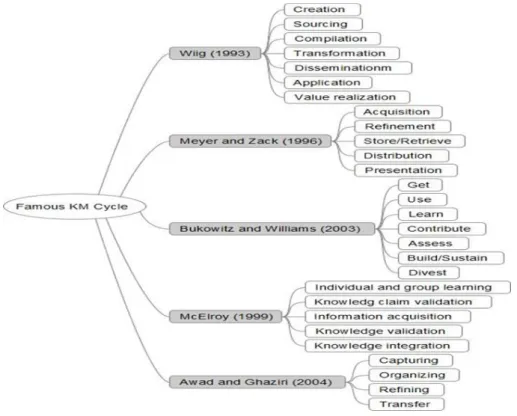
While libraries have traditionally managed knowledge created by others, KM is about managing knowledge that originates within the library (Townley, 2001). KM can be seen as a cycle that encompasses various phases, such as the capture, creation, codification, sharing, access, application, and reuse of knowledge within and between libraries. Dalkir (2013) reviews KM cycles identified by different researchers, implemented and validated in real world-settings. Figure 2.2 below summarizes the phase of the KM cycle identified by Wiig (1993), Meyer and Zack (1996), Bukowitz and Williams (2003), McElroy (1999) and Award and Ghaziri (2004). Based on that, table 2.1 provides a different view of the KM cycle phases identified by these researchers.
15 Across the different phases identified, the ones similar in meaning are listed in a single row.
Figure 2.2 Phases of the KM Cycle
Table 2.1 Combining Phases of the KM Cycle
Wiig (1993) Meyer and Zack
(1996) Bukowitz and Williams
(2003)
McElroy (1999) Award and Ghaziri (2004) creation
sourcing acquisition Get Individual and
group learning
compilation refinement use
learn knowledge claim
validation;
information acquisition
capturing
transformation store/retrieve knowledge
validation;
knowledge integration
organizing;
refining
dissemination distribution
presentation transferring
application Contribute
value realization access
build / sustain Divest
16 Based on these, Agarwal & Islam (2014) conclude that KM is an ongoing process or cycle in an organization which starts with acquiring relevant knowledge resources and continues through their proper utilization. The first part is locating, acquiring and capturing existing knowledge that is relevant to the library and creating new knowledge.
The acquired knowledge is organized using taxonomies, codification, indexing, filtering etc (Dalkir, 2013). The knowledge is refined and synthesized or transformed as per the needs of the library. The processed knowledge is preserved for permanent storage, and a retrieval mechanism is used for its easy access. Then knowledge is disseminated to the concerned people for sharing, applying, utilizing and using effectively. Finally, the KM process receives feedbacks from the knowledge users regarding the extent to which it satisfies their knowledge needs. Feedbacks ensure proper utilization of knowledge with necessary modification in the system. Finally, a call is made whether any part of the knowledge is expensive to keep and can be divested (Agarwal and Islam, 2014).
Agarwal & Islam (2014) simplify Table 2.1 to get 8 unique phases that comprise the KM cycle:
1. Knowledge creation
2. Knowledge acquisition or sourcing 3. Knowledge compilation or capture
4. Knowledge organization, refinement, transformation and storage 5. Knowledge dissemination, transfer and access
6. Knowledge learning and application
7. Knowledge evaluation and value realization 8. Knowledge reuse or divesting.
Dalkir (2013)’s integrated KM cycle covers 3 overarching phases: 1) knowledge capture and/or creation; 2) knowledge sharing and dissemination; and 3) knowledge acquisition and application (we revise this to ‘knowledge application and use’, as acquisition could be construed to be similar to knowledge capture). We adopt these phases of the integrated KM cycle (see Figure 2.3 ) for mapping to tools in this paper.
17 Figure 2.3 A Revised Integrated KM Cycle (adapted from Dalkir, 2013)
2.5 Types of knowledge applicable to libraries
White (2004) sees KM as crucial to providing dynamic and effective services to library users of the 21st century. Two types of knowledge would be of interest to libraries – tacit and explicit. While explicit knowledge is formal, codified and systematic (like books that libraries have always dealt with; and other documents produced within the library), tacit knowledge is personal, experience-based knowledge held by people (Nonaka, 1991) – librarians and library staff, administrators and users.
1. Knowledge capture and/or creation: In Figure 2.3 above, in the first phase, tacit knowledge is identified or captured, explicit knowledge is organized or coded, or new knowledge is created. Knowledge creation is typically the outcome of an interactive process that will involve a number of individuals who are brought together in a project team or some other collaborative arrangement (Newell et al., 2002) such as networking with other libraries, attending library events (workshop, seminar, conferences) and connecting with online communities (Shanhong, 2002). That is why, the knowledge of library operations, library users and their needs, library collection, library facilities and technological knowledge needs to be put together. As a result, new knowledge will be created which leads to the improvement and development of service to the users and functioning of the library. However, this diverse knowledge is rather dispersed across all the library sections and up the library hierarchy.
2. This dispersed knowledge captured or created across the library needs to be assessed, then shared and disseminated across the library (Second phase in Figure2.3).
1. Knowledge capture and/or creation
2. Knowledge sharing and dissemination
3. Knowledge application and use
Assess
Contextualize Update
18 3. Knowledge is then contextualized in each department of the library or to each library employee or user, in order to be understood and used (third phase in Figure 2.3).
This stage then feeds back into the first one in order to update the knowledge (Dalkir, 2013).
Integrated Library Systems, while prevalent for a long time, are largely controlled by vendors, and often inadequate due to the growth of electronic and digital resources (Wang and Dawes, 2012), changed expectations regarding interfaces (Andrew, 2009), changing user demand (Breeding, 2006), as well as transformation of libraries in knowledge-based society to capture the range of knowledge needs that different areas of the area have. Thus, along with an integrated library system or a library automation system, libraries will need to supplement and include other technology tools that can capture their knowledge needs adequately.
Agarwal & Islam (2014) use the revised integrated KM cycle adapted from Dalkir (2013), as well as Davis (1989) & Roger (1995) theories on technology adoption/diffusion, as a theoretical lens in their study, and apply it to the context of knowledge management and KM-tool adoption in libraries.
2.6 Knowledge management and academic library
As a business concept, KM emerged during the mid-1990s and received considerable attention from many scholars and practitioners. Knowledge management (KM) is a newly emerging approach aimed at addressing today’s business challenges to increase efficiency and efficacy by applying various strategies, techniques and tools in their existing business processes. It has been described as a process or a set of processes (Abell and Oxbrow, 2001; Townley, 2001; White, 2004), a method of management (Shanhong, 2002), a new dimension of strategic information management (Ponelis and Fair-Wessels, 2014), or the use of organizational knowledge through sound practices of information management and organizational learning (Broadbent, 1998). Although the business model of KM is now being adopted by many non-profit organizations such as libraries, it is not as pervasive as in the business sector. As an interdisciplinary approach between KM and LIS, Roknuzzaman & Umemoto (2008) find that many courses of KM originated from LIS and the study explores some areas where both LIS and KM can contribute to each other. Townley (2001) explains in a theory that the
19 emerging field of knowledge management can offer academic libraries the opportunity to improve effectiveness, both for themselves and their parent institutions. This paper also focuses on the similarities and differences between knowledge management and academic library practices with some issues that academic libraries need to address. In non-profit organizations such as libraries, KM can improve communication among staff and between top management, and can promote a culture of sharing (Teng and Hwamdeh, 2002). As a social organization, libraries have always been involved in the creation of new knowledge by ensuring that the knowledge of the past is collected, organized, made accessible and preserved for coming generations. The digital world provides the opportunity for librarians to be even more actively engaged in the creation process. It can make libraries more effective by enabling user-focused solutions and eliminating redundant procedures. Agarwal & Islam (2014) identified that in knowledge organizations such as libraries, several kinds of knowledge need to be managed: 1) user knowledge (their need, who to contact, information seeking); 2) resource knowledge (sources and services, where these services are available, and other features of resources) and 3) personnel practice knowledge (expertise available, the quality of service they provide, and others). Moreover, KM can help improve communication among library personnel and between users and service providers, between top management and staff, and can promote a culture of knowledge sharing (Teng and Hwamdeh, 2002). Finally, it can help improve efficiency by reducing response time. All these lead to reduced costs, increased performance and a more satisfied library staff, as well as the user. In another study, Roknuzzaman & Umemoto (2009) identified that how library practioners view KM in libraries. It was noted that KM understanding among the practioners were varied but the reason of positive responding to KM in libraries was value of knowledge economy, increasing use of IT and opportunities for improving library services. The few studies on library and KM have focused on KM in academic libraries (Townley, 2001; Maponya, 2004), the need for KM in libraries (Wen, 2005), the relationship between KM and LIS (Sarrafzadeh, Martin and Hazeri, 2010), librarians’
awareness or perceptions of KM (Siddike and Islam, 2011), knowledge sharing behavior (Islam, Ikeda and Islam, 2013), developing a theoretical framework of an integrated digital library (DL) system based on knowledge management (KM) process (Roknuzzaman & Umemoto, 2009), KM in state-of-the-art digital libraries (Islam and Ikeda, 2014) and mapping KM tools to KM cycle for libraries (Agarwal and Islam, 2014).
20 In Islam &Ikeda (2014) study, they find some significant overlaps between digital library (DL) and KM and argues that a generic KM process of acquisition, organization, storage and retrieval, and dissemination of knowledge by receiving feedback can suitably be fitted in DL. It is apparent that an integration of KM can add value to building a knowledge sharing culture, promoting the KM culture, and ultimately increase the organizational output. It helps to improve efficiency, to ensure higher productivity and user satisfaction in the library. Islam &Ikeda (2014) also identified that knowledge management in digital libraries is neither simply a library homepage on the Internet. It is a systematic process of resource acquisition, organization, integration of user knowledge, stored knowledge, dissemination, sharing knowledge and user knowledge base. Based on Yu and Liu (2004)’s framework on knowledge management in university digital libraries, Islam & Ikeda (2014) revised and conceptualized of DL and KM.
Despite varying perceptions of the Library and Information Science (LIS) community towards KM, most researchers view it positively and call for full involvement of LIS practitioners in KM (Abell and Oxbrow, 2001; Southon and Todd, 2001; Agarwal and Islam, 2014). A big hurdle in KM implementation in libraries is a lack of clear knowledge as to how to implement KM. What tools and technologies need to be adopted? What are the set of processes and phases involved? Are the people and processes more important or technology tools and systems? Can we simply implement KM by adopting a particular knowledge management tool or system? Most of the research and case studies of KM implementation, whether in libraries or other business organizations, show that there is no silver bullet to implementing KM (Allee, 1997). Each organization must come up with its own template for what is best suited to its needs. Rather than imposing a process or a tool on an organization, KM is about coming up with strategies, processes and tools that are most likely to be adopted, and used successfully by people in the organization.
2.7 KM enabling environment / readiness
Making effective use of the collective knowledge in an organization is often seen as a challenge that arises mostly at the organisational level. For that reason, organizations need to provide an enabling environment for creating new knowledge within the organization. Knowledge enabling refers to the “overall set of organizational activities that positively affect knowledge creation” (Krogh, Ichijo, and Nonaka, 2000p. 4). Malik and Malik (2008) view that from an organizational standpoint, knowledge is available
21 both within and outside an entity, thus enabling KM environment becomes important in the quest for organizational knowledge. Kaplan, et al., (2001) focus that it is important for organization to capture knowledge as well as employ knowledge management initiatives for quality improvement, innovation, efficiency, improved decision-making, change management, alignment with customer needs, and the like. Agarwal & Marouf (2014) adapt the theoretical lens suggested by O’Dell and Grayson (1998), in addition to the APQC KM model (APQC, 2014; O’Dell and Hubert, 2011) in their analysis to arrive at comprehensive steps for KM planning, design and implementation. They have showed a practical, actionable, step-by-step plan, as well as a diagrammatic, theoretical framework for initiating KM successfully in colleges and universities.
For the present study, we refere to the O’Dell and Grayson (1998)’s framework where they focused KM enabling environment provided by culture, infrastructure, technology and measures. For the present study, we define organizational readiness as the set of factors that need to be in place, and in the right balance at the right point in time, before KM can be adopted in libraries. Many studies have found these to be the most common factors: knowledge sharing culture (Rahman, 2011), top management support (Kamath, Rodrigues and Desai, 2011), funding to set up a KM team and infrastructure (Basu and Sengupta, 2007), and timing – the right time to adopt (Holsapple and Joshi, 2000). These are discussed in the following subsections.
2.7.1 Culture
Morgan (1977) who more recently (1997) describes culture as “an active living phenomenon through which people jointly create and recreate the worlds in which they live” (p. 141). Many studies raise the issue of organizational culture’s influence on knowledge management success. Alavi, et.al.,(2005) identify that organizational culture often cited as a significant challenge in knowledge management practices. They aim to explore how organizational culture influences knowledge management practices.
Findings highlight the influence of culture on the use of knowledge management technologies and the outcomes of such use. Omerzel, Biloslavo and Trnavcevic (2011) define organizational culture as a set of explicit and implicit rules of what is and is not acceptable behavior in an organization, influenced by core values, norms and underlying assumptions. Values and beliefs of university stakeholders i.e.
administrators, faculty, staff, students and trustees are thought to greatly influence