Japan Advanced Institute of Science and Technology
JAIST Repository
https://dspace.jaist.ac.jp/ Title 北陸先端科学技術大学院大学 共有計算サーバ使用成 果報告2017 Author(s) 井口, 寧; 本郷, 研太; 宮下, 夏苗 CitationTechnical memorandum (School of Information Science, Graduate School of Advanced Science and Technology, Japan Advanced Institute of Science and Technology), IS-TM-2018-002: 1-60
Issue Date 2018-11-30
Type Others
Text version publisher
URL http://hdl.handle.net/10119/15486
Rights
Description テクニカルメモランダム(北陸先端科学技術大学院大
9
7
8
-20
I
3 M 9 7 1 2 , T S2 0 . 7
0 1 0
.
0
4
A
J
4
I
o
O I
L
G
U P R P
zoP
C F
GPU P SP
O I
a AuO I
OT
A y
The Investigation of Hydrodeoxygenation (HDO) and Decarbonylation (DCO)
Process of Methyl Butanoate on NiMoS Surfaces: Ab Initio Study
Ryo Maezono
GAN Bandgap Calculation Using QMC
Ryo Maezono
DMC study of TiO
2Ryo Maezono
Investigation of TiO
2surface reactivity
Ryo Maezono
Anharmonic Calculations in Hybrid Perovskite Solar Cells
Ryo Maezono
TDDFT study of cage clusters
Ryo Maezono
Quantum Monte Carlo study of the energetics of rutile, anatase, brookite, and
columbite TiO
2polymorphs
THE EFFECTS OF GRAPHENE AND Ag-NANOFLOWERS AS A
FORMATION FLEXIBLE SERS SUBSTRATE
Apichai Jomphoak, Ryo Maezono
A Post-Hartree-Fock, DMC and DFT Calculation for Energy to linearisation and
their trends for Disiloxane
Guo Chao, Ryo Maezono, Kenta Hongo
Scalable dynamic locality-sensitive hashing for Structured dataset on Main memory
and GPGPU memory
Toan Nguyen Mau
MOLECULAR INTERACTIONS IN INCLUSION OF COMPLEXES WITH
CYCLODEXTRINS
Ornin Srihakulung, Kenta Hongo, Ryo Maezono
A New Ab Initio Modeling Scheme for Ion Self-diffusion Coefficient Applied to
ε-Cu
3Sn Phase of Cu-Sn alloy
Tom Ichibha, Genki Prayogo, Kenta Hongo, Ryo Maezono
Comparison of Post Analyses of Quantum Monte Carlo Calculations
Tom Ichibha, Kenta Hongo, Ryo Maezono, A.J.W. Thom
Very Fast Diffusion of Ti Interstitial Defect in [001] Direction in Bulk Rutile TiO
2:
A Diffusion Monte Carlo Study
Tom Ichibha, Anouar Benali, Kenta Hongo, Ryo Maezono
Hydrogen Crystal Phase Diagram Updated by Quantum Monte Carlo and
Anharmonic Phonon Calculations
Tom Ichibha, Yunwei Zhang, Anouar Benali, Kenta Hongo, Ryo Maezono, Yanming Ma
Adhesion of electrodes on diamond (111) surface: A DFT study
Tom Ichibha, Kenta Hongo, I. Motochi, N.W. Makau, G.O. Amolo, Ryo Maezono
DENSITY FUNCTIONAL THEORY STUDY OF HYDRODEOXYGENATION
AND DECARBONILATION MECHANISM OF METHYL BUTANOATE ON
NIMOS SURFACES.
Hermawan Kresno Dipojono, Ryo Maezono
FINITE TEMPERATURE PROPERTIES OF HIGH PRESSURE HYDROGEN
Bartomeu Monserrat, Ryo Maezono
ANHARMONIC CALCULATIONS IN CALCIUM SILICATE UNDER
EXTREME CONDITIONS AND HYBRID PEROVSKITE SOLAR CELLS
First Principle Calculations of Electronic and Phonon Properties of ThCr
2Si
2-Type
Structure
Aniwat Kesorn, Kenta Hongo, and Ryo Maezono
First principle Study of H
2O Molecule Adsorption and Dissociation on CuO
Catalyst Surface
Faozan, Ryo Maezono
Machine learning clustering technique applied to X-ray diffraction patterns to
distinguish alloy substitutions
Hunkao Rutchapon, Kenta Hongo, Ryo Maezono
METAL-BLACK PHOSPHORUS CONTACTS: A DFT STUDY
Sujoy Saha, Ryo Maezono
6
1
423
5
4
I
Single-Molecule Imaging of a Polymer and All-atom MD Simulations
A y
B
P
High proton conduction of organized sulfonated polyimide thin films with planar
and bent backbones
Yutaro Ono, Yuki Nagao
C. elegans P
P
g O I
First-principles study of interaction of nitrogen beam with silicon and carbon dioxide
molecule adsorption on graphene under external electric field
Muruganathan Manoharan
N
P
M P
PnYa A eia
Ak
O I
B
P
P
FIRST-PRINCIPLES ASSESSMENT OF ND-FE-B THERMODYNAMIC
PROPERTIES FOR APPLICATION IN CALPHAD
Adie Tri Hanindriyo, Soumya Sridar, Hari Kumar, Kenta Hongo, Ryo Maezono
,
,1
1
, , 1
1
6
DIFFUSION MONTE CARLO STUDY ON POLYTYPIC STABILITY OF
SILICON CARBIDE
Genki Prayogo, Ryo Maezono
B
Ziegler-Natta
P
P
Evolution of pz orbital with out-of-plane electric field in bilayer graphene
K. Afsal
a A ODE
P
r sA ODE
P
Keishu Utimula, Tom Ichibha, Ryo Maezono, Kenta Hongo
ADHESION OF THE ELECTRODES ON BLACK PHOSPHORUS DEVICE
SURFACES
Nobuya Watanabue, Tom Ichibha, Kenta Hongo, Ryo Maezono
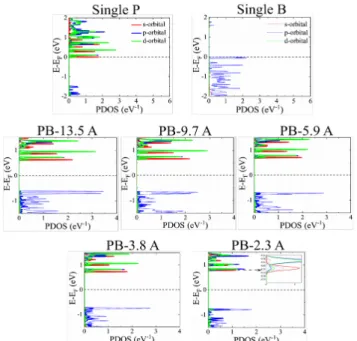
DFT calculations for hybridizations of electron orbitals in P-B pairs embedded in Si
nano clusters
Manoharan, Le The Anh
First-Principles Simulations Assisted Development of Catalysts in Fuel Cells
Guoliang Chai
InSb
Sb
2Te
3P
DT
P
1. JAIST iPU
1.1
JAIST e e h MPC MPC r t NMPC h h h M MPC eL MPC MPC M V mpc iPU M MPC MPC [9] [10] M M1.2 2017
45 iPU 0 Pwm 0 a icM p i M FDD FDD7 G icM FDD FDD7 G r i 6 6 11 M eL 5 DAC AG i s s i i iPU ti m M e i i M 0 2B 0 hg h h 0 5 i MhM e M 2C CA 0 9 hg e h hgicM n u M: 2017
2018 1-2 2 JAIST-ISM +KIST 2018 1 J2017 11 MATLAB @PC Cluster Server
2017 6 Cray XC40/
SGI UV3000 / Parallel Programming
1.3
i 2017 i 2 i 2016 12 i Cray XC40 Top500 iPM 2017 6 337 i i XC40 iNc 10 ~20 O1.4
J 2017 2017 i M mpc MPC o M iw 28 20 h M aM i T V re Lr h eu i eS w Nih e h M L i aUe hT e iPU M eS N i h h w i u l M e M h re i I MTu2: JAIST
(2017)
Cray XC 0 548 (1096CPU, 19728Core) : 662.8TFLOPS : 200TB (Lustre)CPU: Intel Xeon E5-2695v4 2.1GHz 18Core x2 Memory: 128GB (16GB DDR4-2133 ECC x8)
SGI UV3000
(ccNUMA )
128 nodes, 1536 CPU cores, 32TB memory ccNUMA CPU Intel Xeon Processor E5-4655v3 x 2
256GB (DDR4-2134MHz x 8 ) NUMA-link6
Fujitsu CX250
Fujitsu Primergy CX250 S2
108nodes, 216CPU, 2160 CPU cores Infiniband FDR 4x
: 50TB, GPFS I/O
CPU: Intel Xeon E5-2680v2 2.80GHz (10Core) x2 Memory: 64GB (4GB DDR3-1866 ECC x16)
: 119GB/s
: Matlab, Materials Studio, etc.
GPU
4nodes, 80CPU cores, 8 GPU
CPU : Intel Xeon E5-2680v2 2.8GHz (10core) x2 GPU : Tesla K40 x2
Memory: 64GB
, : CUDA 7.0 cula, PGI Compiler
[1] ( ),”JAIST iPU 1992 -1993 ”, ,IS-TM-94-0001, (1994) [2] ( ),”JAIST iPU 1994 -1996 ”, ,IS-TM-97-3, (1997) [3] ( ),”JAIST iPU (1997 )”, ,IS-TM-98-1, (1998) [4] ( ),”JAIST iPU Pwm (1998 -2000 )”, ,IS-TM-2002-003, (2002) [5] ( ),”JAIST iPU Pwm (2001 )”, ,IS-TM-2002-004, (2002) [6] ( ),”JAIST iPU Pwm (2002 )”, ,IS-TM-2003-001, (2003) [7] ( ),”JAIST iPU Pwm (2003 )”, ,IS-TM-2004-002, (2004) [8] ( ),”JAIST iPU Pwm (2004 )”, ,IS-TM-2005-001, (2005) [9] ( ) ” 2007” IS-TM-2008-002, (2008)
[10] ( ) ” 2008” IS-TM-2009-001, (2009) [11] ( ) ” 2009” IS-TM-2010-001, (2010) [12] ( ) ” 2010” IS-TM-2011-001, (2011) [13] , ( ) ” 2011” IS-TM-2012-001, (2012) [14] ( ) ” 2012” IS-TM-2013-001 (2013) [15] , ( ) ” 2013” IS-TM-2014-001 (2013) [16] , ( ) ” 2014” IS-TM-2015-001 (2014) [17] ( ) ” 2015-2016 IS-TM-2018-001 (2018)
y
e
r
6./ 8
g 8×8 a r V R / / S U c
aLr g ant d S R6×6 g aLrV Rt
r ag c S kadp d j u aSr u mr u k g aLr V g c u r o n R aLrR ac ka l r u O T r k 8×8 agdT o h 6×6 a e R kT d u ka r u R e R egPo 1500 drV Rt m u5×6 e V g e g 2 d g d aLr j u oT r u V a g d Td a Li g aS g257,387,474,170 a j R a k g83,175,694 aL p y Orn u y U e y n OrR m n mr e a y u r , : A 1 F : : F F F : J : : 8 F : 5KJ 8 : : 3I F -F I / 60 6/. : 5 GF I ,2 ) GG ) d
2
: UV3000 3 1 3 3 ( 3 3 3 1 3 n 3 2 /n 3 3 2 ( 2 ( ( 1 (1) (2) (1) ( (2) ( (1) 1 MPI UV3000 96 ( 1 200 3 1 n=32 ( 2.4 1010 ) 3 3 5 × n=38 ( 6.3 1012 ) )1) Koji Ouchi and Ryuhei Uehara. Efficient Enumeration of Flat-Foldable Single Vertex Crease Patterns, IEICE Transactions on Information and Systems,
1) 29 (JAIST )
: Cray XC40
1
Interval Graph Interval Graph
Interval Graph
Interval Graph XC40
Interval Graph 12 Interval
Grpah ( 3.5× 10⁶ 36 35.5
SC17 (Super Computing 17) JAIST
WALCOM 2018 [1]
[1] Kazuaki Yamazaki, Toshiki Saitoh, Masashi Kiyomi, and Ryuhei Uehara. Enumer-ation of Nonisomorphic Interval Graphs and Nonisomorphic PermutEnumer-ation Graphs, pp. 8–19. 2018. 2018/03/03-05, Dhaka, Bangladesh.
GPU のための疎行列格納方式に対する圧縮率向上スキームに関する研究
情報科学研究科 河村 知記 使用計算機:GPU, XC40
概要
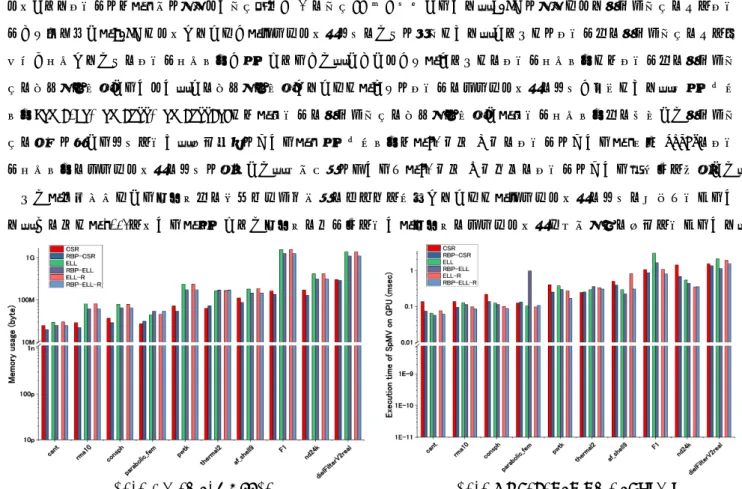
多くの反復法では,sparse matrix-vector multiplication (SpMV) が用いられ,反復法内でも多くの演算時間を費やす 処理の 1 つとして知られている.また,演算時間だけでなく,SpMV で用いられる疎行列は反復法の使用メモリ量の多くを占 める.このため,反復法の高速化のために SpMV の高速化,省メモリ化は必須である.近年,Graphics Processing Units (GPUs) は多くの演算コアを備えていることから,描画処理だけでなく,汎用処理の並列計算にも用いられるようになっ た.SpMV は高い並列度での並列計算が可能であることから,GPU による SpMV の高速化に関する研究も盛んにおこなわれてい る.しかしながら,GPU メモリ CPU メモリのメモリ空間が異なることが,SpMV の高速化の問題となる.一般的に GPU を用い て SpMV を演算する際には,SpMV に必要なデータを CPU メモリから GPU メモリへ転送し,演算を行う必要がある.そのため, CPU メモリに用意してある疎行列データのサイズが GPU メモリのサイズより大きな場合,一度に GPU メモリへデータを格納 することができない.もし一度に格納しきれない場合には,CPU メモリと GPU メモリのデータの入れ替えが必要となる.こ の CPU メモリと GPU メモリ間のデータ転送は GPU コンピューティングにおける最もボトルネックとなる処理のひとつであり, 高速化の妨げとなる.この問題は数値シミュレーションの規模がさらに巨大化することで,さらに顕著になると考えられる. NVIDIA の GPU メモリは大きなもので 16GB となっており,CPU メモリのサイズに比べると,少ない傾向にある.これらの理由 から,疎行列のデータを少ないメモリ量で格納する方法が必要となる. 記した問題点を解決するため,本研究では疎行列格納方式に対する圧縮率向上スキーム(RBP 法)を提案する.SpMV で 使用される疎行列には,演算に必要ない要素(値が 0 の要素)が多く存在している.SpMV に必要となる非ゼロ要素のみを疎行 列から取り出し,SpMV で使用することが,メモリ使用量削減のために重要である.これまでに疎行列内の非ゼロ要素のみを効 率良く格納するための疎行列格納方式が提案されてきた.しかしながら,これまでの疎行列格納方式では疎行列内の非ゼロ要 素の規則性を考慮していない.この規則性を考慮することで,さらに疎行列のメモリ使用量の削減が可能である.本提案圧縮 方式(RBP-CSR, RBP-ELL, RBP-ELL-R)では,疎行列の非ゼロ要素の規則性を考慮し,疎行列格納方式内の連続した非ゼロ要 素の情報に関して削減を行う.評価実験において,本提案圧縮方式は,10 個中 8 個の疎行列において, 最大 35.1%の疎行 列格納方式のメモリ使用量の削減に成功した.演算時間についても,10 個中 7 個以上の疎行列において高速化を達成した. また,共同研究として反復法内の部分クリロフ空間のサイズを縮小することで,メモリ使用量の削減の検討も行ってい る.その中で,XC40を用いて,提案された反復法の並列化を行い,反復法のメモリ使用量と演算性能の評価を行っている.
: Altix UV3000 CX250 XC40 Altix UV3000 2 (B) CX250/XC40 3/4 AltixUV3000 5 ( )
1) T. Ichiba, Z. Hou, K. Hongo, R. Maezono, “New Insight into the Ground State of FePc: A Diffusion Monte Carlo Study”, Sci. Rep. 2017, 7, 2011.
2) K. Hongo and R. Maezono, “A Computational Scheme To Evaluate Hamaker Constants of Molecules with Practical Size and Anisotropy”, J. Chem. Theory Comput. 2017, 13, 5217–5230. 3) K. Nakano, K. Hongo, and R. Maezono, “Investigation into Structural Phase Transitions in
Layered Titanium-Oxypnictides by a Computational Phonon Analysis”, Inorg. Chem. 2017, 56, 13732–13740.
4) D. Kato, K. Hongo, R. Maezono , M. Higashi , H. Kunioku, M. Yabuuchi , H. Suzuki , H. Okajima , C. Zhong , K. Nakano, R. Abe, and H. Kageyama, “Valence Band Engineering of Layered Bismuth Oxyhalides toward Stable Visible-Light Water Splitting: Madelung Site Potential Analysis”, J. Am. Chem. Soc. 2017, 139, 18725–18731.
5) T. Ichibha, K. Hongo, I. Motochi, N.W. Makau, G.O. Amolo, and R. Maezono, “Adhesion of Electrodes on Diamond (111) Surface: A DFT Study”, Diamond & Related Materials 2018, 81, 168–175. 1) 29 B /15K21023 H29 1,700 H27 4 H29 3 2) 28 / /16H06439 H29 2,700 H28 8 H33 3 3) 27 (B) / /15H02672 H29 200 H27 4 H31 3 4) 28 ( ) / JPMJPR16NA H29 10,500 H28 10 H32 3
A
CTIVITY
R
EPORT OF
FY2016
Ryo Maezono/Assoc. Prof./Information Science
The Investigation of Hydrodeoxygenation (HDO) and Decarbonylation (DCO)
Process of Methyl Butanoate on NiMoS Surfaces: Ab Initio Study
Collaboration with Institut Teknologi Bandung, IndonesiaOne of the main problem in palm oil refineries conversion to biofuel is to calculate the optimized reaction pathways. The reaction pathways are divided into two ways: decarbonylation (DCO) and hydrodeoxygenation (HDO). If both of the processes can be determined the production of palm oil based biofuel with a higher cetane number than that of fossil fuel might be a realizable process. This is a very complex interaction and to uncover the physical phenomena responsible for the interaction is a real challenge. The basic information needed to do so are:
1. Information of the reaction pathways connecting the reactant and product. Question to be answered here is how much activation energy required for each elementary reaction.
2. Catalyst material used to increase the rate of these reactions. The main problem here is the selectivity of catalyst materials that can facilitate the desired reaction pathways. Selectivity becomes an important issue because it is directly related to the efficiency of the reaction and the minimization of the unwanted products.
The purpose of this research is to answer two questions above in the context of the formation reaction of palm oil based biofuel; namely HDO and DCO reactions. In this research, we use transition metal sulfide catalysts such as MoS2 phase promoted by nickel. It is because NiMoS is known to be
selective for the refineries process. Numerous experimentals and theoretical works have provided atomistic descriptions of the NiMoS active phases. Although some experimental investigations on NiMoS active phase had been conducted in the recent years, however some problems remain unresolved. The density functional theory (DFT) based on ab initio computational method will be used to simulate all possible reactions via calculating the activation energy at the elementary reaction and then screening against various selective catalyst candidates. Computational methods have been selected for this research because it can save time and cost when compared with the experimental method which for now still relies on trial and error. This method also allows us to reveal in detail the processes that take place at the atomic level that are often difficult to access experimentally.
This research will be performed in three step;
1. Investigation surface interaction between Methyl Butanoate (C5H10O2), Hydrogen (H2) and
NiMoS surfaces. The purpose of this investigation is to find the active site of the molecules on the surface and also to know the effect of H2 molecules on the Methyl Butanoate adsorption
process. 2. Investigation of HDO process. The purpose of this research is to know the elementary reaction pathways of the HDO process. 3. Investigation of DCO process. The purpose of this research is to know the elementary reaction pathways of the DCO process.
GAN Bandgap Calculation Using QMC
Collaboration with IIT Guwahati, INDIA
We studied bandgap of Group 3 Nitrides (AlN,GaN, and InN) using Quantum Monte Carlo methods motivated by their many possible applications in semiconductor industry especially GaN. After encouraging preliminary results using large core approximation of electrons, we decided to further study GaN using small core size such that number of valence electrons in study increased significantly (which also means higher computational resources required). The result from first run is very promising when compared to experimental results. Currently we are investigating GaN with even lower time-step which will allow us to further extrapolate to ideal time step of 0 which cannot be directly computed with finite computation resources. This study will lead to : 1) First QMC study of Group3 Nitrides in existing literature. 2)Comparison with other computational methods (most importantly DFT) for Nitrides which are known to have certain limitations/shortcomings. 3) Understanding of how semicore electron influence bandgap calculation in Group 3 Nitrides as well as associated computational cost with DMC which will be indicative of performance of DMC as a general QMC tool .
DMC study of TiO
2Collaboration with hahid Bahonar university of Kerman, Kerman, Iran
Among transition metal oxides, Titanium dioxide (TiO2) is a widely used material with many applications as photocatalyst, in solar cells for the production of hydrogen and electric energy, as gas sensor and so on. In addition, its unique properties in the form of nanoparticles such as high photocatalytic activity due to its large surface area has made it in top of researches. In particular, TiO2 nanotube has received more attention. On the other hand, it is reported that TiO2 nanotube have a band gap slightly larger than those of bulk structure. Therefore, it is attempted to narrow the band gap to improve the TiO2 nanotube functionality. Doping is one of the methods which can be referred. Usually, noble metal nanoparticles are used since they show high catalytic activity. However, they are expensive and rare. So, the use of non-noble metal catalyst having high activity is of considerable attention. Copper (Cu) based materials are getting more attention since they are abundant, have relatively low cost, and great catalytic activity.
In the present work, it is desired to investigate the structural and electrical properties of Cu-doped TiO2 nanotube in the framework of density functional theory (DFT) using plane wave pseudopotential method within PBE+U functional as implemented in Quantum ESPRESSO package. On the other hand, regarding the unique properties of TiO2, having information about its surface and the way of improving its operation is of great interest. It usually shows wide applications in fields such as photocatalysts, hydrophilic films and gas sensors. Meanwhile, it is shown that surface modification of TiO2 is one of the effective methods to improve its performance. In many cases, (110) surface of rutile TiO2 is used as a model substrate. Here, ab initio investigation of H-doped rutile TiO2 is preferred using Quantum ESPRESSO package within PBE+U functional and plane wave pseudopotential method.
Investigation of TiO
2surface reactivity
Collaboration with University College London, UKMaterials of the composition SiOx-TiO2 (0≤x≤2) are of particular interest for many technologies such as catalysis1, gas sensing2 or water splitting3. Many applications rely heavily on its surface properties and a good understanding of its surface electronic structure is crucial to build new and improved technologies. TiO2 is often used as a photocatalyst, be it for self-cleaning glasses, water purification or hydrogen production. Thus a great amount of research has been conducted investigating the interaction of water with TiO2 surfaces.4 The formation of Si-O-Ti bonds alters the electronic structure of the surface leading to unique catalytic properties while maintaining high thermal and chemical stability. TiO2 displays superhydrophilic behaviour under UV irradiation. This is commonly attributed to the generation of electron hole pairs and the charge carriers contribute to the oxidisation of molecules on the surface and the formation of hydroxyl groups is linked to a reduction in the water contact angle. Addition of silica may increase the photocatalytic activity if the two substrates are in close contact. In fact it has been reported that incorporation of SiO2 into TiO2 films will lead to a reduction in the water contact angle.5 Depositing SiOx on the TiO2 (110) surface in air leads to monolayer growth, nucleating at step edges and kink sites. Deposition in vacuum results in a much rougher surface. In both cases the wettability of the surface is reduced. Despite many experimental studies, theoretical work of SiOx on TiO2 surfaces is still rare. Previously we modelled a clean rutile TiO2 (110) surface and its interactions with SiO as well as SiO2. The adsorption of single molecules indicated an epitaxial growth of SiO on TiO2. However, Rutile TiO2 is readily reduced during annealing at 1000ºC forming surface oxygen vacancies and interstitial Titanium. Therefore we investigated the adsorption of SiO and SiO2 at an oxygen vacancy on the surface, elucidating on the structure formed by these compounds upon adsorption.
In a next step we want to continue our work on this system working towards understanding experimental data of epitaxially grown films of SiOx on TiO2. At high vacuum and high annealing temperatures the rutile TiO2 (110) surface may also reconstruct and we intend to model the adsorption of siliconoxide molecules on a reconstructed surface. In a next step we will move from modelling individual molecules to thin film overlayers. This will build a basis for investigating the interaction of H2O with such a surface.
Anharmonic Calculations in Hybrid Perovskite Solar Cells
Collaboration with Cambridge University, UKWe are conducting large-scale calculations including anharmonic vibrational effects on hybrid organic-inorganic perovskite systems. These systems have great potential as solar cell materials, but are not yet fully understood. Our calculations aim to study the effect of the motion of the organic molecule contained within the perovskite lattice on the electronic band structure. This is important as the band structure directly affects these materials’ use in solar cells. It is hoped that by understanding these systems better we can move towards using them in practical circumstances as solar cells.
TDDFT study of cage clusters
Collaboration with University of Yaounde I, Cameroon Fullerenes Cn (n being the number of carbon atoms) are allotropes of carbon that possess the particularity to form empty hollow cages, wide enough to accommodate atomic systems A of small size, to form complexes A@Cn. This property of encapsulating systems make them to be good candidates forinteresting applications. Indeed the are predicted to be used as enrollment for drugs pinpoint delivery to cure cancers for example, or to constitute traps for virus in medicine, and in electronics, they would be used as building tools for quantum computers. These kinds of applications require a good knowledge of the way the cage and the confined system interact together, how isolated the encapsulated system is in the cage and which modifications on the properties of the cage arise from the presence of the dopant system. How does the presence of the atoms modified the static an dynamical properties of C60 cage ? Is there any similarity in the behavior of these properties according to the type (centered or off-centered) of confined atom? How well can the presence of the atom and its type can be notice while studying external excitation by electron energy lost? How all those results are linked together? This project intends to study those questions.
Quantum Monte Carlo study of the energetics of rutile, anatase, brookite, and
columbite TiO2 polymorphs
Collaboration with Cambridge University, UKTitanium dioxide (TiO2) is a technologically preeminent material, which is used in photovoltaics, photocatalysis, and as a catalyst support. Despite its technological relevance, its fundamental properties are not fully understood: it is not even known what is the most stable structure of TiO2. In this project, we study four types of TiO2, the rutile, anatase, brookite, and columbite polymorphs, using state of the art computational methods. We use quantum Monte Carlo to describe the electrons and density functional theory to describe the atomic quantum and thermal motion, fully incorporating the effects of anharmonicity. Our calculations allow us to construct the most accurate phase diagram of this important material to date, predicting that at low temperatures the anatase structure is the most stable structure, but the rutile structure is stabilized above about 630 K. [1] J. Trail, B. Monserrat, P. Lopez Rios, R. Maezono, and R.J. Needs, Physical Review B, in press.
THE EFFECTS OF GRAPHENE AND Ag-NANOFLOWERS FORMATION
AS A FLEXIBLE SERS SUBSTRATE
Apichai Jomphoak/CNL, NECTEC and Ryo Maezono/School of Information Science, JAIST E-mail: [email protected]
Abstract:
The formation of Ag-nanoflowers (AgNFs), flower-like silver structures, was experimentally fabricated on graphene monolayer to be proposedly used as a stable flexible surface-enhanced Raman scattering (SERS) substrate for ultra-sensitive, reproducible, and consistent detection [1]. The agglomeration of Ag nanoparticles were initially deposited on prepared graphene surface that cause the formation process into flower-like structure on the graphene substrate. Hence on the surface of this SERS substrate, graphene was employed not only to upkeep the uniform distribution of AgNFs growth for enhancement aspect but also to prevent the oxidation of atmospheric exposure. In this work, we investigated the formation, total energy, and stability of the graphene/AgNFs using density functional theory (DFT) to simulate the absorption characteristics of their structure on graphene monolayer. The computational results will be compared with the observed ones from scanning electron microscope (SEM) and Raman spectroscopy. This high efficiency but low cost flexible SERS substrate would intendedly target to deliver a novel system for the molecular trace-detection in environmental protection and food safety.
REFERENCES:
A Post-Hartree-Fock, DMC and DFT Calculation for Energy to
linearisation and their trends for Disiloxane
Guo Chao, Prof. Ryo Maezono/School of Information science, Assoc Prof. Kenta Hongo/ RCACI School of Information science.
PROJECT DESCRIPTION:
The disiloxane molecule, disilylether(H3Si−O−SiH3), is the simplest molecule containing the Si−O−Si linkage, characteristic for silicates and related material of industrial importance.1 Achieving energy to linearise the Si−O−Si bond is experimentally difficult due to small amount of energy required in the process. We studied the linearisation energy (LE) of disiloxane, with ab initio calculation on the CCSD(T) level of theory, Density functional theory (DFT) and using Fixed-Node Diffusion Quantum Monte Carlo Method (FN-DMC) . The most commonly used ”hybrid” functional B3LYP is adopted for DFT calculation and single Slater-Jastrow wave function is adopted as trial wave function for Quantum Monte Carlo calculations. Our results show variation of computed values from DMC with DFT and CCSD(T) level of theory. DFT calculations using B3LYP and CCSD(T) level of theory for increasing basis sets tend to converge to particular value with nearly constant difference.
We calculated the barrier to linearisation using 3 levels of theory including Monte Carlo Methods of DMC and using 9 different basis sets for fixed confirmations and calculated the energy to linearisation. It is difficult to determine the exact barrier to linearisation. We conclude form the results that basis set 6-311G(3df) and cc-pVQZ yield results that are similar for all three levels of theory. Increasing basis sets beyond 6-311G(3df) yield similar values for barrier to linearisation for CCSD(T) and DFT calculations. These two values further differ by a nearly constant value of 0.3-0.4 kcal/mol. Calculations further demonstrate that using polarized functions in basis sets reduces the difference in results while using diffuse functions broadens it. The results further indicate that the barrier to linearisation is dependent to change is basis set and level of theory used. Purely Polarized functions give the best results consistent with all three levels of theory. It may also be noted that some DFT calculations are very close agreement with our CCSD(T) results.
Reference:
[1] Newton, M. D.; Gibbs, G. V. Physics and Chemistry of Minerals 1980, 6, 221–246. [2] Drummond, N.; Towler, M.; Needs, R. Physical Review B 2004, 70, 235119.
LIST OF PLANNED PUBLICATIONS
[1] ‘A Post-Hartree-Fock, DMC and DFT Calculation for Energy to linearisation and their trends for Disiloxane’, Guokaku Chao, Ichiba Tom ,R. Maezono,K. Hongo, Jour. Am. Chem. Soc.
Machines:
Altix [Gaussian,CASINO] CX250 [Gaussian] VPCC [Gaussian]
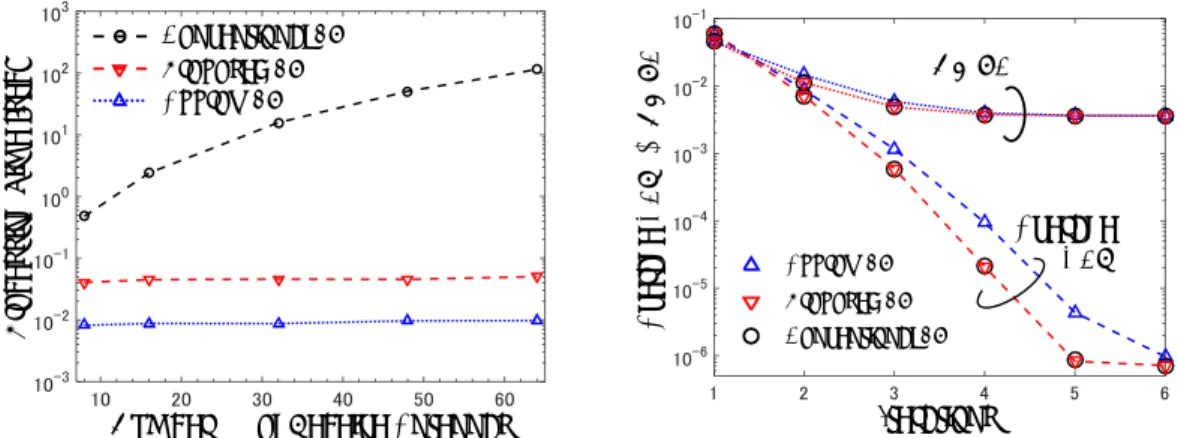
Scalable dynamic locality-sensitive hashing
for Structured dataset
on Main memory and GPGPU memory
Toan Nguyen Mau
computer: pcc.jaist.ac.jp userid: [email protected]
Index Terms—Locality-sensitive hashing, Structured dataset, GPGPU Memory, Similarity Searching, Parallel Processing
Locality-sensitive hashing(LSH) is a significant algorithm for big-data hashing. The original LSH uses a static hash-table as a reduce mapping for the data. Which make LSH challenging to apply on real-time information retrieval sys-tem. The database of a real-time system needs to be scalably updated over time. In this research, we concentrate on in-creasing the accuracy, searching speed and throughput of the nearest neighbor searching problem on big dynamic database [1].
A. Locality-sensitive hashing (LSH)
LSH is a well-known algorithm to handle the "-NNS problem which uses approximate nearest neighbor. LSH divides the data into multiple buckets, the number of hash function in hash family function will indicate the number of buckets in system. Vectors/points in the same buckets will be similar to each other because of the continuity of the selection of hash functions. Therefore, instead of computing the similarity of the input vector with all of the vectors in database, we need to compare the query with the vectors in several buckets.
B. Dynamic Locality-sensitive hashing(DLSH)
Data will be stored as a sequence that indicated by an hash-value on LSH. We proposed to used linked-list structure to track all the data in a bucket. An important part of hashing table of DLSH is the pointers of all available buckets. To handle this issues, in the first part of hash-table array, we store the static pointers for every bucket by the hash values.
Hash Index ... Hash Index
Data Data ... Data
Index Next
Index Next
Index Next NIL
NIL
Fig. 1. Linked-list bucket structure of DLSH
Fig. 1 shows the static Hashing Index part correspondings with hashing values of family of hash function. The value of each Hash Index will point to its first index of data. the cell of bucket linked-list contains two important values the
address of the data/item and the pointer of the continues cell. The NIL cell is a special cell that denotes the ending of a bucket. In case of a bucket is empty the pointer to the first cell will be set to NIL.
10K 100K 1M 10M
Dataset size (Num FP)
106 107 108 109 1010 Look up counting
Cell look up counting for 10,000 test
5274975 5275241 5273383 1260000 1260000 Deleting Deleting (Continues) Head Adding Tail Adding Head Adding (Full) Tail Adding (Full)
Fig. 2. Number of lookup in hash-table of DLSH; (Full): Adding the data/item when the hash-table is full; (Continues):
The performance of DLSH over the data size is shown in Fig. 2. We deployed tests on various dataset size with 19 hash functions. The number of hash-table lookup of deleting and adding commands is depended to the average number of cell in the bucket. When continues deleting data/item from the dataset, the number of hash-table lookups will be reduced. Adding the item/date at the head of linked-list is recommended for getting performance. However, this approach is easier to make the database fragment.
C. Conclusion
The dynamic structure needs extra memory space for holding the pointers of hash-table’s cell and addressing to the dataset. However, the performance of DLSH is acceptable for a dynamic system comparing to the performance of the original LSH. The DLSH can reuse the space in main memory or GPGPU memory. Although it still takes time to find the exact memory address.
REFERENCES
[1] William Bruce Frakes and Ricardo Baeza-Yates. Information retrieval: Data structures & algorithms, volume 331. prentice Hall Englewood Cliffs, NJ, 1992.
MOLECULAR INTERACTIONS IN INCLUSION OF
COMPLEXES WITH CYCLODEXTRINS
Ornin Srihakulung, Kenta Hongo/RCACI, and Ryo Maezono/School of Information Science, JAIST E-mail: [email protected]Abstract:
Most case studies of Thai traditional drugs (herbal products) have shown a similar problem
of the substance degradation that can cause the instability in the active compounds,
including Plumbagin. Basically, encapsulation technique is adopted to address this problem
and widely employed to improve the stability of numerous compounds in diverse industries.
Binding energy is an important value in the inter-molecular interaction between host and
guest molecules, that can directly affect the drug efficiency from the release of active
compound to the target cell. Ab initio investigation of the binding energy is an important
tool to provide useful theoretical predictions. Density Functional Theory (DFT) is most suited
to do this. However, its dependence on the exchange-correlation (XC) functionals means
that it is necessary to assess the strengths and weaknesses of these functionals for the
relevant system. This is the main objective of this study.
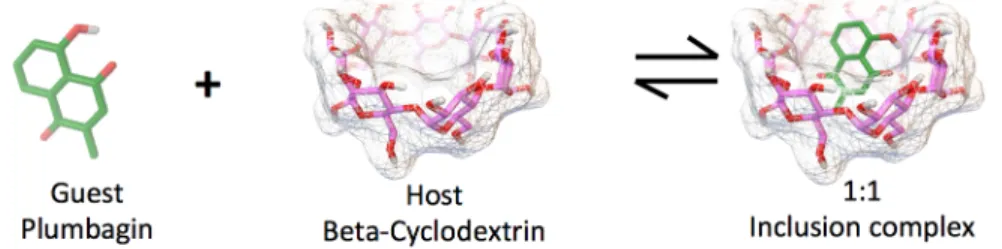
Figure 1. Molecular structure of guest molecule (Plumbagin) and host molecule
(
β-cyclodextrin
), which will form 1:1 inclusion complex
To consider the molecular and organic system, B3LYP functional is generally viewed as the
most suitable XC functional [1]. However, it is unable to properly account for inter-molecular
interaction, of which dispersion forces (and therefore, dispersion-corrected functionals) is a
vital part. A total of five dispersion-corrected functionals were assessed in this study: CAM-B3LYP, B3LYP-GD3, CAM-B3LYP-GD3, M06-2X, and M06-2X-GD3. The conventional hybrid
DFT (B3LYP) provides positive binding energy, which means it cannot capture the dispersion
force from an inter-molecular interaction [2]. Dispersion correction functionals, meanwhile,
give negative values of binding energy, with DFT-GD3 providing the precise and lowest
binding energies. These ab initio results are compared also with those of semi-empirical
methods. Of these, the PM7 method presents the lowest binding energy, though we
observe significant overestimations [3].
Reference:
[1] Tirado-rives, J., & Jorgensen, W. L. (2008). Performance of B3LYP Density Functional
Methods for a Large Set of Organic Molecules, 297–306. https://doi.org/10.1021/ ct700248k
[2] Kruse, H., & Grimme, S. (2012). A geometrical correction for the inter- and intra
molecular basis set superposition error in Hartree-Fock and density functional theory
calculations for large systems A geometrical correction for the inter- and intra-molecular
basis set superposition error in Hartree-Fock and density functional theory, 154101.
https://doi.org/10.1063/1.3700154
[3] R. Sure & Grimme, S. (2015). Comprehensive Benchmark of Association (Free) Energies of
Realistic Host-Guest Complexes, Journal of Chemical Theory and Computation, vol. 11, no. 8,
3785–3801.
Achievement:
[1] O. Srihakulung, L. Lawtrakul, P. Toochinda, W. Kongprawechnon, A. Intarapanich, and R.
Maezono, Theoretical investigation of molecular calculations on inclusion complexes of
plumbagin with β-cyclodextrins, in 2017 Fourth Asian Conference on Defence Technology -
Japan (ACDT), 2017, pp. 1-5.
[2] O. Srihakulung, R. Maezono, P. Toochinda, W. Kongprawechnon, A. Intarapanich, and L.
Lawtrakul, Host-Guest Interactions of Plumbagin with β-Cyclodextrin,
Dimethyl-β-Cyclodextrin and Hydroxypropyl-β-Dimethyl-β-Cyclodextrin: Semi-Empirical Quantum Mechanical PM6
and PM7 Methods, Sci. Pharm. 2018, 86(2), 20; https://doi.org/10.3390/scipharm86020020
Machines:
CX250 [Gaussian, GaussView] Altix [Gaussian] VPCC [Gaussian]A New Ab Initio Modeling Scheme for Ion Self-diffusion
Coefficient Applied to ε-Cu
3Sn Phase of Cu-Sn alloy
Tom Ichibha / School of Information Science, JAIST Genki Prayogo /School of Materials Science, JAIST
Assoc. Prof. Kenta Hongo /Research Center for Advanced Computing Infrastructure, JAIST Prof. Ryo Maezono /School of Information Science, JAIST
Abstract
u
W
y
qn
z
h
vi
W
x
W
y
rd
nx
gn
y
W
f
n
y
htW
z
y
gWlz
uf
y
z
z
z
v
t
rz
y
i
evu
gW
i
z
i
u
y
qnz
V-Cu
3Sn
u
Cu-Sn
Cu
uz
y
n
yW
a
y
f
aWlz
y
d
z
a
fk
zv
t
ev
W
z
a
c
t
gn
y
sb
gn
c
gn
z
y
z
a
u
W
gn
List of Publications:
[1] T. Ichibha, G. Prayogo, K.Hongo, and R.Maezono, arXiv:1804.02535 (2018). [arXiv] [2] T. Ichibha, G. Prayogo, K. Hongo and R. Maezono, "A New Ion Diffusion Model Applied to Lead-free Solder", APS March Meeting 2018, V31.00014, Los Angeles Convention Center, CA, USA, 2018/03/08. [ / ] [3] T. Ichibha, G. Prayogo, and R. Maezono, "New Model of Ion Migration for ε-Cu3Sn", The Towler Institute, Vallico Sotto, Tuscany, Italy, 2017/08/02. [ / ]List of Planned Publications:
[1]
T. Ichibha, G. Prayogo, K.Hongo, and R.Maezono. [ / Phys. Rev. Lett. ]Comparison of Post Analyses of
Quantum Monte Carlo Calculations
Tom Ichibha / School of Information Science, JAIST
Assoc. Prof. Kenta Hongo /Research Center for Advanced Computing Infrastructure, JAIST Prof. Ryo Maezono /School of Information Science, JAIST
Dr. A.J.W. Thom / Department of Chemistry, University of Cambridge
Abstract
W
z
W
y
u
i
evaub
W
u
y
gWlz
uz
vgt
i
gnaqtW
aWlz
u
x
x
W
y
y
u
x
n
W
gn
z
a
f
n
u
u
W63.
W
n
W
u
gt
W( rz
63. z
y
gW
qn
tW
u
f
t
W
z
a
z
y
gt
c
cev
ygn
u
W
z
y
gt
gW
y
i
a
z
y
W
z
x
y
gt
gWe
y
n
z
y
gn
, 63.
n
a
yr
tW
z
a
W
a
cx
a
y
f
n
ve
u
y
gWeeuz
vgt
i
List of Planned Publications:
[1]
T. Ichibha, K. Hongo, R. Maezono, and AJW Thom, "Post Analyses of QMC Markov Chains Revisited", CECAM E-CAM workshop "Improving the accuracy of ab-initio predictions for materials”, Paris, France, 2018/09. [ / ][2]
T. Ichibha, K. Hongo, R. Maezono, and AJW Thom, [ /Phys. Rev. B ]Very Fast Diffusion of Ti Interstitial Defect
in [001] Direction in Bulk Rutile TiO2:
A Diffusion Monte Carlo Study
Tom Ichibha / School of Information Science, JAIST Dr. Anouar Benali / Argonne National Laboratory
Assoc. Prof. Kenta Hongo /Research Center for Advanced Computing Infrastructure, JAIST Prof. Ryo Maezono /School of Information Science, JAIST
Abstract
W
xw
z
u
n
i
xwW
W
z
z
ru
y
d
z
W
y
z
v
y
gWlzn
z
y
t
g
gxa
W
uwp
a
c
i
i
a
t
x
u
W
y
W
z
u
z
W
z
vgW
z
gn
y
gn
y
qn
z
gW D
z
a
c
i
ev
ygn
tW
evyW D
W
y
t
c
i
v
W
z
x
t
,
W
l
m
W
z
gn
zu
W
u
2
v
zu
W
a
y
z
y
g
gW
lz
y
evuW
y
a
i
List of Planned Publications:
[1]
T. Ichibha, A. Benali, K. Hongo, and R. Maezono. [ / ] I II III A B C D E F IV: Parallel to [001] V: kick-out mech. [110] [1 10] [001]Hydrogen Crystal Phase Diagram
Updated by Quantum Monte Carlo and
Anharmonic Phonon Calculations
Tom Ichibha / School of Information Science, JAIST Dr. Yunwei Zhang / College of Physics, Jilin University
Dr. Anouar Benali / Argonne National Laboratory
Assoc. Prof. Kenta Hongo /Research Center for Advanced Computing Infrastructure, JAIST Prof. Ryo Maezono /School of Information Science, JAIST
Prof. Yanming Ma / College of Physics, Jilin University
Abstract
;
OP D
OC
C
D
M
A CT M
I
MT O G
Q
)
15
RDOC
DAAP D I 3 IO
. MG
OC
0 M OC
T O
OC
O G
DI PG O M OM I DOD I D
MQ
O )
15
S
MD
IO GGT
C
OM I DOD I
M
PM
D
M
M
P
T OC
M
IO
D PG OD I
PO DO
D
M IOGT
M P CO
T
P ODI
OC
OMD
O
GD DI O
OC
D
AM
A R
IC M
ID DOT
I D
M
DI OC
C I I
G PG OD I
4PM R MF
P
APGGT M
M
P
OC
OM I DOD I
M
PM
RDOC PO
IT
P O
IO
I D
MDI
OC
IC M
ID DOT A M
M
DIO
QD M OD I RDOC QD M OD I G
GA
I D O IO AD G
OC
-O OC
OD
OC
C
D
M
D
C I
I O
IGT
P GDO ODQ GT
PO
G
P GDO ODQ GT
-I OC M D
P
A M OC
T O
D
OC O OC
O
M
D DI
I D
O
OMP OPM
A OC
O GGD
C
I O
M
M
P
OC
S
MD
IO G
I
OMP
;
G
A PI
I R
OMP OPM
OC O M
M
P
OC
S
MD
IO G
OMP
PDO
M
I
GT P DI
MOD G
R M
OD D
OD I
OC
List of Planned Publications:
Adhesion of electrodes on diamond (111) surface: A DFT study
Tom Ichibha / School of Information Science, JAIST
Assoc. Prof. Kenta Hongo /Research Center for Advanced Computing Infrastructure, JAIST Dr. I. Motochi / Department of Mathematics and Physical Sciences, Maasai Mara University Prof. N.W. Makau / Computational Materials Science Group, Department of Physics, University of Eldoret
Prof. G.O. Amolo / Department of Physics and Space Science, The Technical University of Kenya Prof. Ryo Maezono /School of Information Science, JAIST
Abstract
W
v
W
y
vgt
f
t
y
vx
i
a
z
rvf
t
W
h
W
W
W
v
qn
z
a
t
u
z
x
z
W
z
x
g y
fknvbz
v
n
n
z
u
ub
z
fkn
z .M
a
reva
d
n
n
z
W
y
j
y
eva
f
n
y
W
z
z
vW
uz
z
i
uW
z
g
eva
ez
u
zx
z D
a
gn
nogW
.M
z
v
f
t
u
W
v
z
z
Wr
W
z
a
u
W
gn
,
W
z
x
g y
gnvbz
z
.M
xg
D
z
z
reva
f
n
0 2 4 6 8 Mg Ti V Cr Ni Cu Zn Al 3/4 period 0 2 4 6 8 Zr Nb Mo Pd Ag In Work of separation W sep [J/m 2] 5 period 0 2 4 6 8 Hf Ta W Pt Au Pb 6 period Metallic elements No−term. H−term. O−term.,
v
y
D
fkn
z
/4 z
z
gt
W
D
y
z
a
gt
eva
ub
List of Publications:
[1]
T. Ichibha, K. Hongo, I. Motochi, N.W. Makau, G.O. Amolo, and R. Maezono, "Adhesion of electrodes on diamond (111) surface: A DFT study", Diam. Relat. Mater, Elsevier 81, 168-175 (2017/IF= 2.561). [ / ][2]
W W W y - z v W 78 W 6p-A412-14W W2017 09 05 [ / ] 0 5 10 DOS Energy [eV] Dia. Slab + Ti Dia. Slab
D
ENSITY
F
UNCTIONAL
T
HEORY
S
TUDY OF
H
YDRODEOXYGENATION AND
D
ECARBONILATION
M
ECHANISM OF
M
ETHYL
B
UTANOATE ON
N
I
M
O
S
S
URFACES
.
Hermawan Kresno Dipojono, Ryo Maezono/ School of Information Science
P
ROJECT DESCRIPTION:
The first step to uncover the underlying mechanism of hydrodeoxygenation (HDO) and Decarbonilation (DCO) of palm oil is to find the active site of trigilseride adsorption over the catalyst. One of the compound that compose trigliseride is methyl butanoate and we use MoS2 surface with
nickel promoters for catalyst model. Our previous result from (FY2016 project) shows that methyl butanoate prefer to adsorp on M-edge than on S-edge. It also show that C-O bond cleaving of methyl butanoate determine the reaction selectivity to HDO or to DCO. The figures below show the first step of C-O bond cleaving of methyl butanoate with various nickel compound.
Figure 1. Catalytic reaction of C3H7COOCH3(S) + S à CH3(S) + C3H7COO(S) *S = surface
Figure 2. Catalytic reaction of C3H7COOCH3(S) + S à CH3O(S) + C3H7CO(S) *S = surface
This project attempts to investigate the HDO and DCO mechanism of methyl butanoate over MoS2 surface with nickel promoters. Reaction pathways for HDO and DCO mechanism of methyl butanoate on NiMoS surfaces is investigated by Nudged Elastic Band (NEB) using density functional theory (DFT). This investigation consists of barrier energy calculation.
L
IST OF PLANNED PUBLICATIONS[1] Density functional study of Methyl Butanoate Adsorption and its C-O Bond Cleaving on NiMoS Surface, [Wahyu Aji Eko Prabowo, Subagjo, Ryo Maezono, Adhitya Gandaryus Saputra, Mohammad Kemal Agusta, Nugraha, Supriadi Rustad, Hermawan Kresno Dipojono], [Journal of Saudi Chemical Society]. (Preparing manuscript from FY2016 scheme)
[2] Density Functional Theory Study of Hydrodeoxygenation and Decarbonilation Mechanism of Methyl Butanoate on NiMoS Surface, [Wahyu Aji Eko Prabowo, Subagjo, Ryo Maezono, Adhitya Gandaryus Saputra, Mohammad Kemal Agusta, Nugraha, Supriadi Rustad, Hermawan Kresno Dipojono], [Journal of Catalysis].
F
INITE TEMPERATURE PROPERTIES OF HIGH PRESSURE HYDROGEN
Bartomeu Monserrat, Ryo Maezono/School of Information Science.
P
ROJECT DESCRIPTION:
Hydrogen is the most abundant element in the Universe, and as such it is a major component of many astrophysical objects including planets and stars, in which it is found under extreme conditions of pressure. Furthermore, high pressure hydrogen is an exotic material which has been predicted to exhibit properties ranging from room temperature superconductivity to zero temperature quantum fluidity, driven by the quantum nature of the constituent protons.
In order to investigate all these properties, it is necessary to first understand the phase diagram of hydrogen: what structures are stable under particular pressure-temperature conditions? In order to answer this question, we use a recently developed methodology that allows us to incorporate an accurate description of the quantum motion of protons [PRB 87, 144302 and PRB 92, 184301]. With this new method, we can accurately predict the stability of candidate hydrogen structures, to both explain experimental observations and to guide experiment towards realizing the exotic phases that might exist in high pressure hydrogen.
As part of the collaboration with the group of Prof. Ryo Maezono, we have shared our codes that implement the finite temperature theory to study the quantum and thermal motion of protons with unprecedented accuracy.
P
UBLICATION LIST[1] J. Trail, B. Monserrat, P. Lopez Rios, R. Maezono, and R. J. Needs, Phys. Rev. B 95, 121108(R) (2017)
L
IST OF PLANNED PUBLICATIONSMultiple publications arising from the use of our vibrational quantum and thermal codes in the area of high pressure science, with an initial emphasis on high pressure hydrogen.
A
NHARMONIC CALCULATIONS IN CALCIUM SILICATE UNDER EXTREME
CONDITIONS AND HYBRID PEROVSKITE SOLAR CELLS
Joseph Prentice, Ryo Maezono/School of Information Science
2.
P
ROJECT DESCRIPTION:
We have been conducting large-scale calculations including anharmonic vibrational effects on hybrid organic-inorganic perovskite systems. These systems have great potential as solar cell materials, but are not yet fully understood. Our calculations aim to study the effect of the motion of the organic molecule contained within the perovskite lattice on the electronic band structure. This is important as the band structure directly affects these materials’ use in solar cells. It is hoped that by understanding these systems better we can move towards using them in practical circumstances as solar cells. We have also been conducting similar calculations on calcium silicate perovskite, one of the main components of the Earth’s lower mantle. The structure of this material under the extreme conditions seen in the lower mantle is still not well understood, which has implications for our understanding of the interior of the Earth, including seismic waves. We aim to produce the highest accuracy calculations yet of the relative energies of several possible structures of calcium silicate under lower mantle conditions, and help achieve a complete understanding of this important material.
L
IST OF PLANNED PUBLICATIONS[1] 'First principles anharmonic study of calcium silicate in the lower mantle', R. Maezono, Phys. Rev. Materials.
First Principle Calculations of Electronic and
Phonon Properties of ThCr
2Si
2-Type Structure
Aniwat Kesorn, Kenta Hongo/RCACI, and Ryo Maezono/School of Information Science, JAIST E-mail: [email protected]Abstract:
We developed high-throughput screenings of the phonon properties over around 1,000 compounds with ThCr2Si2-type structure, being known as superconductors. The electronic structure of thecompounds are performed based on density functional theory which are electronic band structure, density of state and Fermi-surface. The first principle calculation and finite displacement method are applied for phonon calculations. The compounds without imaginary frequency in phonon dispersion, which imply that the structures is stable in the symmetry I4/mmm, are provided the thermal properties as a function of temperature that are Helmholtz fee energy, entropy and specific heat capacity at constant volume.
List of Planed Publications:
[1] First Principle Calculations of Electronic and Phonon Properties of ThCr2Si2-Type Structure, Aniwat Kesorn, Keishu Utimula, Kousuke Nakano, Kenta Hongo, Sujin Suwanna, Ryo Maezono.Machines:
XC40 (VASP)First principle Study of H
2O Molecule Adsorption and
Dissociation on CuO Catalyst Surface
Faozan, Ryo Maezono / School of Information science.
P
ROJECT DESCRIPTION:
Dispersion-corrected DFT+U is performed on H2O adsorption and dissociation on stoichiometric and
nonstoichiometric CuO(111) surface. H2O favorably adsorbs on the top Cusub-Cusub bridge in
stoichiometric and oxygen pre-adsorbed surface and on the top of Cusub in oxygen vacancy surface.
Based on changes in OH bond length and angle distortion, we conclude that the adsorption of H2O on
oxygen pre-adsorbed CuO (111) surface will weaken the OH bond more significantly as compared to H2O adsorption on stoichiometric and oxygen vacancy defect CuO(111). The H2O molecule is strongly
adsorbed on oxygen vacancy defect surface with the adsorption energy of -1.064 eV, followed by stoichiometric surface (-0.868 eV) and oxygen pre-adsorbed surface (-0.829 eV). Charge transfer takes place through electrons transfer from the H2O molecule to CuO (111) surface that can be observed from the shifting, broadening, and splitting of the DOS peaks. The broadening LDOS of H2O around
Fermi level determines that H2O molecule is well absorbed on the surface, whereas the splitting of 1b1
molecule orbital into unoccupied state indicates the bond weakening of H2O. The dissociation of H2O
into OH and H species on CuO (111) are exothermic with the lowest reaction energy is -0.74 eV on oxygen vacancy defect surface followed on oxygen pre-adsorbed surface (-0.31 eV) and stoichiometric surface (-0.29 eV). Surface modification of CuO (111) with oxygen pre-adsorbed significantly reduces the barrier energy of H2O dissociation up to 0.041 eV as compared to the stoichiometric surface of
0.18 eV and oxygen vacancy defect surface of 0.17 eV. These results indicate that CuO(111) surface exhibits a strong catalytic activity for H2O dissociation and the surface modification of CuO (111) with
oxygen pre-adsorbed significantly reduces the barrier energy of H2O dissociation and with oxygen
vacancy defect can increase the reactivity of surface in H2O adsorption.
P
UBLICATION LIST[1] A DFT+U Study of H2O Molecule Adsorption and Dissociation on Stoichiometric and Non-Stoichiometric CuO(111) Surface (submitted to Applied Surface Science journal)
L
IST OF PLANNED PUBLICATIONS[1] 'A DFT study of CO2 Adsorption and Hydrogenation on CuO Surface', [Ryo Maezono],
Machine learning clustering technique applied to X-ray
diffraction patterns to distinguish alloy substitutions
Hunkao Rutchapon, Kenta Hongo/RCACI, and Ryo Maezono/School of Information Science, JAISTE-mail: [email protected]
Abstract:
SmFe12 is one of the candidate magnetic phases for replacing traditional NdFe12 phase permanent
magnet. Zr and Ti substitutions were found to improve the stability and magnetization of SmFe12,
which is also determined by the amount and site of substitution. In this work, we generated several possibilities of those substitutions using density function theory (DFT) and their corresponding X-ray diffraction (XRD) patterns. Hierarchical clustering analysis and dynamic time wrapping (DTW) for similarity measurment were applied to classify the simulated XRD patterns. We obtained decent performance to distinguish alloy substitutions from XRD patterns. Our developed technique will be futher applied to the experimental XRD patterns and support the development of SmFe12 phase
permanent magnet.
LIST OF PLANNED PUBLICATIONS :
[1] Machine learning clustering technique applied to X-ray diffraction patterns to distinguish alloy substitutions, Rutchapon Hunkao, Keishu Utimula, Masao Yano, Hiroyuki Kimoto, Kenta Hongo, Shogo Kawaguchi, Sujin Suwanna and Ryo Maezono.Machines:
XC40 [VASP] VPCC [Python]METAL-BLACK
PHOSPHORUS
CONTACTS:
A
DFT
STUDY
Sujoy Saha, Ryo Maezono/School of Information science.
P
ROJECT DESCRIPTION:
This study aims to explore possible metal electrodes to be used in high performance Black Phosphorus based transistors, from eighteen different metals which are studied in terms of direct contacts with pristine Black Phosphorus as well as Black Phosphorus with oxygen and hydrogen termination separately. The metals are chosen for the above mentioned cause on the basis of two key factors namely, the strength of adhesion of a given metal with Black Phosphorus (for direct as well as oxygen and hydrogen terminated contacts) and the electronic properties of the metal-Black Phosphorus interfaces. The strength of adhesion is measured in terms of Work of Separation of the interface systems that is obtained from DFT (Density Functional Theory) simulations. The study of electronic properties of the interfaces includes determining whether the interface forms a good Ohmic or Schottky contact or none. These properties are inferred from the analysis of DOS (Density of States) diagrams which are again based on DFT approach.
L
IST OF PLANNED PUBLICATIONS[1] 'Metal-Black Phosphorus Contacts: A DFT Study', [Prof. Ryo Maezono, Watanabe Nobuya, Ichibha Tomohiro], [journal (temporary)].
Single-Molecule Imaging of a Polymer and All-atom MD Simulations
Tomoyuki Ikai and Ken-ichi Shinohara
Fujitsu CX250 Cluster (pcc)
BIOVIA Materials Studio (Forcite, Amorphous Cell)
Synthesis of a helical π-conjugated polymer with a dynamic hydrogen-bonded
network in the helical cavity and its circularly polarized luminescence properties
(1)
An optically active π-conjugated polymer (poly-1) containing glucose-linked biphenyl
units in the main chain was synthesized via polymerization using an amide-appended
4,6-diiodothieno [3,4-b]thiophene as a cross-coupling partner. Based on the
characteristic chiroptical properties of poly-1, combined with the result of all-atom
molecular dynamics simulation, a cooperative intramolecular hydrogen-bonded network
among amide pendants was considered to form in the helical cavity and to play a crucial
role in the stabilization of the helically folded state. The helical poly-1 efficiently
emitted circularly polarized light upon photoirradiation in solution and the film state.
Chiral Amplification in π
‑Conjugated Helical Polymers with Circularly Polarized
Luminescence (2)
A series of D-glucose-bound optically active π-conjugated polymers (poly-Tr) were
synthesized by ternary copolymerization of 2,5-diiodothiophene with diethynyl
monomers containing a chiral and an achiral biphenyl unit using the Sonogashira
coupling reaction. The effect of the chiral and achiral biphenyl contents on the chiral
amplification in the preferred-handed helix formation (“the sergeants and soldiers
effect”) was investigated by comparing the circular dichroism (CD) and circularly
polarized luminescence (CPL) intensities of poly-Tr to that of the corresponding helical
polymer (poly-T) without an achiral biphenyl unit. We observed that even when the
chiral biphenyl content in the copolymer was 50 mol % (poly-T0.50), its CD and CPL
intensities were almost comparable to that of poly-T, demonstrating the amplification of
the helicity. All-atom MD simulation demonstrates that the helically folded structure
was maintained over the calculation period and was likely to be the preferred
conformation for poly-T0.50 in acetonitrile/chloroform (70/30, v/v), which is in good
agreement with the experimental result obtained from the CD analysis.
1. Tomoyuki Ikai, Seiya Awata, Ken-ichi Shinohara, “Synthesis of a helical π-conjugated
polymer with dynamic hydrogen-bonded network in the helical cavity and its circularly
polarized luminescence property”, Polym. Chem. 9, 1541-1546 (2018).
2. Tomoyuki Ikai, Sho Shimizu, Seiya Awata, Ken-ichi Shinohara, "Chiral Amplification in
π-Conjugated Helical Polymers with Circularly Polarized Luminescence",
: Cray XC40, PC Cray XC40 PC AMBER X
1) T. Suzuki, M. Kajino S. Yanaka T. Zhu H. Yagi T. Satoh T. Yamaguchi K. Kato, “Conformational analysis of a high-mannose-type oligosaccharide displaying glucosyl determinant recognised by molecular chaperones using NMR-validated molecular dynamics simulation,” ChemBioChem, 18, 396-410, (2017).
2) , , , , “ NMR
,” J. Comput. Chem. Jpn. 17, 1-7 (2018).
3) K. Kato, H. Yagi, T. Yamaguchi, “NMR characterization of the dynamic conformations of oligosaccharides,” In: Modern Magnetic Resonance (G. Webb eds), Springer, pp 737-754 (2018).
4) , Yan Gengwei, , “NMR ,” 29 , , 2017 12 . 5) , , , , , “ ,” 98 , , 2018 3 . 6) , , , “NMR X ,” 98 , , 2018 3 .


![図 1. Hamaker constant の実験値 A 11 .expl と計算値 A 11 .calcd の比較。(左)非極性分子(炭 化水素)、(右)極性分子(アルコール類) 24681012246810 12A11.calcd [10-20J]A11.expl [10-20J] 24681012 2 4 6 8 10 12A11.calcd [10-20J]A11.expl [10-20J]](https://thumb-ap.123doks.com/thumbv2/123deta/6158094.1082683/52.892.88.800.566.1051/Hamaker実験計算比較左非極性分子化水素右極性分子アルコールAJAJA.webp)
![Figure 1 C p for NdB 6 obtained in this work (blue) compared with a theoretical description made in the work of Bolgar et al.[2] (red)](https://thumb-ap.123doks.com/thumbv2/123deta/6158094.1082683/53.918.196.732.607.986/figure-ndb-obtained-work-compared-theoretical-description-bolgar.webp)