JAIST Repository
https://dspace.jaist.ac.jp/
Title 都市廃棄物マネジメントシステム向上のための知識基
盤サービスモデルの研究
Author(s) PITCHAYANIN, SUKHOLTHAMAN Citation
Issue Date 2016‑09
Type Thesis or Dissertation Text version ETD
URL http://hdl.handle.net/10119/13814 Rights
Description Supervisor:白肌 邦生, 知識科学研究科, 博士
Knowledge Based Service Provision
for the Enhancement of Municipal Solid Waste Management System
Pitchayanin Sukholthaman
Japan Advanced Institute of Science and Technology
Doctoral Dissertation
Knowledge Based Service Provision
for the Enhancement of Municipal Solid Waste Management System
Pitchayanin Sukholthaman
Supervisor: Assoc. Prof. Dr. Kunio Shirahada
School of Knowledge Science
Japan Advanced Institute of Science and Technology
September 2016
Abstract
In the world’s most advanced economies, over 70% of their gross domestic product (GDP) generates by service, which ultimately influences societal outcomes. According to the significance of service in global economy, a large number of questions have raised upon ways of having sustainable service leading to substantial outcomes for firms’ success, well- being of consumers, and society. Fortunately, scholars and researchers have been focusing more on service study. Trends, challenges, or potential implementation processes of countless services have been researched. Regrettably, out of the vast amount of studies providing environmentally sustainable public service and emphasizing on enhancement of societal well- being through involvement of stakeholders has been slightly tapped on. It is undeniable that humans live in service economy; however, people have to admit that nowadays they also live in knowledge society. In any management systems, to be successful and effective, knowledge is essentially needed for well management. This is to make the right knowledge available to the right people at the right time. In other words, the making available process is universally known as knowledge management (KM).
In public service perspective, provided services such as sanitation, water supply, city planning, health care, and security are mostly overseen by government. Although it is a fundamental factor for well-being of society, public sector is unlikely to implement comprehensive sustainability performance evaluation. Therefore, it is important that government provide effective and sustainable service in an innovative co-creation way to increase the overall well-being of the society in this era that service and knowledge are ubiquitous. Being as one of the most profoundly important public services, municipal solid waste management (MSWM) is selected as the studied environmental service. It is in need that the provided MSWM service be sustainable and affordable by community.
An overwhelming amount of generated waste is a serious side effect of increasing consumption and production.
The demand for more goods and services to meet human needs is creating a huge amount of waste that is being disposed of into the environment. Accordingly, the provided MSWM service does not go in the same pace with increasing amount of waste. As a result, ineffective of MSWM system has become a problem posing pollution to all mankind. Due to the inefficiency, along with more awareness of human health, environmental impacts, social problems, and depleted natural resources; these have created desires for strategies and techniques to enhance the performance of MSWM system and sustainably alleviate MSW related problems.
To enhance the effectiveness of MSWM service provision, this study adopts the combined essence of two important fields of concepts. The first field is sustainable service concepts, which are tripartite service concept and partnership concept. Therefore, this study aims to identify impacts of having relating stakeholders namely service providers, service recipients, and service ecosystem to corporately work together in providing MSWM service. The second field is KM concept. Through the interactions of all related stakeholders in the MSWM system, there is knowledge creation process. This study aims to shed the light on identifying co-created knowledge that can enhance the performance of MSWM service.
Through the multifaceted research methods, this study employs triangulation research method as the main research framework. This is to validate and increase credibility of the obtained data through cross verification from different sources of information. By integrating all analyzed results, influential factors that have impacts on MSWM system are identified;
possibility of partnership implementation, roles and responsibilities of involved stakeholders, together with potential service policies to be applied in MSWM are explained; needed knowledge and co-created values of adopting the combined concepts are discussed. In addition, the study proposes a knowledge based service provision conceptual model in the perspective of enhancing MSWM service performance.
The results reveal that applying service and KM concepts is explicable to alleviate the complexity of MSWM system and eventually enables the improvement of the management processes as a whole. This study provides comprehensive practicalities for researchers and practitioners to apply the knowledge based service provision approach through practicing or implementing the proposed knowledge based service provision model. Accordingly, the provision of MSWM service will be enhanced in a sustainable value co-creation way.
Keywords: Environmental service provision, municipal solid waste management, knowledge based service, tripartite service concept, value co-creation.
Acknowledgements
Undoubtedly this dissertation is impossible to be done singlehandedly. The process of earning a doctorate and writing this dissertation is all-encompassing and strenuous. This dissertation would not have been possible without the help of so many people in many ways.
First and foremost, I would like to express the deepest gratitude to my family, especially my parents for their support, understanding, and encouragement throughout my study.
I am sincerely thankful to my supervisor, Assoc. Prof. Dr. Kunio Shirahada, for his priceless suggestions and encouragement; they have been really tempting and are valued greatly.
With his expertise, it nurtures me to grow a new research seed in the world of service and knowledge sciences. This is a very challenging academic path. Without his generosity and immense support, I would not have made it through my overwhelmed and frustrating doctoral work and dissertation writing.
I am hugely indebted to all JAIST professors for giving precious and very kind advice regarding my research. They have broaden my research perspectives and provided the exceptional sources of knowledge. I would like to especially acknowledge Prof. Dr. Michitaka Kosaka, for being an excellent guide throughout all research process and being a constant source of motivation.
I am deeply grateful to Assoc. Prof. Dr. Alice Sharp, my co-advisor at Sirindhorn International Institute of Technology (SIIT), Thammasat University, Thailand, whose expertise, understanding, generosity, guidance, and support backed me up through all distressed processes.
Without her sensible wisdom and intense guidance, my doctoral study would not have been accomplished.
I would like to thank all JAIST staff, colleagues, and friends for their unconditional support during the last three years. I would not have been able to complete this academic goal without their continuous encouragement and companionship. Please accept my utmost appreciation and thankfulness.
Last but not least, this study was supported under a grant in the SIIT-JAIST-NECTEC Dual Doctoral Degree Program. I would like to pass my greatest gratefulness to the three institutions for their cooperatives in providing this incomparable academic opportunity.
Contents
Abstract i
Acknowledgements iii
Contents iv
List of Figures ix
List of Tables x
Chapter 1: Introduction 1
1.1 Introduction 1
1.2 Research Problem 4
1.3 Research Questions 7
1.3.1 Main Research Question 8
1.3.2 Subsidiary Research Questions 8
1.4 Structure of the Study 9
Chapter 2: Research Background 12
2.1 Introduction 12
2.2 Knowledge Management Viewpoint 15
2.2.1 Concept of Knowledge Management 15
2.2.2 Practice of Knowledge Management 18
2.3 Service Concept Viewpoint 20
2.3.1 Value Co-Creation Concept 20
2.3.2 Tripartite Service Concept 21
2.3.3 Public-Private-Community Partnership Concept 22
2.4 Municipal Solid Waste Viewpoint 24
2.4.1 Definition of Municipal Solid Waste Management 25
2.4.2 Municipal Solid Waste Management System 28
2.4.3 Municipal Solid Waste Management Methods 29 2.4.4 Influential Factors on Municipal Solid Waste Generation 34 2.5 Bangkok Municipal Solid Waste Management Viewpoint 38
2.5.1 Bangkok Municipal Solid Waste Management System 38
2.5.2 Municipal Solid Waste Composition 43
2.5.3 Management Strategies and Future Plans 46
2.5.4 Municipal Solid Waste Management Legislation and Policy 47
2.6 Summary 51
Chapter 3: Research Methodology 52
3.1 Methodological Sequences 52
3.2 Research Boundary 54
3.3 Study Site 58
3.4 Research Procedures 61
3.4.1 Questionnaire Set 1 62
3.4.2 Questionnaire Set 2 66
3.4.3 Questionnaire Set 3 67
3.4.4 Questionnaire Set 4 68
3.5 Summary 70
Chapter 4: Study A: Effecting Factors on Municipal Solid Waste Management System 71
4.1 Study A1: Current Performance of Municipal Solid Waste Management Service 72
4.1.1 Demographic Information 72
4.1.2 Attitudes towards Current Performance of MSWM Service 73
4.2 Study A2: Waste Separation at Source 75
4.2.1 Attitudes towards Waste Minimization and Recycling 75
4.2.2 Possibility of Implementing Incentive Based Recycling Program 76 4.2.3 Possible Collected Recyclable Waste from Incentive Based Recycling Program 77
4.3 Study A3: Waste Generation Factors 79
4.3.1 Root Causes of MSW Generation 79
4.3.2 Waste Generation of Bangkok 80
4.4 Study A4: Technological Challenges 83
4.4.1 Technological Challenges Facing Municipal Solid Waste Management 83
4.4.2 Technological Impacts on MSWM 86
4.5 Summary 88
Chapter 5: Study B: Service Concept Approaches on Partnerships 89
5.1 Study B1: Municipal Solid Waste Management Partnerships 90
5.1.1 Attitudes on Public Private Community Partnerships 90
5.1.2 Public Private Community Partnership on Tripartite Concept 91
5.1.3 Attitudes on Community Based Organizations 94
5.1.4 Possibility of Inclusive Community Based Organizations in MSWM Service System 95
5.1.5 Involved Stakeholders in the Perspective of CBOs 97
5.2 Study B2: Municipal Solid Waste Management Service Policies 99
5.2.1 Service Policies and Practices for MSWM 99
5.3 Summary 105
Chapter 6: Study C: Value Co-Creation for Knowledge Based Service Provision 106
6.1 Study C1: Essential Knowledge and Roles of Knowledge Management 107 6.1.1 Knowledge Management for Municipal Solid Waste Management 107
6.2 Study C2: Co-Created Values 111
6.2.1 Co-Created Values on the Perspective of Knowledge Management 111 6.2.2 Co-Created Values on Inclusive Community Based Organizations 114 6.2.3 Service Policy Framework for a Case of Inclusive Community Based Organizations 115
6.3 Study C3: Strategic Municipal Solid Waste Management Options 118
6.3.1 Stakeholder Analysis and TOWS Matrix 118
6.3.2 Strategic Municipal Solid Waste Management Options 122
6.4 Summary 126
Chapter 7: Implications 127
7.1 Implications for Municipal Waste Management System Enhancement 127
7.1.1 Socio-Economic Viewpoint 128
7.1.2 Environmental Viewpoint 129
7.1.3 Technological Viewpoint 131
7.1.4 Legislative Viewpoint 132
7.2 Potential Knowledge Creation Process 134
7.2.1 Stepwise Approach 135
7.2.2 Knowledge and Value Co-Creation 137
7.2.3 Evaluation 140
7.3 Summary 143
Chapter 8: Conclusion and Recommendations 144
8.1 Concluding Remarks 144
8.1.1 Answer for Research Questions 144
8.2 Academic Implications 151
8.3 Practical Implications 152
8.4 Limitations and Recommendations for Further Study 154
References 156
Appendices 174
Appendix A: Questionnaire Set 1 176
Appendix B: Questionnaire Set 2 184
Appendix C: Questionnaire Set 3 188
Appendix D: Questionnaire Set 4 195
This dissertation was prepared according to the curriculum for the Collaborative Education Program organized by Japan Advanced Institution of Science and Technology and Sirindhorn International Institution of Technology, Thammasat University.
List of Figures
Figure 1.1: Overview research gaps 6
Figure 1.2: Structure of the study 11
Figure 2.1: Spiral of organizational knowledge creation 16 Figure 2.2: SECI model – Four modes of knowledge creation 17
Figure 2.3: Waste management hierarchy 27
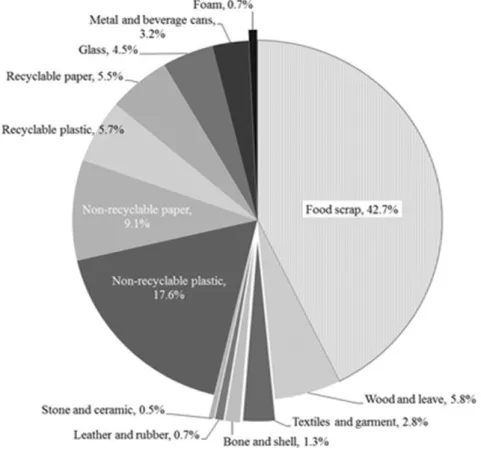
Figure 2.4: MSW composition (% weight) at source 44
Figure 3.1: Research methodology overview 53
Figure 3.2: Research boundary 55
Figure 3.3: Location of Jatujak district in Bangkok, Thailand 58
Figure 5.1: Tripartite service concept model 92
Figure 5.2: Relationships and roles of each stakeholder in PPCP on tripartite concept 93 perspective
Figure 5.3: Human attitudes on MSWM policy effectiveness 101 Figure 6.1: Ineffective waste management with no value co-creation 111 Figure 6.2: Co-created values for adopting inclusive CBOs in municipal 114
MSWM system
Figure 6.3: Conceptual service policy framework for inclusive CBOs in 117 MSWM system
Figure 6.4: MSWM stakeholder analysis matrix 119
Figure 6.5: TOWS matrix of Bangkok MSWM 121
Figure 6.6: Strategic MSWM options for the BMA 123
Figure 7.1: Stepwise approach for knowledge creation in MSWM system 136 Figure 7.2: Conceptual model for knowledge based service provision of 139
MSWM system
List of Tables
Table 2.1: Waste generation in Thailand 41
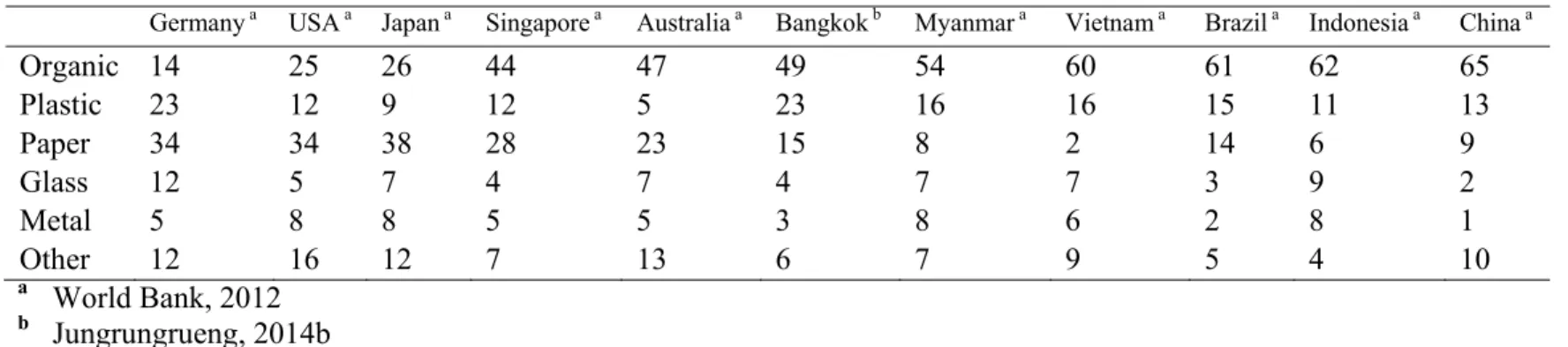
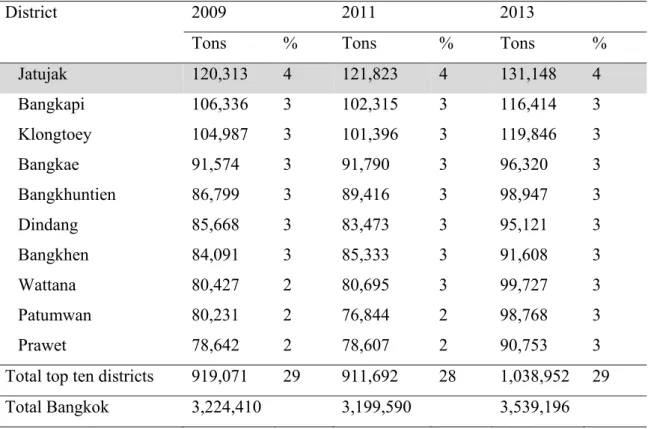
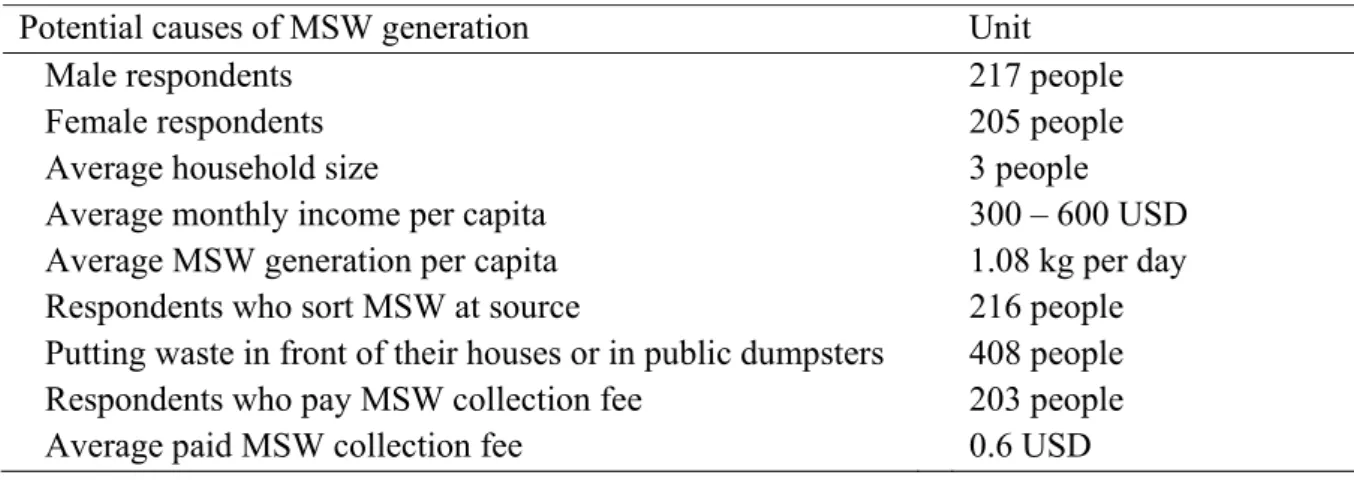
Table 2.2: MSW composition (% weight) in developing and developed countries 45 Table 3.1: Top ten ranks of Bangkok districts in different criteria as of 2013 59 Table 3.2: Top ten ranks of waste generation amount in Bangkok 60 Table 4.1: Overview results from questionnaire survey 72 Table 4.2: Respondents’ aspect on current performance of MSWM service 73
Table 4.3: Respondents’ concerns on MSWM service 73
Table 4.4: Gaps of MSWM system 74
Table 4.5: Respondents’ attitudes on participating in recycling activities 75 Table 4.6: Statistical results of explorative factor analysis 76 Table 4.7: Influential factors for applying incentive based recycling program 77
Table 4.8: Root causes of MSW generation 79
Table 4.9: Statistical parameters for waste generation of Bangkok 81 Table 4.10: Pearson correlation of MSW generation and influential factors 81 Table 4.11: Potential success factors to increase waste management effectiveness 83 Table 4.12: Statistical results of chi-square testing of associations with technologies 85 for MSWM system
Table 4.13: Statistical results of explorative factor analysis 87 Table 5.1: Results of chi-square test of associations with roles of stakeholder for 91
MSWM
Table 5.2: Overview results from questionnaire survey regarding all stakeholders 94 Table 5.3: Overview results from questionnaire survey regarding waste pickers 94 Table 5.4: Potential success factors to implement inclusive CBOs 95 Table 5.5: Potential roles and responsibilities for value co-creation in CBOs 96 Table 5.6: Statistical results of chi-square test of associations with policies for 100
MSWM services
Table 5.7: Statistical results of explorative factor analysis for MSWM policies 103 Table 6.1: Respondents’ aspects on needed knowledge for sustainable 109
waste management
Table 6.2: Residents’ aspects on value co-creation when applying KM concept 113
Chapter 1 Introduction
1.1 Introduction
In the intense market situation, firms aim to gain competitive advantages to increase their values, attract more customers, keep and gain more market shares. As such, firms have been trying to find innovative ways to exercise their current resources. Innovation has received attention from firms as they introduce innovation through strategic plan and implementation in business processes. According to Vargo and Lusch (2004), innovation has tended to be conceptualized to good dominant logic (G-D Logic), where firms mainly focus on, for example, tangible products, operand resources, and profit maximization. Firms have learned that only product oriented cannot lead to sustainable business growth. As a result, firms have turned to focus on providing innovative service, which seems more effective in perspectives of competitive advantages and business growth in long-term. Service dominant logic (S-D Logic) focuses on relationships and interactions among related actors that lead to co-creation of values through innovative resource integration (Vargo et al., 2008). Therefore, traditional business operation has obviously shifted towards an emphasis on collaborative business processes, mutual satisfaction, and co-created values.
In the world’s most advanced economies, over 70% of their gross domestic product (GDP) generates by service, which ultimately influences societal outcomes (Hill and Macan, 1996; Economy Watch, 2010). Not only does the growth continue to increase in developed
countries, but also service is very important to emerging countries (UNCTAD, 2013). According to the significance of service in global economy, a large number of questions have raised upon ways of having sustainable service that leads to substantial outcomes for firms’ success and well- being of consumers and society (Bitner and Brown, 2008). Fortunately, scholars and researchers are focusing more on service study. Trends, challenges, or potential implementation processes of many services have been researched. Regrettably, out of the vast amount of studies, providing environmentally sustainable public service emphasizing on the enhancement of societal well- being through involvement of stakeholders has been slightly tapped on.
In public service perspective, provided services such as sanitation, water supply, city planning, health care, and security are mostly overseen by governments. Although it is a fundamental factor for well-being of the society, public sector is unlikely to implement comprehensive sustainability performance evaluation. Despite the fact that increasing attention has given on the ineffective service performance provided by the sector, several governments have not perceived the need even though they are involved in services every day. Therefore, it is important to provide effective and sustainable service in an innovative co-creation way to increase the well-being of people and the society in this era that service is ubiquitous.
It is undeniable that humans live in service economy. However they have to admit that, at the same time they also live in knowledge society. For all types of firms or institutions, knowledge is the most vital and valuable capital where the main competitive advantage is an intangible asset. In any management systems, knowledge is essentially needed to be well managed. This is about to make the right knowledge available to the right people at the right time. In other words, this making available process is universally known as knowledge management (KM). KM has been widely used as a new concept or a new arising management term in the past two decades. The importance of effective KM has increasingly been recognized in both business viewpoint (Deng, 2010; An et al., 2013) and academic viewpoint (Nonaka and Takeuchi, 1995). KM is fragmented across industries. Many factors are important to KM, for example, KM strategies (Shih and Chou, 2012), KM processes (Grover and Davenport, 2001), or KM enablers (Choi and Lee, 2002).
In service sector, environmental services have gained much recognition in recent years especially on a Payments for Environmental Service (PES) perspective (Kumar, 2013; Legrand et al., 2013). PES has rapidly developed all over the world as a mechanism of a new type of
subsidy objects to protect the environment and ecosystem services based on provision of economic incentive. It is considered as a new market based initiative for conservation and environmental management (Fauzi and Anna, 2013).
Regardless of the popularity of studies having on PES, there have been only a few studies related to municipal solid waste management (MSWM). In those studies, PES is widely adopted in many applications; however, in MSWM, it has been mostly applied in economical prospect such as willingness to pay for improving waste collection service or incentive based MSWM system. Despite the fact that PES schemes can improve municipal solid waste (MSW) collection service in some cases, it is insufficient to say that an economic based incentive system can be applied to all cities, especially in developing ones.
MSWM is one of the most important basic public services that should be provided to residents to make the system effectively run itself and eventually contribute to better system for quality of life. Knowledge, in the same way, is needed in all processes to make service run smoothly, consistently, reliably, and sustainably. Thus a good management of knowledge is very essential for successful MSWM, as it is one of the most vital factors showing the performance of a MSWM system. In the same way, applying a concept of sustainable environmental service is a key to increase performance of MSWM system in long-term. The concept of service sustainability is to satisfy the need of current providers and recipients to practice mutual value co-creation without decreasing the quality of future value co-creation. In other words, the provided service should meet the society needs, conform to standards, and most importantly cause no harmful impacts to society, economy, and the environment.
Therefore, it is noticeable that, for enhancing the society well-being in a case of an environmental service perspective the combination of the very important two concepts which are sustainably environmental service and KM is significant. This is also to clarify the importance and how these concepts have impacts on the well-being of individuals, families, communities, the environment, and the society as a whole.
1.2 Research Problem
An overwhelming amount of generated waste is a serious side effect of increasing consumption and production. The demand for more goods and services to meet human needs is creating a huge amount of waste that is being disposed of into the environment. The increase in waste tends to correspond with economic development and rapid urbanization of society (Ahmed and Ali, 2004; Beolchini et al., 2012). The amount of generated MSW has been rapidly increasing in the past few decades (EPA, 2011). Worldwide, approximately 1.3 billion tons of MSW is generated per year, and this number is expected to reach 2.2 billion tons by 2025. With a conservative forecast, approximately 1.8 million tons of MSW is generated per day from urban areas in Asia (Hoornweg and Tata, 2012). This increasing generation of MSW is a serious problem, particularly for urban areas in developing countries with depleting landfill spaces and limited capacities (OECD, 2013). The increasing waste, along with more awareness of human health, environmental impacts, social problems, and depleted natural resources has created desires for strategies and techniques to reduce the amount of waste and sustainably alleviate MSW related problems (UNHCR, 2013).
To have an effective MSWM system that provides reliable services, it is imperative to identify influencing factors that affect the performance of the service activities. Studies have shown that having accurate waste generation amount is the most important factor for effective planning of MSWM system (Rotich et al., 2006; Kapepula et al., 2007). In general, waste generation prediction models and conventional analysis are estimated based on demographic and socio-economic factors on a per capita basis (Fritz and Vollmer, 2006; Johansson, 2006; Aguilar, 2013). Studies have shown that taking into account of waste generation factors is vital, but the same importance should also be given to the concerns of other factors including appropriate applications of management techniques and involvement of all related stakeholders.
A number of methods such as supply chain management, life cycle analysis, partnership, and integrated waste management system have been mapped into MSWM to deal with the inefficiency of the system (Johansson, 2006; Aguilar, 2013). Improved MSWM is a critical component of efficient city management, but it requires a high investment in terms of workforce, equipment and infrastructure, and other operating costs (Fritz and Vollmer, 2006). This has necessitated calls for an improvement to the currently inadequate level of MSWM services being
provided by authorities. Difficulty in providing waste management services corresponding to demand is typically due to institutional, technical, and financial constraints at the levels of national to local government, as well as in private sector (Durant, 2009; DOPA, 2013).
Management systems and techniques are currently being developed to decrease the environmental burdens of waste generation. It is essential to apply appropriate technologies to waste management system. Cities in developing countries have encountered technological gaps in management processes, which are one of the main causes of poor performance in MSWM.
Accordingly, identifying the success factors for a sustainable MSWM technology transition is in an urgent need.
MSWM is dynamic along its process and involves multisector stakeholders in the system.
Public-private partnership has increasingly been applied in MSWM service provision to improve ineffective situation. Therefore, involving related stakeholders from both private and public sectors to show how partnership can improve the ineffective MSWM and to identify roles and relationships of stakeholders who are essential in making MSWM effective are imperative.
According to the aforementioned constraints of inefficiency in providing effective MSWM service that eases human living condition and the viability of the society, there is a serious need of a reliable service management system that allows appropriate combination of use and application of available knowledge and resources with the current situation of MSWM, characteristics of the community, and norms of the society. By accumulating literature reviews of previous studies based on sustainable service and suitable use of KM concepts, there are some research gaps that are of concern to researchers. Accordingly, research insufficiencies are listed out on the basis of basic research structure covering three major issues, namely influencing factors on MSWM system, stakeholder attitudes towards collaboration in MSWM, and optimal co-created values in the management processes of the MSWM system. This is to ultimately create the knowledge based service provision for the enhancement of MSWM system.
As demonstrated in Figure 1.1, this study aims to enhance the effectiveness of MSWM service provision by encapsulating the essence of sustainable service and KM concepts with the ultimate goal of introducing the knowledge based service provision for MSWM system. There are three main research areas (Studies A, B, and C), touching upon influencing factors that have impacts on MSWM service activities, knowledge, and values that can be co-created through the dynamically interrelated collaboration of stakeholders.
Figure 1.1: Overview of research gaps
A number of studies have conducted research on environmental service provision in the perspectives of MSWM system (UNEP, 2005a,b,c; Beigl et al., 2008; Kollikkathara, 2010;
Hannan, 2011; Anderson and Larsen, 2012; DOE, 2013; Ogwueleka, 2013; Otoma, 2013; Kawai and Tasaki, 2015; Sukholthaman and Shirahada, 2015a; Maier et al., 2016; Sukholthaman and Sharp, 2016), sustainable service provision (Kramer and Specht, 1975; Surjadi and Handajani, 1999; Massoud et al., 2003; Rathi, 2006; World Bank, 2011), and KM (Levine, 1994; Lederer et al., 2012; Lederer et al., 2015; Sukholthaman and Shirahada; 2015b). Adopting research methods used in the previous studies allows explicable research overview. However, there is no complete solution that makes the MSWM system sustainable in a way of incorporating knowledge based management and service provision towards enhancing the well-being of the society.
Accordingly, the presented research gaps should be taken into consideration and given a thorough investigation.
1.3 Research Questions
There are evidences of ineffective waste management causing socio-economic and environmental problems. Increasing generation of MSW is one of the serious problems particularly for urban areas in developing countries. It has become problematic as its level of seriousness is driven by high growth of population, urbanization, and economic development (Afroz, 2011). No participation and collaboration is also one of the essential factors causing ineffective waste management. The effectiveness of providing MSWM service is an important factor making cities sustainably livable and far from consequences of MSW problems (UN HABITAT, 2010). According to the abovementioned background and research gaps, it is inevitably to deny that sustainable service strategies and well-planned of KM are critically important to the effectiveness of provided MSWM service performance.
Though there is no single solution that enables MSWM system effective for every city, having a conceptual knowledge based service provision framework is a potential alternative for MSWM stakeholders from both public and private sectors to have a holistic view of MSWM system. By taking essential factors into account, this study ultimately aims to propose a framework that consists of influential factors of MSWM system, possibility of having all stakeholders involved in a form of partnership, and co-created values that will enhance the effectiveness of MSWM service provision. To fill up the research gaps, this study encompasses the essence of the tripartite service concept that allows stakeholders’ interactions in a way of creating mutual benefits among three main actors, including service provider, service recipient, and service ecosystem without deterioration the possible welfare of future generations (Shirahada and Fisk, 2011). By applying this concept, MSWM system is studied in a way to enable sustainable service provision by integrating resources of each actor to co-create values for the society as a whole.
Another important concept that is embraced in this study is KM concept. In a MSWM system, there are various interrelated factors that have dynamic behaviors over time. Moreover, in each and among processes of MSWM activities, stakeholders interact to each other. These interactions are considered a kind of knowledge exchange that is also reflected as value in the system. Accordingly, it is highly essential to suitably capture, use, and distribute these exchanged knowledges by making them available to the right stakeholder at the right time.
1.3.1 Main Research Question
Broadening the application of service and KM concepts, this study aims to enhance the effectiveness of MSWM service provision to improve human and societal well-being. The main research question (MRQ) is ‘How to enhance the effectiveness of MSWM service provision by applying the service and KM concepts?’. To achieve the MRQ, the study involves related viewpoints of influential factors in MSWM system on the basis of knowledge based management service approach.
1.3.2 Subsidiary Research Questions
To achieve the MRQ, this study identifies the key influential factors on the performance of MSWM service provision through a number of aspects, including waste generation factors, technological challenges, inclusive informal sector, MSWM service policies, stakeholder attitudes, partnerships, co-created values, and strategic MSWM options. Shortly, this study consists of threefold sub-research questions (SRQs), which are explained as following points:
1. What are the imperative factors effecting MSWM system in three perspectives namely waste generation factors, technological challenges, and policy design for inclusive informal sector?
2. How to broaden the service based approach by analyzing stakeholder attitudes in forming a coherent and structured manner in MSWM through partnerships?
3. Based on KM and sustainable service concepts, what are the co-created values of the knowledge based service provision for MSWM system and the needed knowledge and strategic MSW management options?
1.4 Structure of the Study
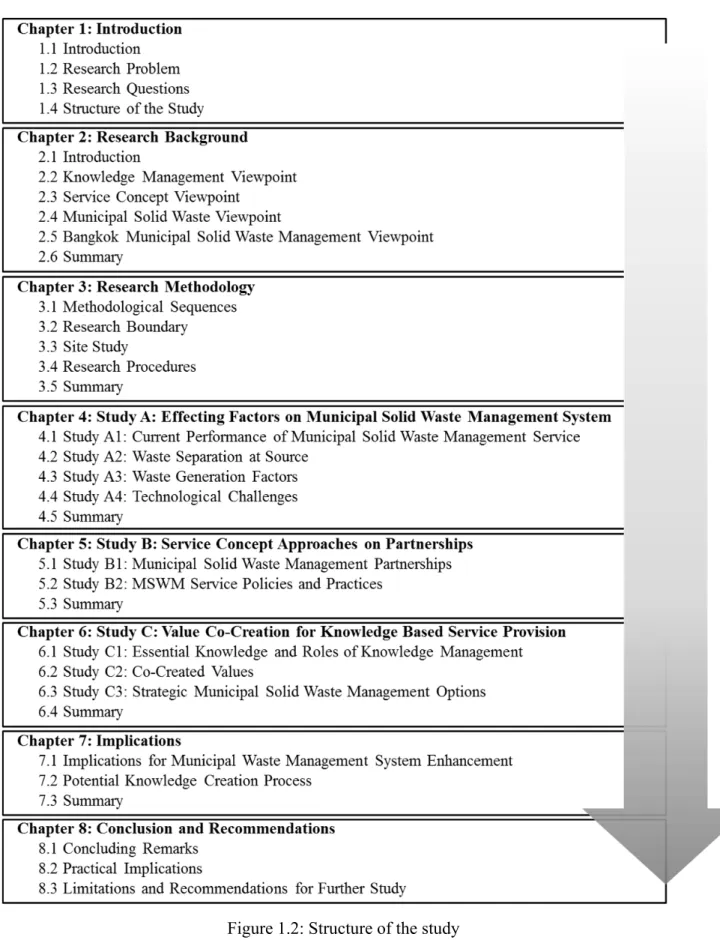
This dissertation contains eight main parts which are ‘Introduction’, ‘Research Background’, ‘Research Methodology’, ‘Results’ of three studies, ‘Implications’, and
‘Conclusion and Recommendations’, as presented in Figure 1.2. Details of each part are explained in the following paragraphs.
The first part starts with ‘Chapter 1’, this introductory part contains the overview of MSWM and urgency of having effective MSWM service provision. It discusses the relationships of sustainable service concept and KM concepts with MSWM. This is to emphasize the importance of adopting the usefulness of these two applications to enhance the performance of provided MSWM service. The Chapter also consists of research problem and research questions of this study.
The second part is ‘Chapter 2’, which provides research background in detail. It can be categorized into several viewpoints that relate to KM, environmental service, MSW, Bangkok MSWM, and practical issues on MSWM service. For each viewpoint, there is explanation on the overview information, definition, and important elements.
Followed by the third part, ‘Chapter 3’, research methodology, the chapter explains the sequences of methods, techniques, and approaches conducted in the study. Information regarding the main study site of this research is also discussed here.
The fourth to sixth parts are about dissertation results. There are three studies in this dissertation, which each study is thoroughly explained in Chapters 4, 5, and 6, respectively.
‘Chapter 4,’ ‘Study A,’ aims to answer the first SRQ of this research, which is the three aspects of influencing factors on MSWM system. ‘Chapter 5’ consists information of the second study,
‘Study B’. It is designed to evaluate the possibility of having partnership in MSWM system. And the last part, ‘Study C’ which is presented in ‘Chapter 6,’ is to achieve the third SRQ, in which needed knowledge, co-created values, and strategic management options are identified and demonstrated as a knowledge based MSWM service framework. Explaining in a step by step sequence, each chapter explains data collection, data measurement, and data analysis procedures.
As there are many sources of data, triangulation research method is applied to ensure that the results of each study are robust, comprehensive, and well-developed.
The seventh part is ‘Chapter 7’, which discusses implications of the study in a number of aspects. The chapter explains strategic development plan for MSWM system enhancement which encompasses the social, economic, environmental, technological, and legislative aspects. In addition, the potential knowledge creation process for MSWM system is provided.
The last part is ‘Chapter 8’ that concludes both contributions and limitations of the study.
The MRQ and SRQs are precisely emphasized. Additionally, academic and practical implications of the study are explained. At the final part of this chapter, recommendations on enhancing MSWM system performance is presented as it can be adopted as a useful profound study of future research.
Figure 1.2: Structure of the study
Chapter 2
Research Background
2.1 Introduction
This chapter embraces key elements of this study in detail, including the KM viewpoint, the environmental service viewpoint, the MSW viewpoint, and the Bangkok MSWM viewpoint.
Practical issues on MSWM service are discussed in the last section of this chapter. The seriousness and urgency to enhance the effectiveness of MSWM service is firstly emphasized in the chapter. This is to clarify why sustainable service and effective KM are needed as imperative solutions. Gradually accumulated, the enormous amount of MSW has caused tremendous adverse impacts to the world. Not only poorly managed does waste stream generate a vast amount of MSW, but it also causes a remarkable environmental pollution and jeopardizes mankind's health (Batool and Chuadhry, 2009).
With the ever-increasing trend of waste generation and the more complexity that comes with generated waste, cities and responsible authorities all over the world, especially in developing countries find it difficult to manage the vast amount of waste whilst they have to find ways to minimize adverse impacts. Thus to alleviate the problems, an effective MSWM system is needed to solve problems and to prevent all possible risks that can happen in the future.
According to the United States Environmental Protection Agency (USEPA) (USEPA, 2003), the current MSW generation amount has increased by 2.6 times from 1960. This amount of new generated waste is an additional to the already huge amount of waste that has been
discarded in many landfills. In fact, governments and communities in most countries have been struggling to handle the increasing amount of MSW (Dhokhikah and Trihadiningrum, 2012).
Therefore, determination of waste generation quantity is one of the most important factors for further MSWM planning and operating processes.
MSWM is one of many disciplines associated with the controlling of MSWM processes from generation to disposal, in a manner that is in accordance with the best principles of public benefits in terms of health, economics, conservation, aesthetics, and environmental considerations, which is responsive to public attitudes. In the simplest sense, MSWM incorporates waste management hierarchy by considering direct and indirect impacts (Turner and Powell, 1991). In spite of the fact that local authorities and related stakeholders have put more attention and awareness on the effectiveness of MSWM system (Seik, 1997; Wilson, 2007), the provided MSWM service does not go in the same pace with the increasing amount of waste. As a result, ineffective MSWM system has become a problem posing pollution to the society.
Thailand has implemented a number of plans to ensure reliability and effectiveness of MSWM system. The plans include, for example, to promote solid waste minimization and source separation; to establish networks to increase the efficiency of MSW reduction; to provide regular waste collection service; to develop a collection and disposal system for hazardous and infectious waste; and to increase the efficiency of waste treatment and disposal by applying advanced technologies and encouraging private sectors involvement in MSWM system. In case of Bangkok, one of the world’s mega urban cities, the Bangkok Metropolitan Administration (BMA) and the 50 district offices have responsibility for waste management. The authorities try to enhance its effectiveness of MSWM system by encompassing various strategies such as 3Rs, efficient waste collection and disposal system campaigns, and community based management (CBM). However, the implementation results of these strategies are not as successful as planned.
In order to alleviate MSWM problems and increase societal well-being, MSWM strategies used in developed countries have been widely applied as solutions in developing countries. However, problems arising in these countries, especially in urban areas, are different from those in the developed world. Therefore, different solutions that suit ways of life, norms of society, basic infrastructure, laws, and MSWM processes are needed.
Studies have shown that having accurate waste generation amount is the most important factor for effective planning of MSWM system (Babayemi and Dauda, 2009; Thanh et al., 2010).
Besides knowing the amount of waste generation, involvement of related stakeholders and implementation of practical MSWM policies are imperative keys that increase effectiveness of MSWM processes. To be able to achieve the ultimate goal, it is important to conduct MSWM research in different ways. Broadening the application of service research, value co-creation, tripartite service, and partnership concepts are helpful to be applied as research methods in MSWM study. Thinking in an aspect of service providers, service recipients, and service ecosystems, there will be a better understanding in terms of categorizing and prioritizing roles and responsibilities of involved stakeholders in MSWM system. Consequently, values of each stakeholder are integrated and co-created in the mutually agreed management process. In any systems, knowledge is the most valuable asset that should be utilized at the right time with the right people. Ensuring that the knowledge is utmost beneficial to all related stakeholders, the KM concept should be applied to properly manage the creation and the flow of knowledge in the systems.
This study, therefore, combines the two important concepts to enhance the effectiveness of MSWM system. In this study, the city of Bangkok is selected as an urban city in developing countries that has coped with the impacts of MSW and ineffective provided services.
2.2 Knowledge Management Viewpoint
As discussed earlier that MSWM is one of the most important basic public services that all residents should receive. Knowledge, in the same way, is needed to make service run smoothly, consistently, reliably, and sustainably. Since each process requires different knowledge to effectively manage waste, this is one of the most vital factors showing the performance of MSWM system. To emphasize its importance, knowledge sharing (KS) and knowledge transfer (KT) are factors that should be taken into account of KM in order to avoid occurrence of knowledge gaps and hidden knowledge.
2.2.1 Concept of Knowledge Management
As aforementioned, KM has widely been recognized in both business and academic arrays. Having effective KM, it is important to be noted that KS and KT are important factors that propel the creation of knowledge, which should be understood and accepted by all involved stakeholders. Knowledge is a mix of framed experience, values, contextual information, and expert insights that provides a framework for evaluating and incorporating new experience and information (Davenport and Prusak, 1998).
Tacit and explicit knowledge are two types of knowledge having been suggested in Nonaka’s work (Nonaka et al., 1994). Tacit knowledge more or less related to personal knowledge. It is subjective and experienced based knowledge which cannot be expressed explicitly in words. It includes cognitive skills which are intuitions, images, or beliefs. On the other hand, explicit knowledge is easy to express in words. It is objective and rational. This type of knowledge includes theoretical approaches, databases, and problem solving. By applying the KM concept, it can be referred as a process of using knowledge to produce wealth for improving and developing organizations (Nonaka and Takeuchi, 1995).
Transforming from one’s tacit knowledge to be used as understandable explicit knowledge is a key for successful KM. Polanyi (1967) state in his work that tacit knowledge is the fact that “we can know more than we can tell”. He also emphasizes the importance of dialogues among individuals to groups and finally to organizational levels (Polanyi, 1964). This
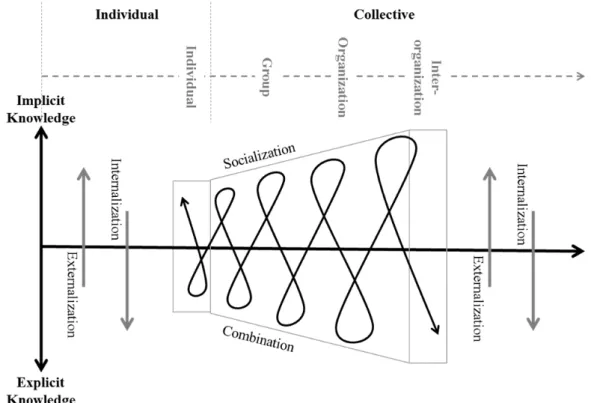
is a way to share, transfer, and transform personal tacit to explicit knowledge. In other words, the process of sharing, transferring, or transforming individual knowledge to broader levels is knowledge dissemination. Nonaka (1994) prescribes this process by categorizing the process into four modes as demonstrated in Figures 2.1 and 2.2.
Figure 2.1: Spiral of organizational knowledge creation (Nonaka, 1994)
Figure 2.1 represents how knowledge is transferred from individual level to collective level. Along the flow of knowledge from left to right, the knowledge can also be shared across the same level or among different levels through the four modes which are socialization (S), externalization (E), combination (C), and internalization (I). For a better understanding, the four modes are combined together as SECI model, which is shown in Figure 2.2 (Nonaka, 1994).
Figure 2.2: SECI model – Four modes of knowledge creation (Nonaka, 1994)
In knowledge creation system, along the processes of sharing and transferring of information and knowledge there is disseminated knowledge that occurs within the system. In knowledge dissemination (KD) process, the shared or transferred knowledge will be used through the process of learning, enlightenment, or modified practices.
When it comes to reality, it is important that knowledge should be verified, justified, and accepted. Applying the KM concept to MSWM is a very new field of research. This study focuses on roles of KM on each process of waste management. Before going into detail of those processes, it is inevitable to discuss about related actors in the provision of MSWM service.
Starting from the very first to the last waste life cycle, MSW is generated by residents, collected by district offices, and processed and disposed of by the BMA and designated companies. These four sectors are main actors that directly contribute to the effectiveness of provided MSWM service. Indirect actors are also important to service performance. Non-governmental organizations (NGOs) and private sectors, for example, act as a catalyst that makes MSWM system run smoothly and transparently (Heap, 1998). Above all, ecosystem is one of the most important actors acting as a service provider and at the same time, a service recipient. The only difference of ecosystem among other actors is that ecosystem does not have explicit roles or activities. Instead of that, it is the source of raw materials that are produced, used, and discarded as waste. And it is the end of waste management process where all waste is disposed to.
For firms, gaps of knowledge usually happen among theories, practices, and employees in different levels. Hidden knowledge is also a form of knowledge gap when knowledge is kept individually. Other than that, it is treasure hidden in employees’ minds (Greiner, 2007). As tacit
knowledge is a key of personalization strategy, it is important to share this hidden tacit knowledge. Sharing hidden knowledge can be done by socialization or sharing and creating knowledge among related members. KS through socialization can be easily done by many communication channels such as participation in social networks, informal meetings, or group works (Teigland and Wasko, 2003).
KS distributes knowledge among individuals in an organization. Sharing of knowledge encompasses various kinds of techniques ranges from simple ones to advanced ones. People and business practices represent organization cultures which are driving factors that determine the success or failure of KM. KT is a mechanism of selective knowledge exchanges. Not everybody in a company needs to know everything at all times. Related stakeholders should be aware of knowledge exchange opportunities during work. KT needs to be worthwhile for all related parties by applying it into their activities (Krogh et al., 2001).
Applying KM concept to MSWM, involved stakeholders are automated to facilitate collaboration and learning by conduction KT and KS. Ultimately, as an intelligent support, KM is to increase the effectiveness of MSWM system and at the same time to create a sustainable waste management service.
2.2.2 Practices of Knowledge Management
Knowledge, as a vital strategic resource for individuals and organizations, has power because it controls access to opportunity and advancement (Drucker, 1969). In the world’s economy, business operation of firms or service providers has shifted from product oriented to service oriented (G-D Logic to S-D Logic), and the value is determined by customers or service recipients (Vargo and Lusch, 2004). KM has become a new management paradigm for knowledge society in the 21st century. The concept has been applied in industries to generate value from their intellectual capital and knowledge based assets (Jelenic, 2011). In knowledge society, intangible resources are decisive factors for organization success. Knowledge is recognized as the source of competitiveness that provides way of understanding other data or knowledge that enables performance enhancement, problem solutions, decision making, experiencing, and learning (Beckman, 1997; Trninic, 2008).
New knowledge that is used in organizations can be converted to a commercially applicable knowledge and can increase the organizations’ competitiveness up to 80% in global business conditions (Jelenic, 2011). Applying the KM concept, a focus on innovation and encouraging free flow of new ideas is the key factor that organizations should consider. For example, KM helps increasing revenues, reducing costs, enhancing service performance, boosting employees’ productivity, and improving working environment (Dalkir, 2005).
Ultimately, KM process increases overall value of the organization and its competitiveness as a whole (Tisen et al., 2006).
KM concept can be applied to all types of organizations in all industries. However, each organization has different culture that influences the KM practice and success level. Therefore, it is important to leverage and improve the organization’s knowledge to effectuate better practices, improved organization behaviors, and also the overall performance.
In terms of applying KM to MSWM system, Lederer et al. (2012) apply the concept to establish knowledge based oriented for MSWM in the town of Busia, Uganda in the views of human health, environment protection, and valuable resource preservation. The results of the study show that through knowledge creation and dissemination processes, information and knowledge, which is required for effective MSWM, is generated from three main sources, including domestic knowledge generation through knowledge exchange among stakeholders;
applied actions and reflections among stakeholders; and transferred knowledge from external sources.
2.3 Service Concept Viewpoint
It has articulated that in global service economy, organizations put substantial amount of resources to ensure that the offered services satisfy customers. In this section, three important service concepts are explained in terms of their importance and practicality to be applied to MSWM service provision. The three concepts are value co-creation concept, tripartite service concept, and partnership concept.
2.3.1 Value Co-Creation Concept
Value co-creation has gained much attention from academics and practitioners as a predominant service concept that describes collaboration between multisector stakeholders (Prahalad and Ramaswamy, 2004). Investigations on the concept have been conducted in a number of contexts such as customer relationships, stakeholder interactions, self-service, and co- production (Morgan and Hunt, 1994; Cova, 1997; Fournier, 1998; Ford, 1999; Oliver, 1999;
Grönroos, 2012; Leroy et al., 2013). In the concept, consumers or service recipients have an active role that creates value together with the organizations or service providers through direct and indirect interactions along the production and consumption processes (Prahalad and Ramaswamy, 2004; Hoyer et al., 2010; Tynan et al., 2010; Kohler et al., 2011). Important elements in the process of co-creating values are involvement, interaction, self-service, and experience (Bendapudi and Leone, 2003).
Value co-creation relates to KS, a process of KM, as it is a basic operant resource happens during the sharing knowledge or ideas among service recipients and providers in the articulation of current and future needs in services or products (Zhang and Chen, 2008). Another important factor of value co-creation is equity. The ultimate goal of co-creating value is to share control in favor of empowerment for stakeholders in co-creation activities on the basis of equity (Payne et al., 2009; Hoyer et al., 2010; Fisher and Smith, 2011; Storbacka and Nenonen, 2011).
The last essential factor is interaction of stakeholders. It is the primary interface among stakeholders, as it allows sharing, understanding, integrating, and satisfying needs of each sector (Merz et al., 2009). In other words, an interaction happens through the process of participation,
discussion, transaction, or involvement, in which it enables exchanging knowledge and ideas and generating desired solutions (Payne et al., 2008; Kohler et al., 2011; Bagozzi et al., 2012).
As other industries, value co-creation also emerges in environmental service provision, including MSWM service (Gröönroos and Voima, 2012). The concept has been applied in the contexts of process improvement, incentive motivation, and marketing potential in both individual and organizational levels (Sukholthaman et al., 2014).
2.3.2 Tripartite Service Concept
There are three essential components of service. First, physical evidence is the service environment and other tangible aspects of service that facilitates or communicates the nature of service. Second, participants are people who involve in the production of service. Third, process is the procedures and flow of activities (Boom and Mary, 1981). Service activities require value co-creation between exchanging parties and a win-win relationship (Shirahada and Fisk, 2011).
Broadening service provision perspective, the tripartite concept will enhance collaboration of these parties. The concept is created to satisfy the needs of current service providers and service recipients to engage in mutual value co-creation without decreasing the quality of future value co-creation process. It emphasizes on the importance of parties being shared in value co-creation.
In the concept, there are three inseparable elements, including service providers, service recipients, and service ecosystems or natural capital. Service providers collaborate with recipients to improve mutual values and enhance the values of natural capital by creating a voice for nature along the service process (Shirahada and Fisk, 2014). A service system should be sustainable and designed according with norms and values of a society by focusing on value co- creation among related stakeholders.
Sustainability is one of the five global service trends. It links to increase collaboration and relationship among parties based on the concept of sharing co-created values (Edvardsson et al., 2013). The goal of sustainable service is to improve services in terms of safety, integration, economic, effectiveness, and efficiency. In terms of MSWM service, material efficiency concept has been introduced to many manufacturing industries (Ligon et al., 2000; USEPA, 2014). For example, Sukholthaman and Shirahada (2014) apply the concept to the analysis of tire scrap management network and propose an eco-value co-creation tire scrap recovery network model.
The results of the study reveal that the tripartite concept helps describe how value are co-created in the interactions between service recipient and provider along the scrap recovery network.
2.3.3 Public-Private-Community Partnership Concept
In the past few decades, partnership is gaining more significant role in infrastructure development and providing services while government ownership has declined. Today, partnership is a significant running factor for urban development at all levels, especially community ones. Partnership has been widely applied in infrastructure sectors, such as transportation, education, healthcare, water, wastewater treatment, and MSWM. It has found that partnership can be used as a potential solution to improve societal well-being. However, partnership practices have not always yielded satisfactory outcomes, with a number of failed cases. A significant constraint for using partnership as a governance tool relates to inefficiencies and ineffectiveness in proposing processes that have lengthy durations, lacks of competition and transparency, and risks of excessive transaction costs (Dixon et al., 2005 and Chan et al., 2010).
International practices suggest that if these concerns are not addressed properly, partnership may lead to sub-optimal value for money outcomes (Liu, 2016).
The challenge of MSWM is principally peculiar to developing countries, where resources are limited but urbanization is occurring rapidly and inefficiency rate of management system is high (Ahmed and Ali, 2004). Partnership has become a potential MSWM alternative to the traditional service provision made by the government. Private and public sectors are partnered to set plan, co-create value, and share responsibility in providing MSWM service. Developing countries in Asia and Africa have found that, with appropriate use of resources and a well management plan, it is successful to apply partnership in MSWM service provision (Massoud et al., 2003; Rathi, 2006; World Bank, 2011).
Focusing on MSWM at a community level, public-private-community partnership (PPCP) is studied as a potential way to alleviate impacts of ineffective waste management. PPCP is the collaboration of related stakeholders in MSWM processes range from MSW generation at source, collection, transportation, treatment and disposal, and also monitoring and mitigation.
Related stakeholders are residents, communities, NGOs, private organizations, and government
authorities. In other words, entities from public, private, and community sectors contribute impacts on efficiency and effectiveness of MSWM. As quality and quantity of waste generation determines the effectiveness of other following management processes, it is essential to encourage residents who are the main waste generators to participate in goal and policy setting and also to be an active actor in MSWM activities, such as conducting proper waste separation at source and waste disposing. In other words, residents are stimulated to contribute in PPCP principally in practice.
2.4 Municipal Solid Waste Viewpoint
In the past, as humans began to settle in permanent communities with higher concentrations of waste generating activities, the need for waste management became evident.
By 500 B.C., Athens organized the first municipal dump in the western world, and waste pickers were required to dispose of waste at least one mile from city walls. During the middle ages, waste disposal continued to be an individual responsibility with the lack of government authority. In 1388, the English Parliament banned waste disposal in public waterways and ditches. This indicated a desire on the part of government to assume responsibility for waste generators to ensure societal well-being (Solid Waste Management, 2008).
The growth in governmental concern for health and safety with regard to waste disposal led to additional regulations and operations. By the 1840s, the western world started to enter the age of sanitation as filthy conditions began to be seen as a city nuisance and the public demanded that government resolve it. Government’s increasing assumption of MSWM let to systematic approaches, including the destructor, an incineration system in Nottingham, England, in 1874;
and America’s first municipal incinerator, on Governor’s Island in New York, in 1885 (Solid Waste Management, 2008).
The fast growing population, vastly enhanced scientific understanding of the environment, and the concept of finite resources were influencing MSWM factors that combined to afford an opportunity for a conscious examination of the detrimental nature of disposal practices, which occurred after World War II. However, in many areas open dumping of MSW were still acceptable practices in the 1970s. The inability of local government to deal with these increasing problems quickly became a federal interest. In the U.S., the Solid Waste Disposal Act (SWDA) of 1965 which authorized research and provided state grants was the first federal MSWM law. In 1968, the U.S. National Survey of Community Solid Waste Practices was the first comprehensive data on MSW on a national level (Lund, 2001; Solid Waste Management, 2002).
2.4.1 Definition of Municipal Solid Waste Management
Municipal Solid Waste
According to the Chapter 21.3 of Agenda 21 (United Nations Conference on Environment and Development, Rio de Janeiro, June 14, 1992), MSW can be defined as all domestic refuse and non-hazardous waste such as commercial and institutional waste, street sweepings, and construction debris. MSW primarily comes from households, but also includes waste from offices, hotels, shopping complexes, shops, schools, institutions, and from municipal services such as street cleaning and maintenance of recreational areas (UNEP, 2004).
Cointreau (1982) defines MSW as materials for which the primary generator or user abandons within the urban area and requires no compensation upon abandonment. Rhyner et al.
(1995) state that MSW are durable goods, non-durable goods, containers, and packaging materials, food waste and yard trimming, and miscellaneous organic waste arising from residential, commercial, institutional, and industrial sources. Industrial waste produced by manufacturing and processing operation, construction and demolition waste, agricultural waste, oil and gas, and mining waste are not considered as MSW. According to the USEPA (1995), MSW means household waste, commercial solid waste, non-hazardous sludge, conditionally exempt small quantity hazardous waste, and industrial solid waste. The World Bank defines MSW as waste generated from the process of residential, commercial, industrial, institutional, construction, demolition, process, and municipal services (World Bank, 1999).
It is imperative to concern about details of MSW classification and definition.
Incorporation of any secondary data requires extensive care, judgment, and moral sense (Tchobanoglous et al., 1993). The research area of this study is conducted in the city of Bangkok, Thailand. Thus, it is necessary to know what MSW is in the context of Thailand. According to Thailand Public Health Act, MSW includes waste generated from community activities, residential households, commercial and business establishments, fresh markets, institutional facilities, and construction and demolition activities, but excludes industrial waste (Bangkok Environment Report, 2012; PCD, 2014).
Municipal Solid Waste Management
In the simplest sense, MSWM incorporates waste management hierarchy by considering direct and indirect impacts (Turner and Powell, 1991). Tchobanoglous et al. (1993) define MSWM in detail as a framework that can be built to optimize the existing MSWM systems. It is the discipline associated with the control of generation, storage, collection, transfer and transport, processing, and disposal of MSW in a manner that is in accord with the best principle of public health, economics, engineering, conservation, aesthetics, and other environmental considerations and is also responsive to public attitudes. MSWM encompasses the sum of all measures of waste avoidance, non-harmful treatment, recovery, reuse, and final disposal of all types of waste while giving consideration to ecological and economic aspects (Rhyner et al., 1995). Whereas Bhide and Sundaresan (1983) state that MSWM is activities involved with generation, storage, collection, transfer and transport, processing and disposing of MSW which are environmentally compatible with principles of economy, aesthetics, energy and conservation. Zsigraiova et al.
(2013) provide that MSWM is an intensive energy-consuming activity, aiming at preserving sustainability of life on earth and creating better habitats, efficiency improvement of waste management systems, and related processes.
The developed strategy of MSWM was coined a new term called the integrated solid waste management (ISWM). ISWM includes all administrative, financial, legal, planning, and engineering function involved in solutions to all problems of MSW. Solutions to the problems involve complex interdisciplinary relationships among different fields such as political science, city and regional planning, geography, economics, public health, sociology, demography, communications, conservation, engineering, and material science. Therefore, ISWM is a process of change that gradually brings in the management of all states (solid, liquid, and gas) of waste (UNEP, 1996; UNEP, 2002).
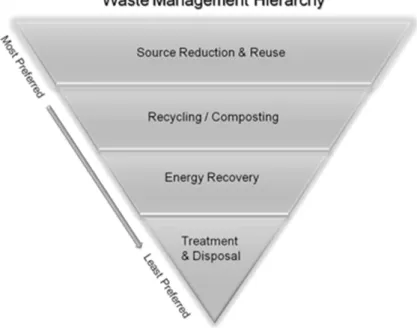
ISWM is the selection and application of appropriate techniques, technologies, and management programs to achieve specific MSWM objectives and goals. Understanding the interrelationships among various activities makes it possible to create an ISWM plan which individual components complement one another. In every MSWM system, waste hierarchies are established to identify key elements of an ISWM plan. The USEPA established waste hierarchy which has been widely accepted by industrialized countries (USEPA, 2013). As shown in Figure