such as heart failure and renal dysfunction. The popu
lation of elderly people is generally increasing and these cardiovascular disorders greatly impairs the activity and life prognosis of elderly subjects. There
fore, it is obviously important to control the blood pressure in optimal range and prevent the occurrence of cardiovascular organ damages, considering that hypertension is the most prevalent lifestyle-related disease.
Among the classes of antihypertensive drugs, angio
tensin II receptor blockers(ARB)are widely used because ARB rarely cause adverse side effects and the inhibition of renin-angiotensin-aldosterone(RAA)
INTRODUCTION
The progression of arteriosclerosis is facilitated by high blood pressure, which increases the incidence of cardiovascular diseases such as stroke and coronary heart disease. Hypertension is also a major risk factor for the development of cardiovascular organ damages
Original
Comparison between High-dose Telmisartan and Fixed dose Combination of Telmisartan and Hydrochlorothiazide in Patients with Hypertension
Yoshiki Murayama, Toshihiko Ishimitsu, Masahito Furuichi, Yasuhiko Ueno, Hiroshi Satonaka
Department of Cardiology and Nephrology, Dokkyo Medical University, Mibu, Tochigi, Japan
SUMMARY
We compared treatment with a high-dose angiotensin II receptor blocker(ARB)and combination of ARB with a thiazide diuretic in 17 patients with hypertension. A randomized crossover study was per
formed giving 80 mg telmisartan or fixed-dose combination of 40 mg telmisartan and 12.5 mg hydrochloro
thiazide for 16 weeks each. Although the clinic blood pressure was comparable between the high-dose ARB period(134/81 mmHg)and the combination period(134/82 mmHg), the morning home blood pres
sure was lower in the combination period than in the high-dose ARB period(138/82 vs. 151/88 mmHg, p
=0.026/0.013). No significant difference was observed in urinary albumin excretion, but estimated glomer
ular filtration rate was lower in the combination than in the high-dose ARB period(58.9 vs. 62.1 mL/
min/1.73 m2, p=0.039). Serum uric acid was higher in the combination than in the high-dose ARB period
(6.7 vs. 5.9 mg/dL p=0.022). The indices of glucose metabolism, serum lipids, oxidative stress, inflamma
tion and adipocytokine did not significantly differ between the two periods. There was no significant differ
ence in the measurement of endothelium-dependent vasodilation between the two periods. It is suggested that the addition of thiazide diuretic to medium-dose ARB is more effective in lengthening the hypotensive effect than high-dose ARB, however, care should be taken for the elevation of serum uric acid and the decrease in renal function.
Key words:angiotensin II receptor blocker, diuretic, uric acid, fixed-dose combination, hypertension
Received April 15, 2016;accepted May 2, 2016 Reprint requests to:Toshihiko Ishimitsu, M.D.
Department of Cardiology and Nephrology, Dokkyo Medical University, Mibu, Tochigi 321-0293, Japan.
system is supposedly protective against the develop
ment of cardiovascular tissue and organ injuries1,2). However, the hypotensive effects of renin-angiotensin system inhibitors(RASI)such as angiotensin-convert
ing enzyme(ACE)inhibitors and ARB depend on the intrinsic activity of RAA system to a greater or lesser extent, and the usual dose of ARB alone often fails to achieve the desired blood pressure level. The next step to further lower blood pressure is to increase the dose of ARB or to add another class of antihyperten
sive drug. The protective effects on the cardiovascular system are expectedly enhanced by high-dose RASI and the addition of diuretics is expected to synergisti
cally enhance the hypotensive effects of RASI3〜5). In the present study, the therapeutic effects of high-dose ARB, 80 mg telmisartan, and fixed dose combination of 40 mg telmisartan with a diuretic, 12.5 mg hydrochlorothiazide are compared in patients with essential hypertension.
METHODS
The subjects enrolled in this study were 17 hyper
tensive patients being treated with medium-dose ARB(losartan 50 mg, candesartan 8 mg, valsartan 80 mg, telmisartan 40 mg, olmesartan 20 mg, irbesar
tan 100 mg)and the systolic blood pressure(SBP)
and/or the diastolic blood pressure(DBP)did not reach the target levels;<130/80 mmHg for two dia
betic patients, four patients with chronic glomerulone
phritis showing proteinuria, and<140/90 mmHg for the other 11 patients. Patients whose serum creatinine was 2.0 mg/dL or higher were not included because thiazide diuretics are contraindicated. We also exclud
ed patients with severe hypertension exceeding 180/110 mmHg or secondary causes of hypertension other than stage 1-3 chronic kidney disease. The background characteristics of study subjects are shown in Table 1. Six patients were concomitantly given calcium channel blockers(CCB)and two diabet
ic patients were given antidiabetic drugs such as bigu
anides(n=2)and a-glucosidase inhibitors(n=1). In addition, lipid-lowering drugs(statins)and antihyper
uricemic drugs(allopurinaol)were given for six and four patients, respectively. The doses of these drugs were unchanged throughout the study periods.
The patients were given 80 mg(high dose)telmis
artan or a fixed-dose combination product of 40 mg
(medium dose)telmisartan and 12.5 mg hydrochloro
thiazide once daily after breakfast for 16 weeks each, according to a randomized crossover design. The sequence of treatment periods with high-dose ARB and combination therapy was randomized. Office blood pressure was measured with a sphygmomanom
eter in the sitting position after resting for at least 20 min at each visit every 4 weeks. Home blood pres
sure was measured consecutively for 7 days before each visit using an arm-cuff oscillometric automatic manometer within 1 hour of awakening(before drug administration)as morning blood pressure and before going to bed as evening blood pressure, and the mean values were obtained. The type of manometer was not specified if an arm-cuff was equipped. Home blood pressure values were recorded to a notebook by the patient and the data were collected at each visit.
After overnight fasting blood samples were collect
ed at rest in the sitting position for more than 20 min
utes on the final day of each treatment period. In addition to the routine blood chemistry and blood cell counts, plasma high-sensitivity C-reactive protein
(HSCRP), a marker of inflammation, was measured by a highly sensitive sandwich ELISA. The plasma levels of malondialdehyde-modified low-density lipo
protein(MDA-LDL), a marker of oxidative stress, and total adiponectin were also measured by respec
tive ELISA system. The estimated glomerular filtra
Table 1 Baseline characteristics of the study subjects
Age, years 65.4±10.1
Gender, male/female 6/11
Body mass index, kg/m2 26.4±4.8 Systolic blood pressure, mmHg 146.1±7.6 Diastolic blood pressure, mmHg 88.1±8.2
Heart rate, bpm 69.6±10.0
Duration of hypertension, years 19.4±8.3
Smoking, +/past/− 4/4/9
Habitual alcohol intake, +/− 7/10 Complications
Chronic glomerulonephritis 4
Diabetes mellitus 2
Dyslipidemia 7
Hyperuricemia 4
Cardiovascular disease 1
Data are the mean±SD.
tion rate(eGFR)was calculated from the serum creat
inine level and age by the following equation6):eGFR
=194×Age−0.287×sCr−1.094(×0.739 for females).
Casual urine samples were collected on the final day of each treatment period. Urinary albumin was mea
sured by an immunoturbidimetric method and cor
rected using the urinary creatinine level.
Reactive hyperemia index(RHI), an index of endo
thelial function, and augmentation index(AI), an index of arterial stiffness, were measured using the EndoPAT 2000 device(Itamar Medical, Israel)7,8). Measurements were performed by the manufacturer’s instruction. Briefly, after longer than 15 minutes of supine rest in a quiet and temperature-controlled
(21-24℃)room, beat-to-beat plethysmographic arte
rial pulse wave amplitude of the middle finger of both hands were simultaneously recorded using inflatable latex air cuffs. The measurement protocol consists of 3 consecutive recordings of 5 minutes each. After a 5 minutes of baseline recording, the blood pressure cuff on one arm was inflated to 60 mmHg above the baseline systolic blood pressure for 5 minutes. Then, the arm cuff was deflated and another 5-minute recording was performed. RHI and AI were calculated using a computerized automated algorithm. RHI is the difference between the post-occlusion and pre-occlu
sion amplitude on the arm with occlusion divided by the same measurement on the control arm.
The study protocol was in accordance with the rec
ommendations of the World Medical Association for biomedical research involving human subjects and was approved by the institutional review board.
Informed consent was obtained from all subjects after explaining the study objective and design.
Clinical data were expressed as means±standard deviations(SD). Values between the 2 periods were
compared by paired t-test, however, Wilcoxon signed- rank test was applied for the data with skewed distri
bution. A P value of less than 0.05 was considered to be statistically significant.
RESULTS
All the 17 patients showed good adherence to the therapy and fulfilled the whole study periods. Table 2 shows the office blood pressure and heart rate at the ends of high-dose ARB and fixed-dose combination therapy periods. Body weight was significantly lower in the high-dose ARB period than in the combination period. There were no significant differences in the office SBP, DBP or heart rate between the two treat
ment periods. However, as shown in Table 3, home SBP and DBP in the morning and evening were sig
nificantly lower in the combination therapy period than in the high-dose ARB period, while the heart rate did not significantly differ between the two peri
ods.
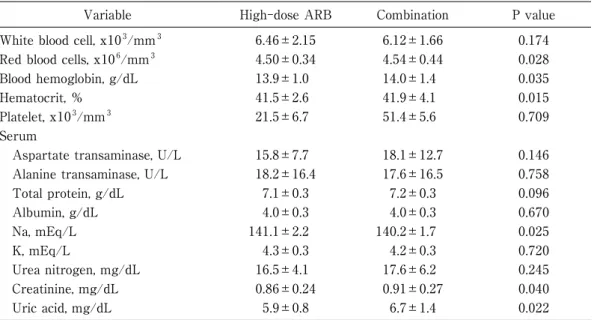
Table 4 shows the data of routine blood cell counts and blood chemistry at the end of each treatment period. The blood hemoglobin concentration and hematocrit were slightly but significantly lower in the combination period than in the high-dose ARB period.
Among the blood chemistry data, the serum levels of creatinine and uric acid were significantly higher in the combination period than in the high-dose ARB period. As for the serum electrolytes, serum sodium was significantly lower in the combination period than in the high-dose ARB period, although the serum potassium levels were not significantly different between the two periods. Blood glucose, serum insulin and serum lipids were shown in Table 5. These parameters of glucose and lipid metabolisms were not significantly different between the two treatment peri
Table 2 Office blood pressure, heart rate and body weight at the ends of high-dose ARB and fixed-dose combination therapy periods.
Variable High-dose ARB Combination P value
SBP, mmHg 134.2±10.9 133.9±13.5 0.927
DBP, mmHg 81.0±8.8 82.2±9.3 0.529
Heart rate, bpm 71.3±10.6 70.6±10.7 0.662
Body weight, kg 64.7±12.4 64.1±12.3 0.033
Data are the mean±SD. ARB:angiotensin II receptor blocker, SBP:systolic blood pressure, DBP:diastolic blood pressure.
Table 3 Averaged home blood pressure and heart rate in the last weeks of high- dose ARB and fixed-dose combination therapy periods.
Variable High-dose ARB Combination P value
Morning
SBP, mmHg 151.2±19.9 138.7±14.5 0.026
DBP, mmHg 88.5±11.2 82.6±6.4 0.013
Heart rate, bpm 70.6±11.7 70.2±11.0 0.789
Evening
SBP, mmHg 141.9±19.2 131.8±14.6 0.043
DBP, mmHg 82.8±14.0 76.9±76.0 0.017
Heart rate, bpm 71.4±8.5 71.7±10.5 0.863 Data are the mean±SD. ARB:angiotensin II receptor blocker, SBP:systolic blood pressure, DBP:diastolic blood pressure.
Table 4 Laboratory data at the ends of high-dose ARB and fixed-dose combination therapy periods.
Variable High-dose ARB Combination P value
White blood cell, x103/mm3 6.46±2.15 6.12±1.66 0.174
Red blood cells, x106/mm3 4.50±0.34 4.54±0.44 0.028
Blood hemoglobin, g/dL 13.9±1.0 14.0±1.4 0.035
Hematocrit, % 41.5±2.6 41.9±4.1 0.015
Platelet, x103/mm3 21.5±6.7 51.4±5.6 0.709
Serum
Aspartate transaminase, U/L 15.8±7.7 18.1±12.7 0.146
Alanine transaminase, U/L 18.2±16.4 17.6±16.5 0.758
Total protein, g/dL 7.1±0.3 7.2±0.3 0.096
Albumin, g/dL 4.0±0.3 4.0±0.3 0.670
Na, mEq/L 141.1±2.2 140.2±1.7 0.025
K, mEq/L 4.3±0.3 4.2±0.3 0.720
Urea nitrogen, mg/dL 16.5±4.1 17.6±6.2 0.245
Creatinine, mg/dL 0.86±0.24 0.91±0.27 0.040
Uric acid, mg/dL 5.9±0.8 6.7±1.4 0.022
Data are the mean±SD. ARB:angiotensin II receptor blocker.
Table 5 Indices of glucose metabolism and serum lipids at the ends of high-dose ARB and fixed-dose combination therapy periods.
Variable High-dose ARB Combination P value
Blood gluocose, mg/dL 106±17 107±21 0.753
Hemoglobin A1c, % 5.7±0.8 5.9±0.9 0.147
Serum
Insulin, mU/L 14.4±11.1 12.9±12.4 0.410
HDL-cholesterol, mg/dL 56±12 56±14 0.948
LDL-cholesterol, mg/dL 125±36 129±39 0.591
Triglycerides, mg/dL 139±73 136±90 0.876
Data are the mean±SD. ARB:angiotensin II receptor blocker, HDL:high-density lipoprotein, LDL:low-density lipoprotein.
dependent vasodilation, and AI, an index of arterial stiffness, measured at the end of each treatment peri
od. Either the values of RHI or AI were not signifi
cantly different between the two periods.
DISCUSSION
The blood pressure level of 140/90 mmHg or higher is generally recognized as hypertension and the latest versions of guidelines for the management of hyper
tension recommend the target blood pressure lower than this9〜11). However, there is not an apparent threshold level from which higher blood pressure is associated with the increase in cardiovascular diseas
es. Meta-analysis of prospective observational studies have indicated that there is a linear relationship between blood pressure and the risk of cardiovascular diseases such as stroke and myocardial infarction12). ods.
The left panel of Figure 1 shows plasma HSCRP and the middle panel shows plasma MDA-HDL.
These markers of inflammation and oxidative stress did not significantly differ between the high-dose ARB and the combination periods. Regarding adipo
nectin, a beneficial cytokine produced by adipocytes, the plasma levels were not significantly different between the two periods as shown in the right panel of Figure 1.
The eGFR and the urinary albumin excretion of the study subjects at the end of each treatment period were depicted in Figure 2. While the eGFR slightly reduced during the combination period, the urinary albumin excretion did not significantly differ in the high-dose ARB and the combination periods.
Figure 3 presents RHI, an index of endothelium-
Figure 1 Plasma levels of high-sensitivity C-reactive protein(HSCRP, left panel), malondialdehyde- modified low-density lipoprotein(MDA-LDL, middle panel), and total adiponectin(right panel)at the ends of high-dose ARB and fixed-dose combination therapy periods. Data are mean±SD. ARB:angiotensin II receptor blocker.
Figure 2 Estimated glomerular filtration rate(eGFR, left panel)and urinary albumin excretion(right panel)at the ends of high-dose ARB and fixed-dose combination therapy periods. Data are mean±SD. ARB:angiotensin II receptor blocker.
long plasma half-life as compared with other ARB clinically used, the duration of hypotensive effect by high-dose telmisartan may not be sufficient to cover 24 hours.
Even if the office blood pressure is controlled in normal range, diurnal blood pressure changes such as morning surge and the lack of nocturnal dipping are known to raise the risk of cardiovascular organ inju
ries. Inappropriate renal excretion of Na is thought to contribute to the non-dipping pattern of blood pres
sure change, and it has been reported that the addi
tion of diuretics reduce the necessity to maintain high blood pressure level to excrete Na during nighttime and change the non-dipper pattern into dipper14). Thus, the hypotensive effect is expectedly lengthened by the combination of RASI and thiazide diuretics.
Among the various components of the RAA system, angiotensin II enhances the production of free radi
cals, promotes cell growth, and increases the synthesis of inflammatory and profibrotic cytokines15,16). In addi
tion, it has been revealed that aldosterone also pro
motes free radical production and endothelial dysfunc
tion, as well as having mitogenic and profibrotic actions17,18). These nonhemodynamic effects of angio
tensin II and aldosterone are deleterious to the cardio
vascular system and cause inflammation, fibrosis, and scarring of various tissues that lead to cardiovascular organ injuries and increase the incidence of cardiovas
cular diseases. Therefore, high-dose RASI are expect
ed to exhibit protective effects against cardiovascular This relationship also exists even in the normal blood
pressure range below 140/90 mmHg down to 115/75 mmHg. Moreover, in the recent Systolic Blood Pres
sure Intervention Trial(SPRINT), the intensive treat
ment hypertensive patients with target SBP less than 120 mmHg showed lower rates of cardiovascular events and death than in the standard treatment group targeted less than 140 mm Hg13). Therefore, stricter target blood pressure level such as 130/85 mmHg may be preferable in order to achieve better prevention of cardiovascular diseases in hypertensive patients. In the real world clinical practice, generally half hypertensive patients under antihypertensive treatment do not achieve even the target blood pres
sure level of 140/90 mmHg and intensification of anti
hypertensive drug therapy such as increasing the dose and combination of multiple agents is needed.
In the present study, therapeutic effects of high- dose ARB and combination therapy with medium- dosed ARB and thiazide diuretic were compared, and office blood pressure was comparably lowered in either treatment period, however, the morning and evening home blood pressure was better lowered by the combination therapy than by the high-dose ARB therapy. Out of office blood pressure values obtained by ambulatory blood pressure monitoring(ABPM)or home blood pressure measurement have been shown to yield better prediction than office blood pressure for the incidence of target organ damages and cardio
vascular diseases. Although telmisartan has relatively
Figure 3 Comparisons of relative hyperemia index(RHI)and augmentation index(AI)
at the ends of high-dose ARB and fixed-dose combination therapy periods.
Data are mean±SD. ARB:angiotensin II receptor blocker.
such as ACE inhibitors and ARB are expected to exhibit protective effects against the development vas
cular injuries by suppressing the actions of angioten
sin II and aldosterone1,2). However, the results of pres
ent study suggest that clinical significance of such vascular effects by telmisartan are not prominent although this drug activates PPAR-g dose-dependent
ly.
Two drugs or more are often required in order to achieve the target blood pressure. The combination of RASI and diuretics is thought to be effective in inten
sifying the hypotensive effects of each other and avoiding the occurrence of adverse effects. The RAA system enhanced by the natriuretic action of diuretics is suppressed by RASI and salt-sensitivity induced by RASI is reduced by diuretics. As for the adverse effects, diuretics and RASI exert opposite influences on the metabolism of K, glucose and lipids thereby canceling the demerits of each other. Conformably in our study, serum K, lipids and glucose metabolism markers were not adversely affected in the combina
tion period as compared with the high-dose ARB period in this study. On the other hand, thiazide diuretics increase serum uric acid, while RASI gener
ally do not affect the serum uric acid level. Among ARB, losartan and irbesartan have been shown to facilitate uric acid excretion by inhibiting URAT-1, an transporter of uric acid reabsorption in the renal tubules and reduce serum uric acid32,33). In the pres
ent study, serum uric acid was significantly higher in the combination period than in the high-dose ARB period. Although telmisartan has been also shown to inhibit URAT-1, the lipophilic property may hamper its penetration to the apical side of renal tubules and inhibition of URAT-1 in vivo.
The protective effects of RASI on cardiovascular system are supposed to grow with increasing dose3,4). Also in the kidney, RASI have shown to reduce pro
teinuria and albuminuria in a dose-dependent man
ner34,35). In the earlier studies examined the renopro
tective effects of antihypertensive therapy combined RASI with diuretics or CCB, the diuretic combination is superior in reducing albuminuria but inferior in pre
serving eGFR as compared to the CCB combina
tion36,37). In the present study compared high-dose ARB and combination of medium-dose ARB with a system in addition to their hypotensive effects. Espe
cially, telmisartan is known to dose-dependently acti
vate peroxisome proliferator-activated receptor-gam
ma( PPAR-g), a transcription factor of nuclear hormone receptor, which has actions such as improv
ing insulin resistance, reducing inflammatory cyto
kines and increasing adiponectin19〜21). Adiponectin produced by adipocytes also has beneficial actions such as inhibiting inflammatory vascular injuries and improving glucose and lipid metabolism22,23). On the contrary, reduction of body fluid volume by diuretics stimulates circulating RAA system factors, such as angiotensin II and aldosterone, which could possibly have an adverse influence on the development of car
diovascular organ damage in hypertensive patients, although the RAA system in cardiovascular tissues may not always show a parallel response to circulat
ing hormone levels. However, in the present study, high-dose telmisartan did not significantly influence the glucose metabolism, serum lipids plasma adiponec
tin and circulating markers of oxidative stress and inflammation as compared with medium-dose. There
fore, the dose-dependent beneficial effects of telmisar
tan may not be apparent in clinical situations.
It is assumed that atherosclerotic lesions in the arterial system are initiated by functional disorder of the vascular endothelium. This causes the reduced capacity to generate nitric oxide(NO)in response to various stimuli resulting in impaired endothelium- dependent vasorelaxation. On the other hand, AI examined in this study reflects functional and struc
tural stiffening of arterial system and increases with the development of arteriosclerosis. The development of endothelial dysfunction and arterial stiffening is contributed by aging, smoking and lifestyle-related diseases such as diabetes, hypertension and dyslipid
emia. In addition to these classical risk factors of ath
erosclerosis, novel factors such as inflammation and oxidative stress are thought to participate in the etiol
ogy and pathogenesis of vascular injuries24〜27). It is recognized that the existence of endothelial dysfunc
tion and arterial stiffening is predictive of the inci
dence of cardiovascular events28〜31). Therefore, it is desirable to consider vascular protection in the treat
ment of hypertensive patients in order to effectively prevent cardiovascular diseases. In this context, RASI
thiazide diuretic, serum creatinine was higher result
ing in lower eGFR in the combination period than in the high-dose ARB period, while the urinary albumin excretion did not significantly differ between the two periods. Thus, when thiazide diuretics are used in antihypertensive treatment, it should be kept in mind for the reduction of renal function as well as for hyperuricemia.
In summary, we compared the therapeutic effects of antihypertensive therapies with high-dose ARB and the fixed-dose combination of medium-dose ARB with a thiazide diuretic in hypertensive patients showing poor blood pressure control by medium-dose ARB. It is suggested that the combination therapy is superior to the high-dose ARB in controlling blood pressure over 24 hours, however, care should be taken for the increase in serum uric acid the reduction of renal function.
REFERENCES
1) Maggioni AP:Efficacy of Angiotensin receptor blockers in cardiovascular disease. Cardiovasc Drugs Ther 20:295-308, 2006.
2) Ibrahim MM:RAS inhibition in hypertension. J Hum Hypertens 20:101-108, 2006.
3) Packer M, Poole-Wilson PA, et al:Comparative effects of low and high doses of the angiotensin- converting enzyme inhibitor, lisinopril, on morbidity and mortality in chronic heart failure. ATLAS Study Group. Circulation 100:2312-2318, 1999.
4) Konstam MA, Neaton JD, Dickstein K, et al:Effects of high-dose versus low-dose losartan on clinical outcomes in patients with heart failure(HEAAL study):a randomised, double-blind trial. Lancet 374:1840-1848, 2009.
5) Townsend RR, Holland OB:Combination of conver
ting enzyme inhibitor with diuretic for the treatment of hypertension. Arch Intern Med 150:1175-1183, 1990.
6) Matsuo S, Imai E, Horio M, et al:Revised equations for estimated GFR from serum creatinine in Japan.
Am J Kidney Dis 53:982-992, 2009.
7) Faizi AK, Kornmo DW, Agewall S:Evaluation of endothelial function using finger plethysmography.
Clin Physiol Funct Imaging 29:372-375, 2009.
8) Ishimitsu T, Ohno E, Ueno Y, et al:Effects of
atorvastatin and ezetimibe on endothelial function in dyslipidemic patients with chronic kidney disease.
Clin Exp Nephrol 18:704-710, 2014.
9) Mancia G, Fagard R, Narkiewicz K, et al:2013 ESH/
ESC Guidelines for the management of arterial hypertension:the Task Force for the management of arterial hypertension of the European Society of Hypertension(ESH)and of the European Society of Cardiology(ESC). J Hypertens 231:1281-1357, 2013.
10) James PA, Oparil S, Carter BL, et al:2014 evidence- based guideline for the management of high blood pressure in adults:report from the panel members appointed to the Eighth Joint National Committee
(JNC 8). JAMA 311:507-520, 2014.
11) Japanese Society of Hypertension Committee for Guidelines for the Management of Hypertension:
The Japanese Society of Hypertension Guidelines for the Management of Hypertension( JSH 2 0 1 4).
Hypertens Res 37:253-390, 2014.
12) Lewington S, Clarke R, Qizilbash N, et al:Age- specific relevance of usual blood pressure to vascular mortality:a meta-analysis of individual data for one million adults in 61 prospective studies. Lancet 360:
1903-1913, 2002.
13) SPRINT Research Group:A Randomized Trial of Intensive versus Standard Blood-Pressure Control. N Engl J Med 373:2103-2116, 2015.
14) Uzu T, Kimura G:Diuretics shift circadian rhythm of blood pressure from nondipper to dipper in essential hypertension. Circulation 100:1635-1638, 1999.
15) Struthers AD, MacDonald TM:Review of aldosterone- and angiotensin II-induced target organ damage and prevention. Cardiovasc Res 61:663-670, 2004.
16) Schmieder RE, Hilgers KF, Schlaich MP, Schmidt BM. Renin-angiotensin system and cardiovascular risk. Lancet 369:1208-219, 2007.
17) Hostetter TH, Ibrahim HN. Aldosterone in chronic kidney and cardiac disease. J Am Soc Nephrol 14:
2395-2401, 2003.
18) Marney AM, Brown NJ. Aldosterone and end-organ damage. Clin Sci 113:267-278, 2007.
19) Benson SC, Pershadsingh HA, Ho CI, et al:Identifi
cation of telmisartan as a unique angiotensin II receptor antagonist with selective PPARgamma-
modulating activity. Hypertension 243:993-1002, 2004.
20) Schupp M, Janke J, Clasen R, et al:Angiotensin type 1 receptor blockers induce peroxisome proliferator- activated receptor-gamma activity. Circulation 109:
2054-2057, 2004.
21) Tyagi S, Gupta P, Saini AS, et al:The peroxisome proliferator-activated receptor:A family of nuclear receptors role in various diseases. J Adv Pharm Technol Res 2:236-240, 2011.
22) Goldstein BJ, Scalia RG, Ma XL:Protective vascular and myocardial effects of adiponectin. Nat Clin Pract Cardiovasc Med 2009 6:27-35, 2009.
23) Shibata R, Ouchi N, Murohara T:Adiponectin and cardiovascular disease. Circ J 73:608-614, 2009.
24) Ross R:Atherosclerosis--an inflammatory disease. N Engl J Med 340:115-126, 1999.
25) Hage FG, Szalai AJ:C-reactive protein gene polymorphisms, C-reactive protein blood levels, and cardiovascular disease risk. J Am Coll Cardiol 50:
1115-1122, 2007.
26) Steinberg D, Parthasarathy S, Carew TE, et al:
Beyond cholesterol. Modifications of low-density lipoprotein that increase its atherogenicity. N Engl J Med 320:915-924, 1989.
27) Role of oxidized low density lipoprotein in atherogenesis. J Clin Invest 88:1785-1792, 1991.
28) Widlansky ME, Gokce N, Keaney JF Jr, et al:The clinical implications of endothelial dysfunction. J Am Coll Cardiol 42:1149-1160, 2003.
29) Shechter M, Shechter A, Koren-Morag N, et al:
Usefulness of brachial artery flow-mediated dilation to predict long-term cardiovascular events in subjects without heart disease. Am J Cardiol 113:
162-167, 2014.
30) Zoungas S, Asmar RP:Arterial stiffness and cardiovascular outcome. Clin Exp Pharmacol Physiol 34:647-651, 2007.
31) London GM, Marchais SJ, Guerin AP, et al:Arterial stiffness:pathophysiology and clinical impact. Clin Exp Hypertens 26:689-699, 2004.
32) Burnier M, Roch-Ramel F, Brunner HR:Renal effects of angiotensin II receptor blockade in normotensive subjects. Kidney Int 49:1787-1790, 1996.
33) Nakamura M, Anzai N, Jutabha P, et al:Concent
ration-dependent inhibitory effect of irbesartan on renal uric acid transporters. J Pharmacol Sci 114:
115-118, 2010.
34) Weinberg AJ, Zappe DH, Ashton M, et al:Safety and tolerability of high-dose angiotensin receptor blocker therapy in patients with chronic kidney disease:a pilot study. Am J Nephrol 24:340-345, 2004.
35) INNOVATION Study Group:Prevention of transition from incipient to overt nephropathy with telmisartan in patients with type 2 diabetes. Diabetes Care 30:1577-1578, 2007.
36) Bakris GL, Toto RD, McCullough PA, et al:Effects of different ACE inhibitor combinations on albuminuria:results of the GUARD study. Kidney Int 73:1303-1309, 2008.
37) Bakris GL, Sarafidis PA, Weir MR, et al:Renal outcomes with different fixed-dose combination therapies in patients with hypertension at high risk for cardiovascular events( ACCOMPLISH):a prespecified secondary analysis of a randomised controlled trial. Lancet 375:1173-1181, 2010.