Statistical evaluation of cleaning processes in food and pharmaceutical manufacturing using process capability index
2 ... 4 ... 4 ... 4 ... 4 ... 5 ... 7 ... 9 ... 9 ... 9 ... 12 ... 14 ... 15 ... 15 ... 15 ... 16 ... 17 ... 18 ... 19 ... 20 ... 20 ... 20 ... 24 ... 24 ... 27 ... 28 ... 29 ... 29 ... 30 ... 31 ... 34 ... 34 ... 38
3 ... 39 ... 40 ... 40 ... 41 NOMENCLATURE ... 45 ... 46 URL ... 50
6
8
10
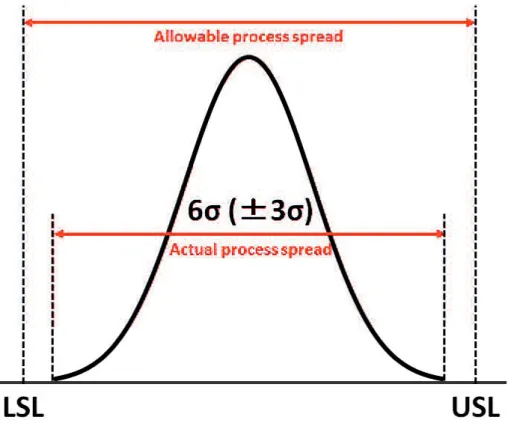
Figure 2 1: Comparison of actual process spread to allowable process
spread
Table 2 1: Acceptance value of process capability
Process capability Defect rate Acceptance
0.33 (1 /3 ) 31.7% Not capable 0.67 (2 /3 ) 4.5% Not capable 1.00 (3 /3 ) 0.27% Not capable 1.33 (4 /3 ) 0.0063% Capable 1.67 (5 /3 ) 0.000057% Capable 2.00 (6 /3 ) 0.0000002% Capable
(Equation 2 1)
11 When upper and lower specification limits exist
When upper specification limit exists
When lower specification limit exists
(Equation 2 2)
(Equation 2 3)
12
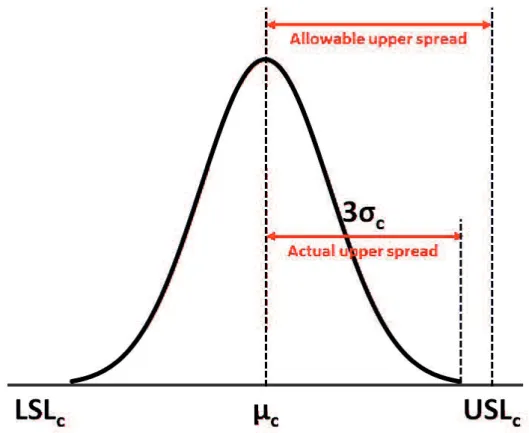
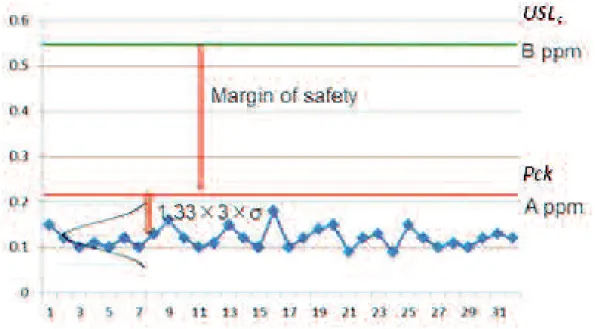
Figure 2 2: Comparison of the spread of cleaning process data to the
spread of the specification limit for cleaning process data
Cpu for cleaning process
13
Cleaning performance value based on actual cleaning results of manufacturing facility
14
17
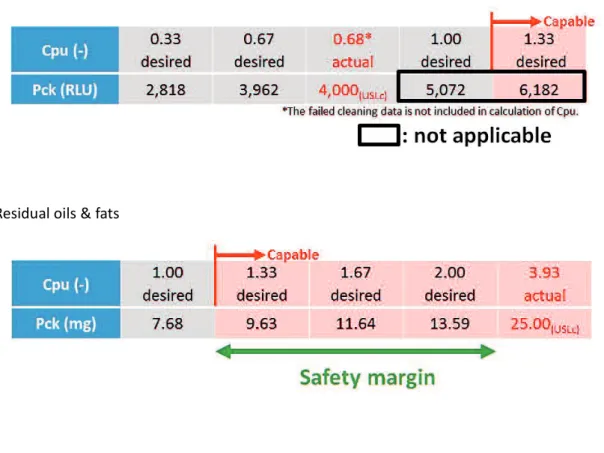
Table 3 1: Result of an evaluation of ATP testing and residual oils & fats
based on cleaning data
ATP testing
18
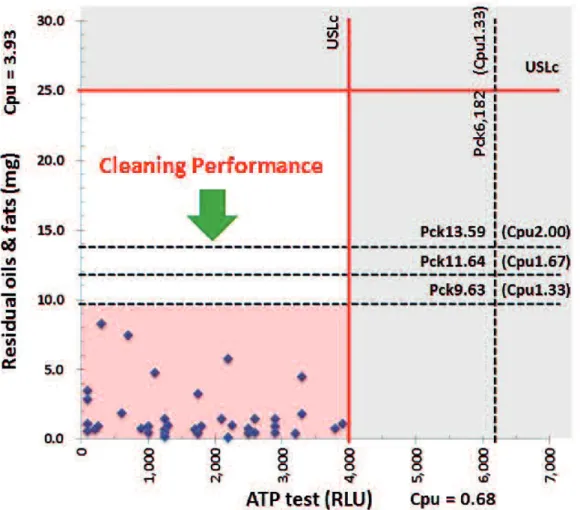
Figure 3 1: Cleaning limit and cleaning performance value of residual
oils & fats based on Desired Cpu
23
26
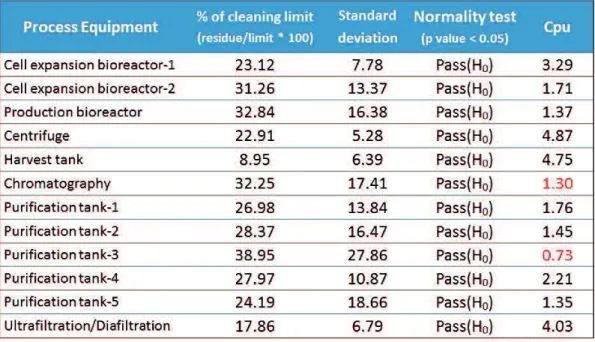
Table 4 1: Process capability (upper limit) (Cpu) from product cleaning
data based on process equipment
27
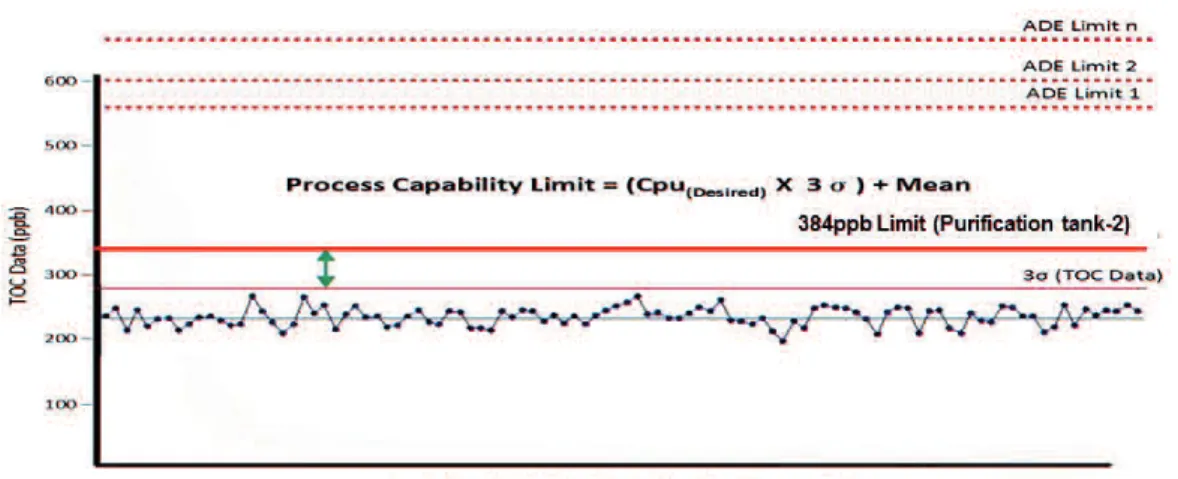
Table 4 2: Process capability limits for total organic carbon (ppb) for
process equipment based on desired process capability index (Cpu)
28
Figure 4 2: Process capability limit and acceptable daily exposure
(ADE) based limits
31
Maximum antibody residue = Maximum antibody Production per liter of culture
x Maximum culture volume
x Maximum residue rate
(Equation 5 1)
Maximum antibody residue = 3g/L x 2,000L x 10% = 600g
32
Monoclonal antibody (mAb) Formulation Buffer (FB): 50 mM histidine 6% sucrose 0.1% polysorbate 80(pH 5.9) 1N Sodium hydroxide solution 1N Hydrochloric acid
NuPAGE LDS Sample Buffer (4x) NuPAGE MES SDS Running Buffer (20x) Marker12 unstained Standard NuPAGE 4 12% Bis Tris Gel 1.0x10well NuPAGE Sample Reducing Agent (10x) Ethanol(HPLC: high performance liquid chromatography) Acetic acid
Amine Coupling Kit Biacore Maintenance Kit type2 HBS EP+ X10 Buffer Glycine 2.0 Acetate 5.0 NaOH 50 Human recombinant
33
Table 5 1: List of samples prepared
Sample name Sample Reagent A Autoclaving Reagent B Note*3 Blank FB*2 0.5N NaOH Yes 0.5N HCl
mAb intact mAb No No No Untreated
mAb control mAb DDW*1 No DDW*1
mAb Caustic/autoclave mAb 0.5N NaOH
Yes 0.5N HCl NaOH treatment (8 h) and autoclave 15 min
mAb Caustic only (8 h) mAb 0.5N NaOH
No 0.5N HCl NaOH treatment (8 h)
*1: Sterilized water/Deionized distilled water (DDW) *2: Formulation Buffer (FB)
*3: "h" is an abbreviation for hours, "min" is an abbreviations for minutes in this table.
(1) Add 1mL of Reagent A (0.5N NaOH or DDW according to Table 5 1) to each samples (mAb or FB) in order to simulate CIP or CI.
(2) Heat treat with autoclave (121°C, 30 minutes at 15 psi.) to simulate SIP, only for the corresponding samples.
(3) Add 1 mL of Reagent B to neutralize alkali. (0.5N HCl or DDW according to Table 5 1) (4) Add DDW to adjust the mAb concentration to around but less than 12g/L.
35
Lanes 1: Marker; 2: Blank (NR); 3: Blank (R); 4: mAb intact (NR); 5: mAb intact (R); 6: mAb control (NR); 7: mAb control (R); 8: mAb alkali/heat treated (NR); 9: mAb alkali/heat treated (R); 10: Marker. (R): Reduction condition, (NR): Non reduction condition
36
Lanes 1: Marker; 2: Blank (NR); 3: Blank (R); 4: mAb intact (NR); 5: mAb intact (R); 6:
mAb alkali treated (NR); 7: mAb alkali treated (R); 8: Blank (NR); 9: Blank (R); 10: Marker. (R): Reduction condition, (NR): Non reduction condition.
38 : Non degraded, : NA degraded.
Figure 5 3: Binding affinity analysis of monoclonal antibodies using
BIACORE
42
43
45
NOMENCLATURE
Cp : process capability
Cpk : process capability index
Cpu : upper process capability index
Cpl : lower process capability index
USL : upper specification limit
LSL : lower specification limit
: standard deviation
: mean value
USLc : upper specification limit of cleaning process
c : standard deviation of cleaning process
c : mean value of cleaning process
PcK : cleaning performance value
Cpu(desired) : desired upper process capability index
(accumulated) : standard deviation based on actual results of manufacturing facility
46
[1] Y. Hironaka, "2 times productivity of food factories (Syokuhin Kouzyou No Seisansei 2 Bai)", Nikkan Kogyo Shimbun, Tokyo, 12 40 (2016)
[2] T. Yano; "practice!! Hazard management of food factories (Jistusen!! Syokuhinkouzyou No Hazard Kanri)", Saiwai Shobo, Tokyo, 1 6, 129 141 (2011)
[3] S. Tanaka, "Business Model of Food Manufacturers to Survive in The Octuple Whammy Era (in Japanese), Mizuho Industry Focus, 127, 2 37 (2013)
[4] M. Treacy, F. Wiersema," The Discipline of Market Leaders (No. 1 Kigyou No Housoku)", Nikkei Publishing, Tokyo, 54 81 (2003)
[5] Y. Hironaka, "The Actual Circumstances of Food Industries in Japan Observed through Total Factor Productivity (in Japanese), Japan J. Jpn. Soc. Prod. Manage., 15, 99 104 (2008)
[6] L. Yan, "The Role of Management Control in Balancing between Quality Management and Cost Reduction" (in Japanese). Melco J. Manage. Account. Res., 5, 31 44 (2012) [7] T. Fujimoto, "Successful product development (Seikousuru Seihinkaihatsu)", Yuhikaku,
Tokyo, 105 128 (2000)
[8] H. Sugiyama," Business model of continuous improvement in pharmaceutical production processes", the 23rd European symposium on computer aided process engineering, (2013)
[9] DaimlerChrysler Corporation, Ford Motor Company, General Motors Corporation, "Production Part Aroval Process" 4th Edition", Automotive Industry Action Group, 7 9 (2006)
[10] M. Numama, M. Miyazaki, K. Umehara, H. Kurata; "Method of Monitoring Washing Efficacy for Sanitation Control. Sanitation Degree Index as a Process Control Method Sanitation Degree Index as a Process Control Method" (in Japanese), Japan J. Food Microbiol., 13, 173 177 (1997)
[11] K. Nakanishi, " Fundamental Studies on the Adhesion of Proteinaceous Residues on the Surface and Its Cleaning in Food Processing " (in Japanese), Jpn. J. Food Eng., 7, 1 13 (2006)
[12] S. Kawasaki; "Microbial detection technology food manufacturing" (in Japanese). Jpn. J. Food Eng., FOOMA JAPAN, 5 6 (2018)
47
[13] Jpn. J. Food Eng.; " Food Engineering Handbook (Syokuhinkougaku Handbook)", Asakura Publishing, Tokyo, 372 383 (2006)
[14] Y. Hanyu; " Investigation of Hygiene Management Methods on a Food Manufacturing Site and Development of Cleaning Level Judgment Technique " (in Japanese), Japan J. Tohoku Agri. Res., 63, 185 186 (2010).
[15] T. Morita, H. Kitazawa, T. Iida, S. Kamata; " Examination about survival of Salmonella in the environment of an oil meal manufacturing plant" (in Japanese), Jpn. J. Anim. Hyg., 30, 75 83 (2004).
[16] N. Kokubun, K. Kunitake T. Okushiba, J. Matsuura, H. Murakami, T. Morita, K. Okabe, K. Nakajima, N. Ishizaki, C. Dogasaki, " Optimization of Evaluation Method for Hand Washing and Hand Washing Method in the Meat Processing Plant" (in Japanese), J. Japan J. Food Microbiol., 31, 100 107 (2014)
[17] International Conference on Harmonization of Technical Requirements for Registration of Pharmaceuticals for Human Use, Quality Guidelines: Q8 Pharmaceutical
Development, August (2009)
[18] International Conference on Harmonization of Technical Requirements for Registration of Pharmaceuticals for Human Use, Quality Guidelines: Q9 Quality Risk Management, November (2005)
[19] International Conference on Harmonization of Technical Requirements for Registration of Pharmaceuticals for Human Use, Quality Guidelines: Q10 Pharmaceutical Quality System, June (2008)
[20] ISPE Baseline Guide: Risk Based Manufacture of Pharmaceutical Products (Risk MaPP), International Society for Pharmaceutical Engineering (ISPE), First Edition, September (2010)
[21] A. Walsh, Cleaning Validation for Biologics "Can Alternative Aroaches to the
Permitted/Acceptable Daily Exposure be Justified?", Biopharm International, 2, 14 18 (2015)
[22] Sei Murakami, Haruo Suzuki, Keisuke Shibuya, " Advances in Biopharmaceutical and Vaccine Manufacturing Plants", Hitachi Hyoron, 2012 12, 36 39 (2012)
[23] Yoshihiro Kaneko, "Issues and deployment goals cell culture technology for monoclonal antibody production", Japan J. Jpn. Soc. Biotechnology , Vol.91 No.9, 511 513 (2103)
48
[24] Japan Ministry of Health, Labour and Welfare, "Guidelines on evaluation of monoclonal antibodies", Issue No. 1214 (2014)
[25] The Bio Virus Safety Committee of Japan PDA, "Biologics handbook for manufacturing and quality control, Jiho, 29 40 (2016)
[26] Kenji Omasa, "Cytoarchitecture, cell culture and downstream process in Monoclonal antibody production", CMC Publishing, 155 167 (2015)
[27] Koichi Kamekura, Takato Mizunuma, Naoki Yumiza, Kazuo Sugaya, Biopharmaceutical manufacturing facility, IHI engineering review, Vol.49 No.2, 67 73 (2009)
[28] Tetsuo Sato, "Virus and Prion Removal Filter Planova", Japan J. Jpn. Soc. Polymer Science , Vol.56 No.9, 767 (2007)
[29] ISPE Guide: Biopharmaceutical Process Development and Manufacturing , 103 116, October (2013)
[30] Guideline on Setting Health Based Exposure Limits for Use in Risk Identification in the Manufacture of Different Medicinal Products in Shared Facilities, European Medicines Agency, November (2014)
[31] P. Price, G. Wiltshire, "Modeling the chronic non cancer effects of mixtures of migrants using Cramer classes and quantitative models of uncertainty", Food Addit Contam Part A Chem Anal Control Expo Risk Assess, December (2009)
[32] K. Kendrick, M. Kreuze, A. Canhoto, "Analysis of Degradation Properties of
Biopharmaceutical Active Ingredients as Caused by Various Process Cleaning Agents and Temperature" Journal of Validation Technology Summer (2009)
[33] J. Wenchang, Q. Wei, R. Nitin, C. Cylia, "Bench Scale Characterization of Cleaning Process Design Space for Biopharmaceuticals", Biopharm International, March (2009) [34] X. Wang, T. Kaminagayoshi, T. Doi, K. Takenaka, Y. Miko, O. Shirokizawa, A. Walsh,
"Development of a Technique for Quantifying Protein Degradation", Biopharm International, Vol. 29, Issue 11, 38 44, 53 (2017)
[35] T. Kaminagayoshi, K. Takenaka, T. Doi, S. Omori, M. Sadamitsu, S. Tsuji, Y. Miko, O. Shirokizawa, A. Walsh, " The Statistical Evaluation of Cleaning Processes Using Process Capability and its Application to New Product Introduction", Pharmaceutical
Technology, Vol. 42, Issue 5, 48 51, 64 (2018)
49
Hinshitsukanri)", Nikkan Kogyo Shimbun, Tokyo, 9 14 (2012)
[37] Japan Food Hygiene Association; "Guidelines for Creating A Food Safety HACCP Program (Syokuhin No Anzen Wo Tsukuru HACCP)", Japan Food Hygiene Association, Tokyo, 12 19 (2013)
[38] A. Yamada, K. Hisa, M. Fukuoka, T. Hagiwara, T. Sakiyama, H. Watanabe; "Study on Problems of HACCP at Food Kitchen Manufacturing a Wide Variety of Products in Small Quantities" (in Japanese), Jpn. J. Food Eng., 8, 59 71 (2007).
[39] T. Kaminagayoshi, S. Haruyama, "Quality Based Approach for Efficient Biologics Manufacturing", Int. J. Industrial Eng., 10, 852 856 (2016).
[40] Japan Pharmaceutical Manufacturers Association; "Text Book 2016 2017", Japan Pharmaceutical Information Center, Tokyo, 6 15 (2016)
[41] T. Fujimoto, "Successful product development (Seikousuru Seihinkaihatsu)", Yuhikaku, Tokyo, 151 168 (2000)
[42] T. Fujimoto, " Japanese style process industries (Nihongata process industries)", Yuhikaku, Tokyo, 110 134 (2009)
50
i) http://www.maff.go.jp/j/tokei/sihyo/data/03.html/ (Apr. 24, 2018)
ii) http://www.maff.go.jp/j/zyukyu/jki/j_doutai/doutai_top.html/ (Apr. 24, 2018) iii) http://www.shokusan.or.jp/sys/upload/116pdf2.pdf/ (Apr. 24, 2018)
iv) http://www.mhlw.go.jp/stf/seisakunitsuite/bunya/0000161539.html/(Apr. 24, 2018) v) http://www.fmric.or.jp/management/zaimu18/zaimu18_101_01_shibazaki.pdf/ (Apr. 24,
2018)
vi) http://www.food communication project.jdf/activity23_04.pdf/ (Apr. 24, 2018) vii) http://www.agriworld.or.jp/shabunken/hojyojigyo/H25jigyou.pdf/ (Apr. 24, 2018)
54
Abstract
The capabilities of cleaning processes have been statistically evaluated using data from both food and pharmaceutical manufacturing facilities, using the Process Capability Index (Cpu), which is one of the several indices used in Quality Risk Management.
At first, the capability of cleaning processes for securing food safety and quality was statistically evaluated from actual data obtained from the cleaning processes of food manufacturing facilities using Cpu. The approach presented in this study could be used in establishing sampling strategies and reducing the risk of insufficient cleaning, which are important factors to consider in future cleaning protocols.
Secondly, the capability of cleaning process was evaluated for an antibody drug manufacturing facility using Cpu. Consequently, the capability of the cleaning processes for all equipment used in actual production was successfully evaluated. The study demonstrated that the cleaning process for the bioreactor, cell separation equipment, and ultrafiltration/diafiltration system had high process capabilities. It also indicated that the chromatography system and the purification tank had relatively low Cpu values compared to other equipment, yet they still fell within their cleaning limits. For the purification process of antibody drugs, which uses extensive horizontal piping with relatively small diameters and equipment having large product contact surfaces, cleaning is generally considered to be difficult. Using the Cpu, it was determined that the cleaning process for chromatography system and the purification tank were the lowest of all the manufacturing process equipment.
Additionally, the evaluation of the cleaning procedures was carried out by modeling the cleaning conditions for the chromatography system and the purification tank in actual production as the worst case scenario. The maximum residue of antibody from the purification process was treated with CIP + SIP and CI (immersion to alkaline solution for more than eight hours), which are procedures used in the actual cleaning processes of antibody drug manufacturing equipment, and the inactivation of monoclonal antibody was evaluated by observing the changes in the structure and biological activity using the SDS PAGE and SPR. As a result of this evaluation, it was confirmed that these monoclonal antibodies were inactivated by the alkaline / heat treatments or immersion in alkaline solution for at least 8 hours.
Process development and manufacturing activities are linked to each other like two wheels connected through technology transfer and feedback. The results of this study suggest a new PDCA (plan do check act) cycle, incorporating HACCP (Hazard Analysis and Critical Control Point) system in food manufacturing or GMP (Good Manufacturing Practice) in pharmaceutical manufacturing, to provide feedback from quality assessment based on manufacturing data and assist technology transfer between process development and manufacturing departments.