y rC o
E024
r h r1 0
p 1 tg
Shape optimization analysis for thermal elastic deformation problems in three dimensions based on the adjoint variable and the finite element methods
*1 *2 *3
Satoshi HIROSE
*1, Takahiko KURAHASHI
*2and Eiji KATAMINE
*3*1
Nagaoka University of Technology, Department of Mechanical Engineering
Abstract
In the field of shape design of machine tools and electronic devices with thermal deformations, shape optimization of thermal elastic fields coupled with thermal conduction and elastic fields is becoming more and more important due to the increasing demand for higher performance. In this paper, we formulate the shape optimization problem for maximizing the stiffness or controlling the displacement in a three-dimensional unsteady thermal elastic field using the adjoint variable and the Lagrange multiplier methods, and theoretically derive the shape gradient function as the sensitivity for updating the shape. The traction method was applied based on the derived shape gradient function, and the validity of the method was confirmed by using the numerical analysis program based on the FreeFEM.
Key Words : Shape optimization , Shape identification , Finite element method ,Adjoint variable method , Thermal
elastic fields
1.
1(1)
(2) (3)
3
2
0(4)(5)
FreeFEM
(6)(7)2.
r1 0 g 22 1
!
1
*1 940-2188 1603-1
*2 940-2188 1603-1
*3 501-0495 2236-2
E-mail: [email protected]
! =
!!! !!
!"#$!
!"! − !
!!
!"(!
!) + !
!!
!!Ω +
!!
!!
!!
!!Γ
!
!" 1
!!"(!!)=!
!(!!,!+!!,!)
2
!! ! !! !=0 !!"#$ !!"
!! ! !! ! !! !
!! !! Ω Γ 3
!!
1 0
∙ ,!=!(∙)/!!!2 2
3 ~ 4
!
−!!
,!!−!=0in
!∈ !!,!!in
Ω3
!
!"#$!
!",!(!!)−!!"(!−!!),! +!!=0in
!∈ !!,!!in
Ω4
! ! 3 ∙ =!(∙)/!"
2 3
i5 ~ 11
!=! at !=!!
in
Ω5
!=! in !∈ !!,!!
on
Γ!6
!=!=−!!,!!!
in
!∈ !!,!!on
Γ!7
!=ℎ !−!! =−!!,!!!
in
!∈ !!,!!on
Γ!8
!!=!!
in
!∈ !!,!!in
Ω9
!!=!!
in
!∈ !!,!!on
Γ!10
!!=
!
!"#$!
!"(!!)−!!"(!−!!) !!in
!∈ !!,!!on
Γ!11
∙ !! ! ℎ !! 3 !
Γ! Γ! Γ! Γ! Γ! 3
Dirichlet
Neumann Robin Dirichlet
Neumann
2 4
t 2!∗ ,!!∗ !
Lagrange
!∗12
!∗=!+ !!! ! !∗
!
−!!
,!!−!! !Ω!"+ !!! ! !!∗
!
!"#$!
!",!(!!)−!!"(!−!!),! +!!! !Ω!"
12
!∗ !!∗
Lagrange
!!∗13 ~ 20
!∗+!!,!!∗ −!!"#$!!"!!"(!!)−!!"#$!!"!!"(!!∗)=0
in
!∈ !!,!!in
Ω13
!!"#$!!",!(!!∗)−!!"#$!!"(!−!!),!+!!=0
in
!∈ !!,!!in
Ω14
!∗=0 at !=!!
in
Ω15
!!∗=0
at
!=!!in
Ω16
!∗=0 in !∈ !!,!!
on
Γ!17
!!∗=0 in !∈ !!,!!
on
Γ!18
!!∗=!!∗= !!"#$!!"(!−!!)−2!!"#$!!"(!!∗) !!
in
!∈ !!,!!on
Γ!19
!∗=!∗= !!"#$!!"!!∗−!!,!∗ !!
in
!∈ !!,!!on
Γ! and Γ!20
Γ!"#$%&
Lagrange
!!21
!!∗!!!
!
!!
!! !Γ!"+ !!! ! !∗!"
! !Γ!"
= ! !!∗!!!
!!!!
!!
!! !Γ!"+ ! !!∗!!,!!!!
!"#$%&
!!
!! !Γ!"+ ! !∗!"
!!!!!!!
!!
!! !Γ!"+ ! !∗!,!!!!
!"#$%&
!!
!! !Γ!"
= ! !!∗!!!
!!!!
!!
!! !Γ!"+ ! !∗!"
!!!!!!!
!!
!! !Γ!"+ ! !!!!!
!"#$%& !Γ
21
!! !!∗
22
!!∗ !!
!!!!! =!!! −!!!∗!
22
2 5
Step 1
Step 2
!=!! !=!! ! !!Step 3 23
!! −!!!! !! <!
23
Step 4 Step 2
! !! !=!! !=!!!∗ !!∗
Step 5
!!Step 6 Step 2
3.
r1 0 23 1
!
24
!= !!! ! !!(!!−!!(!"#$%!))!!Γ
! !"
24
!! !!(!"#$%!) ! !!
1 0
3 2
t 2!∗ ,!!∗ !
Lagrange
!∗25
!∗=!+ !!! ! !∗
!
−!!
,!!−!! !Ω!"+ !!! ! !!∗
!
!"#$!
!",!(!!)−!!"(!−!!),! +!!! !Ω!"
25
Lagrange
!!∗26
~ 33
!∗+!!,!!∗ −!!"#$!!"!!,!∗ =0
in
!∈ !!,!!in
Ω26
!!"#$!!",!(!!∗)+ !!! ! 2!!(!!−!!(!"#$%!))!Γ!"
! =0
in
!∈ !!,!!in
Ω27
!∗=0 at !=!!
in
Ω28
!!∗=0
at
!=!!in
Ω29
!∗=0 in !∈ !!,!!
on
Γ!30
!!∗=0 in !∈ !!,!!
on
Γ!31
!!∗=!!∗= −2!!!"(!!∗) !!
in
!∈ !!,!!on
Γ!32
!∗=!∗= !!"#$!!"!!∗−2!!,!∗ !!
in
!∈ !!,!!on
Γ! and Γ!33
Γ!"#$%&
Lagrange
!!21
22
3 3
Step 1
Step 2
!=!! !=!! ! !!!!(!"#$%!)
Step 3
Step 4
!=!! !=!! ! !!Step 5 23
Step 6 Step 4
! !! !=!! !=!!!∗ !!∗
Step 7
!!Step 8 Step 4
4.
4 1
1
0.5[GPa] 0.3[-]
11.7×10!![1/K] !=100[W/m∙K] Γ! !=303[K]
Γ! ℎ=300[W/m!∙K] !! =273[K]
Γ! Γ!"#$%&
!!=100[kN/m!] !
!!=0[s] !!=1.5×10!![s] !"=1.5×10!![s]
102570 20988
Γ! !!0.98
( a) 3D Representation (b) Boundary condition
Figure 1 Numerical calculation model.
4 2
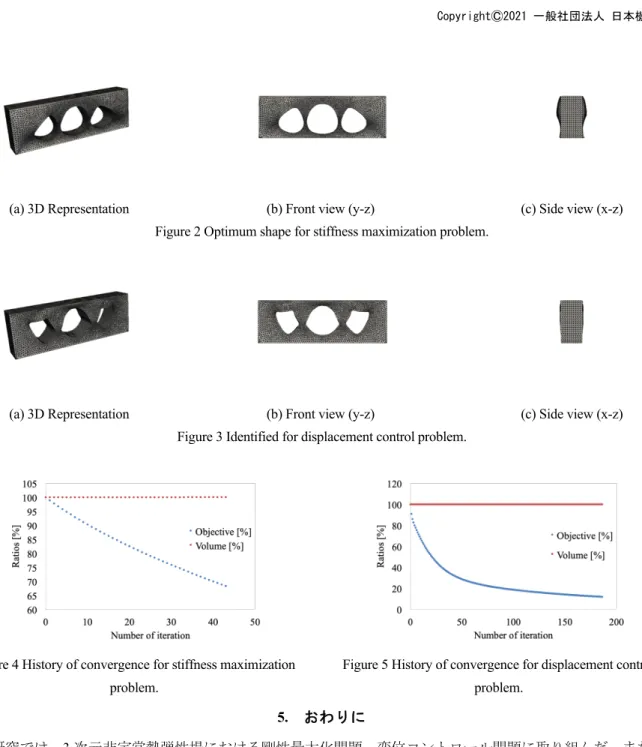
2 5 2 3
4 5 100
y rC o