Doctoral Dissertation
STEM Education for the Crucial Thinking Skills in Indonesian Science Education
USWATUN HASANAH
Graduate School for International Development and Cooperation Hiroshima University
September 2020
STEM Education for the Crucial Thinking Skills in Indonesian Science Education
D180171
USWATUN HASANAH
A Dissertation Submitted to
the Graduate School for International Development and Cooperation of Hiroshima University in Partial Fulfillment
of the Requirement for the Degree of Doctor of Philosophy in Education
September 2020
We hereby recommend that the dissertation by Mrs. USWATUN HASANAH entitled
"STEM Education for the Crucial Thinking Skills in Indonesian Science Education':
be accepted in partial fulfillment of the requirements for the degree of DOCTOR OF PHILOSOPHY IN EDUCATION ..
✓
c....--
;u Kinya, Professor, Cbairpel'.
沙‘
s ー
ょ
fo `
\
立 孜 二
NAKAYAAyami, � 叙心ate Professor
,:J{�\ 一
IKEDAHideo, Professor Emeritus, Hiroshima University
_ ,
�MA;SUBARAKenji, Senior Researcher
Department for Curriculum Research, Curriculum Research Center, National Institute for Educational P�licy Research
ApprovedICHIHASHI Masaru, Professor
ン菫喜信
Dean
Dare:
k1:J
虚 ノ2 幻
lデ��
可喜 , ー �\:� 羹 凸圧手フ/竺
疇 ' -�- I-.- -
,
Graduate School for International Development and Cooperation Hiroshima University
ABSTRACT
This study has confirmed three essential areas of the current condition of STEM education in Indonesia: Essential skills “crucial thinking skills”; instructional design of STEM education
“STEM content integration, real-world application, scaffolding”; and the effectiveness of STEM education. These three essential areas were addressed in the research questions: RQ1:
What are the most crucial thinking skills for students in science education?; RQ2: To what extent is the instructional design of STEM education (STEM content integration, real-world application, and scaffolding) in Indonesia based on teachers’ views?; RQ3: How does STEM education influence the crucial thinking skills of students in Indonesia?
Firstly, the essential skill in this study was focusing on the crucial thinking skills. It was found through systematic literature review that students are success in developing some skills, however, certain crucial skills are also found. The issue in skills development raises important questions regarding the crucial skills in the cognition stage among the common skills in science education-Science Process Skills, Critical Thinking Skills, and Reasoning Skills-. SPS focus on the whole learning process that consisted of basic and integrated SPS. Based on the findings in this systematic review, the crucial subskills in SPS are Inference, Measuring, Identifying &
controlling variable, Definition operational variable, and Explanation, which mostly consisted of the integrated domain. Also, CTS focus on the evaluation of the learning process with crucial skills, including Interpreting data, Inference, and Evaluation. In addition, all skills in RS are an essential element in the learning process and were found as the crucial domain. Further, through identifying the skills’ relationships which were divided into five groups based on their similarity, researcher revealed that the crucial skills existed in Group I, II, II and IV. In conclusion, based on this finding, most of the crucial thinking skills of the students in science education existed in reasoning skills’ domain which covered all reasoning skills, the integrated science process skills and three of critical thinking skills.
Secondly, the instructional design of STEM education was confirmed in three parts through teachers’ perceptions: STEM content integration, real-world application of STEM education, and scaffolding of STEM education. The condition of STEM content in Indonesia is only integrated into two or three subjects. The first finding showed that STEM education does not exist in the university level for the last 30 years based on teachers’ experiences and some of teachers did not know about STEM education before professional development program. In addition, teachers have conducted STEM education without knowing the term STEM
motivations due to unprovided guidance, reference, or instruction. The teachers have confirmed a huge advantages of STEM Education in improving students' quality of knowledge and skills and also mentioned three significant points of STEM education such as “STEM education is interesting”; “STEM education provides hands-on activities”; “STEM education is the most updated learning process”. They believed that STEM education could give a chance for students to explore more based on real-life and also to balance the students’ habits in and outside the classes. Teachers confirmed that STEM education is more appropriate to the current student’
characteristics, especially in high school student. The last part emerged the challenges: (i) engineering becomes the most challenging subject in STEM education, followed by mathematics, technology, and science. Teachers need to realize that engineering is the situated context and the platform in STEM education; (ii) Teachers specify some challenges including time limitation, lacking of teacher awareness, technology. It was found that implementation of STEM education will face time limitation, lacking teacher awareness and technology; (iii) Teachers also mentioned unmatched Indonesian curriculum with STEM education. It was narrowed down to the relationship between national examination goals in Indonesia and STEM education goals in case of content integration;
Thirdly, when comparing the subskills’ mean score between traditional and STEM group, most of the subskills do not have differences even the result of ANCOVA shows the significant value in the effect of STEM education on the crucial thinking skills. However, the data showed a statistically significant difference between pre- and post-test value of hypothetical-deductive thinking skill in STEM group. It is supported by the previous research in revealing the positive impacts of STEM education on hypothetical-deductive thinking skill.
In conclusion, stage 1 and stage 2 resulted in the current conditions of STEM education in Indonesia. They were confirmed through specific crucial thinking skills and teachers’
perception on the instructional design of STEM education. Although stage 3 failed to support the effectiveness of STEM education to solve all crucial thinking skills in Indonesia. However, the mean score in STEM group showed improvement on hypothetical-deductive thinking skills with the significant difference on the score between pre- and post-test. Preparations need to be made and the challenges need to be addressed before the official curriculum from the government is fully implemented.
ACKNOWLEDGEMENTS
First and foremost, I would like to express my gratitude to the Japanese Government and Ministry of Education, Culture, Sport, Science, and Technology (MEXT) for the great opportunity to update my knowledge as well as my experiences through Monbukagakusho scholarship.
I would like to deeply thank to my academic advisors, Professor SHIMIZU Kinya and the late Professor TSUTAOKA Takanori, for their great support, guidance, critical comments, and encouragement from the beginning till the end of this research work.
Also, I am very grateful to Professor BABA Takuya, Professor NAKAYA Ayami, Professor IKEDA Hideo, and Dr. MATSUBARA Kenji for their valuable support, comments, and advice during my study. I would like to thank all professors and colleagues of Education in IDEC Hiroshima University and my research roommates for their unconditional help and support during my study.
I am particularly grateful to the academic staff, managers, teachers and students in Indonesia and Japan, who participated in this research and made it possible for me to conduct my fieldwork. Without their participation and contribution, the purpose of this research would not have been achieved.
Last but not least, I would like to express my profound gratitude to my lovely husband, my adorable parents, whole family`s member and all of best friends for their love, encouragement, and support.
DEDICATION
I dedicate this dissertation to my husband Ahmad Eka Siwi, my parents, my family and friends for the encouragement and unconditional support.
TABLE OF CONTENTS
ABSTRACT ... II ACKNOWLEDGEMENTS ... IV DEDICATION ... V TABLE OF CONTENTS ... VI LIST OF TABLES ... IX LIST OF FIGURES ... X LIST OF ABBREVIATIONS ... XI
CHAPTER 1 INTRODUCTION ... 1
Background of the Study ... 1
Problem Statement ... 3
CHAPTER 2 LITERATURE REVIEW AND THEORETICAL FRAMEWORK ... 7
Skills Gained through STEM Education ... 7
Science Process Skills ... 9
Critical Thinking Skills ... 10
Reasoning Skills ... 11
The Relationships among Three Thinking Skills ... 12
STEM Education ... 15
Definition of STEM Education ... 15
STEM Education and Inquiry-based Instruction ... 18
STEM Education among the Countries ... 22
The Implementation of STEM Education ... 22
Factors in Implementation of STEM Education ... 22
Theoretical Frameworks of the Study ... 27
Research Objectives ... 29
Research Questions ... 30
Significances of the Study ... 30
Composition of the Dissertation ... 31
CHAPTER 3 METHODOLOGY... 36
Overall Research Design ... 36
CHAPTER 4 CRUCIAL THINKING SKILLS ... 40
Methodology of the First Stage ... 40
Inclusion Criteria ... 40
Literature Search ... 42
Analysis Procedures ... 42
Result and Discussion... 43
Crucial Domains in Science Process Skills ... 43
Crucial Domains in Critical Thinking Skills ... 56
Crucial Domains in Reasoning Skills... 67
The Relationships among Three Thinking Skills ... 73
CHAPTER 5 INSTRUCTIONAL DESIGN OF STEM EDUCATION IN INDONESIA ... 75
Methodology of the Second Stage ... 75
Data Sources ... 76
Participants ... 78
Data Analysis ... 78
Result ... 79
The results cover the three areas of STEM content integration, real-world application, and scaffolding. ... 79
STEM Content Integration ... 79
Real-world Application ... 80
Scaffolding in STEM Education ... 81
Discussion and Conclusions ... 83
CHAPTER 6 THE EFFECTIVENESS OF STEM EDUCATION IN INDONESIA ... 87
Methodology of the Third Stage ... 87
Teaching Intervention ... 87
Participants, Instrument and Analysis Method ... 107
Result ... 111
Discussion and Conclusions ... 114
CHAPTER 7 CONCLUSIONS AND IMPLICATIONS ... 118
Conclusions ... 118
Implications... 120
Limitations and Recommendations ... 121
REFERENCES ... 123
APPENDIX ... 142
LIST OF TABLES
Table 1. Main Competency Domains of the 2013 Indonesian National Curriculum ... 7
Table 2. Essential Elements of Scientific Inquiry ... 19
Table 3. Inquiry Phases and the Relationship with STEM Disciplines ... 21
Table 4. Category of Factor in STEM Education... 22
Table 5. The Characteristics of 32 Included Studies in SPS ... 43
Table 6. The Characteristics of 34 Included Studies in CTS ... 56
Table 7. The Characteristics of 12 Included Studies in RS ... 67
Table 8. Essential Areas and List of the Questions during Interview ... 77
Table 9. Science Teachers’ Knowledge Joining the PD Program... 79
Table 10. Teachers’ Experiences during Pre-service Training ... 80
Table 11. The Most Challenging Field among STEM Disciplines ... 81
Table 12. The Scope of the Competency ... 88
Table 13. Basic Competency and Indicators ... 90
Table 14. STEM Education Process using Inquiry-based Instruction ... 91
Table 15. Traditional Instruction Process using Discovery Learning ... 101
Table 16. Subskills of Reasoning Skills ... 109
Table 17. Two-tier Multiple-choice Test Scoring Method ... 111
Table 18. Descriptive Statistics in Both Groups ... 111
Table 19. Pre-test Analysis... 112
Table 20. Homogeneity of Regression ... 112
Table 21. Analysis Covariance Result ... 113
Table 22. Paired Sample t-Test of Traditional Group ... 113
Table 23. Paired Sample t-Test of STEM Group ... 114
LIST OF FIGURES
Figure 1. Curriculum Development in Indonesia ... 1
Figure 2. 2019 National Achievement in Indonesia ... 4
Figure 3. Conceptual Framework of Relationships among Thinking Skills ... 13
Figure 4. Science Education must Expand its Curriculum to Connect with Technology, Engineering, and Math to Develop a Cogent STEM Curriculum ... 19
Figure 5. Theoretical Framework ... 29
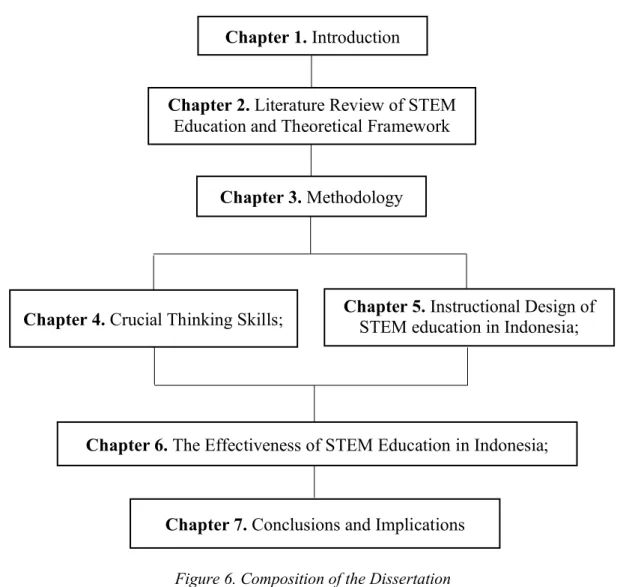
Figure 6. Composition of the Dissertation ... 31
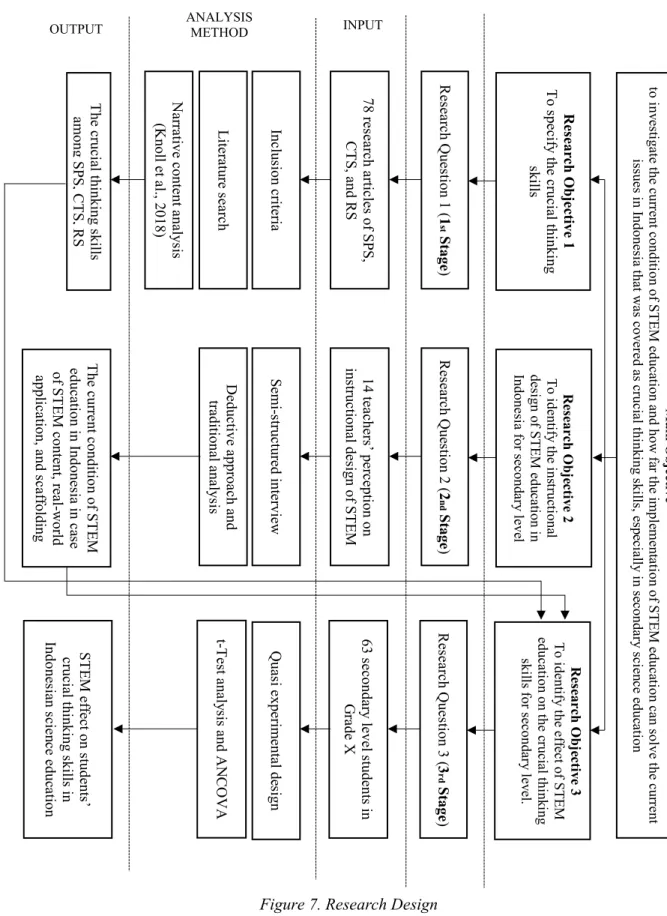
Figure 7. Research Design ... 38
Figure 8. Flow Chart of Literature Search ... 41
Figure 9. Percentage of each Subskills from 32 Included Studies in SPS ... 55
Figure 10. Percentage of each Subskills from 34 Included Studies in CTS... 66
Figure 11. Percentage of each Subskills from 12 Included Studies in RS ... 72
Figure 12. Conceptual Framework of Relationships among Thinking Skills ... 73
Figure 13. The most Crucial Area of Thinking Skills ... 74
Figure 14. Meeting Details ... 89
Figure 15. Example of LCTSR Two-tier Item Questions in Probabilistic Reasoning Skill .. 109
LIST OF ABBREVIATIONS
UNESCO The United Nations Educational, Scientific, and Cultural Organization
MoEC Ministry of Education and Culture
MoNE Ministry of the National Education
SKL Standar Kompetensi Kelulusan (The standard of graduate competencies)
PISA Programme for International Student Assessment
OECD The Organization for Economic Co-operation and Development
ODI Overseas Development Institute
STEM Science, Technology, Engineering, Mathematics
SPS Science Process Skill
CTS Critical Thinking Skill
RS Reasoning Skill
MGMP Musyawarah Guru Mata Pelajaran (Physics Teacher
Association)
LCTSR Lawson’s Classroom Test of Scientific Reasoning
SAPA Science – A Process Approach
EI Empirical Inductive
HD Hypothetical Deductive
NSF National Science Foundation
SMET Science, Mathematics, Engineering, Technology
CHAPTER 1 INTRODUCTION
Background of the Study
Curriculum is one of the main components of the education system and plays a significant role in improving the quality of education. It consists of inputs, processes, and outcomes. It is developed dynamically and continuously in a systematic, flexible, realistic, and contextual way.
Curriculum should recognize that education in school needs support from family and the community, which are also places of learning (UNESCO, 2011). In Indonesia, curriculum developmemt does not seek to create a single curriculum for all schools. Rather, it can be different for various learning levels of students, with different measurement criteria for each group of students.
The curriculum content must have its foundation in ethics and morals based on religious and other relevant subject matters. The Ministry of Education and Culture (MoEC) oversees the preparation, coordination, facilitation, and execution of curriculum development.
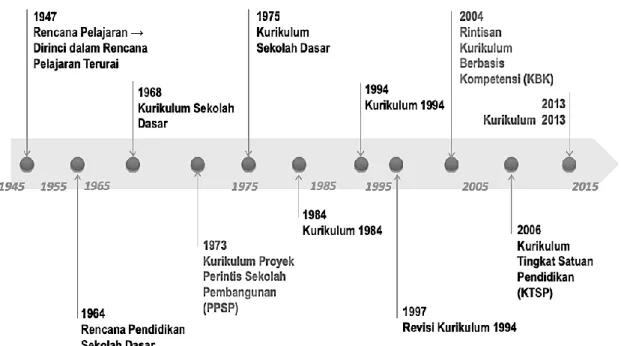
Indonesian curriculum has been changed over the years in order to fulfill and accommodate public needs and aspirations and promote citizens’ growth, while keeping in tune with the latest developments in science, technology, and culture. Since independence in 1945, the nation’s educational curriculum has changed several times, including in 1947, 1952, 1962, 1968, 1975, 1984, 1994, 2004, 2006, and 2013 as shown in Figure 1.
Figure 1. Curriculum Development in Indonesia
Indonesian curriculum has been designed in accordance with Indonesian national principles (the so-called Pancasila) and the 1945 Constitution of Indonesia (MoNE, 2012). The most recently implemented curriculum is the K-13 program in 2013. As part of this program, learners are expected to improve their skills and strike a balance between soft skills and hard skills based on the standard of graduate competencies (SKL), including effective and creative thinking in abstract and concrete domains (Prihantara, 2015).
The government also developed the MoEC stategic plan of 2015-2019 that covered the priority agenda of the K-13 curriculum termed Nawacita. The plan aimed to (1) improve the quality of human life in Indonesia by strengthening competencies in applicative fields and bolstering achievements and skills in science, mathematics, and technology, as well as problem- solving abilities based on industry requirements; and (2) enhance productivity and national and international competitiveness through innovation and technological capacity (M. o. E. a. C.
MoEC, 2015).
The priority agenda is to strengthen the curriculum and the relevance between the education system and industry needs to improve students’ career opportunities in the future by emphasizing skills development. This can be achieved by (1) promoting an interactive learning process that involves students and encourages student creativity and other thinking skills; (2) building 21st century skills in the education sector; and (3) diversifying the curriculum to support the development of students’ capability, interest, and intelligence (P. K. d. P. MoEC, 2017). The agenda has emphasized the importance of skills development in the curriculum.
Gropello et al. (2011) have reviewed the main characteristics of and the trends in the demand for skills in Indonesia. The study sought to document the existence of a possible skills mismatch between employer demands and the available supply, the contribution of the education and training sector to this mismatch, and possible measures to improve the education and training system’s responsiveness to the needs of the labor market and the economy.
Subjective assessments of the difficulties in matching needs with available skills provide evidence that skills are becoming an issue overall in Indonesia.
Thinking skills represent one of the major skill gaps across professional profiles. Five general skill-related priorities can be highlighted for Indonesia. First, the country needs to improve skill measurement to get a fuller understanding of skill needs and gaps. Second, Indonesia needs to urgently address the still unsatisfactory quality and relevance of its education, including higher education. Third, the country needs to set up multiple pathways for
skill development. Fourth, the country needs to develop an integrated approach to tackle skill development for youth. Fifth, Indonesia should also tackle labor market constraints, which affect the skill matching process (Gropello, Kruse, & Tandon, 2011). The five priorities emphasize the promotion of skills’ capacity and development for Indonesian students and the implementation of an integrated approach to support those skills.
The skills system is regulated by Law 20/2003 on the Education System, Law 12/2003 on Labor and Manpower, Presidential Regulation 8/2012 on the Indonesian National Qualification Framework, Presidential Regulation 9/2016 on Revitalization of SMKs, Government Regulation 31/2006 on National Training System, and Government Regulation 10/2018 on the Indonesian Professional Certification Authority (World Bank, 2019). These regulations have envisaged the significance of an integrated approach in education for skill development in Indonesia
Problem Statement
Even though the government has undertaken this impressive fiscal effort, certain issues may arise during curriculum development. Educational quality and learning outcomes during the New Order improved little if at all over time and compared poorly to other countries (Rosser, 2018). Nowadays, the national examination system is driving curriculum implementation and challenging the educational sector in Indonesia. In particular, the national examination target is pushing science and mathematics education to shift their focus from teaching to learning. Memorizing mathematical and scientific formulae is more common than performing experiments. During the learning process, teachers transfer the knowledge in the textbooks to the students through lectures and drill students on how to answer multiple choice type questions (Bahri, 2013; Hendayana, Supriatna, & Imansyah, 2011).
In fact, the Educational Assessment Center in Indonesia has shown that the average national achievement score in six subjects at the upper secondary level was 69.69 of 100, with science subjects, especially physics and mathematics, posting the lowest average scores in 2019 as shown in Figure 2 (M. o. E. a. C. MoEC, 2019).
Figure 2. 2019 National Achievement in Indonesia
Science education, which aims to not only build student knowledge but also encourage scientific behavior, has undergone an extraordinary transformation to create the foundation for prosperity and sustainable development. Indonesia’s performance in international standardized tests of student achievement from 1999-2015 suggests that little has changed in these respects since the fall of the New Order. Between 2012 and 2015 alone, science performance among 12- year-old students rose by 21 score points. This makes Indonesia the fifth fastest improving nation in terms of the education system among the 72 countries that took part in the Programme for International Student Assessment (PISA), with the country’s science performance above that of several other nations that participated in PISA 2015. However, the mean performance of Indonesian science students was lower than the Organization for Economic Co-operation and Development (OECD) average, and more than half of Indonesian students do not possess the adequate skills to compete in the labor market (Gropello, Kruse, Tandon, & Martawardaya, 2010; OECD, 2016).
Indonesian curriculum needs to focus not only on knowledge transfer in education, but also on sustainable development and the building of students’ thinking skills and 21st century skills. Traditional science teaching falls short in these respects in Indonesia. It is important to know how to apply scientific concepts to design technologies or products, solve problems, and connect to real world phenomena (Mullis, Martin, Goh, & Cotter, 2016; Mutakinati, Anwari,
& Kumano, 2018; P. D. A. Putra, 2017).
The Overseas Development Institute (ODI) (2014) recommended changes to the Indonesian education system, including implementing curriculum and pedagogy reforms,
69.69
53.58
39.33 46.47 50.99 50.61
0 50 100
Bahasa
Indonesia English Mathematics Physics Chemistry Biology
Average Score
Subjects
strengthening the teaching force, and supporting decentralization and school-based management (Tobias, Wales, Syamsulhakim, & Suharti, 2014). Students assume real-world connections to what they are learning, or they may completely disengage (El-Deghaidy &
Mansour, 2015; Havice, Havice, Waugaman, & Walker, 2018).
Based on these issues, the Indonesian government is adapting STEM education, an interdisciplinary and applied approach to learning science, technology, engineering, and mathematics, to the 2013 curriculum, especially at the upper secondary level (Fransisca, Sisdiana, Dian, & Arie, 2019). The government has made preliminary efforts for the implementation of STEM education, such as conducting STEM training for role model teachers in Indonesia. STEM education is believed to give every student opportunities to improve their skills, abilities, and fundamentals for 21st century learning by utilizing an assortment of movement-based learning models. Students are exposed to a wealth of information, which is one of the major issues in Indonesia, and given chances to solve global challenges (Bybee, 2013; Caprile, Palmen, Sanz, & Dente, 2015; Council, 2011, 2014; Meyrick, 2011; Press, 2005;
Scientist, 2013; Shernoff, Sinha, Bressler, & Ginsburg, 2017; Society, 2014; Tanembaum, Gray, Lee, Williams, & Upton, 2016).
In addition, STEM education provides the positive chance in learning and improving thinking skills beyond the content knowledge, such as how to cooperate with the group work process expressing ideas, brainstorming, and creating a product from knowledge, experience, activities and being able to integrate knowledge to apply in daily life, how to use scientific instrumentation appropriately, how to gather and analyse data, how to design methods and problem solved processes, planning and implementing solutions, testing, checking, improving solutions or products and offering solutions to solve problems, (Reynders et al., 2019;
Changpetch & Seechaliao, 2020).
Moore et al. (2014) designated a framework for quality STEM education that has six key elements, which are the inclusion of appropriate math and science content based on the grade level, adoption of a student-centered pedagogy, allowance for making mistakes in the learning process, group collaboration, use of an engaging and motivating context, and integration of engineering design challenges. Students engage in hands-on activities that allow them to discover new concepts and develop new understandings. Thus, experimental learning is intentionally used to promote knowledge building, and students are encouraged to test existing
In sum, the Indonesian government has had great success in getting children into school and keeping them at school, at least until the end of the compulsory basic education period.
However, it has had much less success in ensuring that students receive quality of education (Rosser, 2018). Therefore, STEM education has been utilized for educational development in recent times. However, how and to what extent STEM education can be implemented in Indonesia remains unclear.
CHAPTER 2 LITERATURE REVIEW AND THEORETICAL FRAMEWORK
This chapter outlines the literature review, theoretical framework, research objectives, research questions, and the significance of the study. The literature review was conducted to provide a theoretical basis for this study and also convey what knowledge and ideas have been established by this study and what its strengths and weaknesses are. The study is defined by a guiding concept, including the research questions and objectives. The literature review was conducted in three areas, namely STEM education, skills gained through STEM education, and STEM education systems followed by different countries. The second part outlines the theoretical framework of this study, followed by the research objectives, research questions, and the significance of the study.
Skills Gained through STEM Education
Many psychologists and psychometricians have acknowledged the close relationship between thinking skills and students’ overall capacity to learn (Colvin, 1921; Han, 2013). These skills help students in building their knowledge and developing the competence to solve problems and formulate results. The 2013 revision of the Indonesian curriculum required science teachers to integrate thinking skills, including reasoning, processing, and presenting skills, with content learning objectives as part of their general teaching and learning activities.
As can be seen from Table 1, the main competencies can be categorized into spiritual, social, knowledge, and skill domains (MoEC, 2016).
Table 1. Main Competency Domains of the 2013 Indonesian National Curriculum
Main Competencies Description
Spiritual Refers to having students understand and practice religious beliefs and values in their daily lives
Social Refers to shared social and cultural values, such as 1. Honesty,
2. Self-discipline, 3. Responsibility, 4. Social awareness,
5. Cooperation, and 6. Tolerance
These values are essential for children to develop and to effectively interact with the environment, family, school, community, state, region, nation, and the world
Knowledge Refers to understanding, implementing, analyzing, and evaluating factual, conceptual, procedural, and metacognitive knowledge based on interest in
1. Science 2. Technology 3. Art
4. Culture, and 5. Humanities
Gain insight into how humanity, nationality, statehood, and civilization are related to phenomena and events, and apply knowledge in specific fields of study in accordance with their talents and interests to solve problems
Skills Refer to reasoning skills, processing skills, and presenting skills that are effectively, creatively, productively, critically, independently, and collaboratively reflected in concrete and abstract contexts related to what is learnt in school, and which can be used in accordance with scientific principles
This study focused on two main competencies: knowledge and skills. In Indonesia, knowledge competency relies on science and technology, which are a part of STEM education.
As explained in Chapter 1, the Indonesian government has started to introduce STEM education to all stakeholders in education, especially at the secondary level.
Meanwhile, Skills competency relies on reasoning, processing, and critical thinking skills. This study focused only on thinking skills and narrowed them down to three skills:
science process skills (SPS), critical thinking skills (CTS), and reasoning skills (RS). These thinking skills are the most important skills for social scientists, teachers, and students in science education (Valentino, 2000) and have become the main objective of education in
Indonesia (Faisal & Martin, 2019). In addition, these skills are an integral part of becoming a scientist and participating in the scientific community and as apprentice scientists, students in science interact with each other in a deeply thinking about the content and realistic contexts where the need for SPS, CTS, and RS can rise organically (Reynders et al., 2019).
Previous studies revealed that the learning process should be conducted via STEM education to challenge students to learn and improve their CTS, RS, and SPS and make themselves better prepared for their career in the future (Fulya & Yusuf, 2017; Naimnule &
Corebima, 2018).
It also has been mentioned in the previous chapter that STEM education provides the positive chance in learning and improving these skills beyond the content knowledge, such as how to use scientific instrumentation appropriately, how to gather and analyse data, how to design methods and problem solved processes, planning and implementing solutions, testing, checking, improving solutions or products and offering solutions to solve problems, how to cooperate with the group work process expressing ideas, brainstorming, and creating a product from knowledge, experience, activities and being able to integrate knowledge to apply in daily life (Reynders et al., 2019; Changpetch & Seechaliao, 2020).
Science Process Skills
Science process skills (SPS) are defined as mental abilities that can be practiced, learnt, and developed by children through the learning process and which make them better prepared to meet the challenges of the 21st century (Balfakih, 2010; Osman & Vebrianto, 2013). SPS are essential for acquiring knowledge and ensuring that students have a meaningful learning experience (Lee, Hairston, Thames, Lawrence, & Herron, 2002; Rauf, Rasul, Mansor, Othman,
& Lyndon, 2013).
Today, the expression “Science Process Skills” is commonly used, and based on Science – A Process Approach (SAPA), these skills can be classified into basic and integrated SPS.
Germann & Aram (1996) and Rauf et al. (2013) define basic skills as the intellectual foundation in scientific inquiry. Basic skills are the preconditions to integrated process skills, which are the final set of skills required for solving problems or performing science experiments. The details of each sub-skill are as follows (Padilla, 1990):
1. Observation: Using intelligence and common sense to gather information about an object
2. Inference: Making an “educated guess” about an object or event based on previously gathered data and information
3. Measurement: Using both standard and non-standard measures or estimates to describe the dimensions of an object or event
4. Communication: Using words or graphic symbols to describe an action, object, or event 5. Classification: Grouping or ordering objects or events into categories based on properties
or criteria
6. Prediction: Stating the outcome of a future event based on a pattern of evidence
7. Variable control: Identifying variables that can affect an experimental outcome; keeping most of them constant while manipulating only the independent variable
8. Operational definition: Stating how to measure a variable in an experiment 9. Hypothesis formulation: Stating the expected outcome of an experiment 10. Data interpretation: Organizing data and drawing conclusions from it
11. Experimentation: Being able to experiment, including asking a question, stating a hypothesis, identifying and controlling variables, operationally defining those variables, designing an experiment, conducting the experiment, and interpreting the results of the experiment
12. Modeling: Creating a mental or physical model of a process or event Critical Thinking Skills
There are widely contrasting views about critical thinking skills (CTS). Some highlight the range of perspectives developed around the aspect of education. In summary, CTS can be defined as the mental act of reviewing, evaluating, or appraising something (including a picture, play, piece of information, evidence, or opinion) in an attempt to make judgments or inferences about that something in a rational, reasoned way (McGroger, 2007). CTS are considered to involve intellectually engaged, skillful, and responsible thinking. They facilitate good judgment that requires the application of assumptions, knowledge, competence, and the ability to challenge one's thinking.
CTS require self-correction, the ability to monitor the reasonableness of thinking, and reflexivity. One characteristic that uniquely defines critical thinking is the capability of individuals to step back and reflect on the quality of their thinking (Niu, Behar-Horenstein, &
Garvan, 2013). In this study, the researcher adapted the idea of core CTS from Facione (1990),
who provided detail descriptors of the associated characteristics. The sub-skills of critical thinking skills are as follows:
1. Interpretation: Grasp and express the meaning or noteworthiness of a wide assortment of circumstances, information, occasions, judgments, rules, strategies, or criteria
2. Analysis: Identify the real inferential relationship among statements, questions, and descriptions to express belief, judgment, experiences, reasons, or opinions
3. Evaluation: Evaluate the validity of articulations or other representations; analyze the coherent quality of the existing or expected inferential relationship among explanations, questions, or other forms of representation
4. Inference: Distinguish and secure components required to draw sensible conclusions; make assumptions and speculations; consider pertinent data; and rationalize the results based on judgments, concepts, questions, or other representations
5. Explanation: Present the results of one's reasoning compellingly and coherently; the sub- skills in this category are the ability to propose and advocate strategies, and protect one's causal and conceptual interpretations of occasions or events
6. Self-regulation: Self-consciously monitor one's cognitive activities, the elements involved in those activities, and the results deduced by analyzing one's inferential judgments with a view toward questioning
Reasoning Skills
The last type of cognitive skills in this study is reasoning skills (RS). Based on psychologists’ theory of cognitive development, which is divided into four stages based on age, Lawson (2000) identified reasoning skills in the last two stages: empirical-inductive thought and hypothetical-deductive thought. Empirical-inductive thinking (EI) patterns enable a child to accurately order and describe perceptible objects, events, and situations in his or her world.
In this stage, the child starts using language for logical reasoning. Conservation skill is one of the sub-skills of reasoning skills. Hypothetical-deductive (HD) thinking patterns allow young persons to go beyond traditional descriptions and create and test hypothetical explanations (Anton E Lawson, 1995). Given below is a list of the descriptions of each sub-skill in RS based on Lawson (2000).
1. Conservation law (EI): Ability to apply conservation reasoning to perceptible objects and properties (e.g., if nothing is added or taken away, the amount, number, length, weight,
2. Proportional thinking (HD1): Ability to recognize and interpret relationships between situations described by observable or theoretical variables
3. Identification and control of variables (HD2): A process that includes control of the dependent and independent variables that affect the continuity of the situation during hypothesis testing
4. Probabilistic reasoning (HD3): A situation focused on the division of the number of reiterations of a specific procedure that delivers a specific result when rehashed under the same conditions on countless occasions
5. Correlational reasoning (HD4): Ability to recognize causes in the phenomenon under study by comparing the number of confirming and disconfirming cases of hypothesized relations with the total number of cases
6. Hypothetical-deductive reasoning (HD5): Characteristics of the reasoning process that help in developing and organizing possible solutions to a problem in any domain of life
The Relationships among Three Thinking Skills
As mentioned above, psychologists have established the theory of cognitive development.
Piaget (1966) is one of the experts to investigate cognitive development to learn how a child perceives the environment and the world based on his/her observation and interpretation.
According to Piaget's theory, cognitive development can be divided into four stages based on age. This study focuses on the last two stages (concrete reasoning and formal operational reasoning), which were previously introduced as EI and HD (Lawson, 1995).
Concrete reasoning (EI) begins from age seven or eight and includes aspects such as naming, describing, and classifying. The epistemology of the concrete reasoning stage thinker is one of observation: What causes events? To find the answer, observe the events. Formal operational reasoning (HD) begins in adolescent and older children. In this stage, some children become increasingly capable of using language to apply the deductive pattern of thinking to hypothetical rather than empirical representations. The epistemology of the formal reasoning stage thinker is vastly different: What causes events? To find the answer, one must first mentally create several possible causes, deduce their potential consequences, and then observe the results of experimental manipulations to support or reject the possibilities (Lawson, 1995).
Concrete reasoning and formal operational reasoning form the basis of RS, and this category of skills is typically used by researchers to define more complex skills such as SPS and CTS (Ozgelen, 2012).
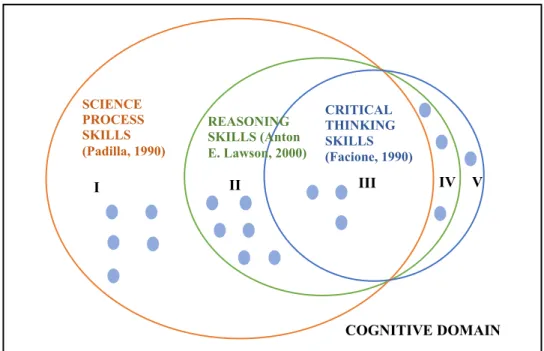
Figure 3 shows a model developed for this study that demonstrates the conceptual framework of relationships between SPS, CTS, and RS. This model was developed by taking into consideration the similarity of all sub-skills in SPS, CTS, and RS. This conceptual framework consists of three circles representing the three main categories of skills. The circle with the orange outline represents the area for SPS, the circle with the green outline represents the area for RS, and the one with the blue ouline the area for CTS. The bigger the size of the circle, the greater is the number of sub-skills included. All these circles are included in the cognitive domain, represented by the space within the rectangle. In addition, the blue dots signify the sub-skills of SPS, CTS, and RS. This means that all these skills can be developed or improved through training or high quality learning.
Figure 3. Conceptual Framework of Relationships among Thinking Skills
Based on the model described above, the relationship between the three thinking skills is divided into five groups in accordance with Piaget’s theory. The definition and pattern of the skills are listed below.
1. Group I: Observation; Measurement; Communication; Classification; and Operational Definition (EI)
2. Group II: Identification and control of variable (HD2); Prediction skill (HD3); Hypothesis formulation (HD5); Development of experimental design (HD5); Making of model (HD5);
REASONING SKILLS (Anton E. Lawson, 2000)
COGNITIVE DOMAIN SCIENCE
PROCESS SKILLS (Padilla, 1990)
CRITICAL THINKING SKILLS (Facione, 1990)
II III
I IV V
3. Group III: Interpretation of data (HD1); Inference (HD4); and Analysis (HD4)
4. Group IV: Simple explanation (conservation/EI); Explanation (HD5); and Evaluation (HD5)
5. Group V: Self-regulation
The first group consists of five sub-skills, namely observation, measurement, communication, classification, and operational definition, which are the characteristics of the basic SPS (Padilla, 1990), but do not include RS or CTS. They become the initial component of the EI stage.
The second group pictures the relationship between SPS and RS, which covers three elements: (i) Identification and control of variable (HD2), which helps students recognize the need to consider all the known variables and design a test that controls all variables; (ii) Prediction skill (HD3), also called probabilistic thinking in reasoning skills, helps students recognize a pattern of evidence (Han, 2013); and (iii) Hypothesis formulation, experimental design/model development, and execution of experiment are covered in hypothetical deductive reasoning (HD5).
The third group talks about the relationship between SPS, CTS, and RS, which consists of two aspects: (i) Interpretation of data (HD1), which covers proportional reasoning to help students recognize and identify the relationships of situations described by observable or theoretical variables. This skill aims to comprehend, organize, and express the meaning or significance of a wide variety of experiences, situations, data, events, judgments, conventions, beliefs, rules, and procedures; (ii) Inference (HD4) and Analysis (HD4) enable students to recognize causes or relations in the phenomenon under study by comparing the number of affirming and disconfirming cases of hypothesized relations with the total number of cases.
The fourth group pictures the relationships between CTS and RS in explanation skills, which are divided into two components: simple explanation (EI), and explanation (HD5) and evaluation (HD5). Simple explanation is also called conservation reasoning and helps students understand concepts and simple propositions related to familiar actions and observable objects, which can be explained in terms of simple associations, and enables them to follow step-by- step instructions as in a recipe, provided each step is completely specified and associate his or her viewpoint with that of another in a simple situation. Explanation skill and evaluation skill (HD5) are involved in testing theories or hypotheses.
The fifth group is self-regulation that helps students organize a strategy to find a solution. Self-regulation is one of the curricular principles that will promote the development of important thinking skills and reasoning patterns needed for freedom of mind (Lawson, 1995). This skill in included in the CTS group, but not in the other two.
In summary, these thinking skills are connected with each other directly and/or indirectly (Lawson, 1995; Ozgelen, 2012). Ozgelen (2012) revealed that the term “formal reasoning skills” is typically used by researchers to define more complex skills and integrated science process skills, which is proved through this model.
Further, the variety of labels and similarities in science process skills, critical thinking skills, and reasoning skills -are confusing to teachers (Bailin, 2002; Lewis & Smith, 1993; Niu et al., 2013; Zimmerman, 2000). There is no previous study that discusses about the thinking skills that should be given top priority in STEM education through the relationship among them.
Hence, this study sought to identify the crucial and most highlighted skills among these five groups of skills through systematic literature review.
STEM Education
Definition of STEM Education
In the 1990s, the National Science Foundation (NSF) in the US started using the acronym
“SMET,” standing for “Science, Mathematics, Engineering, and Technology,” which was then changed to STEM in 2001. In the last two decades, the NSF has used STEM to refer to the four separate and distinct fields. In fall 2007, they realized that the acronym STEM is ambiguous, so STEM education was rechristened as “Integrative STEM Education.” The notion of integrative STEM education includes approaches to explore teaching and learning between two or more STEM disciplines and within a STEM discipline (Sanders, 2009). The specializations of each subject are explained as follows (Burghardt & Hacker, 2004; Kelley & Knowles, 2016):
1. Scientific inquiry. Preparing students to think and act like real scientists, ask questions, hypothesize, and conduct investigations using standard science practices. Science concepts: life sciences, physical sciences, chemical sciences;
2. Technology. As objects, knowledge, activities, and volition. Technology concepts:
technology as tools, technology as ideas, technology as product of science;
3. Engineering design. As an approach to delivering STEM education creates an ideal entry
design concepts: models, designs, problem-solving, communicating ideas, planning, implementing;
4. Mathematics thinking. Providing the necessary rationale for students to learn mathematics through valuating design solutions and see the connections between what should be learned in school with what is required in STEM career skills. Mathematical concepts: numbers, problem-solving, geometry, measurement, representation of math ideas using objects, symbols, and words.
Nowadays, STEM education is defined depending on the stakeholder. In general terms, STEM education refers to the integration of problem-solving learning with the STEM disciplines (Sari, Alici, & Sen, 2018), and the graduation of students in science, technology, engineering, and mathematics with a future career in these fields. STEM is also connected to economic competitiveness in the global market and maintenance of energy and productivity (Boe, Henriksen, Lyons, & Schreiner, 2011). STEM education combines academic concepts with real-world lessons and connects the school, community, work, and the global enterprise domains with each other (Akaygun & Aslan-Tukak, 2016; Cevik & Ozgunay, 2018; Tsupros, Kohler, & Hallinen, 2009).
As explained in the background of this study, the strategic plan of the MoEC in Indonesia aims to focus on improving students’ skills in science, mathematics, technology, and problem- solving based on industry needs through an interactive learning process. Hence, this study defined STEM education as a teaching approach in science at the K-12 education level that seeks to create an interactive learning process by combining science, technology, engineering, and mathematics education with application-oriented techniques and inquiry-based instruction in order to encourage students' creativity and thinking skills. STEM education could make meaningful learning possible and develop relevant career content standards and skills useful in everyday life (John et al., 2018; Maarouf, 2019; Pawilen & Yuzon, 2019; Sari, Alici, & Sen, 2018).
Moore et al. (2014) designated a framework for quality STEM education that has six key elements, which are the inclusion of appropriate math and science content based on the grade level, adoption of a student-centered pedagogy, allowance for making mistakes in the learning process, group collaboration, use of engaging and motivating context, and integration of engineering design challenges.
STEM education provides benefits to students by giving them opportunities to integrate interdisciplinary research topics in their studies (Honey, Pearson, & Schweingruber, 2014;
Jacobs & Eccles, 2000). In addition, it plays a key role in achieving critical competencies such as problem-solving skills, social communication skills, technology and engineering skills, and system skills (Jang, 2016). STEM education supports students’ explorations, questions, and conversations, and reveals how competent they are in the science, technology, engineering, and mathematics subjects (DeCoito, Steele, & Goodnough, 2016). STEM education is believed to contribute to the development of 21st century skills (Altan, Ozturk, & Turkoglu, 2018).
STEM education has been around for quite a long time, but it was only in 1957 that American educators concurred on the estimation that it is important for giving the US an edge in the worldwide economy (White, 2014). STEM education was implemented only recently in Indonesia due to constrained resources. The idea of STEM education in Indonesia has been gaining ground (Suprapto, 2016).
STEM education has the purpose of (1) furthering students’ understanding of each discipline by building on students’ prior knowledge; (2) broadening students’ understanding of STEM disciplines through exposure to socially relevant STEM contexts; and (3) making the four STEM disciplines and related careers more accessible to and intriguing for students (Wang, Moore, Roehrig, & Park, 2011). STEM education is believed to provide opportunities for more relevant, less fragmented, and more stimulating experiences for learners (Furner & Kumar, 2007), and to eliminate the misconceptions of students about science education (Hasanah, 2020). Previous research has confirmed that STEM education has considerable effects on students’ career choices in the future.
Previous study confirmed that STEM education had considerable effects on the students’
choices towards career insterest towards their future. It can make meaningful learning possible, develop important careers content standards and useful skills in everyday life (John, Siburna, Wunnava, Anggoro, & Dubosarsky, 2018; Maarouf, 2019; Pawilen & Yuzon, 2019; Sari, Alici,
& Sen, 2018). Pawilen & Yuzon (2019) established six important things that need to be considered in designing STEM education as a part of effective curriculum:
1. Interest of the students on the topics and activities 2. Availability of materials to be used
3. Appropriateness of the topics and activities to the learners
5. Connection of the contents and activities to the K-12 curriculum 6. Integration of science, technology, engineering, and mathematics STEM Education and Inquiry-based Instruction
Thibaut et al. (2018) pointed out that STEM education at the secondary education level is based on social constructivism theories, which state that learning is socially situated and knowledge is built through interaction with others based on one’s existing ideas and experiences. They mentioned several categories of STEM educational practices, including inquiry, which is also supported by Blue (2014). The term “inquiry” has been used to characterize good practices in both teaching and learning in STEM education (Rocard et al., 2007). Inquiry-based instruction is defined as a pedagogical approach that combines the curiosity of students and scientific method to enhance skills development during STEM learning (Blue, 2014; Warner & Myers, 2012).
In inquiry-based instruction, students engage in hands-on activities that allow them to discover new concepts and develop new understandings. Thus, experimental learning is intentionally used to promote knowledge building, and students are encouraged to test existing ideas by taking things apart, making predictions, observing, and recording their explanations.
Although inquiry-based instruction originated in science education, where students are usually required to engage in authentic science practices (e.g., planning and designing experiments and collecting data), it is not restricted to this domain and also occurs in mathematical or technological contexts (Satchwell & Loepp, 2002).
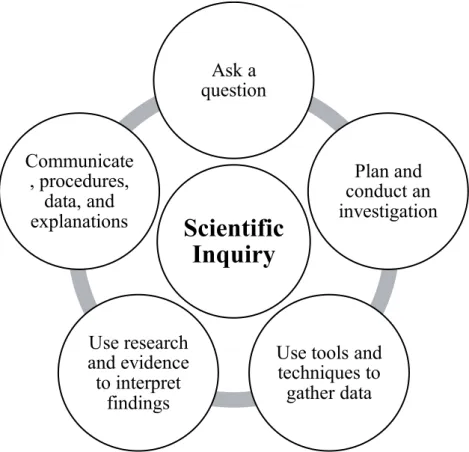
As illustrated in Figure 4, scientific inquiry is at the center of STEM education and the process must become an integral part of STEM education (Carin, Bass, & Contant, 2005).
Students engage in five activities when teachers implement inquiry-based instruction: question;
investigate; use evidence to describe, explain, and predict; connect evidence to knowledge; and share findings.
Figure 4. Science Education must Expand its Curriculum to Connect with Technology, Engineering, and Math to Develop a Cogent STEM Curriculum
Students must be oriented to the entire gamut of scientific method right from identifying the problem to experimenting, reporting the results, and evaluating the effectiveness of the method. Table 2 shows how scientific inquiry allows teachers to address specific elements of scientific inquiry. When teachers integrate the essential elements of scientific inquiry into STEM education, students develop a scientific way of thinking (Fang, Lamme, Pringle, &
Abell, 2010).
Table 2. Essential Elements of Scientific Inquiry
Elements: Notes:
Planning
Generate research question Finalize the thing to be studied
Design studies Plan the look and function of the study
Identify variables Name the thing(s) to be investigated (location, environment)
Plan procedures Outline the step-by-step process of the study
Scientific Inquiry
Ask a question
Plan and conduct an investigation
Use tools and techniques to
gather data Use research
and evidence to interpret
findings Communicate
, procedures, data, and explanations
Control variables Control the study variables under examination
Plan measures Decide whether you will collect scores and
what the time and length of the study should be
Implementing
Begin procedures Follow your plan
Make observations Collect data
Reporting
Explain results Write a report or prepare a presentation Translate observation into data sources Develop data collection forms, processes Find flaws in the research Critique the study in terms of its limitations Draw inferences about research questions Use data and analysis to figure out answers to
your questions
Generate an explanation Write a report of what you found out, as a result of your study
Argue an interpretation Make a case for your way of thinking
Develop a theory Identify the prevailing principle that emerges Disseminate findings in multiple studies Submit research reports on different aspects
of the study Study research reports for information
pertinent to their study
Read research conducted by others on the same or similar topic
Science teachers and researchers have diverse interpretations of effective forms of inquiry. Previous research has proposed a model consisting of four phases that seek to encompass STEM education. In the first phase (inquiry invitation), the teacher proposes an engineering-based real world problem that serves as a context to teach science-related content.
During the second phase, students perform a guided inquiry, wherein they conduct different experiments using scientific practices and technology, and interpret data using mathematics.
The third phase consist of an open inquiry, during which students discuss the results obtained in the guided inquiry and propose new research questions necessary to solve the initial problem.
The fourth and final phase (inquiry resolution) requires the design or implementation of a solution, which could be technological in nature. In this way, students begin to explore
engineering design, linking engineering and science. Table 3 shows how STEM disciplines are emphasized during the four phases in the proposed model of inquiry (Toma & Greca, 2018).
The details of the learning process in this study will be elaborated in the next chapter.
Table 3. Inquiry Phases and the Relationship with STEM Disciplines
Coupled Inquiry STEM disciplines
INQUIRY INVITATION
Science content is introduced through real-world problem
SCIENCE-ENGINEERING
Real world problem related to an engineering challenge
GUIDED INQUIRY
Students perform guided experiment following teacher instruction
SCIENCE
Application of scientific methodologies in order to address the scientific concepts needed to solve the problem
MATHEMATICS
Data analysis and interpretation TECHNOLOGY
Handling of devices and instrument for the design of experiments, data gathering and analysis OPEN INQUIRY
Students keep addressing the initial problem through experiments that are not guided by the teacher
SCIENCE, TECHNOLOGY, ENGINEERING, MATHEMATICS
Students discuss the result obtained and they identify better ways to improve their design in order to solve initial problem
INQUIRY RESOLUTION Solving the initial problem
ENGINEERING
Students design or implement the technological device that solves the initial problem; using the scientific concepts developed previously and, in this wat, linking engineering and science
TECHNOLOGY
Students propose possible technological applications in real world situations of the scientific concepts addressed throughout the
inquiry. Students communicate their result and offer possible resolutions of the initial problem
STEM Education among the Countries The Implementation of STEM Education
The implementation of STEM education in an educational system that has a very special and discipline-based structure requires deep restructuring of the curriculum and lessons (Louis S. Nadelson & Anne L. Seifert, 2017). It requires numerous materials and resources for students (Pawilen & Yuzon, 2019; Stohlmann, Moore, & Roehrig, 2012). STEM education has been applied to the elementary to higher education field for decades in the USA and recently adapted by many Asian countries including Indonesia (Fransisca et al., 2019; Hwang & Taylor, 2016;
Koonce, Zhou, Anderson, Hening, & Conley, 2011; Radloff & Guzey, 2016). It has become more prominent for the researchers, the government and teachers. The believes are the understanding of student are not the primary intention in education, how do students have adequate skills to face their career in the future should be more significant and it is promoted through implementing STEM education.
Obviously, serious efforts should be arranged to transform traditional learning approaches to STEM education, especially in faces several difficulties in preparing the readiness of STEM implementation in the countries (Awad, Salman, & Barak, 2019; Shumow & Schmidt, 2013).
Factors in Implementation of STEM Education
Researcher listed factors in the implementation of STEM education into three broad categories (intrinsic, extrinsic, and institutional) that is formatted in the table 4 below. Each domain was defined as follows; (1) intrinsic factor that is related to personnel of the teacher as well as student, for example quality of teaching, educator’s personal experience and awareness, attitudes, beliefs, practice or preparation and resistance; (2) extrinsic factor which is resulted from inadequate and or inappropriate configuration of infrastructure for teacher such as gender, racial, time, access, support, resource, training for educator, cultural; (3) institutional factor is specific to curriculum, policy, technology, as well as organizational sustenance in the education field (Maguire, 2008; Shadle, Marker, & Earl, 2017).
Table 4. Category of Factor in STEM Education
No. Domains Intr. Ext. Inst.
Factor
1. Teacher`s education (need for course and workshop to face the real-world problem solving through teamwork)
*
2. Instructional challenges (Lack of pedagogical skills) * 3. Insufficient assessment methods and processes * 4. Poor content preparation, delivery, and method of
assessment, they are not familiar enough with the content
*
5. Expectations of Content Coverage (much material to
be understood and choose to skip) *
6. Teachers’ effort Does not fit in with standards/state testing. They need the effort to implement a very different structure in an educational system
*
7. Outcome expectations *
8. Lack of knowledge on how to effectively spread the use of currently available and tested research-based instructional ideas and strategies
*
9. Lack of teachers’ time (too busy with substantial teaching loads and research responsibilities, lack of time for collaborative planning with other instructors
& Instructional time)
*
10. Teachers’ STEM knowledge *
11. Teachers’ professional mindset *
12. Lack of hands-on activities for students * 13. Inappropriate level for students so they found the
difficulty
*
14. Little research effort devoted to the study and improvement of STEM change strategies or models, lack of research collaboration
*
15. Departmental Norms (traditional method as the norm and no local role models to offer supportive; Loss of autonomy: force faculty to teach and assess all the same way, less individual control of content and methods)
*
16. Time structure in the class (limited) * 17. Gender and racial imbalances, especially in
engineering
*
18. Poor preparation and shortage in supply of qualified STEM teachers, Lack of investment in educator’s professional development
*
19. Students are pulled out for support *
20. Family background and support (Everyone in the family was discouraging about going to STEM, no family members had previously attended college or work in STEM field)
*
21. Social support (Each region has different provided education, it makes student discourage to learn if the student is too tricky to find STEM education, or High schools do not offer classes needed for STEM fields necessary in college, such as calculus, or No motivation to pursue STEM careers in high school)
*
22. Lack of resources (materials and tools, poor condition of laboratory facilities and instructional media
*
23. The current culture is unsupportive *
24. Class size and room layout (a Large number of students)
*
25. Lack of support from the school system, Not enough support from administrators
*
26. Does not fit in the curriculum *
27. Insufficient number of specialized classes were offered at the high school
*
28. Conflicts with institutional rewards/priorities *
29. Departmental divisions *
30. The uncertainty of goals (on retention) and vague goals of the faculty
*
31. Challenges in engagement across faculty rank * 32. Misalignment with accreditation requirements * 33. School structure and organization (school schedule
and various goals of schooling must be reorganized)
*
34. Pre-service education (various STEM disciplines exist in many institutions that delivering pre-service education)
*
As listed in Table 4, intrinsic domain emerges with 13 factors which means the implementation of STEM education in the countries are mostly influenced by this factor domain. Two main point are found in this domain: teacher point and student point. Teachers’
factors talk about teachers’ knowledge on the content of STEM education, the pedagogical knowledge, education of the educator, and time management. In a STEM class, teachers are the
“most knowledgeable other” or “master thinker” in the classroom context. Their role is to guide students in the scaffold use of STEM literacies to develop authentic habits of thinking toward STEM solutions.
More specifically, teachers are the model for (a) questioning, wondering, and curiosity,
about a particular situation, and (e) examining theories, ideas, and potential solutions espoused by others. In essence, the teacher is a very knowledgeable individual and thinker who does not regurgitate the thoughts and ideas of others (Blue, 2014).
STEM education requires more understanding of each subject compared to ordinary instruction. It is transformed from conventional teaching, teacher-centred learning, to active student-centred learning. McDonald (2016) summarize the pedagogical instructions, including Inquiry; Argumentation and reasoning; Digital learning; Computer programming and robotics;
Integration of some STEM content; Cooperative learning; Student-centered; Hands-on;
Assessment; 21st century skills, have been shown to be effective in promoting student engagement and achievement in STEM disciplines. STEM education also refers to solving problems that draw on concepts and procedures from mathematics and science while incorporating the teamwork and design methodology of engineering and using appropriate technology (J. Smith & Karr-Kidwell, 2000).
Since the existence of teachers are vital in this system, it is required for them to put more efforts and commitment on STEM education in order to maximize the output of this system (Chachashvili-Bolotin, Milner-Bolotin, & Lissitsa, 2016; Coppola, Madariaga, & Schnedeker, 2015; Ejiwale, 2013; Louis S Nadelson & Anne L Seifert, 2017; Shadle et al., 2017; Shernoff et al., 2017).
An understanding of STEM education should be had by the teachers to established across domains and by engaging a community of practice (Kelley & Knowles, 2016). A capacity to collaborate, and to think creatively and innovatively of one’s teaching is minimal requirement (Beswick & Fraser, 2019; Eckman, Williams, & Silver-Thorn, 2016). Any coordination of the teaching across science, technology, engineering and math makes some knowledge demand in relation to the other disciplines in order to have sensible conservations for coordinated planning (Ostler, 2012).
Gurol (2004) & Tasdemir (2003) in Konokman, et al., (2017) confirmed that no matter how well the new system in education is, it will not achieve its objectives unless teachers as implementers can fulfil their task efficiently. Teachers are seen not only as the active curriculum implementers but also as primary elements giving feedback about the current curriculum to improve it. Teachers are expected to manage the curriculum at least implementation level by mastering principles of teaching, significances, contents, learning-teaching approaches, educational technologies, and evaluation processes.