REGULAR ISSUE FEATURE
Deep Ocean Passive Acoustic Technologies for Exploration of Ocean and Surface Sea Worlds
in the Outer Solar System
By Robert Dziak, Don Banfield, Ralph Lorenz, Haruyoshi Matsumoto, Holger Klinck, Richard Dissly, Christian Meinig, and Brian Kahn
INTRODUCTION
Spacecraft exploration of the outer solar system over the last three decades has led to the discovery of several planetary bod- ies that likely have liquid water oceans beneath a shell of ice that covers the plan- etary surface (Nimmo and Pappalardo, 2016; Lunine, 2017). For example, Jupiter’s moon Europa has a relatively thin (<10 km) icy shell that exhibits a variety of tectonic features, and Saturn’s small but geologically active moon Enceladus also has a global ocean. Enceladus’s ocean is relatively deep beneath the planetary sur- face, but surface fractures at the south pole allow ice and gas from the ocean to escape into space (Lunine, 2017). Saturn’s moon Titan is the only planetary body with an atmosphere and liquid hydro- carbon seas and lakes (Stofan et al., 2007).
In situ exploration of these outer solar system ocean and surface sea worlds might benefit from technologies and tech- niques that oceanographers have devel- oped to explore Earth’s ocean. Earth- focused oceanographers may also benefit from exploration of other ocean worlds because it will further our understand- ing of ocean creation, dynamics, and the development of hydrologic cycles on these planetary bodies, and provide insight into similar systems on Earth. Moreover, the dynamics of global oceans beneath tid- ally flexing ice shells represents a rich set of problems that have barely begun to be explored (Nimmo and Pappalardo, 2016) and may provide insights into the dynam- ics of ice caps and ice sheets in Earth’s polar regions. Continued exploration of ocean and surface sea worlds is criti-
cal for one of the most compelling rea- sons of all: these ocean worlds could har- bor life. Ocean worlds have the necessary combination of factors (liquid water, heat energy, chemical nutrients) that can lead to the development of life as we know it on Earth (Nimmo and Pappalardo, 2016).
Indeed, it is recognized that these ocean worlds likely have developed analogs to Earth’s deep-ocean hydrothermal sys- tems (Vance et al., 2007). On Earth, in the absence of sunlight and hence photo- synthesis, chemosynthetic organisms use the various chemicals coming out of hydrothermal vents to create energy.
Chemosynthesis generally requires a redox gradient but not necessarily with oxygen (Chyba and Phillips, 2001), implying chemosynthetic life could have developed on other planets without the presence of oxygen.
In this study, we consider how hydro- phone and passive acoustic recording technology developed for use in Earth’s ocean might be applied to ocean research in the outer solar system. As for potential vehicles, or seagoing platforms, we con- sider a saildrone/submarine for Titan and a submarine for exploration of the sub- surface oceans of Europa or Enceladus (
Figures 1 and 2). For example, the sail- drone may mirror similar designs used on Earth (
Figure S1). A range of possi- ble mission architectures already con- sidered for exploring Titan’s seas include (1) a capsule serving as a free-drifting buoy (Stofan et al., 2013; Lorenz and Mann, 2015), (2) propelled surface ves- sels (i.e., boats; Lorenz et al., 2018), and (3) submersibles with buoyancy control ABSTRACT. Ocean worlds are numerous in our solar system. Here, we present an
overview of how passive acoustic monitoring (PAM) and signal detection systems,
developed for acoustic sensing in Earth’s ocean, might be used to explore an ocean
and/or surface sea world in the outer solar system. Three potential seagoing mobile
platforms for a PAM system are considered: a saildrone or surface buoy for explor-
ing Saturn’s largest moon, Titan, and an autonomous underwater vehicle for exploring
the sub-ice oceans of Enceladus, one of Saturn’s smaller moons, or Europa, one of
Jupiter’s larger moons. We also evaluate preparation of an acoustic system and elec-
tronics for the rigors of spaceflight and the challenging environments of outer solar
system planetary bodies. The relatively benign Europa/Enceladus ocean thermal envi-
ronment (–40° to 40°C) suggests a standard commercial acoustic product may meet
system design needs. In comparison, a PAM system for Titan’s hydrocarbon seas must
function at –180°C temperatures, necessitating testing in liquid nitrogen. We also dis-
cuss adapting for outer ocean world exploration, acoustic signal detection, and classifi-
cation algorithms used widely in ocean research on Earth, as well as data compression
methods for interplanetary transmission. The characteristics of geophysical, cryogenic,
and meteorological acoustic signals expected in an ocean or surface sea world, includ-
ing signals from seafloor cold seeps and/or hydrothermal vents, are considered because
of their potential to harbor chemosynthetic life.
(Hartwig et al., 2016). We also briefly dis- cuss preparation of the hydrophone tech- nology for the rigors of spaceflight, the challenging outer solar system environ- ments, and the required planetary protec- tion considerations. We present an over- view of instrument back-end electronics and signal classification algorithms for efficient use of the limited downlink bandwidth expected from explora- tion vehicles. Acoustic signals from sea- floor hydrothermal vents are of particu- lar scientific interest because of the vents’
potential to harbor extant life. Thus, pas- sive acoustic techniques may be uniquely poised to detect these astrobiologically relevant phenomena.
CHARACTERISTICS OF OUTER SOLAR SYSTEM OCEANS AND SEAS
Table 1
lists several of the essential phys- ical characteristics of Europa, Enceladus, and Titan, the three outer solar system bodies that are the focus of proposed/
planned exploration missions. All three of these planetary satellites have thin
FIGURE 1. (a) Artist’s rendition of a submarine conceptual design deployed at Kraken Mare on Titan. To meet science exploration objectives, a submarine must be autonomous, bal- lasted for stability at the sea surface and at depth, withstand fluid pressures up to 10 bars, traverse large distances using low power, and be capable of tolerating 94 K liquid hydrocarbons (Hartwig et al., 2016). Image courtesy of NASA. (b) Artist’s ren- dition of the Titan Mare Explorer (TiME). capsule. The capsule design acts as a drifter buoy, allowing for sea surface stabil- ity in a wind wave environment, while enduring spaceflight, hypersonic atmospheric entry, and splash down. A passive acoustic recording system (outlined in this article), would be a key component of the instrument payload for either of these missions. After Lorenz and Mann (2015).
FIGURE 2. Artist’s conception of one possi- ble autonomous underwater vehicle (AUV) sys- tem approaching a volcanic vent in Europa’s ocean. A passive acoustic hydrophone system would be a critical instrument for such an outer world probe not only for finding sub-ice volca- nic centers and seafloor hydrothermal systems but also for determining spatial distribution of volcanic centers and their seismo-acoustic activity levels prior to direct sampling. Image courtesy of NASA Jet Propulsion Laboratory (https://www.jpl.nasa.gov/spaceimages/)
a b
atmospheres and low atmospheric pres- sure (relative to Earth) as well as very low surface temperatures that enable the for- mation of a thick ice shell on the plane- tary surface. Internal heating driven by gravity-induced tidal stresses suggests that these worlds also harbor deep oceans beneath their surface ice shells; how- ever, because the oceans are hidden, their thicknesses and compositions are not well known (e.g., Iess et al., 2012). For Europa, the inferred moment of inertia and pre- sumption that the icy shell is not more than a few tens of kilometers thick implies an ocean thickness of <150 km (Schubert et al., 2004). The Galileo spacecraft sur- vey indicated Europa’s sub-ice ocean is composed of a water-brine mixture, with magnesium sulfate salt (McCord and Hansen, 1998). On Enceladus, the ocean is perhaps 10 km thick on average but greater at the south pole, reaching depths of <30 km (e.g., Cadek et al., 2016). The Cassini mission sampled the geyser plumes at Enceladus that originate from its sub-ice ocean and found the plumes to be composed of water vapor with a mix-
ture of salts and ice particles (Postberg et al., 2018). Because pure water has very low conductivity, dissolved ions must be present at some level in the oceans of Jupiter’s larger icy moons, where induc- tion signals have been detected.
The evolution models for Titan sug- gest a <400 km thick water-ammo- nia ocean beneath a <100 km ice shell (e.g., Vance et al., 2017). Compared with Earth, satellite sub-ice oceans are not only poorly characterized but are also driven by a different set of forces. On Earth, wind stresses and salinity varia- tions play a major role in ocean dynamics (e.g., Schmitz and McCartney, 1993); for ice-covered satellite oceans, wind stresses are certainly negligible, and salinity’s role is uncertain (see below).
Titan also hosts a methane-based hydrologic cycle that supports stand- ing bodies of liquid hydrocarbons on the planetary surface. Observations from Cassini have revealed more than 650 lakes and seas scattered throughout the north and south polar regions (Hayes, 2016).
Cassini surveys also revealed that the
depths of Titan’s seas and lakes can exceed 100 m (e.g., Mastrogiuseppe et al., 2019).
It is thought the seas are composed of ethane, with ~10% methane and smaller amounts of dissolved nitrogen and pro- pane (e.g., Cordier et al., 2009). Kraken Mare and Ontario Lacus, the largest seas in the south, may have a similar composi- tion. In contrast, comparison of the small observed radar attenuation with labora- tory data suggests that the northernmost seas, Ligeia and Punga Mare, are almost pure liquid methane (e.g. Mastrogiuseppe et al., 2019). Indeed, there may be a compo- sitional variation across the linked Ligeia/
Kraken system that is similar to the Black Sea/Mediterranean Sea gradient, forced by methane precipitation with involatile
ethane analogous to salt in Earth’s ocean (Lorenz, 2014). In addition to the fun- damental differences in physical proper- ties of hydrocarbons compared to water, a notable peculiarity of Earth’s ocean and lakes is that at freezing temperatures, ter- restrial bodies of liquid become stably stratified by density, causing sound speed to increase with depth. This does not hap- pen on Titan, nor does ice form at the sea surface. Because the solid phase of hydro- carbons is denser than the liquid phase, if freezing should occur, the solids will gen- erally sink to the seafloor.
Arvelo and Lorenz (2013) mod- eled temperature, density, sound speed, and sound absorption for Titan’s seas (
Figure S2) and found that even with
off-the-shelf piezoelectric sonar trans- ducers, a relatively simple sonar system should generate sufficient acoustic power to enable good sound propagation and enable sensing of the environment in a 1 km deep cryogenic hydrocarbon sea. In Titan’s low gravity (1.35 m s
–2), the pres- sure variation with depth in the sea is an order of magnitude weaker than that of Earth. Thus, while atmospheric pressure at sea level is higher on Titan (1.49 bar) than on Earth, at 1 km depth, the pres- sure is ~11.5 bars on Titan as compared to 101 bars on Earth. Sound speeds in methane and ethane are 1,498.2 m s
–1and 1,971.0 m s
–1, respectively, at 95 K (https://webbook.nist.gov/).
Figure S2shows an example temperature, density, and sound speed profile for Titan. Note that the vertical extent of a 1 km hydro- carbon sea is small enough compared with Titan’s radius (2,575 km) that gravity g can be considered constant with depth, in contrast to the deeper (~100 km) liquid water oceans of icy satellites like Europa, where g varies appreciably with depth (Leighton et al., 2013). Arvelo and Lorenz (2013) estimate acoustic sig- nal loss due to sound absorption α in Titan’s methane seas is expected to be very low (~0.035 dB km
–1measured at 20 kHz) and likely to have little effect on sound propagation.
OCEAN WORLD
GEOPHYSICAL SIGNALS RECORDED ON
A HYDROPHONE
On an ocean world, whether ice-covered or open, acoustic waves propagating through water or ice provide a very effec- tive means for detecting and evaluat- ing mega-sources of fracturing and vol- canism on a planetary scale, thus giving an “over-the-horizon” sense of the world that is not available at a single landing site (Lee et al., 2003; Leighton et al., 2013).
A variety of environmental acoustic sig- nal sources can be expected in an ocean world. These sources should be similar to those common on Earth and include fracturing of cryo- and/or lithic-crust
TABLE 1. Essential physical characteristics for Europa, Enceladus, and Titan.
EUROPA ENCELADUS TITAN
ICE SHELL
THICKNESS 15–25 kma 30–40 km;
<10 km at polesb <200 kmc OCEAN/SEA
DEPTH Ocean: 60–150 kmd Ocean: 26–31 kme Sub-Ice Ocean: <400 kmf Seas and Lakes: 2.9–160 mg,h
OCEAN/SEA COMPOSITION
Water-Brine:
–40°C to 40°Ci (for example, magnesium sulfate
(MgSO4), sulfuric acid hydrate
(H4O5S)) j
Water with Salts (–Na, –Cl, –CO3)
Sub-Ice Ocean:
water/ammoniak Surface Lakes and Seas:
~79% ethane (C2H6),
~8% propane (C3H8),
~10% methane (CH4),
~3% hydrogen cyanide (HCN),
~1% butane, acetylenel SURFACE
TEMPERATURE Equator: –160°C
Poles: –220°C Equator: –128°C
Poles: –240°C Equator: –179.5°Cm ATMOSPHERIC
SURFACE
PRESSURE 10–12 barsn Variable (Plumes)o 1.47 bars ATMOSPHERIC
COMPOSITION O2
91% water vapor, 4% N, 3.2% CO2,
1.7% CH4
95%–98% N2, 1.4%–4.9% CH4,
0.2% H2p PROPORTION
TO EARTH DIAMETER q
25% 4% 40.4%
SURFACE
GRAVITY 1.314 m s–2 0.113 m s–2 0.138 m s–2 DISTANCE
FROM SUN 7.8 × 10⁸ km 1.4 × 10⁹ km 1.2 × 10⁹ km TRAVEL TIME
FROM EARTH 6 years 2.3–6 yearsr 2.3–6 yearsr
a Nimmo et al. (2003)
b Cadek et al. (2016)
c Hemingway et al. (2013)
d Pappalardo et al. (1999)
e Choblet et al. (2017)
f Vance et al. (2017)
g Mastrogiuseppe et al. (2014)
h Hayes (2016)
i Melosh et al. (2004)
j McCord et al. (1998)
k Iess et al. (2012)
l Cordier et al. (2009)
m Mitri et al. (2007)
n McGrath (2009)
o Dougherty et al. (2006)
p Niemann et al. (2005)
q https://ssd.jpl.nasa.gov/
?sat_phys_par
r Depending on direct trajectory or gravity assist. Pioneer 11 = 6.5 years. Voyager 1 = 3.2 years.
Voyager 2 = 4 years. Cassini = 6.75 years. New Horizons = 2.3 years.
(quakes), explosive volcanism, debris flows/landslides, meteor impacts, and buoyant hydrothermal fluid plumes.
Moreover, as is the case on Titan where there are open fluid lakes or seas, mete- orological sound sources from precip- itation, surface wave breaking, water- falls, and wind-wave interaction can also be expected (Arvelo and Lorenz, 2013). Thus, the unique scientific contri- bution achieved by using hydrophones and hydroacoustic signal detection tech- niques on Earth is likely to be the same for other ocean worlds. Hydrophones are relatively inexpensive to build, and the low acoustic wave attenuation character- istics in the ocean permit hydrophones to detect much weaker acoustic signals originating from geophysical phenomena than can be detected by seismometers on the planetary surface (Dziak et al., 2015).
In our experience, it is not uncommon to detect acoustic signals (broadband and single tone) that are not easily classified.
This issue raises an important question:
given the expected uncertainty in inter- preting sound signals and sources occur- ring in the waters of an outer ocean world, how useful will omnidirectional passive acoustics be? The ocean science commu- nity’s long experience in identifying the wide variety of underwater sound sources recorded by hydrophones on Earth sug- gests this problem is manageable. In the past several decades, great strides have been made by the ocean acoustics com- munity in identifying the unique signal characteristics of vocal marine animals using single omnidirectional hydro- phones on moorings and mobile plat- forms (e.g., Baumgartner et al., 2019; Au et al., 2000). This is also true for geophys- ical sounds, and we think it will be pos- sible to identify natural sound sources where there are clear analogs on Earth.
Cryogenic Seismo-Acoustic Sources For ocean worlds with ice shells, we expect to record two basic types of cryogenic sources on a sub-ice hydro- phone that should be similar to signals recorded in Earth’s polar oceans. The first
is “icequakes,” where fracturing of large sections (meters to kilometers) of ice generate strong seismo-acoustic waves (
Figure 3a,b; Dziak et al., 2015). The sec- ond is ice tremors, the harmonic signals produced when large blocks (several kilo- meters long) of ice impact one another, remain in contact, then slide in stick- slip fashion past each other (
Figure 3c; MacAyeal et al., 2008).
There are a number of potential source mechanisms for seismo-acoustic sig- nals generated by the breakup of sea sur- face ice on Earth. Podolskiy and Walter (2016) provide an extensive review of this literature. To summarize, possible source mechanisms include rifting, near- surface crevassing, stick-slip motion/
rupture of an ice-bedrock interface, colli- sion and sliding between two adjacent ice masses, and sea surface ice sheet flexures
caused by ocean tides and waves. Indeed, large sea surface ice mass (iceberg) colli- sions, grounding, and breakup on Earth have been shown to generate energetic hydroacoustic harmonic tremor as well as cryogenic icequake events detected both by in situ seismometers (MacAyeal et al., 2008) and hydrophones at dis- tances of 10–1,000 km from the iceberg source (Talandier et al., 2002; Royer et al., 2015). Seismo-acoustic signals generated by icequakes on Earth are typically in the
~10 Hz to ~500 Hz frequency band, while ice tremors can exhibit fundamental fre- quencies of ~1 Hz with multiple over- tones of up to several hundred hertz.
Previous studies of Europa and Enceladus show that the ice surfaces of these worlds exhibit large-scale faulting and fracturing due to tidal stress from Jupiter and Saturn (e.g., Smith-Konter
0 100
dB re 1 µPa2/Hz Time (s) 50
30 40 60 70 80 90 100 110 120
Frequency (Hz)Frequency (Hz)
0 100
0 50 100 150 200 250 300 0
a b
c
0 50 e
Frequency (Hz)
50 100 150 200 250 300
0 50 100 150 200 250 300
d
FIGURE 3. Frequency-time displays (spectrograms) of various sound sources recorded in the Southern Ocean near the Antarctic Peninsula (~900 m depth). The sound energy level is roughly equivalent for all sources; however, each varies in prevalence through the year. (a) A record of an emergent (i.e., the signal is spread out in time), broadband icequake acoustic arrival caused by fracturing of sea ice or a nearby iceberg. (b) A record of an impulsive, short-duration icequake sig- nal indicating that the icequake may be closer to the recorder, exhibiting less attenuation than the emergent record shown in (a). (c) A record showing fundamental and harmonic overtones of an iceberg harmonic tremor caused by grounding and scraping of an iceberg keel along the sea- floor (MacAyeal et al., 2008). (d) A record showing emergent, long-duration seismo-acoustic energy (<50 Hz) from a nearby earthquake (body wave magnitude ~4). An example of anthropogenic sig- nals from a nearby seismic survey ship can also be seen as broadband signals repeating every 30 seconds in the background. (e) A recording showing a bioacoustic signal from an Antarctic blue whale. Antarctic blue whale vocalizations are identifiable as a series of band-limited, down-swept frequency tones from 28 Hz to 22 Hz. After Dziak et al. (2015)
and Pappalardo, 2008; Vance et al., 2018). Thus, the ice shells on Europa and Enceladus will very likely produce icequakes with a wide range of magnitudes (acoustic source levels). The magni- tude range of icequakes will likely follow a power-law distribu- tion in number and size as quakes do on Earth (Panning et al., 2006), which will allow assessment of the dynamics of ice shell movement and breakup in response to tidal forcing. It may also be possible to use icequakes to detect the explosions of water vapor through the ice shell observed on Enceladus. The cryo-volcanic and water plume systems on Enceladus are thought to exhibit similar geometries and acoustic sources as Earth’s hydrothermal geyser systems, with volatile flow through a conduit system pro- ducing cavitation and chamber resonance (Vance et al., 2018).
Tidal fracturing of the ice shell will also likely generate substan- tial ice tremor signals. The magnitude and frequency bands of ice tremors are directly proportional to the sizes of the ice blocks (or plates) that impact one another. Thus, monitoring tremors will provide insights into the dynamics of ice shell breakup. On Earth, large icebergs can generate ice tremors as they impact and grind against the shallow seafloor (Dziak et al., 2015). We do not anticipate the oceans on Europa or Enceladus will be shal-
low enough for their ice shells to impact their sub-ocean lithic crusts. Interestingly, in contrast to the polar regions on Earth, seismic noise due to thermal expansion/contraction of the ice shells is not likely to be substantial due to the great distances of Europa and Enceladus from the sun, resulting in smaller diurnal and seasonal temperature variations (Vance et al., 2018).
Geophysical Seismo-Acoustic and Meteorological Sources
We expect to detect four main types of geophysical acous- tic sources generated from ocean lithic floor on ocean worlds.
We assume these geophysical signals occur in or near the sub- ocean lithic crust and include quakes due to crustal fracturing (e.g.,
Figure 3d), volcanic (harmonic) tremor caused by magma flowing in the shallow crust, explosions from violent degas- sing of lava erupting on the ocean floor (e.g., Caplan-Auerbach et al., 2017), and resonant and broadband noise associated with hydrothermal fluid vents (
Figure 4). Volcanic eruptions on Earth are typically associated with substantial amounts of earth- quake activity (e.g., Klein et al., 1987), but volcanic earthquakes tend to be much smaller in magnitude than events produced by large plate boundary faults. Thus, these two types of quakes should be distinguishable on an ocean world. Moreover, meteor- ite impacts, both on an open sea surface and on lithic/ice crust, should also be sources of detectable seismo-acoustic waves, as their high-velocity collisions can cause massive fracturing and generate significant pressure-wave energy.
When magma erupts on the seafloor on Earth or flows through a lithic crust, it can also produce very distinctive res- onant tremor signals (e.g., Dziak et al., 2012). Volcanic tremor acoustic signals are similar to those of ice tremor, exhibit- ing both fundamental and multiple overtones (e.g.,
Figure 3c) but typically lower frequencies (<20 Hz). Volcanic tremor also tends to be very low amplitude and attenuates rapidly, necessi- tating the employment of hydroacoustic detection methods to record these signals at tens of kilometers and over-the-horizon distances. Additionally, it would seem that an under-ice hydro- phone would have a better chance of detecting the relatively low-amplitude seismic/tremor signals from sub-ocean volcanic sources than seismometers on the outer surface of a planetary ice shell. The upward- propagating ocean acoustic phases would scatter when they encountered the ocean ice-shell interface (Keenan and Merriam, 1991), and attenuation would increase as the signals propagated through the thick, icy crust.
If we can detect volcanic explosions and seismic and/or tremor events, we may be able to use these signals to localize volcanic centers (i.e., large areas of magmatic activity on the sub-ocean floor). On Earth, seafloor volcanic centers can host vigorous high-temperature (>200°–300°C) fluid vents. Water, heated by subsurface magma bodies, exits the seafloor through fractures, building polymetallic sulfide chimneys as the metals precipitate from the super-heated fluid upon contact with the
Log10 Pa2/Hz
FIGURE 4. Spectrogram of the temporal evolution of the acoustic power spectrum of a “black smoker” hydrothermal vent. The narrowband tones at 25 Hz, ~100 Hz, and ~200 Hz are from the vent source. The white lines at the bottom show the tidal phase, indicating tides modu- late this vent’s acoustic signature at ~200 Hz. After Crone et al. (2006)
Frequency (Hz)Frequency (Hz)
Date (2005)
09/03 09/04 09/05 09/06 09/07 09/08 10
20 30 40 50 60 70 80 90 100
0.5
0.0
–0.5
–1.0
–1.5
–2.0
–2.5 –2.0
–2.5
–3.0
–3.5
–4.0
–4.5
–5.0 100
200
300
400
500
Log10 Pa2/Hz
near-freezing seawater. The fluid flow- ing through these chimneys can be tur- bulent, producing seismo-acoustic har- monic tones (tremor) through resonance of the chimney conduit and oscillations at the chimney nozzle (
Figure 4). Although the amplitude of these signals is not expected to be large (e.g., Crone et al., 2006), because of the astrobiological sig- nificance of these chimneys, they are the most interesting sources to use to estab- lish the sensitivity of our instruments (see
Table 2). Detection ranges of ~1 km are possible on Earth in the 5–500 Hz band (Crone et al., 2006) despite high ambient noise from ship traffic and microseisms.
On the outer ocean worlds, we might expect hydrothermal vent detectabil- ity at much farther distances, depend- ing on the actual ambient noise charac- teristics. Titan is the only satellite in the solar system with a dense atmosphere and hydrocarbon seas. Its undersea noise is expected to be dominated by molecu- lar agitation, sea surface dynamics, and occasional precipitation. The sea sur- face noise should vary with wind speed, due to the entrainment and ringing of bubbles by sea surface wave breakers.
Surface wind on Titan has been shown to be ≤2 m s
–1, which may generate waves up to ~1 m high (Lorenz et al., 2012).
Estimates are that wind speed and wave height would produce 40 dB re 1 µPa
2/Hz of noise at 20 kHz in Titan’s seas, but it is also likely this noise will be broadband in the tens of hertz to kilohertz range as it is on Earth (Arvelo and Lorenz, 2013).
Sound can also be generated by precipita- tion (e.g., Ma and Nystuen, 2005), which is a possibility for Ligeia Mare. Arvelo and Lorenz (2013) suggest rainfall is likely to occur at rates of tens of millimeters per hour. This rainfall would be methane, and its impact on the sea surface would pro- duce broadband sounds (tens of hertz to kilohertz). Thus, we anticipate using an undersea hydrophone to record time variation in rainfall and wind-wave noise on the sea surface to provide insights into Titan’s weather dynamics and climate conditions. Moreover, because Kraken
Mare is composed of two basins separated by a narrow (~17 km wide) strait, it is thought that current velocity in this strait may be high (~0.5 m s
–1). Acoustic flow noise could also be a significant source of ambient sound in these methane/ ethane seas (Lorenz., 2014).
Bubble streams emanating from cold seeps and hydrothermal systems on the ocean floor are other potential sources of ambient sound in the Titan seas. Methane seep bubble streams are a fairly common feature on Earth’s shallow (50–1,725 m) continental shelves (Johnson et al., 2015).
These bubble streams produce a series of broadband (0.5–4.5 kHz) acoustic pulses of short duration (~0.2–0.5 msec) that occur in clusters of pulses that last two to three seconds (e.g.,
Figure S5; Dziak et al., 2018). The bubble streams gen- erate sound during bubble formation;
detachment of the gas bubble from the end of a tube or conduit causes the bub- ble to oscillate, producing sound (Leifer and Tang, 2007). Titan may also be cryo- volcanically active (e.g., Lopes et al., 2013), and it is possible that some form of thermal-fluid vents may also exist on the bottoms of Titan’s seas, similar to sys- tems discussed for the lithic seafloors of Europa and Enceladus. Indeed, Cassini radar showed evidence of ephemeral
“bright features” at the surface of Ligeia Mare, interpreted as rising gas bubbles (Hofgartner et al., 2014). Modeling of thermodynamic instabilities indicates N
2can be exsolved in the Titan seas, produc- ing streams of centimeter-
sized bubbles (Cordier et al., 2017). Thus, seismic and tremor signals from cryo-volcanic activity, as well as the harmonic tones from fluid flow at hydro- thermal vents, are all potential sources of sound in Titan’s seas. Lastly, as both cold and hot vents are sources of chemosyn- thetic life on Earth, and if found on Titan, they may also host extant life.
Biological Acoustic Signals
We think the most likely places for life to thrive on ocean-ice worlds like Europa and Enceladus are thermal hot springs associated with ocean-floor volcanic cen- ters or, as may be the case for Titan, cold seeps in the shallow seas. As on Earth, the hot springs and cold seeps provide the energy source for chemosynthetic eco- systems to develop and thrive. These vent ecosystems can exhibit a diverse range of biota (e.g., microbes, tube worms, mussels, shrimp, and crabs). Thus, one method to find life would be to detect and locate these volcanic centers/hotsprings and/or cold seeps using the geophysi- cal acoustic signals they produce, then directly sample these chemosynthetic environments to search for chemical evi- dence of life (e.g.,
Figure 2).
The majority of marine vertebrates on Earth has evolved to use sound to nav- igate, orient, and find food (Au et al., 2000). Large baleen whales (e.g., blue, fin, and right) exhibit vocal ranges from 10 Hz to 1 kHz (e.g.,
Figure 3e). Toothed whales, dolphins, porpoises, and pinni- peds vocalize and echolocate in the tens of hertz to hundreds of kilohertz range, while vocal fish species (e.g., cod, pollack, salmon, herring) can produce sounds ranging from 20 Hz to as high as 8 kHz (Web et al., 2008). Even animals as small as snapping shrimp are capable of produc- ing source levels in excess of 190 dB 1 µPa at 1 m (in the 5–20 kHz band) by col- lapsing a cavitation bubble when clos-
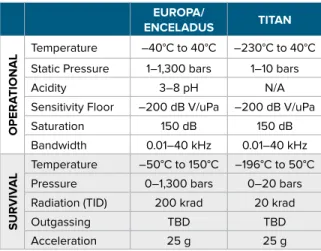
TABLE 2. Notional requirements for hydrophone.
EUROPA/
ENCELADUS TITAN
OPERATIONAL
Temperature –40°C to 40°C –230°C to 40°C Static Pressure 1–1,300 bars 1–10 bars
Acidity 3–8 pH N/A
Sensitivity Floor –200 dB V/uPa –200 dB V/uPa
Saturation 150 dB 150 dB
Bandwidth 0.01–40 kHz 0.01–40 kHz
SURVIVAL
Temperature –50°C to 150°C –196°C to 50°C
Pressure 0–1,300 bars 0–20 bars
Radiation (TID) 200 krad 20 krad
Outgassing TBD TBD
Acceleration 25 g 25 g
ing their larger claws (Bohnenstiehl et al., 2016). Snapping shrimp use this sound to stun their prey (typically small fish). It thus seems plausible that if life exists and thrives in these ocean worlds, even very simple creatures may have developed an acoustic-based means to sense and inter- act with their surroundings. We don’t know the exact character and frequency band these biotic sounds may take, but if they are higher amplitude than ambi- ent background noise levels, they can be detected, categorized, and quantified.
INCLUSION OF PAM
SYSTEMS ON OCEAN WORLD EXPLORATION VEHICLES
The hydrophone system described in this article could be used for a near-term mis- sion that inserts a vehicle into a Titan sea (e.g.,
Figure 1). One option would be to mount the hydrophone to the hull of a saildrone or submarine. We know from saildrone deployments on Earth that hull-mounted acoustic systems are sub- jected to large hull vibrations associated with vehicle movement across the sea surface. A better option would be to posi- tion the hydrophone on a tether, or possi- bly use a winch system to deploy an array of hydrophones some distance from the vehicle’s hull, while the electronics would remain inside and thermally controlled.
A recent study of flow noise on ocean gliders demonstrated that lower vehi- cle speeds (<25 cm s
–1) result in lower ambient noise levels in the 50–200 Hz band, to the point where ambient noise levels were comparable to fixed acous- tic recorders (Fregosi et al., 2020). In contrast, increased vehicle speeds will increase flow noise energy. Thus, record- ing relatively high-energy geophysical or cryogenic sound sources may be possi- ble from a surface vehicle, while seafloor bubble streams will likely be difficult to detect, given their low expected source levels. Bubble detection may only be pos- sible with relatively low vehicle speed, low ambient sound conditions, and proximity to the bubble source.
The hydrophone could also be a can-
didate for an initial Europa lander mis- sion (staying on the frozen surface) or a follow-on mission to Europa or Enceladus that would endeavor to enter a fluid sea, either via cracks in the sur- face ice or melting through the ice shell (e.g.,
Figure 2). This ocean worlds hydro- phone system may potentially enable detection and monitoring of geophysi- cal acoustic sources occurring within and at the boundaries of the oceans and seas on these moons. On Earth, underwater sound (especially low frequency) prop- agates very efficiently in dense media such as seawater, where acoustic signa- tures associated with geophysical events, meteorological events (e.g., high winds and waves caused by storms), or bio- logical sources (e.g., infrasonic baleen whales calls) are often detectable at dis- tances of tens to hundreds of kilometers (e.g., Dziak et al., 2015). Thus, acoustic sensing might also be an effective explo- ration tool within the exotic ocean worlds of the solar system. The acoustic record- ing system would need to be broadband enough to enable detection and identi- fication of acoustic signals from a wide range of sources from these outer worlds and capable of parameterization of the signals for transmission back to Earth.
In the following sections, we con- sider development of a passive acoustic recording module that might feasibly be included on a future mission to Europa, Enceladus, or Titan. The instrument design seeks to minimize its resource footprint to roughly match that available for realistic mission scenarios. An auton- omous signal processing capability would be built in as well to reduce the volume of acoustic data for transmission back to Earth. To assess the feasibility of includ- ing a passive acoustic system on a future ocean worlds exploration mission, we have taken the baseline Europa Lander resource budget to estimate instrument design limitations. Detailed payload and power considerations, as well as the use of outer world acoustic records for public engagement, are discussed further in the online supplementary materials.
TECHNICAL DEVELOPMENT OF AN OCEAN WORLDS PASSIVE ACOUSTIC SYSTEM We think autonomous hydrophone sys- tems that could be used to explore an ocean world already exist. Passive acous- tic monitoring (PAM) systems have been installed on an ocean glider and a profiler float (Matsumoto et al., 2011, 2013), suc- cessfully recording, detecting, and clas- sifying deep-ocean geophysical and bio- logical sounds. These instruments are useful analogs for what can be achieved on an ocean world in that they operate in remote, inhospitable environments, are very low-power, and perform with- out human intervention for long periods.
These oceanographic mobile platforms also have minimal downlink bandwidth through which to communicate (via Iridium satellite connection).
The hydrophone technology will need to be tested for the rigors of spaceflight, including materials selected for outgas- sing concerns, extreme temperatures that will be encountered on outer solar system worlds, and shock and vibration condi- tions during launch (
Table 2). The signal processing electronics are not a difficult design problem, but re-casting the auton- omous processing electronics into a sys- tem that can endure spaceflight, yet retain the minimal power requirements, is crit- ical. Lastly, the signal identification and classification algorithms needed to reduce the transmitted data sizes to meet down- link requirements for an ocean world exploration mission will be derived from similar concepts already used on mobile marine instruments and platforms on Earth. However, the bandwidth of poten- tial signals of interest may be much wider on outer solar system worlds than it is on Earth (all signals are of interest, both geo- physical and biological), and signal rank- ing system would need to be developed.
Ocean World Hydrophone Overview
The three developmental components of
an ocean worlds passive acoustic technol-
ogy project are (1) the hydrophone ele-
ment, (2) signal-processing electronics,
and (3) signal identification/ classification algorithms. The hydrophone and process- ing electronics could be built together to enable laboratory testing, and hydro- phone designs (for Titan, Europa, and Enceladus), electronics, and identifica- tion/ classification algorithms could be tested in sea trials on Earth. It is assumed that the signal-processing electronics would be held within the hull of the explo- ration vehicle to maintain a relatively hos- pitable temperature (e.g., –40°C or above).
This separation between the hydrophone sensor and instrument electronics will not be a problem (e.g., due to signal attenua- tion) for distances up to ~10 m, which is significantly longer than expected for the size of an ocean world exploration vehicle.
Table 2
shows the estimated require- ments for the successful performance of a hydrophone meeting our planetary explo- ration science goals. This exercise serves to show the different thermal environ- ments that the Titan hydrophone must survive. The temperature requirements are based on the expected ambient con- ditions in the target body’s seas, as well as survival requirements expected during deep-space cruise conditions and NASA’s planetary protection thermal-sterilization requirements to prevent contamination.
The pressure limits are set by the expected depth of the seas. We assumed the vehicle would remain within the top 10 km of the Europa or Enceladus oceans but may be at the floor of a Titan sea. The pH require- ments were set to account for potentially inhospitable acidic seas (Towner et al., 2006). The hydrophone sensitivity floor was set to enable detection of acoustic signals from a hydrothermal vent sound source at distances of tens to hundreds of meters, assuming terrestrial-ocean spher- ical spreading and transmission loss. We assumed an ambient noise floor similar to a quiet ice-covered sea (as in Antarctica;
Dziak et al., 2015) and a hydrother- mal vent acoustic source level (
Figure 4; Crone et al., 2006) caused by cavitation due to turbulent fluid flow through a vent chimney. The high signal saturation level is required to enable a high dynamic
range because of the uncertainty in the noise spectral level and the likelihood of a highly red spectral character.
Lastly, the high sample rate for both Europa/Enceladus and Titan hydro- phones (0.01–40 kHz;
Table 2) were selected to include a wide variety of potential signal sources. Types and fre- quencies of these sources as observed on Earth range from high-temperature hydrothermal vent systems (≤200 Hz) to seismo-acoustic volcano and cryo- genic signals (10–500 Hz), seafloor bub- ble streams (max ≤45 kHz), and poten- tial bioacoustics signals, which could be broadband and high frequency as well (10 Hz to tens of kilohertz). A 40 kHz sample rate would create 2.56 TB of acoustic data over a one-year recording period, which should be an easily man- ageable data volume, given current com- mercially available solid-state-drive stor- age capacities. However, given that the data will be processed in real time for transmission of detected events back to Earth, there really is no need to retain the data onboard the vehicle, enabling use of lower-capacity, lower-power data storage systems. This data archive will also only be needed for the duration of the vehicle’s mission on an outer world, as the data will be used by embedded identification and classification algorithms that will param- eterize signals of value for transmission back to Earth (see following sections).
Hydrophone Requirements for Europa/Enceladus
The relatively benign thermal envi- ronment (by outer solar system stan- dards) needed for a Europa/Enceladus hydrophone suggests that a standard commercial product may be suitable.
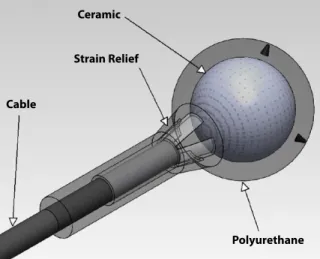
Deepwater, omnidirectional transduc- ers are available from several manufac- turers (e.g., Teledyne Reson;
Figure 5).
Many commercial entities that supply hydrophones for oceanographic applica- tions are already familiar with designing transducers capable of thermal steriliza- tion for medical applications. Whether the materials encasing the hydrophone sensor head are compatible with space- flight will still need to be examined.
Also, the stringent NASA planetary pro- tection requirements for Europa and Enceladus missions mean that outgas- sing and cold performance of the materi- als chosen need to be considered, as well as the material’s ability to survive ther- mal sterilization. Outgassing characteris- tics are driven by the requirement to not contaminate other instruments during spaceflight while in a hard vacuum for several years. The shock and vibration requirements needed for spaceflight may necessitate some redesign of an off-the- shelf transducer head. However, piezo- electric transducers are often robust where mechanical shock and vibration are unlikely to damage the device.
FIGURE 5. Schematic of an example hydrophone for space- flight development. Shock and vibration requirements for space flight may necessitate transducer redesign; however, piezoelec- tric transducers are often robust when subjected mechanical shock. As transducers are capa- ble of both receiving and emit- ting sound, it is possible this sen- sor could also serve engineering roles on a future vehicle as an active sonar, or possibly even as an acoustic modem for a com- munication network composed of nearby seafloor sensors.
Ceramic
Cable
Polyurethane Strain Relief
which will make the best use of the 148 dB dynamic range of the 24-bit ADC. As an example of the wide range of noise lev- els possible,
Figure 6shows the observed noise spectra in a variety of conditions in Earth’s ocean, where ambient noise from natural sources can range in power spec- tral density by ~100 dB re μPa
2/Hz.
Signal Identification and Classification Algorithms
Acoustic signal detection and classifica- tion algorithms are used widely in ocean- ographic research to automate evaluation of long-term acoustic data sets for geo- physical and biological signals of interest in the ocean (for a review, see Mellinger et al., 2016). Over the last decade, acous- tic near-real-time applications have become important tools in the detection of marine mammal vocalizations for use in assessing their population sizes and geographic distributions (e.g., Klinck et al., 2012). Significant advancements have been made in the development and operation of stationary and mobile auton- omous systems that screen the under- water soundscape continuously for sig- nals of interest and report the occurrence of such signals back to shore, commonly through an Iridium satellite link (Klinck et al., 2012; Matsumoto et al., 2013;
Baumgartner et al., 2019). The software implemented on these systems is typi- cally multilayered. In the initial stage, a detection algorithm flags general sounds of interest. First-stage detectors are often very simple in nature (e.g., band-limited energy detector) and generate a signif- icant amount of false positive detec- tions; however, they are very efficient energy-wise, with a low-computational load (Mellinger et al., 2016) and can even be analog in nature (e.g., analog filter banks). If acoustic signals of inter- est are detected, they are parsed into a second-stage classifier for verification and identification (Klinck and Mellinger, 2011). As the occurrence ratio of interest- ing signals versus noise is usually heav- ily skewed toward noise, this helps to keep the overall power consumption low.
extreme temperature, so this approach would constitute a strong test of the design presented.
Signal Processing Electronics Passive acoustic recording and process- ing electronics that have been built for deep-sea mobile platforms (Matsumoto et al., 2011, 2013) would need to be adapted to enable them to survive space- flight and yet retain the high perfor- mance and extremely low power require- ments that an ocean worlds exploration mission would require. Here, we address two aspects of this adaptation. The first is whether the system architecture for ter- restrial deep-sea instrumentation is com- patible with deep-space flight, typically meaning that it is radiation-hardened against cosmic ray hits. Until recently, this would have meant a redesign of the architecture (now using ARM micro- processors and digital signal processors, or DSPs). However, in the last year, likely because of pressure from the CubeSat community, radiation-hardened ARM processors are now available (e.g., Vorago Technologies), and radiation-hardened DSPs have also existed for somewhat longer. Thus, adapting the existing terres- trial signal processing electronics will not be a difficult process.
A second area of significant concern in designing signal processing electron- ics for making acoustic recordings in any new environment is to properly anticipate the different ambient noise levels that will occur in the various outer-world environ- ments and how the levels will differ from Earth’s ocean. Models of the expected noise levels on the ocean and surface sea worlds (Arvelo and Lorenz, 2013) allow us to anticipate to some extent ocean and sea noise acoustic environments on Europa and Titan. In our view, it will be critical to develop an amplifier with auto- matic gain control (AGC) to avoid satu- rating our analog-to-digital converters (ADC) if the noise environment is vastly different than the predictions. Adjustable gain amplifiers can be controlled by the processor to avoid signal saturation, Hydrophone Requirements for Titan
Meeting hydrophone design require- ments for Europa/Enceladus would be the first step in adapting a hydrophone for survival and performance under the envi- ronmental conditions needed for Titan.
Principally, this would involve increas- ing the cold tolerance of the hydro- phone from that acceptable for Europa/
Enceladus down to –183°C for Titan’s surface temperatures. Also, depending on how the platform is delivered, for exam- ple, in slow parachute descent, the vehi- cle could experience the Titan tropo- pause minimum temperature of –203°C.
To ensure continued performance at these very low temperatures would take further redesign of the mechanical struc- tures of the hydrophone and careful selection of materials. Simpler narrow- band transducers have been sent to Titan (e.g., Towner et al., 2006), and Arvelo and Lorenz (2013) successfully tested another narrowband transducer to liquid nitrogen (LN
2) temperatures of 77 K, colder than Titan’s 90–94 K surface temperatures.
Thus, it appears that a material solution for a broadband sensor would be avail- able. The acoustic impedance of Titan’s seas is different than in Earth’s ocean, of course, but not so dramatically that it is expected to be a driver in the redesign.
The difference in the fluid properties could be accommodated to optimize the hydrophone for Titan’s ethane/methane seas. Lastly, an important simplification exists for Titan instrumentation, in that the ocean is electrically insulating. Many of the reliability issues that confound ter- restrial electronics in marine applications are obviated, and electrical conductors can be exposed without issue.
One approach to laboratory testing a
Titan hydrophone would be to immerse
the hydrophone in a Dewar of LN
2, sim-
ilar to the approach used by Arvelo
and Lorenz (2013). The LN
2tempera-
ture would slightly exceed the extremely
cold surface temperature of Titan, and
LN
2differs from seawater in acous-
tic impedance. The biggest challenge
in designing a Titan hydrophone is the
This is a key feature as these systems are always power limited, with a finite battery storage capacity.
Single Versus Multiple Sensors In our experience, it is very common to detect signals (broadband and single tone) that are not easily classified as geo- physical, meteorological, cryogenic, or biological and that may have character- istics of all three. One aspect that is of tremendous aid in evaluating the source mechanism of a given signal is to deter- mine the location of the source (e.g., sea- floor or water column, fault line or sea- mount, ice edge or open ocean). Having the ability to estimate the location, or at least the direction, of the acous- tic source will greatly aid in determin- ing the nature of the source. To achieve this capability may require having mul- tiple sensors (separated by a short dis- tance proportional to the wavelength of signals to be recorded), or employing a single vector hydrophone to derive sig- nal directionality. Indeed, employing vec- tor sensors for directionality may help differentiate between noise generated by the lander and actual environmen- tal signals. However, because of design complications associated with a vector sensor (added weight, need for a com- pass, and three-axis accelerometer), it would still seem best to use either a sin- gle hydrophone sensor element or poten- tially employ two to three hydrophones on the lander. Further detailed discus- sions on (1) signal identification and clas- sification algorithms, (2) data transmis- sion considerations from Titan to Earth, and (3) planetary protection tests (space- flight shock and vibration) needed for a hydrophone system to be included on a Europa/Enceladus lander or Titan sail- drone are presented in the online supple- mentary material.
SUMMARY
We presented an overview of hydro- phone sensor systems and signal process- ing techniques developed for underwater acoustic research on Earth and described
how these sound sensing technologies might be used to explore ocean and sur- face sea worlds in the outer solar system.
Passive acoustic recording and process- ing electronics that have been built for deep-sea mobile platforms (Matsumoto et al., 2011, 2013) could be adapted to survive spaceflight and yet retain the high performance and extremely low power requirements of an ocean worlds explo- ration mission. The hydrophone, micro- processor, and system electronics will also need to withstand the thermal ster- ilization required under NASA’s plan- etary protection requirements. Both of these hydrophone designs could be tested in deep-ocean conditions on Earth by lowering the instrument to 1,300 m, equivalent to ~10 km depth on Europa and ~120 km depth on Enceladus, suf- ficient for exploration beneath the ice shell on these worlds. The Titan hydro- phone would need to be tested in an LN
2tank, a proxy for the thermal conditions of Titan’s seas.
The acoustic monitoring system pro- posed here could be a candidate for a Europa or Enceladus mission that would seek a means to enter fluid oceans, via
either cracks or melting through the ice shell. The Europa/Enceladus oceans should be dominated by cryogenic sounds from the ice shell and geophysi- cal sound sources generated in the sub- ocean lithic crust. An under-ice hydro- phone should have a much better chance of detecting acoustic signals from a sub- ocean volcano-tectonic source than seismometers on the ice shell surface.
However, passive acoustic systems might best be used for a near-term mission to a Titan surface sea. The hydrophone sen- sor could be deployed on a tether, or possibly use a winch system to deploy a hydrophone array some distance from a vehicle. Previous studies (e.g., Arvelo and Lorenz, 2013; Lopes et al., 2013) assert that Titan should have a dynamic undersea soundscape where signals from cryo-volcanic activity, and harmonic tones from fluid flow at hydrothermal vent chimneys, are all potentially detect- able sources of sound.
An accepted possible scenario for life to thrive on worlds like Europa, Enceladus, and Titan is at hydrothermal fluid springs near seafloor volcanic centers or, as may be the case for Titan, associated with
FIGURE 6. Diagram showing various noise spectra from different conditions in Earth’s ocean, rang- ing from under sea ice (quietest) to high sea states and busy shipping channels (noisiest). The red dashed lines indicate high and low biological background noise levels. Predictions of these noise levels on the ocean worlds are preliminary at best, and combined with the variability that may occur from place to place, it is critical that a passive acoustic recording system can dynamically alter gain settings. After Dahl et al. (2007)
Pressure Spectral Density (dB reµPa2/Hz)
Frequency (Hz)
Thermal
100 101 102 103 104 105
120 110 100 90 80 70 60 50 40 30 20
Under pack ice in the central Arctic
Under smooth sea ice in the Antarctic (no wind) East China Sea
Wind, 2–4 m s–1
Wind, 5 m s–1 Australian waters Rain, 2–5 mm h–1 with varying wind speed High and low tropical biological background Norwegian Sea 1957–1961
Pt. Sur, 1990s Pt. Sur, 1960s Korean Straits off Busan Harbor of Long Beach, CA, 1960s Holu Spectrum
cold seeps in the shallow seas. These hot/
cold springs could provide the energy source for chemosynthetic ecosystems to develop. Thus, one method to find life would be to detect and locate these vol- canic centers or cold seep sources using their geophysical acoustic signals, then directly sample the fluids to search for chemical evidence of life. Alternatively, it is not out of the realm of possibility that if extant macro-life has evolved on these ocean worlds, it may also produce some sort of detectable acoustic signal.
Our goal was to describe methods on how to design and protect a passive acoustic monitoring and signal detec- tion system for the rigors of spaceflight and planetary exploration. We think it may be achievable with the methods outlined here.
ONLINE SUPPLEMENTARY MATERIALS The supplementary materials are available online at https://doi.org/10.5670/oceanog.2020.221.
REFERENCES
Arvelo, J., and R. Lorenz. 2013. Plumbing the depths of Ligeia: Considerations for depth sounding in Titan’s hydrocarbon seas. Journal of the Acoustical Society of America 134:4335, https://doi.org/
10.1121/1.4824908.
Au, W.W.L., A.N. Popper, and R.R. Fay. 2000.
Hearing by Whales and Dolphins. Springer-Verlag, New York, 485 pp.
Baumgartner, M.F., J. Bonnell, S.M. Van Parijs, P.J. Corkeron, C. Hotchkin, K. Ball, L-P. Pelletier, J. Partan, D. Peters, J. Kemp, and others. 2019.
Persistent near real-time passive acoustic monitor- ing for baleen whales from a moored buoy: System description and evaluation. Methods in Ecology and Evolution 10(9):1,476–1,489, https://doi.org/
10.1111/2041-210X.13244.
Bohnenstiehl, D.R., A. Lillis, and D.B. Eggleston.
2016. The curious acoustic behavior of estua- rine snapping shrimp: Temporal patterns of snap- ping shrimp sound in sub-tidal oyster reef habitat.
PLOS ONE 11(1):e0143691, https://doi.org/10.1371/
journal.pone.0143691.
Cadek, O., G. Tobie, T. Van Hoolst, M. Massé, G. Choblet, A. Lefévre, G. Mitri, R.-M. Baland, M. Behounková, O. Bourgeois, and A. Trinh.
2016. Enceladus’s internal ocean and ice shell constrained from Cassini gravity, shape, and libration data. Geophysical Research Letters 42(11):5,653–5,660, https://doi.org/ 10.1002/
2016GL068634.
Caplan-Auerbach, J., R.P. Dziak, J. Haxel, D.R. Bohnenstiehl, and C. Garcia. 2017.
Explosive processes during the 2015 erup- tion of Axial Seamount, as recorded by sea- floor hydrophones. Geochemistry, Geophysics, Geosystems 18(4):1,761–1,774, https://doi.org/
10.1002/ 2016GC006734.
Choblet, G., G. Tobie, C. Sotin, M. Behounková, O. Cadek, F. Postberg, and O. Soucek. 2017.
Powering prolonged hydrothermal activity inside Enceladus. Nature Astronomy 1:841–847, https://doi.org/ 10.1038/s41550-017-0289-8.
Chyba, C.F., and C.B. Phillips. 2001. Possible eco- systems and the search for life on Europa.
Proceedings of the National Academy of Sciences of the United States of America 98(3):801–804, https://doi.org/10.1073/pnas.98.3.801.
COLDTech. 2016. Concepts for Ocean Life Detection, NASA Research Announcement in Space and Earth Sciences, ROSES-2016, https://nspires.nasaprs.com.
Cordier, D., O. Mousis, J.I. Lunine, P. Lavvas, and V. Vuitton. 2009. An estimate of the chemical composition of Titan’s lakes. The Astrophysical Journal Letters 707(2):L128–L131, https://doi.org/
10.1088/0004-637X/707/2/L128.
Cordier, D., F. Garcia-Sanchez, D.N. Justo-Garcia, and G. Liger-Belair. 2017. Bubble streams in Titan’s seas as a product of liquid N2 + CH4 + C2H6 cryogenic mixture. Nature Astronomy 1:0102, https://doi.org/
10.1038/ s41550-017-0102.
Crone, T.J., W.S.D. Wilcock, A.H. Barclay, J.D. Parsons.
2006. The sound generated by mid-ocean ridge black smoker hydrothermal vents. PLOS ONE 1(1):e133, https://doi.org/10.1371/journal.
pone.0000133.
Dahl, P.H., J.H. Miller, D.H. Cato, and R.K. Andrew.
2007. Underwater ambient noise. Pp. 23–33 in Acoustics Today, January 2007.
Dougherty, M.K., K.K. Khurana, F.M. Neubauer, C.T. Russell, J. Saur, J.S. Leisner, and M.E. Burton.
2006. Identification of a dynamic atmosphere at Enceladus with the Cassini Magnetometer.
Science 311(5766):1,406–1,409, https://doi.org/
10.1126/science.1120985.
Dziak, R.P., J.H. Haxel, D.R. Bohnensteihl, W.W. Chadwick Jr., S.L. Nooner, M.J. Fowler, H. Matsumoto, and D.A. Butterfield. 2012. Seismic precursors and magma ascent before the April 2011 eruption at Axial Seamount. Nature Geoscience 5:478–482, https://doi.org/10.1038/
ngeo1490.
Dziak, R.P., D.R. Bohnenstiehl, K.M. Stafford, H. Matsumoto, M. Park, W.S. Lee. M.J. Fowler, T.-K. Lau, J.H. Haxel, and D.K. Mellinger. 2015.
Sources and levels of ambient ocean sound near the Antarctic Peninsula. PLOS ONE 10(4):e0123425, https://doi.org/10.1371/journal.pone.0123425.
Dziak, R.P., J.H. Haxel, H. Matsumoto, T.-K. Lau, S. Heimlich, S. Nieukirk, D. K. Mellinger, J. Osse, C. Meinig, N. Delich, and S. Stalin. 2017. Ambient sound at Challenger Deep, Mariana Trench.
Oceanography 30(2):186–197, https://doi.org/
10.5670/oceanog.2017.240.
Dziak, R.P., H. Matsumoto, R.W. Embley, S.G. Merle, T.-K. Lau, T. Baumberger, S.R. Hammond, and N. Rainault. 2018. Passive acoustic records of seafloor methane bubble streams on the Oregon continental margin. Deep Sea Research Part II 150:210–217, https://doi.org/10.1016/j.dsr2.
2018.04.001.
Erbe, C., and A.R. King. 2008. Automatic detec- tion of marine mammals using information entropy. Journal of the Acoustical Society of America 124:2,833–2,840, https://doi.org/ 10.1121/
1.2982368.
Fregosi, S., D.V. Harris, H. Matsumoto, D.K. Mellinger, C. Negretti, D.J. Moretti, S.W. Martin, B. Matsuyama, P.J. Dugan, and H. Klinck. 2020. Comparison of fin whale 20 Hz call detections by deep-water mobile autonomous and stationary recorders. Journal of the Acoustical Society of America 147:961, https://doi.org/ 10.1121/ 10.0000617.
Hartwig, J.W., A. Colozza, R.D. Lorenz, S. Oleson, G. Landis, P. Schmitz, M. Paul, and J. Walsh. 2016.
Exploring the depths of Kraken Mare—Power, ther- mal analysis, and ballast control for the Saturn Titan submarine. Cryogenics 74:31–46, https://doi.org/
10.1016/j.cryogenics.2015.09.009.
Hayes, A.G. 2016. The lakes and seas of Titan.
Annual Review of Earth and Planetary Science 44:57–83, https://doi.org/10.1146/
annurev- earth- 060115-012247.
Hemingway, D., F. Nimmo, H. Zebkar, and L. Iess.
2013. A rigid and weathered ice shell on Titan.
Science 500(7464):550–442, https://doi.org/
10.1038/nature12400.
Hood, J., D.G. Flogeras, and J.A. Theriault. 2016.
Improved passive acoustic band- limited energy detection for cetaceans. Applied Acoustics 106:36–41, https://doi.org/10.1016/
j.apacoust.2015.12.011.
Hofgartner, J.D., A.G. Hayes, J.I. Lunine, H. Zebker, B.W. Stiles, C. Sotin, J.W. Barnes, E.P. Turtle, K.H. Baines, R.H. Brown, and others. 2014.
Transient features in a Titan sea. Nature Geoscience 7:493–496, https://doi.org/10.1038/
ngeo2190.
Iess, L., R.A. Jacobson, M. Ducci, D.J. Stevenson, J.I. Lunine, J.W. Armstrong, S.W. Asmar, P. Racioppa, N.J. Rappaport, and P. Tortora. 2012. The tides of Titan. Science 337(6093):457–459, https://doi.org/
10.1126/science.1219631.
Johnson, H.P., U.K. Miller, M.S. Salmi, and
E.A. Solomon. 2015. Analysis of bubble plume dis- tributions to evaluate methane hydrate decom- position on the continental slope. Geochemistry, Geophysics, Geosystems 16:3,825–3,839, https://doi.org/10.1002/2015GC005955.
Keenan, R.E., and L.R.L. Merriam. 1991. Arctic abyssal T phases: Coupling seismic energy to the ocean sound channel via under ice scattering. Journal of the Acoustical Society of America 89:128, https://doi.org/ 10.1121/1.400648.
Klein, F.W., R.Y. Koyanagi, J.S. Nakata, and W.R. Tanigawa. 1987. The seismicity of Kilauea’s magma system. Pp. 1,019–1,186 in Volcanism in Hawai’i: Papers to Commemorate the 75th Anniversary of the Founding of the Hawaiian Volcano Observatory. R.W. Decker, T.L. Wright, and P.H. Stauffer, eds, US Geological Survey Professional Paper 1350.
Klinck, H., and D.K. Mellinger. 2011. The energy ratio mapping algorithm: A tool to improve the energy- based detection of odontocyte echolo- cation clicks. Journal of the Acoustical Society of America 129:1,807–1,812, https://doi.org/ 10.1121/
1.3531924.
Klinck, H., D.K. Mellinger, K. Klinck, N.M. Bogue, J.C. Luby, W.A. Jump, G.B. Shilling, T. Litchendorf, A.S. Wood, G.S. Schorr, and R.W. Baird. 2012.
Near-real-time acoustic monitoring of beaked whales and other cetaceans using a Seaglider.
PlosONE 7(5):e36128, https://doi.org/10.1371/journal.
pone.0036128.
Lee, S., M. Zanolin, A.M. Thode, R.T. Pappalardo, and N.C. Makris. 2003. Probing Europa’s interior with natural sound sources. Icarus 165:144–167, https://doi.org/10.1016/S0019-1035(03)00150-7.
Leifer, I., and D. Tang. 2007. The acoustic signature of marine seep bubbles. Journal of the Acoustical Society of America 121(1), https://doi.org/ 10.1121/
1.2401227.
Leighton, T.G., P.R. White, and D.C. Finfer. 2013. The opportunities and challenges in the use of extra- terrestrial acoustics in the exploration of the oceans of ice planetary bodies. Earth, Moon, and Planets 109:91116, https://doi.org/10.1007/
s11038-012-9399-6.
Lopes, R.M.C., R.L. Kirk, K.L. Mitchell, A. LeGall, J.W. Barnes, A. Hayes, J. Kargel, L. Wye, J. Radebaugh, E.R. Stofan, and others. 2013.
Cryovolcanism on Titan: New results from Cassini RADAR and VIMS. Journal of Geophysical Research 118:416–435, https://doi.org/10.1002/
jgre.20062.
Lorenz, R.D., T. Tokano, and C. Newman. 2012. Winds and tides of Ligeia Mare, with application to the drift of the proposed TiME (Titan Mare Explorer) capsule. Planetary and Space Science 60:72–85, https://doi.org/10.1016/j.pss.2010.12.009.
Lorenz, R.D. 2014. The flushing of Ligeia: Composition variations across Titan’s seas in a simple hydrological model. Geophysical Research Letters 41(16):5,764–5,770, https://doi.org/
10.1002/2014GL061133.