
JAIST Repository: ナレッジ・マネジャーを教育する:コンピタンス・ベース・アプローチ
234
0
0
全文
(2) Educating Knowledge Managers: A Competence-Based Approach. by André Saito. Submitted to Japan Advanced Institute of Science and Technology in partial fulfillment of the requirements for the degree of Doctor of Philosophy. Supervisor: Prof. Dr. Katsuhiro Umemoto. School of Knowledge Science Japan Advanced Institute of Science and Technology. September 2007.
(3) © 2007 by André Saito. This work is licensed under a Creative Commons Attribution 3.0 License. You are allowed to share (to copy, distribute and transmit the work) and to remix (to adapt the work), under the condition to attribute the work to the author (but not in any way that suggests that he endorses you or your use of the work). More information available at: <http://creativecommons.org/licenses/by/3.0/>.. File: Dissertation_v7.40_pdf.doc.
(4) Abstract. Keywords: knowledge management competence, knowledge management education, knowledge manager, knowledge economy, knowledge society.. The emerging knowledge economy and society bring new challenges to organizations, managers and workers: the accelerating pace of innovation in products, services and processes; the growing importance of work that requires extensive education, experience and judgment; and the escalating complexity of knowledge, which becomes increasingly distributed and changeable, among others. The field of knowledge management (KM), however young, has attracted contributions from a wide range of disciplines seeking to provide answers to those challenges, and may be a good source of instruction to managers and workers willing to get prepared for them. In this work, we propose a model of individual knowledge management competence to support the education of knowledge managers, understood as general managers capable of dealing with those challenges. A preliminary model was theoretically developed after an extensive review of literature in the KM field and on the concept of competence, and then validated and refined in two ways: first, a questionnaire survey of KM researchers and practitioners, and second, a content analysis of curricula from master's programs in KM. The model explains KM competence as specific combinations of presumed KM-related activities and the individual capabilities required to perform them. It also indicates that those activities and capabilities are strongly dependent on particular perspectives on knowledge and its management. We describe four basic perspectives – information, human, computing, and strategy – that lead to very distinct ways to understand and practice KM. From an information-oriented perspective, knowledge is mostly seen as codified/codifiable content and transferable expertise/experience, and KM usually means to facilitate i.
(5) ii. Educating Knowledge Managers: A Competence-Based Approach. access to information, expertise and so-called best practices. From a human-oriented perspective, knowledge is largely interpreted as social practice and collective sense making, and KM usually means to cultivate contexts and facilitate connections that improve practice and sense making. From a computing-oriented perspective, knowledge is typically regarded as objective and suited to computational approaches, and KM normally means to develop systems/methods that compute knowledge and to build computational models for decision making. Finally, from a strategy-oriented perspective: knowledge is interpreted at the organizational level as capability or asset, and KM typically means to prioritize knowledge valuable to the organization and to design and implement strategies and processes to acquire, create, use and protect it. Those perspectives can be combined in myriad ways, and the model proposed suggests not a single definition of KM competence, but multiple profiles based on distinct understandings of what comprises KM. The study describes four typical profiles being developed in current KM education: the information manager, the learning facilitator, the knowledge systems developer and the KM manager. Finally, we conclude this work by suggesting other profiles that better focus on the managerial challenges in the knowledge economy and society, and propose ways to develop them through improved graduate programs..
(6) To Mom and Dad, my endless sources of love and wisdom To Sandra, who makes me believe in humankind To Amanda and Leonardo, the guiding light of my life. iii.
(7)
(8) Acknowledgements I write these paragraphs with a sense of achievement. A doctoral dissertation is a significant challenge, a hurdles race where every step may take you out of the game. But I also have a deep feeling that such an achievement is not mine alone. I have received the help and support of so many people along the way that I can certainly speak of this dissertation as our work. The most important contribution has come undoubtedly from Umemoto Sensei. In many subtle ways, this work has been influenced by his knowledge and wisdom. By constantly raising relevant authors and papers unknown to me, by repeatedly challenging my research questions and methods, or by guiding and supporting me in the most difficult moments, he has been critical to my success. I could testify his laudable coaching skills along the whole process, from the very beginning when designing the research proposal, to the very end, when preparing for the defense. His presence at the lab, his care with his students, his insightful comments at the lab seminars, his high standards, his acute sense of what works or not, and much more have all been extremely enlightening for me. I have read about servant leadership before, but it was from Umemoto Sensei that I actually grasped its meaning. Those who read this may not understand the extent of his influence, but I will be forever grateful for these lifelong teachings. I am also indebted to Nakamori Sensei, dean of the School of Knowledge Science and director of the Center of Excellence Program “Technology Creation Based on Knowledge Science,” who has hired me as a research assistant and provided me with a stimulating environment wherein I could expand and refine much of my thought. To all researchers and colleagues at the COE center, who together cultivated and nurtured such an inspiring ba, my most sincere gratitude. The support I have received from closest friends at JAIST went way beyond academic matters. Life during a doctoral program may be miserable at times, but their cheerful companionship made it lighter and more meaningful. I deserve special thanks to Marcelo Machado, who introduced me to life on campus, Shunji.
(9) Iwatsuki, my forever sempai and friend, Tunç Medeni, the spirit behind our most lively talks, Totok Wibowo, our wise guide, Shio Hayashi, our most beloved ane, and Euler de Souza, who knew more about Nomi in one month than me in one year and a half. Last, but not least, I would like to express my special thanks to those to whom I dedicate all this effort. My parents Ary and Tomi, who encouraged me at the very beginning and have supported me all along; my wife Sandra, who has kept me on track and never left me alone, besides the long periods away from home; and my kids, Amanda and Leonardo, who fill my life with joy and hope, and inspire me to be and do my best, always..
(10) Table of Contents Abstract .................................................................................................................... i Acknowledgements ................................................................................................. v Table of Contents .................................................................................................. vii List of Figures ........................................................................................................ xi List of Tables ....................................................................................................... xiii Chapter 1: Introduction. 1. 1.1 Background and problem setting ..................................................................... 2 1.1.1 Challenges in the emerging knowledge society.................................... 2 1.1.2 The growing knowledge management field ......................................... 3 1.1.3 The competence movement .................................................................. 6 1.1.4 Problem setting ..................................................................................... 7 1.2 Objectives and research questions ................................................................... 7 1.3 Methodology of the study ................................................................................ 8 1.4 Organization of the study................................................................................. 9 Chapter 2: Literature Review. 11. 2.1 Introduction.................................................................................................... 11 2.2 The knowledge economy and society............................................................ 11 2.3 The knowledge management field................................................................. 14 2.3.1 Bibliometric studies ............................................................................ 14 2.3.2 Disciplinary perspectives.................................................................... 20 2.3.2.1 2.3.2.2 2.3.2.3 2.3.2.4 2.3.2.5 2.3.2.6 2.3.2.7. Strategy ..................................................................................................... 20 Accounting ................................................................................................ 24 Organization science ................................................................................. 24 Human resources....................................................................................... 26 Information systems.................................................................................. 30 Artificial intelligence ................................................................................ 32 Library and information science ............................................................... 34. 2.3.3 Knowledge management practice....................................................... 34 2.4 The concept of competence ........................................................................... 35 2.4.1 Competence as a set of individual resources ...................................... 36 2.4.2 Competence as a standard of expected performance .......................... 41 2.4.3 Competence and actual performance.................................................. 45 2.5 Summary of the literature review .................................................................. 49. vii.
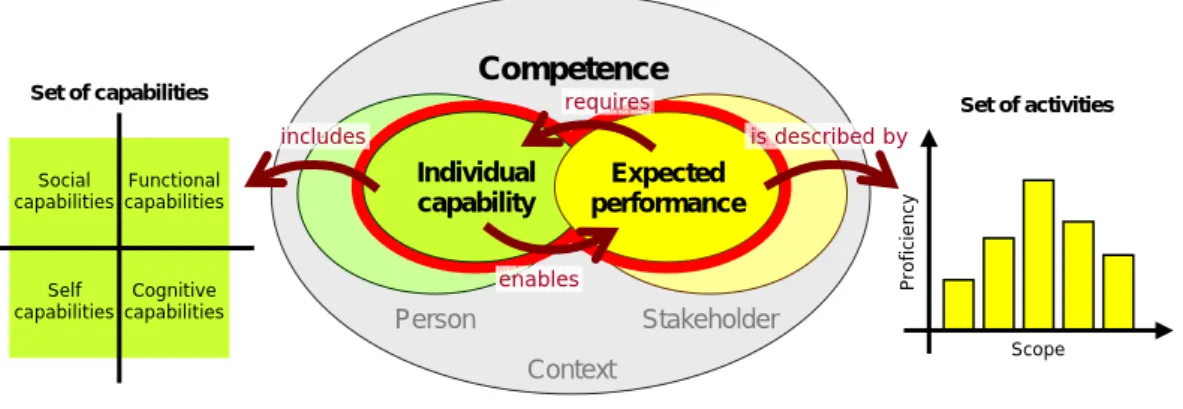
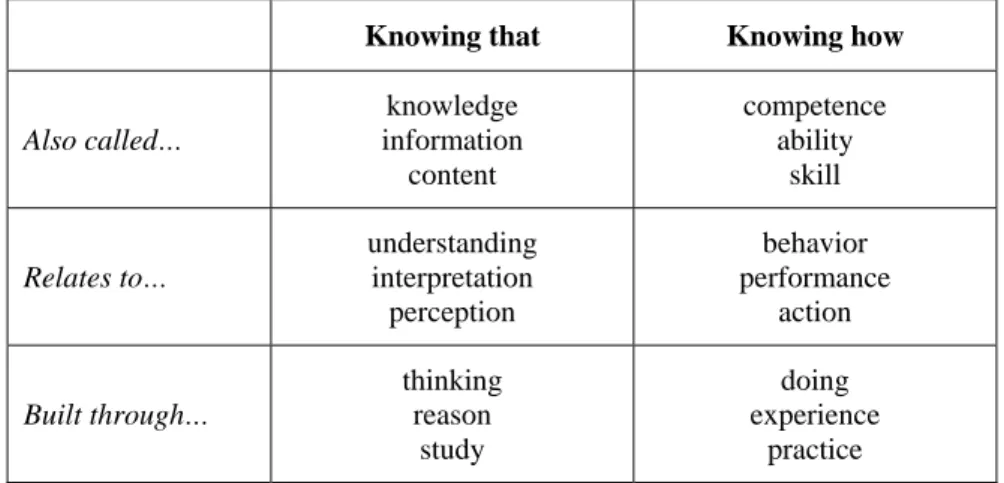
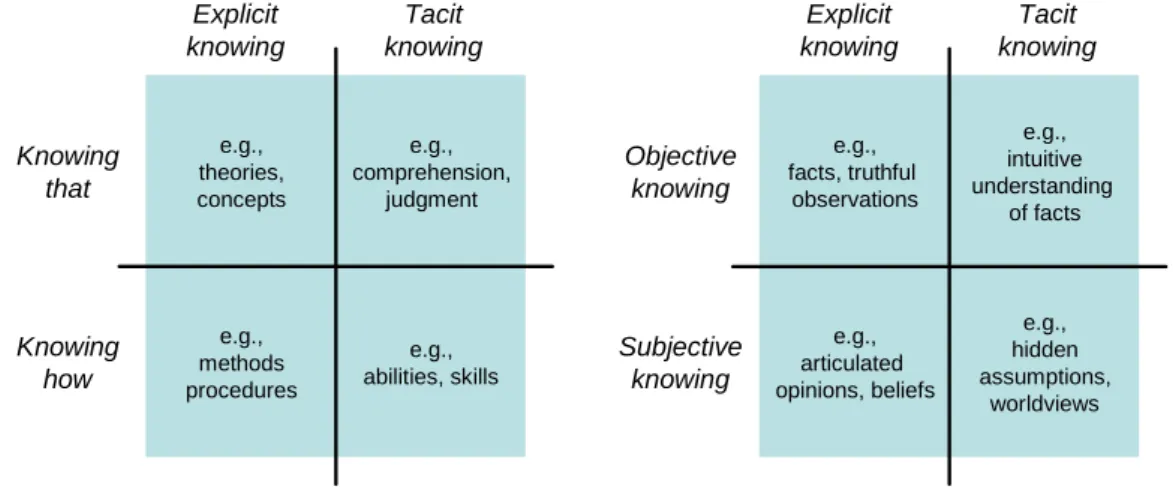
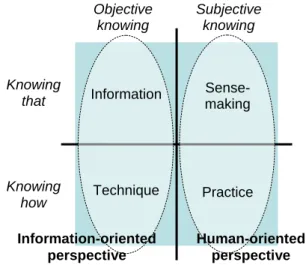
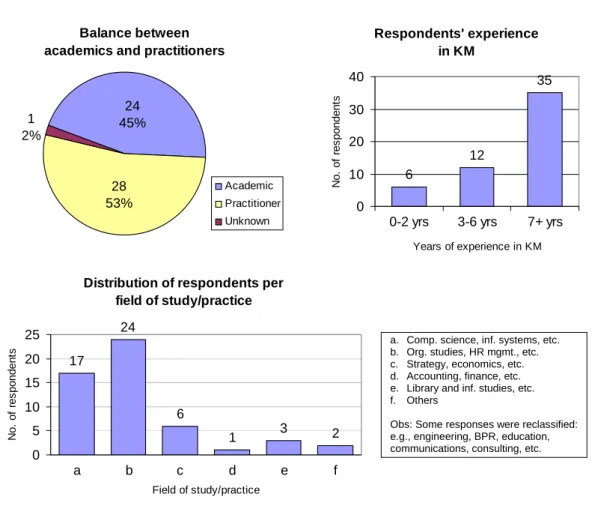
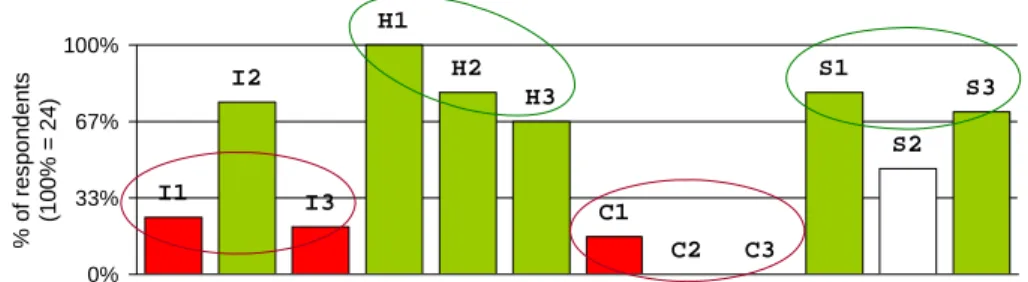
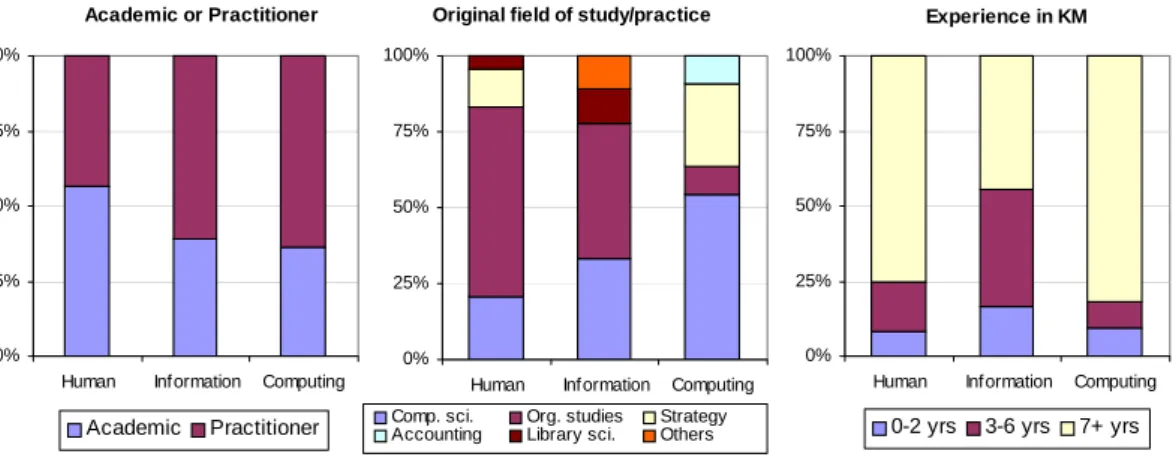
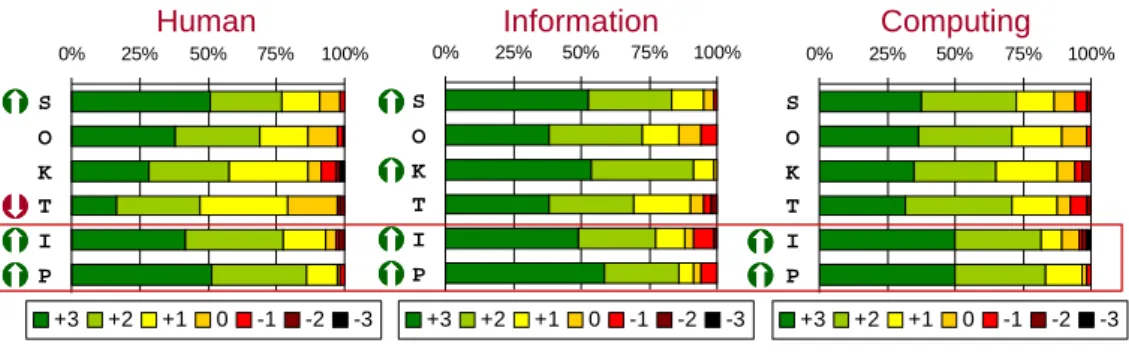
(11) viii. Educating Knowledge Managers: A Competence-Based Approach. Chapter 3: Modeling Individual KM Competence. 53. 3.1 Introduction ....................................................................................................53 3.2 Theoretical background..................................................................................54 3.2.1 A working definition of competence...................................................54 3.2.2 Disciplinary contributions to KM .......................................................55 3.3 Epistemological perspectives on KM.............................................................56 3.3.1 Fundamental distinctions about knowledge ........................................57 3.3.2 Major perspectives on knowledge management .................................60 3.3.2.1 3.3.2.2 3.3.2.3 3.3.2.4. Information-oriented KM: knowledge as content and expertise ...............62 Human-oriented KM: knowledge as practice and sense-making ..............63 Computing-oriented KM: knowledge as computational methods and models ................................................................................................64 Strategy-oriented KM: knowledge as organizational capability and asset ....................................................................................................65. 3.3.3 KM activity conditioned by epistemological perspective ...................68 3.4 Proposed model of individual KM competence.............................................68 3.4.1 Identifying typical KM activities ........................................................69 3.4.2 Identifying typical KM capabilities ....................................................71 3.4.3 Summary .............................................................................................75 3.5 Summary of the chapter .................................................................................76 Chapter 4: Survey of KM Researchers and Practitioners. 79. 4.1 Introduction ....................................................................................................79 4.2 Survey design .................................................................................................79 4.2.1 Objectives............................................................................................79 4.2.2 Questionnaire design and testing.........................................................80 4.2.3 Sampling and data collection ..............................................................84 4.3 Results ............................................................................................................84 4.3.1 Perspectives on KM according to priority activities ...........................86 4.3.2 Relevant capabilities according to perspectives on KM .....................92 4.3.3 Summary of findings...........................................................................98 4.4 Implications..................................................................................................100 4.4.1 Explaining the missing strategy-oriented perspective.......................100 4.4.2 Refining the characteristics of perspectives on KM .........................101 4.4.3 Relating perspectives, activities and capabilities ..............................102 4.5 Summary of the chapter ...............................................................................104 Chapter 5: KM Competence in Graduate KM Education. 107. 5.1 Introduction ..................................................................................................107 5.2 Overview of KM education..........................................................................107.
(12) Table of Contents. ix. 5.3 Analysis of master’s programs in KM......................................................... 109 5.3.1 Research design ................................................................................ 109 5.3.2 Results............................................................................................... 112 5.3.3 Summary of findings ........................................................................ 118 5.4 Implications ................................................................................................. 120 5.4.1 Defining the boundaries and essence of KM .................................... 120 5.4.2 Integrating KM perspectives and program’s curriculum.................. 121 5.4.3 Clarifying the nature of KM capabilities .......................................... 122 5.5 Summary of the chapter............................................................................... 124 Chapter 6: Conclusions. 127. 6.1 Introduction.................................................................................................. 127 6.2 Answers to research questions..................................................................... 127 SRQ 1: How can the field of knowledge management be described, given the present diversity of perspectives? ..................................... 127 SRQ 2: What are the essential elements of KM competence, and how are they related to each other? .......................................................... 129 SRQ 3: What kind of competence is being developed in graduate KM education? ......................................................................................... 131 MRQ: What is individual knowledge management competence, from an educational perspective? .............................................................. 132 6.3 Theoretical implications .............................................................................. 133 6.3.1 A model of individual KM competence ........................................... 133 6.3.2 A model of interacting KM perspectives.......................................... 135 6.4 Practical implications................................................................................... 138 6.5 Suggestions for future research ................................................................... 140 References 141 Appendix 1: Questionnaire on KM competence................................................. 159 Appendix 2: List of graduate programs in KM................................................... 165 Appendix 3: Course descriptions of master's programs in KM .......................... 171.
(13)
(14) List of Figures Figure 2-1: Publication in the KM field, from 1991-2001 (source: Ponzi, 2002, p. 34) ............................................................................................... 15 Figure 2-2: Performance period of professional activity (adapted from Eraut, 1994, p. 151)................................................................................... 48 Figure 3-1: A working model of competence ....................................................... 55 Figure 3-2: Comparing tacit knowing, knowing how and subjective knowing..................................................................................................... 59 Figure 3-3: Four epistemological perspectives on KM......................................... 60 Figure 3-4: Information and human perspectives on KM based on objective and subjective knowing ............................................................. 61 Figure 3-5: Proposed model of KM competence .................................................. 76 Figure 4-1: Profile of survey respondents (53 responses)..................................... 85 Figure 4-2: Aggregate count of priority activities................................................. 86 Figure 4-3: Clustering of activity profiles............................................................. 87 Figure 4-4: Priority activities according to the Human cluster ............................. 89 Figure 4-5: Priority activities according to the Information cluster...................... 90 Figure 4-6: Priority activities according to the Computing cluster....................... 91 Figure 4-7: Profile of respondents according to cluster ........................................ 91 Figure 4-8: Aggregate importance of capability categories for each of the clusters....................................................................................................... 93 Figure 4-9: Knowledge-oriented capabilities........................................................ 94 Figure 4-10: Technological capabilities................................................................ 95 Figure 4-11: Organizational capabilities............................................................... 96 Figure 4-12: Strategic capabilities ........................................................................ 97 Figure 4-13: Inter-personal capabilities ................................................................ 97 Figure 4-14: Personal capabilities......................................................................... 98 Figure 5-1: KM competence profiles in master's programs in KM, according to the field of coordinating school/department....................... 113 Figure 5-2: KM competence profiles in LIS-based programs ............................ 114 Figure 5-3: KM competence profiles in CS/IS-based programs......................... 115 Figure 5-4: KM competence profiles in management-based programs .............. 116 Figure 5-5: KM competence profiles in engineering-based programs................ 116. xi.
(15) xii. Educating Knowledge Managers: A Competence-Based Approach. Figure 5-6: KM competence profiles in education-based programs ................... 117 Figure 6-1: Major epistemological perspectives on KM ..................................... 128 Figure 6-2: Essential elements of a model of KM competence........................... 129 Figure 6-3: Particular combinations of corresponding KM activities and capabilities. .............................................................................................. 131 Figure 6-4: Profiles of KM competence presumed in master's KM programs .................................................................................................. 132 Figure 6-5: The 3A model of individual KM competence .................................. 134 Figure 6-6: The fractal model of KM perspectives ............................................. 136 Figure 6-7: Dynamic evolution of KM perspectives ........................................... 137 Figure 6-8: Suggested KM competence profiles for the knowledge manager ................................................................................................... 139.
(16) List of Tables Table 1-1: Academic activity in the field of knowledge management ................... 4 Table 2-1: Key themes in knowledge management research according to Ponzi (2002) .............................................................................................. 17 Table 2-2: Key themes in knowledge management research according to Subramani et al. (2003) ............................................................................. 17 Table 2-3: Summary of generic competencies...................................................... 39 Table 2-4: A competence profile in management accountancy ............................ 42 Table 2-5: Key competences from DeSeCo.......................................................... 44 Table 3-1: Distinction between ‘knowing that’ and ‘knowing how’ .................... 58 Table 3-2: Distinction between objective and subjective knowing ...................... 59 Table 3-3: Four epistemological perspectives on knowledge management ......... 67 Table 3-4: Typical KM activities grouped according to epistemological perspectives ............................................................................................... 70 Table 3-5: Sample KM-related capabilities, grouped into six categories ............. 73 Table 4-1: List of typical KM activities proposed in the questionnaire................ 82 Table 4-2: List of typical individual capabilities proposed in the questionnaire ............................................................................................. 82 Table 5-1: List of KM programs compiled in November 2004 .......................... 108 Table 5-2: Education and training in KM, offered in English, according to type of program ....................................................................................... 108 Table 5-3: Master's programs in KM according to field of coordinating school/department ................................................................................... 109 Table 5-4: Example of curriculum analysis associating individual courses and KM perspectives and capabilities..................................................... 111 Table 5-5: Type of material used in curricula’s analysis .................................... 112 Table 5-6: KM competence profiles being taught in master’s programs in KM .......................................................................................................... 118 Table 6-1: Sample KM practices combining perspectives.................................. 136. xiii.
(17)
(18) Chapter 1: Introduction The emerging knowledge economy and society brings new challenges to organizations, managers and workers: the accelerating pace of innovation in products, services and processes; the growing importance of work that requires extensive education, experience and judgment; and the escalating complexity of knowledge, which becomes increasingly distributed and mutable, among many others. The expanding knowledge management (KM) field has attracted contributions from a wide range of disciplines seeking to provide answers to those challenges, and may be a suitable source of instruction to managers and workers willing to get prepared for them. In this work, we propose a model of individual knowledge management competence to support the education of knowledge managers, or general managers capable of dealing with those challenges. We first explore the KM field itself, identifying fundamentally distinct ways to understand knowledge and its management and suggesting that diverse contributions can be understood as combinations of four basic epistemological perspectives: information-, human-, computing-, and strategy-oriented. We examine the concept of competence as well, describing its two complementary aspects that emphasize either individual capability or expected performance, and translate it into the context of KM, proposing a model with three interacting elements: capability set, activity set, and KM perspective. We also investigate graduate KM education, detailing the varied ways in which the idea of KM competence is implemented, most often implicitly, in programs’ curricula, and discussing the extent to which the current provision addresses the needs of knowledge managers. Finally, we conclude this work by suggesting profiles of KM competence that better focus on managerial challenges in the knowledge economy and society, and proposing ways to develop them through improved graduate programs.. 1.
(19) 2. Educating Knowledge Managers: A Competence-Based Approach. In this first chapter we provide an introduction to the study, describing the context that motivates it, clarifying the research problem, stating our goals and research questions, and detailing the methodology adopted. We end it with an outline of the whole dissertation.. 1.1 Background and problem setting 1.1.1 Challenges in the emerging knowledge society The emergence of the knowledge economy has brought new challenges to organizations, managers and workers. As knowledge becomes more important than capital, land or labor in the creation of economic value, companies have to face an accelerating pace of innovation in products, services and processes. For organizations, that means a move to dynamic strategies and blurring boundaries. The constantly changing environment demands permanent strategic adaptation and the increasingly distributed nature of knowledge requires collaboration with external entities and flexible organizational structures. For managers, that means a fundamental change in managerial action. Endless emerging technologies, changes in regulation and new market players make strategizing a continuous activity, and the distinct features of knowledge work demand less command and control and more inspiration and cultivation. For workers, that means no smaller a deal. In such a context, they are compelled to learn continuously, expand their creativity, and collaborate more and better. The new dynamics of the knowledge economy is quickly spreading to society. New tools for accessing, manipulating and communicating knowledge make it easier and faster to develop and ever more complex and inter-connected. More people know more things more quickly, with the end result of a growing number of specialists with little knowledge outside their field of expertise. People are forced to rely on others to understand areas they don’t know, to access knowledge they are not aware of, and to connect their own knowledge to the exploding collective semantic network. A new culture is emerging, based on values of openness, trustworthiness and generosity, where more and more knowledge is.
(20) Chapter 1 – Introduction. 3. made public and voluntary contribution to the intellectual commons becomes socially recognized. New models of social action are growing from the ubiquitous network of information, communication and interactive media, with virtual groups being mobilized, for instance, to react to natural catastrophes, to bring down wrongful politicians and news editors, and to advance social and environmental causes, among other purposes. Finally, a fundamentally new economic model based on distributed collaboration is gaining ground. Starting with significant successes in software development, the concept moved to other types of knowledge-intensive products and services, like books and encyclopedia, educational content, and communications, among others.. 1.1.2 The growing knowledge management field The idea that knowledge should be actively managed gained wide popularity in the mid 1990’s, after works from Thomas Stewart on intellectual capital (1991, 1994), Ikujiro Nonaka on knowledge creation (1991, 1995), and Thomas Davenport, on managing knowledge (1997). At first, knowledge management received a strong technological connotation, becoming associated with the construction of repositories of codified knowledge and the implementation of information systems like corporate portals, document management systems, and groupware. The large number of failed initiatives, however, soon indicated the need to consider the human and social aspects of managing knowledge. After a decade or so, knowledge management (KM) is on its way to become an established field. In its early years, many believed it would be a fad like many other management techniques that have appeared in the previous decades. In fact, KM has shown some characteristics typical of fads, like the exponential growth in publications from 1995 to 1999 and a sudden drop in 2000. But that drop occurred in the popular press only, particularly in the information technology-related literature. Academic publications have displayed a steady growth throughout the period (Ponzi, 2002). The vitality of the field may also be assumed through anecdotal evidence, like the several international academic conferences being held annually, the increase in academic journals dedicated to KM, the expansion of.
(21) 4. Educating Knowledge Managers: A Competence-Based Approach. Table 1-1: Academic activity in the field of knowledge management International academic conferences held in 2006: • 15th Conference on Information and Knowledge Management (CIKM '06), United States • 7th European Conference on Knowledge Management (ECKM 2006), Hungary • 6th International Conference on Knowledge Management (I-KNOW '06), Austria • 6th International Conference on Practical Aspects of Knowledge Management (PAKM 2006), Austria • 3rd International Conference on Knowledge Management (ICKM 2006), United Kingdom • 3rd Asia-Pacific International Conference on Knowledge Management (KMAP 2006), Hong Kong. Academic journals: • Knowledge and Process Management (since 1994) • Journal of Knowledge Management (since 1997) • Journal of Information and Knowledge Management (since 2002) • Knowledge Management Research and Practice (since 2003) • International Journal of Knowledge Management (since 2005) • International Journal of Knowledge and Learning (since 2005) • Knowledge Management for Development Journal (since 2005) • International Journal of Applied Knowledge Management (since 2006) • Journal of Universal Knowledge Management (since 2006) • International Journal of Knowledge Management Studies (since 2006) • Interdisciplinary Journal of Information, Knowledge & Management (since 2006) Handbooks, collections and encyclopedia: • Easterby-Smith, M., & Lyles, M. A. (Eds.) (2003). The Blackwell Handbook of organizational learning and knowledge management. Malden, MA: Blackwell Publishing. • Holsapple, C. W. (Ed.) (2003). Handbook on knowledge management, Vols. 1 and 2. Berlin: Springer. • Nonaka, I. (Ed.) (2005). Knowledge management: Critical perspectives on business and management, Vols. I to III. London: Routledge. • Schwartz, D. G. (Ed.) (2006). Encyclopedia of knowledge management. Hershey, PA: Idea Group Reference. Textbooks: • Jashapara, A. (2004). Knowledge management: An integrated approach. Harlow, England: Pearson Education. • Becerra-Fernandez, I., Gonzalez, A., & Sabherwal, R. (2004). Knowledge management: Challenges, solutions, and technologies. Upper Saddle River, NJ: Pearson Education. • Awad, E. M., & Ghaziri, H. M. (2004). Knowledge management. Upper Saddle River, NJ: Pearson Education. • Dalkir, K. (2005). Knowledge management in theory and practice. Burlington, MA: Elsevier Butterworth-Heinemann. • Hislop, D. (2005). Knowledge management in organizations: A critical introduction. Oxford: Oxford University Press..
(22) Chapter 1 – Introduction. 5. graduate KM programs, the publication of KM textbooks, and the emergence of an established body of knowledge consolidated recently in handbooks, encyclopedias and collections (Table 1-1). The main concerns of the KM field are closely associated with the challenges brought about by the emergence of the knowledge economy and society. As knowledge has arisen to prominence, scholars from varied existing disciplines made contributions to KM. It was from management, however, that the main thrust has come. Among the major topics discussed in the field are, for instance: organizational learning and the study of processes, factors and conditions that affect it, like organizational culture and the dynamics of social networks; the idea of knowledge as organizational capability and the study of its role in the construction and maintenance of competitive advantage; and innovation and related issues, like development of alliances and collaboration networks, knowledge acquisition and protection, and knowledge strategies. While very short, this list indicates that the field is seeking answers to those challenges. As any young discipline, however, KM suffers from conceptual plurality and conflicting approaches. It is still far from having an established paradigm upon which incremental research can be conducted. A major concern, for instance, relates to the familiar dialectics between positivistic and interpretative approaches in the social sciences. In the field of KM, this antagonism is amplified due to the diversity in its disciplinary roots, which include management and many of its subfields (e.g., strategy, organization science, human resources, operations, information systems), economics, sociology, psychology, computer science, artificial intelligence, and library and information science, among others. Moreover, in the practice arena, where KM is actually adopted and exercised, the concept is broad enough to appeal to a wide range of professional groups, like information technology, human resources, accounting, marketing, and planning. That results in diverse interpretations that more often than not conflict each other, when they should in fact complement..
(23) 6. Educating Knowledge Managers: A Competence-Based Approach. 1.1.3 The competence movement Interest in the concept of competence has grown in parallel with the advancement of the knowledge economy. Following a variety of interpretations, the use of such notion has increased in many areas and situations. In management, for instance, organizations seeking to improve employees’ effectiveness have adopted a competency-based human resources management. Competency models – sets of particular skills and attributes associated with top performers in given functions – are used to select job candidates, to identify training needs and develop personnel, and to evaluate employees’ performance and decide on pay and promotion. In public policy, governmental agencies are seeking to increase employment through the promotion of skills and competences to be used in the labor market. One action is to improve vocational education and training through the adoption of competence-based approaches focusing on key issues in particular occupations, professions and careers. Another action is to facilitate the recognition of skills acquired away from formal education – for instance, through experiential learning in the workplace. Accreditation is done through the development of qualification standards based on occupational or sectoral competence profiles (Leney, 2004; European Commission, 2004). In general education, the idea of competence has been used to broaden and enhance educational objectives, as an alternative to the traditional use of subject matter as the primary schema for organizing learning in schools. In a higher-level perspective, some national and international bodies have promoted the identification of a set of broad and enduring key competences that are useful in a range of work and life situations. Those key competences can serve as a guide for lifelong learning in an advanced society, and will be used in national and international surveys of the educational achievement of populations (Rychen & Salganik, 2003). Such a wide variety of approaches to competence evidence the usefulness of the concept, and also illustrate its two essential and complementary aspects. Some usages present competence as an ability or capacity to do something, while others.
(24) Chapter 1 – Introduction. 7. indicate an expectation regarding performance or proficiency. The approaches to competence focusing on education and development tend to stress the former aspect, concentrating on the cultivation of individual resources and characteristics that lead to proficiency. Those focusing on assessment and qualification tend to stress the later, concentrating on the observation of actual performance that demonstrate the command of those resources. While the emphasis in one or the other aspect may fit particular needs, it is the link between them that makes the concept really valuable.. 1.1.4 Problem setting Following this contextualization, we are able to frame the problem that motivates this study. In short, we accept that the knowledge economy and society pose new challenges to organizations, managers and workers, and that the KM field has attracted contributions from many disciplines that seek to address those challenges. We also believe that KM is a promising source of instruction for managers who want to get prepared for the mounting changes, but as a young discipline, it suffers from considerable diversity, ill-defined boundaries, and still lacks an accepted body of knowledge.. 1.2 Objectives and research questions In this study, we use the concept of competence to help clarify the boundaries and contents of the KM field and bridge research and practice through education. Our objective is to propose a model of competence in KM intended to support the education of knowledge managers. Here, knowledge manager is understood in the very generic sense of a manager who is able to deal with the challenges of the knowledge economy and society. Such a manager would typically perform in knowledge-intensive organizations, knowledge-intensive environments, and/or in the management of knowledge workers. The research questions that guide our study are stated as follows..
(25) 8. Educating Knowledge Managers: A Competence-Based Approach. Major research question •. What is individual knowledge management competence, from an educational perspective? Subsidiary research questions. 1. How can the field of knowledge management be described, given the present diversity of perspectives? 2. What are the essential elements of KM competence, and how are they related to each other? 3. What kind of competence is being developed in graduate KM education?. 1.3 Methodology of the study We have combined qualitative and quantitative methods in three steps. First, we have theoretically developed a model of KM competence through an extensive review and analysis of literature in both KM and competence fields. We have identified key sources – journals, handbooks, edited volumes, conferences proceedings, etc. –, and reviewed them to map key authors and topics. We have then developed and iteratively refined many versions of the model, after discussions with our supervisor and colleagues and further reading and consideration of issues. Second, we have sought to validate the model’s elements through a questionnaire survey targeted at KM researchers and practitioners. We have developed propositions to be tested, designed and tested the survey instrument, applied the questionnaire through individual contact via e-mail, and analyzed data with cluster analysis and descriptive statistics. Third, we have identified particular configurations of the model’s elements through the analysis of existing KM programs. We have identified master’s programs in KM and collected a variety of curriculum information – e.g., courses, work load, schedule, course descriptions, etc. When a description of KM competence was not available, we inferred it from such information. We have checked the model’s consistency and described specific KM competence profiles that embody its typical instances occurring in current KM education..
(26) Chapter 1 – Introduction. 9. 1.4 Organization of the study We organized this dissertation in six chapters. In chapter 2, we present a review of the literature. We outline features of the knowledge economy and society along with the challenges they rise, present the main research topics in KM according to contributions from major disciplines, and provide an overview of the concept of competence. In chapter 3, we theoretically develop a model of KM competence. We summarize some of the findings from chapter 2, complement them with a critique of definitions of knowledge, describe four major epistemological perspectives on KM, and introduce our proposed model. In chapter 4, we present and discuss the results of the questionnaire survey to validate the proposed model. We detail the research design – development of propositions, questionnaire design/testing and sampling/data collection –, present results and discuss the major findings. In chapter 5, we describe and discuss the current status of graduate KM education. We report our survey of existing KM programs, presenting a general profile and some key statistics, focus on master’s programs and analyze them with the support of our model, and discuss the major findings. Finally, in chapter 6, we present our general conclusions from this study. We provide a summary of major findings by answering the research questions, propose theoretical and practical implications and make suggestions for future research..
(27)
(28) Chapter 2: Literature Review 2.1 Introduction In the introduction chapter we argued that the knowledge economy and society introduce challenges to organizations, managers and workers, and assumed that the field of KM is aggregating contributions that seek to address those problems. We also suggested that the concept of competence may be useful as a framework to organize those contributions in order to support the education of knowledge managers. In this chapter we present a review of existing literature related to those topics. We begin with a summary of previous studies on the knowledge economy and society, highlighting some of their main features and discussing major implications for organizations and managers. We then explore the breadth and depth of the KM field, seeking its boundaries and surveying its major contents. We identify several of the main disciplines contributing to it and describe some of the key topics discussed. Finally, we explain two complementary approaches to the concept of competence, one viewing it as individual qualities that indicate capacity for proficient action, and the other describing it as socially defined standards indicating expected performance.. 2.2 The knowledge economy and society The most evident aspect of the emerging knowledge society is the increasingly influential role of knowledge in the economy of developed countries. In those economies, knowledge has already supplanted capital, land and labor as a factor of production, which introduced fundamental changes in economic structure and competitive dynamics. Among the several significant structural changes are the establishment of a knowledge sector in the economy, responsible for the continuous production and dissemination of knowledge (Machlup, 1962; Bell,. 11.
(29) 12. Educating Knowledge Managers: A Competence-Based Approach. 1973), the consolidation of technology-based and other knowledge-intensive industries (Stehr, 2002; Foray, 2004), and the prominence of knowledge work compared to more traditional forms of labor (Drucker, 1993; Reich, 1991). In a knowledge economy, value is created mainly through new ideas on how to arrange resources, and knowledge and technology are more relevant than raw materials and cheap labor. More critical than those structural changes, though, is the new dynamics of competition. Perhaps the essential feature of the knowledge economy is the accelerating pace of innovation in products, services and organizational practices, which follows what the economist Joseph Schumpeter called a process of “creative destruction”. For him, economic change is driven by the succession of technologies and practices that destroy previous arrangements as more effective ones are created (Schumpeter, 1934). The search for higher than normal profits lead individuals and firms to seek unique new practices and technologies that give them a temporary monopoly in the market. This monopoly enables them to earn higher profits for a period, until their product is successfully imitated by a competitor or displaced from the market by yet another new product. New firms with new ideas, changing the definition of products and markets and not simply lowering prices of commodities, are the driving force behind economic change (Thurow, 1996; Cortright, 2001). Organizational and managerial implications The emphasis on knowledge brings about several implications for organizations and their management. The distinctive characteristics of knowledge workers pose a challenge to conventional managerial practice. Their level of autonomy, distinct interests and motivations, and considerable independence and mobility put them apart from the conventional workforce. Although there is no definite description of knowledge workers, they are usually characterized by high degrees of expertise, education, or experience, and their work is commonly associated with problem solving, judgment, and creativity. The uncertainty and variation involved in such work make it difficult to control and supervise directly,.
(30) 13. Chapter 2 – Literature Review. and more indirect approaches that provide adequate conditions are usually more appropriate (Newell et al., 2002; Alvesson, 2004). Furthermore, knowledge work cannot be forced, it must contributed willingly. Knowledge workers tend to be motivated by intangible factors, like challenging work where they can learn and develop their skills or peer recognition for their expertise. Also, they are usually committed more to their professional network and personal career than to the employing organization. Thus, they tend to be more independent and show a higher degree of job mobility, posing challenges regarding knowledge retention and protection (Davenport, 2005). Another challenge is that knowledge is increasingly distributed, not completely available in any single mind. Valuable knowledge results from contributions of many people, and a critical management task in a knowledge-based firm is to integrate knowledge from a range of specialists. A variety of coordination mechanisms is necessary to facilitate collaboration and knowledge sharing, and to promote the collective knowledge creation process. Such coordination must balance a series of trade-offs, like that between the need for common knowledge for better communication and diverse knowledge for deeper innovation, and that between the need for exploitation of existing knowledge and exploration of new knowledge (Grant, 1996; Nonaka and Takeuchi, 1995). In addition, the challenge may be accentuated by the variety of organizational arrangements currently adopted by innovative firms, like matrix and. hyperlinked. organizations,. virtual. and. networked. communities,. cross-functional and distributed teams, inter-divisional and multi-national projects, contractors and contingent workers, etc. (Pettigrew et al., 2003; Miles et al., 1997; Herber et al., 2000; Barley & Kunda, 2004). The distributed nature of knowledge also manifests itself at higher levels of organization. Very few firms can independently master the wide range of knowledge needed to compete in ever-changing innovative contexts. Thus, firms need to constantly scan the environment for valuable knowledge and develop agreements and partnerships to have access to it (Almeida et al., 2003). This requires the improvement of their absorptive capacity, or the ability to recognize.
(31) 14. Educating Knowledge Managers: A Competence-Based Approach. the value such knowledge, to assimilate it, and to apply it successfully (Cohen & Levinthal, 1990). Also, as the complexity and required resources for innovation continue to increase, such alliances progress to interorganizational networks, where knowledge emerges and flows through myriad modes of cooperation (Rosenkopf, 2000). Such networks may be eventually clustered in a geographic region, associated with a particular regional innovation system that usually involves supporting infrastructure and institutions, as well as a characteristic dynamics of interaction and development (Acs et al., 2002; de la Mothe & Paquet, 1998).. 2.3 The knowledge management field Broadly defined, knowledge management (KM) refers to a deliberate and consistent effort to improve the utilization, transfer and creation of knowledge in organizations. As a field of academic inquiry, it is the combination of a wide range of theories and constructs appropriated from various disciplines with some original models and concepts developed specifically to address such a problem.. 2.3.1 Bibliometric studies Knowledge management is well known to be a multidisciplinary field. The complexity of issues related to knowledge draw attention from many disciplines along its development. Several bibliometric studies have been carried out to map the evolution and intellectual structure of this emerging field (Ponzi, 2002; Subramani, Nerur & Mahapatra, 2003; Wolfe, 2003; Serenko & Bontis, 2004; Gu, 2004). In what is probably the most detailed bibliometric study on KM to date, Ponzi (2002) collected and analyzed publication data from 1991 to 2001. He describes the evolution of the field in three major stages (Figure 2-1). In the first stage, from 1991 to 1995, core themes emerged through contributions mainly from management and organizational science. In the second, from 1996 to 1999, the field experienced an exponential growth in publications, due in part to the hugely popular work of Ikujiro Nonaka and Hirotaka Takeuchi,.
(32) Chapter 2 – Literature Review. 15. 600. 500. Article Counts. 400. 300. 200. 100. 0 1991 1992 1993 1994 1995 1996 1997 1998 1999 2000 2001. Figure 2-1: Publication in the KM field, from 1991-2001 (source: Ponzi, 2002, p. 34) The Knowledge-Creating Company, brought out in 1995. The last stage is marked by a sudden drop in publications in 2000, and a rebound in 2001. Ponzi showed this drop-and-rebound to have happened in the popular press 1 only, with academic publications presenting a steady growth throughout the study period. We conjecture that there were two concurrent trends advancing KM. One, the popular press strongly advocating for KM in a fashion-like movement, as some have argued (Scarbrough & Swan, 2001; Swan, Robertson & Bresnen, 2003), and the other, a more consistent increase in the interest of the academic community in issues related to knowledge. Ponzi also confirmed the multi-disciplinary nature of knowledge management. The number of disciplines contributing to the field grew from 3 in 1996 to 13 in 20012, with the most active3 ones being computer science (32.6% of publications),. 1. Academic publications always present references at the end of articles, while popular ones never do it.. 2. Ponzi developed a classification scheme based on ISI’s (Institute for Scientific Information, now Thomson Scientific) Subject Category Codes, where codes were associated to disciplines, fields and subfields (2002, p. 26). 3. Activity is the number of publications. Disciplinary activity was determined by assigning monographs and articles to disciplines. In the case of articles, journals in which they were published were coded, not the articles themselves (Ponzi, 2002, p. 26)..
(33) 16. Educating Knowledge Managers: A Competence-Based Approach. business (25.3%), management science (13.1%), and library and information science (11.4%). The predominance of computer science-related (e.g. information systems, artificial intelligence) literature is consistent with other works (Scarbrough & Swan, 2001, 2003; Wolfe, 2003; Gu, 2004). Considering the academic literature alone, the most influential disciplines 4 were found to be management science (43.4% of citations), business (19.8%), organizational science (14.8%) and computer science (10.2%)5. It is interesting to note the strong influence of management-related areas in spite of their comparatively lower level of disciplinary activity. Key themes in knowledge management research The influence of business- and management-related ideas in knowledge management literature is also evidenced by studies seeking to identify the core themes in the field. A common way of doing that is by conducting a co-citation analysis of influential authors in the field6 and examining the related discourse to identify key themes being addressed. The idea behind the method is that authors who have made seminal contributions to a field become associated to the concepts and constructs advanced by them. Since authors promoting related concepts are likely to be cited together, the clusters thus formed represent the field’s core thematic areas. Ponzi (2002) also conducted such kind of study, identifying 54 seminal authors that led to three major constructs underlying the development of KM (Table 2-1).. 4. Influence is the number of citations received. Disciplinary influence was determined by counting the number of times each work was cited in the source articles, and grouping those works according to disciplines. (Ponzi, 2002, p. 29). 5. Examples of journals and magazines under each category (provided by the author): management science (Strategic Management Journal, Academy of Management Review, California Management Review, Long Range Planning), business (Harvard Business Review, Fortune, Forbes), organizational science (Organization Science, Organization Studies, Organizational Dynamics), computer science (Decision Support Systems, Expert Systems with Applications, IBM Systems Journal). 6. Author co-citation analysis applies several statistical techniques to identify authors that tend to be cited together in the same paper. The usual techniques are factor analysis, cluster analysis and multi-dimensional scaling..
(34) Chapter 2 – Literature Review. 17. Table 2-1: Key themes in knowledge management research according to Ponzi (2002) 1. Creating a Knowledge-based Business Strategy Focus: knowledge as source of competitive advantage. Sample topics: combinative capabilities (Kogut & Zander, 1992), core competencies (Prahalad & Hamel, 1990), absorptive capacity (Cohen & Levinthal, 1990), knowledge-based theory of the firm (Grant, 1996), intelligent enterprise (Quinn, 1992). 2. Developing a Learning Organization Focus: organizational learning. Sample topics: organizational learning (Argyris & Schon, 1978), learning organization (Senge, 1990; Garvin, 1993), organizational culture (Schein, 1985), communities of practice (Brown & Duguid, 1991). 3. Managing Intellectual Capital Focus: measuring and managing intangible assets. Sample topics: intellectual capital (Stewart, 1997; Edvinsson & Malone, 1997; Sveiby, 1997).. A similar study was conducted by Subramani, Nerur and Mahapatra (2003). They compiled a list of 58 authors and assessed co-citation patterns in the period from 1990 to 2002 (Table 2-2). They suggest that research in knowledge management consists of eight domains: 1) Knowledge as Firm Capability; 2) Organizational Information Processing and IT support for KM; 3) Knowledge Communication, Transfer and Replication; 4) Situated Learning and Communities of Practice; 5) Practice of Knowledge Management; 6) Innovation and Change; 7) Philosophy of Knowledge; and 8) Organizational Learning and Learning Organizations. Table 2-2: Key themes in knowledge management research according to Subramani et al. (2003) 1. Knowledge as a Firm Capability Focus: business strategy and the role of knowledge as ‘firm capability’ delivering competitive advantage. Sample topics: core competences of firms, combinative capabilities of firms, the resource-based view, social capital, knowledge articulation within firms, dynamic capabilities..
(35) 18. Educating Knowledge Managers: A Competence-Based Approach. 2. Organizational Information Processing and IT support for KM Focus: how organizations process information and how information and communications technologies support that process. Sample topics: organizational information processing, organizational memory, organizations as interpretive systems, managers’ information processing behaviors, the structuring of organizations, information systems. 3. Knowledge Communication, Transfer and Replication Focus: knowledge transfer processes in organizations, which involve a complex dynamics of reconstruction and recombination of knowledge. Sample topics: stickiness of knowledge, the role of social networks. 4. Situated Learning and Communities of Practice Focus: learning and knowledge sharing processes as situated and context-dependent social phenomena. Sample topics: situated learning communities of practice. 5. Practice of Knowledge Management Focus: informing managerial practice. Sample topics: anecdotal accounts of KM initiatives that provide insights for practitioners, from authors like Thomas Davenport, Thomas Stewart, Peter Drucker, and James Brian Quinn. 6. Innovation and Change Focus: the innovation process. Sample topics: economic aspects of innovation, evolutionary perspective of economic change, absorptive capacity of organizations, the role of users in innovation. 7. Philosophy of Knowledge Focus: the origin and nature of knowledge. Sample topics: tacit knowledge, organizational knowledge, typologies of knowledge, organizational epistemology. 8. Organizational Learning and Learning Organizations Focus: organizations as learning entities. Sample topics: organizational learning, learning organization.. Appropriation of the KM discourse by distinct professional groups One last study to be cited that make use of bibliometric techniques reports different interpretations of the knowledge management concept by distinct professional groups. In a series of publications, Scarbrough, Swan and Robertson describe KM as a management fashion and argue that diverse professional groups play an important role in its diffusion (Scarbrough & Swan, 2001, 2003; Swan & Scarbrough, 2002; Scarbrough, Robertson & Swan, 2005). According to them, the.
(36) Chapter 2 – Literature Review. 19. KM discourse is a broad approach to management that has appeal to a wide range of professional groups, including information systems (IS), human resources (HR), accounting, and marketing practitioners, among others. As KM grew in popularity in the late 1990’s, those professional groups were stimulated to debate and discuss the implications of KM for their practice, in an effort that both legitimated KM and sought legitimation for their own individual professions. Swan & Scarbrough (2002) tracked the number of articles on KM published between 1990 and 2000 in popular and academic serials across different professional domains. They also analyzed the material’s content in order to identify the key themes and discourses in KM. They found that KM has not diffused evenly among diverse professional groups. For instance, just over 41% of a total of 1,122 articles on KM were written by and for computer and IT/IS professionals, showing that this group has largely appropriated the KM discourse. For them, KM was related to capturing and codifying knowledge for wider share and reuse, and IT/IS had a central role in its effective implementation. The HR community, with around 5% of articles, reacted and advanced a view of KM based on human and organizational issues, emphasizing the importance of developing people, organizational processes and social communities. KM for them was related to issues like training and development, performance and rewards, and organizational culture. Other perspectives include that from the artificial intelligence (AI) community, who saw KM as a natural extension of knowledge engineering and knowledge representation techniques. For them, KM meant developing expert and knowledge-based systems, and using computers to deal with knowledge instead of information. Accountants were also challenged by KM and its argument for the importance of intellectual capital. They understood KM as a call for developing ways to assess and evaluate intangible assets like brands, patents, relationships and know-how.. Bibliometric studies suffer from some inherent methodological challenges. For instance, choosing databases is a critical decision, since none has the ideal mix of publications for any given study, and categorization schemes also vary among.
(37) 20. Educating Knowledge Managers: A Competence-Based Approach. them. Another crucial element is the criteria for selecting material. A common way of sorting relevant publications is searching for key phrases. The choice of phrases has important implications for an adequate analysis of findings and understanding of results. In spite of that, those studies are still a good source of insight for obtaining a general perspective of the field and its evolution, and an overview of its intellectual structure.. 2.3.2 Disciplinary perspectives 2.3.2.1 Strategy The growing importance of knowledge as an economic resource has drawn much attention to the topic in the field of strategy. Much has been written on the strategic role of knowledge, and many of those works strongly influenced the KM literature. Discussions usually center around topics like competences and capabilities, knowledge transfer and protection, innovation and knowledge creation, knowledge-based strategies, and an effort to develop a knowledge-based theory of the firm. Knowledge as strategic resource The fundamental question in the field of strategy is why firms in the same industry differ systematically in performance. In other words, scholars seek to explain why some firms are able to sustain profits above the industry’s average. As a reaction to the paradigm dominant in the 1980’s that explained competitive advantage as a function of the firm’s environment, some authors focused instead on the firm’s internal features. The resource-based view advanced by them explains superior performance as the result of a firm’s unique bundle of resources and capabilities7. In order to provide competitive advantage, those resources and. 7. Resources are observable (but not necessarily tangible) assets that can be valued and traded, such as brands, patents, licenses, skilled personnel, trade contracts, and land. Capabilities are particular combinations of resources embedded in the organization and its processes; they are not directly observable (and hence necessarily intangible), cannot be valued, and are traded only as (cont.).
(38) Chapter 2 – Literature Review. 21. capabilities must be both valuable (i.e., to improve the firm’s market position relative to competitors) and rare (i.e., available in short supply relative to demand). If, in addition, they are also inimitable (i.e., difficult to replicate) and non-substitutable (i.e., there are no alternatives for them), then the competitive advantage they provide is said to be sustainable (Barney, 1991; Wernerfelt, 1984; Peteraf, 1993). Strategic management, according to the resource-based view, corresponds to the acquisition, development and protection of resources and capabilities that provide sustainable competitive advantage. If knowledge is an important resource, it must be considered in business strategy. Some scholars promoted the concept of knowledge strategies, or knowledge-based strategies. Based on the resource-based view and considering knowledge the most strategic resource, they proposed the development of strategies completely based on it. A prevalent topic is the natural tension between the exploration of new knowledge and the exploitation of existing knowledge (Zack, 1999; Ichijo, 2002). Other dimensions of a knowledge strategy are, e.g., the focus on knowledge internal or external to the firm (von Krogh, Nonaka & Aben, 2001), radical or incremental innovation (Bierly & Chakrabarti, 1996), and new or established markets (Chakravarthy, McEvily, Doz & Rau, 2003). The combination of those elements with distinct emphases on each will lead to specific knowledge strategies. Focusing on existing and new markets, for instance, Chakravarthy et al. (2003), suggest three basic strategies: protection, leverage (enter new markets with existing knowledge), and accumulation (build new competencies throughout the value chain). Von Krogh et al. (2001) combine the concept of knowledge domains with the idea of internal and external knowledge, proposing four basic strategies: leveraging (reusing knowledge internally), expanding (creating new knowledge in familiar domains), appropriating (entering domains by acquiring external knowledge), and probing (creating entirely new domains) strategies.. part of an organizational unit. Examples of capabilities are American Airlines yield management system, Wal-Mart’s cross docking system, and Dell’s logistics system (Makadok, 2001)..
(39) 22. Educating Knowledge Managers: A Competence-Based Approach. Innovation and knowledge creation A central issue in this literature relates to innovation and knowledge creation. In some industries, technological evolution and industry transformation compel firms to constantly revise and renew strategies and capabilities. Several models were developed to address such dynamic aspects of strategy. Teece, Pisano and Shuen (1997) proposed the concept of dynamic capabilities. According to them, the most reliable source of competitive advantage is in the managerial and organizational capacity to adapt, integrate and reconfigure resources and capabilities. Due to changing business environments, capabilities must be renewed through a process of continued innovation. This process is shaped by a firm’s asset positions8 and the evolution paths9 it has followed. Nelson and Winter (1982) proposed a related concept, now called the evolutionary perspective. They describe firms as a set of routines, a concept similar to that of competence or capability 10 . In a changing and uncertain environment, firms engage in an evolutionary process where they introduce variation in routines through external search or internal development, and manage the selection and retention of those that provide a better fit. Nonaka and Takeuchi (1995) proposed the concept of knowledge-creating company. Organization knowledge is created through the transformation and synthesis of tacit and explicit knowledge at individual, group and organizational levels. This process is guided by strategic leadership and facilitated through favorable shared contexts.. 8. A firm’s asset positions are the combinations of difficult-to-trade assets like technological and complementary assets, reputation, organizational structure, local institutions, relations with other firms and the market, etc. (Teece, Pisano & Shuen, 1997). 9. Firms must follow certain paths of competence development. Current choices about domains of competence are constrained by past choices and will influence future ones. This is often referred to as path dependence (Teece, Pisano & Shuen, 1997; von Krogh & Grand, 2002). 10. Routines are stable sets of coordinated action, and include a wide range of organizational practices, like technical procedures, production processes, investment policies, research and development activities, and business strategies (von Krogh & Grand, 2002). Some are explicit, like bureaucratic rules, while others are implicit in the organization’s culture (Nelson & Winter, 1982, cited by Spender, 1996)..
(40) Chapter 2 – Literature Review. 23. A knowledge-based theory of the firm The growing importance of knowledge led some authors to advance a theory of the firm based on knowledge as the explaining factor, instead of the transaction costs used in previous models. A theory of the firm seeks to answer two main questions: why firms exist, and what determines their scale and scope (Conner & Prahalad, 1996; Coase, 1937). The essential concern of a knowledge-based theory of the firm seems to be the integration of diverse types of knowledge and knowing. Most authors contributing to the topic have addressed the issue in one way or another. For Grant (1996, 2002), knowledge is essentially individual, and the firm’s function is to integrate the many types of individual specialist knowledge required to build its products and services. Knowledge integration requires a basis of common knowledge and a set of coordinating mechanisms11. Spender (1996, 2002), on the other hand, emphasizes knowledge that is essentially collective, and firms are described as dynamic, quasi-autonomous systems of knowledge production and application. For him, organizational knowledge emerges from interactions among a firm’s members, and between the firm and the environment, and such knowledge is what allow other types of knowledge to be integrated. Kogut and Zander (1992, 1996) consider knowledge as existing both in individuals and in the collective. For them, firms provide a social community of voluntaristic action whose organizing principles are not reducible to individuals. The key element of firms is its identity, which provides coherence and motivates individuals to cooperate. As a side effect, identity also limits innovation, as it rules out possible alternatives of development. Nonaka and Toyama (2002, 2005) propose that firms synthesize fundamental dualities like objective and subjective epistemologies, dialogues and practices, thinking and action. The explanation for differences among firms is in each firm’s purpose and strategy, its visions of the future and its driving objectives developed by inspiring leadership. 11. Grant (1996) argues that a firm needs common knowledge, in the form of language, symbolic communication, specialized knowledge, shared meaning, and recognition of individual domains. For this purpose, it uses a set of coordinating mechanisms, like rules and directives, sequencing, routines, and group problem solving and decision making..
(41) 24. Educating Knowledge Managers: A Competence-Based Approach. The discussion of knowledge as an economic resource, as a strategic concern, and as a basis for a theory of the firm cannot be carried out without extensive debate on the nature of knowledge. Fundamental distinctions between different types of knowledge and knowing have also been considered: tacit and explicit knowing (Polanyi, 1962), knowing how and knowing that (Ryle, 1949), individual and social knowing (Bourdieu, 1977; Giddens, 1984). Different types of knowing involve different epistemologies, which gives way to entirely different conceptualizations of knowledge management.. 2.3.2.2 Accounting Thomas Stewart (1997) introduced the concept of intellectual capital offering a taxonomy for organizing intangible assets and advocating the importance of managing it. Three main types of intellectual capital were suggested: human capital (the talent of employees), structural capital (the aggregate non-human intellectual assets) and relational capital (the knowledge embedded in business networks). Since then, several techniques have been proposed to measure and describe non-financial assets that are not reported in traditional financial statements, but are critically important to the long-term success of an organization (Edvinsson & Malone, 1997; Bontis, 2002).. 2.3.2.3 Organization science A popular concern in the KM-related literature is that of knowledge transfer and protection. Interfirm knowledge transfer may be a way to access external knowledge (e.g., via alliances and collaboration networks), or a requirement to provide internal knowledge to an external party (e.g., when outsourcing operations). In many cases such transfer is intentional and desirable. The literature indicates a variety of factors affecting such transfer processes. For instance, proximity between partners and similarity of technological bases (Mowery, Oxley & Silverman, 1996), industry characteristics and national cultures (Appleyard, 2002), tacitness and ambiguity of knowledge to be transferred and absorptive capacity of the recipient (Fischer et al., 2002). Such interactions, however,.
(42) Chapter 2 – Literature Review. 25. inevitably result in undesired knowledge transfer. Intrafirm knowledge transfer may be a way to leverage existing knowledge (e.g., by replicating organizational routines), or a stage in the knowledge creation process (e.g., when moving products from development to production). A well known dilemma in such cases is that, at the same time that the firm facilitates the internal flow of knowledge, it inevitably eases its dripping to outside the firm, thus compromising the sustainability of its advantage. Organizational learning and knowledge management have converged recently. Although reminding of differences among both, Lyles and Easterby-Smith (2003) often refer to the field as OL/KM, thus treating it as one. Learning processes encompass both cognitive and behavioral change. Individual and groups learn by understanding and acting or by acting and then interpreting. Organizational learning is the process of change in individual and shared thought and action, which is affected and embedded in the institutions of the organization. When individual and group learning becomes institutionalized, organizational learning occurs and knowledge is embedded in non-human repositories such as routines, systems, structures, culture, and strategy (Vera & Crossan, 2003). Another popular concept in KM is the notion of communities of practice (Wenger, 1998). The concept of practice connotes doing, but not just doing in and of itself. It is doing in a historical and social context that gives structure and meaning to what we do. In this sense, practice is always social practice. Such a concept of practice includes both the explicit and the tacit. Communities of practice are the prime context in which we can work out common sense through mutual engagement. We all have our own theories and ways of understanding the world, and our communities of practice are places where we develop, negotiate, and share them. The concept of social networks have been used to study the relations between actors, such as individuals, groups of individuals, and firms. Networks are usually described by a set of nodes, representing those actors, connected by ties, representing the relationships between them (Van Wikj, Van Den Bosch & Volberda, 2003). Ties are usually described as being either weak (distant and.
図

+7

関連したドキュメント
Characte r is t ic b ipo lar waveforms were frequen t ly observed by the e lec tr ic waveform rece iver onboard the lunar orb i ter named
Under th e A ct on Special Measures concerning I ndustrial R evitaliz ation th at went into effect in 1999, universities are ex pected to prom ote th eir knowledge and tech nology
Also, it shows that the foundation is built on the preparation of nurses who have obtained the required knowledge and that of medical organizations that develop support systems
A variance inequality for spin-flip systems is obtained using comparatively weaker knowledge of relaxation to equilibrium based on coupling estimates for single site disturbances..
Because of the knowledge, experience, and background of each expert are different and vague, different types of 2-tuple linguistic variable are suitable used to express experts’
administrative behaviors and the usefulness of knowledge and skills after completing the Japanese Nursing Association’s certified nursing administration course and 2) to clarify
discrete ill-posed problems, Krylov projection methods, Tikhonov regularization, Lanczos bidiago- nalization, nonsymmetric Lanczos process, Arnoldi algorithm, discrepancy
ABSTRACT: We present data which, to the best of our knowledge, includes all known nontrivial values and bounds for specific graph, hypergraph and multicolor Ramsey numbers, where
