一般論文〜〜〜〜〜〜〜〜〜〜〜〜〜〜〜〜〜〜〜〜〜〜〜〜〜〜〜〜〜〜〜
Papermaking Properties of Salix Serissaefolia Pulps Prepared Under Different Pulping Conditions
※Emmanuel ASUNCION * , Kyoji SUZUKI ** , Hiromu WATANABE ***
and Yasushi KAMAYA ****
The papermaking properties of Salix serissaefolia, a fast growing willow species were evaluated to determine its potential as a raw material for pulp and paper production. Its chemical composition was measured, and soda-anthraquinone (AQ) and kraft pulping processes under varied conditions were employed. The material has cellulose and lignin contents comparable to commercially used wood species suggesting its suitability for pulping. The different cooks provided nearly zero reject yields and an acceptable range of screened yield which was highest in standard soda-AQ pulping. Kappa numbers of the different pulps especially those cooked under higher levels of chemical charges were remarkably low.
Willow pulps cooked with kraft method particularly at a higher chemical charge generally provided better brightness and strength properties. However, soda-AQ pulps responded better to the mechanical treatment providing handsheets with higher strength values. At about the same freeness level, strength properties of S. serissaefolia pulps cooked under standard conditions and at a higher level of chemical charge are comparable or even more superior to other fast growing hardwoods.
Keywords: fast growing tree, papermaking, kraft pulping, soda-AQ pulping
1. Introduction
For the past years, the utilization of fast growing trees as raw materials has become popular in the pulp and paper industry. Fast growing tree species can be grown in plantations and thus, a manageable and steady supply of wood pulp that could meet the increasing global demands can be guaranteed. At present, only a handful of fast growing tree species are being used for commercial pulp production, one of which is the eucalyptus. In fact, eucalyptus pulps are now increasingly dominating the world hardwood pulp markets.
1)Willow or Salix constitutes another genus of fast growing hardwoods. Detailed reports about willow pulping is scarce and in one study, only the trimmings of a plantation-grown North American species
※
A part of this paper was presented at the 18
thAnnual Meeting of the Society of Packaging Science and Technology, Japan * Emmanuel ASUNCION (Student, The United Graduate School of Agricultural Science, Gifu University):
Tel: (81)9042331276 Email: [email protected]
** Prof. (Dr.) Kyoji SUZUKI: Tel: (81)54-238-4859, Fax: (81)54-237-3031, Email: [email protected]
*** Prof. (Dr.) Hiromu WATANABE: Tel: (81)54-238-4589, Fax: (81)54-237-3028, Email: [email protected]
**** Prof. (Dr.) Yasushi KAMAYA: Tel: (81)54-238-4857, Email: [email protected]
All from Shizuoka University Faculty of Agriculture, 422-8529 Shizuoka City, Ohya 863
were used to produce pulp under varied alkali charges and cooking time conditions.
2)In central Japan, one species that is growing abundantly along riverbanks is Salix serissaefolia, which is locally known as kogomeyanagi (Fig.1). This willow species can grow to a height of 25 meters and a diameter of one meter at maturity.
3)In this research, the papermaking potential and properties of kogomeyanagi under different pulping conditions were evaluated, and how some of the resulting pulps would respond to a specific beating period was determined.
Fig. 1 Salix serissaefolia
2. Materials and Methods 2.1 Wood Chips Preparation
Willow chips were prepared manually from a debarked 4-year old tree harvested from the Abe riverbanks in Shizuoka City. For comparison purposes, a mixture of eucalyptus chips with E. grandis as the main component was obtained from a paper mill. The chips were then air dried for several days before they were used in the cooking process.
2.2 Measurement of Chemical Composition
A sample of the material was milled and sieved to obtain a 40-mesh pass wood meal fraction which
was then used for the measurement of major wood chemical composition. Amount of alcohol extractives
was determined based on TAPPI T204 in which 95% ethanol was used as a solvent. Lignin, holocellulose,
and α–cellulose contents were measured using the Klason technique, Wise method, and sodium hydroxide
extraction, respectively. The chemical composition of the eucalyptus was also analyzed.
2.3 Pulping and Pulp Properties Evaluation
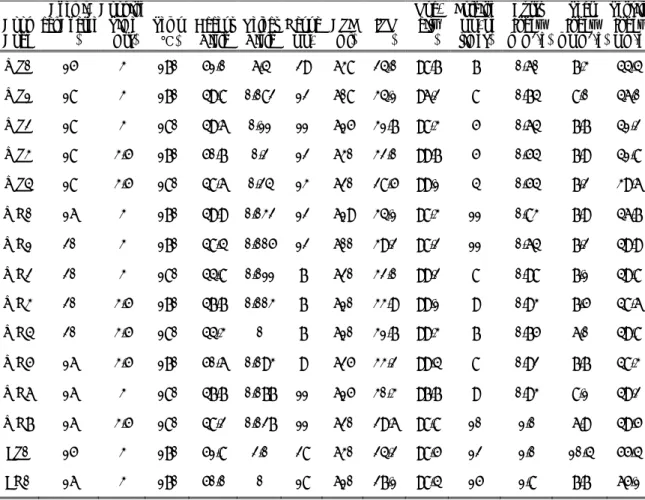
Willow chips were cooked in a laboratory-type rotary digester at different conditions of soda- anthraquinone (AQ) and kraft pulping processes. High and low levels, specifically: 15% and 18% NaOH in soda-AQ, and 16% and 20% active alkali in kraft for chemical charge; 170 and 180℃ for cooking temperature; and, 3.0 and 3.5 hours for cooking time operational variables were employed. The low levels represent standard cooking conditions. Combinations of these varied conditions applied to a particular cook are listed in Table 2. For facility, each cook was given a code based on the name of the material (W for Willow, E for Eucalyptus), pulping process (S for soda-AQ and K for kraft), and level of conditions (0-7, 0 representing the standard conditions). Cooking was done at 5:1 liquor to material ratio. The time to attain the maximum cooking temperature was 1.5 hours and this temperature was maintained for another 1.5 or 2 hours to complete the cooking time as described above. The digester was then opened after 2 hours of cooling. In the soda-AQ process, 0.1% AQ was added to the cooking liquor. Cooking under the same pulping conditions was done at least three times. The eucalyptus material was also cooked under standard conditions of both pulping processes.
Pulps obtained from the different cooks were evaluated in terms of yield, freeness and kappa number.
Freeness and kappa number were measured based on T227 and T236, respectively, of TAPPI standards. In addition, average fiber length and width distributions were determined using HiRes Fiber Quality Analyzer (OpTest Equipment Inc.). The effect of beating at varied time lengths for pulps cooked under the low level conditions was also investigated.
2.4 Preparation and Evaluation of Handsheets
Standard handsheets were prepared from the unbleached, unbeaten and beaten pulps. Their
mechanical and optical properties were then evaluated. Folding endurance, tensile strength, bursting strength, and tearing resistance were measured in accordance with T511, T494, T404 and T414, respectively of TAPPI test standards. For the optical properties, ISO brightness and opacity of the handsheets were measured.
3. Results and Discussion 3.1 Chemical Composition
The percentage composition of the chemical components of S. serissaefolia and Eucalyptus sp. are
presented in Table 1. These values are somewhat comparable to each other and to the typical amounts
exhibited by North American hardwoods.
4)The percentage of cellulose and lignin are also comparable to
those of eucalyptus species reported by Khristova.
5) 6)In S. serissaefolia, both extractives and ash contents
are low which are respectively within the 1-5% and 0.4-0.8% ranges in North American hardwoods as
described by Biermann
4). Extractives consume a certain portion of the pulping chemical during the
cooking process, which can result to a lower pulp yield.
7)Thus, lower amount of this component in raw
materials is more desired.
Table 1 Chemical composition of willow and eucalyptus.
Chemical composition can suggest the suitability of a material for pulping and papermaking. It was reported by Nieschlag et al. that from a chemical composition point of view, plant materials with at least 34% α–cellulose contents are characterized as promising materials for pulp and paper manufacture.
1) 8) 9)10)
This therefore indicates the potential of S. serissaefolia as a good raw material.
3.2 Pulp and Handsheet Properties
The pulping method and conditions can greatly affect the extent of delignification process during cooking, and the characteristics of the resulting pulp.
8) 11)̶14)Wan Rosli
15)stated that among the pulping variables, only the chemical agents have a direct impact on the physical and chemical nature of the resulting pulp. Temperature may be considered as a catalyzer that accelerates the delignification process while cooking time maintains the chemical reactions. Determining the conditions that can provide better properties of the product is therefore important in order to maximize the potential of the material. In this study, this was done through the application of different combinations of cooking conditions.
The properties of the different pulp cooks are presented in Table 2. Except for WS0, a nearly zero percent pulp rejects was obtained in all of the different willow pulps. The slightly lower screened yields in the kraft process were computed to be significantly different from that of soda-AQ process. WK2 and WK4 cooks gave lower accept yields compared to the rest. This is because the high levels of chemical charge and temperature as well as longer cooking time applied caused greater dissolution of the material components particularly hemicelluloses and some cellulose together with lignin. Based on the result of a t-test, under standard pulping conditions, pulp yields of both willow and eucalyptus are statistically comparable. These values are also comparable to the yields of other hardwoods studied.
1) 5) 6) 11) 19)Willow Eucalyptus
Ash
*0.77 0.28
Alcohol Extractives
*3.5 3.0
Holocellulose
**77.7 81.2
Lignin
**22.0 20.9
α -Cellulose
**41.2 46.9
*
based on OD weight material
**
based on OD weight of extractive-free material
Table 2 Cooking conditions and properties of the different pulp and their respective handsheets.
The differences in kappa numbers of the willow pulp cooks can be accounted from the different chemical charges applied. As expected, the use of higher chemical charges resulted to lower kappa numbers. Cooking under the combination of higher levels of chemical charge and temperature or time effectively lowered the pulp lignin content. Kappa numbers of pulps cooked under these conditions were significantly lower compared to pulps cooked under conditions where only one of the three process variables is at a higher level, or when both higher levels of temperature and cooking time combined together were applied. Pulps cooked with kraft process have lower kappa numbers in contrast to soda-AQ cooked pulps that indicate greater delignification. Under standard soda-AQ process, kappa numbers of willow and eucalyptus pulps were almost similar, but under standard kraft process willow pulp is slightly lower.
Measurement of the fiber dimensions of willow and eucalyptus pulps cooked with standard soda AQ and kraft processes revealed WS0 as having the highest values for average weighted fiber length
Cook Code
Chemi- cal Charge
(%)
Cooking Time (Hrs) Temp
( ℃ )
Accept Yield Reject
Yield Kappa No. CSF
(ml) ISO (%)
Opa- city (%)
Folding (No. of times)
Burst Index (kPm
2/g)
Tear Index (mNm
2/g)
Tensile Index (Nm/g) WS0 15 3 170 51.0 6.4 29 638 24.0 98.7 7 0.60 7.3 44.4 WS1 18 3 170 49.8 0.082 12 608 34.1 96.2 8 0.74 8.0 46.0 WS2 18 3 180 49.6 0.11 11 615 31.7 98.3 5 0.64 7.7 41.2 WS3 18 3.5 170 50.7 0.2 12 630 32.0 99.7 5 0.54 7.9 41.8 WS4 18 3.5 180 48.6 0.24 13 620 28.5 99.1 4 0.54 7.2 39.6 WK0 16 3 170 49.9 0.032 12 619 34.1 98.3 11 0.83 7.9 46.7 WK1 20 3 170 48.4 0.005 12 600 39.2 98.2 11 0.64 7.2 49.9 WK2 20 3 180 44.8 0.011 7 620 32.0 99.2 8 0.98 7.1 49.8 WK3 20 3.5 170 47.7 0.003 7 610 33.9 99.1 9 0.93 7.5 48.6 WK4 20 3.5 180 44.3 0 7 610 31.7 99.3 7 0.75 6.0 49.8 WK5 16 3.5 170 50.6 0.093 9 625 33.2 99.4 8 0.92 7.7 48.3 WK6 16 3 180 47.7 0.077 11 615 30.3 97.7 9 0.93 8.1 49.2 WK7 16 3.5 180 48.2 0.027 11 620 29.6 98.8 10 1.0 6.9 49.5
ES0 15 3 170 51.8 2.0 28 630 24.2 98.5 12 1.0 10.4 55.4
EK0 16 3 170 50.0 0 18 610 27.1 98.4 15 1.8 7.7 65.1
A
0%
10%
20%
30%
40%
50%
60%
70%
80%
90%
100%
0 1 2 3 4 5 6
Fiber length, mm
Cumulative % Distribution
0%
1%
2%
3%
4%
5%
6%
7%
Distribution, %
B
0%
10%
20%
30%
40%
50%
60%
70%
80%
90%
100%
0 0.5 1 1.5 2 2.5 3 3.5 4
Fiber length, mm
Cumulative % Distribution
0%
1%
2%
3%
4%
5%
6%
7%
8%
9%
Distribution, %
C
0%
10%
20%
30%
40%
50%
60%
70%
80%
90%
100%
0 0.5 1 1.5 2 2.5 3
Fiber length, mm
Cumulative % Distribution
0%
1%
2%
3%
4%
5%
6%
7%
8%
9%
10%
Distribution, %
D
0%
10%
20%
30%
40%
50%
60%
70%
80%
90%
100%
0 0.5 1 1.5 2 2.5 3 3.5 4 4.5
Fiber length, mm
Cumulative % Distribution
0%
1%
2%
3%
4%
5%
6%
7%
8%
9%
10%
Distribution, %
(0.91mm) and width (20.6µm). The other pulps showed measurements comparable with each other at a range of 0.704 to 0.783mm for fiber length and 15.7 to 16.86µm for fiber width. In Figs. 2 and 3, which respectively show the % length weighted distribution, and % width distribution of the four pulps (A-C), WS0 pulp cook has a wider range and higher upper limit of length measurement. In addition, the percentages of longer and thicker fibers of this pulp are higher compared to the others. The measured fiber lengths of willow fibers are comparable to some known papermaking raw materials.
7) 16)Fig. 2 Percent length weighted length distribution of willow and eucalyptus standard soda-AQ and kraft pulps. (A. WS0, B.WK0, C. ES0, D. EK0 pulps)
Opacity of the different handsheets as influenced by different cooking conditions reveals no
significant differences (Table 2). However, % ISO brightness values agree with the kappa number results
in which higher level of chemical charge resulted to a higher ISO brightness. Although the ISO brightness
values of willow and eucalyptus soda-AQ pulps are almost comparable, brightness of the kraft pulp of the
former is much higher than of the latter.
C
0%
2%
4%
6%
8%
10%
12%
14%
16%
18%
0.75 3.75 6.75 9.75
12.75 15.75
18.75 21.75
24.75 27.75
30.75 33.75
36.75 39.75
42.75 45.75
48.75 51.75
54.75 57.75
Width,µm
% Distribution
A
0%
2%
4%
6%
8%
10%
12%
14%
0.75 3.75 6.75 9.75
12.75 15.75
18.75 21.75
24.75 27.75
30.75 33.75
36.75 39.75
42.75 45.75
48.75 51.75
54.75 57.75
Width, µm
% Distribution
B
0%
2%
4%
6%
8%
10%
12%
14%
16%
18%
20%
0.75 3.75 6.75 9.75 12.75
15.75 18.75
21.75 24.75
27.75 30.75
33.75 36.75
39.75 42.75
45.75 48.75
51.75 54.75
Width, µm
% Distribution
D
0%
2%
4%
6%
8%
10%
12%
14%
16%
18%
20%
0.75 3.75 6.75 9.75
12.75 15.75
18.75 21.75
24.75 27.75
30.75 33.75
36.75 39.75
42.75 45.75
48.75 51.75
54.75 57.75
Width, µm
% Distribution
Fig. 3 Percent width distribution of willow and eucalyptus standard soda-AQ and kraft pulps.
(A. WS0, B.WK0, C. ES0, D. EK0 pulps)
As expected, the strengths of the different willow pulp handsheets differ from each other as a
consequence of the impact of cooking. Although the final strength of the handsheets are related to the
morphological properties of the fibers,
5) 17)the processing variables can greatly influence how these fibers
eventually end up in the paper web. A pulp cook that gives greater extent of delignification and lower
degree of lignin condensation, higher amount of conserved hemicelluloses and celluloses will likely give
better strength properties
1) 18).In this study, among the different pulp cooks, higher bursting and tensile
indices, and folding counts were observed in kraft pulps compared to soda-AQ pulps at the same level of
parameter conditions. In both pulping processes, tensile index values of handsheets from pulps cooked
with higher chemical charge were higher than those from the standard conditions. Also a high folding
count is evident in handsheets made from pulps cooked at a shorter time and lower temperature, while a
slightly lower tear index is exhibited by those derived from longer time and higher temperature-cooked
pulps. WK4 handsheets which are from pulps cooked with the three process variables all in the high
levels gave the lowest strength values particularly for folding and bursting. Among the kraft pulps, a
lower tear index is observed in handsheets of pulps cooked at higher chemical charge. In soda-AQ pulps
on the other hand, higher bursting and tear indices were observed in handsheets of pulps cooked with
higher level of chemical charge.
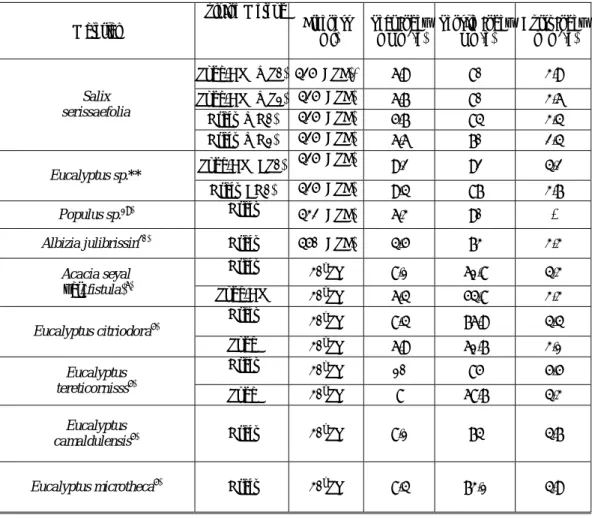
Table 3 Strength values of willow in comparison with other studied pulpwood materials.
*425 ml CSF converts to 30
oSR based on the freeness conversion table published by Aikawagroup
**This study
Fig. 4 shows the tensile index-tear index plot of the different willow pulp cooks. In general, handsheets from pulps cooked with kraft process exhibited higher strength as indicated by their significantly higher tensile index at comparable tear index values with their soda-AQ counterparts. WK1 and WK2 in which pulps were cooked at a higher level of chemical charge show greater tensile and tear strength combination in comparison to the others. WK6 is also remarkably strong having the highest tear index and one of the highest values for tensile index.
Material
Pulping Method
Freeness (ml)
Tear Index (mNm
2/g)
Tensile Index (Nm/g)
Burst Index (kPm
2/g) Soda-AQ (WS0) 425 (CSF)* 6.9 80 3.9
Soda-AQ (WS1) 425 (CSF) 6.7 80 3.6 Kraft (WK0) 425 (CSF) 5.7 84 3.4 Salix
serissaefolia
Kraft (WK1) 425 (CSF) 6.6 70 2.4 Soda-AQ (ES0) 425 (CSF) 9.2 92 4.2 Eucalyptus sp.**
Kraft (EK0) 425 (CSF) 9.4 87 3.7
Populus sp.
19)Kraft 432 (CSF) 6.3 90 -
Albizia julibrissin
20)Kraft 450 (CSF) 4.5 73 3.3
Kraft 30
oSR 8.1 61.8 4.3 Acacia seyal
(var. fistula)
6)Soda-AQ 30
oSR 6.4 54.8 3.3 Kraft 30
oSR 8.4 76.9 4.4 Eucalyptus citriodora
5)Soda 30
oSR 6.9 61.7 3.1 Kraft 30
oSR 10 85 5.5 Eucalyptus
tereticornisss
5)Soda 30
oSR 8 68.7 4.3
Eucalyptus
camaldulensis
5)Kraft 30
oSR 8.1 74 4.7
Eucalyptus microtheca
5)Kraft 30
oSR 8.4 73.1 4.9
5 6 7 8 9
38 40 42 44 46 48 50
Tensile index (N・m/g) T e a r i nd e x (m N ・ m
2/g )
WS0 WS1 WS2 WS3 WS4 WK0 WK1 WK2 WK3 WK4 WK5 WK6 WK7
Fig. 4 Tensile index‒tear index plots of the different willow pulp handsheets.
3.3 Effect of Beating
The response of willow and eucalyptus pulps cooked under standard conditions (WS0 and WK0) as well as WS1 and WK1 pulps which provided handsheets that have the highest tensile and tear strengths among the willow pulps to beating is given in Fig. 5.A. The narrow differences in CSF levels among most of the unbeaten pulps were greatly magnified after 60 minutes of mechanical treatment. Among the willow pulps, WS0 that had the highest initial CSF reading exhibited the biggest drop.
Folding, tensile and burst strengths of the willow pulps greatly improved after 60 minutes of beating
(Fig. 5.B-D). Although ES0 pulp gave a higher folding count, that of EK0 pulp is lower than the willow
soda-AQ pulps. The tensile index of the willow pulps after the last beating period increased to almost
100% of the unbeaten values, and which are about 10 points lower than those of eucalyptus pulps. WK1
pulp which initially had the highest tensile index among the willow pulps gave slightly lower value than
the rest of the willow pulps beaten for 60 minutes. The bursting index of willow pulps improved at least 4
times from their unbeaten measurements. Willow soda-AQ pulps attained bursting index values that are
not more than 2 points lower than those of the eucalyptus pulps. Although the tearing strength of both
willow and eucalyptus standard kraft and soda-AQ pulps improved after 15 minutes of beating, the values
declined when the refining action was continued to beyond 30 minutes. A drop of about 2 points from the
initial unbeaten pulp tear index can be observed in the willow pulps after the final beating period. These
are slightly lower than those of the eucalyptus pulps as shown in the Fig.5.E.
The above-mentioned results suggest that the strength properties of S. serissefolia could be improved with the appropriate degree of mechanical treatment to values that are within acceptable ranges for different paper applications.
Table 3 shows the strength values of willow tree pulp handsheets as compared to different species of eucalyptus tree and other fast growing trees used in other published studies at about the same freeness level. It is evident that depending on the material species and strength property under consideration, willow tree may have slightly lower strength in some aspects, but it also has comparable or even more superior strength values. In addition, its tensile and burst strengths still improves at a lower freeness as an effect of longer beating time.
4. Conclusions
The chemical composition of S. serissaefolia particularly its cellulose and lignin components are comparable to other hardwoods and fast–growing tree species. This makes this raw material suitable for pulping. When cooked at different combinations of pulping methods and levels of chemical charge, cooking temperature, and cooking time, the resulting pulps showed different properties. The use of higher or lower levels of the operational variables gave better properties to some pulps while it was disadvantageous in others. Pulp yields of S. serissaefolia in both soda-AQ and kraft process are comparable to other studied hardwoods. The most desirable strength and optical properties were obtained at higher level of chemical charge (WK1) or higher levels of both chemical charge and temperature (WK2) cooking combinations. The application of a specific combination of cooking conditions eventually depends on the important property of the product suited to its use.
The folding, tensile, and bursting strength properties of S. serissaefolia were further improved with mechanical treatment. Immediate improvement of the folding, bursting and tensile strengths after 30 minutes of beating in soda-AQ pulps eventually resulted to higher values compared to kraft pulps by the end of 60 minutes beating period. The tear strength which initially improved within the first few minutes of beating however, weakened with prolonged beating. This suggests that beating duration of the material depends on the strength property of interest.
Compared to the eucalyptus, S. serissaefolia standard kraft pulp handsheets have higher ISO brightness readings. Although its burst and tearing strength values are slightly lower than those obtained in the eucalyptus used in this study after refining, S. serissaefolia is comparable or even more superior to other eucalyptus species or fast growing trees at about the same freeness level (425 ml CSF).
References
1. Patt, R., Kordsachia, O. Fehr, J.: Wood Science Technology, 40, 39-48 (2006)
2. Makkonen H., Granzow, S., Cheshire, 2nd Annual Partnerships for Environmental Improvement
and Economic Development Conference: Kraft Pulp From Plantation Grown Biomass Willow.
(2000)
3. Keihin Office of River, Japan Ministry of Land, Infrastructure, Transport and Tourism.
http://www.ktr.mlit.go.jp (2003)
4. Biermann, Christopher J. “Handbook of pulping and paper making 2
ndedn.” CA. Academic Press, 32 (1992)
5. Khristova, P., Kordsachia, O., Patt, R., Dafaalla, S.: Bioresource Technology, 97, 535-544 (2006) 6. Khristova, P., Kordsachia, O., Dafaalla, S.: Tropical Science, 44, 207-215 (2004)
7. Ghatak, Himadri Roy.: Tappi Journal, 1(1), 24-27 (March 2002)
8. Agrupis, C., Maekawa E., Suzuki K.: Journal of Wood Science, 46(3) 222-229 (2000) 9. Nieschlag, H.J., Nelson, G.H., Wolff, J.A., Perdue, R.E.: TAPPI Journal, 43(3), 193 (1960)
10. Ververis, C., Georghiou, K., Christodoulakis, N., Santas, P. and Santas, R.: Industrial Crops and Products, 19, 245-254 (2004)
11. Bassa, A., Sanchez Duarte, F., da Silva, F. Jr., Sacon, V., TAPPI I EPE Conference: The effect of alkali charge on eucalyptus spp. kraft pulping (2006)
12. Shatalov, A., Pereira, H.: TAPPI Journal, 3(2), 27-31(2004) 13. Tran, A.: TAPPI Journal, 1 (4), 13-19 (2002)
14. Bhardwaj, N., Goyal, S., Gupta, A., Upadhyaya, J., Ray, A.: Appita Journal, 58(3), 181-185 (2005) 15. Wan Rosli, W., Law, K., Zainuddin, Z., Asro, R.: Bioresource Technology, 93, 233-240 (2004) 16. Kocurek, M.J., Ed. Pulp and paper manufacture, 3
rdedn.Vol. 1. TAPPI Press, Atlanta. (1983) 17. Shatalov, A., Quilho, T., Pereira, H.: TAPPI Journal, 84(1), 96-107 (2001).
18. De Groot, B., Van Der Kolk, J.C., Van Dam, J.E.G., Van Triet, K.: TAPPI Journal 82(7), 107-112 (1999)
19. Francis, R., Hanna, R., Shin, S., Brown, A., Riemenschneider, D.: Biomass and Bionergy, 30, 803-808 (2006).
20. Gu, H., Krishnagopalan G., Duke, S., Bransby: TAPPI Journal, 6(4), 16-21(2007).
(原稿受付
2009
年8
月25
日)(審査受理
2009
年10
月9
日)異なるパルプ化条件におけるコゴメヤナギの製紙特性
アサンシオンエマヌエル *
、静岡大学 鈴木恭治 **
、渡邊 拡 ***
、釜谷保志 ****
□□□□□□□□□□□□□□□□□□□□□□□□□□□□□□□□□□□□□□□□□□□□□□
□□□□□□□□□□□□□□□□□□□□□和文要旨□□□□□□□□□□□□□□□□□□□□□□
□□□□□□□□□□□□□□□□□□□□□□□□□□□□□□□□□□□□□□□□□□□□□□□
□□□□□□□□□□□□□□□□□□□□□□□□□□□□□□□□□□□□□□□□□□□□□□□
□□□□□□□□□□□□□□□□□□□□□□□□□□□□□□□□□□□□□□□□□□□□□□□
□□□□□□□□□□□□□□□□□□□□□□□□□□□□□□□□□□□□□□□□□□□□□□□
□□□□□□□□□□□□□□□□□□□□□□□□□□□□□□□□□□□□□□□□□□□□□□□
□□□□□□□□□□□□□□□□□□□□□□□□□□□□□□□□□□□□□□□□□□□□□□□
□□□□□□□□□□□□□□□□□□□□
キーワード: