The Socio‑Economic Impact of International
Migration and Re‑integration : A Case Study of Vietnamese Migrants Returning from Japan
著者 ホアン アン トゥアン
著者別表示 HOANG ANH TUAN journal or
publication title
博士論文本文Full 学位授与番号 13301甲第104号
学位名 博士(経済学)
学位授与年月日 2020‑09‑28
URL http://hdl.handle.net/2297/00061493
Creative Commons : 表示 ‑ 非営利 ‑ 改変禁止 http://creativecommons.org/licenses/by‑nc‑nd/3.0/deed.ja
THE SOCIO-ECONOMIC IMPACT OF INTERNATIONAL MIGRATION AND RE-INTEGRATION: A CASE STUDY OF
VIETNAMESE MIGRANTS RETURNING FROM JAPAN
HOANG ANH TUAN
June 2020
博 士 論 文
The Socio-Economic Impact of International Migration and Re-integration: A Case Study of Vietnamese
Migrants Returning from Japan
(国際移住と再統合の社会経済的影響:日本からの帰国ベトナ ム人を事例として)
金沢大学院人間社会環境研究科 人間社会環境学専攻
学 籍 番 号 1721082016
氏 名 HOANG ANH TUAN
主任指導教員名 PROF. YOSHIMI UNE
i
TABLE OF CONTENTS
TABLE OF CONTENTS ... i
LIST OF FIGURES ... vi
LIST OF TABLES ... viii
ABBREVIATIONS ...x
ACKNOWLEDGEMENT ... xii
CHAPTER 1: INTRODUCTION ...1
1.1. Introduction...1
1.2. Theoretical Framework ...4
1.2.1. Conceptual Background ... 4
1.2.2. Theoretical Perspectives on Return Migration and Reintegration ...11
1.3. Purpose of the Study ...15
1.4. Research Method ...16
1.5. Outline of the Dissertation ...17
CHAPTER 2: CURRENT STATUS OF INTERNATIONAL MIGRATION OF VIETNAMESE PEOPLE WORLDWIDE ...21
2.1. Introduction...21
ii
2.2. The Trends of International Migration ...21
2.2.1. Vietnamese People Residing Abroad ... 21
2.2.2. Vietnamese Existing and Entering through Official Borders over the Years ... 24
2.3. Vietnamese Labor Migration ...28
2.4. Factors and Migration Channels for International Migration...34
2.4.1. Motivating factors for international labor migration ... 34
2.4.2. Major actors involved in labor export in Vietnam ... 35
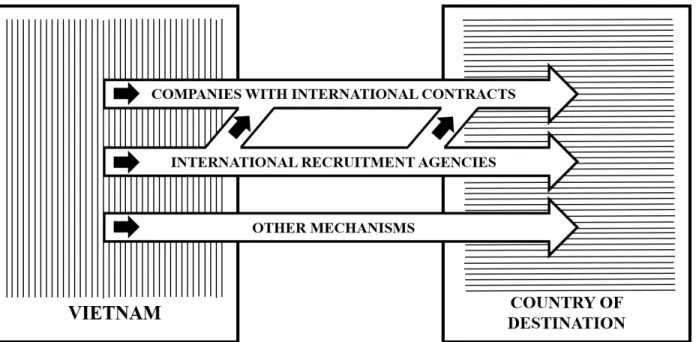
2.4.3. Migration Channels for International Migration ... 38
2.5. Summary ...41
CHAPTER 3: THE IMPACT OF INTERNATIONAL MIGRATION AND REMITTANCES ON HOUSEHOLD INCOME IN VIETNAM BASED ON VIETNAM HOUSEHOLD SURVEY ON INTERNATIONAL MIGRATION IN 2009 ...42
3.1. Introduction...42
3.2. Data and Methodology ...43
3.2.1. Data ... 43
3.2.2. Methodology ... 46
3.3. Impact of International Migration and Remittances on Household Income in Vietnam ...48
3.3.1. Impact of Migration on Household Income ... 50
3.3.2. Impact of Remittances on Household Income ... 56
iii
3.4. Summary ...62
CHAPTER 4: RECENT SITUATION AND STRUCTURE OF VIETNAMESE MIGRANTS TO JAPAN ...64
4.1. Introduction...64
4.2. International Migration to Japan in General and Employment Status ...65
4.2.1. The Overall Situation ... 65
4.2.2. Employment Status ... 68
4.3. Migration Status of Vietnamese in Japan ...72
4.3.1. Migration Status of Working People ... 72
4.3.2. Migration Status of Studying People ... 75
4.4. Structure of Vietnamese Migrants to Japan ...77
4.4.1. Overview of the Technical Intern Training Program ... 77
4.4.2. Procedure for Accepting Technical Intern Trainees ... 80
4.4.3. Mechanism of Recruitment Information Transmission in Vietnam ... 84
4.5. Summary ...87
CHAPTER 5: MIGRATING FOR GETTING THE OPPORTUNITIES – A STUDY OF VIETNAMESE MIGRANTS RETURNING FROM JAPAN BASED ON ONLINE QUESTIONNAIRE SURVEY ...88
5.1. Introduction...88
iv
5.2. Data and Methodology ...89
5.3. Opportunities Brought to Vietnamese Migrants after Returning from Japan ...92
5.3.1. Socio-demographic Characteristics of the Respondents ... 92
5.3.2. Educational Level and the Benefits Achieved ... 94
5.3.3. The Key Reasons for Migration and Return ... 97
5.3.4. Occupational Status and Income Effect ... 99
5.3.5. Migration Experience and Attitudes toward Migrants ... 104
5.4. Summary ... 106
CHAPTER 6: THE RE-INTEGRATION INTO RURAL AREAS OF VIETNAMESE MIGRANT WORKERS RETURNING FROM JAPAN BASED ON IN-DEPTH INTERVIEWS ... 109
6.1. Introduction... 109
6.2. Data and Methodology ... 110
6.3. The Status of Vietnamese Migrant Workers Returning from Japan in the Rural Area ... 115
6.3.1. The Reason for Coming to Japan, the Recruitment Stage and Difficulties Encountered during the Migration Process ...115
6.3.2. Return and (Re)integration stage ...117
6.3.3. Assistance from Organizations ... 122
6.4. Summary ... 123
v
CHAPTER 7: THE MIGRATION STATUS OF VIETNAMESE PEOPLE –
POLICIES AND IMPLEMENTATION ... 125
7.1. Introduction... 125
7.2. The Comparison between Returning Migrant Groups based on the Online Questionnaire Survey and In-depth Interviews ... 125
7.3. International Migration Management ... 134
7.3.1. Prospects for international labor migration ... 134
7.3.2. International migration policy ... 135
7.4. The Necessity of Supporting Programs ... 137
7.5. Summary ... 139
CHAPTER 8: CONCLUSION AND SUGGESTION ... 140
8.1. Introduction... 140
8.2. Findings and suggestion ... 140
8.3. Limitations and Suggestions for Further Research ... 144
Reference ... 147
Appendix ... 154
vi
LIST OF FIGURES
Figure 1: Framework of Study ... 18
Figure 2: Annual entry-exit trends of Vietnamese from 2012 - 2016 ... 26
Figure 3: Percentage of border crossings by sex and age group, 2015... 27
Figure 4: Place of Vietnamese migrant workers in foreign destinations from the top labor-sending provinces in 2016 ... 33
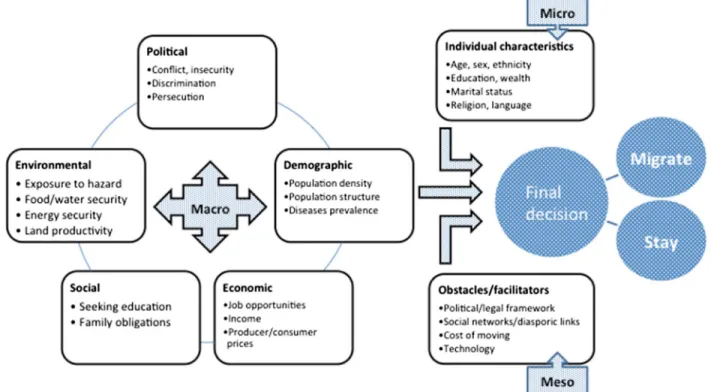
Figure 5: Complex drivers of migration: macro-, meso- and micro-factors... 39
Figure 6: Migration Channels Schema ... 40
Figure 7: Circular of Migration ... 40
Figure 8: Changes in the number of foreign nationals entering Japan ... 66
Figure 9: Changes in the number of foreign nationals entering Japan by major nationality/region ... 67
Figure 10: Number of foreign nationals entering Japan by gender and age (2015) ... 68
Figure 11: Changes in the number of foreign nationals newly entering by the status of residence for employment in professional or technical fields ... 70
Figure 12: Changes in the number of foreign nationals newly entering with the status of residence of “Technical Intern Training (i)” by major nationality/region ... 71
Figure 13: Individual enterprise type ... 80
vii
Figure 14: Supervising organization type ... 81
Figure 15: Type of Technical Intern Training Program ... 82
Figure 16: The process from technical intern trainee entry into Japan until return to the trainee’s home country ... 83
Figure 17: Flow of the Technical Intern Training Program ... 84
Figure 18: Mechanism of Recruitment Information Transmission in Vietnam ... 85
Figure 19: Place of birth of the respondents ... 91
Figure 20: Type of work ... 101
Figure 21: Location of Nghe An province ... 111
Figure 22: Classification of migration groups ... 127
Figure 23: The Vicious cycle of migration ... 133
Figure 24: Migration Circle ... 134
Figure 25: Reintegration process ... 138
viii
LIST OF TABLES
Table 1: Major area, region and destination countries of Vietnamese people to
settle abroad, 2019 ... 23
Table 2: Top receiving destinations for Vietnamese workers, 2012-2016 ... 29
Table 3: Vietnamese migrant workers working abroad and average monthly incomes, 2014 ... 30
Table 4: Vietnamese migrant workers in foreign destinations from the top labor- sending provinces, 2012‒2016 ... 32
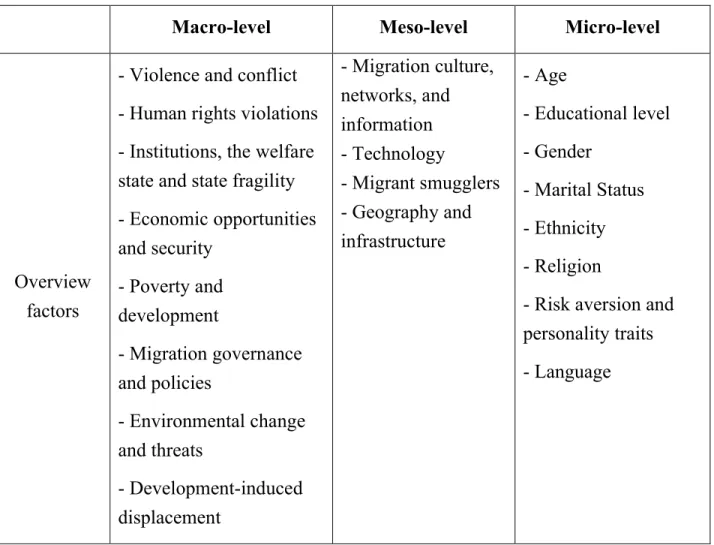
Table 5: Overview factors at macro-, meso- and micro-level... 38
Table 6: Distribution of the households ... 44
Table 7: Descriptive statistics of the data ... 45
Table 8: Description of Variables ... 49
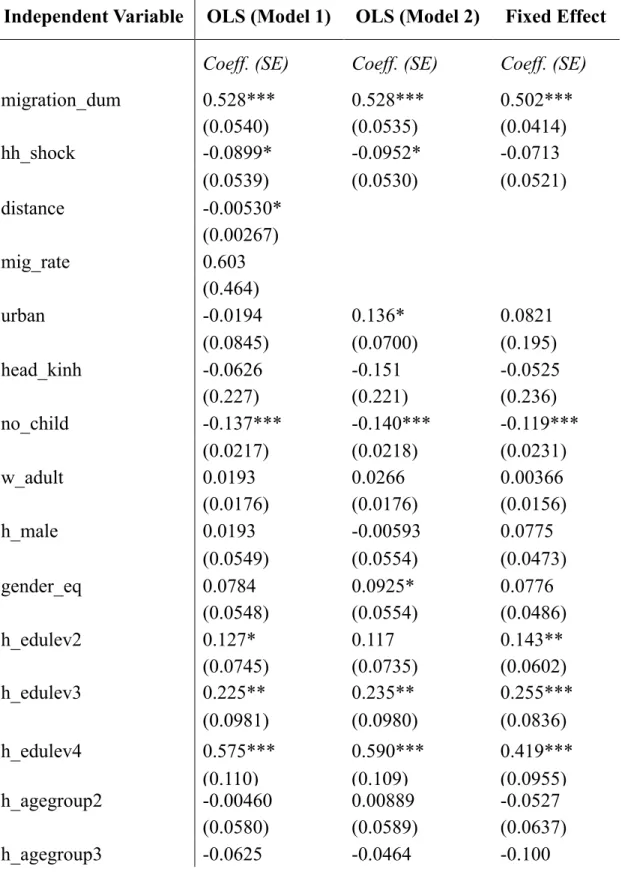
Table 9: Impacts of migration on household income per capita ... 51
Table 10: Impacts of migration on household income per capita by rural – urban ... 53
Table 11: Impacts of migration on household income per capita by gender ... 55
Table 12: Impacts of remittances on household income per capita ... 57
Table 13: Impacts of remittances on household income per capita by rural – urban ... 59
Table 14: Impacts of remittances on household income per capita by gender .... 61
ix
Table 15: Changes in the number of foreign residents of Vietnam nationals by
status ... 74
Table 16: Top 10 number of International Students by Nationality in Japan ... 76
Table 17: The technical intern training categories ... 79
Table 18: Socio-demographic characteristics of return migrants ... 93
Table 19: Educational level ... 95
Table 20: Beneficial gains ... 96
Table 21: The key reasons for migration and return ... 98
Table 22: Occupational status after the return ... 100
Table 23: Income Effect ... 102
Table 24: Migration experience and attitudes toward migrants ... 105
Table 25: List of interviewees with Vietnamese migrant workers returning from Japan ...113
Table 26: The Comparison between Returning Migrant Groups ... 129
x
ABBREVIATIONS
DOLAB: The Department of Overseas Labor, Vietnam
DOLISAs: the provincial Departments of Labor, Invalids and Social Affairs, Vietnam
EPS: The Employment Permit System, Korea GSO: The General Statistics Office of Vietnam
ILSSA: The Institute of Labor Sciences and Social Affairs, Vietnam IOM: International Organization for Migration
ITP: The Japanese Industrial Training Program, Japan JASSO: the Japan Student Services Organization, Japan
JITCO: The Japan International Training Cooperation Organization, Japan NE: Neo-classical Economics
NELM: The New Economics of Labor Migration
MoET: The Ministry of Education and Training, Vietnam MoFA: Ministry of Foreign Affairs, Vietnam
MOLISA: The Ministry of Labor - Invalids and Social Affairs, Vietnam MoPS: Ministry of Public Security, Vietnam
OWC: The Overseas Worker Center, Vietnam TIP: The Technical Internship Program, Japan
xi
UN: The United Nations
UNSD: The United Nations Statistics Division VDN: Vietnam Dong
xii
ACKNOWLEDGEMENT
This research was funded by the Vietnamese Ministry of Education and Training and Kanazawa University. The dissertation is my effort, but it will not be completed without the support and help of so many people. The experiences of living and studying for three years in Japan are very memorable and meaningful, not only for myself but for my whole family.
I would like to express my sincere gratitude to the following individuals for their invaluable support towards the completion of my research and dissertation.
My first and foremost appreciation goes to my main advisor, Professor Yoshimi Une, who patiently guided me very carefully at each stage of the research, and always supported and encouraged me. His commitment to high standards inspired me to put forth my best effort at every step to finish this dissertation. I will continue to admire his diligence, enthusiasm, commitment, and dedication to the Japanese Geographical Association. My sincere appreciation extends to my advisors, Professor Koji Nakashima and Professor Kunimitsu Yoshida, who provided insightful comments, supportive, encouraging, and endlessly generous with their knowledge and expertise in research.
I would like to give special thanks to Professor Kamiya Hiroo for accepting as my first instructor and provided me with a precious opportunity to study on migration at Kanazawa University. I sincerely extend my appreciation to Professor Ryoko Takahashi and Professor Ulara Tamura for giving me helpful guidance and being on this dissertation committee.
I would like to extend my endless gratitude to the Graduate School of
xiii
Human and Socio-Environmental Studies, Kanazawa University, its faculties, officers who created a harmonious and inclusive environment for my education and my research. After returning home, I will genuinely remember Kanazawa University - One of the best places to study and conduct scientific research.
Last but with much importance, I am especially thankful to my wife and my daughter for being there and supported me through the long journey of the Ph.D.
program. Without their support, this dissertation could not have been completed. I am indebted to my parents, who have been great supporters of my academic pursuits.
Kanazawa, July 2020 Hoang Anh Tuan
1
CHAPTER 1 INTRODUCTION
1.1. Introduction
Migration has become an essentially social phenomenon in a globalizing world. Its importance refers not only to the number of people involved but also to the implications for societies and economies in the countries concerned. Notably, the role of migration in developing countries is becoming a major issue of policy in terms of economic development. More nationals of more countries are on the move, and more countries are affected by migration than ever before.
The movement of labor from low-wage to high-wage countries stems from differences in income and employment opportunities among economies. In Vietnam, international migration has expanded at a fast pace recently with various means of migration, becoming one of the important determinants to the change of economic and social context in the country. Sending labors to more developed countries to work is an important strategy for human resources quality development and income generation in Vietnam. According to the report by the Ministry of Foreign Affairs of Vietnam in 20171), about 800 thousand Vietnamese workers are working in 30 different occupational categories in 40 countries and territories. Korea, Japan, Taiwan, and Malaysia are the main countries that outsource laborers from Vietnam.
Exported workers’ income increases quickly, and as a result, these workers send back to Vietnam 1.8 to 2.0 billion USD annually, contributing to improving their families’
1) “Vietnam Migration Profile 2016” – A report by Ministry of Foreign Affairs with financial and technical support from the International Organization for Migration (IOM), Ha Noi, August 2017. The “Viet Nam Migration Profile 2016” was based on the successful “Review of Vietnamese Migration Abroad” report released in 2011. This earlier report sought to provide a general overview on international migration from Viet Nam and also sought to contribute to the development of a comprehensive migration policy suitable to the context and specific features of Viet Nam.
2
well-being as well as developing the country.
For families, labor migration is considered a reasonable livelihood strategy, which not only provides employment opportunities but also creates income that help improves living standards and provides better educational opportunities for their children due to remittances sent by migrant workers. For countries, international labor migration is considered as an important economic development strategy, helping to bring skills and resources more effectively to the country from returning migrants.
There are four major movements of emigrants from Vietnam: refugee and asylum seekers to developed countries during the year 1975 to 1995, Vietnamese labor migration, study migration and marriage migration (International Organization for Migration). Its large population coupled with a history of wars, creates significant pressures of labor migration. Overall, the “demand-pull” factor of income differentials and the “supply-push” factor of excess labor supply interact to induce labor migration from Vietnam.
Since the year 2000, the government has announced that sending laborers to work abroad is one of Vietnam’s major efforts to settle issues of employment, especially for young people. Recently, the government has issued Decision No.
71/2009/QD-TTg on 29 April 2009 approving the Project to Support Poor Districts in Promoting Labor Export for Sustainable Poverty Elimination – Period 2009-2020 (the objective of this project is to improve the quality of workforce and increase the number of laborers in poor districts participating in labor export, contributing to job creation, increase income and sustainable poverty reduction). Along with recently improved policies toward Vietnam Diasporas, it shows the government’s serious commitment toward international migration as an important way to address the problem of poverty and unemployment, improving living standards in Vietnam.
In recent years, Vietnam’s rapid economic growth has been accompanied, as in many other parts of the developing world, by increasingly macro levels of
3
geographical labor mobility. Vietnam is shifting its objectives much towards building long-term impacts rather than just focusing on immediate goals, which are jobs creating and income-generating. These more long-term objectives include improving the labor quality and labor productivity as well as enhancing the human resources development through overseas human resources supply and exchange programs. The Government of Vietnam is prioritizing labor exchange programs in which through work, workers can develop their technical knowledge, occupational skills, and basic skills for future career building besides traditional factors including jobs and higher income2). Japan appears to be the ideal market, which can help Vietnam to achieve almost all of these objectives with many overseas workforce supply programs assisting labors to improve their technical skills through working.
There is now a standard understanding that the economic, social, and cultural benefits of international migration must be more effectively realized, in which the policy issues of labor migration might be better addressed (Hoang, 2019). Although there have been many studies on the impact of return migration under different approaches (Cathrine, Ira and Yun 2000; Christian and Weiss 2007; Sjaastad 1962, etc.), however, while proper deal attention is given to the needs and well-being of Vietnamese migrants, inclusive of raising their cognizance of migration, prior to their departure and at some point of their time overseas, less attention is given to their reintegration upon their go back to Vietnam, especially, migrant workers returning from Japan in the rural area when Japan is tending to become a potential labor export market for Vietnamese people. Further, there has been no research on the impact of post-migration on Vietnamese returning from Japan. The main reason is that up to now, the current data sources or statistics regarding migrants returning from Japan are very limited or unavailable, which makes it very difficult for researchers to
2) Ministry of Labor, Invalids and Social Affairs (MOLISA):
http://www.dolab.gov.vn/New/TongQuanTTLD.aspx?&LIST_ID=1268&MENU_ID=248&Key=3083 (V) retrieved February 15, 2019.
4
conduct related studies and make it more challenged for the government to have adequate and efficient policies regarding migration.
In the meantime, the demand to increase a radical understanding of the migration-development linkage is very critical, specifically in an era characterized via increasing human mobility. Growing a valid policy on return migrants, mainly, would require a good knowledge of return migration, such as more in-depth expertise of their socio-economic implications after the return. To bridge that knowledge gap, this dissertation aims to provide empirical evidence of the impact of international migration and remittances on household income in Vietnam; investigate the socio- economic situation and the integration status of Vietnamese migrants after returning from Japan focusing on the two most common types of migration is to work and study based on online questionnaire survey data and in-depth interviews.
1.2. Theoretical Framework
This part aims to review the existing literature on international migration, return migration as well as reintegration. Besides, a short review on determinants of migration, the relationship between return migration and reintegration based on economic and geography perspective will be presented and considered as advanced theory-buildings for this research.
1.2.1. Conceptual Background
* Migration and Migrants
Migration is usually defined “as the movement of a person or group of persons from one geographical unit to another across an administrative or political border, and wishing to settle permanently or temporarily in a place other than their place of origin”. Since the movement between two geographical units does not have to occur directly, one can further differentiate between the place of origin or sending
5
region, transit regions, and the place of destination or receiving region3). Movements within a country are usually defined as internal migration and, accordingly, movements across international borders are called international migration.
Henceforth, I exclusively focus on international migration in my study.
According to the International Organization for Migration (IOM), a migrant is “any person who is moving or has moved across an international border or within a State away from his/her habitual place of residence, regardless of (1) the person’s legal status; (2) whether the movement is voluntary or involuntary; (3) what the causes for the movement are; or (4) what the length of the stay is”, a broad definition indeed.
Determinants of migration
The traditional model of migration is a neo-classical/labor flow approach (Todaro, 1969; Cassarino, 2004), in which migration is seen as a response to regional labor market imbalances. The neo-classical theory emphasizes individual migration decisions, based on a reasonable comparison of the relative costs and benefits of staying at home or moving. The neo-classical theory holds that potential migrants have excellent knowledge of salaries and employment opportunities in the target areas, and their migration decisions are based entirely on these economic factors.
Under the neoclassical model, the existence of economic disparities between different regions is sufficient to create migrants' flow. In the long run, such flows will help balance wages and conditions in underdeveloped and developed areas, leading to economic equilibrium (Smith, 1776; Ravenstein, 1885; Hicks, 1932).
Alternative explanations are needed for the international migration of labor.
Such an approach emphasizes the so-called push and pull factors and examines obstacles to explain why people move. Major migrations are a response to some
3 ) “World Migration 2003 – Managing Migration: Challenges and Responses for People on the Move”, International Organization for Migration (IOM), Geneva, 2003, p.8.
6
major events in the country of origin where the domestic market cannot respond quickly enough. Income disparities may be less relevant than security considerations in situations of civil unrest, armed conflict, political repression, and natural disasters.
Natural disasters, wars, political oppression, or a sufficiently asymmetric shock in one country will lead to a significant push to encourage people to leave. When mobile, people will search for the location that offers the best reward. This model, introduced by Sjaastad (1962), has been generalized in Zimmermann's (1996) identification of push and pull factors (Battistella, 2005; Akkoyunlu & Vickerman 2011; Katz and Stark, 1986).
According to Zelinsky (1971), at the beginning of the process of modernization and industrialization, there is often an increase in emigration, due to population growth, reduced rural employment, and low wages. As the process of industrialization took place, labor supply decreased, and domestic wages increased;
as a result, emigration falls, and labor migration begins to take place.
The new approaches have been characterized as transitional theories by Hein (2008). These approaches set out to link mobility to processes of development and economic integration. The new approaches include the new economics of labor migration (NELM), which is still in a neoclassical model of income maximization and equilibrium trends. However, it still questions the individualism of the neo- classical theory by emphasizing the role of families and communities in migration decisions. (NELM uses methods such as qualitative interviews and household surveys similar to those used by anthropologists and sociologists); dual or segmented labor market theory, which analyzes the differential labor demand of employers as a significant factor in the cause and structure of migration; migration network theory shows the collective authority of migrants and their communities in organizing migration processes and integrations; the transnational approach is the result of new transport and communication technologies, making it increasingly easy for migrants to maintain long-term economic, social, cultural and political links across borders,
7
transnational communities (or diasporas) are becoming increasingly important as social actors (Hein, 2008).
In the literature, there are also several other explanations for international labor migration. These theories explain why migration sometimes does not occur even when significant expected income disparities exist, or vice versa, why migration sometimes occurs even when there is no income difference. For example, in Conley and Konishi's view (2000), there may be external influences on migration, such as differences within the scope of regional facilities. These include public goods or merit goods, such as educational opportunities, health care systems, and living conditions or external consumption through the variety and types of market goods available.
Based on Stark’s research (1991), besides, with the imperfect credit market, migration may generate cash income and alleviate the credit constraint, and therefore migration may occur even if the income gap is expected negative (Stark, 1991).
Similarly, migration decisions should be viewed as a joint household rather than an individual choice, and therefore may depend not only on personal characteristics and preferences but also on the characteristics and preferences of the other household members (Stark, 1991).
* Return migration
The concept of return migration understood in different ways within the literature; some scholars used few terms in research such as back migration, re- emigration, remigration, reflux migration, second-time migration repatriation, counterflow, counter current, return flow (Frank, 1974). The United Nations Statistics Division (UNSD) offered a definition for collecting data on international migration, returning migrants are “persons returning to their country of citizenship after having been international migrants (whether short term or long term) in another country, and who are intending to stay in their own country for at least a
8
year”4). The UNSD definition embraces four dimensions: 1) country of origin, 2) place of residence abroad, 3) length of stay in the host country, 4) length of stay in the home country after the return.
Among migration studies, migration has long been considered a one-way process, as a process with a starting point (country of origin) and an ending point (destination country). Therefore, migration research mainly focuses on factors that cause migrants to leave the country and their integration process in the destination country (Jeffery and Murison, 2011), resulting in little attention to the topic of return migration.
Based on Cassarino's point of view, in the 1970s, the theory of return migration viewed the returnee as a migrant who returned home because of a failed migration experience that did not achieve the desired results (Cassarino, 2004). For example, the neoclassical migration model has considered migrant return decisions as a result of a failed migration experience that does not have the expected benefits.
In other words, from a neoclassical point of view, returning migration involves only migrant workers who miscalculate migration costs due to imperfect information before departure and those who do not reap the benefit from higher income. The return happened as a result of their failed experience abroad or because their human capital was not rewarded as expected (Cassarino, 2004).
However, the focus of migration studies changed in the 1990s. Returning later is understood to be a successful experience abroad where migrants fulfill their higher- income goals and the accumulation of saving while transferring a portion of their income to the household, acquiring higher education, skills, and foreign work experience, as well as the accumulation of social capital in the form of networks, values, and attitudes (Cassarino, 2004). From the perspective of the new economic
4) UNSD (1998), “Recommendations on Statistics of International Migration”, Revision 1, United Nations, New York.
9
model, international migration and return are considered as a calculated strategy to minimize credit market imperfections at the origin in which migration serves to accumulate sufficient savings to provide the capital or at least the collateral needed to obtain credit for home investment, especially in business operations. When migrants have achieved their target savings, they return home (Stark, 1991; Mesnard, 2004).
One of the most debated issues has been that of human capital gains for emigration countries through the return of migrants (Ammassari and Black, 2001;
Hunger, 2004). “The human capital model of socio-economic achievements views migration as a form of investment whereby the individual initiates a geographical move with the expectation of drawing net cumulative gains over his or her working life” (Wilson, 1985). “Brain gain generally indicates that foreigners are returning from abroad with highly skilled technical or intellectual expertise, which creates a positive outcome because they often bring back skills and/or norms” (Ardovino and Brown, 2008). Brain gain usually has a positive meaning in the literature because migrants can potentially bring back skills and/or norms and implement them in their home society. Gmelch (1980) has distinguished two perspectives from which this question could be measured or approached. On the one hand, the actual social and economic status of returnees can be examined, looking at employment and housing, participation in associations, their earnings and savings, and ownership of capital assets. On the other hand, the return migrants’ perceptions can be measured based on their degree of “satisfaction” or “dissatisfaction” after the migration experience (Gmelch, 1980).
This research follows the new approaches that have been characterized as transitional theories, which have been discussed above by Hein (2008), with the main driver of migration is the dynamic process of development and global economic integration. Besides, this study pursues the theory of return migration as the viewpoint of Cassarino (2004), return then was understood as eminent expertise
10
abroad wherever the migrant accomplished the goals of higher financial gain and also the upper level of education, skills, foreign work experience, values, and attitudes.
* Reintegration
The reason for the return varies from one to another, and return is an individual migration decision. Those who return first and the top interest in the reintegration process are to get a job. Moreover, having a secured position may also determine whether returning migrants can return permanently or temporarily (DaVanzo and Morrison, 1981).
When they return to the home country, reintegration is becoming a highly concerning, complicated, and time-consuming process. Reintegration is a process of adaptation in terms of financial, social, in which human being survives. The returning migrants have to reintegrate into a culture and society of their homeland for a prolonged period. Transnational mobility is a vital reintegration tool, connecting people who are prepared and motivated to come back and be reintegrated (Cassarino, 2007). The reintegration process is considered to be an exchange between the returnees and the society of the country of origin. Returning migrants must always reintegrate into the abandoned society, which might have changed during the long gap while the migrants had been abroad (Robert, 2005).
The concept of reintegration is very controversial, which has no specific definition of reintegration of migrant population. International Organization for Migration (IOM) in Vietnam defines “reintegration as the re-inclusion or re- incorporation of a person into a group or process, for example, of a migrant into the society of his or her country/community of origin or habitual residence”.
According to Anarfi and Jagare (2005) and Cassarino (2008), “reintegration is a process that enables the returnee to participate again in the social, cultural, economic and political life of his or her community of origin”. In this study, “the social aspects of returnees’ reintegration include participation in relationships and
11
acceptance with family and friends, access to information sources, and societal acceptance. As regards economic reintegration, it refers to the occupational and employment status of the returnees and their ability to afford a certain standard of living. It also includes entrepreneurial activities and local investment opportunities”
(Cassarino, 2008).
Challenges Involved in Reintegration
The existing literature provides paradigms of the reintegration problems returnees face once they are back to their communities of origin. Gmelch (1980) and Chirum (2011) discovered that “the need to establish new friends, lack of social services, and lack of employment opportunities were the major deterrents to full integration for the majority of returnees”.
A similar study by Levine (1982) also found that low living standards, housing shortages, long-term employment waiting, and family conflict are major re- integration issues for most Southeast Asian returnees. McGrath (1991) added that most returnees face a range of different reintegration problems, including poor economic situation and lack of job opportunities, the unfriendly attitude of locals, inefficiencies, and slow pace of business operations. Zachariah and Rajan (2011) also point out that indebtedness and unfavorable financial status of returning migrants are significant challenges in the reintegration process of returnees. The financial situation after return and debt issues and access to money are obviously of crucial importance for establishing or restoring life after the return.
1.2.2. Theoretical Perspectives on Return Migration and Reintegration
Return migration and reintegration as a sub-process of migration have been theorized by various approaches and schools of thought that offered contradictory proposals stemming from but not limited to the Neo-classical Economics (NE), the New Economics of Labor Migration (NELM), Structuralism, Transnationalism and Social Network Theories. From a Neo-classical point of view, migration is driven by
12
the difference in wages between the region of origin and destination, in which case migrants generally move from areas with suppressing wages to those with higher wages (Borjas, 1989). Using this framework, Kevin (2008) and Hirvonen and Lilleor (2015) argue that migrants will only return home if they do not receive the expected benefits of higher earnings at the destination. Those who follow this theory believe that migrants' initial plan includes designing a final return for their region of origin after accumulating sufficient resources. Therefore, most migrants who leave home intend to gain the skills, savings, and other resources that will be useful when they return home (Piotrowski and Tong, 2010).
The NELM Theory considers returning migration to be part of a defined plan formed by migrants before leaving their places of origin (Thomas, 2008; Piotrowski and Tong, 2010). Those who follow this theory believe that migrants’ initial plan includes designing an eventual return to their region of origin after accumulating sufficient resources. Therefore, most migrants who leave home intend to gain skills, savings, and other resources that will be useful when they return home (Piotrowski and Tong, 2010). In addition, returnees can also meet expectations at home by spending their savings on consumption or inefficient investments that could adversely affect their reintegration process (Kevin, 2008).
Structural theories on return migration (according to this approach, return migration can either be a forced process or a calculated strategic plan; the situation in the country of origin determines whether the returning experience is a success or a failure (Cassarino 2004)) on the other hand, emphasizing the importance of social, economic, and political conditions at the origin of migrants, not only a critical factor in determining to return but also a factor that influences the ability of return migrants to make use of the skills and resources that they have already acquired at the destination (Diatta and Mbow, 1999; Thomas-Hope, 1999). Unlike the other two theories above, structural theories of return migration do not consider the success of the migration experience as a key factor in the decision to return; instead, they focus
13
on returning migrants’ productivity after returning home. Structural theorists believe that returnees may not be able to reintegrate and, therefore, may decide to leave again if the ‘gap’ between their norms and values and those at home is too large (Cassarino, 2004). Alternatively, returnees may also meet expectations at home by spending their savings on consumption or inefficient investments that could adversely affect their reintegration process (Thomas, 2008).
Transnationalism compared to the NE, NELM, and Structural approaches, provides a better framework for explaining return and reintegration. It sees reintegration as a re-adaptation process that may not require renouncing the identities migrants acquire upon arrival. While structuralists do not plan to maintain social relations between origin and destination during migration and after returning, these links are at the heart of transnationalism theory (Cassarino, 2004). In this context, the introduction of a transnational approach allows us to go beyond an essential and/or wholly nationalistic perspective on returning migration. The transnational perspective does see returns not at the end of the migration cycle, but with returns, the migration process continues.
The Social Network Theory then provides a vital appendix to the contribution of transnationalism in understanding return migration. First of all, social networks can be defined as relationships or connections between individuals in terms of strength, type, and duration (Granovetter, 1973). In Bourdieu's (1986) view, social networks in the guise of social capital represent potential resources (such as help in finding a job, financial or moral assistance), which need to be activated. Networks are then valuable resources for migration because they provide channels to enter a desired country or help in settling in a specific society. Three types of social networks often shape migration processes: labor, individuals (families), and networks are called illegal migration networks. In addition, although networks are essential for employment and social opportunities, especially for the most vulnerable individuals, not all migrants depend on the labor network for job-seeking, as well as not all of
14
them, relies on individual networks in the settlement process. The motives for return are linked to social, economic, and institutional opportunities at home as well as by the relevance of migrants’ resources. Cross-border networks of social and economic relationships secure and sustain return migrants (e.g. Ruspini et al, 2016).
At last, the contribution to understanding return migration drawing from transnationalism and the social network theory allows viewing return no longer at the end of the migration cycle but as one stage in the migration process. While recognizing the influence of structural micro and macro factors in origin countries, both theoretical frameworks argue that the maintenance of linkages between receiving and origin countries fosters migrants' ability to prepare and secure their return (Cassarino, 2004). The social network theory goes a step further than the transnational approach contending that the cross-border social and economic networks are conducive to mutual exchange relations among actors, which go beyond the commonality of attributes since they are based on the commonality of interests.
More importantly, there is less critical attention on any evidence supporting the challenges faced by returnees; therefore, the focus of this study. Potter (2005) and Preston (1993) argue that “upon return from a chosen destination, the migrant needs to be reintegrated into the original society as it will be unrealistic to assume that the social and economic milieu to which migrants returned, had not changed since they left their communities”. However, Laoire (2007) observed that “several factors determine the extent to which migrants would be estranged upon their return home.
These include the age of the migrant before leaving home, the length of time spent at the destination, the nature of contacts with family members, and friends back home, among others. There is no doubt that all the theories discussed above have contributed to shed light on the phenomenon of return migration and returnees’
reintegration, but the structural and transnationalism theories guided the current study”. However, in my research, the Social Network Theory also plays an important role because it helps explain the motivations and the causes of migration stemming
15
from relationships within the local community or between migrants. This content will be further discussed in the two last chapters of this study.
1.3. Purpose of the Study
The overall objective of this dissertation is to understand the actual life (economic and social status) of Vietnamese migrants after returning from Japan. To this end, the thesis has specific aims:
1) to provides an overview or examine the recent trends of international migration of Vietnamese people all over the world in recent decades and analysis the factors and migration channels for international migration.
2) to provide an investigation of the economic impacts of international migration and remittances focuses particularly on the effects of migration and remittances on household income by using the new data set on Vietnamese migration patterns and impacts through implementation of a new nation-wide household survey.
3) to conduct an inquiry regarding the socio-economic situation of Vietnamese migrants after returning from Japan. I pay close attention to the heterogeneity in the forms of migration by classifying returned migrants into four distinct groups and evaluate the outcome of migration specific to each group. I use an online questionnaire survey data for my analysis.
4) to dive into the real life of Vietnamese migrant workers returning from Japan in rural areas, focusing on those who have faced difficulties in their reintegration process or their adaptation once they returned. The data for this content is based on in-depth interviews with returning migrants mainly in rural areas.
The thesis contributes to the prevailing literature within the following ways. First, the study complements the growing body of literature evaluating the
16
impact of migration on households in developing countries by identifying the beneficiaries of international migration.
Second, this thesis contributes to the research on the impact of post-migration on Vietnamese workers returning from Japan to which the evidence provides mixed results and will have a very good comparative effect on other immigrant markets, but the literature in this field remains scarce. Thus, by providing an inside view on the actual life of Vietnamese migrants returning from Japan, the results of this study will contribute to a deeper understanding of post-migration experiences of return migrants in migration studies.
Third, the thesis provides the structure of migration channels in which Vietnamese workers are sent to Japan to work through skill intern (trainee) programs.
This structure can be applied to migrant workers from other countries working in Japan.
Fourth, this study contributes to the migration research on the field of the social network theory in establishing, developing and setting up a mechanism for transmitting information to potential migrants, especially for people with low education, living in rural areas of Vietnam who are primarily influenced by their social network.
Finally, it is hoped that the findings of the thesis will contribute to the policymaking process in Vietnam and other migrant origin countries which are keen to leverage international migration for economic development. Besides, fully understanding all the problems confronting returning migrants in the country of origin is critical to providing them with effective support and establishing a transnational network among sending and receiving countries.
1.4. Research Method
The study employed a mixed research design, which includes an online
17
questionnaire survey and in-depth interviews. Data used for analysis and interviewees selection will be described in detail at the beginning of each chapter.
Methods of selecting respondents were primarily applied through the personal channels and the networks of existing participants based on convenience sampling, which created a snowball effect - participants were asked to introduce the research to their friends or neighbors who are migrant workers or returnees. Snowball sampling, also known as networking, chain sampling, chain-referral sampling, or referral sampling, is a non-probability sampling method. Snowball sampling is appropriate when it is challenging to locate the target population, or the researcher does not have enough information to locate them especially temporary low-skilled or undocumented ones. The interviewed return migrants are identified in this study only by pseudonyms.
Qualitative analysis and quantitative analysis are applied.
1.5. Outline of the Dissertation
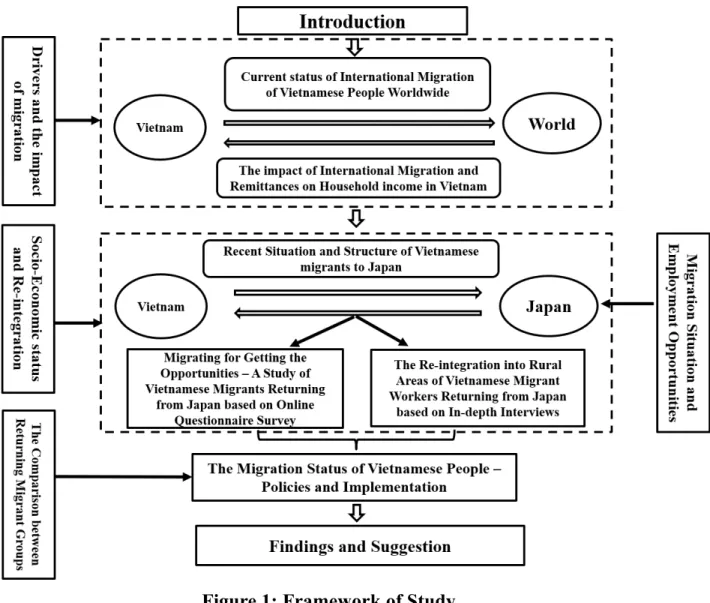
This section presents an overview of the path that will be followed to achieve the goal of this research. Figure 1 shows the position of each chapter in the dissertation.
18
Figure 1: Framework of Study The dissertation is organized as follows:
Chapter 1 is an overview of the international migration in Vietnam, and relevant information is provided as background. In the rest of this introductory chapter is the theoretical background of this thesis, it assesses existing studies on four themes of relevance to the thesis; 1) migration and the determinants of migration; 2) return migration; 3) reintegration and challenges involved in reintegration; 4) theoretical perspectives on return migration and reintegration. In addition, this chapter forms the basis for selecting determinants to be used in the analytical part of this dissertation.
19
Chapter 2 serves as an overview of the international migration of Vietnamese people all over the world in recent decades. The main purpose of this chapter is to identify the trends of Vietnamese international migration; then, outlines the current status of Vietnamese labor migration, focusing on the statistic trend of labor under the oversea contracts; furthermore, analysis the factors and migration channels for international migration.
In Chapter 3, I provide detailed information on the data set used in my analysis and explain about the methodology used; after that, I examine and present the findings of the analysis of the economic impacts of international migration and remittances on household income by using the new data set on Vietnamese migration patterns. The main objective of this chapter is to provide additional information to support the information provided in chapter 2 and want to point out the benefits of international migration with the consideration that economic factors are key drivers of international labor migration in Vietnam.
The aim of chapter 4 is to provide an overview of employment status and immigration to Japan in general; later analysis will focus on Vietnamese immigrants to Japan; the last step is to find out the structure of Vietnamese migrants to Japan - The Vietnamese migration channel to Japan follows the international migration model discussed in chapter 2 which indicated the importance of recruitment agencies in producing patterns of emigration. In this section, I will focus mainly on the analysis of the process and migration channel of technical intern trainees - This is a specific group of combining the characteristics of two types of migration: working and studying (that is the main difference of the Japanese labor market compared to other countries).
Chapter 5 titled, “Migrating for getting the opportunities – A study of Vietnamese migrants returning from Japan based on online questionnaire survey”, presents the findings of the analysis of the socio-economic situation of Vietnamese migrants after returning from Japan. This chapter represents an attempt to contribute
20
to the literature on return migration by framing the discussion within the context of the general impacts of economic and educational attainment on the employment outcomes of returning migrants.
Chapter 6 titled, “The re-integration into rural areas of Vietnamese migrant workers returning from Japan based on in-depth interviews”, examines the experiences of Vietnamese migrant workers returning from Japan in the rural area, focusing on those who have faced difficulties in their reintegration process. While many migrant workers successfully improve their economic circumstances, this chapter focuses on the more difficult experiences in order to find ways to better assist stakeholders in addressing weaknesses in the systems and to meet the needs of returned migrant workers better.
Chapter 7 aims to identify differences in the influence of socioeconomic on returning migrant groups and how to solve its arising problems. In this chapter, I will divide the surveyed objects into two migration flows differ significantly so that comparisons can be made easily: those moving to Japan as intern or trainee are mainly from rural areas, low- and medium-skilled with low educational level and migrants who have highly qualified with a high level of education.
Chapter 8 closes the thesis with conclusions and policy recommendations. In the final chapter, the results of this thesis are summarized. An attempt has been made to present a new angle on international migration in Vietnam and providing implications for the policy building.
21
CHAPTER 2
CURRENT STATUS OF INTERNATIONAL MIGRATION OF VIETNAMESE PEOPLE WORLDWIDE
2.1. Introduction
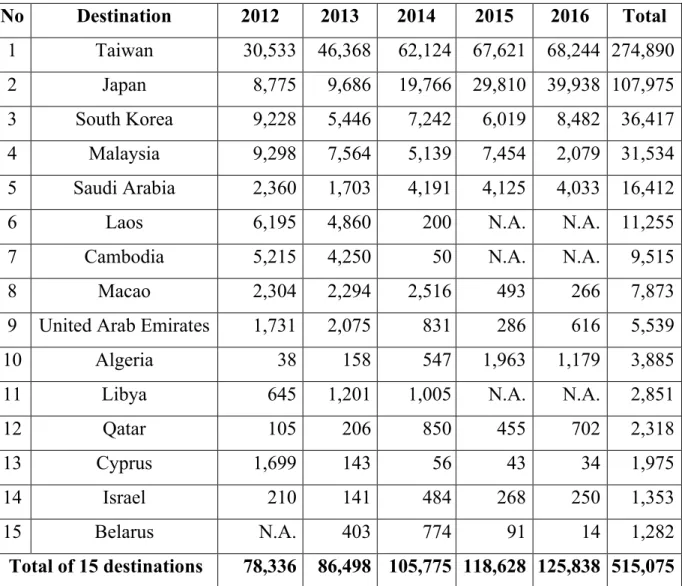
This chapter provides an overview of the international migration of Vietnamese people all over the world in recent decades. The chapter starts with reviewing the trends of International Migration, including Vietnamese people residing abroad and the annual entry-exit trends of Vietnamese citizens. Then, this chapter outlines the current status of Vietnamese labor migration, focusing on the statistic trend of labor under oversea contracts. Finally, this chapter analyzes the factors and migration channels for international migration. The basic findings of this chapter include Vietnamese people are mainly migrating to developed countries in Europe, North America, and Australia. For the first time in recent years, Japan has surpassed Canada to rise to the third position among the countries with Vietnamese citizens migrating to. Overall, people exiting the country were largely from younger working-age groups. Taiwan, Japan, South Korea, Malaysia are top destinations of Vietnamese laborers during 2012-2016.
2.2. The Trends of International Migration 2.2.1. Vietnamese People Residing Abroad
Information about Vietnamese residing abroad showed the migration situation of Vietnam for quite a long time and is not easily accessible. However, changes in the number of Vietnamese who settle in the country from year to year can tell us statistically about the migration situation of Vietnamese people to that country in the period between the two years. Census population data of these countries often do not
22
take into account short-term or long-term migrants, who do not intend to settle in the host country, and it often brings lower rating numbers than actual migration in a particular year. Despite these limitations, statistics data about Vietnamese residing abroad gives us a better understanding of the situation of the international migration of Vietnamese citizens.
With its open-door policy during the Doi Moi era (1986 to present) and international integration intensifying in recent years, international migration in Vietnamese has been increasing greatly. According to statistical data from the Department of Economic and Social Affairs, the United Nations in 2019), the number of Vietnamese residing abroad has constantly been increasing over time since 1990.
Overall, in recent years the number of men and women overseas has been equivalent to each other (Table 1 shows the major area, region, and country that was the major destination of Vietnamese migrants in 2019). One thing that is easily observed is the tendency to emigrate to more developed regions and high-income countries of Vietnamese migrants.
23
Table 1: Major area, region and destination countries of Vietnamese people to settle abroad, 2019
Unit: Person No Major area, region and
destination country Male Female Total
1 World 1,314,193 1,369,761 2,683,954
2 UN Development Groups
More Developed Regions 1,117,539 1,208,642 2,326,181 Less Developed Regions 196,654 161,119 357,773
3
World Bank income groups
High-income Countries 1,167,379 1,262,308 2,429,687 Middle-income Countries 146,381 107,102 253,483
Low-income Countries 433 351 784
4
Geographic regions
Africa 112 170 282
Asia 296,057 269,474 565,531
Europe 221,106 248,235 469,341
Latin America and the Caribbean 298 198 496
Northern America 672,748 702,772 1,375,520
Oceania 123,872 148,912 272,784
5
Major destination countries
United States of America 669,587 699,159 1,368,746
Australia 120,145 144,873 265,018
Japan 100,362 109,369 209,731
Canada 83,030 97,228 180,258
France 60,107 78,445 138,552
Republic of Korea 61,279 54,353 115,632
Germany 49,742 54,712 104,454
Malaysia 63,168 36,707 99,875
Czechia 26,388 20,243 46,631
United Kingdom 17,071 20,734 37,805
Source: United Nations, Department of Economic and Social Affairs.
Population Division (2019). International Migrant Stock 2019 (United Nations database, POP/DB/MIG/Stock/Rev.2019)