• 検索結果がありません。

The Parallel Innovation of Musical Instruments : The Development History of Emotionally Engaging Products in Japan

N/A
N/A
Protected

Academic year: 2021

シェア "The Parallel Innovation of Musical Instruments : The Development History of Emotionally Engaging Products in Japan"

Copied!
18
0
0

読み込み中.... (全文を見る)

全文

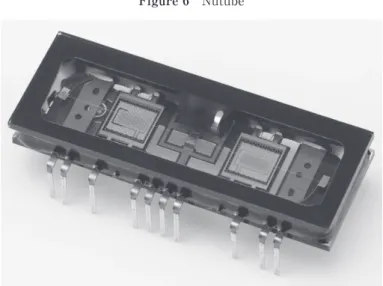
149 . 1. The innovatorʼs dilemma in the musical instrument industry. It is difficult to measure the performance of a musical instrument. There are no standards. for good sound. A higher price does not guarantee a higher performance. Good sound re-. lies on the human senses, so the reputations of brands and prominent musicians are a sec-. ondary factor. In such products, innovation leads to complicated technological changes.. It is well known that the idea of innovation started from Joseph Alois Schumpeterʼs. theory of ‘neue Kombination.ʼ It has since been expounded through the various corporate. strategies of academic researchers and businessmen such as Clayton M. Christensen who. is renowned in the field of product strategy. He explains the innovatorʼs dilemma, and the. relationship between sustaining technologies and disruptive technologies (Christensen,. 1997). He insists that the sound decisions made by management cause leading companies. to fail. When the market is small, and the technologies are still undeveloped, the value of. disruptive technologies is uncertain. In such cases, management in leading companies. tend not to adopt disruptive technologies. Disruptive technologies do not satisfy a. consumersʼ need in the early stage as the performance of such technologies does not meet. even their minimum need (see Figure 1). Mainstream customers choose established prod-. ucts and want companies to continue the sustainable innovation (progress due to sustain-. ing technologies) of existing products. Companies (especially top companies) rationally. move toward sustainable innovation, because they base their strategy on value networks,. financial structures and the culture of corporate structure : Management make the right. decision and do not choose disruptive technologies. Newcomers, however, adopt disruptive. technologies as they do not have the management resources of leading companies, and. products based on the technologies are typically cheaper and simpler.. Eventually, newcomers continue to make progress by moving to sustaining technolo-. gies based on the disruptive innovation. By the time the performance of newcomers,. based on sustaining technologies, reaches the low end of the mainstream markets, leading. The Parallel Innovation of Musical Instruments ―The Development History of Emotionally Engaging Products in Japan ―. Tomoaki TANAKA. The Parallel Innovation of Musical Instruments. 150 . companiesʼ products have already gone beyond the high end of the market. “Historically,. performance oversupply opens the door for simpler, less expensive, and more convenient. ― and almost always disruptive ― technologies to enter” (Christensen, 1997, p. 213).. Christensen called this phenomenon the innovatorʼs dilemma through his research of the. hard disk drive industry, etc.. The theory of the innovatorʼs dilemma has affected Japanese businesspeople since the. 2000s, following the emergence of the phenomenon in many Japanese industries after the. 1990s. Christensen expanded his theory to the musical instrument industry. He believes. that Yamaha (Yamaha Corporation ; former Nippongakki Seizo) fundamentally destroyed. the musical instrument market, which western makers established, as the company devel-. oped disruptive innovations around 1970s-1980s (Christensen, 2001, pp. IX-X). Some Japa-. nese musical instrument companies refer to his theory in their management strategies.. However, Christensen considered the musical instrument industry different from the. hard disk drive industry since it is difficult to measure the performance of musical instru-. ments with clear benchmarks, and because disruptive innovation does not drive out tradi-. tional technologies. This tendency is also seen in products that appeal to peopleʼs instincts,. for instance ceramic wares, luxury bags and furniture. In such products, old and new. technologies can be sustained in the market, and these technologies form two parallel. lines (see Figure 1). This paper will consider this phenomenon from the point of view of. the Japanese musical instrument industry.. This paper explores the cases of Yamaha and Casio (Casio Computer Co., Ltd.). Casio. Source: Christensen, 1997, p. introduction xx.. Figure 1 The innovationʼs direnma of Christensen. 東京経大学会誌 第 310 号. 151 . caused innovation to attack other industries by producing a reasonably priced keyboard. in the Casiotone. Kiyoshi Niwa mentioned this behaviour pattern as becoming an innova-. tor, “If you aim to attack other industries, you should try to destroy and change the base. of orbit around its custom” (Niwa, 2010, pp. 11-12). This area of the musical instrument. industry will be discussed in Section 2.. Schumpeter Tamada divides innovation into two patterns : “new market type destruc-. tion” and “low end type destruction” (Tamada, 2015, pp. 54-55). The latter case is dis-. cussed in the history of Yamaha and Casio in Section 2, the former will be looked at the. case of Korg in Section 3. “Innovation is a new thing which has economic valueʼʼ, and. “these two factors are important, the economic value and the new” (Shimizu, 2019, p. 36).. Section 3 indicates that innovation is created through the use of old i. e. analog technolo-. gy. Innovation in the music industry is demonstrably different from innovation in other in-. dustries.. This paper begins with the history of musical instrument technology from postwar. Japan. The limitations of the penetration rate of musical instruments become a significant. topic.. 2. Casioʼs disruptive innovation to Yamaha : The birth of the new electronic keyboard Casiotone. Music education in Japanese elementary schools started after Word War Ⅱ . Before that,. most students had not played any musical instruments. Music education took the form of. “Shouka” education (singing classes). Education in musical instruments was epoch-mak-. ing in providing music education for every student in Japan, regardless of social class.. The Courses of Study (government guidelines for teaching) in 1961 demanded all el-. ementary school students to play a simple melody on the organ (reed organ). As a result,. there was an increase in demand for keyboards in the school market. After the introduc-. tion of keyboard classes at school, some parents wanted their children to learn how to. play it out of school to improve their grades. Consequently, the private piano market. started expanding at the same time.. This movement was accelerated by the image of the Yamanote area and the Micchi. boom. The Yamanote area is located inside of Japan Railwayʼs Yamanote line loop in To-. kyo. It had the image of a high-class residential area, although there were also an old. town atmosphere as well as a lot of office buildings and commercial facilities. People pic-. The Parallel Innovation of Musical Instruments. 152 . tured piano music emanating from houses in Yamanoteʼs luxury residential areas. Pianos. were connected to the notion of wealth. The Micchi boom was influenced by the former. Empress of Japan, Empress Michiko. Although she was a civilian, she married Prince Aki-. hito in 1959. Many people celebrated their marriage, and the number of women longing to. be like the Empress increased rapidly. She became a fashion leader ; certain dresses and. high heels were made popular by her. Moreover, she liked to play the piano. Mothers. wanted to buy a piano for their daughters, believing they would become a beautiful lady. like Michiko (Tanaka, 2011, pp. 55-57).. In this way, the piano became a symbol of wealth and a wonderful life. This trend. could be seen throughout the prewar period, but it was not until the 1950s that it became. a feasible dream for common people. The price of a piano before 1950s was equivalent to. buying a house. Japan was experiencing a period of high economic growth with an aver-. age annual growth of over 10% from 1954 to 1973. The price of a regular piano (Yamaha. basic upright piano U1A: 195,000 yen) was about 9 times the average monthly income. (21,324 yen) in 1957. The piano was still expensive, although mass producers (Yamaha. and Kawai) pushed down the relative prices of the piano through advancements in their. factories throughout the 1950s and 1960s.. Music education issues surrounding the piano remained. Differing from home appli-. ances that can be used immediately after purchase, musical instruments such as pianos. could not immediately be put to their optimum use after purchase. Elementary school. teachers taught their students haw to play the organ, but they did not teach how to play. the piano in earnest. Piano education was still a high-class service, which was provided by. well-paid, individual piano teachers. The solution to this problem was a service supplied. by Yamaha Music School. It offered consumers cheap group lessons. Group lessons are not. conducive for learning the piano, because playing multiple pianos at the same time leads. to a decaying of sound quality. The piano was an instrument suitable for private lessons.. Yamaha resolved the problem by using the organ in group lessons which created a more. sustaining sound. Multiple organs played in a group create a more beautiful, harmonious. sound.. However, most consumers wanted to learn the piano, not the organ. Yamaha under-. stood that and subsequently named their textbook “Everyoneʼs Organ and Piano Book”.. Yamaha believed that practicing instruments at home with either a piano or organ would. do. It also benefitted the consumer to be able to practice with an organ as it was a cheap-. er instrument than the piano. Musical instrument stores managed by Yamaha Music. 東京経大学会誌 第 310 号. 153 . School created opportunities to sell their keyboards to consumers (parents) who brought. their children to attend music lessons every week. The schools started in 1954 in the. basement floors of directly managed stores (Yamaha Ginza shop), and it soon became. popular (see Figure 2). Yamaha used their dealers to expand Yamaha Music School na-. tionwide which cost a lot of money to start up as schools were equipped with expensive. equipment (e. g. pianos, stereos and organs). The dealers managed their schools directly. and paid a license fee to Yamaha. Yamaha Music School is a kind of service brand that. does not indicate a specific educational institution. The number of students increased rap-. idly due to the reasonable lesson fees and good curriculum.. Initially, Yamaha Music School used organs, but gradually began to use the new elec-. tronic organ. It was called Electone. Yamaha began making full-scale electronic musical in-. struments starting with the Electone (D-1) in 1959. Consumers were introduced to it as. well as the piano in the music schools. The replacement demand for the Electone was ex-. pected to be similar to that of home appliances. It had many electronic parts with room. for evolution. Yamaha knew that the piano had a limited penetration rate. Pianos are. highly durable goods and for that reason, the penetration rate was thought historically. low (about 25%) which is equivalent to one in four households. Electone had a similar. Figure 2 Yamaha Music School from 1954 to 1980. year Studentnumber School number year. Student number. School number. 1954 150 1 1968 260,000 5,800 1955 500 5 1969 270,000 6,000 1956 1,000 10 1970 300,000 6,200 1957 2,000 20 1971 330,000 6,400 1958 3,000 150 1972 350,000 6,500 1959 20,000 700 1973 380,000 6,700 1960 60,000 1,500 1974 410,000 6,900 1961 120,000 3,500 1975 460,000 7,000 1962 150,000 4,500 1976 500,000 7,200 1963 200,000 4,900 1977 540,000 7,400 1964 210,000 4,900 1978 570,000 7,500 1965 220,000 4,900 1979 620,000 7,600 1966 230,000 5,200 1980 650,000 8,200 1967 250,000 5,500. Source: “Nichigaku Syahou,” Nippongakki Seizo Co., Ltd., no.208(June, 1967); “Nich- igaku Syahou,” Nippongakki Seizo Co., Ltd., no. 220(June, 1968); ‘Changes in the Number of Students at Yamaha Music School,ʼ The Public Reations of YAMAHA Music Foundation, 2009.. The Parallel Innovation of Musical Instruments. 154 . penetration rate and the company placed their hopes on its replacement demand when. the demand for pianos declined. This movement was also seen in the musical instrument. industry in the United States1).. As expected, Japanese piano demand peaked in 1979(sales of 310,385 units) and has. generally declined since then2). Yamaha had a trump card in the Electone, but the effects. of destructive innovation started to spread as a result of the entry of different industries. at this time. Casio announced that it would enter the field of musical instruments in 1979.. Casio was originally a calculator company, and they caused disruptive innovation in the. watch industry through LSI technology. They released their first watch with a fully auto-. matic calendar in 1974. Yamaha feared Casio as it had launched innovative products in. other industries but realised the company was making a musical toy, after seeing Casioʼs. patent for an electronic musical instrument in the late 1970s. Casio launched its new musi-. cal keyboard ‘Casiotoneʼ(see Figure 3) in January 1980.. This was a compact keyboard (49 key and 50 key) which came out in various tones. Figure 3 Casiotone. This is my shot image at Casio Headquarters Exhibition Room (December 2019).. 東京経大学会誌 第 310 号. 155 . at a cost of 54,800 - 115,000 yen which was cheaper than the Electone (basic type was. about 180,000 yen). The Casiotone quickly became a popular product for young children. in Yamaha Music Schools. Light users could not take advantage of the full capabilities of. the Electone which had a much higher level of performance than the Casiotone. Electone. is located on the up side of the performance demanded at the high end (Figure 1). Simi-. larly consumers were unaware of the level of sound quality in the Sony Walkman (high-. quality sound) and the Apple iPod (stylish & moderate sound quality). Children were the. main students for music schools in Japan, so Yamaha moved to produce the same kind of. product in the PortaSound in December 1980. It was a complicated product strategy that. led to the cannibalisation of its own products (Electone), but Yamaha dealt with it quick-. ly.. Yamaha released cheap keyboards to compete with Casio after 1980(See Figure 4).. How was Yamaha (the leading company in this industry) able to deal with the disruptive. innovation in its industry? The answer was in the low penetration rate of pianos and. Electones. Yamaha was apprehensive about its penetration rate during periods of high. economic growth. Genichi Kawakami (CEO of Yamaha) was known as the theorist of the. declining musical instrument industry. When talking about the future of the instrument. industry in 1958 he said, “Even with such excitement, there is a limit as to how much . musical instruments could spread among the music lovers”.3) He forcefully modernised. and rationalised production, and focused on popularising music through the opening of. music schools and the promotion of music events (the Yamaha Popular Song Contest) to. increase consumers (Hiyama, 1964, p. 97). He also furthered business diversification in. preparation for the drop in demand for musical instruments. Yamaha has a variety of. businesses such as the production of furniture, kitchens, ski plates, tennis rackets, baths,. motorcycles (independent as Yamaha Motor Co., Ltd.), and managing resort facilities. The. Japan Economist described Yamaha as changing from “piano makers” to “general wood. makers” and “leisure development makers.”4). Yamaha had always been troubled by the penetration rate of musical instruments.. This was the driving force for solving the problem of disruptive innovation and the. innovationʼs dilemma.. The Parallel Innovation of Musical Instruments. 156 . Fi gu. re 4. T. he c. om pa. ris on. o f t. he m. us ic. al k. ey bo. ad. El ec. tr ic. al K. ey bo. ad En. tr y. m od. el o. f P ia. no s. an d. O rg. an Y. ea r/. M on. th Y. am ah. a Pr. ic e. Ca sio. Pr ic. e Y. am ah. a Pr. ic e. 19 80. Ja n.. Ca sio. to ne. C T. -2 01. ( 49. K ey. s) ¥. 97 ,00. 0 Ju. ly Ca. sio to. ne C. T -1. 01 (. 50 K. ey s). ¥ 54. ,80 0. Se pt. . U. P Pi. an o. U 1M. ( 88. K ey. s) ¥. 41 0,0. 00 N. ov .. Ca sio. to ne. C T. -3 01. ( 49. K ey. s) ¥. 95 ,00. 0 Ca. sio to. ne C. T -4. 01 (. 49 K. ey s). ¥ 11. 5,0 00. D ec. . Po. rt aS. ou nd. P S-. 1( 32. K ey. s) ¥. 23 ,50. 0 Po. rt aS. ou nd. P S-. 2( 34. K ey. s) ¥. 29 ,50. 0 Po. rt aS. ou nd. P S-. 3( 44. K ey. s) ¥. 36 ,00. 0 19. 85 Fe. b. V. L- 1(. 29 K. ey s). ¥ 12. ,80 0. O ct. . PO. RT A. T O. N E. PS -1. 0( 44. K ey. s) ¥. 75 ,00. 0 PO. RT A. T O. N E. PS -2. 0( 49. K ey. s) ¥. 95 ,00. 0 PO. RT A. T O. N E. PS -3. 0( 49. K ey. s) ¥. 11 5,0. 00 N. ov .. Ca sio. to ne. C T. -7 01. ( 61. K ey. s) ¥. 14 8,0. 00 19. 82 Fr. b. Ca. sio to. ne C. T -6. 01 (. 61 K. ey s). ¥ 11. 0,0 00. A pr. . Po. rt aS. ou nd. PC -1. 00 (. 44 K. ey s). ¥ 78. ,00 0. Ju ne. El ec. to ne. B -1. 01 ¥. 17 5,0. 00 Ju. ly Po. rt aS. ou nd. M P-. 1( 45. K ey. s) ¥. 98 ,00. 0 Ca. sio to. ne C. T -5. 01 (. 49 K. ey s). ¥ 98. ,00 0. ( U. pp er. 3 7. K ey. s, M. id dl. e 37. O. ct .. Po rt. aS ou. nd P. S- 30. 0( 47. K ey. s) ¥. 37 ,00. 0 K. ey s,. Fo od. 1 3. K ey. s) Po. rt aS. ou nd. P S-. 40 0(. 44 K. ey s). ¥ 46. ,00 0. D ec. . U. P Pi. an o. U 1A. ( 88. K ey. ) ¥. 45 0,0. 00 19. 83 Ja. n. Ca. sio to. ne C. T -7. 00 0(. 61 K. ey s). ¥ 15. 5,0 00. 19 84. Fe b.. Po rt. aS ou. nd P. S- 20. 0( 37. K ey. s) ¥. 24 ,80. 0 PT. -8 0(. 32 K. ey s). ¥ 16. ,30 0. M ar. . El. ec to. ne F. C- 10. ¥ 19. 5,0 00. ( U. pp er. 3 7. K ey. s, M. id dl. e 37. 19. 85 Ju. ne Ca. sio to. ne C. T -1. 01 (. 49 K. ey s). ¥ 32. ,30 0. K ey. s, Fo. od 1. 3 K. ey s). So ur. ce : “. N ic. hi ga. ku S. ya ho. u, ” N. ip po. ng ak. ki S. ei zo. C o.,. L td. ., n o.. 38 4(. D ec. em be. r, 19. 82 ). ; J ap. an M. us ic. T ra. de s,. 19 99. a nd. 2 00. 2; H. om ep. ag es. o f e. ac h. co m. pa ny. .. 東京経大学会誌 第 310 号. 157 . 3. Innovation to step back : KORGs development of the analog musical instru- ment from digital technology5). When Casio created a low-price musical keyboard, Yamaha produced a similar innovation. in the field of the synthesizer through digital technology in the 1980s.. The history of the synthesizer started with the RCA electronic music synthesizer. (known as Mark Ⅱ) in 1955(Koizumi & Iwasaki, 2011, p. 193). The synthesizer was a. new musical instrument born after the Second World War. Before that, there were many. electronic instruments that had been developed in the West, for example the Telharmoni-. um (in 1895 ; electronic organ), Theremin (in 1919 ; no touch instrument), Ondes Martenot. (in 1928 ; electronic keyboard), Trautonium (in 1928 ; electronic keyboard) and the Ham-. mond Organ (in 1929 ; electronic organ). Users could not create a completely new sound. but could layer tone and sound together. They were different instruments from the syn-. thesizer. However, the Mark II was a huge device using a vacuum tube, and punch cards. were used for input. It didnʼt look like a musical instrument. Synthesizers with a keyboard. as the input device had become popular due to the success of Robert Moog. Moog pro-. duced small sized synthesizers, the Moog Ⅲ with white and black keys in 1968. It was. able to reduce the size by using transistor parts6).. Korg (former Keio Giken Industries) was the first to announce the synthesizer in. Japan. They released the prototype synthesizer to the public at the All Japan Audio Fair. in 1970, and put the KORGUE on sale on the market after improving the prototype in. 1972. The KORGUE was released as an electronic organ, but it could also have been re-. leased as a synthesizer as it came with a device that could freely change the tone. The. catalogue for the KORGUE was labeled “Professional Electronic Organ with Traveler. Synthesizer”. The Traveler was the original mechanism that could seamlessly change the. sound by moving a lever left and right. KORGUE was a technologically epoch-making. product, but it failed commercially because it was expensive (430,000 yen) and there. were many competing products (Yamaha, Kawai, Victor and Matsushita etc. all made a. similar product).. Korg produced a small synthesizer, the miniKORG 700 after the KORGUE in 1973.. The concept of the miniKORG 700 was to sell it as an optional device for the Electone. It. was developed as a third keyboard that upgraded the Electone to a two-stage keyboard.. This idea had already had some success with the rhythm machine (MINI POPS) which. was installed as an auxiliary equipment for the Electone. The miniKORG 700 was a fail-. The Parallel Innovation of Musical Instruments. 158 . ure, but few consumers played a third keyboard instrument, and furthermore they had a. high affinity with Electone. The miniKORG 700 was rather successful in the United. States, which sold as a stand-alone synthesizer and a reasonable replacement for the Mini-. moog ($1,495). The miniKORG 700 was improved for the American market, adding a. ring modulator and twin oscillators. This export model was called the miniKORG K-1($. 499) in the United States and the miniKORG 700S otherwise. They were popular world. over and confirmed Korgʼs reputation as a synthesizer maker.. Korg released various synthesizers in the 1970s. The MS-20 (released in 1978), was. inexpensive, enabled full-scale sound to create and could process all external audio signals,. became a hit product with a cumulative sale of 22,000 units. However, equipped with all. the functions (polyphonic, memory function and preset sounds) required of synthesizers. at that time, Polysix became a bestseller with sales of over 26,000 units. Korg released a. series of worldwide hit products. Korgʼs products pitch was stable and adopted a Hz/Volt. system different from the Moogʼs (Oct/Volt), but these were analog synthesizers. They. were unlike digital synthesizers, which could achieve a stable pitch over a long time.. The first successful digital synthesizer was the Synclavier of New England Digital Co.. in 1977 which adopted an FM sound source (digital sound). Its was priced at over. $100,000 and it was limited to corporate purchases such as studios. Yamaha had the tech-. nical patent for FM synthesis since 1977, but was unable to release products that would. be accepted by the market. Yamaha saw the success of Synclavier and started developing. a synthesizer with an FM sound source. Then, Yamaha released the DX7 within a price. range suitable for personal use (about $1,240). The DX7, coupled with its near future. body design, sold 180,000 units worldwide. This was the disruptive innovation in the field. of the synthesizer.. Korg started to develop a full digital synthesizer as they did not have one. A digital. synthesizer can express more tones than an analog equivalent, and the synthesizer trend. was shifting to digital. The POLY-61(in 1982) and POLY-800(in 1983) went on the. market. Their selling point was in adopting the digital access control method and display-. ing numerically, each parameter, but they were only partly digitised (using a digital oscil-. lator and analog filter), and it was operated with an analog synthesizer with a digital. screen. The DW-6000 was also a partly digital machine with an analog noise simulator.. The Korgʼs synthesizer in this era was a product in transition from analog to digital.. A custom IC was required in order to make a completely digital synthesizer, and its. development required a long time and huge IC development costs. The development peri-. 東京経大学会誌 第 310 号. 159 . od for one model was about 8 months at the longest in the analog era, but it took several. years to develop when it came to the digital era. Only manufacturers that could generate. big enough sales commensurate with the long development period could develop digital. synthesizers. The digital synthesizer was an innovation that only a large company could. afford. The Yamaha DX7 was proof of the companyʼs high ability to develop products and. capital strength. There were a lot of synthesizer makers in the world, companies without. adequate financial resources left the industry due to the effects of digitalisation.. Korg responded to this crisis by forming a capital alliance with Yamaha in 1985.. From the previous year, Korg began thinking about the concept of a next-generation full. digital synthesizer which was called the M1. It used a 16-bit sampling sound source (PCM. sound source) and combined independent equipments (sequencer, effector and rhythm. machine) in one. The M1 was released in 1988 for 248,000 yen. It quickly became a popu-. lar model, reaching 100,000 units in two years after its release, and a total of 160,000 units. were sold in the world. The M1 was a historic model with a highly expressive PCM sound. source that ended the DX7 era. That time was the peak of synthesizer manufacturing and. sales in Japan (See Figure 5).. One machine after another Korg applied their digital technology to new synthesizers,. Figure 5 The production and sales of synthesizer in Japan. year production total sales shipment. unit unit amount. (1,000 yen) export domestic. 1988 294,014 248,000 18,125,000 195,928 52,072 1989 272,303 273,410 21,961,000 218,976 54,434 1990 313,132 258,956 25,788,000 209,105 49,851 1991 217,508 220,163 21,513,000 175,196 44,967 1992 209,229 214,875 19,576,000 181,227 33,648 1993 118,320 125,282 12,073,000 93,897 31,385 1994 142,771 136,829 11,067,000 102,186 34,643 1995 141,535 143,577 10,929,000 103,284 40,293 1996 140,354 146,840 10,281,000 111,306 35,534 1997 143,808 146,041 10,416,000 118,001 28,040 1998 121,623 128,122 10,071,000 105,046 23,076 1999 114,092 118,655 884,000 98,140 20,515 2000 110,768 113,066 9,013,000 98,671 14,395. Source: Research and Statistics Department of the Ministerʼs Secretariat of the Ministry of International Trade and Industry (1989-2001) “Yearbook of General Merchandise Statistics” (Japan : Tokyo). The Parallel Innovation of Musical Instruments. 160 . (for example the WAVESTATION in 1990, 0/1W in 1991), other musical instruments. and electronic products. The electronic piano was a typical example of a musical instru-. ment using digital technology. The first electronic piano in Japan was Rolandʼs EP-10 in. 1974. It was Yamahaʼs Clavinova with an FM sound source that accelerated the spread of. electronic pianos in the market. Korg started to turn out digital pianos (the DP-80, DP-. 2000C, DP3000C) from 1986. Korg is now one of the worldʼs leading electronic piano. manufacturers, along with Yamaha, Roland and Casio. The Korg digital technology also. created karaoke. The Hi-Kara, released in 1989, was the pioneer of compact electronic ka-. raoke. Korg had also entered the field of commercial karaoke through its business alliance. with Clarion.. They were also involved in the development of mobile phones. In the late 1990s, NEC. asked Korg to help develop more inexpensive software sound sources than the custom IC.. Korg developed the new sound source chip using the DSP (Digital Signal Processor) algo-. rithm and succeeded in producing sound like a custom IC by emulating the FM sound. source. The new sound source was installed in Sonyʼs mobile phones. Korg was drawing. attention to the DSP as an alternative to custom ICs since the 1980s, and it has been used. in various products in the evolution of their digital technology.. In the 2000s, analog musical instruments became the focus of attention in the music. market ; there was a re-evaluation of old technology in electronic musical instruments.. Korg used the DSP to arrange the analog synthesizer MS-20 in a modern style and re-. leased it under the name MS2000. Similarly, musical instrument manufacturers have tried. to reproduce analog musical instruments using digital technology. From the beginning,. the aim of the electronic piano was always to get closer to analog pianos (acoustic pia-. nos). Digital musical instruments have always been regarded as fake. Korg released a real. analog amplifier (the VOX Valvetronix) using a vacuum tube in 2001, as opposed to a. fake analog amplifier that digitally processed tones using the DSP. VOX Valvetronix had. gained popularity not only among amateurs but also professionals. The sound fluctuation. in analog products could not be expressed digitally (especially soft sounds). Although. Korg had been promoting digitalisation since the 1980s, vacuum tubes were also used in. electronic pianos such as SV-1(2009) and ELECTRIBE MX (2003) sequencer. The. highest performing electronic musical instruments have utilised analog technology.. Supply of vacuum tubes had been a problem since the 2000s. The majority of pur-. chases came from China, Russia and Eastern Europe : Japanese manufacturers rarely pro-. duced vacuum tubes. There were however, many defective vacuum tubes coming from. 東京経大学会誌 第 310 号. 161 . China and Russia. Korg demanded high quality and stable vacuum tubes. They created a. new vacuum tube (the Nutube) using a fluorescent display in collaboration with Noritake. Itron Corp in 2016(see Figure 6). The Nutube operated at less than 2% of the electric. power of orthodox vacuum tubes, size was reduced to less than 30% , and continuous use. time was 30,000 hours. It was the highest performing vacuum tube ever.. In this way, the performance required at the high end was born by low technology.. The evolution of musical instruments was not only from analog to digital, but also the oth-. er way round.. 4. Parallel innovation : The highest performance appears in low technology. When the 250MB hard disk evolved to 500MB through the application of new technology,. the 250MB hard disk declined and disappeared from the market. Many innovation theo-. ries insist that old technologies and ideas can be replaced by new ones. A different story. appears in the musical instrument industry.. As mentioned in the second section, when disruptive innovation occurs, some existing. companies (such as Yamaha, the industryʼs leading company) adopt disruptive innovation. without hesitation. At the same time, sustaining innovation of existing products is main-. tained at these companies. The Electone was being pushed out of the market especially. for beginners by the Casiotone. However, the Electone was closely connected to Yamaha. Figure 6 Nutube. Source: TANAKA, 2018, p. 321.. The Parallel Innovation of Musical Instruments. 162 . Music School where the level of students varied from beginners to advanced learners,. therefore Yamaha had to persevere with sustaining innovation for as long as the distribu-. tors continued to manage the music schools. On the other hand, due to the low penetra-. tion rate of the Electone and the piano, Yamaha was forced to adopt disruptive innova-. tions to attract consumers. The existence of Yamaha Music School led the company to. adopt two-way innovation (See Figure 7).. The discussion in the third section clarified the recession of innovation in the field of. instruments. Figure 8 shows a new demand line (the bold dotted line at the bottom). The. new line of “Performance demanded at the high end of the market” appears under the. low end line, because the latest digital technology could not drive out analog technology. as is outlined in the third section. As is the character of musical instruments, when new. technology emerges, old technology is gradually reassessed. The sound sources used in. the latest electronic musical instruments are sampling and modelling sound sources. Digi-. tal sampling sound sources are created by using the good part of the digitally simulated. sound waveform which is recorded in raw sound. This method was attempted with an an-. alog musical instrument called the Mellotron in the 1960s. The Mellotron uses a tape play-. back system and when we press a key, we hear the recorded sound. Mellotronʼs technolo-. gy is far inferior to digital sampling, but it was re-used by professional musicians in the. 2010s. The highest performance suddenly emerged below the lowest performance re-. Figure 7 The innovation of emotionally engaging products. See also Figure 1. Reference : Christensen, 1997, p. introduction xx.. 東京経大学会誌 第 310 号. 163 . quired by the market. Such cases are often found in the world of music where a productsʼ. originality is pursued.. Various types of the piano have emerged throughout its history (See Figure 9). It is. assumed that there are heated discussions about the technology and playability of each. piano, but I created a conceptual diagram in Figure 9 in order to consider the existence of. innovation7). It should be noted that old technology will not disappear. Digital pianos, for. Figure 8 The new demand line appears. See also Figure 1. Reference : Christensen, 1997, p. introduction xx.. Figure 9 Various types of the piano (conceptual diagram). The Parallel Innovation of Musical Instruments. 164 . example, have developed with excellent digital sound sources since the late 1990s, but. they still imitate the tone colour and the touch response of acoustic pianos. The key touch. of grand pianos became heavier because pianists sought sufficient volume and power to. play at large halls in the 19th century. Digital pianos, which can easily increase the vol-. ume, do not need to have a heavy touch. Essentially, to a certain degree the digital pianosʼ. light touch improves playability and allows pianists to express themselves in a different. way from traditional acoustic ones. Around 1990, Meiko Miyazawa, a famous pianist in Ja-. pan, gave lectures to piano teachers nationwide about the new possibilities of the digital. piano at the request of Korg (TANAKA, 2018, pp. 279-280 etc.). As this was too progres-. sive, it was not accepted by many Japanese pianists who had studied classical music. Mu-. sical instruments are always drawn to former innovations, so the old technology does not. easily disappear.. It does not mean that musical instruments are thrown into a dustbin just because its. technology is either new or old. The innovation of instruments stops evolving when it. reaches a certain level in playersʼ demand. In other industries, when innovation stops,. products tend to disappear from mainstream markets. However, most musical instru-. ments continue to exist in parallel as shown in Figure 10. On the other hand, some musi-. cal instruments disappear from the mainstream markets, while some are resurrected. Ba-. sically, musical instruments accumulate a lot of technological standards. Although further. Figure 10 The parallel innovation of musical instrument. See also Figure 1 and 8. Reference : Christensen, 1997, p. introduction xx.. 東京経大学会誌 第 310 号. 165 . evidence is required, it is thought that emotionally engaging products, not limited to musi-. cal instruments, have the same tendency.. There are various types of musical instruments and many accessories. Moreover,. since old and new technologies exist in parallel, the existence of a wholesaler is necessary. in the musical instrument industry. Even with leading musical instrument manufacturers. such as Yamaha, it is difficult for one manufacturer to manage all products. The musical. instrument stores that conduct business with only one manufacturer will find it difficult to. survive even if they increase their expertise. The musical instrument industry is an in-. dustry in which distribution is difficult to control. Musical instrument manufacturers re-. quire a high level of skill to bring together product innovation and distribution manage-. ment.. Acknowledgement. This research was (partially) supported by Tokyo Keizai University, Research Grant. 19-18.. Notes 1 )In 1962, a Yamahaʼs resident officer in the United States saw the increase of electronic or-. gan sales covering the decline in piano sales. ‘The correspondence from the United States,ʼ “Nichigaku Syahou,” Nippongakki Seizo Co., Ltd., no. 151(June 1962).. 2 )Research and Statistics Department of the Ministerʼs Secretariat of the Ministry of Interna- tional Trade and Industry (1966-2000) “Yearbook of General Merchandise Statistics” (Japan : Tokyo).. 3 ) “Nichigaku Syahou”, Nippongakki Seizo Co., Ltd., extra edition no. 7(March 1958). 4 )Mainichi Shimbun Publishing (1975) “Nippongakki Seizo”, Economist, no. 2079(April),. pp. 98-99. 5 )This paper refers to Tanaka (2018) about the Korg history. 6 )Don Buchla announced the synthesizer (Buchla) with the board which reacts by touching. with a finger (no black and white keyboard). Koizumi & Iwasaki, 2011, pp. 193-201 ; Shirasu- na, Tachibana & Mieda, 1977, pp. 9-11 ; Yonemoto, 2008, pp. 116-117 ; Mieda, 2010, pp. 1-8 ; Jenkins, 2007, p. 50.. 7 )Portable keyboards are not exactly pianos. However, in recent years, questionnaires con- ducted at some musical instrument stores have revealed that they are considered as pianos by consumers in Japan (from the testimony of people in the musical instrument industry).. Select Bibliography. Christensen, Clayton M. (1997) The Innovatorʼs Dilemma (Boston : Harvard Business Review Press).. The Parallel Innovation of Musical Instruments. 166 . Christensen, Clayton M. (2001) The Innovatorʼs Dilemma, Japanese version (Tokyo : Shoeisha). Japan Music Trades edit (1999) JAPAN PIANO ATLAS 2000 (Tokyo : Japan Music Trades). Japan Music Trades edit (2002) Organ Blue Book 2002 (Tokyo : Japan Music Trades). Jenkins, Mark (2007) Analog Synthesizer : Understanding, Performing, Buying : from the Legacy. of Moog to Software Synthesis (New York and London : Focal Press). GOTO Akira and KODAMA Toshihiro (2006) Japanʼs National Innovation System: Rebuilding. the Engine of Growth (Tokyo : University of Tokyo Press). HIYAMA Rikurou (1964) “New Music to the World of Children”, Make Joy : Nippon Gakki = Ya-. maha, Fuji International Consultant Publishing, pp. 94-111. KOIZUMI Nobuo, IWASAKI Makoto (2011) Sound Synthesis : The Introduction of Electroacous-. tic (Tokyo : Kodansha). MIEDA Fumio (2010) “Keyboard-Type Electronic Musical Instruments and Non-Keyboard-Type. Electronic Musical Instruments”, Electronic Keyboard Music Research no. 5, pp. 1-8. Nippon Gakki Seizo Co. (1977) The History of Our Corporation (Nagoya : Bunposha). NIWA Kiyoshi (2010) The Practical Theory of Innovation (Tokyo : University of Tokyo Press). Research and Statistics Department Economic and Industrial Policy Bureau Ministry of Econo-. my, Trade and Industry (2001-2002) Yearbook of General Merchandise Statistics (Tokyo : Japan).. Research and Statistics Department of the Ministerʼs Secretariat of the Ministry of International Trade and Industry (1955-1965) Year Book of Daily Necessaries Statistics (Tokyo : Japan).. Research and Statistics Department of the Ministerʼs Secretariat of the Ministry of International Trade and Industry (1966-2000) Yearbook of General Merchandise Statistics (Tokyo : Ja- pan).. SHIMIZU Hiroshi (2019) The Innovation to Go Wild (Tokyo : Shinchosha). SIRASUNA Shoichi, TACHIBANA Akiyoshi, MIEDA Fumio (1977) The Introduction to Music. Synthesizers (Tokyo : Ohmsha) TAMADA Schumpeter (2015) Innovatorʼs Dilemma in Japan (Tokyo : Shoeisha). TANAKA Tomoaki (2011)“The Competitive Advantage of Nippon Gakki Co.ʼs Marketing. Strategy : Hearing the Voice of the Piano & Organ Market during the High Economic Growth Period in Japan”, Japan Business History Review, vol. 45 (no. 4), pp. 52-76.. TANAKA Tomoaki (2012)“Yamahaʼs Keyboard Instrument Business in a Mature Market”, Ja- pan Business History Review, vol. 47 (no. 1), pp. 49-74.. TANAKA Tomoaki (2018) The 55-year history of Korg : With New Music Always (Tokyo : Korg Inc.).. YONEMOTO Minoru (2008) Fun Electronic Musical Instrument : The Recommendation of Homemade (Tokyo : Ohmsha).. Special thanks for checking the grammar and proofreading the document. Nhowey Davies Tamami Tanaka

Figure 1 The innovationʼs direnma of Christensen
Figure 2 Yamaha Music School from 1954 to 1980 year Student
Figure 4 The comparison of the musical keyboad Electrical KeyboadEntry model of Pianos and Organ Year/MonthYamahaPriceCasioPriceYamahaPrice 1980Jan.Casiotone CT-201(49 Keys)¥97,000 JulyCasiotone CT-101(50 Keys)¥54,800 Sept.UP Piano U1M (88 Keys)¥410,000 No
Figure 6 Nutube
+4

参照

関連したドキュメント

Keywords: homology representation, permutation module, Andre permutations, simsun permutation, tangent and Genocchi

Hilbert’s 12th problem conjectures that one might be able to generate all abelian extensions of a given algebraic number field in a way that would generalize the so-called theorem

The only thing left to observe that (−) ∨ is a functor from the ordinary category of cartesian (respectively, cocartesian) fibrations to the ordinary category of cocartesian

At Geneva, he protested that those who had criticized the theory of collectives for excluding some sequences were now criticizing it because it did not exclude enough sequences

The inclusion of the cell shedding mechanism leads to modification of the boundary conditions employed in the model of Ward and King (199910) and it will be

For staggered entry, the Cox frailty model, and in Markov renewal process/semi-Markov models (see e.g. Andersen et al., 1993, Chapters IX and X, for references on this work),

Answering a question of de la Harpe and Bridson in the Kourovka Notebook, we build the explicit embeddings of the additive group of rational numbers Q in a finitely generated group

Then it follows immediately from a suitable version of “Hensel’s Lemma” [cf., e.g., the argument of [4], Lemma 2.1] that S may be obtained, as the notation suggests, as the m A