九州大学学術情報リポジトリ
Kyushu University Institutional Repository
妊婦の精神的・身体的ストレスと労働
阿南, あゆみ
九州大学大学院医学系学府
https://doi.org/10.15017/21736
出版情報:Kyushu University, 2011, 博士(看護学), 課程博士 バージョン:
権利関係:
pg. 1
Title Page
Title;
Mental and Physical Stress of Pregnant Women and Work
Authors;
Ayumi Anan1,2,3, Michiyo Shiiba2,3, Eiji Sibata3, Masayuki Tanaka3,4, Rieko Kawamoto5
1Department of Health Sciences, Graduate School of Medical Sciences, Doctor’s course, Kyushu University,
Higashi-ku, Fukuoka 812-8582, Japan
2Department of Nursing of Human Broad Development, School of Health Sciences, University of Occupational and Environmental Health, Japan. Yahatanishi-ku, Kitakyushu 807-8555, Japan
3Maternal and Child Environment Health Center, University of Occupational and Environmental Health, Japan. Yahatanishi-ku, Kitakyushu 807-8555, Japan
4Department of Environmental Health, School of Medicine, University of Occupational and Environmental Health, Japan. Yahatanishi-ku, Kitakyushu 807-8555, Japan
5 Department of Health Sciences, Graduate School of Medical Sciences, Nursing Course, Kyushu University, Higashi-ku, Fukuoka 812-8582, Japan
Key Words: Pregnancy, Working, Stress
Reprint request:
Ayumi Anan
Department of Nursing of Human Broad Development, School of Health Sciences, University of Occupational and Environmental Health, Japan. Yahatanishi-ku, Kitakyushu 807-8555, Japan
Address correspondence to:
Ayumi Anan
Department of Nursing of Human Broad Development, School of Health Sciences, University of Occupational and Environmental Health 1-1 Iseigaoka, Yahatanishi-ku, Kitakyushu 807-8555, Japan
(e-mail:[email protected])
pg. 2
Abstract
This study aimed to investigate the effects of working during gestation on pregnant women by evaluating
their mental and physical stress. The subjects were 62 women during natural pregnancy with a singleton
who were not in a state of illness. The survey was conducted by a Questionnaire to clarify their general
background, daily activities, working status, mental stress (GHQ28) and measurement of antioxidant
capacity (Potential Anti-Oxidant (PAO)) and oxidative stress urinary 8-hydroxydeoxy guanosine (8-OHdG)
in early (12-16w) and late (32-36w) pregnancy.
Of the 62 females (primigravida:23, multigravida:39), 41 (66.1%) worked in early pregnancy and 17
(27.4 %) continued to work in late pregnancy, while the other, i.e. 24, discontinued working. Eight took
maternal leave of absence and 16 resigned their jobs during the gestation period .
The total GHQ28 scores fell significantly in late pregnancy compared with early pregnancy, mainly
caused by the relief of Somatic Symptoms. In addition, urinary 8-OHdG lowered significantly in late
pregnancy whereas PAO rose significantly. The reduction of physical stress was recognized in late
pregnancy. The urinary 8-OHdG of working pregnant women was lower than non-working pregnant
women in early pregnancy. The PAO levels were not changed by working status. GHQ28, PAO and urinary
8-OHdG were not significantly related with life activities, such as going up/down, sleep, house-hold work
and so on.
Mental and physical stress caused by pregnancy was high in early pregnancy and decreased as pregnancy
progressed. Working during pregnancy did not adversely influence mental and physical stress of pregnant
women, while working in early pregnancy reduced physical stress levels.
pg. 3
Introduction
The current econo-industrial society cannot dispense with the female labor force. Females hold an
important role in society by giving birth, besides industrial activities. Therefore, females in modern society
are required to work even during gestation. This fact prompts the whole society to support working women
by helping them give birth and raise their children, and this has become a major topic in occupational
medicine.
Considering previous studies, many epidemiological studies have shown that working pregnant women
are at a higher risk of coexisting illness such as threatened abortion, threatened preterm delivery and
pregnancy-induced hypertension1). According to the Labor Standards Act, pregnant women are protected
from hazards of working; 1) ban on underground labor (article 64-2), 2) limitations on dangerous and
injurious work (article 64-3), 3) leave work before and after childbirth (article 65), 4) avoidance of excess
working hours, work on days off, and work at night if so requested by pregnant women (article 66)2). The
legal protection for working pregnant women is limited so that pregnant women are not completely taken
care of. One of the reasons for this is that no risk assessment has been done as to the harmful factors
involved in working during gestation, especially interms of chemicals, newly developed jobs and so on.
Taking these facts into consideration, we studied mental and physical loads during gestation work. As a
first step, this study reports analyze of the risks involved in getting pregnant and giving birth while working
by measuring mental stress (The General Health Questionnaire: GHQ28) and oxidation stress markers
(Urinary 8-hydroxydeoxyguanosine (8-OHdG) and Potential Anti-Oxidant (PAO)).
pg. 4
Subjects and Methods
1. Study Subjects
Pregnant women within less than 10 weeks into their gestation periods were recruited at 5 medical
facilities, including one university hospital, in K City after approving the purpose of this study and the
confirmation of their fetuses’ pulses. The recruitment criteria were as follows; 1) no current illness or
medical treatment, 2) single pregnancy, 3) natural pregnancy.
2. Period of Study
Recruitment went on from January to March in 2010 with the survey at birth done by October, 2010.
3. Survey Contents
1) Early survey in the gestation period (between the 12th and 16th week)
The survey was conducted with questionnaire sheets (age, family members, pregnancy history, current
state of illness, smoker/non-smoker, drinker/non-drinker, residential environment, and breakdown of daily
hours: sleep, housework, child-raising, resting time and so on) and GHQ28, as well as collection of
biospecimens (4ml of blood and 3ml of urine). In addition to these, the basic items on the medical records
of the subjects (their current state of illness, treatment, pregnancy history, and body mass index before
pregnancy) were copied.
pg. 5
2) Late survey in the gestation period (between the32nd and 36th week)
A Questionnaire (smoking and drinking in pregnancy, career and employment status, breakdown of daily
hours: sleep, housework, child-raising, resting time) and GHQ28, as well as collection of biospecimens
(4ml of blood and 3ml of urine)were conducted late in pregnancy .
3) Survey at birth
The survey was conducted with questionnaire sheets. In addition to this, the items on the medical records
of the subjects (remarks on their pregnancy, childbirth delivery and newly-born babies) were copied.
4. Ethical Compliance
Informed consent to the surveys was given by the subjects after proper explanation of the purpose of this
study in the early stage of pregnancy. Permission to access to their medical records was also given.
Biospecimens of blood and urine were taken in combination with the ordinary collection of blood and urine
at medical checkups for pregnant women.
This study was approved by Kyushu University Institutional Review Board for Clinic Research
(approval number; 21-119) and Ethics committee of Medicine and Medical Care, University of
Occupational and Environmental Health, Japan (accepted number; 08-91).
5. Measurements of Biospecimens
Blood samples were frozen in storage at -80 ℃ as serum within four hours after sampling. Urine samples
pg. 6
were frozen for storage at -80 ℃ after being aliquoted.
1) Measurements of Urinary 8-OHdG
Urinary 8-OhdG levels were measured with an ELISA kit made by the Japan Institute for the Control of
Aging. Since the samples were spot urine, the measurement values were corrected by urinary creatinine
levels (8-OHdG/Cre) or urine - specific gravity (8-OHdG/mL) in order to adjust for daily fluctuations.
2) Measurements of Antioxidant Capacity in Blood
Antioxidant capacity was measured by an ELISA kit for Potential Anti-Oxidant(PAO) (made by the
Japan Institute for the Control of Aging). The mixture of the sample and a Cu++ reagent generated Cu+ due
to a reduction reaction by antioxidant materials in the samples. Cu+ together with a color-producing reagent
formed a compound, which absorbed light at 490 nm producing Cu+. The amount of produced Cu+ showed
the antioxidant capacity of the samples.
6. Statistical Analysis
Paired t-test, multiple linear regression analysis and multiple logistic regression analysis were carried out
using a statistical analysis application SPSS19.0J.
pg. 7
Results
1. Characteristics of the Subjects and their Employment Status
Eighty-four subjects gave their consent to participation in the surveys. Twenty-two subjects were
excluded from the survey due to lack of biospecimens. Finally, 62 subjects satisfied the recruiting criteria
and could be followed-up by both of biospecimens and questionnaires. Of the 62 subjects, 23 were
primigravida and 39 were multigravida, with no significant differences in age. Moreover, no significant
differences in age or working status were observed in the early and late surveys in the gestation period. 41
subjects (66.1%) were working in early pregnancy. Of them, 17 (27.4 %) continued working in late
pregnancy, while 24 stopped working during the gestation period (Table 1). Of the 24, 8 took maternal
leave of absence and the rest (16 people) resigned their jobs during the gestation period (the dropout rate
was 39%). The reasons for resigning were as follows; 2 complained of somatic symptoms, such as feelings
of weariness and/or nausea, 4 found it difficult to cope with their working conditions, such as handling
heavy objects and/or driving for a lengthy period, 6 registered reasons concerning their employment status
and system, such as the termination of an employment period and the absence of maternal leave and/or a
child-care leave, and 4 gave no reason. No one experienced a career change during the surveillance period.
2. General Health Questionnaire (GHQ) 28 in early and late pregnancy
The results of GHQ28 in early and late pregnancy are shown in Table 2. The total scores in late
pregnancy were significantly lower than those in early pregnancy (p<0.01). This could be attributed to the
pg. 8
relief of Somatic Symptoms as the greatest factor (p<0.01). The scores for Anxiety and Insomnia, Social
Dysfunction, and Severe Depression tended to be lower in late pregnancy.
3. Potential Anti-Oxidant (PAO) and Urinary 8-OHdG in early and late pregnancy
The time course of PAO levels after blood collection was analyzed (Fig 1). No decreases in PAO levels
were observed for 4 hours after sampling. PAO significantly elevated in late pregnancy (p<0.01). Urinary
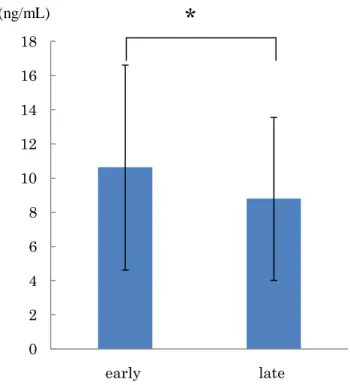
8-OHdG significantly fell in late pregnancy both after creatinine correction (p<0.01) and after specific
gravity correction (p<0.05) (Fig 2).
Urinary 8-OHdG did not elevate in either early or late pregnancy for the above-mentioned 4 women
who answered in their questionnaires that they had resigned their jobs because of working conditions/ such
as handling heavy objects and/ or driving for a lengthy period.
4. Factors Influencing the Stress-Related Conditions of Mothers
1) Factors Influencing GHQ28
Using the GHQ total scores as dependent variables (6 or more with some problems and 5 or less in a
normal state) and items such as working status, personal factors, and breakdowns of daily hours as
independent variables, multiple logistic regression analysis was performed. As a result, no variables
influencing the GHQ total scores were recognized in either early or late pregnancy.
pg. 9
2) Factors Influencing Potential Anti-Oxidant (PAO)
The indication of a logarithmic normal distribution for PAO led to a multiple linear regression analysis
after a logarithmic conversion. BMI was the only variable that influenced PAO (p<0.001) in early
pregnancy (Table 3). No influential variable was seen in late pregnancy (Table 3).
3) Factors Influencing Urinary 8-OHdG
According to multiple linear regression analysis (Stepwise Method) , the continuation of work was only
influential (p<0.05) in early pregnancy. Urinary 8-OHdG was higher in non-working pregnant women. As
for Urinary 8-OHdG after specific gravity correction, the working state and daily sleeping time were
influential variables in early pregnancy (p<0.001 respectively). Urinary 8-OHdG specific gravity was
affected by age in late pregnancy. In late pregnancy, urinary 8-OHdG was lower for older subjects (p<0.05)
(Table 3).
5. Relation between working status and pregnancy complications
Nine subjects were diagnosed with threatened preterm delivery and treated with internal medicine, while
2 subjects were diagnosed with pregnancy-induced hypertension. The development of these diseases had no
bearing on whether these 11 subjects continued working or not.
pg. 10
6. Effects on Health Conditions of Newly-born Babies
Sixty-two subjects all delivered babies via normal delivery ( in-womb period: from 37 weeks and five
days through 41 weeks and five days) and the average weight of newly-born babies was 3,031±350g
(N=62).
Given the body weight, height, head circumference, chest circumference and placenta weight as
dependent variables and also items such as working status, personal factors, and breakdowns of daily hours
as independent variables, a multiple linear regression analysis was performed, but no influential variable
was found.
Discussion
The General Health Questionnaire (GHQ) is a screening test developed by Goldberg et al.3) and is
effective in delection and evaluation neurosis symptoms. It has been modified and translated into a
Japanese language version by Nakagawa et al.4), and is now in use as a Japanese shorter version (GHQ28).
The reliability and applicability of GHQ28 have been validated, and the results of GHQ28 are evaluated by
total scores and subscores of four factors: A) Somatic symptoms, B) Anxiety and Insomnia, C) Social
Dysfunction , D) Severe Depression disorder. The total score ranges from 0 to 28 points, and the higher the
score, the more serious the mental health problems are. The cut-off point to decide the mental
health condition was from 5 to 6.
pg. 11
In this study, we analyzed GHQ28 results by the cut-off point values of total scores and the average
values on each factor's scale. The total scores of GHQ in this study decreased significantly in late
pregnancy compared with early pregnancy(p<0.01). Looking at the subscores of respective factors, the
subscores of Somatic symptoms significantly fell and those of the other three factors tended to decrease in
late pregnancy. These results prove that the mental stress levels of pregnant women are higher with the
somatic symptoms in early pregnancy and decrease as pregnancy progresses. In a report by the Japan
Association for The Advancement of Working Women in 20065), the greatest number of pregnant workers
complained of physical anxiety like emesis as a stress factor during gestation. Emesis in pregnancy
generally appears during the 5th to 6th week of pregnancy and is generally relieved during the 12th to 16th
week; nevertheless, it varies greatly between individual to individual6). Because the early survey in the
gestation period in this study was made during the 12th to 16th week when pregnancy emesis is relatively
relieved but continuing, this presumably reflects the higher degrees of somatic symptoms caused by emesis.
On the other hand, the total scores of GHQ12 in the study of Matsuzaki et al.7) did not recognize any
significant differences between early pregnancy (the 12th to 13th week ), mid-pregnancy (the 22nd to 26th
week ), and late pregnancy (the 30th to 34th week ). Matsuzaki et al.7) used GHQ12, in which the number
of questions in the questionnaire was less than half that of GHQ28. The results of GHQ12 showed a
problem that the values of the standard deviation were larger than the average values of the total scores.
Furthermore, they selected different pregnant women at the three stages, that is, the subjects in early
pregnancy, mid-pregnancy and late pregnancy were not the same. In this study, we analyzed the
pg. 12
working and individual factors as possible variables that may affect the total scores of GHQ28;
nevertheless, no such variables were significant either in early pregnancy or late pregnancy.
Among the various methods for measuring antioxidant capacity, we used a copper reduction assay with
a PAO measurement kit for this study. Copper has advantages over iron for antioxidant assays in that all
classes of antioxidants, including thiol, are detected with little interference from reactive radicals, while the
copper reaction kinetics are faster than iron. The assay requires only 3 min; the assay is complete in
minutes for ascorbic acid, uric acid , gallic acid, and quercetin, but requires 30-60 min for more complex
molecules. Thus, the copper reduction assays have similar problems with a complex mixture of
antioxidants in terms of selecting an appropriate reaction time8).
We also studied the changes in PAO levels after blood collection. The results showed that the PAO
levels stayed stable more than four hours after blood collection(Fig 3). Therefore, we separated serum from
blood samples and kept them at -80℃ within four hours of blood collection. The decrease in PAO due to
smoking was proved in the study by Dietrich et al.9) and the decrease was especially significant in
the umbilical cord blood10). However, in this study, no decrease in the PAO level due to smoking was
observed either in early or late pregnancy; the reason for this is yet to be confined. Some kind of
connection was recognized between body mass index (BMI) and the PAO values in early pregnancy, but no
prior report on this phenomenon has been published to date. Since PAO is said to be affected by the intake
of anti-oxidant substances in food11), a further study of the connection between BMI and diet on PAO
levels of pregnant women may be necessary.
pg. 13
8-OHdG is marker of oxidative DNA damage in whose structure guanine has been oxidized by reactive
oxygen12). Since urinary 8-OHdG can reflect oxidative stress non-invasively, it is now widely used as an
oxidative stress marker. It was reported that urinary 8-OHdG levels of female shift workers were
significantly higher than those of female part-time workers13). Moreover, the urinary 8-OHdG of male shift
workers was reported to increase compared with male day-time workers14). Urinary 8-OHdG is widely used
as an oxidative stress marker to study the influence of working, but no report has yet been done
concerning pregnant women.
Both values of 8-OHdG after creatine correction and that after specific gravity correction in late
pregnancy were significantly lower than in early pregnancy (p<0.01, p<0.05), giving the same result as
for mental stress that was reduced in late pregnancy. It has been reported that females have increased
oxidative stress levels as a result of mental stress15)16). The dual decreases in the scores of mental stress
(GHQ) and the values of oxidative stress markers in late pregnancy support those preceding studies.
On the other hand, Matsuzaki et al. reported that urinary biopyrrin, an oxidative stress
marker, significantly increased in late pregnancy compared with early or mid-pregnancy 7). Furthermore, in
a study by Tateoka et al., cortisol concentration, another stress indicator, significantly increased
during early (the 8th to 12th week of gestation) and mid pregnancy (the 22nd to 26th week) , and even
more significantly in late pregnancy (the 30th to 34th) 17). Those reports indicated opposite results to this
study. 8-OHdG is a DNA oxidative damage marker involved not only in oxidative stress, but also DNA
pg. 14
repair enzyme activities. The reasons why 8-OHdG levels were lower in late pregnancy in this study are
thought to be an increase in defense systems such as PAO and DNA repair.
Urinary 8-OHdG in non-working pregnant women was significantly higher than in working women
(p<0.05 after creatinine correction, p<0.001after specific gravity correction) in this study. According to a
study by Shinkawa et al.18), the occurrence of minor pregnancy ploblems occurred more often in
non-working women than working women, Yubune et al.19) also reported lower degrees of depression and
physical stress in working pregnant women. A study by the above-mentioned Japan Association for The
Advancement of Working Women5) reported that non-working pregnant women scored higher in all stress
check items than working pregnant women, indicating that the results of this study were the same as those
of these preceding studies.
In this study, we examined the effects of continuation of work during pregnancy on the mental and
physical condition of pregnant women. The hypothesis that continuation of work early in the gestation
period was harmful to pregnancy was rejected because of the lower oxidative stress marker levels in
working pregnant women. Instead, the study recognized lower physical stress when working during
pregnancy. Yamada et al.20) reported higher rates of headaches with full-time housewives than
with working women; the reason was that the former have little satisfaction or fulfillment and greater stress
from their activities, while working women have greater satisfaction and fulfillment by receiving individual
recognition and rewards. Besides, other studies of working women also often report fulfillment and
pg. 15
self-satisfaction by working22)23). Although these studies were conducted with only non-pregnant or
child-raising women, the same results are feasible.
Eight pregnant working women took maternity leave in early to late pregnancy, and another 16
resigned their jobs. Those who resigned their jobs in early pregnancy were compared with those who
continued working up to late pregnancy, and no significant differences were recognized between them on
GHQ28, PAO, or urinary 8-OHdG either in early or late pregnancy. Although working during pregnancy
did not have any adverse effects on pregnant women in this study, it should be remembered that some hard
work is really harmful to pregnant women.
It is necessary to construct social environments where women feel they can work easily, get pregnant,
have babies, and raise children. In a further study, an increased number of study subjects and a diverse,
long-term viewed analytical study of working and living environments and various oxidative stress markers
to evaluate mental and physical stress of pregnant women are necessary.
Conclusion
We examined the working, life-style, environment, and mental stress (GHQ28) by questionnaires , and
the PAO in blood serum and urinary 8-OHdG in 62 pregnant women who were free of any basic diseases
and were pregnant by natural insemination with a single fetus, first in early pregnancy (the 12th to 16th
week) and then in late pregnancy (the 32nd-36th week). The values of mental stress were higher in early
pg. 16
pregnancy and decreased as the pregnancy advanced. Also, the values of urinary 8-OHdG, a marker of
physical oxidative stress, decreased, as the values of antioxidant capacity (PAO) increased, in late
pregnancy. No relation was detected between working and threatened preterm premature delivery,
pregnancy hypertension or the condition of the delivered babies. Working during pregnancy did not
increase the mental or physical stress of pregnant women, but rather reduced physical stress.
Acknowledgements
This work was supported in part by Grants-in-Aid from the Ministry of Education, Culture, Sport,
Science and Technology of Japan (23593360) and UOEH Research Grant for Promotion of Occupational
Health.
pg. 17
References
1) Anan A, Shiiba M, Sibata E, Kawamoto R: Health Effects and Psychological Stress in Pregnant
Women Engaged in Work Outside the Home, Sangyo Ika Daigaku Zasshi 32(4): 367-374, 2010 (in
Japanese with English abstract).
2) Ministry of Health Labor an Welfare: Labor Standards Act [Online]. 2010 [cited 2011 Aug
1];AvailablefromURL:
3) Goldberg DP, Hillier VF: A scaled version of the General Health Questionnaire, Psychol Med 9:
139-145, 1979.
4) Nakagawa Y, Daibou I: Validity and reliability of the Japanese Version in General Health
Questionnaire. The Manual of the Japanese Version of the General Health Questionnaire. Tokyo,
Nihon Bunka Kagakusha Co., ltd. 1985, p p 17-33 (in Japanese).
5) Conducted by Japan Association for The Advancement of Working Women: Survey Report on
Stress of Working Women in Pregnancy and Child-Raising Periods. 2006, pp7-68, (in Japanese).
6) Murata M, Fukusima K, Wake N: Emesis Gravidarum, Perinatal Care 29: 16-17, 2010 (in Japanese).
7) Matsuzaki M, Haruna M, Ota E, et al: Urinary biopyrrin as a possible oxidative stress marker during
Pregnancy, J. Jpn. Acad. Midwif 20: 40-49, 2006 (in Japanese with English abstract).
8) Prior RL, Wu X, Schaich K: Standardized Methods for the Determination of Antioxidant Capacity and
Phenolics in Foods and Dietary Supplements, J AGR Food Chem 53: 4290-4302, 2005.
pg. 18
9)Dietrich M, Block G, Norkus EP et al: Smoking and exposure to environmental tobacco smoke decrease
some plasma antioxidants and increase y-tocopherol in vivo after adjustment for dietary antioxidant
intakes, Clin Nutr 77: 160-166, 2003.
10)Aycicek A, Ipek A: Maternal active or passive smoking causes oxidative stress in cord blood, Eur J
Pediatr 167: 81-85, 2008.
11)Cao G, Russell RM, Lischner N and Prior RL: Serum Antioxidant Capacity is Increased by
Consumption of Strawberries, Spinach, Red Wine or Vitamin C in Elderly Women, J Nutr: 2383-2390,
1998
12) Kasai H, Crain PF, Kuchino Y, et al: Formation of 8-hydroxyguanine moiety in cellular DNA by
agents producing oxygen radicals and evidence for its repair, Carcinogenesis 7: 1849-1851, 1986.
13) Ishihara I, Nakano M, Ikushima M, et al: Effect of Work Conditions and Work Environment on the
Formation of 8-OH-dG in Nurse and Non-Nurse Female Workers, Sangyo Ika Daigaku Zasshi 30(3):
293-308, 2008.
14) Irie M, Tamae K, Iwamoto-Tanaka N, Kasai H: Occupational and lifestyle factors and urinary
8-hydroxyguanosin, Cancer Sci 96: 600-606, 2005.
15) Irie M, Asami S, Ikeda M, Kasai H: Depressive state relates to female oxidative DNA damage via
neutrophil activation, Biochem Biophys Res Commun 311: 1014-1018, 2003.
16) Irie M, Asami S, Nagata S, et al: Psychosocial Factors as a Potantial Trigger of Oxidative DNA
Damage in Human Leukocytes, Jpn J Cancer Res 92: 367-375, 2001.
pg. 19
17) Tateoka Y, Takahashi M: A longitudinal study of salivary stress-related-hormone concentrations in
pregnancies, J. Jp Maternal Health 45(1): 112-117, 2004 (in Japanese with English abstract).
18) Shinkawa H, Shimada M, Hayase M, Inui T: A survey of the variety, incidence rate, andfrequency
of minor symptoms currently experienced by expectant mothers, J.Jpn.Acad.Midwif 23(1): 48-58,
2009 (in Japanese with English abstract ).
19) Yubune K, Goto K, Kume M: Evaluation of the process and structure of stress:Characteristics
during pregnancy, J Jp Society of Woman’s Health 7: 67-78, 2008 (in Japanese with English
abstract).
20) Yamada K, Yamada T, Yamaguti M, Kaeamata T: Study on Headache and Household
Work-Comparioson between Non-Working and Working Women in Child-Raising Period-, Health
Care 45: 377-381, 2003 (in Japanese).
21)Suzuki Y, Isii T: The Effect of the Life Event (Labor, Childbearing) on Working Women-Does Labor
or Childbearing Give Many Merits to Working Women?-. Bulletin of Kiryu Junior College 17: 31-36,
2006 (in Japanese with English abstract).
22)Makabe K, Ogawa K: What Mothers are thinking about when engaged in Nursing in hospital, J Jp
Society of Woman’s Health 6: 75-86, 2007 (in Japanese).
23) Nakamura N, Kimura K: Work-Life balance in working women and their satisfaction, J.Jp Soc
Psychosom Obstet Gynecol 15: 91-97, 2010 (in Japanese).
0 200 400 600 800 1000 1200 1400 1600
early late
**
Fig. 1. Serum potential antioxidant (PAO) levels in early(12-16w) and late(32-36w) pregnancy
**p<0.01(paired t-test)
(μmol/L)
0 2 4 6 8 10 12 14 16 18
early late
0 2 4 6 8 10 12 14 16 18
early late
creatinine correction specific gravity correction
(ng/gCre) (ng/mL)
Fig. 2. urinary 8-OHdG levels after creatinine correction and specific gravity correction in early (12-16w) and late (32-36w) pregnancy
**p<0.01, *p<0.05 ( paired t-test)
** *
0 200 400 600 800 1000 1200 1400 1600 1800
Fig. 3. Change of Potential anti-oxidant (PAO) levels in serum after blood collection.
Blood samples are kept at +4℃ untill serum separation (μmol/L)
30min 60min 120min 240min 480min
Table1.Characteristics of the subjects
Number of subjects(%) Age(Mean±SD) History of delivery
Primigravida Multigravida
23(37.1) 39(62.9)
29.2±4.0 31.3±4.7 Working status
Early pregnancy (12-16w)
Working 41(66.1) 31.5±4.3
Out of working 21(33.9) 28.4±4.3
Late pregnancy (32-36w)
Working 17(27.4) 31.8±4.3
Out of working 45(72.6) 30.0±4.3
Table2. Results of GHQ28 in early and late pregnancy
Mean±SD ≦5 ≧6
Total Scores
Early pregnancy Late pregnancy
7.37±4.57 5.44±3.61
n(%) 25(40.3) 33(53.2)
n(%) 37(59.7) 29(46.8) Subscores
(A) Somatic Symptoms Early pregnancy Late pregnancy
3.13±1.95 1.90±1.59
(B) Anxiety and Insomnia Early pregnancy Late pregnancy
(C) Social Dysfunction Early pregnancy Late pregnancy
(D) Severe Depression Early pregnancy Late pregnancy
2.58±1.63 2.24±1.64
1.55±1.92 1.19±1.14
0.11±0.32 0.10±0.43
N=62
**p<0.01 ( paired t-test)
*p<0.05 (χ2test)
**
n.s n.s
n.s
** *
Table3. Stepwise multiple linear regression analysis of the urinary 8-OHdG ,PAO: Early pregnancy and late pregnancy
Early pregnancy (12-16w)
log(PAO)a 8-OHdG(Creatinine correction)
8-OHdG (Specific gravity correction)
partial regression coefficient
standard partial regression coefficient
p value (p)
partial regression coefficient
standard partial regression coefficient
p value (p)
partial regression coefficient
standard partial regression coefficient
p value (p)
Primigravida/multigravida - - - - - - - - -
Working/non-working - - - -2.70 -0.31 0.017 -4.56 -0.37 0.003
Smoker/non-smoker - - - - - - - - -
Drinker/non-drinker - - - - - - - - -
Age - - - - - - - - -
Body mass index 0.006 0.320 0.01 - - - - - -
Times of going up and down stairs per day - - - - - - - - -
Working hours per day - - - - - - - - -
Sleeping hours per day - - - - - - 1.32 0.28 0.021
Household work hours per day - - - - - - - - -
Child-raising hours per day - - - - - - - - -
Resting hour per day - - - - - - - - -
Intercept 2.85 0.00 11.43 0.00 13.49 0.00
R-square 0.21 R-square 0.09 R-square 0.22
p-value <0.001 p-value <0.05 p-value <0.001
Late pregnancy (32-36w)
log(PAO)a 8-OHdG(Creatinine correction)
8-OHdG (Specific gravity correction)
partial regression coefficient
standard partial regression coefficient
p value (p)
partial regression coefficient
standard partial regression coefficient
p value (p)
partial regression coefficient
standard partial regression coefficient
p value (p)
Primigravida/multigravida - - - - - - - - -
Working/non-working - - - - - - - - -
Smoker/non-smoker - - - - - - - - -
Drinker/non-drinker - - - - - - - - -
Age - - - - - - -0.293 -0.282 0.032
Body mass index - - - - - - - - -
Times of going up and down stairs per day - - - - - - - - -
Working hours per day - - - - - - - - -
Sleeping hours per day - - - - - - - - -
Household work hours per day - - - - - - - - -
Child-raising hours per day - - - - - - - - -
Resting hour per day - - - - - - - - -
Intercept 17.71 0.00
R-square 0.08
p-value <0.05
aLogarithm of PAO(μmol/L)