I / 233
博 士 論 文
An Empirical Study of Exhibitions and B&Bs for
Sustainable Tourism with SDGs
SDGs による地域の持続可能なツーリズムのためのエキ
シビションと
B&B の実証的研究
ツァイ
ガンウェイ
蔡
鋼偉
Cai Gangwei
I / 233
An Empirical Study of Exhibitions and B&Bs for Sustainable
Tourism with SDGs
Abstract:
The 2030 Agenda for Sustainable Development, adopted by all United Nations Member States in 2015, provides a shared blueprint for peace and prosperity for people and the planet, now and into the future. At its heart are the 17 Sustainable Development Goals (SDGs), which are an urgent call for action by all countries - developed and developing - in a global partnership. The World Tourism Organization (UNWTO) attached to sustainable tourism and the economic significance, the SDGs have become the focus of researching the tourism contribution of sustainable development and the sustainability of the entire tourism industry. Therefore, this paper selects two types of sustainable tourism (exhibitions and B&Bs tourism), and conducts two aspects of empirical study (impacts and strategies) with SDGs 12.b as the target. First study is impacts study of exhibitions tourism with the SDGs 12.b target including
Chapter 4 and 5. Second study is the promotion strategies of B&Bs (bed and breakfast)
tourism with the SDGs 12.b target including Chapter 6, 7 and 8. Following the outbreak of COVID-19, it became significant to study how to improve the B&Bs tourism industry restart and recovery in the future; and the B&Bs tourism industry faced big challenges in improving its green and health strategies. Moreover, B&Bs are very important for the tourism industry in Japan, China and many other countries.
Chapter 4 used a philosophy method called knowledge archaeology and text mining to
II / 233
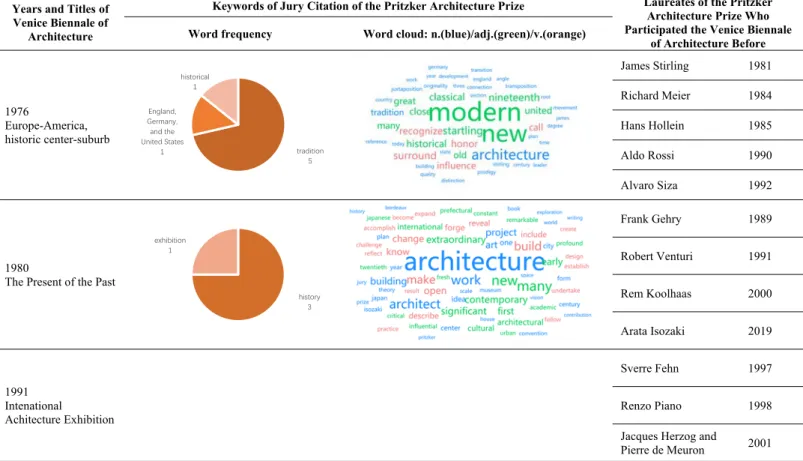
Architecture Prize. And it showed that the exhibition had positive impacts on architectural culture with the SDGs 12.b target. Two questions were posed in this part: (1) “Who is speaking” in the biennale and prize, respectively? (2) Do the biennale and curating change architectural thinking? Through knowledge archaeology, the domain-specific knowledge graphs of the Venice Architecture Biennale participants and the Pritzker Architecture Prize laureates are compared from three aspects: “persons,” “words,” and “Asia.” Comparing the number, type, and nationality of exhibitors and laureates, the importance of the biennale and its influence on architectural development are confirmed. Results show that the thinking and curating of the Venice Architecture Biennale have influenced and changed who wins the Pritzker Architecture Prize. Moreover, Asian architects played increasingly important roles in the exhibition and prize process. Starting from the architectural exhibition, we can connect the entire architectural world.
Chapter 5 showed that the exhibition had positive impacts on promoting local economy
and population with the SDGs 12.b target. This part collected panel data from 1900 to 2018 in Japan. These panel data were analyzed by descriptive statistics and a correlation analysis (a one-way ANOVA and a Pearson correlation analysis in SPSS26). The empirical analysis showed that the ETAT (Echigo–Tsumari Art Triennial) had positive impacts on sustainable tourism, economics, and the population; its correlations with Niigata were also clear.
Chapter 6 attempts to evaluate Ryokans through descriptive statistics from a tourism
accommodation survey and customer satisfaction related CASBEE (comprehensive assessment system for built environment efficiency)-IPA (importance-performance analysis).
III / 233
Through three progressive studies, three findings were obtained: (1) Ryokans are more flexible than hotels, have strong anti-risk capabilities, and have received more and more attention from tourists and support from the Japanese government; (2) improvement strategies for customer satisfaction after COVID-19 were provided from IPA; and (3) a dynamic evaluation model of green Ryokans was discussed, and may be employed in other countries and regions experiencing the same situation. The other study is attempts to empirically analyze green/healthy B&B promotion strategies for tourism recovery after the first wave of COVID-19 in China.
Chapter 7 is sustainable tourism strategies study with B&B for tourist satisfaction with
the SDGs 12.b target in Zhejiang, China. The work/travel restrictions started from 20 January 2020, and work/after travel resumed from 20 February 2020 in Zhejiang, China. Data were collected from 588 tourists (who experienced B&Bs in Zhejiang, China) from a WeChat online survey, from 1 March to 15 March 2020.
Chapter 8 is sustainable tourism strategies study with B&B for tourist loyalty with the
SDGs 12.b target in East China. The survey was conducted during the first Chinese national holiday without travel restrictions. Confirmatory factor analysis (CFA) and structural equation modeling (SEM) were used for testing. The relationships observed among the green/healthy physical environment, well-being perception (WBP), tourist satisfaction (TS), and tourist loyalty (TL) provide a better understanding of how to support sustainable tourism recovery. Green/healthy B&B promotion strategies that focus on a green/healthy physical environment
IV / 233
after the health crisis can also be employed in other countries and regions experiencing the same situation.
This study generated results that are valuable from both academic and industry perspectives, as this field has not been extensively researched. The current paper also presents the theoretical and practical implications of the statistical results.
V / 233
博士論文の構成
VII / 233 Contents Abstract: ... I Structure: ... V Contents ... VII 1. Introduction ... 1
1.1. Background of Sustainable Development Goals (SDGs) and Purpose with Target 12.b 1 1.2. Sustainable Tourism: Exhibitions and B&Bs ... 3
1.3. The Relationship of Exhibitions Tourism and SDGs ... 4
1.3.1. Exhibition of VAB ... 4
1.3.2. Exhibition of ETAT ... 6
1.4. The New Opportunity of B&Bs Tourism for SDGs after COVID-19 ... 8
1.4.1. Ryokans ... 9
1.4.2. B&B in Zhejiang China ... 11
1.4.3. B&B in East China ... 12
2. Literature Review ... 14
2.1. SDGs and Sustainable Tourism ... 14
2.2. Exhibitions Tourism ... 15
2.2.1. Exhibitions and Sustainable Tourism ... 15
2.2.2. Exhibitions and Culture ... 17
2.2.3. Exhibitions and Economics ... 18
2.2.4. Exhibitions and Population ... 20
2.3. B&Bs Tourism ... 21
2.3.1. The Concept of B&B ... 21
2.3.2. New Opportunities for Green Hospitality after COVID-19 ... 22
2.3.2.1. Crisis with a New Future ... 22
2.3.2.2. The Green Hotel Industry and Ryokans ... 23
2.3.3. Crisis (e.g., COVID–19) impact on Chinese tourism and B&B ... 24
2.3.4. Tourism Resumption of Post-crisis(e.g., COVID–19) ... 26
2.3.5. Holiday Travel and B&B Recovery after COVID-19 ... 27
2.3.5.1. Holiday travel ... 27
2.3.5.2. The health crisis and new opportunities for the B&B industry ... 27
2.3.5.3. Green B&Bs ... 28
3. Methodology ... 30
3.1. The Descriptive Statistics ... 30
3.2. The Inferential Statistics ... 30
3.2.1. Text Mining ... 30
3.2.2. Simple Linear Regression (SLR) ... 32
VIII / 233
3.2.4. IPA and Its Threshold Selection ... 35
3.2.5. Sample Testing Model for CFA-SEM ... 37
4. The Impacts of Exhibition Tourism on Promoting Culture: The Case from Italy ... 40
4.1. The Logical Model ... 40
4.2. Literature Review ... 42
4.3. Materials and Methods ... 46
4.3.1. Text Mining ... 47
4.3.2. Knowledge Archaeology ... 48
4.4. Comparison: Persons ... 51
4.5. Thinking: Words ... 54
4.6. View: Asia ... 56
4.7. Discussion of Exhibitions- Venice ... 59
5. The Impacts of Exhibition Tourism on Promoting Local Economy and Population: The Case from Japan ... 61
5.1. The Logical Model ... 61
5.2. Materials and Methods ... 62
5.2.1. From Japanese Art Festivals to ETAT ... 62
5.2.2. The ETAT ... 63
5.2.3. Panel Data Collection ... 67
5.2.4. Simple Linear Regression (SLR) ... 69
5.2.5. The One–Way ANOVA Analysis: ... 69
5.1. Number of Tourists ... 69
5.1.1. The ETAT and Number of Tourists ... 69
5.1.2. ETAT Areas and Niigata ... 72
5.2. Per Capita Income ... 75
5.2.1. Between the ETAT and Per Capita Income ... 75
5.2.2. The ETAT Areas and Niigata ... 78
5.3. Household Number ... 81
5.3.1. ETAT and Household Number ... 81
5.3.2. Differences between the ETAT Areas and Niigata ... 84
5.3. Impactions, Limitations and Future Research-ETAT ... 86
6. The Strategies of Ryokan Tourism on Promoting Local Green Hospitality: The Case from Japan ... 88
6.1. The Logical Model ... 88
6.2. Literature Review ... 89
6.2.1. Green Customer Satisfaction with Recovery ... 89
6.2.2. Green/Healthy Environment for Green Accommodation ... 90
6.2.2.1. Green Indoor Environment ... 91
6.2.2.2. Green Outdoor Environment ... 91
IX / 233
6.2.3. Evaluation Study of Hotels ... 92
6.3. Materials and Methods ... 93
6.3.1. Ryokans in Japan ... 93
6.3.2. CASBEE Analysis ... 94
6.3.3. Delphi Method and Questionnaire Items ... 97
6.3.4. IPA and Its Threshold Selection ... 99
6.4. Results (Study) 1: Tourism Accommodation Survey with Descriptive Statistics 101 6.4.1. Japan Tourism Accommodation Analysis before/after COVID-19 ... 101
6.4.1.1. Number and Percentage of Tourists ... 101
6.4.1.2. Occupancy Rate ... 108
6.4.2. Finding 1: Advantages of Ryokans after COVID-19 in Japan ... 110
6.5. Results (study) 2: CASBEE-IPA ... 112
6.5.1. Data Collection ... 113
6.5.2. Finding 2: Improvement Strategies after COVID-19 from IPA ... 114
6.6. Results (study) 3: A Dynamic Evaluation Model of Green Ryokans ... 117
6.6.1. Weights Analysis ... 117
6.6.2. Finding 3: Improvement Strategies after COVID-19 from IPA ... 120
6.7. Impactions, Limitations and Future Research- Ryokan ... 120
7. The Strategies of B&B Tourism on Promoting Local Green Hospitality: The Case from Zhejiang, China ... 123
7.1. The Logical Model ... 123
7.2. B&B in Zhejiang and tourist satisfaction ... 124
7.2.1. B&B in Zhejiang ... 124
7.2.2. Tourist Satisfaction ... 125
7.3. Materials and Methods ... 126
7.3.1. Explanation of Questionnaire ... 126
7.3.2. Questionnaire Items ... 127
3.2.2. Location of the Discriminating Thresholds within the IPA Plot. ... 129
4.1. The Descriptive Statistics ... 132
4.1.1. Profile of Survey Respondents ... 132
4.1.2. Reliability and Validity Analysis ... 133
4.1.3. Importance–Performance Scores ... 134
4.2. Importance (after COVID–19)–Performance (before COVID–19) Analysis (IPA) 135 7.4. Implications and Suggestions for B&B in Zhejiang ... 137
8. The Strategies of B&B Tourism on Promoting Local Green Hospitality: The Case from East China ... 140
8.1. The Logical Model ... 140
X / 233
8.2.1. Green/Healthy Physical Environment of Green B&Bs during Holiday Travel
after COVID-19 ... 143
8.2.1.1. From a health-related setting (HRS) to a green and healthy space (GHS) 143 8.2.1.2. From nature-based solutions (NBSs) to green and healthy rooms (GHRs) 144 8.2.1.3. From design-based strategies (DBSs) to design environmental value (DEV) 144 8.2.2. Well-Being Perception (WBP) in Green/Healthy Environment ... 145
8.2.3. Tourist Satisfaction (TS) with Green/Healthy Environment ... 147
8.2.4. Tourist Loyalty (TL) and Green/Healthy Environment ... 149
8.3. Materials and Methods ... 150
8.3.1. CFA-SEM ... 150
8.3.2. Measures and Questionnaire Items ... 150
8.4. Measurement Model ... 154
8.5. Structural Model ... 155
8.6. Contribution and Implication for B&B in East China ... 157
9. Discussion and Conclusion ... 161
9.1. Conclusion -Exhibitions tourism ... 161
9.1.1. Exhibition of Venice Architecture Biennale ... 161
9.1.2. Exhibition of ETAT ... 163
9.2. Conclusion -B&Bs tourism ... 163
9.2.1. Ryokan in Japan ... 164
9.2.2. B&B in Zhejiang, China ... 164
9.2.3. B&B in East China ... 166
References ... 168
List of Figures ... 218
1 / 233
1. Introduction
1.1. Background of Sustainable Development Goals (SDGs) and Purpose with Target 12.b
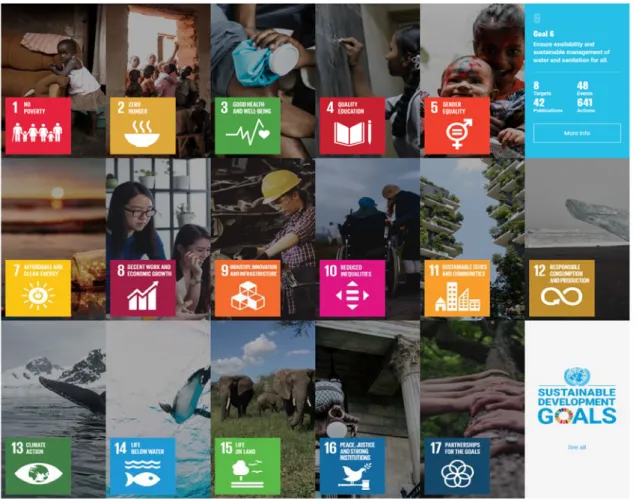
The 2030 Agenda for Sustainable Development, adopted by all United Nations Member States in 2015, provides a shared blueprint for peace and prosperity for people and the planet, now and into the future. At its heart are the 17 Sustainable Development Goals (SDGs) (Figure 1), which are an urgent call for action by all countries - developed and developing - in a global partnership. They recognize that ending poverty and other deprivations must go hand-in-hand with strategies that improve health and education, reduce inequality, and spur economic growth – all while tackling climate change and working to preserve our oceans and forests.
2 / 233
Sustainable development has become the main focus of tourism policymakers and tourism researchers including industry and destination marketing organizations, which has become self-evident (Hens et al., 2018). Sustainable development, combined with mainstreaming tourism, economic, and social responsibility, has been made as one of the main headings of the World Tourism Organization (UNWTO) target (Saarinen and Rogerson, 2014). The 17 Sustainable Development Goals (SDGs) are an urgent call for action by all countries. Among them, the No.12 is “Ensure sustainable consumption and production patterns”. The No. 12.b is “develop and implement tools to monitor sustainable development impacts for sustainable tourism that creates jobs and promotes culture and products”. Its indicator (12.b.1) is “number of sustainable tourism strategies or policies and implemented action plans with agreed monitoring and evaluation tools”. Therefore, this paper selects two types of sustainable tourism industry (exhibition and B&B tourism), and conducts two aspects of empirical analysis (impacts and strategies) with SDGs 12.b as the target.
3 / 233
Figure 3.The relations of SDGs 12 b and sustainable tourism with Exhibitions and B&Bs Therefore, this paper selects two types of sustainable tourism (exhibitions and B&Bs tourism), and conducts two aspects of empirical study (impacts and strategies) with SDGs 12.b as the target (Figure 3). There are two purposes of this study: (1) First study is impacts study of exhibitions tourism with the SDGs 12.b target; (2) Second study is the promotion strategies of B&Bs (bed and breakfast) tourism with the SDGs 12.b target.
1.2. Sustainable Tourism: Exhibitions and B&Bs
Sustainable tourism is to visit locations without harming the local community and nature, and also to have a constructive impact on the environment, society, and economy of the country (Tang, 2011). As per the report of the WTO (World Tourism Organization) in 2018, international tourists spent $1.3 billion per day and a total of $462 billion in the year 2001 alone (Manzoor et al., 2019). The cultural amenities of a destination, such as museum exhibition and
4 / 233
art exhibitions, provide some of the main attractions for cultural tourists; moreover, exhibition has positive impacts on sustainable tourism (Cai et al., 2020c). On the other hand, the COVID-19 crisis created a window of opportunity (e.g., green/health physical environment of hospitality industry such as B&Bs and Ryokans) to change the development of the tourism industry (Hong et al., 2020). In the current study, exhibitions and B&Bs were chosen as the sustainable tourism types. Exhibition and B&B can be applied as a mean of the regional or global development focused on the sustainable tourism.
1.3. The Relationship of Exhibitions Tourism and SDGs
The rural events and exhibitions (Triennale/Biennale) were mainly aimed at local and regional revitalization, hoping to develop economic, change the shrinkage about population and aging population. Moreover, urban arts events and exhibitions (Triennale/Biennale) were mainly aimed largely at cultural development and revitalization (Takahashi, 2015).
1.3.1. Exhibition of VAB
Arata Isozaki, the 2019 Pritzker Architecture Laureate, was born in Ōita on Kyushu Island in Japan in 1931, prior to the onset of World War II. The jury judge of the Pritzker Architecture Prize said of Isozaki (“Arata Isozaki Named 2019 Pritzker Prize Laureate,” n.d.):
It is clear that he is one of the most influential figures in the contemporary world of architecture. He is constantly searching, not afraid to change, and try new ideas. His architecture is not only for architecture but also for philosophy, history, He has a deep understanding of both theory and culture. He does not bring imitations or collages, but
5 / 233
forges new paths, bringing East and West together. He has established generosity in supporting other architects and encouraging them to participate in competitions or collaborative works.
Conversely, Paolo Portoghesi curated the 1st Venice Architecture Biennale in 1980, titled “The Present of the Past.” We thus need to know what signified the “Past” and how to present the past. This paper used Michel Foucault’s philosophy method, Knowledge Archaeology1
(Foucault, 1973, 1972), to observe the “History” and “Past” in architecture. The current paper compared the Venice Architecture Biennale (VAB) and Pritzker Architecture Prize horizontally (time series data of Biennale and Prize) and vertically (cross-section data between Biennale and Prize) from the perspectives of participants with displaying, exhibiting, curating, and creating value. The philosophical theory of knowledge archaeology and the analysis method of knowledge graph will show several different views of correlation from comparisons. Thus, the question about curating the whole world will be answered.
Hans Urich Obrist and Hou Hanru2 described the "Fragments of the Past": "The future is
always built on 'fragments of the past.' The Internet makes us thinking more about the present,
1 Knowledge archaeology was first put forward by Michel Foucault, a French philosopher, historian of
ideas, social theorist, and literary critic, in the book Les mots et les choses (French) in 1966. In his 1969 Book L'Archeologie du savoir (French), he clearly proposed to solve the subjectivity of historical
research with the method of knowledge archaeology.Knowledge archaeology has the advantages of
emphasizing document and discourse analysis and removing subjective factors.
2 Hans Ulrich Obrist (born 1968) is a Swiss art curator, critic, and historian of art. Hou Hanru is an international art curator and critic based in San Francisco, Paris, and Rome.
6 / 233
and asking what is contemporary?” (Obrist, 2004) Giorgio Agamben 3 re-mentioned
Nietzsche's Untimely Meditations: "A man who belongs to his or her own time may not be born at the right time. Because of this rotation and this era of missing, he or she is better than others to perceive and capture the era that truly belongs to him or her." Agamben defined this further:
The contemporary means to a person that...his bright eyes are not obscured by the light of the age or century in which he is. Interestingly, this also reminds us: the darkness on the surface of the sky is actually the light that is heading towards us at full speed and fails to reach our light. Because the galaxy from which this light comes is constantly away from us at a speed faster than the speed of light. Achieving the contemporary means eternally returning to the present we have never reached.
This article attempts to analyze the fractures and discontinuities from the historical archives of the architectural "fragments of the past," the architecture exhibition, and the Pritzker Architecture Prize.
1.3.2. Exhibition of ETAT
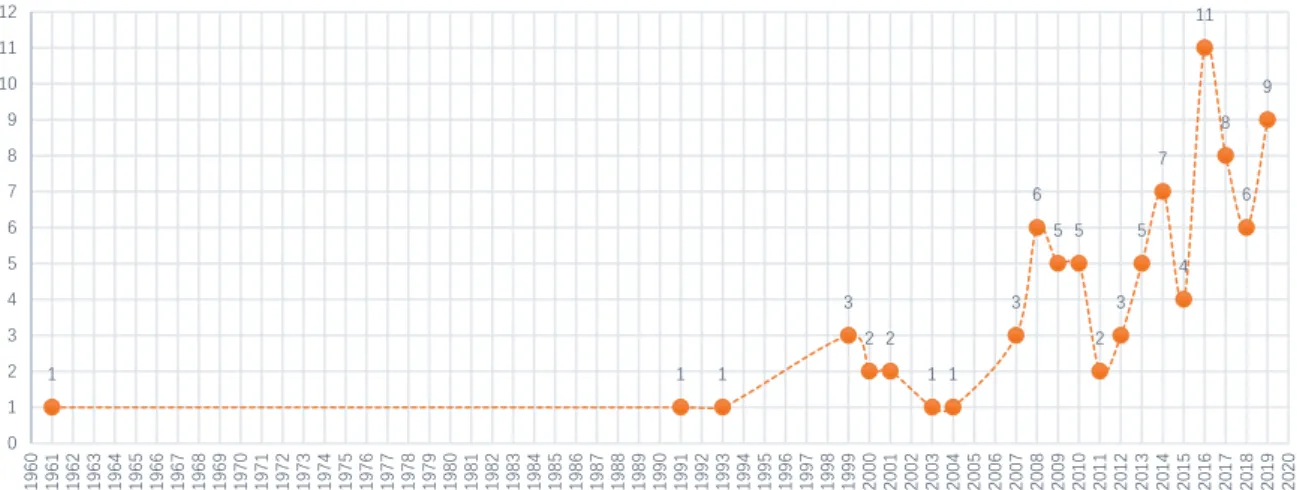
From 1961 to 2019, Japan art exhibitions appeared one after another. After the recession in Japan during the 1990s, the number of Japan art exhibitions began to increase precipitously. The number of these exhibitions has particularly exploded since 2007. The purpose of these
3 Giorgio Agamben is an Italian philosopher best known for his work investigating the concepts of
the state of exception, form-of-life (borrowed from Ludwig Wittgenstein), and homo sacer. The concept of biopolitics (carried forth from the work of Michel Foucault) informs many of his writings.
7 / 233
many exhibitions is to revitalize their host areas (especially in sustainability) through art (Huhmarniemi, 2020). Thus, an important question is raised by this article: Did these art exhibitions have any positive sustainable impacts on their hosting areas?
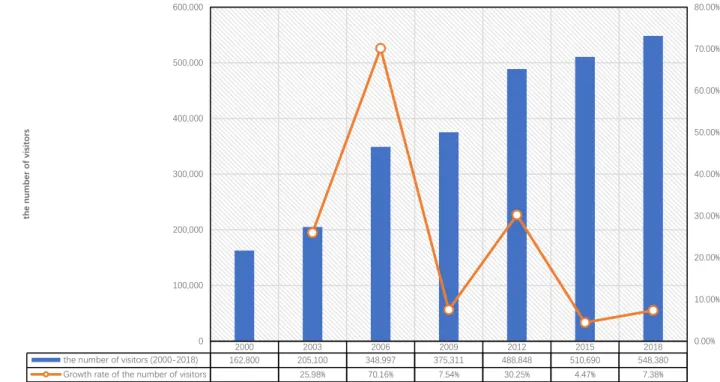
Among these art exhibitions, the Echigo–Tsumari Art Triennial (ETAT) was chosen as the present case. Triennale means that the exhibition is held once every three years (Gasperini, 2010). The ETAT is one of the earliest and most important art exhibitions in Japan (Lam, 2015), as the ETAT has also had a big influence outside of Japan. The ETAT is also one of the largest art festivals in the world (Kitagawa, 2016). From 2000 to 2018, compelled by this exhibition (the ETAT), more than 2,640,126 people travelled to the host areas. The ETAT has generated exhibition-driven tourism income of more than 57,106 million yen over the past 20 years (Pearce, 2011).
One of the most famous global examples of the influence of exhibitions is Yiwu, China (Mu, 2010). The strategy of ‘exhibition-driven trade’ (the Yiwu model of China) has significantly encouraged the joint growth of both exhibitions and trade (Wang and Gooderham, 2014). These exhibitions may, however, exert both positive and negative impacts. The current paper proposes a relationship between sustainable tourism, economics, the population, and exhibition-driven tourism according to the following theoretical and empirical backgrounds.
First, previous studies have suggested that temporary exhibitions of modern art have a positive impact on tourism (Di Lascio et al., 2011). Therefore, if we want to quantitatively analyze the impact of exhibitions on sustainable tourism (i.e., exhibition-driven tourism), then the number of tourists is a clear and direct indicator (Dang et al., 2020; Dean et al., 2020; H.
8 / 233
Kim et al., 2019). Second, the tourism industry has emerged as a key force for sustainable (socioeconomic) development globally (Wakimin et al., 2018). Throughout the world, tourism and the travel sector are important economic areas (Wattanacharoensil et al., 2019). According to the previous studies by Hwang and his team, local people can have positive impacts on tourism (tourist destination loyalty; sustainable behaviors; eco-friendly behaviors, etc.) (Han et al., 2017a, 2017b; Nam et al., 2016). Thus, the corresponding sustainable economics pertain to the per capita income of the local people. Third, economic changes affect the population to some extent. There are also many theories that attempt to explain how economic growth and rising income levels affect fertility. Theories in this area include the children cost–benefit theories proposed and developed by H. Leibenstein and Gary S. Becker (Becker, 1965). However, this is a complicated problem. Japan’s population is in decline (especially in rural areas like the hosting areas of the ETAT) (Nakamura et al., 2020; Wang and Fukuda, 2019). Therefore, the corresponding index in this paper uses the number of families as an indicator (although many factors could influence the number of families) (Han and Hwang, 2018; Hwang and Han, 2015).
1.4. The New Opportunity of B&Bs Tourism for SDGs after COVID-19
Corona virus disease 2019 (COVID–19) is a highly infectious disease with a long incubation period (WHO, 2020). It is the latest infectious disease to rapidly develop worldwide (Spagnuolo et al., 2020). Twenty-seven cases of the unknown virus were reported on 31st December 2019 (Lu et al., n.d.). An estimated 60 million residents of Wuhan and many other
9 / 233
cities in China were subjected to community containment measures from 23 January 2020. These large-scale types of actions have never been used in the past (even for SARS in China) (Wu and McGoogan, 2020).
In 2003, a window of opportunity to modify tourism development was opened by the crisis of SARS. Nature-based areas (e.g., B&Bs in the countryside) were likely to be the target destinations (Mouchtouri et al., 2019)(Han et al., 2020b). New motivations to travel to nature-based areas became evident with SARS (Sun et al., 2020). There was a potential marketing emphasis that nature-based tourism types (e.g., nature-based B&Bs) could be invigorated and expanded after the COVID–19 crisis (Zeng et al., 2005).
1.4.1. Ryokans
The negative impact of COVID-19 on the tourism and hotel industries in Japan and globally is even more serious than that of SARS (Qiu et al., 2020). At the end of May 2020, foreign customers decreased by 98.6% compared to the same period in 2019, while local customers decreased by 81.6%, and the total decreased by 84.8%. Therefore, it became significant to conduct research on the Japanese green accommodation industry, to examine how to improve the customer satisfaction for Japanese tourist accommodation after COVID-19, then to restart and restore the accommodation industry in time to welcome the 2021 Japan Olympic Games and for its longer-term development in the future. Ryokans were selected as the research target because they are more flexible than hotels, and have stronger anti-risk capabilities after COVID-19. For example, after the outbreak of COVID-19, the occupancy rate of Ryokans dropped by less than that of hotels. This situation is similar to the health crisis of the nuclear
10 / 233
leak in March 2011. Moreover, Ryokans have received more and more attention from tourists, and more and more support from the Japanese government (Choi et al., 2018; Seki and Brooke, 2012).
The global changes have exceeded our expectations following the outbreak of COVID-19. Therefore, the current paper attempts to establish a new dynamic green evaluation model for Ryokans (study 3) through descriptive statistics (study 1) from a tourism accommodation survey and CASBEE-based (comprehensive assessment system for built environment efficiency) IPA (importance-performance analysis) (study 2). CASBEE is evaluation model for green built environments. It has tools to evaluate building, cities, urban areas, houses, market promotions, and community health. However, CASBEE does not have a dedicated and independent evaluation system for hotels (especially Ryokans) (Hsiao et al., 2014). Many previous papers have found that green customer satisfaction has positive correlations with green buildings and hotels (Gao and Mattila, 2014; Wang et al., 2018)(Chen et al., 2015). CASBEE-based measurement items for a questionnaire survey of customer satisfaction with green Ryokans were identified by the Delphi method, with 11 green building experts included in this study. Although this process may be controversial, this study has taken a first step to try to fill the gaps in CASBEE for Ryokans, and change the original inherent evaluation model and evaluation system. The CASBEE-IPA based dynamic model can help improve Ryokans and tourism accommodation after COVID-19, and it can also be employed in other countries and regions experiencing the same situation.
11 / 233
On the other hand, among foreign tourists, the influence of Chinese tourists and the pursuit of Japanese Ryokans are increasing year by year. Chinese tourists are also at the TOP 1; their total annual consumption accounted for half of all foreign tourists' consumption in the past decade.
1.4.2. B&B in Zhejiang China
One of the important goals is to minimize the economic impact of the virus on a global scale (Chen, 2020). China, as the world's most populous nation and the world's second-largest economy, had already battled with an epidemic (SARS);at the time, however, it was 4% of the global total—it is now 17% (“Bloomberg Businessweek, Coronavirus Is More Dangerous for the Global Economy than SARS,” 2020). Consumption during the first season in China will be greatly reduced: tourism (e.g., bed and breakfast (B&B)), hotels, catering, entertainment, and other traditional living service industries have suffered the most (Wang and Wang, 2020). Work resumption in China was raised step by step from 20 February 2020 (“Work resumption in China raises hope for virus-hit European economies,” 2020).
The COVID–19 epidemic has been reported in many previous papers. Some researchers have reported the impact of COVID–19 on mental health in China (Li et al., 2020; Zhang, 2020). However, few studies have reported the impact of the bed and breakfast (B&B) industry, under COVID–19, on tourism in China, even though it has severely affected China and the rest of the world. B&Bs were very important for the tourism industry in China and many other countries and were especially welcomed by tourists in China, United States, and others (Jones and Guan, 2011)(Ye et al., 2019). Our paper is among one of the first studies to investigate the impact of
12 / 233
COVID–19 on tourist satisfaction with B&B in China. The time before/after satisfaction was before the work/travel restrictions (from 20 January 2020) until work/after travel resumption (after 20 February 2020). Data were collected from 588 tourists (who have experienced B&Bs in Zhejiang, China) from a WeChat online survey, lasting from 1 March to 15 March 2020. The adjusted importance (after COVID–19)–performance (before COVID–19) analysis (IPA) was used. The current study attempts to fill the research gap by investigating the changes in tourist satisfaction levels with B&Bs before/after COVID–19. Moreover, some suggestions are given to the B&B industry to recover after the COVID–19 crisis by an importance–performance analysis (IPA).
1.4.3. B&B in East China
In addition to daily travel for work, shopping, and leisure purposes, holiday travel has become increasingly important (Ettema et al., 2010). Bed and breakfast (B&B) tourism is one of the fastest-growing holiday travel industries and a driving force in many sustainable economies (Yang, 2019). Moreover, B&Bs are one of the most important types of accommodation in the tourism industry in China and many other countries, especially after the COVID-19 epidemic (Hong et al., 2020). Since February 20, 2020, East China has gradually resumed work. The SARS crisis (similar to the COVID-19 crisis) opened a window of opportunity for nature-based tourism destinations, as the green/healthy physical environment of B&Bs represents a popular destination, and this has resulted in changes to the development of the tourism industry (Wang and Wang, 2020). The SARS epidemic provided a new impetus to travel to natural areas (Mouchtouri et al., 2019). Marketing focused on nature-based B&Bs
13 / 233
will exhibit explosive growth after the epidemic (Sun et al., 2020). However, with regard to B&Bs, research conducted in the context of post-COVID-19 is insufficient. Thus, this article focuses on B&Bs in East China because based on the 2019 B&B market development report, the main market for B&Bs is in East China.
Some papers have studied the correlations between COVID-19 and B&Bs in China (Hong et al., 2020), but few have empirically analyzed the B&B context during the national holiday that followed the COVID-19 epidemic. Our study is one of the first to investigate the direct impact of the COVID-19 pandemic on the holiday tourist loyalty (TL) of Chinese B&B tourists. Research on design strategies for nature-based and health-related B&B tourism represent a new and important attempt to study post crisis decision-making for exhibition-driven sustainable tourism and cities. Additionally, research using variables that measure the correlations among the green/healthy physical environment, well-being perception (WBP), tourist satisfaction (TS), and tourist loyalty (TL) represents a new attempt to promote sustainable tourism recovery. The current paper found that design-based strategies (DBSs) and design environmental value (DEV) have a direct main impact on well-being perception (WBP), tourist satisfaction (TS), and tourist loyalty (TL); this represents the main novel finding of the present study.
14 / 233
2. Literature Review
1 2
2.1. SDGs and Sustainable Tourism
3
Recently some empirical papers show that, tourism is “less sustainable” than expectation 4
(Hall, 2019)(Rutty et al., 2015). Hall (Hall, 2019) provided an anti–institutional perspective 5
on the tourism sector approach to sustainable development goals and the framework of 6
sustainable tourism. Ahmad et al. (Ahmad et al., 2019) studied the correlations between 7
tourism and lower middle–income economies. Rutty et al.(Rutty et al., 2015) found that there 8
were less emphasis on the environmental and social consequences than he positive economic 9
impacts of tourism. After destinations such as Venice (e.g. as one of exhibition–driven tourism: 10
Venice Biennale) produced a series of negative reactions to tourism growth, concerns about 11
the contribution of tourism to sustainable development have also become issues of local scale 12
(e.g. World Travel and Tourism Council (WTTC). 13
However, the World Tourism Organization (UNWTO) attached to sustainable tourism and 14
the economic significance, the SDGs and millennium development goals (MDGs) have become 15
the focus of researching the tourism contribution of sustainable development and the 16
sustainability of the entire tourism industry 17
However, the World Tourism Organization (UNWTO) attached to sustainable tourism and 18
the economic significance, the SDGs and millennium development goals (MDGs) have become 19
the focus of researching the tourism contribution of sustainable development and the 20
sustainability of the entire tourism industry (Saarinen and Rogerson, 2014)(Saarinen et al., 21
15 / 233
2011). There are designated journals specifically for sustainable tourism, as well as a large 22
number of texts and journal articles, which may account for about 5% of journal output (Hall 23
et al., 2014). Sustainable tourism is a concept of visiting places without damaging local 24
communities and nature and has a positive impact on health, environment, technological 25
methods, and the economy (Kiatkawsin and Han, 2017). Some researchers studied the 26
relationship between sustainable tourism and attitudes of tourist/ resident (Hsu et al., 2019). 27
Other scholars studied the relationship between sustainable tourism with eco (Ruan et al., 2019). 28
Although how to achieve this goal is still a controversial topic, empirical analysis for 29
sustainable tourism actually needs more positive samples. 30
2.2. Exhibitions Tourism
31
“Exhibition-driven” means that something is influenced by an exhibition (Pearce, 2011); 32
this phenomenon has been studied by many scholars. Mu et al. (Mu, 2010) and Wang et al. 33
(Wang and Gooderham, 2014) showed the ‘exhibition-driven trade’ of the Yiwu model. Heald 34
(Heald, 2010) worked in an exhibition-driven environment. Wardani (Wardani, 2019) 35
developed a place for art archives, an exhibition-driven artist-run-space. Bunning et al. 36
(Bunning et al., 2015) studied the development of a temporary exhibition-driven impact on the 37
core offerings of the museum. However, there are few direct tourism studies on the influence 38
of exhibitions in previous literature. Since this field has not been extensively researched, the 39
present study generated results that are valuable from both academic and industry perspectives. 40
2.2.1. Exhibitions and Sustainable Tourism 41
16 / 233
First, the idea behind sustainable tourism is to visit locations without harming the local 42
community and nature, and also to have a constructive impact on the environment, society, and 43
economy of the country (Tang, 2011). Han and Hwang (Han et al., 2017a) studied the value-44
belief-emotion-norm model to promote customers’ eco-friendly behavior. They also made a 45
meaningful contribution to advancing eco-friendly activities (sustainable behaviors) for the 46
sake of environmental protection behaviors (Han et al., 2017b). There is a consensus that 47
tourism growth should be sustainable, although the question of how to achieve this remains a 48
subject of debate (Gössling et al., 2005). Tourism can include transportation to the general area, 49
local transportation, accommodations, leisure, entertainment, shopping, and nourishment (F. 50
Deng et al., 2020). The features of sustainable urban tourism and factors of tourism shopping 51
have been previously explored (Haoying Han et al., 2019). 52
Second, the current paper proposes a relationship between exhibition mechanisms and 53
tourism brand effects (Andersen et al., 1997; Camarero et al., 2010; Fu et al., 2019). Kanwel et 54
al. (Kanwel et al., 2019) examined the impact of destination image on tourists’ loyalty and 55
intention to visit in Pakistan. Han and Hwang investigated international medical travelers’ post-56
purchase decision-making process by utilizing key concepts in medical tourism (e.g., first-time 57
vs. repeat experiences) (Han and Hwang, 2018). The present study also proposes a relationship 58
between healthcare and tourism (Dang et al., 2020). Medical tourism is largely believed to be 59
a service that combines tourism activities (even exhibition-driven medical tourism) with 60
medical services (S. Kim et al., 2019). 61
17 / 233
Third, as per the report of the WTO (World Tourism Organization) in 2018, international 62
tourists spent $1.3 billion per day and a total of $462 billion in the year 2001 alone (Manzoor 63
et al., 2019). The cultural amenities of a destination, such as museums, monuments, and art 64
exhibitions, provide some of the main attractions for cultural tourists. Most research has focused 65
on tourism demand and the influence of exchange rate and income on tourism revenue (Lim, 66
1997). Others have studied political impacts and used time series analyses. 67
2.2.2. Exhibitions and Culture 68
The rural arts events (Triennale/festivals) were mainly aimed at local and regional 69
revitalization, hoping to develop economic, change the shrinkage about population and aging 70
population. Moreover, urban arts events (Triennale/festivals) were mainly aimed largely at 71
cultural development and revitalization(Takahashi, 2015). 72
First, events are dependent on positive perceptions of the destination and tourism 73
products(Wise and Mulec, 2015), including art Triennale and festival. Events tourism may be 74
associated with the specific spatial resources with attracting and planning related to natural and 75
other tourist mental values (Getz, 2008). The first article specifically about event tourism in 76
JTR published by J.R.B. Ritchie and Beliveau in 1974 (Getz, 2008). Kersulić et al. (Kersulić 77
et al., 2020) reviewed the strategic planning sustainability elements from the wider sport-78
tourism events. Recently, the main arts festivals emerged as ‘bottom‐up’ developed organically 79
in both urban and rural areas (Quinn, 2010). Others studied rural tourism with a lifestyle, 80
livelihood and artistic career (Prince, 2017). Wise et al. (Wise et al., 2017) studied the local 81
tourism economy with a sense of rural community, potential industries opportunities, and 82
18 / 233
social impacts.. In Japan, the rural arts events (Triennale/festivals) were mainly aimed at local 83
and regional revitalization, hoping to develop economic, change the shrinkage about population 84
and aging population; Moreover, urban arts events (Triennale/festivals) were mainly aimed 85
largely at cultural development and revitalization(Takahashi, 2015). 86
Second, the attitude of tourist was the main positive force to promoting the tourism 87
economic (Ren et al., 2019)(Wang and Liu, 2020). Andersen et al. (Andersen et al., 1997) 88
considered the image of Denmark held by the visitors of the art exhibition. Camarero et al. 89
(Camarero et al., 2010) analyzed the four elements of brand equity with brand image/value, 90
loyalty, and perceived quality in the art exhibition, and evaluates the state of art exhibitions 91
held in the Spanish. Chen et al. (Chen et al., 2012) studied the satisfaction and service quality 92
for the event promotion . Liu et al. (Liu and Huang, 2020) and Ruan et al. (Ruan et al., 2017) 93
also examined the relationship between natural capital and tourism image. Fu et al. (Camarero 94
et al., 2010) examined the basic dimensions of place attachment in the exhibition environment 95
and their impact on participant satisfaction. 96
2.2.3. Exhibitions and Economics 97
First, the tourism industry remains an important source for the generation of income in 98
formal and informal sectors in many countries (Malik et al., 2010). Hwang and Lee (Hwang 99
and Han, 2015) claimed that economic growth and development is rapidly increasing in Korea 100
due to a surge in elderly tourism. This increase shows that tourists feel inner satisfaction, which 101
positively affects their future behavioral intentions (Hwang and Lee, 2019a). 102
19 / 233
Second, sustainable economic growth involves economic development that attempts to 103
satisfy the needs of humans but in a manner that sustains natural resources and the environment 104
for future generations (Dang et al., 2020; Manzoor et al., 2019). Vasylieva et al. (Vasylieva et 105
al., 2019) investigated the relationships between the economic, social, and environmental 106
dimensions of sustainable development. Wang et al. (Wang and Dai, 2019a) studied the theory 107
of the circular economy and the problems existing in the development of the green exhibition 108
in China. Azam and Sarker (Enzenbacher, 2019) explored the green tourism in the context of 109
climate change towards sustainable economic development in the south Asian region. Wang et 110
al. (Wang and Dai, 2019b) analyzed the influence of the exhibition industry on the ecological 111
environment and proposed countermeasures. 112
Third, many previous studies have empirically supported the influence of conventions and 113
exhibitions on economic growth. One of the earliest studies was an economic impact assessment 114
of the tall mast sailing ceremony of Rhode Island by Della et al. in 1977 (Della Bitta et al., 115
1977). Dwyer et al. (Kim and Chon, 2009) believed that the impacts of conventions and 116
exhibitions on the local economy are usually the largest. The selection of evaluation objects for 117
empirical research usually focuses on specific exhibition activities and the overall exhibition 118
industry. Research on the economic impacts of the overall exhibition industry in a specific area 119
includes a study by Kim et al. (Haoying Han et al., 2019). Litvin et al. (Litvin et al., 2013) used 120
a case study to describe the ’rising tide’, which refers to the economic contribution from the 121
increased hotel occupancy rate during a festival. Rephann (Kim and Chon, 2009) studied the 122
impact assessment of economic activities during the construction and operational periods of 123
20 / 233
exhibition venues. An event may significantly increase local economic activity, but the net 124
impact within the state may be less than the local effect, or even negative. However, the state 125
effect often exceeds the national effect. Chhabra et al. (Kim and Chon, 2009) noted that festivals 126
are usually a strategic choice for the development of many rural economies but that the 127
economic impact of festivals depends on the characteristics of the festival, such as the number 128
of days the festival is held and the characteristics of the local economy. Other scholars have 129
studied the motivations and purposes behind conference and exhibition consumption (Jin and 130
Weber, 2013; Rittichainuwat and Mair, 2012). However, the forms of these exhibitions (the 131
impacts of conventions and exhibitions on economics) are mainly concerned with transactions; 132
these studies include those by Crompton et al. (Crompton et al., 2001) and Kim et al. (Kim et 133
al., 2010). It is a challenge to accurately measure the economic contributions of art exhibitions 134
or exhibition-driven tourism. 135
2.2.4. Exhibitions and Population 136
First, the relationship between population growth and economic development is a problem 137
that has been constantly changing in the field of population economics. This transformation is 138
different in different periods. The most influential document on the relationship between 139
population growth and economic development is “Population”, published by Malthus in 1798, 140
whose findings imply that high community empowerment enables a community to establish 141
successful sustainable tourism development through local people’s support for tourism (Khalid 142
et al., 2019). For their empirical tests, data were collected from 280 tourists to Japan from South 143
Korea (Nam et al. (Nam et al., 2016)). The authors found that local people could help enhance 144
21 / 233
tourist destination loyalty from a relational perspective. Hwang and Lee (Hwang and Lee, 145
2019b) used this study to show that all four dimensions (i.e., education, entertainment, esthetics, 146
and escapism) have a positive influence on well-being perception, which, in turn, positively 147
affects the outcome variables. 148
Second, as Japan’s society ages, and due to its low fertility rate, city shrinkage has had a 149
tremendously negative effect on the country’s economic development. Over 85% of 150
municipalities experienced population loss from 2005 to 2015 (Peng et al., 2019). The shrinking 151
and aging of the Japanese population, coupled with continuous polarization effects towards 152
urban centers, have led to a clear dissolution of the countryside (Nishino, 2012)(BOVEN, 2016). 153
Population problems in the countries near Japan are the same (E. J. Kim et al., 2020), as shown 154
by Hwang et al. (Hwang et al., 2018). Lastly, extraversion has played a moderating role in the 155
relationship between suitable behavior and activity involvement. Hwang et al. (Hwang and Lee, 156
2019a) determined the important role of product knowledge as a moderator. Kalwar et al. 157
(Kalwar et al., 2019) suggested the development of planning policies to stimulate agricultural 158
industrial development in secondary cities and noted that the devolution of powers can help 159
achieve sustainable development. Although the population has been studied for a long time in 160
various fields, it remains a very important issue. 161
162
2.3. B&Bs Tourism
163 164
2.3.1. The Concept of B&B 165
22 / 233
First of all, apart from hotels and guesthouses, the most common form of accommodation 166
is bed and breakfasts (B&Bs), which is a concept that originated in Europe (Nuntsu et al., 2004). 167
These refer to small hotels that provide a non-commercial, home-like environment and only 168
serve breakfast (Nuntsu et al., 2004). This also means that visitors or guests pay to stay in a 169
private residence and interact with a local family (Lynch, 2005). B&Bs allow tourists to seek 170
lodging for the night, especially when hotels and inns are unavailable in remote areas (Xiao et 171
al., 2019). Second, the basic standards are different from other types of hotels are. The 172
differences include B&Bs being small scale, family operated, and provide special services (L.-173
C. Chen et al., 2013). In recent years, the B&B industry has become a unique and rapidly 174
growing industry in the hotel industry (Frazier, 2010). This operation attracts tourists with 175
different standards than hotels (Hsieh and Lin, 2010). 176
2.3.2. New Opportunities for Green Hospitality after COVID-19 177
2.3.2.1. Crisis with a New Future 178
COVID-19 and SARS had a similar impact on tourism (Gössling et al., 2020). In 2003, 179
SARS created a new opportunity in tourism development (Lam et al., 2003): nature-based areas 180
became new target destinations (Mouchtouri et al., 2019)(Sun et al., 2020). Some previous 181
papers also analyzed the annual growth rates in international tourists visiting Japan from the 182
top ten countries between 2016 and 2018, and indicated that the annual growth rates of guests 183
at rural and urban tourism accommodation in Japan were not equal (Nandy, 2020)(Karakawa, 184
2019). Previous papers also studied SARS and hospitality with a focus on Asia (e.g. Hong Kong, 185
Singapore, Korea) (Chen et al., 2007; Henderson and Ng, 2004; Kim et al., 2005; Leung and 186
23 / 233
Lam, 2004). Before the outbreak of COVID-19, other epidemics such as H1N1 swine flu in 187
2009 were also studied in terms of the hotel industry response (Hung et al., 2018). After the 188
outbreak of COVID-19, some scholars studied the socio-economic implications of COVID-19 189
for the hospitality and tourism industry (Higgins-Desbiolles, 2020; Nicola et al., 2020); others 190
studied the marketing and management of COVID-19 in the hospitality and tourism industry 191
(Jiang and Wen, 2020; Karim et al., 2020). Wen et al. (Wen et al., 2020) stated that “disparate 192
research domains can cooperate on timely research endeavors, including but not limited to 193
COVID-19.” Rivera (Rivera, 2020) stated that it (COVID-19) might temporarily immobilize 194
our collective activities, but will not limit research ideas. Some previous papers found 195
relationships between tourism and the crisis (e.g. COVID-19) in Japan (Wu and Shimizu, 196
2020)(Dąbrowski, 2020; Tashiro and Shaw, 2020)(Tashiro and Shaw, 2020): (1) a crisis causes 197
significant damage to tourism in Japan, but the negative impact reduces over time; (2) changes 198
in customer satisfaction after a crisis are different for tourists with different countries of origin; 199
and (3) the impacts of customer satisfaction at different destinations on travel intention change 200
after a crisis in Japan. 201
2.3.2.2. The Green Hotel Industry and Ryokans 202
In the past, experts have carried out research on many aspects of green hotels. Suki (Suki 203
and Suki, 2015) studied the green hotel from the perspective of consumers’ environmental 204
behavior. Wu et al. (Wu et al., 2013) studied green B&B service innovation. In North America, 205
a major paper focused on the factor of sustainability and green B&Bs in Canada (Dodds and 206
Holmes, 2011; van Haastert and de Grosbois, 2010). In Asia, a major paper focused on eco-207
24 / 233
marketing strategies in Taiwan (L. C. Chen et al., 2013; Kuo and Kuo, 2012). Moreover, some 208
previous papers have also studied the sustainable and green hotel evaluation model (van 209
Haastert and de Grosbois, 2010; Wang, 2009)(Mousavi et al., 2017). There were some different 210
definitions of Ryokans (there is currently no precise definition) in the previous studies (Kang 211
et al., 2004)(Guichard-Anguis, 2008)(Jimura, 2011)(Choi et al., 2018). A guesthouse is an 212
inexpensive type of accommodation for those staying in Japan for one month or longer who 213
want to avoid the hassle and the expense of renting and furnishing a conventional apartment. 214
Ryokans and minshuku are part of a whole range of accommodation options for travelers in 215
Japan. Far from being business hotels or Western hotels, Ryokans and minshuku (including 216
B&Bs) are a uniquely Japanese experience. Ryokans (旅館, literally "travel building") are 217
traditional Japanese inns. Although Ryokans have low occupancy rates and inbound guest ratios, 218
the independence of the Ryokan, internet availability, hot spring facilities, and the number of 219
World Heritage sites are effective in capturing demand (Morishita, 2020; Yoko and Takashi, 220
2020). However, few previous papers have focused on the study of a green Ryokan evaluation 221
model for post-COVID-19. Therefore, green Ryokans should be a focus after the COVID–19 222
crisis. 223
2.3.3. Crisis (e.g., COVID–19) impact on Chinese tourism and B&B 224
First, natural disasters and anthropogenic environmental problems (Giupponi et al., 225
2020)(Serafini et al., 2020), as well as their potential to affect the image of destinations 226
(Michael Hall, 2010), have impacts on travel and tourism on various scales (Napoli et al., 2020). 227
According to world tourism organization (WTO), in 2003, tourism arrivals fell by 1.2% to 694 228
25 / 233
million (compared to the same period in 2002) in China, and hotel occupancy rates fell by 10% 229
(Wilder-Smith, 2006). 230
Second, the number of tourists increased by 9.2% (the first two months of 2003) over the 231
same period in 2002, and tourism revenue increased by 14.0%. After the outbreak of SARS, the 232
number of tourists in March 2003 decreased by 6.5%, as compared to the same period in 2002. 233
(Figure 4): the first monthly decrease in past decades (Zeng et al., 2005). 234
Figure 4. The impact of SARS on Chinese tourism between 2002 and 2003.
235 236
Third, how long does it take to repair the impacts of an infectious disease on tourism? The 237
development of the crisis’ events can be divided into three periods, according to the impact on 238
tourist flow, including the incubation period, outbreak period, and recession period. The impact 239
time of most crisis events is within one year; the impact period of a few events was around two 240
years. Taking SARS as an example, the peak period of impact was from March to June 2003, 241
and the entire impact period was about 1 year (Zeng et al., 2005). Taking the accommodation 242
industry as an example, during 2003, single-store revenue of in high-star hotels declined 243
significantly. B&B grew by 15.2% in 2003 and continued to grow, resulting in a 22% growth 244 Incubation period (before SARS) Outbreak period (under SARS) Recession period (after SARS)
26 / 233
in 2004. Therefore, the impact of SARS on B&Bs in tourism was basically eliminated about 245
half a year after the end of SARS (Wilder-Smith, 2006). 246
2.3.4. Tourism Resumption of Post-crisis(e.g., COVID–19) 247
First, the destination image is defined as an individual’s mental representation and overall 248
perception of a particular destination (Fakeye and Crompton, 1991). Destination image and 249
tourist satisfaction are also important tools used by DMOs to actively research and manage the 250
perceptions of tourists about the destination (Paunovic, 2014)(Paunović, 2013). The key of the 251
before/after crisis themes that emerged included a lack of disaster-management plans, damage 252
to destination image and reputation. It also included the changes in tourist behavior during the 253
crisis (e.g., COVID-19) (Mair et al., 2016). To influence the destination choice decision-making 254
process and to condition the after-decision-making behaviors, including participation (Heesup 255
Han et al., 2019b), satisfaction, and future intention (e.g., sustainable mountain tourism 256
(Paunović and Jovanović, 2019)(Paunović and Jovanović, 2017)) to revisit (Lee et al., 2005). 257
The destination image is generally interpreted as impressions based on information processing 258
from various sources over time that results in a mental representation of the attributes and 259
benefits sought in a destination (Gartner, 1994). 260
Second, our focus on post-crisis recovery is required because much of the research relates 261
to tourism crisis (e.g., COVID-19) management (Wang and Ritchie, 2011). The recovery should 262
be taken as more than just an industry or economic approach, and should focus on pre-event 263
levels (Ritchie, 2008)(Cai et al., 2020a)(Cai et al., 2020d). The importance of the relationship 264
27 / 233
between marketing with tourist satisfaction and suggestions to repair destination images was 265
identified (Mair et al., 2016). 266
2.3.5. Holiday Travel and B&B Recovery after COVID-19 267
2.3.5.1. Holiday travel 268
In addition to daily travel for work, shopping, and leisure purposes, holiday travel has 269
become an increasingly important part of modern society (Ettema et al., 2010). Over the past 270
few decades, changes in family structure have resulted in more frequent holiday travel (Dellaert 271
et al., 1998). Because the choice of holiday destination is very complex, the structure and level 272
of holiday travel will vary depending on a variety of factors and motivations, and the choice of 273
a green/healthy travel mode is becoming increasingly common (Böhler et al., 2006). Following 274
the COVID-19 crisis, it has become particularly important to consider how the promotion of 275
green/healthy environments encourages tourist loyalty to holiday travel destinations (e.g., green 276
B&Bs) (Hong et al., 2020). The combination of the traveler's personal and social conditions 277
(e.g., partner and family preferences, economic status of the family) and external conditions 278
(e.g., weather conditions, natural environment, and the epidemic) determine holiday behavior 279
and holiday travel behavior (Mansfeld, 1992). 280
2.3.5.2. The health crisis and new opportunities for the B&B industry 281
The SARS crisis (which was similar to the COVID-19 crisis) opened a window of 282
opportunity for nature-based tourism destinations, as the green/healthy physical environment 283
of B&Bs render them popular destinations, and this has resulted in changes in the development 284
of the tourism industry (Wang and Wang, 2020). The SARS epidemic provided a new impetus 285
28 / 233
to travel to natural areas (Mouchtouri et al., 2019). Marketing focused on green/healthy B&Bs 286
will exhibit explosive growth after the COVID-19 epidemic (Sun et al., 2020). Society 287
(including its main industries and governments) will all be transformed after the COVID-19, 288
and it towards a more sustainable way is hoped (Sarkis et al., 2020)(de Sousa Jabbour et al., 289
2020b). A reassessment of the structure of a supply with management is required in the recovery 290
process (Govindan et al., 2020). Decision-making processes regarding consumption patterns 291
changes in habits (e.g., the changes in tourist loyalty). Consumers behaviors (e.g. B&B) tend 292
to change after the COVID-19 crisis: (1) 34% of respondents would be willing for paying more 293
for local products, (2) 23% for ethical products, and (3) 25% for trusted brands (according to 294
EY Future Consumer Index) (Vautier, 2020). Therefore, a more sustainable consumption model 295
may arise (Sarkis et al., 2020)(Jabbour et al., 2020). Management decisions involving modes 296
of many industries should be reassessed in order to seek even more efficient solutions (Choi, 297
2020)(Akter et al., 2020). Scholars and managers should attempt to consider this transformation 298
through a positive lens (de Sousa Jabbour et al., 2020a)(Amankwah-Amoah, 2020). 299
2.3.5.3. Green B&Bs 300
Apart from hotels and guesthouses, the most common form of accommodation is the B&B. 301
B&Bs represent one of the most common types of small accommodation businesses in the 302
tourism and hospitality industry (Ye et al., 2019)(Lynch, 2005). The basic criteria for 303
distinguishing bed and breakfast hotels from other types of hotels include the following: (1) 304
they are operated by families; (2) they are small-scale; (3) guests have a certain degree of 305
communication with the owners; and (4) they provide special services (L.-C. Chen et al., 2013). 306
29 / 233
This type of small-scale operation attracts different tourists than those attracted to standard 307
hotels (Hsieh and Lin, 2010). Recently, the B&B industry has become a distinct and fast-308
growing part of the sustainable tourism/hotel industry (Frazier, 2010). Green B&Bs combine 309
local features with eco-friendliness, thereby creating an environment that supports the feeling 310
of leisure, saves energy, and satisfies tourists' physical and mental needs (Tzschentke et al., 311
2008). These are also characteristics of green hotels (Merli et al., 2019), but there are 312
differences. Green B&Bs may be characterized by a healthy environment (both indoor and 313
outdoor), green architecture, green service and innovation, and green management (Wu et al., 314
2013). 315
30 / 233
3.
Methodology
317 318
3.1. The Descriptive Statistics
319
Descriptive statistics can be used for data analysis in a visual and easy way to 320
understanding (Oja, 1983)(Reid and Andereck, 1989). Hwang et al. (Hwang et al., 2020c) used 321
descriptive statistics to study elderly tourism wellbeing perception and its outcomes. Some 322
scholars studied the relationship between tourism and sustainability by descriptive statistics 323
(Heesup Han et al., 2019b; Manzoor et al., 2019). And others studied the relationship between 324
economics and tourism by descriptive statistics (Cai et al., 2020c)(Ramos et al., 2019). On the 325
other hand, many scholars also studied the relationship between hotels and customer 326
satisfaction using descriptive statistics (Hong et al., 2020)(Cândido, 2005)(Yin et al., 2020). 327
328
3.2. The Inferential Statistics
329
Many previous analyses used combined correlation, simple linear regression (SLR), and 330
one-way ANOVA to analyze the inferential statistics of the relationship between multiple 331
variables (Heung et al., 2010). It also used analyzed the correlations in tourism industry (Oja, 332 1983). 333 334 3.2.1. Text Mining 335
Text mining, also referred to as text data mining, similar to text analytics, is the process of 336
deriving high-quality information from text. It involves "the discovery by computer of new, 337
31 / 233
previously unknown information, by automatically extracting information from different 338
written resources." Written resources may include websites, books, emails, reviews, and articles. 339
High-quality information is typically obtained by devising patterns and trends by means such 340
as statistical pattern learning. According to Hotho et al. (2005) we can differ three different 341
perspectives of text mining: information extraction, data mining, and a KDD (Knowledge 342
Discovery in Databases) process. Text mining usually involves the process of structuring the 343
input text (usually parsing, along with the addition of some derived linguistic features and the 344
removal of others, and subsequent insertion into a database), deriving patterns within the 345
structured data, and finally evaluation and interpretation of the output. 'High quality' in text 346
mining usually refers to some combination of relevance, novelty, and interest. Typical text 347
mining tasks include text categorization, text clustering, concept/entity extraction, production 348
of granular taxonomies, sentiment analysis, document summarization, and entity relation 349
modeling (i.e., learning relations between named entities). 350
Text analysis involves information retrieval, lexical analysis to study word frequency 351
distributions, pattern recognition, tagging/annotation, information extraction, data mining 352
techniques including link and association analysis, visualization, and predictive analytics. The 353
overarching goal is, essentially, to turn text into data for analysis, via application of natural 354
language processing (NLP), different types of algorithms and analytical methods. An important 355
phase of this process is the interpretation of the gathered information. 356
A typical application is to scan a set of documents written in a natural language and either 357
model the document set for predictive classification purposes or populate a database or search 358
32 / 233
index with the information extracted. The document is the basic element while starting with 359
text mining. Here, we define a document as a unit of textual data, which normally exists in 360
many types of collections. 361
3.2.2. Simple Linear Regression (SLR) 362
The paper used the SPSS26 (IBM, New York, United States). A correlation analysis is a 363
widely used method evaluating the relationship between two variables. A high correlation 364
means these relationship of variables are strong, (Franzese and Iuliano, 2019; Liang et al., 365
2020; Yu et al., 2020). Two random variables (X and Y) are normally tested in the Simple 366
Linear Regression (SLR)(Pearson, 2011). P–value help researchers deciding reject or fail to 367
reject a hypothesis. If the p–value < 0.05, the analysis is significant for the next step. Simple 368
linear regression and Pearson's correlation model (Y = a + bx) are calculated by the least square 369
method. This formulae for the slope (b) and the Y intercept (a) (Y = linearly related to x; r² = 370
the proportion of the total variance (s²) of Y that can be explained by the linear regression of 371
Y on x; 1–r² = the proportion that is not explained by the regression; Thus 1–r² = s²xY / s²Y): 372 b ∑ ∑x x Y Y x x (1) a Y bx (2) b ∑ x x Y Y ∑ x x ∑ Y Y (3)
Using Fisher's z transformation are constructed for r by confidence limits. The null hypothesis 373
that r = 0 (i.e. no association) is evaluated using a modified t test (Armitage et al., 374