CONCURRENT PROGRAMMING LANGUAGES
並列言語における型システムによる値の使用回数の解析
by
Atsushi Igarashi
五十嵐 淳
A Master's Thesis
Submitted to
the Graduate School of
the University of Tokyo
in Partial Fulllment of the Requirements
for the Degree of Master of Science
in Information Science
Thesis Supervisor: Naoki Kobayashi
小林 直樹
Title: Lecturer of Information Science
February 5, 1997
Weproposeatype-basedtechnique toanalyze howmanytimes eachvalue, in-
cludingcommunicationchannels,isusedduringexecutionofconcurrentprograms.
ThisworkiscloselyrelatedwiththerecentworkbyKobayashi,Pierce,andTurner
on alinear channelsystem ona process calculus. Theyintro duced atype system
that ensures certain channels (called linear channels) to be used just once, and
showed that how linear channels help reasoning about program behaviors. How-
ever,they onlydeal with a pure message passingcalculus, and more importantly,
the type reconstruction problem is left open. This thesis develops a typ e recon-
struction algorithm of a variant of a linear channel type system for a concurrent
language with data constructors such as records, and let-polymorphism. We can
detect not only linear channelsbut also other used-once values(closures, records,
etc.) by the type reconstruction algorithm. Computational cost of our analysis
(excluding cost of ordinary typ e reconstruction { which is known exponential in
the worst case{) ispolynomial inthe size of aprogram. Moreover,several exper-
iments showthat our analysis is enough ecient inpractice. We also incorporate
the proposedanalysisintoacompilerof aconcurrentlanguage HACLand present
results of several benchmarks.
論 文 要 旨
並列プログラムの実行における、通信チャネルなどの値の使用回数を型に基づい て解析する手法を提案する。本研究は Kobayashi, Pierce, Turner らのリニアチャ ネルシステムに関する研究に密接に関連している。その研究では、あるチャネル(リ ニアチャネルという)は、型システムによって一度しか使われないことが保証でき、
そのリニアチャネルはプログラムの振舞いに関する推論に役立つことが示されてい る。しかし、そこでは対象として純粋な並列計算しか扱われず、さらに重要なこと として、型推論の問題は論じられていない。本論文では、レコードなどのデータ構 築子や let による多相型を導入した並列言語のためのリニアチャネルを判定する型 システムおよびその型推論アルゴリズムを提案する。これはリニアチャネルだけで なく、それ以外の種類の一度しか使われない値(関数、レコードなど)の検出を可能 にする。この解析の計算コストは通常の型推論のコスト(最悪指数オーダーとして知 られている)を除くと、プログラムサイズに対し多項式時間である。さらに、いくつ かの実験により実際上は解析が十分効率的に行えることを示す。また、提案する解 析手法を並列言語 HACLコンパイラ上に組み込みベンチマークの結果を示す。
Beforeeverythingelse,IthankNaokiKobayashiandAkinoriYonezawa,mycurrent
and former thesis supervisors. Naoki Kobayashi suggested me to study static
analysis ofconcurrentprogramming languages,indicated therightdirection ofmy
workby many useful comments and discussions. Akinori Yonezawa also provided
many insightfulcomments and encouragementfor me.
Toshihiro Shimizu helped us experiment with his HACL compiler. I greatly
appreciatehishelp. I alsowishtoexpressmygratitudetoKenjiroTauraformany
useful commentsfrompractical point of viewand his encouragement.
I wish to thank David N. Turner. He carefully read an earlier draft of this
thesis, pointed out a fault of the typ e system, and gave me many encouraging
comments.
IespeciallythankTakayasuItoforhiskindtreatmentinmyvisittoSendaiand
for carefully reading an earlier draft of this thesis and giving a numb er of useful
suggestions.
I would like toexpress my gratitude tomemb ers of YonezawaLaboratory and
Kobayashi Laboratory. Discussions with Hidehiko Masuhara or Haruo Hosoya
helpedmakingunderstandingofmyworkclear. IwishtothankToshihiroShimizu,
again,forservingdeliciousteainouroce. MyspecialthanksareduetoYoshihiro
Oyamaand ToshiyukiTakahashifor struggling tomake computerenvironmentof
YonezawaLaboratory comfortable. I also wish togive my thanks to all members
for their kindness and provision of joyful researchlife. I would like tothank Yoko
onmy research.
Finally,Iwouldliketoexpressmygratitudetomyclassmates,includingMotoki
Nakade, JunjiTamatsukuri, Ken-ichiroAoki,SatoshiMoriwakiandHaruoHosoya
for spending theirprecious time with me. Theygreatly diverted me.
List of Figures viii
List of Tables ix
1. Introduction 1
1.1 Background : : : : : : : : : : : : : : : : : : : : : : : : : : : : : : : 1
1.2 Linear Channel TypeSystem : : : : : : : : : : : : : : : : : : : : : 2
1.3 Our Approach : : : : : : : : : : : : : : : : : : : : : : : : : : : : : : 3
1.4 Contribution: : : : : : : : : : : : : : : : : : : : : : : : : : : : : : : 4
1.5 Overview ofThis Thesis : : : : : : : : : : : : : : : : : : : : : : : : 5
2. A Type System with Uses for a Pure Message Passing Calculus 7
2.1 Target Language : : : : : : : : : : : : : : : : : : : : : : : : : : : : 8
2.1.1 Syntax : : : : : : : : : : : : : : : : : : : : : : : : : : : : : : 8
2.1.2 TypeSystem : : : : : : : : : : : : : : : : : : : : : : : : : : 9
2.1.3 Reduction Semantics : : : : : : : : : : : : : : : : : : : : : : 11
2.2 TypeSystem with Uses : : : : : : : : : : : : : : : : : : : : : : : : : 12
2.2.1 Uses and Typeswith Uses : : : : : : : : : : : : : : : : : : : 12
2.2.2 Typing Rules with Uses : : : : : : : : : : : : : : : : : : : : 13
2.3 Correctness of TypeSystem with Uses : : : : : : : : : : : : : : : : 17
2.3.1 Reduction Semantics with Uses : : : : : : : : : : : : : : : : 17
2.3.2 Correctness about Uses of Channels : : : : : : : : : : : : : : 19
3. Type Reconstruction and Detection of Linear Channels 22
3.1 Typing Rules with Use ConstraintSet : : : : : : : : : : : : : : : : 23
3.2 PrincipalTyping : : : : : : : : : : : : : : : : : : : : : : : : : : : : 26
3.3 Type Reconstruction Algorithm PTU : : : : : : : : : : : : : : : : : 27
3.4 Detection ofLinear Channels by Solving Constraint : : : : : : : : : 30
3.5 An Exampleof Analysis and Optimization : : : : : : : : : : : : : : 31
3.6 Summary : : : : : : : : : : : : : : : : : : : : : : : : : : : : : : : : 33
4. Analysis of Usage of Values 34
4.1 Extended Language : : : : : : : : : : : : : : : : : : : : : : : : : : : 35
4.1.1 Syntax : : : : : : : : : : : : : : : : : : : : : : : : : : : : : : 35
4.1.2 Typing Rules : : : : : : : : : : : : : : : : : : : : : : : : : : 36
4.1.3 Typ e Reconstruction Algorithm for the Extended Language 39
4.1.4 Further Optimization by Analysis of Usesof Values : : : : : 42
4.2 Correctness of Usesof Values : : : : : : : : : : : : : : : : : : : : : 47
4.2.1 Heap : : : : : : : : : : : : : : : : : : : : : : : : : : : : : : : 48
4.2.2 Operational Semantics with Heap : : : : : : : : : : : : : : : 48
4.2.3 Correctness : : : : : : : : : : : : : : : : : : : : : : : : : : : 50
4.3 Summary : : : : : : : : : : : : : : : : : : : : : : : : : : : : : : : : 53
5. Experimental Results 54
5.1 Evaluation of Optimization: : : : : : : : : : : : : : : : : : : : : : : 54
5.1.1 Encoding and itsOptimization of Concurrent Objects : : : : 54
5.1.2 ExperimentResults and Evaluation : : : : : : : : : : : : : : 55
5.2 Cost of Analysis: : : : : : : : : : : : : : : : : : : : : : : : : : : : : 57
6. Discussion 59
6.1 Subtyping and Polymorphism : : : : : : : : : : : : : : : : : : : : : 59
6.3 Computational Complexity of Analysis : : : : : : : : : : : : : : : : 62
7. Related Work 64
8. Conclusions 66
8.1 Contributions : : : : : : : : : : : : : : : : : : : : : : : : : : : : : : 66
8.2 Future Work : : : : : : : : : : : : : : : : : : : : : : : : : : : : : : : 67
References 69
Appendix
A. Proofs 73
A.1 Proof of Subject Reduction Theorem (2) (Theorem 2.4) : : : : : : : 73
A.2 Proof of Theorem 3.3 : : : : : : : : : : : : : : : : : : : : : : : : : : 75
A.3 Proof of Theorem 4.3 : : : : : : : : : : : : : : : : : : : : : : : : : : 78
A.4 Proof of Subject Reduction Theorem (3) (Theorem4.4) : : : : : : : 86
1.1 Overview of This Thesis : : : : : : : : : : : : : : : : : : : : : : : : 5
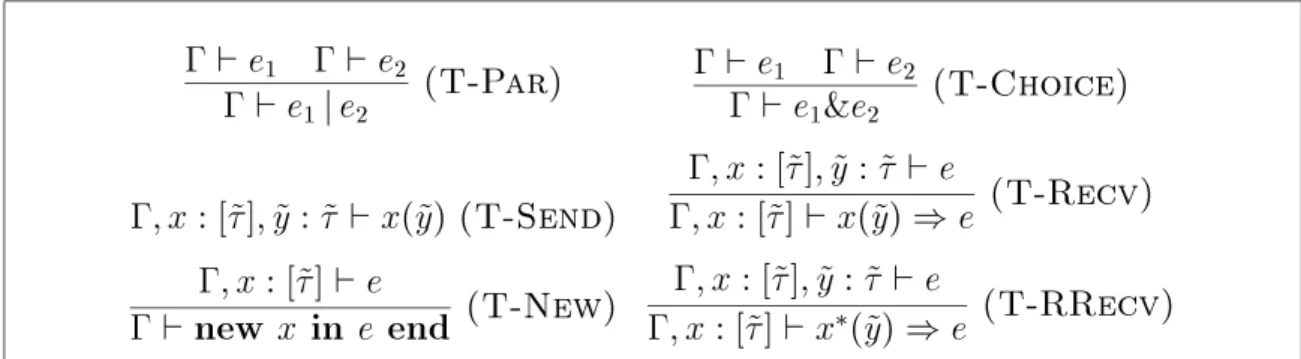
2.1 Typing Rules for the Target Language : : : : : : : : : : : : : : : : 10
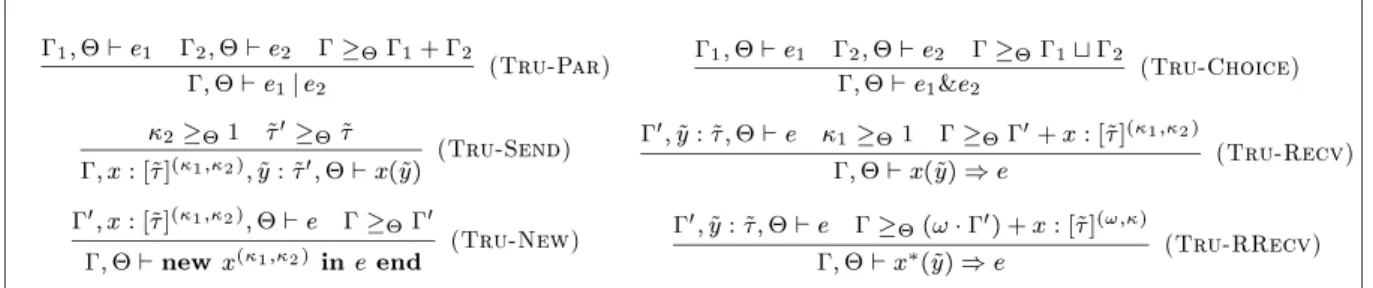
2.2 Typing Rules with Uses : : : : : : : : : : : : : : : : : : : : : : : : 16
3.1 Typing Rules for Type Reconstruction : : : : : : : : : : : : : : : : 25
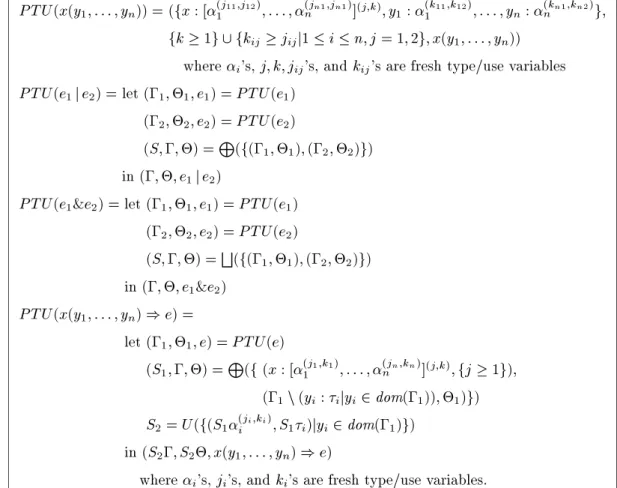
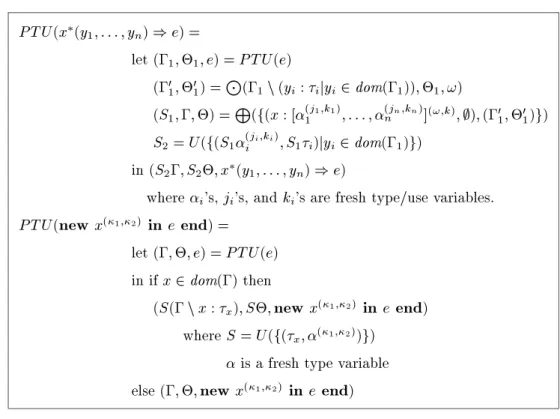
3.2 Type Reconstruction Algorithm PTU(part 1) : : : : : : : : : : : : 29
3.3 Type Reconstruction Algorithm PTU(part 2) : : : : : : : : : : : : 30
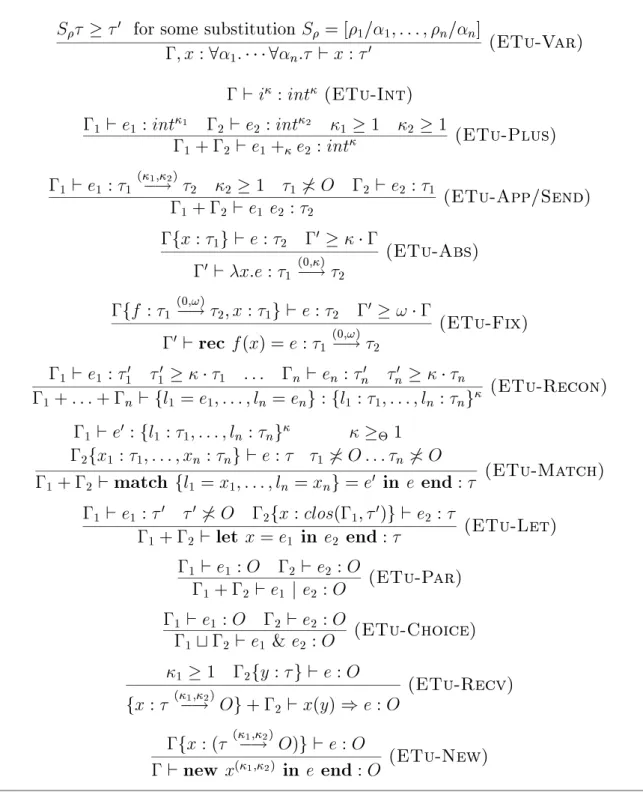
4.1 Typing Rules with Uses for the Extended Language : : : : : : : : : 40
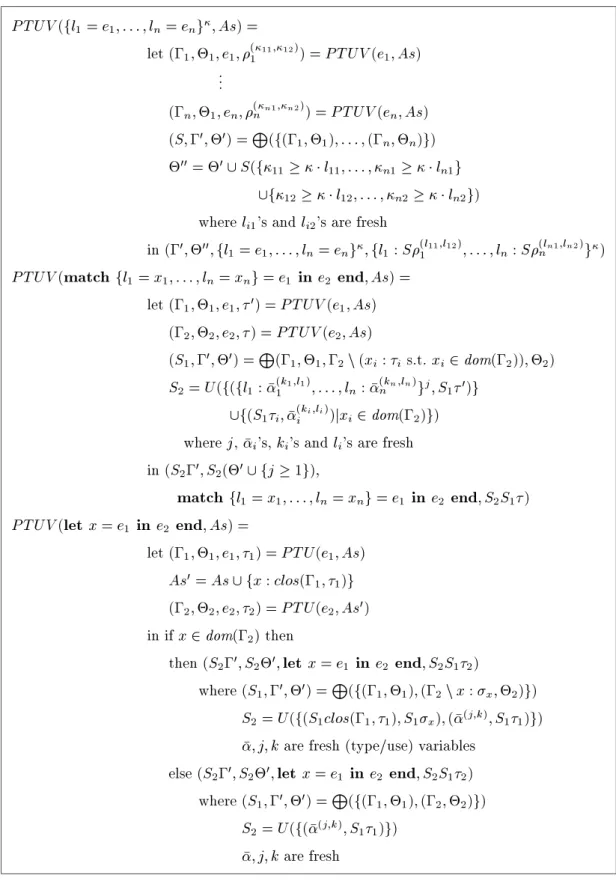
4.2 Type Reconstruction Algorithm PTUV (part1) : : : : : : : : : : : 43
4.3 Type Reconstruction Algorithm PTUV (part2) : : : : : : : : : : : 44
4.4 Type Reconstruction Algorithm PTUV (part3) : : : : : : : : : : : 45
4.5 Type Reconstruction Algorithm PTUV (part4) : : : : : : : : : : : 46
5.1 Elapsedtime for Our Analysis and Ordinary Type Reconstruction : 57
5.1 Runningtime and speedupfor Fibonacci,counter and tree14 : : : 56
1
Introduction
1.1 Background
With the recentdevelopmentof parallelcomputersand high-speed networks,con-
current/distributed programming languages have been drawing great attentions.
Concurrentprogramminglanguagesareimportanteveninsequentialenvironments
in describing interactive applications such as graphical user interfaces[4]. Indeed,
many concurrent programming languages { including concurrent object-oriented
languages[27, 1], concurrent extensions of functional languages[20], concurrent
constraint/linear logic programming languages[22, 21, 10], and programming lan-
guages based onprocess calculi[17, 23] { have been proposed and implemented.
Of those researches, the frameworks of process calculi[13, 10] are drawing at-
tentions as a vehicle for studying theoretical aspects of concurrent programming
languages. The process calculi are based on the model that computation is per-
formed by multiple concurrent processes communicating values along communi-
cation channels. Their computational models are simple but so expressive that
varioushigh-levelconstructs for concurrent object-orientedlanguages can becap-
tured by process calculi extended with records[9, 11, 18]. Moreover,they provide
us various useful methods to reason about behaviors of programs: criteria of be-
havioral equivalence of processes such as barbed bisimulation, or (static) type
the followingadvantages:
Semantics of the core language is clearly denedthrough thebasis calculus.
High-levelconstructs,likeconcurrentobjects,canbeexiblyintroduced/modied
with clear semantics.
Various aspects (theory, implementation, etc.) of such high-level constructs
can be uniformly discussed.
On the other hand, once high-level constructs are encoded into a lower-level
corelanguage,theirgoodpropertiesareoftenthrownawayandsosafetyuseofthe
constructs is dicult to ensure on the core language. As another disadvantage,
overhead of multi-threading and communication among threads, i.e., operations
on channels, are large. To recover these disadvantages, analysis technique for
languages based on process calculi, particularly static analysis which makes use
of their clear semantics, is required. By developing analysis technique on such
languages, itwould beeasy todevelop similartechnique forother concurrentpro-
gramming languages.
1.2 Linear Channel Type System
Asaninstanceofstaticanalysisforprocesscalculi,recently,Kobayashi,Pierce,and
Turner[8] gave a static type system with which certain communication channels,
called linear channels, can be ensured tobeused just once. Linear channelshave
many good properties such as partial conuence with respect to communication
onthem.
Aboveall,linearchannelsenabletoeliminateredundantcommunication. Con-
sider the following expression new r in (m(v;r) j r(x))e) end, which repre-
sents a function call or a method invocation of concurrent objects. It creates a
(v;r) to the channel m where m and v represent the location of the function or
the method andits argument,respectively. Thechannelr isused forthe callee to
send aresult. r(x))eisamessagereceiverwhichexecutes[z=x]ewhenavaluez
isreceivedatthe channelr. Ifr isprovedtobealinearchannel,wecanreducethe
aboveexpressionintom(v;x:e),inwhichthechannelcreation new r in ::: end
and the communicationon the channelare eliminated. Moreover,consider aspe-
cial case thate isjusta r 0
(x),whichforwards the valuefrom rtoanotherchannel
r 0
. Then the resulting code ism(v;r 0
), which may be regarded as the tail-call op-
timized formof the expression new r in (m(v;r) j r(x))r 0
(x)) end. Notethat
this kindof tail-call optimizationis only possible by a non-trivial global analysis,
unlike that in functional programming languages (because we need to check the
behaviorsof receiverson the channel m).
In addition to the elimination of redundant message passing, linear channel
type system can be used to: (1) reduce the cost of operations on communication
channels, (2) reduce the cost of garbagecollection by the reuse of memory space
for linear channels, (3) guarantee safety of programs by the properties of linear
channels. Therearemanysituationswherelinearchannelsareused. Asmentioned
above,oneof twocommunications involvedinfunction/methodcalls isperformed
on a linear channel. Moreover, most of dynamically created channels are linear
ones in typical programs.
Their system is, however, on a pure message passing calculus, and the type
reconstruction problem of the system is left open.
1.3 Our Approach
In this study, we improve their type system and develop a type reconstruction
algorithm which can detect ane channels[8], which is used at most once. Note
that in the type system of [8], linear channels and ane channels have nearly
using by placing them in a deadlocked subprocess. So, in this thesis, we do not
particularly distinguish them.
The basic ideas of our analysis are a type system with uses and intro duction
of use constraint. Uses are attached to type constructors and denote how many
times the values are used. For example, int 1
denotes the typ e of integers which
can be used at most once where the superscripted 1 is a use. It will be ensured
that values are used according to their uses, i.e., a value of int 1
is really used at
most once, during execution.
Use constraintisintroducedforeaseoftypereconstruction. Inthesensethata
wholeprogramdeterminesuses ofvalues,ause isaglobalproperty. So,analysisin
a simple-minded bottom-up mannerdoes not work because uses of values cannot
be determined from local information. To solve this problem, we intro duce use
variables,whichrepresentsuchundetermineduses,and ause constraintset, which
keeps local information as a system of inequalities on use variables. Our type
reconstruction algorithm generates a use constraint set as a part of outputs. To
detect linearchannels,the constraint setis tobesolved.
Our target language discussedhere isa small core ofconcurrent programming
languages,whichcan beconsidered asaprocess calculusextendedwithfunctions,
data structures such as records, and the ML-style let-polymorphism. We cho ose
such a language because behaviors of various concurrent programming languages
can becaptured asmentionedaboveanditismorerealisticfor practice thanpure
process calculi. Therefore,theresultof thisstudywould beeasytoapplytoother
concurrentprogramming languages.
1.4 Contribution
Maincontributions of this thesis are:
operational semantics
type system (I) = type system (II)
reconstruction algorithm
correct sound&complete
correct use information operational
semantics
type system (I) = type system (II)
reconstruction algorithm
correct sound&complete
correct use information pure process calculus
extended language
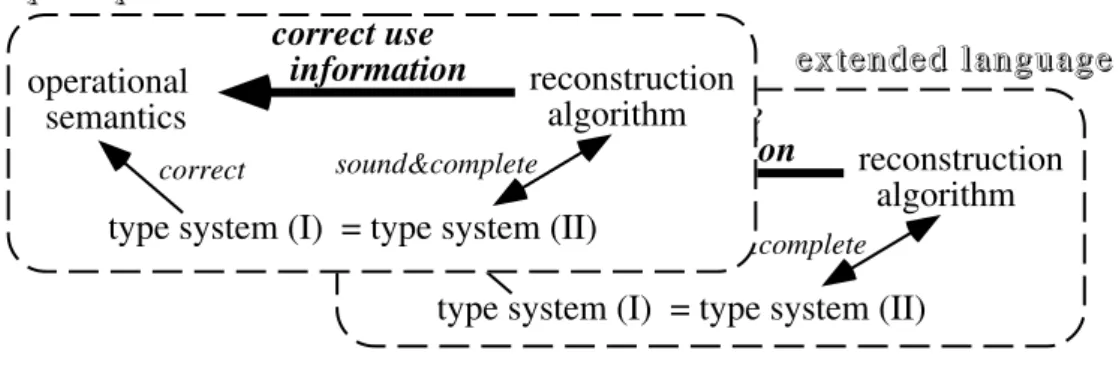
Figure 1.1: Overview of This Thesis
Developmentof atypereconstruction algorithm foratypesystem with uses
for a realisticcore of concurrentprogramming languages.
Development of a method for detection used-once values, including linear
channels. Used-oncevaluesare detected withnodeclarationsabout typesin
programs by our analysis.
Computationalcostofouranalysis(excludingcostofordinarytypereconstruction
{ which is known exponential in the worst case {) is polynomial in the size of a
program.
Notethat the linearity analysis ofcommunication channelsis moredicult to
detectthanthatinfunctionalprogramminglanguages[24],becausealinearchannel
has atleast twosyntacticoccurrences{one forreceiving andanotherfor sending.
We alsoshowthat the cost ofthe analysisis ecientfor practice and that the
eects of optimizationby linear channelsare promising.
1.5 Overview of This Thesis
The goal of this thesis is to give an algorithm to obtain use information, and
proveit tobecorrect with respect tooperational semantics. The overview of this
thesis is illustratedin Figure1.1. First, wediscuss the analysis for apure process
duce two kinds of typ e systems. One of them (type system (I)) is a type system
to guarantee the correctness of uses of values. The judgements on uses obtained
by the type system are proved to be sound with respect to operational seman-
tics. Then, wemodify it to the other type system, typ e system (II), which eases
type reconstruction by introducing use constraint, present a type reconstruction
algorithm and prove soundness and completeness of the algorithm. The twotyp e
systems are proved to be essentially equivalent. As a result, reconstructed type
(including use information) will besound with respect to operational semantics.
The structure of the rest ofthis thesisis asfollows. In Chapter 2,wedescribe
a type system with uses fora pure process calculusand proveitto besound with
respect to its operational semantics. The modied type system, its typ e recon-
struction algorithm,andthe methodfordetecting linearchannelsarepresentedin
Chapter 3. In Chapter 4, we discuss our analysis for the extended language. By
the analysis, we can detect not only linear channelsbut also other used-once val-
ues (closures,records,etc.) Chapter 5givessomeexperimental resultstoshowthe
eectofoptimizationthrough simpleexamplesandthat thecost ofour analysisis
enough ecient inpractice in spite of its theoreticalcomplexity. After discussing
severalissuesandrelatedworkinChapter6andChapter7,weconcludethisthesis
in Chapter 8.