65
A Class of
Logic
Functions
Expressible
by
Polynomial-Size
Binary
Decision
Diagrams
多項式サイズの二分決定グラフで表現可能な論理関数のクラス
Nagisa
ISHIURA and Shuzo
YAJIMA
石浦菜岐佐 矢島脩三
Department ofInformation Science, Faculty of Engineering, Kyoto University
京都大学工学部情報工学教室 Abstract
In this paper wediscuss properties of logic functions expressible by BDD’s of feasible size. We define a class of logic functions expressible by BDD’s whose size (number
of nodes) are bounded by a polynomial of the number of input variables. We derive
some properties of this class through the discussionon the relation between
polynomial-size BDD’s and Turing machines. We also focus on the relation between
polynomial-size BDD’s and combinational circuits and show that polynomial size BDD’s can be synthesized into $O(\log^{2}n)$ depthcombinational circuits.
1
Introduction
A binary decision diagram (BDD) [Bry86] is one of represen,tation forms of logic functions.
It is widely used in application programs for logic design verification, test generation and
logic synthesis, owing to its properties that there exists a unique canonical form for eachlogic
function and that many practical logic functions are expressible by BDD’s of feasible size.
However, in theworst case the size ofthe BDD of alogic function is known tobe exponential
of the number ofinput variables. There are few discussions on a problem of what kind of
logic functions are expressible by BDD’s of feasible size [Bry90]. In this paperwe focus on this
point so as to clarify the efficiency and limitation of application programs using logic function
manipulationbased on BDD’s. Wedefine a class of logic functions expressible by BDD’s whose
size (the number ofnodes) is bounded by a polynomial of the number of input variables. We
derive some properties of this class through the discussion on the relation between
polynomial-size BDD’s and Turingmachines. Wealso focus on the relation between polynomial-sizeBDD’s
and combinational circuits and show an upper bound ofthe depth of combinational circuits
that realizelogicfunctions expressed by polynomial-size BDD’s. Main results of this paper are
as follows:
(1) Let PolyBDD be a class oflogic functions expressible by uniform BDD’s whose size is
bounded by a polynomial of$n$, where $n$is the number of the input variables. Let LOGIREG
be a class of logic functions which is computable by an LSIA, where an LSIA is a one-way
off-line Turing machine which has $O(\log n)$ bounded working tape and has an ability to know
$n$ without reading theinput tape. We have shown PolyBDD $=LOGIREG$
.
(2) From the properties ofLSIA’s we derive that symmetricfunctions, threshold functions
and selector functions etc. are in PolyBDD.
(3) PolyBDD is shown to be included by DLOGSPACEdirectly from the definition of an
LSIA.Since itis know that DLOGSPA CEis includedby$NC^{2}$ (aclassoflogic functions realized
by uniform combinational circuits of depth $O(\log^{2}n))$, we can conclude that logic functions
1
数理解析研究所講究録 第 754 巻 1991 年 65-71
66
expressed by polynomial-size BDD’s can be synthesized into $O(\log^{2}n)$ depth combinational\sim
circuits. We also show aconcrete procedure ofconstructingan $O(\log^{2}n)$ depth combinational
circuit from apolynomial size BDD.
2
Family of Binary
Decision
Diagrams
2.1
Binary
Decision
Diagram (BDD)
We define a binary decision diagram $(BDD)$over $\mathcal{B}=\{0,1\}$ as follows.
Def 2.1 A binary decision diagram over $B$ is a 6-tuple $B=(X, N, s, l, e^{0}, e^{1})$, where
$X=\{x_{1}, x_{2}, \cdots, x_{\mathfrak{n}}\}$ is a totally ordered set
of
variables, where$x_{1}<x_{2}<\cdots<x_{n}$ holds,
$N$is a set of nodes,
$s\in N$ is the initial node,
$l:Narrow(X\cup \mathcal{B})$ represents the label of a node,
$e^{0},$$e^{1}$ : $Narrow N$ represents a setof O-edges and l-edges, respectively, where $\forall v\in Ns$
.
$t$.
$l(v)\in X$ : $l(e^{0}(v))\in B$or $l(v)<l(e^{0}(v))$, and$l(e^{1}(v))\in B$or $l(v)<l(e^{1}(v))$, and
$\forall v\in N$ S. $t$
.
$l(v)\in \mathcal{B}$ : $e^{0}(v)=e^{1}(v)=V.$ 口The set $N$ isdivided into two subsets; $N_{V}$ and $N_{R}$, where $N_{V}=\{v|v\in N, l(v)\in X\}$ and
$N_{R}=\{v|v\in N, l(v)\in B\}$
.
($N=N_{V}\cup N_{R}$ and $N\gamma\cap N_{R}=\phi$). A node in $N_{V}$ is called avariable node and a node in$N_{R}$iscalled a value node. $N_{R}$consists ofjust two nodes; $r_{0}$ and$r_{1}$,
where $l(r_{0})=0$ and $l(r_{1})=1$. We call $r_{0}$ and $r_{1}$ the O-node and the l-node, respectively. We
denote theindex of a variable $x$
:
in$X$ as $\iota(x_{i})$.
Namely $\iota(x_{i})=i$.
Apairofnodes $(v, e^{0}(v))$ and\langle$v,$$e^{1}(v))$ are called the O-edge and l-edge ofnode $v$
.
The sizeof BDD $B$, denoted as size$(B)$,is defined as the number of nodes of$B$
.
Namely, size$(B)=|N|$, where $|N|$ is the number ofelements in set $N$
.
Let $A$ be a set of assignments for $X$, where assignment $a$ for $X$ is a vector in $\mathcal{B}^{|X|}$
.
Wedenote the i-th element of$a$ as $a:$, and call it an assignment to variable $x_{i}$ (the i-th variable).
For a given assignment $a$, we define $T(a)$ which represents the set of nodes reachable from $s$
under the assignment $a$
.
$v\in T(a)$ iff$v=s$ or $\exists u\in T(a)s$
.
$t$.
$e^{a_{\iota\langle l\langle\cdot))}}(u)=v$.
The output value of the logic function represented by a BDD is defined using this set of reachable nodes.
Def2.2 We define the following $f_{B}$ as the logic function expressed by BDD $B$:
$f_{B}(a)=1$ iff$r_{1}\in T(a)$
.
口Next, we define a description of a BDD. We assume that each element $e$ in $X$ and $N$ has
an identifier which is denoted as $id(e)$
.
Let us call 4-tuple $D_{v}=(id(v), id(l(v)),$ $id(e^{0}(v))$,$id(e^{1}(v))$ a description of node $v\in$
.
We can describe all the information of a BDD as the setofdescriptions of the nodes of the BDD.
Def. 2.3 We define the $D_{B}$ as the node set description ofBDD $B,whereD_{B}=\{D_{v}1^{v}\in N\}$
.
67
2.2
BDD
Family
and Its Uniformity
Inorder to discuss the size ofBDD’s with respect to the number of input variables, we define
a family ofBDD’s.
Def 2.4 BDD family $\{B_{n}\}$ is a sequence of BDD’s $B_{1},$ $B_{2},$ $B_{3},$$\cdots$, where
1
$X_{n}|=n$ holds foreach $B_{n}=(X_{n}, N_{n}, s_{n}, l_{\mathfrak{n}}, e^{0_{\mathfrak{n}}}, e_{\mathfrak{n}}^{1})$. $\square$
Let $\{f_{n}\}$ be a sequenceoflogicfunctions where $f_{\mathfrak{n}}$ : $B”arrow \mathcal{B}$ (an n-variablelogic function).
We can consider that $\{f_{\mathfrak{n}}\}$ expresses alanguage $L$ over $B$ by the followingcorrespondence: $b_{1}b_{2}\cdots b_{n}\in L$ iff$f_{n}(b_{1}, b_{2}, \cdots, b_{n})=1$
.
Similarly we define a language for a BDD family.
Def 2.5 The language accepted by BDD family $\{B_{n}\}$ is defined as follows and denoted as
$L_{\{B_{\hslash}\}}$
.
$b_{1}b_{2}\cdots b_{\mathfrak{n}}\in L_{\{B_{\hslash}\}}$ iff$f_{B_{\hslash}}(b_{1},$$b_{2},$
$\cdots,$$b.)=1$
.
口In this paper, we discuss correspondence between BDD families and Turing machines.
For this purpose we define uniformity of a BDD family following after the uniformity of a
combinational circuit family [Ruz81].
Def2.6 BDD family $\{B_{n}\}$ is uniform if thedescriptionof the n-th BDD $B_{n}$ can be generated
fromabinary representationof$n$byan$O(\log size(B.))$ spacebounded off-lineTuringmachine.
口
As a class of languages accepted by a BDD family of feasible size, we define a class of
PolyBDD.
Def 2.7 PolyBDD is a class of languages accepted by a uniform BDD family $\{B_{n}\}$, which
satisfies size$(B.)\leq poly(n)$, where poly$(n)$ is apolynomial of$n$
.
$\square$3
Relation between
Polynomial
$S$ize
BDD’s
and
Log-Space
Automata
3.1
Log-Space Automaton
We will refer aone-way off-line Turing machine with $O(\log n)$ bounded working tape as a $log$
space automaton $(LSA)$
.
Aninput to an LSA is given on its input tape which is read-only. AnLSAcan read the symbols on the input tape onlyonce in thegiven order(one-way). Instead, an
LSA can read and write theworking tape. Namely, an LSA can be regarded as an automaton
provided with $O(\log n)$ working tape. We also define an abstract machine referred to as a $log$
space input-size-look-ahead automata (LSIA).An LSIA is an LSA which has an ability to know
the length of a given input sequence without scanning the input sequence. The length of an
input sequence is given as the initial value on the working tape in binary representation.
Def 3.1 LOGREGand LOGIREG are classes oflanguages which can be accepted by an LSA
68
The main result of this paper is that PolyBDD is equivalent to LOGIREG.
Th 1 PolyBDD $=LOGIREG$
.
($LOGIREG\subseteq$ PolyBDD):
Since an LSIA has only$O(\log n)$ memory, all the states of an LSIA can be represented by$p$
nodes where$p\leq poly(n)$
.
Then using$pxn$ nodes we can construct a state transition diagramwithout loop, which is the very n-th BDD. Since transitions are computable by an $O(\log n)$
space bounded Turingmachine, the BDD family is uniform.
($PolyBDD\subseteq$ LOGIREG):
Using an $O(\log n)$ working tape, an LSIA can simulate the $O(\log n)$ space bounded Turing
machine to generate amember ofauniform BDDfamily. Inother words an LSIAcan compute
thenext nodeofa node for agivenassignment. Sincethe number of nodesinaBDDisbounded
by a polynomial of $n,$ $O(\log n)$ space is enough to reach final node from the initial node $s$
.
口3.2
Properties of PolyBDD
We can lead properties of the logic functions represented by polynonial size BDD’s directly
from properties of LSIA’s.
Let $REG$ and DLOGSPA CE be classes of languages which can be accepted by a finite
automaton and alog-space Turing machine (anoff-line Turing machine with $O(\log n)$ bounded
working tape), respectively. Obviously $REG\subseteq LOGIREG\subseteq$ DLOGSPA CE. The difference
between$REG$and LOGIREG is dueto the working tape of an LSIA and the difference between
LOGIREG and DLOGSPA CE is due to the restriction that an LSIA can read the input tape
only once. Logic functions which can be computed by a sequential machine with constant
number ofregisters, such as parity and carry, are expressible by polynomial size BDD’s. An
LSA has an $O(\log n)$ working tape besides a finite control. Using this working tape, an LSA
can accept more complexlanguages.
(1) $\{0$“1“$\}$ belongs to PolyBDD.
With the $O(\log n)$ working tape, an LSA can count and compare the number of$0’ s$ and
l’s in agiven sequence.
(2) All the symmetric functions belong to PolyBDD. The output of a symmetric function
depends onlyon the number ofl’s in the inputs. Then it is computable using the$O(\log n)$
working tape.
(3) Threshold functions belong to PolyBDD ifthe magnitude of each weight is bounded by
apolynomial of$n$
.
(4) Let int$(w)$ be the integer value of binary representation $w$, weight(a) be the number
of l’s in sequence $\sigma$, and $\sigma[k]$ be the k-th alphabet of $\sigma$
.
Then the selector function$\{w\sigma||w|=\lceil\log|\sigma|\rceil, \sigma[[w|+int(w)+1]=1\}$ belongs to PolyBDD.
The essence ofthe above properties is that an LSIA can count number up to poly$(n)$ using
the $O(\log n)$ working tape. It can count the positionor the number of l’s in a given sequences.
However it cannotmemorize a whole input sequenceitselfbecause that requires working tape
69
$NC^{2}$
1
DLOGSPACE
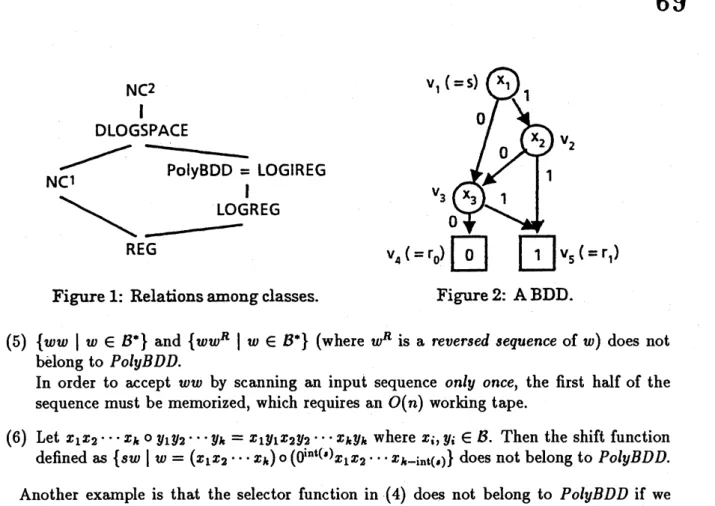
Figure1: Relations amongclasses. Figure2: ABDD.
(5) $\{ww|w\in \mathcal{B}^{*}\}$ and $\{ww^{R}|w\in B^{*}\}$ (where $w^{R}$ is a reversed sequence of $w$) does not
belong to PolyBDD.
In order to accept $ww$ by scanning an input sequence only once, the first half of the
sequence must be memorized, which requires an $O(n)$ working tape.
(6) Let $x_{1}x_{2}\cdots x_{k}oy_{1}y_{2}\cdots y_{k}=x_{1}y_{1}x_{2}y_{2}\cdots x_{k}y_{k}$ where $x:,$$y:\in B$
.
Then the shift functiondefined as $\{sw|w=(x_{1}x_{2}\cdots x_{k})o(0^{in1(\ell)}x_{1}x_{2}\cdots x_{k-in1(\cdot)}\}$ does notbelong to PolyBDD.
Another example is that the selector function in (4) does not belong to PolyBDD if we
define the selectorfunction as $\{\sigma w|\cdots\}$
.
This is also an example to show that the size of theBDD representingthe same function can vary depending on ordering of input variables.
The property predicts that it may be difficult to express logic functions computed by
sequential circuits even if the logic functions of their combinational part are expressible by
BDD’s of feasible size. If an output of a sequential circuit depends on input sequences of
length $O(n)$ and the number ofits registers is larger than $O(\log n)$, there can be cases where
thesequential function doesnot belong to PolyBDDeven if thecombinational function belongs
to PolyBDD.
4
Relation
between BDD’s and
Combinational
Circuits
We alsoinvestigated the relation between PolyBDD and other classes related tocombinational
circuits. Figure 1 is the summary of relationamongtheclasses. $NC^{k}$is aclassoflogic functions
which can be expressed by a uniform family of combinational circuits of depth $O(\log^{k}n)$ and
size$O(poly(n))$ under fan-in restriction [Coo85]. Since PolyBDDis included by DLOGSPA CE
and DLOGSPA CEisincluded by $NC^{2}$, we can conclude that logic functions expressed by
poly-nomial size BDD’s canbe synthesized into polynomialsize and $O(\log^{2}n)$ depth combinational
circuits. Weshow a constructive proof.
Asisformalized in section2, the function represented by a BDD is definedasthe
reachabil-ityproblemon the BDD.Wewillconstruct a combinational circuit which solves the reachability
problem. For a given BDD $B$ wedefine $|N|x|N|$ matrix$A_{B}=[a_{i,j}]$ as follows. Intuitively
$a:i$
becomes 1 if node $v_{j}$ is directly reachable from node $v$
:
under a given assignment. We call $A_{B}$the adjacency matrix of$B$
.
$a$
:
: $B”arrow \mathcal{B}$, where$a_{i\dot{o}}=\overline{x_{k}}$if$l(v_{i})=x_{k},$ $e^{0}(v;)=v_{j}$,
70
$a:,:=1$ if$l(v:)\in R$,
$a:i=0$ otherwise.
For example, the adjacency matrix ofthe BDD in Figure 2 is
$A_{B}=[00000x_{0}0^{1}00 \frac{\overline x_{1}}{x_{0},0^{2}0}\frac{00}{x_{1},0^{l}}x_{1}^{0_{\}}x_{0^{2}}]$
.
Let us denote the $(i,j)$-element of $A_{B^{n}}$ (the n-th power of $A_{B}$) as $a^{\mathfrak{n}}:.j$ and let $v$
.
$=s$ and$v_{r}=r_{1}$
.
Then $f_{B}\equiv a^{n}.,$’ by definition. We will show how to con$s$truct a combinationalcircuit of depth $O(\log^{2}n)$ which computes $A_{B}^{n}$
.
A combinationaJ circuit which computes $A_{B}$can be realized according to the above definition. Multiplication of $mxm$ Bool$e$an matrix
is computable by acombinational circuit ofdepth $O(\log m)$ and size $O(m^{3})$
.
By constructinga tree of multiplication circuits we can compute the n-th power of$A_{B}$
.
Since the depth ofthe tree is $|\log n\rceil$, the total depth of the circuit is $O(\log n\log m)$
.
If the size of the BDD isboundedby a polynomial of$n$, it comes to $O(\log^{2}n)$
.
As forthe relation between PolyBDD and $NC^{1}$ we have not yet obtained significant results.
There exists alogic function family which belongs to $NC^{1}$ but not to PolyBDD. Integer
mul-tiplication belongs to $NC^{1}$ but is known to require exponential nodes in BDD representation
[Bry90]. Therefore, there are two possibility; PolyBDD $\subset NC^{1}$, or PolyBDD and $NC^{1}$ are
in-comparabl$e$
.
This problem has a significant importance on the synthesis of multilevel circuitsbecause polynomial size BDD’s can be synthesized into $O(\log n)$ depth combinationalcircuits
if PolyBDD C $NC^{1}$
.
5
Conclusion
We have defined a class oflogic functions expressible by polynomial-size BDD’s and have
investigated its properties through discussions on relation between log-spaceautomata. We also
discussed the relationship between BDD’s and combinational circuits an$d$ showed a concrete
procedure to synthesize $O(\log^{2}n)$ depth combinational circuits form polynomial size BDD’s.
It remains as a future work to clarify the relation between PolyBDD and $NC^{1}$
.
6
Acknowledgments
Authors would like to express theirsincere appreciation to Prof. H. Yasuura, Prof. K. Iwama,
Mr. T. Tohdo, Mr. Y. Okabe, Mr. S. Hirose and all the members of Yajima Lab. at Kyoto
University for their discussions and valuabl$e$ comments.
References
[Bry86] R. E. Bryant: (Graph-Based Algorithmsfor Boolean Function Manipulation”, IEEE
Transactions on Computers, vol. C-35, no. 8, pp. 677-691, (1986).
[Bry90] R. E. Bryant: “On the Complexity ofVLSI Implementations and Graph
Representa-tions ofBoolean Function$s$ with Application to Integer Multiplication”, private