• 検索結果がありません。

Adverse effects of prolonged postoperative hospital stay on long-term survival of pancreatic adenocarcinoma

N/A
N/A
Protected

Academic year: 2021

シェア "Adverse effects of prolonged postoperative hospital stay on long-term survival of pancreatic adenocarcinoma"

Copied!
6
0
0

読み込み中.... (全文を見る)

全文

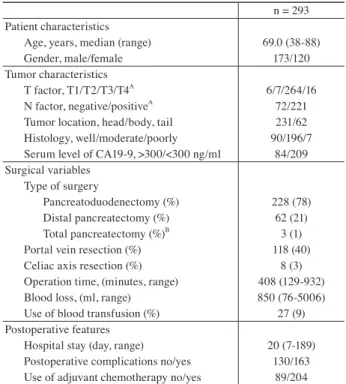
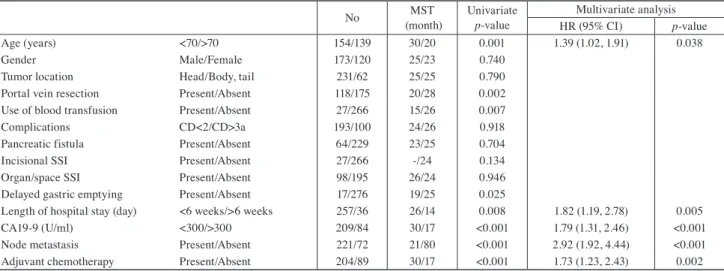
11Adverse effects of prolonged hospital stay. Ann. Cancer Res. Ther. Vol. 29, No. 1, pp. 11-16, 2021. Introduction. Pancreatectomy is often accompanied by postopera- tive complications, which may result in an unfavorable long-term survival as well as 30-day mortality1, 2). A lack of adjuvant chemotherapy may explain the dismal prog- nosis of patients with postoperative complications, as the occurrence of complications significantly reduces the use of adjuvant chemotherapy3). A recent study by Ma et al.4) which evaluated the relationship between a prolonged postoperative hospital stay after esophagectomy and a poor overall survival is in the same line and explained by the lack of adjuvant chemotherapy for esophageal cancer. In contrast, even among patients who underwent adjuvant chemotherapy, postoperative complications remain an. independent prognostic factor after curative resection of colorectal cancer, which can be attributed to a reduced function of the immunological system due to prolonged postoperative inflammation5).. Regarding pancreatic cancer, the relationship between these factors and the prognosis are not well described, so we investigated the relationship between the long-term survival and perioperative variables, including postopera- tive complications, length of the postoperative hospital stay, and the use of adjuvant chemotherapy.. Methods. The patients undergoing surgical resection for pancre- atic adenocarcinoma between 2007 and 2014 at Shizuoka Cancer Center were included. Data were extracted from the database, which had been constructed in a prospec- tive manner, and additional chart review was not per- formed. Two patients with in-hospital death were exclud- ed from the analysis in order to focus on the association. Adverse effects of prolonged postoperative hospital stay on long-term survival of pancreatic adenocarcinoma. Sunao Uemura1, 2), Teiichi Sugiura1), Yukiyasu Okamura1), Takaaki Ito1), Yusuke Yamamoto1), Ryo Ashida1), Kazuhiro Hanazaki2) and Katsuhiko Uesaka1). 1) Division of Hepato-Biliary-Pancreatic Surgery, Shizuoka Cancer Center 2) Department of Surgery, Kochi Medical School, Kochi University. Abstract Objective: The relationship between the length of postoperative hospital stay, postoperative morbidity, and long-term sur- vival after pancreatectomy was investigated. Patients and methods: Data of 295 patients who underwent surgical resection for pancreatic adenocarcinoma between 2007 and 2014 were analyzed. Results: Pancreatoduodenectomy was performed in 228 patients, and portal vein resection was performed in 118 patients. Postoperative complications of any grade occurred in 165 patients, and median postoperative hospital stay was 20 days (7–189 days). No complications of any grade affected the postoperative survival. However, postoperative hospital stay was significantly correlated poor prognosis (median survival time: 14 months in patients with a hospital stay >6 weeks and 26 months in those with a hospital stay <6 weeks, p = 0.008). Multivariate analyses for the long-term prognosis identified 5 independent factors: lymph node metastases (odds ratio [OR]: 2.92, p < 0.001), absence of adjuvant chemotherapy (OR: 1.73, p = 0.002), elevated serum level of CA19-9 ≥300 U/ml (OR: 1.79, p < 0.001), age >70 (OR: 1.39, P = 0.038) and postopera- tive hospital stay ≥6 weeks (OR: 1.82, p = 0.005). The types of complication and severe complications with grade IIIb/IV of Clavien-Dindo classification were not found to be related to the survival. Conclusion: In the present study, Clavien-Dindo classification was not associated with long-term survival rates after pan- createctomy for pancreatic adenocarcinoma. The length of postoperative hospital stay is related to the long-term survival after pancreatectomy.. Keywords: pancreatic cancer, short-term outcome, survival. (Received December 10, 2020; Accepted January 6, 2021). Corresponding author : Teiichi Sugiura, M.D., Division of Hepato-Biliary-Pancreatic Surgery, Shizuoka Cancer Center, 1007 Shimo-Nagakubo, Sunto-Nagaizumi, Shizuoka, 411-8777, Japan. TEL: +81-55-989-5222, FAX: +81-55-989-5551, E-mail: [email protected]. 12 Annals of Cancer Research and Therapy Vol. 29 No. 1, 2021. of perioperative factors with the long-term survival. This study was approved by the Institutional Review Board of Shizuoka Cancer Center (ID; 30-J118-30-1-3).. Surgery The tumor criteria for surgical resection were a patho-. logically/radiologically diagnosed pancreatic tumor with- out distant metastasis, tumor infiltration into the hepatic artery and/or the superior mesenteric artery, or occlusion of the portal vein. An Eastern Cooperative Oncology Group (ECOG)-performance status (PS)6) 0 or 1 was con- sidered a favorable general condition. An ECOG-PS of 2 was considered a contraindication for surgery with some exceptions determined by a comprehensive decision. Standard procedure for pancreatoduodenectomy (PD) is conventional PD, in which the distal stomach is resected at the level of the gastric angle. Reconstruction for PD was performed by the modified Child method7). In distal pancreatectomy (DP), en bloc resection was performed by resecting the splenic artery at the origin. Resection of the celiac artery (celiac axis resection8, 9)) was allowed when appropriate. Portal vein or superior mesenteric vein (PV/SMV) resection was performed when necessary in both PD and DP. The resection margin of the pancreas was examined by frozen sections: additional resection of the remnant pancreas or total pancreatectomy was performed in the case of margin positivity. All patients underwent regional and peripancreatic lymph node dis- section. A percutaneous intraperitoneal drain was placed at the pancreatojejunal anastomosis in PD or at the pan- creatic stump in DP. The level of amylase in the drained fluid was measured routinely at the first and third post- operative days to diagnose pancreatic fistula according to the International Study Group on Pancreatic Fistula (ISGPF) Definition10).. Postoperative short-term outcomes Short-term outcomes included surgical and non-sur-. gical complications and the postoperative hospital stay. All events occurring as any deviation from an unevent- ful postoperative course until discharge were considered postoperative complications. Surgical complications included pancreatic fistula (PF) (>ISGPF grade B), surgi- cal site infections (incisional and organ/space), delayed gastric emptying (DGE) (>ISGPS grade B)11), intraab- dominal abscess, Clostridium enteritis, peritonitis, post- operative hemorrhaging, bile leakage, portal vein throm- bus, and liver abscess, while non-surgical complications were regarded as cardiac, pulmonary, renal, cerebral complications, and others. All morbidities were classified according to Clavien-Dindo (CD) classification12), and the highest degree of complications in each patient was auto- matically selected for the analysis. Severe complications were defined as those of grade IIIb or grade IV.. Postoperative follow-up Adjuvant chemotherapy was conducted using gem-. citabine or S-1 for six months13, 14). Surveillance with physical examinations, tumor marker measurement, and computed tomography was performed every three months, the interval of which was extended to six months after two years. In the present study, all patients under- went postoperative surveillance for a minimum of 24 months after surgery or until death, yielding a median follow-up period of 53 months for the censored patients.. Statistical analyses The Statistical Package for the Social Sciences ver-. sion 19.0 (SPSS, Inc., Chicago, IL, USA) was used for the statistical analyses. Continuous variables were expressed as medians with the range. The Kaplan-Meier method and log-rank test were used to calculate and compare the overall survival. To determine the cut-off points of CA- 19-9 and length of hospital stay, the minimum p value method was used. The variables with p <0.10 by univari- ate Cox regression analysis were subjected to a multi- variate analysis, and a p value of <0.05 was considered statistically significant for other analyses.. Results. Two hundred and ninety-three patients underwent sur- gical resection for pancreatic adenocarcinoma (Table 1). . Table 1 Clinical characteristics n = 293. Patient characteristics Age, years, median (range) 69.0 (38-88) Gender, male/female 173/120 Tumor characteristics T factor, T1/T2/T3/T4A 6/7/264/16 N factor, negative/positiveA 72/221 Tumor location, head/body, tail 231/62 Histology, well/moderate/poorly 90/196/7 Serum level of CA19-9, >300/<300 ng/ml 84/209 Surgical variables Type of surgery Pancreatoduodenectomy (%) 228 (78) Distal pancreatectomy (%) 62 (21) Total pancreatectomy (%)B 3 (1) Portal vein resection (%) 118 (40) Celiac axis resection (%) 8 (3) Operation time, (minutes, range) 408 (129-932) Blood loss, (ml, range) 850 (76-5006) Use of blood transfusion (%) 27 (9) Postoperative features Hospital stay (day, range) 20 (7-189) Postoperative complications no/yes 130/163 Use of adjuvant chemotherapy no/yes 89/204 ECOG-PS, eastern cooperative oncology group-performance status; CEA, carcinoembryonic antigen; CA19-9, cancer-associated carbohy- drate antigen 19-9 A) Pathological diagnosis, B) Extension of the head tumor resulted in total pancreatectomy. 13Adverse effects of prolonged hospital stay. The median age of the patients was 69 years (38–88). Two hundred and thirty-one patients had pancreatic cancer at the head of the pancreas and underwent PD. Among them, three cases were converted from PD to total pancreatectomy due to an oncological reason. Combined portal vein resection was performed in 118 patients (40%), while celiac axis resection was performed in 8 patients (3%). The median operation time was 408 min, widely ranging 129 and 932 min. Similarly, the esti- mated blood loss was 850 ml, ranging 76 to 5006 ml, and 79 (9%) patients received blood transfusion. The median hospital stay was 20 days (7–189 days). Postoperative complications were observed in 163 patients, with a to- tal of 252 complications of 13 different types identified among them (Table 1 and Table 2). Grade IIIa was the highest CD grade in the majority patients, while CD- grade IIIb and IV complications were less common. Organ/space surgical site infection (SSI) occurred in 98 patients (33%), followed by PF in 69 (22%), incisional SSI in 27 (9%), DGE in 17 (6%), intraabdominal abscess in 13 (4%), Clostridium enteritis in 9 (3%), peritonitis in 5 (2%), bleeding in 3 (1%), and bile leakage in 3 (1%). Portal vein thrombus, catheter infection, liver abscess, and pneumonia each occurred in 2 of 263 patients.. For the whole population, the median postoperative survival time was 24 months. The median survival time was 24 months among patients without complications, 24 months among patients with grade I complications,. 26 months among patients with grade II complications, 26 months among patients with grade IIIa complications, and 27 months among patients with grade IIIb/IV (Figure 1). No significant differences between groups were found by the Log-rank test. Figure 2 showed the overall surviv- al curves stratified by the length of postoperative hospital stay. When the length of hospital stay was divided at 6 weeks, the p value was the lowest at 0.008. The median survival time were 26 months in patients with hospital stay <6 weeks and 14 months in patients with a hospital stay >6 weeks. Therefore, we defined the cut-off value for the length of postoperative hospital stay at 6 months for the subsequent analyses.. The variables used in the Cox regression analysis were screened through a univariate analysis. T factor was excluded from the analysis because 264 patients (90%) were found to have T3 tumors. The cut-off value of CA19-9 was determined to be 300 U/ml according to the. Table 2 Postoperative complications and the frequencies of grade according to the Clavien-Dindo classification. The highest CD gradeA Number (%) 0 (no complication) 130 (44%) I 13 (4%) II 50 (17%) IIIa 86 (29%) IIIb 5 (2%) IV 9 (3%) Detail of complicationB Number (%) Grade B/C pancreatic fistula 69 (22) Incisional SSI 27 (9) Organ/space SSI 98 (33) Delayed gastric emptying 17 (6) Intraabdominal abscess 13 (4) Clostridium enteritis 9 (3) Peritonitis 5 (2) Bleeding 3 (1) Bile leakage 3 (1) Portal vein thrombus 2 (1) Catheter infection 2 (1) Liver abscess 2 (1) Pneumonia 2 (1) SSI, surgical site infection; CD, Clavien-Dindo A) When one patient has two or more different complications, the high-. est complication is shown and used for subsequent analyses. B) All complications are shown. In total, 163 patients had complica-. tions, and 252 complications occurred shortly after the operation. Complications that occurred after hospital discharge were not regis- tered in the present study.. Figure 1 The overall survival according to Clavien-Dindo classification. There was no significant difference between each group, and the median survival of each group was from 24 to 27 months.. Figure 2 The overall survival according to the length of postoperative hospital stay. When the length of the hospital stay was divided at 6 weeks, the p value was the most minimum with 0.008.. 14 Annals of Cancer Research and Therapy Vol. 29 No. 1, 2021. results of the minimum p value method. Because the log- rank test denied the apparent relationship between the overall survival and the grade of the complications, the absence/presence of complications was included in the analyses. A multivariate analysis identified lymph node metastases (p < 0.001), the absence of adjuvant chemo- therapy (p = 0.002), CA19-9 ≥300 U/ml (p < 0.001), age >70 years (p = 0.038), and postoperative hospital stay ≥6 weeks (p = 0.005) were significant predictive factors of the survival (Table 3).. A significant relationship between the occurrence of specific complications and postoperative hospital stay was found. Presence of Grade B/C PF (p < 0.001), organ/ space SSI (p < 0.001), intraabdominal abscess (p < 0.001), peritonitis (p = 0.001), bleeding (p = 0.041), bile leak- age (p = 0.041), and liver abscess (p = 0.015) frequently occurred in patients with longer hospital stay than those with shorter hospital stay (Table 4). We should again note that specific types of complications were not found to be related to the postoperative survival (Table 3). Adjuvant. chemotherapy was administered in 184 of 257 (72%) pa- tients with a hospital stay <6 weeks and 20 of 36 (56%) patients with a hospital stay >6 weeks (p = 0.05). Among the 204 patients who received adjuvant chemotherapy, the median interval between surgical resection and ad- ministration of adjuvant chemotherapy was 50 days in patients with a hospital stay <6 weeks and 72 days in pa- tients with a hospital stay >6 weeks.. Discussion. In the present study, the relationship between clini- cal variables and the long-term outcome was analyzed, yielding several intriguing findings.. First, no direct impact of complications or the severity of complications on the overall survival was observed. It has been mentioned that prolonged immunosuppression due to postoperative complications might allow tumor- cell proliferation15), and a lack of adjuvant chemotherapy in patients with high-grade complications may result in. Table 3 The univariate and multivariate analyses of predictive factors of the long-term survival. No MST (month) Univariate. p-value Multivariate analysis. HR (95% CI) p-value Age (years) <70/>70 154/139 30/20 0.001 1.39 (1.02, 1.91) 0.038 Gender Male/Female 173/120 25/23 0.740 Tumor location Head/Body, tail 231/62 25/25 0.790 Portal vein resection Present/Absent 118/175 20/28 0.002 Use of blood transfusion Present/Absent 27/266 15/26 0.007 Complications CD<2/CD>3a 193/100 24/26 0.918 Pancreatic fistula Present/Absent 64/229 23/25 0.704 Incisional SSI Present/Absent 27/266 -/24 0.134 Organ/space SSI Present/Absent 98/195 26/24 0.946 Delayed gastric emptying Present/Absent 17/276 19/25 0.025 Length of hospital stay (day) <6 weeks/>6 weeks 257/36 26/14 0.008 1.82 (1.19, 2.78) 0.005 CA19-9 (U/ml) <300/>300 209/84 30/17 <0.001 1.79 (1.31, 2.46) <0.001 Node metastasis Present/Absent 221/72 21/80 <0.001 2.92 (1.92, 4.44) <0.001 Adjuvant chemotherapy Present/Absent 204/89 30/17 <0.001 1.73 (1.23, 2.43) 0.002 MST, median survival time; HR, hazard ratio; CI, confidence interval; SSI, surgical site infection; CA19-9, cancer-associated carbohydrate antigen 19-9. Table 4 The univariate analyses of relationship between longer hospital stay and morbidity of highest grade of Clavien-Dindo classification. length of hospital stay ≤6 weeks (n=257). length of hospital stay ≥6 weeks (n=36) p-value. Pancreatic fistula (grade B/C) 44 20 <0.001 Incisional SSI 24 3 0.570 Organ/space SSI 69 29 <0.001 Delayed gastric emptying 16 1 0.356 Intraabdominal abscess 6 7 <0.001 Clostridium enteritis 8 1 0.695 Peritonitis 1 4 0.001 Bleeding 1 2 0.041 Bile leakage 1 2 0.041 Portal vein thrombus 1 1 0.231 Catheter infection 2 0 0.769 Liver abscess 0 2 0.0015 Pneumonia 1 1 0.231 SSI, surgical site infection. 15Adverse effects of prolonged hospital stay. more frequent tumor recurrence and a worse progno- sis3). Kampuhues et al.2), following their analysis of 428 patients with pancreatic head cancer, reported that the occurrence of postoperative complications significantly deteriorated the long-term survival. The hazard ratio of death for the patients with complications of CD grade II was 0.65 (95% CI: 0.49–0.85, p = 0.002) against the ref- erence (Grade III or more), suggesting that this variable is not only statically significant but also clinically indis- pensable. However, our concern is that the period of their study was 17 years (1989 to 2007); therefore, improve- ments in the surgical technique, morbidity rate and post- operative management might have distorted their results. In contrast, Pugalenthi et al.16) obtained similar results to ours. The data of 596 patients who underwent pancreato- duodenectomy over 9 years in Memorial Sloan Kettering Cancer Center revealed that node-positive disease, mar- gin positivity, blood loss >600 ml, additional vascular resections during surgery, and postoperative hospital stay >10 days independently predicted the overall survival. They also found that high-grade complications were not associated with the long-term survival. They concluded that adjuvant chemotherapy was far from optimal for pancreatic cancer compared to other caner types, and the omission of adjuvant chemotherapy due to complications did not significantly influence a poor prognosis. Given our results, which identified both adjuvant chemotherapy and the length of the hospital stay as independent prog- nostic factors in a multivariate analysis, we further spec- ulate that chronological improvements in postoperative management, such as interventional radiology for pancre- atic fistula and hemorrhaging17), have enhanced recovery from complications, minimized immunosuppressive sta- tus, and obscured the relationship between complications and the survival. In this meaning, the widely-used clas- sification system12) is no longer sufficient for defining the ‘severity’ of complications or to estimate the survival.. The second point was the possibility of the length of hospital stay as an index predicting the postoperative survival, which had not been fully studied yet. In esopha- geal cancer, Ma et al.4) claimed that a prolonged hospital stay leads to a poor overall survival due to the lack of an opportunity to receive adjuvant therapy. In contrast, the uniquely variable point of our study is that both adjuvant chemotherapy and the length of postoperative study were found to be independent predictive factors for the overall survival, suggesting that their speculation is not simply applied in pancreatic cancer. The patients who had a hos- pital stay more than 6 weeks more frequently had Grade B/C pancreatic fistula, organ space SSI, abscess, and other uncommon complications than those with shorter stays. Taken together with the first notion, these find- ings suggest that the length of hospital stay may reflect the complication complex and the success or failure of management. In addition, the patients’ general condition. may determine the time required to recover from compli- cations. We therefore suspect that the length of hospital stay plays a role as an index aggregating these multiple factors, rather than functions as a direct influencer of the overall survival.. One suggestion for clinical practice and one implica- tion for clinical study were found. The postoperative hospital stay is related to the occurrence of Grade B/C pancreatic fistula, organ space SSI, abscess, and other uncommon complications, suggesting the importance of reducing postoperative complications. Besides, the ideal management for any postoperative complication might shorten the hospital stay and subsequently lead to a bet- ter prognosis18). This may include the possible positive effects of the preoperative program for enhancing the recovery after surgery on the prognosis. Regarding clini- cal trials, despite the identification of factors predicting the postoperative survival, clinical trials for adjuvant chemotherapy after pancreatectomy merely utilize these factors for randomization. In the present study, we found that lymph node metastases, an elevated serum level of CA19-9 ≥300 U/ml, and a postoperative hospital stay ≥6 weeks were related to the overall survival in addition to adjuvant chemotherapy. We therefore suspect that previ- ous studies and ours should be integrated, the variables should be analyzed after clinical trials, and they should be utilized as randomization variables.. The present study has limitations. The length of hos- pital stay (mean: 20 days, range 7–189) was much longer than in other studies from Western countries19). The rea- sons for this longer median hospital stay may be because of the Japanese health insurance system, which covers all citizens. The increased incidences of grade IIIa com- plication and grade B/C PF were attributed to the routine placement of abdominal drainage tubes and the strict use of the ISGPF definition for PF. We encourage the ex- change of drainage tubes in cases with PF, which resulted in an increased number of grade IIIa PF cases and a pro- longed hospital stay. In addition, a pancreatic duct stent is usually inserted and withdrawn on postoperative day 14. Consequently, this strategy resulted in an extremely low mortality rate in our institute (30-day mortality: 0.3%) and is being well-accepted throughout Japan. However, the longer hospital stay in our study may interfere in the extrapolation of our results to other countries and should be noted as a limitation in addition to the retrospective nature of the present study. Second, the present study did not consider patients who completed postoperative adjuvant chemotherapy, as well as the type and dose of treatment rendered. Information regarding the treatment completion rate would provide a better understanding of the association between the length of hospital stay and long-term survival.. In conclusion, the types of complications and its clas- sification did not affect the long-term survival after pan-. 16 Annals of Cancer Research and Therapy Vol. 29 No. 1, 2021. createctomy for pancreatic adenocarcinoma. However, a longer postoperative hospital stay was found to predict a worse prognosis, as well as nodal metastases, elevated level of CA19-9, and a lack of adjuvant chemotherapy.. Acknowledgments: We are grateful for the assistance provided by all physicians who participated in data collection for this study.. Conflict of interests: The authors declare that there are no conflicts of interest related to this study.. Funding source: None.. Ethical considerations: This study was approved by the Institutional Review Board of the Shizuoka Cancer Center (ID: 30-J118-30-1-3).. References 1) Parikh P, Shiloach M, Cohen ME, Bilimoria KY, Ko CY, Hall BL,. Pitt HA. Pancreatectomy risk calculator: an ACS-NSQIP resource. HPB. 2010;12:488–97.. 2) Kamphues C, Bova R, Schricke D, Hippler-Benscheidt M, Klauschen F, Stenzinger A, Seehofer D, Glanemann M, Neuhaus P, Bahra M. Postoperative complications deteriorate long-term out- come in pancreatic cancer patients. Ann Surg Oncol. 2012;19:856– 63.. 3) Merkow RP, Bilimoria KY, Tomlinson JS, Paruch JL, Fleming JB, Talamonti MS, Ko CY, Bentrem DJ. Postoperative complications reduce adjuvant chemotherapy use in resectable pancreatic cancer. Ann Surg. 2014;260:372–7.. 4) Ma L, Li J, Shao L, Lin D, Xiang J. Prolonged postoperative length of stay is associated with poor overall survival after an esophagec- tomy for esophageal cancer. J Thora Dis. 2015;7:2018–23.. 5) Aoyama T, Oba K, Honda M, Sadahiro S, Hamada C, Mayanagi S, Kanda M, Maeda H, Kashiwabara K, Sakamoto J, Saji S, Yoshikawa T. Impact of postoperative complications on the colorectal cancer survival and recurrence: analyses of pooled indi- vidual patients’ data from three large phase III randomized trials. Cancer Med. 2017;6:1573–80.. 6) Oken MM, Creech RH, Tormey DC, Horton J, Davis TE, McFadden ET, Carbone PP. Toxicity and response criteria of the Eastern Cooperative Oncology Group. Am J Clin Oncol. 1982;5:649–56.. 7) Child CG. Pancreaticojejunostomy and Other Problems Associated With the Surgical Management of Carcinoma Involving the Head of the Pancreas: Report of Five Additional Cases of Radical Pancreaticoduodenectomy. Ann Surg. 1944;119:845–55.. 8) Hirano S, Kondo S, Hara T, Ambo Y, Tanaka E, Shichinohe T, Suzuki O, Hazama K. Distal pancreatectomy with en bloc celiac axis resection for locally advanced pancreatic body cancer: long- term results. Ann Surg. 2007;246:46–51.. 9) Sugiura T, Okamura Y, Ito T, Yamamoto Y, Uesaka K. Surgical indications of distal pancreatectomy with celiac axis resection for pancreatic body/tail cancer. World J Surg. 2016;41:258–66.. 10) Bassi C, Dervenis C, Butturini G, Fingerhut A, Yeo C, Izbicki J, Neoptolemos J, Sarr M, Traverso W, Buchler M. Postoperative pancreatic fistula: an international study group (ISGPF) definition. Surgery. 2005;138:8–13.. 11) Wente MN, Bassi C, Dervenis C, Fingerhut A, Gouma DJ, Izbicki JR, Neoptolemos JP, Padbury RT, Sarr MG, Traverso LW, Yeo CJ, Büchler MW. Delayed gastric emptying (DGE) after pancreatic surgery: a suggested definition by the International Study Group of Pancreatic Surgery (ISGPS). Surgery. 2007;142:761–8.. 12) Dindo D, Demartines N, Clavien PA. Classification of surgical complications: a new proposal with evaluation in a cohort of 6336 patients and results of a survey. Ann Surg. 2004;240:205–13.. 13) Oettle H, Neuhaus P, Hochhaus A, Hartmann JT, Gellert K, Ridwelski K, Niedergethmann M, Zülke C, Fahlke J, Arning MB, Sinn M, Hinke A, Riess H. Adjuvant chemotherapy with gem- citabine and long-term outcomes among patients with resected pancreatic cancer: the CONKO-001 randomized trial. JAMA. 2013;310:1473–81.. 14) Uesaka K, Boku N, Fukutomi A, Okamura Y, Konishi M, Matsumoto I, Kaneoka Y, Shimizu Y, Nakamori S, Sakamoto H, Morinaga S, Kainuma O, Imai K, Sata N, Hishinuma S, Ojima H, Yamaguchi R, Hirano S, Sudo T, Ohashi Y. Adjuvant chemotherapy of S-1 versus gemcitabine for resected pancreatic cancer: a phase 3, open-label, randomised, non-inferiority trial (JASPAC 01). Lancet. 2016;388:248–57.. 15) Coussens LM, Werb Z. Inf lammation and cancer. Nature. 2002;420:860–7.. 16) Pugalenthi A, Protic M, Gonen M, Kingham TP, Angelica MI, Dematteo RP, Fong Y, Jarnagin WR, Allen PJ. Postoperative com- plications and overall survival after pancreaticoduodenectomy for pancreatic ductal adenocarcinoma. J Surg Oncol. 2016;113:188–93.. 17) Asari S, Matsumoto I, Toyama H, Yamaguchi M, Okada T, Shinzeki M, Goto T, Ajiki T, Fukumoto T, Ku Y. Recommendation of treatment strategy for postpancreatectomy hemorrhage: Lessons from a single-center experience in 35 patients. Pancreatology. 2016;16:454–63.. 18) Morgan KA, Lancaster WP, Walters ML, Owczarski SM, Clark CA, McSwain JR, Adams DB. Enhanced Recovery After Surgery Protocols Are Valuable in Pancreas Surgery Patients. J Am Coll Surg. 2016;222:658–64.. 19) Grobmyer SR, Pieracci FM, Allen PJ, Brennan MF, Jaques DP. Defining morbidity after pancreaticoduodenectomy: use of a prospective complication grading system. J Am Coll Surg. 2007;204:356–64.

Table 1  Clinical characteristics
Figure 2   The overall survival according to the length of  postoperative hospital stay
Table 3  The univariate and multivariate analyses of predictive factors of the long-term survival

参照

関連したドキュメント

The direction of the influence of relationship marketing to loyalty was positive, indicating that a better relationship between healthcare providers and patients

In 1997, TAAE using ethanol was performed for right unilateral PA, rather than adrenalectomy and medical treatment, in order to reduce the aldosterone level as well as the BP..

Whereas tube voltages and HVLs for these four X-ray units did not significantly change over the 103-week course, the outputs of these four X-ray units increased gradually as

reported that gemcitabine-mediated apoptosis is caspase- dependent in pancreatic cancers; Jones et al [14] showed that gemcitabine-induced apoptosis is achieved through the

Two grid diagrams of the same link can be obtained from each other by a finite sequence of the following elementary moves.. • stabilization

Standard domino tableaux have already been considered by many authors [33], [6], [34], [8], [1], but, to the best of our knowledge, the expression of the

We prove that the spread of shape operator is a conformal invariant for any submanifold in a Riemannian manifold.. Then, we prove that, for a compact submanifold of a

The approach based on the strangeness index includes un- determined solution components but requires a number of constant rank conditions, whereas the approach based on