RURAL INVESTMENT CLIMATE
AND BUSINESS ACTIVITIES OF
AGRO-ENTERPRISE
EVIDENCE FROM NORTHERN PART OF VIETNAM
Academic Adviser: Prof. Dr. Keishiro Itagaki
TRAN QUANG TRUNG
A Dissertation Submitted in Partial Fulfillment of the Requirement
for the Degree of Doctor of Accounting,
Graduate School of Agriculture,
Tokyo University of Agriculture
Statement of Authentication
This work presented is to the best of my knowledge and belief, any help received in the process of preparing and all sources used have been acknowledged in this dissertation. I hereby declare that the substance of this thesis has not already been submitted, either in whole or in part, for any degree at this or any other institution.
Signature: TRAN QUANG TRUNG __________________ Date: ___________________________________________
Acknowledgements
I owe a debt of gratitude to many people who helped me complete this dissertation, of which there are two people to whom I owe much gratitude and very special thank. Firstly my adviser, Professor Keishiro Itagaki, who provided support, encouragement and challenger supervision with valuable advice and recommendations. Second, my wife Dao, who made many sacrifices whilst I completed this dissertation.
Many others gave generously of their finance, time and expertise but thanks are especially due to following:
Tokyo University of Agriculture (TUA) and Southeast Asian Regional Center for Graduate Study and Research in Agriculture (SEARCA) for generous financial support of my PhD program;
Co-advisers for their invaluable guidance and commentary of this study;
Colleagues from Faculty of Accounting and Business Management, Hanoi University of Agriculture for their contributions to the tasks in the process of data collection for this research;
My sons Khoi and Thai who contributed moral support and this dissertation could not have been written without their daily encouragement;
All the kind people who responded to my survey and without whom this dissertation would not have been possible.
Tran Quang Trung Tokyo University of Agriculture August 26, 2013
SUMMARY
Rural Investment Climate and Business Activities of Agro-enterprise:
Evidence from Northern Part of Vietnam
Tran Quang Trung
1. Introduction
Vietnam has reformed its economy known as “Doi Moi” since 1986 and enhanced a reasonable level of macro-economic stability over the past twenty-five years. It is now focusing on issues of competitiveness and productivity through micro-economic reform programs. Although reforming the economy - following the trend of reducing density of agriculture in Gross Domestic Product (GDP) - Vietnam is still a country that is heavily dependent on agriculture. However, investment on agriculture is not adequate to its contribution to GDP and creating jobs. Consequently, agricultural development has not shown sustainable and complete progress with small-scale and low productivity.
This dissertation is considered a contribution to improving rural investment climate and promoting growth of agro-enterprises. Firstly, it assesses the situation of rural investment climate in Northern area of Vietnam, and then, it examines the impacts of rural investment climate factors on business activities of agro-enterprise.
Objectives of the dissertation are: (1) to collect evidences of rural investment climate factors, indicators of firm’s business activities, and relationship between rural investment climate and business activities of enterprise; (2) to assess rural investment climate in Northern part of Vietnam and analyze the government’s efforts to create an enabling rural investment climate; (3) to measure the impacts of rural investment climate factors on agro-enterprise performance; (4) to evaluate the effects of rural investment climate factors on agro-enterprise’s investment decisions; and (5) to suggest implications that can significantly contribute to improve rural investment climate and promote growth of agro-enterprises.
In terms of structure, the dissertation has seven chapters. The dissertation begins by defining the research problem with research questions, objectives and providing the
rationale and significance of the research study. Chapter One reviews the research background and presents the summary of method, conceptual framework, and scope and limitation of the study. Chapter Two reviews extant literature related to the relationship between rural investment climate and business activities of enterprises. Analytical framework of the research study is also developed in this chapter. Chapter Three provides the characteristics of the study area, data collection process and a summary statistics of the observations. Data analysis and findings presented in Chapters Four, Five and Six. Chapter Four presents the situation of rural investment climate in Northern part of Vietnam by identifying and understanding the constraints of rural investment climate, and discussing the government’s efforts to remove these constraints. Chapter Five examines the relationship between rural investment climate and agro-enterprise performance in Northern part of Vietnam. This examination emphasizes the impacts of rural investment climate factors on total factor productivity of agro-enterprise. Chapter Six expresses descriptive findings of the research study related to measuring the influences of rural investment climate factors on agro-enterprise’s investment decisions which include decision to invest and level of investment made. Finally, the dissertation ends with Chapter Seven where conclusions drawn from data analysis and implications of the research study are respectively summarized and presented.
2. Materials and Methods
The data used in the analysis were obtained from the two hundred agro-enterprise surveys under a PhD program at Tokyo University of Agriculture (TUA) conducted in 2011 by the authors. The sample was explicitly stratified by region and type of firm. The observations were selected by systematic equal probability sampling from annually updated list of firms. Gathering data was done by delivering the questionnaire to the determined agro-enterprises. The survey questionnaire has around 136 questions that allow capturing information which includes (1) characteristics of agro-enterprise; (2) past economic activities of agro-enterprise; (3) agro-enterprise’s investment; and (4) factors of rural investment climate where agro-enterprises operate. Additional information related to the research problem was also collected from various agricultural institutions, government offices, and local municipalities.
Methodologically, statistical analysis was used to identify major obstacles of rural investment climate in Northern part of Vietnam and analyze the government’s efforts to eliminate these obstacles. Meanwhile, a two-step analysis was conducted to examine the relationship between rural investment climate and the agro-enterprise’s business performance by measuring the impacts of rural investment climate factors on total factor productivity of agro-enterprise. Furthermore, the Heckman two-step model was also used to estimate effects of rural investment climate factors on agro-enterprise’s investment decisions.
3. Research Findings
The dissertation provides descriptive findings of the situation of rural investment climate that are somewhat reflected by identification of rural investment climate constraints and the mean to remove these constraints. Accordingly, the major constraints of rural investment climate in northern part of Vietnam was cited by the agro-enterprises surveyed, including access to land and credit service, rural infrastructure, administrative procedure, taxation, skills and education of workforce, macro uncertainty, legal environment, and market entry. The government’s efforts to reduce complications of administrative procedures, improve rural infrastructure and legal environment, and reform tax towards efficient and equitable system have achieved encouraging results in the recent years. In terms of rural infrastructure, proportion of agro-enterprises surveyed considered rural infrastructure as a major obstacle of rural investment climate which decreased from 33% in 2010 to 30% in 2008. Aside from that, the positive change in simplifying administrative procedures related to firm’s business activities is mostly recognized by domestic enterprises but this is still a despair of the majority of foreign investors. Moreover, the government’s efforts to reform the tax regime to become more efficient and equitable contributed significantly to attract investments and promote economic development, especially in the rural areas. The legal system that was also improved both in terms of diversity and efficiency with a series of laws relating to business, such as Land Law, Enterprise Law, Investment Law, Commercial Law, Tax Administration Law, Accounting Law, and Intellectual Property Law were reviewed and revised.
Aside from the encouraging achievement mentioned above, the government did not seem to achieve the goal of improving access to land and access to credit service. The proportion of the agro-enterprises who cited access to land and credit service as major obstacles of rural investment climate provided this failure as it increased by 8% in 2008 and 12% in 2010.
With regard to the relationship between rural investment climate and agro-enterprise performance, the dissertation provides empirical evidence, which shows the impacts of rural investment climate factors on total factor productivity of agro-enterprise. The empirical results support the view that extending time in agricultural land use and increase in the number of hours using internet daily to communicate in work and conduct business with client improves total factor productivity of agro-enterprise in Northern part of Vietnam. Meanwhile, the major constraints of rural investment climate, such as administrative procedures, outages, and macro uncertainty have negative effects on agro-enterprise’s productivity in the total value added at different level across business line and region.
Finally, the dissertation proves the close relationship between rural investment climate and agro-enterprise’s investment decisions in Northern part of Vietnam, including decision to invest and the level of investment made. The results of empirical analysis show that the rural investment climate factors, such as outage, administrative procedures, and access to credit have negative influences on the probability of the agro-enterprise investing for both of decisions: decision to invest and level of investment. Furthermore, some other indicators of rural investment climate, such as level of market competitiveness and ratio of transport costs to market value of products also have negative effects on the probability of investment, but have no significant effects on the level of investment. Meanwhile, the effect of land tenure security is positive. However, the results seem to suggest that the government’s efforts of strengthening rural investment climate are still not enough to satisfy the agro-enterprises’ investment decisions. Aside from that, some internal factors in the estimating models, such as manager’s educational level, profit on investment, and agricultural land area also have significant and positive effects on agro-enterprise’s investment decisions with a statistically significant level that ranges 1% to 10%.
4. Conclusions and Implications
The research findings show the close relationship between rural investment climate and business activities of agro-enterprise in northern part of Vietnam. Although the government had efforts to strengthen rural investment climate, the results seem to suggest that this are still not enough to satisfy the agro-enterprises’ expectation.
As a consequence of the research findings, this research study provides implications that may significantly contribute to improving rural investment climate and promoting growth of agro-enterprises in northern part of Vietnam. First, some policy implications such as increasing policy efficiency in access to land and access to credit, simplifying administrative procedures, improving rural investment, reducing market barriers, and creating more equitable treatment between state and non-state enterprises, are suggested to strengthen rural investment climate in Northern part of Vietnam. Also, the efforts of agro-enterprises by themselves in improving the skills and educational level of employees are also very important to increase business efficiency. Secondly, descriptive findings of the study could be used as foundation for further research on the improvement of rural investment climate and growth of agro-enterprises or other related initiatives.
農村投資環境と農企業の事業展開:ベトナム北部地域からの論証 ベトナムは1986年以降、「ドイモイ」として知られる経済改革を断行し、過去25年間 に高成長で安定したマクロ経済を達成してきた。現在、ミクロ経済の改革プログラムを 通して競争力と生産性を高める課題に直面している。ベトナムの経済はGDPに対する農 業の比重低下という傾向をたどってきたが、いまだ農業に大きく依存する国である。し かしながら、農業に対する投資はGDPへの寄与や雇用の創出に比して妥当とはいえない 。要するに、農業は農地規模が狭隘で生産性が低いことから、その開発が持続的で競争 的な進歩を示していないのである。 本論文は、農村の投資環境を整備することで農企業の成長が促されるであろうことを 念頭においている。まず、べトナム北部地域における農村投資環境の状況を評価し、し かる後に農企業の諸活動に対する農村投資環境要因のインパクトを明らかにする。本論 文の目的は、(1)農村の投資環境要因のデータを収集し、農企業事業活動の指標を定 め、農村投資環境と農企業事業活動の関係を明らかにすること、(2)ベトナム北部地 域の農村投資環境の状況について述べ、農村の投資環境を整備・創出する政府の努力を 分析すること、(3)総要素生産性と投資決定の指標を用いて農企業の活動に対する農 村投資環境要因のインパクトを実証すること、そして(4)農村投資環境の改善が農企 業の成長を促すことに寄与する意味合いを示すこと、におかれている。 論文は7章から構成される。緒言で研究の課題の所在、研究の目的、研究の独自性と 意義について述べられる。第1章では、研究の背景、研究方法、論理的枠組み、研究の 範囲と限界が記述される。第2章では、農村投資環境と農企業事業活動との関係につい て既往の研究が整理される。また研究の手法についても述べられる。第3章では、ベト ナム北部地域の特徴につき観察とデータによって記述される。第4章、第5章および第6 章では、データの分析とそこから導出される新たな知見が提示される。第4章では、ベ トナム北部地域における農村投資環境の状況についてその制約要因を解明しつつそれを 除去する上での政府の努力の必要性がを論じられる。第5章では、 ベトナム北部地域に おける農村投資環境と農企業の関係について明らかにされる。これより農企業の総要素 生産性に対する農村投資環境要因のインパクトが検証される。 第6章では、農企業の投 資決定(投資の水準など)に対する農村投資環境要因の影響が計測されその成果が記述 される。 最後に第7章では、データの分析から導出される結論と研究の成果が意味する ところが要約される。 論文は農村投資環境の状況について明らかになった事柄が記述されるが、いくらか
農村投資環境の制約要因とそれらの除去の仕方についても明示される。また、農企業の 事業活動に対する農村投資環境要因のインパクトが総要素生産性と投資決定によって示 される。 本研究を通じ、政策的および研究深化の方向について多くの示唆が得られる。その示 唆には、農村の投資環境が機動的なものとなって農企業の能力が拡大し効果的な戦略が 構築されるよう政府が制約要因を除去する政策的な勧告が含まれる。このテーマに関わ るさらなる研究の発展が示され、本論文が締めくくられる。
TABLE OF CONTENTS Page Statement of Authentication ii Acknowledgement iii Summary iv Table of Contents xi
List of Tables xiii
List of Figures xiv
List of Appendices xv
Chapter One INTRODUCTION TO THE STUDY 1
1.1 Introduction 1
1.2 Research Background 3
1.3 Research Problem 5
1.4 Research Methodology 9
1.5 Conceptual Framework of the Study 10
1.6 Scope and Limitation 12
1.7 Originality of the Study 13
1.8 Significance of the Study 15
1.9 Structure of the Study 16
1.10 Conclusions 16
Chapter Two REVIEW OF LITERATURE 19
2.1 Introduction 19
2.2 Rural Investment Climate 21
2.3 Role of Agro-enterprises in Development of Agriculture and… 34 2.4 Rural Investment Climate and Business Activities of Enterprise 40
2.5 Analytical Framework of the Study 50
2.6 Conclusions 53
Chapter Three CHARACTERISTICS OF THE STUDY AREA AND DATA COLLECTION
55
3.2 General Characteristics of Northern Part of Vietnam 56
3.3 Data Collection 67
Chapter Four SITUATION OF RURAL INVESTMENT CLIMATE IN NORTHERN PART OF VIETNAM
71
4.1 Introduction 71
4.2 Overview of Strengthening Investment Climate in Vietnam 73 4.3 Assessment of Rural Investment Climate in Northern Part of… 78 4.4 Strengthening Rural Investment Climate in Northern Part of… 88
4.5 Conclusions 97
Chapter Five RURAL INVESTMENT CLIMATE AND AGRO-ENTERPRISE PERFORMANCE
99
5.1 Introduction 99
5.2 Methodology 101
5.3 Measuring Impact of the Factors of Rural Investment … 120
5.4 Conclusions 111
Chapter Six RURAL INVESTMENT CLIMATE AND AGRO-ENTERPRISE’S INVESTMENT
113
6.1 Introduction 113
6.2 Methodology 114
6.3 Evaluating Influence of the Factors of Rural Investment … 120
6.5 Conclusions 128
Chapter Seven CONCLUSIONS AND IMPLICATIONS 130
7.1 Introduction 130
7.2 Summary of Findings 132
7.3 Implications of the Study 137
References 141
LIST OF TABLES
Page Table 3.1 Situation of Land Use in Northern Part of Vietnam 59 Table 3.2 General Characteristics of Population and Labor Force in
Northern Part of Vietnam in 2010
61
Table 3.3 Gross Domestic Product of Northern Part of Vietnam in the Period of 2006-2010
65
Table 3.4 Summary of Agro-enterprises Surveyed with and without Investment
69
Table 3.5 Brief Description of the Observations 70
Table 4.1 Improvement of Infrastructure in Rural Area of Northern Vietnam
91
Table 4.2 Improvement of Regulations and Permits for Agro-enterprise to Operate in Northern Part of Vietnam
93
Table 4.3 The Government’s Efforts to Remove Problems in Access to Land
96
Table 4.4 The Government’s Efforts to Remove Problems in Access to Credit
97
Table 5.1 Value Added Production Function OLS Parameter Estimates 105
Table 5.2 Description of the Explanatory Variables 106
Table 5.3 Estimation Results for Total Factor Productivity by Business Line 108 Table 5.4 Estimation Results for Total Factor Productivity by Region 110 Table 6.1 Definition and Statistical Description of Variables used in
Investment Decision Models
121
Table 6.2 Results of the Probit Model of the Decision to Invest 124 Table 6.3 Results of the Ordinary Least Squares Model of Investment
Levels
LIST OF FIGURES
Page
Figure 1.1 Structure of Chapter One 2
Figure 1.2 Fields of the Research Problem 7
Figure 1.3 Conceptual Framework of the Study 11
Figure 1.4 Structure of the Dissertation 17
Figure 2.1 Structure of Chapter Two 20
Figure 2.2 Approach of Investment Climate Assessment 41
Figure 2.3 Analytical Framework of the Study 52
Figure 3.1 Structure of Chapter Three 56
Figure 3.2 Map of Northern Part of Vietnam 57
Figure 3.3 Research Areas 68
Figure 4.1 Structure of Chapter Four 72
Figure 4.2 Comparator Economies Rank on the Ease of Doing Business in South-east Asia
74
Figure 4.3 Percentage of Agro-enterprises Citing Constraints of Rural Investment Climate in the Northern Part of Vietnam as Major
79
Figure 4.4 Reasons Why Access to Land is a Major Constraint 81 Figure 4.5 Reasons Why Access to Credit is a Major Constraint 83 Figure 4.6 Reasons Why Infrastructure is a Major Constraint 84 Figure 4.7 Reasons Why Administrative Procedure is a Major Constraint 85 Figure 4.8 Reasons Why Tax System is a Major Constraint 87 Figure 4.9 Improvements of Rural Investment Climate in Period 2008-2010 88
Figure 5.1 Structure of Chapter Five 100
Figure 5.2 Analytical Framework of the Impacts of the Factors of Rural Investment Climate on TFP of Agro-enterprise
101
Figure 6.1 Structure of Chapter Six 114
Figure 6.2 Analytical Framework of the Influences of the Factors of Rural Investment Climate on Agro-enterprise’s Investment
115
LIST OF APPENDICES
Page Appendix 1 Ordinary Least Squares Model of Value Added Production
Function (Crop)
159
Appendix 2 Ordinary Least Squares Model of Value Added Production Function (Animal)
159
Appendix 3 Ordinary Least Squares Model of Value Added Production Function (Fishery and Aquaculture)
160
Appendix 4 Ordinary Least Squares Model of Value Added Production Function (Forestry)
160
Appendix 5 Ordinary Least Squares Model of Total Factor Productivity (Crop)
161
Appendix 6 Ordinary Least Squares Model of Total Factor Productivity (Animal)
161
Appendix 7 Ordinary Least Squares Model of Total Factor Productivity (Fishery and Aquaculture)
162
Appendix 8 Ordinary Least Squares Model of Total Factor Productivity (Crop)
162
Appendix 9 Ordinary Least Squares Model of Total Factor Productivity (Red River delta)
163
Appendix 10 Ordinary Least Squares Model of Total Factor Productivity (North-west region)
163
Appendix 11 Ordinary Least Squares Model of Total Factor Productivity (North-east region)
164
Appendix 12 Ordinary Least Squares Model of Total Factor Productivity (North central region)
164
Appendix 13 Probit Model of the Decision to Invest 165
Appendix 14 Ordinary Least Squares Model of Investment Levels 165 Appendix 15 Survey Questionnaire on Rural Investment Climate and
Business Activities of Agro-enterprise in Northern Part of Vietnam
Chapter One:
INTRODUCTION TO THE STUDY
1.1. Introduction
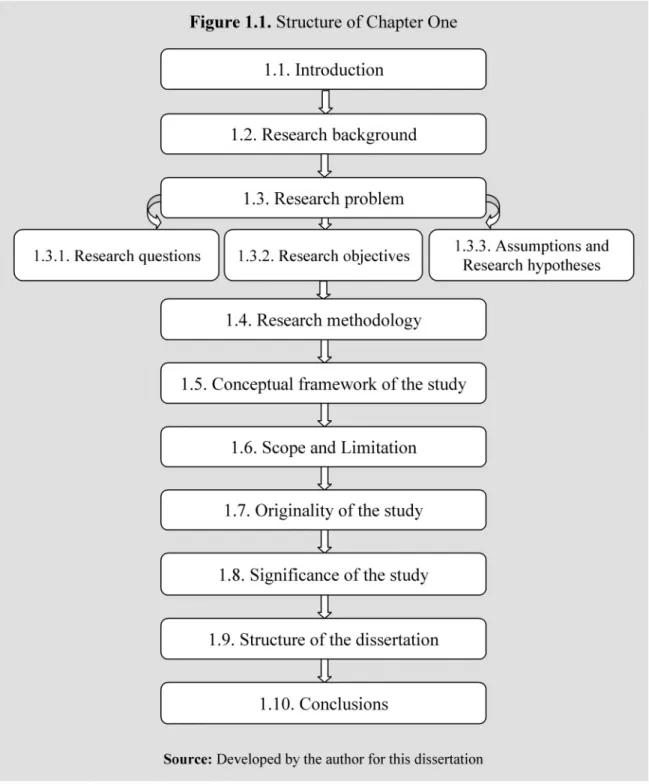
This chapter provides a general introduction to the research study. It aims to establish foundations for the succeeding chapters and the study as a whole, by providing a general picture of the study. This chapter is organized into ten sections as expressed below.
Section 1.1 provides a general introduction to the chapter and section 1.2 examines the research background where the research problem is identified. Section 1.3 defines the research problem, presents the statement of the problem and expands the research problem in three subsections 1.3.1, 1.3.2 and 1.3.3. Subsection 1.3.1 addresses the research questions that will be respectively answered in the later chapters of the study. Subsection 1.3.2 presents the research objectives that the study covered in the process of solving the research problem defined while subsection 1.3.3 presents the assumptions and hypotheses of the study which will be tested in later chapter.
Section 1.4 briefly discusses the general aspects of research methodology such as selecting the type of research and research design, whereas the details of research methodology will be discussed in later chapters (4, 5 and 6). Section 1.5 describes the conceptual framework of the study as the determination of research problem and the pathway out of solving research problem. Developing the analytical framework of the relationship between rural investment climate factors and business activities of agro-enterprise based on a review of relevant literature to concretize the conceptual framework of the study will be tackled in the last section of chapter 2. Section 1.6 addresses the scope and limitation of the study which will increase the availability of research and provide suggestions for further studies to better complete the research problem.
Section 1.7 highlights the originality of the study which shows the compelling motivation to conduct this study and section 1.8 presents significance of the study that
expresses the contributions of the study to both theoretical and practical applications under various facets. Section 1.9 describes overall structure of the dissertation. Finally, section 1.10 summarizes conclusions drawn from the research. Figure 1.1 provides a visual representation of the structure of the chapter.
Figure 1.1.Structure of Chapter One
Source:Developed by the author for this dissertation 1.1. Introduction
1.2. Research background
1.3.1. Research questions
1.4. Research methodology
1.5. Conceptual framework of the study
1.6. Scope and Limitation
1.7. Originality of the study
1.8. Significance of the study
1.9. Structure of the dissertation
1.10. Conclusions
1.3.3. Assumptions and Research hypotheses 1.3.2. Research objectives
1.2. Research Background
A sound rural investment climate and rapidly expanding agriculture are basic ingredients of a dynamic rural economy (World Bank, 2008). Recognizing the cardinal significance of investment climate to economic growth and poverty reduction, the World Bank (2005) devoted this topic in its 2005 World Development Report entitled “A Better Investment Climate for Everyone”. In terms of implication, investment climate topic is proceeded to investigate various sub-topics, one of which is the impact of investment climate on firm’s business (Mona & Zhang, 2006; World Bank, 2006, 2008b; Josef & Lane, 2007; Josef et al., 2008; Tidiane & Josef, 2008). However, the contribution of the rural investment climate, particularly the importance of the rural labor market as a pathway out of promoting rural economy and poverty reduction is poorly understood and often neglected by policy makers (World Bank, 2008).
In developing countries, the sector with the highest elasticity of rural economy and poverty is usually agriculture (Suryadarma & Suryahadi, 2009). Therefore, if this sector is slowly growing, overall economic growth in these countries will not be stable, particularly rural economy. The success of agricultural and rural development depends mainly on expanding the rural economy which in turn depends essentially on the viability, profitability and sustainability of rural enterprises (World Bank, 2008a). Agro-enterprises may play a significant role in promoting growth of agro-industries as well as urban entrepreneurs, diversifying beyond agriculture and linking farmers to markets (Connell et al., 2004). The role of agro-enterprises not only contributes to agricultural production but also promotes growth of other non-farm enterprises, such as agribusiness and rural services (Cowan, 2002). Furthermore, agro-enterprises in rural areas create motivations to develop rural economy (Wu & Ma, 2006). They provide jobs needed to increase income, goods, and often pay taxes needed to fund public investments (Pathammavong, 2005).
With the roles of agro-enterprise mentioned above, growth of agro-enterprise is the tendency and inevitability with the market economy development. This is an important base for the agricultural and rural economic development. According to Wu and Ma (2006), the agriculture, as a major component of economy, could be “reinforced and strengthened by promoting the agricultural enterprises running in the commercial
basis, for solving the contradiction between the small scale family-based operation in the agricultural production and the big market for the agricultural products”. In addition, expanding local processing of agricultural products has been a rural development strategy for some time. As such, agro-enterprises can site their manufacturing facilities near the raw material sources. Developing agriculture in the context of vertically coordinated and integrated production systems involves organizing production to meet the quality assurance demands of specialized consumer markets (Cowan, 2002).
Nevertheless, the size of contribution of agro-enterprises to developing agriculture and rural economy largely depends on the rural environment in which rural investment climate can attract. Even the best-managed firms have difficulty flourishing in a bad investment climate (Trung & Cuong, 2010). Both risks and barriers can undermine enterprises, hence, it is important to understand the conditions necessary to improve agro-enterprise’s capability in business activities. This is why World Bank has embraced the view that a sound rural investment climate and a rapidly growing agriculture sector are basic ingredients for a dynamic rural economy and taken the initiative in improving rural investment climate since 2005.1
Vietnam has reformed its economy known as “Doi Moi” since 1986 and has enhanced a reasonable level of macro-economic stability over the past 25 years. It is now focusing on issues of competitiveness and productivity through micro-economic reform programs. Although reforming the economy following the trend of reducing density of agriculture in Gross Domestic Product (GDP), Vietnam is still the country that heavily depends on agriculture. In terms of improving agriculture productivity, Vietnam’s agriculture is faced not only with new growth opportunities but also with competitive challenges associated with the country’s recent membership of World Trade Organization (WTO) and the opening of its domestic markets to international trade (World Bank, 2008a).
As to other developing countries, the rural areas of Vietnam exhibit a richly varied pattern of activities. Despite rural economy involves non-farm entrepreneurs such
1
World Bank. 2005. A Better Investment Climate for Everyone. World Development Report 2005. Washington, DC: World Bank and IBRD
as traders, service providers and manufacturers, many households, of course, continuously derive their livelihood from farming. Development of agricultural rural economics, therefore, plays an important role in developing sustainable rural economy and poverty reduction (MARD, 2005). It is also the best way to maintain social stability and economic development in the recessions such as the Asian economic crisis during the late 90s and the world financial crisis in 2008 (IPSARD, 2008). Institute of Policy and Strategy for Agriculture and Rural Development (IPSARD, 2008a) suggests that if the demand stimulus focused on the agricultural sector it will create the most powerful GDP growth to the whole economy. Increased demand for 1.0% of GDP in agricultural sector will increase GDP by 1.2%. It is especially important to focus on promoting agriculture sector, since this sector including crops, livestock, forestry and fisheries, currently contributes to 20.7% of GDP, approximately 23.5% of total export values and more than 60% of all employment (GSO, 2011).
Originating from recognition of the increasingly important roles of rural investment climate and contribution of agricultural sector to rural economy development, this research study is considered a contribution to improving rural investment climate and promoting growth of agro-enterprises in Vietnam. First, it assesses the situation of rural investment climate, and then, examines the impacts of rural investment climate factors on business activities of agro-enterprise.
1.3. Research Problem
Problem definition is essential before conducting a research project, especially a quantitative research. Zikmund (1997) recommends that formal quantitative research should not begin until the problem has been clearly defined. In Vietnam, defining the research problem on the impact of the factors in rural investment climate on business activities of agro-enterprise may begin with a consideration of the situation of agricultural sector and rural economy development.
From the period of 1989-2011, Vietnam’s agriculture has obtained a rapid, steady growth, with 4.5% per annum despite a challenging external environment has significantly contributed to this outcome (GSO, 2012). Rural economy has also made
new development steps, with larger scale as well as invested more in improving productivity, quality and efficiency. Over the past five years, per-capita income in the rural areas of Vietnam has increased roughly twice (GSO, 2012a).
However, according to Institute of Policy and Strategy for Agriculture and Rural Development (IPSARD, 2008a), agricultural production and rural economy development have not shown sustainable and complete progress. Because of small scale and low productivity, agricultural production has not yet caught up with the demands and quality of agricultural products partially making it unable to meet consumer needs. While the rapid shift in structure of crops and domestic animals makes changes in the exploitation of resources of land, water and biology in large scale, investment on agricultural sector is not adequately contributing to GDP and job creations, with only 6.5% of total state investment and 5.6% of total foreign direct investment –FDI (GSO, 2012). In addition, poor infrastructure, low income, rural economic structure adjusted slowly and other constraints in the rural areas led to the widening gap between rural and urban areas. These have shown limitation in investment attraction in agricultural sector (Cuong et al., 2009).
Smallholders account for approximately 95% of all agro-enterprises in the whole country, mainly micro and household enterprises which are mostly located in rural area. These agro-enterprises are faced with many difficulties in access to credit, access to market as well as poor infrastructure that impede their growth and competitiveness. Smallholders are also disadvantaged by significant post-production diseconomies of scale and technical applications resulting in lower productivity and profitability (World Bank, 2008a; UNIDO, 2008).
In terms of the process of enterprise transition, it is slower in rural areas. The expected effects from WTO are positive but the rural gains are less because rural enterprises do not enough resources to invest in growth. Although firms have geared up for WTO, the rural business environment was still lagging behind (Dzung et al., 2005).
The above-mentioned weaknesses are both immediate difficulties and big challenges for agricultural and rural sector of Vietnam. Finding suitable solutions to overcome these disadvantages requires an understanding of considerable factors affecting
business activities of agro-enterprise and is associated with improving rural investment climate. A healthy agro-enterprise and an enabling rural investment climate are essential in promoting growth in agriculture and rural economics which are essential in achieving sustainable overall economic growth, poverty reduction and social development. Hence, it is particularly important to understand the impacts of the factors in rural investment climate on business activities of agro-enterprise. Figure 1.2 represents the fields of research problem in this study.
1.3.1. Research Questions
Developing research questions involve the translation of research problem into the need for inquiry (Zikmund, 1997). The research problem defined above leads to the following research questions:
1. What is the rural investment climate in Northern part of Vietnam? What are the factors in rural investment climate are cited as major or severe constraints? 2. How do the government’s efforts to remove these constraints for facilitating
enterprises operate?
3. What are the factors of rural investment climate affecting agro-enterprise performance in Northern part of Vietnam and how to measure their impacts?
Figure 1.2:Fields of the Research Problem
Source: Developed by the author for this dissertation
Rural investment climate factors Individual characteristics of the agro-enterprise
Business activities of Agro-enterprise
4. What are the factors of rural investment climate affecting agro-enterprise’s investment decisions in Northern part of Vietnam and how to evaluate their effects?
5. What are contributions of the research in improving rural investment climate and promoting growth of agro-enterprises in coming years?
1.3.2. Research Objectives
A research objective is the researcher’s version of a business problem. Objectives explain the purpose of the research in measurable terms and define standards of what the research should accomplish (Zikmund 1997). In solving the research problem and answering the research questions mentioned previously, this study is specially designed to identify the constraints of rural investment climate under many facets and measure the impacts of these factors on business activities of agro-enterprise. The study has the following sub-objectives:
Collect evidences of the factors in rural investment climate, indicators of firm’s business activities and the relationship between rural investment climate and business activities of enterprise;
Assess rural investment climate in Northern part of Vietnam and analyze the Government’s efforts to create an enabling rural investment climate;
Measure the impacts of rural investment climate factors on agro-enterprise performance (total factor productivity);
Evaluate the effects of rural investment climate factors on agro-enterprise’s investment decisions; and
Suggest implications that can significantly contribute to improve rural investment climate and promote growth of agro-enterprises in Northern part of Vietnam.
1.3.3. Assumptions and Hypotheses of the Study
In the experimental study, the firm’s managers who have power to make investment decisions are assumed to be able to use the hypothetical data to make a valid and reliable investment decision. An indication of the reasonableness of this assumption is gained from the managers’ assessment in investment as to whether investment proposals capture the essential rural investment climate aspects of the firm’s investment decisions.
Regarding business performance, the study hypothesizes that the firm increases its productivity through investment. In addition, it is also assumed that technology do not have effects on agro-enterprise’s productivity because the study uses cross-section data. It means that agro-enterprises are surveyed on the same time hence application of technological progress is similar among the agro-enterprises.
1.3.3.2 Hypotheses of the Study
Based on considerable evidences obtained by reviewing related literature, the study proposes that business activities of agro-enterprise are influenced by rural investment climate factors in Northern part of Vietnam. In specific, the rural investment climate obstacles will have negative effects on agro-enterprise’s productivity and investment decisions. Consequently, the efforts to improve rural investment climate ensure that agro-enterprises will invest much for expanding scale of business and raising productivity.
1.4. Research Methodology
Choosing the type of research depends upon the research questions that the researcher wants to answer. This research study is designed to describe the situation of rural investment climate and measure the impacts of the factors in rural investment climate on business activities of agro-enterprise. In regard to selecting type of research design, there are four types of research design to choose from: survey, experiments, observation, and secondary data (Zikmund, 1997). Selection of research design is based on the advantages and disadvantages of each kind of research design and the
circumstances in which the research problem is defined. In this research, both survey and secondary data methods were used.
A rural investment climate survey as a research technique is used in this study to measure the impacts of the factors in investment climate on business activities of agro-enterprise in rural areas of Northern Vietnam. Questionnaires were designed and directly delivered to agro-enterprises to collect data related to individual firm’s characteristics and business activity as well as managers’ view-point on investment climate. The argument for choosing survey was twofold. First, surveys provide quick, efficient, and accurate means of assessing information about the population. Second, surveys are more appropriate in cases where secondary data is lacking.
The secondary data method was used to describe the situation of rural investment climate in Vietnam. The characteristics of rural investment climate such as infrastructure, stability of rural economy, investment in agricultural and rural sector, rural labor, market competition, taxation, land tenure security, credit and technology assessment were derived from several sources of statistical data. This includes reports of local government, department of statistics, and general statistic office and information from scientific journals, books, and internet.
The statistical analysis was used to identify the major obstacles of rural investment climate in Northern part of Vietnam and analyze the Government’s efforts to eliminate these obstacles. To examine the relationship between rural investment climate and agro-enterprise’s performance, a two-step analysis is conducted to measure the impacts of the factors in rural investment climate on total factor productivity of agro-enterprise. Moreover, the Heckman’s two step model is also used to estimate effects of the factors in rural investment climate on agro-enterprise’s investment decisions.
1.5. Conceptual Framework of the Study
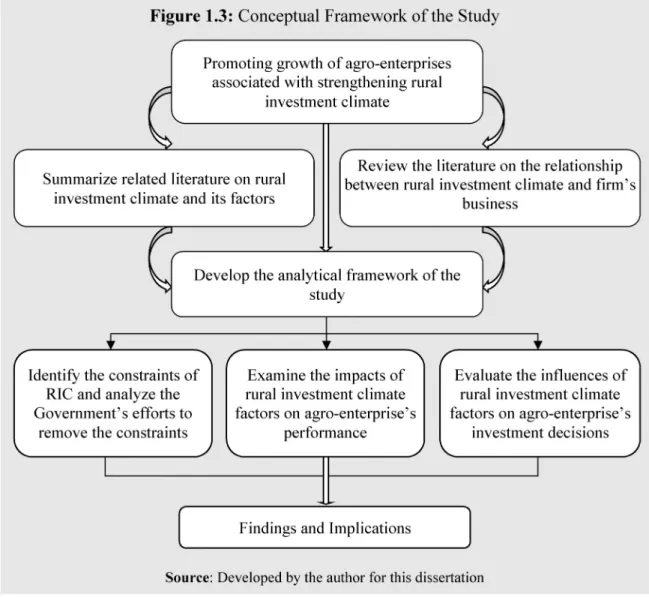
The conceptual framework of the study was established based on determining the research problem and finding the way to solve it (Figure 1.3). To address the research objectives, the analytical framework would be developed based on reviewing related literature showing the link between rural investment climate and firm’s business
activities. The analytical framework describes an in-depth picture of the relationship between rural investment climate and business activities of agro-enterprise.
The major elements of empirical analysis include: (a) identifying the constraints of rural investment climate and analyzing the Government’s efforts to remove these constraints; (b) examining the impacts of the factors in rural investment climate on agro-enterprise’s performance; and (c) evaluating the influences of the factors rural investment climate on agro-enterprise’s investment decisions. Findings from the empirical analysis are applied to put forward suggestions of improving rural investment climate and promoting growth of agro-enterprises.
Figure 1.3:Conceptual Framework of the Study
Source: Developed by the author for this dissertation Identify the constraints of
RIC and analyze the Government’s efforts to
remove the constraints
Findings and Implications
Evaluate the influences of rural investment climate factors on agro-enterprise’s
investment decisions Examine the impacts of
rural investment climate factors on agro-enterprise’s
performance
Promoting growth of agro-enterprises associated with strengthening rural
investment climate
Summarize related literature on rural investment climate and its factors
Review the literature on the relationship between rural investment climate and firm’s
business
Develop the analytical framework of the study
1.6. Scope and Limitation
1.6.1. Scope of the Study
Any activity engaged in business is toward the primary purpose of making a profit. Business activity can include things like operations, marketing, production and administration. It is otherwise known as "business operations". In this sense, there are several categories of business activity carried out by a firm, including firm’s performance and firm’s investment that would be looked upon in this study.
In the preliminary study, the relationship between rural investment climate and firm’s business activities was studied based on a review of existing literature for both theoretical and empirical evidences. Besides providing general review of literature on the relationship between rural investment climate and firm’s business activities, this study focus its analysis on three elements: (1) identifying constraints of rural investment climate and analyzing the Government’s efforts to remove these constraints; (2) examining the impacts of the factors in rural investment climate on agro-enterprise’s performance; and (3) evaluating the influences of the factors in rural investment climate on agro-enterprise’s investment decisions.
In terms of the study areas, this study covers northern part of Vietnam. The selection of the study area was based on the following criteria listed in the order of priority: (a) advantages in agricultural development; (b) importance of strengthening rural investment climate to agro-enterprises; and (c) level of contribution of regional economy to the country economy.
1.6.2. Limitations of the Study
This study is constrained by resource limitations, both financial and non-financial. Limitations in time, funds, and scope of the study required the research study to focus on a limited number of objectives. Moreover, the research problem and questions often directly or indirectly involve multiple areas of firm’s business activities and relationship between rural investment climate and firm’s business activities thus limited time and funds make it impossible for all the areas to be investigated.
Because of limited access to scare resources, this study could not study the relationship between rural investment climate and business activities of agro-enterprise in all areas of Vietnam. This research focused only on northern part of Vietnam and the agro-enterprises located in this area. Although northern part of Vietnam has advantages in agricultural development, differences in natural and socio-economic conditions in the other regions of northern part of Vietnam as well as varied characteristics of sub-sectors of agricultural sector may lead to differences in finding the relationship between rural investment climate and business activities of agro-enterprise as well as this relationship among sub-sectors of agriculture. As a result, an overestimation may exist due to the advantages in agricultural development in plain areas or an underestimation may exist due to poor rural investment climate in remote areas.
Similarly, due to limited resources this study uses the stratified sampling technique with one agro-enterprise in lieu of interviewing 50 respondents. Given more time and funds, the fraction would be reduced to 20 and the sample has been broadened.
Given difficulties in data collection, data related to business activities of agro-enterprise were only collected from financial statements in the period of 2008-2010. Furthermore, the situation of rural investment climate in this study was only derived from agro-enterprise’s perception of rural investment climate. On the other hand, information gathered from respondents might have been affected by some memory lapses, because most of the severe levels of constraints in rural investment climate had no written record.
1.7. Originality of the Study
Concerned with improving rural investment climate and promoting agricultural production, most researchers who have conducted studies on this area have concentrated on investigating, assessing and examining rural investment climate. Some researchers discussed investment climate and non-farm enterprises in rural areas. Several other researchers mentioned roles of agricultural sector and rural investment climate in growth and stability of rural economy. Their findings are mainly related to exploring and describing the situation of rural investment climate, measuring influence of investment climate factors on non-farm and manufacturing enterprise performance towards
improving investment climate and growth of enterprises. Although they provided much descriptive statistical data and empirical evidences on rural investment climate assessment, it appears that there are still some gaps which need to be addressed.
First, most empirical evidence comes from assessment of investment climate or assessment of rural investment climate as a whole. There seems to be a lack of evidence on assessment of investment climate with agricultural sector, especially in the rural area (Trung & Cuong, 2010).
Second, most previous researchers focused on assessment of investment climate and measuring the impacts of the factors in investment climate on performance of non-farm and manufacturing enterprise whereas there has been little research examining the impact of rural investment climate factors on business activities of agro-enterprise (Trung & Cuong, 2010).
The gaps mentioned above are major gaps and it is difficult to promote growth of agro-enterprises and improve rural investment climate until evidence of the impacts of the factors in rural investment climate on business activities of agro-enterprise is provided and the relationship between rural economy and rural investment climate is discovered.
In addition to assessment of investment climate, previous researchers provided valuable findings related to the impact of the factors in investment climate on firm’s performance. Total factor productivity is popularly used by previous researchers to measure firm’s performance. There are many studies on investment climate assessment conducted by researchers in the past decade. However, there are still gaps in the literature related to assessment of investment climate, which have to be supplemented.
First, it appears that the impacts of the factors in rural investment climate on business activities of agro-enterprise, especially in developing economies depending heavily on agriculture, such as Vietnam has not been investigated and empirical evidence has not been produced.
Second, to date, there is no study which examines the impacts of the factors in rural investment climate on firm’s investment decision in agricultural sector as an element of firm’s business activities.
This lack of empirical evidence from rural investment climate and the lack of examination on the impacts of the factors in rural investment climate on business activities of agro-enterprise are major gaps in the knowledge of improving rural investment climate and promoting growth of agro-enterprises. Based on previous research findings and recognition of these gaps, a study discussing the impacts of the factors in rural investment climate on business activities of agro-enterprise is justified and the models used to measure the impacts of the factors in rural investment climate on agro-enterprise’s business are developed and tested using the empirical data collected from agro-enterprises in rural area. Vietnam is one of many appropriate countries to provide such data. Therefore, this study will extend previous studies by examining the simultaneous impacts of individual firm’s characteristics and the factors in rural investment climate on business activities of agro-enterprise using the empirical evidence from northern part of Vietnam.
1.8. Significance of the Study
Completing this study brings together aspects of theory and practice. In addition, utilizing data from Vietnam, one of the emerging economies based on agriculture, contributes to the literature on assessment of rural investment climate, which traditionally concentrates on industrial sector rather than agricultural sector. Using data collected from northern part of Vietnam to test theories of the role of rural investment climate in agricultural development helps to confirm and expand the scope of theoretical applications.
In practice, this study is significant for both policy makers and agro-enterprises in Vietnam. Results will indicate relationships between rural investment climate and agriculture and will assist the government to improve rural investment climate that most effectively promote the growth of agriculture. Moreover, this study adds to knowledge about the manner in which owner-managers improve the performance and profitability of their business activities through managing production and making investment decision matters efficiently and effectively.
1.9. Structure of the Study
This research is divided into seven chapters. Chapter 1 introduces the study including research background, research problem with research questions, research objectives, assumptions and hypotheses of the study, research methodology, conceptual framework, scope and limitation, originality of the study, and research significance. Chapter 2 provides a literature review of rural investment climate, explains the relationship between rural investment climate factors and firm’s business activities, and then develops the analytical framework showing the relationship between the factors in rural investment climate and business activities of agro-enterprise. Chapter 3 describes the characteristics of the study area and data collection. Chapter 4 reflects the situation of rural investment climate in northern part of Vietnam by identifying rural investment climate constraints and analyzing the Government’s efforts to create an enabling rural investment climate. Chapter 5 examines the impacts of the factors in rural investment climate on business performance (total factor productivity) of agro-enterprise. Chapter 6 measures the influences of the factors in rural investment climate on agro-enterprise’s investment decisions. Chapter 7 points out conclusions of research findings which result to an empirical analysis of the research study and the implications of the research that can contribute to strengthening rural investment climate and promoting growth of agro-enterprises in northern part of Vietnam as well as, provide basis for further researches in the future. Figure 1.4 illustrates the structure of the study and the relationships between chapters.
1.10. Conclusions
This study examined the impacts of the factors in rural investment climate on business activities of agro-enterprise using empirical data collected in northern part of Vietnam. To date, there is no any significant research that deeply discusses the relationship between rural investment climate and business activities of agro-enterprise in Vietnam. This study is a combination of descriptive and explanatory research in which a sample of 200 agro-enterprises is drawn from a list of over 10,000 agro-enterprises in the research area for interview.
Gathered data is processed by Statistical Package for the Social Sciences (SPSS). The econometric regression software (STATA) was the main computer software utilized in the data analysis. In terms of data analysis, this study applied both descriptive statistics and econometric regression. To provide an in-depth picture of rural investment climate in which firms operate, Chapter 2 provided a literature review of the relationship between rural investment climate and firm’s business activities. Descriptive statistical techniques were also used to describe characteristics of agro-enterprises in the sample (Chapter 3). Statistical analysis were also used in Chapter 4 to describe the situation of rural
Figure 1.4:Structure of the Dissertation
Source: Developed by the author for this dissertation Chapter One:
Introduction to the Study
Chapter Four:
Situation of Rural Investment Climate in Northern Part of Vietnam
Chapter Five:
Rural Investment Climate and Agro-enterprise Performance
Chapter Three:
Characteristics of the Study Areas and Data Collection
Chapter Two: Literature Review
Chapter Seven: Conclusions and Implications
Chapter Six:
Rural Investment Climate and Agro-enterprise’s Investment
investment climate and analyzing the Government’s efforts to create an enabling rural investment climate. The impacts of the factors in rural investment climate on agro-enterprise performance were measured using econometric regression technical tools such as OLS regressions (Chapter 5) whereas the Heckman’s two-step method were used to estimate the effects of the factors in rural investment climate on agro-enterprise’s investment decisions (Chapter 6). Findings of this study will be applied to put forward suggestions of improving rural investment climate and promoting growth of agro-enterprises in northern part of Vietnam (Chapter 7).
Chapter Two:
REVIEW OF LITERATURE
2.1. Introduction
In developing countries, agriculture is usually the sector with the highest elasticity of rural economy and has significantly impact on overall economic growth in these countries (Suryadarma and Suryahadi, 2009). Agricultural development views entrepreneurs and the private sector as the main drivers of sustainable agricultural development, and emphasizes the importance of providing an enabling environment for economic activities. In fact, the role of rural investment climate in generating rural economic growth and poverty reduction is growing recognition around the world. Improvement of rural investment climate, hence, leads to more operations that support agro-enterprise growth and also improves our understanding of the structure and functions of agriculture in particular as well as of rural economy in general, beyond the parameters of individual economies – by providing insight into agricultural and rural economics and their place in the global economy.
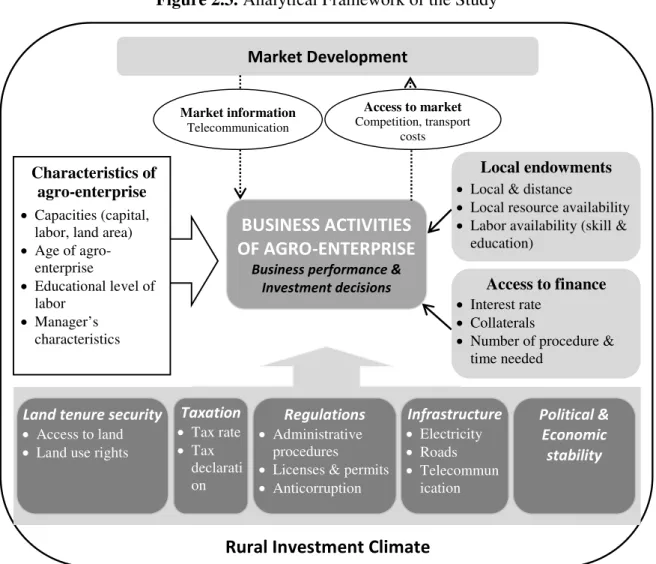
The objectives of the chapter are (a) to provide a literature review of rural investment climate as well as the role of agro-enterprises in generating growth of agriculture and rural economics; (b) to identify the empirical relationship between rural investment climate factors and firm’s business activities which are expressed by the firm’s performance and investment decisions; and (c) to develop the analytical framework of the relationship between rural investment climate and business activities of agro-enterprise based on the review of related literature.
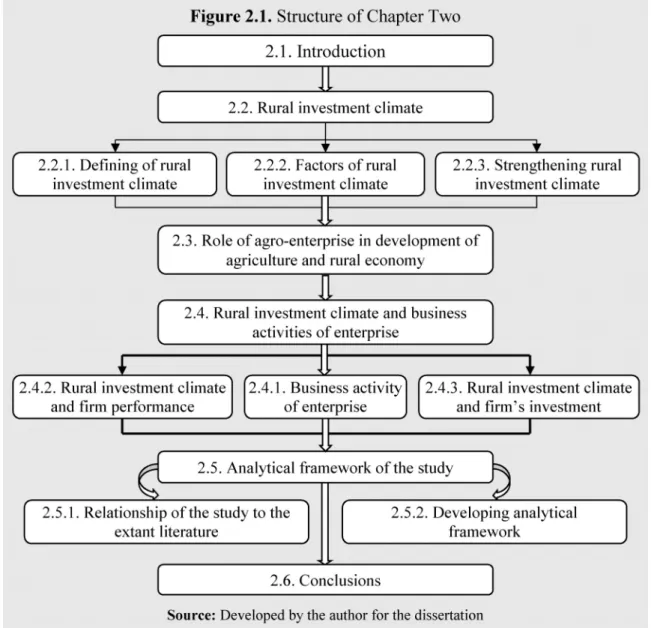
This chapter is structured into six main sections. Section 2.1 provides a general introduction to the chapter, including the objectives and structure of the chapter. Section 2.2 defines the concept of rural investment climate and its factors, and provides evidences of the need to improve rural investment climate. Section 2.3 provides an overview of the role of promoting agro-enterprises in the development of agriculture and rural economy.
Section 2.4 identifies the empirical relationship between rural investment climate factors and business activities of enterprise which are expressed by firm performance and firm’s investment decisions. Section 2.5 describes the analytical framework of the relationship between rural investment climate and business activities of agro-enterprise that was developed based on a review of the related literature. Section 2.6 summarizes the conclusions drawn from reviewing the literature that mentions both theoretical and empirical evidences of rural investment climate, development of agriculture and rural economy, and the relationship between rural investment climate and firm’s business activities. Figure 2.1 provides a visual outline of the structure of the chapter.
Figure 2.1.Structure of Chapter Two
Source:Developed by the author for the dissertation 2.1. Introduction
2.3. Role of agro-enterprise in development of agriculture and rural economy
2.5. Analytical framework of the study 2.4. Rural investment climate and business
activities of enterprise 2.6. Conclusions 2.2.3. Strengthening rural investment climate 2.2.1. Defining of rural investment climate 2.4.1. Business activity of enterprise 2.4.2. Rural investment climate
and firm performance
2.4.3. Rural investment climate and firm’s investment
2.5.1. Relationship of the study to the extant literature
2.5.2. Developing analytical framework
2.2. Rural investment climate
2.2.2. Factors of rural investment climate
2.2. Rural Investment Climate
2.2.1. Defining Rural Investment Climate
Interest in investment climates has emerged relatively in the past decade. As World Bank (2008b, p.1) argued:
In the 1960s and 1970s, governments in many countries believed they should play a direct role in rural credit, input supply, and the production, transport, distribution, marketing and trade of certain products, especially agricultural. In the 1980s and 1990s, however, government-dominated systems fell into disgrace because of their poor performance. Although privatization and liberalization were often necessary to stabilize economies and provide a basis for economic growth, in many cases these did not result in a quick response from private investors. The long legacy of state-controlled and parastatal-managed markets left underdeveloped the institutions and policy frameworks for privately led markets. For those reasons, renewed attention is now being given to the conditions under which markets and private enterprises develop - in short, to the investment climate.
Furthermore, the Asian Development Bank (ADB, 2005) expresses the importance of an enabling investment climate as evident in the growing recognition around the world of the importance of a sound investment climate for generating economic growth and poverty reduction. Currently, only few accept the simplistic view that greater investment alone will lead to higher growth, since the prevailing view emphasizes building a productive environment in which private businesses can flourish.
World Bank (2005) defines investment climate as the set of location specific factors shaping the opportunities and incentives for firms to invest productively, create jobs, and expand while Vijverberg (2005) expresses that investment climate is the broad set of political, economic, legal and physical factors which affect enterprise performance. According to Dollar et al. (2003), investment climate is the institutional, policy, and regulatory environment in which firms operate. It characterizes the investment climate as having the following elements: infrastructure, domestic entry and exit barriers, skills and technology endowment, labor market flexibility, international integration, private sector participation, informal payments, tax burdens, court efficiency, and finance (Dollar et al., 2003a). However, Stern (2002b) argues that investment climate refers to the policy, institutional, and behavioral environment, both present and expected, that influences the returns, and risks associated with investment.
political, industrial, business and many other aspects. As stated by Mary et al. (2003, p 1), “a productive investment climate can be broadly thought of as an environment in which governance and institutions support entrepreneurship and well-functioning markets in order to help generate growth and development”.
Considering the above-mentioned definitions leads to the understanding of various governmental factors such as economic and political stability, rule of law, adequate infrastructure, tax and regulations conducive to doing business, labor policies and access to finance and other public services as the central determinants for the formation of a healthy investment climate. However, this ignores the importance of other factors, such as access to markets, geography conditions, skill levels and education of the workforce (Lauren, 2006).
Regarding its implication on rural agenda, Josef and Lane (2007) state that due to lower population densities in rural areas, maintenance of infrastructure and many services are costly. Furthermore, transaction costs are high while there are relatively more market failures, and distinct seasonality and employment patterns in the rural economy. Typically, the rural population works on farms or in micro-enterprises. Moreover, enterprises in the urban areas is characterized by easier access to business registration where application for business licenses and permits is more convenient while in majority enterprises in rural areas can be difficult, time consuming, and costly (ADB, 2005). According to Indonesian Central Statistical Agency, rural villages are typically characteristics such as farming activities, sparse, or lacking in amenities (as cited in McCulloch et al., 2009).
With the combination of the definitions of investment climate and rural area, it is thus conceivable that the investment climate in rural area is characterized by high transaction costs and risks for economic activity, inappropriate macroeconomic and financial policies, poorly developed local infrastructure and markets, and low levels of public services. In a more encompassing term, therefore, rural investment climate is taken to mean a broad set of political, economic, legal, institutional and physical environment which affect the business activities in rural area.
rural investment climate. Quang (2003) argues that there are many approaches to analyze rural business environment such as domestic and international environments or institutional and policy environments. It means that the term rural business environment is limited within the perspective of economic, legal, cultural and social conditions in rural area. The World Bank (2004) also approaches rural investment climate by taking firstly a comprehensive look at the business environment in rural areas.
2.2.2. Factors of Rural Investment Climate
In order to understand well the concept of rural investment climate, a review of extant literature which defined the factors of investment climate was made. Within the scope of this study, factors of investment climate are considered as constraints for firms to operate because investors generally understand the investment climate by identifying its constraints to avoid the risk.
Investment climate constraints can be divided into five broad groups (Sawada, 2012; Sinha & Fiestas, 2011), as follows:
Macro environment constraints: macro level stability, inflation rate, crime and corruption
Institutional constraints: business regulations, legal and tax systems Financial constraints: access to and cost of finance
Infrastructure constraints: electricity and roads
Micro‐level constraints: technology transfer and quality of management.
According to Sinha and Fiestas (2011), macro instability (economic, social, and political) discourages investment by causing more risks for investors’ future incomes and their assets in term of undermining value. Moreover, access to credit becomes more difficult in the context of high inflation and volatile real exchange rates. Based on empirical findings, Bleaney (1996) and Fischer (1993) also conclude that macroeconomic stability matters for sustained growth while Mlambo and Oshikoya (2001) found that some factors such as fiscal, financial and monetary policies, trade, macroeconomic