Japan
Bond Market Guide
Contents
Acknowledgements ... vii
I. Structure, Type, and Characteristics of the Bond Market ...1
A. Overview ... 1
B. Types of Bonds ... 2
C. Explanation of the Major Types of Bonds ... 3
D. Securitized Products Market ... 5
E. Methods of Issuing Bonds Other than Corporate Bonds ... 9
F. Methods of issuing Corporate Bonds ... 13
G. Credit-Rating Agencies and Credit Rating of Bonds ... 14
H. Introduction of the Register System for Credit-Rating Agencies in Japan ... 15
I. Market Category: Public Offering and Private Placement ... 20
J. Definition of the Specified (Professional) Investor ... 23
K. Creation of the New Market for Specified (Professional) Investor ... 24
L. TOKYO PRO-BOND Market: New Listing System in Japan ... 24
M. Commissioned Company for Bondholders System ... 28
N. Japan Securities Dealers Association’s Self-Regulatory Rules and Guidelines for the Bond Market ... 30
O. Tokyo Stock Exchange’s Self-Regulatory Function ... 32
P. TOKYO AIM’s Role as TOKYO PRO-BOND Market Self-Regulatory Organization ... 33
Q. Bankruptcy Procedures and Bonds ... 33
R. Legal Definition of Debt Instruments ... 34
II. Disclosure Requirements ...36
A. Securities Registration Statement ... 36
B. Methods of Filing the Securities Registration Statement ... 37
C. Continuous Disclosure ... 38
D. Forms of Initial Disclosure by Foreign Issuers ... 38
E. Electronic Disclosure for Investors’ Network ... 39
F. Exempted Securities ... 39
III. Trading of Bonds ...40
A. Overview ... 40
B. Participants in the Secondary Bond Market ... 41
C. Over-the-Counter Trading of Bonds ... 44
D. Publication of Reference Statistical Prices for Over-the-Counter Bond Trading ... 44
E. Secondary Market Yields and Terms of Bond Issues ... 46
F. Repurchase (Gensaki) Market for Bonds ... 48
G. Bond Lending ... 50
H. Proprietary Trading System for Fixed-Income Securities ... 52
IV. Bond Market Infrastructure ...56
A. Bond Market Infrastructure Diagram and Business Process Flowchart ... 56
B. Over-the-Counter Bond Transaction Flow for Foreign Investors (Including Cross-Border, Funding, and Reporting Components) ... 58
V. Securities Settlement Infrastructure ...60
A. Securities Settlement Infrastructure ... 60
B. Challenges and Expected Changes ... 64
C. Details of the Book-Entry Bond Transfer System ... 64
VI. Current Japanese Market Situation ...71
A. Tide for the Change ... 71
B. Current Conditions of the Japanese Corporate Bond Market ... 71
C. Factors Characterizing Corporate Bond Market and Its Problems ... 74
D. Reducing the Blackout Period and Expansion of Funding Sources... 78
E. Inconvenience of the Current Disclosure System for Public Offering ... 78
F. Due Diligence by Securities Companies ... 79
G. Determination Process for Corporate Bond Issuance Conditions ... 79
H. Measures to Cope with Default Risk ... 80
I. Taxation (Withholding Tax on Interest Income) ... 84
J. Bond Investment Education and Bond Investor Relations ... 84
K. Internationalization of the Bond Market and Collaboration with Asia ... 85
L. Foreign Bonds, Foreign Exchange Control and Liberalization of the Yen ... 85
M. History of Japan’s Foreign-Exchange Policy Change and the Liberalization of the Yen ... 86
N. Derivatives Market ... 87
VII. Fees and Costs ...90
A. Standard Underwriting Fees Schedule for Public Offering Bonds ... 90
B. Book-Entry and Transfer Fees (JASDEC Account Holding Issuer, etc.) ... 90
C. Fee to the Fiscal Agent and/or Paying Agent ... 95
D. Standard Fiscal Agent Fee for Public Offering of Corporate Bonds ... 95
E. Others... ... 95
VIII. Market Statistics ...96
A. Overview ... 96
B. Outstanding Amount of Bonds Issued in Japan ... 98
C. Size of Local Currency Bond Market in U.S. Dollars... 99
D. Size of Local Currency Bond Market in Percentage of Gross Domestic Product ... 100
E. Size of Foreign Currency Bond Market in U.S. Dollars (Bank for International Settlement) ... 101
F. Size of FCY Bond Market in Percentage of Gross Domestic Product (Bank for International Settlement) ... 102
G. Size of Foreign Currency Bond Market in U.S. Dollars (Local Sources) ... 103
H. Foreign Holdings in Local Currency Government Bonds... 104
I. DomesticFinancing Profile ... 106
J. Trading Volume ... 106
IX. Islamic Finance in Japan ...108
A. Background on Introducing Islamic Finance in Japan ... 108
B. Regulatory Framework for Islamic Finance in General ... 109
C. Regulatory and Legal Framework for Islamic Bonds (Sukuk) ... 109
D. Type of Instruments Available, Segments, and Tenure ... 112
E. Tax-Related Issues ... 112
F. Impediments for Structuring Sukuk ... 113
G. Significance of the Islamic Finance and Islamic Bonds (Sukuk) Market ... 114
X. Next Step: Future Direction ...115
A. Future Direction ... 115
B. Group of Thirty Compliance ... 116
C. Group of Experts Final Report: Summary of Market Barriers Assessment – Japan (April 2010) ... 117
XI. Examples of the Recommended Expression (RE) of Related Translations ...118
References ...123
Boxes, Figures, and Table
Boxes Box 1.1 Extract from Financial Services Agency on the Development of Markets for Specified (Professional) Investors) ...24Box 1.2 Japan Securities Dealers Association Regulations for Bond Transactions ...31
Figures Figure 1.1 Monthly Issuance of Corporate (Non-public) Sector Bonds, January 2000–August 2011 (¥ billion) .. 14
Figure 1.2 Introduction of Regulation for CRAs (I) ...16
Figure 1.3 Introduction of Regulation for CRAs (II) ...17
Figure 1.3a Guidelines for Supervision of Credit Rating Agencies (Summary) ...18
Figure 1.3b Guidelines for Supervision of Credit Rating Agencies (Reference) ...19
Figure 3.1 Trading Volume of Bonds (¥ trillion) ...41
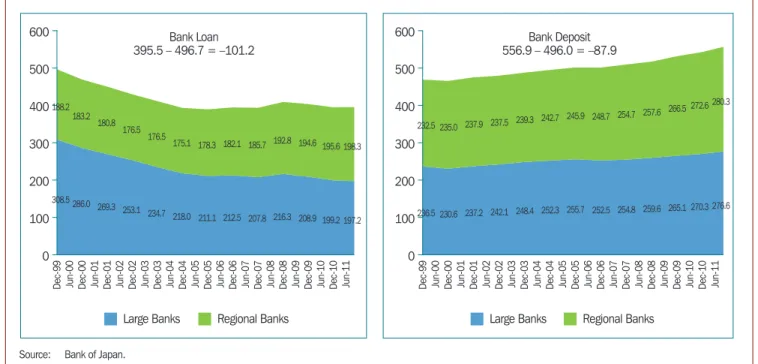
Figure 3.2 Decrease in Bank Loan and Increase in Bank Deposit (December 1999–October 2011) ...42
Figure 3.3 Outstanding of Bond Transactions with Repurchase Agreements, January 2001 to September 2011 (¥ trillion) ...49
Figure 4.1 Bond Market Infrastructure Diagram ...56
Figure 4.2 Business Process Flowchart: Japanese Government Bond Market/Delivery versus Payment with Matching and Central Counterparty ...57
Figure 4.3 OTC Bond Transaction Flow for Foreign Investors ...58
Figure 5.1 Securities Market Infrastructure in Japan ...60
Figure 5.2 Japan Securities Depository Center, Inc. Book-Entry Transfer System for Corporate Bonds ...62
Figure 5.3 The Delivery-versus-Payment Mechanism ...63
Figure 6.1 Semi-Annual Issuing Amount of Non-Public Sector Bonds, January 2000–June 2011 (¥ billion) ...72
Figure 8.1 Issuance of Bonds by Type, FY 1990 to FY 2010 (¥ trillion) ...96
Figure 8.2 Outstanding Amount of Bonds (¥ trillion) ...98
Figure 8.3 Outstanding Amount of Bonds (Percentage) ...98
Figure 9.1 Issuance Scheme ...110
Figure 9.2 New Taxation Measures ...113
Tables Table 1.1 Change in Number and Value of Securitized Product Issuance Market ... 7
Table 1.2 Methods of Japanese Government Bonds Issuance ...9
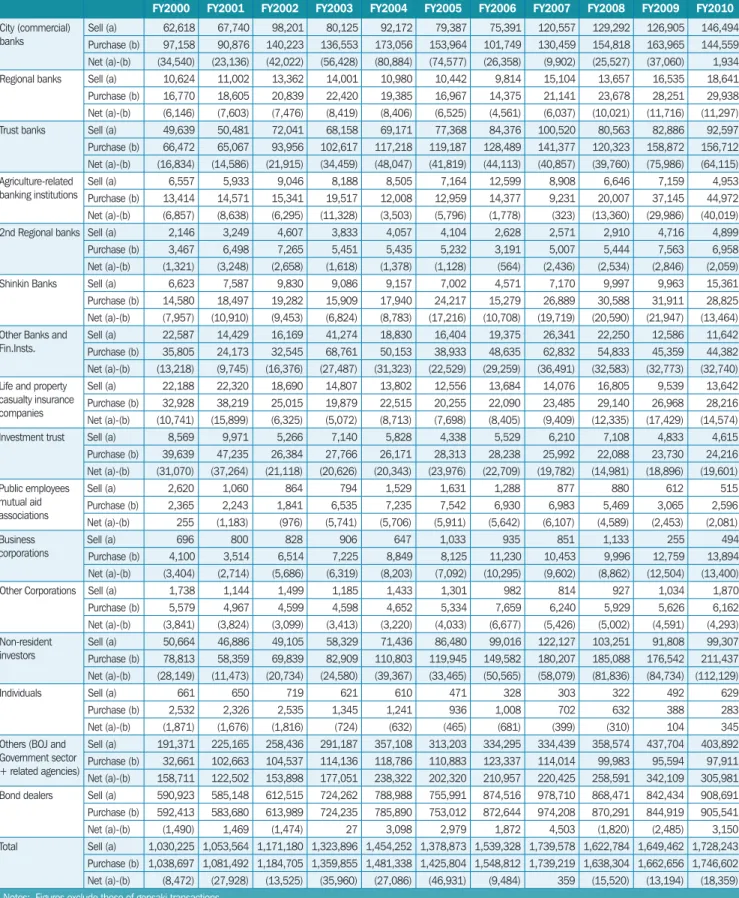
Table 3.1 Trends in Bond Transactions by Type of Transaction Parties (¥ billion) ...43
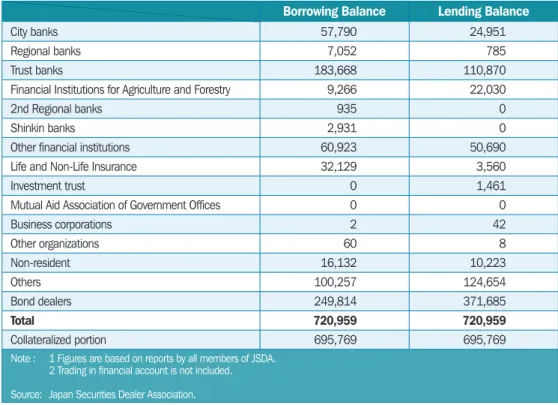
Table 3.2 Bond Lending Balance as of 30 September 2011 (¥ trillion) ...52
Table 6.1 Semi-Annual Issuing Amount of Non-Public Sector Bonds (¥ billion) ...72
Table 6.2 History of the Foreign-Exchange Policy Change and Liberalization of the Yen ...86
Table 7.1 Standard Underwriting Fees Schedule for Public Offering Bonds ...90
Table 7.2 Short-Term Corporate Bonds-Participation in the System ...90
Table 7.3 Short-Term Corporate Bonds-Book-Entry Transfer Businesses ...91
Table 7.4 Corporate Bonds-Participation in the System ...92
Table 7.5 Corporate Bonds-Book-Entry Transfer Businesses ...93
Table 7.6 Standard Fee Rate for Fiscal Agent and/or Paying Agent ...95
Table 7.7 Standard Fiscal Agent Fee for Public Offering of Corporate Bond ...95
Table 7.8 Other Fees and Costs ...95
Table 8.1 Issuance of Bonds by Type, FY 1990 to FY 2010 (¥ trillion) ...97
Table 8.2 Outstanding Amount of Bonds, FY 1990 to FY 2010 (¥ trillion) ...98
Table 8.3 Size of LCY Bond Market in USD (Local Sources) ...99
Table 8.4 Size of Local Currency Bond Market (Local Sources) (% GDP) ...100
Table 8.5 Foreign Currency Bonds (BIS) ($ billions) ...101
Table 8.6 Foreign Currency Bonds to Gross Domestic Product Ratio ...102
Table 8.7 Foreign Currency Bonds Outstanding (Local Sources) ($ billions) ...103
Table 8.8 Foreign Holdings in LCY Government Bonds (¥ billions) ...104
Table 8.9 Domestic Financing Profile ...106
Table 8.10 Trading Volume ($ billions) ...106
Table 9.1 Japanese Organizations in the Islamic Financial Services Board ...108
Table 10.1 Group of Thirty Compliance ...116
Table 10.2 Summary of Market Barriers Assessment ...117
T
he Asian Development Bank (ADB) Team, comprising Satoru Yamadera (Economist, ADB Office of Regional Economic Integration, - September 2011), Seung Jae Lee (Principal Financial Sector Specialist), Shinji Kawai (Senior Financial Sector Specialist [Banking]), Shigehito Inukai (ADB consultant), Taiji Inui (ADB consultant), and Matthias Schmidt (ADB consultant), would like to express their sincere gratitude to national members and expert institutions Ministry of Finance, Bank of Japan, Tokyo Stock Exchange, Tokyo AIM, Inc., Japan Securities Dealers Association, Nomura Securities Co. Ltd., Daiwa Securities Capital Markets, Sumitomo Mitsui Banking Corporation, Mizuho Corporate Bank, Bank of Tokyo-Mitsubishi UFJ, and other support members including NTT Data Corporation and Waseda University. They kindly provided answers to the questionnaires prepared by the ADB Team, thoroughly reviewed the draft of the Market Guide, and gave their valuable comments.It is also noteworthy to mention that the creation of so-called ASEAN+3 Bond Market Forum-Japan (ABMF-J) group, comprising of the above mentioned members, experts, and other volunteer supporters, is a major achievement (as market associations go, it is an excellent suggestion for other markets) and the effort undertaken and the commitment given by the group was substantial.
The ADB Team also would like to express special thanks to Citibank, Deutsche Bank AG, HongKong Shanghai Banking Corporation (HSBC), J.P. Morgan, and State Street for their contribution as international experts and Japan Securities Research Institute (JSRI) for their contribution to provide information from their respective market guides, as well as their valuable expertise. Because of their cooperation and contribution the ADB Team started the research on solid ground.
Last but not least, the Team would like to thank all the people who gave their comments and responses to questions during the market consultations.
Acknowledgements
It should be noted that any part of this report does not represent the official views and opinions of any institution which participated in this activity as ABMF members and experts. The ADB Team bears responsibility for the contents of this report.
February 2012
Asian Development Bank (ADB) Team
A. Overview
Japan raises significant amounts from capital markets to finance government expenditures, mainly through issues of Japanese government bonds (JGBs) and financing bills, and borrowing. These funding activities are supported by a large and diverse community of domestic and overseas investors and intermediaries.
Japan offers a wide range of financial tools to meet a range of issuer and investor requirements. Aside from traditional instruments such as loans, corporate bonds, and commercial papers, securitized products are also available in Japan’s credit market. Securities lending and securities financing businesses are also established. Various credit risks are pooled through these securitized products, with the value of underlying assets exceeding the risks taken by investors.
Among the major market participants in Japan’s bond market are domestic and foreign securities companies that serve as dealers, brokers, traders, and underwriters in the primary and secondary markets. The local government, government agency bonds and local public corporation bonds sector are the largest issuer sectors of bonds next to JGBs in the market. Majority of JGB holders are from the public sector, commercial banks, and insurance companies.
The capital market of Japan is supervised by the Financial Services Agency (FSA). Its regulatory purpose is highlighted below. The FSA is the sole regulator for the Japanese financial industry and the domestic financial and capital market. The Securities and Exchange Surveillance Commission is FSA’s enforcement arm for the securities market.
Pursuant to the Financial Instruments and Exchange Act (FIEA), the Japan Securities Dealers Association (JSDA) and seven exchanges in Japan are self-regulatory organizations that oversee and inspect day-to-day securities trading.1 Market
1 The seven exchanges in Japan are as follows: Fukuoka Stock Exchange (FSE), Nagoya Stock Exchange (NSE), Osaka Securities Exchange (OSE and JASDAQ), Sapporo Stock Exchange (SSE), TOKYO AIM, Inc. (Two market places: TOKYO AIM stock market, TOKYO PRO-Bond Market), and Tokyo Stock Exchange (TSE). Bonds can be listed on TSE and TOKYO PRO-BOND Market.
I. Structure, Type, and
Characteristics of the
Bond Market
surveillance is a shared responsibility of the Securities and Exchange Surveillance Commission and self-regulatory organizations. The FIEA is the fundamental law governing domestic capital market and securities and other financial instruments in Japan.
Both foreign and retail investors are allowed to trade bonds in Japan.
The Ministry of Finance (MOF) is responsible for maintaining balance in tenures or interest rates, etc. within the JGB, announcing upcoming JGB issues, and providing relevant tax policies. The Bank of Japan (BOJ) decides and implements monetary policy with the aim of maintaining price stability. In implementing monetary policy, BOJ influences the volume of money and interest rates through its operational instruments, including money market operations such as buying and selling JGBs, for the purpose of currency and monetary control. To contribute to the maintenance of the financial system’s stability, BOJ conducts on-site examinations and off-site monitoring, and acts as the lender of last resort to provide liquidity as necessary. BOJ is responsible for the entire operation of Japanese government securities,2 including issuance, registration, interest payment, and redemption.
B. Types of Bonds
The term “bonds” generally refers to debt securities issued by governments and other public entities as well as by private companies. The issuance of bonds is a means of direct financing, through which the issuer raises funds, but, unlike equity financing, the issuer has an obligation to repay the principal at maturity.
Bonds are classified into the following categories:3 1. Japanese government bonds: JGB (koku-sai, 国債),
2. Local governments bonds (prefectures, municipalities (cities, towns and villages)) (chiho-sai, 地方債),
3. Government agency bonds (seifukankeikikan-sai, 政府関係機関債) a. Japanese government-guaranteed bond (seifuhosho-sai, 政府保証債) b. Fiscal Investment and Loan Program (FILP)-agency bond (zaitokikan-sai,
財投機関債)4
c. Government-affiliated corporation bonds (hikoubo-tokushu-sai, 非公募特 殊債)
4. Local public corporation bonds (chihoukousha-sai, 地方公社債)
5. Local governments agency bond (Japan Finance Organization for Municipalities [JFM] bond) (chihoukoukyoudantaikinyukikou-sai, 地方公共団体金融機構債)5
2 JGS include JGB, Treasury bills (T-bills) and financing bills (FB).
3 Government of Japan. Ministry of Finance. 2011. Debt Management Report 2011 - The Government Debt Management and the State of Public Debts. http://www.mof.go.jp/english/jgbs/publication/debt_management_ report/2011/
4 Use of proceeds are limited to and built into FILP of the Japanese Government approved by the Diet, the Japanese parliament.
5 The Japan Finance Organization for Municipalities was founded by all local governments (prefectures, cities, wards, towns, and villages).
6. Corporate bonds (shasai, 社債)
a. Straight corporate bonds, etc. (futsu-shasai, 普通社債等)
b. Asset-backed corporate bonds (shisantanpogata-shasai, 資産担保型社債) c. Convertible bonds (tenkan-shasai, 転換社債),
7. Bank debentures (kinyu-sai, 金融債), and
8. Nonresident bonds (foreign bonds) (hikyojusha-sai, 非居住者債)
a. Yen-denominated foreign bonds (endate-gaisai, 円建て外債; samurai-sai,
サムライ債)
b. Asset-backed foreign bonds (shisantampogata-hikyojusha-sai, 資産担保型
非居住者債).
Public offering of Corporate bonds, Asset-backed bonds and Non-resident bonds (as classified under 6., 7. and 8. above) are subject to disclosure requirements under the FIEA. All other bonds are exempt from FIEA disclosure requirements.
C. Explanation of the Major Types of Bonds
1. Government bonds
Government bonds are the securities issued by the central government. The central government pays the bondholders interests on the securities and repays the principal amount (i.e., redemption). Interest is payable on a semiannual basis, except for short- term bonds, and the principal amount is redeemed at maturity.
The JGBs currently issued can be classified into five categories: a. Short-term bills (6-month and 1-year),
b. Medium-term notes (2-year and 5-year bonds), c. Long-term bonds (10-year bonds) and
d. Super long-term bonds (20-year, 30-year and 40-year bonds) e. JGBs for retail investors (3-year, 5-year and 10-year)
During fiscal year 2002 (ending on 31 March 2003), the government introduced the Separate Trading of Registered Interest and Principal of Securities (STRIPS) and (variable-rate) retail 10-year JGB programs.
The principal and individual interest payment components of JGBs designated by the MOF as “book-entry securities eligible to strip” has been traded as separate zero- coupon government bonds. Subsequently, the government started issuing
a. 10-year consumer price index (CPI)-linked bonds, b. 5-year and three-year bonds for retail investors and
c. 40-year fixed-rate bonds in fiscal years 2003, 2005, and 2007, respectively. The short-term JGBs are all discount bonds, meaning that they are issued at the price lower than the face value. No interest payments are made, but at maturity the principal
amounts are redeemed at face value.6 On the other hand, all medium-, long- and super long-term bonds, and JGBs for retail investors (3-year, 5-year) are bonds with fixed- rate coupons. With fixed-rate coupon-bearing bonds, the interest calculated by the coupon rate determined at the time of issuance is paid on a semiannual basis until the security matures and the principal is redeemed at face value. JGBs for retail investors (10-year floating rate) are JGBs with coupon rates that vary over time according to certain rules. The 15-year floating-rate bonds, as well as the JGBs for retail investors (10-year) feature their coupon rates that vary according to certain rules. New issuance has been put on hold for the 15-year floating-rate bonds, however.
Issuance has also been put on hold for inflation-indexed bonds, which are securities whose principal amounts are linked to the CPI as stated above. Thus, although their coupon rates are fixed, the interest payment also fluctuates.
2. Local Governments Bonds
Local governments and municipalities borrow funds on deeds from banks or issue debt securities in the market. Sometimes, they are called municipal debt. Those issued in the bond market are generally called “local governments bonds”. Of these, those securities that are placed with an unspecified number of investors are called “publicly offered municipal bonds.” These bonds are issued as a single entity, but some bonds are issued as a joint issue with several local governments. While those placed privately with local banks and other financial institutions are called “privately placed municipal bonds.” 3. Government Agency Bonds
Government agency bonds are debt securities issued by various government-affiliated entities, such as incorporated administrative agencies.
Agency bonds are divided into:
1. Government-guaranteed bonds that are backed by the full faith and credit of the government,
2. FILP-agency bonds that are issued by fiscal investment and loan agencies that do not enjoy such guarantee, and
3. Government-affiliated corporation bonds
The three categories of debt securities mentioned above are sometimes collectively called “public sector bonds.”
4. Corporate Bonds
In addition to non-financial enterprises, banks and consumer finance companies may also issue corporate bonds in accordance with the Companies Act.
5. Bank Debentures
Bank debentures are debt securities issued by certain banking institutions under special laws and play a fund-raising role as an alternative to deposits. They are
6 Since February 2009, Treasury bills (6-month, 1-year) and financing bills (2-Month, 3-Month, 6-Month) have jointly been issued, under unified names of Treasury Discount Bills (abbreviation: T-Bill), in the primary and secondary market transaction. But their legal status has not changed under the existing fiscal system and they will continue to be handled as Treasury Bills and Financing Bills under the fiscal system.
principally issued in the form and maturities of 5-year interest-bearing and 1-year discounted debentures.
6. Non-Resident Bonds (Foreign Bonds)
Foreign bonds are defined as debt securities issued in Japan by non-Japanese resident issuers. Those denominated in yen, in particular, are separately classified as yen- denominated foreign bonds, or Samurai bonds.
D. Securitized Products Market
1. Securitized Products
The income-generating assets of a company are pooled separately from its balance sheet into a special-purpose vehicle (SPV), and the SPV issues a security backed by the cash flow to be generated by such assets and sells the security to investors. This method is called “securitization.” The security issued through such a process is generally called a “securitized product.”
Business enterprises use their assets—such as auto loans, mortgage loans, leases receivable, business loans, and commercial real estate—as collateral to back up their securitized products.
As defined by the Asset Securitization Act, intellectual property (such as copyrights and patents) also can be securitized.
2. Basic Mechanism of Issuing Securitized Products
Generally, many of the securitized products are issued through the mechanism described below.
First, the holder of assets (“originator”) such as mortgage loans and accounts receivable that are to be securitized assigns them to an SPV. By doing so, such assets are separated from the balance sheet of the originator and become assets of the SPV, which becomes the holder of the assets. An SPV may take the form of a partnership, a trust, or a special-purpose company (SPC), and most SPVs take the form of an SPC. An SPC established under the Asset Securitization Act (revised as the Special-Purpose Company [SPC] Law) (2000年改正SPC法 or 資産流動化法) is called tokutei mokuteki kaisha (特定目的会社: TMK, or a specific-purpose company).
The next step is to formulate the terms of issue of the securitized product to be issued by the SPV. If the originator opts for the trust method, it issues beneficiary certificates like those of a trust company. If it chooses the SPC method, it issues the kinds of securities decided upon by the SPC, but it does not have to issue them on one and the same terms of issue. In short, it can design each type (tranche) of security with a different character by differentiating the order of priority with respect to the payment of interest and redemption of principal, by varying maturities, or by offering the guarantee of a property or casualty insurance company. By adding such variation, the originator can issue securities that meet the diverse needs of investors. In the order of priority for payment, such securities are called “senior securities,” “mezzanine securities,” or “subordinated securities.”
When the originator plans to sell its securitized products to an unspecified large number of investors, it should make them readily acceptable to investors by offering them objective and simple indicators (credit ratings) for independently measuring the risks involved. In addition, there are other players involved in different processes of securitized products, such as servicers, who manage assets that have been assigned to an SPV and securitized, and also recover funds under commission from the SPV and bond management companies, which administer the securitized products (corporate bonds) purchased by investors. Firms that propose such a mechanism for securitizing assets and that coordinate the issuing and the sale of such products are called “arrangers,” and securities companies and banks often act as arrangers.
3. Description of Major Securitized Products
Securitized products are divided into several groups according to the types of assets offered as collateral and the character of the securities issued. Those belonging to the group of products that are backed by real estate and the claims collateralized by it are residential mortgage-backed securities (RMBS), commercial mortgage-backed securities (CMBS), and real estate investment trusts (J-REIT) which are categorized in equity.
RMBSs are issued in retail denominations against a portfolio that pools home mortgage loans. The first securitized product based on residential mortgage loans was the Residential Mortgage Loan Trust (住宅ローン債権信託) launched in 1973, for the purpose of handling the liquidation of mortgage loans of mortgage companies. However, this product failed to attract the attention of both issuers and investors because of too many limitations. This scheme had been regulated by the MOF and has been fully liberalized in June 1998. As the scheme based on SPC became available thereafter, as a result of the enactment of the former SPC Law in 1998 (1998旧SPC
法 or 特定目的会社による特定資産の流動化に関する法律), the volume of this
type of issue has increased since 1999.
Although bonds backed by housing loans that have been issued by the Japan Housing Finance Agency since 2001 were not issued through an SPC, they may be included among the RMBSs.
CMBSs are backed by loans given against the collateral of commercial real estate (office buildings, etc.). The mechanism of issuing them is almost the same as that for RMBSs.
This is not a bond but as a reference, J-REIT, which became available by virtue of implementation of the Investment Trust and Investment Corporation Law (投資信託及 び投資法人に関する法律) in May 2000, is an investment trust in that it can only invest real estate and loans backed by real estate.
Another group consists of securities backed by assets (asset-backed securities [ABS], narrowly defined), such as accounts receivable, leases receivable, credits, auto loans, and consumer loans, etc. Sales of these products began to increase following the enactment of the Specified Claims Law (特債法 or 特定債権法) in June 1993. Other securitized products are called “collateralized debt obligations” (CDO), which are securities issued against the collateral of general loans, corporate bonds, credit
risks of loans that are held by banking institutions. For instance, loans to small and medium-sized business enterprises that are securitized may be considered CDOs. CDOs are subdivided into collateralized loan obligations (CLO) and collateralized bond obligations (CBO). Moreover, since the eligibility requirements for issuing commercial paper (CP) were abolished in 1996, an increasing number of business corporations have come to use asset-backed commercial paper (ABCP).
4. Issuing Market for Securitized Products
As the bulk of securitized products are issued in private placement transactions between the parties concerned, it is difficult to accurately grasp the size of their market. To remedy this shortcoming, underwriters that are involved in the transactions and credit rating agencies have been tracking the market on their own.
According to JSDA and Japan Bankers Association, the total value of securitized products issued in Japan was about ¥2.6 trillion in 2010. Although securitized products issuance reached a peak of ¥9.8 trillion in 2006, levels have declined sharply over the past few years under the impact of the weakening of the economy kicked off by the subprime loan problem.
Table 1.1 Change in Number and Value of Securitized Product Issuance Market
2004 2005 2006 2007 2008 2009 2010
Number of Issuance of Securitized product
296 312 314 261 204 146 107
Issuing amount of Securitized products
¥5.3 trillion
¥8.2 trillion
¥9.8 trillion
¥6.8 trillion
¥3.7 trillion
¥2.9 trillion
¥2.6 trillion [Reference]
Issuing amount of corporate bonds
¥5.9 trillion
¥6.9 trillion
¥6.8 trillion
¥9.4 trillion
¥9.6 trillion
¥10.3 trillion
¥9.9 trillion Source: JSDA and Japan Bankers Association.
5. Secondary Market for Securitized Products
With the exception of beneficiary certificates of J-REIT, trading in securitized products is not conducted in stock exchanges. This is because, as is the case with bonds, securitized products and their transactions are too complex and varied to lend themselves to exchange trading. This has led to the dependence on an over-the- counter (OTC) interdealer market for their trading.
6. The Enactment of Securitization-Related Laws
The existing legal system of Japan is built around business-specific laws, and the regulatory system of financial products is vertically divided along the lines of business- specific laws. As these laws contain many provisions regulating or banning business activities outright, it was pointed out that to spur the development of new business, such as the securitization of assets, the existing laws have to be amended, and new laws must be enacted.
As regards the securitization of assets, the Specified Claims Law was enacted as an independent law (特債法 or 特定債権法) in 1993. Since the enforcement of this law, the legal infrastructure has been developed steadily. Under the Specified Claims Law, the liquidation and securitization of assets classified as specified claims, such
as leases receivable and credit card receivables, started. Thereafter, various laws were enacted to help the banking institutions meet the capital ratio requirements imposed by the Bank for International Settlements (BIS) and to encourage the securitization of their assets to deal with the bad loan problem that had become serious since the turn of the decade of the 1990s.
Under the SPC Law in 1998 and Asset Securitization Act enacted as the revised SPC Law in 2000, structures incorporating SPVs, including specific-purpose companies (TMK) and specific-purpose trusts (SPT), may be used for securitizing specified assets designated in the provisions of the said laws (real estate, designated money claims, and beneficiary certificates issued against such assets in trust) in the form of ABSs (such as senior subscription certificates, specified corporate bonds, and specified promissory notes, etc.). Under the SPC Law, the system of disclosing an asset liquidation plan and individual liquidation projects was introduced, in addition to the disclosure requirements of the Securities and Exchange Law (the FIEA now).
In 1998 the Perfection Law (債権譲渡特例法) was enacted as a law prescribing exceptions to requirements under the Civil Code (民法) for the perfection of the assignment of receivables and other properties, and it was amended in 2005. The Civil Code provides the legal requirements for the assertion of the assignment of nominative claims (claims with named creditors) against obligors or third parties. Designated claims were transferable, but the provisions of the Civil Code had been a major hurdle in securitizing them. The Perfection Law set forth simple procedures for the perfection of such interests.
The Servicer Law, enacted to account for exceptions to the provisions of the Practicing Attorney Law (弁護士法), allows accredited joint stock companies to provide the services of administering and collecting debts. Under the Servicer Law (サービサ ー法 or債権管理回収業に関する特別措置法), a debt collection company may be established to provide a bad debt collection service without conflicts with the Practicing Attorney Law.
By amending the Equity Contribution Law (出資法), the Nonbank Bond Law (ノンバ ンク社債法) conditionally lifted the ban imposed on nonbanks on the issuance of corporate bonds and CPs for the purpose of raising capital for lending operations and on ABSs.
As a result of the revision of the Securities and Exchange Law (証券取引法) as required by the Financial System Reform Law (金融システム改革法) and the enforcement of the FIEA (金融商品取引法), beneficiary certificates of and trust beneficiary interests in assets that are deemed eligible for securitization by the provisions of the Asset Securitization Act (改正SPC法 or 資産流動化法) and mortgage certificates under the Mortgage Securities Law (抵当証券法) are now legally considered securities.
Furthermore, pursuant to the enactment of the Investment Trust Law (投資信託法) as revised, real estate was included in eligible assets, which paved the way for the issuance of J-REIT securities.
E. Methods of Issuing Bonds Other than Corporate Bonds
1 Government Bonds
JGBs and other government debt securities are mainly issued as either underwritten by primary dealers (PDs, so-called participants) and re-sold to the public market or direct subscription by BOJ and other government-affiliated parties. Major volume of JGB issuance and distribution are sustained by PDs, while BOJ underwriting has given assurance of balance of supply and demand in the JGB market.
a. Methods of Japanese Government Bonds Issuance
Methods of JGB issuance are broadly categorized into “issuance to the market,”
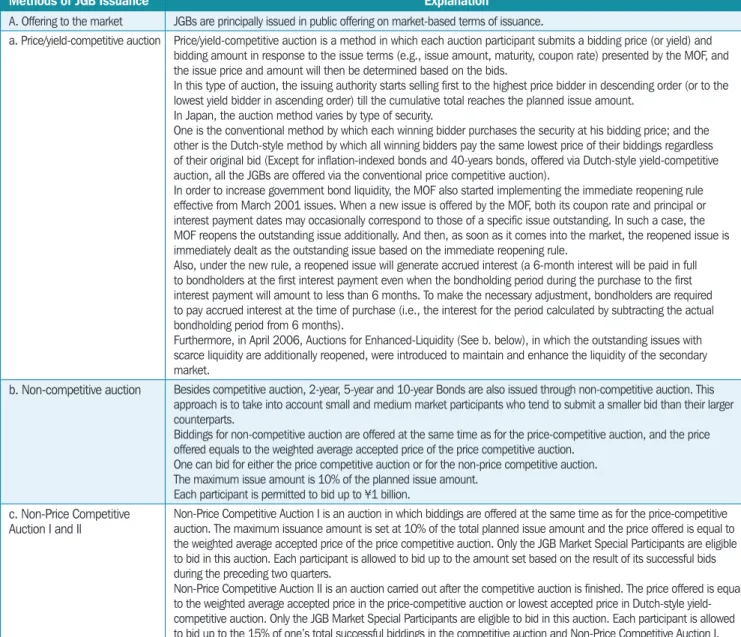
“issuance to retail investors,” and “issuance to the public sector”. Table 1.2 Methods of Japanese Government Bonds Issuance
Methods of JGB Issuance Explanation
A. Offering to the market JGBs are principally issued in public offering on market-based terms of issuance.
a. Price/yield-competitive auction Price/yield-competitive auction is a method in which each auction participant submits a bidding price (or yield) and bidding amount in response to the issue terms (e.g., issue amount, maturity, coupon rate) presented by the MOF, and the issue price and amount will then be determined based on the bids.
In this type of auction, the issuing authority starts selling first to the highest price bidder in descending order (or to the lowest yield bidder in ascending order) till the cumulative total reaches the planned issue amount.
In Japan, the auction method varies by type of security.
One is the conventional method by which each winning bidder purchases the security at his bidding price; and the other is the Dutch-style method by which all winning bidders pay the same lowest price of their biddings regardless of their original bid (Except for inflation-indexed bonds and 40-years bonds, offered via Dutch-style yield-competitive auction, all the JGBs are offered via the conventional price competitive auction).
In order to increase government bond liquidity, the MOF also started implementing the immediate reopening rule effective from March 2001 issues. When a new issue is offered by the MOF, both its coupon rate and principal or interest payment dates may occasionally correspond to those of a specific issue outstanding. In such a case, the MOF reopens the outstanding issue additionally. And then, as soon as it comes into the market, the reopened issue is immediately dealt as the outstanding issue based on the immediate reopening rule.
Also, under the new rule, a reopened issue will generate accrued interest (a 6-month interest will be paid in full to bondholders at the first interest payment even when the bondholding period during the purchase to the first interest payment will amount to less than 6 months. To make the necessary adjustment, bondholders are required to pay accrued interest at the time of purchase (i.e., the interest for the period calculated by subtracting the actual bondholding period from 6 months).
Furthermore, in April 2006, Auctions for Enhanced-Liquidity (See b. below), in which the outstanding issues with scarce liquidity are additionally reopened, were introduced to maintain and enhance the liquidity of the secondary market.
b. Non-competitive auction Besides competitive auction, 2-year, 5-year and 10-year Bonds are also issued through non-competitive auction. This approach is to take into account small and medium market participants who tend to submit a smaller bid than their larger counterparts.
Biddings for non-competitive auction are offered at the same time as for the price-competitive auction, and the price offered equals to the weighted average accepted price of the price competitive auction.
One can bid for either the price competitive auction or for the non-price competitive auction. The maximum issue amount is 10% of the planned issue amount.
Each participant is permitted to bid up to ¥1 billion. c. Non-Price Competitive
Auction I and Il
Non-Price Competitive Auction I is an auction in which biddings are offered at the same time as for the price-competitive auction. The maximum issuance amount is set at 10% of the total planned issue amount and the price offered is equal to the weighted average accepted price of the price competitive auction. Only the JGB Market Special Participants are eligible to bid in this auction. Each participant is allowed to bid up to the amount set based on the result of its successful bids during the preceding two quarters.
Non-Price Competitive Auction II is an auction carried out after the competitive auction is finished. The price offered is equal to the weighted average accepted price in the price-competitive auction or lowest accepted price in Dutch-style yield- competitive auction. Only the JGB Market Special Participants are eligible to bid in this auction. Each participant is allowed to bid up to the 15% of one’s total successful biddings in the competitive auction and Non-Price Competitive Auction I.
continued on next page
Methods of JGB Issuance Explanation
JGB are offered through above b. and c. reserved for special participants (PDs) (23 companies are designated as of October 2009).
B. Methods of selling JGBs to Retail Investors
a. JGBs for Retail Investor In March 2003, issuance was started on 10-year floating-rate bonds for Retail Investors in order to promote JGB ownership among individuals.
Moreover, in order to respond to retail investors’ different needs and to further promote sales, fixed rate 5-year and 3-year JGBs for Retail Investors were introduced. Bond features have been undergoing various improvements, again for additional sales promotion.
Issuance of JGBs for Retail Investors rests on their handling and distribution during the specified application period by their handling institutions comprised of security companies, banks, and other financial institutions, as well as post offices (as of 7 March 2011, handling institutions numbered 1,102). Under this arrangement, the handling institutions are commissioned by the state to accept purchase applications and to sell JGBs to retail investors. Handling institutions are paid a commission by the state corresponding to the handled issuance amounts
b. New Over-The-Counter (OTC) sales system for selling marketable JGBs
In addition to JGBs for Retail Investors, in October 2007 a new OTC sales system for marketable JGBs was introduced in order to increase retail investor purchase opportunities with regard to JGBs (2-year, 5-year, and 10-year marketable bonds). With regard to this new OTC sales system, it allows private financial institutions to engage in subscription-based OTC sales of JGBs in a manner previously exclusive to post offices. This development allows retail investors to purchase JGBs via financial institutions with whom they are familiar, it also allows them to purchase JGBs in a manner that is essentially ongoing.
As with JGBs for Retail Investors, for the new OTC sales system, the MOF has commissioned financial institutions (as of 1 March 2011, 755 institutions are conducting subscription-based sales of JGBs) to conduct subscriptions and sales of JGBs. the MOF pays subscription handling charges to these institutions based on the value (volume) of subscriptions handled by them. Note that while these financial institutions are required to subscribe and sell JGBs at prices defined by the MOF within a defined period, they are not required to purchase any unsold JGBs.
Source: Japan, Ministry of Finance website.
b. Auctions for Enhanced-Liquidity
The amount of auctions for enhanced-liquidity has been expanded in keeping with the striking drop in JGB market liquidity after the Lehman Shock in 2008 and the alteration of JGB Issuance Plan according to budget formulation. Specifically, the frequency of auctions was increased from the conventional one per month to two per month in October 2008, and the issuance per auction was raised in stages from ¥100 billion to ¥300 billion by July 2009. On these approaches, a discussion paper entitled “Current Situation and Future Challenges of Debt Management Policy–Discussion Paper” compiled by the Advisory Council on Government Debt Management (16 December 2009) (hereinafter referred to as the “Discussion Paper”), suggests that “the issuing authorities should identify the auctions as a supplementary measures” [sic] and that “it is desirable for the issuing authorities to consider the issuance size, frequency and target issues, upon sharing such recognition with market participants that the auction should be implemented within the supplementary function.”7
As with Fiscal Year (FY) 2010, the JGB Issuance Plan for FY2011 stipulates an issuance of ¥600 billion monthly (total amount in FY2011 is ¥7.2 trillion annually). For the first quarter of FY2011, it was described after discussions at the meeting of JGB market special participants and the meeting of JGB investors to continue monthly issuance in the amount of ¥300 billion for each of the 10- and 20-year bonds with 5 to 15 years remaining until maturity, and of the 20- and 30-year bonds with 15 to 29 years remaining until maturity.
7 Government of Japan. Advisory Council on Government Debt Management. 2009. Current Situation and Future Challenges of Debt Management Policy–Discussion Paper. http://warp.ndl.go.jp/info:ndljp/ pid/1022127/www.mof.go.jp/english/bonds/discussion_paper.pdf
Table 1.2 continuation
c. Japanese Government Bonds Market Special Participants Scheme
Amid expectations that JGB issuance in large volumes will continue, in October 2004 the “JGB Market Special Participants Scheme” was introduced in Japan. This scheme is based on the so-called “Primary Dealer System” generally maintained in major European countries and the United States (U.S.) to facilitate secure stable consumption and to maintain and enhance the liquidity of government bond markets.8 Under the scheme, the MOF grants special entitlements to certain auction participants when they carry out responsibilities essential to debt management policies. The following is an outline of the scheme:
i. Purpose
To promote stable financing and to maintain and improve liquidity on the JGB market, the MOF cooperates with JGB market special participants, who are key players in the JGB market and participate in planning and operating JGB management policies with special entitlements and responsibilities.
ii. History of Introduction of Systems
1) October 2004: The JGB Market Special Participants System was introduced and Special Participants were designated. The Meeting of Special Participants was also started. The Non-Price Competitive Auction II (held concurrently after normal competitive auctions) was launched.
2) April 2005: The Non-Price Competitive Auction I (held concurrently after normal competitive auctions) was launched.
3) January 2006: Interest rate swap transactions started.
4) March 2006: The government bond syndicate underwriting system was abolished. 5) April 2006: Auction for Enhanced-Liquidity was launched.
d. Current Japanese Government Bonds Issuing Market Situation
JGB market issuance (JGBs issued through scheduled auctions from April to next March) increased by ¥0.6 trillion from FY2010 initial plan up to ¥144.9 trillion. This issuance amount increased for the third consecutive year.
JGBs issued to retail investors widely fluctuated depending on the trend of interest rate. Therefore, in the FY2011 issuance plan, considering the past sales amount, as well as revisions of the rate-setting formula for 10-year floating-rate in July 2011, issuance of JGBs to retail investors amounted ¥2.5 trillion.
JGB issuance to the public sector, while JGB issuance is made only to the BOJ, increased by ¥0.5 trillion from the FY2010 initial plan to ¥11.8 trillion.
In FY2011, with market issuance plan by JGB types reaching the historic highest of
¥144.9 trillion, the issuance covers a wide range of maturities from the short-term to the super long-term zones to eliminate distortive impacts on the market to the extent possible while taking into consideration the market trends and investor needs. To ensure the basic objective of Debt Management Policy, stable and smooth issuance
8 For details, refer to II. Framework of Debt Management. http://www.mof.go.jp/english/jgbs/publication/ debt_management_report/2011/saimu2-1-1.pdf
of JGBs, and minimize medium-to-long term funding cost, the issuing authorities are very much interested on whether the JGB market has sufficient liquidity to enable transactions to be conducted freely in accordance with investors’ interest rate forecasts and investment strategies.
The JGB secondary market consists of brokers such as JGB market special participants (PDs) and investors. Basically, the maintenance and enhancement of liquidity should be achieved by autonomous functioning of the market, which is stimulated by active transactions among such market participants. Consequently, issuing authorities should support this autonomous functioning by arranging amounts and maturities, as well as reopen issues in the primary market.
However, the JGB market may also see a rapid fall in liquidity in times of global financial market turmoil such as that following the September 2008 Lehman Shock. In such circumstance, issuing authorities have flexibly executed auctions for enhanced-liquidity and buy-backs and measures utilized previously, and have pursued steady and smooth issuance of JGBs while providing liquidity support to the JGB market.
In the near term, amid prospects of continued JGB issuance in large volumes, to maintain the liquidity of JGB markets remains a critically important point. While a basic stance lies on the autonomous function of the market, the issuing authority views that the use of supplemental means is effective given it remains within the scope required for attaining the basic targets of JGB management policy.
2. Local Government Bonds
Local government bonds include prefecture bonds and municipalities (city, town, and village) bonds. Under local finance law, the concept of local government bonds exclude less than 1 year finance, and includes not only bonds but also loans. To avoid complication, hereafter loans are excluded from the definition of local government bond.
The Local Autonomy Law authorizes Japanese local governments—prefectures, municipalities (cities, towns and villages), Tokyo’s special wards, and local government cooperatives—to borrow money provided that the following conditions are fulfilled: a. A local public body must prepare a budget plan that defines the use of proceeds
from the proposed bond issue and obtain the approval of the local assembly. b. The actual issuance for a prefecture and a designated city is also subject to
consultation with the Minister of Internal Affairs and Communications (MlC), and issuance for an ordinary city, town and village is subject to consultation with the governor of the prefecture concerned (local bond consultation system). c. Use of proceeds is confined to what local finance law determines.
So far, 30 prefectures and 19 designated cities have issued local government bonds through public offerings.
Local government bonds issuance terms are determined based on negotiations between the issuer and the underwriting syndicate. They take into account a broad
range of factors, including trading conditions, spreads over JGBs, and trends in the overall bond market.
There are also joint local government bonds which are issued in the form of public offerings each month by 33 local governments under joint and several guarantees. 3. Government Agency Bonds
a. Government-Guaranteed Bonds
The issuance of government-guaranteed bonds is part of the FILP, and annual ceilings on the issue amount must be approved by the Diet. All government-guaranteed bonds are issued in the form of interest-bearing bonds with maturities ranging from 2 to 30 years. Government-guaranteed bonds are issued by way of either (1) negotiated underwriting by a so-called national syndicate or (2) Dutch auction. In the former method, the terms of issue are determined based on the average of pre-marketing results of all national syndicate members; in the latter, the terms are set through competitive bidding.
b. Fiscal Investment and Loan Program-Agency Bonds
FILP-agency bonds are also issued as interest-bearing bonds with maturities ranging from 5 to 10 years. In issuing them, the issuing agency usually selects a lead manager, which, in turn, forms an underwriting syndicate.9
F. Methods of issuing Corporate Bonds
The issuance of corporate bonds had long been subject to strict regulation. However, the Commercial Code was amended in 1993 to drastically change the system, and the regulations on the issuance of corporate bonds have been substantially eased. In the case of public offering of corporate bonds, the issuing corporation (issuer) first appoints a lead manager and other underwriters that together constitute an underwriting syndicate, a commissioned company for bondholders (see §1.09) or a fiscal agent (FA), and providers of other relevant services and at the same time applies for a credit rating. Under normal circumstances lead manager(s) go ahead with price discovery followed by a book-building process by all syndicate members. The issue terms of the bonds are finalized first thing in the morning on the pricing date based upon the book that had been closed prior to the pricing. Then, the subscription starts immediately after final terms and conditions are electronically filed with the Local Finance Bureau of the MOF of Japan. Subsequently, payment for the bonds is made, and the issuance of the corporate bonds is completed.
As for price talk and pricing, more recently, an increasing number of issuers employ
“spread pricing,” a method under which the investors’ demand is measured in terms of a spread over JGB yield or over Libor rate. Top tier issuers are priced based upon JGB yield.
9 Japan Securities Research Institute. 2010. Securities Market in Japan 2010. Tokyo, Japan. P.86–88. http:// www.jsri.or.jp/web/publish/market/index.html
Since 2000, a new practice known as “Internet-based bond issue”—a series of new issue procedures covering price discovery, book building and pricing carried out through the Internet—has been prevailing.
Discounted bank debentures are issued twice a month by an issue-as-reverse inquiry. Discounted bank debentures are issued by banking institutions, such as Aozora Bank (mainly former Long-term Credit Bank-related banks). Those banks are commissioning securities companies to sell them on their behalf.
Meanwhile, interest-bearing bank debentures are issued in two ways: issuing debentures through a public offering on a fixed day and selling them during a certain selling period.10
G. Credit-Rating Agencies and Credit Rating of Bonds
Credit rating was introduced in Japan in the 1980s, and it has become general practice in issuing of and investing in corporate bonds. In Japan, bonds with a credit rating of BB, B, CCC, CC, or C, which are called “junk bonds” or “high-yield bonds,” did not exist in the primary market because of a policy that excluded bonds that did not meet the eligibility standards established by the market participants. However, today there are no more such regulations because eligibility standards were abolished in 1996. Nevertheless, few BBB-rated bonds, let alone junk bonds, have been offered on the market.
Figure 1.1 Monthly Issuance of Corporate (Non-public) Sector Bonds, January 2000–August 2011 (¥ billion)
Source: JSDA. 0 500 1000 1500 2000 2500 3000 3500 4000
Jan-00 Jul-00 Jan-01 Jul-01 Jan-02 Jul-02 Jan-03 Jul-03 Jan-04 Jul-04 Jan-05 Jul-05 Jan-06 Jul-06 Jan-07 Jul-07 Jan-08 Jul-08 Jan-09 Jul-09 Jan-10 Jul-10 Jan-11 Jul-11 Non-resident Corporate etc. Bank Debentures
10 Footnote 9, p.88–91.
After the latest financial crisis of 2007–2008, the gradual recovery trend in corporate performances and demand from financial institutions in Japan, particularly regional financial institutions, supported a gradual recovery in the second half of 2008 and the beginning of 2009 in demand for corporate bonds with credit ratings of A or higher. However, with the exception of bonds with relatively stable earnings, such as railway companies, bonds with low credit ratings have not received the same positive treatment in Japan, despite the reverse trend in Europe and the U.S., and their issuance remains at low ebb.
One explanation is that backed by the prudential regulations and internal investment guidelines, most of the institutional investors in Japan are risk averse and do not invest their funds in assets other than those with a credit rating of A or higher. Designated rating agencies now include both domestic representatives, such as the Rating and Investment Information (R&I) and the Japan Credit Rating Agency (JCR), and global agencies, such as Standard & Poor’s, Moody’s and Fitch. In the middle of 2000s, they expanded their range of activities to credit ratings of municipal and FILP agency bonds.11
H. Introduction of the Register System for Credit-Rating Agencies in Japan
1. New Regulation System
After sub-prime loan crisis, there were huge controversies about regulation of the credit-rating agencies (CRAs). In Japan, the regulations for CRAs were introduced on 1 April 2010. Along with the new regulation system, six CRAs registered with FSA on 17 December 2010. The following are the registered CRAs in Japan:
a. Japan Credit Rating Agency, Ltd., b. Moody’s Japan K.K.,
c. Moody’s SF Japan K.K.,
d. Standard & Poor’s Ratings Japan K.K., e. Rating and Investment Information, Inc., and f. Fitch Ratings Japan Limited.
2. Financial Instruments Business Operators’ Obligation
Since October 2010, in soliciting customers, financial instruments business operators shall not use the credit ratings provided by unregistered CRAs, without informing customers of (a) the fact that those CRAs are not registered and (b) the significance and limitations of credit ratings.
3. Partial Amendment to Prospectus Form
As of January 2011, bond issuers, when they solicit credit ratings from a registered CRA for a public offering, must disclose the outcome of such credit ratings and explain assumptions and limitations of credit ratings, in their prospectus.
4. Related Laws and Regulations
a. Financial Instruments and Exchange Act
11 Footnote 9, p. 91–93
b. Cabinet Ordinance on Financial Instruments Business c. Cabinet Ordinance on Disclosure of Corporate Information d. Cabinet Ordinance on Definitions under Art. 2 of the FIEA 5. Overview of Regulations and Guidelines for Credit-Rating Agencies
a. Introduction of Regulation for CRAs Figure 1.2 Introduction of Regulation for CRAs (I)
Regulation/Supervision for CRAs
[Purposes of Regulation) To ensure the following:
1. Independence of CRAs from issuers, etc. of the financial instruments that they rate and prevention of conflicts of interests
2. Quality and fairness in the rating process
3. Transparency for the market participants such as investors
[Overview of Regulation] Duty of
good faith
Information disclosure
Establishment of control system
Prohibited Acts
Conduct operations with fairness and integrity as independent entities
*Inspection/Supervision, etc.
Submission of periodic business reports, supervisory order for production of reports and on-site inspection, order to improve business operations, etc.
1. Quality and Integrity of the Rating Process
• Quality of the Rating Process
• Monitoring and Updating
• Integrity of the Rating Process
2. Independence and Avoidance of Conflicts of Interest
• Procedures and Policies
• Analyst and Employee Independence 3. Responsibilities to the Investing Public and
Issuers
• Transparency and Timeliness of Ratings Disclosure
• Treatment of Confidential Information 4. Disclosure of the Code of Conduct
Communication with Market Participants
Financial Instruments Business Operators, etc’s obligation to explain
In soliciting customers, Financial Instruments Business Operators, etc. shall not use the credit ratings provided by unregistered CRAs without informing customers of (a) the fact that those CRAs are not registered and (b) the significance and limitations of credit ratings. Timely disclosure: publish rating policies, etc.
Periodic disclosure: public disclosure of explanation documents
Quality control and fairness of the rating process, and prevention of conflicts of interest, etc.
Prohibit the ratings in the case where CRAs have a close relationship with the issuers of the financial Instruments to be rated, etc.
Register CRAs with established control systems: credit rating service providers
CRA (unregistered)
Financial Instruments
Ratings by registered CRAs Ratings by unregistered CRAs Financial Instruments
Financial and capital markets
Investors Obligation to
explain Ensure the
consistency
IOSCO Code of Conduct
Source: Rating and Investment Information, Inc. (R&I).
Figure 1.3 Introduction of Regulation for CRAs (II)
[Requirements for establishment of control systems]
• Prohibit acts by the CRAs staff in charge of the credit rating to receive, request delivery of, or accept an offer of money or goods from rating stakeholders in the rating process
Regulation/Supervision for CRAs
Quality control of the rating process
Ensuring of independence and fairness
Prevention of conflicts of interest
Credit rating determination policies, etc.
Explanatory documents
Credit rating provision policies,
etc. [Overview of Regulation]
[Summary of the Cabinet Office Ordinance]
Duty of good faith
Establishment of control systems
Prohibited Acts
Information Disclosure
Conduct operations with fairness and integrity as independent entities
1) Securing sufficient staff with expertise and skills. 2) Ensuring the quality of information to be used for ratings. 3) Reviewing and updating determined credit ratings. etc.
1) Specify acts with conflicts of interest. prevent them and publish measures to prevent them.
2) review the past credit ratings of an entity determined by an analyst who become employed at that entity. etc.
* Additional requirements include: compliance with laws and regulations, management and maintenance of information confidentiality, responding to complaints, compliance with rating policies, etc. and establishment of a supervisory committee, etc. Requiring ratings to be determined by the rating committee and the committee members to be rotated. etc.
[Requirements]
• Comprehensive judgment based on all the collected information and materials
• Check factual errors with issuers, etc. in advance of provision etc.
[Requirements]
• General provision of determined credit ratings without delay
• Items to be published in credit rating provision: Summary of the adopted credit rating determination policies, etc. and assumptions, significance and limitations of credit ratings, etc. (Register CRAs with established control systems)
* Inspection/Supervision, etc.
Submission of periodic business reports, supervisory order for production of reports and on-site inspection, order to improve business operations, etc.
Financial Instruments Business Operators’ obligation to explain (in soliciting customers to enter into contracts lor financial
instruments transactions)
Financial instruments business operators shall not use ratings provided by unregistered CRAs without informing of:
1. the fact that ratings are provided by unregistered CRAs 2. items specified in cabinet office ordinance
Ensuring of regulatory consistency with the US and Europe Quality control and fairness in the rating
process, and prevention of conflicts of interest, etc.
• Prohibit ratings in the case where CRAs have a close relationship with the issuers of the financial instruments to be rated, etc.
• Prohibit ratings in the case where CRAs give advice to a rating stakeholder on matters that may materially affect the credit ratings, etc.
• Prohibit any acts resulting in insufficient protection of investors or loss of investor confidence in the credit rating business
• Timely disclosure: publish rating policies, etc.
• Periodic disclosure: public disclosure of explanation documents
[Determination] [Provision]
(making them available to the public every year)
• information related to the history and statistics of the determined credit ratings
• status of the development of operational control systems
Investors
Timely disclosure
IOSCO Code of Conduct Source: Rating and Investment Information, Inc. (R&I).
• Summary of the policy and methodology for a determination of ratings
• Assumptions, significance, and limitations of ratings
b. Summary of the “Guidelines for Supervision of Credit Rating Agencies” and
“Summary of Credit Rating Agencies Regulation”
The revised FIEA came into force on 1 April 2010. The accountability of securities companies came into force on 1 October 2010.