A STUDY ON PRIVACY TRADING:
THE TRADING BETWEEN PERSONAL
INFORMATION AND MONETARY
INCENTIVES
Ake Osothongs
Doctor of Philosophy
Department of Informatics
School of Multidisciplinary Sciences
SOKENDAI (The Graduate University for
Advanced Studies)
定
A STUDY ON PRIVACY TRADING :
THE TRADING BETWEEN PERSONAL INFORMATION
AND MONETARY INCENTIVES
Ake Osothongs
A dissertation submitted to the Department of Informatics
School of Multidisciplinary Sciences
in partial fulfillment of the requirements for the degree of
Doctor of Philosophy
at
SOKENDAI (The Graduate University for Advanced Studies)
2017
I
ii
A STUDY ON PRIVACY TRADING :
THE TRADING BETWEEN PERSONAL
INFORMATION AND MONETARY INCENTIVES
Author :
Ake Osothongs
A dissertation submitted to the Department of Informatics
School of Multidisciplinary Sciences
in partial fulfillment of the requirements for the degree of
DOCTOR OF PHILOSOPHY
Department of Informatics
School of Multidisciplinary Sciences
SOKENDAI (The Graduate University for Advanced Studies)
2017
iii
iv
A dissertation submitted to Department of Informatics,
School of Multidisciplinary Sciences,
SOKENDAI (The Graduate University for Advanced Studies),
in partial fulfillment of the requirements
for the degree of Doctor of Philosophy
Advisory Committee :
Professor Sonehara Noboru National Institute of Informatics, SOKENDAI Professor Akihisa Kodate Tsuda University
Associate Professor Hitoshi Okada National Institute of Informatics, SOKENDAI Professor Isao Echizen National Institute of Informatics, SOKENDAI Professor Emeritus Shigeki Yamada National Institute of Informatics, SOKENDAI Professor Yusheng Ji National Institute of Informatics, SOKENDAI
v
vi
ABSTRACT
This thesis focuses on a problem that how service providers exchange between consumers’ personal information and monetary incentives, it aims to increase consumers’ disclosure of personal information without increasing monetary incentives. The willingness to disclose personal information follows a complex process and each person values his or her personal attributes differently. Decisions as to whether or not to disclose personal information can be organized as a network structure. This thesis proposes a method to evaluate personal information using consumers’ attitudes regarding personal attribute disclosure. The proposed method is used for our experiment by ordering the requested personal attributes. This thesis develops new knowledge to quantitatively increase the disclosure of personal information without increasing monetary incentives. Previous related works adopted many approaches such as auction and survey to assess the value of personal attributes; however, their results were only valid for specific situations. An adaptive approach is proposed here for more general situations. Although this case study selected Thai people as samples, by changing samples, this approach remains valid in a variety of situations such as in specific countries or within certain age ranges. Moreover, previous related works did not consider the dependency of personal attributes, whereas our thesis addresses the correlation of personal attributes from a more general approach, they can be considered as special cases under our approach.
The thesis consists of six chapters. Chapter 1 describes the background, problems, objectives, scope, limitations, preliminary definitions, and proposes study contribution. Chapter 2 outlines previous literature regarding the definition of personal information, privacy issues, problems concerning data collection, and assesses the valuation methods and notions of personal attribute monetary incentive trading. Chapter 3 compares the different viewpoints and trading angles between consumers and service providers. The collected data from Chapter 3 forms the datasets for Chapters 4 and 5.
vii Chapter 4 proposes a non-monetary valuation method for personal attributes. A graph is constructed based on Bayes’ formula and analysed through graph mining techniques to determine relationships among personal attributes. Graph edges are used to compare values between each pair of personal attributes. Our graph proves robust within the evaluation context but encounters problems applying results in the absence of numerical values. Chapter 5 outlines the development of an application to conduct an experiment on the trading of personal information using monetary incentives. We propose a new technique to calculate the constructed graph into numerical values termed Value of Unwillingness to Disclose (VD). Personal attribute that contains high VD means consumers want to protect this personal attribute more than other personal attributes that contain lower VD. We then invite consumers who were separated into three groups to complete our evaluation. Each group is asked to decide their trade between personal attributes and prepares monetary incentives. The order of personal information by VD is arranged differently for each group as top-down from highest VD to lowest VD, bottom-up from lowest VD to highest VD, and adaptive ordered by consumer profiles.
Results indicate that it is possible to motivate consumers to disclose personal information without increasing monetary incentives. Participants disclose more personal data when the trading application requests personal attributes based on participant profiles. Chapter 6 summarizes the results and limitations and postulates directions for further research.
Our proposed approach can be used in different environments and for diverse groups of consumers; however, limitations and conditions are encountered during the study. To investigate personal information demands, we choose 212 top ranking global websites as our samples. Data regarding consumers’ attitudes when disclosing personal attributes are collected from samples with similar perspectives toward personal information disclosure. Data are compiled from 532 Thai Internet users since the Internet and social media activity in the country rank amongst the highest in Asia. These datasets are incorporated into our proposed valuation method and 160 Thai participants are invited to complete the experiment. The proposed method of using personal attribute values to rank the order of personal information requests focuses on the negotiation mechanisms used on trading platform environments.
The knowledge created on the ordering of personal attributes can be used to improve the exchange of personal information through monetary incentive activities, such as requesting personal information in a survey and the creation of online questionnaires.
viii Currently, Thailand does not have any specific statutory law governing data protection or privacy; however, the government is in the process of drafting the Personal Data Protection Act. The findings from this study including personal attributes clustering, consumers’ attitudes toward personal information, and ordering of personal information may be useful for organizations, and also relevant to the drafting of this Act in the areas of personal information categorization and personal data inquiry.
ix
x
ACKNOWLEDGMENTS
The author would like to offer special thanks to his research supervisor, Prof. Sonehara Noboru, for his invaluable advice, guidance, and strong encouragement during the course of study. His support was invaluable to the completion of this study.
More especially, the author would like to express his gratefulness to senior supervisor and sub-supervisors Prof.Emer. Shigeki Yamada, Prof. Yusheng Ji, Prof. Isao Echizen, Assoc. Prof. Hitoshi Okada, and Prof. Akihisa Kodate for their useful recommendations, guidance, and practical advice. Furthermore, the author would like to convey his appreciation to his scholarship donor, the National Institute of Informatics (NII) and SOKENDAI (The Graduate University for Advanced Studies), for providing financial support during the study.
The author would like to express indispensable gratitude to the Department of Informatics, National Institute of Informatics supporters, staffs and faculty members for their kind assistance and support. The author would also like to thank his friends for all the support and encouragement offered during his study at NII. Lastly, the author would like to convey appreciation to his parents and family members, whose moral support and inspiration were instrumental in encouraging the author to pursue his studies tirelessly.
xi
xii
TABLE OF CONTENTS
ABSTRACT ... VI ACKNOWLEDGMENTS ... X TABLE OF CONTENTS ... XII LIST OF FIGURES ... XIV LIST OF TABLES ... XV
CHAPTER 1 ... 1
INTRODUCTION ... 1
1
.
1 BACKGROUND ... 21
.
2 PROBLEMS ... 21
.
3 THESIS OBJECTIVES ... 31
.
4 SCOPE AND LIMITATIONS ... 41
.
5 PRELIMINARY DEFINITIONS ... 51
.
6 THESIS CONTRIBUTIONS ... 51
.
7 THESIS OUTLINE ... 61
.
8 LIST OF PUBLICATIONS ... 6CHAPTER 2 ... 8
RELATED STUDIES ... 8
2
.
1 DEFINITION OF PERSONAL INFORMATION ... 82
.
2 DATA PRIVACY IN THE AGE OF BIG DATA ... 112
.
3 PERSONAL INFORMATION DISCLOSURE AND PERSONAL INFORMATION COLLECTION ... 122
.
4 VALUATION METHOD FOR PERSONAL INFORMATION ... 162
.
5 PERSONAL INFORMATION-
MONETARY INCENTIVE TRADING ... 20CHAPTER 3 ... 24
DEMAND AND DISCLOSURE OF PERSONAL INFORMATION ... 24
3
.
1 PERSONAL ATTRIBUTE DEMAND FROM SERVICE PROVIDERS ... 253
.
2 PERSONAL ATTRIBUTE DISCLOSURE OF CONSUMER ... 333
.
3 COMPARISON OF DIFFERENT VIEWPOINTS FOR PERSONAL INFORMATION ... 35xiii
3
.
4 SUMMARY ... 37CHAPTER 4 ... 39
A PROPOSED METHOD FOR PERSONAL INFORMATION VALUATION ... 39
4
.
1 PROPOSED METHOD FOR PERSONAL INFORMATION VALUATION... 394
.
2 METHOD FOR PERSONAL INFORMATION CLUSTERING ... 494
.
3 PROTOTYPE OF DECISION SUPPORT SYSTEM FOR PRIVACY-
SERVICE TRADING ... 534
.
4 SUMMARY ... 57CHAPTER 5 ... 59
PRIVACY DISCLOSE ADAPTION FOR TRADING PLATFORM ... 59
5
.
1 OVERVIEW ... 605
.
2 DEVELOPMENT OF VALUATION OF UNWILLINGNESS TO DISCLOSE ... 605
.
3 EXPERIMENT ... 645
.
4 EXPERIMENT RESULTS ... 675
.
5 SUMMARY ... 71CHAPTER 6 ... 73
CONCLUSION AND DISCUSSION... 73
6
.
1 CONCLUSIONAND DISCUSSION ... 736
.
2 LIMITATIONS AND FUTURE DIRECTIONS ... 77APPENDIXA ... 78
QUESTIONNAIRE FORM ... 78
APPENDIXB ... 82
RELATED PUBLICATIONS ... 82
BIBLIOGRAPHY ... 83
ABOUT AUTHOR ... 94
xiv
LIST OF FIGURES
FIGURE TITLE PAGE
FIGURE 2.1 CURRENT PERSONAL INFORMATION – INCENTIVES TRADING PROCESS ... 21
FIGURE 2.2 PLATFORM ARCHITECTURE OF PIT ... 22
FIGURE 3.1 DEMAND FOR PERSONAL INFORMATION BY BUSINESS TYPE ... 28
FIGURE 3.2 PERCENTAGES FOR COLLECTED PERSONAL ATTRIBUTES BY SERVICE ... 30
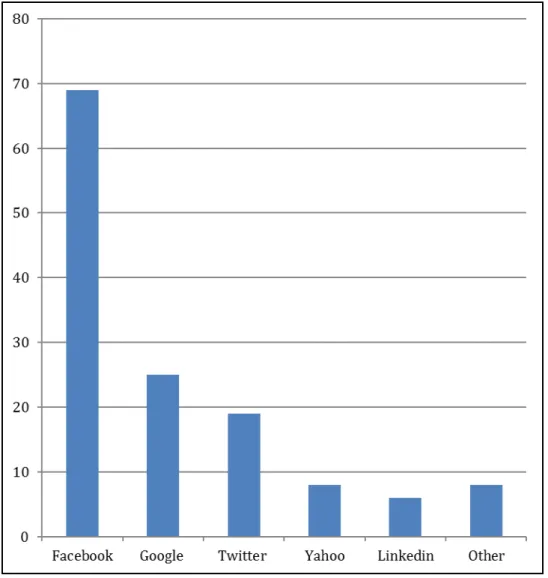
FIGURE 3.3 AMOUNT OF SOCIAL NETWORK LOGINS ... 31
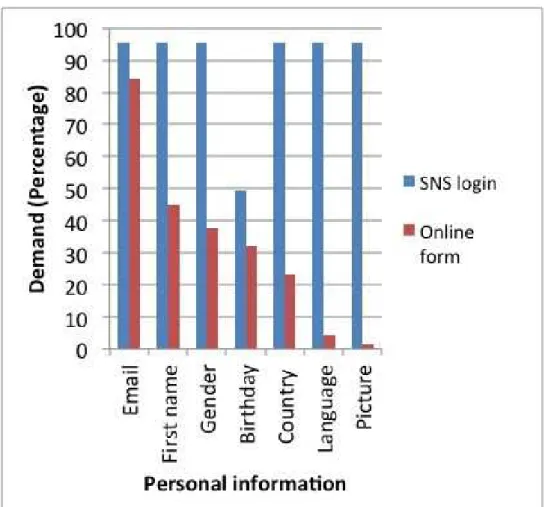
FIGURE 3.4 COMPARISON OF REQUESTED PERSONAL INFORMATION FROM SNS LOGIN VERSUS TRADITIONAL ONLINE FORM... 32
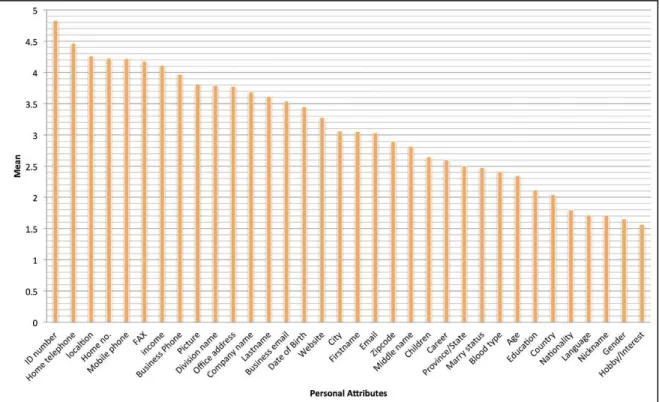
FIGURE 3.5 THE SURVEY RESULTS FOR EACH PERSONAL ATTRIBUTE... 35
FIGURE 3.6 DEMAND FOR PERSONAL ATTRIBUTES FROM TRAVEL WEBSITES AND ATTITUDE OF CONSUMERS TO DISCLOSE PERSONAL ATTRIBUTES ... 36
FIGURE 4.1 INITIAL DIRECT GRAPH CONTAINING RELATIONS BETWEEN PERSONAL ATTRIBUTE DISCLOSURES ... 44
FIGURE 4.2 DIRECT GRAPH DISPLAYING THE RELATION BETWEEN PERSONAL ATTRIBUTES ... 45
FIGURE 4.3 EXAMPLE OF THE RESULT GRAPH ... 46
FIGURE 4.4 RESULTS GRAPH WHEN FOCUSED ON MALE CONSUMERS ... 48
FIGURE 4.5 RESULTS GRAPH WHEN FOCUSED ON FEMALE CONSUMERS ... 49
FIGURE 4.6 CLUSTERING RESULTS ... 51
FIGURE 4.7 PROTOTYPE DSSPST ... 56
FIGURE 5.1 THE RESULTS TREE GRAPH ... 62
FIGURE 5.2 SCREENSHOT OF THE WEB APPLICATION ASKING A DISCLOSURE QUESTION .. 65
FIGURE 5.3 EXAMPLE OF A TREE FOR THE ORDERING APPROACH ... 66
FIGURE 5.4 EXPERIMENT RESULTS AND COMPARISON ... 70
FIGURE 5.5 EXAMPLE OF THE COMPARISON RESULT ... 71
xv
LIST OF TABLES
TABLE TITLE PAGE
TABLE 2.1 PERSONAL INFORMATION VALUATION METHOD COMPARISON ... 19
TABLE 2.2 SITUATIONS OF PERSONAL INFORMATION COLLECTION ... 20
TABLE 3.1 TYPES OF SERVICES AND DESCRIPTIONS FOR THE SAMPLED WEBSITES ... 27
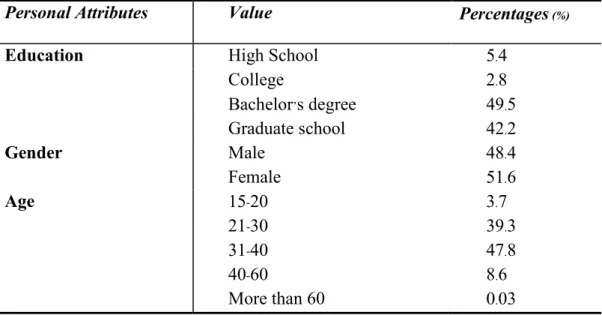
TABLE 3.2 INFORMATION ABOUT PARTICIPANTS ... 34
TABLE 4.1 PRECISION AND RECALL OF THE CALCULATED RESULT ... 52
TABLE 5.1 VALUE OF UNWILLINGNESS TO DISCLOSE ... 63
TABLE 5.2 RESULTS OF TOP-DOWN, BOTTOM-UP AND ADAPTIVE APPROACHES ... 68
1
CHAPTER 1
INTRODUCTION
Societies are now in the age of Big Data, where everyone has adopted smart devices into their daily life. The Big Data age is the informationtechnology age, where tons of data are created every second from digital devices connected to the Internet. Many industries now rely on data from many digital sources. Service providers collect data from their consumers for many activities. Examples of activities where service providers rely on data are market analysis, target advertising, and product development. Along with many types of collected data, personal information is one of the important types of information that can be collected from consumers. Conversely the collection of personal information raises concerns of privacy problems in this Big Data age.
This chapter introduces our thesis. We describe the background, problems, objectives, and approaches of this study. We also provide contributions and a list of
2 publications related to the thesis. Lastly, we show the outline of the thesis, along with brief information on each chapter.
1 .1 Background
Data are being generated continuously in the Big Data era. Data from many devices such as smart phones and personal computers contain personal information from consumers. Many types of service providers, such as research institutes, public organizations, and private companies collect and use personal information. These service providers base data collection on their need for personal information for several purposes, such as improving user experience, advertising, and research. However, the collection of personal information may lead to privacy intrusion problems. Consumers are increasingly concerned about their privacy because their personal information might have been collectedwithout negotiation.
Service providers use many methods to encourage consumers to disclose their personal information. Many service providers use monetary incentives to persuade their consumers to disclose personal information. Examples of monetary incentives which service providers provide to consumers include discounts, coupons, and online services. Service providers may devote much of their marketing budget on monetary incentives to attract their consumers; nevertheless, consumers may not disclose their personal information because they consider the service provider’s incentive insufficiently attractive. In general, consumers need high monetary incentive from service providers before disclosing personal information because consumers fear the invasion of their privacy. Conversely, service providers require as much personal information as possible, but do not want to provide high incentives to maintain control of their budget.
1 .2 Problems
So far, the definition of personal information is an open question, and many debates have tried to define it. Definitions still vary because there are different opinions on what personal information consists of, such as technical aspects, culture, social rules, and local law. Therefore, many definitions of personal information exist with no standard definition, although many countries have different definitions of personal information for use in legal related activities.
3 Nowadays, service providers legally collect personal information through their systems when they receive agreements to collect and use personal information from each consumer. Service providers may collect consumers’ personal attributes in their system, but it is complicated for consumers to manage personal information after it has been collected.
One of the challenges of this study is the method for estimating the value of personal information which can be used in an exchanging mechanism. The value of each personal attribute is difficult to estimate in currency terms, because consumers and service providers have different interpretations of the value of personal information. From the consumer’s point of view, it is an asset, while from a service provider’s point of view it is a resource. The willingness to disclose personal information follows a complex process. Each person values their personal attributes differently.
Service providers generally use monetary incentives to attract consumers to provide personal information. However, monetary incentives from service providers, and personal information from consumers are currently exchanged without an effective trading method. The question arises: how can service providers increase the disclosure of personal information from their consumers without increasing monetary incentives?
1 .3 Thesis Objectives
The exchange between service provider incentives and consumer privacy is a major problem addressed in this thesis. The following tasks are addressed:
1. Comparison of service providers and consumers point of view toward personal information
2. Establishment of a method for estimating the value of personal information without considering monetary value
3. Development of an exchange mechanism which increases the disclosure of personal information from consumerswithout increasing monetary incentive
4
1 .4 Scope and Limitations
There is no best solution for finding the optimal balance between monetary incentives and privacy disclosure when exchanging monetary incentives from a service provider and personal information from consumers. This thesis focuses on the perspective of service providers who initiate the exchange activity by creating an offer and offering it to consumers. The aim is not to increase monetary incentives provided to consumers, while increasing their personal attribute disclosure. The proposed method of using personal attribute values to rank the order of personal information requests is focused on the negotiation mechanisms used in trading platform environments.
Previous authors adopted many approaches to assess the value of personal attributes; however, their results are only valid for specific situations. This thesis aims to propose a general model that can be used in different environments and groups of consumers. However, limitations and conditions are encountered during the study. We have to limit the study to a specified group of consumers and service providers. We choose top ranking global websites from many businesses as our samples to investigate personal information demands. Consumers’ attitudes data when disclosing personal attributes is collected from samples with similar perspectives toward personal information disclosure. Data is compiled from Thai Internet users since Internet and social media activity in Thailand ranks amongst the highest in Asia. These datasets are incorporated into our proposed valuation method for personal information. Moreover, Thai participants are invited to partake in the experiment. The sample group is drawn from Thai nationals only. Therefore, the results may possibly only be applicable to Thai nationals. Other groups with different cultures can evaluate personal information differently and the result can be different. Nevertheless, the methodology proposed in this thesis can be used to repeat the experiment for another cultural group in order to acquire an accurate result.
5
1 .5 Preliminary Definitions
For the purpose of this study, the term personal information means any information relating to an individual. This can be any information, directly or indirectly collected from an individual, regardless of its source. The term personal attribute is also used when specified to any type of personal information.
1 .6 Thesis Contributions
In previous researches, the value of personal information usually expressed in currency form. This thesis establishes a new method for valuing personal attributes and offers the possibility of showing relationships among them without considering currency. The calculated value of personal information shows that consumers value their personal attributes differently, and proves that it is possible to show the order of personal information disclosure in a hierarchy. The results of this work can be extended to other related studies. For example, many researches related to privacy disclosure has considered personal information as an equal value.
Consequently, service providers currently exchange monetary incentives with personal information from consumers without an effective trading method. This thesis develops new knowledge about ordering personal information requested, and shows how the value of personal information can quantitatively affect consumer personal information disclosure when exchanging monetary incentives for personal information.
Moreover, our proposed method of using personal attribute values to order the graph of personal information requests is specified to the negotiation mechanisms used on trading platform environments studied in this thesis. It is possible to extend the proposed method to other studies in different situations where personal information is required from consumers, for example, the requesting of personal information from online surveys.
6
1 .7 Thesis Outline
The following is a description of the content of each chapter:
Chapter 2: This chapter describes works related to this study .We discuss the definition of personal information, the current situation of privacy issues in the big data age and problems relating to personal information collection .We also examine works relating to the valuation of personal information method . Lastly, we discuss personal information - monetary incentive trading.
Chapter 3: This chapter presents a comparison of the different points of view about personal information from consumers and service providers, namely, the demand of each personal attribute from service providers, and the importance of each personal attribute for consumers.
Chapter 4: This chapter presents our proposed method of personal information valuation. A graph is constructed and analysed to find the relationships among personal attributes.
Chapter 5: This chapter presents an improvement of the proposed method of personal information valuation from the previous chapter. Then, it describes the development of Value of Unwillingness to Disclose (VD) and how it is used for improving trading activities. Lastly, it presented the experiment.
Chapter 6: This chapter summarizes the results, limitations, and offers a future direction for this thesis.
1 .8 List of Publications
Parts of this thesis have been published in the following publications:
1. Ake Osothongs, Vorapong Suppakitpaisarn, and Noboru Sonehara, Privacy Disclosure Adaptation for Trading between Personal attributes and incentives, Journal of Information Processing, Vol.25 No.1 (Jan. 2017), page 2-11, 2017.
2. Ake Osothongs and Noboru Sonehara. A Proposal of Personal Information Trading Platform ( PIT) : A Fair Trading between Personal Information and Incentives,
7 International Conference on Digital Information and Communication Technology and its Applications (DICTAP 2014), page 269-274, 2014.
3. Ake Osothongs, Vorapong Suppakitpaisarn, and Noboru Sonehara. Evaluating the importance of personal information attributes using graph mining technique, International Conference on Ubiquitous Information Management and Communication (IMCOM 2015), 8 pages, ACM, 2015.
4. Ake Osothongs, Vorapong Suppakitpaisarn, and Noboru Sonehara. A Prototype Decision Support System for Privacy-Service Trading, The First IEEE International Conference on Multimedia Big Data (Big MM 2015), page 282-283, IEEE, 2015. 5. Ake Osothongs, Vorapong Suppakitpaisarn, and Noboru Sonehara. A Proposed
Method for Personal Attributes Disclosure Valuation: A Study on Personal Attributes Disclosure in Thailand, International Conference on Information Technology and Electrical Engineering (ICITEE 2015), page 408-413, 2015.
8
CHAPTER 2
RELATED STUDIES
In this chapter, we studied the related work of personal information collection as well as previous work related to attempts to resolve the privacy problems on personal information collection. Firstly, this chapter discusses the definition of personal information. Afterward, it defines the preliminary definition of personal information for this study. Secondly, it discusses potential problems when people disclose their personal information and that personal information is collected by service providers. Thirdly, previous studies of the valuation method for personal information are discussed. Lastly, the chapter discusses previous studies concerning trade between personal information and monetary incentives.
2
.1 Definition of Personal Information
Privacy protection in this digital age usually focuses on the protection of personal information. However, the exact definition of the term “personal information” remains unclear and continues to be discussed
[
1, 2]
. Time may change the meaning of this term, as the term is commonly found in legal documents. It has been updated parallel with the9 development of information technology. There are other terms that have been used broadly in the same meaning such as “personal data”, “private data” and “private information”. People usually use these terms interchangeably in the same or similar context.
The traditional definition of personal information was different in the age when technology systems were still offline, such as in the 19th Century through the early 20th Century. The database of each system was separate. The definition of personal information usually entails information that can identify a specific individual.
In 1980, The Organization for Economic Cooperation and Development (OECD) published a guideline concerning the collection and management of personal information, OECD Guidelines on the Protection of Privacy and Transborder Flows of Personal Data 1980. It was adopted by OECD member countries on 23 September 1980. The content gave the definition for personal data as
“any information relating to an identified or identifiable individual (data subject) [3].”
One of the well-known privacy protection directives, Directive No. 95/46/EC of the European Parliament and of the Council dated 24 October 1995, concerned the protection of individuals about the processing of personal data. The free movement of such data defines personal information as
“any information relating to an identified or identifiable natural person ('Data Subject'); an identifiable person is one who can be identified, directly or indirectly, in particular by reference to an identification number or to one or more factors specific to his physical, physiological, mental, economic, cultural or social identity [4].”
An Australian law which relates to privacy is the Privacy Act 1988. It defines personal information as
“information or an opinion, whether true or not, and whether recorded in a material form or not, about an identified individual, or an individual who is reasonably identifiable [5].”
10 Hong Kong’s Personal Data (Privacy) Ordinance which came into force in December 1996 defines personal data as
“relating directly or indirectly to a living individual, from which it is possible and practical to ascertain the identity of the individual from the said data, in a form in which access to or processing of the data is practicable [6].”
The Canadian Parliament published the Personal Information Protection and Electronic Documents Act (PIPEDA) which aims to protect consumer’s personal information in 2000. It defines personal information as
“information about an identifiable individual [7].”
In addition, many other countries also define the term in the same way, as information that can identify, whether directly or indirectly, an individual or particular person.
In some countries, the term “personally identifiable information (PII)” is used in the same meaning to describe information that can identify an individual [8, 9]. In a traditional system, information technology is mainly offline and each system is individual. A system containing personal information that can identify individuals through such means as phone numbers, home numbers, and social security number is easy to manage and control because it stores data in only one database or system. Privacy concerns are created due to risks when information technology connects many individual systems to work together as a network and then is connected to the Internet.
Furthermore, the development of technology changes the ways that people interact with information technology. Nowadays, people have adopted digital devices into their daily lifestyles, producing tons of information every second. In the past, some information was not defined as personal information because it was difficult to trace back to a person. However, information in this age may be produced by a person directly or indirectly. Researchers have proven that small pieces of personal attributes in this age of ‘Big Data’ make it possible to trace information back and identify individuals [10, 11, 12]. These small pieces of personal attributes cannot be judged by the same rule as with PII [13]. In 2012, the European Commission prepared a new draft for EU data and security laws,
11 currently known as the General Data Protection Regulation (GDPR). The definition of personal information has been adapted to this new Big Data age as
“Personal data is any information relating to an individual, whether it relates to his or her private, professional or public life. It can be anything from a name, a photo, an email address, bank details, posts on social networking websites, medical information, or a computer’s IP address [14].”
In other words, every personal attribute can be called personal information in this age because it can be combined with other personal attributes to identify an individual.
2 .2 Data Privacy in the Age of Big Data
Traditionally, most information systems used a standalone database, including hospital information systems, accounting information systems, and university information systems. They did not share data with other systems across a network. Personal information was processed and stored in a single database, which was easy to manage and protect. Service providers manually requested personal information about their consumers from these traditional information systems. Eventually, the technology changed with the Internet age. Information systems are now connected to the Internet. Further, people connect themselves to the Internet via personal computers and smart devices such as smart phones and tablets.
In the early 21st Century, Big Data has become a well-known term to describe a large amount of data. There have been various definitions used to describe Big Data. A well-known definition was described by Gartner, Inc.
“Big data is high-volume, high-velocity and/or high-variety information assets that demand cost-effective, innovative forms of information processing that enable enhanced insight, decision making, and process automation. [15]”
Many industries are now finding benefits from big data. They see opportunities from big data, which is produced accurately by their consumers. This data can be analyzed using many methods and provide new knowledge about consumers, which can provide a
12 competitive advantage for service providers. However, it also raises new concerns about potential privacy issues. Data can be misused and create privacy violations.
Moreover, the number of people who use social network services (SNS) has increased dramatically. The number of social media users nowadays is more than 1.6 billion [16]. People are not just connecting together on social network sites, they also upload personal information such as pictures, video clips, locations, and their activities onto the social network site [17]. When consumers disclose personal information to social network sites, they also increase the chances for privacy issues such as identity theft and cyberstalking [18, 19].
Additionally, the adoption of smart devices has also had an impacted by greatly increased the quantity of data [20]. Additionally, the concept of Internet of Things (IoT) is now well-known and the number of devices connected to Internet are steadily increasing. Gartner, Inc. estimated that the number of IoT will reach 20.8 billion objects and IHS Markit estimated the number of IoT objects will reach 30.7 billion by 2020 [21]. Not only that these IoT objects can generated a large amount of data over the Internet, but it also contains more personal attributes [22].
2 . 3 Personal Information Disclosure and Personal Information
Collection
A large industry for consumers’ personal information is created by the high demand for personal information. Currently, the number of data brokers is estimated over 4000 data broker companies [23]. People give up their personal information when they connect to the Internet. Service providers collect personal information to understand their consumers and be able to provide personalized services or products to them. Nowadays, many business functions rely on data collected from consumers. For example, targeted advertising needs personal information to conduct a marketing pitch to a specified group of consumers. Personal information is a valuable resource for both public and private organizations in this digital age. It sometimes has been referred to as the new oil in this century [24] since raw data can be compared to crude oil, and we need to refine it to gain the hidden value.
To collect personal information traditionally, many websites provide online forms asking for personal information from their consumers. Moreover, service providers can collect data from public sources for some information. There is more demand for
13 consumers’ personal information by many industries that come from big data analysis activities. Current technology makes the collection of personal information even easier. Service providers possibly crawl the data using the web crawler on the Internet. Service providers can collect automated information about consumers such as IP addresses, click streams and operation system information which has been automated generated by the system.
The collection activities of personal information have become a common issue confronted by everyone in the online environment. Many collection methods have been selected for collection of personal information. Service providers can collect personal information themselves and/or buy it from data brokers [25, 26]. When service providers need personal information from consumers using traditional methods, online service providers usually collect that personal information directly using online forms (registration) that require consumers to fill in their personal information. Additionally, some personal information is generated automatically on the service side such as IP addresses, operation system used and the time zone, which can easily be collected without consumer awareness.
Personal information collection activities have become a new privacy concern since service providers have begun collecting personal information. The more personal information service providers collect, the greater the risk of misuse. Even though every person has the right to disclose or withhold personal information and regulations exist in most countries, illegal collection activities are always happening on the Internet. Today, not only do businesses and researches collect personal information from consumers, other firms such as governments and hackers also collect consumers’ information. Consumers have to risk their privacy with many illegal issues such as identity theft, cyberstalking and misuse activities when disclosing their personal information.
In a physical environment, people can easily refuse when someone comes to ask for their personal information. However, it is more complicated in an online environment. Service providers can collect as much personal information as they want. It is difficult for consumers to negotiate the disclosure of personal information. Service providers usually provide only two choices for consumers, accept or reject. Consumers who want to use a service or product are basically forced to accept. Making a judgment about disclosure is more complicated. The only option that consumers can use to ensure the collection, usage and sharing of their personal information will be protected by service providers is the privacy policy published by each service provider. However, many studies have found that
14 consumers have a tendency to not read the privacy policies [27]. One study gave several reasons for why privacy policies are ineffective. Firstly, they are often difficult to read and understand due to complicated verbiage. Secondly, consumers believe that their privacy is protected because the privacy policy exists. Thirdly, they don’t actually read it because it takes a lot of time. Fourthly, once they have read the privacy policy, consumers don’t have any choice. Lastly, it is not clear how users would protect themselves, as they do not see any harm in providing personal information to such websites [28].
The following are examples of other problems in personal information collection and trading:
A. Illegal collectors
Even though privacy laws and regulations that deal with the collection of personal information have been published in many countries and are widely debated, illegal collectors are still a problem. There are many untrustworthy personal information collectors online, such as unknown application providers who ask for consumers’ personal information when they install applications and apps that carry malicious software [29, 30]. In some cases, service providers also collected personal information without users’ consent [31, 32] and some personal information collection activities of service providers has become illegal in some countries [33, 34]. Moreover, personal information is sometimes illegally collected by government agencies [35, 36].
B. Lack of Fair Trading
Trading in personal information means buying, selling or bartering personal information [37]. People usually focus on the protection of privacy for consumers, but trading benefits for the service providers are usually ignored. Some researchers suggest that consumers should hide their PI to protect their privacy. Alastair et al. introduced MockDroid, a modified version of the Android operating system that provides a way to return valid but incorrect information to the service provider [38]. Georgios, Michalis, and Evangelos implemented a SudoWeb module, an extension for the Google web browser, in which the user can select an identity from two prepared identities when using a social login [39]. These are examples of customer protections that do not return any values to the service provider.
15 C. No opt-out and limit of usage time
The European Commission proposed a new “right to be forgotten” law that allows people to opt-out from service providers [40]. Nowadays, many websites and applications state their privacy agreements and show the opt- out option. However, people sometimes cannot control the opt-out request, and some data brokers do not offer the opt-out option for their users [41, 42]. Only a small number of consumers know that data brokers offer a voluntary opt-out option [43]. It is difficult to track the data usage when it is already disclosed [44]. For example, consumers’ emails are illegally collected by web crawlers and illegally sold online on the black market. Another problem occurs when personal information has been collected and there are no statements as to the limit of usage time for the personal information.
D. Unbalance Trading
Service providers always request as much personal information as possible. They can request more information than necessary. One problem is that it is difficult to find a balance between the protection of privacy and the utilization of information [45]. We are always faced with this kind of request for services, such as a request on a mobile phone application and social network login. Felt et al. found that popular Facebook applications tend to require too much personal information when a consumer requests the use of their services [46].
E. Fake Information
Service providers can collect automatically generated information. However, it is still necessary to collect consumer personal information directly. Consumers may submit fake personal information for several reasons, such as to protect their privacy and prevent marketing [47]. Criminals can use it for criminal activities such as identity fraud [48]. Some create fake profiles to hide themselves when they use online services, such as social networking services [49]. Moreover, some professional advisers suggest people use fake information when they do not trust the service provider [50]. This fake personal information can be a method to hide their
16 identity on the Internet. However, it could be argued that this leads to a new problem when service providers use personal information for legal purposes.
F. Laws and Regulations
Nowadays, the development of information technology has alerted consumers about protecting their personal information. Laws and regulations have become stricter in many countries [51], which is a reflection of new technology that is being organized to protect citizens. In general, service providers must receive consent from their consumers when collecting and using their personal information. Sometimes, service providers cannot use personal information, even if it has already been collected.
2
.4 Valuation Method for Personal Information
Previous studies suggest that personal information should be treated as a kind of commodity. Personal information becomes a resource that can be used within a company or sold to others [25, 52]. Personal information has also been discussed as to whether it is a new currency or not [53, 54, 55]. As some believed it can be used as a currency [56, 57]. Consumers believe that their personal information is a type of asset that they can use for negotiating or trading with others. However, they also believe that service providers improperly gain benefits from their data and privacy. Businesses should make more of an effort to provide information and inform consumers about the risks and benefits of trading their data [58].
It is difficult to accept that personal information is being treated as an asset because it is difficult to estimate its value. Consumers always trade their privacy by disclosing personal information for online services such as email, search engines and entertainment. Data brokers sell personal information such as names, phone numbers and email addresses to third parties. Even though personal information can be treated as a commodity, the value of such personal information remains difficult to calculate.
The actual value of personal information is still difficult to estimate because people do not disclose their information just for tangible incentives; they also disclose their personal information for intangible incentives. From many studies, the value of personal
17 information is varied. The value of personal information can be very high in one study, while very low in another.
A study from the Financial Times estimated personal information worth for each person using pricing data from the industry in the US [59]. The results showed that personal information worth for the average person was less than one US dollar. Personal information from a single person increases when a person has a turning point in their life or change in their background. For example, they need to find something new and demand it in order to protect their story. Data brokers typically sell personal information such as the email and contact information of many people in a pack at a very low rate. Service providers do not have to buy it for each individual at a higher cost.
On the contrary, the cost of personal information from a consumer’s point of view is higher. A study by Compassed Intelligences surveyed more than 1000 U.S., U.K. and Canadian citizens and asked them to assign a value to their personal information. The results showed that the overall value of their information on Social Network Services (SNS) was between $62.79 and $106.40 [60]. Both studies show the fact that service providers and consumers may have different visions concerning the value of personal information. From the consumers’ point of view, their personal information has high value no matter who they are.
There are other researchers who worked on the value of personal information. Their results remain varied. For example, researchers developed a tool called “Cloudsweeper”, which aims at identifying the value of an email account. The email account value is calculated from the service account values that are associated with each email [61].
Otsuki and Sonehara estimated the value of personal information using a SNS utility. The results showed an estimated value for personal information based on the cost of protection for that information [2].
A survey from Trend Micro asked consumers from all over the world to set a specific monetary value to each personal attribute. The result showed the average worth of personal information is $19.60. The results showed that the worth of each personal attribute is different by country. For example, the average value of health and medical record are $82.90 for US respondents and $35 for European respondents. Photo and video valued are $26.20 for US respondents and $4.70 for EU and Japanese respondents. They concluded that US citizens value their personal information higher than other counties [62].
18 The results comparison for each method is shown in Table 2.1. These researches are just a few examples of different opinions about methods for calculating the value of personal information [60, 63].
Even if the value of personal information is difficult to estimate, service providers still offer incentives as a reward to consumers in order to trade consumers’ personal information. These rewards possibly affect self-disclosure decisions.
Researchers have found that the voluntary disclosure of personal information can be increased when the service provider offers monetary rewards [64, 65]. Service providers generally attract consumers to disclose their personal information by using monetary rewards such as money, which tends to increase the willingness to disclose personal information and decrease the risk of false information [64].
People currently disclose personal information without actual applicable value. Sometimes, they disclose personal information for a high value service, yet sometimes trade it for nothing. This is widely known as the privacy paradox problem. This fact shows how difficult it is to estimate the true value of personal information.
19 Table 2.1 Personal Information Valuation Method Comparison
Authors Methods Results
Steel, et al. (2012) Financial Times
Estimated Personal
information worth based on the analysis of industry. pricing data in the US.
very low
(less than $1 for every attribute)
McCracken (2013) Estimated Personal
information worth from the cost of service account values associated with the email.
Low / High
(Depending on email)
Staiano, et al. (2014) Participants create an auction from their data.
Low
( € 2 for each attribute) Burney, et al. (2014) Created a survey asking
respondents to assign a value to their identity data.
High
(From $62.79 to $106.40)
Trend Micro (2015) Asked consumers to set a specific monetary value to each personal attribute.
High
(Average worth of is $19.60.)
In recent years, a consequence of data mining applications and other exploration purposes is the desire to share our personal information encoded as tabular information. To reveal tabular information while still preserving the privacy of the consumer, several methods have been introduced. Those include k-anonymity
[
66]
, l-diversity[
67]
, and t-closeness [68]. To keep data privacy, these schemes hide some specific personal information. There are many efforts to try and minimize hidden personal information [69, 70], In those researches, all personal attributes are equally considered, hiding important attributes such as a phone number is considered to be similar to hiding less important attributes such as gender.
20
2
.5 Personal Information
-Monetary Incentive Trading
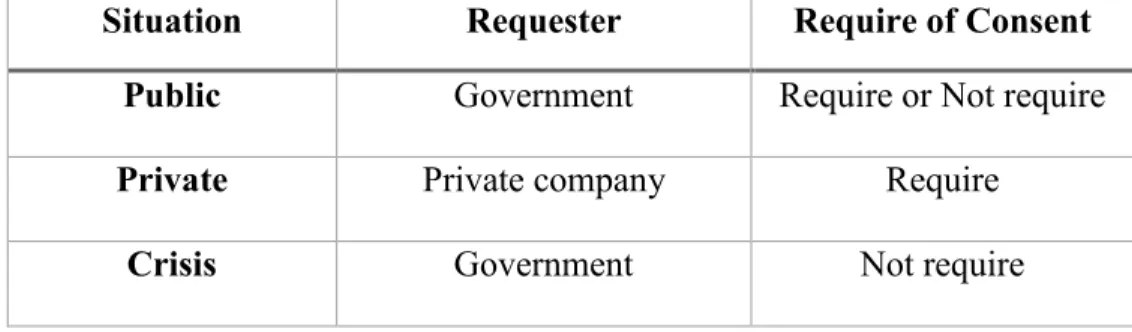
Personal information can be considered a kind of commodity. It also can be used within a company or sold to third parties. However, it is usually difficult to accept being treated as an asset. Trading situations are possibly separated into categories by the type of service provider and situation. These can be categorized into public, private, commercial, and crisis situationsas showed in Table 2.2. The need for consent from consumers is different in trading situations, as shown:
Table 2.2 Situations of Personal Information Collection
Situation Requester Require of Consent
Public Government Require or Not require
Private Private company Require
Crisis Government Not require
When government agencies require personal information from their citizens, some agencies do not require the owner’s consent to disclose that personal information [71, 72, 73, 74]. Conversely, private companies are required to obtain the owner’s consent prior to the release of personal information. Additionally, government agencies and private companies may not able to collect personal information directly from consumers or data creators. They may obtain personal information from a third-party potentially containing weaker privacy protection regulation [75].
In the case of crisis situations such as disasters and criminal related issues, consent is not required. For example, when the disclosure is necessary to identify the individual in disasters [76, 77]. However, the privacy of users should be preserved. For example, researchers proposed a method to access personal information on smartphone devices during a crisis, whilst preserving the user’s privacy [78].
Nowadays, people trade personal information disclosure and monetary incentives on the Internet. However, the balance of the trade is usually ignored. Normal trading is based
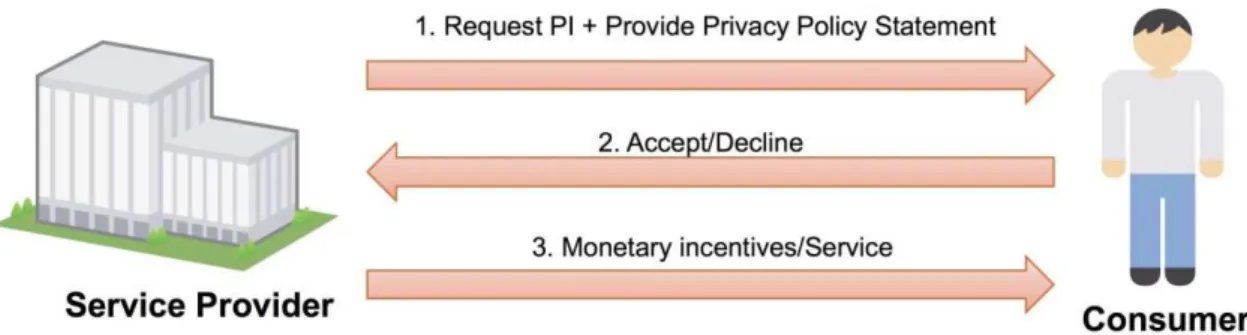
21 on agreement between the service provider and consumer. The trade occurs when the service provider offers a monetary incentive to the consumer for trading personal information. The consumer feels comfortable disclosing personal information for those incentives. Figure 2.1 displays a common situation for trading personal information for incentives, comprised of a one-to-one relation between consumers and incentives. The incentives can be monetary, such as with money and coupons, or as a percentage discount.
Figure 2.1 Current Personal Information – Incentives Trading Process
Presently, it is quite common for personal information to be traded for monetary incentives. However, the marketplace between service providers and consumers is rarely seen. Currently, there is some work related to the trading platform between personal information and incentives. Some startups provide services in the field of personal information trading with monetary incentives
[
79]
. For example, Enliken, a company founded in 2011, provides an idea that allows consumers to exchange their data for discounts and donations[
80]
. Handshake focuses on a platform that allows consumers to exchange their personal information with currency[
81]
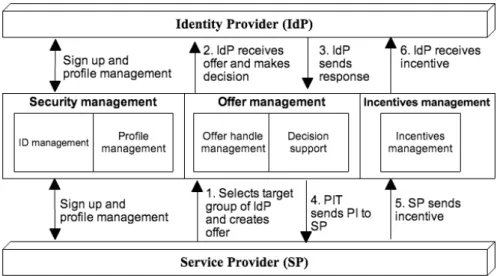
.Additionally, a trading platform discussed in previous work was proposed to support trading activities between personal information and monetary incentives [82]. The proposed platform was designed to contain three main components, including service provider, consumer, and personal information trading platforms (PIT). PIT was proposed as a platform to be placed between the service provider and consumer. Figure 2.2 shows the
22 platform architecture of PIT, which consists of three modules: security management, offer management, and incentive management systems.
The main perspective of service providers is to collect personal attributes, which are useful for their work. They will be able to provide monetary incentives in exchange for the personal information of consumers. We can see that these collections of activities, both online and offline, when service providers create campaigns which tradeoff between personal information and monetary incentives, such as discounts and online service. Service providers want to collect as much personal information as possible when exchanging monetary incentives for personal information. If consumers reject the offer, service providers will not provide anything to consumers. In other words, the assumption is that the monetary incentive is satisfaction for the service providers. On the other hand, the consumer perspective is more complicated. Even though consumers want to get monetary incentives for disclosing their personal information, they still want to disclose as little of their personal information as possible in return for high incentives. Consumers normally agree to provide unimportant personal attributes in trade for monetary incentives. However, consumers’ concern for their privacy increases when service providers ask them to register or fill out their personal information directly, which reduces their overall satisfaction for providing their personal information. Consumers will often reject trading their personal information when they have very low satisfaction.
Figure 2.2 Platform Architecture of PIT
23 A problem with personal information trading is inside the trading method. Although personal information is possibly traded the same as other commodities and data markets for personal information already exist, there is still the lack of an effective trading method and negotiation mechanism. In 2002, the World Wide Web Consortium (W3C) officially proposed the Platform for Privacy Preference (P3P) [83]. It enables websites to reveal their privacy statements in a standard format, which can be interpreted by the web browser for delivery in a readable format for consumers. Each consumer can set up their privacy preferences when using a supported P3P browser. The browser will then automatically check the privacy statement of each website to avoid websites that do not match their privacy preferences. Even though the P3P standard is a well-known privacy protocol, its effectiveness for privacy protection has been questioned and critiqued [84]. This is because it lacks a negotiation mechanism. P3P was officially announced as a standard protocol many years ago, but there are few browsers in the market that support this standard. Therefore, previous studies proposed a privacy negotiation protocol [85, 86]. Many researches for negotiation of personal information have focused on protecting the privacy of consumer personal information during trade. This raises a new research question. When privacy protection is too high, the utility of personal information is low.
Additionally, Yassine and Shirmohammadi proposed a game theoretic negotiation method for the negotiation process [87]. They studied negotiation focusing on the trade-off between privacy risk and incentive in order to try and find Nash equilibrium. Ukil et al. proposed a framework that combined a negotiation-based architecture by using a prepared rule to create a negotiation matrix [88]. Moreover, Kwon proposed P4P (Pervasive Platform for Privacy Preference), a P3P extension using a multi-agent mechanism. It is a P3P-based negotiation mechanism for privacy management in pervasive computing services which allows users to negotiate in order to provide personal information following the user’s privacy preferences [89].
24
CHAPTER 3
DEMAND AND DISCLOSURE
OF PERSONAL INFORMATION
Personal information has become an important resource for most activities in the digital age. Service providers collect personal information from consumers and trade it with other online service providers. The trading activities between privacy and monetary incentives commonly have at least two important actors, the service providers and consumers. A service provider is an actor who creates the offer, while a consumer is the actor who receives an offer and must decide whether to accept or refuse it. The trading activity commonly starts from the demand of service providers who create an offer and then introduce it to consumers. Consumers then receive the offer and make a decision about whether or not to disclose their personal information. In order to improve the trading activities between personal information and incentives, it is important to understand the demand of service providers and disclosure the attitudes of consumers. From Chapter 2, the facts show that personal information is difficult to estimate and compare for its cost. The authors suggest that personal information value can be both tangible and intangible.
25 Therefore, cost estimation is not proper for personal value estimation. Service providers and consumers estimate the value of their personal information by using the importance of personal attributes from their point of view. Therefore, this chapter studies the different viewpoints concerning the value of personal information for service providers and consumers.
This chapter is separated into two sections, which includes study of the service providers’ viewpoints and consumers’ viewpoints. The first section is focused on service providers and aims to increase understanding of service providers’ demand for personal attributes. This section studies the demand for each personal attribute from the top ranked websites. The second section focuses on consumers and aims to understand consumers’ attitudes when considering whether to disclose personal attributes. It studies the comfort level of consumers when they disclose their personal attributes. Finally, the results from both sections are compared and discussed based on the study results.
3 . 1 Personal Attribute Demand from Service Providers
3 .1.1 Overview
There are many types of personal attributes. Not all of them are related to or important to service providers. At present, service providers can request as much personal information as they want. Traditionally, personal information is collected using online forms such as user registration forms on websites and online order forms for e-commerce websites. Some of the personal information requested may not relate to the product or service offered by the service provider. Additionally, some service providers have adopted other methods to log in, such as social login services from social network service (SNS) platforms such as Facebook, Google, and Twitter. People who have an account with a SNS website possibly use their account to log into other websites with a few clicks