宇 機搭載 チウ ン 次電 の内部状態
推 よる異常検知 関する研究
田中定 康
博士 工学
総合研究大学院大学
物理科学研究科
宇 科学専攻
定
成 8 6 度定
博士論文
宇 機 載 ン 次電池
部状態推 異常検知 関
研究
中 康
学籍番号:20141101
指 教員 福 盛
2017 3
総 研究大学院大学 物理 学研究 宇 学専攻
2
要
The purpose of this study is to estimate the internal condition changing of satellite-borne batteries with House Keeping data (HK data) such as voltage, current and temperature. For the satellite-borne batteries, detection of the internal condition is very important to realize long term operations in orbits. However, it is difficult to estimate deterioration of the battery just by monitoring the HK data so that the internal degradation can directly be detected. Thus, it is necessary to estimate the deterioration of the batteries by analyzing the HK data in some sophisticated manners. Furthermore, it is important for the long term operations to detect signs of internal short circuits, which prevent continuation of the operation. In recent years, ‘passivation’ becomes to be required for the satellite-borne batteries. The passivation means that we have to assure safety of the satellite-borne batteries even after the operation is over. However, it is an issue that there is no indicator to judge whether the batteries after the end of operation are safe or not. Therefore, we have to solve two subjects for the long term operation. One is to establish a method to estimate the internal condition of the satellite-borne batteries. Another is to understand the internal condition changing of the battery through AC impedance to detect the condition of the satellite-borne batteries. To understand the internal condition of the batteries, we focus on AC impedance. The AC impedance is defined as the frequency domain ratio of the voltage to the current. We calculate the AC impedance at a low frequency area using the HK data because the sampling time of the satellite is very slow. To calculate the AC impedance at low frequency, we focus on a method with load current changing or with differential capacitance. The differential capacitance is defined as the ratio of the differential capacity [Ah] to differential voltage [V]. We have found that the differential capacitance is associated with the AC impedance at extremely low frequency in each state of charge (SOC). For this reason, the differential capacitance reflect diffusion of lithium-ion at each electrode. Since it is considered to reflect the diffusion condition in active materials especially, we can understand not only the true SOC but also the internal condition of the battery cells with the differential capacitance.
We try to understand the internal condition changing of the batteries of ‘REIMEI’ satellite, which was developed by JAXA and was successfully launched in 2005. Ten years has passed after the launch of REIMEI, and the batteries experienced 55,000 cycles for charge and discharge. To estimate the changing of the internal condition, DC resistance is calculated from the HK data in general. The calculation is carried out using the data at the timing of switching between charging and discharging. However, the DC resistance has no remarkable change though the batteries are operating over 10 years in the orbits. Then, we try to calculate the AC impedance data from the HK data. The AC impedance is normally measured using an impedance analyzer within a frequency range of 10 kHz to 10 mHz. On the other hand, the sampling time of satellite is very slow; in the case of REIMEI, the sampling time is 1/8 Hz. It is of course impossible to calculate the impedance beyond the sampling time. Thus, we calculate the AC impedance at low frequency, such as 10 mHz, using the data when the discharge current is changed. By comparing with the impedance of the cells which were stored on the ground, it is found that the AC impedance can be calculated successfully from the HK data. Furthermore, the AC impedance increases constantly after ten years of the operation even though the DC resistance is not changed. Therefore, we found not only a method to estimate the state of satellite-borne battery, but also have found that the AC impedance is useful to estimate the internal condition even in the low frequency.
3
In the current spacecrafts sampling frequency for HK data are like 1 Hz or so.
Thus, the AC impedance can be similarly calculated for other satellites as well in the same method, since the AC impedance could be calculated even for REIMEI satellite which the sampling frequency is very low. To understand the characteristics changing of the AC impedance, we execute some experiments on the ground. They are charge and discharge cycling tests with several temperature conditions. Especially, we tried to predict the internal short circuit through the AC impedance. It is agreed that high rate charge at low temperature accelerates the internal short-circuit caused by lithium plating on negative electrodes. The exclusive force among the Li-ion causes the electrochemical deposition onto the surface of the negative active materials which is so called ‘lithium-plating’ to the negatives. The lithium plating usually takes place when a Li-ion cell is charged at low temperatures with a high current, these conditions affect the charge transfer reactions between the electroactive materials and the solid electrolyte interphase (SEI) and favors the deposition of metallic lithium on graphite. Many efforts have been made to understand the formation of the lithium plating. However, most of the studies have been carried out by charging the Li-ion cells at temperatures below -10 °C, and such low temperatures are not practical. Due to the potential hazard that the lithium plating represents, its detection is very important to assure the safety of Li-ion cells when these are operated at practical temperature ranges.
We used commercial LiFePO4/C type Li-ion secondly cells for the tests because the cells can charge with high current rate at low temperature like 10℃ in safety. The AC impedance measurement is used as the method to defect the formation of the lithium plating when a Li-ion cell is charged at relatively low temperature and relatively high current, 10°C and 1.05C. It is known that LiFePO4 electroactive material exhibit a flat charge/discharge behavior and possess a high tolerance against degradation in comparison to other positive electroactive materials, this enables to exclude contributions from the positive electro material with respect to lithium plating on the surface of graphite electroactive material.
Therefore, we tested the cells at 10 ℃ , 15 ℃ and 23 ℃ with several charge and discharge conditions for the better understanding of the characteristics changing about lithium plaiting. To understand the characteristics changing of the cells, the AC impedance of the cells was periodically measured with an impedance analyzer and we got impedance transition data through charge and discharge cycles. The charge and discharge cycling tests were repeated with a charge and discharge test system.
The capacity of the cells is checked according to the following protocol. The Li-ion cells are first discharged to 2.0 V with 1.0C in a constant current (CC) mode. Then, the cells are charged with a current of 1.0C and voltage of 3.6 V for 2.5 h in a constant current-constant voltage (CC-CV) mode. Next, the cells are discharged again to 2.0 V with 1.0C in a CC mode. After the charging and discharging, the cells are allowed to rest for 30 min in open-circuit mode. The charge/discharge cycle is repeated two times. The temperature of the cells is controlled at 23°C. The 100% SOC is then defined as the condition that the cells are fully charged to 3.6 V. After the capacity check, the SOC is controlled at 50% following a CC charging based on the discharge capacity in the second discharging. The cells are held for 2 h in an open-circuit mode to stabilize their internal state. The AC impedance was measured within the frequency range of 10 kHz to 10 mHz at 23°C three times to eliminate measurement instability. The cells were first fully charged to 3.6 V in a CC-CV mode for 2.5 h and then were charged and discharged cyclically according to two different conditions: Case A and Case B. In Case A, the cells were discharged
4
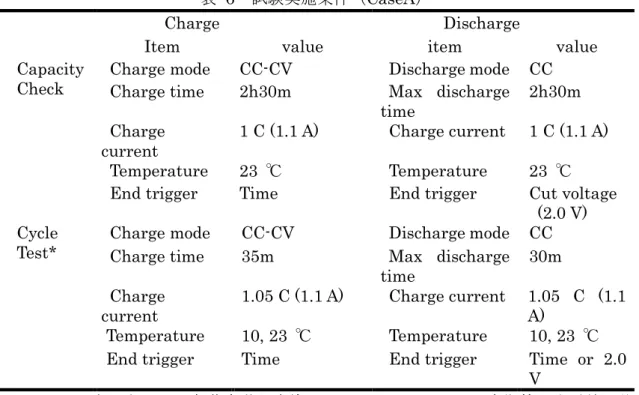
with 1.05C for 30 min in a CC mode and charged with 1.05C for 35 min in a CC-CV mode. In Case B, the cells were discharged with 1.05C for 30 min in a CC mode and charged in a CC-CV mode at 0.52 C for 65 min. To examine the change in DC resistance, the load current was periodically changed at the middle and end of each cycle. Then, the discharge current was changed from 1.05C to 1.15C. The temperature of the cells was controlled at 10°C in all cases.
As a result, the lithium plaiting had occurred and we could detect the internal condition changing through the AC impedance. Commercially available LiFePO4/C type Li-ion secondary cells were tested at 10°C this time. The cells were charged and discharged according two cases. In Case A, the cells were charged and discharged at 1.05C, which was slightly higher than the current recommended by the manufacturer of the cells. In Case B, the cells were charged at 0.52C, which is within the recommended current. The AC impedance measurements revealed a gradual decrease in charge transfer resistance in all cases, even when charge cycling caused capacity fading. Furthermore, the charge transfer resistance of the cells in Case A (charging and discharging at 1.05C and 10°C) continually decreased. Moreover, the test results showed the same trend regardless of storage period. This finding suggests that there was a change in the balance of capacity between the positive and negative electrodes.
This experiment showed that a decrease in the charge transfer resistance of the AC impedance suggested lithium plating within the cells. This decrease in the charge transfer resistance might be reflected in the increased SOC of the negative electrode. This phenomenon was ultimately concluded to be lithium plating on the active material of the negative electrode. Observation of the trend in AC impedance could be a highly effective means of identifying instability in Li-ion cells. Furthermore, the changing in the AC impedance occurred in the low frequency area, under 1 Hz. Thus, this means that we can detect lithium plating with the House Keeping data. Furthermore, by calculating the
differential capacitance of the cells, only the differential capacitance of the cells that were led to lithium plating shifted to the high SOC than the others, similarly to the results of AC impedance measurements. This changes seems to be occurred by the shift of SOC in negative electrode. In other words, we found that the peak shift of differential capacitance means the shift of the area for charging and discharging. Therefore, we can predict the internal-short circuit also by calculating differential capacitance.
As the results, we can understand the mechanism of the internal-short circuit through the AC impedance and differential capacitance changing. Furthermore, we can detect the sign of internal-short circuit by calculating the AC impedance and the differential capacitance with the HK data. Furthermore, we find that the AC impedance and the differential capacitance can be an indicator for the safe operations.
5
目次
第 1 章 宇 機電源 安全性 ... 11
研究 目的 ... 11
研究 背景 ... 12
宇 機 載電池 安全性 求 背景... 12
電池 安全性 ... 14
高安全 電池 ... 16
民生 電池 状態確 方法: ン ン 測 ... 18
論文 構 ... 23
参考文献 ... 24
第 2 章 宇 機 載電池 状態確 ... 27
電池 放電状態 管理 ... 27
宇 機 載電池 目 ... 28
宇 機 載電池 運用方法 ... 29
宇 機 載電池 長期運用 向 課題 ... 30
参考文献 ... 32
第 3 章 ン ン 情報 利用 宇 機 載電池 部状態推 方法 ... 33
直流抵 変化 利用 宇 機 載電池 健全性評価 ... 33
宇 機 様 ... 33
軌遈 電池 状態推 ... 35
負荷変動 利用 宇 機 部状態推 ... 36
宇 機 様 ... 36
部状態推 い ... 38
微 容 利用 電池 放電状態 推 ... 42
放電中 電池 ン ン 変化 ... 42
微 容 算出 ... 46
ン ン 測 算出 容 放電 算出 微 容 比較 ... 49
負荷 変動 微 容 算出 ... 52
参考文献 ... 56
第 4 章 放電 電池 部状態 時的変化 実験的確 ... 57
目的 ... 57
試験 象 ... 59
温度 部状態 響 ... 61
電 部状態 響 ... 64
試験結果 ... 69
容 推移 ... 70
保管 電気化学特性 変化 ... 72
放電特性 変化 ... 74
CC 電時間 変化 ... 77
IR損失 変化 ... 78
放電 期電 変化 ... 81
AC ン ン 変化 ... 84
異常 生 電気的特性 変化 ... 90
試験結果 考察 ... 94
6
参考文献 ... 101
第 5 章 安全 宇 機 運用 向 ... 103
ン 過程 ... 103
宇 機 部短絡 検知方法 ... 106
ン 微 容 推移 ... 108
宇 機 安全 運用 向 ... 111
参考文献 ... 114
第 6 章 結論 ... 115
研究実績 ... 117
謝辞 ... 119
7 図表一覧[図]
1 ン型電池 NCR 系 ン 次電池 動作 比較 . 16
2 燃性 電解液 び ン液体電池 真空耐性 ... 17
3 ACAC ン ン 測 装置外観... 19
4 AC ン ン 測 結果 ... 20
5 等価回路 仮 ... 20
6 測 結果 等価回路 得 値 比較 ... 20
7 負荷変動 ン ン 算出 ... 22
8 ン ン 算出結果 測 結果 比較 ... 22
9 運用時 得 例 ... 28
10 研究 案 概要 ... 29
11 宇 機運用長期運用 向 状態変化 ... 30
12 技術実証 ッ [1] ... 34
13 技術実証 外観 ... 34
14 地 ン液体電池 動作 ... 34
15 地 放電 軌遈 放電 比較[1] ... 35
16 い い 衛 電源系 ッ [5] ... 36
17 い い 衛 放電サ 例 [6] ... 37
18 地 び軌遈 放電 繰 返 ッ 性能比較 [6] ... 37
19 DC 抵 算出方法 ... 38
20 DC 抵 変化 [6] ... 39
21 い い衛 負荷変動実行時 例 [6] ... 39
22 想 等価回路 ... 40
23 い い衛 負荷変動時 電 応答 [5] ... 40
24 AC ン ン 算出結果 び地 保管 AC ン ン 測 結果 比較 [5] ... 41
25 い い衛 載電池 AC ン ン 変化 [5] ... 41
26 満 電状態 び ッ 容 ... 42
27 SOC 応 ン ン 測 結果(放電) ... 43
28 SOC 応 ン ン 測 結果( 電) ... 43
29 周波 ン ン 容 測 結果(放電時) ... 44
30 周波 ン ン 容 測 結果( 電時) ... 44
31 ン ン 解析装置 利用 測 1 mHz 容 算出 結果 ... 45
32 微 容 算出結果 ... 46
33 ン型電池 放電曲線 ... 47
34 SOC 応 dQ/dV 曲線解析 微 容 ... 48
35 放電 算出 容 ... 48
36 放電時 算出結果 測 結果 関係 ... 50
37 1 mHz AC ン ン 放電 算出 微 容 比較 ... 50
38 電時 算出結果 測 結果 関係 ... 51
39 放電 ... 52
40 時間幅 微 容 変化( 電時) ... 53
41 時間幅 微 容 変化(放電時) ... 53
42 負荷変動時 電 応答 ... 55
43 負荷変動時 微 容 算出結果 ... 55
8
44 供給 規 い 各温度 推奨 電条件 許容 電条
件 ... 59
45 負極 放電特性 ... 60
46 23℃ SOC50% 測 放電サ 時的 AC ン ン 変化 ... 62
47 0 100 500 サ 目 23℃ 実施 容 確 時 放電電 変化 ... 63
48 試験実施 流 ... 64
49 DC 抵 算出時 放電特性 ... 66
50 各 試験実施実績 ... 68
51 Lot A:10℃ 23℃ 放電 繰 返 放電容 推移 ... 71
52 Lot B:10℃ 23℃ 放電 繰 返 放電容 推移 ... 71
53 保管 放電容 変化 ... 73
54 保管 AC ン ン 変化 ... 73
55 Lot A 23℃ 1.05 C 容 確 実施 放電電 ... 75
56 Lot B 23℃ 1.05 C 容 確 実施 放電電 ... 76
57 Lot A サ CC 電時間 変化 ... 77
58 Lot B 1.05 C 放電 繰 返 CC 電時間 変化 ... 77
59 Lot A サ 中 放電 替え時 電 変化 ... 79
60 Lot B サ 中 放電 替え時 電 変化 ... 80
61 Test1 Test2 Test3 負荷変動 算出 DC 抵 変化 ... 80
62 Lot A 各サ 放電終了時電 推移 ... 82
63 Lot B 各サ 放電終了時電 推移 ... 83
64 想 等価回路 ... 84
65 AC ン ン ッ び各種 ... 85
66 Lot A:1.05 C 電/1.05 C 放電 23℃ 繰 返 ン ン 変化 ... 87
67 Lot A:0.5 C 電/1.05 C 放電 23℃ 繰 返 ン ン 変化 ... 87
68 Lot A:1.05 C 電/1.05 C 放電 10℃ 繰 返 ン ン 変化 ... 88
69 Lot A:0.5 C 電/1.05 C 放電 10℃ 繰 返 ン ン 変化 ... 88
70 Lot B:1.05 C 電/1.05 C 放電 23℃ 繰 返 ン ン 変化 ... 89
71 Lot B:1.05 C 電/1.05 C 放電 10℃ 繰 返 ン ン 変化 ... 89
72 ン 生 放電特性 変化 ... 91
73 574 サ 目 放電電 560 サ 目 放電電 差 ... 92
74 電 負極 SOC 応 電 変化[1] ... 92
75 異常 生 Test1 10℃ ン ン 測 結果 比 較 ... 93
76 異常 生 Test1 23℃ ン ン 測 結果 比 較 ... 93
77 Test1 Test2 Test3 容 推移 ... 94
9
78 Test1 Test2 Test3 Rct 推移 ... 95
79 DC 抵 推移 ... 96
80 Test1 Test2 放電サ 中 特徴的 変化 放電電 変化 ... 97
81 電電 異常 生 Test2 電特性 ... 98
82 ン 流 模式 (1) ... 104
83 ン 流 (2) ... 105
84 Lot A 各 ン ン 変化 ... 107
85 ン 生 23℃ 1.05C 容 確 時 微 容 変化 ... 109
86 ン 生 い い 23℃ 1.05C 容 確 時 微 容 変化 ... 109
87 ン 生 23℃ 1.05C 容 確 時 微 容 変化... 110
88 ン 生 い い 23℃ 1.05C 容 確 時 微 容 変化 ... 110
89 宇 機 載 ン 次電池 部状態推 安全 運用 向 ... 113
10 図表一覧[表]
表 1 ン ン 等価回路 関係... 19
表 2 技術実証 様 ... 33
表 3 ッ ン 様 ... 37
表 4 様 ... 59
表 5 各 ッ 実施試験状況 ... 65
表 6 試験実施条件 CaseA ... 67
表 7 試験実施条件 CaseB ... 67
表 8 ン ン 測 条件 ... 84
表 9 宇 機 HK 得方法 ン ン 算出 え 響 ... 111
表 10 各種 確 部状態 変化 ... 112
11
第1章 宇 機電源の安全性
研究の目的
宇 機 安全 長期運用 向 宇 機 得 情報 利用
宇 機 載電池 部状態 診断 宇 機 載電源 異常
状態 わ 部短絡 以 ン 言う 候 検知
目指
研究 電池 状態診断 指標 AC ン ン 着目 AC
ン ン 非破壊 電池 部状態 診断 技術 民生 着
目 周波数 10 kHz 10 mHz 程度 掃引 各周波数
電 電流 比 表 民生 1 kHz 言 高頻度
サン ン 行う や 電池 温環境 置 電 電流
高 解能 負荷変動 ン ン 算出
い AC ン ン 負荷変動 算出
宇 機 い 再現 可能 あ 考え 宇
機 1kHz 高頻度 サン ン 実施 電池 温度 極端
変更 い 宇 機 う 制約 あ
い AC ン ン 算出 方法 新 必要
宇 機 運用情報 載電池 AC ン ン 算出
部状態 解析 載電池 ン 生 い
否 診断 手法 い 研究 情報 把握
載電池 安全 状態 あ う 判断 行い 運用
う
12
研究の背景
宇 機搭載電池 対 安全性が求め 背景
近 宇 問題 大 い 中 宇 機 開発 行
う民間企業 世界各国 増え い う 中 宇 機 運用 長期化
い いう 運用中 び運用終了後
宇 機 安全 あ いう 保 う 欲 い いう各国研
究機関 存 い 宇 機 開発 行う
宇 機 長期運用 利益確保 限
長期間運用 い いう意向 多い 世界各国 宇 機関
的 宇 利用 向 増 い 適 ッ
ン 適 宇 機 運用 終了 廃棄
要 方 要望 満 向 宇 機 運
用 終了 明確 指標 存 い 大 課題 [1] [2]
運用長期化 向 電池 交換 い宇 機 い 運用中 得
軌遈 あ 電池 部状態 診断 安全 あ 保証
い 一 具 生 具 伝 い
ン 防 第 者 示 う
的 宇 利用 向 非常 要 [3] [4] 宇 機
打 数 増え い 要因 1 あ 高 密
度 あ ン 次電池 採用 宇 機 近 増え い 起
因 運用終了 状態 果 適 あ 廃棄 果
安全 状態 あ いう 考慮 入 考え 要
従来 宇 機 載 ッ 電 電流 温度 限 限 閾値 決
管理 運用期間 2~3 程度 短 宇 機 う 浅い
深度 放電 繰 返 場 電 管理 過放電
運用 大 弊害 い 運用期間 10 や 20 目標
異 短期間 運用 あ 容 劣化程度 考慮
済 長期間 運用 環境 来 劣化や ッ 構 各電
池 個体差 ン 味 あ
電池 劣化 数 程度 あ 規 範 利用 放電容 び
放電 温度 限電 安全 状態 あ 保証
運用 長期間 渡 放電 繰 返 電池 部 状態
変化 い 例え 負極 電解液 応 生 固体電解
質界面被膜(SEI 被膜) 長や ン
13
残留 析出現象 生 [5] 象 電池 料
劣化 生 電源制御 ッ (PCU)
制御 誤差や直並列 組 わ い ッ 個体差 引 起
あ 高精度 測 制御 行い ッ 個体差 生
い う 綿密 ン 行う 数 程度 あ 顕 化
い う 具 10 20 運用 生 う可能性 あ
長期間運用 制御 電池
部状態 推 組 必要 組 容 確 実施
部状態 診断 検査 行 い 更 電
池 交換 い宇 機 い 特 必要 技術 あ 考え [6]
[7] [8]
的 宇 利用 向 世界各国 宇 機関 減
ン[9] [10] 制 地球周回軌遈 投入 宇 機 高
度 2000km 以 い 25 以 地球 大気圏 突入
化 防 決 運用終了 う 状態 迎え
いう ッ ン い 欧 宇 機関 (European Space Agency 以 ESA) 中心 わ 規格化 う い [11] [12] [13]
NASA ッ 安全 関わ 出
ン 防 び安全 ッ ン い 言及
い [4] 組織 い 安全 運用 明確
基準 設 い い
放電 部状態 変化 電池 部抵 増
大 様子 管理 [14] 長期運用化 向 最
課題 部短絡 予測 い あ 電池 部短絡 過 電
や過放電 言 具 異 防
電池 部 生 変化 あ 特 い
民生 い ン 問題 あ
期的 ッ 交換 機会 あ 部短絡 大
問題 い 部短絡 大 課題 い 宇
限 言え 宇 無 力環境 あ 部短
絡 原因 ン 長 地 い いう報告 あ
策 必要性 高い
14 電池の安全性
近 あ ゆ い ン 次電池 利用
後 電気自動車や航空機 宇 機 始 型軽 電源 必要
い 後 利用 逭 考え [15] いう 従
来 電池 比 ン電池 高 密度 あ あ ゆ
型軽 化 可能 基 的 安全性 い
UN 規格や UL 規格 様々 研究者 確 い
放電 繰 返 電池 劣化 ッ 運用
ッ 安全性 い 確 要 例え Arora
始 Vetter や Broussely 性能変化や 関連 劣化
い 考察 中 ン ン や容 原因 い
い [16] [17] [18]
う 中 B-787 載 ッ 大 故 [21]
ッ 安全 運用 方法 い 理解
非常 要 課題 い 近 宇 い 運用
い う 状態 終了 いう ッ ン い 議論
盛 行わ 終了判断 い 研究 必要性 広
い [11] [12] [13] 特 運用終了後 ッ 熱暴走 関 良 議論
い [14] [15] 放電 繰 返 電池 構 料 劣化
部抵 増大や容 引 起 極端 放電
や 放電温度 繰 返 長期間 放電 繰 返 電池
部 異常 生 あ 部 異常 い 負極
析出 部短絡や 電池 構 料 あ 活物質 劣化
入 挙 異常 電池 外部 保護 防
長期運用 向 運用情報 異常 前 検知
非常 要
う 議論 中 ン い 議論 盛 行わ
う 稿 い ン 電極表面
金属 析出 状態 表 電池 い 劣化 様々
あ 中 ン 電池 部 生 変化 生 劣
化 あ ン 生 状態 放電 最終的
部短絡 可能性 あ 安全 運用 現象理解 非常
要 あ
う 背景 ン 理解 温
劣化 い 注目 研究 近 増え い え Petzl 温
15
ン い 市販 26650 型 利用 放電
び ン ン 測 観点 ン 変化
い 論 い [21] Zinth -20℃ 温 環境 放電 繰
返 ン 生 Neutron Diffraction
Experiment 電極状態変化 確 い [22]
運用中 ッ 得 情報 利用 部短絡 び
ン 予知 宇 機 安全 運
用 解決 要 課題 い
16 高安全 電池
研究 高安全 電池 注目 い ン型 電池 び ン液
体電池 着目 研究 行 両電池 概要 い 以 示
ン型電池
安全 高出力 電池 近 注目 い LiFePO4 極
ン電池 あ 電池 極 10nm 程度 粒子 微細化
ゆえ電極表面 び 部 Li ン 拡散速度 電子 伝 速度 向
高 放電 安 的 行う 可能 あ 強固 共 結
酸素放出過程 生 NCR 系 ン電池 比
安全 い [5]
1 示 う 放電時 電 変動幅 い 大 特徴 あ
従来 電 管理 い 放電状態 電 管
理 管理方法 検討 必要 い
1 ン型電池 NCR 系 ン 次電池 動作 比較
17 ン液体電池
ン液体電池 燃性 揮発性 電解液 利用 い 特徴 電池
あ ン液体 電解液 利用 負極 ン液体 解 う
いう課題 あ 関西大学 2006 課題 解決 実用可
能 電池 [6]
電池 揮発 含 い 真空環境 従来 電池 異
電解液 気化 電池 膨張 性能劣化 防 期
従来 電池 必要 樹脂 ッ ン 要
ン電池 当 密度 高い 宇 機用電源
化 樹脂 ッ ン 見 密度
避 い ン液体電池 利用 大 軽 化
期
2 燃性 電解液 び ン液体電池 真空耐性
18
民生分 おけ 電池の状態確認方法: ンピー ンス測
AC ン ン 概要
AC ン ン (以 ン ン AC ン ン 示
) 周波数毎 電 電流 比 表 あ 情報 非破壊
電池 部診断 可能 近 多 研究者 ン ン 情
報 利用 電池 状態診断 行 う い [21] [22] [23] ン ン
測 ン ン 測 専用 装置 通常利用
宇 機 専用装置 追 大 や 制約
困 あ 地 中心的 行わ い ン ン 測 方法 異
手段 必要
直流回路 い 法則 電 V 電気抵 RDC 回路 電
流I 流 次式(1) 表
I R
V DC …(1)
様 交流回路 い 交流抵 Z 回路 交流電 変調⊿ V 交
流電流変調⊿ I 用い 関係 (2)式 表
I Z V
…(2)
Z 一般 AC ン ン い
一般 用い 交流 ン ン 測 周波数発生装置 ン
ッ 組 わ 異 周波数 電流あ い 電 変動 え
応答 得 測 手法 用い い 時 電 電流
ン ン 算出 電池 劣化解析等 活用 逭 い
表 1 ン ン 等価回路 関係式 示 表 1 示 う 各等
価回路 周波数 依存 形 表現 可能 あ ン ン 測
結果 ッ ン 行う 各素子 値 算出 電池 状態
判断
19
表 1 ン ン 等価回路 関係
AC ン ン 測
ン ン 測 装置 外観 3 示 研究 NF 回路設計(株)
社製 Electrochemical Analyzer As-510-ECA 及び SERVO Analyzer FRA5104 使
用 研究 使用 AC ン ン 測 装置 あ 周波数 電
流 掃引 電 測 AC ン ン 算出
4 測 結果 示 AC ン ン 10 kHz 10 mHz 範
測 表 1 示 等価回路 利用 電池 部状態 5 示
う 想 6 う AC ン ン 測 結果 比較 各
素子 値 算出 電池 部状態 推
3 AC ン ン 測 装置外観
20
4 AC ン ン 測 結果
5 等価回路 仮
-0.04
-0.03
-0.02
-0.01
0.00
0.01
0.01 0.02 0.03 0.04 0.05 0.06
Measurement result
Simulate result
Im / Ω
Re / Ω
6 測 結果 等価回路 得 値 比較
21
測 装置 依 い AC ン ン 算出
近 電極 応 関 時間領域 電気化学信号 変換
周波数領域 変換 各周波数 伝遉関数 得 応機構解析や電
極性能評価 行う方法 研究 い 手法 様々 周波数
ッ 負荷電流 変動 電 応答 見 様々 周波数
ン ン 情報 得 可能 更 発展
困 あ 実運用 あ 電池 部状態 情報
得 可能性 う
ン ン 情報 非破壊 電池 部診断 可能 近
多 研究者 ン ン 情報 利用 電池 状態診断 行 う
い ン ン 測 ン ン 測 大
型 専用装置 通常 利用 実験室 行わ い う 据え置 電池
評価 環境 い 精確 測 専用装置 利用 測
良い 移動体 載 い 電池 ン ン 測
方法 非常 困 あ 放電状態 ン ン 解析
的 算出 方法 近 行わ い [24] [25] [26] [27] [28] [29]
現 行わ い 研究 1kHz 高サン ン 頻度 電池 電 電流
測 電 電流 測 解能 非常 高 電流積算 放電管理
様 計算負荷 生 広 様々 移動体 適用 い
宇 機 う 限 情報 得 い 場 限
情報 電池 状態 推測 技術 必要 例え ン ン
周波 着目 場 7 示 う 等価回路 想
等価回路 流 電流 変動 電 応答 計算 可
能 あ 適 等価回路 設計 ッ 明 場
電池 電気化学的 部状態 理解
近 研究 7 示 う ッ 負荷 変動
異 時間幅 持 直流 電池 応答
変換等 解析 8 示 う ッ 状態 推
試 行わ い 比較 SOC
ン ン 変化 劣化 ン ン 変化
非常 多い 依存 解析
求 宇 機 適応 課題 多い
22
7 負荷変動 ン ン 算出
8 ン ン 算出結果 測 結果 比較
23
論文の構成
論文 第 章 従来 宇 機運用方法 課題 挙 第 章 宇
機 い 電池 部状態推 行う手法 い 述 第四章 研究
最 処 必要性 あ 異常状態 着目 い
ン 検知 電池 部状態変化 確 繰 返 放電試
験 結果 示 第 章 ン
び 部短絡 実 放電 検知 方法 い 述 最後 第
六章 論文
24
参考文献
1. Sone, Y., Watanabe, H., Tanaka, K., et al, (2016). Long Term Operability of Li- ion Battery under Micro-gravity Condition Demonstrated by the Satellite
“REIMEI”, Electrochemistry, 84(1), 12-16.
2. G. Dudley, R. Blake, L. Lucas (2016). Mars Express Lithium Ion Batteries Performance Analysis, ESPC2016 (proceedings)
3. 宇 用 ン ッ 標準化 報告 清 (2013)
4. NASA TECHNICAL STANDARD, NASA-STD-8719.14A (2012).
5. 敏郎. (2003). 電池 劣化 異常診断. 学会 , 15(3), 88–92.
6. Stéphane Lefeuvre, Abdossamad Benkhalfia, Edouard Mosset, Maria Nestoridi, Olivier Mourra (2016). Battery Simulation Tool For Worst Case Analysis And Mission Evaluations, ESPC2016 (proceedings)
7. Brandon Buergler, Francois Bausier (2016). A Novel In-Flight Space Battery Health Assessment System, ESPC2016 (proceedings)
8. Yoshitsugu Sone, Hiromi Watanabe, Kohei Tanaka, Omar Mendoza-Hernandez, Seisuke Fukuda, Masayuki Itagaki, Keita Ogawa, Kazushi Asamura, Atsushi Yamazaki, Hiroyuki Nagamatsu, Yosuke Fukushima, Hirofumi Saito (2016). Internal Impedance Of The Lithium-Ion Secondary Cells Used For Reimei Satellite After The Eleven Years Operation In Space, ESPC2016 (proceedings)
9. 国連宇 空間 和利用委員会 減 ン
10. Space Sustainability, Space debris mitigation requirements, ECSS-U-AS-10C, 10/02/2012
11. E.Lapeña, D.Ruf, J.L.Herranz, F.Gómez-Carpintero, M.Rodríguez, J.Otero, (2016). Passivation Strategies On Board Airbus DS LEO PCDUs, ESPC2016 (proceedings) 12. François Bausier, Maria Nestoridi, Bruno Samaniego, Juhani Simola, Andrew
Wolahan, Julian Austin, Tiago Soares, (2016). Spacecraft Electrical Passivation - From Study To Reality, ESPC2016(proceedings)
13. Frederic Bard, Maria Nestoridi, Aurore Carre, Sergio Alia, Aakesh Datta, Olabisi Durodola, (2016). In-Orbit Trend Analysis Of Galileo Satellites For Power Sources Degradation Estimation, ESPC2016(proceedings)
14. Eric Darcy and Stephanie Scharf, Safe, (2015). High Performing Li-ion Battery Designs: Summary of 2015 Findings, NASA battery workshop.
15. Lu, L., Han, X., Li, J., Hua, J., & Ouyang, M. (2013). A review on the key issues for lithium-ion battery management in electric vehicles. Journal of Power Sources, 226,
25 272–288.
16. Ryan Spray*, Kevin Marr, Kevin White, Quinn Horn and Vijay Somandepalli, Understanding and Mitigating the Downstream Risk from Thermal Run-Away, NASA Aerospace Battery Workshop, 2015.
17. Datong Liu, Hong Wang, Yu Peng, Wei Xie and Haitao Liao, Satellite Lithium-Ion Battery Remaining Cycle Life Prediction with Novel Indirect Health Indicator Extraction, Energies 2013, 6, 3654-3668.
18. Arora, P., White, R. E., & Doyle, M. (1998). Capacity Fade Mechanisms and Side Reactions in Lithium‐Ion Batteries. Journal of The Electrochemical Society, 145(10), 3647–3667.
19. Vetter, J., Novák, P., Wagner, M. R., Veit, C., Möller, K. C., Besenhard, J. O., Hammouche, A. (2005). Ageing mechanisms in lithium-ion batteries. Journal of Power Sources, 147(1–2), 269–281.
20. Broussely, M., Biensan, P., Bonhomme, F., Blanchard, P., Herreyre, S., Nechev, K., & Staniewicz, R. J. (2005). Main aging mechanisms in Li ion batteries. Journal of Power Sources, 146(1–2), 90–96.
21. Williard, N., He, W., Hendricks, C., & Pecht, M. (2013). Lessons learned from the 787 dreamliner issue on Lithium-Ion Battery reliability. Energies, 6(9), 4682–4695.
22. Petzl, M., Kasper, M., & Danzer, M. A. (2015). Lithium plating in a commercial lithium-ion battery - A low-temperature aging study. Journal of Power Sources, 275, 799–807.
23. Zinth, V., Von Lüders, C., Hofmann, M., Hattendorff, J., Buchberger, I., Erhard, S. Gilles, R. (2014). Lithium plating in lithium-ion batteries at sub-ambient temperatures investigated by in situ neutron diffraction. Journal of Power Sources, 271, 152–159.
24. 垣昌幸 電気化学 ン ン 法 丸善出版株式会社 2011.
25. Huet, F. (1998). A review of impedance measurements for determination of the state-
26
of-charge or state-of-health of secondary batteries, 70, 59–69.
26. 中山将伸. (2002). ン電池 劣化過程 電極
ン. 表面化学, 33(2), 189–194.
27. 竹 和彦 金 聖志 携 電 用 ン電池 周波 ン ン 電池容
劣化特性 信学技報 EE2009-29 (2009)
28. Yoshinao Hoshi, Natsuki Yakabe, Koichiro Isobe, Toshiki Saito, Isao Shitanda, Masayuki Itagaki, (2012) Wavelet transformation to determine impedance spectra of lithium-ion rechargeable battery, Journal of Power Sources, Volume 315, pp. 351-358. 29. C. Fleischer, W. Waag, H. M. Heyn, D. U. Sauer, (2014). On-line adaptive battery impedance parameter and state estimation considering physical principles in reduced order equivalent circuit battery models: Part 1. Requirements, critical review of methods and modeling, Journal of Power Sources, vol.260, pp.276-291, August 2014.
30. Plett, G. L. (2004). Extended Kalman filtering for battery management systems of LiPB-based HEV battery packs Part 1 . Background, Journal of Power Sources, 134, 252–261.
31. Plett, G. L. (2004). Extended Kalman filtering for battery management systems of LiPB-based HEV battery packs Part 2 . Modeling and identification, Journal of Power Sources, 134, 262–276.
32. Plett, G. L. (2004). Extended Kalman filtering for battery management systems of LiPB-based HEV battery packs Part 3 . State and parameter estimation, Journal of Power Sources, 134, 277–292.
33. I. Bloom, A. N. Jansen, D. P. Abraham, J. Knuth, S. A. Jones, V. S. Battaglia, and G. L. Henriksen, (2005). Differential voltage analyses of high-power, lithium-ion cells: 1. Technique and application, Journal of Power Sources, vol. 139, pp.295–303. 34. Kohei Tanaka et al, “Toward state estimation of satellite-borne Lithium-ion battery
based on impedance data using load current changing,” 30th International Symposium on Space Technology and Science, Kobe, 2015-q-13, 2015.7
27
第2章 宇 機搭載電池の状態確認
電池の充放電状態の管理
載 い 電池 電状態(SOC:State Of Charge)や放電深度 (DOD:Depth Of Discharge) 管理 手法 広 利用 い 方法 大
2 通 あ 放電時 電 管理 方法 放電時 電流 積算
放電 電流 管理 方法 あ SOC 電池
満 電状態 容 何% 電 状態 あ 示 指標
あ DOD 電池 満 電状態 何% 放電 状態 あ 示 指標
あ 満 電状態 指 値 規 電条件
沿 放電 容 規 研究 い 規 放電
条件 沿 放電 放電容 満 電状態 規
広 行わ い 電 電池 放電状態 管理 方法 高精度 電
池電 目指 い [1][2][3] 電 測 精度自体
ン 利用 響 排 従
来 電 変動 あ 電池 精確 管理 可能 あ 近
放電時 電 変動 い電池 市場 出回 測 精度 劣
化や温度 放電特性 変わ 電池 放電状態 精確 管理
い
電流積算 放電状態 管理 手法 時々刻々 流 電流値 測
時間積算 放電時 電流 算出 電池 放電状態
管理 い [4] 時々刻々 電流値 積算 制御 ン
大 負担 簡易 方法 放電管理 望
近 述電 び電流積算 電 変化 時間微
得 情報 利用 電曲線解析法 利用 解析法 研究 い
[5] ン ン 放電 算出 劣化状態 把握
目指 研究や[6] 中 ン ン 測 装置 直接 載
劣化状態 直接的 診断 目指 研究 わ い [7]
宇 機 電 放電管理 主流 特 放電 期電 推
移や放電特性 電池 劣化状態 把握 い
28
宇 機搭載電池のモニ 項目
人 衛 間 サン ン 精度 間隔 差 あ 得 い
(HK 言う) 電 電流 温度 3 主 あ
ッ 交換 い宇 機 9 示 う HK
様々 生 ッ 具 判断 処 求 [8]
一般的 宇 機 場 サン ン 周期 主流 い 1 Hz 程度
遅い場 0.1 Hz 程度 解能 い 主流
い 12 bit 程度 多い
研究 1 Hz 程度 サン ン 12 bit 程度 解
能 宇 機 い 載電池 部状態診断 想
9 運用時 得 例
-1 0 1 2 3 4 5
22 23 24 25 26 27 28 29 30 31
0:01:26 0:02:53 0:04:19 0:05:46 0:07:12 0:08:38
Current / A
Voltage / V
Time /min.
29
宇 機搭載電池の運用方法
従来 衛 運用 電 電流 温度 3 判断 行わ
3 運用 い 地 ッ
試験 予 得 い 衛 大型 大容 ッ
載 浅い放電深度 余裕 運用 い あ
近 衛 型化 流 必 容 余裕 持 ッ
載 訳 い ッ 状態 判断
要 判断 指標 ン ン 着目 ン
ン 情報 得 ッ 部 電気化学的 状態 考察
非破壊 ッ 部 状態 診断 技術 民生
注目 い 地球周回衛 運用 常的 日陰 作動
運用 行 常運用 得 情報 ン ン 算
出 従来 運用手 ッ 状態 判断 指標
得 可能
研究 宇 機 長期運用 向 課題 部状態 び異常 検知
い 象 HK 従来 運用 状態確 え
更 宇 機 載 ッ 部状態 推 安全 運用 方法
い 検討
部短絡 突発的 運用終了 避
ン 予 放電 検知 運用終了判断 的 実施
目指
10 研究 案 概要
30
宇 機搭載電池の長期運用 向け の課題
現 電池 状態確 方法
11 宇 機 長期間運用 向 課題 示 宇
機 基 的 状態確 電 行え 例え 放電 期電 あ 程
度 容 推測 基 的 容 確 運用
実施 い
劣化 共 部抵 増大 日照日陰 替え時 電 降
直流抵 い あ 程度推測可能 あ 実 部状態
う 変化 い 把握 い い 実情 あ
11 宇 機運用長期運用 向 状態変化
宇 機 長期運用 向 課題
民生 高速 サン ン ン ン 得
い サン ン 間隔 高周波 ン ン 算出
宇 機 サン ン 間隔 い い 1Hz 程度
あ ン ン 算出 要 研究 サン
ン 電池 状態 い 診断 いう 着目
研究 逭 周波 ン ン 限 情報 得 い 長
期運用 生 具 周波 顕 化 予想 状態 判断
可能 考え 周波サン ン 間隔 電池 状態
診断 技術 民生 活 可能 あ 考え
一 ッ 10 以 渡 運用 宇 特 あ
ッ 交換 行う民生 生 い 具 ッ 発生 考
31
え 真空や無 力環境 厳 い温度変動 長期間運用
ッ 生 具 整理 具 検知 組 及び
う 状態 う 処 運用
運用 終了 判断 う 宇
研究 あ 非常 要 あ
ッ 交換 い いう制約 あ 宇 機特 制約 あ
民生 い ッ 生 い 具 検知 非常 益
あ 例え 2010 市場 広 電気自動車 多
ン電池 載 い 2008 就航 ン 社 B-787
ン電池 載 い 宇 機 様 大 容
ッ 載 民生 中 温度変化 比較的 大 い 利用方
法 劣化具 大 変わ 例え B-787 い 規 運
用日数 遉 い い ッ あ 関わ 2014 陸 航空機
ッ 具 生 緊急着陸 いう 故 あ 確 民生
期的 車検や点検 具 候 見 宇 機 比
容易 あ 候 あ 場 交換 いう 処
時々 安全 あ う 精確 見極 ッ 安全 利用
必須 あ
32
参考文献
1. 口貴弘 丸 一郎 馬場厚志 足立修一 拡散現象 考慮 電気自動車用
次電池 連 時間 測 自動制御学会論文 vol.49 no.7
pp.670-677 2013.
2. S. Piller, M. Perrin, and A. Jossen, “Methods for state-of-charge determination and their applications,” Journal of Power Sources, vol.96, no.1, pp.113-120, June 2001.
3. M. A. Roscher, O. S. Bohlen, and D. U. Sauer, “Reliable state estimation of multicell lithium-ion battery systems,” IEEE Transactions on Energy Conversion, vol.26, no.3, pp.737-743, September 2011.
4. M. Dubarry, V. Svoboda, R. Hwu, and B. Y. Liaw , “Incremental Capacity Analysis and Close-to-Equilibrium OCV Measurements to Quantify Capacity Fade in Commercial Rechargeable Lithium Batteries,” Electrochemical and Solid-State Letters, 9 (10) A454-A457 2006.
5. 森 朋和 門 行生 多啓 部状態 推 電池 健全性 可視化
電曲線解析法 東芝 vol.68 No.10 (2013).
6. 竹 和彦 金 聖志 携 電 用 ン電池 周波 ン ン
電池容 劣化特性 信学技報 EE2009-29 (2009)
7. 岡 修 武哲 冨永 騎 姉 博 ン電池 劣化診断技術
開発 横河技報 Vol.56 No.2 (2013)
8. Kohei Tanaka, Yutaka Matsuno, Yoshihiro Nakabo, Seiko Shirasaka, Shinichi Nakasuka, Toward strategic development of hodoyoshi microsatellite using assurance cases, 63rd International Astronautical Congress 2012, IAC 2012 - Naples, Italy
33
第3章 ンピー ンス情報を利用 た宇
機搭載電池の内部状態推 方法
直流抵抗の変化を利用 た宇 機搭載電池の健全性評価
宇 機の仕様
宇 機 載電池 評価 東大/NESTRA 共 開発 衛
3 号機 技術実証 載 宇 動作実
績 い電池 2 種類 載 両電池 動作 健全性 評価
目指 動作 健全性 放電 び直流抵 通 行う
技術実証 様 表 2 ッ 12 外観
13 示 載 電池 技術実証 主電源
い 放電時 電 以外 開放電 測 行え 特徴 あ
3 直列構 ン電池 2 直列構 ン液体電池 2 種類 電池 軌遈
技術実証 載 [1] ン電池 設置
ン液体電池 壁面 張 付 設置 い ン液体電
池 揮発性 電解液 利用 い いう特徴 活 特 樹脂
ッ ン 施 通常 行わ 面
載 い ( 2 赤枠)
載 い ッ 電 電流 毎 10 bit 精度 測 最大
50 msec サン ン 間隔 測 可能 あ
ッ 温度 1 点 測 い
地 放電試験 実施 得 3 4 示 電 CC-CV
方式 行わ 放電 CR 放電 い 地 ン 送信
電時間 電停 条件 休 時間 放電時間 放電停 条件
高速サン ン 時間 指 可能 あ
表 2 技術実証 様
大 100x100x100 mm 以
1 kg 以
消費電力 3 W
電池試験系統 2 ch
サン ン 間隔 常 1 sec / 高速 50 msec 測 解能 10 bit
電方式 CC-CV 電
放電電流 電:250 mA
放電:100 mA 放電方式 CR 放電 (100Ω)
34
12 技術実証 ッ [1]
13 技術実証 外観
14 地 ン液体電池 動作
35 軌道上電池の状態推
以 技術実証 載 ン液体電池 地 比較 軌遈
動作性能 い 記載
載 ン液体電池 電池 あ
電池 揮発性 電解液 利用 場 真空中 晒 部 微
存 膨張 電池 膨 一般的 あ
電池 膨 極 間距 直流抵 増大
場 放電特性 直流抵 増大 大 変化 軌遈
地 異 力環境 環境変化 放電性能 変
化 生 う 放射線環境 電池 部 組 変化
放電性能 変化 生 可能性 あ
電池 放電性能 変化 直流抵 び 放電特性 観点 確
地 軌遈 一 電状態 一 条件 放電 実施
結果 比較 軌遈 健全性 確
15 一 電状態 軌遈 び地 放電特性 比
較結果 示 地 い 軌遈 0.2 A 20 電 5 間開放
電 状態 100 Ω 抵 状態 放電 30 行 軌遈
ン抵 損失 味 両者 放電特性 一
ン液体電池 軌遈 い 地 様 放電性能 発
揮 い 環境 来 部状態変化 生 い い
15 地 放電 軌遈 放電 比較[1]
36
負荷変動を利用 た宇 機の内部状態推
宇 機 長期運用化 向 限 情報 得 い宇 機 い
負荷変動 周波領域 AC ン ン 算出 試 い
[2] [3]
以 JAXA 開発 い い(INDEX) 衛 象 宇 機 載
電池 部状態 推 手法 い 記載
宇 機の仕様
2005 打 現 運用 い い い(INDEX) 衛
載 ン 次電池 象 実施 部状態推 い 以 記
載
い い衛 載 ッ 3 Ah 級 ン 次電池 使用
ッ 極 ン ン系 料 負極 系
炭素 使用 い い い 7 直列 接 一系統 直列
接 2 系統 並列 接 ッ 構 電源 構
16 ッ ン 関 様 表 3 示
い い衛 衛 載 ッ 様 ッ 利用 一条件
放電 繰 返 軌遈 ッ 性能変化 確 い ッ
放電サ 例 17 放電サ 日陰時 放
電 期電 推移 18 示
結果 軌遈 ッ 10 経過 放電 繰 返 い
地 放電 繰 返 い ッ 5 目 電 十 確保 い状
態 試験 中断
16 い い 衛 電源系 ッ [5]
37
表 3 ッ ン 様
Sample rate 1/8 Hz
Resolution 128 mV (18.3 mV / cell)
17 い い 衛 放電サ 例 [6]
18 地 び軌遈 放電 繰 返 ッ 性能比較 [6]
38 内部状態推 つい
DC 抵 算出方法
宇 機 日照日陰 替え ン や日陰時 通信や ッ ン観測 行
う 期的 大 負荷電流 変動 19 示 う
日陰 日照 替わ 利用 DC 抵 算出 い い衛
1/8 Hz サン ン 頻度 得 あ 確 い DC 抵
算出 時期 わ DC 抵 算出 DC 抵
負荷 変動 安 利用 算出 日照日陰 替え時 負荷
変動 履 20 示 DC 抵 関 10 超え 放電
繰 返 い 関わ 運用 数 経 大 変化 い い
DC 抵 AC ン ン 算出 試
19 DC 抵 算出方法
39
20 DC 抵 変化 [6]
い い衛 2 系統 ッ 並列 載 い 劣化 両 ッ
性能 確 21 示 う 深い放電深度 大 負
荷電流 変動 電 応答 確 結果 負荷電流 変動 両
ッ 放電電流 揃 い 両 ッ 劣化状態 均一状態 あ
21 い い衛 負荷変動実行時 例 [6]
ッ A 系統 ッ B 系能 電 電流
40
AC ン ン 算出方法
い い衛 通常 宇 機 サン ン 間隔 遅い 1/8
Hz 得 行 解能 8 bit 程度 近 宇
機 比 解能 あ サン ン 間隔 高周波 ン ン
算出 い 回 1/8 Hz 以 ン ン 算出
試 21 両 ッ 系統 状態 揃 い 考え
い い衛 載 い 状態 均一 あ 仮
ン ン 算出 試
ン ン 算出 向 等価回路 想 1 Hz 以 周
波領域 ン ン 算出 1 Hz 高周波 表 抵 Rsol
近似 22 示 う 等価回路 想 等価回路 AC ン
ン 周波領域 情報 表 等価回路 知 い 中 R 抵
C 容 W ワ ン ン 想 等価回路
い 23 示 う 負荷変動 え 電 応答 ン
ン 算出 試
22 想 等価回路
23 い い衛 負荷変動時 電 応答 [5]
41
24 想 等価回路 負荷変動時 電 電流
算出 ン ン 運用 数 ン ン 変化
25 示 24 宇 機 載状態 あ 地 ン
ン 測 装置 測 結果 一 周波領域 あ ン
ン 算出可能 あ 25 24
周波領域 傾 実軸 交点 値 ッ い
結果 DC 抵 い 運用 数 変化 生 い
い AC ン ン い 肩 増 い
い い衛 う 1/8 Hz 程度 サン ン 頻度 い
う 宇 機 あ 周波領域 ン ン 算出 び変
化 検出 可能 あ
24 AC ン ン 算出結果 び地 保管 AC ン ン
測 結果 比較 [5]
25 い い衛 載電池 AC ン ン 変化 [5]
42
微分容 を利用 た電池の充放電状態の推
電状態(SOC:State Of Charge) AC ン ン 異 値
負荷変動 AC ン ン 算出 変化 確 最
要 比較 SOC 揃え あ 以
ン型電池 象 SOC 推 方法 い 検討
充放電中の電池 おけ ンピー ンスの変化
放電中 部状態 理解 放電流 ン ン
異 SOC 測 27 28 SOC 異 状態 測
ン電池 ン ン 示 SOC 調整 び ン ン 測 NF
回路設計(株)社製 Electrochemical Analyzer As-510-ECA 及び SERVO Analyzer FRA5104 使用
SOC 設 26 示 う 23℃環境 い 1 C CC-
CV 2 時間 電 状態 満 電状態 規 電池 全容 100 %
23℃環境 い 1 C CC-CV 2 時間 電 後 2 V 1 C 放
電 容 規 試験 満 電状態 後 全容
10 % 容 1 C 放電 SOC 調整
27 満 電状態 SOC 10% 放電 直後 ン ン 測
結果 表 28 完全放電状態 SOC 10% 電 直後 測 結
果 表 両 う 高周波領域 一 い ン ン
1 Hz 以 周波領域 い 容 SOC 応 差 生 い
26 満 電状態 び ッ 容
43
-20
0
20
40
60
80
100
120
140
0 20 40 60 80 100 120 140 160
SOC90%
SOC80%
SOC70%
SOC60%
SOC50%
SOC40%
SOC30%
SOC20%
- Im / m Ω
Re / m Ω
27 SOC 応 ン ン 測 結果(放電)
-20 0 20 40 60 80 100 120 140
0 20 40 60 80 100 120 140 160 SOC90%
SOC80% SOC70% SOC60% SOC50% SOC40% SOC30% SOC20%
- Im / mΩ
Re / mΩ
28 SOC 応 ン ン 測 結果( 電) 1 kHz
1 Hz
1 kHz
1 Hz
44
27 28 示 ン ン 測 結果 特 SOC 応
変化 顕著 あ 周波領域 容 抜粋 29 30
示 両 特 0.1 Hz 0.01 Hz 0.001 Hz 各 SOC 示 い
容 関 確 SOC 応 異 値 更 周波
あ SOC 応 顕著 異 値 示 い 0.01
Hz 以 程度 極 周波領域 ン ン 情報 利用 状態推
以 試
0
50
100
150
0 20 40 60 80 100
0.1 Hz 0.01 Hz 0.001 Hz
- Im / m Ω
SOC %
29 周波 ン ン 容 測 結果(放電時)
0
50
100
150
0 20 40 60 80 100
0.1 Hz 0.01 Hz 0.001 Hz
- Im / m Ω
SOC %
30 周波 ン ン 容 測 結果( 電時)
45
ン ン 解析装置 利用 測 ン ン 値 放電
算出 微 容 比較 29 30 示 ン ン
測 結果 1 mHz 容 (Im) 利用 式(3) 容 Cmon
算出 算出 結果 31 示
C
monZ j
'' 1
(3)
10,000
15,000
20,000
25,000
30,000
0 20 40 60 80 100
SOC %
In discharge
In charge
C
mon/ F
31 ン ン 解析装置 利用 測 1 mHz 容 算出結果
46 微分容 の算出
次 放電 ン ン 情報 得 算出方法
い 検討 電池 劣化や 部状態 電気化学的 変化 非破壊 評価 手
法 ン ン 測 dQ/dV 曲線解析 いう方法 あ [5] ~ [9]
dQ/dV 算出 容 微 容 称 微 容 あ
電流 流 電 変化 比 表 電池 部 電極表面 状態
知 い 微 容 電荷 総 変化 電 変化 差
割 値 あ 縦軸 電 横軸 電流 傾 逆数
相当
Dubbary 0.5 C 以 放電 あ 微 容 等 確
確 宇 機 高 放電 可能性 あ
1 C 放電 い 利用 微 容 算出 試 32
微 容 算出結果 示 DC 抵 電 降 考慮 電 値 補
異 微 容 算出 一
確
-14.0 -12.0 -10.0 -8.0 -6.0 -4.0 -2.0 0.0
3.1 3.2 3.3 3.4
0.5C 1C
dQ/dV / Ah・V-1
Voltage / V 32 微 容 算出結果
47
33 ン電池 23℃ 1.1 A (1 C 相当) 放電 容 変
化 電 変化 示 放電曲線 縦軸 電 横軸 放電容
示 い 33 傾 微 容 放電 利用
微 容 算出 放電曲線 微 容 算出 4.1 節
示 放電状態 応 周波領域 ン ン 把握 電池
部状態 推 試
2.0 2.4 2.8 3.2 3.6
0 200 400 600 800 1,000
Voltage / V
Differential capacity / mAh
33 ン型電池 放電曲線
電荷 Q [C] 容 C [F] 電 V [V] 一般的 3 値 関係
式(1) 表
Q = C × V (1)
式(1) 時間微 式(2) 得 i [A] 電流 表
あ 時間変化 電 変化 割 微 容 C [Ah/V] 算出
dt
C dv
i
(2)33 示 放電 式(2) 利用 周波領域 ン ン
算出 dt=60 微 容 C 算出 結果 34 示 縦
軸 微 容 [Ah/V] 横軸 SOC % 表 29 30 得 ン
ン 測 装置 利用 求 測 結果 様 dQ/dV 算出 容
SOC 応 異 値 示 い 以 計算
算出 微 容 ン ン 解析装置 測 結果 比較
関係 明 便宜 電 微 容 負 放電中 微
容 う 計算 い
ΔV
ΔQ
48 -15
-10 -5 0 5 10 15
0 20 40 60 80 100
In discharge In charge
dQ/dV / V・Ah-1
SOC %
34 SOC 応 dQ/dV 曲線解析 微 容
ン ン 解析装置 利用 ン ン 測 結果 比較
34 SOC 応 特徴的 変化 い dt=60
微 容 絶 値 容 Ccal SOC=10 % 抜粋 35 示
0 5,000 10,000 15,000
0 20 40 60 80 100
Charge Discharge
SOC %
35 放電 算出 容
dQ/dV / mAhV-1
49
ンピー ンス測 算出 た容 充放電 ー 算出 た微分容
の比較
36 及び 38 電時 放電時各々 Cmon Ccal SOC 値 比較
結果 示 横軸 放電 算出 容 縦軸 ン ン
測 装置 算出 容 示 37 AC ン ン 1 mHz
大 縦軸 横軸 放電 算出 微 容 横軸 結果
示
36 SOC = 20 % 値 Cmon Ccal 最 電状態 応
肩 比例関係 あ R = 0.96 強い 相関 あ
38 放電時 異 関係 電時 い 様 Cmon
Ccal 強い 相関 あ
い 結果 SOC70 %以 各値 強い 相関 あ
37 AC ン ン 大 微 容 相関 あ
微 容 あ 時間 移動 電荷 総 電 比 算
出 あ 時間間隔 一 あ 電流 電 比
抵 相関 あ 言え AC ン ン 実数 Re 虚
数 Im 乗 和 方数 Z (= √��2+ ��2) DC 抵 等 い
言わ い 実 微 容 AC ン ン 計測結果
相関 持 実験的 確
SOC80 %以 Ccal Cmon 相関関係 負極
混 い 領域 あ 要因 推察 原因 特
い い SOC い領域 強い相関関係 あ 過放電 防
用 あ 考え
50
36 放電時 算出結果 測 結果 関係
37 1 mHz AC ン ン 放電 算出 微 容 比
較
51
38 電時 算出結果 測 結果 関係
52 負荷が変動 た際の微分容 の算出
高 放電 微 容 算出
3.3 節 結果 微 容 ン ン 極 周波数領域 相関 あ
宇 機 載電池 部状態診断 向 宇 機 運
用 放電範 微 容 算出 試
宇 機 通常最大 0.5 C 程度 放電 運用 微 容 通
常 利用 解析手法 あ 宇 機適用 向 回 1 C
放電 行 微 容 算出 試
39 示 放電 利用 3.3 節 手法 微 容 算出
結果 40 41 示 極 周波 情報 確 確
い時 数以 間隔 開 微 容 算出 必要 あ 算出結果 60
sec 以 間隔 開 微 容 算出 必要 あ 時
間間隔 長周期 例え 41 ⊿ T= 300 sec う 来
あ 現 現 あ
算出結果 放電 平0.01 程度 数間隔 開 好 い
2.0 2.2 2.4 2.6 2.8 3.0 3.2 3.4 3.6
0.0 0.5 1.0 1.5 2.0
0 300 600 900 1,200
Voltage / V Current / A
Capacity / mAh
2.0 2.2 2.4 2.6 2.8 3.0 3.2 3.4 3.6
0.0 0.5 1.0 1.5 2.0
0 300 600 900 1,200
Voltage / V Current / A
Capacity / mAh
39 放電
1C 電 電 変化
1C 放電 電 変化
53
40 時間幅 微 容 変化( 電時)
41 時間幅 微 容 変化(放電時)
54
負荷 変動 場 微 容
宇 機 微 容 算出 あ 通常運用 い 必 負荷変動
生 い 課題
42 示 う 1 C 放電 い 0.1 C 負荷変動 生
利用 微 容 算出 試 日陰時 負荷変動
生 場 多 ON / OFF あ 負荷変動
微 あ 負荷変動幅 0.1 C
負荷変動 負荷変動時 直流抵 算出 放電特性 補
V_補 示
補 場 無い場 電 利用 微 容 算出 結果
43 示 微 容 比較 一 一ヶ 保管 後 容
確 一 負荷 行 利用 微 容 示 一ヶ 保管
響 微 容 負荷 変動 い 場 比 大 生 入
一 SOC い 確 算出 い
1 C 1.1 C 変更 い 負荷 1C 戻 電
い 補 え い い 算出 い い
結果 1 Hz 標準的 サン ン 得 い 電 値
電流値 利用 SOC = 20 % 80 % 電 変化 SOC 管理 困
領域 い 放電 算出 微 容 SOC 異 値
値 ン ン 測 装置 測 周波領域
ン ン 強い 相関 あ
1 C 比較的高 放電 繰 返 場 あ 微
容 算出 可能 あ 負荷 変動 い
あ 微 容 算出 可能 あ
以 微 容 SOC 管理 い ン型電池 SOC 管理
行え 放電 微 容 算出
電池 部状態 表 周波領域 ン ン 情報 推
1 Hz 程度 標準的 サン ン 電 電流 単純
放電情報 電池 部状態 推
宇 機 う 限 情報 得 い う あ 電池
部状態 診断 可能 あ
55
42 負荷変動時 電 応答
43 負荷変動時 微 容 算出結果
56
参考文献
1. Yamagata, M., Tanaka, K., et al,“The First Lithium-ion Battery with Ionic Liquid Electrolyte Demonstrated in Extreme Environment of Space,” Electrochemistry, p 918-924, 2015
2. 中康 ン ン 情報 利用 衛 載 ッ 部状態推 検
討 宇 学連 講演会 2014.11.13
3. Kohei Tanaka et al, “Toward state estimation of satellite-borne Lithium-ion battery based on impedance data using load current changing,” 30th International Symposium on Space Technology and Science, Kobe, 2015-q-13, 2015.7
4. Sone, Y., Watanabe, H., Tanaka, K., et al, “Long Term Operability of Li-ion Battery under Micro-gravity Condition Demonstrated by the Satellite “REIMEI”,” Electrochemistry, 84(1), 12-16. 2016
5. 曽根理嗣 渡邊宏弥 中康 福 盛 垣昌幸 Mendoza Omar 啓 浅 和 山﨑 敦 永 弘行 福島洋 齋藤 宏文 1K04 い い 衛
軌遈 電源系 健全性管理手法 JSASS-2016-4159 第 60 回宇 学技 術連 講演会講演
6. 曽根理嗣 中康 福 盛 啓 浅 和 山﨑 敦 永 弘行 福島洋
齋藤宏文 い い 衛 宇 環境 ン ッ
長期運用性 第 55 回電池討論会論文
7. M. Dubarry, V. Svoboda, R. Hwu, and B. Y. Liaw , “Incremental Capacity Analysis and Close- to-Equilibrium OCV Measurements to Quantify Capacity Fade in Commercial Rechargeable Lithium Batteries,” Electrochemical and Solid-State Letters, 9 (10) A454-A457 2006. 8. A. J. Smith and J. R. Dahn, “Delta Differential Capacity Analysis,” Journal of The
Electrochemical Society, 159 (3) A290-A293 (2012).
9. I. Bloom, A. N. Jansen, D. P. Abraham, J. Knuth, S. A. Jones, V. S. Battaglia, and G. L. Henriksen, “Differential voltage analyses of high-power, lithium-ion cells: 1. Technique and application,” Journal of Power Sources, vol. 139, pp.295–303, 2005.
10. A. J. Smith and J. R. Dahn, “Delta Differential Capacity Analysis,” Journal of Electrochemical Society, vol. 159, pp.290–293, 2012.
11. K. Honkura, K. Takahashi, and T. Horiba, “Capacity-fading prediction of lithium-ion batteries based on discharge curves analysis,” Journal of Power Sources, vol. 196, pp. 10141–10147, 2011.
12. 中 康 垣 昌幸 曽根 理嗣 福 盛 微 容 利用 LiFePO4
極 ン電池 放電状態管理手法 検討 電気情報通信学会
(submitted)
13. 中 福 曽根 垣 次電池 電状態又 放電深度 推 方法及び
特願 2015-129293 2015 6 26 日