Design, Construction and Reactivity of
Porous Frameworks with Substitution-Labile
Sites
ITOH TAKAHIRO
Doctor of Philosophy
Department of Structural Molecular Science
School of Physical Sciences
SOKENDAI (The Graduate University for
Advanced Studies)
定
Design, Construction and Reactivity of Porous Frameworks
with Substitution-Labile Sites
置換活性サイトを有する多孔性フレ ムワ クの設計 構築 らび 反応性
Takahiro Itoh
March 2017
Department of Structural Molecular Science
School of Physical Sciences
The Graduate University for Advanced Studies
Contents
General Introduction
1
Chapter 1
Construction of porous frameworks via Ar-ArF interaction
21
Chapter 2
Flexible structural transformation of porous frameworks
36
Chapter 3
Attempt to construct porous frameworks by utilization of Ar-ArF interaction and photodimerization
66
Chapter 4
Reactivity of complexes with diazo compounds and triazoles
95
Concluding Remarks
129
List of Publications
134
General Introduction
Porous frameworks constructed by molecular assembly
Porous materials are of interest not only for academia but also for industry because of their characteristic properties utilized for adsorbates, separation or purification of chemicals and heterogeneous catalysts. Among those materials, porous frameworks constructed by molecular assembly have an advantage in functionalization compared to other porous materials such as zeolites, carbon-based materials and so on because the pore structures of molecular porous frameworks are well-defined and modification of the pore surface at the molecular level can be achieved. Those porous frameworks can be classified into three categories (Figure 1): metal-organic frameworks (MOFs) or porous coordination polymers (PCPs), porous organic frameworks (POFs) including covalent organic frameworks (COFs), and supramolecular organic frameworks (SOFs).
MOFs or PCPs are constructed by connecting inorganic secondary building units (SBUs) with organic linker and synthesized under mild conditions compared to zeolites and carbon-based materials. Due to the infinite combination of them, more than 20,000 different MOFs have been reported for past decades. The network topologies can be designed by consideration of the geometry of organic linker and inorganic SBUs which is so called as reticular chemistry.1 Since they are crystalline materials, there is one of the advantages of these materials that atomic level analysis can be achieved by X-ray diffraction. In addition, MOFs have a characteristic feature for design-ability to afford functionalization of pore surfaces. Not only inherent porosity, but also incorporation of Lewis acidic/basic or open metal sites enables MOFs to be applied for broad applications2-8 (e.g., gas adsorption/storage,2,3 sensing,2b,4 drug delivery, 2b,5 conductive materials,2b,6 magnetic materials, 2b,7 heterogeneous catalysts, 2,8 etc.).
Recently, POFs have emerged as a new family of porous materials to show attractive features such as high surface area, design-abilities and high thermal and chemical stabilities and so on. POFs are synthesized by polymerization of organic monomer and the properties or structures of POFs are strongly depending on the choice of monomers and polymerization reactions. The monomers with special geometry, for example, linear pattern, planar triangle, square, tetrahedron, octahedron, etc. determines
resulting POF structure.9 In terms of polymerization reaction, the reversibility decides the fate of resulting POFs. From the perspective, POFs can be divided in two classes: amorphous POFs and crystalline POFs. While, for the synthesis of amorphous POFs, irreversible covalent bonds formation reactions such as coupling reactions are used, reversible reactions which are thermodynamically controlled reactions are necessary for the synthesis of crystalline POFs. In 2005, O. M. Yaghi and coworkers achieved a breakthrough for syntheses of crystalline POFs, so called COFs to change the traditional concept that POFs are amorphous rather than crystalline.10 Since then, the chemistry of POFs have developed drastically and special applications of POFs in a wide range of areas such as gas adsorption/storage,9,11 catalyst,9,12 optical and electronic materials9 have also been reported.
SOFs in this context mean crystalline SOFs formed through non-covalent interactions such as hydrogen bonds, halogen bonds, π-π interaction, or van der Waals forces. As well as POFs, SOFs have recently been paid considerable attention as promising porous materials due to their soft and flexible nature. Additionally, crystalline nature of those materials enables us not only to determine the precise structures by X-ray crystallography but also to investigate the relationships between crystal packings and properties. However, SOFs are mostly not enough robust to maintain their porosity upon guest removal because non-covalent interaction is relatively weak and the removal of included guest typically causes phase change to give denser-packed structures. Therefore, there are relatively few reports of SOF materials possessing permanent porosity confirmed with gas sorption property.13 In order to avoid such collapse, judicious choice of organic modules of which packing favors the formation of spatial voids is important. This field is still challenging but it should be worth exploring as we can see in several applications of these materials for such as gas adsorption/storage,13 drug delivery,14 molecular recognition,15 fluorescence sensing,16 separation of toxic chemical17 and so on.
Figure 1. Synthesis of MOF or PCPs, POFs, and SOFs
Porous frameworks with open metal sites
In 2000, O. M. Yaghi and co-workers firstly used the term open metal sites18 (also called as unsaturated metal centers, accessible metal sites, exposed metal sites) which refers to a metal center with coordinatively unsaturated sites or labile solvent molecules. Immobilization of open metal sites which can be a molecular recognition sites is one of the ways to functionalize the pore surfaces of porous frameworks. Porous frameworks in this context mean MOFs or PCPs because there are relatively few reports on other porous frameworks with open metal sites19 By incorporating open metal sites, a diversity of unique MOFs have been developed and resulted in enhanced activity or giving new functions for example, gas storage/adsorption,20 heterogeneous catalysts,21 magnetic properties,22 sensing (Figure 2).23 In parallel, methods to incorporate open metal sites have been also pursued as mentioned in the next section.
Functionalization of porous frameworks by incorporation of open metal sites should be explored further to develop practically useful porous materials accompanied with the development of MOFs or PCPs and supramolecular frameworks.
Figure 2. Applications of MOF or PCPs with open metal sites. Reproduced with permission from J R. Long Iet al.,20c B. Chen et al.,20g X. Wang et al.,21c and M. Dincă et al.23b
Methods for incorporation of open metal sites into porous frameworks
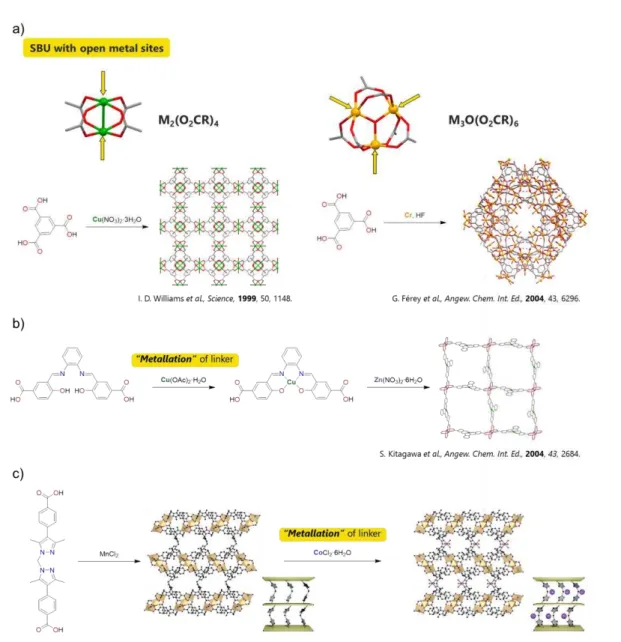
There seem to be three prominent ways for the incorporation of open metal sites. As first approach, secondary building units (SBUs) with unsaturated coordination sites such as paddle-wheel complex [M2(O2CR)4],24a trigonal prismatic clusters [M3O(O2CR)6]24b are utilized (Figure 3a). In second approach, metal centers mainly as catalytic sites are directly incorporated into the linker ligands to form metalloligand before construction of framework (Figure 3b).25 Third one is post-synthetic modification which means incorporation of another metal center into the chelating ligands after the framework synthesis (Figure 3c).26
However, in spite of these developments, it is still difficult to obtain single-crystalline materials and the problem prevents the precise determination of the local environment around open metal sites.
One of the solutions for the problem is the utilization of non-covalent interactions (e.g., hydrogen bonds, π-π interactions, van der Waals interactions and host-guest interactions) which enable to assemble units in ambient condition as described in the explanation of SOFs of first section.13-16 This strategy can be one of the promising tools to construct porous framework as previously reported.19 Compared to covalent bonding, these forces are weaker and less directional, but increase of interaction sites can overcome these disadvantages. Self-assembly of metal complexes via intermolecular interaction should extend unexplored porous materials which are difficult to construct by coordination-driven self-assembly.
Figure 3. Methods for incorporation of open metal sites into MOFs or PCPs: (a) utilization of SBUs with open metal sites (b) utilization of metalloligand (c) post-synthetic modification. Reproduced with permission from C. J. Sumby et al.26c
Arene-perfluoroarene (Ar-Ar
F) interaction as a tool for controlled
self-assembly
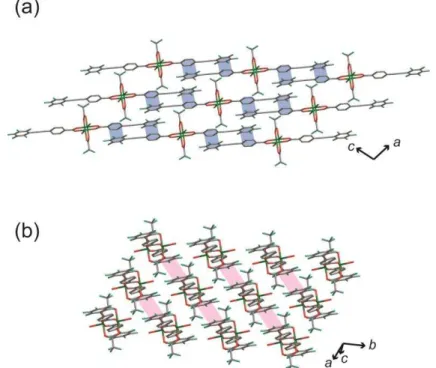
In 1960, Patrick and co-workers reported a co-crystal of benzene and hexafluorobenzene which comes from firstly observed arene-perfluoroarene interactions.
27 Unlike arene-arene interaction, which can usually exhibit both face-to-face (π-π) and edge-to-face (CH-π) interactions, face-to-face interaction is dominantly observed between arene and perfluoroarene due to the van der Waals and quadrupole-quadrupole interactions.28 By utilization of this interaction as a tool for molecular assembly, several interesting researches have been reported as shown below.
For the construction of closely arranged metal-metal systems, A. Hori and co-workers reported co-crystals of two different β-diketonate metal complexes thorough Ar-ArF interaction.29a Two different metal complexes in arene- and perfluoroarene- functionalized ligands successfully arranged alternately to give one-dimentional structures by columnar stacking.
Compared to rare applications for assembly of metal complexes using Ar-ArF interaction,29 there are relatively a large number of examples for assembly of organic molecules.30 The applications began with crystal engineering31 possibly due to the discovery of the interaction in co-crystal of benzene and hexafluorobenzene. Concomitantly, topochemical polymerization or dimerization has also been developed by the control of the distance between reactive chemical bonds.32 As other applications, construction of porous frameworks can be listed. T.-H. Chen and co-workers reported porous non covalent organic framework by combination of hydrogen bonds and Ar-ArF interactions.33 This framework is thermally robust and stable up to 250°C and exhibits high affinity for the adsorption of hydrocarbons and their halogenated derivatives, which are potent greenhouse species.
From these reports, it is apparent that Ar-ArF interaction is definitely an efficient supramolecular synthon. Considerable broad applications of this interaction might be attributed to the facility of introducing phenyl and perfluorophenyl ring moiety into molecules to be assembled. As indicated in recent studies,33,34 utilization of this interaction still knows no boundaries.
Figure 4. Crystal packing of (a) benzene and (b) co-crystal of benzene and hexafluorobenzene.
Rh(II) paddle-wheel complexes
The first paddle-wheel structure of Rh(II) complex, Rh2(OAc)4(H2O)2 has been reported by A. S. Antsyshkina et al. in 1962,35 and since then, the related compounds obtained by mainly ligand exchange reaction of Rh2(OAc)4(H2O)2 have been extensively investigated.36 The complexes consists of dinuclear Rh(II) with a Rh- Rh bond and four bridging ligands and possess D4h symmetrical structure (Figure 5). Two axial sites of rhodium center can serve as substrate binding sites or catalytic sites to lead to numerous applications in many different research fields. They have been extensively utilized to develop antitumor agents,37 NMR shift agents, 38 gas adsorbate,39 sensors40 and catalysts.41 Nonetheless, most applications were focused on catalysts which make it possible to perform a variety range of reactions41 (e.g., oxidation, H2 production, hydrogenation, cyclopropanation, C-H insertion, C-H amination, and so on ). In terms of organic transformations, metal-carbenoid intermediate is important for tuning the reactivity of the carbene and mechanistic studies have been reported.42
In spite of the rarity of rhodium metal on the earth, much attention is still paid due to the unique reactivity of the substitution-labile axial sites and high stability arising from the substitution-inert bridging ligands which is considered to be very important for catalytic reaction.
Figure 5. Applications of Rh(II) paddle-wheel complexes.
The aim of this thesis
As mentioned above, porous frameworks composed of organic or organic and inorganic building units have been developed tremendously so far. These materials can be functionalized further by the incorporation of open metal sites for many applications based on metal ions. Although, methodologies for the incorporation of open metal sites have been pursued, incorporation of open metal sites of substitution-inert complexes are still difficult and challenging topic.
In this study, a new strategy to assemble substitution-inert Rh(II) paddle wheel dimers to construct novel porous frameworks is described. As referred in previous section, Rh(II) paddle-wheel complexes has been paid much attention because of their unique properties and catalytic activities for various reactions. Thus, I aimed to assemble the complexes by using multipoint Ar-ArF interaction as a tool for controlled molecular arrangements. Through the combination of D4h symmetrical Rh(II) paddle-wheel complex and unidirectional multipoint Ar-ArF interaction, the construction of porous framework without interfering active sites of Rh(II) dimer units can be expected. Moreover, investigation of the porous properties and reactivities of obtained porous framework should be important for development of a new class of porous materials.
Survey of this thesis
Chapter 1 describes utility of Ar-ArF interactions for self-assembly of paddle-wheel complexes. I succeeded in controlling the self-assembly of paddlewheel dimers by intermolecular multipoint arene–perfluoroarene (Ar-ArF) interactions. A ligand with multipoint arene-perfluoroarene interaction sites, Hppeb = 4-[(perfluorophenyl)ethynyl]benzoic acid) was newly designed and synthesized. Then, two types of complexes, I-shaped Rh2(O2CCF3)2(ppeb)2 (3-pentanone)2 (1) and cross-shaped Cu2(ppeb)4(THF)2 (2) were successfully synthesized to afford 1D chain and 2D square-grid sheet structures, respectively.
Chapter 1
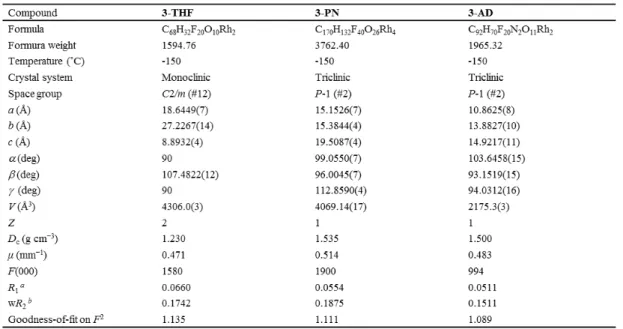
Chapter 2 describes the methodology to organize substitution-inert metal-based secondary building units (SBUs) with active sites to form porous frameworks. In this study, I successfully assembled substitution-inert paddle-wheel Rh(II) dimers to afford three novel porous frameworks, Rh2(ppeb)4(THF)2 (3-THF), Rh2(ppeb)4(3-pentanone)2
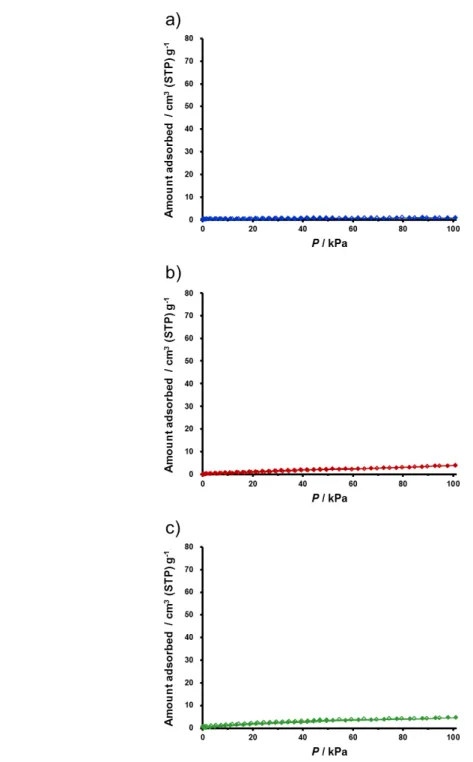
(3-PN) and Rh2(ppeb)4(1-adamantylamine)2 (3-AD) (ppeb = 4-[(perfluorophenyl)ethynyl]benzoate), by using non-covalent interactions. Multipoint arene-perfluoroarene (Ar-ArF) interactions, which allow in the unidirectional face-to-face interaction mode of aromating rings, were used to assemble substitution-inert paddle-wheel Rh(II) dimers. The obtained frameworks were structurally characterized by single crystal X-ray diffraction, and it is found that all strucures exhibited a one-dimensional channel with active axial sites exposed to the pores. The porous properties of the obtained frameworks were also investigated by thermogravimetric analysis, gas adsorption and powder X-ray diffraction measurements. Moreover, the ligand substitution reaction at the active axial sites was examined at the crystalline state and the flexible structural transformation with the change of channel shapes and sizes was observed.
Chapter 2
Chapter 3 describes an attempt to convert noncovalent linking of porous framework into covalent linking by the use of [2+2] photodimerization reaction. As a ligand with Ar-ArF interaction sites and photo chemically reactive site, (E)-Hppvb was newly designed and synthesized. By UV-light irradiation to the crystal of (E)-Hppvb obtained from DMF solution, photodimerization proceeded quantitatively. Subsequently, the synthesis of Rh(II) complex was performed to afford Rh2((E)-ppvb)4. In the crystal packing structure of Rh2((E)-ppvb)4(X)2 (X=THF, 2-butanone) obtained from recrystallization, 1-D channel structure was successfully constructed to show the effectiveness of Ar-ArF interaction. However, almost no photo polymerization proceeded even irradiation of UV-light for 48 hours, possibly due to the deactivation of the excited state of the ligand by Rh center.
Chapter 3
Chapter 4 describes the reactivity of Rh2(ppeb)4 with diazo compounds and the construction of triazole-incorporated porous frameworks. Rh2(ppeb)4 showed moderate reactivities for cyclopropanation of styrene and C-H insertion into allyl or benzylic positions. However, Rh2(ppeb)4 could not be used as heterogeneous catalyst because it can be dissolved in allyl or aromatic substrates. Then, alternative carbene precursors, triazoles which shows diazo-azomethine/1,2,3-triazole tautomerism were chosen because prospective incorporation of triazoles before construction of porous frameworks was anticipated. While Rh2(ppeb)4 with two [1,2,3]triazolo[1,5-a]pyridine-3-carboxylate (TR2) showed 0 dimensional pore due to interfering multipoint Ar-ArF interaction by π- π interaction between triazole 2 and equatorial ligand, adducts of TR3 which has tert-butyl ester afforded 1-D cahnnel structure as reported in chapter 2.
Chapter 4
References
1 (a) O. M. Yaghi, M. O'keeffe, N. W. Ockwig, H. K. Chae, M. Eddaoudi and J. Kim, Nature, 2003, 423, 705–714; (b) M. O’Keeffe, M. A. Peskov, S. J. Ramsden and O. M. Yaghi, Acc. Chem. Res., 2008, 41, 1782–1789. (c) M. Li, D. Li, M. O’Keeffe and O. M. Yaghi, Chem. Rev., 2014, 114, 1343–1370.
2 (a) H. Furukawa, K. E. Cordova, M. O’Keeffe and O. M. Yaghi, Science, 2013, 341, 974–986; (b) R. J. Kuppler, D. J. Timmons, Q.-R. Fang, J.-R. Li, T. A. Makal, M. D. Young, D. Yuan, D. Zhao, W. Zhuang and H.-C. Zhou, Cood. Chem. Rev., 2009, 253, 3042–3066.
3 (a) K. Sumida, D. L. Rogow, J. A. Mason, T. M. McDonald, E. D. Bloch, Z. R. Herm, T.-H. Bae and J. R. Long, Chem. Rev., 2012, 112, 724–781; (b) S. Kitagawa, R. Kitaura and S. Noro, Angew. Chem., Int. Ed., 2004, 43, 2334–2375; (c) J.-R. Li, J. Sculley and H.-C. Zhou, Chem. Rev., 2012, 112, 869–932; (d) Y. He, W. Zhou, G. Qian and B. Chen, Chem. Soc. Rev., 2014, 43, 5657–5678.
4 (a) M. D. Allendorf, C. A. Bauer, R. K. Bhakta and R. J. T. Houk, Chem. Soc. Rev., 2009, 38, 1330–1352; (b) L. E. Kreno, K. Leong, O. K. Farha, M. Allendorf, R. P. V. Duyne and J. T. Hupp, Chem. Rev., 2012, 112, 1105–1125; (c) D. Banerjee, Z. Hu and J. Li, Dalton Trans., 2014, 43, 10668.
5 (a) Z. Ma and B. Moulton, Cood. Chem. Rev., 2011, 255, 1623–1641; (b) R. C. Huxford, J. D. Rocca and W. Lin,“Current Opinion in Chemical Biology”, 2010, 14, 262–268; (c) P. Horcajada, R. Gref, T. Baati, P. K. Allan, G. Maurin, P. Couvreur, G. Férey, R. E. Morris and C. Serre, Chem. Rev., 2012, 112, 1232–1268.
6 (a) V. Stavila, A. A. Talin and M. D. Allendorf, Chem. Soc. Rev., 2014, 43, 5994–6010; (b) G. Givaja, P. Amo-Ochoa, C. J. Gómez-García and F. Zamora, Chem. Soc. Rev., 2012, 41, 115– 147; (c) A. Morozan and F. Jaouen, Energy & Environmental Science, 2012, 5, 9269.
7 (a) D. Maspoch, D. Ruiz-Molina and J. Veciana, J. Mater. Chem., 2004, 14, 2713; (b) E. Coronado and G. M. Espallargas, Chem. Soc. Rev., 2013, 42, 1525–1539.
8 (a) J. Lee, O. K. Farha, J. Roberts, K. A. Scheidt, S. T. Nguyen and J. T. Hupp, Chem. Soc. Rev., 2009, 38, 1450–1459; (b) M. Yoon, R. Srirambalaji and K. Kim, Chem. Rev., 2012, 112, 1196– 1231; (c) J. Liu, L. Chen, H. Cui, J. Zhang, L. Zhang and C.-Y. Su, Chem. Soc. Rev., 2014, 43, 6011–6061; (d) A. H. Chughtai, N. Ahmad, H. A. Younus, A. Laypkov and F. Verpoort, Chem. Soc. Rev., 2015, 44, 6804–6849: (e) M. Ranocchiari and J. A. V. Bokhoven, Phys. Chem. Chem. Phys., 2011, 13, 6388; (f) D. Farrusseng, S. Aguado and C. Pinel, Angew. Chem. Int. Ed., 2009, 48, 7502–7513; (g) M. Yoon, R. Srirambalaji and K. Kim, Chem. Rev., 2012, 112, 1196–1231; (h) J. Gascon, A. Corma, F. Kapteijn and F. X. L. I. Xamena, ACS Catal., 2014, 4, 361–378. 9 (a) G. Zhu and H. Ren, “Porous organic frameworks: design, synthesis and their advanced
applications”, Springer, 2015; (b) U. Díaz and A. Corma, Cood. Chem. Rev., 2016, 311, 85–
124; (c) J. C. A. L. Segura, M. J. Mancheño and F. Zamora, Chem. Soc. Rev., 2016, 45, 5635– 5671; (d) S.-Y. Ding and W. Wang, Chem. Soc. Rev., 2013, 42, 548–568: (e) X. Feng, X. Ding and D. Jiang, Chem. Soc. Rev., 2012, 41, 6010.
10 A. P. Cote, Science, 2005, 310, 1166–1170.
11 (a) Y. Zeng, R. Zou and Y. Zhao, Adv. Mater., 2016, 28, 2855–2873; (b) A. A. Olajire, Journal of CO2 Utilization, 2017, 17, 137–161.
12 Y. Zhang and J. Y. Ying, ACS Catal., 2015, 5, 2681–2691.
13 Selected examples: (a) W. Yang, A. Greenaway, X. Lin, R. Matsuda, A. J. Blake, C. Wilson, W. Lewis, P. Hubberstey, S. Kitagawa, N. R. Champness and Schröder Martin, J. Am. Chem. Soc., 2010, 132, 14457–14469, and references references therein; (b) Sozzani, P; Bracco, S; Comotti, A; Ferretti, L; Simonutti, R. Angew. Chem., Int. Ed. 2005, 44, 1816; (c) Adv. Mater. 2014, 26, 7027–7031 (d) J. Am. Chem. Soc. 2014, 136, 12828−12831; (e) P. Li, Y. He, H. D. Arman, R. Krishna, H. Wang, L. Weng and B. Chen, Chem. Commun., 2014, 50, 13081–13084; (f) Y. B. He, S. C. Xiang and B. L. Chen, J. Am. Chem. Soc., 2011,133, 14570 (g) P. Li, Y. B. He, J. Guang, L. H. Weng, J. C. G. Zhao, S. C. Xiang and B. L. Chen, J. Am. Chem. Soc., 2014, 136, 547. (h) R. S. Patil, D. Banerjee, C. Zhang, P. K. Thallapally and J. L. Atwood, Angew.Chem. Int.Ed., 2016, 55,4523–4526.
14 Selected examples: (a) D. L. Wang, Y. Su, C. Y. Jin, B. S. Zhu, Y. Pang, L. J. Zhu,J. Y. Liu, C. L. Tu, D. Y. Yan and X. Y. Zhu, Biomacromolecules, 2011, 12, 1370; (b) Q. P. Duan, Y. Cao, Y. Li, X. Y. Hu, T. X. Xiao, C. Lin, Y. Panand L. Y. Wang, J. Am. Chem. Soc., 2013, 135, 10542. 15 Selected examples: (a) C. Michael´a Drain, Chem. Commun., 1996, 337. 37 S. Hanessian, M.
Simard and S. Roelens, J. Mater. Chem. A, 1995, 117, 7630. 38 F. W. Zeng and S. C. Zimmerman, Chem. Rev., 1997, 97, 1681.
16 X. F. Ji, Y. Yao, J. Y. Li, X. Z. Yan and F. H. Huang, J. Am. Chem. Soc., 2012, 135, 74.
17 B. Li, C. Bai, S. Zhang, X. Zhao, Y. Li, L. Wang, K. Ding, X. Shu, S. Li and L. Ma, J. Mater. Chem. A, 2015, 3, 23788–23798.
18 B. Chen, M. Eddaoudi, T. M. Reineke, J. W. Kampf, M. O'keeffe and O. M. Yaghi, J. Am. Chem. Soc., 2000, 122, 11559–11560.
19 Selected examples: (a) C. G. Bezzu, M. Helliwell, J. E. Warren, D. R. Allan and N. B. Mckeown, Science, 2010, 327, 1627–1630; (b) N. B. Mckeown, S. Makhseed, K. J. Msayib, L.-L. Ooi, M. Helliwell and J. E. Warren, Angew. Chem. Int. Ed., 2005, 44, 7546–7549; (c) R. D. Zorzi, N. Guidolin, L. Randaccio and S. Geremia, CrystEngComm, 2010, 12, 4056; (d) K. S. Suslick, P. Bhyrappa, J.-H. Chou, M. E. Kosal, S. Nakagaki, D. W. Smithenry and S. R. Wilson, Acc. Chem. Res., 2005, 38, 283–291. (e) I. Goldberg, Chem. Commun., 2005, 1243.
20 Selected examples: (a) A. Biswas, M.-B. Kim, S.-Y. Kim, T.-U. Yoon, S.-I. Kim and Y.-S. Bae, RSC Adv., 2016, 6, 81485–81490; (b) D. Britt, H. Furukawa, B. Wang, T. G. Glover and O. M.
Yaghi, Proc. Natl. Acad. Sci. USA, 2009, 106, 20637–20640; (c) E. D. Bloch, W. L. Queen, R. Krishna, J. M. Zadrozny, C. M. Brown and J. R. Long, Science, 2012, 335, 1606–1610; (d) S. Xiang, Z. Zhang, C. Zhao, K. Hong, X. Zhao, D. Ding, M. Xie, C. Wu, M. C. Das, R. Gill, K. M. Thomas and B. Chen, Nat. Commun., 2011, 2, 204; (e) E. D. Bloch, M. R. Hudson, J. A. Mason, S. Chavan, V. Crocellà, J. D. Howe, K. Lee, A. L. Dzubak, W. L. Queen, J. M. Zadrozny, S. J. Geier, L.-C. Lin, L. Gagliardi, B. Smit, J. B. Neaton, S. Bordiga, C. M. Brown and J. R. Long, J. Am. Chem. Soc., 2014, 136, 10752–10761; (f) Y.-S. Bae, C. Y. Lee, K. C. Kim, O. K. Farha, P. Nickias, J. T. Hupp, S. T. Nguyen and R. Q. Snurr, Angew. Chem., Int. Ed., 2012, 51, 1857–1860; (g) Z. Guo, H. Wu, G. Srinivas, Y. Zhou, S. Xiang, Z. Chen, Y. Yang, W. Zhou, M. O’Keeffe and B. Chen, Angew. Chem., Int. Ed., 2011, 50, 3178–3181; (h) J. Pang, F. Jiang, M. Wu, C. Liu, K. Su, W. Lu, D. Yuan and M. Hong, Nat. Commun., 2015, 6, 7575; (i) J.-M. Lin, C.-T. He, Y. Liu, P.-Q. Liao, D.-D. Zhou, J.-P. Zhang and X.-M. Chen, Angew. Chem., Int. Ed., 2016, 55, 4674–4678; (j) J. L. C. Rowsell, O. M. Yaghi, B. Chen, N. W. Ockwig, A. R. Millward and D. S. Contreras, Angew. Chem., Int. Ed., 2005, 44, 4647–4647; (k) X.-S. Wang, S. Ma, P. M. Forster, D. Yuan, J. Eckert, J. J. López, B. J. Murphy, J. B. Parise and H.-C. Zhou, Angew. Chem., Int. Ed., 2008, 47, 7263–7266; (l) J. Zhang, T. Wu, S. Chen, P. Feng and X. Bu, Angew. Chem., Int. Ed., 2009, 48, 3486–3490; (m) K. Gedrich, I. Senkovska, N. Klein, U. Stoeck, A. Henschel, M. R. Lohe, I. A. Baburin, U. Mueller and S. Kaskel, Angew. Chem., Int. Ed., 2010, 49, 8489–8492; (n) X. Zhao, C. Mao, K. T. Luong, Q. Lin, Q.-G. Zhai, P. Feng and X. Bu, Angew. Chem., Int. Ed., 2016, 55, 2768–2772; (o) W. Zhou, H. Wu and T. Yildirim, J. Am. Chem. Soc., 2008, 130, 15268–15269; (p) K. Lee, W. C. Isley, A. L. Dzubak, P. Verma, S. J. Stoneburner, L.-C. Lin, J. D. Howe, E. D. Bloch, D. A. Reed, M. R. Hudson, C. M. Brown, J. R. Long, J. B. Neaton, B. Smit, C. J. Cramer, D. G. Truhlar and L. Gagliardi, J. Am. Chem. Soc., 2014, 136, 698–704; (q) B. Chen, X. Zhao, A. Putkham, K. Hong, E. B. Lobkovsky, E. J. Hurtado, A. J. Fletcher and K. M. Thomas, J. Am. Chem. Soc., 2008, 130, 6411–6423; (r) X. Zhao, X. Bu, Q.-G. Zhai, H. Tran and P. Feng, J. Am. Chem. Soc., 2015, 137, 1396–1399. 21 (a) C.-D. Wu, A. Hu, L. Zhang and W. Lin, J. Am. Chem. Soc., 2005, 127, 8940–8941; (b) W.
Xuan, C. Ye, M. Zhang, Z. Chen and Y. Cui, Chem. Sci., 2013, 4, 3154; (c) Z. Zhang, Y. Chen, S. He, J. Zhang, X. Xu, Y. Yang, F. Nosheen, F. Saleem, W. He and X. Wang, Angew. Chem., Int. Ed., 2014, 126, 12725–12729; (d) G. Akiyama, R. Matsuda, H. Sato and S. Kitagawa, Chem.-Asian J., 2014, 9, 2772–2777; (e) J. Juan-Alcañiz, R. Gielisse, A. B. Lago, E. V. Ramos-Fernandez, P. Serra-Crespo, T. Devic, N. Guillou, C. Serre, F. Kapteijn and J. Gascon, Catal. Sci. Technol., 2013, 3, 2311; (f) N. T. Phan, T. T. Nguyen, K. D. Nguyen and A. X. Vo, Applied Catalysis A: General, 2013, 464-465, 128–135; (g) Y. E. K. Hwang, D.-Y. Hong, J.-S. Chang, S. H. Jhung, Y.-K. Seo, J. Kim, A. Vimont, M. Daturi, C. Serre and G. Férey, Angew. Chem., Int. Ed., 2008, 120, 4144–4418; (h) A. Henschel, K. Gedrich, R. Kraehnert and S.
Kaskel, Chem. Commun., 2008, 4192-4194; (i) J.-P. Ma, S.-Q. Wang, C.-W. Zhao, Y. Yu and Y.-B. Dong, Chemistry of Materials, 2015, 27, 3805–3808; (j) J. Lee, O. K. Farha, J. Roberts, K. A. Scheidt, S. T. Nguyen and J. T. Hupp, Chem. Soc. Rev., 2009, 38, 1450-1459; (k) S. Meng, X. Zou, C. Liu, H. Ma, N. Zhao, H. Ren, M. Jia, J. Liu and G. Zhu, ChemCatChem, 2016, 8, 2393–2400; (l) Y. Kataoka, K. Sato, Y. Miyazaki, K. Masuda, H. Tanaka, S. Naito and W. Mori, Energy & Environmental Science, 2009, 2, 397; (m) S. Horike, Dinč Mircea, K. Tamaki and J. R. Long, J. Am. Chem. Soc., 2008, 130, 5854–5855; (n) M. Banerjee, S. Das, M. Yoon, H. J. Choi, M. H. Hyun, S. M. Park, G. Seo and K. Kim, J. Am. Chem. Soc., 2009, 131, 7524–7525; (o) S. Biswas, M. Maes, A. Dhakshinamoorthy, M. Feyand, D. E. D. Vos, H. Garcia and N. Stock, J. Mater. Chem., 2012, 22, 10200; (p) L.-J. Zhang, C.-Y. Han, Q.-Q. Dang, Y.-H. Wang and X.-M. Zhang, RSC Adv., 2015, 5, 24293–24298.
22 (a) G. Agustí, R. Ohtani, K. Yoneda, A. B. Gaspar, M. Ohba, J. F. Sánchez-Royo, M. C. Muñoz, S. Kitagawa and J. A. Real, Angew. Chem. Int. Ed., 2009, 48, 8944–8947; (b) R. Ohtani, K. Yoneda, S. Furukawa, N. Horike, S. Kitagawa, A. B. Gaspar, Mũoz M. Carmen, Real Joś A. and M. Ohba, J. Am. Chem. Soc., 2011, 133, 8600–8605; (c) Q. Zhang, B. Li and L. Chen, Inorganic Chemistry, 2013, 52, 9356–9362; (d) Jee, K. Eisinger, F. Gul-E-Noor, M. Bertmer, M. Hartmann, D. Himsl and Pöppl Andreas, J. Phys. Chem. C, 2010, 114, 16630–16639; (e) Y. Y. Sun, Y.-H. Kim, K. Lee, D. West and S. B. Zhang, Phys. Chem. Chem. Phys., 2011, 13, 5042. 23 (a) B. Chen, Y. Yang, F. Zapata, G. Lin, G. Qian and E. B. Lobkovsky, Adv. Mater., 2007, 19, 1693–1696; (b) N. B. Shustova, A. F. Cozzolino, S. Reineke, M. Baldo and M. Dincă, J. Am. Chem. Soc., 2013, 135, 13326–13329; (c) L. E. Kreno, K. Leong, O. K. Farha, M. Allendorf, R. P. V. Duyne and J. T. Hupp, Chem. Rev., 2012, 112, 1105–1125; (d) Y.-W. Li, J.-R. Li, L.-F. Wang, B.-Y. Zhou, Q. Chen and X.-H. Bu, J. Mater. Chem. A, 2013, 1, 495–499.
24 Selected examples: (a) S. S.-Y. Chui, S. M.-F. Lo, J. P. H. Charmant, A. G. Orpen and I. D. Williams, Science, 1999, 283, 1148–1150; (b) G. C. A. Férey, C. Serre, C. Mellot-Draznieks, F. Millange, S. Surblé, J. Dutour and I. Margiolaki, Angew. Chem. Int. Ed., 2004, 43, 6296–6301. 25 Selected examples: (a) B. Chen, X. Zhao, A. Putkham, K. Hong, E. B. Lobkovsky, E. J.
Hurtado, A. J. Fletcher and K. M. Thomas, J. Am. Chem. Soc., 2008, 130, 6411–6423; (b) . F. Song, C. Wang, J. M. Falkowski, L. Ma and W. Lin, J. Am. Chem. Soc., 2010, 132, 15390– 15398; (c) R. Kitaura, G. Onoyama, H. Sakamoto, R. Matsuda, S.-I. Noro and S. Kitagawa, Angew. Chem. Int. Ed., 2004, 43, 2684–2687.
26 Selected examples: (a) K. K. Tanabe and S. M. Cohen, Chem. Soc. Rev., 2011, 40, 498–519; (b) Z. Wang and S. M. Cohen, Chem. Soc. Rev., 2009, 38, 1315; (c) J. D. Evans, C. J. Sumby and C. J. Doonan, Nat. Chem., 2014, 6, 906–912.
27 C. R. Patrick and G. S. Prosser, Nature, 1960, 187, 1021. 28 J. H. Williams, Acc. Chem. Res., 1993, 26, 593–598.
29 (a) A. Hori, A. Shinohe, M. Yamasaki, E. Nishibori, S. Aoyagi and M. Sakata, Angew. Chem., Int. Ed., 2007, 46, 7617–7620; (b) A. S. Batsanov, J. C. Collings and T. B. Marder, Acta Crystallographica Section C Crystal Structure Communications, 2006, 62, m229–m231.
30 K. Reichenbächer, H. I. Süss and J. Hulliger, Chem. Soc. Rev., 2005, 34, 22–30.
31 (a) C. Dai, P. Nguyen, T. B. Marder, T. B. Marder, A. J. Scott, W. Clegg, C. Viney and C. Viney, Chem. Commun., 1999, 2493–2494; (b) J. C. Collings, K. P. Roscoe, E. G. Robins, A. S. Batsanov, L. M. Stimson, J. A. K. Howard, S. J. Clark and T. B. Marder, New J. Chem., 2002, 26, 1740–1746; (c) J. C. Collings, A. S. Batsanov, J. A. Howard, D. A. Dickie, J. A. Clyburne, H. A. Jenkins and T. B. Marder, J. Fluorine Chem., 2005, 126, 513–517; (d) T. M. Fasina, J. C. Collings, D. P. Lydon, D. Albesa-Jove, A. S. Batsanov, J. A. K. Howard, P. Nguyen, M. Bruce, A. J. Scott, W. Clegg, S. W. Watt, C. Viney and T. B. Marder, J. Mater. Chem., 2004, 14, 2395; (e) V. R. Vangala, A. Nangia and V. M. Lynch, Chem. Commun., 2002, 1304–1305.
32 (a) G. W. Coates, A. R. Dunn, L. M. Henling, D. A. Dougherty and R. H. Grubbs, Angew. Chem., Int. Ed., 1997, 36, 248–251; (b) R. Xu, V. Gramlich and H. Frauenrath, J. Am. Chem. Soc., 2006, 128, 5541–5547; (c) P. Kissel, D. J. Murray, W. J. Wulftange, V. J. Catalano and B. T. King, Nat. Chem., 2014, 6, 774–778.
33 T.-H. Chen, I. Popov, W. Kaveevivitchai, Y.-C. Chuang, Y.-S. Chen, O. Daugulis, A. J. Jacobson and O. Š. Miljanić, Nat. Commun., 2014, 5, 5131.
34 (a) T. Okamoto, K. Nakahara, A. Saeki, S. Seki, J. H. Oh, H. B. Akkerman, Z. Bao and Y. Matsuo, Chemistry of Materials, 2011, 23, 1646–1649; (b) K. Kishikawa, T. Inoue, Y. Sasaki, S. Aikyo, M. Takahashi and S. Kohmoto, Soft Matter, 2011, 7, 7532.
35 M. A. Porai-Koshits and A. S. Antsyshkina, Dokl. Akad. Sauk SSSR, 1962, 146, 1102.
36 F. A. Cotton, C. A. Murillo, and R.A Walton,“Multiple Bonds Between Metal Atoms”, 3rd ed., Springer Science and Business Media, New York, 2005.
37 Selected examples: (a) A. Erck, L. Rainen, J. Whileyman, I.-M. Chang, A. P. Kimball and J. Bear, Exp. Biol. Med., 1974, 145, 1278–1283; (b) H. T. Chifotides and K. R. Dunbar, Acc. Chem. Res., 2005, 38, 146–156; (c) A. R. de Souza, E. P. Coelho and S. B. Zyngier, Eur. J. Med. Chem., 2006, 41, 1214–1216.
38 Selected examples: (a) Z. Rozwadowski and B. Nowak-Wydra, Magn. Reson. Chem., 2008, 46, 974–978. (b) J. T. Mattiza, N. Harada, S. Kuwahara, Z. Hassan and H. Duddeck, Chirality, 2009, 21, 843–849; (c) H. Duddeck, Chem. Rec., 2005, 5, 396–409; (d) Z. Rozwadowski, Magn. Reson. Chem., 2007, 45, 605–610; (e) H. Duddeck and E. Díaz Gómez, Chirality, 2009, 21, 51– 68.
39 S. Furukawa, N. Horike, M. Kondo, Y. Hijikata, A. Carné-Sánchez, P. Larpent, N. Louvain, S. Diring, H. Sato, R. Matsuda, R. Kawano and S. Kitagawa, Inorganic Chemistry, 2016, 55, 10843–10846.
40 Selected examples: (a) S. A. Hilderbrand, M. H. Lim and S. J. Lippard, J. Am. Chem. Soc., 2004, 126, 4972–4978; (b) M. H. Lim and S. J. Lippard, Acc. Chem. Res., 2006, 40, 41–51; (c) R. C. Smith, A. G. Tennyson and S. J. Lippard, Inorg. Chem., 2006, 45, 6222–6226; (d) A. Gulino, T. Gupta, M. Altman, S. Lo Schiavo, P. G. Mineo, I. L. Fragala, G. Evmenenko, P. Dutta and M. E. van der Boom, Chem. Commun., 2008, 2900–2902.
41 Selected examples: (a); M. H. Lim and S. J. Lippard, Acc. Chem. Res., 2006, 40, 41–51; (b) R. C. Smith, A. G. Tennyson and S. J. Lippard, Inorg. Chem., 2006, 45, 6222–6226; (c) A. Gulino, T. Gupta, M. Altman, S. Lo Schiavo, P. G. Mineo, I. L. Fragala, G. Evmenenko, P. Dutta and M. E. van der Boom, Chem. Commun., 2008, 2900–2902. Oxy (d) M. O. Ratnikov, L. E. Farkas, E. C. McLaughlin, G. Chiou, H. Choi, S. H. El-Khalafy and M. P. Doyle, J. Org. Chem., 2011, 76, 2585–2593, and references therein; Hydrogenation (e) T. Sato, W. Mori, C. N. Kato, T. Ohmura, T. Sato, K. Yokoyama, S. Takamizawa and S. Naito, Chem. Lett., 2003, 32, 854–855; (f) S. Naito, T. Tanibe, E. Saito, T. Miyao and W. Mori, Chem. Lett., 2001, 30, 1178–1179; (g) W. Mori, T. Sato, T. Ohmura, C. N. Kato and T. Takei, J. Solid State Chem., 2005, 178, 2555–2573; (h) T. Sato, W. Mori, C. Kato, E. Yanaoka, T. Kuribayashi, R. Ohtera and Y. Shiraishi, J. Catal., 2005, 232, 186–198; (i) G. Nickerl, U. Stoeck, U. Burkhardt, I. Senkovska and S. Kaskel, J. Mater. Chem. A, 2014, 2, 144–148. (j) S. Tanaka,S. Masaoka, K. Yamauchi, M. Annaka and K. Sakai, Dalton Trans., 2010, 39, 11218–11226; Y. Kataoka, K. Sato, Y. Miyazaki, Y. Suzuki, H. Tanaka, Y. Kitagawa, T. Kawakami, M. Okumura and W. Mori, Chem. Lett., 2010, 39, 358–359. Cyclo (k) H. M. L. Davies and C. Venkataramani, Org. Lett., 2003, 5, 1403–1406; (l) S. Negretti, C. M. Cohen, J. J. Chang, D. M. Guptill and H. M. Davies, Tetrahedron, 2015, 71, 7415–7420; (m) S. Hashimoto, T. Washio, R. Yamaguchi, T. Abe,H. Nambu and M. Anada, Tetrahedron, 2007, 63, 12037–12046; (o) M. P. Doyle, M. Valenzuela and P. L. Huang, Proc. Natl. Acad. Sci. U. S. A., 2004, 101, 5391–5395; (p) M. Anada, T. Washio, N. Shimada, S. Kitagaki, M. Nakajima, M. Shiro and S. Hashimoto, Angew. Chem., Int. Ed., 2004, 43, 2665– 2668; (q) R. E. Forslund, J. Cain, J. Colyer and M. P. Doyle, Adv. Synth. Catal., 2005, 347, 87– 92; (r) M. P. Doyle, R. Duffy, M. Ratnikov and L. Zhou, Chem. Rev., 2010, 110, 704–724; H. M. L. Davies and J. R. Manning, Nature, 2008, 451, 417–424; (s) F. Collet, R. H. Dodd and P. Dauban, Chem. Commun., 2009, 5061–5074; (t) D. A. Colby, R. G. Bergman and J. A. Ellman, Chem. Rev., 2009, 110, 624–655;
42 Selected examples: (a) J. F. Berry, Dalton Trans., 2012, 41, 700–713; (b) K. P. Kornecki, J. F. Briones, V. Boyarskikh, F. Fullilove, J. Autschbach, K. E. Schrote, K. M. Lancaster, H. M. L. Davies, J. F. Berry, Science, 2013, 342, 351-354; (c) C. Werlé, R. Goddard and A. Fürstner, Angew. Chem., Int. Ed., 2015, 51, 15452–15456; (d) C. Werlé, R. Goddard, P. Philipps, C. Farès and A. Fürstner, J. Am. Chem. Soc., 2016, 138, 3797–3805.
Chapter 1
Construction of porous frameworks via Ar-Ar
Finteraction
CrystEngComm, 2013, 15, 6122–6126.
Introduction
Control over the self-assembling process of metal complexes is of key importance to construct supramolecular materials in which desirable bulk properties emerge as a consequence of specific intermolecular orientations.1 Paddle-wheel complexes which are described as M2L4 (M = metal ion, L = monoanionic bidentate ligand) attract much attention because of their highly symmetric (D4h) structures suitable for the construction of continuous structures. Moreover, the existence of free coordination sites at the axial positions (open axial sites) and their Lewis acidity play a crucial role in catalysis or selective guest recognition. For example, Rh(II) carboxylates are very efficient catalysts for many reactions2a-e and also used for the sensor of toxic molecules,2f and Cu(II) carboxylates can be utilized for the gas separation.2g,h Therefore, the construction of continuous structures of paddle-wheel units with open axial sites is of significance to develop functional materials. There have been several reports which succeeded to assemble paddle-wheel units with open axial sites via the combination of arene-arene3 or haloarene-haloarene4 moieties. However, the coexistence of more than
Scheme 1. Schematic illustration of intermolecular interactions. Multipoint arene-perfluoroarene interaction exhibits unidirectional arrangement, whereas other interactions show multidirectional arrangements.
two kinds of interaction modes makes intermolecular interactions multidirectional and the molecular arrangements are hard to predict (Scheme 1a, 1b). Therefore, the development of paddle-wheel units with unidirectional interaction sites is essential for the construction of supramolecular architectures with desired topologies.
Here we firstly report the self-assembly of Rh(II) and Cu(II) paddle-wheel complexes with open axial sites controlled via unidirectional interaction (Scheme 2). Two kinds of paddle-wheel dimers, the I-shaped complex, which has only two unidirectional interaction sites and is expected to have one-dimensional chain assembly, and the cross-shaped complex, which has four unidirectional interaction sites in one molecule and is expected to have two-dimensional sheet structure, are chosen to examine the molecular arrangements in the crystalline state (Scheme 2).
One of the promising ways to obtain unidirectional interaction is to exploit multipoint arene-perfluoroarene interaction. Whereas more than two kinds of interaction modes are exhibited in arene-arene interaction, arene-perfluoroarene interaction dominantly exhibits face-to-face interaction mode5,6 arising from the van der Waals and quadrupole-quadrupole interactions7 (Scheme 1). Moreover, the incorporation of multipoint interactive sites would inhibit the free rotation of arene rings to afford the unidirectional arrangement (Scheme 1c). Based on the strategy mentioned above, a novel ligand, 4-[(perfluorophenyl)ethynyl]benzoic acid (HL, Chart 1) was designed. Arene and perfluoroarene moieties of HL are bridged by ethyne moiety to keep planar configuration in the crystalline state,8 and thus, robust and multipoint arene-perfluoro
arene interactions can be expected.
Scheme 2. Schematic illustration of I- and cross-shaped paddle-wheel complexes with open axial sites and their self-assembled structures.
Chart 1. Chemical structure of HL.
Syntheses of ligand HL and paddle-wheel complexes
The synthesis of HL is summarized in Scheme 3. Methyl 4- [(perfluorophenyl)ethynyl]benzoate as an ester precursor was synthesized via Sonogashira cross coupling reaction9 of pentafluoroiodobenzene and methyl 4-ethynylbenzoate.10,11 The ester precursor obtained was hydrolyzed by BBr3 to give HL, which was characterized by 1H NMR, 19F NMR and elemental analysis. The total synthetic yield for HL was 10%.
The synthesis of I-shaped Rh(II) complex was carried out by the reaction of Rh2(O2CCF3)4(acetone)2 with 8 equivalent of HL at 110 °C in digylme for 2 h. Single crystals of Rh2(O2CCF3)2(L)2(3-pentanone)2 (1) were obtained by the slow evaporation of 3-pentanone-Et2O mixed solution and were suitable for X-ray crystallography. The synthesis of cross-shaped Cu(II) complex was performed by layering the acetone solution of HL (5 eq.) on the THF solution of Cu(OAc)2·H2O. Blue solution was obtained after 2 days and the slow evaporation of solvent afforded single crystals of Cu2(L)4(THF)2 (2) suitable for X-ray crystallography. It should be noted that the suppression of ligand scrambling reaction is essential to obtain the I-shaped complex. Therefore, Rh(II) was selected as a metal centre because Rh(II) paddle-wheel dimer has relatively strong M-carboxylate bonds and is known to form stable disubstituted complex.12
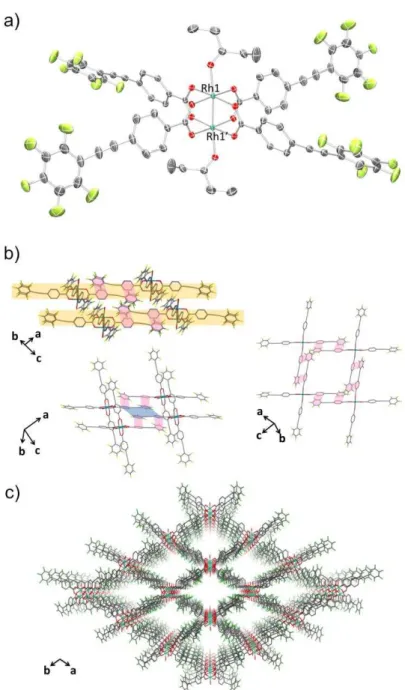
The crystal structure of 1 comprises Rh(II) paddle-wheels with 3-pentanone molecules coordinated at the axial sites (Figure 1). In the case of 1, the paddle-wheel sits on an inversion centre and two L- ligands occupy the trans position in the equatorial plane of each rhodium atom. The Rh1-Rh1’ distance is 2.404(2) Å in the range found for previously reported Rh(II) paddle-wheel dimers (2.316 to 2.486 Å).13 Although 1 has two types of carboxylate ligands, there is no significant difference in bond lengths between Rh and O: Rh1-O1 and Rh1-O2’ distances are 2.041(4) and 2.025(7) Å, respectively, and Rh1-O3 and Rh1-O4’ distances are 2.035(5) and 2.028(7) Å, respectively. The angle between phenylene and perfluorophenyl rings is estimated to be 9.4°. An ORTEP drawing of 2 is shown in Figure 1b. The crystal structure of 2 comprises Cu(II) paddle-wheels with mirror symmetry and THF molecules are coordinated at the axial sites. The Cu1-Cu2 distance is 2.6131(7) Å and is in the range found for previously reported Cu(II) paddle-wheel dimers (2.563 to 2.886 Å).14 The averaged angle between phenylene and perfluorophenyl rings is estimated to be 20.0°.
Figure 1. ORTEP drawings of (a) 1 and (b) 2 (50% probability ellipsoids). Hydrogen atoms, disordered carbon atoms of THF molecule and crystal solvent molecules are omitted for clarity. O = red, C = grey F = pale green, Rh = dark green, Cu = dark blue.
In the crystal packing structures of 1 and 2, intermolecular multipoint arene-perfluoroarene interactions are observed. As shown in Figure 2, 1 is arranged in one-dimensional chain due to face-to-face overlap of phenylene and perfluorophenyl rings. The mean interplanar separation between phenylene and perfluorophenyl rings is 3.48 Å, which is comparable to the reported values.8 Interchain stacking are stabilized by π-π interactions between perfluorophenyl rings to form the two-dimensional sheet structure. The crystal packing structures of 2 are shown in Figure 3. An infinite two-dimensional square-grid sheet structure is formed via multipoint arene-perfluoroarene interaction between ligands. The mean interplanar separation between phenylene and perfluorophenyl rings is 3.56 Å. These two dimensional sheets are stacked though π-π interaction between ligands along the a axis to form columnar structure of paddle-wheel units.
Figure 2. Crystal packing of 1 along (a) the b axis and (b) one-dimensional chain. One-dimensional chains formed by multipoint arene-perfluoroarene interactions (blue) are accumulated via π-π interactions between perfluoroarene rings (pink). Hydrogen atoms and carbon atoms of 3-pentanone molecules at the axial positions are omitted for clarity. O = red, C
= grey, F = pale green, Rh = dark green.
Figure 3. Crystal packing structures of 2 (a) parallel to the two-dimensional sheet and (b) along the c axis. Two-dimensional chains formed by multipoint arene-perfluoroarene interactions (blue) are accumulated via π-π interactions between ligands (pink). Hydrogen atoms, carbon atoms of THF at the axial positions and crystal solvent molecules are omitted for clarity. O = red, C = grey, F = pale green, Cu = dark blue.
Our approach to control the self-assembly of paddle-wheel complexes paves the way for a new field of crystal engineering. Self-assembled porous structures of paddle-wheel complexes with open axial sites are of interest for catalytic reaction or selective guest recognition. Even though several examples15,16 based on coordination bonding network so called porous coordination polymers (PCPs) or metal-organic frameworks (MOFs) have been reported, no structures based on substitution-inert paddle-wheel dimers (e.g. Rh2(O2CR)4) are available. This is because substitution-inert complexes require high temperature to be synthesized and often results in low yield and low crystallinity of desired products. In contrast, the utilization of arene-perfluoroarene interactions enables to assemble paddle-wheel units at low temperature, and thus can be an alternative approach. Indeed, the self-assembly of both Rh(II) and Cu(II) paddle-wheel units, was successfully achieved at room temperature and the arrangements were controlled by multipoint arene-perfluoroarene interactions as expected (Figures 2 and 3). Moreover, in the crystal packing of 2, channel structure, in which THF molecules are accommodated as guest, was formed by the stacking of the two dimensional sheets via π-π interaction between ligands along the a axis and open axial sites are oriented to the channel (Figure 4). To the best of our knowledge, there has been only one example of supramolecular architecture composed of discrete paddle-wheel dimers where solvent accessible channel and open axial sites are coexist.4c Furthermore, the channel entrance size of 2 was estimated to be 13.8 × 5.8 Å2 considering the van der Waals radii of constituent atoms and is much larger than that of the structure reported in the previous work (4.2 × 4.5 Å2).
Figure 4. Crystal packing of 2 along the a axis. Hydrogen atoms, carbon atoms of THF at the axial positions and crystal solvent molecules observed in channels are omitted for clarity. O = red, C = grey, F = pale green, Cu = dark blue.
Estimation of stabilization energy of Ar-Ar
Finteraction
As shown in Figure 2 and 3, Ar-ArF interactions worked dominantly for the self-assembly of paddle-wheel complexes and gave anticipated crystal packings. Therefore, I estimated the stabilization energy of this interaction by using density functional theory (DFT) calculations. For the estimation, benzene, hexafluorobenzene, co-crystal of benzene and hexafluorobenzene, pentafluorophenylethynylbenzene as a derivative of ligand HL and its dimer were employed. The structures of these compounds were optimized using the Gaussian 0917 programs with the ωB97XD function18 which is suitable for calculation of long-range interaction, and 6-31+G (d,p) as basis set.19 As initial configurations for the calculation of optimized structures, reported crystal structures were used. The optimized structures of co-crystal of benzene and hexafluorobenzene, and dimer of pentafluorophenylethynylbenzene, and crystal structures of them8,20 are shown in Figure 5 and 6. In the case of co-crystal of benzene and hexafluorobenzene, the parallel displaced configuration and the distance between them were well reproduced. However, in the case of dimer of pentafluorophenylethynylbenzene, the optimized structure seemed to be very different from the crystal structure. In the crystal structure, the angle between phenyl and perfluorophenyl rings is estimated to be 4.8° but in the optimized structure, the angles are 13.0° and 17.1°. Moreover, one of the pairs of arene and perfluoroarene rings interacts each other with not parallel displaced but parallel. Actually, electrostatic repulsion between arene and perfluoroarene rings is smaller than that between two arene rings because arene ring and perfluoroarene ring have negative and positive quadrupole moments, respectively.
Figure 6. (a) Crystal packing of pentafluorophenylethynylbenzene (top view). (b) Optimized structure of pentafluorophenylethynylbenzene dimer (top view). (c) Crystal packing of pentafluorophenylethynylbenzene (side view). (d) Optimized structure of
pentafluorophenylethynylbenzene dimer (side view).
Figure 5. (a) Crystal packing of co-crystal of benzene and hexafluorobenzene (top view). (b) Optimized structure of benzene and hexafluorobenzene (top view). (c) Crystal packing of co-crystal of benzene and hexafluorobenzene (side view). (d) Optimized structure of benzene and hexafluorobenzene (side view).
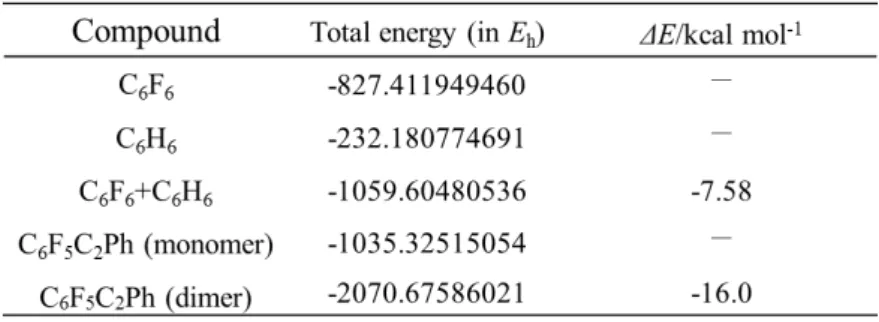
By the comparison of total energies, co-crystal of benzene and hexafluorobenzene, and the dimer of pentafluorophenylethynylbenzene were estimated to be more stable than the single components (ΔE = -7.58 kcal mol-1) and the monomer (ΔE = -16.0 kcal mol-1), respectively (Table 1). Several reported theoretical studies of Ar-ArF interaction21 have shown that the estimation of the stabilization energy is still controvertible. At least, stabilization energy increases in accordance with the increase of the interaction sites. Therefore, elongation of ligand HL would give more robust framework structure which can be comparable to MOFs or PCPs even non-covalent interaction is used as a tool for construction of framework.
Table 1. Comparison of the total energies and estimated stabilization energies.
Conclusions
In conclusion, a new approach to construct supramolecular architecture was successfully developed by utilizing the combination of multipoint arene-perfluoroarene interaction site and paddle-wheel unit. Both I- and cross-shaped complexes with a novel ligand, HL, which has arene and perfluoroarene moieties bridged by ethyne linker, were synthesized by the ligand exchange reaction. In both complexes, molecular arrangements are determined by multipoint arene-perfluoroarene interaction and expected one- or two-dimensional structures are constructed at room temperature. Furthermore, the solvent accessible channel network with open axial sites, which is rarely obtained in discrete paddle-wheel units, was found in the self-assembly of the cross-shaped complex. The results presented in this contribution offer a new strategy to assemble paddle-wheel units of various metal ions with open axial sites at room temperature regardless of substitution activity. This can be a powerful tool to construct supramolecular structures applied for heterogeneous catalytic system or sensor.
Experimental section
General methods
All solvents and reagents are of the highest quality available and used as received except for diethyl amine and triethylamine. Diethyl amine and triethylamine were dried by reflux over KOH, distilled under argon, and degassed with a freeze-and-pump thaw. Rh2(O2CCF3)4(acetone)2 were prepared by the literature methods. All syntheses were performed under an atmosphere of dry nitrogen or dry argon unless otherwise indicated.
Measurement apparatus
Elemental analyses were carried out on a J-SCIENCE LAB MICRO CORDER JM10 elemental analyser. 1H NMR spectra were acquired on a JEOL JNM-LA500 spectrometer, where chemical shifts in (CD3)2CO were referenced to internal tetramethylsilane. 19F NMR spectra were acquired on a JEOL JNM-LA500 spectrometer, where chemical shifts in (CD3)2CO were referenced to external trifluorotoluene.
X-ray crystallography
A crystal of 1 was mounted in a loop. Diffraction data at 123 K were measured on a Rigaku AFC8 diffractometer using a Rigaku Saturn CCD system. Graphite-monochromated Mo-Kα radiation (0.71075 Å) was used. Cell parameters were retrieved using the Crystal Clear-SM 1.4.0 software and refined using Crystal Clear-SM 1.4.0 on all observed reflections. Data reduction and empirical absorption correction using equivalent reflections and Lorentzian polarization were performed with the program Crystal Clear-SM 1.4.0. The structure was solved by direct methods using SIR-97 and refined on F2 by the full-matrix least squares techniques with SHELXL-97.22 All nonhydrogen atoms were refined anisotropically. A crystal of 2 was mounted in a loop. Diffraction data at 123 K were measured on a RAXIS-RAPID Imaging Plate diffractometer equipped with confocal monochromated Mo-Kα radiation and data was processed using RAPID-AUTO (Rigaku). Structures were solved by direct methods and refined by full-matrix least squares techniques on F2 (SHELXL-97).22 All non-hydrogen atoms were anisotropically refined, while all hydrogen atoms were placed geometrically and refined with a riding model with Uiso constrained to be 1.2 times Ueq of the carrier atom. For 2, the diffused electron densities resulting from residual solvent molecules were removed from the data set using the SQUEEZE routine of PLATON and refined further using the data generated.
Syntheses
Ethyl 4-(2-trimethylsilylethynyl)benzoate, ethyl 4-ethynylbenzoate, methyl 4-[(perfluorophenyl)ethynyl]benzoate which are the precursors of HL were prepared by the literature methods.
Synthesis of 4-[(perfluorophenyl)ethynyl]benzoic acid (HL) :
Methyl 4-[(perfluorophenyl)ethynyl]benzoate (2.15 g, 6.59 mmol) was dissolved in CH2Cl2 and cooled to –60°C. BBr3 (2 eq.) was added and the solution was stirred for 30 min. under argon in the cold. Then, the cooling bath was removed and the stirring continued for another 90 min, while the solution was allowed to reach r.t. The solution was then washed twice with brine, dried over MgSO4 and evaporated in vacuo to afford the yellow solid. The solid was washed with CH2Cl2 to obtain HL as a white solid. Yield 24%. 1H NMR (500 MHz, CDCl3) δ ppm: 7.78 (d, J = 10.0 Hz, 2H), 8.14 (d, J = 10.0, 2H); 19F NMR (470.4 MHz, (CD3)2CO) δ ppm: -164.0 (dt, J = 4.7, 18.8 Hz, 2F), -154.3 (t, J = 18.8 Hz, 1F), -138. 3 (dd, J = 4.7, 18.8 Hz, 2F); Anal. Calcd. for C6F5C2C6H4CO2H: C, 57.71; H, 1.61; N, 0.00%. Found: C, 57.31; H, 1.77; N, 0.00%.
Synthesis of Rh2(O2CCF3)2(L)2(3-pentanone)2 (1)
Rh2(O2CCF3)4(acetone)2 (195 mg, 0.25 mmol) and HL (312 mg, 1.0 mmol) in 5 ml of diethyleneglycol dimethylether were stirred for 2 h at 100 ˚C. After evaporation of the solvent, the residue was purified by silica gel column chromatography (CH2Cl2/AcOMe 1:1). Recrystallization from Et2O/3-pentanone gave green platelet crystals of 1. The yield of [Rh2(O2CCF3)2(L)2] was 40 mg (13.3% based on [Rh2(O2CCF3)4(acetone)2]). Anal. Calcd. for Rh2(O2CC6H4C2C6F5)2(O2CCF3)2 (Et2O)2·H2O: C, 41.33; H, 2.48; N, 0.00%. Found: C, 41.39; H, 2.27; N, 0.14%.
HO O
F F F F F
MeO O
F F F F F
MeO O
F F F F F
H
I
EtO O I TMS
EtO
O H TMS
NaOH
K2CO3 MeOH
Acetone/H2O CuI
Pd(PPh3)2Cl2
HNEt2
NEt3
CuI Pd(PPh3)2Cl2
( 79% )
( 61% )
( 78% ) Scheme 3. Syntheses of HL.