Factors Influencing Consumer
Acceptance of Cross-Border
Electronic Commerce
Vanessa Rocio Bracamonte Lesma
DOCTOR OF
PHILOSOPHY
Department of Informatics
School of Multidisciplinary Sciences
SOKENDAI (The Graduate University for Advanced Studies)
2016 (School Year)
March 2016
A dissertation submitted to the Department of Informatics, School of Multidisciplinary Sciences,
SOKENDAI (The Graduate University for Advanced Studies) in partial fulfillment of the requirements for
the degree of Doctor of Philosophy
Advisor
Hitoshi OKADA, Assoc. Prof. National Institute of Informatics (NII)
SOKENDAI (The Graduate University for Advanced Studies) Sub-advisors
Isao ECHIZEN, Prof. Takayuki MIZUNO, Assoc. Prof. National Institute of Informatics (NII)
SOKENDAI (The Graduate University for Advanced Studies) Members
Hirotsugu KINOSHITA, Prof. Kanagawa University Shiro UESUGI, Prof.
Matsuyama University
Abstract
From the beginning of electronic commerce, the ability to buy from foreign online stores across the world was identified as one of its great potentials. However, even now when domestic online shopping has become commonplace in many countries, cross- border electronic commerce has not gained in popularity at the same rate. From the consumer side, an important reason for this situation is related to trust: consumers have difficulties trusting foreign online stores. The barriers that exist in cross-border contexts make it so that the perception of risk is greatly increased. Another problem is that existing models of consumer acceptance of electronic commerce have, for the most part, focused on the domestic market. Previous studies have identified several critical factors affecting trust and intention of use of domestic online stores, but less research has been conducted on specific factors of cross-border online shopping.
The objective of this dissertation is to address these problems by identifying the factors unique to the cross-border context that have a positive influence on trust and its antecedents, within a model of consumer acceptance. In order to do this, three characteristics of the cross-border online shopping experience were established: the difference of nationality in users, language difference and the foreign country itself. The factors affected by these characteristics were identified as nationality information contained in feedback, translation quality of the website, country presence and country-of-origin image. To validate the effect of these proposed factors, separate studies were conducted by surveying Japanese consumers and analyzing their responses using structural equation modeling.
In the first study, the effect of indicating nationality information of the user in the feedback of the foreign online store on trust was analyzed. Three experimental conditions were created, based on the nationality of the majority of users giving feedback: (1) feedback from Japanese users, (2) feedback from Thai users and (3) a control condition of no feedback. The results showed that feedback from users of the same country as the consumers’ improves trust in comparison to feedback from foreign users. And that, on the other hand, feedback from foreign users does not improve trust compare to showing no feedback at all.
In the second study, related to the language difference, the influence of translation issues on the foreign online store was investigated. The experiment considered two types of translation issues, related to the adequacy of translation (correct or incorrect) and to the completeness of translation (full or partial). Four experimental conditions with different combinations of translation issues were evaluated. The results showed that
translation, or a mixture of both. These findings highlight the importance of language and translation quality assurance.
In the third study, related to information about the foreign country itself, it was hypothesized that foreign websites may be able to improve trust by increasing the association with their country-of-origin. In order to test this hypothesis, the factor of country presence was introduced. Two experimental conditions were considered: country-related pictures and generic pictures, each one evaluated for Thailand and Singapore mockup online stores. The results showed that including country-related pictures has a positive effect on country presence, but that trust was not directly affected by country presence. Instead, the effect of country presence was mediated by the visual appeal of the online store.
In the fourth and final study, also related to the foreign country itself, the extrinsic factor of country-of-origin image was introduced. It was defined as the cognitive and affective perception of the foreign country that the consumer holds in mind. It was hypothesized that the image of the foreign country would have an effect on the perception of an online store from that country. The results showed that country-of-origin image does have a positive influence, but that this influence is not equal for all countries. In general, the image of Thailand as a country has a wider influence on the Thai online store, than the Singapore image has on the Singaporean online store.
This dissertation contributes to the study of consumer acceptance in cross-border electronic commerce by providing evidence of the importance of considering the unique variables that exist in a cross-border context. The findings indicate that in order to improve the trust and acceptance of foreign online stores it is important to consider how they may be affected by the differences that exist in consumers and the differences in the context itself, and how these two components interact to affect consumer perception on different dimensions. The findings also contribute evidence that pre-existing perceptions of one country from the perspective of consumers from another country have influence on the evaluation of the foreign online store. Online stores may be able to utilize the image of their country-of-origin to their advantage. In addition, institutions or organizations, especially in developing countries, could consider strategies to promote country image with the goal of improving the overall perception of their electronic commerce markets.
Acknowledgements
First, I would like to express my sincere gratitude to my advisor, Assoc. Prof. Hitoshi Okada, for his guidance and support during the course of my studies. I would also like to thank the members of my dissertation committee: Prof. Isao Echizen, Assoc. Prof. Takayuki Mizuno, Prof. Shiro Uesugi, Prof. Hirotsugu Kinoshita and Assoc. Prof. Tetsuro Kobayashi, for their helpful comments and advice during the development of this thesis.
I also acknowledge the support of the Japanese Ministry of Education, Culture, Sports, Science and Technology scholarship, which allowed me to pursue my studies.
I am grateful to the administrative staff at NII, in particular the members of the International Affairs and Education Support Team and Atsuko Kumon, for all their assistance. I would also like to express my gratitude to the Japanese teachers at NII, especially Kazumi Tajima and Kaori Hayashi, whose lessons helped me navigate life in Japan. And many thanks to my friends at NII, who helped me keep my spirits up, and to Naonori Kato in particular, for his generous assistance.
Finally, I would like to thank my family back in Peru, in particular my wonderful parents, Julio and Teresa, and my amazing sister Fiorella, for believing in me and supporting my decision to study in Japan even though it took me so far away from them. I also thank my dear sister Melissa, whose memory I carry with me always.
vii
Contents
Abstract v
Acknowledgements vii
List of Figures xiii
List of Tables xv
1 Introduction 1
1.1 Statement of the problem . . . 1
1.2 Objectives . . . 2
1.3 Contribution . . . 3
1.4 Dissertation outline. . . 3
2 Literature Review 5 2.1 Consumer behavior in electronic commerce . . . 5
2.1.1 Technology acceptance model factors . . . 5
2.1.2 Trust . . . 6
2.2 Cross-border electronic commerce . . . 9
2.3 Country-of-origin image . . . 11
2.3.1 Definition . . . 11
2.3.2 Dimensions . . . 13
2.3.3 Effects . . . 13
2.3.4 Limitations . . . 14
3 Theoretical Framework 17 3.1 Characteristics of a cross-border context . . . 17
3.2 Nationality of consumers . . . 18
3.3 Language and translation . . . 19
3.4 Country-of-origin . . . 20
3.4.1 Country-of-origin related pictures. . . 20
3.4.2 Country-of-origin image . . . 22
4 Methodology 25 4.1 Data collection . . . 25
4.2 Experiment design . . . 26
4.3 Mockup websites . . . 26 ix
4.4 Measurement instrument. . . 26
4.5 Countries selection . . . 27
4.6 Statistical analysis . . . 28
4.6.1 Data validation . . . 28
4.6.2 Exploratory factor analysis . . . 29
4.6.3 Confirmatory factor analysis . . . 29
4.6.4 Structural equation modeling . . . 31
4.6.5 Mediation analysis . . . 31
4.6.6 Multiple group analysis . . . 31
5 Factors Influencing Consumer Acceptance of Cross-Border Electronic Commerce 33 5.1 Study 1: Effect of nationality information in feedback . . . 33
5.1.1 Hypotheses . . . 33
5.1.2 Methodology . . . 34
5.1.3 Analysis and results . . . 37
5.1.4 Discussion. . . 42
5.2 Study 2: Effect of translation issues . . . 43
5.2.1 Hypotheses . . . 43
5.2.2 Methodology . . . 45
5.2.3 Analysis and results . . . 46
5.2.4 Discussion. . . 51
5.3 Study 3: Effect of country-related pictures . . . 53
5.3.1 Hypotheses . . . 53
5.3.2 Methodology . . . 53
5.3.3 Analysis and results . . . 56
5.3.4 Discussion. . . 62
5.4 Study 4: Effect of country-of-origin image . . . 65
5.4.1 Hypotheses . . . 65
5.4.2 Methodology . . . 66
5.4.3 Analysis and results . . . 67
5.4.4 Discussion. . . 73
6 Discussion 77 6.1 General discussion . . . 77
6.2 Limitations . . . 79
6.2.1 Non-probabilistic sampling . . . 79
6.2.2 Parsimonious models. . . 79
6.2.3 Use of mockup websites . . . 80
6.2.4 Country-of-origin image complexity . . . 80
7 Conclusions 81 7.1 Practical implications . . . 81
7.2 Future research . . . 83
A Measurement items 85
Contents xi
B Website mockups - Effect of nationality information in feedback 89
C Website mockups - Effect of translation issues 93
D Website mockups - Effect of country-related pictures 97
Bibliography 101
Related publications 113
Declaration of Authorship 115
List of Figures
5.1 Study 1: Research model . . . 35
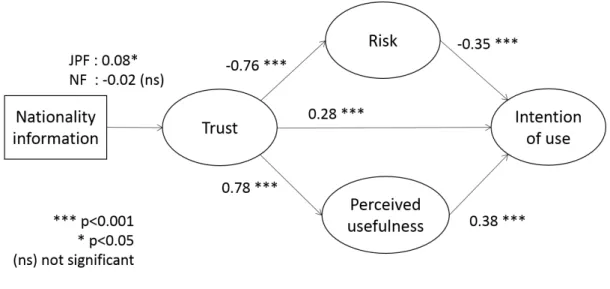
5.2 Study 1: Result model . . . 41
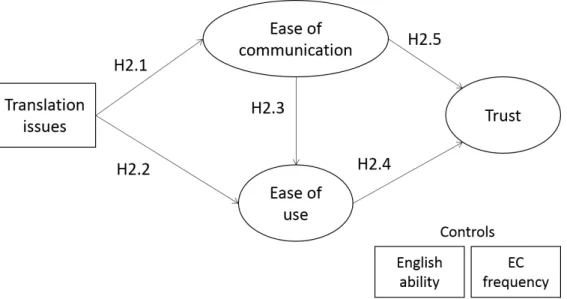
5.3 Study 2: Research model . . . 44
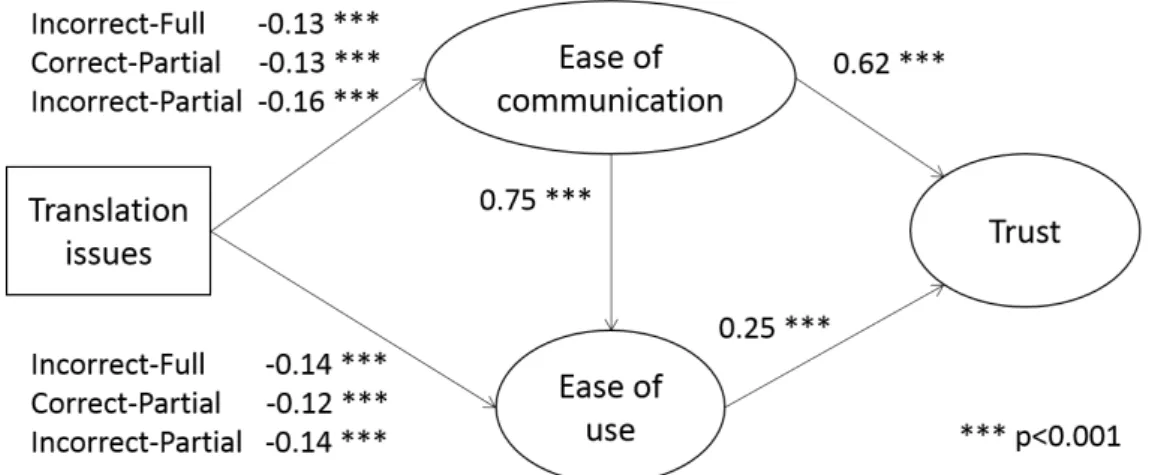
5.4 Study 2: Result model . . . 50
5.5 Study 3: Research model . . . 54
5.6 Study 3: Result model . . . 60
5.7 Study 4: Research model . . . 66
5.8 Study 4: Result model . . . 71
B.1 Japanese feedback condition . . . 89
B.2 Thai feedback condition . . . 90
B.3 No feedback condition . . . 90
C.1 Correct and full translation condition . . . 93
C.2 Incorrect and full translation condition . . . 94
C.3 Correct and partial translation condition. . . 94
C.4 Incorrect and partial translation condition . . . 95
D.1 Country-related pictures condition (Thai online store) . . . 97
D.2 Generic pictures condition (Thai online store) . . . 98
D.3 Country-related pictures condition (Singaporean online store) . . . 98
D.4 Generic pictures condition (Singaporean online store). . . 99
xiii
List of Tables
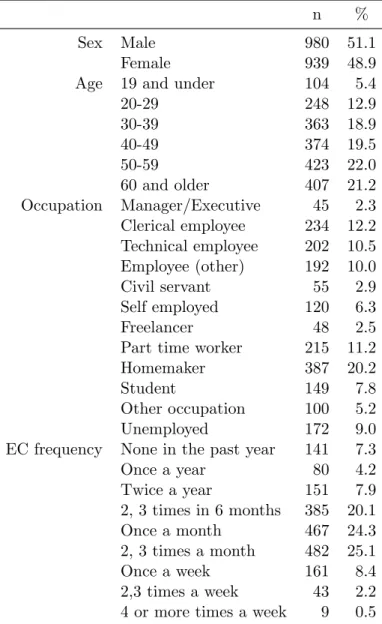
5.1 Study 1: Sample summary . . . 37
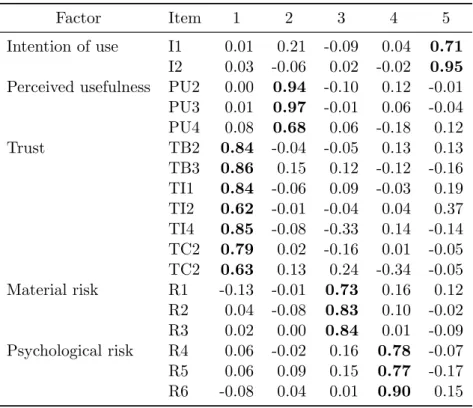
5.2 Study 1: Exploratory factor analysis . . . 38
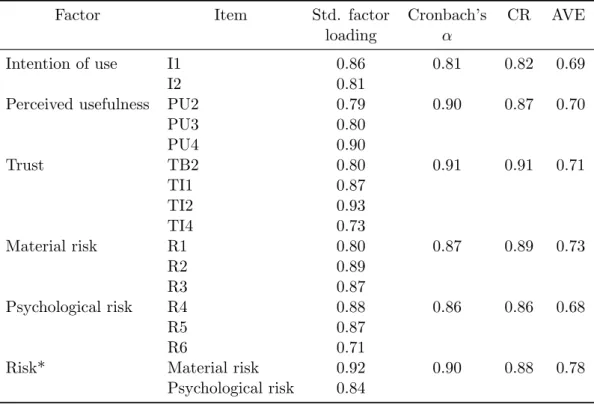
5.3 Study 1: Confirmatory factor analysis . . . 40
5.4 Study 1: Discriminant validity . . . 40
5.5 Study 1: Structural equation modeling . . . 41
5.6 Study 1: Regression analysis . . . 42
5.7 Study 2: Sample summary . . . 47
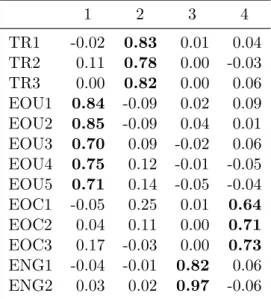
5.8 Study 2: Exploratory factor analysis . . . 48
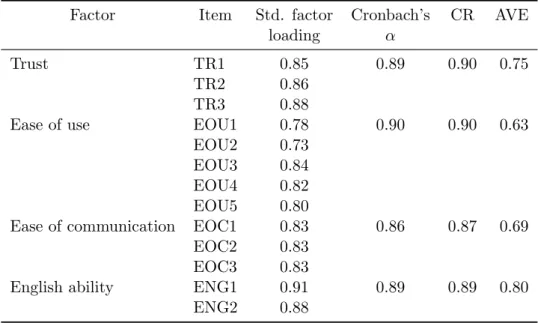
5.9 Study 2: Confirmatory factor analysis . . . 49
5.10 Study 2: Discriminant validity . . . 49
5.11 Study 2: Structural equation modeling . . . 50
5.12 Study 2: Regression analysis . . . 51
5.13 Study 2: Mediation analysis . . . 51
5.14 Study 3: Sample summary. . . 57
5.15 Study 3: Exploratory factor analysis . . . 58
5.16 Study 3: Confirmatory factor analysis . . . 58
5.17 Study 3: Convergent validity . . . 59
5.18 Study 3: Discriminant validity . . . 59
5.19 Study 3: Structural equation modeling - Thai online store . . . 60
5.20 Study 3: Structural equation modeling - Singaporean online store . . . 60
5.21 Study 3: Regression analysis - Thai online store. . . 61
5.22 Study 3: Regression analysis - Singaporean online store . . . 61
5.23 Study 3: Mediation analysis . . . 62
5.24 Study 4: Exploratory factor analysis . . . 68
5.25 Study 4: Confirmatory factor analysis . . . 69
5.26 Study 4: Convergent validity . . . 69
5.27 Study 4: Discriminant validity - Thai online store. . . 69
5.28 Study 4: Discriminant validity - Singaporean online store . . . 70
5.29 Study 4: Structural equation modeling - Thai online store . . . 71
5.30 Study 4: Structural equation modeling - Singaporean online store . . . 72
5.31 Study 4: Mediation analysis - Thai online store . . . 72
5.32 Study 4: Mediation analysis - Singaporean online store. . . 73
xv
Chapter 1
Introduction
1.1 Statement of the problem
An essential characteristic of electronic commerce is its potential global reach (Zwass, 1996). However, even though in many countries online shopping is no longer an uncommon activity for consumers and adoption rates continue to improve all over the world, for the most part this is the case for domestic online shopping only. The potential of cross-border electronic commerce has not yet been realized for the most part. In Europe, for example, consumer scoreboards reports from 2009 (Commission of the European Communities, 2009a) and 2011 (European Commission, 2011) indicated that cross-border electronic commerce had not advanced as much as was expected. On the other hand, improvement for domestic electronic commerce was on track for reaching their specified target.
Cross-border electronic commerce allows consumers to find better prices, even when including the extra costs related to foreign purchase, and wider selection for purchases (Commission of the European Communities, 2009a; Tr¨ubenbach, 2009). However, a cross-border context presents additional challenges compared to the domestic one; these challenges are the reason why international online shopping has not improved at a comparable rate.
One of the main challenges is negative perception by the consumers. Consumers perceive higher barriers and risks in cross-border online shopping compared to domestic online shopping (Commission of the European Communities, 2009a). They indicate a belief that shopping on foreign websites is associated with a higher level of risk than shopping on local websites (European Commission, 2011) and have high concern with potential fraud or problems (European Commission,2012). This perception results in a reluctance to try cross-border online shopping.
1
Though it is only one region, the case in Europe is illustrative of the problems and barriers that exist in this type of context, with multiple countries, cultures and languages. In Japan, for example, consumers indicate language difficulties, communication barriers, and difficulty to a ascertain the trustworthiness of foreign online stores (Cross-Border Consumer Center Japan, 2011). In a similar way to European consumers, Japanese consumers who have not had previous experience with cross-border online shopping have a negative expectation that troubles will occur (Consumer Affairs Agency of Japan, 2011).
Another problem is the lack of research in cross-border electronic commerce. Research on consumer behavior in electronic commerce has identified the factors that affect consumer attitudes and intention of use, such as usefulness, ease of use and trust factors (Gefen et al., 2003). However, the majority of studies have focused on the domestic market only. Studies that have considered cross-border contexts often have cultural adaptation and localization as their focus (Vyncke and Brengman, 2010). Cultural adaptation is important to improve the foreign consumer perception of the website (Sinkovics et al., 2007); however, this approach is not without issues, such as cost and complexity (Collins,2002).
1.2 Objectives
In order to address the problems identified, the general objective of this dissertation is to investigate the factors that influence consumer acceptance in cross-border electronic commerce, where the consumer and the online store are from different countries. Logistical and time constraints do not allow for a comprehensive study of all the variables that comprise the differences in cross-border electronic commerce. Therefore, the objective is to establish the unique characteristics of the cross-border context, identify relevant factors and validate their effect on the consumer’s perception of different dimensions of the online store. The studies contained in this dissertation consider the social, visual and textual dimensions of the online store, and considers factors both intrinsic and extrinsic to the website.
In particular, the objective is to identify and validate factors that affect trust in the cross-border context. The specific focus on trust follows the understanding that it is, at the same time, one of the most important factors affecting intention of use of an online store and one of the factors that become critical in a situation of high perceived risk, such as the one which results from the barriers that exist for buying in foreign online stores.
Chapter 1. Introduction 3
Finally, this dissertation has the objective to incorporate the new factor of country- of-origin image into cross-border electronic commerce research.
1.3 Contribution
This dissertation contributes new knowledge about consumer acceptance of foreign online stores, which is an area that has not enjoyed as much research as the domestic context. By focusing on variables that are unique in the cross-border situation, a new understanding of the factors that affect trust and its antecedents, and intention of use of foreign online stores is introduced. By validating country-of-origin image, a new factor in the investigation of consumer acceptance of cross-border electronic commerce is introduced. Country-of-origin image is a factor whose effects on the evaluation of foreign products and services have been widely investigated in the marketing and business research areas, but have not been empirically tested in an electronic commerce context. As far as it is possible to ascertain, this is the first quantitative study to investigate how the image of the country-of-origin of a foreign online stores affects consumer perception in a cross-border context. The results of this dissertation may open new venues of research that consider the country perception and how to leverage it. As the image of a country can change over time, the study of the effects of that perception on online shopping can help identify possible improvements.
1.4 Dissertation outline
This dissertation is structured as follows: in Chapter 2, a literature review of studies related to consumer behavior in electronic commerce, cross-border electronic commerce and country-of-origin image will be presented and discussed. Chapter 3 will present the theoretical framework of this dissertation. Chapter 4 will describe the methodology used, although certain details that correspond to particular studies will be described in their respective section. Chapter 5 will present the details of each study that was conducted, including the research model to be tested, the details of the methodology used, the analysis and results, and the discussion of the particular study. Chapter 6 will present a general discussion, summarizing the findings of each study as well as indicating their general limitations. Finally, Chapter 7 will present the conclusions and implications of this dissertation and the future work.
Chapter 2
Literature Review
This chapter is divided into three sections. The first section will present a review of important factors identified in the literature on consumer acceptance of electronic commerce. The second section will introduce the limitations and challenges of research in a cross-border context. The third section will introduce the concept of country-of-origin image, indicating its origins and evolution, effects and limitations.
2.1 Consumer behavior in electronic commerce
2.1.1 Technology acceptance model factors
The technology acceptance model (TAM) introduced by Davis (1989) has been extensively investigated in the area of electronic commerce research (Benbasat and Barki, 2007). The original model proposed that the most important factors that influence a user’s intention of using a software program were perceived usefulness and perceived ease of use. Perceived usefulness was originally defined as ”the degree to which a person believes that using a particular system would enhance his or her job performance” (Davis, 1989). It is mostly operationalized in terms of performance, effectiveness and productivity (Gefen et al., 2003). Perceived ease of use is defined as
”the degree to which a person believes that using a particular system would be free of effort.” (Davis,1989).
These two original TAM factors represent a utilitarian perspective of the use of software technology. The original study byDavis (1989) considered technology such as productivity software, used in a business setting. The focus of perceived usefulness as productivity and ease of use as straight-forward interaction makes sense in such context. Nevertheless, both factors have been validated as important for the
5
acceptance of electronic commerce also (Gefen et al., 2003; Pavlou,2003; Chang et al., 2005; Benamati et al., 2010). Even though the effect of perceived ease of use on intention of use is relatively lower than the effect of perceived usefulness (Pavlou,2003; Gefen et al., 2003), this construct is important for being the way in which consumers can assess a website and become experienced in it (Gefen et al.,2003) and also for the influence it has on trust in the online store.
2.1.2 Trust
As mentioned before, TAM was originally validated using business productivity software. However, in the case of electronic commerce, additional characteristics need to be considered that do not exist in a purely business-related context. One of the most important ones is the perception of risk in online shopping transactions. Risk is defined as the uncertainty perceived by the consumer when considering the possible negative consequences of their behavior (Dowling and Staelin, 1994; Featherman and Pavlou, 2003). Perception of risk reduces the perception of control in the consumer (Jarvenpaa et al.,1999), which then has a negative effect on the intention of use of the online store (Jarvenpaa et al., 1999;Pavlou,2003).
Trust becomes relevant in risk situations (Mayer et al., 1995). Therefore, the existence of risk factor in online shopping led to extensions of the original TAM model which included the factor of trust, and its relationship to the factors of perceived usefulness and perceived ease of use factors (Benbasat and Barki, 2007). It has been found that, by considering positive characteristics that indicate the trustworthiness of the vendor, the users can reduce that perception of risk (Pavlou, 2003). While there are different understandings of trust throughout the literature (Wang and Emurian, 2005), in consumer behavior in electronic commerce literature, trust is defined as the belief that the vendor will act in a favorable way towards the consumer (Gefen, 2000; Pavlou, 2003) and indicates confidence in the online store (Cyr et al., 2009). Trust is frequently characterized as multidimensional and composed of (1) benevolence, the belief that the vendor will act in the consumers’ best interest; (2) integrity, the belief that the vendor will keep its commitments; and (3) competence, the belief that the vendor will be able to perform their task correctly (McKnight et al., 2002a; Gefen, 2002).
Trust continues to be considered an important issue in the research of consumer acceptance of electronic commerce (Corritore et al., 2003; Grabner-Kr¨auter and Kaluscha, 2003;Gefen et al., 2008; Karimov et al., 2011). Trust is important because the belief that the vendor will act favorably can affect the consumers’ decision to use
Chapter 2. Literature Review 7
an online store (Gefen,2000;McKnight et al.,2002a;Gefen et al.,2003;Pavlou,2003), and it plays a role in improving online shopping acceptance, as higher trust results in higher intention of use (McKnight et al.,2002a;Gefen et al.,2003;Pavlou,2003). As a consequence, studies in the area of consumer acceptance of electronic commerce have investigated the different antecedents of trust and potential ways of improving the perception of trustworthiness of online stores. In the following sections, important antecedents of trust will be discussed.
Feedback
According to a Nielsen (2012) report, consumers all over the world trust the opinions of other online consumers and the opinions of people they know. Showing feedback on the website allows consumers to have access to these opinions and the information they contain. User-generated feedback is one of the mechanisms used in order to build trust (Ba and Pavlou,2002), which has been implemented widely in online stores. Feedback is important in electronic commerce, because positive opinions from previous users can affect consumer behavior towards the online store (Dellarocas,2003). In addition to the information about the content of the feedback, information about the characteristics of the user giving the feedback can also have an effect on the consumer’s judgment (Forman et al.,2008).
Two types of social influence are involved in feedback: informational social influence and normative social influence. Informational social influence, which is ”an influence to accept information obtained from another as evidence about reality” (Deutsch and Gerard, 1955), operates in the case of product evaluation by consumers, where previous ratings are taken as a reliable indicator of the characteristics of a product (Burnkrant and Cousineau, 1975). In situations where the consumer cannot directly evaluate a product, the opinions of other consumers may be helpful to infer their value (Burnkrant and Cousineau, 1975). Normative social influence is ”an influence to conform with the positive expectations of another” (Deutsch and Gerard, 1955). This type of influence may work through compliance with the opinions or actions of other, or through identification with others which are considered a positive reference (Burnkrant and Cousineau, 1975).
Visual appeal
First impressions of the website are critical in the evaluation by consumers (Fogg et al., 2003). The design of an online store provides cues to the consumer, affecting their evaluation on different dimensions. . Characteristics of the design can influence consumer perception of factors such the credibility of the website (Fogg et al., 2003), risk (Park et al.,2005) and trust (Wang and Emurian,2005;Cyr et al.,2009;Ganguly et al., 2009). Design is important because its manipulation has been found to have
positive, or negative, effect on the perception of trustworthiness of a website (Karimov et al., 2011). Previous research has considered design elements, such as images (Cyr et al.,2009) or colors (Cyr et al.,2010) for example, and how they can have a positive influence the perception of an online store.
Visual appeal is defined as the perception of the aesthetics of the design of the website (Loiacono et al., 2002). Because online shopping is still a shopping activity, consumers may have utilitarian and/or hedonic motivations for using an online store (Childers et al.,2001) and aesthetic considerations are related to the hedonic dimension. In addition to aesthetic considerations, websites also rely on the visual dimension of the design to transmit information to the consumer (Cyr et al., 2009). As a consequence, consumer evaluation of the aesthetic appeal of a website is influenced not only by order and clarity but also by the expressiveness of the design (Lavie and Tractinsky, 2004). In a study that compared the responses of subjects from different countries (Cyr et al., 2005), it was indicated that Japanese users in particular had a preference for more pictures and brighter colors in the website, which was identified as a more emotional approach to the design, instead of a ”cold” website design.
Presence
Presence is a feeling of transportation (Lombard and Ditton,1997) which can occur in technologically mediated environments. Although more closely associated with virtual environments (Steuer, 1992), even television, cinema or paintings can provide a sense of presence, though to a different degree than virtual reality (Ijsselsteijn et al., 2001). Presence has two general categories: social and physical (IJsselsteijn et al.,2000). Social presence is the feeling of being and communicating with other people. Physical presence is the feeling of being in another place or feeling that another place ”is here” (Lombard and Ditton,1997). There are also additional categories of presence, such as co-presence for example, which is a combination of social and physical presence (Ijsselsteijn et al., 2001).
The physical and temporal separation of consumers and vendors is a source of wariness in the consumer (Brynjolfsson and Smith,2000) and as a consequence of their physical separation, websites can be perceived by consumers as distant and impersonal (Pavlou and Chai, 2002). Distance results in a lower sense of sociability and physicality than in conventional shopping. Therefore, in order to improve the perception of closeness with the online store, research on consumer acceptance of electronic commerce has looked into the concept of presence (Steinbr¨uck et al., 2002; Grabner-Kr¨auter and Kaluscha, 2003; Park et al., 2005). The sense of presence, that is, the sense of being psychologically transported to another place or with other people through a technological medium (Lombard and Ditton, 1997), can help reduce the
Chapter 2. Literature Review 9
perception of distance (Cyr et al., 2007). Two types of presence, social presence (Steinbr¨uck et al., 2002) and physical presence (Park et al., 2005) have been identified as important factors for bringing back the feeling of sociability and physicality, respectively, that is lost in online shopping.
Trust in a website can be improved by social presence, by increasing the information richness of the medium (Hassanein and Head,2007;Cyr et al.,2007,2009; Karimov et al., 2011). The content of the medium can influence the sense of presence (Steuer, 1992; IJsselsteijn et al., 2000). For example, showing places, people or events can bring a sense of presence. In the case of electronic commerce, the sense of presence can be affected by the manipulation of the visual design of a website (Suh and Chang, 2006), because it is possible to manipulate user response by modifying visual elements of the design (Kim and Moon, 1998). Previous studies have investigated for example how the inclusion of pictures of people (Steinbr¨uck et al., 2002; Hassanein and Head, 2007;Cyr et al.,2007,2009) can improve social presence.
2.2 Cross-border electronic commerce
Turban et al.(2011) identifies the barriers of cross-border electronic commerce such as cultural differences (colors, icons, graphics, social/religious mores, information presentation style-text vs image), language translation, localization (currency, formats like date, measurement standards), geographical issues (delivery), economic and legal issues (taxes and regulation/restrictions, payment systems). These characteristics of the cross-border context may have an effect of the known factors of consumer acceptance.
In addition, consumers in each country have different preferences. For example, Japanese online users are different even from other users in Asia (Lynch and Beck, 2001). Consumers also are different in how the interpret the different characteristics of a website (Collins, 2002). Localization (Collins, 2002) and cultural adaptation of websites (Sinkovics et al., 2007; Vyncke and Brengman, 2010) are considered as the solution for overcoming the barriers that exist in the cross-border context. Localization deals with fundamental differences between countries, but ones that are more easily classifiable. For example, currency and formatting of date information (Turban et al., 2011). Cultural adaptation, on the other hand, is harder to identify. One approach taken by studies is to consider the characteristics of consumers along cultural dimensions, as proposed byGladwin and Hofstede(1981), such as uncertainty avoidance (Vance et al., 2008), for example. Studies use these cultural dimensions to conduct cross-cultural studies, where the preferences of consumers in terms of website design are compared
with those of other countries (Smith et al.,2004;Lim et al.,2004;Sinkovics et al.,2007; Cyr et al.,2010). Therefore, even though these studies consider multiple countries, they are essentially about domestic contexts. In only a few cases, cross-cultural validations have also been used for cross-border validations (Jarvenpaa et al., 1999). The country and cultural differences affect online stores on almost all dimensions. For example, foreign websites that appeal to an international audience often have to deal with the issue of language translation. Language barriers are prominent in online transactions, but trying to overcome them is costly to the website (Martens and Turlea,2012).
The factors presented in the previous section on consumer behavior in electronic commerce have been widely investigated in the domestic market. However, there is less knowledge about how they are affected by the characteristics of an international setting. Trust, as mentioned before, is a factor that becomes relevant in situations of risk (Mayer et al.,1995), and therefore it is critical in cross-border electronic commerce, where there is a strong perception of risk (Consumer Affairs Agency of Japan, 2011). However, there are very few studies related to trust in cross-border electronic commerce. The study by Jarvenpaa et al. (1999) is one of the few considering a model of trust in foreign websites. In the study, Israeli, Australian and Finnish participants evaluated websites from the USA and their own local websites. Jarvenpaa et al.(1999) concluded that the proposed trust model for local websites was generalizable to foreign websites. Cyr et al. (2005) conducted a comparison between trust towards a local website and trust towards a foreign website from Hong Kong, but found no significant differences for respondents of four different countries, including Japan. However, even though the perception of design characteristics was also addressed, the study did not consider any antecedents or influencing factors of trust. In offline settings, attitudes in consumers have been found to be more favorable when the rating of a product comes from users of the same nationality as the consumer (Bilkey and Nes,1982). With regard to online shopping,Sia et al.(2009) found that users trusted the endorsement of local peers more than they trusted foreign peers, but study did not identify the country-of-origin of the online store used for the experiment. Therefore it is not possible to know if the context of the study is cross-border or if users assumed the online store was local or foreign, and if the latter, from which country. The influence of culture on website design has received more attention in studies related to international websites. Symbols, icons and colors may have a completely different meaning for a foreign consumer than for a domestic consumer, websites have to be localized to the country of the audience to avoid inappropriateness (Collins,2002). Symbols that are considered innocuous in one country may be misinterpreted or may be unacceptable in other countries. In addition, the preference for layout, colors and other design features can vary from culture to culture (Cyr et al., 2005). In a study conducted in a cross-border setting, Singh et al.
Chapter 2. Literature Review 11
(2006) found that in general, consumers preferred culturally adapted websites but that only German users considered the use of graphics, colors and design to be significantly better in such websites. Presence is important in electronic commerce because if the spatial and temporal separation of user and vendor (Brynjolfsson and Smith, 2000). Consequently, it should be important also for cross-border electronic commerce and consequently, where this separation can be even greater since consumers and vendors are located in different countries. However, it has not been considered in cross-border electronic commerce, as far as it was possible to determine.
Another important limitation of research in cross-border electronic commerce is that it has rarely included extrinsic variables specific to the context. Previous studies have, for the most part, considered website or user variables, but extrinsic factors have been overlooked. The business and marketing research areas, on the other hand, have a long history of considering an extrinsic factor, country-of-origin, in studies related to the perception of foreign products and services. The concept of country-of-origin image has been studied may be relevant to cross-border electronic commerce too. This concept is introduced in the next section.
2.3 Country-of-origin image
2.3.1 Definition
Country-of-origin image is an extrinsic cue for the evaluation of foreign products (Verlegh and Steenkamp, 1999; Dinnie, 2004). The study on product bias by Schooler (1965) is considered the first empirical study on the effects of country-of-origin on product evaluation (Verlegh and Steenkamp,1999). Schooler(1965) found that identical products purported to be from different countries had a significantly different evaluation based on the perception of the country’s government and people.
The definition of country-of origin image has evolved. In an early study, Nagashima (1970) conducted a survey of the perception of imported products among business men in the USA and Japan. Nagashima defined image as ”the ideas, emotional background, and connotation associated with a concept”. In the study, the
”Made in” label was used to indicate the country; though the image was related not to the country itself, but to the products made in that country. Nevertheless, it was indicated that the ”Made in” image is influenced by different aspects of the country, such as economic background and traditions. The ”Made in” image was measured on different dimensions such as price, value, style and reputation, for example. The study found that Japanese and USA businessmen held different opinions on products of the
same origin. For example, products from England were thought to be high in prestige by the Japanese, but not by the USA businessmen. Nagashima indicated that stereotypes about the foreign country, as well as familiarity and availability of the products affect the ”Made in” image. In a follow-up study conducted eight years later, Nagashima (1977) found that the ”Made in” image could change with time, either positively or negatively.
Bilkey and Nes (1982) considered the country-of-origin attribute of a product as an extrinsic information cue, similar to price or brand name. The study reported that country-of-origin, as communicated by the ”Made-in” information, had an influence on quality perceptions, and affected industrial and consumer purchasing decisions. This influence was present in consumers from different countries all over the world, but the image of a country’s products itself changed depending on the country of the consumer. Studies then focused on addressing the limitations brought up by Bilkey and Nes (1982), using the scale developed by Nagashima(1970), with the definition of country image remained linked to product characteristics. For example, (Roth and Romeo, 1992) proposed a definition of country image as ”the overall perception consumers form of products from a particular country”, based on the production and marketing strengths of the country. In a literature review study, Peterson and Jolibert (1995) briefly discussed the problems in the operationalization of the country-of-origin image construct, pointing out the ambiguousness of its definition. And in a qualitative meta-analysis, Verlegh and Steenkamp (1999) indicated that general characteristics such as the country’s economy and culture affected consumers’ evaluation of product quality, in addition to the characteristics related to products of that country.
A more recent study by Roth and Diamantopoulos (2009) proposed that the research could be classified into three groups, based on the focus of the definition of image: (1) the country itself, (2) the country and its products, and (3) the products of the country. Roth and Diamantopoulos (2009) argued that only the first definition accurately referred to the image of the country. In the definitions of the second group there was a separation of country and product, indicating the existence of both concepts as independent but related. In the case of the third group, they argued that the operationalization of the construct did not include measures of the country itself, and therefore could not be considered an image of the country but rather of the product as affected by the country image.
Chapter 2. Literature Review 13
2.3.2 Dimensions
Country-of-origin image is considered to have two main dimensions (Laroche et al., 2005), though there are still some issues in the literature about their exact operationalization (Roth and Diamantopoulos,2009). These dimensions are cognitive, which ”includes consumers’ beliefs about the country’s industrial development and technological advancement” (Laroche et al., 2005) and affective, which ”describes the country’s emotional value to the consumer” (Roth and Diamantopoulos, 2009). Most studies have concentrated on the cognitive dimension of the country-of-origin image, even though the non-cognitive factors such as attitude towards the people of a country were included in the initial study by Schooler (1965). Others have considered the affective dimension, but have focused not on the country but on the feelings towards the people of the country (Laroche et al., 2005). Laroche et al. (2005) proposed a hierarchical image structure for country-of-origin, where a second-order country-of-origin image factor is composed of the cognitive and affective factors. On the other hand, (Roth and Diamantopoulos,2009) considered the dimensions within an attitudinal framework, where the relationship between them may change depending on the context of the study. This was in line with the relationship proposed by Brijs (2006), who had also considered an influence of the cognitive image dimension on the affective dimension.
2.3.3 Effects
The effects of country-of-origin have been validated in consumer products for the most parts: automobiles (Johansson et al., 1985; Han and Terpstra, 1988), television sets (Han and Terpstra,1988), bicycles (Roth and Romeo, 1992), dvd players (Brijs, 2006) and beer (Roth and Romeo,1992;Brijs,2006), among others. Country-of-origin image also affects the perception of services (Pecotich and Ward,2007), such as life insurance and mobile service contracts (Michaelis et al.,2008).
Country-of-origin image has been investigated mainly as a halo effect, where consumers rely on their image of the country for the evaluation of a product when they are not familiar with the product or the product category (Verlegh and Steenkamp, 1999; Dinnie, 2004). Han (1989) proposed that when consumers were familiar with a country’s products, the image of this products would have a ”summary effect”. This meant that the image would be a summary of all of the consumer’s previous experience or knowledge about the country’s products and apply it towards a final attitudinal evaluation (positive or negative) of the product. However, this worked on the assumption that products of the same category from the same country would have
similar characteristics. Laroche et al. (2005) proposed instead that when the affective dimension was stronger than the effect of the cognitive dimension, country-of-origin image was stronger on behavior than beliefs; and that the reverse is true when the cognitive dimension is higher, regardless of familiarity.
Both beliefs and behavior towards the product are affected by country-of-origin image, though the influence on intention is thought to be less strong (Verlegh and Steenkamp, 1999) and highly susceptible to brand effects (Pharr, 2005). The effect of the image of products of a country is specific to particular dimensions (Han and Terpstra,1988). Products from the same country can be evaluated highly on prestige value but may be perceived as low on economy, such as in the case of Germany (Han and Terpstra,1988). If the product is made in one country but belongs to a brand from a different country, both images affect its perception of quality. Han and Terpstra(1988) found that the image of the source country had stronger effect than the image of the brand.
Bilkey and Nes(1982) indicated that one of the limitations of the studies was the use of country-of-origin as the only information cue. Johansson et al. (1985) addressed this limitation by using well-known automobile brands and models as the target, though the study used the country-of-origin itself as a factor rather than the image of the country. The study found that the country-of-origin did not affect the general rating of the product, and suggested that country-of-origin effects may not be as significant as previously when considering familiarity or previous experience with the product. However, Laroche et al. (2005) found that country-of-origin image significantly affects the perception and evaluation of product, regardless of a low or high level of familiarity. In addition, perceptions of the characteristics of one category of a country’s products can be shared by other categories. Han and Terpstra (1988) found that two categories of products, television sets and automobiles, had similar evaluations on the same dimensions.
2.3.4 Limitations
The study of country-of-origin effects remains a popular topic in research in marketing and business (Magnusson and Westjohn,2011), due to the increasing internationalization of business. There have been calls to extend the study of country-of-origin effects in targets other than products, such as services (Dinnie,2004;Pharr,2005), but electronic commerce has not been considered. One qualitative study by Safari (2012) found that country-of-origin image can affect trust in foreign online store. The study also found that the influence of country-of-origin decreases when the consumers has knowledge about
Chapter 2. Literature Review 15
the online store and considers it trustworthy. However, country-of-origin image has not yet been quantitatively analyzed with regard to its effect on the perception of foreign online stores.
Chapter 3
Theoretical Framework
In this chapter, the theoretical framework and main hypotheses of the dissertation are presented.
3.1 Characteristics of a cross-border context
As indicated in the literature review, research in cross-border is limited. In addition, the perspective for establishing unique characteristics of the cross-border context also seems limited, as it ignores extrinsic variables.
Even though online shopping is global, its users and vendors still exist in their own physical environments. In particular, they have a country-of-origin. This characteristic determines cultural, language, localization, economic and legal differences and issues (Turban et al., 2011) to some extent. It also identifies users and vendors.
For the user, the characteristic of nationality as different from the nationality of other users can become relevant in offline cross-border contexts (Bilkey and Nes,1982). In a similar way for the vendor, the country-of-origin of the online store differentiates it from online stores in other foreign countries. In addition to nationality and country- of-origin itself, language was also considered as a characteristic, since language quality issues have been considered in previous research, but in domestic contexts (Everard and Galletta,2006).
From the characteristics established (nationality, language and country) and previous research on trust, critical factors of consumer acceptance in electronic commerce and country-of-origin, the following factors were identified: feedback and the information it contains, translation quality of the website, country presence and country-of-origin image.
17
3.2 Nationality of consumers
As indicated in Chapter 2, research in electronic commerce has established that trust in a website can be positively influenced by feedback (Ba and Pavlou,2002;Dellarocas, 2003;Kwahk and Ge,2012). Feedback is a way of showing the opinion of other users, and this information can be used by consumers as a basis for their own evaluations (Burnkrant and Cousineau,1975).
Not only is the content of the feedback important, but also its source. If consumers perceive that they share some similarities with the user giving feedback, then the influence of that feedback can be stronger (Forman et al.,2008). Deutsch and Gerard(1955) found that when a group situation is clear, normative social influence on individual judgment increases. Their study suggested that informational social influence may also increase if the members of the group are thought to be reliable (Deutsch and Gerard,1955).
The influence of feedback is greater when the users giving feedback share some similarities or can be grouped along some dimension with the consumer (Williams,2001). This effect is also present across cultures. Yuki et al. (2005) found that both USA and Japanese respondents indicated higher trust when the users shared the same group membership than when they did not. In a study conducted in Japan, it was found that similarities in value with other consumers increase trust , although demographic similarities did not (Kobayashi and Okada,2013).
In a cross-border context, visitors to an online store can come from any country in the world. Nationality is a salient characteristic that can be used to make a logical association of users. Therefore, showing nationality information in user’s feedback would give the consumer a clear indication of whether they share the same group membership or not. Based on nationality, consumers could classify themselves as being part of a group with users of the same country, and this information could similarly differentiate foreign users as being outside of the group.
Therefore, indicating the nationality of the users giving feedback would act to increase the perception of trustworthiness of the foreign online store in the case where the nationality was the same as the consumer’s, through a group membership effect. The information of positive feedback by members of the same nationality group would result in a higher perception of trustworthiness of the foreign online store when compared with feedback from foreign users.
Chapter 3. Theoretical Framework 19
Hypothesis 1.1a: Feedback from Japanese users results in higher trust than feedback from Thai users and no feedback.
Additionally, the positive effect of feedback on trust would be present even when the feedback is from members of another group, when compared with a situation where no feedback was shown in the website.
Hypothesis 1.1b: Feedback from Thai users results in higher trust than no feedback.
These hypotheses are tested in study 1 on the effect of nationality information in feedback, detailed in Chapter 5.
3.3 Language and translation
As introduced in Chapter2, the perception of quality of a website can be undermined by errors in the textual content (Everard and Galletta,2006). However, the type of errors considered in previous literature have not included those introduced by the process of translation, which exists in a cross-border context where language is an important barrier (Martens and Turlea,2012).
Ease of communication
Ease of communication is defined as the degree to which a user perceives that it would be easy to contact and communicate with the vendor. Being able to communicate with the online store is important for the consumer (Loiacono et al.,2002) in order to have access to further information or in the case of any problems. Therefore, the lack of direct interaction with the online vendor that is characteristic of electronic commerce is one of the reasons for uncertainty in the consumer (Gefen,2000;Koufaris and Hampton-Sosa, 2004). Ease of communication, as well as ease of use, are dimensions of quality in online stores (Loiacono et al.,2002;Barnes and Vidgen,2002;Jun et al.,2004). As such, they may be affected by perceived faults in the translation, such as an inadequate or partial translation.
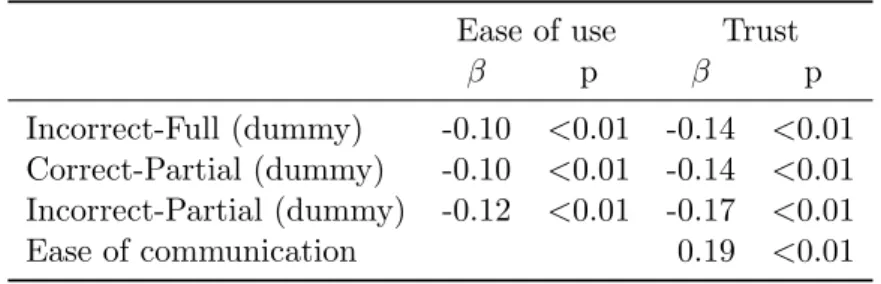
Hypothesis 2.1 : Translation issues result in lower perceived ease of communication with the foreign online store.
Hypothesis 2.2 : Translation issues result in lower perceived ease of use of the foreign online store.
Gefen et al.(2003) indicates that ease of use and trust share antecedents. Contact with the online store, in this case direct use, is how consumers obtain information about it and learn to trust it. Similarly, contact may also indicate communication with online store. Therefore, improving perception of ease of communication could increase the perception of trustworthiness of the online store.
Hypothesis 2.3 : Perceived ease of communication has a positive effect on trust in the foreign online store.
These hypotheses are tested in study 2 on the effect of translation issues, detailed in Chapter 5.
3.4 Country-of-origin
3.4.1 Country-of-origin related pictures
In electronic commerce there is a lower sense of sociability and physicality than in conventional shopping. In order to address this problem, research has evaluated the effect of social presence (Steinbr¨uck et al., 2002) and physical presence (Park et al., 2005) on the perception of the online store.
Country presence
In the case of cross-border electronic commerce, However, the influence of presence as related to country has not been previously considered and there is no research on how to reduce a perception of distance between countries.
In the case of cross-border electronic commerce, the fact that the online store is from another country brings an added dimension to the perception of distance. This distance between the consumer and the foreign vendor can also result in a lower sense of the country-of-origin of the online store. Therefore, the factor of country presence, or the sense of the country of the online store, is proposed. Country presence can be defined as the sense of a website’s country-of-origin transmitted to the user, based on the type of transportation ”in which another place and the objects within it are transported to the user” (Lombard and Ditton,1997), where place refers to the country. This definition also considers the limitations of applying the concept of presence in an electronic commerce context, in a similar manner as previous research in this area (Cyr et al.,2007,2009).
The feeling of presence can be influenced by the content that is being represented by the medium (Steuer,1992;IJsselsteijn et al.,2000), such as people, places, events or
Chapter 3. Theoretical Framework 21
interactions. In the case of electronic commerce, this may be accomplished through the design of the website, as user response can be manipulated by modifying visual elements of the design (Kim and Moon, 1998). For example, visual content such as photos of people (Steinbr¨uck et al., 2002) or human pictures (Hassanein and Head, 2007; Cyr et al., 2009) can be included in the design to improve social presence in a website. Similarly, country-related content in pictures may be able to increase country presence in the foreign online store.
Hypothesis 3.1 : Displaying country-related pictures in a foreign online store results in higher country presence than displaying generic pictures.
An online store can be considered a communication medium. Increased richness in communication media is related to increased understanding of the message (Daft et al.,1987). Physical presence and graphic symbols are cues that improve richness in communication media (Daft et al., 1987). The sense of presence can decrease uncertainty about the vendor by increasing information richness, and therefore also increasing understanding. By increasing information richness, social presence can improve trust in a website (Hassanein and Head,2007;Cyr et al.,2007,2009;Karimov et al., 2011). For Japanese users in particular, information about the vendor is an important consideration for trust (Cyr et al., 2009), otherwise they are more likely to avoid purchase. In a scenario of initial trust where the user does not know of the website, and with the added characteristic of a cross-border context, providing the consumer with added knowledge and information about the vendor in the form of country presence may have a positive effect on trust.
Hypothesis 3.2 : Country presence has a positive effect on trust in the foreign online store.
By transporting the consumer, a sense of presence can increase the feeling of closeness and emotional investment, thereby increasing the perception of visual appeal of a website. A high social presence condition leads consumers to describe the design of a website as interesting and appealing; on the contrary, in a lower social presence condition they described it as plain, boring and unappealing (Hassanein and Head, 2007; Cyr et al., 2007). Increased physical presence in a website can also influence the aesthetic dimension of consumer attitude, such as the perceived attractiveness and visual appeal of products (Suh and Chang,2006). By increasing country presence, the consumer may feel more emotionally involved in the foreign online store and perceive it as having an attractive design. Therefore, it is clear that presence influences not only
the enjoyment of the shopping experience, but also the perceived aesthetic appeal of the design of the website.
Hypothesis 3.3 : Country presence has a positive effect on visual appeal of the foreign online store.
These hypotheses are tested in study 3 on the effect of country-related pictures, detailed in Chapter 5.
3.4.2 Country-of-origin image
As mentioned in Chapter2, the literature search found no previous quantitative studies on the effect of country-of-origin image on online stores. The cognitive and affective image of a country has been found to affect the perception of products (Verlegh and Steenkamp, 1999) and services (Pecotich and Ward, 2007). However, their effect on the evaluation of foreign online stores has not been empirically validated previously. Neverthless, common points can be found from the studies on products, services and other targets. The hypotheses that will be presented are based in the theoretical findings related to other targets of evaluation, with an indication of how the effect of country- of-origin is relevant to this new context.
The structure of country-of-origin image considered is one where the cognitive and affective image dimensions both influence the evaluation and intention towards the target (Roth and Diamantopoulos,2009), instead of a hierarchical image structure, where a second-order country-of-origin image factor is composed of the cognitive and affective factors (Laroche et al., 2005). There are two reasons for this choice. First, a hierarchical model implies that the first-order factors are highly correlated with each other. However, this may not be true for all countries. One dimension, affective or cognitive, may be stronger and this could change depending on the country-of-origin of the consumer. Second, one of the reasons for using hierarchical models is to improve parsimony. However, asRoth and Diamantopoulos(2009) indicates, parsimony is not the goal of all studies, and the use of the type of structure should be adequate for those aims. In the case of the study, the aim is to evaluate the effects of the country-of-origin image dimensions separately. Nevertheless, the two dimensions of the country-of-origin image are not completely unrelated, with the cognitive component influencing the affective component (Brijs, 2006), since emotional response to the country is to some extent a result of the processing of positive characteristics of the country.
Chapter 3. Theoretical Framework 23
Hypothesis 4.1 : Country cognitive image has a positive effect on the country affective image.
Country-of-origin image has been shown to affect the evaluation of external perceptions of product, such as design and style Nagashima (1970, 1977); Roth and Romeo (1992); Leonidou et al. (2007). Cognitively, since an appealing design characteristic is a part of the quality of the website (Loiacono et al.,2002), it implies a certain ability of the online store to realize a competent design. Cognitive characteristics of country can affect the perception of quality in products (Hamzaoui and Merunka, 2006), as in the case of Germany, for example. Visual appeal, as an aesthetic component, is not only related to quality, but also to the hedonic dimension of online stores (Childers et al.,2001) and to affective responses (Cyr et al.,2010). Hypothesis 4.2 : Country affective image has a positive effect on visual appeal of the foreign online store.
Hypothesis 4.3 : Country cognitive image has a positive effect on visual appeal of the foreign online store.
In an initial trust situation, the evaluation of the trustworthiness of the website depends both on intrinsic and extrinsic factors (Gefen et al., 2008). In situations of initial trust, consumers have to evaluate the online store based on information other than experience, such as the general situation of electronic cmmerce or trust in institutions that support electronic commerce (Grabner-Kr¨auter and Kaluscha, 2003). Consumers decide to trust a particular online store based on their beliefs that there are the assurances and infrastructure that is in place, which may be trustworthy (McKnight et al.,2002b), when they lack other information. This perception has some influence on whether they perceive a particular online store as trustworthy (Mcknight and Chervany,2001).
In the case of cross-border electronic commerce, the institutional trust factors are not the same as those that exist for the domestic market. There is no centralized authority, and consumers may be less certain, or less knowledgeable, about international institutions for protection of consumers, of institutions within their country or in the country of the online store (Commission of the European Communities, 2009b). In the absence of such institutional support, other extrinsic factors may become more relevant. Country-of-origin image is extrinsic or contextual information that influences perception of trust about products (Jim´enez and San Mart´ın, 2010; Safari, 2012). In particular, the cognitive dimension of the country-of-origin image has an effect on trust. The infrastructure and economic advancement of the country give a good indication
that it is possible to trust in the performance of the product (Verlegh and Steenkamp, 1999). Considering that trust as defined for an online store is composed of a competence component, the cognitive image may influence this belief. In addition, trust in an online store is also composed of a belief of the goodness of will or integrity (McKnight et al., 2002b). A store may be able fulfill an order logistically, but it also may not have the consumer’s best interest or the best ethical practices in their service. The expectation of beneficial behavior can be based on affective responses (Williams,2001).
Hypothesis 4.4 : Country affective image has a positive effect on trust in the foreign online store.
Hypothesis 4.5 : Country cognitive image has a positive effect on trust in the foreign online store.
Hypothesis 4.6 : Country affective image has a positive effect on intention of use of the foreign online store.
The literature on country-of-origin image posits an influence on the intention of buying a product (Jim´enez and San Mart´ın,2012) though literature reviews have that the effect is less stronger than for evaluation (Verlegh and Steenkamp,1999). However, the effect of country-of-origin is increased when there is fewer information about the product or service (Pharr,2005), which fits the situation of initial trust in cross-border electronic commerce of this study.
Hypothesis 4.7 : Country cognitive image has a positive effect on intention of use of the foreign online store.
These hypotheses are tested in study 4 on the effect of country-of-origin image, detailed in Chapter 5.
Chapter 4
Methodology
This chapter introduces the data collection process, measurement instrument and experiment design used in the studies of this dissertation, as well as the statistical methods used in the analysis of the data.
Only the methodology shared by all studies is described in this chapter; additional details which apply to each particular study are explained in the next chapter.
4.1 Data collection
The data for all experiments was collected in Japan, using Japanese online survey companies. Two different survey companies were used, one for the first study and another for the other three studies, but the procedure followed for data collection was the same.
In each case, an invitation to participate in a survey was distributed online to the survey company’s registered members. As an incentive, the survey companies gave points to members as a reward for completing each survey. Members who responded to the invitation and answered a simple preliminary survey were considered as potential participants in the experiment. From these, respondents who fulfilled a certain criteria were selected as the initial pool of participants and were asked to take part in the main survey. This initial pool was limited to a number pre-specified with the survey company. The different selection criteria for each study are explained in the next chapter.
The survey companies did not provide any personal identifiable information about the participants. This ensured the protection of the participant’s anonymity from the point of view of this research. In addition, using survey companies also allowed the collection of a large sample in a relatively short time.
25
4.2 Experiment design
The studies were conducted following a between-subjects experimental design. The factor of interest in each study was manipulated as an independent variable, with the exception of the last study on country-of-origin image. A between-subjects design was used to avoid leading the respondent into artificial comparisons between experimental conditions (Verlegh and Steenkamp,1999).
The initial pool of participants were randomly assigned to one experimental condition; the number of conditions varied according to the study. Once the participants had been assigned into their random groups, they were given access to the main survey that corresponded to their experimental condition. The survey included an explanation of the experiment scenario, the images of the mockup website for the experimental condition and the measurement items. The experimental conditions and survey details for each study are described in the next chapter.
4.3 Mockup websites
Different versions of a mockup website, a fictitious B2C foreign online store, were developed specifically for the experiments using free website design tools. Each version corresponded to an experimental condition.
The design, layout and content were as similar as possible for all versions, with the exception of the characteristics corresponding to the factor manipulated in each study, in order to control for the influence of any other website variables. The mockup website versions for each study are described in the next chapter.
4.4 Measurement instrument
As mentioned before, the main survey consisted of an explanation of the experiment scenario, the images of the mockup website and the measurement items. The measuring items for all factors in this research were obtained and adapted from previous studies. All items were measured on a five-point Likert scale ranging from ”strongly disagree” to ”strongly agree”, with the exception of risk items which ranged from ”very high” to
”very low”. In all the studies, intention of use was operationalized as the intention to perform two trust-based actions necessary to buy from an online store (Gefen et al., 2003). Other measures items used in each study are detailed in the next chapter.
Chapter 4. Methodology 27
All items were originally written in English. As the experiments were conducted with Japanese participants, the items were translated to Japanese language. The translation procedure consisted of a forward translation by a bilingual subject expert and a revision. First, the items were translated by a native Japanese speaker, who was familiar with survey methodology and with electronic commerce research. Then, the content of the translated items was reviewed by a second native Japanese speaker, who checked the items for naturalness of language.
4.5 Countries selection
The experimental studies conducted required the selection of two foreign countries to act as the country-of-origin of the online stores. Four main criteria were considered for choosing the countries. The criteria took into consideration that the studies would be conducted in Japan with Japanese participants.
First, the countries should be a popular travel destination for Japanese people. This would ensure some degree of cultural exchange and interest from the Japanese participants, which in turn would help increase the plausibility of the scenario proposed by the experiments. Second, the countries should be geographically close to Japan. Similarly to the first criteria, this would ensure some degree of knowledge about the country, just by virtue of its closeness. In this case, the selection was also limited to Asia Pacific countries. Third, the countries should, for the most part, have a positive or neutral political relationship with Japan. This was to avoid any controversies in conducting the experiment and to limit possible negative image effects. Fourth, the two countries should have a different level of development in order to allow for comparisons in the effect of country-of-origin image of a developed country and a developing country at the cognitive level. A similar comparison on the affective dimension was not considered a priori since there were no similar country classifications on that dimension.
The two countries selected for the experiments were Thailand and Singapore. Thailand is the third most-visited country in Asia for Japanese people, after South Korea and China (Japan Tourism Marketing Co., 2013). It is considered a developing country, based on its classification as a developing economy byThe World Bank(2013b). Thailand has a positive economic and political relationship with Japan, as well as a high level of cultural exchange (Ministry of Foreign Affairs of Japan, 2014). Singapore is located close to Thailand, and it is the fourth most-visited country in Asia for Japanese people (Japan Tourism Marketing Co., 2013). In contrast to Thailand, Singapore is considered a developed country, classified as a high income country byThe World Bank (2013a). Singapore also has a positive relationship with Japan (Ministry of Foreign