Western Kentucky University
TopSCHOLAR®
Dissertations Graduate School
Summer 2015
he Perfect Formula: Benchmarks that Best Predict
Retention in Selective Admissions Programs
Nadine Joy Menser
Western Kentucky University, [email protected]
Follow this and additional works at:htp://digitalcommons.wku.edu/diss
Part of theEducational Leadership Commons, and theOther Educational Administration and Supervision Commons
his Dissertation is brought to you for free and open access by TopSCHOLAR®. It has been accepted for inclusion in Dissertations by an authorized administrator of TopSCHOLAR®. For more information, please contact [email protected].
Recommended Citation
Menser, Nadine Joy, "he Perfect Formula: Benchmarks that Best Predict Retention in Selective Admissions Programs" (2015).
Dissertations.Paper 87.
THE PERFECT FORMULA:
BENCHMARKS THAT BEST PREDICT RETENTION IN SELECTIVE ADMISSIONS PROGRAMS
A Dissertation Presented to
The Faculty of the Educational Leadership Doctoral Program Western Kentucky University
Bowling Green, Kentucky
In Partial Fulfillment
Of the Requirements for the Degree Doctor of Education
By N. Joy Menser
THE PERFECT FORMULA:
I dedicate my dissertation and my education accomplishments to the following
individuals. All that I am, and all that I may become, I owe to three very special people:
my husband and my parents. They have always believed in me and inspired me to reach
further than I ever thought possible. Without their love, patience, guidance, and
encouragement, I would not be where I am today. Larry, you were there when I
received my first diploma and will be with me when I accept my last diploma. I know
when you said “I do,” you did not know what you were getting into; but, honey, without
you I could not have done any of this. Mom and Daddy, I only wish you could be there
with me to see me reach my final goal. Although you are not with me in person, your
spirits will always live within me. I have one last question: Do I make you proud?
To my two children Stephanie and Chad. Never stop believing in yourself, never
stop learning, and never stop reaching for the stars. I believe in you and know that
whatever you set your minds to, you will achieve. Never allow anyone to tell you that
you cannot do something; if you dream it, by all means achieve it. Thank you for your
iv
ACKNOWLEDGMENTS
If I have seen further than others, it is by standing upon the shoulders of giants. - Isaac Newton
I would first like to thank my committee chair, Dr. Aaron Hughey. Your
patience, kindness, encouragement, and knowledge have been the driving force that has
allowed me to reach my goal. I will never be able to find the right words to express my
gratitude for everything you have done for me. To my committee members, Dr. Monica
Burke and Dr. Joelle Carter, thank you for giving me so much of your valuable time.
Your guidance has helped me complete this final process. I also would like to thank Dr.
Barbara Burch. You are an inspiration to me. If I could achieve half of the success that
you have, I will feel accomplished in life.
I started Western Kentucky University to seek a degree, but what I received were
friends that will be with me a lifetime. To Dawn Winters, whose friendship,
encouragement, reviewing, guidance, and patience has helped me complete my
education. You were there when I was ready to give up, and you were always there to
push me along. You are truly one in a million, and I love you to death. Thank you for
everything.
To Meredith Skaggs for all your pep talks and for believing in me when I did not
believe in myself. Thank you does not seem enough for everything you have done for
me. To cohort IX, thank you everyone. Your encouragement, positive attitudes, and
joking kept all of us together. Remember to enjoy the journey while completing your
v
To Margaret Soder, you have been truly a blessing for all your help and
encouragement. Thank you for your willingness to help me whenever I ask.
To my extended family, thank you all for everything. Especially to Davalene
Fulks and Keith Patrick for the words of encouragement and always believing in me as I
traveled this long road.
Michelle Tudor, thank you for picking up the slack, reading, and encouraging me
throughout this process. Your help and kindness have been an inspiration to me. I hope
as you travel your next educational path I can also be there to help you.
Thank you to all radioFigureers out there who had the courage to complete your
doctoral degree and become one of the 1% in our field that has accomplished that goal.
To the graduating classes of 2013, 2014, 2015, and 2016 at Owensboro
Community and Technical College in the Radiography program, thank you for putting
up with me and your understanding as I worked toward my goal. Your kindness and
thoughtfulness have inspired me to reach for the stars. Your patience and tolerance has
allowed me to achieve my goal. I hope I inspired each of you as you have inspired me
over the years.
Last, but not least, to my friends. I value each and every one of you. You have
inspired me and encouraged me through phone calls, notes, and visits. Thank you for
vi CONTENTS
LIST OF FIGURES……….... x
LIST OF TABLES……….. xi
ABSTRACT………. xii
CHAPTER I: INTRODUCTION………..……… 1
Introduction………. 1
Historical and Political Context of the Problem………. 4
Significance of the Problem……….... 5
Significance of the Problem within Allied Health……….. 7
Conceptual Framework……… 12
Tinto’s Student Integration Model……….. 13
Noel’s Modelof Attrition……… 14
Bean’s Model of Student Retention……… 15
Astin’s Theoryof Involvement……… 16
Love’s Learning Communities Model………. 17
Summary of Retention Models……… 18
Significance of the Study………. 20
Methodology……… 20
Data Analysis……….. 23
Definition of Terms………. 23
Conclusion……….. 25
CHAPTER II: REVIEW OF LITERATURE………. 27
vii
Community Colleges……….. 27
Development and Growth……… 27
Purpose………. 31
College Leadership………... 33
Community College Admissions……….. 35
Retention Issues……… 43
Retention Issues for Community Colleges……… 54
Selective Admissions……… 60
Allied Health Programs………. 60
Admissions Criteria……….. 63
Selective Admissions……… 65
Admissions Criteria……….. 69
Evaluating the Selective Admissions Process……… 76
Radiography……… 78
History of the Profession……… 78
Radiography Program Leadership……….. 82
Admissions Committees………. 84
Lack of Research……… 86
Conclusion……….. 90
CHAPTER III. METHODOLOGY……….. 92
Introduction……… 92
Population……… 94
viii
Pilot Study……….. 98
Ethical Considerations……… 100
Data Collection……….. 101
Design and Statistics……….. 101
Data Analysis………. 103
CHAPTER IV: RESULTS………. 106
Introduction……… 106
Methodology……….. 107
Dependent Variables……….. 107
Independent Variables……… 107
Study DemoFigureics……….. 108
DemoFigureics Summary……… 113 Research Question Findings………... 114
Summary of Findings……….… 137
CHAPTER V. SUMMARY, CONCLUSIONS, AND RECOMMENDATIONS.. 140
Introduction………. 140
Summary……….… 140
Quantitative Data Analysis……….… 144
Discussion……….….. 145
Interpretation of Findings………... 145
Discussion of Research Question 1……….… 145
Discussion of Research Question 2………. 147
ix
Discussion of Research Question 4……….. 149
Discussion of Research Question 5………. 151
Discussion of Research Question 6………. 152
Discussion of Research Question 7……….. 153
Discussion of Research Question 8………. 154
Discussion of Research Question 9……….. 155
Summary of the Study and Findings……… 156
Recommendations………. 158
Limitations………. 158
Recommendations on the Application of the Findings………. 159
Conclusion………..160
REFERENCES……….. 162
APPENDIX A: Accredited Radiography Programs by Academic Level of Achievement……… 194
APPENDIX B: Permission from original author to use and make modifications to survey tool……… 195
APPENDIX C: Survey Tool……… 196
APPENDIX D: Kentucky Community and Technical College System IRB Approval………..……….. 206
APPENDIX E: Western Kentucky University IRB Approval……… 207
APPENDIX F: Letter of Survey Explanation………. 209
x
LIST OF FIGURIES
1a. Traditional admissions criteria for two-year programs ...116
1b. Traditional admissions criteria for four-year programs...116
2a. GPA utilized for two-year programs ...118
2b. GPA utilized for four-year programs ...118
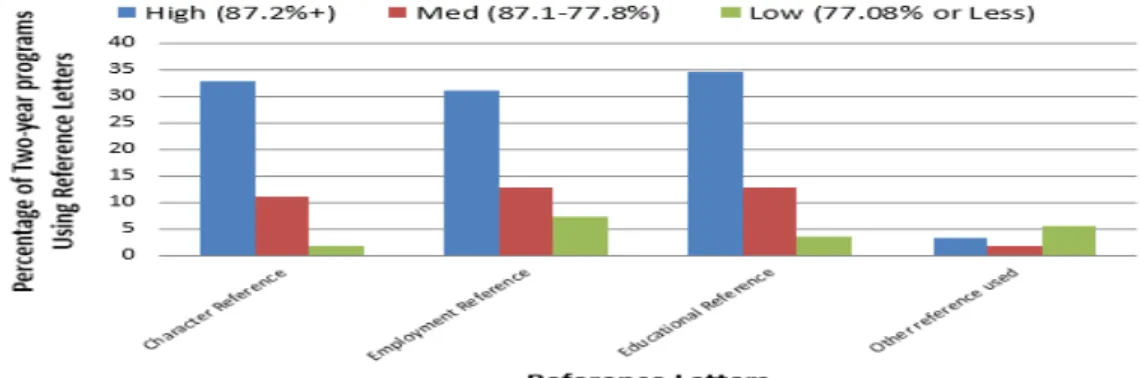
3a. Reference letters utilized by two-year programs ...120
3b. Reference letters utilized by four-year programs ...120
4a. Interviews utilized by two-year programs ...123
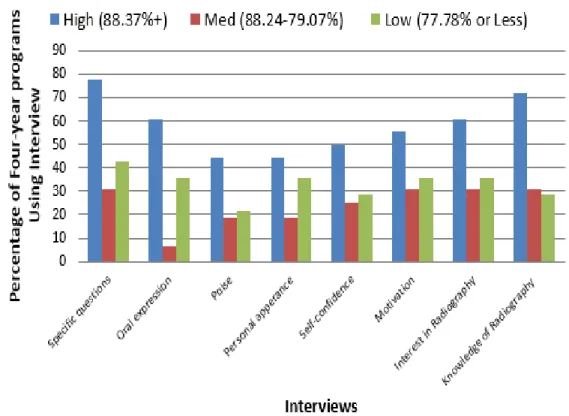
4b. Interviews utilized by four-year programs ...123
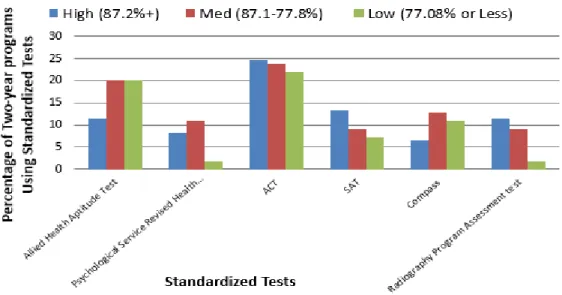
5a. Standardized tests utilized by two-year programs ...125
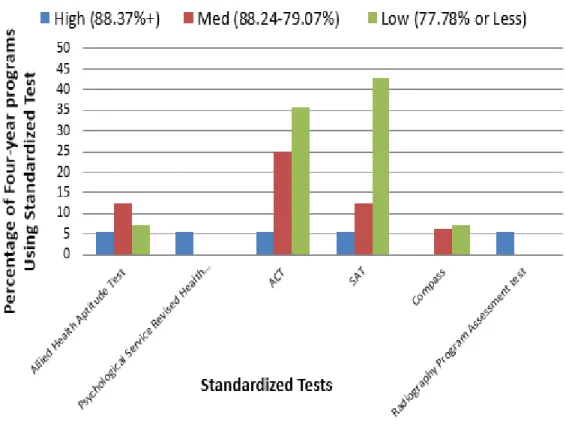
5b. Standardized tests utilized by four-year programs ...126
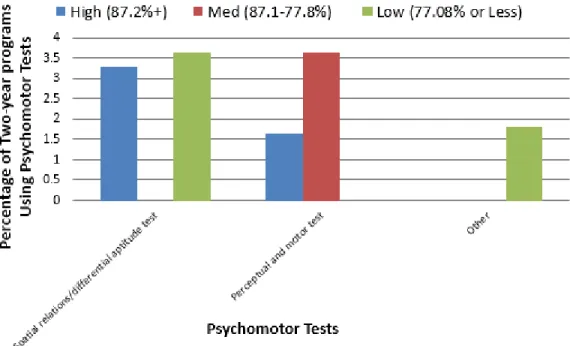
6a. Psychomotor tests utilized by two-year programs ...128
6b. Psychomotor tests utilized by four-year programs ...128
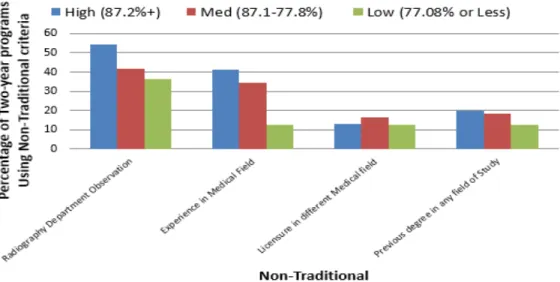
7a. Non-Traditional criteria utilized by two-year programs ...130
7b. Non-Traditional criteria utilized by four-year programs ...131
8a. Non-Traditional criteria utilized by two-year programs ...133
8b. Non-Traditional criteria utilized by four-year programs ...133
9a. Prerequisites required by two-year programs ...136
xi
LIST OF TABLES
1. DemoFigureics of Radiography Programs in Kentucky . ...99
2. Cronbach Coefficient Alpha Alculations for Subscales……….100
3. Graduation Grouping by Program Affiliation……….. 102 4. Survey Responses by Program Affiliation ...108
5. Title of Person Responding to Survey Tool by Affiliation ...109
6. Setting of Program by Affiliation ...110
7. Entry Level Curriculum by Program Affiliation ...110
8. Frequency of Students Admitted by Affiliation ...111
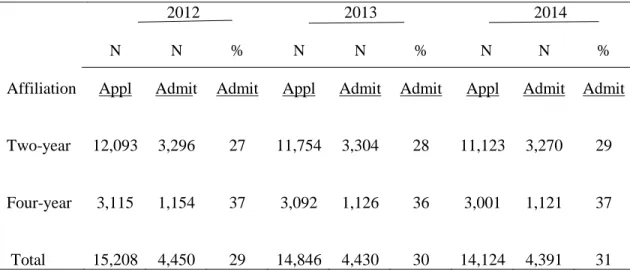
9. Number of Students Applying, Admitted and Percentage Admitted by Program Affiliation ...112
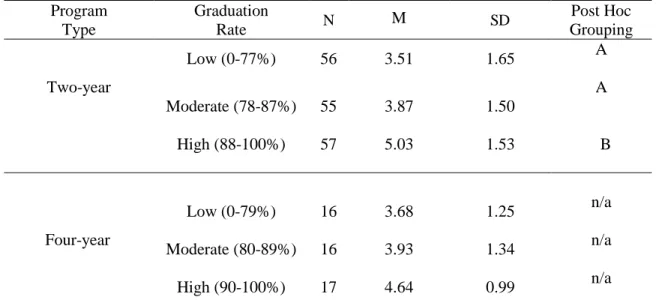
10. Average Graduation Rate by Program Affiliation...113
11. Average Number of Traditional Admissions Criteria ...115
12. Type of GPA Utilized for Admissions Criteria ...117
13. Type of Reference Letters used for Admissions Criteria ...119
14. Interview Utilized ...122
15. Standardized Tests Utilized ...124
16. Psychomotor Tests Utilized ...127
17. Non-Traditional Admissions Criteria ...129
18. Radiography Department Observations ...132
xii
THE PERFECT FORMULA:
BENCHMARKS THAT BEST PREDICT RETENTION IN SELECTIVE ADMISSIONS PROGRAMS
N. Joy Menser August 2015 210 Pages
Directed by: Aaron Hughey, Monica Burke, and Joelle Carter
Educational Leadership Doctoral Program Western Kentucky University
This study ascertained the admissions criteria utilized by Radiography programs
with high graduation rates and determined whether a relationship exists between
admissions criteria and graduation rates. With the high demands for healthcare
professionals, preserving the number of students accepted into a cohort throughout the
two-year program can be an overwhelming task. These programs should make every
effort to admit and graduate those who meet the needs of the public, needs both diverse
and subject to change. Radiography program directors and admissions committees are
considered the “gatekeepers” of the profession. Yearly, more candidates apply than
seats available. Therefore, the directors and committees are faced with the daunting task
of selecting students they feel will be successful.
Developing a selection system that is fair and equitable to all individuals is a
difficult task. Selective admissions measures should be evaluated on the basis of
validity, fairness, and feasibility. In the past, a lack of available research has forced
program directors to evaluate their admissions process with those in other allied health
fields. This research adds to the knowledge sought each year by program directors, who
are held accountable for students they admit, as well as those they do not admit.
Nine research questions guided this study, which sought to determine the
xiii
programs with high graduation rates in both two- and four-year programs utilized more
criteria for their selection process than those with moderate to low graduation rates. In
addition, a significant difference was seen in criteria utilized for interviews, types of
reference letters, and the number and type of prerequisite classes employed as part of the
admission criteria by programs with high graduation rates. Radiography program
directors can utilize the results to reformat their current admissions process to improve
1
CHAPTER I: INTRODUCTION
Introduction
Higher education structures and policies currently demand transformative
thinking, as federal and state government educational budgets limit access to resources.
As governmental agencies reduce funding to institutions of higher education, it is
imperative for individual programs and campuses to develop alternative strategies for
closing the gap in funding. Nowhere is this gap more evident than the allied health fields
of study.
The Health Professions Network (2005) stated that the United States continues to
experience a decline in educationally prepared, licensed healthcare workers. Lok and
Dower (2008) proclaimed that supplying the growing demand of qualified allied
healthcare professionals, to include radiology personnel, is a challenge. In a study by the
American Society of Radiologic Technologists (2000), the authors reported that, within
the healthcare field of study, the specialty of radiologic technologist demonstrated the
greatest shortage, at 15.3%. This percentage was higher than that for nurses and
pharmacists, which were noted at 13.0% and 12.7%, respectively (U.S. Department of
Labor, Bureau of Labor Statistics [BLS], 2010; Occupational Outlook Handbook, 2010;
Rundall, 2006). An obvious growing need exists for qualified healthcare professionals,
as well as a need and the importance of providing fully staffed healthcare departments by
graduating highly-skilled, competent radiologic technologists into the workforce.
This economic problem accompanies the practical and moral concerns of
retention and graduation. The following provides an introduction to the value of
educational opportunities, retention of students, and the direct relationship between
2
The economic value of educational opportunities becomes particularly relevant
within the context of community college mission statements. According to Halsey
(1993), community colleges were historically and philosophically founded on open-door
admission policies. The community college system was developed to provide affordable
and accessible educational opportunities for the members of the surrounding communities
(Grindel, 1997). With the increasing demands on institutional budgets and shrinking
funding sources, tuition has become the primary means of maintaining financial
resources, even in the community college system. This predicament of less funding and
more demand has placed pressure on institutions to, not only enroll more students (focus
on admissions), but also to consider the implications of attrition and retention rates.
Community colleges provide the primary environment for Radiography
programming (see Appendix A). Community colleges utilize open admissions policies,
which allow the institutions to serve a wide variety of students. However, open
admissions does not translate to all students at any educational level entering
college-level coursework. Many community colleges allow open admissions, but general
education courses require specific placement or testing scores. The open admissions
policy continues to contribute to the need for community college allied health programs
in order to clearly identify factors that will help to predict a student’s success once he or
she has been accepted into these highly competitive selective admissions programs.
By nature, allied health programs restrict the number of students accepted into the
program due to the limited space available at clinical facilities in which students receive
hands-on training. In limiting the number of students, selective admissions procedures
3
possess the desire and ability to enter and complete the rigorous programs that prepare
them for a career in healthcare settings. The purpose of this research was to ascertain the
factors of the selective admissions process specifically for Radiography programs.
Information gathered as a result of this study will aid programs in creating and revising
admissions and selection criteria. Due to a gap in publications and research on this
matter, the available research in this field has provided little to no support for current
program directors to move forward in developing stronger admissions criteria and
respectable graduation rates for Radiography programs.
The value of retaining students in higher education is economically
comprehensible; however, the societal need for graduates is more apparent when
discussing particular technical degrees and allied health programs. Healthcare
professions must continue to monitor the aging population and to ensure an adequate
number of qualified registered/licensed healthcare professionals. The needs of the
healthcare industry for qualified employees continue to grow as the demands from an
aging population on the healthcare system increase. However, if students are not
adequately trained, certified, and graduated to replace retiring employees, who will serve
the public? The value of retention and attrition research is more than an economic
concern for higher education; it is a societal concern as well. For the purpose of this
research, the focus remained on allied health and, more specifically, Radiography
programs. The following examines the problems faced by Radiography programs to
standardize admissions criteria, the lack of research available to guide programs in
selecting candidates, the purpose of the research, the significance of the study, and a brief
4
Historical and Political Context of the Problem
Subsequent to World War II, the number of high school graduates has surged, and
higher education leaders now face the largest influx of students planning to move into
postsecondary education (Katsinas & Bush, 2007). This influx, according to Hunt
(2006), has made “[h]igher education [into] the ‘engine’ of economy and democracy in
our nation” (p. 4). Not since the launch of the G.I. Bill after World War II have
American students and politicians embraced the idea and rewards of a college education
as a means to stimulate the economy. According to Hunt, in 1937 approximately 1.5
million, or (15%) of 18 to 20 year olds attended college immediately after high school.
However, after World War II and the advent of the G.I bill, the admissions numbers
nearly doubled to 2.7 million. Hunt also stated that, in comparison, prior to the current
recession the enrollment numbers in higher education were approximately 9 million
students. During and after the recession, the current enrollment showed more than 17
million students attending college full and part time. The influx nearly doubled the rate
of college attendees. Enormous gains in student numbers usually would be applauded,
but the recession also brought cuts to education, causing turmoil for educational
administrators. Kanter (2011) affirmed that education became one of the key focus areas
for strengthening the economy in the United States. President Barack Obama placed an
emphasis on, not only increasing the number of students enrolling in higher education,
but also on retaining and graduating them (Kanter, 2011). As a result of the 2007
recession, the United States’ educational system suffered one of the largest collapses in
state revenue, affecting the K-12 and higher educational systems in a dramatic fashion
5
problem emerged with the transforming college campus. As quickly as individuals
would enroll in college to combat unemployment, students would leave for the first job
that was offered. Thus, colleges began to be criticized for, and internally aware of,
attrition and retention of students. This problem, not only affected higher education, it
also began to affect the industries that depended on higher education institutions to
supply their workforce (Davies & Guppy, 1997).
Significance of the Problem
The dichotomy between retention and institutional economics engendered a
potential perfect storm for educational administrators. Currently, higher education faces
continual budget cuts from the state and federal government. Institutions of higher
education have battled these losses by increasing their dependence on tuition dollars
which are impacted by the lowered enrollment numbers (Johnson, Oliff, & Williams,
2011). Belcher (1987) emphasized that the ongoing struggle to balance budgets is
particularly challenging in a community college environment. The primary mission of
the community college system is to provide affordable educational opportunities to the
communities served by the colleges. Heller (2001) claimed that the implications of
raising tuition come at a high societal cost. Higher education organizations work to avoid
steep increases in tuition by seeking other sources of revenue, such as an increased focus
on preventing high rates of attrition (Gilmour & Lewis, 2006b).
Gallie (2005) defined attrition as the “number of students beginning the course
minus those completing the course” (p. 70). However, members of higher education
should not be surprised that multiple definitions of the construct exist (Hagedorn, 2006).
6
enrollment conditions currently facing higher education. Kippenbrock, May, and Younes
(1996) asserted that student attrition is an incessant problem and has remained high since
1910. The United States Department of Education, National Center for Education
Statistics [NCES] (2003) examined the current condition of attrition rates, finding
approximately 48% of first-time undergraduates began their pursuit of college at a
two-year institution. The report identified 757,565 students who started at a two-two-year public
institution and found a surprisingly small number of students returning the following
academic year to persist toward graduation (446,136). This number equates to a 58.9%
retention rate. In addition, of those who began college in 2008, only 31% of first-time,
full-time undergraduate students completed either a degree or certificate within 150% of
the normal time (NCES, 2003).
According to Robertson, Canary, Orr, Herberg, and Rutledge (2010), quantifiable
student attainment indicators are among the more commonly identified components, such
as scores on standardized college-entry exams, individual class grades and/or overall
GPA, and credit hours earned in sequential terms, which denotes progress toward the
degree. Additionally, student success can be measured using traditional measures,
including degree completion, graduate school entrance test scores, graduate and
professional school matriculation, and performance on discipline or field-specific
examinations. Examples of field-specific examinations include state or national board
exams that permit individuals to work in their field of study (Robertson et al., 2010).
Furthermore, other measurable indicators of success used by some organizations are
post-graduate employment and net income (Kuh, Kinzie, Buckley, Bridges, & Hayek 2006).
7
as an all-inclusive phenomenon that incorporates the multiple facets of personal
development and the manifold objectives of higher education. Boylan (2007) noted that
several community colleges report their success rate using graduation rates collected and
published by the national Integrated Postsecondary Education Data System (IPEDS)
(n.d.). The IPEDS measure originates with an entering fall cohort of first-time, full-time,
degree-seeking students. The system monitors student progress to degree completion.
Success is defined as completing a degree or certificate within 150% of “normal time to
completion” at the institution in which they initially enrolled (Boylan, 2007, p. 3). Boylan
affirmed that, for community colleges, this constitutes a two-year degree obtained within
three years of enrollment for standard degree programs. The purpose of this research was
to understand the factors pertaining to student success, specifically within the selective
admissions process in Radiography programs.
Significance of the Problem within Allied Health
Although extensive research has been available on student success and retention
in college and allied health programs, such as nursing, dental hygiene, physical therapy,
and surgical technicians, limited research has been conducted to identify predictors that
determine retention of students within Radiography programs. Radiography program
directors and admissions committees struggle to identify a viable set of predictors that
will determine whether a student admitted into a selective admission Radiography
program will complete the program. Selecting the best potential students involves using
evaluation criteria that are fair and efficient. Lazarus and Van Niekert (1986) defined an
appropriate evaluation process as:
8
[…] one that is just, objective, equitable and unprejudiced. A selection process is
just and objective when the prerequisites are explicit and open to reliable
measure. There are no hidden criteria. Prerequisites are explicit when they are
clearly defined and available to applicants. (p. 343)
Extensive research completed over the years has developed an understanding of
the factors that could best predict a student’s success in college (Boylan, 2007; Cook,
2010; Gillis, 2007; Green & Baird, 2009; Kippenbrock et al., 1996; Mangan, 2013;
Yukselturk & Inan, 2006). However, few studies are available to direct Radiography
program directors in selecting students for each cohort.
Currently, a growing demand exists for well-educated, clinically competent allied
healthcare professionals, in addition to an immediate concern of the impending shortage
that is predicted to increase over the next decade as retirements occur within the current
workforce (Health Care Human Resource Sector Council, 2003). According to
Alexander (2000), state representatives, college presidents, and programmatic accrediting
agencies expect programs to reveal evidence of student success in postsecondary
education.
A common proposal to reduce the shortage of healthcare professionals is to
expand the number of students enrolled in each cohort. However, allied health programs
must limit their enrollments due to limited clinical facilities in which students receive
hands-on training (Naomi, 2004). A demand remains for program directors to diminish
the healthcare professional deficiency by preserving a greater numbers of students
(Wharrad, Chapple, & Price, 2003). Thus, the most desirable solution is to admit a
9
same number originally admitted due to the limited seats available within allied health
programs (Holt, 2005; Sadler, 2003). According to Wells and Baird (2001), the growing
demand and increased retention rates of healthcare professionals have created the
opportunity for a “renewed and critical focus on student attrition” (p. C2-1).
Shehane (1996) discovered that Radiography programs do not use universal
selective admissions models. Shehane (1996) observed that, due to the lack of universal
admissions models, admission validity cannot be determined. The lack of research
available for program directors to reference leaves admissions criteria to the standard
options: high school GPAs, prerequisite GPAs, and interviews. As stated by Espen,
Wright, and Killion (2006), the specialization of the discipline and the limited amount of
research that focuses on Radiography programs have forced program directors to depend
on research available outside of their specific profession and discipline in order to set
standards by which to select cohorts. However, this process is a poor match due to the
vast difference in the curriculum. The selected candidates are expected to complete the
program of study, in addition to being successful on their National Licensure Board
exam, which impacts the accreditation of the program (Espen et al., 2006; Schulz, Dowd,
& Fischbach, 1995; Shehane, 1996).
Attrition in allied health programs has been a challenge, as demonstrated in a
study conducted by Gupta (1991). Gupta’s study revealed attrition rates ranging from
28.7% for respiratory therapy technician and surgical technologist programs to 2.1% for
anesthesiologist assistant programs. In addition, it revealed Radiography as having an
attrition rate of 14.5%. In the study, for-profit institutions also showed a significantly
10
(2007), the selection process is vital in selecting candidates who will be successful in the
long-term completion of the degree. Student success is, not only relevant in terms of the
selective admissions process, but also in offering positions to students who will persist in
the program. Once classes have begun, it is impossible to replace a student who decides
to terminate due to the pace of the program and the amount of information covered.
Institutions of higher education deal with increasing financial demands with less
government funding and more budget cuts. Boehner and McKeon (2003) proclaimed that
institutions are pressured to find the right mix that will enhance the program’s retention
rate as enrollment and tuition revenue increase in value. Bennett and Wakeford (1983)
reported that allied health programs differ in a variety of ways, including academic
curriculum, program length, structure of learning experiences, and requirements of the
career field. The variations extend to the selective admissions process. Ferenchak (2009)
attested that most allied health programs require a selective admissions process that
varies, to include numerical data such as overall GPA, individual course grades, and
standardized test scores. Other researchers also have demonstrated the need for
qualitative data such as references and interviews (Balogun, 1988; Platt, Turocy, &
McGlumphy, 2001; Salvatori, 2001).
After reviewing the state of student retention and graduation research in allied
health programs past and present, this study attempted to identify criteria that can be used
by Radiography program directors and admissions committees to improve retention
within the selective admission process and programs. Therefore, this research sought to
determine the criteria that best predict a higher graduation rate for Radiography
11
1. Are their significant differences in the number of traditional admissions criteria
selected between programs with high graduation rates, moderate graduation rates, and
low graduation rates?
2. Are their significant differences in the number of specific GPAs selected between
programs with high graduation rates, moderate graduation rates, and low graduation
rates.
3. Are their significant differences in the number of reference letters selected between
programs with high graduation rates, moderate graduation rates, and low graduation
rates.
4. Are their significant differences in the number of interview criteria selected between
programs with high graduation rates, moderate graduation rates, and low graduation
rates.
5. Are their significant differences in the number of standardized written instruments
selected between programs with high graduation rates, moderate graduation rates, and
low graduation rates.
6. Are their significant differences in the number of psychomotor tests selected between
programs with high graduation rates, moderate graduation rates, and low graduation
rates.
7. Are their significant differences in the number of non-traditional admissions criteria
selected between programs with high graduation rates, moderate graduation rates, and
12
8. Are their significant differences in the number of departmental observations criteria
selected between programs with high graduation rates, moderate graduation rates, and
low graduation rates.
9. Are their significant differences in the number of prerequisite classes required
between programs with high graduation rates, moderate graduation rates, and low
graduation rates.
Conceptual Framework
According to Merriam (1998):
The choice of a theoretical model/conceptual framework…will guide the research
process in terms of the identification of relevant concepts/constructs, definitions
of key variables, specific questions to be investigated, selection of a research
design, choice of sample and sampling procedures, data collection
strategies…data analysis techniques, and interpretation of findings. (p. 47)
Conceptual frameworks serve as a guide through scientific inquiry. The objective of this
study was to analyze whether certain cognitive and non-cognitive characteristics are
important traits in the choice, retention, and completion of students selected for an allied
health educational Radiography program. In order to determine the best conceptual
framework, five theories relating to student retention were reviewed: Tinto’s Design of
Student Incorporation (1993), Noel’s 7 Themes of Attrition (1985), Bean’s Design of
Student Attrition (1982), Astin’s Theory of Involvement (1984), and Love’s Learning
13
Tinto’s Student Integration Model
According to Johnson (1997) and Braxton (2001-2002), Tinto’s retention model
has been a foundation in addressing retention issue in higher education. Tinto’s original
model was grounded on the foundation that students enter college with various human
characteristics and family histories, including academic skills, race, and gender. In
addition, social and economic status, as well as the values and expectations of the parents
or guardians, affect the college student. In 1982, Tinto described integration as the way
in which a student communicates and shares common viewpoints and the values of peers
and educators. The student’s ability to effectively communicate and openly share
viewpoints becomes the social framework within the classroom community. These
attributes that students bring to college can be based on social and academic experiences
related to family histories. Tinto (1982) also stated that student attrition is more likely
among students who are ineffectually integrated into the college culture, both in the
intellectual aspect and the social perspective. The institutional factors that play a role in
this model are student support services that include academic tutoring and advising, as
well as social integration programs.
Three decades after his original model was published and after several revisions,
Tinto (1993) restructured his original Student Integration Model. He concluded that
students interrupt their pursuit of higher education for several reasons, including
cognitive limitations, lack of motivation and/or commitment, and being unprepared for
the higher demand of academic life. In addition, Tinto (1993) stated that many students
14
noted that, when students persist in higher education, it usually can be related to a
positive academic or social experience.
According to Cabrera, Nora, and Castaneda (1993), empirical evidence has
supported Tinto’s Student Integration Model. Social integration can have a direct impact
on whether a student is successful in higher education. If a student is self-disciplined,
self-directed, and motivated to achieve a dream, he or she has a higher success rate in
higher education. As stated earlier, these attributes can be related to human
characteristics and family histories.
Noel’s Model of Attrition
Noel’s model presented 7 Themes of Attrition (1985) that were influenced by
Tinto’s original Student Integration Model developed in 1975. In Noel’s model, each
theme represented an interaction between the student and the academic or social
environment within the college. Noel emphasized that, when students withdraw from
college, the following usually are attributed to their reasons: academic boredom,
academic uncertainty, transition or adjustment problems, unrealistic expectations about
college, lack of academic preparation, incompatibility, and irrelevancy.
Noel (1985) incorporated both individual and institutional factors into his model,
stating that individual factors may include academic uncertainty, unrealistic expectations
about higher education, lack of academic preparation, and irrelevancy; whereas,
institutional factors include academic boredom and possibly inadequate faculty.
However, another issue related to the 7 themes could include transition or adjustment
15
them, such as tutoring and student activities, adjust more readily to campus life and their
new surroundings.
Noel (1985) avowed that many students feel overwhelmed when making a career
choice; therefore, they feel uncertain about their academic choices. In addition, they may
feel confused and may be unrealistic about a career choice, of which they initially were
confident prior to entering higher education. Another issue Noel (1985) observed was
that many students face academic under-preparedness; this becomes a frustrating
situation for both students and faculty members. Finally, when students view college as
irrelevant to achieving their long-term goals, they may view the college experience as
insignificant.
As stated by Laudicina (1997), Noel’s 7 Themes of Attrition model has been well
researched and utilized to address issues of retention in higher education. With this
model, students who experience one or more of the seven variables are considered at risk
of leaving higher education. Noel advised higher education faculty and staff to be aware
of students who exhibit these characteristics and to provide appropriate intervention prior
to the student leaving.
Bean’s Model of Student Retention
Bean (1982) suggested that behavioral intentions are the catalysts for whether
students persist or depart from higher education. Bean postulated that an individual’s
behavioral intentions are influenced by attitude; whereas, attitude is shaped by beliefs.
To relate this to student retention, this theory connects with a student’s beliefs being
based on academic and social experience within the institution. These experiences may
16
student’s social network circle (Cabrera et al., 1993). Cabrera et al. (1993) highlighted
that Bean believed that external factors should be considered in retention of students.
These factors may include financial resources and the level of support the student
receives from family.
Cabrera et al. (1993) observed that Bean’s model included individual and
institutional factors. Individual factors include financial resources in conjunction with
family support, although these factors also can be viewed as institutional. If a college is
capable of educating students and their family members about financial resources, the
financial burden on the students and those who are financially supporting them will be
reduced. This aspect of Bean’s model would fall under the support services provided by
the institution.
Astin’s Theory of Involvement
The fourth concept, currently utilized to address the issue of maintenance, is
Alexander Astin’s Theory of Participation (1984). Twenty-six years ago, Astin (1993)
theorized that the primary driver for a student to return to college is the extent to which
that student is both culturally and educationally incorporated. Successful incorporation is
dependent upon the amount of positive energy and inspiration a student invests in the
academic experience. If a student is willing to direct both energy and mental effort into
the academic experience, that student will acquire reasonable levels of success in the
academic environment. According to Astin (1993), a student can control his or her
success by intentionally investing in both the academic and social features of an
17
Astin’s (1993) concept varied from the others, in that the concentration was on the
student’s motivation. The structure of Astin’s concept was focused on the learners
regarded to be overachievers who display powerful energy both in and out of the
classroom. They make use of the resources that are available to them as scholars.
According to Astin’s (1993) concept, the learners who select to disengage are more likely
to dismiss the benefits of the educational and public resources available to them, hence
producing less efficient outcomes. Astin (1993) also postulated that learners have the
energy to manage their own destinies by guiding their initiatives and being accountable
for their actions. This allows learners to route their initiatives toward their education
(Astin, 1993).
Love’s Learning Communities Model
The last design of retention related to the study is Love’s Learning Communities
Model (LCM; 2005). This model was developed by Ann Goodsell Love. According to
Love (2005), the LCM is a valid device for improving retention in higher education
environments. In addition, the LCM increases active learning of students, provides
immediate feedback, creates high objectives for staff and learners, encourages regard for
various learning designs, and increases group development. Love (2005) reported that
the reason the LCM is an effective model for retention is that the design provides the
opportunity to link or group students around interdisciplinary designs and programs for a
cohort of learners. The LCM provides the opportunity to rebuild students’ time and
learning encounters, while promoting perceptive relationships between learners and
18
Love (2005) posited that, although the primary objective of researching various
aspects of students in particular areas is to increase student retention, the model also
increases student accomplishment by interesting students in the study process. This is
achieved through an array of pedagogical approaches by enhancing collaborative and
supportive study through professional teaching, discussion groups, problem-centered
study, meta-cognition exercises, and self-evaluations.
Love (2005) stated that study in various areas has been effectively utilized in a
wide range of classroom configurations such as developing research groups, newcomer
projects, general education, writing programs, and various undergraduate and graduate
programs. Love claimed that the primary goal of the LCM is to increase higher education
student retention, enrich educational performance, and heighten university, student, and
instructor satisfaction. This was mentioned in cross-sectional research of first-year
learners conducted at Wagner University in New York. According to Love, retention of
learners who took educational challenge programs improved from 58% to 80%; active
supportive study improved from 69% to 84%; university student staff incorporation
improved from 69% to 72%; enhancing educational encounters improved from 54% to
77%; and helpful university surroundings improved from 50% to 58%. Love added that,
when staff and learners are willing to discover and engage in a study model, LCM can be
an effective tool for dealing with retention issues.
Summary of Retention Models
When analyzing the student and institutional aspects of these models, a blend of
both aspects emerges. Student motivation would be considered a personal factor when
19
placed the primary liability for success on the student. However, when examining the
social and educational resources that are provided to the student body, institutional
aspects indubitably come into play (Love, 2005); i.e., students cannot acquire
institutional resources if the institution does not provide them.
Research has attempted to evaluate the benefits of Astin’s (1984) concept.
According to Berger and Braxton (1999), learners who can efficiently merge academics
and social subsystems have a higher opportunity to continue and to be successful in their
education at their institution. Most significant, learners must display a beneficial mindset
combined with reliable levels of motivation. This, in turn, will generate positive results
for both the learners and the institution (Astin, 1984).
When evaluating Tinto’s Design of Student Incorporation (1993), Noel’s 7
Themes of Attrition (1985), Bean’s Design of Student Attrition (1982), Astin’s Theory of
Involvement (1984), and Love’s Learning Communities Design (2005), each model
appears to be of value for the process of retention. In addition, these designs have
utilized both individual and institutional components when evaluating retention.
However, the use of all five models would be a daunting process. Thus, the
aforementioned studies related to Tinto’s Design of Student Incorporation (1993) and
Noel’s 7 Themes of Attrition (1985) guided the research for the current study. By
utilizing the concepts from both theories, the researcher was able to frame a key question:
What factors were used in selecting the students to enter the radiologic technology
20
Significance of the Study
The value of an improved understanding of the selective admissions process and
graduation rates for college students is of economic and societal importance. As the
value is observed through economic and social sectors, the lack of research supporting
Radiography programs has compounded the need for this research on multiple levels.
Cognitive variables appear to be sufficient for success in radiologic technology programs,
yet double digit attrition of 21.6% exists nationwide, per the American Society of
Radiologic Technologists (2000). Radiography programs are limited in the number of
students that can be managed due to the need for clinical space. Students must be
afforded a quality opportunity to learn in a practical and realistic environment. The
limited clinical space is viewed as a valuable resource given only to the most qualified
and most likely to persist student. Thus, the purpose of this research was to identify
factors that best meet this high demand.
Methodology
According to Creswell (2008), quantitative research seeks to quantify data and
generalize results from a sample of the population of interest. In addition, it offers the
ability to measure trends, attitudes, or opinions of a sample population. The intent of this
quantitative study was to generalize from a sample of the population in order to
determine extrapolations about attributes, beliefs, or behaviors of this population (Babbie,
2001), thus, providing a means to examine the potential connection between admissions
criteria and retention in Radiography programs.
Data were collected through questionnaires distributed to Radiography program
21
(n.d.) accredited programs. Through the use of a questionnaire, the study sought to
identify the most effective admissions tools in determining successful completion of a
Radiography program. Success was defined as, not only completing the program, but
also passing the National Board Exam.
The Radiography program directors were selected from the JRCERT website,
which is the only programmatic accrediting agency for Radiography and radiation
therapy educational programs. Following the development stage, the pilot model
instrument was emailed to identified program directors with accredited programs within
the state of Kentucky, which constituted a small sample of participants (N = 15). The
data were used to assess basic item characteristics and internal consistency for each
subset and concurrent validity. The research questionnaire was refined on the basis of
these outcomes to ensure the data appropriately supported the research question.
The trustworthiness of data obtained through research is dependent upon the
validity and reliability of the instrument used to acquire the data. The use of the
pilot-tested questionnaire of the defined sample population group reflected the validity of the
questionnaire (Merriam & Simpson, 1995). The correlation coefficient of the pilot study
was performed to determine whether the results measured the parameters outlined for the
study. It was determined that three questions should be changed to open response, and
one question was written to provide a range for the participant to choose. After a detailed
discussion with a methodologist, this question was changed to fill-in-the-blank.
After revisions to the research tool, the survey was launched via email nationwide
to all program directors who currently lead accredited Radiography programs. A time
22
sent weekly for three weeks asking participants to complete the survey. The data were
then subjected to analysis of variance. The goal of the statistical analysis was to provide
a predictive research study, as well as forecast the value of the variables (admissions
criteria) used by programs with high retention rates. This process reflected the value of
the various admissions criteria to be used when selecting students for each cohort.
As with any study, limitations existed, of which four were noted. The first was an
initial concern for the cooperation of the Radiography program directors in completing
the survey. It was imperative that the research tool be limited in scope to respect the time
and demands of these individuals. However, at the close of the survey, 66.34% of those
who received the survey had responded in some form.
The second limitation was related to the nature of Radiography program
admissions. The process is highly competitive; therefore, program directors may have
misrepresented information. This demonstrates the Hawthorne effect, defined by Slavin
(2007) as “a tendency of subjects in an experimental group to exert outstanding efforts
because they are conscious of being in an experiment, rather than because of the
experimental treatment itself" (p. 33). This limitation could have provided invalid data
that misrepresented the true retention of individual programs.
The third limitation concerned the requested data, specifically the age of the ACT
or standardized test scores. In many situations, ACT scores are accepted at community
colleges regardless of the date of completion. This may have been an issue if the
research had compared ACT scores over various decades.
The fourth and final limitation included associate and baccalaureate degree
23
educational knowledge required for various educational degrees. Baccalaureate
Radiography programs require students to accomplish two years of prerequisite work
prior to entering the program. Once a student has invested this amount of time toward an
educational goal, he or she may complete the degree whether the individual actually
accepted a position in the respective field of study.
Data Analysis
Descriptive statistics using analysis of variance were utilized for this research.
The descriptive study identified various behaviors related to the factors for selecting
students. A correlation study was performed to determine a relationship between the
variable and graduation rate within a Radiography program. This study sought to
determine whether a significant relationship exists between the criteria chosen for
admissions and the graduation rate. Correlation studies have been shown to provide
insights and results that enable Radiography professionals to select individuals capable of
completing a formal education in the Radiologic Imaging Science Program (Shehane,
1996). This provided valuable information for the researcher to demonstrate whether one
factor was more significant in determining a student’s success once admitted into the
Radiography program.
Definition of Terms
Allied Health Professionals: “Professionals involved with the delivery of health
or health-related services pertaining to the identification, evaluation, and prevention of
diseases and disorders; dietary and nutrition services; and rehabilitation and health
systems management, among others. Allied health professionals, to name a few, include
24
occupational therapists, physical therapists, radioFigureers, respiratory therapists, and
speech-language pathologists” (Association of Schools of Allied Health Professions,
n.d.).
Attrition: “The number of students beginning the course minus those completing
the course” (Gallie, 2005, p. 70).
Community College: “Any institution accredited to award the Associate in Arts
or an Associate of Science Degree as its highest degree” (Cohen & Brawer, 1989, p. 4).
Joint Review Committee on Education in Radiologic Technology (JRCERT):
“The independent accrediting agency recognized by the United States Department of
Education to accredit Radiography and other specialized modalities within Imaging
Science” (Ferenchak, 2009, p. 20).
Radiography Program Director: “The individual responsible for budget
planning, organization, and administration of the program. In addition, he or she also
conducts ongoing program assessment and assumes a leadership role in the continued
development of the program and assuring program effectiveness” (JRCERT, n.d.).
Radiographer: “A radiologic technologist who uses critical thinking, problem
solving, and judgment to perform diagnostic images” (Torres & Dutton, 2010, p. 2).
Retention: “The maintenance of continued enrollment for two or more semesters,
specifically from fall term to spring term and/or completion of a degree/certificate or
transfer to a four-year college” (Crawford, 1999, p. 13).
Selective Admission: “The process by which an institution admits applicants into
the technical phase of training based on merit and performance on specific admissions
25
Admissions Criteria: “The designated set of cognitive and non-cognitive data
that is used to compare and accept an individual into a selective program” (Kudlas, 2006
p. 165).
Conclusion
Institutions throughout the United States have sought to reduce attrition for all
academic programming to benefit the organization economically and the community
intellectually. As funding from state and federal governments decreases, the dependency
for tuition dollars increases, and the need to retain students becomes a high priority. The
increasing demands on educators to provide healthcare workers add to the complexity of
the retention problem. Therefore, the identification of a successful formula to admit and
retain students in Radiography programs would strengthen several institutions and
healthcare agencies.
As the population of the United States increases, the need for qualified healthcare
professionals increases as well. In order to meet this demand, it is of utmost importance
to determine successful strategies that will increase retention rates across allied health
Radiography programs. In order to provide qualified practitioners to meet the demand of
an aging population, students admitted into Radiography selective admissions programs
must complete the program once admitted.
The purpose of this study was to add to the body of knowledge concerning the
criteria needed to meet the demand for qualified healthcare radiographers. Chapter II
presents a review of current research on the centrality of the literature review in research
26
has been conducted on other allied health programs. Chapter III describes the
methodology, research design, and procedures for this investigation. Chapter IV presents
both a written, tables, and figures summary of the results of the study, analyses, and
narrative explanations for the primary research question. In closing, Chapter V provides
a summary of the findings, conclusions, and recommendations for future studies and
27
CHAPTER II: REVIEW OF LITERATURE
Introduction
To fully explore relationships between admission processes, standards, and
student achievement in Radiography programs, a clear understanding of the literature
related to these entities is necessary. Throughout the years, several studies have been
conducted to find the correlation between students who begin college and complete their
educational career vs. students who enter college but never complete. Although most
colleges’ missions include helping students to complete their educational goals, the need
is even greater to assure student success due to federal and state budget cuts and the
potential for funding based on accountability and graduation rates. Although low
retention/graduation rates affect all programs and departments, colleges with technical
programs, such as allied health, appear to struggle more due to the academic rigor of the
programs. As little research is available to assist Radiography program directors in
selecting students who will enter their program and graduate within two years, the issue
of attrition continues to plague this sector of education. As part of this research, three
broad areas were reviewed: community colleges, selective admissions, and Radiography
programs.
Community Colleges
Development and Growth
Affordable education has been a dream of most Americans; however, access was
not expanded in public higher education until the Morrill Act of 1862 (the Land Grant
28
Morrill Act. Under this act, a student who was denied admission because of race resulted
in federal funds being withheld from the particular college, unless the state provided a
separate institution for minorities (Drury, 2003). Thus, providing affordable education
for anyone desiring to attend college was established through the Morrill Act, in addition
to the concept of community colleges. The concept of community college has been in
existence for over 200 years. Although the aforementioned acts brought about several
changes in higher education, growth of junior colleges was extremely slow during the
20th century.
Illinois became the home of the first community college in the United States in
1901. The college was an extension of Joliet High School, in which administrator’s
added a fifth and sixth year to their current curriculum (Kasper, 2003). According to
Drury (2003), only three public junior colleges were in existence in 1910. Between
1907 and 1917, California passed various legislation that authorized secondary schools
to offer postsecondary classes, in addition to providing funding for independent regions
to establish junior colleges (Tillery & Deegan, 1985). The country saw some grow in
this arena in the next four years with the startup of 14 public junior colleges and 32
private colleges (Drury). At the inception of junior colleges, school leadership was quite
different than leadership seen today. These districts had their own boards and separate
budgets and policies that governed the colleges. Drury stated that the desire for junior
colleges was related to the general population’s sense that higher education benefited
society as a whole (2003).
Although society pushed for more junior colleges, during the early years they
29
colleges commonly offered vocational courses during this period; however, several
focused their resources on offering liberal arts courses that could transfer to four-year
universities (Drury, 2003). The need and desire for these higher education institutions
continued to grow. In 1921, the number of community colleges both public and private
increased to approximately 200. However, the largest growth of community colleges
can be attributed to the military, according to Cohen and Brawer (1989).
The Great Depression in the 1930s had a major impact on community colleges.
During this time, community colleges began to provide job training programs to alleviate
widespread unemployment that plagued the United States (Kasper, 2003). The
phenomenon that community colleges could be utilized to provide job training continued
through the 1950s (Vaughan, 1992). The most notable landmark event that put
community colleges at the height of their growth was not peace time. On the contrary,
the Serviceman’s Readjustment Act of 1944, more commonly referred to as the GI Bill,
was instrumental as well (Witt, 1994).
As World War II began to call more young men to serve their country,
community colleges experienced a decrease in enrollment, although this phenomenon
was short lived due to the Selective Service. According to Witt (1994), community
colleges benefited in two ways. The Selective Service was forced to grant deferments to
all eligible men who were attending college; thus, enrollment increased as some
individuals realized that enrollment in college would prevent them from being mandated
to fight in a war. The second reason related to the government’s need to extend the 1944
GI Bill was to cover Korean War veterans as they returned home. This extension was
30
colleges again appreciated a drastic increase in enrollment (Cohen & Brawer, 1989). As
more community colleges were opened, the need to fill seats became an issue. The
enrollment growth also reflected the needs of the community.
A major growth in enrollment occurred again in the 1960s, as the Baby Boomers
began to reach college age and more parents desired that their children have a college
education. This desire provided for the establishment of over 400 two-year public
community colleges (Cohen & Brawer, 1989). Thus, several new community colleges
were established, and enrollment soared from approximately 1 million students during
1965 to a staggering 2.2 million by the 1970s (Kasper, 2003). From 1970 to 1980,
community colleges experienced another growth that raised enrollments to 4.3 million, as
more technical programs began to utilize these structures to train the industry workforce
(Kasper, 2003).
Growth within community colleges has continued. A report by the Chronicle of
Higher Education (1998) indicated that, in selected states with particularly sizable
community college systems, such as California, Illinois, and Texas, community college
students comprised a far more preponderant proportion of total higher education
enrollments. Reports of fall enrollments in Illinois showed that approximately 350,000
students were enrolled in public community colleges, compared to 200,000 students in
public four-year colleges, which is a margin of approximately 2:1. These figures may
underestimate the enrollment of community colleges in total higher education in Illinois,
as they do not include noncredit participants who are an increasingly paramount
population (Brubacher & Rudy 1997; Carevale, 2000). Levin (2007) stated that
31 different population.
As evident by the research, the need for viable community colleges continues to
be crucial. Due to the diverse population they serve, it is imperative that the state and
federal government continue to provide support for these institutions, as they serve the
community to train the blue collar workforce, and they continue to collaborate with
universities to provide opportunities for minority and underprivileged students to
complete their first two years of education prior to transferring to a four-year institution.
Purpose
Since their inception, community colleges have served various roles and for a
myriad of reasons. According to Dougherty and Bakia (1999), one of the main reasons
that industries sought training from community colleges was because they were by far
more affordable, as they received funding from state and local subsidies. During the late
1970s, many states established grant programs to subsidize employee training at
community colleges. In addition, the overhead cost of community colleges was offset by
local tax revenues.
Community colleges have continued to grow over the years. These colleges
delivered more than 6.5 million credits in 2005 and served close to half of the
undergraduate students seeking degrees in the United States (D’Errico, 2010). Levin
(2007) noted that community colleges have witnessed the transformation of the
population’s demoFigureics over the last several years. They currently are experiencing
an increase in non-traditional students, which has been attributed to the decline in
economic conditions.
32
(CCSSE) (2002), as reported by Levin (2007), indicated that 75% of 33,500
degree-seeking community college students were high risk. Community colleges frequently
attract students who are underprepared, displaced workers, and those who are older than
the average college student. Unfortunately, this group is what Mangan (2013) described
as high risk. Mangan discovered that students over the age of 24 who enter college
graduate at a much lower rate (44%) than those who began immediately following high
school. The implications of the research by Mangan and by Levin may be considered, as
they reported that the average age of community college students was 29.
As community colleges were created to serve a different purpose and audience,
the standards to which they are held may be unlike those to which universities are held.
However, Feldman (1993) found that community colleges are grouped into the same
category as universities. Although both are higher education institutions, the difference
between the two is the foundation on which community colleges were built and, for many
years, to which they were held accountable. According to Ashar and Skenes (1993),
community colleges and universities share common traits within student populations in
terms of attendance, curriculum, and achievement. However, the goals of the two student
groups often differ. The community college environment supports a diverse range of
students in age, academic abilities, and backgrounds. It is difficult to generalize the
definitions and measures of student retention in universities, compared to community
colleges (Braxton, Sullivan, Johnson, & Smart, 1997; Mohammadi, 1994). Feldman
(1993) also stated that most community colleges are defined as comprehensive
institutions, not only authorized, but in most cases mandated, by state government to