Narrative Balance Management in an Intelligent
Training Application with User Task Recognition
for Enhancing User Interest and Performance
Nahum Alvarez Ayerza
Department of Informatics,
School of Multidisciplinary Sciences
The Graduate University for Advance Studies (SOKENDAI)
Doctoral Dissertation
Doctor of Philosophy
Dedicated to my Yaya, and to my Yayo
Acknowledgements
A doctoral thesis can be seen as the culmination of a long research process which spans along a few years. In my case I consider that this thesis is the final product of a longer period, a period which started way before, before even I came to Japan. Here I present the people I have to thank for backing me in this adventure.
I can remember clearly the moment I decided to study informatics. I was 13 and quickly my parents tried to put out that idea from my head, but it was to no avail. My initial motivation was no special: like many youngsters I was attracted to videogames and computers and inspired by them and as a result I ended in the computer science faculty, with my parents finally putting up with it. That’s why firstly I want to thank them for all of these years supporting me. They were in part guilty of my avocation for research and books: my mother taught me to love books and knowledge and my father to fend for myself. I can remember countless times when I got a useful lesson and support from them. Some of my dearest memories are my mother reading me The Hobbit or my Father teaching my how to drive. I can still feel their support across the distance and even now, after my father died, I see him from time to times in dreams so I will feel always backed by both. So here are my deepest thanks.
They are not the only ones to influence me at different aspects in my way, of course: I remember still my walks with my late grandfather, Yayo, and I contemplate with great nostalgia my long holydays in the sea with him and my grandmother, Yaya, someone who has endured the toughest sorrows with the hardest will without surrender. So here are my deepest thanks for them. My other grandparents are in my thoughts too and maybe my character is closer to that branch of the family. I never had so much contact with my grandfather Alejandro, but one of my first memories is from him, and from the stories my family told me about him maybe I owe many of my traits to him. As for my grandmother Toñi, she is the greatest source of the family sense of humor, amusing coincidences, stories and song and maybe part of my creativity comes from there. She will keep singing and joking many, many years more. I love them all because thanks to them I am who I am, and I know that maybe I will be in the future as able as them, so here are my greatest thanks.
I was not the only child in my house. As the big brother I should be responsible and be an example to them but that’s a difficult task and I only have done what I could, hoping it was enough. My brother Nestor is someone very different to me. That’s why thanks to him I had the opportunity and the trouble at the same time of having a constant difference in opinions. Two aspects of him fascinate me greatly: a social skill I could not possibly match and something he has that I will never have: Faith. On the other hand, my sister Carla is probably my best female friend; we understand each other deeply, being very similar but at the same time very different. Maybe I spoil her a bit but I cannot avoid my fondness by her. She has assisted me whenever I needed, I have done the same for her, and without a doubt we will continue doing it. I sometimes question me if they aren’t the ones giving me example. I have a third brother, also. It is smaller and furrier but as with the rest I love him, and he has given me also unconditional love: my dog Poker. Here are my humblest thanks to all of them, my siblings.
Finally, I also want to include some family members more, and thank one of my best friends in my family when I was a child: my cousin Ramón. I still remember our long talks about our dreams and hopes. Also thank my cousin Daniel, who is always a great source of
talks and wisdom. And finally one of my first role models: my uncle Abel, a continuous inspiration for seeking knowledge. Here are my most inspired thanks to both.
Returning to the moment when I decided to study informatics, in high school, I met with one of the best friends I have, Andrés. Since then we have passed for a lot, and got tons of memories. When we were teenagers we made a plan to go to Japan someday. In the end we did, but not exactly as we thought as we went in the same period but with other people, but it didn’t matter, as we were together in spirit. Once I entered in the university I met another three friends I need to mention: Toni, Miguel y Edu. More than only friends, they have been for me models, brothers and teachers. We overcame our studies by supporting each other and we still do. We grew together and thanks to these four friends I grew into the man I am now. So here are my most kindred thanks.
After I graduated I started a normal job career as developer. At that moment I could not imagine I would be here now, but I already was aspiring to learn more about developing games so I registered in a game developing master. There I met more good friends; inspiring, kind, and capable, they are Jorge, Pablo, Borja, Juan and Sergio. Also I met Fede who would become my next master supervisor and a mentor figure for me. In that period I met also Nestor, and since then we have been sidekicks, having a complete and reciprocal sense of trust, support and rivalry, pushing each other to give the best of ourselves. Here are my most admiring thanks for them.
In my research I have been advised and assisted by many people: first of all I’d like to thank my supervisor Prof. Prendinger for his help, and also to Prof. Cavazza and Prof. Arturo Nakasone for their advices, without which it would have been impossible to me to progress. Next I want to thank to all of the internship students who have collaborated in my projects: Alex, Kwan, Joao C, Joao O, Fonseca and Hugo. Also, to all the people at the NII who have supported me in some way: Pascual, Andres, Isaac, Joan, Ferran, Vanessa, Mio and Fujino. Here are my professional thanks to them.
Almost as long as my stay in japan is the time I know my girlfriend Misumi. Being she from another culture, I still don’t know how she endures my barbarian eccentricities, some of them difficult to endure even for a westerner, I’m afraid. However, she is always there for me to support me and help me, even when I don’t deserve it. For that, here are my most loving thanks.
Summary
The use of three-dimensional virtual environments in training applications allows the simulation of complex scenarios and realistic object behavior. These environments offer an ideal setting to develop intelligent training applications; yet, their ability to support complex procedures depends on the appropriate integration of knowledge-based techniques and natural interaction. However, while these environments have the potential of providing an advanced training experience to students, it is difficult to design and manage a training session in real time due to the number of parameters to pay attention: timing of the events, difficulty, user‟s actions and its consequences or eventualities are some examples.
In this work, we describe the implementation of a Narrative Manager system controlling automatically an intelligent training system for biohazard laboratory procedures, based on the real-time instantiation of task models from the trainee‟s actions. This project was made in collaboration with the National Institute of Infectious Diseases in Tokyo. A virtual biohazard laboratory has been recreated using the Unity3D engine, in which users interact with laboratory objects using keyboard/mouse input or hand gestures through a Kinect device. Realistic behavior for objects is supported by the implementation of a relevant subset of common sense and physics knowledge. In order to solve the issue of how maintain the user engaged, the Narrative Manager controls the simulation deciding which events will take place in the simulation and when, by controlling the narrative balance of the session. The dynamics of this instantiation process with narrative control supports trainee evaluation, engagement management and real-time assistance. The Narrative Manager is an independent module and is generic so it could be applied to other training applications.
We present also the results of two experiment testing different aspects of our application. The first one with students from the Faculty of Medical Sciences at Kyushu University where we investigated the effect of real-time task recognition on recovery time after user mistakes and the usability aspect by comparing interaction with mouse and Kinect devices. In the second one, in the National Institute of informatics in Tokyo we finally tested if users using our Narrative Manager improve their learning output. Our hypothesis is that the Narrative Manager allows us to increase the number of tasks for the user to solve but keeps the user interested in the training due to balancing difficulty and intensity. When evaluating our system we observed that the Narrative Manager effectively introduces more tasks for the user to solve, and despite of that, is accepted by the users as more interesting and not harder than an identic system without Narrative Manager. Also, by observing the knowledge test results we saw that the learning output increases, being a consequence of solving more tasks.
Keywords
Virtual Training Applications, Narrative Structures, User Interest, Narrative Balancing, Narrative Authoring, User Task recognition, Gestural Interfaces, Computational Narratology
Contents
Acknowledgements ... i
Summary ... iii
Contents ... iv
1. Introduction ... 1
1.1. Introduction ... 1
1.2. Contribution ... 2
1.3. Structure ... 3
2. Related Work ... 4
2.1. Virtual Training Systems ... 4
2.2. Semantic representation and Plan Recognition in training applications ... 6
2.3. Virtual Training Systems based on Narrative Control ... 8
2.4. Authoring tools for virtual training applications ... 10
2.5. Gesture Recognition in virtual training applications ... 13
3. System Architecture and Implementation ... 15
3.1. Introduction to Bio-safety Lab ... 15
3.2. The Interaction Processor ... 19
3.2.1. Gesture Recognition Interface ... 20
3.2.2. Mouse and Keyboard Interface ... 21
3.2.3. Low-Level Event Generation from User Actions ... 22
3.3. The Common Sense Reasoner ... 24
3.4. The Task Model Reasoner ... 26
3.4.1. Recog izi g user’s Actio s ... 29
3.4.2. User mistakes and dynamic feedback ... 31
3.5. The narrative manager ... 33
3.5.1. Selecting the most appropriate event for the user ... 35
3.5.2. Drama manager customization: authoring an Intensity curve ... 38
4. System evaluation ... 42
4.1. Field Experiments ... 42
4.2. Usability and feedback study ... 42
4.3. User’s i terest a d perfor a ce study ... 46
5. Results and discussion ... 49
5.1. Usability and feedback Results... 49
5.2. Narrative a ager a d User’s I terest Results ... 52
5.3. Discussion ... 58
6. Conclusions ... 62
7. Published Papers ... 65
References ... 66
Appendix A ... 71
A.1 Description of the xml notation used for the task trees ... 71
A.2 Task Trees used in Bio-Safety Lab ... 72
Appendix B: Information sheets used in the experiments ... 86
Appendix C: Protocol sheets given in the experiments ... 89
Appendix D: Statistic tests for the questionnaires’ results ... 92
Appendix E: Knowledge tests used in the experiments ... 95
AppendixF:Users’ comments on usability ... 100
Figures Index
Figure 1: Two training system for learning machinery maintenance ... 5
Figure 2: A user participating in Crisis Communication ... 6
Figure 3 Sample session and Spill cleaning in Bio-Safety Lab... 16
Figure 4: Marc Cavazza‟s death Kitchen.. ... 17
Figure 5 SystemArchitecture in Bio-safety Lab ... 18
Figure 6: The Kinect control interface in Bio-Safety Lab ... 20
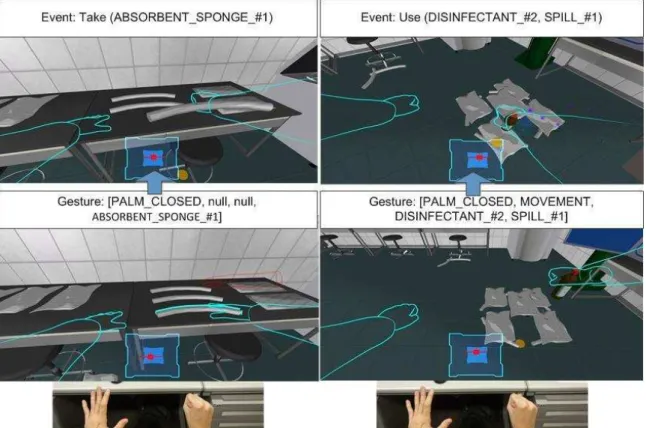
Figure 7: The “Take Object” and “Use Object” Action-Event Generation Sequence ... 24
Figure 8: The Common Sense Reasoner ... 26
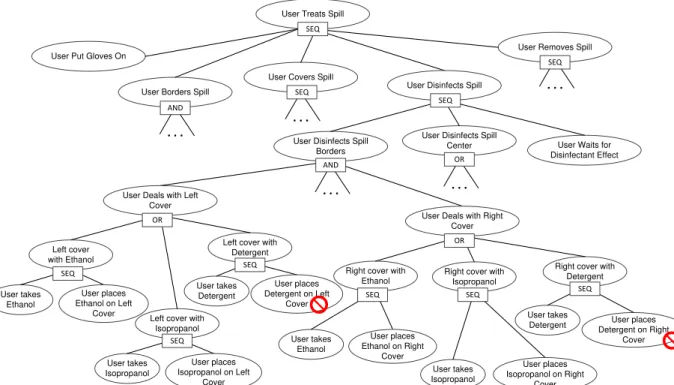
Figure 9: Part of the Task Tree modelling the spill clearing protocol. ... 27
Figure 10: An example of task instantiation ... 30
Figure 11: System Task Tree for the spill accident. ... 34
Figure 12: Scenario Example ... 36
Figure 13: The Intensity Curve modeler tool for Bio-safety Lab ... 39
Figure 14: An example of the different behaviors of a scenario. ... 40
Figure 15: Design for the first experiment showing its stages ... 43
Figure 16: Design for the second experiment showing its three stages ... 46
Figure 17: Task Progression charts for the Narrative Condition Subjects. ... 52
Figure 18: Task Progression Graph for the subject 1 in the Narrative Condition ... 53
Figure 19: Balance graph related to the Task Progression ... 54
Figure 20: Comparison between two sessions from the two conditions ... 55
Tables Index
Table 1: Interactive Tutoring Systems‟ interaction modes ... 14
Table 2: Usability questionnaire used in the first experiment. ... 44
Table 3: Presence and perception of learning questionnaire used in the first experiment. ... 45
Table 4: Questionnaire used in the second experiment ... 47
Table 5: Comparison questionnaire used in the second experiment ... 48
Table 6: Average time consumed to complete each one of the five steps. ... 49
Table 7: Average time consumed for correcting mistakes ... 49
Table 8: Average values for the results of the usability questionnaire ... 50
Table 9: Average values for the questions on Kinect and comparative questions. ... 50
Table 10: Average results for presence and application-specific experience questionnaire. ... 51
Table 11: Average results of the comparison questions ... 56
Table 12: Average results of the perceived Interest questions ... 56
Table 13: Average results in the Perception of Learning questions ... 57
Table 14: General comparison between different training systems and Bio-safety Lab ... 58
1. Introduction
1.1. I
NTRODUCTIONIntelligent training applications have gained considerable importance in recent years, as they can help people to learn handling situations in which on-site training is dangerous or impractical. Here, 3D environments offer an ideal setting to develop training applications because of their ability to convey a greater sense of realism than textbooks or 2D interfaces (Stocker et al. 2011). The sense of realism is generally attained through accurate visual representation and physical behavior of objects. These virtual intelligent training environments show great potential for teaching techniques and protocols in an affordable, effective and scalable way (Chen Y.F., et al, 2008), especially in cases where training in real life proves to be costly and difficult to manage at large scale. They have been adapted to increasingly complex application scenarios, and are now able to simulate almost any kind of environment with realistic graphics and accurate object behavior (Carpenter et al., 2006; van Wyk & de Villiers, 2009; Belloc & Ferraz, 2012). Experiments with these applications show promising results regarding users‟ feeling of immersion and presence (Schifter et al., 2012; Wang et al., 2011) and engagement (Charles, T., Bustard, 2011). In another work, (Reger et al., 2011) use a virtual reality simulation to treat posttraumatic stress disorder in soldiers obtaining a reduction in the symptoms showing that the virtual environment are effective in cases when real life rehearsals are not feasible.
Furthermore, the success of training applications depends on the correct integration of knowledge based techniques and natural interaction. Knowledge-based techniques are used to support the training procedures that users have to execute. Natural interaction, on the other hand, is used to support execution of those training procedures in a way that mimics real-world execution as close as possible. However, the more complex the training scenario is, the more effort is required in implementing both knowledge and interaction aspects in a way that delivers an accurate and realistic training experience. Also, designing new training scenarios and managing the events that happen in such interactive environments is a complex task, because is necessary to keep the difficulty balanced and pay attention to the user‟s engagement: if the training is too hard for the user, s/he won‟t be able to progress well; on the contrary, if the training is too easy or repetitive for her/him, the user may lose interest in the training, affecting the learning outcome. Some researchers proposed to add a „narrative layer‟ to training systems (Marsella et al., 2000). They hypothesize that a narrative driven learning environment will increase the engagement of the user and this will increase the learning outcome. Narrative is a very broad term, and it mostly has been defined as an ordered sequence of events (Szilas, 1999; Young, 1999), but other authors add that the narrative has to generate also an emotional reaction in the user (Bailey, 1999), or that has to be generated following a grammar given by the author (Lang, 1999), especially when we are dealing with automatically generated narrative. In our case we will use the concept of Narrative as an ordered sequence of events, generated by an algorithm and that has the goal of being interesting for the user. Narrative has been designed mostly with traditional techniques like branching, when variability is a need for the training scenario, or using a static script when the designer wants the user to immerse in a more engaging experience (Ponder et al., 2003; Gordon, 2004).
We want to focus on this kind of integration of educational content and narrative, but with a more practical point of view: using narrative techniques in a control module for the training sessions will allow us to manage the events in the session and show them in a more attractive form for the user. Systems with such a direct control in the dramatic flow of the session are rare. Narrative flow has been formally defined as a sequence of events that generates an emotional response in the user, and the control of the flow is typically achieved by modeling the grade of conflict the user experiences in each moment (Crawford, 2004; Ware, 2010). By modulating the conflict, a system can analyze when is appropriate to trigger an event, paying attention to the difficulty of the session and the dramatic intensity that will have on the user, ultimately affecting the user‟s engagement. We hypothesize that applying such method to training applications not only allows us to optimize the triggering of events in a training session while keeping the user interested, but also results in better learning outcomes. With improving the learning outcome we refer concretely to improving user‟s Knowledge acquisition which is defined by the gale Encyclopedia of Education as “the process of absorbing and storing new information in memory, the success of which is often gauged by how well the information can later be remembered (retrieved from memory)”. With this idea in mind, we notice that recently, complex training scenarios involving the handling and management of pathogens have received great attention. Medical educational institutes are considering bio-risk training as a requirement for medical researchers to strengthen their response capability to bio-terror crises (Gaudioso et al. 2009; Rao 2011). However, real-world laboratory practice is impractical because of its extremely high risk and expense. Thus, such scenarios are good candidates to evaluate the potential of combining a knowledge-based procedure for training and a natural interaction paradigm.
In this work, we describe the implementation of an intelligent application for biohazard training: Bio-safety Lab, which serves as a virtual training environment for medical students (Prendinger et al., 2014), developed in collaboration with the National Institute of Infectious diseases in Tokyo. The application emulates a scenario in which users must handle a critical biohazard situation involving the spill of a contaminated blood sample from a broken bottle. The system has been tested „in the field‟, i.e., with students from the medical faculty in Kyushu University, another collaborator, who are the target users of the system. In order to test our hypothesis we developed a novel Narrative manager system (Alvarez et al., 2014) that controls the dramatic flow in a virtual training scenario aimed at practicing biohazard procedures. The environment targets the training of protocols in response to an accident in the laboratory. These protocols are too dangerous to train in the real laboratory, and paper tests do not cover all the unexpected problems that can arise during the clearing of the accident. For this reason, a virtual application (in this case a virtual laboratory) can be a very good solution to this real need in medical teaching. Bio-safety Lab acts as a virtual tutoring system via user‟s task recognition and has been tested already in two field experiments.
1.2. C
ONTRIBUTIONThe main contribution in this thesis is listed in the next points:
First, we developed a novel control system which manages the events in a training session using narrative techniques with the goal of enhancing the user experience by balancing the difficulty of the session. This model is the first narrative system with this kind of goal. The system maximizes the number of events for the user to solve, but instead of becoming more
difficult of boring as a consequence, we obtain the opposite effect, creating an interesting experience for the users.
Our system not only enhance the learning output and interest levels of the training subjects, but also saves time and efforts to the scenario design: is not necessary anymore to redesign again the whole session when we want to create a different arrangement of events, because the Narrative Manager generates a different session each time the user plays it.
Finally, we test and confirm our hypothesis: our narrative management increases the learner interest in the training and as a consequence his learning output increases as well. The users of our system perceive it as more interesting and challenging than a system without narrative management, and at the same time is not perceived as more difficult. Also the learning output of the users improves in comparison with the system without Narrative Manager.
This work also presents a number of secondary contributions:
Also, the real-time instantiation of hierarchical task models to prompt the user on incorrect actions using descriptions about high-level goals, rather than concrete actions. We confirm that this method diminish the recovery time of the subjects in correcting mistakes (but it doesn‟t have much impact in the knowledge acquisition compared with other methods).
Next, we integrate in our system a gesture-based interaction and present an experimental comparison of two types of control interfaces: gestural based and a classic mouse and keyboard control, studying the benefits of each one.
Finally, we present a high level authoring tool for designing the narrative flow of the session.
1.3. S
TRUCTUREThe remainder of the document is organized as follows. The following chapter reviews previous work on virtual training applications, with subsections analyzing gesture-based interfaces and training tools with narrative control, and compares our system to those works. Thereafter, in the chapter 3 we will introduce our system, which uses a drama manager to control the events in a biohazard training environment. The chapter is divided in three subsections: first we presents the system architecture and its components for natural gesture interaction, common sense reasoning, and task recognition, then the second subsection explains how user gestures are interpreted into high level actions, and finally we introduce the narrative techniques used in our training system, the core innovative contribution of the present work. Chapter 4 shows the experiments we carried out with our system evaluating different aspects: first, Kinect and mouse versions of our system are evaluated in terms of usability. Second, a „dynamic‟ advice version based on real-time task recognition is compared to a „static‟ advice version, where users can ask for text explaining the procedure. And finally, we present an experiment conducted to investigate the engagement and training effects of our system. In the chapter 5 we discuss the outcome of the experiments, especially in the case of the third one, analyzing extensively its results, as is the experiment which tests if our hypothesis about narrative management is correct. Finally, chapter 6 presents the conclusions of the document and indicates future steps.
2. Related Work
2.1. V
IRTUALT
RAININGS
YSTEMSVirtual training systems vary greatly in the method used. Self-assessment testing systems appear frequently in the literature; in these systems the users are presented with questions and situations they have to solve, and only advance to the next step when they give the correct response. For instance, in (van Wyk, & de Villiers, 2009) an application designed to train accident prevention in a mine makes the user to check videos of a scenario and to detect dangerous spots, only advancing when the user give the correct answer. Other example of these self-assessment testing systems is the one in (Corato et al. 2012), a computer vision application for detecting whether the protocol for washing hands before an operation in an operations room is followed. It uses augmented reality technology but does not need markers for detecting actions. A limitation of the work is that even if the system recognizes the stages in the protocol, it does not have a provision for responding to user mistakes. In other words, that approach does not provide student monitoring or dynamic help or assistance. These systems allow a high degree of visual immersion thanks to 3D graphics and videos, but lack flexibility regarding the user‟s interaction with the training scenario.
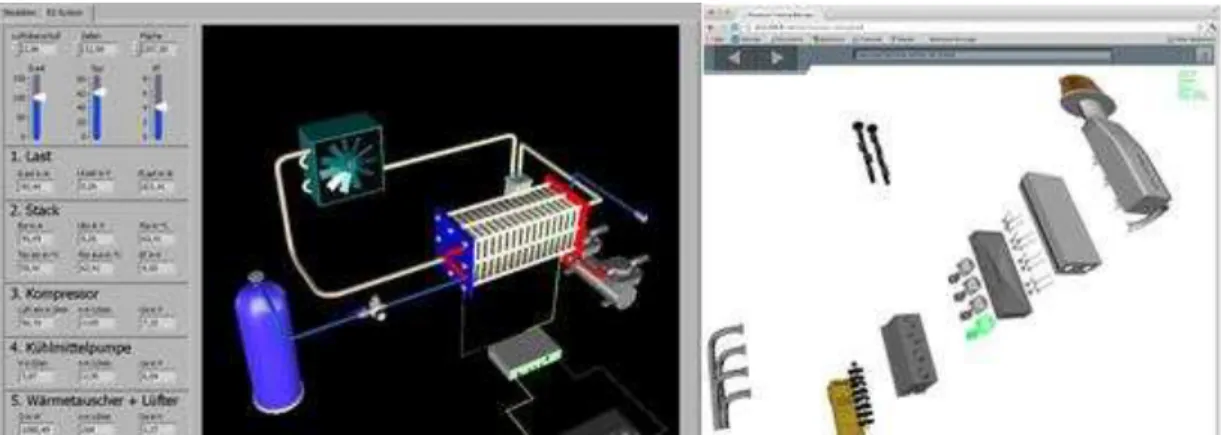
To improve in those aspects, many works on training systems integrate interaction techniques with knowledge-based methods. They share the goal of improving the efficiency of knowledge transfer in situations where text and pictures are insufficient for training, and the conviction of the adequacy of the approach to better learning procedural tasks. Similar to us, some authors present systems with intelligent object behavior and manipulation capabilities. This additional functionality requires a more complex architecture. In the case of adding complex behavior to the scenario objects, a widely accepted strategy is to use a layered architecture that supports low, physics-related event translation into high-level events. For this translation process authors use knowledge based techniques like rules or ontologies, such as in the system presented in (Kallmann & Thalmann, 2002) that include common sense behavior for objects which is difficult to implement with only a physical engine. In other example, (Angelov and Styczynski 2007) (see Figure 1, left) present a virtual 3D simulator that aims to teach the maintenance of a power plant. The simulator is web-based and allows interacting with a 3d model of the machinery, dismantling into its components or modifying its work parameters. The knowledge representation of the scenario is given by a specific language model allowing the designer to author different learning modules. In a scenario, the user has a number of goals and he has to switch the components of the machinery in the right order. The interaction level is high event if the user doesn‟t control an avatar neither manipulates directly the objects. However, the scenario is the same every time the user plays it, lacking flexibility. (Belloc et al. 2012) presents a generic system for scenario description, intelligent objects, and protocols. Similar to our system, the application is separated into three layers: graphics and physics, objects and behaviors, and plans. The system is designed for web platforms in order to allow max accessibility and uses petri nets as a model for the plan definition. They present two examples: the assembly of a hydroelectric generation unit and the assembly of a combustion engine. Once the objects are described, the training scenario is fairly simple: the user has to perform a series of correct steps and is able to proceed only when previous steps are completed (see Figure 1, right).
Figure 1: Two training system for learning machinery maintenance: The Virtual Circuit Breaking training module described in (Angelov and Styczynski 2007) (left) and the vehicle combustion engine depicted in X3D
from (Belloc et al. 2012) (right).
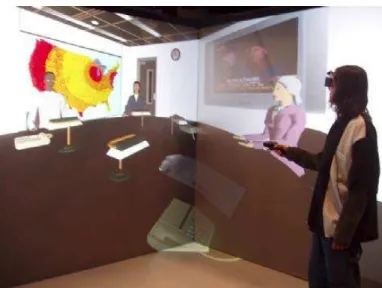
There exist several works with virtual tutors, or online assistants. (Johnson and Rickel 1997) describe Steve, a virtual tutor system for teaching air compressor functions. A planner is used for executing scripted exercises and for explaining the rationale of the tutor‟s actions, but the system does not provide information about user mistakes. If the user makes a mistake, the tutor will correct the user telling the next step. Including a virtual tutor is not incompatible with other techniques, such as storytelling techniques. In Crisis Communication, (Carpenter et al. 2006) describe a virtual training system that teaches students how to manage the communication of crisis related information (see Figure 2). The system‟s knowledge is stored as an event tree that works as a storyboard with different choices. The users can take decisions that have consequences in the scenario, and use 3D vision glasses and six screens to facilitate immersion. However, the user does not affect the scenario or its objects directly, only giving directions from a predefined set of options to the non-player characters. This kind of scenario scripting is very costly: not only dialogue has to be recorded for every option, but when the designer wants to add content to it, he has to take in account all the different combinations of situations, growing in complexity exponentially; we will expand about the problem of branching in the next sections, but the reader can see that it‟s a common trait of training applications. (Cavazza and Simo 2003) uses a qualitative simulation model to train medical students to respond to patients with circulatory shock states. Like ours, this approach integrates knowledge-based techniques with a 3D environment in the health domain, but focused on the virtual patient rather than interacting with the environment. Similar to (Gordon 2003), we use a graph containing the description of the training scenario. That work describes a protocol of identifying and constructing decision structures in virtual environment scenarios. The result of this process is a decision graph divided into stages: training scenarios are constructed like storyboards, and branching trees are used to simulate training decisions. While our representation shares some similarities, training in that work is carried out by selecting text options in a web page, rather than by interacting with a complex 3D environment. Further, (Vidani and Chittaro 2009) proposes a task model (called concur task tree) to train emergency procedures that may assist disabled people. The model aims to be a complete representation including time relations between events and task difficulty management, but it is unclear to what extent features of the system are implemented. Also, the work does not separate difference knowledge layers, such as task definition and common sense knowledge base, which limits extensibility.
Figure 2: A user participating in Crisis Communication. The training system uses four screens and stereoscopic glasses to improve immersion.
More complete virtual tutoring systems, in which the tutor not only corrects, but also modulates the simulation depending of the user‟s actions, can be seen in (Lebeau et al., 2010). There, the authors present ASTUS, a learning system which uses plans with sub-goals that containing a list of checklists defining the required users‟ actions. The system allows making queries over the elements of the checklist (called knowledge elements) to see which ones are completed. It does not have a real-time 3D environment, but its knowledge model is similar to the one we use in Bio-Safety Lab, allowing also to define potential incorrect actions for assisting the users better. Similarly to some of those works, our Bio-Safety Lab includes both intelligent object behavior and a real-time interactive tutoring system that corrects user‟s mistakes, but on the top of that we add a narrative layer controlling the simulation. Also, like in the more complete works we reviewed in our system we separate the knowledge model from the simulation: in our case we use a task model for task recognition, a technique similar to plan recognition. Thus, we gain independence from the platform and scalability, but also we can perform advanced reasoning techniques on the knowledge. In the next section we will explain in detail the characteristics of this strategy and show representative examples in the virtual tutoring applications field.
2.2. S
EMANTIC REPRESENTATION ANDP
LANR
ECOGNITION IN TRAINING APPLICATIONSReal-time interactive systems with semantic representation of events and plans need to be decoupled from the internals of the simulation engine; otherwise the semantic layer would be a static specification only working in one domain for some concrete cases. To achieve this goal, researchers have developed several solutions, generally based on the idea of using different layers to represent different types of knowledge (graphical, physical, common-sense, actions and goals, etc.) and some communication mechanism among them. In our system we include these capabilities in two modules:
one allows us to perform this decoupling between the native events triggered in the virtual environment and the semantic consequences of them, and the other is capable of recognize user actions and identify them as part of a plan. Although several general purpose architectures exist, there is no standard, so each system usually defines its own so in this section we review different approach to create such a system and compare it with ours.
For example, (Latoschik and Frohlich 2007) describe a solid architecture for interactive systems based on the concept of semantic reflection that uses monitors, filters and subscription lists for decoupling all the possible systems that can participate in a virtual environment. However the architecture does not specify a concrete semantic module or layer: each module can equally access the system‟s knowledge base. It is generic to the extent that implementing such a layer is possible, which is left to a future developer. In further research, (Wiebusch and Latoschik 2012) present an architecture targeting the use of common sense knowledge and grounding and also using a message dispatching system. It includes the OWL (Web Ontology Language) ontology as a central knowledge base to unify access to information from different modules. Our system also decouples different types of knowledge in semantic modules. In particular we developed a common sense database and a task recognition module, but communication is performed module-to-module instead of using a centralized database.
Taking into account common sense knowledge and information on the physical state of the environment, (Schneider 2010) proposed a plan recognition approach based on the user‟s plan selection and actions that are represented as a probabilistic automaton. This automaton is converted to a dynamic Bayesian network allowing the plan recognition process to occur at runtime. This approach is similar to ours because it also applies real-time monitoring, trying to infer the intended plan by observing the user actions and the states of the environment and it also tries to predict the user‟s probable next actions so that it can pro-actively provide additional instruction on how to currently execute the chosen plan. Our approach, on the other hand, relies on a hierarchical representation of tasks such that complex goals can be decomposed into simpler ones. This representation is more intuitive for the experts in our domain than a flat representation, because security procedures are usually represented this way. It also allows providing feedback to the user using abstract description of goals instead of concrete actions. Finally, we do not use probabilities to compute the next most probable task to complete, we use a simple heuristic based on hierarchical nature of our plans that seems sufficient for our purposes. The use of Dynamic Bayesian Networks to achieve intention recognition can also be applied to different scenarios: In (Tahboub 2006) the probabilistic intention inference is achieved by modifying the intention-action-state scenario and modeling it by Dynamic Bayesian Networks.
In the literature we can also find systems specifically designed for e-learning and training purposes and using plan recognition techniques: for example, a complete system (Franklin et al. 2002) designed to assist the user in real-time by recognizing activities that are sequences of processes represented using finite state automaton. The system contains features similar features to ours, such as backtracking and real-time monitoring, but it neither uses hierarchical plans nor has it been applied to a complex virtual environment. In (Amir and Gal 2011), the authors present a solid validation of task recognition in virtual laboratories with an interactive application that recognizes the user‟s current task. Task recognition is performed using grammar rules that represent tasks. They evaluated this method
and proved it to be effective. The main difference to our approach is how we represent the possible hierarchical plans: We use an explicit task network decomposed a priori instead of an implicit representation based on grammar productions. One advantage of our explicit representation is that it can be represented visually, thus easing the procedure management. Another important difference is that our system provides real-time assistance to the users during the simulation. Another application of these techniques is a framework built to assist in the development of systems for the recognition of high-level surgical tasks using analysis of videos that were captured in an operation room (Lalys et al. 2012). Here, the processing is based on dynamic time warping and hidden Markov models. As processing occurred after all the data was collected, it is not a real-time application. Also, plan recognition was used in a domain in which users engage in exploratory and error-prone behaviors (Gal et al. 2012). There, constraint satisfaction algorithms were used as a viable and practical approach for plan recognition in an educational software application similar to our intelligent biohazard training system.
2.3. V
IRTUALT
RAININGS
YSTEMS BASED ONN
ARRATIVEC
ONTROLSystems that have architectures with plan recognition and semantic representation of events are able to generate complex and realistic training simulation, allowing us to define in some way the goals and rules of the training. We showed in the first section of this chapter that systems like those presented good results in user‟s learning acquisition and presence, but we think that that performance can be improved further. As we stated, our proposal is a narrative control layer in the system, deciding what events will happen and when, but narrative can be a viable strategy to improve a training application? This section explores deeper in this topic, surveying relevant research that have been done in the field.
Previous research proved that a narrative centered learning environment increases the engagement of the user (Gee, 2003; Shaffer, 2006), but testing if engagement is linked to a positive increment in the learning outcome has shown more controversial results: There are findings for users participating in a narrative game-like application for learning French that showed no different scores than users using one without game mechanics (Hallinen et al., 2009), or proved that including off-task possibilities can even hinder user performance (Rowe, J.P. et al., 2009). Another experiment showed that adding game mechanics and a narrative does not directly affect performance, yet can improve a user‟s attitude towards the exercise (Rai et al., 2009). However the opposite conclusion can be drawn from (Carini, R. M. et al., 2006) showing in a large-scale experiment that certainly engagement is positively linked to the learning.
So, why are the results so different? The cause of this discrepancy in the results of those works is shown in a subsequent experiment where Rowe et al. (2009) could show that engagement certainly can increase knowledge acquisition when the educational content and narrative are motivationally and tightly integrated. In that case, the system used a mechanic similar to adventure games for teaching microbiology, in which it is necessary to investigate diverse places and objects and make notes related with the learning theme. Other example is the STAR framework (Molnar, A. et al., 2012), that using the same strategy showed good results in testing an application designed to teach health practices to students. In that application, the user takes the role of a detective who has to solve the mystery of a poisoning crime, obtaining clues about bad habits that can end in getting sick.
We can find that the works that found narrative as a learning dampener included narrative elements only as an independent addition. This design flaw can be the reason for the poor results of the narrative strategy, because it was not affecting in any way the mechanics of the interactive learning; in sort, without the narrative elements the application would remain the same. In the French teaching system from (Hallinen et al., 2009) the narrative elements included are a score system in the form of earning virtual money due the user taking the role of a newspaper corrector, but this mechanic of obtaining money, doesn‟t affect or help the student in the application, so the narrative is independent of the user actions. Also, the math teaching application from (Rai et al., 2009) uses drawings and customization such as allowing users to have a virtual pet, but only as an interactive application, showing graphically math problems, but not affecting the exercises presented. In our Bio- safety Lab, we use narrative techniques to generate the events in the scenario, giving to the user new tasks to solve or helping him. These events affect directly the type and number of learning content the user will experience, so we can affirm that the narrative is tightly integrated with the learning. Also, by balancing the difficulty and keeping the user interested we could make him experience psychological flow as stated by Shaffer (2013). This concept describes a state in which the subject has a sense of engaging challenges at a difficulty level appropriate to his capabilities (Nakamura & Csikszentmihalyi, 2002). The consequence of this effect is to persist or return to the activity because is psychologically rewarding which is in line with our hypothesis.
Aside of the learning benefits that narrative techniques have, the use of narrative authoring is an interesting strategy in creating training sessions and has been noted and used by a number of researchers. Examples are the works of Rizzo et al. (2010) where they present a clinical diagnosis training system including virtual agents with a scripted backstory and speech recognition for simulating patients or Carpenter et al. (2006) who proposed an approach that uses branching trees to advance in a story in which the user has to take decision to manage a crisis. However, the user still has limited interaction possibilities only involving the user to select the branch in the story tree, but there is no direct interaction with the environment. Another work (Gordon 2003) describes a protocol to create a branching structure in which training scenarios are constructed like storyboards, and applies it for a web-based application. The approach of Ponder et al. (2003) uses a human as a scenario director or narrator. In this application the narrator controls part of a training session that aims to teach a user in how to handle the information distribution in a crisis situation, and communicates with the user via voice. Another module uses a tree-based story model to drive the session forward. Similar to them, Raybourn et al. (2005) describe a multiplayer simulation system for training army team leaders. The simulation is directed by a human instructor who controls events in the virtual environment. All of these systems present a well-known problem of the branching approach: it does not scale well when the number of events or possibilities in the story increases. Trying to give a solution for authoring educational interactive stories, (Silverman, B. G. et al., 2003) presented a generic tool for creating interactive drama for educational purposes but his conclusion was that there are no environments one can turn to for rapid authoring of pedagogically-oriented interactive drama games.
This issue has been confronted by incorporating a drama manager to control the events in the virtual world. For example, the commercial software “Giat Virtual Training®” includes a scenario engine driven by scripts that control the virtual world happenings (Mollet and Arnaldi, 2006). The system allows virtual training for maintenance of industrial equipment and is being used, but the
narrative authoring and its impact in the training wasn‟t explored in their works. Other drama manager can be found in the application presented by (Habonneau et al. 2012), an interactive drama application for teaching how to take care of brain-damaged people. The application uses IDtension, a drama manager engine that controls the simulation and does not rely on branching enabling a large number of choices. This method proved to be very immersive and engaging for the users, allowing them to find themselves in a realistic environment where unexpected things can happen, but still it wasn‟t evaluated in terms of learning, and it does not tutors the user at all: neither contains an environment with intelligent behaviors (everything is decided by the drama manager) nor warns the user about incorrect actions, being an experience only narrative without training elements in which the user interacts with characters and see what happens.
2.4. A
UTHORING TOOLS FOR VIRTUAL TRAINING APPLICATIONSAs stated in the previous section, including a drama manager can be a good solution for the problem of authoring learning or training scenarios; however it adds another necessity of authoring. Instead of the scenario, in this case it is the tutor system the one that we would like to design in an easy way. By implementing a good authoring tool, the training expert can design directly the tutor system and the scenarios without having to know scripting or programming languages, and also the system will adapt better to its users (Sottilare & Holden, 2012). On the other hand, depending of the complexity of the application, the authoring tool may require some additional knowledge for use it. In simple learning applications that work as a series of self-assessment tests, the authoring tool consist in a simple to use graphic editor with drag and drop features. Interestingly, an Intelligent tutor authoring tool that uses crowdsourcing for creating its knowledge database showed that even if the results are not bad with this strategy and is faster to create a database this way than using a domain expert, has a low recall and is less reliable (Floryan & Woolf, 2013). It seems that the help of a domain expert is necessary for creating good knowledge bases, so it is important to have a complete but easy to use authoring tool in order to minimize the deploy of the training or learning system.
For example, (Tripoliti et al., 2013) presents a complete tool for creating tutors for medical diagnosis training. The tutor works as a series of steps that have to be completed, and the tool allows customizing the steps in a graphic editor with drag and dropping features. Another work, (Shaker et al., 2013) presents a tool for designing scenarios for a physics game with real time interaction in 2D scenarios, so is more complex than a set of self-assessment tests. The scenario editor goes further than the previous example in the usability, containing “wysiwyp” capabilities (what you see is what you play), allowing to play the scenario inside the editor in order to fine tuning its features. However, the increased complexity of the learning application requires a more careful design in the scenarios: impossible or unplayable scenarios can be created and even if the scenario is correct there is a possibility for being not satisfactory or boring (too easy, too difficult), so the designer has to test all the details and possible situations. Incidentally, this problem can be solved with the addition of a scenario director layer controlling the training, like our Narrative Manager, allowing the scenario designer to not to worry about if the training is too easy or not.
More complex tutors can be designed in the Chocolato system (Isotani et al., 2010), using ontologies and allowing the selection of the type of pedagogic theory used and the user‟s goals. In this case, the authors confirmed than the authoring tool effectively improves the performance, saving
efforts and time to the domain experts and allowing a rapid deployment of the learning system. Other example can be found in the work of (Karampiperis et al., 2011) describing the ER designer toolkit which essentially is a trigger listener editor. Its graphic environment generates the event calculus code necessary to define the virtual tutor behavior. However, they don‟t complete the tool with a responsive training environment, so the human domain expert has to decide what to do when the virtual tutor detects the user‟s actions. In comparison with our system, this one would be similar to our Task Recognition system, but lack a layer controlling it (our Narrative Manager), with an authoring tool to define how this control layer will act.
We can find another advance tool with more common points with our system in (Cablé, 2013), which presents an authoring tool for an e-learning platform. Though the system presents a simple form of training (only present the user problems with only one answer en a series of self-assessment exercises), the customization capability is wide, allowing the selection of the resources used for the learning and how they will be used. This platform have several similarities to our Bio-Safety Lab, in the sense that they have different layers of knowledge, separating the raw data containing information about exercises, defined in a knowledge base by an expert, from the resources that define an scenario, describing what data is used and how they will be used in the learning. Aside this similarity in the architecture, the authoring tool allows a high grade of variability because the scenario designer does not specify all the details of the session, but only give a pattern of how the tutor will act. This is again a common point to us, because our Narrative Manager acts as an independent entity, only requiring general directions from the scenario designer to act (in our case, the description of the events and how in general the session have to go by). However, the system is not fully operational and it was not tested. Other interesting tool is seen in (Olsen et al., 2013, June) including a drag & drop interface and a knowledge model based in graphs, allowing editing the nodes and links graphically. This behavior graphs (as they are called in the paper) are similar to the ones we use. The graph traversing engine allows branching and collaborative work between users. However, our model is more sophisticated, containing different types of parameters and groupings. Other example of a training system with high level author capabilities can be seen in (Sottilare et al., 2012), but again, it is not fully operational yet, showing examples like a thermodynamics tutor for undergraduates (Amin-Naseri et al., 2013). The application allows designing virtual tutors by creating behavior rules (mainly rules of condition- consequence about user actions), customized questionnaires and profiling the users. The system can be plug to other simulation frameworks (Ray & Gilbert, 2013), in this case Unity 3D, like our Bio-Safety Lab.
Creating behavior rules is a good way to design the tutor behavior. We can see this strategy taken to a step further in the CTAT system (Aleven et al., 2006). This generic virtual tutor designer uses jess rules (a programming language for creating expert systems) and a database with “memory elements” for defining the goals of the users, and even the graphic interface of the learning application. Similar to the ASTUS system, allows designing almost any kind of tutor; in a sense both are equivalent, as seen in (Paquette et al., 2010). However, its authoring language is not accessible for non- programmers, having in this case the problem of needing an authoring tool for the authoring tool. In our case, the authoring tool contained in Bio-Safety Lab fits in that requirement, being an easy to access designer to model the tutor language.
Finally, when the training applications have special requirements i.e. a collaborative tool, the authoring system needs some additional features. An example can be again the CTAT system, which needs some adaptation to suit the requirements for collaborative learning applications (Olsen et al., 2013, January), or in the case of augmented reality learning applications, which add the tagging and optic recognition requirements of this kind of systems (Jee et al., 2014).
2.5. G
ESTURER
ECOGNITION IN VIRTUAL TRAINING APPLICATIONSThe last feature of our Bio-Safety Lab is that, with the goal of improving the user‟s immersion, we decided to implement a gesture recognition interface aside of the classical keyboard and mouse one. Gestures are convenient for use in Virtual Reality environments such as a CAVE (Cabral et al. 2005). In training scenarios where physical interaction is important, gesture based interaction has a great potential as an object manipulation mechanism: not only does it allow for an optimal task execution (i.e. gestural interactions accurately mimic events in the real world), but also enhances the immersive attribute of the whole virtual environment. For example, a gesture-based immersive environment has also been shown in increase children‟s engagement with learning materials (Scarlatos and Friedman 2007). Under these considerations, we implemented a gesture recognition framework using Kinect1 that would allow users to have a more natural interaction with the environment. By using gestures, users would be able to accurately mimic real-world actions, particularly in terms of taking, carrying, and releasing objects.
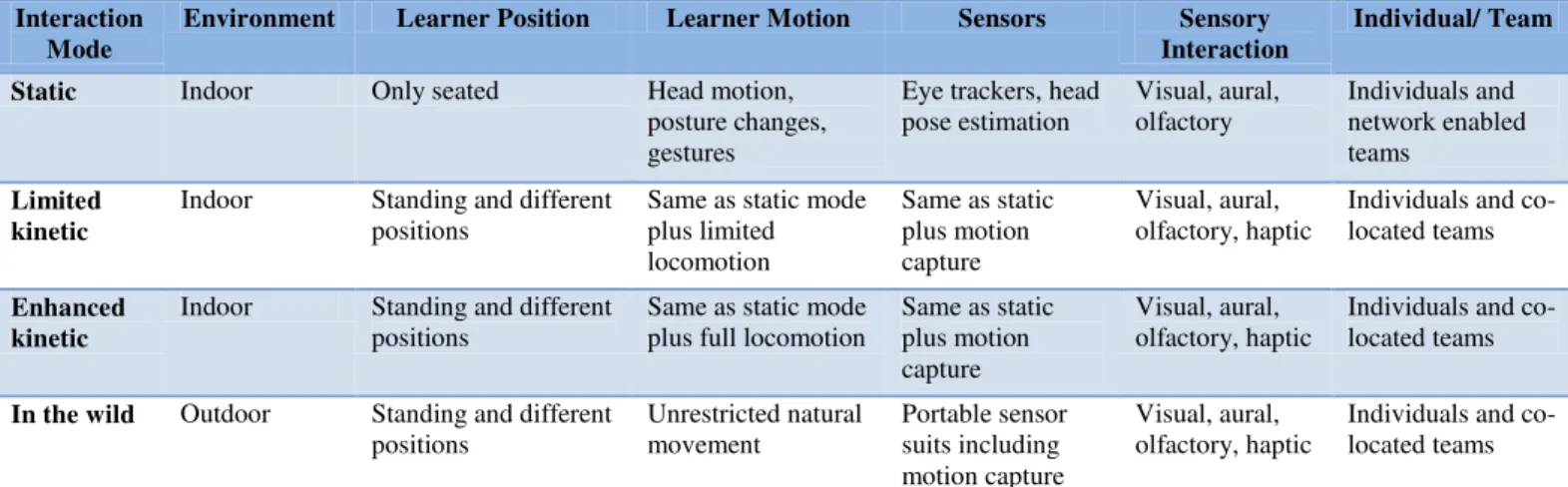
In the literature, there is a growing body of works dedicated to natural gesture based interaction (Kristensson et al. 2012; Song et al. 2012). Table 1 contains a proposed classification of the tutor system depending of its interaction capabilities (Sottilare & Holden 2013). Other example of an application with rich interaction is in (Gutierrez et al. 2010), where they use a dynamic setup of haptic devices and motion capture for training in industrial maintenance and assembly tasks. The tasks that they intend to teach to users involve high precision and coordination, which justifies their need for such a complex setup. Unfortunately such equipment is not only difficult to use, but also expensive and not available for many users. However, there are some proposals in the market much more accessible. This is the case of Microsoft Kinect and Asus Xtion which public SDKs are publicly available.
We use a Kinect sensor for detecting basic hand gestures and body position, because high precision is not required in our system and it makes easier to set up a medium scale experiment in money and equipment. For the same reason, it was not necessary to apply a complex technique for detecting the hands as the one used by (Oikonomidis et al. 2011), who investigated hand articulation tracking in near real-time using only visual information. This was achieved by formulating an optimization problem that minimizes the discrepancy between the 3D hand structure and the appearance of the hypothesized 3D hand model. While our gesture detection is not as precise, it is sufficient for our purpose and most importantly, it is in real-time, aiming for an interaction mode between limited kinetic and enhanced kinetic (see Table 1). Kinect incorporates a color camera and a depth sensor that theoretically provides complete body motion capture and face recognition. Kinect also have a microphone array and supports voice recognition, although in this work we are only focusing on the motion sensing capabilities. Kinect has its drawbacks when compared with more complex equipment. For instance, although Kinect is a very good “skeleton recognizer”, it usually has problems detecting small object like fingers, due to the maximum resolution of the sensor (640 x 480 pixels), so if we want to do face or hand tracking, players would be very close to the sensor. Kinect can do head pose, hand position, and facial expression tracking, but the depth sensor is not very accurate for this goal (Zhang, 2014) and that means a lot of raw data has to be processed.
1 http://www.microsoft.com/en-us/kinectforwindows/
Interaction Mode
Environment Learner Position Learner Motion Sensors Sensory Interaction
Individual/ Team
Static Indoor Only seated Head motion,
posture changes, gestures
Eye trackers, head pose estimation
Visual, aural, olfactory
Individuals and network enabled teams
Limited kinetic
Indoor Standing and different positions
Same as static mode plus limited locomotion
Same as static plus motion capture
Visual, aural, olfactory, haptic
Individuals and co- located teams
Enhanced kinetic
Indoor Standing and different positions
Same as static mode plus full locomotion
Same as static plus motion capture
Visual, aural, olfactory, haptic
Individuals and co- located teams
In the wild Outdoor Standing and different positions
Unrestricted natural movement
Portable sensor suits including motion capture
Visual, aural, olfactory, haptic
Individuals and co- located teams
Table 1: Interactive Tutoring Systems‟ interaction modes.
In our case, we also did not have to adapt the recognition system to different users, as done by (Hasanuzzaman et al. 2007). The authors recognize that there is an issue in the ambiguity when decoding gestures: the same one can mean different meaning in different cultures, or on the contrary, different gestures might have the same meaning – for instance, the gesture recognized as “OK” is not the same in every country – but the gestures we are recognizing are not attached to any cultural dependent meaning: everyone needs to close and open the hand when grabbing and dropping objects. The only gesture that could have a meaning is the one asking for help. We avoid this problem by giving specific instructions to the user on what gesture they should use. (Unzueta et al. 2008) proposed a way to distinguish between static and dynamic gestures, i.e., gestures that require one step and gestures that require more than one step, respectively. In our system there is only one case of a dynamic gesture: moving the hand back and forth for using disinfectant. However, only one of our static gestures might be confused with this – the help gesture. Because this a straightforward case we opted for a much simpler alternative to the method described by (Unzueta et al. 2008). We just consider that the user is performing the help gesture if he or she maintains it for more than two seconds.
3. System Architecture and Implementation
3.1. I
NTRODUCTION TOB
IO-
SAFETYL
ABWe created Bio-Safety Lab as a collaboration with the National Institute of Infectious Diseases in Tokyo in order to response a need in the pedagogical field: students that had recently graduated have few or none practical experience in laboratory practices aside from memorizing manuals, especially regarding the problems that may arise when handling dangerous substances. Our system recreates a biohazard laboratory (Level 2) from a user-centered perspective and supports realistic gesture-based interaction in a way that reflects real-world procedures. The design of the graphical environment and the domain knowledge was done in stretch collaboration with experts from the National Institute of Infectious Diseases. In Bio-safety Lab, the user takes the role of a bio-safety laboratory worker from a first-person point of view. The user assumes the role of his avatar using two interface modes: gesture recognition with Microsoft Kinect, and with keyboard and mouse. The user directly controls with this interface the avatar‟s right hand (in the case of Kinect he can control both hands at the same time), allowing him to interact with the scenario‟s objects by doing right or left click: possible actions are: taking or dropping objects, open or closing doors, or use some concrete objects. The use of a 3D content development engine (Unity3D) provides a unified mechanism for visualization and interaction by taking advantage of the built-in mechanisms to define the physical behavior of objects.
The training system in Bio-Safety Lab assists the user in the process of resolving the accident through real-time (user) task recognition, consisting in a representation of biohazard training procedures as task models, which can be instantiated in real-time via the recognition of task-level events. Thus, the application implements a Task Recognition Engine, a module who acts as a virtual tutor, deciding whether the user is doing properly the task of clearing the accident or not, and gives advices about it. This module stores the information concerning each task, including not only the correct way to act, but also common mistakes for each task, and is stored in a knowledge base. In the Kinect version of the application, task-level events can be derived from gestural interactions between the user hands and laboratory objects based on semantic properties attached to objects and common sense reasoning.
As the main contribution of this work, we present the Narrative Manager, a control module inside the Task Recognition Engine that manages the scenario‟s events using a narrative model which optimally selects the timing and the event to trigger. Our Narrative Manager decides how and when certain events will happen in the scenario, to either (a) decrease task difficulty if the user has troubles to complete it, or (b) to increase task difficulty if the task is too easy for the user. The ultimate goal of the Narrative Manager is to engage the user an interesting narrative entangled with the training process, maximizing the number of events for the user to solve, and thus increasing the possibility of learning acquisition.
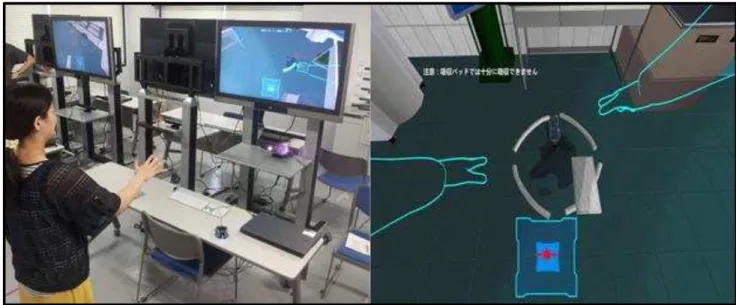
Figure 3 shows a sample of a typical session in the system. After start, the user is given a simple goal to perform: a routine laboratory procedure (see number 1 in Figure 3). When the user begins to perform this initial goal, a scripted accident happens (number 2), involving the spill of a contaminated human blood sample, the user has to follow a certain protocol to clear it. This protocol contains the guidelines for cleaning a potentially infectious spill used in real-life and it was given by our collaborators in the National institute of Infectious Diseases of Japan. The protocol includes containing the spill by bordering it with special absorbent sponges, then absorbing the spill by putting absorbent papers on it, then disinfecting the spill with an antiseptic and finally disposing the waste into a Bio-hazard bin (numbers 3-7). The application implements a Task Recognition Engine, a module who acts as a virtual tutor, recognizing whether the user is doing properly the task of clearing the accident or not, and gives advices about it. This module stores the information concerning each task, including not only the correct way to act, but also common mistakes for each task, and is stored in a knowledge base.
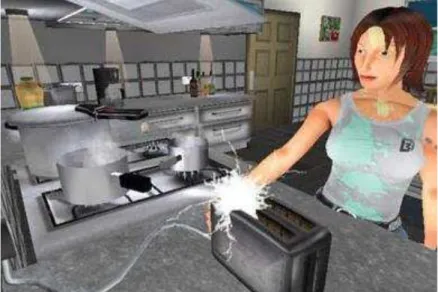
The training system in the Bio-safety Lab is inspired by Marc Cavazza‟s Death Kitchen (Lugrin
& Cavazza, 2006), an application that merges narrative management with complex scenario behavior, in where the system generates events by itself. Death kitchen (depicted in Figure 4) is a narrative application where the user controls an avatar in a kitchen while the system generates accidents and tries to “kill” him. It merges together the narrative with a layered behavior intelligent system: the high level events that happen in the scenario are captured by the Causal Engine, an intelligent object‟s behavior module that decides the consequences of the event and acts as a reasoner and a drama
Figure 3 Sample session and Spill cleaning in Bio-Safety Lab. The user controls the avatar‟s hand and performs the different steps (steps 3-7) in the protocol for cleaning the toxic spill.
manager. For example, if the user interacts with a water tap opening it, the Causal Engine can make it work as expected, letting the water run normally from the tap, or decide that is more convenient to break the tap and spray the water all around.
Figure 4: Marc Cavazza‟s Death Kitchen. The user interacts with different objects and the system generates events in the form of accidents in order to get the avatar killed.
This Causal Engine is similar to the reasoner engine contained in the Bio-safety Lab which captures high-level events and processes them. As in Death Kitchen, in Bio-safety Lab these events are used to decide to trigger consequences in a narrative fashion, but also it uses the events to perform user‟s task recognition for giving real-time assistance (Death Kitchen doesn‟t have it). However, the way in which the consequences are decided differs. Death Kitchen uses a knowledge database called
“Danger Matrix” (essentially a look-up table) containing the characteristics and requirements of each accident, and a planner selects the most dangerous available accident in the table and tries to generate it creating new events if necessary. However this Danger Matrix only allows one constraint (the partial order) for selecting the available events to trigger. In Bio-safety Lab, we select the event that maximizes the impact to the user using a knowledge structure known as Task Trees, allowing different constraints when deciding to select the event and they are used too when recognizing the user‟s task.
Other difference appears when deciding the events to trigger an accident; Death Kitchen only uses two parameters: distance to the object and danger level of the accident. This means that the system can lead to the identical accident if the user goes to the same area in each session. The system works in this way because by design, Death Kitchen doesn‟t require more complex decision taking but in our case we need more complex behavior in order to optimize the triggering of events. Looking for this optimization, we modulate the level of conflict between the user and the environment, creating difficult events for the user if the current task is too easy for him, and relaxing the intensity of the events or event giving some help when the task is too hard for the user. For example, if the user is in the step of containing the spill, the system could decide if the spill will overflow its boundaries, making the user to hurry up and re-contain it. Or if the user is cleaning the spill too easily, the system can knock a culture bottle making it fall to the floor and break, creating a new spill (of course this can