Cross‑border marriage migration between Vietnam and Korea: focusing up on life of Vietnamese brides in Korea
著者 ファン ビン ティ
著者別表示 Pham Binh Thi journal or
publication title
博士論文本文Full 学位授与番号 13301甲第3946号
学位名 博士(学術)
学位授与年月日 2013‑09‑26
URL http://hdl.handle.net/2297/37396
Creative Commons : 表示 ‑ 非営利 ‑ 改変禁止 http://creativecommons.org/licenses/by‑nc‑nd/3.0/deed.ja
i
博
士
論
文
Cross-border marriage migration between Vietnam and Korea: focusing up on life of
Vietnamese brides in Korea
(
韓国とベトナムの国際結婚:韓国でのベトナム 人花嫁の生活に注目して)
金沢大学院人間社会環境研究科 人間社会環境専攻
学
籍
番 号
1021072717
氏 名
ファン
ビン
ティ
主任指導教員名
神谷 浩夫
ii
TABLE OF CONTENTS
List of Figure --- v
List of Table --- vii
Abbreviations --- viii
Acknowledgements --- ix
Chapter 1: Introduction --- 1
1.1. Introduction --- 1
1.2. Background of the study --- 6
1.3. Purpose of the study --- 11
1.4. Significant of the study --- 14
1.5. Outline of the dissertation --- 15
Chapter 2: Literature Review --- 17
2.1. Introduction --- 17
2.2. International migration and marriage migration --- 17
2.3. Existing literatures on marriage migration between Vietnam and Korea --- 33
2.4. Summary --- 44
Chapter 3: Current status of Vietnamese brides in Korea --- 45
3.1. Introduction --- 45
3.2. The context in Vietnam --- 45
iii
3.3. The context in Korea --- 55
3.4. Summary --- 70
Chapter 4: Sample and Methodology --- 71
4.1. Introduction --- 71
4.2. Research design --- 71
4.3. Sampling and data collection --- 71
4.4. Limitation --- 75
4.5. Data analysis --- 77
4.6. Summary --- 78
Chapter 5: Economic condition of Vietnamese brides before and after migration --- 79
5.1. Introduction --- 79
5.2. Quantitative analysis --- 79
5.3. Qualitative analysis --- 88
5.4. Summary --- 99
Chapter 6: Adaptation process of Vietnamese brides in rural and urban areas of Korea --- 101
6.1. Introduction --- 101
6.2. Adaptation model of marriage migrants --- 102
6.3. Characteristics of Vietnamese brides in Korea --- 108
6.4. Case study analysis --- 120
iv
6.5. Summary --- 130
Chapter 7: The migration of Vietnamese brides –A question for monitoring --- 132
7.1. Introduction --- 132
7.2. International marriage migration management --- 133
7.3. The necessity of supporting programs in Korea --- 145
7.4. Discussion and implications --- 157
7.5. Summary --- 159
Chapter 8: Discussions and Conclusions --- 160
References --- 166
Appendix --- 177
v LIST OF FIGURES
Figure 3.1: Map of Vietnam by regions --- 52
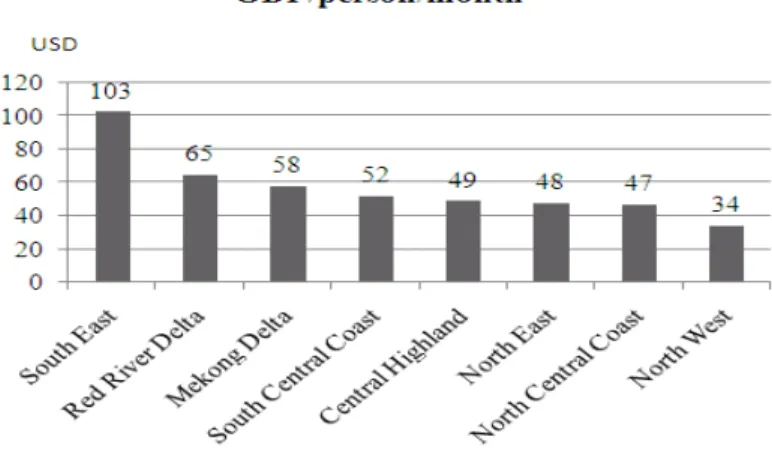
Figure 3.2: GDP per capita by region --- 53
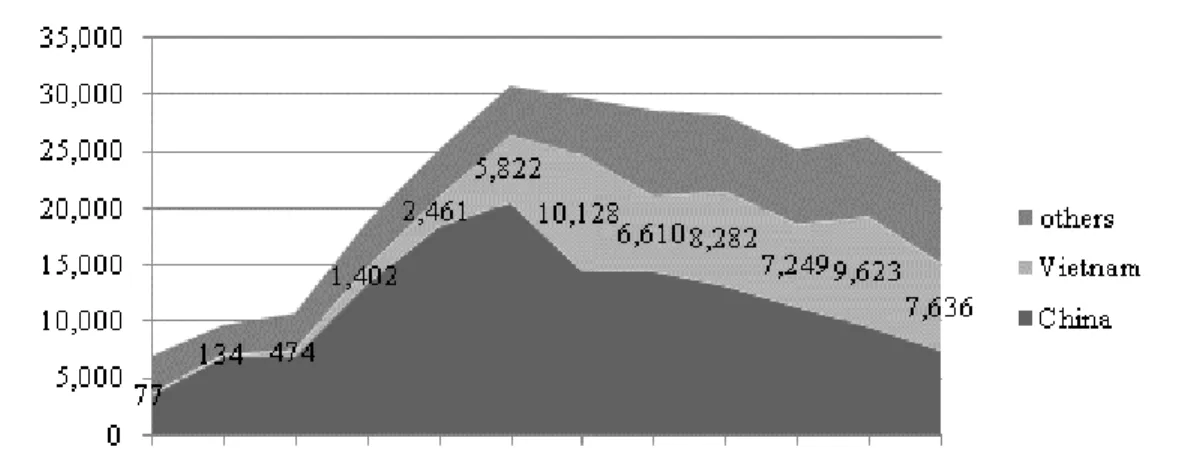
Figure 3.3: International marriages in Korea from 2000-2011 --- 56
Figure 3.4: Foreign brides in Korea --- 56
Figure 3.5: Distribution of MFSCs --- 61
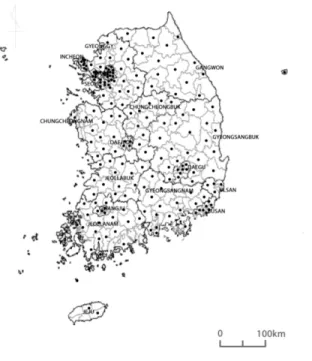
Figure 3.6: Regional distribution of Vietnamese brides in Korea --- 68
Figure 3.7: Share of Vietnamese wives out of foreign brides --- 69
Figure 4.1: Sample sites and sample distribution --- 73
Figure 5.1: Reasons of getting married to Korean men --- 82
Figure 5.2: Remittance frequencies --- 85
Figure 5.3: Remittance amounts --- 86
Figure 5.4: Occupation of Vietnamese brides in Korea --- 87
Figure 5.5: Korean husbands’ attitude towards spouse’ working --- 87
Figure 6.1: Adaptation model of marriage migrants --- 104
Figure 6.2: Preparation before migration --- 110
Figure 6.3: Differences of pre-migration characteristics of Vietnamese brides in rural and urban areas of Korea --- 112
Figure 6.4: Characteristics of Vietnamese brides after migration --- 114
Figure 6.5: Korean ability of Vietnamese brides in urban and rural areas --- 115
vi
Figure 6.6: Length of stay and Korean ability --- 115 Figure 6.7: Education level and Korean ability --- 116
vii LIST OF TABLES
Table 3.1: Vietnamese brides in Korea --- 62
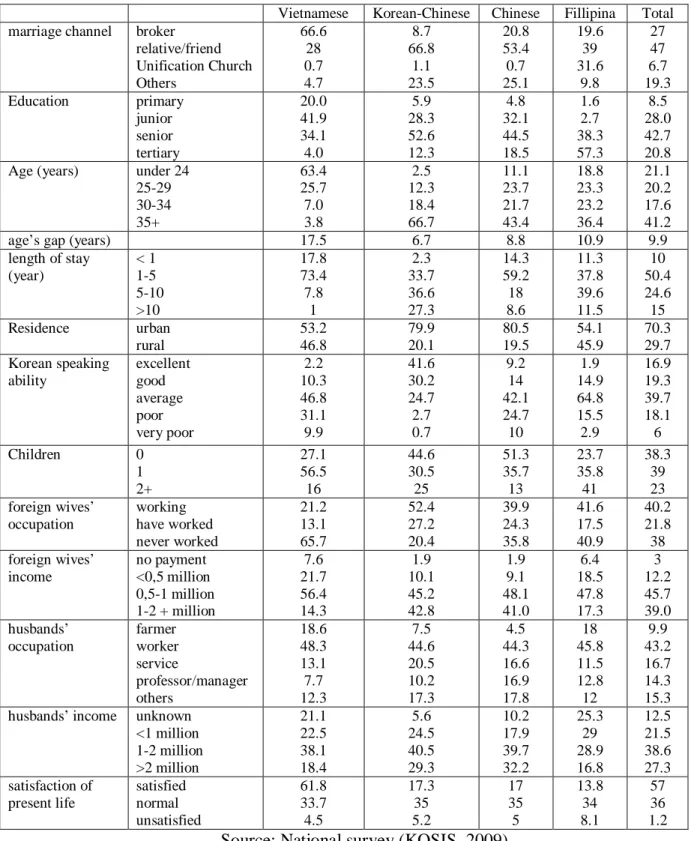
Table 3.2: General profiles of Vietnamese brides and other foreign brides --- 67
Table 4.1: General description of research sites --- 71
Table 4.2: Description of research sample --- 74
Table 5.1: General profile of Vietnamese wives--- 80
Table 5.2: General profile of Korean husbands --- 84
Table 5.3: Income of the households--- 89
Table 5.4: Summarized characteristics of the three groups --- 90
Table 5.5: Outline of the four cases --- 91
Table 6.1: Pre-social economic characteristics of Vietnamese brides --- 109
Table 6.2: The displacement of Vietnamese brides --- 113
Table 6.3: Attending Korean class --- 119
Table 6.4: Korean ability of Vietnamese brides --- 112
Table 6.5: Summarized characteristics of three groups --- 122
Table 6.6: Outline of three specific cases --- 122
viii
ABBREVIATIONS
1- WWII: World War II 2- US: United States 3- EU: European Union
4- NGO: Non-Governmental Organization 5- NICs: Newly Industrial Countries 6- MJOV: Ministry of Justice of Vietnam
7- KOSIS: Korean Statistical Information Service 8- WMHRC: Women Migrant Human Right Center 9- USD: Unite State Dollar
10- VND: Vietnam Dong
11- MFSC: Multicultural Family Support Center
ix
ACKNOWLEDGEMENT
This study was funded by the Government of Vietnam and Kanazawa University.
The dissertation could not have been completed without the contribution and support of many people. And, life experiences during three years in Japan are very meaningful and unforgettable not only to me but also to my family.
I would like to express the deepest gratitude to my supervisory team, Prof.
Kamiya Hiroo, Prof. Koji Nakashima, Prof. Sangyoung Nam who have guided and encouraged me as advisors. Prof. Kamiya Hiroo has provided me a very valuable opportunity to study on marriage migration. His commitment to high standards inspired me to put forth my best effort at every step to finish this dissertation. Prof. Koji Nakashima has been unfailing patient, supportive, encouraging and endless generous with his knowledge and expertise in research. Prof. Sangyoung Nam is the only one whose generosity in providing me research resources in Korea, direction, and encouragement to successfully complete this endeavor.
I would like to give special thanks to Prof. Yoshinori Nishijima, Prof. Ryoko Takahashi for giving me helpful guidance and being on this dissertation committee. I sincerely extend my appreciation to Prof. Park Soon Ho and Dr. Kim Eun Sook who helped me to conduct the field surveys in Korea.
I owe thanks to Dr. Sumi Yoon, a special friend of mine, for her encouragement and support in finding secondary materials, translating many Korean documents into
x
English. I also wish to thank to all of my friends who gave me comments and help in editing the dissertation.
I am specially thankful to my husband and two daughters who have walked this journey with me in Japan for three years. I could not reach this goal nor endure the process without the support from my family.“ま ま 、 で き る ね ”is an important encouragement from my cherished daughters when I most needed.
Kanazawa, August 2013.
Pham Binh
1
^CHAPTER 1
INTRODUCTION 1.1. Introduction
Migration study has a long historical development with various forms of movement due to the expanding of diverse purposes of mobility. Before 1945, migration took place because of climate changes, trading or the aims to conquer new lands. In the periods of 1945-1973, the trend of migration was from developing to developed countries, predominant with economic motivation. Due to the rapid expansion of Western economies1 after WWII, large numbers of laborers were recruited from developing countries, including guest workers and colonial workers.
Besides, permanent and refugee migrations, the returns of former colonist, asylum seeker movements were mass mobility in this period. These types of migration were male dominated.
After 1973, the volume of female migrants increased because family reunion, permanent settlement and the demand for domestic workers became prevailing. In specific, from 1970s, the trend of family reunion continues to increase; the opportunity to get permanent residential status of foreign immigrants granted by Western countries2 is not only limited to men; the repatriation of many male laborers after the oil-shock (1973), which forced women to migrate for work to support the family. In addition, the increased demand for female laborers in service sectors/light industries both in developed and New Industrial Countries attracted many women from developing countries migrate for work (Casltes & Miller, 2003; Oishi, 2005).
1 Europe, North America, and Australia
2 The US, Australia, Canada, German, etc
2
International Organization for Migration (2010) reported that there were 214 million international migrants in the world, and 49% of them were female. Actually, the robust of female migrants in recent decades is not only related to the demand for female laborers but also the need for foreign wives (Oishi, 2005; Kim, Y. S, 2006; Kim, A. E. 2009). A massive migration of women from developing to developed countries for marriage becomes critical process shaping the world in many complex ways (Davin, 2007). The migration of women for marriage diversifies the forms of mobility with a new ramification called “marriage migration”3. The female marriage migrants are colloquially called “foreign brides”, “alien brides”, “foreign wives”, or “foreign spouses”, etc.
Historically, most women often migrate to join their spouses who they had already married in their home countries. The others migrate to marry men of the same ethnic, same nationality who were residing abroad. Recently, an increasing number of women migrate to marry men of different ethnics, different nationalities implies a different set of driving forces behind the migration, and a different type of integration in receiving countries.
With the increase of marriage migrants, migration now has become a significant issue in various aspects both in origin and destination countries. Countries of origin face with problems such as gendered imbalance, social value transformation, etc. Meanwhile, in destination countries, numerous arising issues really attract concerns of the Governments and scholars in different areas. Because marriage migration involves intimate family relationships, emotional connection between husbands and wives, and procreation (Piller, 2007), it brings about many problems, challenges in destination countries, not only the issues with marriage migrants themselves but also incoming problems with their mixed children. Therefore, to maintain the
3 The migrants are mainly female, and the purpose of migration is for marriage (or for family).
3
stability of social-economic development, receiving states have to closely follow and devote great efforts to tackle with emerging issues in social, economic, and legal spheres.
Among different forms of mobility such as the movements of workers, students, refugees, asylum seekers, etc; marriage migration is most complicated due to the purpose of mobility, length of stay, and contributions of marriage migrants to their families and destination societies.
The marriage migrants’ intention of out-migration is for having a family and for settlement. To become members of the new society, all marriage migrants need to start an adaptation process (Kim, Y. Y, 1989; Hidashi, 2005). Actually, their adaptation process is natural and inevitable since they are individually inserted directly to a new family and surrounding (Kim, Y. Y, 1989;
Kim, H. J, 2007). Moreover, marriage migrants need to be naturalized, to establish their own positions in the family and society. These points make marriage migration unique and different from other types of migration.
In comparison with labor migration, marriage migration is poorly regulated (Piller, 2007).
International labor migration is managed and controlled by the governments of sending and receiving countries. It is a government- to -government management system. In contrast, international marriage migration is legalized and managed only in destination countries.
Different from labor agencies, marriage brokers take no responsibility for supporting foreign brides after the marriage4. It is simply a business, working for profit. Besides, different governmental policies in sending and receiving countries make the effort to manage international marriage migration become a hard issue.
4 Except the marriage agencies in Japan, which provide post-migration support for foreign wives (Ishikawa, 2010).
4
In research, labor migration and marriage migration are often treated separately due to different aims of mobility. However, in reality, we cannot clearly differentiate the two. These two types are intertwined and related since many labor migrants can get married to the host nationals, changing their status from workers to wives or vice versa (Piper, 2003; Casltes &
Miller, 2003; Lauser, 2008). In addition, in destination countries, marriage migrants can be considered as unpaid workers or new members of receiving societies (Nguyen, N. T, 2010; Piller, 2007). In origin countries, marriage migrants can be seen as labor migrants because they make great contribution to economic development of the communities through sending remittances (Phan, 2005; Nguyen and Tran, 2010; Bélanger, Tran and Le, 2011).
Although the aims of labor migration and marriage migration are completely different, the motive for migration is rather similar, closely related to seeking for economic betterment (Oishi, 2005; Davin, 2007). Contrary to migrant workers who often take hefty loans to finance their migration, marriage migrants do not have to disburse significant amounts of money to migrate; however, most of them remit to their natal families. Bélanger et al. (2011) concluded that altruism theory5 explains why some Vietnamese women choose marriage to foreigners as a way to show gratitude to parents and alleviate their poverty.
Basically, international marriage migration happened due to the deficit of marriageable women in receiving countries. However, the shortage of marriageable women is caused by diverse reasons in each area; making marriage migration is globally different from region to region. For example, in Western countries, in late 1980s, many Japanese, Chinese, and Vietnamese men in the US found their partners overseas due to racial discrimination and cultural
5 Altruism theory is a framework postulated that female migrants from poor families send remittances as altruistic behavior, reflecting their gratitude and respect towards the parents for having raised them (Bélanger et al., 2011)
5
isolation (Thai, 2005). In 1990s, many Turk and Moroccan men in Belgium chose their partners in their countries of origin merely because of traditional behavior (Lievens, 1999). In 1990s, many US men sought for wives in the Philippines, Russia, Ukraine (Simon, 2001); rural Swedish men married Thai women (Webster and Haandrikman, 2012); German men wedded Fillipina women (Lauser, 2008) due to the aspiration for traditional and less demanding wives.
Simon (2001), Constable (2005), and Jones (2012) noted that lately, in the US and EU6, international marriages between educated and middle class have been more popular with a wide range of patterns of international marriage such as diasporas, mail-order brides, contact through international business, education, tourism, etc. In contrast, international marriage migration via brokers between men and women of low social economic class is dominant within Southeast Asia, making cross-border marriage a very hot issue in this region.
Before 1980s, Southeast Asian women tended to out-migrate to Western countries for marriage such as the US, EU, Australia, Canada, etc. Source countries are Philippines, China, Thailand, Vietnam, etc (Cahill, 1990; Kim, H. J. 2007; Lauser, 2008; Thai, 2005). However, since late 1980s, the panorama of marriage migration has been changed. Similar to labor movement, there is a shift from out- to in- migration. Cross-bordered marriage has become pervasive within Southeast Asia. Four main receiving countries are Japan, Singapore, Taiwan, and Korea. Main sending countries are China, Philippines, Vietnam, Thailand, Indonesia, etc.
Noteworthy, a majority of international marriages are operated through intermediate agencies (Wang and Chang, 2002; Constable, 2005; Lee, H. K, 2008; Kim, A. E, 2009; Ishikawa, 2010;
Jones, 2012).
6 In 1993, EEC (European Economic Countries) changed to EU (European Union)
6
Receiving countries in East Asia including Japan, Taiwan and Korea share the same cause of “bride shortage” phenomenon in rural areas. Due to the disparity in economic development, a massive domestic migration of women from rural to urban areas has increased the difficulties in finding wives of farmer bachelors. Having few chances to marry local women, many men in rural areas are forced to wed foreign wives (Wang and Chang, 2002; Kim, M. J, 2008; Kamiya and Lee, 2009; Jones, 2012).
Within Southeast Asia, Korea has received the inflow of foreign brides much later than Japan, Singapore, and Taiwan. However, the number of international marriages has increased very quickly. Actually, the increase of foreign brides in Korea is partly resulted from the active policies of Korean government to support farmer bachelors to marry foreign women. Therefore, among the four main receiving countries in Southeast Asia, Korea has devoted greatest effort to support foreign wives.
1.2. Background of the study
This section will explain the motivation of the dissertation.
Recently, international marriage migration has become widespread all over the world, for example, the marriage between Asian women (Fillipina, Chinese, Thai, etc) and Western men in the US, Germany, and Sweden, etc (Lauser, 2008; Liaw and Huang, 2012; Webster and Haandrikman, 2012); the marriage between African women and EU men (Lievens, 1999; Garcia, 2006); the marriage between European women (Ukrainian, Russian) and US men (Simon, 2001);
and cross-border marriages between Asian women in developing countries (such as China, Philippines, Vietnam, etc) and Asian men in developed countries like Japan, Singapore, Taiwan, Korea (Constable, 2005; Tran, V. P, 2006; Chen, 2006 ; Kim, H. J, 2007). Actually, the
7
increasing number of international marriage is closely related to mail-order brides industry.
Mail-order brides industry first appeared in the US in 1960s and soon exploded globally, especially, after the development and expansion of the Internet (Simon, 2001).
Public opinion and academic research viewpoint on mail-order brides industry is generally negative because marriages through brokers are believed at best illicit or at worst, fraudulent form of immigration, legal prostitution or slavery, etc (Simon, 2001). Foreign brides are considered as passive movers and victims of commodified marriages. The typical view of these international marriage couples privileges the men as moneyed and powerful (Chin, 1994;
Wang and Chang, 2002; Bélanger et al., 2010).
Some researchers positively viewed foreign brides as active movers with their own strategies of migration and specific goals for settlement. Their roles in the destinations are varied including workers, wives, mothers, residents. Through productive and reproductive works, foreign brides make great contributions to receiving societies (Piper, 2003; Liaw, Lin and Liu, 2011). Thus, they are viewed as new members, active participants who can contribute, and even may have the capability to change some cultural characteristics of destination societies (Nakamatsu, 2003; Webster and Haandrikman, 2012).
In East Asia, Korea is one of destination countries of many foreign brides coming from developing countries such as China, Philippines, Vietnam, Thailand, Cambodia, etc. In early 1990s, the first inflow of foreign brides to Korea was from Japan, mainly through Unification Church7. Since mid-1990s, the number of foreign brides has increased quickly. Statistics of
7 Marriages are operated through religious groups. These Japanese brides have high education level and are good at Korean before the marriage (Kim, C. S, 2011).
8
KOSIS8 (2011) reported that the total number of foreign brides was 6,945 (2000), increased to 101,902 (2005); then jumped up to 239,726 (2010), and reached 261,991 (2011).
Within Asia, Korea is distinguished as the second economically advance country, just after Japan. In other words, Korea is one of big metropolitan areas, a core nation that attracts labor migrants and marriage migrants of periphery countries, including Vietnam. Besides, some cultural similarities, the development of close social-economic relationships in globalization times, governmental policies, etc., are all related to the increasing number of cross-border marriages between Vietnam and Korea. Therefore, the migration of Vietnamese brides to Korea is geographically considered as one kind of rural-urban migration patterns, which can be explained by applying interdisciplinary approach including economic theories, historical- structural approach, and migration systems theory (Oishi, 2005; Kim, A. E, 2009).
Vietnamese women started to marry Korean men in late 1990s, but the volume was fairly small. In 2000s, the number of Vietnamese brides has increased abruptly, from 77 brides (2000), to 2,461 brides (2004), 10,128 brides (2006), 9,632 brides (2010), 7,636 brides (2011). In the periods of 2000-2011, the total number of Vietnamese brides was 59,898, counting for 22.9% of all foreign brides in Korea. They soon have become the second largest group among other foreign brides, just after the Chinese. Especially, only in the year 2011, Vietnamese brides became the top group with 7,636 brides, a little higher than 7,549 Chinese brides that migrated to Korea.
Noticeably, in comparison with other foreign brides in Korea, Vietnamese brides are young, low educated, and have less job opportunities after migration. Specifically, 89.1%
Vietnamese brides are in their twenties and younger, 61.9% brides have junior high school and
8 Korean Statistics Information Service, http://kosis.kr/eng
9
lower, and only 21.2% brides are working after migration; while that of total foreign brides is 36.5%, 41.3%, and 40.2%, respectively9. In this sense, the migration of Vietnamese brides may not be considered as hypergamy, although they got married to the men in developed countries.
Thus, the marriages between low social status Vietnamese women and Korean men need further investigations to provide sufficient theoretical view on cross-border marriage migration in Southeast Asia region.
The literature review chapter indicates that a great number of international marriages in Korea are operated through marriage brokers. The common assumption is that Korean men find foreign wives because they are faced with difficulties to marry Korean women. They expect their foreign wives to bear children, to be submissive and hard-working, etc. Meanwhile, most of foreign wives migrate to Korea in hope of seeking for economic betterment, expecting to send remittances to their natal families (Lee, H. K, 2008; Kim, A. E, 2009; Kim, C. S, 2011).
Since foreign brides in Korea are widely considered as a problematic group of immigrants, who are faced with many difficulties for adaptation such as language barrier, cultural differences, human right violation, etc; Korean government has paid special attention on them. The foreign brides’ families are formally called “damunwha” (in Korean) or “multicultural families”, and are provided various supporting programs to build up “a healthy family10”.
Supporting programs mainly focus on foreign brides, targeting to help them improve knowledge of Korean language, culture, cooking, etc., in order to become good wives (Kim, Y. J, 2011; Kim, C. S, 2011).
9 For more information, see Table 3.2 (page 67) in chapter 3.
10 a healthy family” means “to protect human right of victims and family members” (Korean Law on Domestic Violence, Article 1).
10
Since the increase of international marriage has become a significant social debate in Korea, an abundance of researches on foreign wives has been conducted in different disciplines.
There have been many literatures focusing on post migration experiences of foreign brides including economic, social, and legal status, adaptation and naturalized process, family relationships, etc. However, due to the short residential history, the actual life of Vietnamese brides in Korea has been little understood and reported in academic researches.
Moreover, as mentioned above, compared with other foreign brides, the social status of Vietnamese brides is lower and highly concentrated in rural areas. They are widely considered to be seriously marginalized and confronted with diverse problems in their private lives, which represent the existence of human right violation (Kim, C. S, 2011; Yang, H. 2011). And, in fact, there were several traumatic reports11 on Vietnamese brides from 4/2007- 4/2013.
In addition, a large number of existing studies on foreign brides in Korea is relied on data sources came from the national surveys conducted by the central and local Governments. These surveys were done based on an etic approach, which cannot provide researchers sufficient understandings on foreign brides’ real conditions objectively (Bélanger et al., 2010; Kim, C. S, 2011).
The need has become apparent to fully understand what desires foreign brides have, what problems, constraints and difficulties they encounter in the destinations by applying emic approach. Because there have been limited evidences on the actual life of foreign brides by
11 From 4/2007-4/2013, among 10 foreign brides were murdered in Korea (documented by the Korean Women Migrant Human Right Center), six of them are from Vietnam, retrieved 25th, May, 2013.
http://www.wmigrant.org/xe2/notice/306943. For more specific information, see notes 16 to 24 in chapter 7.
11
nationality after migration; this dissertation aims to bridge that knowledge gap by examining the case of Vietnamese brides in Korea.
1.3. Purpose of the study
This thesis aims to understand the actual life of Vietnamese brides in Korea by doing empirical research, focusing up on their economic, social and legal status. Because the living condition of Vietnamese brides is geographically varied in accordance with their residences in Korea; the geographical viewpoint is necessary and appropriate to grasp their actual life. As a geographer, I have tried to interpret and document the collected data in ways that may be useful for mapping the characteristics of marriage migration in receiving countries. The purpose is threefold:
(1) to clarify the actual economic status and the causes of Vietnamese brides’
dissatisfaction about their economic situation in Korea;
(2) to demonstrate that Vietnamese brides in rural areas of Korea faced with more difficulties and constraints in their adaptation than those in urban areas; and
(3) to emphasize the important role of diverse actors in Korea and Vietnam in managing marriage migration between two countries, and solving its arising problems to provide human right protection for Vietnamese brides.
We delve into economic condition of Vietnamese brides in Korea because of the following reasons. First, literature review chapter indicates that the general pattern of marriage
12
migration within Asia is hypergamy. The female marriage migrants try to seek for a better life including higher economic situation, modern life, and a better married life in destination countries (Constable, 2005; Oxfeld, 2005; Freeman, 2005; Suzuki, 2005; Kim, A. E, 2009; Kim, Y. J, 2011). Basically, the migration of Vietnamese brides is also considered as marrying up because the economic condition of Vietnam is lower than Korea and Taiwan. Although, previous researches provided evidences to demonstrate that most Vietnamese brides can make great contribution to improve economic condition of their natal families in Vietnam through substantial remittances (Phan, 2005; Tran, V. P, 2006; Nguyen and Tran, 2010; Bélanger et al., 2011); little has been known about their actual economic status, their living standard and satisfaction about economic condition in destination countries. Second, most Vietnamese brides got married to low educated and low income Korean men12. We anticipate that many Vietnamese brides may face with economic hardship to manage their life in Korea. Third, the migration of Vietnamese brides is highly motivated by economic reasons. Due to the high expectation before migration, they may be disappointed with the low income level of the husbands and the actual low economic condition of their family in Korean society. In reality, marital satisfaction among Vietnamese brides in Korea is generally high. In compared with other foreign brides, most of them are satisfied with their present life in Korea13. In other words, we can suppose that actual economic condition in Korea does not have great impact on the satisfaction about present life of Vietnamese brides. Thus, it is necessary to consider other factors that related to the marriages of couples from different cultural backgrounds. That is why secondly, this dissertation focuses on adaptation of Vietnamese brides.
12 See Table 3.2 (page 67) in chapter 3.
13 See Table 3.2 (page 67) in chapter 3
13
We examine the types of adaptation of Vietnamese brides in Korea because a majority of them have low educational level. It may be difficult for Vietnamese brides to adapt to the new life due to their slow improvement in knowledge of Korean language and culture, as well as their narrow perspective of life. In addition, many brides got married to Korean men in rural areas where traditional customs and patriarchal ideology are well preserved (Kim and Shin, 2007).
Furthermore, supporting programs of Korean Government and NGOs in rural parts are often fewer and insufficient compared with urban areas14. We assume that Vietnamese brides in rural communities may face with more difficulties and constraints than brides in urban areas.
Especially, it is noted that, due to poor Korean speaking ability15and limited social network, Vietnamese brides may be unable to call for help or to report their troubles in private lives. This motivates us to discuss the third point, concerning to human right violation.
We focuses on the important role of central Government, local government, and NGOs in managing and controlling marriage migration between two countries because the troubles of Vietnamese brides in Korea are partly resulted from governmental policies and regulations.
Since marriage brokers are not adequately controlled, Vietnamese brides are not protected from human right violation, even when they are still in Vietnam (Vu and Vu, 2006). In contrast, Korean government strongly and actively promotes and monitors international marriage.
Marriage brokers are legalized, related legislations and policies are continuously revised to tackle with emerging issues. However, legal supports and consultancies to protect foreign brides’
human right, especially to deal with problems in their private lives, are insufficient (Yang, H.
14 The distribution of MFSCs is concentrated in big cities, as shown in Figure 3.5 (page 59) in chapter 3.
15 See Table 3.2 (page 67) in chapter 3
14
2011; Kim, C. S, 2011). Thus, the low social economic status of Vietnamese brides compounds with the insufficient support from Vietnamese and Korean Government may augment the number of adversities in their family lives.
Actually, after migrating to Korea, Vietnamese brides begin to establish all they had in Vietnam, including struggling for adaptation, seeking for economic independence and human right protection. In their effort to obtain economic, social and legal status, Vietnamese brides are faced with many problems, difficulties, and constraints, which are rarely documented and intervened. To fully understand their problems, conducting empirical researches is particularly important and necessary to collect their voices, their own assessment, etc., for analysis. In this study, the data on Vietnamese brides’ desires, problems, constraints and difficulties are collected and interpreted by applying emic approach, which helps us to understand sufficiently their post migration experiences objectively.
1.4. Significance of the study
The study on marriage migration is rooted in many disciplines including demography, economy, sociology, feminism, politics, geography, etc. In order to develop marriage migration theories, scholars have attempted to build up knowledge base in different regions, for example to explain the causes of international marriage migration, to explore post migration experiences of marriage migrants, to reveal the contributions of marriage migrants in origin and destination communities, etc.
In reality, the patterns and characteristics of marriage migration are intricate and internationally different by regions. Within a region, the inflows of foreign brides to certain destination countries require more explanations. In order to establish knowledge base on
15
marriage migration by regions, understandings about the actual situation of marriage migrants by nationality in receiving countries should be an important focus on marriage migration studies. In addition, fully understanding all problems confronting foreign wives in the destination is important to provide them effective supports, and to establish transnational network between sending and receiving countries. Thus, by providing an inside view on the actual life of Vietnamese brides in Korea, results of this study will contribute to a deeply understanding of post migration experiences of marriage migrants in marriage migration studies.
1.5. Outline of the dissertation
This dissertation consists of eight chapters:
Chapter 1 introduces the whole dissertation.
Chapter 2 reviews the existing literatures on international migration and marriage migration.
Chapter 3 describes in detailed the methodology of this dissertation, including research places, research sample, method and materials to survey the Vietnamese brides in Korea.
Chapter 4 outlines the current status of Vietnamese brides in Korea, discussing the context of marriage migration in Vietnam and Korea; statistic trend on Vietnamese brides and their geographical distribution in Korea.
Chapter 5 clarifies the economic status of Vietnamese brides in the destination.
Chapter 6 analyzes the different difficulties and constraints of Vietnamese brides in rural and urban areas of Korea in their adaptation.
16
Chapter 7 discusses the important role of diverse actors in Vietnam and Korea, concerning to controlling marriage migration and solving its arising problems.
Chapter 8 presents the conclusions, discussions, and implications.
17 CHAPTER 2
LITTERATURE REVIEW
2.1. Introduction
This chapter aims to review the existing literatures on international migration, marriage migration in the world as well as between Vietnam and Korea. The chapter will consider studies focusing on international migration, female migration, and marriage migration. Besides, a short review on marriage migration studies based on geography perspective will be presented. We found that the general trend of labor migration and marriage migration is rather similar, mostly from developing to developed countries.
However, the pattern of labor migration and marriage migration in the world is regionally different due to various reasons, including the influences of economic, social, cultural, political and religious relationships between origin and destination countries. In migration studies, labor migration has been put in discourse for decades, with a bulk of researches in various disciplines. In contrast, marriage migration is a hot topic, and arising recently. Marriage migration theories yet have not been developed. It is evident that more researches need to be done based on different perspectives to deepen the knowledge in marriage migration studies for advanced theory-buildings.
2.2. International migration and marriage migration 2.2.1. International migration
18
The existing literatures on international migration are an abundant body of work studied by scholars in different academic domains, including economy, sociology, politics, culture, gender, feminism, geography, etc (Castle and Miller, 2003; Oishi, 2005). The expansion of purposes of mobility, including for studying, working, avoiding political or religious persecution, and for marriage, etc., has diversified the sub-domains in migration study.
Among contemporary migration studies, there appears to be a tendency to apply three main approaches focusing on labor migration, including economic theories, migration systems theory, and historical-structural approach, (Castle and Miller, 2003;
Oishi, 2005; Kim, A. E, 2009).
Economic theories view the causes of migration as a combination of push and pull factors. Push factors in origin countries are negative conditions such as poverty, unemployment, low living standards, political regression, etc., which motivate people to out-migrate. Pull factors in destination countries are positive conditions, for example, higher wages, better occupation opportunities, higher living standards, and political freedom, etc., which attract people to in-migrate. While economic theories can account for some dimensions of marriage migration, it cannot sufficiently explain this phenomenon because there are additional factors linking destination and origin countries of marriage migrants. If economic advantages were the necessary components of marriage migration, there would be a larger number of women to flow from poor to rich countries. In reality,
19
foreign brides are not always the poorest and least educated group16. Thus, the inflows of foreign brides to certain countries17 require more explanations based on other migration theories.
Migration system theory suggests that the movement of people arises from prior links between origin and destination countries such as historical and cultural ties, economic investments, etc. This theory regards international migration as a natural process during globalization era due to the expansion of economic relations across nations. Thus, the increase of people involved in the international labor market and marriage market is inevitable outcomes.
The historical-structural approach emphasizes the unequal distribution of economic and political power in the world. Rich countries have the power to exploit resources from poor countries to become richer. This theory can be partially applicable to explain the increasing of international marriages since receiving states can actively support or restrict the inflows of foreign wives.
Castles and Miller (2003) provided a general view on international migration and the emergence of multicultural societies. They described the complexity of contemporary migration in the world, explained how migrant’s settlement has increased ethnic diversity
16 For example, high educated Japanese brides migrate to Korea, US, Australia or German for marriage (Kim, C. S, 2011), elite Chinese women marry the US national (Constable, 2005), or high educated Vietnamese women married low social status men of Vietnamese diasporas in the US (Thai, 2005).
17For example, Vietnamese brides tend to migrate to Taiwan and Korea, but not Japan or Germany; Thai brides to Germany and Sweden; and the mass migration of Filipina, Chinese brides to different countries such as Japan, Korea, Taiwan (Jone, 2012).
20
in destination societies, and pointed out the linkage between migration and ethnic diversity in various ways.
Castle and Miller reviewed the history of international migration up to 1945 with the description focusing on the aims to conquer new lands and expand trading markets of European countries. From 1945 to 1973, labor migration became predominant trend, internationally from developing to developed countries. The inflows of international migration are different by regions, for example, from Latin America to North America, EU, Australia and Japan; from North Africa to EU; from Asia to Middle East, North America, EU, and Australia, etc. In the periods of 1973 -1990, the inflow of migration is closely related to political, social, and economic changes. The oil-shock in 1973; the collapse of the Soviet Union in 1991; and the demand for unskilled labors in Persian Gulf, developed economies and Newly Industrialized Countries (NICs) in 1990s increased cross-border movements, firstly the inflows of male laborer, and then female. In 1990s, the Gulf War led to a massive returned migration of foreign male workers in the Middle East. The compound of male laborers repatriation and the demand for female laborers in Middle East countries after the Gulf War, the need for female laborers in services sectors or light industries in developed countries and NICs induced many women in developing countries migrate for work to support the family. This created a new trend of migration, i.e.
“feminization migration” (Kim, S. Y; Chang, E. A; Kim, K, 2008).
Castle and Miller also emphasized the high capability to regulate and control international migration of receiving states such as the US and European governments. For example, undocumented workers are managed by employer sanction in the US, or
21
legalization programs in France; temporary workers are managed by admission programs in Spain, etc.
Since mid-1990s, many researchers attempted to deepen the knowledge on
“feminization of migration” (Piper and Roces, 2003; Oishi, 2006; Constable, 2007; Liaw et al., 2010).
Using an integrative approach to analyze various factors in countries of origin and destination, Oishi (2006) provided a thorough and insightful analysis of female migration in Asia to explain the strange pattern and differential gender of migration in this large region. While Asian male migration pattern is predominantly from south-north countries, female migration from south-south is greater than south-north. The sources of female labor migrants are China, Philippines, Indonesia, Vietnam, Sri Lanka, etc. Destination countries are Japan, Korea, Middle East countries, Singapore, Hong Kong, and Taiwan.
To find out the patterns and main causes of female migration in Asia, Oishi examined the following four levels: suprastate (global), state emigration and immigration policies, meso-society (social norms), and micro-individual. She defined a set of social norms on women’s wage employment and geographical mobility that established a social environment conducive to international immigration policies; and cultural norms that foster or prevent international migration as well as the women’s autonomous decisions to migrate. Besides, one of the five ideal types of female labor migrants Oishi illustrated is
“dutiful daughters”. In other words, “dutiful daughter” refers to the migration of female workers as a sacrifice to improve their parents’ economic status, similar to “altruism theory” Bélanger et al. (2011) discussed on Vietnamese brides. That is, the Vietnamese brides’ migration is motivated by the aspiration to provide material support to their parents.
22
Furthermore, Oishi mentioned that female migration is greatly influenced by social value (or state policy) and individual economic strategy (or economic motivation). Social values include emigration policy and the relationship between migrant women and their parents that make some Asian women prefer migration for marriage to migration for work.
Actually, after 1973, family reunion and permanent settlement became prevailing with the increase of female migrants started to draw attention of scholars in migration studies. However, until last decades, the increase of women’s migration from developing to developed countries for marriage has attracted great concern of the receiving states and soon become a significant academic issue with controversial debates. The following section will review previous studies that focused on international marriage migration.
2.2.2. International marriage migration
International marriage migration is not a new issue globally. After the World War I and World War II, there were many women migrated to foreign countries as war brides such as Vietnamese women to the US; Japanese women to the US and Australia; Korean women to the US, Cadana, and Japan (Kim, M. J, 2008). Since late 1980s, international marriages continued to increase due to various reasons including racial discrimination, cultural isolation (Thai, 2005), traditional behavior (Lievens, 2008), or economic, social and political changes18 (Simon, 2001; Webster and Haandrikman, 2012).
Recently, due to the creation of the Internet, mail-order bride industry has exploded all over the world (Simon, 2001). The popularity of marriage migration between people from different ethnicities has become hot academic debates, for example,
18 Thai community has been steadily growing in Sweden many years ago due to the relying on Thais in berry industry (Webster and Haandrikman, 2012)
23
the migration of Vietnamese brides to Taiwan and Korea; Pakistan brides to Britain, Thai brides to Germany and Sweden; Filipina brides to Japan, the US and Korea; Russian and Ukrainian brides to the US, etc (Simons, 2001; Suzuki, 2005; Yang, Y. M, 2008;
Charsley, 2008; Kim, H. K, 2012; Webster and Haandrikman, 2012).
The general views of international marriage migration are: First, similar to labor migration, the inflow of marriage migrants is mostly from developing to developed countries. The poverty in origin countries is the main push factor motivated poor women to seek for an economic betterment in developed countries through marriage (Nguyen and Tran, 2010; Jones, 2012). Thus, the disparities in economic development between regions and countries generate the inflows of marriage migrants. Second, demographic changes in destination countries force the men of low social-economic class to find foreign wives through international intermediate agencies (Piper, 1999; Wang and Chang, 2002; Kim, Y. S, 2006; Hugo and Nguyen, 2006; Kamiya and Lee, 2009; Kim, H. K, 2012). In reality, the practice of brokers draws strong criticisms from women’s groups and feminist researchers, who advocate brokers’ business similar to human trafficking. Third, marriage migration between sending and receiving countries is closely related to historical, cultural, social, and economic ties (Chen, 2006; Kim, H. J, 2007; Kim and Shin, 2007; Charsley, 2008; Jones, 2012). Besides, the increase of marriage migration also closely depends upon economic fluctuation, political upheaval, and social changes (Chen, 2006; Kim, C. S, 2011). Fourth, female marriage migrants are often portrayed in lower position compared with their husbands due to their lower educational and economic backgrounds (Hugo and Nguyen, 2006; Chen, 2006; Kim and Shin, 2007; Go and Kim, 2008). Finally, marriage agencies play an important role in the proliferation of
24
international marriage migration (Simon, 2001; Wang and Chang, 2002; Ishikawa, 2010;
Kim, C. S, 2011; Yang, H, 2011; Jones, 2012).
Marriage migration is considered as a special kind of international migration for the goal of family formation, i.e., to join the spouse in another area, usually at or soon after marriage (Lievens, 1999). Since this kind of migration is different from other sorts of transnational migration for its purpose of mobility and the contribution of the migrants to destination societies (Nakamatsu, 2003; Kim, M. J, 2008); scholars have looked at different angles and attempted to find out the causes, consequences of marriage migration, as well as remedies to tackle with emerging issues both in sending and receiving countries.
Research findings provided evidences to clarify different aims related to the motivation of female marriage migrants such as to support the family (Hugo and Nguyen, 2006; Nguyen and Tran, 2010); to get job (Piper, 1999); to gain independence (Ortiz, 1996; Lievens, 1999); to escape from the bad situation (social ties or pressure) in the homeland (Cahill, 1990; Lauser, 2008; Kim, M. J, 2008). These propositions are correct, but insufficient. As Kim, M. J (2008) emphasized that many women migrate to Korea not only for money, but they do come for family.
Among many existing researches focused on post-migration experiences of marriage migrants, there are two opposite viewpoints. The popular assumption is that foreign brides are passive movers, victims of commodified marriage business, are forced to be assimilated into destination society, and experienced human right violation, etc (Bélanger et al., 2010; Yang, H, 2011). Bélanger et al. used data sources from the national surveys of Korean and Taiwanese Governments to analyze how foreign brides
25
are widely considered as victims or problematic group that need to be supported for adaptation.
In contrast, some authors viewed foreign brides as active movers with their own strategies in migration process, to get citizenship in destination countries, to acquire their own goals, to establish their positions within the family and in the society after migration, to negotiate for their empowerment, etc. Foreign brides are considered as new members or participants who contribute to the changes of family relationships in destination countries (Nakamatsu, 2003; Wang, H. Z, 2007; Wen and Wang, 2011; Webster and Haandrikman, 2012). These researches relied on data sources collected from interviews and fieldworks on foreign brides in destination countries. For instance, the case study of Nakamatsu (2003) demonstrated that foreign wives are active movers and active participants. Based on analyzing the negotiation process of forty-five foreign brides in Japan (including Chinese, Korean and Filipina brides), Nakamatsu offered useful evidences to understand foreign wives’ strategies to find work, to control the finance, to argue for equal marital relationship, to get citizenship for permanent settlement.
Regarding the contribution to economic improvement of the natal families, some researchers argued that marriage migrants take the same role as labor migrant (Phan, 2005; Hugo and Nguyen, 2006; Nguyen and Tran, 2010; Bélanger and Tran; 2011).
Bélanger and Tran (2011) calculated that the amount of remittances one marriage migrant remitted within a year is much higher than average income of the people in origin communities. Nguyen and Tran (2010) also demonstrated that most of the marriage migrants’ natal families became better off after their migration. In this sense, marriage migrants play the role as labor migrants (Nguyen and Tran, 2010; Bélanger et al., 2011).
26
Even, some researchers emphasized that the migration of marriage migrants should be considered as one way to reduce the poverty rate in rural communities of origin countries (Phan, 2005).
However, focusing on the foreign brides’ roles and positions in destination countries, Piper (2003) and Kim, A. E (2009) argued that foreign brides partly can be considered as unpaid labor migrants or wives because they fulfill the vacancies deserted by local women, similar to foreign laborers taking 3-D jobs shun by local workers. This means, on the one hand, foreign brides take the job as a wife without monthly payment.
Their job is simply reproductive worker. On the other hand, they can be situated in the household array, which is closely related to their purpose of migration, i.e., the aim for a family. Thus, they are the new members that have intimate relationships within the family. Their roles are defined as mother and wife (Piper, 2003; Wang, H. Z, 2007;
Bélanger, et al., 2010; Kim, C.S, 2011).
An excellent book edited by Piper and Roces (2003), concerning the roles of Asian women migrants in globalization era since cross-border marriages between women from Philippines, Vietnam, China, Indonesia, Thailand and men in Japan, Taiwan, Singapore, Korea, Hong Kong have been increased. By highlighting the strategy of female workers to get citizenship, and how marriage migrants become workers, Piper and Roces argued that Asian women migrants should be considered as brides or workers because they took multi-dimensional roles in receiving countries. The female migrants may change from workers to wives, or and vice versa. This represents that the three main strands including work, marriage, and migration are blended, and the roles of migrant women are interchangeable. For example, using case study analysis (analyzing life story), Mc Kay
27
(2003) illustrated that Filipina caregivers changes to Canadian wives due to de-skilling work; or the negotiation for work of foreign wives discussed in Nakamatsu (2003).
While Asian women migrants are often viewed separately as “mail-order brides”,
“domestic workers”, or “sex workers” in academic researches; Piper (2003) provided the first critique of researches focused on the analytical division between female marriage migrants and labor migrants. According to Piper, such differentiation does not represent the multiple roles of foreign wives in the destinations since they can be seen as wives, workers, mothers, and citizens. We agree with Piper’s viewpoint because the motivation of Vietnamese brides’ migration in this study is similar to migrant worker, that is, to seek for economic betterment. Even though, after migration, a majority of Vietnamese brides are not engaged in work, most of them receive money from the husbands to send back Vietnam.
Actually, many issues will arise in international exogamy marriages due to language barrier and cultural differences. Sometimes, cultural differences make foreign wives misunderstand about their social status in the destinations. Lauser (2008) noted that Filipina brides believe that they are marrying up in Germany because they take the position as a wife, which is much more respected than the querida19 in their home countries. In fact, to be a housewife is not as respected in German society.
Concerning to the influences of governmental policies on international marriage migration, some existing researches showed that the volume of marriage migrants to certain destination countries is controlled by receiving states. For example, the restriction
19 Querida (or Kerida) is a Spanish word. It carries the connotation of ‘‘kept woman’’ or a kind of ‘‘mistress”
(Lauser, 2008).
28
of Taiwanese Government in 2004 has immediately reduced the influx of Vietnamese brides (Chen, 2006; Kim, H. J, 2007; Nguyen, N. T, 2010). In 1996, Korean Government successfully restricted the inflow of Korean-Chinese brides to reduce fake marriages (Kim, H. J, 2007; Lee, H. K, 2008).
More prominently, in 1990s, Korean Government strongly supported farmer bachelors to find foreign wives. Governmental slogans are quoted by Yang, H (2011) and Kim, C. S (2011) “let the rural bachelors get married”, and “give rural bachelors a chance to marry”. Besides, in 1999, the Government legalized marriage brokers. As a result, the number of foreign brides in Korea has drastically increased, including Vietnamese brides.
In contrast, in 1980s, marriage migration tour once happened in Japan when the local governments of farming villages in Yamagata prefecture tried to help farmer bachelors get married with Filipina women, as mentioned by Nakamatsu (2003), Kamiya and Lee (2009), and Ishikawa (2010). However, this practice was soon discontinued due to serious criticisms of the mass media. The different governmental attitudes and policies on international marriage in Japan and Korea explain why supporting programs on foreign wives are different in two countries. While both central and local governments of Korea have devoted great efforts to support multicultural families, only local governments in Japan provided foreign wives some assistance programs.
Noteworthy, within Southeast Asia, the international married couples are among low social-economic class and dominantly through intermediate agencies, making cross- border marriage a very hot issue, as we will discuss in the following section.
Marriage migration in Asia
29
Within Asia, cross-border hypergamy marriage is widely observed. A massive inflow of women from developing countries including China, Philippine, Vietnam, Thailand, Indonesia, Pakistan, etc., has migrated to developed Western economies such as German, Sweden, the US, Britain, etc (Thai, 2005; Lauser, 2008; Charsley, 2008;
Webster and Haandrikman, 2012); and to developed countries in Southeast Asia such as Japan, Singapore, Taiwan, and Korea (Wang & Chang, 2002; Constable, 2005; Lee, H. K, 2008; Kim, A. E, 2009; Ishikawa, 2010; Kim, 2011; Jones, 2012).
It is interesting to note that in 1980s, many Korean women migrated to Japan, the US, and Canada for marriage (Constables, 2005). In 1990s, Korean men have begun to seek for foreign wives in less developed countries in Asia (Lee, H. K, 2008; Kim, A. E, 2009). While Chinese women moved to Japan and Korea for marriage (Davin, 2007), many Vietnamese women, mostly undocumented, became foreign wives in China (Vu and Vu, 2006). Thus, the purpose of foreign brides’ migration is generally viewed as to seek for economic betterment (Phan, 2005, Davin, 2007; Kim & Shin, 2007; Lee, H. K, 2008; Lom, 2009; Kim, A. E, 2009).
In Southeast Asia, marriage migration through intermediates or via brokers is commonplace (Wang and Chang, 2002; Lom, 2009; Ishikawa, 2010; Yang, H, 2011).
However, the ratio of marriages via brokers is different in accordance with foreign brides’
nationality. For example, in Korea20 and Taiwan21, Vietnamese brides comprised the highest percentage of marriages via brokers compared with other foreign brides.
20 See, Table 3.2 (page 67) in chapter 3.
21 Phan (2005) found that 63.5% Vietnamese brides married Taiwanese men via brokers.
30
Actually, marriage migration via brokers in Southeast Asia is a little different from “correspondence marriage” through matchmaking agencies between US men and Chinese, Filipina, Russian or Ukrainian women where the couples have much more time to communicate for mutual understandings before the marriage. The US men and foreign women can use English as a common language for communication (Simon, 2001;
Constable, 2005). On the contrary, the process of marriage via brokers in Southeast Asia happens in a very short time, often within a week. The couple cannot converse with each other. The entire package fee for the marriage is paid by the husbands (Wang and Chang, 2002; Phan, 2005; Tran, V. P, 2006; Chen, 2006; Kamiya and Lee, 2009; Kawaguchi and Lee, 2012). Therefore, this kind of marriage is widely considered as commodification.
The female marriage migrants are often viewed as victims of commodified marriages or passive movers.
Within Southeast Asia, marriage migration is characterized not only by the disparity in economic backgrounds and gender bias but also by historical, geographical, cultural, political and social-economic connections between sending and receiving countries. The inflow of foreign brides to certain destinations is different by nationality.
For example, Chinese brides migrate to Taiwan, Japan and Korea due to geographical and cultural proximity (Davin, 2007). Filipina brides move to Japan and Korea because of historical and social economic relationships (Piper, 2003; Ishikawa, 2010; Jones, 2012).
The inflow of Vietnamese brides to Taiwan and Korea is related to close connections in social economic aspects between Vietnam and two receiving countries (Chen, 2006; Kim, H. J, 2007; Nguyen, N. T, 2010; Kim, S. C, 2011; Vu, H. T, 2012). Since marriage migration is globally different by region, it is also a spatial issue. Thus, it would be
31
necessary and appropriate to do research on marriage migration, viewing from geography perspective.
Many marriage migration studies has been done by geographers focusing up on the causes of migration, the significant contribution of international marriage agencies, the common pattern of marriage migration in receiving countries in Southeast East Asia (Fan and Huang, 1998; Hugo and Nguyen, 2006; Kamiya and Lee, 2009; Ishikawa, 2010;
Liaw et al., 2010).
Hugo and Nguyen (2006) focused on the marriage between Vietnamese - Taiwanese couples. Relying on the data of a survey conducted on Vietnamese brides’
parents in Vietnam, Hugo and Nguyen outlined the trend of Vietnamese brides’ migration to Taiwan, explored structural factors shaping their migration, and examined their migration process and contribution to the economic condition of natal families. Hugo and Nguyen demonstrated that the main determinant of Vietnamese brides’ migration is economic motivation; the bride’s parents heavily involved in their decision-making process; and the migration of Vietnamese brides greatly contributed to economic improvement of their natal families.
As a comparative analysis, Kamiya and Lee (2009) provided the common background and pattern of international marriage migration in Japan and Korea. Since the two countries have some similar features, for example, homogeneous society, economic development process, social-cultural background, and the trend of demography, etc., the inflow of foreign wives share the same pattern. In specific, the high income gap between rural and urban areas, the rapid aging and low fertility rate, the responsibility of men to stay in rural areas for supporting old parents (while most women can migrate to urban
32
areas to pursue higher education and work) leads to gender imbalance of marriageable population in rural areas, small and medium towns. This explains why foreign wives are concentrated in these areas of the two countries. However, due to the time lag of economic development, the influx of foreign wives in Japan has happened since mid- 1980s; whereas, foreign brides have started to migrate to Korea since mid-1990s.
Based on the data collected by making in-depth interview with 20 match making agencies throughout Japan, Ishikawa (2010) discussed the actual activities of matchmaking agencies for international marriages in contemporary Japan and estimated the high share of marriages via matchmaking agencies among international marriages. He pointed out that the main reason for Japanese men to marry foreign wives is the difficulty in finding a Japanese partner. Actually, matchmaking or arranged marriage is not a new activity to Japanese people because in 1960s such omiai marriages (between Japanese couples) had outnumbered love marriages. In 2000s, matchmaking agency played an important role in international marriage since it accounted for one third of all marriages between the Japanese and foreign nationals. Until 2007, there were around 303 matchmaking agencies throughout Japan. Ishikawa showed that (1) the shorter the distance from a certain match making agencies office, the more clients. (2) Clients of these agencies are mostly men at old age, from 40 to 60 years old; some clients are female. (3) Match making agencies provide the married couples various kinds of support after the marriage, including visa extension and interceding troubles. Such post-marriage services are important and representing the agencies’ conscience. Since matchmaking agencies play an important role in international marriage, account for 36.7%, much higher than marriage through omiai (6.4% in 2009); these agencies should be favorably
33
evaluated because their activities can help to reduce the population decline in contemporary Japan. Besides, the limited support for foreign brides from central and local governments as well as NGOs needs to put into consideration.
The study of Kamiya and Lee (2009) and Ishikawa (2010) revealed the changes of international marriages’ trend and pattern in receiving countries in East Asia.
International marriage in East Asia has geographically expanded from rural to urban areas and popularized among the men of middle class. This implies that more researches need to be done to explore post migration experiences of foreign brides in order to understand their contributions to receiving communities, and to provide them suitable support in different residences.
Since the inflow of Vietnamese brides is firstly to Taiwan, then Korea; previous researches have examined and provided the general view on Vietnamese-Taiwanese and Vietnamese-Korean marriages, viewing both from sending and receiving sides, as we will review in the following section.
2.3. Existing literatures on marriage migration between Vietnam and Korea
In this section, by reviewing existing literatures on marriage migration in Vietnam and Korea, we will demonstrate that little evidences about post-migration experiences of Vietnamese brides in Korea have been understood.
Recently, marriage migration has become a great social concern in Vietnam;
however, detailed and official data on the out-migrated Vietnamese brides have been very limited. There has been only one large-scale survey, carried out in six provinces in Mekong Delta region, from which most Vietnamese brides come. The survey was
34
conducted in 2004 by the Committee of Population, Family and Children, collaborating with Department of Sociology, University of Social Sciences and Humanities, National University in Ho Chi Minh City (This survey thereafter is called “the 2004 survey”).
However, this survey did not conduct on the brides themselves, but on their family members in Vietnam. The survey includes 1,084 structured interview records with 460 young people and 624 households members of the out-migrated brides; in-depth interview records with 28 local Government Officials, 82 brides (who visit their families in Vietnam), and 23 focused group discussions with young people in the regions.
Based on data source of “the 2004 survey”, researches have been done to provide the general profile of Vietnamese brides, to analyze the causes, consequences, problems and the impact of Vietnamese brides’ migration to origin communities. And, the great contribution of Vietnamese brides to their natal families’ economic condition became the focal point of many studies. Thus, in general, these researches theoretically viewed Vietnamese brides as labor migrants and active movers to obtain their expectation for economic betterment (Phan, 2005; Hugo and Nguyen, 2006; Nguyen and Tran, 2010).
2.3.1. Brief review on Vietnamese brides in Taiwan
Existing studies showed the general characteristics of Vietnamese brides in Taiwan, i.e., most them are young, low educational level, and married via brokers. Most of their Taiwanese husbands are among the lowest social economic class in Taiwan (Phan, 2005; Chen, 2006; Hugo and Nguyen, 2006; Nguyen and Tran, 2010). Phan (2005) showed that 83.3% Vietnamese brides have junior high school and lower; 97.5% took low payment and unstable job in Vietnam; 72% brides are from Mekong Delta. About 75.9 Taiwanese husbands work as worker, driver, farmer, and some are unemployment.