実践論文
選択実験における一般化多項ロジットのサブクラスの予備的検討
フェアトレード・カップコーヒーに関する日本の大学生調査データを事例と して
Preliminary Examination of Generalized Multinomial Logit Subclasses on Choice Experiments
- Japanese Undergraduate Survey Data on a Takeaway Cup of Fair Trade Coffee -
大床 太郎*1
Taro Ohdoko
Email: [email protected]
キーワード:多項ロジット; 混合ロジット; スケール不均一性多項ロジット; 一般化多項ロジット
Keywords: Multinomial Logit; Mixed Logit; Scale Heterogeneity Multinomial Logit; Generalized Multinomial Logit
環境の経済評価において選択実験が頻繁に用いられるようになった一方で,選好とスケールの多様性に 関する課題を含む多くの研究課題が残されている.近年,
Fiebig et al. (2010)
によって,選好とスケール の多様性の双方を含むことのできる一般化多項ロジット(generalized multinomial logit: GMNL)が開発さ れた.GMNL
は,多項ロジット,混合ロジット,スケール不均一性多項ロジット,一般化多項ロジット タイプI
とタイプII
をすべてプロシージャーのサブクラスとして包含できる離散選択モデルである.フ ェアトレード・カップコーヒーに関する日本の大学生を回答者とする選択実験データを用いて,すべて のサブクラスを比較したところ,GMNLは対数尤度を改善した一方で,的中率やモデル適合性の観点で 他のサブクラスに劣りうることを予備的に確認した.While choice experiment techniques are being applied increasingly in many environmental valuation situations, there are a number of methodological issues to be resolved, such as preference and scale heterogeneity. Fiebig et al. (2010) developed a generalized multinomial logit (GMNL) model to incorporate both preference and scale heterogeneity into a model. The GMNL model includes multinomial or conditional logit, mixed or random parameter logit, scale heterogeneity logit, and GMNL type I and type II into one model as subclasses of the procedure. Here, we examine the prediction success of these subclasses. Using Japanese undergraduate choice experiment data on a takeaway cup of fair trade coffee, the GMNL model improved the value of the log likelihood; however, the model performance, including the hit rate and model-fit measures, was inferior to the other subclasse.
―――――――――
*1:
獨協大学経済学部1. Introduction
There has been growing interest in eliciting preferences or willingness to pay (WTP) for marketing and policy-making purposes. Two methods are used to elicit preferences, namely revealed preferences and stated preferences (Louviere et al.
(40)). The revealed preferences method, which includes a hedonic price function, has high reliability because it utilizes behavioral data in existing markets. However, it suffers from multicollinearity between covariates, relatively poor flexibility because it analyzes existing alternatives, and relatively low data availability frequency. On the other hand, the stated preference method, which includes choice experiments (CE), describes hypothetical behavior such that it has relatively high flexibility and can cope with multicollinearity by using certain experimental design procedures. It also
“seems to be reliable when respondents understand, are committed to and can respond to tasks”
(Louviere et al. P.24
(40)). CE can assess several variables simultaneously, in such a way that the preferences for options that consist of several attributes are clarified.
A discrete choice model, known as a generalized multinomial logit (GMNL) model, has been developed to cope with several heterogeneous responses (Fiebig et al.
(19)). This model can simultaneously analyze preference heterogeneity and scale heterogeneity, which can describe differences in preference certainty across individuals.
Moreover, because the GMNL model contains the subclasses of multinomial logit (MNL; McFadden
(49)
), random parameter or mixed logit (MIXL;
Revelt and Train
(53)), scale heterogeneity logit (S- MNL), and GMNL type I (GMNL-I) and type-II (GMNL-II), five models can be examined in an integrated manner. The GMNL model has thus
attracted considerable attention in CE studies in an attempt to model responses precisely and correctly.
However, there have been mixed results with regard to the application of GMNL in CE studies.
Some studies (e.g., Goossens et al.
(24)) did not use GMNL because of poor model fit compared with other discrete choice models. Although the application of GMNL is generally favored by CE researchers and practitioners, we should examine the advantages and disadvantages of applying GMNL to CE data.
There are several ways to compare the GMNL model with other discrete choice models. We utilized the hit rate, which is the level of prediction success achieved by using the estimated parameters. In addition, we compared the measures of model fit, which consist of McFadden’s ρ modified by the degree of freedom and compared with a no- coefficients model and a constants-only model, and the value of log-likelihood, which has been frequently employed in CE studies. For all of these measures, we compared GMNL with MNL, MIXL, and S-MNL for a preliminary examination of the GMNL subclasses.
The remainder of the paper is organized as follows. Section 2 reviews the relevant literature.
The dataset and the econometric methods employed are presented in Section 3, with results and discussion in Section 4. Concluding remarks, including topics for future research, are provided in Section 5.
2. Literature Review
We utilized CE data from Japanese undergraduates
at Dokkyo University and employed a takeaway cup
of fair trade coffee as the evaluated object. In
addition, we employed the international fair trade
label FAIRTRADE in the choice sets of the CE. We
first review the GMNL model and relevant studies and then the CE with labels and fair trade.
2.1. The GMNL Model in CE Studies
Along with the growing use of CE techniques, increasing attention has been paid to the analysis of CE data. The traditional MNL assumed preference homogeneity and that preferences were independent of irrelevant alternatives (IIA). Two alternative models were frequently employed to incorporate preference heterogeneity and to overcome the need to assume the IIA property, namely a random parameter or MIXL (Revelt and Train
(53), Train
(62), among others) and a latent class model (Boxall and Adamowicz
(8), Shonkwiler and Shaw
(60), Greene and Hensher
(23), among others). The former allows for a continuous distribution of preferences, whereas the latter allows for a discrete distribution.
However, there is an underlying issue that is inherent in the use of the random utility model (RUM), namely a scaling problem. A RUM assumes that the indirect utility function associated with alternatives of CE questions is U V X ε , where n 1, ⋯ , N denotes the respondents;
j 1, ⋯ , J is the alternatives in the choice set; t 1, ⋯ , T is the choice occasion; X is the matrix of attributes of the alternatives; and ε is the error component. The observable component of indirect utility, V X , has been frequently specified in an additively separate form, β X , where β denotes the marginal utility vector, which we also utilized.
However, it has been demonstrated that the ‘true’
marginal utility vector, β , is confounded with the scale parameter, λ, which is inversely proportional to the variance of the error component, such that β βλ (Louviere et al.
(40)). For example, Louviere and Eagle
(38)argued that the model should be developed to distinguish preference heterogeneity and scale heterogeneity. A critical issue has been
whether respondents’ heterogeneous features are included in their preferences, or scales, or both.
Fiebig et al.
(19)developed the GMNL model, after Keane
(29)first presented a relevant research program. Fiebig et al.
(19)incorporated two parameters in the discrete choice model so that preference heterogeneity and scale heterogeneity could be analyzed simultaneously. They demonstrated that the GMNL model was preferred in seven out of the 10 datasets that they analyzed. For the other three datasets, the preferred model was S- MNL, which is a subclass of the GMNL model and incorporates only scale heterogeneity with fixed preference parameters.
The GMNL model is being increasingly applied in choice modeling (CM), which includes CE, best–worst scaling (BWS) studies (Louviere et al.
(39)). Knox et al.
(31)utilized GMNL in CE and scenario framing, or the information effect, on prescribed contraceptive products, where they succeeded in improving the empirical results by using GMNL. Czajkowski et al.
(13)applied a GMNL model to a CE study of forest ecosystem management in Poland, which demonstrated that the GMNL model had an enhanced model fit compared with MIXL. Li et al.
(36)applied a GMNL model to a CE study of refrigerator purchases by consumers, where the CE question included a voluntary climate action program by the manufacturer as an attribute.
They demonstrated that the GMNL model had an
enhanced model fit compared with the MNL and
MIXL models. Doiron et al.
(17)applied a GMNL
model to a BWS study on the job choices of student
nurses and demonstrated that the GMNL model had
an enhanced model fit compared with the MNL and
MIXL models. In contrast, Greene and Hensher
(22)demonstrated that scale heterogeneity might not
improve the empirical results with regard to direct
elasticity and WTP by utilizing transportation mode
choice data, and Goossens et al.
(24)could not
improve their empirical results from CE on early assisted discharge of chronic obstructive pulmonary disease patients to home. Nevertheless, the GMNL model appears to become gradually the standard discrete choice model that expresses respondents’
choices correctly and precisely.
2.2. CE with Labels and Fair Trade
Multiple labeling has been researched extensively in the context of CE on food. For example, nutritional facts or health claims have been examined in numerous studies (Barreiro-Hurle et al.
(4); Drescher et al.
(16); Gao and Schroeder
(21); Lacanilao et al.
(35); Lowe et al.
(41); Lusk and Parker
(43); Hu et al.
(27); Mørkbak et al.
(50)), as has genetically modified product labeling (Burton and Pearse
(9); Kontoleon and Yabe
(32); Rigby and Burton
(54); Carlsson et al.
(10)
; Tonsor et al.
(61); Volinsky et al.
(64)). Many studies have used organic labels or sustainability labels (Aizaki et al.
(1); Fonner and Sylvia
(20); Hu et al.
(27); Mauracher et al.
(46); Onozaka and McFadden
(51)
; Rigby and Burton
(54); Scarpa et al.
(59); van Loo et al.
(63)); labels related to health risk or safety have also been studied (Aizaki et al.
(1); Imami et al.
(28); Kontoleon and Yabe
(32); Mørkbak et al.
(50)). Most of these studies have demonstrated the positive effect on consumer choice of certain labeling, and it can be supposed that some simple food labels may provide reputational information (Scarpa et al.
(59); Bonaiuto et al.
(6)) that helps consumers to choose with confidence, which may alleviate “information overload” (Malhortra
(45)).
Regarding the fair trade label, Onozaka and McFadden
(51)conducted CE surveys on consumer choice of Gala apples and red round tomatoes through a national web-based survey in the USA. As CE attributes, they included product origin, certified organic, certified fair trade, carbon footprint, and price. From the results of a MIXL model, they found
that certified fair trade evaluates positively in both products; locally grown is the most valued and its value is enhanced with fair trade certification for red round tomatoes. They discriminated between labels such as fair trade and organic. They defined fair trade certification as domestic. De Pelsmacker et al.
(15)estimated WTP for fair trade coffee in Belgium using CE, and suggested that there is a 10% price premium to the fair trade label, where they only used the fair trade label. They designated fair trade as “a label on the package (that) indicates that a fair price for the coffee harvest is guaranteed to the farmers of the South”, which is relevant to developing countries in Global South. Cicia et al.
(11)demonstrated that Italian consumers were willing to pay a positive price premium for fair trade coffee using CE, where they distinguished the fair trade label from the fair trade plus organic label, and also focused on developing countries. Cranfield et al.
(12)showed a positive price premium paid by Canadian consumers from CE data, where they examined organic claims, labeled fair trade, and certified fair trade. The premium was higher for certified fair trade than for the label, with a focus on developing countries in South America. Rotaris and Danielis
(55)showed a positive price premium for a fair trade label in the Italian market using CE, focusing on developing countries. In addition, Lusk and Briggeman
(42), using BWS data, suggested that there are positive correlations between preferences for fairness, which they defined as “the extent to which all parties involved in the production of the food equally benefit”, and reported the WTP for organic bread.
However, to our knowledge, little research has been conducted on fair trade labeling that includes information on both geographical area and what the producers use the revenue from their fair trade products for.
3. Materials and Methods
We administered our survey at Dokkyo University from April 12 to 29, 2016. Before implementation, we conducted preliminary discussions with eight undergraduates attending a seminar course given by Dr. Ohdoko on the design of the questionnaire and the selection of the attributes of the CE questions; we then conducted a pretest session to improve the quality of the questionnaire using 16 other undergraduates attending the seminar course. We implemented the in-person self-administered CE survey to elicit the preferences for the attributes of a takeaway cup of coffee such as one might purchase from Starbucks. Indeed, there is a coffee shop at Dokkyo University that serves takeaway cups of coffee. The attributes included the geographical area in which the coffee was grown, what the producers use the revenue from their fair trade products for, and the price.
We then selected the levels of attributes (Table 1). For the geographical area in which the coffee was grown, we selected Africa, Asia, and South America, which were assumed to be familiar to Japanese undergraduates as origins of coffee and/or the location of developing countries supported by developed countries. For the revenue mainly used for, we selected three levels to mimic the actual situation of Fairtrade International’s standards
1: support in developing countries mainly for workers’ autonomy, human rights and education especially for women and children, and traditional agricultural practices to protect the environment of developing countries. For price, we selected levels to mimic the actual situation in the Japanese market for a takeaway cup of coffee.
Because the performance of a CE depends on respondents correctly interpreting the questionnaire, we simplified our questionnaire to make it as clear as possible.
1
http://www.fairtrade.net/ (retrieved December 13, 2016).
2
http://www.fairtrade-jp.org/ (retrieved Dec 13, 2016).
We organized our questionnaire as follows.
First, we collected demographic variables, including sex, age, and faculty at Dokkyo University. Second, we obtained information on fair trade, including its definition and the fair trade label of Fairtrade International in accordance with the Fairtrade Japan website
2. We then asked respondents whether they had heard about these before participating in our survey and whether they understood our explanations. Third, we provided our hypothetical scenario (see the Appendix) and nine CE questions;
we began with a sample question (Q0) and answer to ensure our respondents fully understood how to respond to our nine questions. Finally, we determined whether the respondents normally purchased cups of coffee and whether they believed in responsible business practices by employing likert scales in Arli and Lasmono
(3).
In creating the CE choice sets, we eliminated any possible correlation with the attributes in the experimental design methodology, primarily by using the main effects of a fractional factorial design along with the attributes and levels given in Table 1 to reduce the number of combinations below the maximum factorial 3
3= 27 (Lorenzen and Anderson
(37)
). We created nine profiles, and randomly selected two of these to create our choice sets. For simplicity, we fixed the attribute order from top to bottom. An opt-out option was included to make it possible to mimic real-world situations (Ryan and Skåtun
(56)).
Thus, we provided two alternatives and one opt-out option for each CE question, which represented nine choices per respondent in accordance with the incorporation of a “too close to call option”
(Fenichel et al.
(18))
3. In addition, we attached the international fair trade label with the permission of Fairtrade Japan at the top of all alternatives except the opt-out options. We sampled as many
3
Because it is difficult to translate “too close to call” in
Japanese, we used “I cannot choose between the two
alternatives.”
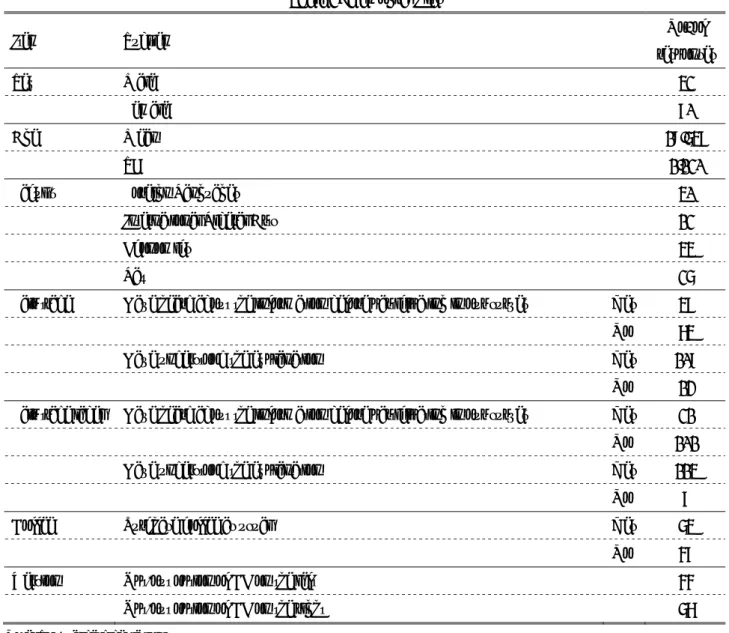
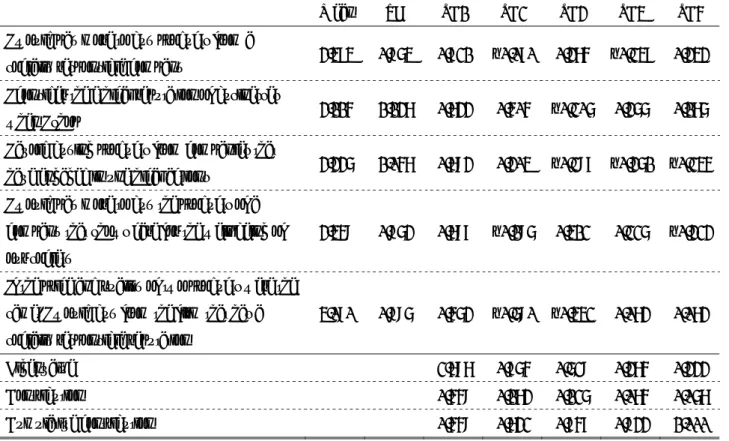
undergraduates as possible using convenience sampling and campus street intercepts. We distributed our nine CE survey questionnaires to 240 undergraduates, and we obtained 225 responses, of which 122 completed our questionnaire creating 1,058 useful CE observations. Table 2 shows the demographics of our sample, and Table 3 shows the respondents’ attitudes, as well as the results of our principal component analysis (PCA)
4.
In their GMNL model, Fiebig et al.
(19)first assumed the following random utility model:
U V X ε βλ X ε [Eq. 1],
where ε is the error component that depends on the Type I extreme value distribution; and λ π ⁄ 6σ is the scale parameter, which is inversely proportional to the variance of the error component, σ . Second, they extended the utility function to incorporate heterogeneities of both the marginal utility vector and the scale parameter, as follows:
U βλ γη 1 γ λ η X
ε [Eq. 2],
where η denotes the standard deviation of the marginal utility. The parameter γ is set to consider two GMNL models below. Then, the choice probability of the respondents becomes:
P j|X ; Β, Λ P U U , ∀k j
∬ ∏ exp β λ ′X /
∑ exp β λ ′X f β|Β f λ|Λ dβdλ [Eq. 3].
Simulated maximum likelihood estimation is employed (Train 2009).
Several different logit models can be estimated within our GMNL. When γ 1 , then β βλ η , which leads to GMNL-I, which assumes that the scale parameter affects only the mean marginal utilities. When γ 0 , then β
β η λ , which is GMNL-II and denotes that the
4
To utilize every covariate of the respondents, we employed only fully answered responses. We used the procedure
“princomp3,” which is a modification of the “princomp”
procedure in R, to conduct a “varimax” rotation and produce
scale parameter affects both the mean and the standard deviation of the marginal utilities. When η 0 ∀n , then β βλ , and we have S-MNL, which assumes that the marginal utilities are identical between individuals, but that the scale parameter is distributed across individuals such that some preference uncertainty exists. When the variance of λ falls to zero, and the expectation of λ is set to unity, then, β β η , and the model reduces to MIXL, which assumes that only the marginal utilities are distributed across individuals.
Finally, when η 0 and the variance of λ falls to zero, then β β, and the model reduces to MNL.
As λ is proportional to the variance of the error term of utility, σ , it should be positive.
Fiebig et al.
(19)transformed it exponentially as λ exp λ δ h τv , such that 0 ∝ 1 σ ⁄ , where h denotes sample covariates, and v , which is a random variable, depends on a standard truncated normal distribution, which we truncated at 2 such that 0 λ ∞ . The expectation of exponentially transformed λ should be standardized to unity to identify the marginal utility vector, such that E λ exp λ δ h τ /2 1. Fiebig et al.
(19)imposed not only the expectation of λ but the mean, λ, set to unity in the simulated draws, which we followed.
The covariates of individuals can be incorporated into not only the scale parameter, such that λ exp λ δ h τv , but also the observable component of the indirect utility as the cross terms with the attributes of alternatives, such that h X . The parameters of these cross terms can be interpreted as the mean point estimate of the individual differences of the marginal utilities. We incorporated the demographic covariates in Table 2 and principal component scores of the attitudinal
principal component loadings directly (Aoki
(2)). Cf. Shigenobu
Aoki’s website: http://aoki2.si.gunma-u.ac.jp/ (in Japanese only,
retrieved September 30, 2015).
variables in Table 3 into both the cross term of the marginal utility and the covariates of the scale parameter.
In addition, Fiebig et al.
(19)suggested that the alternative-specific constants (ASCs) should not be scaled, which we also followed
5. In addition, because we included cross terms of the covariates with not only the attributes but also the ASCs, we decided not to scale the cross terms of the ASCs.
Although we can estimate the parameter γ directly, we assumed it lies between zero and one ( 0 1 ). Fiebig et al.
(19)proposed a logistic transformation of γ estimating it indirectly as γ exp γ
∗⁄ 1 exp γ
∗. Indeed, in our preliminary estimations of S-MNL, the procedures became unstable when estimating γ directly, and it became more stable by indirect estimation. We thus decided to employ an indirect estimation procedure of γ.
We employed R 3.2.5 (R Core Team
(52)) and the procedure “gmnl” (Sarrias and Daziano
(58)) to estimate the GMNL model. We assumed that the distribution of η was normal, lognormal, uniform, or triangular. Greene and Hensher
(22)developed an alternative estimation procedure of to ensure a smooth estimation. However, we ignored their procedure and instead concentrated on the acceptance/rejection random draws procedure of Fiebig et al.
(19). To test for an opt-out positional effect, we split our sample into two subsamples: one where the opt-out option was positioned on the left side and the other where the opt-out option was positioned on the right (Fig.1 and Fig. 2,
5
Fiebig et al. suggested that when we scaled ASCs, “(1) the estimates often ‘blow up,’ with taking on very large values and the standard errors of the elements of becoming very large; and (2) the model produces a substantially worse fit than one where only the coefficients on observed attributes are scaled, whereas ASCs are assumed homogenous in the population”. Indeed, our preliminary examination of ASC-scaled models suggests that such blown-up features are also present in our case.
6
When the level of the qualitative variable is l 1, ⋯ , L, and the arbitrarily omitted level is L , then the parameter of the omitted level, β , is estimated by the negative sum of the parameters of the remaining levels: β ∑ β .
respectively). When setting the ASCs, we set the left option of the opt-in options as ASC1, and the right option as ASC2. The opt-out option is not preferred when every ASC is positively and significantly estimated. We employed effects coding for the qualitative variable in our choice sets so as not to confound the ASCs and base level of the attributes of alternatives (Louviere et al.
(40); Bech and Gyrd- Hansen
(5))
6, while we assumed the price variable is continuous.
In searching for the best fit for the GMNL model, we employed a stepwise regression procedure with forward selection, judged by the Bayesian information criterion (BIC)
7. First, we decided to incorporate all the mean marginal utility parameters of the attributes in the CE choice sets with the ASCs. In estimating GMNL, we first estimated which marginal utility parameters should be represented as normal, log-normal, uniform, or triangular to be best estimated by the GMNL. Then, we estimated it stepwise including the standard deviation parameters of the marginal utilities, cross terms of attributes and covariates, and covariates into the scale parameter, one by one. In estimating S- MNL, we first estimated the simple S-MNL that does not include any covariates, and we estimated it stepwise including the standard deviation parameters of the marginal utilities, cross terms of attributes and covariates, and covariates into the scale parameter, one by one. In estimating MIXL, we first estimated which marginal utility parameters should be represented as normal, log-normal, uniform, or
7
Fiebig et al.
(19)concluded that “both BIC and CAIC (corrected
Akaike information criterion) provide accurate guides for
whether scale heterogeneity is present,” while “AIC (Akaike
information criterion) correctly picks models where errors are
correlated.” Although we should employ several criteria such as
BIC and CAIC, we decided to employ BIC. Indeed, the results
of MNL, MIXL, and S-MNL showed that the model selected by
BIC produced the highest hit rate rather than the models selected
by AIC, AIC3, or CAIC. In addition, our GMNL results did not
converge when selecting the model with AIC, AIC3, or CAIC.
triangular. Then, we estimated it stepwise including the standard deviation parameters of the marginal utilities or cross terms of attributes and covariates, one by one. In estimating MNL, we first estimated the simple MNL that does not include any covariates, and we estimated it stepwise including the cross terms of attributes and covariates.
In all the above cases, we utilized the 100 Halton draw sequence (Train
(62)). Then, we compared the results of each subclass of GMNL using three measures. First, we employed values of log likelihood. Second, we employed McFadden’s ρ modified by the degrees of freedom and compared it with a no-coefficients model and a constants-only model, where the latter was estimated by MNL with only two ASCs. Third, we defined the hit rate as the measure of prediction success as follows: 1) we estimated values of the observable component of the indirect utilities using the mean parameter estimates of the mean marginal utilities; 2) we assigned a value of zero to the indirect utility of the opt-out option; 3) we compared the values of the indirect utilities in each choice set for each individual; 4) we predicted the choices of the individuals in each choice set; and then 5) we calculated the ratio between the number of prediction successes and the number of observations of choices on the CE. Although we may have to utilize individual parameters in MIXL, S-
MNL, and GMNL (Train
(62); Fiebig et al.
(19)), we utilized the procedure above for simplicity.
4. Results and Discussion
First, we interpret the results of our PCA on attitudinal variables in Table 3. When choosing components, we checked eigenvalues in excess of 1.000. As a result, we obtained one principal component (PC1 in Table 3). Then, we decided to interpret principal components with absolute values of component loadings in excess of 0.400. We interpret PC1 as indicating a preference for the products of ethical companies.
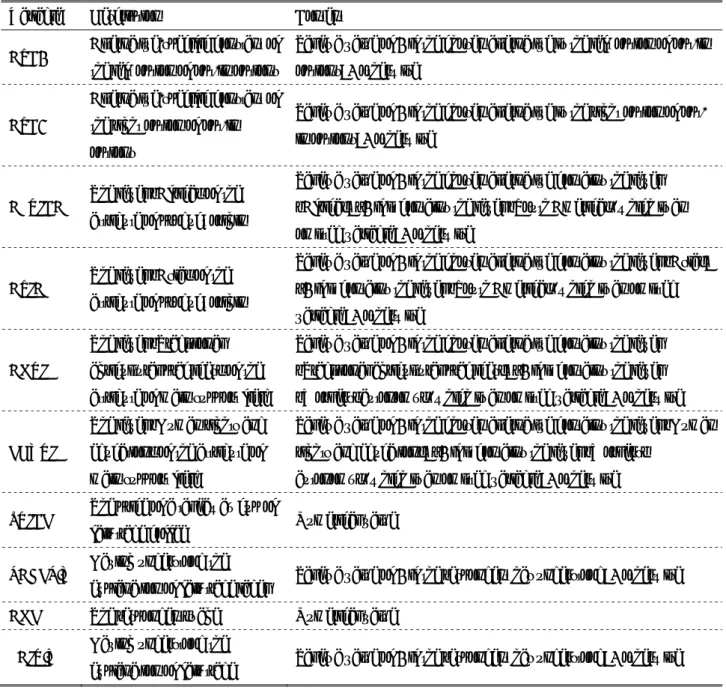
We present our list of variables in Table 4, and
estimated results in Table 5. Every subclass model
converged successfully. First, the value of log
likelihood is the largest in GMNL. Second, MIXL
enjoyed the highest hit rate; thus, the prediction of
respondents’ choice is best in MIXL, rather than the
other subclasses of GMNL. Third, McFadden’s ρ
also demonstrated that MIXL has the best fit among
the subclasses. We conclude that GMNL is not the
preferred model to describe respondents’ choice,
although the scale parameter, τ, and the weighting
parameter of GMNL, γ, increase the value of the log
likelihood.
Table 1: Attributes and Levels of Our CE Question
Attributes Level 1 Level 2 Level 3
Product origin South America Africa Asia
Revenue mainly used for Workers’ autonomy Human rights and education
Traditional agricultural practices
Price JPY280 JPY350 JPY420
Label
I cannot choose between the two alternatives
Product origin Asia South America
Revenue mainly used for Traditional agricultural
practices
Human rights and education
Price JPY 350 JPY 420
□ □ □
Fig. 1: Example of Choice Set with Left Opt-Out.
Label
I cannot choose between the two alternatives
Product origin Asia South America
Revenue mainly used for Traditional agricultural practices
Human rights and education
Price JPY 350 JPY 420
□ □ □
Fig. 2: Example of Choice Set with Right Opt-Out.
Table 2: Demographics
Item Subitem No. of
responses
Sex Male 42
Female 80
Age Mean 19.648
SD 1.120
Faculty Foreign Languages 40
International Liberal Arts 12
Economics 44
Law 26
Fair trade Have heard about the information before participating in our survey Yes 48
No 74
Have understood the explanation Yes 109
No 13
Fair trade label Have heard about the information before participating in our survey Yes 21
No 101
Have understood the explanation Yes 114
No 8
Coffee Purchase coffee as usual Yes 64
No 58
Version Opt-out option of CE on the left 55
Opt-out option of CE on the right 67
Note: SD, standard deviation.
Table 3: Attitudinal Variables and Results of Principal Component Analysis
Mean SD PC1 PC2 PC3 PC4 PC5
I would pay more to buy products from a
socially responsible company 3.484 0.964 0.821 −0.080 0.375 −0.248 0.343 I consider the ethical reputation of businesses
when I shop 3.115 1.137 0.733 0.505 −0.206 0.366 0.176
I avoid buying products from companies that
have engaged in unethical actions 3.336 1.057 0.793 0.304 −0.298 −0.361 −0.245 I would pay more to buy the products of a
company that shows care for the well-being of our society
3.459 0.963 0.798 −0.196 0.412 0.226 −0.323
If the price and quality of two products were the same, I would buy from the firm that has a socially responsible reputation
4.090 0.996 0.563 −0.690 −0.442 0.073 0.073
Eigenvalue 2.797 0.865 0.629 0.375 0.333
Contribution 0.559 0.173 0.126 0.075 0.067
Cumulative contribution 0.559 0.732 0.858 0.933 1.000
Note: SD, standard deviation; PC, principal component. We used the following coding: 5 = strongly agree, 4 = agree, 3 = neutral, 2 =
disagree, 1 = strongly disagree.
Next, we interpret the MIXL results briefly.
Most of the estimated mean parameters are significant. For the attribute “Product origin,” the estimated parameter for AFRICA is significantly positive. For ASIA, the parameter is not significant, which denotes the respondents’ preference for Asia.
As we employed effects coding with this attribute, and by assuming the insignificant parameter as statistically zero, we can calculate the effect of the omitted level “South America” as the negative sum of the effect-coded parameters; the parameter of AFRICA compared with “South Africa” can be
calculated as 0.192 0.192 0
0.384, which is positive. Furthermore, the parameter of ASIA compared with “South America” can be calculated as 0 0.192 0 0.192 , which is positive. For our respondents, Africa is the most popular area, and Asia is the second most popular, followed by South America. For the attribute “Main support field,” AGRI is negatively significant, while EDURI is positively significant and EDURI*LABEL.U is negatively significant. As we employed effects coding with this attribute, we can calculate the effect of the omitted level “Workers’
autonomy” as the negative sum of the effect-coded parameters and the parameter of the dummy cross term multiplied by the share of unity over sample
size, such that 0.620 1.173
0.938 ∗ 114/122 ≃ 0.323 . Then, mean marginal utility of the level “Traditional agricultural practices” becomes 0.620 0.323 0.943 ; that of “Human rights and education” is 1.173 0.323 0.850 , and there are some heterogeneous preferences because the standard deviation parameters are significant. Therefore, our respondents above all prefer the revenue mainly used for human rights and education, followed by the promotion of workers’ autonomy, and traditional agricultural practices in developing countries.
Therefore, we need to highlight how traditional
agricultural practices are beneficial for the protection of the environment in developing countries, and consider the views of our respondents in their support of human rights and education in developing countries.
5. Concluding Remarks
We conducted a CE survey on the choice of takeaway cups of fair trade coffee by undergraduates at Dokkyo University, Japan. We investigated preferences for fair trade coffee by distinguishing the geographical source of coffee and the use of fair trade revenues to promote workers’ autonomy, human rights and education especially for women and children, and environmental protection through traditional agricultural practices. In particular, we focused on the model performances of the GMNL subclasses. We concluded that MIXL achieved the best model fit, although the GMNL model increased the value of the log likelihood.
A number of topics should be addressed in future research. First, we should reexamine the model performances of the GMNL subclasses with more sophisticated survey data. Our findings are simply a preliminary examination with undergraduate samples of rather small size. Second, although we utilized mean marginal utility parameter estimates to calculate the hit rates, individual parameters may be better. Thus, we should consider how to calculate hit rates more precisely. Third, we should use other estimation procedures for GMNL, such as direct estimation of γ , scaled ASCs, or random draws as proposed by Greene and Hensher
(22)