【原著・臨床】
血液培養陽性例に対する薬剤師の早期介入体制の構築とその効果
佐村 優1)・國島 広之3)・倉田 武徳1)・廣瀬 直樹1)・石井 淳一1)
腰岡 桜1)・南雲 史雄1)・山本 隼也1)・國香 則文2)・関根 寿一1)
1)医療法人社団 緑成会横浜総合病院薬剤科*
2)同 内科
3)聖マリアンナ医科大学内科学総合診療内科
(平成26年12月22日受付・平成27年9月1日受理)
近年,医療施設における抗菌薬適正使用の推進のなかで,薬剤師のさらなる貢献が期待されている。
当院では2012年度から血液培養陽性例の中間報告を薬剤科でも把握する体制を構築し,血液培養結果前 も含めた重症感染症,血液培養陽性例の早期介入を試みたため,今回その効果を検証した。2012年4 月から2013年11月に血液培養陽性となった当院入院患者を,初期治療から薬剤師が介入した群(初期 治療介入群),初期治療に薬剤師が未介入の群(初期治療未介入群)に分類し,対象患者における適正抗 菌薬の使用率を主要評価項目とし,Kaplan-Meier法による適正抗菌薬使用の累積達成率を算出して,初 期治療薬に対する薬剤師の介入効果を検討した。その結果,初期治療介入群における累積達成率は1日 目に82.1%,2日目に85.7%,4日目に96.4%,初期治療未介入群では,1日目に47.2%,2日目に50.0%,
3日目に77.8%,4日目に86.1% であり,初期治療介入群のほうが有意に高かった(p=0.03)。また,初
期治療の選択薬の適正性から,適正抗菌薬使用群,非適正抗菌薬使用群に分類し,院内感染症の有無,
広域抗菌薬による治療歴の有無,薬剤師介入の有無を独立変数,適正抗菌薬使用を従属変数として多変 量解析を行った結果,広域抗菌薬による治療歴を有した場合の補正オッズ比が0.06(0.01〜0.35:95% 信 頼区間),薬剤師が介入した場合の補正オッズ比が7.4(1.67〜32.89:95% 信頼区間)であった。今回の 検討結果から,菌血症に対して薬剤師が初期治療から介入することは,早期に適正な抗菌薬の選択に繋 がることが示唆された。
Key words: bacteremia,antimicrobial agents,appropriate use
菌血症は致死的な感染症の一つであり,適正抗菌薬の開始 時期が遅れると生存率が低下し,患者の生命予後に大きな影 響を与える1,2)。そのため,早期に適正な抗菌薬の投与が重要と なり,Surviving Sepsis Campaignのガイドラインでは,診断 後,1時間以内に頻度の高い原因菌を十分カバーできる広域 抗菌薬の経験的投与を推奨している3)。近年,抗菌薬適正使用 の推進においてantimicrobial stewardshipという概念が浸 透している。海外で推進されてきたantimicrobial steward- shipは「抗菌薬の使用制限」と「介入とフィードバック」を 2大戦略としており,後者では抗菌薬の処方時に感染症科医 または感染症のトレーニングを受けた薬剤師が,処方医と直 接やり取りして抗菌薬の適正使用に貢献することが求められ ている4)。国内では,日本化学療法学会において,抗菌化学療 法に関する十分な知識と技能をもった薬剤師を養成し,至適 な抗菌化学療法をとおして国民の健康に貢献することを目的 として抗菌化学療法認定薬剤師制度を制定しており,海外と 同様に感染症治療の専門知識をもった薬剤師の積極的な活動
が求められている。感染症領域での薬剤師の活動については,
抗菌薬の適正使用における使用量の管理に関する介入効果,
処方介入効果に関する報告は多数ある4〜12)。また,重症肺炎に 対する薬剤師の早期介入効果に関する報告もあるが13),感染 症治療に対する直接介入に関し,治療効果を含めた有用性を 検討した報告は少ない。
横浜総合病院(以下,当院)は300床の中規模病院であり,
感染症専門の常勤医が不在であるとともに,院内に微生物検 査室を有しておらず感染症診療体制は必ずしも十分ではな い。しかしながら,感染症は頻度の高い疾患のため,これまで,
主治医と各病棟担当薬剤師が連携しながら感染症治療,抗菌 薬のTDMを行ってきた。また,培養結果がすぐに主治医に連 絡されないといった課題があり,菌血症などの重症感染症の 初期治療が十分ではなかった。そこで,当院では2012年度か ら感染症担当薬剤師を配置して血液培養の中間報告を薬剤科 でも把握するとともに,必要に応じて外部委託の細菌検査セ ンターにその詳細を確認する体制とした。陽性例については
*神奈川県横浜市青葉区鉄町2201―5
Fig. 1. System of early intervention for infectious disease by pharmacists.
We started the system from 2012, after the pharmacists received blood culture-positive in- terim report, the pharmacists intervened for patients with bacteremia. Furthermore, the pharmacists consulted with doctors. This aim of this system was to achieve an early and the adequate antimicrobial therapy by pharmacists.
*CIDCP; Certified Infectious Disease Chemotherapy Pharmacist
Ward Doctor
Nurse Pharmacist Pharmacy
Pharmacist (CIDCP*)
Clinical laboratory
(outside)
④
③
①
②
Interim and final report of the culture
① CIDCP received the interim report of the culture from the clinical laboratory.
② CIDCP consulted with the clinical laboratory about the pathogenic bacteria in the interim report.
(For example when CIDCP received Gram positive cocci in the interim report, CIDCP noted staphylococcus spp. or streptococcus spp. or others.)
③ CIDCP discussed the focus of infection and pathogenic bacteria and inspection with the doctor.
④ CIDCP consulted with the doctor or the pharmacist in the ward, and CIDCP discussed the infectious disease and pathogenic bacteria with them.
医師,病棟薬剤師と抗菌薬を再考し,早期に適正な抗菌薬を選 択するための体制を構築した。さらに,感染担当薬剤師と病棟 薬剤師,医師との相談応需体制も設け,早期介入を試みた
(Fig. 1)。今回,薬剤師の早期介入効果について後方視的に調 査したので報告する。
I. 対 象 と 方 法 1.対象患者
2012年4月から2013年11月に血液培養陽性であっ た当院の入院患者について,抗菌薬投与前に主治医から 薬剤師に相談があり,薬剤師が初期治療薬選択にかか わった群(以下,初期治療介入群)と初期治療薬を主治 医が単独で選択した群(以下,初期治療未介入群)に分 類して検討した。なお,医師と検討しコンタミネーショ ンと判断した患者,抗菌薬を投与していない患者,抗菌 薬投与から48時間以内の死亡例については除外した。な お,本研究は当院の倫理委員会の承認を得て行った(承 認番号:26-5)。
2.薬剤師の介入効果に関する検討 1) 初期治療薬の介入に関する比較検討
対象患者における適正抗菌薬の使用率を主要評価項目
とし,Kaplan-Meier法を用いて適正抗菌薬使用の累積達
成率を算出して,両群の初期治療薬に対する介入効果を 検討した。また,適正抗菌薬投与までの日数は,血液培 養採取日を1日目として算出し,「適正抗菌薬の使用」に ついては薬剤感受性試験で感受性を有する抗菌薬を使用 した場合と定義した。さらに,両群の初期治療薬,中間
報告・最終報告時の抗菌薬の変更率,最終報告後のde-
escalation実施率,両群の30日後の生存率についても検
討した。次に,対象患者を初期治療薬の選択内容から適 正抗菌薬使用群,非適正抗菌薬使用群に分類し,適正抗 菌薬を選択するうえで重要な因子となる院内感染症の割 合,広域抗菌薬による治療歴の割合と薬剤師の介入率を 調整因子として,初期治療における適正抗菌薬の選択に 関する調整オッズ比についても検討した。
2) 初期治療未介入群に対する事後介入の効果の検討 初期治療未介入群を対象として,初期治療薬開始後か ら血液培養最終報告までの介入率,介入内容,抗菌薬の 変更内容について調査した。
3.統計学的処理
量的データは正規および分散性を考慮してstudentʼs t-test,Welchʼs test,Mann-Whitneyʼs U-testのいずれか を選択し,名義尺度についてはChi-square testまたは Fisherʼs exact testを用いて比較した。また,適正抗菌薬 の累積達成率については,Log-rank検定を用いて比較し た。さらに,初期治療における適正抗菌薬の選択に関す る検討では,適正抗菌薬選択の有無を従属変数,院内感 染症の有無,広域抗菌薬による治療歴の有無,薬剤師の 介入の有無を独立変数とし,多重ロジスティック回帰分 析にて補正オッズ比を算出した。なお,統計学的有意性 はp<0.05で判断した。
Table 1. Patient characteristics at the initial therapy
Characteristic
Intervention group for the initial therapy
n=28
Non-intervention group for the initial therapy
n=36
p-value
Age (years) 72.4±10.3※1 78.6±12.4※1 0.03
Gender (male/female) 17/11 18/18 0.45
WBC (×103/μL) 11.3±0.5 10.3±0.5 0.47
CRP (mg/dL) 13.5±9.1 10.4±7.4 0.15
Scr (mg/dL) 1.4±1.1 1.2±0.9 0.52
eGFR※2 (mL/min/1.73 m2) 50.1±24.5 57.2±30.7 0.34
Diabetes mellitus (%) 11 (39.3) 10 (27.8) 0.43
Chronic kidney disease※3 (%) 16 (57.1) 16 (44.4) 0.45
Hemodialysis (%) 3 (10.7) 2 (5.6) 0.65
Malignancy (%) 3 (10.7) 7 (19.4) 0.49
Two sets of blood cultures (%) 21 (75.0) 21 (58.3) 0.19
Nosocomial infection (%) 22 (78.6) 31 (86.1) 0.51
Prior treatment with broad-spectrum
antimicrobial agents※4 (%) 12 (42.9) 23 (63.9) 0.13
※1a±b: Means±SD
※2eGFR was the estimated glomerular filtration rate.
※3Chronic kidney disease was defined as eGFR<60 mL/min/1.73 m2.
※4 Prior treatment with broad-spectrum antimicrobial agents was defined as administration of piperacillin, 4th gen- eration cephalosporins, tazobactam/piperacillin, carbapenems, or fluoroquinolones within three months.
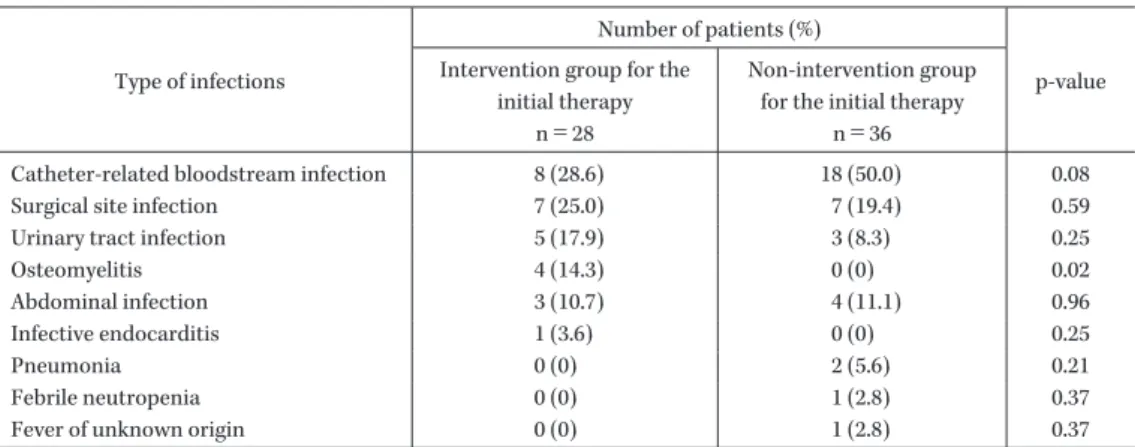
Table 2. Type of infections in patients with intervention or non-intervention for the initial therapy
Type of infections
Number of patients (%)
p-value Intervention group for the
initial therapy n=28
Non-intervention group for the initial therapy
n=36
Catheter-related bloodstream infection 8 (28.6) 18 (50.0) 0.08
Surgical site infection 7 (25.0) 7 (19.4) 0.59
Urinary tract infection 5 (17.9) 3 (8.3) 0.25
Osteomyelitis 4 (14.3) 0 (0) 0.02
Abdominal infection 3 (10.7) 4 (11.1) 0.96
Infective endocarditis 1 (3.6) 0 (0) 0.25
Pneumonia 0 (0) 2 (5.6) 0.21
Febrile neutropenia 0 (0) 1 (2.8) 0.37
Fever of unknown origin 0 (0) 1 (2.8) 0.37
II. 結 果
1.患者背景
2012年4月から2013年11月に血液培養陽性であっ た入院患者91例のうちコンタミネーションと判断され た患者,48時間以内死亡例,抗菌薬未投与例の27例を除 外した結果,初期治療介入群は28例,初期治療未介入群 は36例であり,両群の患者背景では,年齢以外で有意な 差を認めなかった(Table 1)。感染症の内訳は,初期治療 介入群ではカテーテル関連血流感染症が最も多く,次い で手術部位感染症,尿路感染症であり,初期治療未介入 群ではカテーテル関連血流感染症が最も多く,次いで手 術部位感染症,消化器関連感染症であった。また,初期 治療介入群において骨感染症の割合が有意に高く,その 他では有意な差は認めなかった(Table 2)。
検出菌の内訳は,初期治療介入群でメチシリン感性
Staphylococcus aureus(MSSA)が 最 も 多 く,次 い で MRSA,メチシリン耐性コアグラーゼ陰性Staphylococcus
(MRCNS)であり,初期 治 療 未 介 入 群 で は,MRCNS が最も多く,次いで,Streptococcusspp.であった。また,
MRCNS,MSSAの割合に有意な差を認めたが,その他で
は有意な差は認めなかった(Table 3)。
2.薬剤師の介入効果に関する検討 1) 初期治療薬の介入に関する比較検討
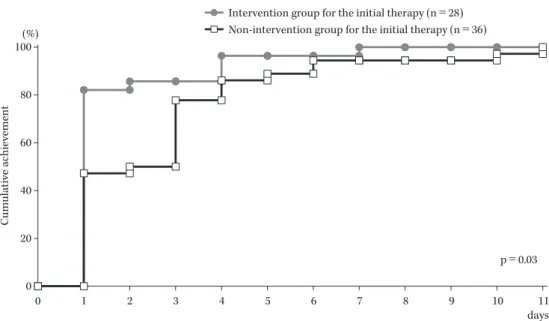
両群の血液培養採取日から適正抗菌薬投与開始までの 日数の累積到達率をFig. 2に示す。初期治療介入群にお ける累積達成率は1日目に82.1%,2日目に85.7%,4
日目に96.4%,初期治療未介入群では,1日目に47.2%,
2日目に50.0%,3日目に77.8%,4日目に86.1% であり,
累積到達率は初期治療介入群のほうが有意に高かった
(p=0.03)。初期治療における選択薬では,広域抗菌薬
Fig. 2. The cumulative achievement rate of the adequate antimicrobial therapy in patients with inter- vention or non-intervention for the initial therapy.
The cumulative achievement rate of the appropriate antimicrobial use with Kaplan-Meier method was 82.1% at day 1, 85.7% at day 2 and day 3, and 96.4% at day 4 in intervention group for the initial therapy, and 47.2% at day 1, 50.0% at day 2, 77.8% at day 3, and 86.1% at day 4 in non-intervention group for the initial therapy. The cumulative achievement rate in intervention group for the initial therapy was significantly higher than non-intervention group (p=0.03).
100
80
60
40
20
0
0 1 2 3 4 5 6 7 8 9 10 11
Intervention group for the initial therapy (n=28) Non-intervention group for the initial therapy (n=36)
Cumulative achievement
days p=0.03 (%)
Table 3. Detected bacteria reports in blood culture in patients with intervention or non- intervention for the initial therapy
Detected bacteria
Number of patients (%)
p-value Intervention group for the
initial therapy n=28
Non-intervention group for the initial therapy
n=37
MRSA 4 (14.3) 2 (5.4) 0.22
MSSA 5 (17.9) 1 (2.7) 0.04
MRCNS 3 (10.7) 15 (40.5) <0.01
CNS 0 (0) 2 (5.4) 0.21
Streptococcus spp. 2 (7.1) 2 (5.4) 0.21
Enterococcus spp. 4 (14.3) 1 (2.7) 0.61
Enterobacter spp. 2 (7.1) 1 (2.7) 0.08
Escherichia coli 1 (3.6) 2 (5.4) 0.72
Klebsiella spp. 3 (10.7) 1 (2.7) 0.18
Bacteroides spp. 2 (7.1) 2 (5.4) 0.77
Candida spp. 0 (0) 3 (8.1) 0.12
Others 2 (7.1) 3 (8.1) 0.88
(carbapenems,tazobactam!piperacillin,fluoroquino-
lones)の使用率が初期治療介入群で19例(67.9%),初
期治療未介入群で23例(63.9%)と両群に差を認めな かったが(p=0.80),抗MRSA薬の使用率は初期治療介 入群で15例(53.6%),初期治療未介入群で4例(11.1%),
抗菌薬の併用率は初期治療介入群16例(57.1%),初期治 療未介入群で5例(13.9%)であり,初期治療介入群で有 意に高かった(Table 4,p<0.001)。また,中間報告・最 終報告時の抗 菌 薬 変 更 率 は,初 期 治 療 介 入 群 で7例
(25.0%),初期治療未介入群で19例(52.8%)と初期治療 介 入 群 で 有 意 に 低 く(p=0.04),最 終 報 告 後 のde- escalation実施率は初期治療介入群で6例(21.4%),初期 治療非介入群で1例(2.8%)と初期治療介入群で有意に 高かった(Table 5,p=0.04)。さらに,30日後の生存率 については,初期治療介入群で26例(92.9%),初期治療 未介入群で27例(75.0%)であり,有意な差は認めなかっ た(Table 6,p=0.09)。
次に,適正抗菌薬使用群,非適正抗菌薬使用群におけ
Table 4. Antimicrobial agents of the initial therapy in patients with intervention or non-intervention for the initial therapy
Number of patients (%)
p-value Intervention group for the
initial therapy n=28
Non-intervention group for the initial therapy
n=36
Broad-spectrum antimicrobial agents※1 19 (67.9) 23 (63.9) 0.80
Carbapenems※2 7 (25.0) 12 (33.3) 0.72
Tazobactam/Piperacillin 10 (35.7) 10 (27.8) 0.50
Fluoroquinolones※3 2 (7.1) 1 (2.8) 0.43
Others 8 (28.6) 14 (38.9) 0.92
Anti-MRSA agents※4 15 (53.6) 4 (11.1) <0.001
Combination therapy 16 (57.1) 5 (13.9) <0.001
※1Broad-spectrum antimicrobial agents were tazobactam/piperacillin, carbapenems, fluoroquinolones.
※2Carbapenems were meropenem and doripenem.
※3Fluoroquinolones were pazufloxacin and levofloxacin.
※4Anti-MRSA agents were vancomycin, teicoplanin, daptomycin and linezolid.
Table 5. Change of antimicrobial agents at interim and final reports in patients with intervention or non-intervention for the initial therapy
Change of antimicrobial agents
Number of patients (%)
p-value Intervention group for the
initial therapy n=28
Non-intervention group for the initial therapy
n=36
At the interim and final report 7 (25.0) 19 (52.8) 0.04
De-escalation after the final report 6 (21.4) 1 (2.8) 0.04
Table 6. Survival rate 30 days later in patients with intervention or non-intervention for the initial therapy
Number of patients (%)
p-value Intervention group for the
initial therapy n=28
Non-intervention group for the initial therapy
n=36
Survival 26 (92.9) 27 (75.0) 0.09
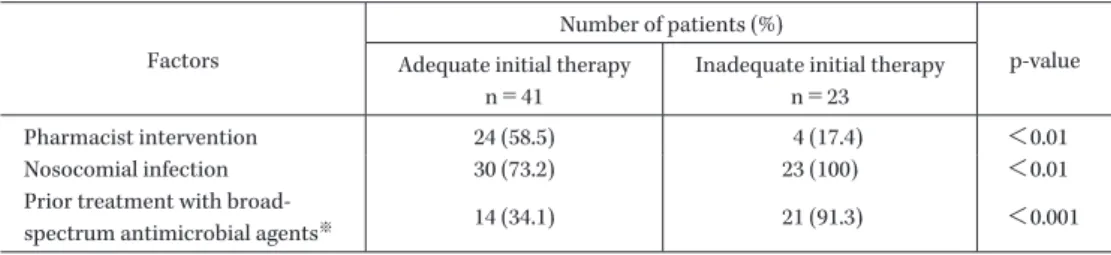
Table 7. Univariate analysis of factors associated with adequate initial therapy and inadequate initial therapy
Factors
Number of patients (%)
p-value Adequate initial therapy
n=41
Inadequate initial therapy n=23
Pharmacist intervention 24 (58.5) 4 (17.4) <0.01
Nosocomial infection 30 (73.2) 23 (100) <0.01
Prior treatment with broad-
spectrum antimicrobial agents※ 14 (34.1) 21 (91.3) <0.001
※ Prior treatment with broad-spectrum antimicrobial agents was defined as the administration of piperacillin, 4th generation cephalosporins, tazobactam/piperacillin, carbapenems, and fluoroquinolones within three months.
る単変量解析の結果をTable 7に示す。非適正抗菌薬使 用群では,適正抗菌薬使用群と比較して,有意に院内感 染症の割合,広域抗菌薬による治療歴の割合が高く,薬 剤師の介入率が低かった。また,これらの因子を独立変 数,適正抗菌薬使用を従属変数として多変量解析を行っ
た結果,広域抗菌薬による治療歴があった場合の補正 オッズ比が0.06(0.01〜0.35:95% 信頼区間),薬剤師が 介入した場合の補正オッズ比が7.4(1.67〜32.89:95%
信頼区間)であった(Table 8)。
Table 8. Multivariate analysis of factors associated with adequate initial therapy and inadequate initial therapy
Factors crude OR※1 95%CI※2 AOR※3 95%CI p-value
(Waldʼs test)
Pharmacist intervention 6.71 (1.93―23.28) 7.4 (1.67―32.89) <0.01
Nosocomial infection ND※4 ND ND ND ND
Prior treatment with broad-
spectrum antimicrobial agents※5 0.05 (0.01―0.24) 0.06 (0.01―0.35) <0.01
※1OR: odds ratio
※2CI: confidence interval
※3AOR: adjusted odds ratio
※4ND: no data
※5 Prior treatment with broad-spectrum antimicrobial agents was defined as the administration of piperacillin, 4th generation cephalosporins, tazobactam/piperacillin, carbapenems and fluoroquinolones within three months.
Table 9. Result of intervention for non-intervention group after starting the initial therapy
Suggestions for antimicrobial therapy
Non-intervention group for the initial therapy n=36
Number of patients (%)
from day 1 to day 3 from day 4 to day 7 After day 8 Addition of anti-MRSA agents
Suspected or defined Staphylococcus spp.
(including MRSA, MRCNS) 9 (25.0) 3 (8.3) 1 (2.8)
Suspected or defined Enterococcus spp. or
Corynebacterium spp. 0 (0) 1 (2.8) 1 (2.8)
Addition of anti-fungal agents 1 (2.8) 2 (5.6) 0 (0)
2) 初期治療未介入群に対する事後介入の効果の検討 初期治療未介入群に対する介入内容をTable 9に示 す。医師からの相談,血液培養の中間報告,最終報告を 受けて介入し,初期治療における非適正の抗菌薬使用が 疑われた21例に対して,培養報告に基づいた抗菌薬の追 加または変更を提案した。その内訳は,メチシリン耐性 Staphylococcusspp.,Enterococcus faecium,Corynebacterium
spp.による菌血症例での抗MRSA薬の追加,Candida
血症に対する抗真菌薬の追加であり,1〜3日目で10例,
4〜7日目で6例,8日目以降で2例の計18名で薬剤師の 提案が採択され,適正抗菌薬に変更となった。
III. 考 察
早期に適正抗菌薬を開始するには①発熱の原因,②感 染臓器の特定,③原因微生物の推定の過程が重要となる。
これまで当院では,これらの過程を十分検討せずに初期 治療として経験的に広域抗菌薬が選択される傾向にあっ た。そのため,薬剤師の介入時には医師と①〜③につい て十分に検討した後に抗菌薬を推奨する体制とした。今 回の検討で,薬剤師の初期治療介入群では,初期治療未 介入群に比べて,適正抗菌薬投与までの日数における累 積達成率は有意に高かったことから,今回構築した体制 は有用であったと考える。また,初期治療時の抗MRSA 薬の選択率に有意な差を認めたが,今回の対象患者の約
80% が院内感染症であったこと,90日以内の広域抗菌薬
使用例が40〜60% 程度存在したこと,非適正使用群では
有意に広域抗菌薬による治療歴の割合が高かったことが その理由として考えられた。特に初期治療未介入群では,
疾患としてカテーテル関連血流感染症,原因微生物とし
てMRCNSの割合が高かったが,当院のアンチバイオグ
ラムでは,Staphylococcus aureusのうち約60%,CNSのう
ち約80% がメチシリン耐性であった。また,McConeghy
らは,MSSAに対する治療効果はvancomycinよりも oxacillin,nafcillin,cefazolinなどのβ―ラクタム系薬の ほうが治療失敗例は少ないことから,vancomycin単剤
よりもvancomycinとβ―ラクタム系薬の併用療法のほ
うが治療成績は良くなる可能性があることを述べてい る14)。そのため,当院でも,Staphylococcusspp.による感 染症を疑った場合には,副作用に注意したう え で 抗 MRSA薬を併用し,感受性結果に応じてde-escalation を行った。今回の検討では,初期治療未介入群での1日 目の適正抗菌薬投与の割合が45% 程度であり,非適正抗 菌 薬 投 与 の 多 く がtazobactam!piperacillin,carbap- enemsを初期治療で選 択 し て い た た め,中 間 報 告 で
Staphylococcusspp.による菌血症(カテーテル関連血流感
染症,手術部位感染症など)が疑われ,3日目以降に薬剤 師が介入して抗MRSA薬を追加する傾向にあった。
Kollefらは,不適正な抗菌薬治療の背景について検討し
ており,市中感染症よりも院内感染症,単純な院内感染 症よりも市中感染症治療後に発症した院内感染症のほう が不適正な抗菌薬治療の割合が多くなること,そのリス
ク因子として抗菌薬の使用歴,耐性菌の関与を挙げてい る15)。そのため,今回の初期治療における適正抗菌薬使用 群,非適正抗菌薬使用群における検討においては,初期 治療時に収集可能な情報である院内感染症,広域抗菌薬 による治療歴を適正抗菌薬使用に影響を与える因子とし て検討した。単変量解析では,それぞれの因子において 有意な差を認めたが,非適正抗菌薬使用群ではすべてが 院内感染症であったため,院内感染症を反映した多変量 解析結果とはならなかった。一方で,多変量解析の結果,
薬剤師の介入は適正抗菌薬使用に影響する因子となって おり,初期治療介入における有用性が示唆された。特に 当院のような常勤の感染症専門医が不在の中規模病院で は,適正抗菌薬を開始するために重要となる①発熱の原 因,②感染臓器の特定,③原因微生物の推定の過程が十 分に検討されずに広域抗菌薬が開始される傾向にあるた め,そこに薬剤師が介入して医師と検討することで,過 去の抗菌薬の使用歴を考慮した原因微生物の推定,院内 のアンチバイオグラムを活用した適正な抗菌薬の選択が 可能になると考える。今回の検討では,初期治療におけ る適正抗菌薬使用群,非適正抗菌薬使用群での耐性菌の 割合は,それぞれ24.3%,65.2% であり(p<0.01),初期 治療薬を選択する際に院内感染症,広域抗菌薬による治 療歴などの情報に関する評価,アンチバイオグラムの活 用は重要と考えられた。
今回の検討では,適正抗菌薬投与までの日数における 累積達成率では有意な差を認めたが,両群の生存率では 有意な差はなかった。その背景としては,カテーテル関 連血流感染症,手術部位感染症などでは,抗菌薬以外の 治療も行っていることから,早期から適正抗菌薬を選択 した場合の効果として,反映されないことが考えられた。
今回の検討結果で,初期治療介入群,初期治療未介入 群におけるde-escalation実施率はそれぞれ21.4%,2.8%
であった。初期治療介入群におけるde-escalationの主な 内訳としては,手術部位感染症,カテーテル関連血流感 染症に対して,抗MRSA薬,広域抗菌薬で治療開始後に MSSAが同定されcefazolinへ変更した例,Enterococcus spp.の同定後にampicillinへ変更した例,Enterobacter
spp.の同定後にceftazidimeに変更した例などであっ
た。一方,初期治療未介入群におけるde-escalationはカ テーテル関連血流感染症に対して抗MRSA薬,広域抗菌 薬で治療開始後にMRCNSが同定され,抗MRSA薬単 剤とした1例のみであった。その理由として,血液培養 の中間報告前後でのescalationを行っている例が多いこ と,40% 程度が14日未満の投与例であったことが考え
られた。Khasawnehらは,尿路感染症の菌血症における
de-escalationの効果を検討し,de-escalation群,非de-
escalation群の入院期間,死亡率に差を認めなかったと
報 告 し て い る16)。一 方 で,重 症 敗 血 症 に お け るde- escalationと経験的治療との検討では,de-escalation群
でICU在室日数を延長させたという報告もあり17),疾患 と背景を考慮してde-escalationを行う必要がある。
2012年度の診療報酬改定で新設された病棟薬剤業務 実施加算は,病棟に薬剤師を配置することで薬物治療の 適正化に貢献することを目的としており18),感染症治療 でも同様である。また,病棟薬剤業務においては,医師 との協働下でのプロトコルの運用も推奨されている18,19)。 米国では10年以上前から病棟薬剤師と感染症薬剤師の 連携に加えて,抗菌薬の適正使用ガイドライン,プロト コルの活用を行っており,その効果も示されており20),S.
aureusの菌血症に対するBundleの有用性に関する報告
もある21)。今回は薬剤師が積極的に介入することで,早期 に適正な抗菌薬を開始する体制を構築したが,全例に適 正な治療を提供できている訳ではない。今後は各種ガイ ドライン,Bundle,アンチバイオグラムを活用した院内 独自の感染症治療のプロトコルを医師と協働で作成して 感染症治療を標準化することで,さらなる質の向上を図 る必要がある。
利益相反自己申告:申告すべきものなし。
文 献
1) Kumar A: Optimizing antimicrobial therapy in sep- sis and septic shock. Crit Care Clin 2009; 25: 733-51 2) Kumar A, Ellis P, Arabi Y, Roberts D, Light B, Par-
rillo J E, et al: Initiation of inappropriate antimicro- bial therapy results in a fivefold reduction of sur- vival in human septic shock. Chest 2009; 136: 1237-48 3) 日本集中治療医学会Sepsis Registry委員会:日本版
敗血症診療ガイドライン。日集中医誌 2013; 20: 124- 73
4) Dellit T H, Owens R C, McGowan J E Jr, Gerding D N, Weinstein R A, Burke J P, et al; Infectious Dis- eases Society of America ; Society for Healthcare Epidemiology of America: Infectious Diseases Soci- ety of America and the Society for Healthcare Epi- demiology of America guidelines for developing an institutional program to enhance antimicrobial stew- ardship. Clin Infect Dis 2007; 44: 159-77
5) 木村丈司,甲斐崇文,高橋尚子,佐々木秀美:ICT 及び薬剤部の主導によるPK!PD理論に基づいた抗 菌薬適正使用の実践効果。日環境感染会誌 2010; 25:
310-6
6) 酒井義朗,井上光鋭,有馬千代子,久保裕子,鶴田美 恵子:指定抗菌薬使用届出制度の導入効果。日環境感 染会誌 2008; 23: 66-71
7) 田中 大,深澤鈴子,喜古康博,木下かおり,坂口み きよ,藤江俊秀:抗菌薬の幅広い使用届出制が処方動 向及び薬剤感受性に及ぼす効果。日環境感染会誌 2008; 23: 361-5
8) 村木優一,田辺正樹,中村明子,松島佳子,妹尾昌幸,
福田みどり,他:病院情報管理システムと連動した広 域抗菌薬の使用届出制の構築と有用性の評価。医療薬 2010; 36: 316-22
9) 梅村拓巳,望月敬浩,村木優一,片山歳也,滝 久司,
大 曲 貴 夫,他:Anatomical Therapeutic Chemical Classification!Defined Daily Dose Systemを 利 用 し た注射用抗菌薬の使用量と緑膿菌耐性率。日環境感染
会誌 2010; 25: 376-82
10) 木村丈司,甲斐崇文,高橋尚子,佐々木秀美:抗菌薬 の投与量・投与間隔の適正化に対する薬剤師の貢献。
日環境感染会誌 2013; 28: 18-24
11) 松本健吾,星野輝彦,今泉隆志:薬剤師による抗菌薬 適正使用支援システムの構築と「介入とフィードバッ ク」の推進。日環境感染会誌 2014; 29: 105-11
12) 丹羽 隆,篠田康孝,鈴木昭夫,大森智史,太田浩敏,
深尾亜由美,他:Infection Control Teamによる全入 院患者を対象とした注射用抗菌薬適正使用推進実施 体制の確立とアウトカム評価。医療薬 2012; 38: 273- 81
13) 今浦将治,横山晴子,木幡雄至,五十嵐崇,高橋宏行,
菅野 浩,他:重症肺炎治療への薬剤師の早期介入効 果。薬誌 2013; 133: 283-8
14) McConeghy K W, Bleasdale S C, Rodvold K A: The empirical combination of vancomycin and a β- lactam for Staphylococcal bacteremia. Clin Infect Dis 2013; 57: 1760-5
15) Kollef M H, Sherman G, Ward S, Fraser V J: Inade- quate antimicrobial treatment of infections : a risk factor for hospital mortality among critically ill pa- tients. Chest 1999; 115: 462-74
16) Khasawneh F A, Karim A, Mahmood T, Ahmed S, Jaffri S F, Tate M E, et al: Antibiotic de-escalation in bacteremic urinary tract infections: potential oppor- tunities and effect on outcome. Infection 2014 ; 42 :
829-34
17) Leone M, Bechis C, Baumstarck K, Lefrant J Y, Al- banèse J, Jaber S, et al: De-escalation versus continu- ation of empirical antimicrobial treatment in severe sepsis: a multicenter non-blinded randomized nonin- feriority trial. Intensive Care Med 2014; 40: 1399-408 18) 日 本 病 院 薬 剤 師 会:薬 剤 師 の 病 棟 業 務 の 進 め 方
(Ver.1.1)。平成25年
http:!!www.jshp.or.jp!cont!13!0327-2.pdf(2014!12! 20アクセス)
19) 厚生労働省医政局長通知(医政発0430第1号):「医 療スタッフの協働・連携によるチーム医療の推進に ついて」 日本病院薬剤師会による解釈と実践事例
(Ver.2.0)。日本病院薬剤師会,平成26年
http:!!www.jshp.or.jp!cont!14!0417-2-1.pdf(2014! 12!20アクセス)
20) Thomas A R, Cieslak P R, Strausbaugh L J, Fleming D W: Effectiveness of pharmacy policies designed to limit inappropriate vancomycin use : a population- based assessment. Infect Control Hosp Epidemiol 2002; 23: 683-8
21) López-Cortés L E, Del Toro M D, Gálvez-Acebal J, Bereciartua-Bastarrica E, Fariñas M C, Sanz-Franco M, et al: Impact of an evidence-based bundle inter- vention in the quality-of-care management and out- come of Staphylococcus aureus bacteremia. Clin In- fect Dis 2013; 57: 1225-33
The system construction of early pharmacist intervention for patients with bacteremia and the effect of this system
Masaru Samura1), Hiroyuki Kunishima3), Takenori Kurata1), Naoki Hirose1), Junichi Ishii1), Sakura Koshioka1), Fumio Nagumo1), Shunya Yamamoto1),
Norifumi Kunika2)and Hisakazu Sekine1)
1)Department of Pharmacy, Yokohama General Hospital, 2201―5 Kurogane, Aoba-ku, Yokohama, Kanagawa, Japan
2)Department of Internal Medicine, Yokohama General Hospital
3)Division of General Internal Medicine, St. Marianna University School of Medicine
Purpose: In Yokohama General Hospital, we established the system by which pharmacists received blood culture-positive interim reports from 2012, and we tried early intervention for patients with bacteremia by pharmacists. The aim of this study was to evaluate the effect of early intervention by pharmacists.
Method: We classified bacteremia patients in two groups, namely the intervention group for the initial therapy (pharmacists intervened in the initial therapy before starting antimicrobial therapy) and the non- intervention group for the initial therapy (pharmacists did not intervene in the initial therapy) between April, 2012 and November, 2013. In additon, we evaluated the effect of pharmacistsʼ intervention in both groups using the rate of adequate antimicrobial therapy that was calculated with the Kaplan-Meier method.
In addition, we further classified patients into the adequate therapy group and the inadequate therapy group from the initial therapy, and evaluated the association between the adequate initial therapy and nosocomial infection, prior treatment with broad-spectrum antimicrobial agents and pharmacistsʼ intervention using a multivariate analysis.
Results: The cumulative achievement rate of the adequate antimicrobial therapy was 82.1% at day 1, 85.7%
at day 2, 96.4% at day 4 in intervention group for the initial therapy and 47.2% at day 1, 50.0% at day 2, 77.8%
at day 3, 86.1% at day 4 in non-intervention group for the initial therapy. The cumulative achievement rate of the adequate antimicrobial therapy in the intervention group for the initial therapy was significantly higher than the non-intervention group (p=0.03). In addition, from the result of the multivariate analysis, prior treatment with broad-spectrum antimicrobial agents significantly decreased the rate of the adequate initial therapy (adjusted odds ratio 0.06 [95% confidence interval, 0.01―0.35]) and pharmacistsʼ intervention signifi- cantly increased the rate of the adequate initial therapy (adjusted odds ratio 7.4 [95% confidence interval, 1.67―32.89]).
Conclusion: It was suggested by this investigation that early pharmacistsʼ intervention for patients with bacteremia was able to lead to an early and adequate antimicrobial therapy.