Management Practices of Social Business Enterprises in Bangladesh
JAHAN sufia
Doctor of Philosophy (Ph. D.) in Business Management
Graduate School of Social Sciences
Nanzan University
JAPAN
JANUARY 2020Management Practices of Social Business Enterprises in Bangladesh
byJAHAN sufia
Academic Advisor Professor Khondaker Mizanur Rahman
A dissertation submitted to the Graduate School of Social Sciences,
Nanzan University, Japan in partial fulfillment of the requirements for the degree of Doctor of Philosophy ( Ph. D.) in Business Management.
JANUARY 2020
Abstract
The study aims to examine the characteristic features of the management practices in social business enterprises (SBEs) of Bangladesh. In order to achieve this objective the study contributes to focus on five management practices in SBEs namely mission statement, corporate social responsibility (CSR), corporate governance (CG), human resource management (HRM), and project management and implementation (PMI). Though these five management practices are the fundamental issues in international business management development discourse, however, in the context of Bangladesh very few research activities were done to articulate their styles, strengths, issues, and weaknesses. The various aspects of management practices in SBEs and their similarities and differences are needed to be studied to fill up the existing research gap on this rapidly expanding sector.
The lack of attention in examining various aspects of management practices in SBEs has led to the following research question of what are the main characteristics of the management practices in SBEs of Bangladesh. On the basis of the existing research and literature review the overall hypothesis of this research is that: probably management practices of SBEs are similar to management practices of conventional businesses in this country. A questionnaire was developed consisting of seventy one aspects and an unstructured interview was held on 44 selected SBEs of BRAC and Grameen family of companies. A mixed method-qualitative and quantitative analysis is used to analyze and interpret research data. By following qualitative method the study focused on many cases of SBEs to comprehend research findings. Finally, a quantitative inference is used to determine the characteristics features of management practices in SBEs.
The findings suggest that the major characteristics features of management practices in SBEs of Bangladesh are that SB has social mission which aims to solve social problems. Moreover, CSR in SBEs emphasizes profitable business practices and follows global standards for managing and implementing CSR within the enterprises. However, CG practices are still at initial stage due to government interference that can change anything in anytime. Futhermore, SBEs strongly practices HRM, though in terms of employee compensation, a majority of the employees expressed their dissatisfaction. It is also found that most of the projects of SBEs are not able to go through properly within the project framework. All of these findings authenticated the overall hypothesis of this research and in particular, the case of Grameen Phone (section 1) illustrated the new insight of the SB which authenticated the concept of management practices of SBEs are similar to traditional businesses in Bangladesh.
The study concludes that Bangladesh practices non-loss, non-dividend social business (SB) though most common organization types of SB in world are that SB belongs to nonprofit sectors and it would be dividend or non dividend business. It is found that SB is a profitable business in Bangladesh. Eventually, academically readers will get information about styles, strengths, issues, and weaknesses of a group of management practices in SBEs which help them implication of this knowledge in the practical field as well. Yet, there are also some immensely vital issues which are needed to be studied in future namely, industrial relations in SBEs, nature of government control and managerial autonomy, financial management, collaboration between SB and conventional business, foreign entry strategy for SB, management of foreign collaborative enterprise and among others. All of these issues are important to increase knowledge in the field of management practices in SBEs.
Acknowledgement
First and foremost, I would like to thank to my supervisory panel, my principal supervisor Professor KHONDAKER M. Rahman and associate supervisor Professor ANDO Fumie for their continuous support, guidance, and patience. I am deeply grateful to Professor SAWAI Minoru and Professor MINAMIKAWA kazumitsu who did their best to put me on the right track. I would also like to extend thanks to Professor POTTER David M. for his insightful comments and encouragement. Without their generous assistance and support, I would be unable to complete my dissertation successfully.
I am also thankful to my sponsors Yokoyama International Scholarship Foundation, Nanzan
University International Students Scholarship (hirushumaiya and sangi kogyo kabushiki gaisha) program for the financial support during the study. I am particularly indebted to Yunus Center and BRAC head office, Dhaka, Bangladesh for their information to collect research data during the period of my field survey.
Last but not least, I owe a huge debt of gratitude to my parents and siblings for their immense support, love, and patience during the journey. Their love and support had inspired me to never give up and finish up the study.
Table of Contents Abstract………ii Acknowledgement ………...iii Table of Contents……….iv List of Figures……….viii List of Tables………..xi
List of Acronyms and Abbreviations………...xii
Chapter 1: Introduction ………….. ………1
I) Background of the study……….. 1
II) Statement of the problem………...1
III) Objectives of the research………1
IV) Definition of social business (SB) ………...2
a) American perspective………2
b) European perspective………3
c) Bangladesh perspective ……….………4
Chapter 2: Research Organization and Methodology………7
I) Introduction ……….7
II) Research organization………...7
III) Types of research methods………...9
IV) The rationales of choosing a mix method research………...11
V) Challenges of mixed method research………12
VI) Conclusion……….12
Chapter 3: Literature Review………....14
I) Introduction………14
a) Cooperatives (mid-1800) ………..14
b) Fair trade (1940-1950)………...15
c) Community development cooperation (1970s)……….16
d) Social firms (1970s)………...16
e) Nonprofits (1980s)……….17
f) SBEs (1990s)………..18 iv
II) Literature on SBEs in Bangladesh………..18
a) BRAC development programs, SBEs, and investments……….19
b) Grameen microfinance initiatives, Grameen family of companies, and SBEs……….25
III) Literature on mission statement………35
IV) Literature on CSR………..37
V) Literature on CG………..………39
VI) Literature on HRM………..44
VII) Literature on PMI……….………..45
VIII) Conclusion………46
Chapter 4: Examination of SBEs Management Practices in Bangladesh………49
Section 1: Mission Statement in SBEs ……….49
I) Introduction………..49
II) General framework of mission statement………51
a) Contribution to society...51
b) Indoctrination and commuication of business philisophy...52
c) Employees as partners...52
d) Balancing multiple goals...53
e) Emphasis on growth oriented initiatives...54
III) Characteristics of mission statement in SBEs of Bangladesh………54
IV) Research method and organization………60
V) Data analysis and interpretation………..61
VI) Discussion of the findings………..69
VII) Conclusion……….73
Section 2: Corporate Social Responsibility (CSR) in SBEs ………75
I) Introduction……….. 75
II) General framework of CSR………..80
a) Community stakeholders...80
b) Customer stakeholders...80
c) Employee stakeholders...80
d) Shareholders or stakeholders...81 v
e) Suppliers of the business...81
III) Characteristic features of CSR in SBEs of Bangladesh………81
IV) Research method and organization………83
V) Data analysis and interpretation………..83
VI) Discussion of the findings………..97
VII) Conclusion……….103
Section 3: Corporate Governance (CG) in SBEs ……….105
I) Introduction ………...105
II) General framework of CG practices in the business enterprises of Bangladesh…………107
a) Legal statutory...107
b) Board issue...107
c) Committee as adjunct to the board...108
d) Audit and financial report...108
e) Others (meeting, quorum, disclosure information, voting mechanism, and among others)108 III) Characteristic features of CG system in SBEs of Bangladesh………..109
IV) Research method and organization………114
V) Data analysis and interpretation……….115
VI) Discussion of the findings……….128
VII) Conclusion ………..131
Section 4: Human Resource Management (HRM) in SBEs ……….133
I) Introduction ……….133
II) General framework of HRM………...134
III) Characteristics of HRM in SBEs of Bangladesh………...135
IV) Research method and organization………...139
V) Data analysis and interpretation………139
VI) Discussion of the findings………155
VII) Conclusion………...157
Section 5: Project Management and Implementation (PMI) in SBEs ………158
I) Introduction……….158 vi
II) Project Management and Implementation – The General Framework………161
a) A business idea...163
b) Planning...164
c) Execution and closing session...164
d) Monitoring...165
e) Evaluation...165
III) Characteristic features of SB project management in Bangladesh………166
IV) Research Method and Organization………..169
V) Data analysis and interpretation………..169
VI) Discussion of the findings………..179
VII) Conclusion………183
VIII) Conclusion of five management practices in SBEs……….183
Chapter 5: Summary and Conclusion………..196
I) Summary………..196
a) Introduction………...196
b) Research organization and methodology……….196
c) Literature review………..197
d) Examination of SBEs management practices in Bangladesh………..197
II) Conclusion………..204
a) Characteristics of Social Business (SB) in Bangladesh……….206
b) Diversification, convergence, and innovation of the SB in Bangladesh……….207
c) Structure of the study………..208
d) Implication to other countries………214
e) Conclusion………..216
f) Future research area………219
References………. 221
Appendix………237
List of figures
Figure1: Cycle of Social Business (SB)………..5
Figure 2: CSR pyramid-the four responsibilities……….38
Figure 3: Components of business mission statement……….50
Figure 4:The hierarchy of plans………51
Figure 5:The relationship among business mission, strategy (business principles, spirits), short-term and long-short-term goals ………..54
Figure 6: Topic of mission statement in SBEs ……….61
Figure 7: Multiple goals of mission statement in SBEs……….62
Figure 8: Translate mission into action………..63
Figure 9: Communication of mission………..64
Figure 10: Major focuses of mission statement………..65
Figure 11: Review of mission……….66
Figure 12: Activities to increase employee’s morale and dedication………..67
Figure 13: Motivating employees through collective work………68
Figure 14: The model of instrumental approach……….76
Figure 15: CSR value chain model………..78
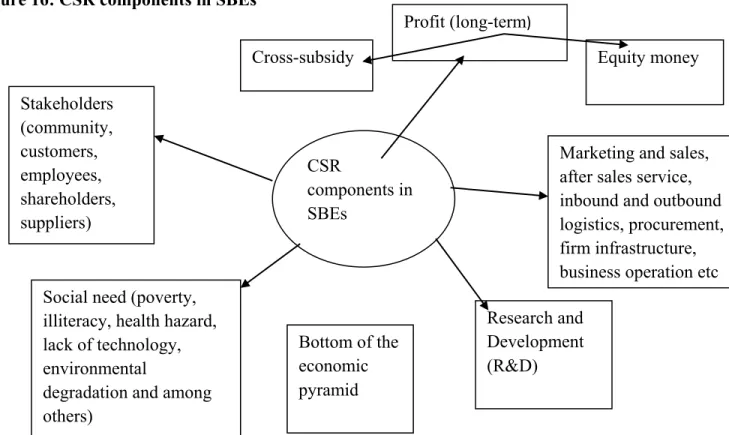
Figure 16: CSR components in SBEs………...79
Figure 17: Awareness of CSR as a social business terminology………..83
Figure 18: Understanding of the meaning of CSR……….84
Figure 19: Components of CSR……….85
Figure 20: Strategies for implementing CSR………..86
Figure 21: Community investment initiatives……….87
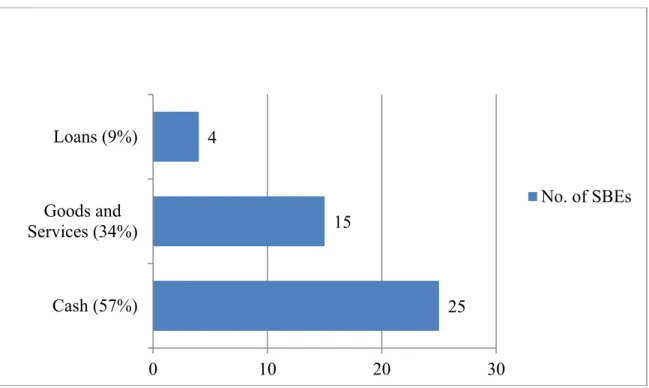
Figure 22: Resources given to promote CSR………..88
Figure 23: Award given for CSR activities………...89
Figure 24: Stakeholders to whom CSR report is given………90
Figure 25: Actions taken for raising awareness to CSR………..91
Figure 26: Incentives given to encourage employees and volunteers for CSR………...92
Figure 27: CSR practices focus on employee welfare and better work environment…………..93
Figure 28: Communication of CSR to various stakeholders………...94 viii
Figure 29: Adoption of CSR practices………..95
Figure 30: Benefits of CSR………96
Figure 31: Implementation of triple bottom line audit as part of CSR………..97
Figure 32: The companies board committee system ………106
Figure 33: Members of governing body in BRAC (number of person)………...115
Figure 34 : Members of governing body in Grameen family of companies ………..116
Figure 35: Composition of the board of BRAC………..120
Figure 36 : Composition of the board of the Grameen family of companies………...121
Figure 37: Organogram of Internal Audit Department of BRAC………...123
Figure 38: Way of getting company information publicly……….127
Figure 39: Job title………..139
Figure 40: Job description………140
Figure 41: Authority of the personal management section……….141
Figure 42: Processes of recruitment………142
Figure 43: Methods of employee selection………143
Figure 44: Applicant’s academic qualification……….144
Figure 45: Certificate and evidence in the selection process……….145
Figure 46: Employment types………146
Figure 47: Importance of job experience………..147
Figure 48: Required skills………...148
Figure 49: Training and education………...149
Figure 50: Components of employee compensation………....150
Figure 51: Process of employee placement………..151
Figure 52: Opportunities to buildup a career………..152
Figure 53: Role of employees performance appraisal………153
Figure 54: Incentives offered in the enterprises………..154
Figure 55: Recreational activities………..155
Figure 56: A systematic model of project management process………160
Figure 57: General framework of the project management ………...163 ix
Figure 58: Strategy for managing projects and programs………170
Figure 59: Criteria for collaborative projects with the government under Annual Development Plan or Five Year Plan………...171
Figure 60: Steps for implementing the new projects………172
Figure 61: Capital budget and budgetary control technique in the enterprise………..173
Figure 62: Performance evaluation system in the collaborative projects……….174
Figure 63: Areas of collaborative projects with the government and international business partners……….175
Figure 64: Project monitoring system………..176
Figure 65: Training place for the project development………177
Figure 66: The way of sharing projects with the government………..178
Figure 67: The financial source of the enterprises………179
List of tables
Table 1: Number of dissertations and theses containing the keyword “mixed methods”……13
Table 2: Contribution of the nonprofit sectors in the country’s GDP ………17
Table 3: List of BRAC SBEs……….20
Table 4: List of Grameen SBEs………. 25
Table 5: Some SB projects of GCC and their missions………70
Table 6: The number of foreign visitors to the Grameen SBEs in 2014-2015………100
Table 7: The number of visitors to the Grameen SBEs from the leading countries in the world until 2015………...101
Table 8: Chief executive’s salary and fees of Grameen Bank-2015………125
Table 9: Validity of the hypotheses………...192
Table 10: Findings of mission statement in SBEs (N=44)……….………262
Table 11: Findings of Corporate Social Responsibility (CSR) in SBEs (N=44)…………..264
Table 12: Findings of the Corporate Governance(CG) system in SBEs (N-44)…….. …….268
Table 13: Findings of Human Resource Management (HRM) in SBE (N=44) ...271
Table 14: Findings of Project Management and Implementation (PMI) in SBEs (N=44)...274
List of Acronyms and Abbreviations
ADP Annual Development Plan
AAF Ayesha Abed Foundation
APEDA Agriculture and Processed food Export Development Authority
AGM Annual General Meeting
BOT Build–Operate–Transfer
BEI Bangladesh Enterprise Institute
BoP Bottom of the Pyramid
BGMEA Bangladesh Garment Manufacturers and Exporters Association BASF Badische Anilin- und Soda-Fabrik
BRAC Building Resources across Communities
CSR Corporate Social Responsibility
CV Curriculum Vitae
CG Corporate Governance
CB Conventional Business
EPZ Export Processing Zone
FD Foreign Donation
FDI Foreign Direct Investment
GCC Global Communication Center
GDP Gross Domestic Product
GED General Economic Division
GNP Gross National Product
HELP Higher Education Loan Program
HRM Human Resource Management
HRPP Human Resource Policies and Procedures
HRD Human Resource Department
IT Information Technology
INGO International Non-governmental Organization
IGVGD Income Generation for Vulnerable Groups Development
ICT Information and Communication Technology
IROP International Researchers Opportunity Program JICA Japan International Cooperation Agency
LLIN Long Lasting Insecticidal Nets
MD Managing director
MDGs Millennium Development Goals
MFIs Micro Finance Institutions
NSI National Security Intelligence
NWTF Negros Women for Tomorrow Foundation
NGOs Non-Governmental Organizations
NPOs Non-profit Organizations
PCD Policy and Communications Development
PRL Pre-Retirement Leave
PMI Project Management and Implementation
RMG Ready-made Garment
R & D Research and Development
RJSC Registrar of Joint Stock Companies
RDA Recruitment, Deployment, and Appointment
SOE State Owned Enterprise
SII Social Information Infrastructure
SHE Sexual Harassment Elimination
SDGs Sustainable Development Goals
SB Social Business
SBRC Social Business Research Center
SBEs Social Business Enterprises
TIN Taxpayers’ Identification Number
TBL Triple Bottom Line
UCEP Underprivileged Children’s Educational Program
VAT Value Added Tax
VGD Vulnerable Groups Development
VCIP Village Computer and Internet Program WISE Work Integration Social Enterprise
WHO World Health Organization
WTO World Trade Organization
WFP World Food Programme
1
Chapter 1: Introduction I) Background of the study
This research contributes to a) explore on social business (SB) as a distinctive kind of business corporation, b) examine a group of management practices in order to understand how SB management practices are similar and different from management practices of conventional business (CB), and c) find out management strategy and structure of BRAC and Grameen SBEs in Bangladesh. The appeal point is that the study focuses on a group of management practices in SBEs in Bangladesh, particularly five management practices, namely, mission statement, corporate social responsibility (CSR), corporate governance (CG), human resource management (HRM), and project management and implementation (PMI).
II) Statement of the problem
SB has become a buzz word currently in international business management development
discourse. The study aims to examine the characteristic features of the management practices of SBEs in Bangladesh. However, in the context of Bangladesh, the problem of management practices in SBEs is that very few research activities were done to articulate their styles, strengths, issues, and weaknesses. The various aspects of management practices in SBEs and their similarities and differences are needed to be studied to fill up the existing research gap on this rapidly expanding sector. The lack of attention in examining various aspects of management practices in SBEs has led to the following main research question of what are the main characteristics of the management practices of SBEs in Bangladesh.
III) Objectives of the research
In order to address the research question the study will be conducted to achieve the following objectives: 1) to find out the various components which make up the mission statements and identify their business performance, 2) to examine the nature of CSR in the SBEs and how it functions in these enterprises, 3) to identify the distinctive feature of CG system in SBEs by providing a detailed picture and updated information about this issue, 4) to explore the characteristic features of HRM in the SBEs, and 5) to analyze management strategies in the area of PMI in SBEs. In order to achieve these objectives a mixed research method is used. On the basis of the existing research and literature review the overall hypothesis of this research is that:
2
probably management practices of SBEs are similar to management practices of conventional businesses in this country.
The study is divided into five chapters such as introduction (chapter 1), research organization and methodology (chapter 2), Literature review (chapter 3), examination of SBEs management practices (chapter 4) and conclusion (chapter 5). In order to understand the five selected management practices chapter 4 is divided into five sections namely, mission statement in SBEs (section 1), CSR in SBEs (section 2), CG in SBEs (section 3), HRM in SBEs (section 4) and PMI in SBEs (section 5) .
IV) Definition of SB
The concept of SB emerged in the late 1990s (Jager, 2010, 25). SB practitioners, activists in world follow two patterns of definition, one is USA patterns and another is European patterns. To understand SB globally, this study is divided SB concept into three perspectives: a) American perspective, b) European perspective, and c) Bangladesh perspective. Details are given below:
a) American perspective
In fact, in the case of USA, SB belongs to nonprofit sector, and Salamon et.al (1999) classified these nonprofit sectors into five, such as: i) organizations: those who have institutional existence, strategy, and structure. ii) private: institutionally separate from the state. iii) not profit distributing: these nonprofit lead to non-dividend performance, one example is SBE. iv) self-governing: it indicates fundamentally self-control institutions. v) voluntary: here, legal membership is not necessary, members can spend their time and money for voluntary contribution. Similarly, these nonprofit sectors can undertake different kind of activities include i) culture, ii) education and research, iii) health, iv) social services, v) environment, vi) development, vii) civic and advocacy, viii) philanthropy, ix) international, x) religious congregations, xi) business and professional, unions and xii) others (Salamon et.al 1999, 3-7). According to Salamon (1994) “nonprofit sector is not dedicated to distributing profits to shareholders or directors, pursuing public purposes outside the formal apparatus of the state. Moreover, there are different kinds of nonprofit sectors in world which provides various activities globally. Furthermore, it is not easy to describe their global upsurge due to lack of systematic data, various organizational terms and functions as well. On the other hand, the definitional problems of the nonprofit sectors derive from various national as well as legal
3
structure of different countries where some countries leading charitable or nonprofit organization. Similarly, others do so partially or not at all.
Drucker (1990) stated that nonprofit sector aims at bringing change in individuals and in society as well as nonprofits serve the individual the ability to perform and to achieve. However, he argued nonprofits face different challenges: firstly to convert donors into contributors and secondly to give community and common purpose. Drucker (1990) emphasized that a nonprofit institution gives people a sense of community, find out purpose, and show the direction for various types of nonprofit organizations in the USA.
Oster (1995) stated that the non-distribution constraint is a provision of the law of nonprofits which refrain from distributing their net earnings to those in control of the organizations. Ott (2001) mentioned that in the case of nonprofit sector making money is necessary but not primary. Here, achieving other ends comes first and revenues consider as resources, not the end purposes. Briefly, in the case of USA SB belong to nonprofit sectors and nonprofit sectors are not dedicated to distributing profit its stakeholders.
b) European perspective
In the case of Europe SB launched in the 1980s led by civil-society actors, social workers, and in particular third sectors namely Caritas, Diakonie and among others (Kerlin, 2006). The government of the United Kingdom (UK) stated that “a social enterprise is a business with primarily social objectives whose surpluses are principally reinvested for that purpose in the business or in the community, rather than being driven by the need to maximize profit for shareholders and owners”(Jezard and Master-Coles, 2010).
To comprehend SB Jones and Keogh (2006) focused on Birmingham Social Economy Consortium’s definition and mentioned that according to Birmingham Social Economy Consortium (2001) SBEs are not-for-profit organizations inclusion social objectives serves economic and business activities, legally ensure that business properties will not own by individuals and establish trust for the benefits of people and places that are connected with enterprise’s social objectives. Moreover, SBE belongs to cooperative organizational structure emphasis on member’s equal rights.
Furthermore, Jager (2010) stated that SBs are tightly coupled to markets and civil societies, support communal solidarity, and allocate resources to meet social needs. Faber (2013) stated
4
that SB set up a common platform for the public sector, private sector, as well as NGOs emphasis on work jointly for solving social problems. He added that SBE practices collaboration, creativity, and co-creation for the solution of social problems.
Kerlin (2006) showed the difference between USA and European patterns of SB and mentioned that USA SB put emphasis on revenue generation where European SB focuses on the social benefit. Moreover, in the case of USA organization type of SB is nonprofit. In contrast most common organization types of SB in Europe are associations and cooperatives. It can be dividend business or it can be non dividend business.
c) Bangladesh perspective
In the context of Bangladesh, this study examines Yunus’s “non-loss, non-dividend” SB theory. Noble laureate Professor Muhammad Yunus, who is the founder of the Grameen Bank and its microcredit activities and won the 2006 Nobel Peace Prize, is known one of the pioneer of SB development arena in world. Yunus introduced SB as a new form of capitalism through his non-loss, non-dividend theory which has been adopted by many leading world businesses such as BASF, Intel, DANONE, Veolia, Adidas, Toyota, UNIQLO, and among others, as well as many new entrepreneurs and social activists all over the world.
In order to understand Yunus theory the study focuses on Yunus SB concept in details, attempt to find out drawbacks of the concept, and suggest how to overcome the drawbacks. According to Yunus (2010) Social businesses (SBs) are non-loss, non-dividend business companies which dedicated to solving social problems. In addition business owners will reinvest all profits in expanding and improving the businesses. In fact, Yunus divided SBs as two categories such as (a) Type-I belong to non-loss, non-dividend SB (i.e. Grameen Dannone, Grameen Veolia to name a few) and (b) Type-II SB is a profit-making company owned by poor people, either directly or through a trust that is dedicated to a predefined social cause. (i.e. Grameen bank). Yunus Center (2017) confirms the cycle of SB is given below. To comprehend the cycle of SB in Bangladesh the study will focus Grameen Phone case in chapter 4, section 1.
5 Figure: 1 Cycle of Social Business (SB)
Initial investment Reinvestment
Return on initial investment
Source: Yunus Center 2017
The figure shows that the way of using profit makes the differences between SB and traditional businesses. Yunus (2010) mentioned that SB is a profitable business and profit will use for business expansion. Moreover, he added that SB has owner not donor which is distinctly different from SB concept in other parts of the world.
Yunus (2010) makes it clear that SB has seven principles as follows: i) SB has social
objectives. SB attempt to overcome poverty, illiteracy, health hazards, and access to technology and among others, ii) SBEs are financially and economically sustainable, iii) in SB investors can receive only their investment amount due to its non-dividend characteristics, iv) business profit is used for business expansion and improvement, v) SB is concerned for environment, vi) SB must pay standard market wage with better working conditions for workforce, and vii) all stakeholders must engage in their work with joy and happiness.
Yunus stated that (2008) SB is not a hybrid organization. However, some scholars (Haugh, 2006, Defourny and Nyssens 2012, Battilana, Lee, et. al 2012) have argued that SB is a form of hybrid organizations of a profit-maximizing business with social objectives. The concept of hybrid organization refers to an organization which combines traditional for-profit and not-for-profit organizations, pursuing social goals by engaging in commercial activities to generate revenue for their operational project (Battilana, Lee, et. al 2012). Moreover, Battilana et al. (2012) stated that hybrid organizations merge with the social logic of nonprofit organizations and commercial logic of conventional businesses. In addition, Battilana et.al (2012) argued that
Investment Product Identifying a social need Profit Sales
6
revenue-generating hybrid organizations with social goals are increasingly common in different sectors though they face many difficulties.
In contrast, Yunus (2008) disagrees with the people who believe that SBs are hybrid organizations. Yunus (2008) makes clear that profit maximizing businesses are interested to make profits for individuals, while on the other hand SB works for achieving some social goals and personal benefit is not allowed in the SB area. Therefore, it would be better to think of two pure business models, one being the profit-maximizing model and the other SB model.
However, the limitations of the Yunus SB definition are that in spite of Yunus (2010) stated that SB is a profitable business and profit will use for business expansion, but it is found that many SBs still struggle to become a profitable business. One example is Grameen Veolia. The study is found that Grameen Veolia could not meet yet primary business objective (non-loss operation). Consequently, due to lack of profits, repayment of initial investment is not possible until now, and reinvestment of additional surplus far from the initial projects.
Moreover, the study is found that many employees of SBEs don’t have any basic idea about business management practices (i.e. mission statement, CSR, HRM, CG, PMI and among others). Furthermore, not only Yunus, many scholars as well who focus on SB issue, did not mention anything in the principles of SB in terms of business management practices which is very crucial to run on a business. It is very clear that Yunus SB theory still in the struggle to set up practically in Bangladesh. To full fill these gaps SB needs a second definition: SB is a non-dividend business that promotes a new form of capitalism ranging from rich to poor based on explicit management practices to understand various aspects of business management aimed at contribution to welfare in world society through business venture.
7
Chapter 2: Research Organization and Methodology I) Introduction
This section addresses research organization and methodology of the study. In general,
research methodology is the fundamental theoretical analysis of the research methods which are used to analyze and interpret research data. A methodology is considered as a general research strategy which is different from research method. Instead, research methodology refers to the theoretical analysis for understanding which methods or set of methods will be employed to a particular study or to calculate research results (Howell 2013). In fact, the major components of methodology includes research publications, interviews, surveys, and other research techniques, namely qualitative and quantitative analysis and also includes current and historical background of the focus.
In order to analyze and interpret research data the way of research organization and methodology for this study is as follows:
II) Research organization
As the study aims to provide a detailed picture of the characteristics feature of five
management practices namely corporate mission, CSR, CG, HRM, and project management and PMI in SBEs of Bangladesh, the mixed method is used as its main research tool. In order to achieve this objective a questionnaire survey and an unstructured interview was conducted on 44 selected SBEs of BRAC and Grameen family of companies in March, 2017. In fact, this research is carried out on seventy one aspects of the above five management practices. In details, these seventy one aspects are mentioned as follow:
To find out the various components which make up the mission statements of SBEs in Bangladesh and identify their business performance, this research has envisioned to find out eight aspects of mission statement, namely 1) topic of mission statement, 2) multiple goals of mission statement, 3) translate mission into action, 4) communication of mission, 5) major focuses, 6) review of mission, 7) activities to increase employee’s morale and dedication, and 8) motivating employees through collective work.
To examine the nature of CSR in SBEs of Bangladesh, this research investigates the following fifteen aspects of CSR in these SBEs, namely 1) awareness of CSR as a social
8
strategies for implementing CSR, 5) community investment initiatives, 6) resources given to promote CSR, 7) awards given for promoting CSR activities, 8) stakeholders to whom CSR report is given, 9) actions taken for raising awareness to CSR, 10) incentives given to encourage employees and volunteers for promoting CSR, 11) CSR practices focus on employee welfare and better work environment, 12) communication of CSR to various stakeholders, 13) adoption of CSR practices, 14) benefits of CSR, and 15) implementation of triple bottom line audit as part of CSR.
To identify the distinctive feature of CG system in SBEs the study examines twenty one aspects namely, 1) members of the board, 2) tenure of office (No. of years), 3) committee as an adjunct to the bord, 4) composition of the board, 5) mechanism for rotating board members, 6) method of replacement a member of the board, 7) members of audit committee, 8) procedure for the internal and external audit, 9) audit committee report for internal audit functions, 10) mandatory preparation for internal audit plan, 11) remuneration policy for board members, 12) disclosure of remuneration of individual board members and senior management, 13) set of a quorum for meetings of the board, 14) duration of board and sub-committee meetings, 15) way of getting company information publicly, 16) information discloser policy, 17) type of information disclosed to the public, 18) information provided to the board of directors in advance of board meetings, 19) information revealed to shareholders in advance of the Annual General Meeting (AGM), 20) recording minutes of meetings, 21) A review to ensure that actions decided at meetings have been implemented.
To examine the characteristic features of HRM in the SBEs of Bangladesh seventeen aspects of HRM was undertaken included 1) job title, 2) job description, 3) authority of the personal management section, 4) processes of recruitment, 5) methods of employee selection, 6) applicant’s academic qualification, 7) certificate and evidence in the selection process, 8) employment types, 9) importance of job experience, 10) required skills, 11) training and education, 12) components of employee compensation, 13) process of employee placement, 14) opportunities to build up a career, 15) role of employee’s performance appraisal, 16) incentives offered in the enterprises, and 17) recreational activities.
To analyze management strategy in terms of the principles and practices of PMI in SBEs of Bangladesh ten aspects were examined, namely 1) strategy for managing projects and programs,
9
2) criteria for collaborative projects with the government under annual development plan or Five Year Plan, 3) steps for implementing the new projects, 4) capital budget and budgetary control technique in the enterprise, 5) performance evaluation system in the collaborative projects, 6) areas of the collaborative projects with the government and international business partners, 7) project monitoring system, 8) training place for the project development, 9) the way of sharing projects with the government, and 10) the financial source of the enterprises.
A mixed method―qualitative and quantitative analysis is used for data analysis and interpretation in this research in order to find out the level of frequency in each item. Percentages were then calculated. Finally, a quantitative inference was used to determine the nature and role of management practices in the sample SBEs. By following qualitative method the study focused on many cases of SBEs in order to comprehend research findings.
III) Types of research methods
Many scholars (Hedrick, Bickman, and Rog 1993, Creswell 2002, Denzin and Lincoln 2005, Bryman 2008, Olsen and Pedersen 2008 to name a few) work on research methods and it is found that research methods can be divided into many ways. Some are given below:
i) Basic research: this method is known as basic, pure, or fundamental which aims to expand
human’s knowledge, but not to run for discovering something through the study. It can be exploratory, descriptive, or explanatory. Here, explanatory research is the most common. Generally, this research is done for human welfare, animal welfare, and plant kingdom welfare. Travers (1969) mentioned that basic research method is tried to figure out an organized body of scientific knowledge and not expected to produce immediate result of the research.
ii) Applied research: this research focuses on solving particular problems rather than to acquire
knowledge through research. The main objective of this research method is to improve human living condition. It is found that applied research method is a way of using scientific knowledge to solve practical problems. For example to find out the way of improving agricultural crop production or invent medicine to prevent some specific disease. In general, this research is conducted on a large scale basis and is expensive. In fact, applied research is often conducted by the financial support of the national government, public corporation, World Bank, and among others.
10
iii) Problem oriented research: this research is conducted by industry apex body aims to solve
problems that are facing all business companies. It is found that World Trade Organization (WTO) promotes problem oriented research in the third world countries. One example is India Agriculture and Processed food Export Development Authority (APEDA) conducts regular research for the benefit of the agro-industry. Here, researchers are identified the exact nature of the problem which is needed to be solved. In fact, problem seems to be a decision making dilemma or researchers consider that it is necessary to tackle a particular business condition. It might be a difficulty or an opportunity for the researchers.
iv) Problem solving research: this research is conducted by an individual company who are
sought to solve problems that they faced. For example if a company conducts a research to find out customer satisfaction level it would be problem solving research. The main purpose of this research is to find out some solution for some pressing practical problems of one company.
v) Qualitative research: this method addresses non-numerical techniques of research
organization based on the survey of research literatures, published and unpublished documents, interviews, discussions, open-ended responses, participant’s observations, field notes, or reflections which are related to research topic. Qualitative research is much more subjective and can be divided into following ways: a) phenomenology: this concept addresses understandings which come from one or more individual’s point of view and phenomenology is related to other key disciplines in philosophy namely ontology, epistemology, logic, and ethics. One example is we can arrange interview of 20 war victims of Bangladesh to understand genocide during the independent war in 1971. b) ethnography: this kind of research focuses on the culture of a group of people. For example, to understand the tribal life in Andaman Island, researcher can go there and live with them to study their culture and living style. c) case study: this research provides a detailed picture of one or more cases. For example researcher can bring the similar case to understand his/her arguments in details. d) grounded theory: it operates inductively instead of hypothetical-deductive approach. In fact, this research is based on observations of data from which it was developed. It depends on different types of data sources included quantitative data, review of records, interviews, observation and surveys. e) historical research: this concept allows to describe past events in the context of the current issue. It pursue to write literature review in one dissertation.
11
vi) Quantitative research: This method consisting of numeric figures, test hypothesis, focuses
on cause-and-effect and make prediction. The main quantitative techniques are as follows: a) experiments, b) surveys, c) content analysis, and d) using existing statistics and numbers. Quantitative research emphasizes objectivity and explores statistical significance of the research findings.
vii) Mixed method research: This method applied in conducting research using both
quantitative and qualitative data. This approach is used when researchers think that the integration of quantitative and qualitative data will provide better understanding of the research instead of using either quantitative or qualitative method each alone. Basically, quantitative data include close-end information concentrated on statistical analysis along with result in a numerical mechanism. In contrast, qualitative data include open-end information and data collected through words or other non-numerical elements. Finally, data are analyzed and interpreted on the basis of this non-numerical technique. For example, a researcher may conduct an interview to know details about one topic and after that quantitative inferences can be used to authenticate the research data which will make research stronger.
IV) The rationales of choosing a mixed method research
This study follows mixed method - qualitative and quantitative analysis to analyze and interpret research data. The reason is that SB is a new concept in the business area and is still in the formative stage. Therefore, research data is not sufficient to analyze by using either a purely qualitative or a purely quantitative method. It is evident that a mixed method is a combined method of qualitative and quantitative analysis and can provide more evidence to authenticate research arguments. Moreover, mixed method allows both words and numbers to analyze research findings which is an appeal point for the wider audience. In addition, it is also reduced the personal biases of the researchers.
Currently, a huge number of researchers practice mixed method to pursue research. However, initially mixed method is found since the 1950s and formally used in the late 1980s (Creswell 2003, Creswell and Plano clark 2007, Dunning, Williams, Abonyi, and Crooks 2008). Hurmerinta-Peltomaki and Nummela (2006) examine the value of mixed methods in the business area through reviewing published documents and found that mixed methods added value in light of increasing validity of the research data through statistical analysis, exploring secondary data,
12
and focusing on knowledge creation. Hurmerinta-Peltomaki and Nummela (2006) examine that use a mixed method analysis supports to gain a deeper, broader understanding of the facts in comparison with the qualitative or quantitative method. Another study in the business field is found that mixed method research is able to give more citations which makes mixed method more valuable than studies which do not use mixed method (Molina-Azorin, 2011).
Mixed method is the integration component which gives researchers more confidence to figure out research result and conclusion (O’Cathain, Murphy, and Nicholl 2010). In addition researchers mention that mixed method research is the only way for certain findings (Sieber 1973) and interpretation (Morse and Chung 2003).
V) Challenges of mixed method research
Critiques draw attention that mixed method consumes more time because of the integration of two different kinds of data (Creswell and Clark 2011). Moreover, it is found that in some cases researchers need additional fund and resources to collect both types of data, and require more time and space to take interview of the participants or conduct a survey. In addition, mixed method demand vast knowledge of both qualitative and quantitative methodologies and many researchers face problems due to lack of knowledge.
VI) Conclusion
Though mixed method goes through many difficulties, researchers attempt to find out the
rationales and strengths of using a mixed method. Mckim (2017) examines the perceived value of mixed methods research for graduate students and shows that a huge number of dissertations and thesis containing the key words “mixed methods”.
13
Table 1: Number of dissertations and theses containing the keyword “mixed methods”
Year range Number
2010-2013 2,538 2005-2009 2,524 2000-2004 532 1995-1999 100 1990-1994 26 1985-1989 17 1980-1984 3
Note: This research was conducted in 2014 using the search engine “Pro quest”. Recently time frame includes only four years while the others include five years.
Briefly, mixed method promotes the more evidence and the better argument. It is found that sometimes mixed method research requires additional resource, time, and space. However, it is evident that mixed method research is an integrated form of quantitative and qualitative methods and help to find out more authenticated data than using only quantitative or qualitative method.
14
Chapter 3: Literature review I. Introduction
SB originated in the co-operative movement first founded in the 19th century in England by socialist Robert Owen (Yunus, 2008, 35), who is considered the father of the co-operative movement. Robert Owen was a capitalist but believed in worker control, and set out his three lines of development in 1829. Three development programs were “education, store keeping, and production” in the heart of the Owenism (Bloy, 2013). In the beginning, the concept of the three lines of development was not successful, but later they became well-organized particular in 1844 when the Rochdale Pioneers was established. Jager (2010) also mentioned that the origin of SB is cooperatives and stated following chronology to show the SB origin a) cooperatives (mid-1800). b) fair trade (1940-1950) c) community development cooperation (1970s) d) social firms (1970s) e) nonprofits (1980s) and f) social business enterprise (1990s) (Jager, 2010, 24). Details are given below:
a) Cooperatives (mid-1800)
In 1844 the first co-operative organization in world, called the Rochdale Society of Equitable
Pioneers, was founded in England with capital of £28 collected from the 28 founding members, half of whom were weavers. It is found that other co-operatives are also followed them and it became the pioneer of co-operatives in Great Britain. During the industrial revolution, thousands of tradesmen fell into poverty due to the mechanization of work and decided to start combined food businesses so they could afford to buy their own foods. Finally Rochdale Pioneers launched a store with some selected necessary food items such as butter, sugar, flour, oatmeal, and candles. Within twelve weeks, they extended their business by including tea and tobacco, and very quickly they established a successful business with high quality products. (Fairbrain 1994). The Rochdale Pioneers were famous for their principles that were designed from the lessons they learned from their many previous failed attempts at co-operation. The principles are a set of distinctive characteristics of co-operation that are now followed by all co-ops around the world. The Rochdale principles were approved by the International Co-operative Alliance (ICA) in 1937 and developed the updated version of Rochdale principles in 1966. Finally, in 1995 the Rochdale principles were adopted as the cooperative principles (ICA, 2011).
15
The Rochdale principles today well-known as cooperative principles (Fairbrain 1994, Macpherson 1996) in world are as follows: Firstly, co-operatives encouraged voluntary participation that is open to all without consideration of gender, social, racial, political and religious view. Secondly, democratic member control which means all members are equally treated in the decision making system following the one member, one vote policy in the primary level, and other levels also followed democratic principles. Thirdly, Rochdale principle affirms co-operative members economic participation and power of decision making. All members democratically and equally participate in raising funds which are common property of the co-operatives, and members usually get a little amount of remuneration and all surpluses will be used for developing the co-operatives. Fourthly, co-operatives societies must be autonomous and independent. Even if co-operatives work with other partner organizations, they always make decision by themselves and maintain their autonomy and independence. Fifthly, giving support for education, training and information which make sure that co-operatives will provide education and training for their members, as well as people in the society, and they will give information about co-operation to the public. Sixthly, co-operation among co-operatives means co-operative societies should co-operate with each other and all co-operatives will work together for achieving their goals. Seventhly, concern for the community means peoples should benefit from co-operatives decisions and co-operatives will work for their community’s development. All of these are the key features of the present co-operative societies in world, and by following these seven principles co-operatives activities are established in all European countries, particularly in the UK and currently, there are approximately 7,000 independent cooperative businesses.
b) Fair Trade (1940-1950)
In the 1940s at first USA introduced the fair trade concept in the globe. Fair trade initiates a
social movement through businesses aim at export in particular products or commodities from developing countries to developed countries for helping producers in the south. Fair trade products also consumed in domestic markets namely Brazil, India, Bangladesh, and most notably fair trade products are as follows: handicrafts, coffee, cocoa, wine, sugar, fresh fruit, chocolate, flowers to name a few.
16
In 1946, an American woman named Edna Ruth Byler imported needle crafts from low-income women in Puerto Rico; and spread out her business concept in Europe, launched “Ten Thousand Villages” which is well-known as first fair trade organization in world. Fair trade promotes the concept distribution of wealth equally between nations and believes that buying products through fair price from developing countries is more effective to promote sustainable development than traditional charity or aid (Fair Trade Resource Network (2014).
c) Community development cooperation (1970s)
Community development concept evolved in the U.S.A in 1970s aimed at improved America’s ‘back ward” localities. During that moment, many anti-poverty programs are taken by both developed and developing countries in world. Community development practitioners namely American community organizer Saul Alinsky (Rules for Radicals) influenced people to fight against inequalities in the distribution of wealth, income, land, and among others as well as focused on political power to establish people power for changing society (Hoffman, 2012). The concept of community development cooperation emphasis on member’s collective action to solve community’s problems. There are many different approaches to community development such as women self-help group, community capacity building, large group of unemployed or semi-employed participants, those who have lower level of literacy, social capital formation, economic development, community economic development, sustainable development, community-driven development, Asset–based community development, faith-based community development, community-based participatory research, community organizing, participatory planning, language-based development to name a few (Craig, 2014).
d) Social firms (1970s)
The concept of social firm is well-known as a British term indicates on work integration social enterprise (WISE), which aims at creating job opportunities in the labor-market for the people of disable or disadvantaged group. Initially, this term well-known in the 1970s in U.K. later, it is spread out all over the Europe. The special characteristics of social firms are as follows: i) social firm’s work for disable or disadvantaged groups, ii) social firm is a business organization focuses on market-oriented goods and services to pursue its social goal and more than 50 percent income of social firms come from trade, iii) At least 30 percent of employees of social firms are disable people, iv) Regardless of product capacity all worker is paid a fair market
17
rate wage, v) disadvantaged and non-disadvantaged both people are getting equal opportunities in the working place (Social Firms Europe CEFEC, 2017).
e) Non profits (1980s)
In the 1980s, a large number of social institutions explored in worldwide from north to south and even post-socialist worlds includes the US, the UK, France, Germany, Italy, Sweden, Japan, India, Bangladesh, Brazil, Egypt, Thailand, Ghana, Hungary and among others, known as the “nonprofit”, the “voluntary”, the “civil society”, the “third”, or the “independent” sector. The entities of these social institutions are as follows: hospitals, universities, social clubs, professional organizations, day care centers, environmental groups, family counseling agencies, sports club, job training centers, human rights organizations to name a few. Salamon et.al (1999) show the following result (Table 1).
Table 2: Contribution of the nonprofit sectors in the country’s Gross Domestic Product (GDP)
Country GDP (Trillion $) USA 7.2 Japan 5.1 China 2.8 Germany 2.2 France 1.5 U.K. 1.1 Italy 1.1
Salamon (1994) stated that in 1982 a survey of nonprofit human service organizations found that 65 percent of 16 American communities established since 1960. In the case of France 54,000 private associations created only in the 1987 which contrast to 1960s there approximately 11,000 associations were built per year. Current research showed that 275,000 charities income
18
performed five percent of gross national product (GNP). In 1985, a survey conducted in Italy showed that 40 percent of nonprofit organizations launched in 1977.
Japan initiated nonprofit sectors in the late 1980s to the early 1990s in particular when established NPO law named law to promote specified nonprofit activities in 1998. In January, 1995, the Great Hanshin Earthquake inspired citizens got involved in social activities in the earth quake zone and created the situation to establish NPO law. A survey of 2015 found that there are 50,000 nonprofit sectors (NPOs) in Japan running on twenty different types of activities (Japan NPO Center, 2017).
This phenomenon has been also viewed in developing world, in Bangladesh, there are about 10,000 registered nongovernmental organizations, 21000 nonprofit found in the Philippines, in the case of Chile there are approximately 27,000 nonprofit organizations, as well as 2000 in Argentina, in 1970s 30 percent of Kenya’s capital development has came from Harambee movement which initiated a large number of development projects. In developing world, currently, 4,600 western voluntary organization giving support 20,000 indigenous nongovernmental organizations (Salamon, 1994, 4-5).
f) SBEs (1990s)
In the early 1990s Nonprofit sectors realized that commercial revenue is a way of replacing government and donor fund and started business use the term SBE to change society. In the case of USA social enterprise alliance identified as 30 sectors of activities namely community economic development, biomedical, alternative trade and development, media and communications, a huge number of stakeholders engaged in services, managing from advocacy to disaster assistances, health, homelessness and housing, poverty and immigration, civil and human rights, substance abuse, sports and recreation and among others. Defourny and Nyssens (2012) argued that in Europe social enterprises are at the crossroads of the cooperative and nonprofit sectors.
II) Literature on SBEs in Bangladesh
In the case of Bangladesh non-profit sectors can be divided into three phases. The first phase is the religious faith based social organizations which focused on upgrade socio-religious view of the citizens. Before 1947, India, Pakistan, and Bangladesh together were known as British India. During that time Christian missions, Muslim khankasharif or peer astana, Hindu ashram, Budda
19
vihara (Buddhist monastery) focused on spiritual serves and religious based education considered are the pioneer of the NGO/NPO in Bangladesh. The second phase is the small voluntary organizations worked for the particular target group. Some of these organizations also known as cooperative association mainly farmer`s associations. Before 1972, Bangladesh was known as East Pakistan; a province of Pakistan, and there were very few voluntary organizations namely Haji Muhammad Mahasin Foundation, The Aga Khan Foundation, The Kumudini Foundation to name a few. The third phase is the NGO stepped in small scale activities in Bangladesh and gradually started SBEs aimed to decrease donor dependency of the organization. At first Building Resources across Communities (BRAC) precede SBEs aimed to decrease donor dependency from the organization (Khondaker, 2006).
Cooperative societies established under East Pakistan Academy of Rural Development (now BARD), called Comilla Model in 1959, by Akhter Hamid Khan was the pioneer of cooperative movement in Bangladesh. The academy was founded to provide training for both officials and non-official members of the public and private sector those are working on rural development as well as nationally and internationally famous for its evolved model “Comilla Approach to Rural Development” (BARD 2015).
In Bangladesh, after the Independent War in 1971, many national and international NGOs started cooperative credit. Introduced by the British, it is considered a legacy of credit-based social policy intervention, as are microfinance activities and BRAC played a leading role to introduce microfinance activities in the rural area of Bangladesh. Fazle Hasan Abed, founded BRAC in 1972 and started running its SBE in 1978 to decrease donor dependency. On the other hand, in 1976 Muhammad Yunus started an experimental financial research project aimed at helping the poor in particular poor rural women and in 1983 this research project introduced as a bank named Grameen Bank. The details of BRAC development programs, SBEs, and investment and Grameen microfinance initiatives, Grameen family of companies and SBs are given below:
a) BRAC development programs, SBEs, and investments
BRAC’s development programs, investments, and enterprises are strongly tied to supporting the livelihood of the poor. It established social enterprises to generate financial support to run development programs and to decrease donor dependency. Its enterprises approve 50 percent of profit use for development programs and 50 percent of profit are reinvested for business
20
development. The synergetic effect of this integrated model has contributed significantly to decrease BRAC’s donor dependency and increase self-sufficiency (BRAC Social Enterprises Booklet, 2012). Through its unique model and integrated operations, BRAC achieves five distinctive advantages across its enterprises: synergy, cross-collaboration, cross-subsidy, continuous innovation and holistic support. BRAC operates development programs namely agriculture and food security, community empowerment, disaster, environment and climate change, education, gender, justice and diversity, health, nutrition and population, human rights and legal aid services, integrated development program, microfinance, migration, targeting the ultra-poor, water, and sanitation and hygiene are funded from BRAC social enterprises and investments. According to BRAC’s Annual Report 2012, 74 percent of its total expenditure comes from those enterprises and micro investments (BRAC annual report 2012).
The unique model under which BRAC enterprises operate is completely home grown and list of SBEs under BRAC are as follows:
Table 3: List of BRAC SBEs
Name of BRAC SBEs Founded Purposes
1. BRAC Seed and Agro
Enterprise 1972 Focuses on supplying good quality agricultural products, perfect productions, and post-harvest technologies to increase production and decrease post-harvest losses to generate surplus for poor and marginal farmers.
2. BRAC Fisheries 1976 Aims to post war rehabilitation for unemployed people and make opportunities income generation. 3. BRAC Sericulture 1978 To support income generating activities for
impoverished women in Bangladesh.
4. Aarong 1978 To support silk farming for impoverished women in Bangladesh.
5. BRAC Cold Storage 1980 To provide better maintenance and quality of stored products, in particular storage of potatoes.
6. BRAC Artificial
21
7. BRAC Feed Mill 1996 To supply good quality feed at affordable prices for the small poultry farmers who are the owner of 50-100 chickens.
8. BRAC Dairy and Food
Project 1998 Aims to help rural dairy farmers. 9. BRAC Sanitary Napkin
and Delivery kit 1999 To deliver in the market hygienic sanitary napkin and delivery kit at affordable prices. 10. BRAC Salt 2001 Addressed iodine deficiency problem in
Bangladesh and also aims to motivate local salt farmers to progress their way of income generation. 11. BRAC Poultry 2003 To sell good quality of day-old chicks to rural
farmers at a lower prices compare to market price. 12. BRAC Tea Estates 2003 To ensure better life of the tea laborers while
producing tea to manage fund for BRAC’s development programs.
13. BRAC Chicken 2004 Works for poultry rearing as a source of income for the landless poor in particular destitute women. 14. BRAC Printing Pack 2005 Aims to ensure good quality of packaging of
products for BRAC SBEs. 15. BRAC Handmade
Paper 2009 Helps to reduce the amount of waste produce by BRAC, and takes steps against environment degradation.
Source: BRAC 2016
The study attempts to introduce fifteen prominent SBEs that BRAC has established and currently own and operate. These are BRAC Seed and Agro Enterprise, BRAC Fisheries, BRAC sericulture, Aarong, BRAC Cold Storage, BRAC Artificial Insemination, BRAC feed mill,
22
BRAC Dairy and Food Project, BRAC Sanitary Napkin and Delivery kit, BRAC salt, BRAC Poultry, BRAC Tea Estates, BRAC Chicken, BRAC Printing Pack, and BRAC Handmade Paper. BRAC Seed and Agro Enterprise was established in 1972 and is strongly engaged in agriculture sector since then. To deliver good quality of seeds for farmers, it has been marketing hybrid maize seeds since 1994 and hybrid rice seeds since 1998. It also started producing hybrid maize seeds in 1996-97, vegetable seeds in 1996, and hybrid rice seeds in 2001. It focuses on supplying good quality agricultural products, perfect production, and post-harvest technologies to increase production and decrease post-harvest losses to generate more surpluses for the poor and marginal farmers (BRAC 2016).
Established in 1976, BRAC Fisheries aimed at post-war rehabilitation of the unemployed people and created opportunities for income generation. Currently, this enterprise has 15 hatcheries in 10 locations of Bangladesh, generating surplus early BDT 32 million that goes into funding BRAC’s development program (BRAC 2016).
In 1978 BRAC initiated a sericulture project with the objective of supporting income generating activities for impoverished women. Called BRAC Sericulture, it produces silk yarn to sell only to their contracted weavers who are working at the Ayesha Abed Foundation (AAF), which is under the supervision of Aarong, a fashion retailer of BRAC. Therefore, employees of BRAC sericulture project, Ayesha Abed Foundation (AAF), and Aarong are closely connected with each other (BRAC 2016).
The fashion retailer Aarong is one of Bangladesh`s largest chain owned by BRAC and was established in 1978, when BRAC first began to support silk farming for impoverished women in Bangladesh. Today, Aarong supports 65,000 artisans, 85 percent of whom are women. It sells its product worldwide and is an example of how the poor, when organized properly, can generate a financial surplus to support vital development work (BRAC 2016).
BRAC Cold Storage was initiated in 1980 with the objective of providing better maintenance and quality of stored products, in particular storage of potatoes. Currently it provides services with a capacity of 60,000 bags (4,000 metric tons) for short-term storage at the charge of BDT 3 (USD 0.04) per kilogram of storage (BRAC 2016).
The BRAC Artificial Insemination project was initiated in 1987 partnering with the government of Bangladesh to serve better quality breeds of cows for rural poor. Today, this
23
enterprise has reached 61 districts in Bangladesh and inseminated a total of about 1.64 million cows by 2015. This contributes to the success of BRAC Dairy and Food project, producing the demand for milk in Bangladesh (BRAC 2016).
BRAC Feed Mills started its journey in 1996 and is addressed to supply good quality feed at affordable prices for the small poultry farmers who are the owner of 50-100 chickens. It fixed up its mash feed price for BDT 34-35 (approximately USD 0.42) per kilogram and its pellet feed for BDT 38 (USD 0.46) per kilogram which is lower than its competitor’s prices of around BDT 1-1.25. Hence, the farmers are benefited from both low cost and get facilities to rear healthier livestock (BRAC 2016).
The BRAC Dairy and Food Project was established in 1998 with the aim of helping dairy
farmers throughout rural Bangladesh. From its experience, BRAC found that most of the microfinance clients were interested in dairy farming in spite of many challenges, such as, poor breeding, limited veterinary services, shortages in cow feed, lack of market access, and proper refrigeration technologies. To get rid of these problems, this enterprise tries to secure market access for rural dairy farmers, encourage them to participate in cattle development and technical training program, give vaccination, and give other services as well. Today, 50,000 registered dairy farmers are working under this enterprise through its 101 chilling centres under the Aarong dairy brand. Though initially it produced 140,000 litres of milk per day, currently that has increased to 250,000 litres per day engaging approximately 1,500 employees and making it one of the largest enterprises of its kind within the country (BRAC 2016).
BRAC Sanitary Napkin and Delivery Kit was established in 1999 as ‘Kollani Delivery Kits’ to
deliver hygienic sanitary napkin and delivery kit at an affordable prices and was finally established as a SBE in 2004. Female members of the BRAC Ultra Poor Program employed in this project and sell products to the target groups, in particular poor village women, which play very crucial role to reduce maternal mortality rate. It dramatically increased safe birth in the remote areas of the country (BRAC 2016).
Established in 2001, BRAC Salt addressed iodine deficiency problem in Bangladesh and also aimed at motivating local salt farmers to improve their way of income generation. Eventually, production of high quality BRAC salt helped government to stop importing salt, serving salinity