CHAPTER 1 INTRODUCTION
Background of the Study
In the last few decades, international agencies have moved remarkably towards achieving sustainable water supplies for human well being. For instance, “Water for Thirsty Cities” (UNCHS, 1996), “International Drinking Water Supply and Sanitation Decade” (1981-1990), “Water for All Policy” (ADB, 2000), “Water for Life” (WWC, 2002), “World Water Forum” (1997, 2000, 2003, 2005), etc. are some of the projects undertaken by countries and communities in different parts of the world. Water is recognized as the basic ingredient of food production, a moderator of economic development, and an essential element for the healthy functioning of all the world’s ecosystems. Indeed, having sufficient, safe, and clean water is one of the essentials of a human being’s healthy life.
Growing population, urbanization, industrialization, and the whirlwind pace of globalization has led to change in today’s world. They have produced a greater impact on people lives and the precious natural resources, particularly “water”. Approximately 97% of the water on the earth is saline, located in the oceans and seas. Less than 3% of the water resources in the world are fresh water. Approximately 69% of fresh water is stored in glaciers and ice caps and cannot be readily used, 30 % is stored in ground water, and less than 1% is found in rivers and lakes, which is easily available for use as fresh water on earth (Shiklomanov, 1993).
Issues related to water sustainability are of major interest locally and globally. This has created an increasing international trend towards studying water sustainability. This is especially true in areas with increasing water shortage due to natural phenomena
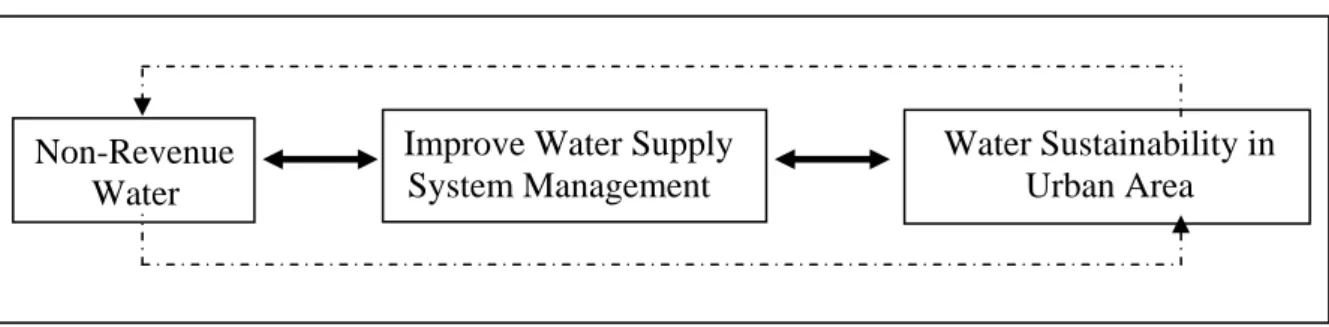
or rapid development, while water loss is unavoidable in every water utility. Locally, the Government, water authorities and consumers have become increasingly concerned over the state of national water loss and the slow progress of water utilities towards reducing or managing issues into water loss or non-revenue water (NRW) levels. Non-revenue water seriously affects the financial viability of water utilities and importantly threatens the water supply sustainability. Thus, we have to consider new approaches for water sustainability in urban water supply systems.
Traditionally, the local or municipal authorities (town, city) are responsible for providing public water needs, disposal of wastewaters, and the control of water pollution. However, many governments or city authorities have failed to fulfill people’s needs due to the inability to cope with the increasing demand of water. Other agencies of government, businesses, and the general community need to be more involved and participate. They must actively participate in the solutions by modifying their behavior patterns in water supply management, particularly in reducing water loss or non-revenue water management in both water authorities and water users. Therefore, to meet urgent needs in the urban water sector and to manage water sustainability in the urban context more efficiently, countries are starting to reconsider and modify accordingly their current approaches to the formulation and implementation on water loss or non-revenue water reducing policies and action programs.
In the City of Yangon, water supply and any water supply related matter are the responsibility of the city government. City is highly urbanized and is the designated economic center of the Union of Myanmar. Population in the city is increasing very fast. However, the amount of water supply from city authority does not correspond to the increasing population and economic activities.
The City water supply network is very old. Established in 1842, water leakage from the system is very high. Unaccounted for water (UfW) in the city water supply has been estimated at 65% in 2002 (JICA study team on improvement of water supply system in Yangon City reported, 2002). Yangon City is encountering critical urban water supply shortages in recently. These are due to severe financial limitations, less developed infrastructure, lower level of skills and technology, political, cultural, and social influences (Tun, 2005). The objective of this study is to draw some policy implications for water loss or NRW control in urban water supply management at Yangon City.
By drawing from the experiences of other countries and using Yangon City as a case study, this paper hopes to provide better information and insight as to how better non-revenue water management can be applied to improve urban water supply. The paper hopes to achieve this by introducing better technologies, better water resources management practices and to enhance water loss management polices.
Significance of the Research
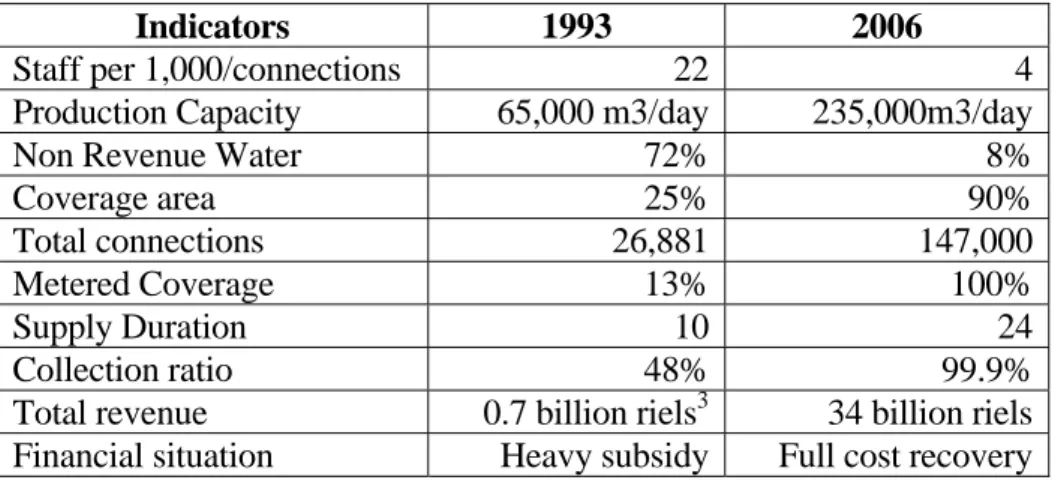
Non-Revenue Water (NRW) management is important for urban water supply systems in all countries. A high NRW level is the result of a poorly run water utility that lacks the governance, the autonomy, the accountability, the technical and managerial skill necessary to provide reliable service to their people. To illustrate this point, a comparison of Yangon City public waterworks system with other ASEAN countries public waterworks system are shown in Table 1.1, it shows the weak performance of water supply system management in Yangon City.
Only 37% of the water supply service area has piped water connection in Yangon, compared to 82% in the public waterworks at Bangkok and 100% in those of Kuala Lumpur and Singapore. In terms of number of house connections per capita, the gap
between Yangon on the one hand and Bangkok, Manila, and Singapore on the other hand is even much wider.
Table 1.1: Comparison of Public Waterworks Systems in the Selected ASEAN Countries
Name of Countries Area (km3) Service Coverage area (%) House connection (‘000) Non-revenue water (%) Water availability (hrs/day) Staff per 1000 connections Bangkok 893 82 917 38 24 4.60 Jakarta 212 27 312 53 18 5.90 Kuala Lumpur 243 100 126 36 24 1.12 Manila** 1274 69 719 58 17 9.80 Singapore 640 100 835 7 24 2.00 Yangon 238 37 92 60* 12 12.00
*This is 1997 data. Lack of production metering and very little consumption metering make it difficult to determine realistic UFW.
** With significant private water vending; other cities do not have any significant water vending Source: Asian Development Bank (1997), Second Water Utilities Data Book, Manila.
Jakarta has the lowest service coverage in terms of percentage of service area and house connections per capita. However, in terms of measures of inefficiency (i.e., ratio of non-revenue water, hours of water availability in the system, and number of personnel per 1000 connections), Yangon has the worst record of all. On the average, Yangon WSS provides water for only about 12 hours per day, whereas piped water service is available 18 hours a day in Jakarta, 17 hours a day in Manila and 24 hours in the other cities. Management of water supply efficiency and financial performance also greatly suffers from over-manning as indicated by the high ratio of staff personnel to the number of connections.
The most dramatic evidence of water supply management inefficiency is the high ratio of non-revenue water (NRW) or water that is not accounted for due to illegal connections, leakages, and other weaknesses in WSS management. For instance, NRW is only 7% in Singapore (one of the lowest worldwide) and about 38% in Bangkok, which is about the average among developing countries. In contrast, NRW comprises 60% of total water production in Yangon.
Increasing population, urbanization, and industrialization has contributed to a decrease in water supply capacity (high losses of water) and an increase of the water supply shortage in Yangon City. In the future, with new housing developments and the progress of economic activities, the water supply sector would be adversely affected by over extraction of surface water and ground water if there were no improvement in the management of water supply in the study area, Yangon City.
Reducing water losses in urban water supply are a fundamental requirement for improved water supply management and sustained water resources in urban areas. Most studies related to urban water issues have been feasibility studies undertaken in drawing a master plan for the improvement of city water supply system and preparation for water supply construction loans from multilateral/bilateral agencies such as JICA, and ADB. There have been a few household-level demand studies. These were done in relation to health, nutrition, poverty, and urban studies. All were descriptive and most of them simply documented the sources of water supply. Willingness to pay for water and sanitation studies was done in some rural areas. The city government began taking concrete steps to address the urban water issues. The appropriate water loss control action programs are being calculated. However, there is no clear sense of the causes of water loss in the city water supply management. Finding solutions are seriously hampered by limited empirical analysis. A comprehensive research needs to identify the causes of water losses or high non-revenue water in the urban water supply management and it is necessary to consider appropriate policy framework for ensuring long-term water sustainability in Yangon City.
Statement of Research Problem
Based on the research need, the importance of this study is achieving water sustainability by reducing non-revenue water in Yangon City water supply system. Thus, the research question raised is “Would non-revenue water management promote water
sustainability in Yangon City? In answering this research question, supplementary
questions will be asked throughout the case study on the current level of water supply management and its further potential for improvement of water supply in Yangon.
1. What is the non-revenue water situation in exiting water supply system of Yangon?
2. What strategies are being done by the water institution to reduce NRW in Yangon?
3. What is the people’s perception on water supply system in Yangon?
4. Are the people willing to pay or willing to participate to improve water services? 5. What policies are promulgated to reduce NRW and are the existing water policies
responsive to NRW reduction in Yangon?
6. What policies can be recommended to reduce NRW in Yangon?
These questions will seek to evaluate and analyze the water resource availability, water service quality, effectiveness and efficiency of water institution, accounting on non-revenue water for sustainability of water supply. This study will also try to explore the people’s willingness to pay for getting water and to seek their opinion on current water price and services.
Objectives of the Study
The main objective of this research is to investigate NRW for sustainability of water to meet current and future water needs in the Yangon City. This research study also aims to provide data on the needs of vital water resources sustainability and the experiences of other countries in reducing NRW management for implementing water supply system management in Yangon City’s future development .The specific objectives of the study are:
• Describe water resources availability and the NRW situation in the existing water supply system in Yangon.
• Analyze policies, laws, regulations and institutions for water supply services in Yangon.
• Describe strategies and experiences of Yangon and other Asian countries in reducing NRW management.
• Analyze the potential contribution of reducing NRW to water sustainability in Yangon.
• Determine people’s perception of water supply system and the willingness for improvement of water services in Yangon
• Provide policy recommendations for NRW reduction in water supply management, which are concerned with water sustainability in Yangon city.
Assumptions
The assumptions in this study are:
1. There is a significant relationship between managing non-revenue water reduction and ensuring urban water sustainability.
2. Non-revenue water control is an integral component in the urban water supply system management to consider improved policy recommendation for effective water supply system management.
3. Effective NRW control in urban water supply management is essential for urban water supply sustainability.
4. People’s willingness to pay and to participate in water supply management will definitely help the control of NRW, water authority as well as urban water sustainability.
Scope and Limitations of the Study
NRW management for sustainable water resources management in the urban area is a broad and complex issue. Given the limitations of time, it is impossible to go into details of all its aspects. There are some following scope and limitations:
Scope: Water resources sustainability issues can occur at different spatial scales, ranging from global to city, community and workplace scale. This research deals with the water sustainability issues that are of relevance to and are concerned with city community scales.
The urban water resources management issues links with various levels of management such as global, regional, national, local/city, district and community levels. Nonetheless, the current research will deal with urban water resources management at the city management issues and levels.
Reducing non-revenue water management is the broad concept. There are political, technical, economical and social points of view. In this paper, the socioeconomic point of view would be presented and the technical viewpoint would be discussed briefly.
Limitations: There is a lack of research within water resource areas in Myanmar. This research gap and fragmented availability of data for water resources is one of the major difficulties that the researcher encountered during this study. Myanmar academics have not yet paid attention to the water resources management and sustainability areas so there are very few, if any, Myanmar publications in this regard. There is very little data giving complete, accurate and systematic information about the evaluation and measurement of the water supply system improvement in Yangon city. There are some contradictions in the data and information from different sources. The fact is that multiple uncertainties will affect the accuracy of water demand and supply figures that the researcher should take care. Given time and financial limitations, the study will only concentrate on water resource within Yangon City municipal area for water resources development considered in the improvement of City water supply system.
This study relies on the responses from water resource professionals and water users. The nature, character and intensity of water problems, human resources, institutional capacities, the relative strengths and characteristics of the water sectors, the cultural setting, natural conditions and many other factors differ greatly between countries and regions, as well as in local situation. It is assumed that their responses will be fair representations of how their particular organization is structured and how is it performing. One hopes that for the benefit of research the respondents appreciate the need to portray accurate and unbiased accounts of their views on water supply management.
CHAPTER 2 LITERATURE REVIEW
This chapter reviews literature that addresses on managing water sustainability and about non-revenue water in water supply management based mainly on the theory of sustainability, control theory and participation theory.
Theoretical Background
Theory of Sustainability
The theory of sustainability suggests an initiative can be sustained, and it takes the sustainability issue head on during strategic analysis. Evaluators can facilitate its development (Heather, Coffman, and Marielle, 2002).
The theory of sustainability can help strengthen the ability to make choices that will increase the likelihood, that the work of an initiative can be sustained. These choices and the set of activities that stalk from them may otherwise be different if sustainability is not considered as one of the key factors guiding the creation of the strategy.
The theory of sustainability propels the dynamic concept for a long-term future as well as the present. Dynamic concept implies changes in societies and their environments, technologies and cultures, values and aspirations. Sustainability is a characteristic of a process or a state that can be maintained at a certain level indefinitely. A sustainable society must allow and sustain such change, i.e., it must allow continuous, viable and vigorous development, which is what we mean by sustainable development.
Sustainable development is defined as the development that meets the needs of the present without compromising the ability of future generations to meet their own needs
(WCED, 1987). In the real world, it is impossible to define sustainable development in an operational manner in the detail and with the level of control presumed in the logic of modernity. Thus, many of the academics with an interest in sustainable development in the late eighties and early nineties approached the subject from an economics background (for instance, Dasgupta, 1993; Pearce, 1989) attempting to price the environment through a framework of fiscal controls and incentives (see Dresner, 2002 for a comprehensive discussion of this). This argues that the best way to protect the natural environment is to assign it an economic value based on people's willingness to pay. The aim is to internalise all the external costs to the economy in terms of pollution, resource depletion and human health. That sustainable development is still chasing a divergent set of policy goals, at the international level at least is highly evident in the more recent academic literature (Ayre and Callway, 2005).
In the extensive discussion and use of the concept, three aspects of sustainable development have been recognized - economic, environmental, and social aspect. An economically sustainable system must be able to produce goods and services on a continuing basis, to maintain manageable levels of government and external debt, and to avoid extreme sectoral imbalances, which damage agricultural or industrial production.
An environmentally sustainable system must maintain a stable resource base, avoiding over-exploitation of renewable system or environmental sink functions and depleting non-renewable resources only to the extent that investment is made in adequate substitutes. A socially sustainable system must achieve distributional equity, adequate provision of social services including health and education, gender equity, political accountability and participation.
Control Theory
Control theory provides a procedure for the construction of a control law. The control law specifies which input value to use for every state of the system. In the present day, the motivation for control theory shifts with the development of technology and with the needs of society (Schuppen, 2000).
Control theory is an interdisciplinary branch of engineering and mathematics that deals with the behaviour of dynamical systems. The desired output of a system is called the reference. When one or more output variables of a system need to follow certain reference overtime, a controller manipulates the inputs to a system to obtain the desired effect on the output of the system.
Participation Theory
Participation theory forwarded the concepts of intimacy, consensuality, coordination, competence and pretension as important in understanding and establishing true and lasting participation. The theory defines intimacy as the closeness and camaraderie that is created when partners are able to satisfy each other’s needs. According to the participation theory, consensuality and coordination are pillars of every successful partnership. Without the partner’s consent, there is a risk of alienating them through coercion. Unless dissent is voiced, agreements are pretended. If one decides to do something but insists, it must be done his/her way, his/her partner(s) become irritated and frustrated. In order for development projects to satisfy the deepest needs of its beneficiaries, they must first come to an agreement regarding what to do. Participation theory helps us to appreciate the difficulty inherent in reaching a consensus (Raymond, 1996).
The scopes of the environmental resource management issues that are often addressed by public agency planners outweigh technical considerations. Most planners,
however, are not formally trained to organize and manage the complex human and organizational problems associated with public participation programs. Nevertheless, environmental issues are the best handled with the participation of all citizens concerned as highlighted in international environmental treaties, Principle 10 of the declaration of the United Nations Conference on Environment and Development (UNCED) in Rio de Janeiro (Brazil, 1992). Agenda 21 adopted by UNCED recognized the important role of public participation in environmental impact assessment (EIA) in achieving sustainable development (Item 23.2 of Agenda 21). Paradoxically, Wright (1976) also stated that participation is valuable; it creates a community where people show more respect for one another. Thus, public participation is at the heart of development. They are not only the ultimate beneficiaries of development, but they are also the agents of development.
Management of Water Sustainability
Principles of Water Sustainability
Water is an important resource necessary for survival of human beings, economic development, and the functioning of the ecosystem. Organisms can live only where there is access to adequate supplies of water. Issues of water quality and quantity have forever troubled humans, characterized by the phenomena of floods and droughts. While several recent efforts have made progress in defining the issues (Golubev et al. 1988, Koudstaal et al. 1992, Plate 1993, Raskin et al. 1995), the sustainability issues of water resource management have not been clearly defined. Water resources are non-substitutable, very essential for the survival of human beings and their depletion may impose heavy economic costs (Pearce et al., 1994) and health consequences on future generations.
Since the late twentieth century, water use has been raised sharply by several major driving forces such as increasing population, economic development and climate change, etc,. Misuse of water resources and poor water resource management practices have often resulted in depletion of aquifers, falling water tables, shrinking inland lakes, and stream flows diminished to ecologically unsafe levels. However, the availability of water sets the environment in which we live: less than 1% of the world’s fresh water resources are in rivers and lakes that easily available for use as fresh water on the earth. The allocation of water on earth is also set unfavorably with our population. We can see that the Amazon River accounts for 15% of the global runoff and 0.5% of the world population use, while China has 21% of the world population and 7% of the global runoff (WRR, 1994; PRB, 1998). Under these circumstances, the need for improved and more efficient management of water resources is obvious.
Within the concern over the global implications of water problems, sustainability of water has been advanced as an important objective to be realized in natural resources management and water management as well. This concept is not new. It has been used in scientific literature for many centuries in fishery, forestry, groundwater, and other areas indicating the rate of use of renewable natural resources to ensure the continuous supply of resources and their maximum use. In 1987, the World Commission of Environment and Development (WCED) reintroduced the sustainable development principle, which subsequently was turned into the UN action plan, Agenda 21, by UNCED (1992). The popular definition of sustainability in the Brundtland Commission Report entitled Our Common Future (WCED, 1987) is “the ability to meet the needs of the present generation
without compromising the ability of future generations to meet their needs.” One more
virtue, the concept of sustainable development means the basic principle of harmonizing environment and development, but the issue of harmonizing development and the
environment is so difficult and controversial. Because the definition of sustainable development consists of three conceptual components: needs, generations and equity, this implies that the development is necessary because of human needs but that intra-generational and inter-intra-generational equity should hold. In recent times, the concept of sustainable development with intra-inter generational equity motivates various leading policy agencies to reconsider the environmental impacts of their projects and development activities. With these new policies, financial and other institutions, national and international, are now expressing support for the implementation of the sustainability principle.
In the context of freshwater resources, many discussions of sustainability require that we understand both the physical resource and the service or supply that those resources must provide. Those water resource systems can satisfy the changing demands that will inevitably be placed on them, without significant system degradation (Loucks, & Gladwell, 1999). However, their performance may vary at different times and under different socio-cultural conditions. Dixon and Fallon (1989) provided a useful way of sustainability for water resources management with respect to the social-physical-economic concept. They clearly defined at the “sustainability of water resources management is a set of activities that ensures that the social value of the services provided by a given water resources
system will satisfy present societal objectives without compromising the ability of the
system to satisfy the objectives of future generations”. This includes three considerations
for water sustainability such as nature (river and their environment and ecosystem), current generation, and future generation needs. Thus, water resource systems must be considered integral parts with a changing societal system.
One way we could show that the main principle for the sustainability of water resources is that the rate of extraction from both ground and surface water sources should
not exceed the rate of renewal. Extraction must not jeopardize the biodiversity of the ecosystem (ESCAP, 1998). Equity is also an important objective of sustainability. It is often expressed as the equitable distribution of the benefits, as well as the mitigation of adverse impacts on people (as residents of reservoir areas) affected by such development (Little and Mirrlees, 1968, UNIDO 1972, Cernea 1988). Indeed, factors that affect temporal and spatial equity in water resources development can be either anthropogenic or natural, or both. Temporal equity is associated with resource depletion and long-term cumulative effects that may lead to disasters in the future, while spatial equity refers to the conflict between upstream and downstream areas in a river basin and often concerns the conflict between various water users (Cai, Mckinney, Rosegrant 2001). Water quality is also considered an equity issue. Conflicts arise when upstream users release excessive pollutants into the river and downstream users suffer damage resulting from the poor water quality. This is reflected in the widespread consideration of environmental impacts on water sustainability. In addition, upstream land use ranging from forest, agricultural and mining to urban and industrial may degrade downstream land, surface water and groundwater resources via runoff of sediments (e.g. pesticides, fertilizers, etc.). These effects are clearly shown in the loss of useful reservoir storage capacity caused by sedimentation from upstream, eutrophication of lakes and reservoirs from nutrients, salinization of downstream, and pollution of groundwater aquifers by seepage or injection of organic and non-organic substances. Even if there is no environmental deterioration such as erosion, sedimentation, salinizaiton, and other pollution, the finite amount of water availability is highly variable both seasonally and annually. The consideration of this physical resource should be undertaken in sustainability of water resources management.
A more fundamental issue with the philosophy of sustainability is the flawed logic of comparing a finite resource with exponential population growth. Sustainability is
ultimately impossible for critical uses. At some point in the Malthusian argument (1798), population demand will outstrip resource supply (Wood, 2004). Therefore, there should be an obvious desire to minimize waste and misuse through maximizing efficiency for finite resources of water. Efficiency can be enhanced in several ways. Technology advances from time to time to enhance delivery systems, utilization techniques and extraction methods in such ways as to advance the sustainable use of water. Prendergast (1993) wrote in an article entitled ‘Engineering Sustainable Development’ that ‘sustainable development is an effort to use technology to help clean up the mess it helped make, and engineers will
be central players in its success or failure.’ He believes that future technology and
professionals will use natural resources more efficiently through conservation measures and switch to renewable sources, waste minimization, greater recycling and reuse of resources and material. Thus, education and knowledge-based transactions can also facilitate further improvements for efficient use of water resources. Water efficiency is the long-term ethic of conserving water resources through the employment of water-saving technologies. Whatever is done to increase the level of sustainability of our water resources, we will ensure that water will be available for future generations. A good understanding of these aspects of finite resources of water, including quantity and quality of supply water, is required for long-term. It reflects on the future impact of the economy, the environment, on ecology, and on society that will result from decisions and actions taken in present days.
Therefore, there are needs enabling conditions that all parties can be involved in so as to be aware of the “rules of the game”. The condition focuses on the changes within the framework of legal, institutional and economic development. All these three pillars are related to one another and each presents its own specific practices for directing resource distribution. The laws governing the use of water and the institutions created to manage them are a product of a country’s history, society and economy (Winpenny, 1994). Hence,
water resources management institutions should promote or at least not constrain the achievement of the multiple objectives of the water resources management plan particularly sustainability objectives (Hufschmidt and McCauley, 1990). These should be channeled to allow efficient and equitable use of resources on a sustainable basis, with appropriate accountability for unavoidable adverse environmental and social consequences.
Demographic society, economic and political factors interact to create an unfavorable environment for sustainability. The transition to new technologies, new management practices, and new institutions (or institutional leadership) must proceed in an orderly manner (Loucks, et al, Gladwell, 1999) to a more holistic concept where economic, environmental and social considerations are equitably handled. The roles of people must be changed for sustainability of water, the main actors will be individuals and groups in households and communities with new responsibilities for their use of water and water related services, as part of a cooperative strategy. Corporations are beginning to apply the concept of sustainability at a practical level in terms of corporate citizenship or corporate social responsibility. Corporate social responsibility is currently dominated by the notion of the triple bottom line (TBL) (Lenzen, Foran and Dey, 2006). A term (TBL) originally coined by John Elkington in the early 1980s to describe corporations moving beyond reporting only on their financial “bottom line” to assessing and reporting on all three spheres of sustainability: economic, social and environmental. The notion of TBL has many meanings to many people, and can be applied at different levels in society by different stakeholders. However, there is general agreement that the TBL principle is a useful approach for examining the operations of an entity, from a local to a major corporation. Planning must provide information that helps the public make judgments about which "needs" and "wants" can and should be satisfied. The sustainability principles can help bridge the gap between such diverse and competing interests (Gleick, 1998).
In summing up, “sustainability” itself can be viewed as the maintenance of positive rate of improvement. While development changes by improving a situation or condition
over time, sustainability implies the continuance or maintenance of a certain situation or condition over time. In order to achieve a positive rate of improvement, water resource sustainability is not simply a scientific question of how to control water use but a social construct involving decisions over when, why, and where to do so.
Sustainable Water Resources Management
The paradox of water is that although it is one of the most common substances on earth only a fraction of it is freshwater suitable for human consumption. Most of the freshwater is underground water, ice caps, glaciers, and only 1% can be used or is available for human consumption (Serageldin, 1995). These figures suggest that water in fact is a scarce resource and should be treated accordingly.
The problem with water is that it is a “two faced” resource. On one hand, water is a scarce resource and on the other hand, it is a public good. The essence of public goods is that they should be accessible to everyone (Glieick et al 2002). Market forces govern management of scarce resources (EDI of the World Bank et al, 1995). From a managerial point of view, it is difficult to find a method, strategy or plan to combine these two aspects in a satisfactory way.
Water has no social or economic bounds, water supply management and development is the responsibility of national or city authorities in many countries. Therefore, these authorities should pay careful attention to water resource management because it can affect all sectors of society in the country. Each country, developed or developing must put together their own plan of action suitable for their hydrological
conditions and needs. The plan and management for water must not only be developed in theory but should be feasible and carried out in reality.
Historically, water resources management, development and policy have evolved in a variety of ways and differed from country to country. Generally, water resources management includes development, control, protection, regulation, and beneficial use of surface and ground water resources. Services provided by a water sector include water supply for agricultural, industrial and municipal uses, wastewater collection and treatment, protection and enhancement of environmental resources, pollution prevention, recreation, navigation, hydroelectric power generation, storm water drainage, erosion and sedimentation control, and controlling floodwater and reducing damages due to flooding. Water resources planning and management activities include policy formulation, national, regional and local resource assessments, institutional arrangement, legislations, and regulations, related financial management, formulation and implementation of resource management strategies, planning, design, construction, maintenance and operation of structures and facilities, scientific and engineering research, education and training (Pykh & Pykh, 2003). Thus, water resource management develops an integrating process within a number of water sub-sectors.
In reality, no universal handbook on water resources management is exit but some managerial strategies and guides are more useful than others are. Water resources management aims at managing the tasks required to generate water and produce water related goods and services for the benefits of the society as a whole. The holistic management of freshwater as a finite and vulnerable resource, and the integration of sectoral water plans and programs within the framework of national economic and social policy are of paramount importance for the objectives of integrated water development and management from here to beyond (UN, Agenda 21, chapter 18, 2003). This approach
creates a sustainable blueprint for water resources management. In 1977, the United Nations water conference in Mar del Plata, the International Conference on Water and the Environment in Dublin, and in 1992, the Earth Summit in Rio de Janeiro have articulated a set of principles for good water resources management. These are:
1. The “ecological principle”, which requires that water, be treated as a unitary resource within river basins, with particular attention to ecosystems.
2. The “institutional principle” which recognizes that water management requires the involvement of government, civil society and the private sector, and that the principle of subsidiarity is respected. It also gives special emphasis to the role of women in water management.
3. The “instrument principle”, which requires that water be recognized as a scarce economic goods and that greater use is made of “user pays”, “polluter pays” and other market-friendly instruments.
In reality, several stakeholders, representing numerous administrative sectors, focusing on their particular area of interest, often plan how to manage water resources. This approach, on the other hand, creates an ineffective, scattered managerial strategy (Serageldin, 1995). With in ideologist thinking of good water resources management, water resources management planning should start at the macro level, the national level, with a clear definition of the “rules of the game” but must find its way to the lowest levels (Wnukowska, 2004). Water resources management starts to address resources issues with often-conflicting interests of the different beneficiaries. This means that new approaches and new concepts must be introduced. Thus, policies should be formally stated or they must be only implicit in an agency’s actions. For example, although data collection may be inadequate to measure and assess environmental conditions or even to devise sound projects no policy is enforced to remedy the situation (Frederikksen, Berkoff and Barber,
1994). Therefore, it is favorable to look at the issues and problems from a centralized point of view, but solve them on a decentralized level. This statement does not suggest that a country should apply centralized water management schemes with a top-down approach. The authorities should acknowledge that a general nationwide agenda for resources management must exist as a blueprint for provincial and local management schemes. Such approach cannot be achieved by a single organization in isolation. It requires a sound framework for environmental management and also requires the coordinated efforts of the local, provincial and national government agencies as well as NGOs, community organizations and people.
Function of Water Resources System
Generally, water resources system includes various components such as the natural system, human made infrastructure, and the institutional arrangements to regulate and control the availability and access of users to these components (Dhaka, 2001).
Jain and Singh (2003) defined the water resources system as a set of water resources elements linked by interrelationships into a purposeful whole. For example, a water supply reservoir for a small city, linked with a water distribution network, would constitute a system. To an engineer, these systems may be dams and weirs, tunnels, levees, pipelines, electrical power plants, water treatment and reclamation, and similar physical works, which have been constructed to provide certain benefits. An economist views include economic efficiency, income redistribution and stimulation of economic growth. To a lawyer, a water resources system is a device for the implementation of water rights. To those living in an arid environment, water resources systems mean food and fiber, homes and jobs, laws and politics. To many conservationists, water resources systems are unwanted interventions, responsible for the destruction of wild rivers, scenic beauty and wildlife habitat. Indeed,
water resources system includes all these points of view, which could be physical, technological, sociological, biological, legal, geological and agricultural.
In order to better understanding the assessment, development, and management of water resources system, Ertuna (1995) presented the fundamental function of water resources system in his article “Water Resources Development and Management in Asia and the Pacific” (Table 2.1).
Table 2.1: Functions of the Water Resources System
Functions Description Examples
Subsistence Functions
Local communities make use of water and water based products which are not marketed
- Local drinking water supply - Traditional fishing
- Subsistence irrigation Commercial
Functions
Public or private enterprises make use of water or water based products which are marketed or otherwise given a monetary value
- Urban drinking water supply - Industrial water supply - Irrigation - Hydro-power generation - Commercial fishing - Transportation Environmental Functions
Regulation functions, non-consumptive use
- Purification capacity - Prevention of salt intrusion - Recreation and tourism Ecological
Values
Values of water resources systems as an ecosystem
- Integrity
- Gene pool diversity
- Nature conservation value Source: Ertuna (1995)
Sustainability Criteria for Water Resources Management
Water resources development and management is typically a public sector activity only but it has been many places now privatized. Any motivation to consider the future development depends on the ability and willingness to understand, the interactions of processes on very different spatial and temporal scales. Because of the nature of water resources management that everyone involved in these activities has an obligation to see
that those systems provide sufficient quantities and qualities, at acceptable prices and reliabilities, and at the same time protect the environment, preserve the biodiversity and health of ecosystems for future generations (Loucks, & Gladwell, 1999).
Sustainability of water is a philosophical concept that designed and managed to meet the needs of people living in the future as well as those living today. This concept of sustainability can mean different things to different people, though sustainability criteria forces people to access the various impacts of proposed plans, policies and practices on future generations and on the present generations. Thus, water resource management professionals have to consider specific criteria for policy discussions and evaluation of water resource system specifying what, when, where and how much to do to satisfy these resources by the many economic, technical, educational, and regulatory means that are available. In contrast, without specific criteria to guide planning, unsustainable water policies are inevitable (Gleick, 1998).
Due to complex nature of water resources management, water sustainability views as a combination of high resilience and low vulnerability (Duckstein & Parent, 1994). On the other hand, sustainable criteria for water resources system on their behavior are described as performance indices (PI) which can classify as resilience, vulnerability, grade of service, availability, quality of service etc. In addition to performance indices, figures of merit (FM) are also used for the analyses of system behavior (IAHS, 1998). It can define as functions of performance indices. However, using FM in measuring sustainability is disparity. Thus, Loucks (1997) discussed in one idea identifying a new FM as a weighted statistical index to describe sustainability though decisions on a set of sustainability criteria are subjective. They are generally based on human judgment or social goals, not scientific theory. Yet another concept used assess planning decisions in terms of sustainability includes entropy (McMahon & Mrozek, 1997).
In practice, criteria for sustainability on decision-making are not yet in operation. However, to facilitate the water sustainability for this research, some criteria will discuss in this section, much of the contents below are based on “Water in Crisis: Paths to Sustainable Water Use” (Gleick., 1998), “Sustainability Criteria for Water Resource Systems” (Loucks, & Gladwell, 1999) and “Environmental Economics book” (Field, 2002, pp.183-193). The criteria for water sustainability in this study are:
Basic Human Water Requirements: The first criterion is a primary goal to provide a basic
amount of water for meeting the essential needs of humans. For humans, insufficient access to potable water is the direct cause of millions of unnecessary deaths every year. The provision of a certain amount of fresh water to support human metabolism and to maintain human health should be a guaranteed commitment on the part of governments and water providers.
Table 2.2: Basic Water Requirements for Human Needs
Purpose Recommended commitment (liter/ individual/day)
Drinking water* 5
Sanitation services 20
Bathing 15
Food preparation 10
Total 50
Source: Gleick, 1996 *This is a true minimum to sustain life in moderate climatic conditions and average activity levels. A minimum amount of water requirement can only be defined for maintaining human or ecological survival. This amount (5 liter/individual/day) is under moderate climatic conditions and average levels of activities. Additional basic needs have been quantified, however, for providing sanitation services, preparing food, and bathing (Gleick, 1996) recommends that 50 liters/individual/day be committed to satisfy these needs (Table 2.2). No legal or institutional mechanisms exist, however, to guarantee even this basic requirement to present and future generations. The first sustainability criterion, therefore, guarantees access to this basic water requirement to meet the fundamental domestic needs of people.
Water Quality Standards: Different uses of water require different qualities of water. Thus,
water quality standards for different purposes must be developed and water quality must be monitored and maintained to meet these standards. Water in most developed countries is protected from contamination by national regulations (WHO 1984, MNHW 1992, USEPA 1992). These water quality standards are supposed to ensure that potable water is reasonably free from contaminants known to affect human health. In many parts of the developing world, however, even minimal water quality standards are not in place, leading to widespread cases of waterborne diseases. Lack of sufficient clean drinking water lead to many hundreds of million of cases of water related diseases and deaths annually (WHO 1995). Water used for non-human consumption need not to be protected to the drinking water standards. For example, water used for many industrial, commercial, or landscaping purposes could be protected to a lower standard, with substantial economic savings. Similar water quality criteria need to be developed for ecological water requirements. Substantial effort should go into identifying these differences and developing ways of meeting various demands with water at appropriate levels of quality (Gleick, 1998).
Data Collection and Availabi1ity: If water planning and management are to be effective,
data on all aspects of the water cycle must be collected and made available in an unrestricted manner. At present, data on many aspects of regional and national water supply and water use are not collected. They are not widely available. At the extreme, some national governments continue to classify basic water data for so-called security reasons. This is unjustified and greatly inhibits effective water planning and management. Substantial data gaps exist on the condition of different groundwater basins, extraction amounts, current pumping practices, and recharge rates. Similarly, water-use information is sketchy or site specific, making actions for increasing efficiency or improving conservation programs hard to plan and implement. Information should be produced in reasonable time
with reasonable resources, and it should be freely and widely shared. Recent advances in electronic communications makes sharing resource information easy and inexpensive. In particular, internet resources related to water are growing at a phenomenal rate, and many sources of information are already freely available. This trend should be encouraged and expanded (Gleick, 1998).
Equity: Equity or fairness is an important consideration in the selection of any
environmental policy evaluation process (Field, 2002). Equity is a measure of fairness of both the distribution of positive and negative outcomes as well as the process used to arrive at particular social decisions (Gleick, 1998). Perhaps the greatest flaw with many water institutions is their failure to address adequately equity issues.
Some would argue that sustainability should be defined narrowly so that questions of equity are excluded. However, from this perspective, sustainability could be achieved under otherwise morally reprehensible conditions. Questions of equity overlap with sustainability when trying to determine what is to be sustained, for whom it is to be sustained, and who decides. In general, great disparities in wealth, inequities in power between women and men, and discrimination based on race, ethnicity, or age can lead to conflicts that undermine attempts to achieve sustainability. Thus, a fair political process is itself a necessary component of sustainability (Gleick, 1998).
Efficiency: Efficiency means the water use efficiency for this research, which includes any measure that reduces the amount of water used per unit of any given activity, consistent
with the maintenance or enhancement of water quality (Tate, 1994). Water use efficiency is
closely related to other basic concepts of current environmental resource management, perhaps, it is water conservation. According to Baumann et al 1980, the most useful definition of water conservation is any socially beneficial reduction in water use or water
loss. At the same time, the conservation definition suggests that efficiency measures should make sense economically and socially, in addition to reducing water use per unit of activity. The level of attention paid to water use efficiency is directly proportional to the prices charged for water servicing. Rising prices lead to increasing attention to water use characteristics, and over the long run, to more efficient water use. Water use efficiency is also partially a response to the property rights prevailing society, the greater the degree of private ownership, the greater the use of water efficient practices. Thus, private ownership is also considered for efficiency use of water.
Incentive: A critically important criterion that must be used to evaluate any environmental
policy is whether that policy provides a strong incentive for individuals and groups to find new innovative ways of reducing their impacts on the ambient environment (Field, 2002). For the water supply system, when water price reflect the full social costs of developing supplies, incentives are created to use the resource efficiently and rationally, reflecting its value in production or in its various other uses.
Introduction of technological change, flowing from programs of research and development, shifts the marginal abatement cost function downward. So, do education and training, which allow people to work and solve problems more efficiently. The greater these incentives, the better the policy cause at least by this one criterion (Field, 2002).
Enforceability: The objective of enforcement is to get people to comply with an applicable
law. There will always be people whose interests lie in not having environmental policies enforced. Enforcement is unlikely to happen automatically (Field, 2002). Often, large numbers of dischargers do not complain about the existing laws and regulations, particularly in the developing countries. The common practice of enforcement policy is costs or profits associated with enforcing pollution control regulation to create effectiveness.
The cost of enforcement, though perhaps not as large as overall compliance cost in most cases, is critical to the success of environmental quality programs and ought to be treated explicitly in evaluating the overall social cost of these programs. There are two main steps in enforcement: monitoring and sanctioning. Monitoring refers to measuring the performance of polluters in comparison to whatever requirements are set out in the relevant law. Sanctioning refers to the task of bringing justice to those whom monitoring has shown to be in violation of the law. If violators are found, the enforcement policy takes them to court and levies the penalties specified in the relevant law (Field, 2002).
Moral Considerations: There are ethical issues on which different people will feel
differently, but they are important for deciding on alternative public policies. Moral considerations extend beyond distributional concerns. The innate feelings that people have about what are right and wrong undoubtedly affect the way they look at different environmental policies (Field, 2002). By this criterion, policies that declare outright that certain types of polluting behavior or illegal usage are to be preferred to policies that do not.
Failure and Weakness in Water Resources Management
Governments have the difficult task to plan for sustainable water resources management without falling into managerial traps because water is considered as a strategic resource and public goods. The variable quantity and quality of water and the highly inter-dependent character of water activities make it difficult to use unregulated markets to deliver water efficiently or to allocate it among sectors. Serageldin (1995) discussed the four main failures for governments in water management that are summarized in this section.
1. Dependence on centralized administration 2. Fragmented management
3. Unwillingness to treat water as an economic resource
4. Neglect about the connection between water quality and health, the environment or economic development
The central government is the heart and brain of the managerial body in the most cases. However, a rigid top-bottom approach leads to ineffective and fragmented management on a decentralized level. Agencies on a local level lack control over decisions affecting their operation and development. The Central Government must look into the possibility to decentralize certain functions in order to increase the efficiency of the managerial machinery.
The third point is under constant debate. Advocates of economic management of water resources mean that treating water as an economic good will increase its value and create a more effective and sustainable use of the resource (Economist, 2003). The opposing side means that this can be accomplished without market based principles and methods. Water is more than an economic or public good. It is also a social good. As such, it has significant “spill over” benefits or costs (Gleick et al, 2002). Availability of clean and affordable water improves both individual and social well-being, which in turn affects the well-being of a country.
Clearly, management of water resources is a cyclic process. If the chosen managerial strategy complies with the described conditions, a chance of a sustainable development of water resources is possible. If, however, governing authorities fail to apply the methods described above the results will favor neither consumers nor the environment.
Incentives for Water Management
Incentives can be categorized as based or non-market based. The market-based incentives include water tariffs, pollution charges, groundwater markets, surface
water markets, auctions and water banking. The non-market based incentives suggest the use of restrictions, quotas, norm, licenses and public participation (Merrett, 1997). The main goal with the incentives, both market based and non-market based, is establishment of a more efficient utilization of water. Water and wastewater are easy to quantify as the volume of water present at a certain place at a point in time. This makes the quantification of use and pollution easily; it means that it is relatively easy to put a price on water. The difficult part is to reinforce the incentives and control that they are being followed.
Methods governed by market forces are part of a greater scheme in water management. They are, however, the most direct means of encouraging conservation of water. The market can be used in two ways to promote more economic use of water.
1. Raising the price of water and
2. Raise the opportunity cost of water higher value uses. Tariffs, pollution charges or other volumetric fees can determine the price of water (Winpenny, 1994).
Recognizing water as an economic goods means, among other things, that water has a value in competing uses (Gleick et al, 2002). Allocation of water can be accomplished through water markets, transferable water-use permits and other incentives, which increase the economic value of water. They create a motive for consumers to relate their use of water to its marginal value and sell the rest. These, however, may be more suitable for the industrial sector rather than the public.
Putting a price on water is dependent on a number of factors. According to the Merrette (1997), the main objectives of water tariffs are 1) Affordability, 2) Cover cost of production and distribution, 3) Encourage water sustainability, 4) Discourage pollution.
The most important objective is to set a price so that all consumers are able to afford the water provided to them. This means that a water tariff program should exist. The easiest way for tariff setting is to give each volumetric quantity of water with the same price.
Considering the range and variety of consumer groups, setting the same price for all would favor high-income groups and burden low-income households. Price progression and identification of users is a good way of dealing with this problem. The concept behind price progression is that each volumetric quantity of water has a different price. This implies that the more water a consumer uses, the more they pay. An alternative to pricing every volume of water is that low-income households receive a basic amount of water, necessary for cooking, cleaning, etc. free of charge, or at a very low cost. However, volumes above the basic level are priced. It is so called two-tier water tariff structure. If these four objectives are successfully realized, other incentives such as pollution charges could be superfluous.
The Feasibility of Private Sector Participation in Water Utilities
There is a wide range of literature available on the various aspects of Private Sector Participation (PSP), including pros and cons, types, mechanisms, and risk averting measures for PSP (ADB 2000, Plummer 2002, Budds and McGranahan 2003, and Akinotoye et al., 2003). The recent focus is on pro-poor PSP, as there are various risks involved for private sector, communities, and government to introduce PSP in urban environmental infrastructure and services (Hardoy and Schusterman 2000, and Satterthwaite 2003). Human beings may say, “We can live without electricity but not without water” (ECFA, 1997: 18). However, there are some complex nature and important characteristics in water supply infrastructure and services, which make the involvement of private companies a particularly challenging venture. These are:
Natural Monopoly: The supply of water is typically a natural monopoly as it is not
economical to duplicate the water and sewerage networks in city streets (Idelovitch, Ringskog, 1995). In addition, when there is an existing water supply network, it is difficult to facilitate competition in the water business. Although such forces suggest that it is more
economical for a single business entity to monopolize water provision services, a private producer could easily exploit its monopoly status to gain unfair profits.
Price Elasticity: As water supply services are essential for the human life, the demand for
water is perfectly price inelastic at survival levels (Galiani, Gertler and Schargrodsky, 2002). Of course, demand exhibits some price elasticity at levels for which water is used for other non-survival household and productive uses. It is that in unregulated private monopolies, output volumes, standards of service and investment levels will all be lower than under competitive conditions, while prices are likely to be higher and set to discriminate against customers with inelastic demands for water (Herrington and Price, 1987). Consequently, a single service provider could make unreasonable profit by setting an extraordinarily high charge.
Hidden Costs: The ratio of unaccounted-for-water (UFW) or non-revenue water (NRW) is
extremely high in developing countries (Mclntosh and Yniguez, 1997). These are attributed in part to ordinary technical leakage, water theft by many people who regard water as being free of charge, and administrative losses. The slow installation of accurate meters due to budgetary constraints and under-charging due to erroneous meter reading, etc., produce a hidden cost. Other reasons involve the hidden costs of patronage and the political manipulation of the purchase of equipment and facility of water services.
Long- Term Capital and Capital-Intensive Investment, Sunk Costs and Risks: Water
supply and sanitation sector requires long-term non-transferable capital to be implemented. Studies from the United States indicated that the ratio of investments in fixed assets to annual tariff revenue is approximately 10:1 as compared with 3:1 for telecommunications and 4:1 for the electric power (Idelovitch and Ringskog, 1995). The higher ratio for water supply and sanitation makes it more difficult to attract private sector financing because the
payback period is long. Furthermore, the water supply and sanitation services demand a huge initial investment, which may be beyond the capability of many private businesses.
For the private sector, large-scale investments always involve significant risks particularly when the assets are sunk, i.e. they cannot be removed for use elsewhere or redeployed on site for other purposes. For example, if an airline operator fails to make an acceptable return on investment, the aircraft may be used in other markets or sold to another operator. Likewise most factories can be adapted to produce different goods if the initial venture proves unprofitable. Such options are largely unavailable in the water sector.
There are a variety of risks in water supply infrastructure and services. Rees (1998) stated some forms of risks are:
• Construction risks (the costs of new developments renovation exceed expectations) • Commercial risks (the demand for products change or new competitors enter the market) • Financial risks (interest rates on borrowed capital rise or exchange rates shift)
• Regulatory risks (regulators alter standards of service requirements, refuse price rises or fail to prevent the pollution of water sources)
• Political risks (political instability, asset expropriation or expulsion from the country) Private companies will only invest in the water sector if risk and uncertainty are kept to acceptable levels. This is because private companies are not social services. They will only provide public goods or below cost water supplies, if they are to recover the costs involved, including their required return on any investments made.
Strong Political Intervention: Providing water and sanitation sector is attached to
explosive political issues. Any change of the water charge or water charge collection system can result in direct negative consumer reactions. Politicians tend to be involved in various aspects of water supply services simply because of the grave political impacts of
any change in the nature of the services. Moreover, water contamination and supply cuts have serious social impacts as they have profound implications vis-à-vis public safety.
Complicated Decision-Making: Complicated decision-making mechanism is involved in
the water supply infrastructure and service provisions. For example, the formulation of a water supply development plan or water treatment services usually involves many government ministries and agencies. In the case of Indonesia, a total of 13 ministries and agencies are said to be involved (ECFA, 1997:15). In Vietnam, more than 20 ministries and agencies are said to be involved (Minh, 2003). Compared to the electricity and other sectors, the decision-making mechanism for a water treatment business, particularly in the capital area, is much more complex, posing serious problems in terms of project implementation efficiency.
More or less, all these factors are cited as reasons to keep water supply and sanitation sector in the hands of the central government or public corporations. The conventional perception is that public services are unsuitable for private sector investment due to the above-mentioned factors. The argument for private provision is also often linked to a broader claim that private enterprises are more efficient than public enterprises (Budds and McGranahan, 2003). However, this argument ignores the fact that not all private operators make profits from being efficient (e.g. they may be able to justify tariff increases on the basis of their inefficiencies, especially if the regulator is poorly informed) while some publicly operated utilities do face commercial incentives. There is ample evidence of satisfactory achievement of social and public service objectives through efficient public sector undertaking in transition and developing countries as well as developed ones. Some examples of efficient public owned enterprises for water services are the Netherlands water public owned enterprises, municipal water companies in Germany are as in developed countries, Debreceni Vizmu in Hungary, Lodz Water Company in Poland are as in Central
and Eastern Europe, SANAA (Honduras), SABESP (Brazil), SAGUAPAC (Bolivia) in Latin America, and South Africa, Philippines in developing countries. For instant, water public owned enterprises in the Netherlands, almost all the 25 water companies currently existing are public limited companies whose shareholders are municipalities and in some cases provinces (Dane et al., 1999). In general, the level of the service provided appears good, as high quality water is provided at an affordable price (US$1.26 per cubic meter), which could yet decrease as a result of further concentration. The performance of the whole Dutch water industry includes the low UfW 4% of the water produced, and the high productivity of 792 connections per employee (Blokland et al., 1999a: 183-196). Water companies in Netherlands appear related to the institutional framework supporting the functioning of public limited companies. The managing director enjoys all the autonomy ensured by the statutory provisions governing the transparency and accountability in the conduction of operations is complemented by the representation of consumers’ interest through locally elected bodies. The price cost principle is fully applied but cost recovery does not result in the realization of excess profits, due to the limited interest of public shareholders in maximizing the return on investments and to the practice of restricting the payment of dividends (Blokland et al., 1999b: 63-80). This has not impaired the public owned enterprises ability to finance investment programs by resorting to the financial market. Water companies’ creditworthiness is in fact based on the stable business conditions in which they operate (Braadbaart et al., 1999a: 81-91).
In Philippines, water districts cover 480 municipalities including urban and peri-urban areas. The technical and financial performance of Philippine Water Districts, with particular reference to cost recovery, is well above the Asian average. This seems to be a result of the organizational structure, which allows for government shareholdings, insulates management from undue political interference and provides for customer representation.
The Local Water Utilities administration also has an important role as technical support agency, development bank and informal regulator (Braadbaart et al., 1999c).
In the light of these case studies, public owned enterprises in water supply can clearly function as modern, transparent, publicly accountable development oriented enterprises capable of reconciling commercial efficiencies with social considerations. Public owned enterprises appear no less efficient than privatized water companies do. It is clearly advisable for public authorities to develop a credible public sector, more explicitly on objectives of service delivery and other basic operating principles: continuity, equal access and universality, and enhancing the openness of the industry. Proposed restructurings can then be more precisely evaluated against these objectives, instead of a narrow consideration of the fiscal gains to the municipal or government budget.
The Myanmar government also has no plan for privatization in city water supply service. Recently even the city government lacks the finances for provision for the city water supply services. How should the city government improve their city development and save people lives with secure water vis-à-vis how do people help to improve their city environment so as to secure water for the preservation of life is an interesting question?
Emerging Challenges and Opportunities for WRM in Asia and the Pacific
The emerging challenge of water management in the present day world is how to achieve sustainability in the face of continuous expansion of population and economic activities and the pervasive problems of poverty and environmental degradation (Hufschmidt, 1993). In 1996, Frederiksen narrowed down the focal point and pointed out the most serious problems that are likely to strike in developing countries. He added that high rate of population growth (urban and rural), poverty and environmental degradation are persistent while major economic development activities are taking place simultaneously.