Doctoral Thesis
ASSOCIATION AND INTERACTION EFFECT BETWEEN DIETARY PATTERN AND VEGFR-2 GENE POLYMORPHISMS ON CHRONIC
NON-COMMUNICABLE DISEASE RISK IN JAPANESE AND MALAYSIAN ADULTS
ROSELINE YAP WAI KUAN
Division of Nutritional Science
Graduate School of Human Health Science University of Nagasaki
March, 2013
Thesis Submitted to the Graduate School of Human Health Science, University of Nagasaki in Fulfillment of the Requirement for the Degree of Doctor of Philosophy
DEDICATION
I would like to dedicate this dissertation to my late father who passed away from a long battle of a type non-communicable disease, coronary heart disease due to raised blood pressure and blood cholesterol. He was an inspiration to me from the start to embark into the field of nutrition. With that, I was determined to be an academic, educator, health care professional, and researcher in order to help him and many others who suffer from diet-related non-communicable diseases. Lastly, this dedication also goes to Stephen Pang for his full support throughout my doctoral study.
Abstract of thesis presented to the Senate of University of Nagasaki, Japan in fulfillment of the requirement for the degree of Doctor of Philosophy
ASSOCIATION AND INTERACTION EFFECT BETWEEN DIETARY PATTERN AND VEGFR-2 GENE POLYMORPHISMS ON CHRONIC NON-
COMMUNICABLE DISEASE RISK IN JAPANESE AND MALAYSIAN ADULTS
By
ROSELINE YAP WAI KUAN
The increasing prevalence of chronic non-communicable diseases (NCDs) has become a global threat causing mortality and morbidity. Gene-diet interaction studies involving chronic NCDs are important for preventive and treatment measures and to achieve personalised medical care and nutrition in the future. This study aimed to determine the association, correlation, and interaction effect between dietary patterns and VEGFR-2 gene polymorphisms (rs1870377 and rs2071559) on the physical and biochemical parameters associated with chronic NCDs in two Asian populations, Malaysian and Japanese adults. A total of 509 Malaysian adults (153 Malays, 179 Chinese and 177 Indians) and 136 Japanese adults were included in the study. Dietary information from food frequency questionnaire was used to construct dietary patterns using factor analysis. Genotyping of rs1870377 and rs2071559 was performed by real-time PCR using TaqMan probes. Physical measurements: body mass index, systolic and diastolic blood pressures and biomarkers: glycosylated haemoglobin A1c (HbA1c), uric acid and blood lipids were obtained. Two dietary patterns were extracted for Japanese: ‘Japanese diet’ and ‘Western diet’ (WD); and for Chinese Malaysians: ‘Balanced diet’ and ‘Meat, rice and noodles diet’ (MRND) while three dietary patterns were extracted from Malays:
‘Burger, nugget and noodles, and local fruits diet’ (BNNF); ‘Seafood, rice and protein
foods diet’ (SRPD); and ‘Fruits and vegetables diet’ (FVD) and from Indians:
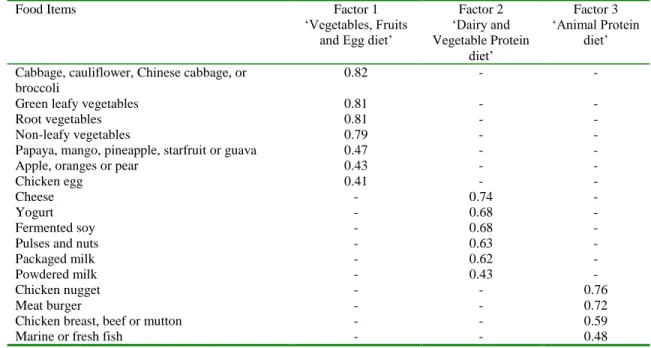
‘Vegetables, fruits and egg diet’; ‘Dairy and vegetable protein diet’ (DVPD); and
‘Animal protein diet’. Dietary patterns of WD in Japanese, SRPD in Malays, MRND in Chinese and DVPD in Indians were all significantly correlated with physical and/or biochemical parameters associated with chronic NCDs. The VEGFR-2 gene polymorphisms (rs1870377 and/or rs2071559) were significantly associated with blood lipids only in Japanese, Malay and Chinese Malaysians. The interactions between VEGFR-2 gene polymorphisms (rs1870377 and/or rs2071559) and dietary patterns (BNNF, SRPD, and/or FVD) had significant effects on blood uric acid and triglycerides in Malays while a borderline gene-diet interaction effect (rs1870377 and MRND) on HbA1c levels was obtained among Chinese Malaysians. Significant individual associations and/or gene-diet interactions involving VEGFR-2 gene polymorphisms and dietary patterns were identified in both Japanese and ethnic groups of Malaysian adults which may contribute to a higher risk of chronic NCDs in the future.
This thesis submitted to University of Nagasaki and has been accepted as fulfillment of the requirement for the degree of Doctor of Philosophy. The members of the Supervisory Committee are as follows:
Main Supervisor, PhD Professor Motofumi Masaki
Graduate School of Human Health Science University of Nagasaki
Co-supervisor, PhD Professor Yoshihiro Shidoji
Graduate School of Human Health Science University of Nagasaki
Co-Supervisor, PhD, MD Professor Katsuhisa Omagari
Graduate School of Human Health Science University of Nagasaki
DECLARATION
I hereby declare that the thesis is based on my original work and it has no been previously or concurrently submitted for any other degree at University of Nagasaki or other institutions.
____________________________
ROSELINE YAP WAI KUAN March 15, 2013
TABLE OF CONTENTS
Page
DEDICATION 2
ABSTRACT 3
APPROVAL 5
DECLARATION 6
LIST OF TABLES 9
LIST OF FIGURES 11
LIST OF ABBREVIATIONS/GLOSSARY OF TERMS 12
CHAPTER
I INTRODUCTION 14
Global overview of chronic non-communicable diseases 15 Chronic non-communicable diseases in Japan and Malaysia 16
Problem Statement 17
Significance of the study 18
Conceptual Framework 19
Aim and Specific Objectives 23
II LITERATURE REVIEW
Chronic non-communicable diseases 24
Mortality, morbidity and economic burden 24
Risk factors 26
Genetic approach on chronic non-communicable diseases 28 Dietary pattern and chronic non-communicable diseases 29 Gene-diet interactions and chronic non-communicable diseases 31 VEGFR-2 gene polymorphisms and chronic non-communicable diseases 32 III MATERIALS AND METHODS
Study design 34
Health and dietary intake information 35
Physical and biochemical measurements 36
Genotyping analyses 37
Statistical analyses 38
IV RESULTS
Physical, biochemical and genetic characteristics 40 Dietary patterns and correlations with physical and biochemical parameters in Japanese and Malaysian subjects 42 Association of VEGFR-2 gene polymorphisms with physical
and biochemical parameters in Japanese and Malaysian subjects 44 Interaction effects of dietary pattern and VEGFR-2 gene
polymorphisms in Japanese and Malaysian subjects 45
V DISCUSSION 47
Limitations 54
VI CONCLUSIONS 56
ACKNOWLEDGEMENTS 59
REFERENCES 60
APPENDICES 75
BIODATA OF THE AUTHOR 94
LIST OF TABLES
Page Table 1. Proportion of NCD deaths (%) in all ages for Japan and Malaysia,
2008 16 Table 2. Characteristics of subjects 75 Table 3. Factor loading matrix of major dietary patterns in 136 Japanese
adults 76
Table 4. Factor loading matrix of major dietary patterns in 153 Malay
Malaysian adults 77
Table 5. Factor loading matrix of major dietary patterns in 179 Chinese
Malaysian adults 78
Table 6. Factor loading matrix of major dietary patterns in 177 Indian
Malaysian adults 79
Table 7. Correlation and p-values between factor scores of dietary patterns with physical and biochemical measurements of 136 Japanese
subjects 80
Table 8. Correlation and p-values between factor scores of dietary patterns with physical and biochemical measurements of 153 Malay Malaysian
subjects 81
Table 9. Correlation and p-values between factor scores of dietary patterns with physical and biochemical measurements of 179 Chinese Malaysian
subjects 82
Table 10. Correlation and p-values between factor scores of dietary patterns with physical and biochemical measurements of 177 Indian Malaysian
subjects 83
Table 11. Values of physical and biochemical measurements according to genotype of VEGFR-2 gene polymorphisms (rs1870377 and
rs2071559) for Japanese subjects 84 Table 12. Values of physical and biochemical measurements according
to genotype of VEGFR-2 gene polymorphisms (rs1870377 and
rs2071559) for Malay Malaysian subjects 85
LIST OF TABLES
Page Table 13. Values of physical and biochemical measurements according
to genotype of VEGFR-2 gene polymorphisms (rs1870377 and
rs2071559) for Chinese Malaysian subjects 86 Table 14. Interaction between tertiles of ‘Burgers, nugget, noodles and local
fruits diet’ (BNNF) and genotypes of rs1870377 on uric acid (µmol/L) in Malay Malaysian subjects 87 Table 15. Interaction between tertiles of ‘Fruits and vegetables diet’ (FVD) and genotypes of rs2071559 on uric acid (µmol/L) in Malay Malaysian
subjects 88
Table 16. Interaction between tertiles of ‘Seafood, rice, and protein foods diet’
(SRPD) and genotypes of rs2071559 on triglycerides (mmol/L) in
Malay Malaysian subjects 89
LIST OF FIGURES
Page Figure 1. Proportion of global NCD deaths under the age of 70, by cause of
death, 2008 15 Figure 2. Conceptual framework of genetic and environmental determinants of Chronic non-communicable diseases 22 Figure 3. Values of HDL-C (mmol/L) in mean ± S.E. according to genotype of VEGFR-2 gene SNP (rs2071559) for Japanese subjects 90 Figure 4. Values of LDL-C (mmol/L) in mean ± S.E. according to genotype of VEGFR-2 gene SNP (rs2071559) for Chinese Malaysian subjects 91 Figure 5. Values of total cholesterol (mmol/L) in mean ± S.E. according to
genotype of VEGFR-2 gene SNP (rs1870377) for Chinese Malaysian
subjects 92
Figure 6. Values of LDL-C (mmol/L) in mean ± S.E. according to genotype of VEGFR-2 gene SNP (rs1870377) for Chinese Malaysian subjects 93
LIST OF ABBREVIATIONS/GLOSSARY OF TERMS
AMD Age-related macular degeneration ANCOVA Analysis of covariance
ANOVA Analysis of variance APD Animal protein diet
BD Balanced diet
BMI Body mass index
BNNF Burgers, nugget, noodles and local fruits diet CHD Coronary heart disease
CVD Cardiovascular disease
DASH Dietary approaches to stop hypertension DBP Diastolic blood pressure
DNA Deoxyribonucleic acid
DVPD Dairy and vegetable protein diet EPC Endothelial progenitor cell FFQ Food frequency questionnaire FVD Fruits and vegetables diet G x E Gene-environment
GWAS Genome wide association studies HbA1c Glycosylated haemoglobin A1c HDL-C High-density lipoprotein cholesterol
JD Japanese diet
KDR Kinase insert domain receptor
LDL-C Low-density lipoprotein cholesterol MAF Minor allele frequency
MANS Malaysian Adult Nutrition Survey 2002/2003 MRND Meat, rice and noodles diet
NHMS National Health and Morbidity Survey NCD Non-communicable disease
PLGF Placenta growth factor SBP Systolic blood pressure
SNP Single nucleotide polymorphism SRPD Seafood, rice and protein foods diet SPSS Statistical Package for Social Sciences T2D Type 2 diabetes
VEGF Vascular endothelial growth factor
VEGFR-2 Vascular endothelial growth factor receptor-2 VFED Vegetables, fruits and egg diet
WD Western diet
CHAPTER I INTRODUCTION
Non-communicable disease (NCD) is a type of disease which is non-infectious and non-transmissible disease, therefore it is not passed from a person to another person [1]. Chronic NCD often affects an individual for a long period of time due to its slow progression [1]. There are four main types of NCDs: cardiovascular diseases (CVD);
cancers; chronic respiratory diseases; and diabetes mellitus [1], which are the world’s biggest killers [2]. NCD tops the number one cause of death worldwide in 2008 with the prevalence of more than 50%, superseding deaths resulting from communicable diseases and injuries [3]. The contributing factors for the high prevalence of NCDs include ageing, rapid unplanned urbanisation, and globalisation of unhealthy lifestyles [1].
The aetiology of NCDs is multifactorial involving both non-modifiable risk factors such as age, gender and genetics; and modifiable risk factors which are behavioural or lifestyle habits. Genetics contribute to the development of several complex diseases including the four main types of NCDs which are also categorised as polygenic diseases (multiple genes interacting with each other) [4]. In addition, these four main types of NCDs share four modifiable behavioural risk factors of NCDs which are unhealthy diet, physical inactivity, tobacco use, and alcohol abuse. The four key metabolic risk factors which increase the risk of NCDs include raised blood pressure, overweight/obesity, hyperglycaemia, and hyperlipidaemia [1].
Global overview of chronic non-communicable diseases
NCD has become a worldwide growing epidemic affecting close to two thirds of the total deaths of 57 million in 2008 [5] and killing approximately 40 million people each year [1]. Majority of the deaths from NCDs occur in low-and middle-income countries [1]. However, NCDs have also top as most frequent cause of death in most countries worldwide excluding the African region, affecting from the Americas to South-East Asia and Western Pacific [6]. The proportion of the NCD killers in 2008 is shown in Figure 1. NCDs affect all age groups from children to the elderly and are often associated with older people. However, statistics have shown that more than one fourth of the deaths attributed to NCDs occur before the age of 60 years old [1]. Hence, with the rapid increase in the prevalence of NCDs, World Health Organization has projected that the number of NCD deaths will increase by close to 20% in the next decade [6].
48%
21%
12%
4%
15% Cardiovascular disease
Cancers
Chronic respiratory disease
Diabetes
Digestive diseases and other NCDs
Figure 1. Proportion of global NCD deaths under the age of 70, by cause of death, 2008 Adapted from [6]
Chronic non-communicable diseases in Japan and Malaysia
The prevalence of NCDs is high across countries with different income levels.
For example, in a high-income country such as Japan and an upper middle-income country such as Malaysia, more than half (80% and 67% respectively) of the total deaths reported in 2008 are attributed from NCDs in both countries [7,8]. Table 1 shows the proportion of the type of NCDs which contributed to deaths in all ages for Japan and Malaysia. Hence, it can be concluded that there is a need to evaluate the causes and risk factors of NCDs focusing on the four main types of NCDs in Japan and in Malaysia to reduce the number of deaths attributed from NCDs.
Table 1. Proportion of NCD deaths (%) in all ages for Japan and Malaysia, 2008
Types of NCDs Japan Malaysia
Cardiovascular diseases 40% 48%
Cancers 39% 23%
Respiratory diseases 6% 10%
Diabetes 1% 3%
Other NCDs 14% 16%
Total 100% 100%
Adapted from [7,8]
Problem Statement
The haunting effects of chronic NCDs include high rates of mortality and morbidity; and huge economic burden to affected countries. However, chronic NCDs are preventable and the number of premature deaths can be reduced. This can be achieved by reducing or eliminating the shared metabolic risk factors (raised blood pressure, overweight/obesity, hyperglycaemia, and hyperlipidaemia) of the four main types of NCDs [2]. Therefore, in this study, it is necessary to evaluate and incorporate both non- modifiable risk factors (genetics) and modifiable risk factors (diet, physical activity, tobacco use, and alcohol consumption) which influence the metabolic risk factors of chronic NCDs.
The following are the research questions which are addressed in this study:
1. What is the current status on the modifiable risk factors (diet, physical activity, tobacco use, and alcohol consumption) of chronic NCDs in Japanese (residents of Kamigoto island and Nagayo town of Nagasaki Prefecture) and multi-ethnic Malaysian (residents of Klang Valley) adults?
2. What is the current status on the metabolic risk factors (raised blood pressure, overweight/obesity, hyperglycaemia, and hyperlipidaemia) of chronic NCDs in Japanese (residents of Kamigoto island and Nagayo town of Nagasaki Prefecture) and multi-ethnic Malaysian (residents of Klang Valley) adults?
3. Do significant associations/correlations exist between constructed dietary pattern and metabolic risk factors of chronic NCDs?
4. Do significant associations exist between selected candidate gene and related polymorphisms and metabolic risk factors of chronic NCDs?
5. Do significant gene-diet interaction effect exists between candidate gene and related polymorphisms and dietary pattern on metabolic risk factors of chronic NCDs?
Significance of the study
The aetiology and development of chronic NCDs discussed earlier can be summarised as two major risk factors which are genetics and environmental factors. In genetic association studies, there are two approaches which are genome wide association studies (GWAS) and the use of candidate genes with the latter being a more common method [9]. As for the analysis of diet/nutrition under one of components of the environmental or modifiable risk factors, there are two approaches which are single nutrient and dietary pattern analysis. However, dietary pattern analysis has emerged as a preferred approach in the evaluation of associations between the dietary component and the risk of diet-related diseases [10,11]. Hence, in this study the determination of the interaction between genetic and environmental (diet/nutrition) factors forms gene- environment (G x E) interactions.
With the notion that the effects of a same candidate gene and related polymorphisms on metabolic risk factors of chronic NCDs may differ across populations, ethnic groups, or in people in genetically determined diseases or conditions [12]; the lack of dietary information in the form of dietary patterns among Asian
population; and scarcity of G x E interaction studies focused on metabolic risk factors of chronic NCDs in Asian populations such as Japanese and Malaysian adults, it is therefore necessary to evaluate the genetic and environmental influences on metabolic risk factors of chronic NCDs which increase the risk of chronic NCDs. With this study, we will have a better understanding on the individual associations and interaction effect between genetic and environmental factors (dietary pattern) on metabolic risk factors of chronic NCDs in two different Asian populations, Japanese and multi-ethnic Malaysian adults. The findings of this study can therefore be used to develop intervention strategies in reducing the metabolic risks of chronic NCDs, provide information for further research/recommendations to curb with the high prevalence of chronic NCDs, and finally to achieve personalised nutrition in the future.
Conceptual Framework
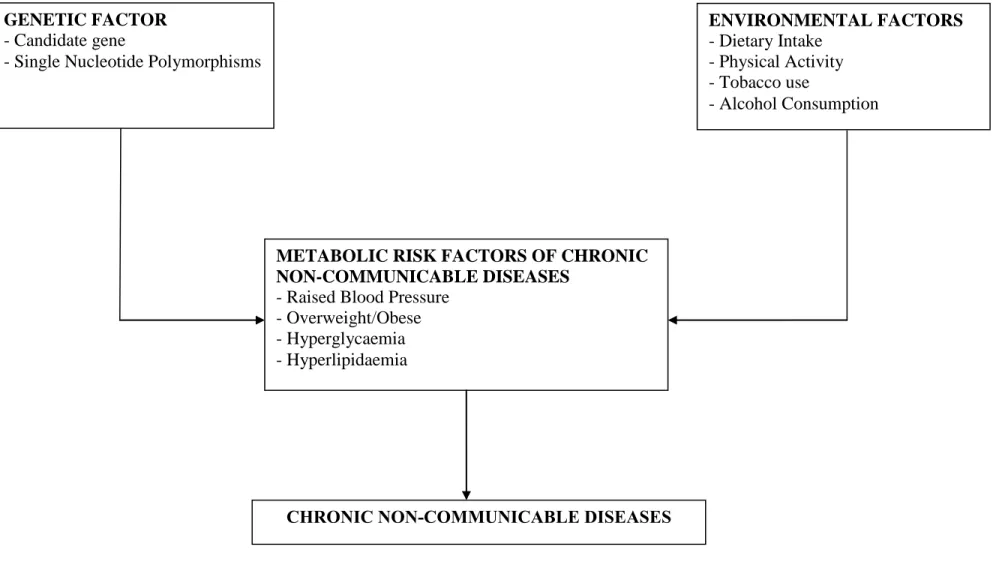
The conceptual framework used in this study is shown in Figure 2. The conceptual framework is based on the pre-history, definition, and importance of G x E interactions for complex diseases such as NCDs. The pre-history of G x E can be explained in a review that discussed that the variation of the heritable trait, body height is subjected to environmental factors such as nutrition [13]. In addition, two other studies have reported that there were variations in the risks of chronic NCDs such as cardiovascular and obesity, and type 2 diabetes (T2D) of the same population living in different settings/countries, therefore indicating other environmental influences such as cultural and lifestyle habits and ‘Westernisation’ [14,15].
G x E interaction can be defined as ‘joint effect’ between genetic and environmental factors [12,16]. The ‘joint effect’ in G x E interaction can be referred to a statistical level in which the interaction of two factors on the outcome is determined using statistical measures after adjustment of confounding factors [12]. The importance of applying G x E interactions in this study are as follows [12]:
1. It can help to predict the risk and to evaluate the beneficial changes of environmental exposures;
2. It can help to increase the power of the selected candidate gene and related polymorphisms involved in the cause of NCDs through an interaction effect with no marginal effect; and
3. It can help to increase the power on the effects of the various environmental exposures which may act on the genetic variations of susceptible individuals via evaluation of interactions.
With that, the conceptual framework in this study is divided into two aspects:
genetic factor and environmental factors. The genetic factor includes evaluating a selected candidate gene and related single nucleotide polymorphisms (SNPs). The following is the criteria used for the selection of a suitable candidate gene and related SNPs in this study:
1. The gene plays a wide involvement in several important physiological functions which are related to major chronic NCDs such as CVD; and
2. A minor allele frequency (MAF) of more than 0.2 for the selected SNPs among the Asian population due to limited sample size.
In this study, vascular endothelial growth factor receptor-2 (VEGFR-2), also known as kinase insert domain receptor (KDR) gene was selected as the candidate gene. The VEGFR-2 gene is expressed by vascular endothelial cells and its major functions are related to the cardiovascular system which include vascular growth and repair [17] and as a potent vasodilator [18]. With that, VEGFR-2 gene is a suitable candidate gene which also fulfils the above criterion one. However, based on the literatures, there is no evidence indicating the relationship between VEGFR-2 gene with diet and lifestyle habits. The VEGFR-2 gene SNPs: rs1870377 and rs2071559 were selected based on the above criterion two. As for the environmental factors, the evaluation of modifiable risk factors of chronic NCDs such as dietary intake, physical activity, tobacco use, and alcohol consumption were included. In a nutshell, all these factors both genetic and environmental factors were hypothesised as contributors to the metabolic risk factors of chronic NCDs which influence the risks of chronic NCDs.
GENETIC FACTOR - Candidate gene
- Single Nucleotide Polymorphisms
ENVIRONMENTAL FACTORS - Dietary Intake
- Physical Activity - Tobacco use
- Alcohol Consumption
METABOLIC RISK FACTORS OF CHRONIC NON-COMMUNICABLE DISEASES
- Raised Blood Pressure - Overweight/Obese - Hyperglycaemia - Hyperlipidaemia
CHRONIC NON-COMMUNICABLE DISEASES
Figure 2. Conceptual framework of genetic and environmental determinants of chronic non-communicable diseases
Aim and Specific Objectives
The aim of this study is to evaluate the gene-diet interaction effect between VEGFR-2 gene polymorphisms (rs1870377 and rs2071559) and dietary pattern on metabolic risk factors of chronic NCDs using physical (body mass index (BMI) and blood pressure) and biochemical parameters (glycosylated haemoglobin A1c (HbA1c), and blood lipids) in two different Asian populations, Japanese and Malaysian adults. The specific objectives are:
1. To determine physical and biochemical risk factors of chronic NCDs in Japanese and Malaysian adults;
2. To construct major dietary patterns in Japanese adults and in Malay, Chinese, and Indian of Malaysian adults;
3. To determine the correlation between dietary pattern with physical and biochemical measurements in Japanese and Malaysian adults;
4. To determine the association between VEGFR-2 gene polymorphisms (rs1870377 and rs2071559) with physical and biochemical measurements in Japanese and Malaysian adults; and
5. To determine the interaction effects between VEGFR-2 gene polymorphisms and dietary pattern on physical and biochemical risk factors of chronic NCDs in Japanese and Malaysian adults.
CHAPTER II LITERATURE REVIEW
Chronic non-communicable diseases
Chronic NCDs are lifestyle- and diet-related diseases which are prevalent worldwide affecting from low-income countries to high-income countries. The top four NCDs in most countries are CVD, cancer, chronic respiratory disease and diabetes mellitus [19]. The effects of chronic NCDs include mortality, morbidity and economic burden in terms of healthcare costs. The aetiology of chronic NCDs is multifactorial which comprises the components of genetics, diet and nutrition and lifestyle practices.
Hence, often times chronic NCDs can be prevented by reducing the risk factors via a healthy lifestyle.
Mortality, morbidity and economic burden of non-communicable diseases
The global prevalence of NCDs has been increasing in an alarming rate affecting mainly middle-and lower-income countries due to the rapid changes in globalisation, urbanisation and lifestyle transitions [20,21]. Hence, the total mortality of NCDs has been projected to increase by 15% in 10 years from 2010 [3]. In 2008, the number of deaths attributed by NCDs accounted for close to 65% out of total number of deaths worldwide [19]. In Japan, a high-income country and in Malaysia, an upper middle- income country, NCDs contributed to approximately 80% and 67% of total deaths in 2008 respectively with CVD and cancers being the two major disease contributors [7,8].
The top two NCDs which contribute to morbidity besides mortality include cancers and diabetes mellitus. Globally, it is estimated that the number of new cancer cases may double around after 25 years from the number of cancer cases reported in 2008, affecting more middle- and lower-income countries [22,23]. In 2008, one third of the total deaths were attributed from cancers in Japan and only half of one third in Malaysia [7,8]. Diabetes mellitus often associated with uncontrolled hyperglycemia is a risk factor for several other NCDs and chronic conditions such as CVD, kidney disease and disabilities due to amputations and blindness. Diabetes mellitus is the top four NCDs in the world contributing to around 10% of total deaths worldwide and less than 5% of total deaths in Japan and in Malaysia based on the 2008 statistics [7,8]. However, it can be considered that the susceptibility of diabetes mellitus in Malaysia is high. This is shown with an increasing trend for the prevalence of diabetes mellitus in which the prevalence among age 30 years and above increased from 8.3% in 1996 to 14.9% in 2006 and 20.8% in 2011 based on the nationwide population-based surveys [24].
The effect of NCDs has contributed to a huge economic burden to the country with increasing healthcare costs and lower work productivity. It is estimated in 2005 that several countries such as China and Brazil have lost several billions in U.S. dollars of their national income due to NCDs [25]. The economic burden of NCDs has therefore superseded other previous disease threats such as AIDS and malaria [20]. With that, worldwide and national organisations are working together to establish strategies in tackling the risk factors of NCDs for prevention and treatment measures.
Risk factors of chronic non-communicable diseases
The risk factors associated to chronic NCDs can be categorised into three categories: 1) non-modifiable risk factors such as genetics, age, and gender; 2) modifiable risk factors such as tobacco use or smoking, physical activity, alcohol consumption and diet; and 3) metabolic or physiological risk factors such as overweight and obesity, high blood glucose, blood pressure, and blood cholesterol levels. However, often times more attention is focused on managing the modifiable and metabolic risk factors to reduce the prevalence of chronic NCDs.
Smoking has been associated with chronic NCDs such as cancers and CVD affecting even secondary smokers. The mortality contributed from smoking has been increasing globally and is projected to account for close to 10 million deaths in 2020 [26]. In Japan, smoking prevalence was approximately 25% among adults above 20 years old based on the national survey in 2009 [27] while in Malaysia, the prevalence of smoking was close to 22% in adults age 18 years and above based on the 2006 national survey [28]. The second modifiable risk factor of NCD is physical activity and it has been documented in several literatures that regular physical activity has several health benefits including reducing the risks of several NCDs [29,30]. However, it is reported in 2008 that approximately a third of all adults worldwide did not have sufficient physical activity, with slightly higher percentage (more than 60%) in Japan and Malaysia [6,31].
Excessive alcohol consumption which is associated with chronic NCDs such as cancers, CVD and liver cirrhosis has contributed to almost 4% of all deaths globally in
2004 [20]. The average alcohol consumption documented between 2003-2005 was very much higher in Japan compared to Malaysia [32,33] since alcohol consumption is prohibited among the Malay population which accounts for approximately 60% of the total Malaysian population. The role of diet and nutrition in the prevention of chronic NCDs such as CVD are well documented in several literatures [34,35]. Low fruits and vegetables consumption and high intakes of dietary salt, saturated fats and trans fat are examples of unhealthy diets which are associated with the development of several chronic NCDs [29,36]. However, diets such as ‘Dietary Approaches to Stop Hypertension’ (DASH) and ‘Mediterranean diet’ and ‘Prudent diet’ have been associated with reduced risks of chronic NCDs [34-35,37-38].
The management of metabolic or physiological risk factors of chronic NCDs are important for the prevention and treatment of chronic NCDs. The prevalence of overweight and obesity, high blood glucose, blood pressure and cholesterol levels has been increasing over the years due to unhealthy diets and lifestyle habits such as smoking, alcohol consumption and physical inactivity. It is reported that a total of 2.8 million people die each year due to overweight and obesity, high blood pressure levels attributed to almost 13% of all deaths annually and the estimated global prevalence of high total cholesterol levels is 40% [6,29]. In Japan and Malaysia, the 2008 estimated prevalence for total overweight and obesity was 29.4% and 58.2%; raised blood pressure was 43.9% and 34.7%; and raised blood glucose was 7.7% and 10.5% respectively [7,8].
In Japan, the estimated prevalence of raised total cholesterol levels was 57.8% while no data was available for Malaysia [7,8]. The recent NHMS 2011 [24] in Malaysia has also revealed that the prevalence for overweight and obesity, hypertension, and
hypercholesterolaemia were all approximately 35% among adults age 18 years and above.
Genetic approach on chronic non-communicable diseases
The genetic approach in gene association studies involves two approaches: 1) candidate gene, a hypothesis-driven approach and 2) Genome wide association studies (GWAS), a hypothesis-forming approach. Recent GWAS have identified several candidate genes which are associated with metabolic risk factors of chronic NCDs such as blood pressure [39] and blood lipids [40]. Genetic studies involving candidate genes, on the other hand is a common approach to validate the associations of single nucleotide polymorphisms (SNPs) of these genes with a particular phenotype or disease [9].
The genetic factor is one of the non-modifiable risk factors of chronic NCDs.
Hence, G x E interaction studies are prominent among researchers as these studies are able to provide useful information on the combined effect of all related risk factors of NCDs [41]. In G x E interactions, interaction can be defined as “biological” which interprets a causal joint effect of two or more factors or “statistical” which does not imply or show any biological mode of action but is the change in the effect on one factor by the levels of one or more factors in some underlying scale [12,42]. In addition, in gene-diet interaction, the fields of nutrigenetics and nutrigenomics have emerged as new and promising approaches for personalised nutrition in the future [43,44]. The interactions between genetics, diet and nutrition and other environmental factors on chronic NCDs and associated risk factors are also well documented in several literatures
[44-47]. Hence, G x E interaction studies are important in the research of nutritional epidemiology.
Dietary pattern and chronic non-communicable diseases
There are two main approaches in dietary intake analysis which are single nutrient intake and dietary pattern (a combination of foods). The dietary pattern approach is a preferred method in nutritional epidemiologic studies compared to the single nutrient approach due to the reasons that people consume a combination of foods and the dietary effect on chronic NCDs may involve the interaction of several nutrients [10,11]. The common dietary patterns which are associated with chronic NCDs include
‘Mediterranean diet’, ‘Prudent diet’, ‘Western diet’ and ‘Japanese diet’.
The top chronic NCD which affects the world is CVD. Hence more attention has been focused in determining the association between dietary patterns and CVD. A meta- analysis has reported that ‘Mediterranean diet’ which comprises of high intakes of vegetables, fruits, legumes, cereals, fish, and moderate consumption of red wine has been associated with reduced overall mortality and mortality due to CVD and other chronic NCDs such as cancer [48]. Other similar dietary patterns as ‘Mediterranean diet’
are ‘Prudent diet’ rich in vegetables, fruits, legumes, and white meats such as fish and poultry, ‘Cosmopolitan diet’ rich in fried vegetables, salad, rice, chicken, fish and wine, and ‘Whole grains and fruit diet’ had similar reduced effect on total mortality death due to CVD, metabolic risk factors of CVD such as blood lipids and other chronic NCDs such as T2D [34,49-51]. However, there are other less healthy dietary patterns such as
‘Western diet’ and ‘Refined foods diet’ which comprise of mainly red meat, processed meat, refined grains, French fries, and sweets or desserts which were found to have an opposite effect on CVD and T2D compared to the healthy diets [35, 48-52].
Overweight and obesity are major risk factors for several other chronic NCDs such as T2D. However, there are some inconsistencies on the association of similar dietary patterns with physical parameters of overweight and obesity such as BMI [53]. It is documented that ‘Prudent diet’ and a dietary pattern rich in pasta and meats were both associated with higher BMI and waist circumference among elderly subjects in the EPIC-Italy cohort [54]. Other dietary patterns such as fruit and cereal diet, and rice diet were associated with higher risk of obesity among Hispanic elders [55]. A study among Mongolian adults have indicated that subjects in the highest quintile of the dietary pattern rich in processed meat and potato had higher risk of obesity while subjects in the highest quintile of the dietary pattern rich in whole grains, mixed vegetables, and fruits had lower risk of obesity [56].
Dietary patterns differ between western countries and eastern or Asian countries and this may contribute to different risks for the prevalence of chronic NCDs. In Japan, the traditional ‘Japanese diet’ rich in soybean products, fish, seaweeds, vegetables, fruits and green tea was associated with lower risk of CVD but higher prevalence in hypertension. On the other hand, dietary patterns such as ‘Western diet’ and ‘animal food diet or meat diet’ were associated with higher risk of CVD and blood lipids [57,58].
Gene-diet interactions and chronic non-communicable diseases
Genes and environmental factor especially diet can interact and contribute to the risk of chronic NCDs. The diet interactions can be in the form of a single nutrient or dietary pattern. The most documented nutrient in gene-nutrient interactions is dietary fat in which a review has also reported the interactions between dietary fat and several candidate genes which are related to metabolic risk factors of chronic NCDs such as metabolic syndrome [59]. In addition, a recent study has also shown significant gene- diet interactions involving total fat and saturated fat with several candidate genes related to lipid metabolism on blood lipid levels among the Inuit population [60].
Besides the single nutrient intake approach, dietary pattern approach can also be used a complementary approach to the former approach in dietary intake analysis. In addition and previously discussed, several dietary patterns were found to be associated with chronic NCDs. Hence, it is not surprising that the dietary pattern approach is incorporated in gene-diet interaction studies involving chronic NCDs. This is shown in a study among older adults in which significant gene-diet interactions were obtained between dietary pattern derived by cluster analysis and peroxisome proliferators- activated receptor- gene in relation to body composition and obesity [61]. Another recent longitudinal study has also reported significant gene-diet interactions between dietary patterns derived from factor analysis and insulin-induced gene 2 polymorphisms on indicators of metabolic syndrome [62].
VEGFR-2 gene polymorphisms and chronic non-communicable diseases
There are five ligands of the vascular endothelial growth factor (VEGF) family which are VEGF-A, VEGF-B, VEGF-C, VEGF-D, VEGF-E and placenta growth factor (PLGF). These VEGF ligands bind to their respective receptors (VEGFR-1, VEGFR-2, and/or VEGFR-3) which are expressed in different cells such as haemotopoietic stem cells, monocytes and macrophages for VEGFR-1, vascular and lymphatic endothelium for VEGFR-2 and lymphatic endothelium for VEGFR-3.
The VEGFR-2 gene located on chromosomes 4q11-q12 [17] was selected as the candidate gene due to its wide involvement in several important physiological functions which are related to the major chronic NCDs such as CVD. Its major functions are related to the cardiovascular system which include vasculogenesis and angiogenesis [17]. In addition, VEGFR-2 is also involved in the production of nitric oxide, a potent vasodilator for the management of hypertension [18].
Recent studies have indicated significant associations between variants of VEGFR-2 gene with NCDs. The coding SNPs of the VEGFR-2 gene, rs1870377 and rs2305948 were associated with coronary heart disease (CHD) in which A allele of both rs1870377 and rs2305948 had higher risk of CHD [63]. The A allele of rs2305948 had also increased risk for stroke recurrence [64]. There were conflicting results in the associations of the regulatory SNP at the promoter region, rs2071559 with several NCDs in which C allele was associated with increased risk for CHD [63] but lower risk for the susceptibility to stroke and its recurrence [64], while T allele was associated with age-
related macular degeneration (AMD) [65]. A recent study has also indicated that there were significantly less TT-homozygote subjects of the rs2071559 VEGFR-2 gene SNP in patients with neovascular AMD [66].
CHAPTER III
MATERIALS AND METHODS
Study design
This cross-sectional study using convenience sampling comprised of adults from two different Asian populations: Japanese and Malaysians. In the recruitment and prescreening process, the exclusion criterion was subjects diagnosed with any terminal illness were excluded from the study. The inclusion criteria were: aged 30-65 years old;
not pregnant; not hospitalised during the course of participation; Japanese citizenship for the Japanese subjects and Malaysian citizenship for the Malaysian subjects. There are several ethnic groups in Malaysia and offsprings of inter-racial marriages may contribute to a mix of genetic background among the Malaysians. This may interfere with the genetic analysis of the present study hence an important inclusion criteria was included in the recruitment of Malaysian subjects, that is the subjects must be of an offspring from two generations of the same ethnic group either Malay, Chinese or Indian. The recruitment of subjects was performed by two methods: granted permissions by government and private organisations for employees to participate and free health screenings for the public. In the Japanese population, a total of 136 Japanese adults residing in Kamigoto island and Nagayo town of Nagasaki Prefecture were included in this study. As for the Malaysian population, the sample subjects were comprised of the three main ethnic groups: 153 Malays, 179 Chinese and 177 Indians residing in Selangor and Kuala Lumpur of Klang Valley. This study obtained approval from the Research
Ethics Committee of University of Nagasaki, Japan and UCSI University, Malaysia and all subjects provided written informed consent.
Health and dietary intake information
In both populations, a standard questionnaire was used to obtain demographic data (age and gender), health information (past history, presence and/or on medication of eight common lifestyle-related chronic diseases: CVD, hypertension, hypercholesterolaemia, diabetes mellitus, kidney disease, osteoarthritis, liver disease and thyroid disease) and lifestyle practices (smoking, alcohol consumption and physical activity). Dietary intake information for the Japanese population was obtained from a previously validated semi-quantitative food frequency questionnaire (FFQ) [67].
However, for the Malaysian population, a new FFQ was developed and adapted from two sources: 1) semi-quantitative FFQ used in the national Malaysian Adult Nutrition Survey (MANS) 2002/2003 [68] to obtain the list of foods commonly consumed by a period of one year and serving size. The format of the FFQ used in the 2002/2003 national MANS [64] requires the respondents to fill in the frequency of intakes and servings using numbers which would be time-consuming for the respondents therefore a simpler format for the section on frequency of intakes and serving sizes from another sample of FFQ [69] was adapted. The final version of the semi-quantitative FFQ was comprised of 91 food items which were divided into nine food groups of the same nutrient profiles (cereals and cereal products; meat and meat products; fish and seafood;
eggs, legumes and legume products; milk and milk products; vegetables and fruits;
beverages; alcoholic beverages; and confectionaries, spreads and
condiments/miscellaneous items) with five categories of consumption frequency over one year (never/1 time per month, 2-3 times per month, 1-2 times per week, 3-4 times per week, and 5 times per week). In the semi-quantitative FFQ, there were also three categories of serving size (small, medium and large) with a detailed guide of the medium serving size for the food items. A small serving size represented about one-half (1/2) the medium size or less while the large serving size represented about one and-a-half times the medium size or more [69]. The standard questionnaire and FFQ were presented in Japanese for the Japanese subjects while for the Malaysian subjects, the questionnaires were presented in English for the Chinese and Indian subjects and were also translated to the Malay language for the Malay subjects. The questionnaires were either self- administered or were assisted by trained nutritionists for subjects who were illiterate.
Physical and biochemical measurements
The height measurements were obtained via self-report for the Japanese subjects while for the Malaysian subjects, height measurements measured to the nearest 0.1cm were obtained using a height meter (Seca body meter 208, Seca, Hamburg, Germany). Height information was then entered into body composition analyzer (TBF- 102, Tanita Corporation, Tokyo, Japan) for Japanese subjects and body fat analyser (Omron HBF-356, Omron Health Care Co., Ltd., Kyoto, Japan) for Malaysian subjects to obtain the BMI values. Systolic (SBP) and diastolic (DBP) blood pressure readings of each subject were obtained in a sitting position after a rest of 3-5 minutes by trained nurses or technicians using mercury sphygmomanometer (Tokyo, Japan) and automatic
blood pressure monitor (Omron SEM-1, Omron Health Care Co., Ltd., Kyoto, Japan) for Japanese and Malaysian subjects respectively. The criterion of fasting for at least more than 2 hours was imposed for the biochemical test however subjects were also strongly encouraged to fast overnight for more than eight hours. The biochemical parameters: glycosylated haemoglobin A1c (HbA1c) and blood lipids (triglycerides, low-density lipoprotein cholesterol (LDL-C) and high-density lipoprotein cholesterol (HDL-C)) were obtained from the Japanese subjects. Similar biochemical parameters were obtained for the Malaysian subjects: HbA1c and blood lipids (total cholesterol, triglycerides, LDL-C and HDL-C). However, in the second batch of sampling involving Malay and Indian Malaysian subjects, an additional of three biomarkers: uric acid for detection of gout, apolipoprotein A-1 and apolipoprotein B100 for CVD risk were obtained. Biochemical parameters of both populations were analysed by private pathological laboratory in respective countries (BML, Nagasaki, Japan and UCSI Path Lab, Kuala Lumpur, Malaysia). For the Malaysian subjects, total cholesterol/HDL-C ratio was obtained by calculation and LDL-C values in Chinese Malaysian subjects were obtained using the Friedewald formula.
Genotyping analyses
Buccal mucosal cells used for DNA extraction were collected from all of the subjects using polyester fiber-tipped applicator swab (Falcon, Becton Dickinson and Company, Sparks, MD, USA). DNA extraction and purification were performed using QIAamp DNA Blood Mini kit (Qiagen, Germantown, MD, USA). Genotyping of VEGFR-2 gene polymorphisms (rs1870377 and rs2071559) was performed by real-time
PCR system (ABI 7300, AppliedBiosystems Japan, Tokyo, Japan) for Japanese and Chinese Malaysian subjects using Taqman Genotyping Master Mix (Applied Biosystems, Foster City, CA, USA) and ready-made TaqMan probes based on reference SNP number, Taqman SNP Genotyping Assays (Applied Biosystems, Foster City, CA, USA). However, the genotyping analyses for the Malay and Indian Malaysian subjects were performed with real-time PCR system (StepOne, AppliedBiosystems, Singapore) using Taqman GTXpress Master Mix (Applied Biosystems, Foster City, CA, USA) with ready-made TaqMan probes mentioned earlier. All genotyping procedures were followed in reference to the manufacturer’s protocol.
Statistical analyses
Statistical analysis was performed using Statistical Package for Social Sciences (SPSS V.11J for Windows, SPSS Inc., Tokyo, Japan and SPSS Statistics 18.0, IBM SPSS, Armonk, NY, USA). Dietary intake information of each subject which included the frequency and serving size of consumption for each food item was obtained from respective FFQ for both populations. The dietary intake information obtained was then used to construct the dietary patterns using factor analysis by applying principal component analysis. A primary analysis using the criterion of eigenvalues >1.0 was used to extract independent factors. However, the final number of independent factors which formed the total number of the major dietary patterns for Japanese subjects and each ethnic group (Malay, Chinese, and Indian) of Malaysian subjects was identified based on the Scree plot. It is important to suppress low factor loading values and identify
important factor loadings hence the criterion to select factor loadings of values above 0.40 was used. However, this was an exception in the construction of major dietary patterns from the Chinese Malaysian subjects in which the criterion of using factors loadings above 0.30 was used. This decision was made due to two reasons: 1) rice and rice porridge with the factor loading of 0.36 has similar nutrient profile as noodles (factor loading 0.57) in the cereal and cereal products of the extracted dietary pattern and 2) rice is a staple food among all Malaysians. In addition, alcohol with the factor loading 0.34, which is above 0.30 was also included in the extracted dietary pattern. Once major dietary patterns have been identified, factor scores were derived for each subject in each dietary pattern for correlation analysis. Factors scores were also catergorised into tertiles for further statistical analysis involving gene-diet interactions. The normality of each variable for continuous data was tested using Kolmogorov-Smirnov test. The variables (triglycerides and total cholesterol/HDL ratio) in the Chinese Malaysian subjects were not normally distributed hence data for both of these variables were transformed using log10 transformation. In the Malay and Indian Malaysians, all of the variables were in normal distribution except for variables HbA1c, triglycerides, total cholesterol/HDL-C ratio and SBP. The association and correlation analyses were performed using a mixture of parametric tests and non-parametric tests: student t-test, analysis of variance (ANOVA) with post-hoc analysis (Tukey test), analysis of covariance (ANCOVA) with post-hoc analysis (Sidak correction), Mann-Whitney, Kruskal Wallis, chi-square, and Spearman’s rho. Two-way ANOVA was used to determine gene-diet interactions. A probability value of <0.05 was considered statistically significant.
CHAPTER IV RESULTS
Physical, biochemical, and genetic characteristics
The total number of subjects participated in the study include 136 Japanese subjects (n=94 (69%) males and n=42 (31%) females), 153 Malay (n=39 (25%) males and n=114 (75%) females), 179 Chinese (n=75 (42%) males and n=104 (58%) females) and 177 Indian (n=40 (23%) males and n=137 (77%) females) of the Malaysian subjects with more males in the Japanese subjects and more females in all of the ethnic groups among the Malaysian subjects. Table 2 summarises the physical, biochemical and genetic characteristics of both Japanese and Malaysian (by ethnicity) subjects.
Overall, the Japanese subjects in this study had better health status compared to the Malaysians with significantly lower in mean BMI, HbA1c, triglycerides, LDL-C and significantly higher in mean HDL-C levels (Table 2). However, mean blood pressure levels among the Japanese male subjects were significantly higher compared to the Malaysians (Table 2). Among the Malaysians, the Indians had poorer health status compared to either Malays or the Chinese with significantly higher mean levels for BMI, HbA1c, and total cholesterol/HDL-C ratio (Table 2). In comparison with gender in relation to health status, female subjects in both populations faired better compared to the males. Male Japanese subjects had significantly higher mean values for SBP (134 ± 1.59 vs 115 ± 1.91 mmHg) and DBP (83.1 ± 1.01 vs 71.9 ± 1.59 mmHg) but lower HDL-C (1.51 ± 0.04 vs 1.74 ± 0.05 mmol/L) compared to females. In the Malaysian
subjects, the males of Malay, Chinese and Indian had significantly higher mean values for SBP (127 ± 2.32 vs 120 ± 1.46; 130 ± 1.51 vs 117 ± 1.36; and 130 ± 2.70 vs 120 ± 1.26 mmHg), DBP (79.4 ± 1.74 vs 75.0 ± 0.98; 80.2 ± 1.11 vs 74.3 ± 0.91; and 80.2 ± 1.63 vs 75.2 ± 0.76 mmHg), triglycerides (1.92 ± 0.18 vs 1.47 ± 0.07; 2.36 ± 0.21 vs 1.41 ± 0.09; and 2.39 ± 0.24 vs 1.60 ± 0.07 mmol/L), and total cholesterol/HDL-C ratio (5.74 ± 0.27 vs 4.07 ± 0.14; 4.95 ± 0.17 vs 3.50 ± 0.11; and 5.78 ± 0.27 vs 4.52 ± 0.09) but lower mean value for HDL-C (1.05 ± 0.04 vs 1.45 ± 0.03; 1.16 ± 0.03 vs 1.57 ± 0.04; and 1.02 ± 0.04 vs 1.24 ± 0.03 mmol/L) in the respective order by ethnicity compared to the females (p<0.05).
The genotype frequencies for VEGFR-2 polymorphisms in the Japanese were 14.7% of AA (n=20), 47.1% of AT (n=64) and 38.2% of TT (n=52) for rs1807377 and 6.6% of CC (n=9), 30.9% of CT (n=42) and 62.5% of TT (n=85) for rs2071559 and the allele frequencies were consistent with the data available in The National Center for Biotechnology Information SNP database [70,71]. In the Malaysian subjects, the genotype frequencies among the Malays were: 24.2% of AA (n=37), 45.8% of AT (n=70) and 30.0% of TT (n=46) for rs1807377 and 15.7% of CC (n=24), 51.0% of CT (n=78) and 33.3% of TT (n=51) for rs2071559; Chinese: 27.9% of AA (n=50), 48.6% of AT (n=87,) and 23.5% of TT (n=42) for rs1870377 and 12.8% of CC (n=23), 50.3% of CT (n=90) and 36.9% of TT (n=66) for rs2071559; and Indians: 1.7% of AA (n=3), 27.7% of AT (n=49) and 70.6% of TT (n=125) for rs1807377 and 32.2% of CC (n=57), 48.6% of CT (n=86) and 19.2% of TT (n=34) for rs2071559. The genotypes at both VEGFR-2 SNP sites for Malaysian subjects in this study were conformed to the Hardy- Weinberg equilibrium using a web-based tool [72]. Interestingly, the allele frequencies
for rs1870377 and rs2071559 among the Chinese Malaysian subjects in the present study were calculated to be also similar to those of the Han Chinese population [70,71].
Dietary patterns and correlations with physical and biochemical parameters in Japanese and Malaysian subjects
Two major dietary patterns were extracted in the Japanese subjects: ‘Japanese diet’ (JD) and ‘Western diet’ (WD). JD was derived from high consumption of vegetables, fish, boiled foods and vinegared dishes, seaweed and high sodium foods or dishes such as pickles, miso soup, soy sauce and foods boiled in soy sauce, and rice while WD was comprised of high consumption of eggs, high-fat foods or dishes such as deep- and pan-fried foods, butter, margarine and mayonnaise and various desserts such as sweets, cakes, ice cream, pudding and chocolates (Table 3). Significant positive correlation was obtained between age and JD indicating that the more of the older subjects adopted this diet compared to the younger subjects. As for the WD, there were significant inverse correlations with DBP and LDL-C levels (Table 7).
Among the Malaysian subjects, two major dietary patterns were obtained in the Chinese group and three major dietary patterns in both Malay and Indian groups. In the Malay group, the three distinct dietary patterns include ‘Burgers, nugget, noodles and local fruits diet’ (BNNF), ‘Seafood, rice and protein foods diet’ (SRPD) and ‘Fruits and vegetables diet’. BNNF was derived from high consumption of various types of common fast foods such as meat burgers (chicken, beef or other meats) and nugget, noodles and locally available fruits such as jackfruit, durian or rambutan; SRPD which is comprised
of high consumption of fish, shrimp, squid, rice, chicken egg, and soybean curd; and the third major dietary pattern, FVD which is comprised of high intakes of a variety of fruits and vegetables such as banana, papaya, mango, pineapple, starfruit, guava, green leafy vegetables, cabbage, cauliflower, and broccoli (Table 4). The dietary pattern of BNNF was inversely correlated with age indicating that the younger Malay subjects consumed more of this diet compared to the older subjects. There were also significant positive correlations between dietary pattern of SRPD with biomarkers uric acid, triglycerides, LDL-C, total cholesterol/HDL-C ratio, and apolipoprotein B100 with significant negative correlations with HDL-C and apolipoprotein A-1 (Table 8). In addition, there was a significant positive correlation between BMI and dietary pattern of FVD (Table 8).
‘Balanced diet’ (BD) and ‘Meat, rice and noodles diet’ (MRND) were the two distinct dietary patterns obtained among the Chinese group in which BD was derived from high consumption of breads and breakfast cereals, fish, soybean curd and all types of fruits and vegetables while MRND was derived from high intakes of pork, chicken meat and eggs, noodles, rice and rice porridge and alcohol (Table 5). The older Chinese subjects adopted more of BD compared to the younger subjects as significant positive correlation was obtained with age. However, the dietary pattern of MRND may pose a health risk to the Chinese subjects with significant positive correlations with all of the measured parameters except for SBP, HbA1c, total cholesterol and LDL-C levels (Table 9)
Lastly, the three major dietary patterns extracted in the Indian group were
‘Vegetables, fruits and egg diet’ (VFED), ‘Dairy and vegetable protein diet’ (DVPD) and ‘Animal protein diet’ (APD). The dietary pattern of VFED was comprised of high intakes of all types of vegetables, fruits such as papaya, mango, pineapple, starfruit, guava, apple, orange or pear and chicken eggs; DVPD was comprised of high intakes of dairy products such as cheese, yogurt, milk, fermented soy and pulses or nuts; and APD was comprised of high intakes of meat burgers, chicken, beef or mutton and fish (Table 6). In the Indian group, significant correlation was only obtained in the dietary pattern of DVPD in which DVPD was inversely correlated with SBP levels (Table 10).
Association of VEGFR-2 gene polymorphisms with physical and biochemical parameters in Japanese and Malaysian subjects
In the Japanese subjects, there were only significant associations between BMI with genotypes of rs1870377 and HDL-C with genotypes of rs2071559 in Japanese subjects (Table 11). The CC-homozygote subjects of rs2071559 had significantly higher mean HDL-C level compared to CT-homozygote and TT-homozygote subjects after adjusting for confounding variables, age and BMI (Figure 3). However, among the Malaysian subjects, only significant associations between VEGFR-2 gene SNPs and blood lipids were obtained in Malay (Table 12) and the Chinese (Table 13) subjects. In the Malay group, CC-homozygote subjects of rs2071559 had significantly higher mean blood triglyceride levels compared to CT-homozygote and TT-homozygote subjects (Table 12). In the Chinese Malaysian subjects, there was a significant association between VEGFR-2 gene rs2071559 SNP and LDL-C levels (p=0.048) but significant
difference between genotypes was not obtained, It is shown that TT-homozygotes of rs2071559 had higher mean in LDL-C (Figure 4) and TT-homozygotes of rs1870377 had significantly higher means in total cholesterol and LDL-C levels compared to other genotypes after adjusting for age, BMI, smoking, alcohol consumption and physical activity practices (Figures 5 and 6). No significant associations (p>0.05) were obtained between genotypes of VEGFR-2 gene SNPs (rs1870377 and rs2071559) with all measured physical and biochemical parameters in Indian Malaysian subjects (data not shown).
Interaction effects of dietary pattern and VEGFR-2 gene polymorphisms in Japanese and Malaysian subjects
In this study, the gene-diet interactions were not significant among the Japanese subjects. However, among the Malaysians, there were only significant gene-diet interactions between dietary patterns and VEGFR-2 gene SNPs in the Malay Malaysian subjects. The gene-diet interactions between rs1870377 and BNNF and also rs2071559 and FVD in Malays had significant effects on uric acid levels (Tables 14 and 15). The high risks groups for uric acid levels obtained in the significant gene-diet interactions were TT-homozygote of rs1870377 SNP in the highest tertile of BNNF and TT- homozygote subjects of rs2071559 SNP in the lowest tertile of FVD. Several trends were also observed in the gene-diet interaction between rs1870377 and BNNF. In the highest tertile of BNNF among the three genotypes of rs1870377, AA-homozygote subjects had the lowest uric acid levels, followed by AT-heterozygote and TT- homozygote subjects and among all of the TT-homozygote subjects of rs1870377, the
uric acid levels increase from the lowest tertile to the highest tertile of dietary pattern, BNNF. Significant gene-diet interaction was also obtained in Malays between rs2071559 SNP and dietary pattern of SRPD on triglyceride levels in which the CC-homozygote subjects in the highest tertile of SRPD had the highest triglycerides level with an increasing trend of triglyceride levels from the lowest tertile to the highest tertile of SRPD among the CC-homozygote subjects (Table 16). However, in the Chinese Malaysian subjects, there was only a borderline interaction (p=0.059) between dietary pattern, MRND and VEGFR-2 gene polymorphism (rs1870377) on blood HbA1c levels (data not shown). No significant gene-diet interactions were observed between VEGFR-2 gene SNPs and dietary patterns on all measured parameters in the Indian Malaysian subjects (data not shown).
CHAPTER V DISCUSSION
The study of G x E or gene-diet interactions is crucial to achieve personalised medical care and nutrition in the future. In addition, the evaluation of G x E interactions is of great importance especially in the Asian countries due to the diverse diet and lifestyle habits influenced by different cultures. Based on the literature search, there are also limited studies on G x E interactions among the Asian populations. Hence, in this study, the gene-diet interaction between dietary pattern and VEGFR-2 gene polymorphisms (rs1870377 and rs2071559) on physical and biochemical risk factors of chronic NCDs was determined in two different Asian populations, Japanese and Malaysian adults. Significant individual associations of the dietary component in the form of dietary patterns and genetic component in VEGFR-2 gene polymorphisms (rs1870377 and rs2071559) were obtained among selected populations and the overall results in this study have indicated that blood lipids were the major biomarkers associated in both dietary and genetic components. However, in the gene-diet interactions, significant interaction effects between selected dietary patterns and VEGFR-2 gene SNPs were only obtained among the Malay subjects on blood uric acid and triglycerides while there was a borderline gene-diet interaction effect between MRND and rs1870377 on blood HbA1c levels in the Chinese Malaysian subjects.
The major metabolic risk factors contributing to chronic NCDs are high blood pressure, blood glucose, blood cholesterol and overweight and obesity. The 2008 estimated prevalence of these metabolic risk factors have revealed that the Malaysian
population had higher total prevalence in high blood glucose, overweight and obesity compared to the Japanese population while the Japanese population had higher prevalence in high blood pressure [7,8]. This finding is consistent with the results of this study which showed that the Japanese subjects had better overall health status compared to the Malaysian subjects. This could be due to the different dietary and lifestyle habits of both populations which may influence the health status of the people. It is reported that the ‘Japanese diet’ rich in soybean products, fish, seaweeds, vegetables, fruits and green tea was associated with increased risk of hypertension but decreased risk of CVD mortality [57]. In addition, the Japanese dietary intakes of high fish consumption rich in polyunsaturated fats together with low intakes of saturated fats from meats have also contributed to the low prevalence of hypercholesterolaemia and low mortality rate from CHD among the Japanese population [73]. In Malaysia, the recent rapid industrialisation may have contributed to the transition of more nutritional problems involving over- nutrition than previous concerns in the past of under-nutrition. The change in a more affluent society may result to more Malaysians adopting an unhealthy lifestyle of high intakes of fats and refined carbohydrates and more sedentary leading to the poorer health status [74]. Among the three ethnic groups in the Malaysian subjects, the Indian subjects had poorer health status with significantly higher BMI, blood HbA1c levels and total cholesterol/HDL-C ratio compared to the other ethnic groups. These results were similar to the national surveys which indicated that the Indians had higher prevalence in overweight and diabetes mellitus [24,28,75].
The associations between VEGFR-2 gene polymorphisms (rs1870377 and rs2071559) and blood lipids were found to be significant only among the Japanese,
Malay and Chinese Malaysian subjects of this study. The C allele of rs2071559 in Japanese subjects had significantly higher mean HDL-C levels. Among the Malaysian subjects, T allele of both rs1870377 and rs2071559 in Chinese Malaysian subjects had significantly higher mean total cholesterol and/or LDL-C levels after adjusting for potential confounders while C allele of rs2071559 in Malay subjects had significantly higher mean in blood triglycerides levels. The Indian subjects had poorer health status such as higher risk of diabetes mellitus compared to the other ethnic groups of the Malaysian subjects but significant genetic associations were not obtained. In the Indian subjects, the small MAF of less than 0.2 for VEGFR-2 gene SNP rs1870377 together with the limited sample size (only three of AA-homozygote subjects) could have contributed to the insignificant genetic associations obtained. As for VEGFR-2 gene SNP rs2051559, it was observed that there was a distinct difference in allele frequencies between Indian subjects compared to Malay, Chinese and even Japanese subjects. The Indians were more dominant in the C allele which may not contribute to any effect on the expressions levels of VEGFR-2 gene hence resulting to the insignificant associations.
Previous study involving Japanese subjects in relation to VEGFR-2 gene SNPs (rs1870377 and rs2071559) reported no significant associations on the development of coronary artery lesion in Kawasaki disease subjects [76]. There were two studies involving the Han Chinese population which reported that the A allele of rs1870377 and C allele of rs2071559 had a higher risk of CHD while C allele of rs2071559 had a lower risk in susceptibility to stroke and recurrence [63,64]. Another study among Caucasians originated from Italy has reported that T allele of rs2071559 had higher risk of AMD [65] while a recent study also conducted in Italy has reported the number of TT-
![Figure 1. Proportion of global NCD deaths under the age of 70, by cause of death, 2008 Adapted from [6]](https://thumb-ap.123doks.com/thumbv2/123deta/5687499.1012257/15.918.248.757.679.914/figure-proportion-global-ncd-deaths-cause-death-adapted.webp)