Biodiversity and Ecosystem Management
for Sustainable Development in
North Tonle Sap Region, Cambodia
2020
Doctoral Dissertation
Biodiversity and Ecosystem Management
for Sustainable Development in
North Tonle Sap Region, Cambodia
SOMALY CHAN
Supervisor : Professor Dr. Machito Mihara
Advisors : Professor Dr. Fumio Watanabe
: Professor Dr. Keishiro Itagaki
: His Excellency Dr. Sinisa Berjan
i
Summary
1. Background and Objectives
Cambodia is situated in the region of Southeast Asia and its territory consists of a mixture of low-lying plains, mountains, the Mekong Delta and the Gulf of Thailand. The country has a total land area of 181,035 kilometers squared, a 443-kilometer coastline along the Gulf of Thailand and a population estimated at over 16 million in 2018. The largest area of the country falls within the Mekong River Basin, which is crossed by the Mekong River and its tributaries, including the Tonle Sap River, which joins the Tonle Sap Great Lake.
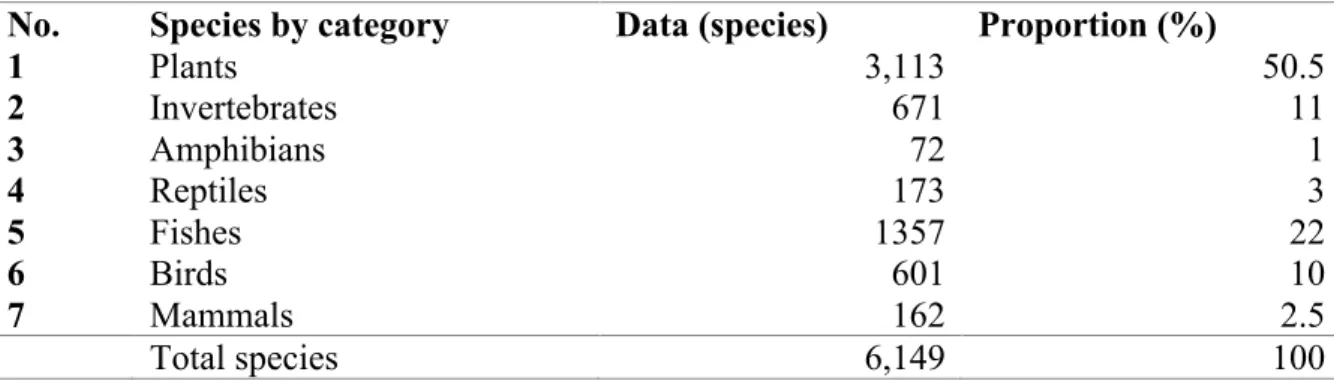
Cambodia’s current record of biodiversity in relation to the inventory lists of all species known is 6,149 species in the major groups of mammals, birds, reptiles, amphibians, fish, plants and invertebrates. Cambodia is predominantly dependent on its rich biodiversity and other natural resources for its socio-economic development and for the population’s food, livelihoods and well-being.
As Cambodia emerged from civil war, and during the rapid development process that the country went into thereafter, a great deal of pressure was put on the use and management of natural resources and the ecosystem, in many sensitive areas of high value in terms of biodiversity. In response to these pressures, twenty-three Protected Areas were established under a Royal Decree in 1993 to protect areas of environmental and cultural importance. These were classified into four categories: Natural Parks, Wildlife Sanctuaries, Protected Landscapes and Multiple Use Areas. Each of these types of Protected Area has a different nature and is submitted to different controls. Within the Royal Government of Cambodia’s reform process related to environmental management, the number of Protected Areas has increased dramatically, to cover 41 per cent of the total land area of the country. This represents a very major commitment to the protection of biodiversity, along with associated environmental services and cultural values, by the Royal Government of Cambodia.
By definition, a Protected Area is a clearly defined geographical space, recognized, dedicated and managed, through legal or other effective means, to achieve the long-term conservation of nature with associated ecosystem services and cultural values. However, Cambodia has defined Protected Areas not only for conservation purposes but also for the
ii
sustainable use of natural resources, which contribute to socio-economic development and cultural preservation. Further detailed guidelines on the management of Cambodia’s Protected Areas are set out in the Protected Areas Act of 2008 of the Royal Government of Cambodia. In 2018, the Ministry of Environment defined the country’s Protected Area management zones based on the ecosystems and geographical characters that these contained. The North Tonle Sap Region represents a unique ecosystem in that it interlinks between nature and cultural heritage through its interaction between three different ecosystems – those of mountain, plateau and wetland. Conservation and management of this region are of great value and significance.
Unfortunately, the North Tonle Sap Region has suffered from over-exploitation of natural resources as a consequence of unsustainable development, population growth, migration and climate change, as well as invasions of alien species. These threats are affecting not only the region’s biodiversity and ecosystem but also its population’s livelihoods, the local economy and its cultural heritage.
This study discusses the effectiveness of the system of management of biodiversity and ecosystem in the North Tonle Sap Region by exploring relevant environmental issues; assesses the value of biodiversity and ecosystem services in the region, by means of the review of a number of examples; and presents effective strategies and measures to use in working with natural resources for sustainable socio-economic development and human well-being.
2. Cambodia’s Biodiversity and Ecosystem Services
Cambodia is rich in biodiversity, in terms of its ecosystem and species and genetic levels, including plants, animals and microorganisms. The country contains one of the world’s largest natural freshwater lakes, in the shape of the Tonle Sap Great Lake. Large forested landscapes and grasslands support a rich biodiversity, including endangered and rare large mammals, birds, reptiles, insects and plants species. Freshwater wetlands are of great importance for a diversity of fish (estimated at more than 850 species), amphibians, regionally significant water-bird colonies and river dolphins. Coastal and marine habitats support major areas of seagrass, coral reefs, fish nurseries and turtles. The number of species by category is presented the following section.
iii
Biodiversity supports human societies from an ecological, economic, cultural and spiritual perspective. Ecosystems provide a habitat for plants, animals and microorganisms that we can use or that perform useful functions.
Economically, the biodiversity and its ecosystem services contribute to the local economy through ecotourism and through the provision of natural resources, including medicinal and non-timber forest products, for either subsistence use or commercial purposes. Millions of people, particularly in rural areas, depend directly on the natural environment for their daily food, water and energy needs and their livelihoods. Cambodian biodiversity and ecosystem services are intimately linked to maintain the sustainability and productivity of agriculture and inland fisheries.
Based on the characteristics of the Tonle Sap ecosystems and their relative contributions, production of freshwater fish for the year 2011 is estimated at 37,000 tons for fresh water cage farming, with gross revenue generated from the Pangasius and Snakehead fish species at more than US$ 35 and US$ 15 million, respectively. Moreover, the total annual contribution of Veun Sai-Siem Pang National Park was US$ 129.84 million. In one study, Dr. John Talberth, Ph.D., Senior Economist of the United States Agency for International Development, shows that the value of non-timber forest products such as wild tree fruits to local villagers in the Cardamom Mountains is estimated at around US$ 350 per household per year. In addition to this, total annual revenue to the community from service provision to Kulen Promtep Wildlife Sanctuary reached to US$ 18,523 in 2016.
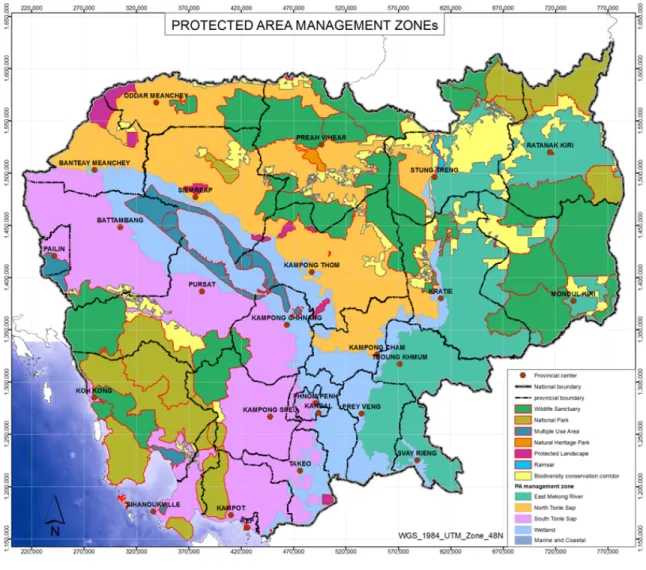
In order to protect the ecosystems of the country for further sustainable use, since 2016 the Royal Government Cambodia has been putting in place reforms to the management structure of the Protected Areas System, through zoning it as follows: East Mekong River Zone, North Tonle Sap Zone, South Tonle Sap Zone, Wetland Zone and Marine and Costal Zone.
3. Biodiversity and Ecosystem Management in the North Tonle
Sap Region
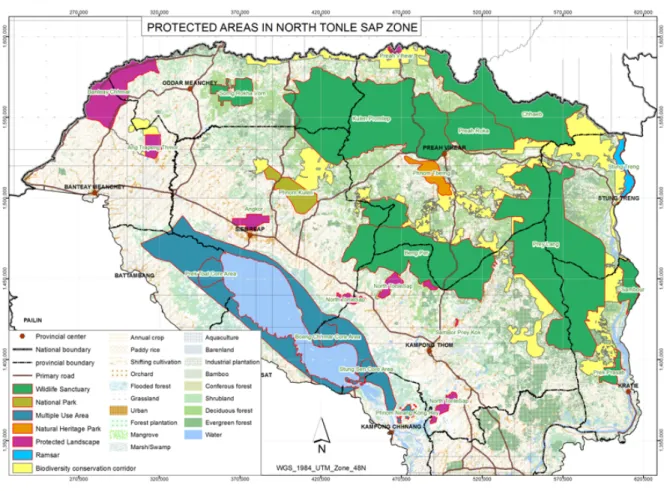
The North Tonle Sap Region is composed of mountains, plateaus, plains and wetlands, which all coexist in a complex ecosystem landscape that sees harmonization between the region’s natural and cultural heritage. This, of course, means that the region
iv
represents a unique ecosystem of very significant value for the country’s social and economic development and for the conservation of its natural and cultural heritage.
There are sixteen Protected Areas in the region, including four Protected Landscapes, one National Park, six Wildlife Sanctuaries, two Multiple Use Areas, one Natural Heritage Park, one Ramsar site and one Biodiversity Corridor.
3.1. Environmental Issues Facing the Region
Natural resources in the region have been subject to severe over-exploitation, through illegal and uncontrolled logging, land encroachment and pollution, and have been adversely affected by climate change and the invasion of alien species. These factors have led to habitat loss, land degradation, ecosystem fragmentation and the decline and extinction of a number of species and the region’s genetic diversity.
The rapid industrialization of the region, the expansion of agricultural farms and increased production have had a number of consequences of significance. These have included the clearing of natural habitats; an increase in the size of settlements as a result of migration, leading to a need for more resources for consumption; and intensive logging and deforestation. These have all affected the quality of soil and of watercourses by increasing the levels of chemical pesticides in rivers and the volume of sediment washed loose from degraded and bare soils towards the Tonle Sap River and river basins. This has resulted in negative impacts on the ecosystem’s functioning and a reduction in the presence of species and in the region’s genetic diversity.
Meanwhile, alien species are the second major cause of biodiversity loss and habitat destruction. Invasive species can cause great damage to native species by competing with them for food, eating them, spreading diseases, causing genetic changes through inter-breeding with them and disrupting various aspects of the food web and the physical environment. Two critical invasive alien species have been reported in the region: the giant mimosa (Mimosa pigra), a thorny plant from the Amazon, which has proliferated in the Tonle Sap area, threatening agriculture, fishing and flooded forests; and the golden apple snail (Pomacea canaliculata), introduced from South America, which has become an important pest in rice fields and invaded some freshwater systems, where it competes with native snails for food and causes the destruction of native aquatic vegetation.
v
To go into greater detail on Mimosa pigra (M. pigra), this is a thorny invasive alien plant that originates from tropical South and Central America and that has spread into Cambodia since 1980 around the Tonle Sap Great Lake and especially along the Mekong River, where it occupies thousands of hectares of flooded wetlands and abandoned fields. This weed has resulted in negative impacts on biodiversity, ecosystems, agriculture, health and socio-economic structures.
A study has been conducted on the emergence of M. pigra in the region and on its negative impacts on local livelihoods and ecosystems in Stung Sen Core Area. The results show that M. pigra has the most significant impact (60 per cent) on fisheries yields of all negative factors (it is followed by illegal fishing at 20 per cent and climate change and fish poisoning at 20 per cent) (see Figure 3 in the main text). Figure 4 in the main text indicates that, when M. pigra is present, fishers take more than seven hours to earn their daily income of US$ 17; the same amount can be earned in only two to five hours in the absence of M. pigra. Figure 5 in the main text shows daily local incomes from fisheries received as being between US$ 15 and US$ 25 in the absence of M. pigra; the amount decreases dramatically to between US$ 5 and US$ 10 when M. pigra is present. This represents evidence that M. pigra has disturbed the fish habitat and ecosystems in the area, leading to fish stock shortages.
The negative impact of the invasion of M. pigra is the loss of local income in the Stung Sen Core Area. Statistics show a local daily income in Stung Sen Core Area (1,164 families) of US$ 27,936; unfortunately, this income decreases by more than 50 per cent, to US$ 12,804, when M. pigra is present. Each family has seen an overall loss of US$ 4,745 in their annual income, and the total profit loss for Stung Sen Core Area has been huge, at more than US$ 5.5 million annually.
The results of this study imply that the value of ecosystem services in the Stung Sen Core Area, from the aspect of fisheries stocks alone, is more than US$ 5.5 million annually.
3.2. Measures Taken
To control the invasion of M. pigra in particular, several methods can be applied, including physical controls, chemical controls, revegetation and biological controls. Each
vi
method has its pros and cons. In Cambodia, three methods have been applied; biological control is currently under assessment.
At the national level, Cambodia has developed several policies and pieces of legislation to enable sustainable development through protection of the environment, conservation, management and restoration of biodiversity and the ecosystem. The policies are listed in the following section.
Aside from the policies listed in Table 3 in the main text, nine relevant laws have been adopted to address the environment, biodiversity and ecosystem conservation and management issues. These are as follows:
1. The Law on Environmental Protection and Natural Resource Management (1996); 2. The Land Law (2001);
3. The Law on Forestry (2002); 4. The Law on Fisheries (2006);
5. The Law on Water Resources Management (2007); 6. The Protected Area Law (2008);
7. The Law on Biosafety (2008);
8. The Law on Seed Management and Plant Breeders’ Rights (2008); 9. The Law on Tourism (2009).
To achieve effective management of Protected Areas, several factors need to be considered. Budgeting is one of the most important. In order to be able to assess the effectiveness of current Protected Areas management, the author analyzed financing and the fiscal gap in some Protected Areas in the Stung Sen Core Area.
As summarized in Figures 6 and 7 in the main text, an analysis of financing and of the fiscal gap in relation to Cambodia’s Protected Areas has been conducted to identify resource gaps in the management of the twenty-three Protected Areas of Cambodia. The North Tonle Sap Region contains only sixteen Protected Areas, and only seven Protected Areas were selected for this study. This study set up a benchmark for full-time staff per 1,000 hectares and operational expenditure per hectare.
vii
This study found that, for better management of Protected Areas, the budget for their operations should be doubled – that is, increasing it to US$ 2.5 million per year, required from external sources.
The recent expansion of the Protected Area system is part of an initiative of the Royal Government of Cambodia to implement its environmental governance reforms. The current Protected Area system contains 56 Protected Areas, covering 7.4 million hectares – that is, 40.9 per cent of the country’s territory. In the North Tonle Sap Region in particular, fifteen Protected Areas and one Biodiversity Corridor have been established. However, as we have already seen through the result of the financing and fiscal gap analysis, the budget for the operations and management of Protected Areas should be doubled.
3.2.1. Strategy development for the sustainable management of
biodiversity and the ecosystem in the North Tonle Sap Region
Limitations on financial resources for the effective management of natural resources remain a critical challenge. Payment for Ecosystem Services represents an important resource mobilization mechanism and is an approach that has been widely implemented with respect to environmental protection, biodiversity conservation, Protected Area management and sustainable development.
The North Tonle Sap Region is characterized by the co-existence of cultural heritage and nature, which provides for a unique ecosystem and an attractive destination for both national and international tourism. Within the 11 months of 2018 up to November of that year, approximately 2.46 million international tourists had visited the temples of Angkor Wat near Siem Reap. The proximity of the cultural heritage and natural sites in the North Tonle Sap Region represents a very good opportunity for tourists after they visit the temples.
This study presents recommendations on strategy for the future within and outside these Protected Areas, based on environmental issues, geographical location and socio-economic opportunities in the North Tonle Sap Region. For effective management of biodiversity and ecosystems within and outside of the region’s Protected Areas, the study recommends the approaches of Ecotourism Development, Ex-Situ Conservation and Payment for Ecosystem Services.
viii
The Royal Government of Cambodia has established the Orchid Research and Conservation Center near Phnom Kulen National Park to enhance scientific research and conservation of native species, promote public awareness and promote tourism. Strengthened operation of this center is necessary to enable the better management of biodiversity within the Protected Areas System in the North Tonle Sap Region.
Given its cultural heritage and its unique ecosystem, the North Tonle Sap Region has high potential to implement the Payment for Ecosystem Services mechanism. As such, this study conducted an initial feasibility study for potential implementation of Payment for Ecosystem Services in Phnom Kulen National Park. The feasibility study found that, in 2014, underground and aboveground water in Siem Reap City, which is sourced mainly in Phnom Kulen National Park, was extracted to a substantial degree (approximately 6.8 million meters cubed) and sold at an estimated value of US$ 1.9 million. The rate of annual underground water exploitation increased slowly from 1995 to 2005 but accelerated abruptly after 2005 and again from 2016 onward.
Given the high rate of water exploitation in Siem Reap City, Payment for Water Ecosystem Services must be implemented immediately.
A highly increasing trend of tourists and business establishments in Siem Reap City is predicted, with the number of international tourists projected to reach 2.68 million in 2025 (Figure 8 in the main text). This dramatic increase in tourism represents high potential for Payment for Water Ecosystem Services.
Based on analysis of the current situation, annual revenue from Payments for Ecosystem Water Services to a value of US$ 2.9 million to US$ 3.9 million can be generated in Phnom Kulen National Park.
3.2.2. Coordination mechanism and participation
Aware that biodiversity management is a cross-cutting issue; the Royal Government of Cambodia established the National Council for Sustainable Development with the vision of “Promoting Sustainable Development aimed at ensuring economic, environmental, social and cultural balance within the country” (Royal Decree No. NS/RKT/0515/403). This Council is composed of the Prime Minister of the Kingdom of Cambodia as the Honorary Chair, the Minister of Environment as the Chair, a Secretary of State of the Council of Ministers as the First Deputy, a Secretary of State of the Environment as the
ix
Second Deputy, various Secretaries of State of the line ministries, the Secretary General of the National Committees and twenty-five Municipal/Provincial Governors of the Royal Government of Cambodia.
The National Council for Sustainable Development has the mandate of coordination and cooperation with line ministries and institutions to develop and implement policies and legislation and create strategies, programs and projects related to biodiversity, climate change, the green economy and science and technology for sustainable development.
The Biodiversity Department, one of the technical departments of the General Secretariat of the National Council for Sustainable Development, has the mandate of coordinating and performing day-to-day work in accordance with the instructions and decisions of the National Council for Sustainable Development to ensure achievement of the vision of the latter on biodiversity conservation and ecosystem management.
To ensure the full participation of relevant stakeholders, especially from indigenous and local communities, in the Royal Government of Cambodia’s biodiversity and ecosystem conservation programming, the latter had established 168 Community Protected Areas by July 2019. In the North Tonle Sap Region, seventy-seven Community Protected Areas have been established and are functioning well.
4. Conclusion and Recommendations
The North Tonle Sap Region has a rich biodiversity with a unique ecosystem. The landscape of this region covers mountains and plateaus; it is the home of many species and many temples; and it also has wetland areas, including the Tonle Sap Great Lake, which provides the largest freshwater fish yields in the world.
However, this region has suffered from over-exploitation of natural resources in many forms, mainly illegal logging, land encroachment, soil and water pollution, overfishing, population growth and settlement expansion, as well as the negative impacts of climate change and invasive alien species. These factors have led to habitat loss, land degradation, ecosystem fragmentation and the decline and extinction of species and genetic diversity.
The Royal Government of Cambodia is taking serious actions and measures to deal with these challenges, including institutional capacity development, legislation development and enforcement, setting-up and operation of a coordination mechanism,
x
participatory engagement and livelihood improvement, to reduce the unsustainable use of natural resources.
This study has analyzed the effective management of biodiversity and ecosystem in the North Tonle Sap Region focusing on four core aspects: legislation development and enforcement; human and financial resources; measures taken for strategic development; and effective coordination.
In conclusion, the study has found that:
1. Two relevant policies (land and forestry) have been developed and implemented, and nine laws relevant to biodiversity and natural resource management were developed between 1996 and 2006, although implementation of these is still limited and challenges remain as a result of overlapping jurisdictions and lack of clarity in some provisions.
2. Both human and financial resources need to be increased for effective management of Protected Areas, according to the result of our fiscal gap analysis. At least 153 additional full-time staff must be employed and an additional budget in the amount of US$ 662,000 must be mobilized for seven Protected Areas in the North Tonle Sap Region established by Royal Decree in 1993.
3. Realistic incentive approaches, such as ecosystem services, including the REDD+ program, ecotourism and value change produce, etc., should be considered and applied.
4. Payment for Ecosystem Services, especially water ecosystem services, in the studied area (Phnom Kulen National Park) could be a good solution for sustainable Protected Areas financing as well as the ecosystem and biodiversity conservation in the Stung Sen Core Area.
5. The results of the assessment of the value of the Stung Sen Core Area in terms of fisheries stock – at US$ 5.5 million/year – should be used as evidence for decision-making on the profits received from ecosystem services in terms of contributing to the local household and national economy.
6. A participatory approach and partnership are very important to ensure the ful participation of all stakeholders in conserving and managing biological resources for sustainable development.
xi
Finally, this study recommends a few approaches, including Ecotourism Development, Ex-Situ Conservation and Payment for Ecosystem Services, to overcome conservation challenges, enable better effective management of the Protected Areas system and enhance local livelihoods as well as conserving the spiritual and cultural heritage in the North Tonle Sap Region.
xii
Acknowledgements
The Kingdom of Cambodia is recognized as one of the richest biodiversity hotspots within Southeast Asia. Biodiversity and ecosystems whose natural processes are deeply interconnected provide many services, resources and functions important for the livelihoods and well-being of the people of Cambodia, the country’s wildlife, the economy and the mitigation of climate hazards.
While biodiversity provides the fundamental goods and services upon which all life depends, it is particularly important to the most vulnerable groups of our society. Numerous Cambodians, especially indigenous groups and remote communities depend heavily on biodiversity for their basic necessities, such as food, water, shelter, medicine and a livelihood.
Given this importance, Cambodia has developed a series of policies, strategies and action plans aiming at conserving and sustaining these biological resources. To deal with the environmental issues that confront us in the current situation, this study presents strategic recommendations for biodiversity and ecosystem management that will contribute to poverty reduction and sustainable development in Cambodia.
This study has been carried out with strong support from professional experts, colleagues, friends and communities, with respect to advice, data collection and information-sharing. Particularly useful has been advice from the study’s supervisor, Professor Dr. Mihara Machito, who has given strong support and valuable pointers throughout the process of developing the study.
The author would like to thank the General Secretariat of the National Council for Sustainable Development of the Ministry of Environment for encouragement and for the provision of legal documents for this study. Thanks also go to colleagues from the Biodiversity Department for their support in collecting information/data to help in conducting this study. Thanks also to research colleagues and interns from the Royal University of Phnom Penh for their support during the field study.
Finally, the author would like to give sincere thanks to Professor Dr. Mihara Machito, Professor of Tokyo University of Agriculture and President of the Institute of Environmental Rehabilitation and Conservation, for his support and professional guidance
xiii
as supervisor on this Ph.D. study. Also, thanks go to Professor Dr. Fumio Watanabe and Professor Dr. Keishiro Itagaki, Professors of Tokyo University of Agriculture, and His Excellency Dr. Sinisa Berjan, Ambassador of Bosnia and Herzegovina based in Tokyo, for their valuable advice in the whole process of the development of this dissertation.
xiv
Contents
Summary ... i
1. Background and Objectives ... i
2. Cambodia’s Biodiversity and Ecosystem Services ... ii
3. Biodiversity and Ecosystem Management in the North Tonle Sap Region ... iii
3.1. Environmental Issues Facing the Region ... iv
3.2. Measures Taken ... v
3.2.1. Strategy development for the sustainable management of biodiversity and the ecosystem in the North Tonle Sap Region ... vii
3.2.2. Coordination mechanism and participation ... viii
4. Conclusion and Recommendations ... ix
Acknowledgements ... xii
List of Figures ... xvii
List of Tables ... xviii
List of Acronyms ... xix
Chapter 1: Background, Objectives and Methodology ... 1
1.1. Background ... 2
1.1.1. Country Profile ... 2
1.1.2. Culture and the Relationship between Humans and Biodiversity ... 4
1.1.3. Socio-Economic and Population Factors in Cambodia ... 5
1.1.3.1. Socio-economic factors ... 5
1.1.3.2. Population ... 9
1.1.3.3. Poverty and income ... 10
1.1.4. Cambodia’s Protected Areas System ... 11
1.2. Objectives ... 14
1.3. Methodology ... 15
1.3.1. Stocktaking ... 15
1.3.2. Data Analysis ... 16
1.3.3. Content Identification ... 16
1.3.4. Research Papers and Case Study ... 17
Chapter 2: Cambodia’s Biodiversity and Ecosystem Services ... 18
2.1. Cambodia’s Biodiversity and Ecosystem Services ... 19
2.2. Biodiversity in Cambodia ... 19
2.2.1. Genetic Diversity ... 19
2.2.2. Species Diversity ... 20
xv
2.4. Biodiversity Value and Its Ecosystem Service Benefits to People ... 24
2.4.1. Agro-Ecosystems and Agro-Biodiversity ... 25
2.4.2. Mountain Ecosystems ... 26
2.4.3. Urban Ecosystems ... 27
2.4.4. Grasslands and Savannas ... 27
2.4.5. Inland Freshwaters and Wetlands ... 28
2.4.6. Rivers, Lakes and Other Inland Waters ... 28
2.4.7. Aquaculture ... 30
2.4.8. Marine and Coastal Areas ... 30
2.5. Natural Resources Management Arrangement ... 31
Chapter 3: Biodiversity and Ecosystem Management in the North Tonle Sap Region ... 36
3.1. The North Tonle Sap Region ... 37
3.2. Biodiversity and Ecosystem Management in the North Tonle Sap Region ... 38
3.2.1. Environmental Issues Faced ... 39
3.2.1.1. Direct drivers of natural resources pressure ... 40
3.2.1.2. Indirect drivers of natural resources pressure ... 53
3.2.2. Measures Taken ... 54
3.2.2.1. National policy and legislation related to biodiversity management ... 56
3.2.2.2. Policy analysis of the Protected Area Law ... 61
3.2.2.3. Gaps in the Protected Area Law provisions ... 63
3.2.2.4. Overlapping jurisdictions ... 64
3.2.2.5. Gaps in the law in terms of jurisdictional determination ... 80
3.2.2.6. Protected Area expansion and Biodiversity Corridor establishment ... 81
3.2.2.7. Human resource and institutional capacity assessment ... 82
3.2.2.8. Resource mobilization ... 96
3.2.2.9. Coordination mechanism and participation ... 107
3.2.3. Results and Findings ... 110
Chapter 4: Conclusion and Recommendations ... 112
4.1. Conclusion ... 113
4.2. Recommendations ... 114
References ... 116
Annex 1: Total Population by Province and Sex, 2019 (NIS, 2019) ... 120
Annex 2: Community Protected Areas in the North Tonle Sap Region ... 122
Annex 3: Total Population of Eight Provinces in the North Tonle Sap Region Census 2019 ... 126
xvi
Annex 5: Population Density in the North Tonle Sap Region, 2008 and 2019 ... 129 Annex 6: Protected Areas System in Cambodia (MoE, 2018) ... 130 Annex 7: Protected Areas System in the North Tonle Sap Region, (MoE, 2018) ... 133
xvii
List of Figures
Fig. 1. Meteorological Map of Cambodia and its location ... 2
Fig. 2. Cambodian Protected Areas Map (Royal Decree 1993) ... 12
Fig. 3. Cambodian Protected Areas Map (2018) ... 13
Fig. 4. Protected Area Management Zones ... 35
Fig. 5. Map of the North Tonle Sap Region ... 39
Fig. 6. Forest Cover Change from 2010 to 2014 in the North Tonle Sap Region ... 41
Fig. 7. Forest Cover Change from 2014 to 2016 in the North Tonle Sap Region ... 42
Fig. 8. Land Use in the North Tonle Sap Region in 2010 ... 43
Fig. 9. Land use in the North Tonle Sap Region in 2014 ... 43
Fig. 10. Land use in the North Tonle Sap Region in 2016 ... 44
Fig. 11. The giant mimosa (M. pigra) in Tonle Sap Great Lake ... 47
Fig. 12. M. pigra distribution map in the Stung Sen Core Area ... 48
Fig. 13. Change in time spent on fishing ... 49
Fig. 14. Change in income from fishing ... 50
Fig. 15. Change in daily income from fishing ... 52
Fig. 16. Overlapping Areas of Protected Area Law, Forestry Law and Fisheries Law ... 64
Fig. 17. Protected Area System Expansion ... 82
Fig. 18. Full-Time Staff/1,000 hectares ... 91
Fig. 19. Full-Time Staff Gap in each Protected Area ... 92
Fig. 20. Operational Expenditure per Hectare ... 93
Fig. 21. Operational Expenditure Gap ... 94
Fig. 22. The Payment for Ecosystem Services Flow Chart (Pagiola and Platais, 2005) ... 97
Fig. 23. The PES Process in Phnom Kulen National Park ... 98
Fig. 24. Trends in Water Demand in Siem Reap (1995–2018) ... 103
Fig. 25. Trend in Tourist Numbers in Siem Reap (1995–2018) ... 104
xviii
List of Tables
Table 1. Inventory List of Cambodian Species (NCSD, 2016) ... 22
Table 2. Occupations and income generation in Phat Sonday, Stung Sen Core Area ... 48
Table 3. Daily and Annual Profit Loss after Presentation of M. pigra in Stung Sen Core Area ... 51
Table 4. National Policy Related to Biodiversity Conservation ... 57
Table 5: Gap Analysis of the Protected Area Law Provisions ... 63
Table 6. Comparison of Protected Area Law with Laws on Forestry and Fisheries ... 66
Table 7. Clusters and Benchmarks for Full-Time Staff and Operational Expenditure ... 86
Table 8. Resource Gap ... 95
Table 9. Payment for Ecosystem Services Funding Mechanisms ... 105
xix
List of Acronyms
BC Biodiversity CorridorEDGE Evolutionally Distinct and Globally Endangered
EEPSEA Economy and Environmental Program for Southeast Asia FTS Full-Time Staff
GC Genetic Conservation Area
GSSD General Secretariat for Sustainable Development IUCN International Union for Conservation of Nature MP Marine National Park
MU Multiple Use Area
NBSAP National Biodiversity Strategy and Action Plan NFP National Forestry Program
NCSD National Council for Sustainable Development NH National Heritage Park
NP National Park
NRM Natural Resource Management NTFP Non-Timber Forest Produce NTSR North Tonle Sap Region OpEx Operational Expenditure
PA Protected Area
PES Payment for Ecosystem Services PKNP Phnom Kulen National Park PL Protected Landscape
REDD Reducing Emissions from Deforestation and forest Degradation REDD+
Reducing Emissions from Deforestation and forest Degradation, plus the sustainable management of forests, and the conservation and enhancement of forest carbon stocks
RGC Royal Government of Cambodia
RS Ramsar Site
RUPP Royal University of Phnom Penh SMART Spatial Monitoring and Reporting Tool SSCA Stung Sen Core Area
1
2
1.1. Background
Cambodia is situated in Southeast Asia, and consists of low-lying plains, mountains, the Mekong Delta and the Gulf of Thailand. It covers a total land area of 181,035 square kilometers and has a 443-kilometer coastline along the Gulf of Thailand. The country’s population is estimated at having been over 16 million in 2018, and to be growing at an average annual rate of 1.46 per cent – among the highest rates in Southeast Asia. Cambodia’s low-lying plains are in the central part of the country, surrounded by mountainous and highland regions in the northern, eastern and western parts (6NR, 2019). The largest area of the country falls within the Mekong River Basin, crossed by the Mekong River and its tributaries, including the Tonle Sap River, which joins the Tonle Sap Great Lake.
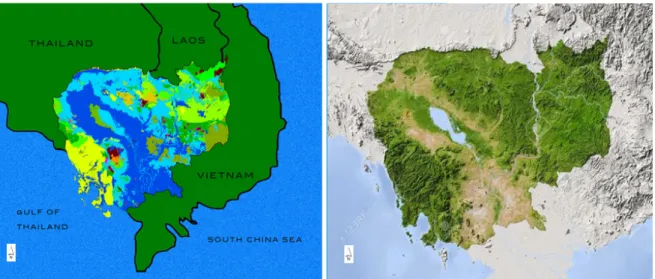
Fig. 1. Meteorological Map of Cambodia and its location
1.1.1. Country Profile
Cambodia, which comes under the monsoon climate, can be divided into four ecological regions:
1. The Annamite Range hosts moist forests, which are home to 134 species of both endemic and near-endemic mammals, 525 bird species and several species of reptiles. More than 50 per cent of these dense forests have been cleared for timber and firewood.
3
2. The Cardamom Mountain moist forests are considered to be one of the most species-rich ecoregions of Cambodia. This ecoregion is composed of evergreen forest plant species and is home to over 100 mammals, with elephants the most important, and in the area of 450 species of birds and several reptiles. The ecoregion is generally protected and intact but cases of illegal logging are being reported.
3. The Central Indochina dry forests in the arid plains of Cambodia represent an ecoregion consisting of sparse woodland communities dominated by deciduous trees. It has 167 species of mammals, with the majority made up of threatened megaherbivores and over 500 species of birds. The ecoregion is threatened essentially by land clearing for settlement.
4. The Mekong freshwater ecoregion is characterized by a high diversity of habitats including deciduous forests, grasslands, wetlands and riparian environments. It hosts an exceptionally high species diversity.
Large forested landscapes and grasslands support a rich biodiversity including endangered large mammals and rare birds, reptiles, insects and plants species. Freshwater wetlands are of great importance for a diversity of fish (estimated at more than 850 species), amphibians, regionally significant water-bird colonies, and river dolphins. Coastal and marine habitats support major areas of seagrass, coral reefs, fish nurseries and turtles.
Cambodia has a unique environment, with one of the world’s largest natural freshwater lake fish,1the Greater Mekong forests and river complex and the largest
contiguous block of natural forest remaining on the Asian continent’s mainland – which altogether mean the country represents an important biodiversity hotspot. In addition, five of nine high-priority biodiversity conservation corridors in the Greater Mekong Sub-Region are in Cambodia (ICBD, 2014). The Ministry of Agriculture, Forestry and Fisheries classifies wildlife species into three categories: near extinct, rare and common. The near extinct species include ten mammal species and six bird species. The rare category includes twenty-seven mammal species, forty-five bird species, five reptile species and many endangered plant species. Twenty-three species of wildlife in Cambodia
4
are on the International Union for Conservation of Nature Red List as globally endangered species.
Biodiversity is considered to comprise the ecosystem, species and genetic levels, and includes plants, animals and microorganisms, although there is a large discrepancy with regard to the availability of data for each component. The current record of biodiversity on Cambodia in relation to the inventory lists of all known species is 6,149 species in the major groups of mammals, birds, reptiles, amphibians, fish, plants and invertebrates (NCSD, 2016). Plant and animal genetic resources and ecosystem diversity are considered an important group.
Cambodia is predominantly dependent on its rich biodiversity and other natural resources for country’s socio-economic development and for the food, livelihoods and well-being of the majority of the population. Biodiversity is key to food security and nutrition, and contributes to the achievement of Sustainable Development Goal 1 on poverty eradication and Sustainable Development Goal 2 on zero hunger. Food systems depend on biodiversity and the ecosystem services that support agricultural productivity, soil fertility and water quality and supply. For example, pollination is one of the most important mechanisms in the maintenance and promotion of biodiversity and life on Earth. Pollinators and pollination are critical for food production and human livelihoods, and directly link wild ecosystems with agricultural production systems.
1.1.2. Culture and the Relationship between Humans and Biodiversity
Biodiversity is a major source of cultural and spiritual enrichment for human beings. Species, genetic diversity and the diversity of ecosystems are frequently integral to religious, cultural and national identities. For example, all major religions include elements that are related to natural aspects, and many countries around the world use species found within them as national symbols. The special relationship that exists between indigenous peoples and nature has in many cases enabled them to conserve a great proportion of the Earth’s biodiversity. Meanwhile, in other cases, the relationship between humans and nature exists in urban areas. Ecosystems such as parks and other effective area-based conservation measures provide recreation and a source of knowledge for visitors, such as in educational centers that connect people with nature, and biodiversity is a frequent source of inspiration for artists and designers.5
1.1.3. Socio-Economic and Population Factors in Cambodia
This section provides brief information on the Cambodian socio-economic, poverty and income situation, as well as reviewing the Cambodian population, to enable us to understand and identify the environmental issues in the country as well as those related to biodiversity conservation and management.
1.1.3.1. Socio-economic factors
Cambodia’s economic growth is estimated to have remained strong in 2018 and 2019, underpinned by tourism and fiscal expansion. Economic diversification, good quality public governance, environmental sustainability and human capital development are key priorities for the country if it is to sustain growth and achieve inclusive development in the future.
The social economy in Cambodia is still in its infancy but, with increasing interest from social investors and intermediaries, the country has significant growth potential in this regard. While institutional philanthropy is a recent phenomenon in Cambodia, partnerships between foundations and other stakeholders in the social economy are proliferating. Cambodia is also experiencing a burgeoning impact investing scene, having attracted 45 per cent of all private impact investment capital deployed in Southeast Asia between 2007 and 2017.
For this study, in terms of socio-economic aspects, this study focuses only on aspects related to the environment and natural resource management, such as water quality, energy sources for cooking, land management, agricultural systems, health, income and poverty, among others.
Water quality
Water is fundamental for life and health. Water, like health, is an essential element in achieving other human rights, especially the rights to adequate food and nutrition, housing and education.
Drinking water for Cambodia relates to access to water supply services, defined as “availability of an improved water source”. The main sources of drinking water in the country are improved and unimproved water sources. Improved water sources include piped water in the dwelling or on the premises; public taps; tube/piped wells or boreholes;
6
protected dug wells; and improved rainwater collection. Meanwhile, unimproved water sources include unprotected dug wells; ponds, rivers or streams; unimproved rainwater collection; vendor-provided water/tanker truck provision of water; and bottled water. An improved water source is not necessarily safe but is more likely to provide safe water.
According to the Cambodia Socio-Economic Survey 2017, piped water in the dwelling or on the premises is defined as piped water that is connected to the in-house plumbing through one or more taps; a public tap/stand pipe is defined as a public water point from which community members may collect water; a tube well or borehole is defined as a deep hole that has been driven, bored or drilled with the purposes of reaching groundwater supplies; and a protected dug well is defined as a dug well that is protected from runoff water. Rainwater collection is also considered an improved water source if the rainwater catchments tank is completely closed, has a tap for use in withdrawing water and has a capacity of at least 3,000 liters (CSES, 2017).
Energy sources for cooking
In all Cambodia, about 67 per cent of households use firewood for cooking, 24 per cent use liquefied petroleum gas and 7 per cent use charcoal. The main sources of cooking fuel include firewood, charcoal, liquefied petroleum gas, kerosene, household generators and publicly provided electricity/city power.
Land management
Land in Cambodia is divided into three classifications: private property, state private property and state public property. An understanding of the distinction between state private property and state public property is essential to determining how state land is to be used.
Private property is property owned by a person or collectively by individuals or
companies. Private land is immovable property that is the property, under the ownership or right of ownership, individually or jointly, of persons or companies.
State private property is all immovable property belonging to the state but not of
public interest. This type of land is designated as “non-state public land” and is also open to ownership by private individuals or collectives under the 2001 Land Law. Basically, any land that is not private or that does not serve the public interest is privately held state land under the 2001 Land Law. State private land is all that which belongs to the state but does
7
not serve the public interest. Land in this category can be sold or rented, including through long-term leases and concessions, but those involved must follow the correct legal procedures. State private land may be the subject of sale, exchange, transfer and leasing as a long-term land concession. If state public land loses its public interest value, it may be reclassified as private land, so it is possible to rent concessions to swap or sell.
State public property is land that is of significant interest to the public. State public
land is protected by the laws of Cambodia for the purpose of maintaining its value for the public benefit. As such, the use of such land is restricted and cannot be granted. This system does not represent a form of economic land concession but rather is in place to maintain the benefits of the land. In any case, a great deal of state public lands has been categorized as state private land, for use in carrying out business with private legal entities (CCHR, 2013). State public land refers to all land that serves the public interest. This type of land thus includes natural resources (such as rivers, lakes and mountains) that are developed specifically for general use (such as ports, railroads and airports); real estate that is for public use (such as roads, trails and parks); and public real estate that is divided up to provide public services (such as schools, local hospitals and administrative buildings). Designation of state public land has as its aim the protection of the heritage, history and official property of the kingdom of Cambodia.
Public land cannot be sold or transferred and cannot be used for social or economic land concessions. However, state public land, including land in Protected Areas, has often nevertheless been classified as state private land and been used to provide concessions to private entities.
Economic land concessions are long-term leases that allow private companies to clear
land for agribusiness development. They may be granted for a number of activities, such as large-scale plantations, animal husbandry and the construction of agricultural processing plants.
Agricultural land refers to the land that households own or operate, rent in, rent out or
use freely for vegetable gardening, agriculture or farming activities, such as crop cultivation, livestock-raising, fishing and fish breeding and private forestry. This excludes land under permanent pasture, wood or forest and all other non-agricultural land brought under residential use or for other enterprise activities. Private ownership of land was recognized in 1989. Farming households were then invited to apply for title to the land
8
they cultivated. Around 4 million such applications were made, and the intention was that the central cadastral authorities would process these as quickly as possible. Households with agriculture as their main occupation received land according to their household size and other household characteristics. However, since then, there have been significant socio-economic changes (refugee repatriation, urbanization, growth in the economy and population) that have placed a number of new demands on the land. This has led to complications in the cadastral process.
Based on a survey report by the National Institute of Statistics, about 1.9 million hectares of agricultural land is used in the wet season, of which 367,000 hectares is used by households that are headed by women and 1,560,000 hectares is used by households that are headed by men. In the dry season, the share of agricultural land used is much smaller, at 22,000 hectares used by households headed by women and 268,000 hectares used by households headed by men.
The second most common type of land is land for kitchen gardens, with 512,000 hectares for both genders of household heads.
If we compare all agricultural land in the five zones, the Tonle Sap zone has the largest area, at 777,000 hectares, followed by the Plains zone, with 568,000 hectares, and the Plateau/Mountain zone, with 473,000 hectares, all added up for households, whether headed by women and or headed by men.
The most common type of land tenure in Cambodia is share of owned agricultural parcels by all households. Out of the total area of agricultural land, about 88 per cent is owned and 7 per cent is owned and rented out. Altogether, about 84 per cent of agricultural land was owned in 2017. About 59 per cent of the total area of agricultural land in 2017 was used during the wet season. In the dry season, the share of agricultural land area used is approximately 9 per cent. The second most common type of agricultural land area is land for chamkar, which constitutes about 16 per cent of the total.
Statistics from the National Institute of Statistics indicate that about 42 per cent of the total area of agricultural land in 2017 had irrigation facilities. In the wet season, about 20 per cent of agricultural land was irrigated to grow crops and plants.
9 Crop production
In 2016, the number of household for crop planting was estimated to be 2,541,000 in the wet season and 815,000 in the dry season. The total number of household activities for crop planting in 2017 is higher, estimated at 3,627,000 in the wet season and 978,000 in the dry season. The most common crop coming under production in Cambodia comprises cereals, which are harvested for their grains and accounted for 73 per cent of all household activities for crop planting in 2016; the corresponding proportion in 2017 was lower, at about 71 per cent. The second most important crop produced comprises fruits and nuts, which accounted for about 10 per cent of crop production in 2016 and 11 per cent in 2017. Fish cultivation
A large number of households in Cambodia are participating in fish cultivation and fishery activities. Out of 3.4 million households in Cambodia, about 1,352,000 are engaged in fishing activities, equivalent to 39 per cent. The share of households involved in fishing activities is highest in the Plateau/Mountain zone, at 48 per cent; this is followed by the Coast zone, at 47 per cent, the Tonle Sap zone, at 44 per cent and the Plain zone, at 43 per cent.
Forestry and hunting
In 2017, the number of households participating in forestry and hunting activities was 2,321,000, which is equivalent to about 68 per cent of all households in Cambodia. The most common activity was collecting root crops, fruit, vegetables and firewood, at 41 per cent of all households.
Health statistics
The average life expectancy of Cambodians increased by 25 years between 1980 and 2012 (UNDP, 2015). The average life expectancy in 2012 was 71.9 years (UNDP, 2014). The United Nations Children’s Fund estimated the maternal mortality rate at 170 per 100,000 in 2013. In 1990, the maternal mortality rate in Cambodia was 1,200. This therefore represents a drop of 86 per cent (UNICEF, 2015).
1.1.3.2. Population
The provisional population totals of the General Population Census of Cambodia 2019 show that the total de facto population of Cambodia on March 3, 2019 stood at 15,288,489.
10
This includes only those who spent the night at the place of enumeration, thereby excluding those who were abroad, even if only briefly. The total population has increased from 13,395,682 in the 2008 Census. Thus, the population has grown by 1,892,807 persons, which represents 14.1 per cent, over the period of eleven years from 2008 to 2019. The male population was 7,418,577 (48.5 per cent) and the female population stood at 7,869,912 (51.5 per cent). The average size of households has been stable since 2008, at 4.6 persons.
A Demographic and Health Survey conducted in 1979–1980 estimated the total population of Cambodia at approximately 6.6 million. Later, the 1994 Socio-Economic Survey estimated the total population of Cambodia at 9.9 million. In March 1996, the National Institute of Statistics conducted another Demographic and Health Survey, covering 20,000 households, which estimated the total population of Cambodia at 10.7 million. Next, the total population determined by the 1998 Census was 11.4 million. The National Institute of Statistics also undertook an Inter-Censal Survey in 2004 and found the population to have increased to 12.8 million. Following a pattern of steady increases, the 2008 Census obtained a result of 13.4 million; after an update by the Inter-Censal Survey of 2013, this figure rose to 14.7 million. Now, the provisional result of the 2019 Census sets the total de facto population at 15.3 million (Annex 1). Obviously, the final result may differ slightly from this figure (NIS, 2019).
1.1.3.3. Poverty and income
Over the past two decades, Cambodia has undergone a significant transition, reaching lower-middle-income country status in 2015; it now aspires to attain upper middle-income country status by 2030. Driven by garment exports and tourism, Cambodia’s economy sustained an average growth rate of 8 per cent between 1998 and 2018, making it one of the fastest-growing economies in the world. While easing slightly, growth remains strong, projected to reach 7 per cent in 2019, after the better-than-expected growth rate of 7.5 per cent in 2018.
Poverty rates continue to fall in Cambodia. According to official estimates by the World Bank, the poverty rate in 2014 was 13.5 per cent, compared with 47.8 per cent in 2007. About 90 per cent of the poor live in the countryside. While Cambodia achieved the Millennium Development Goal of halving poverty in 2009, the vast majority of families
11
that escaped poverty did so by a small margin. Around 4.5 million people remain near-poor, vulnerable to falling back into poverty when exposed to economic and other external shocks.
Cambodia has exceeded the poverty reduction targets set out in the Millennium Development Goals. The proportion of people living in extreme poverty is less than US$ 1.15 per day, down from 53.0 per cent to 20.5 per cent between 2004 and 2011. The nearly half-year improvement is attributed to higher prices for rice and production, which increased incomes for farm workers and growers. However, a large number of people still live near the poverty line and are vulnerable. The number of people earning less than US$ 2.30 per person per day increased from 4.6 million in 2004 to 8.1 million in 2011 (Ulrich, 2014).
Income inequality in Cambodia is similar to that in the West and lower than in the United States, according to various developmental standards. For example, the Gini coefficient (for measuring income inequality, with 0 representing perfect equality and 100 representing extreme inequality) was 31.8 in 2011, whereas Ireland scored 32.1 in 2010 and Germany 30.6. The score for the United States in 2010 was 41.1. Income inequality is declining in Cambodia, according to the World Bank and the United Nations (World Bank, 2015).
1.1.4. Cambodia’s Protected Areas System
A Protected Area is a clearly defined geographical space, recognized, dedicated and managed, through legal or other effective means, to achieve the long-term conservation of nature with associated ecosystem services and cultural values (IUCN, 2008). However, Cambodia’s defined Protected Areas are not only for conservation but also intended for the sustainable use of natural resources, to enhance their contribution to the country’s socio-economic development and cultural preservation.
Cambodia was the first country in Southeast Asia to put in place a Protected Areas system. It did so in 1925, first by surrounding the culturally significant Angkor complex of temples, which is now designated as a World Heritage Site. In 1957, 173 forest reserves, comprising 3.9 million hectares, and 6 wildlife reserves, comprising 2.2 million hectares, or 12 per cent of the total area, were designated for the protection of wildlife, in particular large mammals.
12
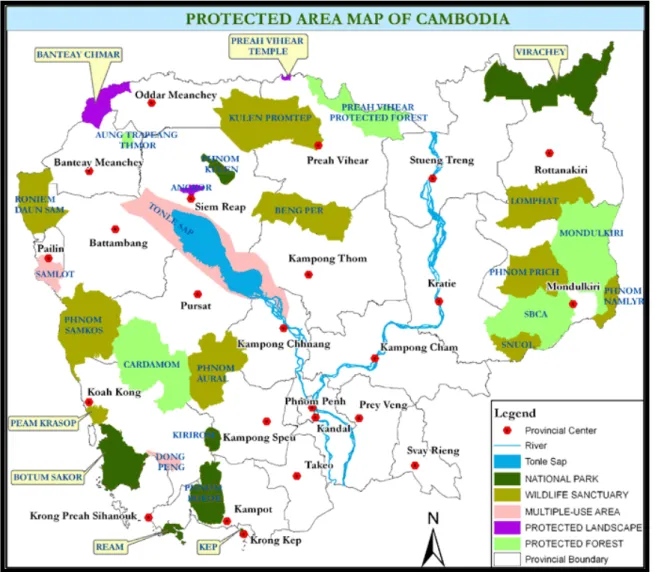
Fig. 2. Cambodian Protected Areas Map (Royal Decree 1993)
The Protected Areas System was ahead of its time but unfortunately, it effectively collapsed during the years of internal conflict within Cambodia after this. However, over the past decade, efforts to ensure the conservation of the country’s biodiversity through Protected Areas have recommenced and intensified.
In 1993, twenty-three Protected Areas were established by Royal Decree to protect areas of environmental and cultural importance, with areas classified under four categories: Natural Parks, Wildlife Sanctuaries, Protected Landscape and Multiple Use Areas. These cover about 3,273,300 hectares, equal to 18 per cent of the country’s territory. They come under the authority of the Ministry of Environment. Each of these types of Protected Areas has a different nature and control (Figure 2).
13
In addition, the Royal Government of Cambodia has designated an additional ten Protected Forest areas, administered by the Forestry Administration of the Ministry of Agriculture, Forestry and Fisheries. These cover 1.63 million hectares. Alongisde this are fifty-eight fish sanctuaries supported by the Ministry’s Fisheries Administration (ICBD, 2014).
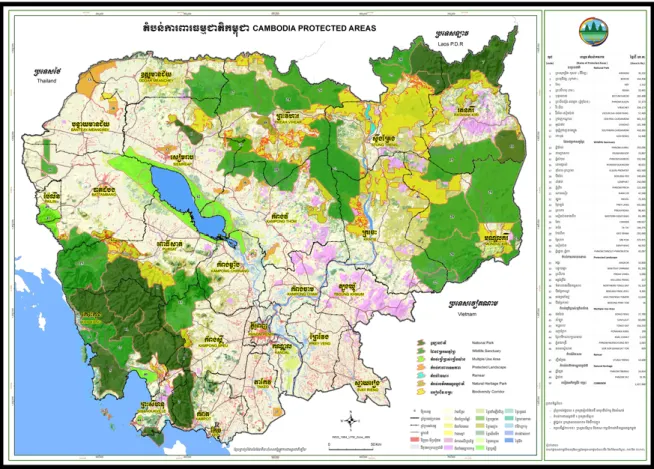
Fig. 3. Cambodian Protected Areas Map (2018)
The recent transfer of conservation areas from the Ministry of Agriculture, Forestry and Fisheries to the Ministry of Environment has more than doubled the Protected Area estate under the jurisdiction of the latter – this now covers almost 40 per cent of the entire country. Within the government reform process related to environmental management, the number of Protected Areas has continued to increase, reaching 41 per cent of the total country land area by 2018 (Figure 3). This represents a very major commitment to the protection of biodiversity, along with associated environmental services and cultural values, by the Royal Government of Cambodia.
14
Further detailed guidelines on the management of Cambodia’s Protected Areas are set out in the Protected Areas Act of 2008. In 2018, the Ministry of Environment defined Protected Area Management Zones based on the respective ecosystems and geographical characters. The North Tonle Sap Region has a unique ecosystem, interlinking between nature and cultural heritage, with three different ecosystems interacting: mountain, plateau and wetland. These characteristics are of great importance and value with regard to the conservation and management of the region.
In recent years, Cambodia has been increasing its capacity for ex-situ conservation. For example, the National Council for Sustainable Development (NCSD) has established Orchid Research and Conservation Center, which has the objective of enhancing scientific research, native species conservation, education and entertainment. The Royal University of Phnom Penh (RUPP) has embarked on genetic studies, including, for example, the use of DNA sampling for the identification of crocodiles in captivity, and the use of fecal DNA to study populations of wild elephants. There are plans to develop a database of native orchids based on their DNA.
1.2. Objectives
Cambodia’s natural resources and ecosystem are facing a range of significant threats, both as a result of actions in the immediate vicinity and as a consequence of pressures originating further away from activities related to human development. Despite the existence of management systems, these pressures on natural resources and biodiversity, especially within the Protected Areas themselves, are so great that they are continuing to degrade, and the ecosystem is becoming extremely fragile. The threats are affecting not only the biodiversity and the ecosystem of the country but also the livelihoods, economy and cultural life of the human population.
In particular, the North Tonle Sap Region, a unique region that is characterized by the co-existence of nature and culture and the ecosystem, is coming under great pressures from the over-exploitation of natural resources. Driving factors behind this phenomenon have been increasing population density and ever-higher demands from a more globalized market, as well as by unsustainable development activities. Specifically, this region has suffered from habitat degradation, illegal logging, land encroachment, population growth,
15
migration movement and settlement and climate change impacts, as well as invasions of alien species.
Responding to such pressures is an urgent matter if the values of biodiversity and ecosystem functions are to be maintained and conserved for sustainable use. However, this will be challenging. In this endeavor, the effective management of natural and biological resources and ecosystem functions is crucial and of priority. There are many practical reasons for obtaining a good understanding of ways to effectively manage these important resources.
This study discusses the effectiveness of the management of biodiversity and the ecosystem in the North Tonle Sap Region by exploring environmental issues; assessing the value of biodiversity and ecosystem services in the region, giving some examples; and defining effective strategies and measures to ensure the rational use of natural resources for sustainable socio-economic development and human well-being.
Effective management of biodiversity and the ecosystem in this study refers to adequate funding and human resources and sufficient support from policies, strategies and tools to respond to pressures and other conservation challenges. The results of this study represent evidence to orientate decision-makers towards promoting better management policies and best practices. Stakeholders will hopefully be able to use the results of this study to improve their own performance and to set priorities for the future.
1.3. Methodology
This study applies several data collection, analysis, evaluation and exploratory tools to assess how to better conserve and manage biodiversity and ecosystem services for sustainable development in Cambodia.
1.3.1. Stocktaking
The study has collected primary and secondary data related to natural resources, biodiversity, the ecosystem, the environment, climate change, societies, development and economics. A number of documents, including academic papers, journals, national legislation, technical reports, strategies and filed work reports, as well as results emerging from interviews with key experts and park managers, have been reviewed and analyzed.
16
Simple questionnaires were designed in Khmer language for data collection in the selected targets areas and Protected Areas. The first questionnaire was developed to gather information on social, economic and environmental issues, pressures on natural/biological resource conservation and possible actions to deal with challenges in the field. The second questionnaire was designed for a research paper on the impact of M. pigra in the Stung Sen Core Area. The third questionnaire was given to park managers, rangers and key biodiversity experts to collect information on human and financial resources for biodiversity, expenditure and income generation from ecotourism and strategy implementation.
1.3.2. Data Analysis
This study examines environmental issues, assesses biodiversity value and ecosystem functions and reviews status and biodiversity, genetic and ecosystem status and trends. It also reviews and analyzes conservation challenges, the relevant management structure, strategy and existing policies related to natural resources and environmental management. In addition, it examines the most relevant policies and specific laws and their provisions, to identify overlaps in jurisdictions, provisional gaps and unclear provisions.
In addition, other means, tools, methodologies, strategies, best practices and good examples from previous studies have been assessed, to identify learning that is applicable to respond to the specific natural resource pressures in our target areas.
This study reviews general data/information but focuses in particular on biodiversity issues in the North Tonle Sap Region, especially on measures taken to respond to biodiversity pressures; on the impact of climate change; on population, living conditions and local livelihoods; on the potential and opportunities for ecotourism development; and other approaches, such as Payment for Ecosystem Services within the region.
This paper also presents and explains special maps on land use and forest cover changes from 2016 to 2018.
1.3.3. Content Identification
This study describes biodiversity and ecosystem conservation in general inside and outside the Protected Areas System, where biodiversity is key to conservation. However, the analysis narrows down to the target area of North Tonle Sar Region only. Strategy
17
development and recommendations for the effective management of biodiversity and the ecosystem for sustainable development are key in this area. The study identifies the key aspects related to the effective management of natural resources in the region.
1.3.4. Research Papers and Case Study
Three pieces of research have been conducted, and their results have been used as evidence for the strategic orientation of and recommendations for biodiversity and ecosystem conservation for sustainable development. These research papers are as follows: 1. Policy Analysis for Biodiversity Conservation in Cambodia: The Protected Areas
System;
2. Analysis of Fiscal Gap and Financing of Cambodia’s Protected Areas; and
3. The Impact of Mimosa pigra on Local Livelihoods in the Stung Sen Core Area, Tonle Sap Biosphere Reserve.
18