Original
Health Problems Related to Drug Compounding of Pharmacists in
Dispensing Pharmacies
Ryoichi Inaba, Yoshihiro Kondo and Atsushi Hioki
Department of Occupational Health, Gifu University Graduate School of Medicine (Received: May 16, 2011)
Abstract
The objective of this study was to clarify the characteristic health problems of pharmacists, which they consider to be related to drug compounding. This study was a cross-sectional survey. We sent self-administered questionnaires concerned with 1) symptoms of health problems which pharmacists believed to be related to drug compounding, 2) compounding processes and drugs which they believed to be related to those health problems, 3) compounding processes and working environment, and 4) self-rated life satisfaction to all managing pharmacists of dispensing pharmacies. Of 899 mailed questionnaires, 391 (43.5%) were completed and returned. Health problems which pharmacists believed to be related to drug compounding were reported from 60.3% of males and 71.3% of females. Most of these problems were allergic or irritation symptoms of the eyes, nose, oral cavity and throat. These symptoms related to tablet crushing, opening capsules and pharma-cists past history of allergies (p<0.05). General fatigue was related to low satisfaction with work (p<0.01). Per-sonal protections to reduce exposure to drug dust should be strengthened and the factors of these health prob-lems should be assessed by additional surveys. The recognition of this issue by prescribing physicians and their cooperation are also important.
(JJOMT, 60: 23―31, 2012) ―Key words―
Subjective symptom, Occupational exposure, Drug compounding
Introduction
The number of dispensing pharmacies in Japan has increased as a result of a government policy that pro-motes the separation of drug dispensing and prescribing duties1)
. The number of dispensed drugs per patient is increasing due to an increasingly older population whose consultation rate for medical care is high and because the number of prescribed medicines increases with age2)
. One-dose packaging apportionment of powders, gran-ules, tablets, and capsules are performed in order to improve medication compliance and to prevent incorrect drug ingestion3)
. Alteration of dosage forms, such as crushing tablets and opening capsules, has been adopted for small or various dose prescriptions and for patients with swallowing difficulties4)5)
. In a previous Japanese re-port, the frequency of dosage form alteration by clinical department was higher in pediatrics, psychiatry, and internal medicine4)
in descending order. From these situations, many pharmacists, even in small-scale dispens-ing pharmacies, may be exposed to various drugs.
Health problems of pharmacists related to occupational exposure to drugs have been reported previously. Concerns regarding allergic diseases have been raised as early as the 1970s and more recently, especially among hospital pharmacists6)∼11)
. Furthermore, relationships of occupational exposure to antineoplastic drugs with acute adverse effects12)13)
, infertility14)
, miscarriages, and stillbirths15)
were reported. As many antineoplastic agents have a potential to cause mutagenicity, teratogenicity, or carcinogenicity, prevention of occupational ex-posure to such drugs is needed16)∼18)
. Although the preparation of infused antineoplastic drugs may be restricted to hospital pharmacies, health problems resulting from antineoplastic drugs for internal use are also probable
in dispensing pharmacies.
The amount of drugs absorbed through an occupational exposure may be small for pharmacists in small-scale dispensing pharmacies; however, unexpected health problems may occur because of repeated and con-tinuous occupational exposure; drugs absorbed via trans-airway or transdermally are not metabolized in the liver; and drug interactions may occur. In a separated system of drug dispensing and prescribing functions, health problems among dispensing pharmacy pharmacists related to drug compounding are hardly collected compared to hospital pharmacy. There are no recent studies, to our knowledge, that have investigated health problems of dispensing pharmacy pharmacists in Japan.
We conducted a questionnaire survey to assess the prevalence of subjective health problems among dis-pensing pharmacy pharmacists and to investigate suspicious occupational risk factors of pharmacists related to drug compounding.
Methods
We conducted a cross-sectional study by mailing self-administered questionnaires to all managing pharma-cists of health insurance pharmacies who were members of a prefecture pharmacist association in the Tokai region of Japan from June through July, 2009. Of 899 managing pharmacists, 391 (43.5%) completed a question-naire on their own health problems.
Questionnaire
The questionnaire included 1) symptoms of health problems which the respondents believed to be related to drug compounding, 2) compounding processes and drugs which they believed to be related to those symp-toms, 3) procedures for crushing tablets, 4) frequency of opening capsules, 5) use of masks and gloves during drug compounding and the reasons for non-use, 6) dust collector setting, 7) three chief clinical departments pensing for, 8) history of drug dispensing, 9) past and present history of diseases (allergies and another dis-eases), 10) countermeasures against the above-mentioned symptoms and effectiveness of those measures, and 11) self-rated satisfaction with work and family life.
Symptoms of health problems listed in the questionnaire were: uncomfortable feeling, itching, or pain in eyes; sneezing, nasal discharge, or nasal obstruction; uncomfortable feeling, itching, or pain in oral cavity; un-comfortable feeling, itching, or pain in throat; feeling of airway obstruction or dyspnea; skin irritation, itching, or flare; headache; nausea, vomiting, abdominal pain, or diarrhea; arthralgia; edema in extremities; fever; anxi-ety or helplessness; general fatigue; palpitation or chest discomfort; numbness or dimmed vision; and others.
Compounding processes which the respondents believed to be related to the above symptoms were classi-fied as: powder drug compounding; tablet crushing or capsule opening; ointment preparation; other opera-tions; and unknown. Drugs which they believed to be related to symptoms were categorized as antibiotics; antineoplastic drugs; antirheumatic drugs; antipyretics; metabolic disease drugs; gastrointestinal drugs; cardio-vascular or respiratory drugs; psycho-neurological drugs; Kampo preparations; decoctions; other drugs; and
unknown.
For the procedure of crushing tablets, a tablet crusher for exclusive use, mortar, tablet cutter, coffee mill for family use, and others were listed. The frequency of opening capsules had a selection of three options (often, sometimes, and scarcely).
Past and present history of disease were queried regarding food allergies, asthma, atopic dermatitis, urti-caria, eczema, hay fever, drug eruption, hypertension, heart diseases, peptic ulcer, diabetes mellitus, liver dis-eases, kidney disdis-eases, and other diseases.
Countermeasures against symptoms were queried regarding the use of a mask; job replacement; change of working place; improvement of equipment; other measures; and nothing done.
Self-rated satisfaction with work and family life were assessed by selecting one of four options: dissatisfied, somewhat dissatisfied, somewhat satisfied, and satisfied.
Statistical analysis
Differences in continuous variables were assessed by t-test. Proportions were compared using the chi-square test or Mantel-Haenszel procedure for significance between women and men or between those with
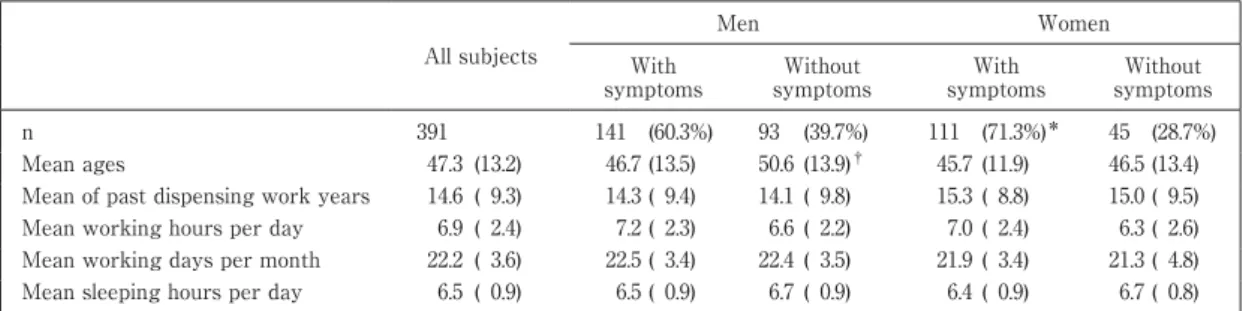
Table 1 Characteristics of respondents by sex and presence of symptoms of health problems which they
be-lieved to be related to drug compounding
All subjects Men Women With symptoms Without symptoms With symptoms Without symptoms n 391 141 (60.3%) 93 (39.7%) 111 (71.3%)* 45 (28.7%) Mean ages 47.3 (13.2) 46.7 (13.5) 50.6 (13.9)† 45.7 (11.9) 46.5 (13.4)
Mean of past dispensing work years 14.6 ( 9.3) 14.3 ( 9.4) 14.1 ( 9.8) 15.3 ( 8.8) 15.0 ( 9.5) Mean working hours per day 6.9 ( 2.4) 7.2 ( 2.3) 6.6 ( 2.2) 7.0 ( 2.4) 6.3 ( 2.6) Mean working days per month 22.2 ( 3.6) 22.5 ( 3.4) 22.4 ( 3.5) 21.9 ( 3.4) 21.3 ( 4.8) Mean sleeping hours per day 6.5 ( 0.9) 6.5 ( 0.9) 6.7 ( 0.9) 6.4 ( 0.9) 6.7 ( 0.8)
*P=0.025 by chi-square test between men and women, however, p=0.073 by Mantel-Haenszel procedure adjusted for age in
decades.
†P=0.036 by unpaired t-test for mean value between those with symptoms and those without symptoms.
Standard deviations in parentheses.
Table 2 Proportion of symptoms which respondents believed to be related to drug compounding
Men (n=234) Women (n=157) All subjects (n=391) Sneezing, nasal discharge, nasal obstruction 44.0% 47.8% 45.5% Uncomfortable feeling, itching or pain in throat 26.5% 26.1% 26.3% Uncomfortable feeling, itching or pain in eyes 21.4% 15.3% 18.9% Uncomfortable feeling, itching or pain in oral cavity 9.8% 14.0% 11.5% Skin irritation, itching, flare 6.4% 8.9% 7.4%
General fatigue 7.7% 7.0% 7.4%
Headache 6.0% 5.7% 5.9%
Anxiety, helplessness 5.6% 5.1% 5.4%
Arthralgia 4.7% 5.1% 4.9%
Feeling of airway obstruction, dyspnea 2.6% 3.2% 2.8% Nausea, vomiting, abdominal pain, diarrhea 2.6% 2.5% 2.6%
Edema in extremities 1.7% 1.9% 1.8%
Palpitation, chest discomfort 1.7% 1.3% 1.5%
Numbness, dimmed vision 1.3% 0.6% 1.0%
Other symptoms 5.2% 7.6% 6.1%
Without any symptoms 39.7% 28.7% 35.3%
Not significantly different between men and women by Mantel-Haenszel procedure adjusted for age in decades.
and without corresponding symptoms separately. Theα value was set at 0.05. Univariate and multivariate lo-gistic regression analyses were used to explore the factors that related to self-rated satisfaction with work. In the multivariate model, self-rated satisfaction with work (satisfied, dissatisfied) was dependent variable and sex (men=1, women=2), age (years), major symptoms, use of mask (yes, no), use of gloves (yes, no), dust collector setting (yes, no) and statistically selected present illness (with, without; food allergy, urticaria, eczema) by uni-variate model were included as independent variables. Statistical analysis was conducted with the SPSS soft-ware, version 12 (SPSS, Inc., Chicago, IL).
Ethics
The study protocol was approved by the Ethics Committee of Gifu University Graduate School of Medi-cine in advance.
Results
Symptoms of health problems which respondents believed to be related to drug compounding were re-ported by 60.3% of men and 71.3% of women. Table 1 shows the characteristics of the respondents by sex and presence of symptoms. Overall, they averaged 47.3 (±13.2; SD) years old and 14.6 (±9.3) years on the job, with no significant difference between men and women. Men with symptoms were younger than those without symptoms (p<0.05). Mean past dispensing work years, mean working hours per day, mean working days per month, and mean sleeping hours per day were not significantly different between those with symptoms and those without symptoms for both men and women. Internal medicine (94.6%), orthopedics (50.1%), and pediat-rics (30.9%) were the three main clinical departments for which pharmacists dispensed therapeutics,
psychia-Table 3 Associations of each major symptom with compounding processes and drugs which respondents believed to be related to symptoms With symptoms Symptoms in eyes Symptoms in nose Symptoms in oral cavity Symptoms in throat Symptoms in skin Head-ach Anxiety, helplessness General fatigue (n=253) (n=74) (n=178) (n=45) (n=103) (n=29) (n=23) (n=21) (n=29) Compounding processes which respondents believed to be related to symptoms
Powder drug compounding 68.0% 78.4%* 75.8%*** 80.0% 74.8% 82.8% 56.5% 61.9% 65.5%
Tablet crushing or capsule opening 51.0% 64.9%** 57.9%*** 80.0%*** 64.1%*** 58.6% 73.9%* 42.9% 58.6%
Ointment preparing 2.8% 2.7% 2.2% 2.2% 2.9% 13.8%** 4.3% 4.8% 6.9%
Other operations 15.4% 9.5% 11.2%** 6.7% 9.7%* 17.2% 26.1% 38.1%** 20.7%
Unknown 5.9% 10.8%* 5.1% 4.4% 7.8% 3.4% 17.4%* 33.3%*** 24.1%***
Drugs which respondents believed to be related to symptoms
Psycho-neurological drugs 27.7% 41.9%** 30.9% 46.7%** 38.8%** 31.0% 43.5% 38.1% 41.4%
Cardiovascular or respiratory drugs 20.6% 25.7% 21.9% 24.4% 27.2%* 27.6% 26.1% 14.3% 20.7%
Gastrointestinal drugs 17.0% 24.3%* 22.5%*** 35.6%*** 18.4% 10.3% 21.7% 23.8% 10.3%
Antibiotics 11.9% 14.9% 14.0% 20.0% 14.6% 20.7% 13.0% 4.8% 6.9% Kampo preparations 8.7% 10.8% 11.2%* 15.6% 8.7% 3.4% 17.4% 9.5% 3.4%
Antipyretics 6.7% 14.9%*** 8.4% 15.6%** 11.7%* 13.8% 8.7% 4.8% 10.3%
Decoctions 4.3% 2.7% 5.1% 4.4% 3.9% 6.9% 4.3% 4.8% 0.0%
Metabolic disease drugs 4.0% 5.4% 5.6% 6.7% 6.8% 6.9% 8.7% 4.8% 0.0% Antineoplastic drugs 1.2% 1.4% 1.7% 0.0% 1.9% 3.4% 4.3% 0.0% 3.4% Antirheumatic drugs 0.4% 1.4% 0.6% 2.2% 1.0% 0.0% 0.0% 0.0% 0.0% Other drugs 17.4% 18.9% 18.5% 20.0% 15.5% 17.2% 17.4% 9.5% 13.8% Unknown 22.1% 23.0% 19.7% 13.3% 21.4% 31.0% 21.7% 23.8% 27.6% Listed symptoms reported by 5% or more.
*P<0.05, **p<0.01, ***p<0.001 by chi-square test between respondents with and without corresponding symptoms.
try was 19.9%.
Table 2 presents the proportion of each symptom which respondents believed to be related to drug com-pounding. Nearly half of the respondents complained of nasal symptoms, with throat, eye, and oral cavity symptoms also frequent. As systemic symptoms, some complained of general fatigue and anxiety!helpless-ness. There were no differences between men and women in the proportion of each symptom.
Compounding processes, which respondents believed to be related to the above symptoms were in de-creasing order: powder drug compounding, tablet crushing or capsule opening, unknown and ointment preparation (Table 3). Significant differences were not seen between men and women. Drugs which respon-dents believed to be causal of symptoms ranked as follows: psycho-neurological drugs, unknown, cardiovas-cular or respiratory drugs, gastrointestinal drugs, antibiotics, Kampo preparations, antipyretics, decoctions, metabolic disease drugs, antineoplastic drugs and antirheumatic drugs. There were no significant differences between men and women in the proportion of each drug.
Table 3 shows also the association of each major symptom with compounding processes and drugs which respondents believed to be related to symptoms. All compounding processes and some drugs (psycho-neurological drugs, cardiovascular or respiratory drugs, gastrointestinal drugs, Kampo preparations and anti-pyretics) were listed as possible causes of some symptoms (p<0.05).
The frequency of scarce mask use during drug dispensing was 55.2%. Reasons for not using a mask were in the order consideration of patients (50.7%), being offensive (46.0%), and being an obstacle to work (28.4%). On the other hand, the frequency of glove use during drug dispensing was 93.9% for scarcely. As reasons of not using gloves, being an obstacle at work (55.5%) and being offensive (35.0%) were mainly listed. Dust collec-tors were installed in 17.9% of pharmacies where respondents were engaged.
The prevalence of past medical history was 17.1% for urticaria, 12.8% for eczema and 9.5% for hay fever without a significant difference between men and women. The proportion of present illness was 31.7% for hay fever (32.1% for men and 31.2% for women), followed by 9.2% for hypertension (12.4% for men and 4.5% for women, p<0.01).
Table 4 presents the relationship of compounding processes, working environment and past medical his-tory to each major symptom. Two ways of tablet crushing (coffee mill for family use and tablet cutter), capsule opening, and past history of some allergies (food allergy, urticaria, eczema and drug eruption) significantly
Table
4
Relat
ionsh
ip of compound
ing processes, work
ing env
ironment and past med
ical h istor y to each major s y mptom n S y mptoms in e y es S y mptoms in nose S y mptoms in oral cav it y S y mptoms in throat S y mptoms in sk in Headache Anx iet y , helplessness General fat igue OR 95% CI P value OR 95% CI P value OR 95% CI P value OR 95% CI P value OR 95% CI P value OR 95% CI P value OR 95% CI P value OR 95% CI P value Wa y s of tablet crush ing (MA) Mortar 279 1.40 (0.75 ―2.66) 0.262 1.56 (0.97 ―2.51) 0.051 1.42 (0.64 ―3.19) 0.357 1.33 (0.77 ―2.30) 0.283 2.66 (0.85 ―9.24) 0.104 1.48 (0.50 ―4.67) 0.605 1.30 (0.43 ―4.18) 0.798 1.28 (0.50 ―3.42) 0.577 Coffee m ill for fam il y use 187 1.41 (0.82 ―2.43) 0.186 1.15 (0.76 ―1.75) 0.496 2.92 (1.41 ―6.11) 0.001 1.64 (1.01 ―2.65) 0.034 1.60 (0.70 ―3.68) 0.227 1.00 (0.40 ―2.50) 1.000 0.81 (0.31 ―2.12) 0.639 2.19 (0.94 ―5.23) 0.047 Tablet cutter 79 1.98 (1.07 ―3.65) 0.019 1.81 (1.07 ―3.06) 0.019 1.57 (0.72 ―3.37) 0.215 1.41 (0.80 ―2.50) 0.208 1.28 (0.48 ―3.32) 0.584 1.80 (0.64 ―4.87) 0.208 0.93 (0.26 ―3.04) 1.000 2.24 (0.92 ―5.34) 0.047 Tablet crusher for exclus ive use 65 1.71 (0.87 ―3.32) 0.090 1.51 (0.86 ―2.67) 0.128 0.77 (0.28 ―2.02) 0.572 1.10 (0.58 ―2.08) 0.747 0.79 (0.22 ―2.51) 0.868 2.34 (0.83 ―6.39) 0.067 1.19 (0.33 ―3.95) 0.996 0.79 (0.22 ―2.51) 0.868 Frequenc y of open ing capsules Often (n=8) or some-ti mes (n=121) 129 1.81 (1.04 ―3.14) 0.025 1.57 (1.00 ―2.45) 0.038 1.47 (0.74 ―2.92) 0.236 1.54 (0.94 ―2.52) 0.072 1.72 (0.75 ―3.93) 0.159 1.61 (0.63 ―4.05) 0.270 0.80 (0.27 ―2.28) 0.658 1.26 (0.54 ―2.93) 0.557 Scarcel y 262
Use of mask Alwa
y s (n=32) or somet imes (n=143) 175 1.45 (0.85 ―2.50) 0.150 1.90 (1.24 ―2.90) 0.002 1.04 (0.53 ―2.05) 0.893 1.67 (1.04 ―2.70) 0.026 3.00 (1.26 ―7.34) 0.006 2.02 (0.80 ―5.21) 0.103 1.14 (0.44 ―2.98) 0.768 1.37 (0.60 ―3.10) 0.416 Scarcel y 216
Use of gloves Alwa
y s (n=1) or somet imes (n=23) 24 0.61 (0.14 ―2.22) 0.596 0.86 (0.34 ―2.11) 0.714 0.33 (0.00 ―2.38) 0.423 0.55 (0.16 ―1.76) 0.398 1.87 (0.42 ―7.25) 0.563 0.68 (0.00 ―5.13) 1.000 0.75 (0.00 ―5.72) 1.000 0.53 (0.00 ―3.90) 0.822 Scarcel y 367
Dust collector sett
ing W ith 70 1.24 (0.62 ―2.44) 0.513 1.45 (0.84 ―2.51) 0.159 1.63 (0.73 ―3.58) 0.192 1.50 (0.82 ―2.72) 0.155 0.72 (0.20 ―2.27) 0.728 1.30 (0.40 ―3.88) 0.830 1.91 (0.64 ―5.52) 0.190 1.51 (0.56 ―3.93) 0.363 W ithout 320 Past med ical h istor y (MA) Urt icar ia 67 1.76 (0.91 ―3.38) 0.068 2.15 (1.22 ―3.82) 0.005 1.92 (0.88 ―4.16) 0.071 1.47 (0.80 ―2.68) 0.185 3.94 (1.66 ―9.29) 0.000 0.71 (0.16 ―2.64) 0.801 1.15 (0.31 ―3.79) 1.000 1.29 (0.45 ―3.52) 0.598 Eczema 50 1.82 (0.87 ―3.76) 0.079 1.78 (0.94 ―3.39) 0.058 2.19 (0.93 ―5.03) 0.044 1.23 (0.61 ―2.47) 0.530 4.24 (1.70 ―10.45) 0.000 0.30 (0.00 ―2.14) 0.354 2.96 (0.97 ―8.72) 0.026 2.36 (0.86 ―6.27) 0.057 Ha y fever 37 0.81 (0.29 ―2.15) 0.658 1.02 (0.49 ―2.11) 0.957 0.66 (0.15 ―2.36) 0.681 1.04 (0.45 ―2.35) 0.921 2.15 (0.67 ―6.48) 0.247 0.91 (0.00 ―4.26) 1.000 1.01 (0.00 ―4.78) 1.000 0.69 (0.00 ―3.19) 0.872 Drug erupt ion 30 3.21 (1.37 ―7.47) 0.002 1.88 (0.83 ―4.30) 0.098 3.87 (1.51 ―9.74) 0.001 3.60 (1.59 ―8.18) 0.000 2.07 (0.56 ―6.91) 0.355 2.77 (0.74 ―9.53) 0.161 3.11 (0.82 ―10.86) 0.111 0.88 (0.00 ―4.12) 1.000 Food allerg y 29 2.45 (1.00 ―5.88) 0.026 2.87 (1.20 ―7.02) 0.008 1.68 (0.53 ―4.98) 0.482 1.07 (0.42 ―2.65) 0.874 1.49 (0.34 ―5.66) 0.797 1.97 (0.44 ―7.68) 0.515 2.21 (0.48 ―8.68) 0.420 2.93 (0.89 ―9.09) 0.084 Atop ic dermat it is 20 1.91 (0.63 ―5.57) 0.194 2.32 (0.84 ―6.59) 0.073 2.01 (0.54 ―6.85) 0.389 1.54 (0.54 ―4.30) 0.367 3.46 (0.90 ―12.22) 0.077 0.84 (0.00 ―6.38) 1.000 2.06 (0.00 ―10.29) 0.665 2.34 (0.51 ―9.28) 0.373 Asthma 16 2.71 (0.84 ―8.46) 0.053 0.93 (0.30 ―2.79) 0.884 2.72 (0.70 ―9.67) 0.185 1.29 (0.38 ―4.13) 0.869 0.83 (0.00 ―6.35) 1.000 1.07 (0.00 ―8.36) 1.000 4.58 (0.94 ―19.54) 0.063 0.00 (0.00 ―3.99) 0.504 Calculated b y ch
i-square test between those w
ith and w
ithout correspond
ing s
y
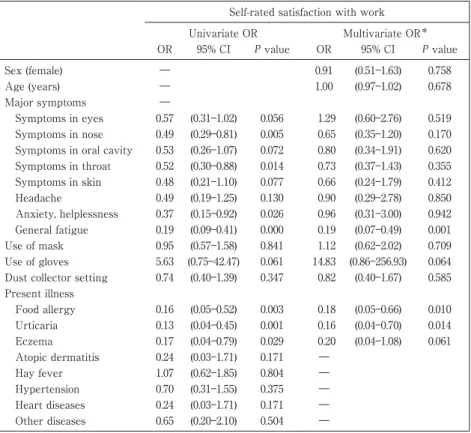
Table 5 Univariate and multivariate analysis of the association between related
fac-tors and self-rated satisfaction with work
Self-rated satisfaction with work Univariate OR Multivariate OR* OR 95% CI P value OR 95% CI P value Sex (female) ― 0.91 (0.51―1.63) 0.758 Age (years) ― 1.00 (0.97―1.02) 0.678 Major symptoms ― Symptoms in eyes 0.57 (0.31―1.02) 0.056 1.29 (0.60―2.76) 0.519 Symptoms in nose 0.49 (0.29―0.81) 0.005 0.65 (0.35―1.20) 0.170 Symptoms in oral cavity 0.53 (0.26―1.07) 0.072 0.80 (0.34―1.91) 0.620 Symptoms in throat 0.52 (0.30―0.88) 0.014 0.73 (0.37―1.43) 0.355 Symptoms in skin 0.48 (0.21―1.10) 0.077 0.66 (0.24―1.79) 0.412 Headache 0.49 (0.19―1.25) 0.130 0.90 (0.29―2.78) 0.850 Anxiety, helplessness 0.37 (0.15―0.92) 0.026 0.96 (0.31―3.00) 0.942 General fatigue 0.19 (0.09―0.41) 0.000 0.19 (0.07―0.49) 0.001 Use of mask 0.95 (0.57―1.58) 0.841 1.12 (0.62―2.02) 0.709 Use of gloves 5.63 (0.75―42.47) 0.061 14.83 (0.86―256.93) 0.064 Dust collector setting 0.74 (0.40―1.39) 0.347 0.82 (0.40―1.67) 0.585 Present illness Food allergy 0.16 (0.05―0.52) 0.003 0.18 (0.05―0.66) 0.010 Urticaria 0.13 (0.04―0.45) 0.001 0.16 (0.04―0.70) 0.014 Eczema 0.17 (0.04―0.79) 0.029 0.20 (0.04―1.08) 0.061 Atopic dermatitis 0.24 (0.03―1.71) 0.171 ― Hay fever 1.07 (0.62―1.85) 0.804 ― Hypertension 0.70 (0.31―1.55) 0.375 ― Heart diseases 0.24 (0.03―1.71) 0.171 ― Other diseases 0.65 (0.20―2.10) 0.504 ―
*Adjusted for all variables excluded five variables by univariate analysis: atopic dermatitis,
hay fever, hypertension, heart disease and other diseases.
Fig. 1 Countermeasures adopted against occupational health problems and
their effectiveness. There was no statistically significant difference in propor-tion of countermeasures and their effectiveness between men and women.
raised the proportion of particular symptoms (p<0.05). Respondents using mask showed a higher proportion of symptoms in nose, throat and skin (p<0.05). No significant relationship was noticed for the presence of symp-toms and the usage of gloves or dust collector setting.
Fig. 1 shows the countermeasures which respondents adopted against occupational health problems and the effectiveness of those countermeasures. As other countermeasures, gargling and drug therapy were both listed by 3.2% of respondents with symptoms. Although use of a mask was the most adopted measure, its ef-fectiveness was not high. The efef-fectiveness of equipment improvement, job replacement, and change of work-place also was low.
As to self-rated life satisfaction, 80.6% and 87.0% of respondents answered satisfied or somewhat satis-fied with work and family life, respectively, with no significant difference between men and women. Table 5 presents the relationship between presence of major symptoms and self-rated satisfaction with work. Histories
of present allergic diseases were related to lower satisfaction with work. The proportion of satisfied and somewhat satisfied was lower for those with general fatigue (p<0.01) than for those without corresponding symptoms, even after adjustment for related factors including present illness.
Discussion
About two-thirds of the pharmacists reported they had symptoms, which they believed were related to drug compounding. Most of the reported symptoms in relation to drug compounding were from the eyes, nose, oral cavity and throat. The response rate of this survey was not high. It is possible that the subjects of the sur-vey without any symptoms were not interested in the sursur-vey and did not respond to the questionnaire. There-fore, it could be concluded that at least 20%, 11% and 8% of pharmacists (including non-respondents) have na-sal symptoms, throat symptoms and eye symptoms, respectively. We did not examine reference group, how-ever, the proportion of pharmacists with these symptoms was higher than the results of a national survey sam-ple for all ages19)
: 5.7% for cough or sputum, 5.4% for nasal obstruction or nasal discharge, 2.0% for breathless-ness, 1.4% for wheezing, 1.9% for skin eruption or rash, 4.4% for itching, 4.4% for headache, and 5.4% for gen-eral fatigue, although the inquired symptoms were not always consistent. Gengen-eral fatigue was the leading symptom among above-listed ones both in men (5.9% and 5.1%) and women (8.1% and 8.0%) aged 35―44 years and 45―54 years, respectively.
There are several limitations in this study besides response rate. The present study is based on cross-sectional data. The issues of recall and rumination bias should be considered because only self-reported data were used. Although our study subjects were pharmacist, we did not evaluate the accuracy of their responses. Furthermore, the social desirability bias may have affected in a part of questionnaire.
As the respondents-presumed cause of health problems, powder drug compounding and dose form modifi-cation (tablet crushing and!or capsule opening) were most frequently listed. Tablet crushing using coffee mill or tablet cutter and capsule opening related to symptoms in eyes, nose, oral cavity and throat also in all respon-dents. The proportion of tablet crushing may be more causal than capsule opening because the reported fre-quency of capsule opening was low. It was reported that dose form modification resulted equally from pre-scription dose form modification into powders or solutions and from lack of suitable preparation in purchased drugs5)
. A reduction in dose form modifications by using more suitable preparations and by informing physi-cians of the health problems incurred by pharmacists because of such reformulation, especially for presumed causal drugs of health problems, would improve the health of pharmacists. Additionally, fewer dose modifica-tions would be beneficial for more accurate dosage dispensing and better drug quality control5)
. Precautions against drug dust exposure should also be undertaken in the cases of tablet crushing and capsule opening for delivering medication via enteral tube20)21)
; use of a simple suspension method22)
is one of the preferred counter-measures.
To prevent allergy by powder drugs, an alteration of the dose form, such as fine granulation, is sometimes conducted23)
. Consideration of the dose formulation in order to provide various preparations in the production process is useful to avoid dose form modification in the dispensing process.
As the respondents-presumed causal drugs of health problems in this survey, psycho-neurological drugs, cardiovascular!respiratory drugs, gastrointestinal drugs, and antibiotics ranked high; these drugs are widely dispensed. In previous reports, psycho-neurological drugs, gastrointestinal drugs, vitamins, and anti-allergic drugs were shown to be the cause of allergic rhinitis8)
, and psycho-neurological drugs were also found to be causal for contact dermatitis, uncomfortable feeling in the throat, allergic conjunctivitis, atopic dermatitis, and asthma6)7)9)∼11)
. For about 20% of the symptoms, doubtful drugs were not listed. This may be because respon-dents deal with so many drugs that they were not able to presume doubtful drugs.
The proportion of respondents who worked in dispensing rooms with a dust collector was low, and the proportions of symptoms were not significantly different between those working in dispensing rooms with or without a dust collector. As the significance of a dust collector was not confirmed in this study, further investi-gation on the proper use of dust collectors considering room air flow and drug dust particle size24)25)
and regula-tion of air flow by air-condiregula-tioners, which also collect drug dust, in dispensing rooms is needed. In the case of
small dosage dispensing e.g. for infants, air flow should not obstruct weighing. The re-spread of drug dust from the dust collector of automatic dividing and packing machines26)
and from the attached vacuum cleaner for re-sidual drug removal should be checked.
Respondents who used mask during drug compounding showed a higher proportion of symptoms, we in-terpret that this use of mask was resulted from attempt against symptoms. Although the effectiveness of masks, which have been adopted in the majority of pharmacies as countermeasures against health problems was not high, some pharmacists reported its effectiveness. An atmosphere of freely using a mask in the dis-pensing room is important. Few pharmacists recognized gloves as personal protection, and many pharmacists regarded gloves as an obstacle to drug dispensing. Gloves are useful not only for sanitary management but also for personal protection; however, they include the problem of latex allergy especially when they are pow-dered27)
.
The presence of past or present history of allergic diseases was related to the proportion of several symp-toms as has been reported previously7)
. Additional personal protection from dust may be useful in pharmacists with a past, present, or family history of allergic diseases. Countermeasures to prevent symptoms should be evaluated individually because the effectiveness of adopted countermeasures was not high.
General fatigue was related to low level of self-rated satisfaction with work even after adjustment for pre-sent illness. Because causal relationship between symptom and satisfaction cannot be proven in the prepre-sent study, further epidemiological studies are needed.
We conclude that the atmosphere of adopting personal protection according to personal susceptibility in addition to standard control of working environment and operation is important. The recognition and coopera-tion of prescribing physicians are also important. However, the present study is based on subjective judg-ments of pharmacists related to drug compounding. Additional surveys to assess the factors of health prob-lems objectively and the effectiveness of countermeasures that reduce the occupational exposure to drug dust according to each work style and environment will be needed.
Acknowledgement
We thank the office staffs of a prefecture pharmaceutical association for their cooperation, and Ms. Mayumi Okumura for helping arrange the data.
References
1) Ministry of Health, Labour and Welfare: Annual Health, Labour and Welfare Report 2007-2008. Tokyo, Ministry of Health, La-bour and Welfare, 2009,
2) Akishita M, Ouchi Y, Toba K, et al: Compliance with prescriptions and adverse drug reactions in the elderly. Nippon Ronen Igakkai Zasshi 32: 178―182, 1995 (in Japanese).
3) Nishioka Y, Kyotani S, Masui H, et al: Stability of tablets and capsules on one-dose package. Jpn J Hosp Pharm (Byoin Yakugaku) 25: 385―392, 1999 (in Japanese).
4) Tamura T, Sasahara H, Ikarashi K, Tanno K: Investigation of alteration of dosage forms in dispensing of tablets and capsules. Jpn J Hosp Pharm (Byoin Yakugaku) 15: 270―277, 1989 (in Japanese).
5) Ogata E, Yamada Y, Iga T: Problems and countermeasures concerning tablet crushing and capsule opening. J Practical Pharmacy (Yakkyoku) 51: 1342―1349, 2000 (in Japanese).
6) Nakamura S: Studies on asthma bronchiale. 6. On the occupational allergy caused by pancreatin among pharmacists. Arerugi 20: 361―364, 1971 (in Japanese).
7) Maki Y: Occupational allergy in pharmacy. Pharmaceuticals Monthly (Gekkan Yakuji) 18 (1): 81―87, 1976 (in Japanese). 8) Nishii S, Yamaji A, Kishi H, et al: Survey on the drug dust induced nasal allergies in hospital pharmacy. J Jpn Soc Hosp
Pharm (Nihon Byoin Yakuzaishi Kai Zasshi) 20: 1045―1048, 1984 (in Japanese).
9) Torinuki W: Contact dermatitis to biperiden and photocontact dermatitis to phenothiazines in a pharmacist. Tohoku J Exp Med 76: 249―252, 1995.
10) Lee SK, Cho HK, Cho SH, et al: Occupational asthma and rhinitis caused by multiple herbal agents in a pharmacist. Ann Al-lergy Asthma Immunol 86: 469―474, 2001.
11) Zacharisen MC: Occupational asthma. Med Clin North Am 86: 951―971, 2002.
12) Ladik CF, Stoehr GP, Maurer MA: Precautionary measures in the preparation of antineoplastics. Am J Hosp Pharm 37: 1184―1186, 1980.
13) Valanis BG, Vollmer WM, Labuhn KT, Glass AG: Association of antineoplastic drug handling with acute adverse effects in pharmacy personnel. Am J Hosp Pharm 50: 455―462, 1993.
nurses and pharmacists. J Occup Environ Med 39: 574―580, 1997.
15) Valanis B, Vollmer WM, Steele P: Occupational exposure to antineoplastic agents: self-reported miscarriages and stillbirths among nurses and pharmacists. J Occup Environ Med 41: 632―638, 1999.
16) ASHP (American Society of Hospital Pharmacists): ASHP technical assistance bulletin on handling cytotoxic and hazardous drugs. Am J Hosp Pharm 47: 1033―1049, 1990.
17) Tomioka K, Kumagai S: Health risks of occupational exposure to anticancer (antineoplastic) drugs in health care workers. Sangyo Eiseigaku Zasshi 47: 195―203, 2005 (in Japanese).
18) NIOSH: NIOSH alert: preventing occupational exposure to antineoplastic and other hazardous drugs in health care settings. Cincinnati, U.S. Department of Health and Human Services, Centers for Disease Control and Prevention, National Institute for Occupational Safety and Health, 1997, DHHS (NIOSH) Publication No. 2004-165.
19) Ministry of Health Labour and Welfare: Summary of the 2007 Comprehensive Survey of Living Conditions. Tokyo, Ministry of Health, Labour and Welfare, 2008 (in Japanese).
20) Magnuson BL, Clifford TM, Hoskins LA, Bernard AC: Enteral nutrition and drug administration, interactions, and complica-tions. Nutr Clin Pract 20: 618―624, 2005.
21) Williams NT: Medication administration through enteral feeding tubes. Am J Health Syst Pharm 65: 2347―2357, 2008. 22) Yano K, Takezawa T, Mochizuki T, et al: Stability of drugs when prepared for tube administration by simple suspension
method. Jpn J Pharm Health Care Sci (Iryo Yakugaku) 32: 1094―1099, 2006 (in Japanese).
23) Aoyama T, Nakao Y, Horioka M, et al: Dust of diastase preparations. Jpn J Hosp Pharm (Byoin Yakugaku) 12: 350―355, 1986 (in Japanese).
24) Hayashi H, Akita M, Kondo G, Suhara K: Reduction in number of dust particles by vacuum cleaner. Jpn J Hosp Pharm (Byoin Yakugaku) 6: 220―226, 1980 (in Japanese).
25) Tomonaga F, Kobayashi T, Minezawa Y, et al: Comparison of different air samplers for monitoring dust in the drug prepara-tion room. Jpn J Hosp Pharm (Byoin Yakugaku) 9: 195―199, 1983 (in Japanese).
26) Takayama K, Seino T, Sugiura M, et al: Quantitative analysis of air cleanness in the dispensing environment: introduction and evaluation of a dust-free dispensing facility. Yakugaku Zasshi 119: 429―435, 1999 (in Japanese).
27) Filon FL, Radman G: Latex allergy: a follow up study of 1040 healthcare workers. Occup Environ Med 63: 121―125, 2006. Reprint request:
Ryoichi Inaba
Department of Occupational Health, Gifu University Graduate School of Medicine, 1-1, Yanagido, Gifu, 501-1194, Japan.
別刷請求先 〒501―1194 岐阜市柳戸 1―1 岐阜大学大学院医学系研究科産業衛生学分野 井奈波良一