Nobuhiro Matsuda, Manager Tokyo Techno Corporation 3343 Onoji-cho
Machidashi, Tokyo 195 0064 Japan
Email: [email protected] Tel: +81-4-2735-0028
EFFECT OF CARBONATION TECHNOLOGY OF RECYCLED AGGREGATE ON CONCRETE AND RECYCLING RATE OF CONCRETE WASTE
Nobuhiro Matsuda1 and Takeshi Iyoda2
1Tokyo Techno Corporation, [email protected]
2Shibaura Institute of Technology, Department of Civil Engineering, Professor, [email protected]
ABSTRACT
In Japan, many existing concrete structures which were built during the high economic growth period have deteriorated and become obsolete in recent years. Therefore, a large amount of concrete waste blocks is generated by renewing of concrete structures. Until now, concrete waste blocks have been recycled as aggregate for roads. As a result, the recycling rate of Japanese concrete waste were kept high. However, as road construction shrinks, demand for road aggregate is expected to decline.
Therefore, concrete waste blocks are need to use for concrete. However, the production volume of recycled aggregate for concrete has not increased. The reason is due to the quality of the recycled aggregate and the cost of manufacturing the aggregate. In order to solve this cause, we have developed the improving method using carbonation technology for recycled aggregates. This technology can improve the quality of low quality recycled aggregate by adsorbing carbon dioxide gas into the recycled aggregate. In this paper, the effect of carbonation technology of recycled aggregate on concrete was examined and the improvement of the recycling rate of concrete waste by the carbonation method was also investigated. As a result, we were able to improve the strength, drying shrinkage and freeze-thaw resistance of concrete by carbonation technology. In addition, the recycling rate of concrete waste can be increased by 23% by carbonation technology.
Keywords: Recycled Aggregate, Recycled Aggregate Concrete, Carbonation, Concrete Waste
1. INTRODUCTION
Toward the Construction of environmental impact reduction and sustainable society, it is desired that the promotion of concrete for using the recycled aggregate and also using the recycled aggregate concrete around some construction site. In Japan, many existing concrete structures which were built during the high economic growth period have deteriorated and become obsolete in recent years.
Therefore, a large amount of concrete waste blocks is generated by renewing of concrete structures.
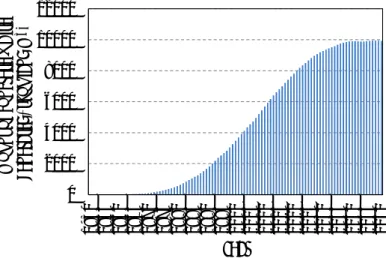
Figure 1 shows a result of predicting the amount of concrete waste generated in the future in the Tokyo area. The calculation method is as described in the references [1].The amount of concrete waste generated is increasing year by year, and is expected to increase 1.5 times in 2050 compared to the present. Therefore, about 10 million tons of concrete waste is generated.
On the other hand, until now, concrete waste blocks have been recycled as aggregate for roads. However, the demand for road assemblies is expected to decline in the future. Recent years, the recycling rate of Japanese concrete waste were kept high. In order to maintain this recycling rate, it is necessary to reuse concrete waste as aggregate for concrete.
However, Ratio of recycled concrete production to Japanese concrete production is less than 0.1%. The reason is due to the quality of the recycled aggregate and the cost of manufacturing the aggregate. In order to solve this cause, we develop aggregate modification technology using carbon dioxide. This technique can modify low quality recycled aggregate by adsorbing carbon dioxide gas into the recycled aggregate. In addition, using this modified recycled aggregate for concrete has been confirmed to improve the strength and drying shrinkage rate of concrete [2].
In this study, we confirmed the effects of carbonation technology using different recycled aggregates, and arranged the effects of modified recycled aggregates on concrete. The purpose of this study was to confirm the effects of carbonation technology on the recycling rate of concrete waste.
Figure 1. Prediction of concrete waste generation in the Tokyo area
2. CARBONATION TECHNOLOGY 2.1. Overview of carbonation technology
It has been pointed out that the quality of recycled aggregate depends on the proportion of attached mortar in the recycled aggregate and the quality of the attached mortar [3]. For that reason, The method of improving the quality of recycled aggregate is generally to remove attached mortar by manufacturing techniques such as crushing and grinding. However, this manufacturing method increases energy and cost. It also increases the amount of fine powder that becomes waste. In order to solve this problem, it
0 2000 4000 6000 8000 10000 12000
1950 1955 1960 1965 1970 1975 1980 1985 1990 1995 2000 2005 2010 2015 2020 2025 2030 2035 2040 2045 2050
Amount of concrete waste generated(thousand m3)
Year
is necessary to develop a technique for improving the quality of the attached mortar without deleting the attached mortar. If this technology can be developed, a high-quality recycled aggregate can be produced with low energy and low cost. Furthermore, the generation of fine powder as waste can be suppressed.
Carbonation of concrete is a phenomenon in which carbon dioxide in the atmosphere penetrates into concrete, and calcium hydroxide, which is a hydrated product in concrete, adsorbs carbon dioxide to produce calcium carbonate. This phenomenon is called carbonation, in reinforced concrete, it lowers the pH of the pore solution, destroys the passive film, and causes deterioration that causes corrosion of the rebar. However, focusing only on concrete, in general, the calcium carbonate produced by the carbonation has a large volume as compared with the calcium hydroxide. Therefore, the resulting calcium carbonate fills the large porosity is also confirmed to be densified [4]. So, if the quality of mortar adhering to the recycled aggregate can be improved by using carbonation technology, the weakness of the strength and durability of recycled aggregate concrete can be overcome.
2.2. Carbonation method
In this study, the regenerated aggregate was carbonized using an accelerated carbonization device (temperature 20°C, relative humidity of 60%, concentration of carbon dioxide at 5%).The period of forced carbonation was 1 week.
On the other hand, in order to examine practical application in the future, we examined a simpler method than forced carbonation. The method carried out carbonation under an outdoor exposure environment (Outdoor exposure). Carbonation by outdoor exposure was performed in a place affected by rain and sunlight. The period was 10 weeks or 26 weeks.
Photo 1 shows a situation in which a phenolphthalein solution is sprayed on recycled aggregate. The regenerated aggregate, carbonated by accelerated carbonation device, is expressed as "with carbonation". Recycled aggregate without carbonation is colored. On the other hand, recycled aggregates on with carbonation and outdoor exposure are not colored. Therefore, it can be confirmed from this result that carbon dioxide was adsorbed and carbonated.
Photo 1. Phenolphthalein solution spray status
2.3. Carbonation effect
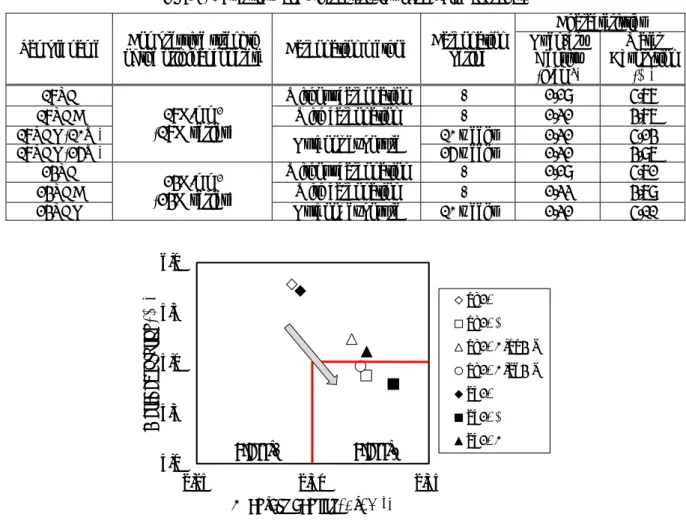
The improvement effect of recycled aggregate by carbonation technology was examined. Table 1 provides an overview and characteristics of the recycled aggregate. The type of aggregate is coarse aggregate. The raw material of recycled aggregate is the return concrete (which returning concrete from construction site produced by the ready-mixed concrete plants).Returned concrete (which returning
concrete from construction site produced by the ready-mixed concrete plants) was used for the original concrete.The compressive strength of the return concrete is 18N / mm2 and 24N / mm2. The modification of the recycled aggregate was confirmed by density and water absorption tests. The conditions for carbon oxidation are as described in 2.2.
Figure 2 shows the density and water absorption results of recycled aggregate. Carbonated recycled aggregates have improved density and water absorption, and some have been upgraded. The rate of improvement in water absorption for with carbonation and outdoor exposure was 15.7% for 18RGC for with carbonation and 16.2% for 24RGC. On the other hand, 18RGO for outdoor exposure was 9.4%
and 24 RGO was 10.6%.From these results, it was found that with carbonation had a greater effect of modification than outdoor exposure.
In outdoor exposure, the effect of carbonation period was examined. As a result, the improvement rate of outdoor exposure for 26 weeks was 14.1%. The improvement rate of water absorption rate was further improved by extending the period of outdoor exposure. But, with carbonation is more effective.
From these results, it was confirmed that the recycled aggregate was modified by carbonation technology. On the other hand, the effect of with carbonation and the effect of outdoor exposure were found to be greater with carbonation.
Table 1. Overview and Characteristics of recycled aggregate Sample name Compressive strength
of the original concrete Carbonation method Carbonation period
Characteristics Oven-dry
Density (g/cm3)
Water Absorption
(%) 18RG
18N/mm2 (18N series)
Without carbonation - 2.29 5.78
18RGC With carbonation - 2.32 4.87
18RGO(10W) Outdoor exposure 10 weeks 2.32 5.24
18RGO(26W) 26 weeks 2.32 4.97
24RG
24N/mm2 (24N series)
Without carbonation - 2.29 5.72
24RGC With carbonation - 2.33 4.79
24RGO Outdoor exposure 10 weeks 2.32 5.11
Figure 2. Recycled aggregate density and water absorption 4.0
4.5 5.0 5.5 6.0
2.25 2.30 2.35
Water absorption(%)
Oven‐dry density(g/cm3)
18RG 18RGC 18RGO(10W) 18RGO(26W) 24RG 24RGC 24RGO
class‐M class‐L
2.4. Modification mechanism
The modification by carbonation is thought to be due to the fact that voids in the adhered mortar are reduced and densified. Therefore, the porosity was calculated from the following equation (1) by the Archimedes method.
P(%) = (m1-m2)/v1・1/ρw×100 (1)
Where P is the porosity. m1 is the surface dry mass, m2 is absolutely dry mass, v1 is the surface dry volume, ρw is the density of water.
Figure 3 shows the results of the total porosity of recycled aggregate. It can be confirmed that the carbonated aggregate has a reduced porosity and is densified. Differential thermogravimetric analysis (TG-DTA) was performed using the modified recycled aggregate. The results confirm that the amount of calcium carbonate produced is higher than that without carbonation.
Figure 3. Total porosity of recycled aggregate
3. EFFECT OF MODIFIED RECYCLED AGGREGATE ON CONCRETE 3.1. Overview
Examine the effect of modified recycled aggregate on concrete. Recycled aggregates in Table 1 were used for concrete. Concrete was produced using this recycled aggregate and subjected to compressive strength, split tensile strength, drying shrinkage, and freeze-thaw resistance tests. In order to compare with recycled aggregate concrete, concrete using ordinary aggregate was prepared.
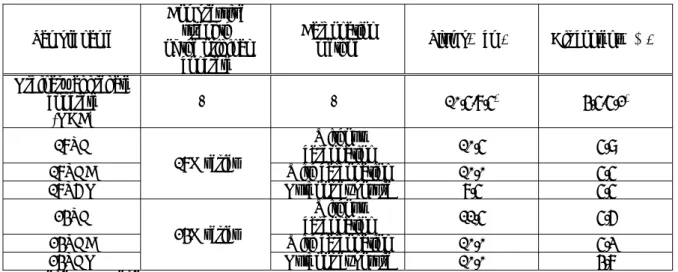
Concrete was using a blast furnace slag cement type B . Mix proportion of concrete is water cement ratio 50%, and s/a 50%, unit of water 160 kg/m3 was constant. The target values of slump and air content are 10cm and 4.5%. Table 2 shows the test results for fresh concrete. The 18N series and 24N series have different experimental periods Therefore, ordinary aggregate concrete was produced twice and tested. Fresh concrete in all concrete was almost same properties.
5 8 11 14
Without carbonation
With carbonation
outdoor exposure
Porosity(%)
Table 2. The test results for fresh concrete.
Sample name
Compressive strength of the original
concrete
Carbonation
method Slump(cm) Air content(%)
Ordinary aggregate concrete
(OAC) - - 10.5/8.5* 4.5/5.2*
18RG
18N series
Without
carbonation 10.5 5.9
18RGC With carbonation 10.0 5.5
18RGO Outdoor exposure 8.5 5.5
24RG
24N series
Without
carbonation 11.5 5.6
24RGC With carbonation 10.0 5.3
24RGO Outdoor exposure 10.0 4.8
* 18N series /24N series
3.2. Results of strength test
Figure 4 shows the compressive strength of recycled aggregate concrete. The compressive strength of concrete using carbonated recycled aggregate has improved. This result was the improvement effect of recycled aggregates, which was the same as the previous report. The effect of with carbonation and the effect of outdoor exposure were found to be greater with carbonation.
Figure 4. Compressive strength of recycled aggregate concrete
Figure 5 shows the splitting strength of recycled aggregate concrete. The splitting strength of concrete using carbonated recycled aggregate has improved. This result was the improvement effect of recycled aggregates, which was the same as the previous report. On the other hand, the splitting strength without carbonation is lower than the result of compressive strength. This is thought to be due to the influence of the attached mortar and the adhesion strength between the original aggregate and the old mortar or the quality of the interfacial transition zone.
0 10 20 30 40 50
OAC 18RG 18RGC 18RGO Compressive strength (N/mm2)
18N series
0 10 20 30 40 50
OAC 24RG 24RGC 24RGO Compressive strength (N/mm2)
24N series
Figure 5. Splitting strength of recycled aggregate concrete
From the above results, it was found that the strength increased when the modified recycled aggregate was used. On the other hand, the 18N series does not achieve the same results as ordinary aggregate concrete even when carbonation technology is used. The reason is that the strength of recycled aggregate concrete is related to new mortar and old mortar. If the strength of the old mortar is lower than that of the new mortar, this difference is difficult to fill. Therefore, for this countermeasure, a method of mixing and replacing ordinary aggregate (Aggregate replacing method) is effective.
3.3. Results of drying shrinkage test
Recycled aggregate concrete has low resistance to drying shrinkage due to the attached mortar to the aggregate. For this reason, the scope of application of concrete using M and L class recycled aggregates is limited. Therefore, the effect of carbonation technology on drying shrinkage was investigated. The recycled aggregate used here is the 18N series of Table 2. Figure 6 shows the results of drying shrinkage test of recycled aggregate concrete. Those subjected to forced carbonation had smaller drying shrinkage.
This result shows the improvement effect of the recycled aggregate. Therefore, the applicable range of recycled aggregate concrete can be expanded by using modified recycled aggregate.
Figure 6. Results of drying shrinkage test 3.4. Results of freeze-thaw resistance
Recycled aggregate concrete has low freeze-thaw resistance due to the attached mortar to the aggregate.
For this reason, the scope of application of concrete using M and L class recycled aggregates is 0
1 2 3 4 5
OAC 18RG 18RGC 18RGO Splitting strength(N/mm2) 18N series
0 1 2 3 4 5
OAC 24RG 24RGC 24RGO
Splitting strength(N/mm2) 24N series
‐800
‐600
‐400
‐200 0
0 5 10 15 20 25 30
Drying shrinkage(×10‐6)
Drying period(week)
Without carbonation With carbonation
limited.Therefore, the effect of carbonation technology on the freezing and thawing resistance was investigated.
In order to evaluate the freeze-thaw resistance of the regenerated aggregate, freeze-thaw tests were conducted on the recycled coarse aggregate. In the explanation of the JIS method, it is shown that the freeze-thaw resistance of concrete can be evaluated by conducting the freeze-thaw resistance of aggregate[5]. Also,Freeze-thaw resistance is expressed as FM freeze-thaw index, and those with a small FM freeze-thaw index are shown to have high freeze-thaw resistance.
Figure 7 shows the results of the freeze-thaw test of the recycled coarse aggregate. Carbonation technology has reduced the FM freeze-thaw index.This is because the water absorption rate of the attached mortar portion becomes smaller and the amount of water to be frozen becomes smaller.
Therefore, the freeze-thaw resistance can be improved by the carbonation technique, and the application range can be expanded.
Figure 7. Results of freeze-thaw test
4. IMPACT OF CARBONATION TECHNOLOGY ON CONCRETE WASTE
In the research so far, it was found that the recycled aggregate can be modified by the carbonation technology and the performance of the concrete can be improved. The application range of recycled aggregate concrete can be expanded by carbonation technology. Therefore, the effect of carbonation technology on the recycling rate of concrete waste will be examined.
Table 3 shows the application site according to the type of recycled aggregate concrete [7]. It can be seen that the application site of recycled aggregate concrete differs depending on the quality class.
Therefore, the predicted amount of non- structure concrete in the Tokyo area was calculated from equation (2).
Nc(%) = Bs×Bc×Tc (2)
Where Nc is the predicted amount of non-structural concrete. Bs is the building site area, Bc is building coverage ratio, Tc is the Thickness of non-structural concrete
The building site area in the Tokyo area is based on the values in the references[1]. The building coverage ratio is 51%, which is the average of the values published by the Tokyo Metropolitan
0.00 0.02 0.04 0.06 0.08 0.10
FMFreeze‐thaw index Standard value of JIS method(M class)
Ordinary aggregate
Government. Also,The thickness of the non-structural concrete was assumed to be 50 mm.Also,Japan is gross domestic product(GDP) is 0.558%.This value is the average of the last 10 years.
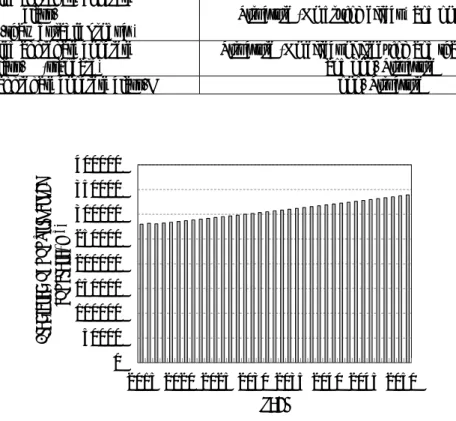
Figure 8 shows the predicted amount of non- structure concrete in the Tokyo area. The predicted amount of non- structure concrete is about 350,000 m3 in 2050. The amount of aggregate used for this concrete is about 350,000 tons(When the amount of aggregate used in 1m3 of concrete is 1000kg).
Based on the above results, the amount of concrete waste to be treated is 87,500 tons, assuming that the percentage of recycled aggregate L that can be produced from concrete lumps is 40%.
It predicts that 10 million tons of concrete waste will be generated in 2050.As a result, if the concrete using the recycled aggregate L can be used for non- structure concrete, the concrete waste can be recycled by 9%.
On the other hand, recycled aggregate L can be upgraded to M class by carbonation technology. In addition, when freeze-thaw resistance is improved by carbonation technology, recycled aggregate concrete can be used for underground structures. Therefore, calculate the predicted amount of concrete to be used for underground structures in the Tokyo area. In the prediction of concrete for underground structures, 65% of the building area is assumed to be the amount of concrete used. And, Concrete used for underground structures accounted for 25% of the total concrete usage. It was also assumed that the Aggregate replacing method was used so that the strength of the concrete could be secured. As a result, the recycled aggregate that can be used for underground structures was about 55000t. From this result, the recycling rate for concrete waste in 2050 was 14%.
From these results, carbonation technology can increase the recycling rate of concrete waste to 23%.
The target value for the recycling rate of concrete waste by the Ministry of Land, Infrastructure, Transport and Tourism in Japan (2008) is over 98%.Therefore, even if the recycling rate of concrete waste drops to 75%, it can be covered by carbonation technology.
Table3. Application site according to the type of recycled aggregate concrete (AIJ guideline)
type Applicable parts,element
Recycled aggregate concrete class-H Structure and non-Structure Recycled aggregate concrete
class-M
(Freeze-thaw durable product) Structure (No drying effect ) and non-Structure Recycled aggregate concrete
class-M (standard)
Structure (No effect of freezing and thawing ,drying ) and non-Structure
Recycled aggregate concrete class-L non-Structure
Figure 8. Predicted amount of non-structure concrete in the Tokyo area 0
50000 100000 150000 200000 250000 300000 350000 400000
2015 2020 2025 2030 2035 2040 2045 2050 Predicted of non‐structual concrete(m3)
year
5. CONCLUSIONS
The summarized results obtained in this research as follows.
1) Recycled aggregate is modified by carbonation technology. However, forced carbonation is more effective than outdoor exposure.
2) Use of modified recycled aggregates in concrete improves strength. However, when the strength of the old mortar is lower than that of the new mortar, it is effective to use the aggregate replacing method.
3) Carbonation technology improves drying shrinkage and freeze-thaw resistance, and can expand the application range of concrete.
4) The recycling rate of concrete waste can be increased by 23% by carbonation technology
ACKNOWLEDGMENTS
The prediction of the amount of concrete waste was supported by Professor Emoto from Fukuoka University and Mr. Yoshizato from Higuchi Sangyo Company. Authors would like to express their gratitude to the kind support.
REFERENCES
[1] N.Matsuda and T.Iyoda (2018),Effectiveness of modification recycled aggregate as seen from the recycled aggregate concrete situation in Tokyo area(pp.1389-1394).Proceedings of the Japan Concrete Institute vol.40. (In Japanese).
[2] T.Iyoda and N.Matsuda (2016),STUDY OF CONCRETE MODIFICATION EFFECT WITH RECYCLED AGGREGATE TREATED BY CARBONATION,Ⅱ Intermational Conference on Concrete Sustainability ICCS16, 1-10.
[3] H.Takenaka and T.Kasai (2008) ,Influence of Properties of Residual Mortar of Original Concrete on Quality of Recycled Aggregate Concrete(pp. 21-29).Concrete Research and Technology,vol.19, No.3.(In Japanese).
[4] T.Saeki,K.Yoneyama and S.Nagataki(1992),CHAMGE IN STRENGTH OF MORTAR DUE TO CARBONATION,Journal of Japan Society of Civil Engineers,No.451/V-17(pp.69-78).
[5] JAPANESE INDUSTRIAL STANDARD, JIS A 5022(Recycled aggregate concrete-Class M supplements D)
[6] H.Katahira and H.Watanabe(2010),Development of a Simple Test Method to Assess Freeze-thaw Resistance of Recycled Aggregate(pp. 25-33).Concrete Research and Technology,vol.21, No.1(In Japanese).
[7] Architectural Institute of Japan,Recommendation for mix design,production and construction practice of concrete with recycled concrete aggregate(2014).