Academia Arena
学术争鸣
ISSN: 1553-992X
http://www.sciencepub.net/academia Volume 2 - Number 3 (Cumulated No. 9), 2010
Marsland Press, Richmond Hill , New York, the United States
Academia Arena 学术争鸣
Academia Arena is published bi-linguistically with English and Chinese for the scientists and Engineers. The journal founded in January 1, 2009 aims to present an arena of science and engineering. The Editor-in-Chief, Associate Editors-in-Chief and Editors have backgrounds in Philosophy, Science, Technology, Cosmology, Mathematics, Physics, Chemistry, Biology, Medicine, Civil, Electrical, Mechanical Engineering, etc. Papers submitted could be reviews, objective descriptions, research reports, opinions/debates, news, letters, and other types of writings.
学术争鸣于2009年元月1日在美国纽约马斯兰德出版社发刊,主要目标为提供科学家与工程师及社会工作者 学术辩论的发表园地,专业领域包含哲学、科学、技术、宇宙学、数学、物理、化学、生物学、医学、土 木、电机、化工、机械工程,等,编辑群将以最专业客观的立场为所有投稿作者服务。
Editor-in-Chief:
Ma, Hongbao <[email protected]>, 347-321-7172
Associate Editors-in-Chief:
Cherng, Shen [email protected], 011886-7732-0480 Henry, Mark <[email protected]>
Herbert, John < [email protected]>
Editors:
Badoni, Anoop <[email protected]>
Chen, George <[email protected]>
Chen, Guoren <[email protected]>
Kalimuthu, Sennimalai <[email protected]>
Kholoussi, Naglaa <[email protected]>, 202-010-607-7356 Kumar, Anand, [email protected], 9538847712 Ma, Margaret <[email protected]>
Mahmoud, Amal, <[email protected]>, (202) 010 580 800 Tan, Tianrong <[email protected]>
Tewari, Lalit M. <[email protected]>
Wang, Kuide <[email protected]>
Young, Jenny <[email protected]>
Refaat, Youssef, < [email protected]>
Yusuf, Mahmoud <[email protected]>
Zaki, Maha Saad <[email protected]>
Zaki, Mona Saad Ali <[email protected]>
Zhang, Dongsheng < [email protected]>, 860-436-1080
Web Design:
Ma, Hongbao <[email protected]>, 347-321-7172
Information for Authors
Manuscripts Submission
(1) Submission Methods: Electronic submission through email would be accepted.
(2) Software: The Microsoft Word file is preferred.
(3) Font: Normal, Times New Roman, 10 pt, single space.
(4) Indent: Type 4 spaces in the beginning of each new paragraph.
(5) Manuscript: Don’t use “Footnote” or “Header and Footer”.
(6) Cover Page: Put detail information of authors and a short running title in the cover page.
(7) Title: Use Title Case in the title and subtitles, e.g.
“Debt and Agency Costs”.
(8) Figures and Tables: Use full word of figure and table, e.g. “Figure 1. Annul Income of Different Groups”, Table 1. List Data”.
(9) References: Cite references by “last name, year”, e.g. “(Smith, 2003)”. References should include all the authors’ last names and initials, title, journal, year, volume, issue, and pages etc.
Reference Examples:
Journal Article: Hacker J, Hentschel U, Dobrindt U. Prokaryotic chromosomes and disease. Science 2003;301(34):790-3.
Book: Berkowitz BA, Katzung BG. Basic and clinical evaluation of new drugs. In: Katzung BG, ed. Basic and clinical pharmacology. Appleton &
Lance Publisher. Norwalk, Connecticut, USA.
1995:60-9.
(10) Submission Address: Marsland Press
PO Box 180432, Richmond Hill, New York 11418, USA; Telephone: (347) 321-7172; Email:
(11) Reviewers: Authors should suggest 2-8 competent reviewers with their name and email.
2. Manuscript Preparation
Each manuscript should be formatted to include the following components:
(1) Title: Complete article title;
(2) Author(s): Each author’s full name; institution(s) with which each author is affiliated, with city, state/province, zip code, and country; and the name, complete mailing address, telephone number, facsimile number (if available), and e-mail address for all correspondence.
(3) Abstract: including Background, Materials and Methods, Results, and Discussions.
(4) Key Words.
(5) Introduction.
(6) Materials and Methods.
(7) Results.
(8) Discussions.
(9) Acknowledgments.
(10) References.
(11) Date submitted
Journal Address:
Marsland Press PO Box 180432
Richmond Hill, New York 11418, USA Telephone: (347) 321-7172
E-mail: [email protected];
Websites: http://www.sciencepub.net
ISSN: 1553-992X
2009-2010 Marsland Press
学术争鸣
Volume 2 - Number 3, March 1, 2010, ISSN 1553-992X
Cover Page, Introduction, Contents, Call for Papers, All papers in one file All comments are welcome: [email protected]
Welcome to send your manuscript(s) to: [email protected].
CONTENTS
No. Titles / Authors page
1
Force exerted by Hawking radiation emitted from Black hole
Manjunath. R. (reader in physics)
#16, 8th Main road, Shivanagar, Rajajinagar, Bangalore-560010, Karnataka, India. [email protected]
Abstract: Hawking radiation (also known as Bekenstein-Hawking radiation) is a thermal radiation with a black body spectrum predicted to be emitted by black holes due to quantum effects. The Hawking radiation process reduces the mass of the black hole and is therefore also known as black hole evaporation. Force exerted by hawking radiation is defined as function of entropy of black hole emitting hawking radiation, density of black hole and schwarzschild radius of blackhole .The above equation F = K ρ / rs S ( where F = Force exerted by hawking radiation , K=proportionality constant , rs = schwarzschild radius of black hole,s = entropy of black hole , ρ =black hole density) was developed based on quantum mechanical concepts . The above equation also describes outward force is exerted by hawking radiation to overcome the gravitational force of attraction of black hole. [Academia Arena, 2010;2(3):1-4] (ISSN 1553-992X).
Keywords: force, density, entropy
Full Text
2
ACUTE EFFECTS OF BRAIN STIMULATION IN SHORT-TERM MEMORY OF YOUNG PERSONS
CARIELO AA 1,2,3 ,CALOMENI MR 1, DIRÉ GF 2,4,5,, GOMES ML 4, FERNANDES JFO 4 , FREIRE RB 6, BORBA HR 6, ALMEIDA MWS 1, BIANCHI CE 1, SILVA VF 1
1Universidade Castelo Branco – LABNEU II, Rio de Janeiro/RJ – Brazil.
2Universidade Estácio de Sá – Centro de Ciências da saúde, Rio de Janeiro/RJ – Brazil.
3Projeto de pesquisa da escola de medicina da Unigranrio – Rio de Janeiro/ RJ – Brazil.
4Universidade Estadual da Zona Oeste, Colegiado de Ciências Biológicas e da Saúde, Campo Grande, Rio de Janeiro, Brazil.
5Instituto Federal de Educação, Ciência e Tecnologia do Rio de Janeiro, campus Maracanã, Rio de Janeiro, Brazil.
6Universidade Federal Rural do Rio de Janeiro, Departamento de Biologia Animal, Seropédica, Rio de Janeiro, Brazil. [email protected]
ABSTRACT: The inherent goal here was to verify the effects of brain stimulation via an instrumentation frequency hearing and vision, aiming, immediate results (acute effect) on memory tasks associated with short- term. The random sample included 20 individuals of both genders, aged between 18 and 25 years (mean 21.8 years). The application for evaluation was to memorize in 10 seconds, a sequence of letters submitted and requiring the faithful reproduction of this sequence, after 20 seconds. Two days later, this providence, proceeded to brain stimulation by means of an electronic computer named Orion manufactured by Mindplace (brain machine), using the auditory modality of stimulation for only 10 individuals, and the visual, for others ten. Next, we carried out a reassessment in the same manner as the previous one. The pre-and post-stimulation were studied using three parametric Analysis of Variance (One-way ANOVA) independent, and the first occurred on the basis of global data, regardless of the rules and, second, by viewing the auditory modality, while the third, the visual.
The results indicated a significant difference in performance from the whole group joining the two modalities (visual + auditory), compared to post-stimulation, F 7.467, df (1.38) = 0.009, p <0.05. Checking the effects isolated by method of stimulation, the analysis revealed to be F 6.68, df (1.18) = 0.019, p <0.05 and F = 1.699, df (1.18) = 0.209, p> 0.05 for the visual and auditory modalities, respectively. These results were interpreted as restricting or promoting support for the benefits of acute brain stimulation on the function of short-term memory, indicating further that the photic stimulation is more interactive than the auditory modality when dealing with this benefit. [Academia Arena, 2010;2(3):5-14] (ISSN 1553-992X).
Key words: Brain, Memory, Young persons, Acute effects, photic, sound
Full Text
3 中国2019 年前后的房地产、中国反腐败以后还有出路吗?垄断国企将走向何处? Full
2* 3*
是否会成为祸国殃民的国家垄断资本主义?文章的观点是否正确并不重要。可以讨论和批驳。在科学 上,提出问题比解决问题更为重要。题目是不是危言耸听,愿人们能认真思考。[Academia Arena, 2010;2(3):15-31] (ISSN 1553-992X).
关键词:中国; 房地产; 腐败; 垄断; 国企
4
Regarding ultimate fate of our mother earth
Manjunath. R. (Reader in physics)
#16, 8th Main road, Shivanagar, Rajajinagar, Bangalore-560010, Karnataka, India [email protected]; [email protected]
Abstract: From past several centuries many scientists are struggling hard to understand the truth of ultimate fate of our mother earth . Most of the assumptions and predictions regarding the ultimate fate of our mother earth have been proved to be wrong .I have made an attempt to figure out the ultimate fate of our mother earth through a mathematically derived equation i.e R = c/ H cosec θ [ (ρ / ρ0 )^ 1/3 - 1] { where R=Radius of elliptical orbit in which earth moves around the sun, c= speed of light in vaccum (3*10^8m/s), H=present Hubble constant ( which is the function of time), ρ0 = present mass density of universe , ρ= later mass density of universe which vary with respect to time ‘t’. θ =angle between concepts d1 and d respectively}.The above expression was developed based on cosmological, astronomical and mathematical concepts.The above paper also describes about the variation of radius of earth’s elliptical orbit around the sun with mass density of infinite universe.
[Academia Arena, 2010;2(3):32-40] (ISSN 1553-992X).
Keywords: Angle, Density, Radius
Full Text
5
SORBENT CAPACITIES AND INTENSITIES OF THERMOCHEMICALLY CRACKED SHEA NUT SHELLS FOR THE REMOVAL OF WASTE WATER DYESTUFF
Itodo A. U.1 and Itodo H. U. 2
1Department of Applied Chemistry, Kebbi State University of Science and Technology, Aliero, Nigeria
2Department of Chemistry, Benue State University, Makurdi, Nigeria. [email protected]
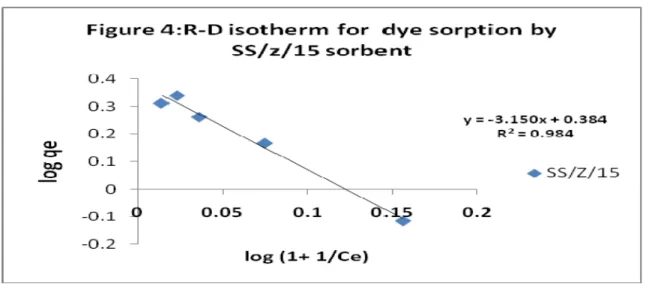
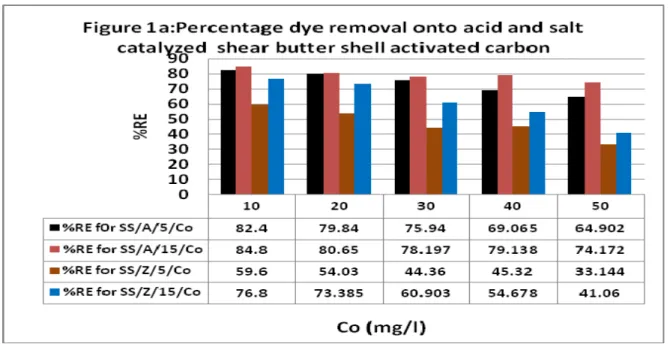
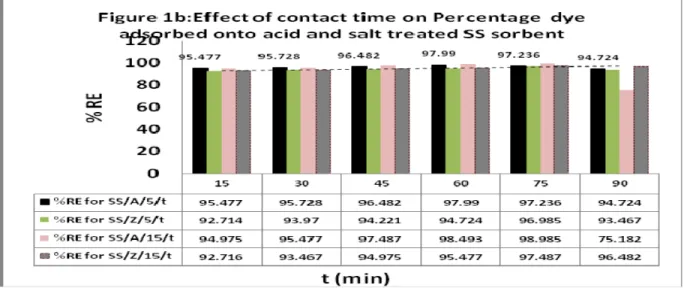
Abstract: The sorbent capacities and intensities of activated carbon by one-way thermochemical pyrolysis of shea nut shells were studied on waste water dye removal and the results are presented in this paper. The relationship between the ordinary (kf), maximum (qm) ,and theoretical saturation capacities (qD ) were also investigated to follow the order ; qm > qD > kf. H3PO4 catalyzed sorbent at a longer activation dwell time, SS/A/15 presented a higher adsorption capacities (qm=6.024 mgg-1,qD=4.189 mgg-1 and kf = 0.628 ) and higher sorption intensity (1/n =0.714) ,than the other 3 series.The high % dye removal (%RE up to 84.80%), adsorption normalcy (1/n <1 and RL<1) and good applicability (R2 >0.869) are critical for considering shea nut shells as precursor for generating low cost active biosorbents. [Academia Arena 2010;2(3):41-50]. (ISSN 1553-992X).
Keywords: Adsorption capacities, intensities, Dye, Shea nut shells, waste water
Full Text
6
ACTIVATION CHEMISTRY AND KINETICS OF SHEA NUT SHELL BIOSORBENTS FOR TEXTILE WASTE WATER TREATMENT
Itodo A.U. 1 and Itodo H.U.2
1Department of Applied Chemistry, Kebbi State University of Science and Technology, Aliero, Nigeria.
2Department of Chemistry, Benue State University, Makurdi. [email protected]
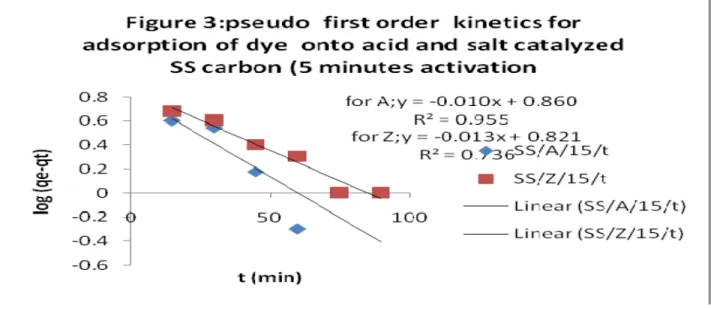
ABSRACT: Phosphoric acid (H3PO4) and Zinc chloride (ZnCl2) catalyzed Shea nut shells, subjected to a one way activation scheme was employed to study the adsorption kinetics and mode of diffusion of industrial dye uptake. Thermodynamics data obtained in this study indicate that the sorption of dye spontaneously increases with time and decreases after equilibration was reached. The adsorption follows the pseudo second order kinetic model which gave the least % SSE (0.449-1.348), best linearity (R2=0.998-0.999) and closer agreement between the experimental and calculated qe values (qe exp., 96.985/qe cal., 100.00).Mode of transport deviate from the intraparticle diffusion model. According to this study, percent dye removal coupled with the close proximity of generated data to those reviewed in literatures, is an indication that Shea nut shells could compare, to a good extent with commercial activated carbon for organic dye removal from dyestuff waste water. [Academia Arena 2010;2(3):51-60]. (ISSN 1553-992X).
Key Words: Activation Chemistry, Kinetics, Shea nut, Biosorbents, Textile Wastewater
Full Text
7 Tangential acceleration of emitted photon from the star Full
Text
Abstract : It is shown that the equation for the calculation of tangential acceleration of emitted photon from the star accounts for the potential energy of gravitational field of star .The above equation aT=kEg (k =
proportionality constant ,aT = tangential acceleration of emitted photon from the star, , Eg= potential energy of gravitational field of star) was developed based on the quantum mechanical concepts , gravitational concepts and classical mechanical concepts .The new mathematical model allows to calculate tangential acceleration of emitted photon from the star . The above equation also describes the variation of tangential acceleration of emitted photon with the potential energy of gravitational field of the star. [Academia Arena 2010;2(3):61-64].
(ISSN 1553-992X).
Key words: Force, photon, gravity, speed of light , acceleration
8
Screening Six Cultivars of Cowpea (Vignia unguiculata (L.) Walp for Adaptation to Soil Contaminated with Spent Engine Oil
Agbogidi, O. M.
Faculty of Agriculture, Delta State University,Asaba Campus,Delta State, Nigeria. [email protected]
Abstract: Field experiments were carried out in 2007 and 2008 growing seasons at the Delta State University, Asaba Campus teaching and Research Farm to screen six cultivars ( ) of cowpea for adaptation to soil
contaminated with spent engine oil. 0 (control), 25, 50, 75 and 100ml of the oil served as the treatments. The experiment was arranged in a randomized complete block design with four replications. The results showed that cowpea cultivars grown in 25ml of spent engine oil gave consistently significant higher (P≤0.05) values than the control and the other treatments (50, 75 and 100ml) of the spent oil plant height, leaf area, number of leaves, stem diameter, days to 50% flowering, member of nodes on main stem, number of branches, and number and length of penducle. The results also showed that as from the 50ml of oil application to soil, all the traits examined showed significant reductions (P≥ 0.05) when compared to their controls however, TVx3226 and IT84S – 2246-4 were higher in performance whereas, IT890.699 and IT870- 941-1, showed the lowest inhibitory effect. The current study has demonstrated that spent engine oil has a highly significant effect of reducing the growth characteristics of the six cultivars of cowpea examined. [Academia Arena 2010;2(3):65-75]. (ISSN 1553- 992X).
Keywords: Screening, cowpea cultivars, adaptation, spent engine oil.
Full Text
9
Dynamic Simulation for Domestic Solid Waste Composting Processes Beidou Xi 1, *, Zimin Wei 1, 2, Hongliang Liu 1
1. Chinese Research Academy of Environmental Sciences, Beijing 100012, China 2. Northeast Agriculture University, Harbin, Heilongjiang 150030, China
[email protected], [email protected]
Abstract: Modeling composting processes is the prerequisite to realize the process control of composting. In this paper, a simulation model for domestic solid waste composting processes was developed based on microbial process kinetics, mass conservation equation, energy conservation equation and water balance. Differential equations describing microbial, substrate, oxygen concentrations, moisture content and temperature profiles were derived. Considering that several factors (temperature, oxygen, moisture and FAS) in the process interacted to composting processes, microbial biomass growth kinetics was described. In order to verify the model, a series of aerobic composting experiments on domestic solid wastes were conducted. Temperature, moisture, microbial biomass growth, oxygen consumption rate and the concentrations of organic components were monitored in the composting processes and also simulated with the developed model. The simulation results were well consistent with the experimental results. It also could be seen from the model that the efficiency of composting processes could be raised and aeration requirements could be reduced by controlling the oxygen concentration in the exhaust air within a proper range. When the range is 8% to 12%, the aeration requirements reduced 79.61%. This result was verified by the composting experiment. When initial moisture content was higher than 66% or lower than 33%, it would significantly reduce the rate of substrate degradation. It indicated the effect of initial moisture content on the composting processes was significant. A simple sensitivity analysis demonstrated that two key parameters in composting modeling to determine were maximum specific growth rate (µmax) and yield coefficient (YY/S). Therefore, the composting processes could be optimized by the application of the developed simulation model. [Academia Arena 2010;2(3):76-89]. (ISSN 1553-992X).
Key words: dynamic simulation; model; composting; domestic solid waste
Full Text
10 创 立 统 一 场 论 Full
电话: 0514 一 82822538 邮编225008; 电子信箱: [email protected]; 博客: http://yzscw.blog.163.com 摘要: 自然科学里有许多难题困扰着科学家,爱因斯坦却把思维定制在寻找统一引力、电磁力、强作用 力、弱作用力的场, 所以他也无法先创立出统一场论。再来分析论叙是谁质量大,统一了这些力而进化 出新物质。因此,创立统一场论和图型及公式,得到正确认识自然界起因和运动后能量多少的能力, ,去造 福人类。[Academia Arena 2010;2(3):90-100]. (ISSN 1553-992X).
[关键词]: 统一场论,椭圆图图解及公式、统一场论的应用
Abstract: There are many problems disturbing the scientists in the field of natural science. But Einstein focused his thinking on searching for fields of unified gravity, electromagnetic force, strong force, and weak force, so he could not take the lead in creating the Unified Field Theory to analyze which one is of greater quality, and what has integrated all these forces to create new substances. As a result, creating the Unified Field Theory, its graphics and formulas to clearly get to know the causes of nature and the ability of energy-change after movement is of vital importance to the depiction and redesign of both evolution models of celestial bodies and all other things, so as to benefit the humankind. [Academia Arena 2010;2(3):90-100]. (ISSN 1553-992X).
Force exerted by Hawking radiation emitted from Black hole
Manjunath. R. (reader in physics)
#16, 8th Main road, Shivanagar, Rajajinagar,
Bangalore-560010 Karnataka, India [email protected]
Abstract: Hawking radiation (also known as Bekenstein-Hawking radiation) is a thermal radiation with a black body spectrum predicted to be emitted by black holes due to quantum effects. The Hawking radiation process reduces the mass of the black hole and is therefore also known as black hole evaporation. Force exerted by hawking radiation is defined as function of entropy of black hole emitting hawking radiation, density of black hole and schwarzschild radius of blackhole .The above equation F = K ρ / rs S ( where F = Force exerted by hawking radiation , K=proportionality constant , rs = schwarzschild radius of black hole,s = entropy of black hole , ρ =black hole density) was developed based on quantum mechanical concepts . The above equation also describes outward force is exerted by hawking radiation to overcome the gravitational force of attraction of black hole. [Academia Arena, 2010;2(3):1-4] (ISSN 1553-992X).
Keywords: force, density, entropy
Introduction
When particles escape as thermal radiation, the black hole loses a small amount of its energy and therefore of its mass (mass and energy are related by Einstein's equation E = mc²).The power emitted by a black hole in the form of Hawking radiation can easily be estimated for the simplest case of a nonrotating, non-charged Schwarzschild black hole of mass ‘M’ .Hawking radiation consist of photons, neutrinos, and to a lesser extent all sorts of massive particles.By the application of quantum mechanical concepts we can derive an equation for force is exerted by hawking radiation to overcome the gravitational force of attraction of black hole .
DERIVATION:
FORCE EXERTED BY HAWKING RADIATION EMITTED BY BLACK HOLE
When quantum mechanical effects are taken into account one finds that Blackhole emit thermal radiation (hawking radiation) at a temperature(hawking radiation temperature) is given by
T=hc^3/2 π (8 π GMk) where h=planck’sconstant, G=universal gravitational constant M= Mass blackhole, k=Boltzmann constant, c=speed of light in vaccum /air
Schwarzschild radius of black hole can be given by rs =2GM/c^2
Thus T=hc^3/2 π (8 π GMk) becomes T=hc .c^2/8 π^2k 2GM i.e T=hc /8 π^2k rs
KT=hc/8 π^2rs
According to Boltzmann’s law: Energy of emitted thermal radiation by black hole is directly proportional to it’s temperature given by E=KT where k= Boltzmann constant
Then the equation KT=hc/8 π^2rs becomes E=hc/8 π^2rs
Emitted thermal radiation by black hole will exert outward force to overcome the gravitational force of attraction of black hole. Hence energy of emitted thermal radiation can alsobe given by E=F λ where E= energy of emitted thermal radiation,F =force exerted by radiation, λ=wavelength of emitted radiation.
(Proof for E=F λ is shown at the end of derivation) Thus E=hc/8 π^2rs becomes F λ=hc/8 π^2rs
Debroglie wavelength assosiated with the emitted hawking radiation can be given by λ=h/mc Where m= mass of emitted hawking radiation
Note: radiation travels at speed of light i.e c (3*10^8m/s) Thus F h/mc=hc/8 π^2rs hence F=mc^2/8 π^2rs is obtained.
The rate of energy flow from black hole is given by P=e σ T^4 A.
Where P=rate of energy flow at temerature T , e=emissivity power(for black hole e=1) A=surface area of black body. i.e P= σ T^4 A is obtained.
According to Stefan ‘s law :Energy of emitted radiation from blackhole is directly proportional to fourth power of it’s temperature E = σ T^4 .where σ=stefan’s constant.
Energy of emitted hawking radiation can be given byE=mc^2 ,where m=mass of emitted hawking radiation By equivalence of stefan’s law and einstein’s mass energy equivalence law we get
mc^2= σ T^4 then the equation P= σ T^4 A becomes P= mc^2A.
then P= mc^2A i.e P/A=mc^2
Then the equation F=mc^2/8 π^2rs becomes F=P/8 π^2rs A where A=surface area of black hole emitting hawking radiation.
Entropy of black hole emitting hawking radiation is given by S=KA/4lp^2 Where lp = planck’s length ,S= entropy of black hole emitting hawking radiation By rearranging the above equation we get A=4Slp^2/K
i.e F=P/8 π^2rs A becomes F=PK/8 π^2rs 4Slp^2 i.e F=PK/32 π^2rs Slp^2 .
Rate of rate of energy flow by blackhole is given by P= ρhG/180 π where ρ=black hole density,G= universal gravitational constant.
then the equation F=PK/32 π^2rs Slp^2 becomes F= ρhGK/180 π(32 π ^2 rs Slp^2 ) Planck’s length is given by lp^2=Gh/2 πc^3.
Then F= ρhGK/180 π(32 π ^2 rs Slp^2 ) becomes F= ρhGK2 πc^3/5760 π ^3 rs Gh S F= ρKc^3/2880 π ^2 rs S
As K’ =KC^3/2880 π ^2 ,where K’= proportionality constant
Thus equation F = K’ρ /rs S is obtained. Where ρ=black hole density, rs =Schwarzschild radius of black hole, F=force exerted by hawking radiation, S= entropy of black hole
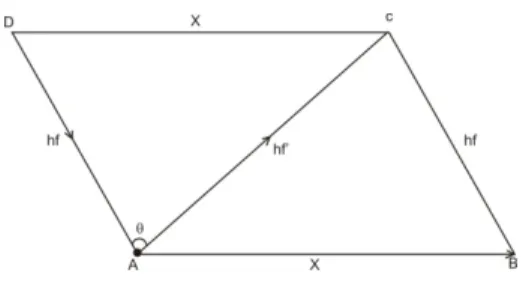
PROOF FOR THE EQUATION E=F λ Determination of the Photon Force and Pressure Reissig, Sergej
The 35th Meeting of the Division of Atomic, Molecular and Optical Physics, May 25-29, 2004, Tuscon, AZ. MEETING ID: DAMOP04, abstract
#D1.102
In [1] the formula for the practical determination of the power of a light particle was derived: P = hf^2 (W) (1).
For the praxis it is very usefully to define the forces and pressure of the electromagnetic or high
temperature heat radiation. The use of the impulse equation F = fracdPdt = fracd(mc)dt (2) together with the Einstein formula for E = mc^2 leads to the following relationship: F = frac1cfracd(mc^2 )dt = frac1cfracdEdt (3) In [1] was shown: - fracdEdt = P (4). With the use the eq. (1), (3), (4) the force value could be finally determinated: | F | = frachf^2 c or | F |
= frachcλ ^2 = fracEλ [N]. The pressure of the photon could be calculated with using of the force value and effective area: p = fracFA [Pa]. References 1. About the calculation of the photon power. S. Reissig, APS four corners meeting, Arizona, 2003 -
www.eps.org/aps/meet/4CF03/baps/abs/S150020.html
Note: Emitted hawking radiation also possess wavelength and energy during it’s motion then it also exerts outward force to overcome the gravitational force of attraction of black hole.
Then the above equation E=F λ can be applied to emitted hawking radiation also.
Result:
1) Force exerted by hawking radiation emitted by black hole as a function of black hole density, Schwarzschild radius of black hole, entropy of black hole emiting thermal radiation is given by F
= K’ ρ / rs S
Discussions: Normally, a black hole is considered to draw all matter and energy in the surrounding region into it, as a result of the intense gravitational fields.
Because Hawking radiation allows black holes to lose mass, black holes that lose more matter than they gain through other means are expected to dissipate, shrink, and ultimately vanish. Smaller micro black holes (MBHs) are predicted to be larger net emitters of radiation than larger black holes, and to shrink and dissipate faster. In order to overcome the gravitational force of attraction of black hole hawking radiation
should posses outward force such that particles of thermal radiation are emitted from black hole.
Conclusion: According to the general theory of relativity, a black hole is a region of space from which nothing, including light, can escape. It is the result of the deformation of spacetime caused by a very compact mass. Around a black hole there is an undetectable surface which marks the point of no return, called an event horizon. It is called "black" because it absorbs all the light that comes towards it, reflecting nothing, just like a perfect black bodyin thermodynamics. Force is exerted by hawking radiation to overcome the gravitational force of attraction of black hole. As F α
ρ /rs S if density of blackhole is more, then force exerted by hawking radiation is more (F α ρ). As schwarzschild radius of black hole is more, then force exerted by hawking radiation is less (F α 1 /rs) .As entropy of black hole is more, then force exerted by hawking radiation is less (F α 1 / S).
Acknowlegement:
I would like to express my deep gratitude to all those who gave me the possibility to complete this thesis. My sincere thanks to the Lord Ganesha, Editor of
“NATURE AND SCIENCE” journal, my physics teachers, & parents.
Correspondance to:
Manjunath. R. (Reader in physics)
#16,8th Main road, Shivanagar, Rajajinagar,
Bangalore-560010 Karnataka, India
Contact: res -080-65960971 mob: 91-9008487836 [email protected] [email protected]
References:
1) Cl Robert M. Wald, General Relativity, Sections 14.2-14.4, University of Chicago Press, Chicago, 1984.
(A good precise introduction to the subject.) 2) Hawking radiation (From Wikipedia,the free encyclopedia)
3) Stephen W. Hawking, Particle creation by black holes, Commun. Math. Phys. 43 (1975), 199-220. (The original paper.)
4) Black hole thermodynamics (From Wikipedia, the free encyclop edia)
5) Mass –energy equivalence,
www.worsleyschool.net/science/files/emc2.html catched pages , (From Wikipedia,the free encyclopedia).
6) Thermal radiation (From the free Wikipedia encyclopedia)
7) Blackhole (From the free Wikipedia encyclopedia) 8) Determination of the Photon Force and Pressure Reissig, Sergej (www google.com)
Date of submission: 04|01|2010
ACUTE EFFECTS OF BRAIN STIMULATION IN SHORT-TERM MEMORY OF YOUNG PERSONS
CARIELO AA 1,2,3 ,CALOMENI MR 1, DIRÉ GF 2,4,5,, GOMES ML 4, FERNANDES JFO 4 , FREIRE RB 6, BORBA HR 6, ALMEIDA MWS 1, BIANCHI CE 1, SILVA VF 1
1Universidade Castelo Branco – LABNEU II, Rio de Janeiro/RJ – Brazil.
2Universidade Estácio de Sá – Centro de Ciências da saúde, Rio de Janeiro/RJ – Brazil.
3Projeto de pesquisa da escola de medicina da Unigranrio – Rio de Janeiro/ RJ – Brazil.
4Universidade Estadual da Zona Oeste, Colegiado de Ciências Biológicas e da Saúde, Campo Grande, Rio de Janeiro, Brazil.
5Instituto Federal de Educação, Ciência e Tecnologia do Rio de Janeiro, campus Maracanã, Rio de Janeiro, Brazil.
6Universidade Federal Rural do Rio de Janeiro, Departamento de Biologia Animal, Seropédica, Rio de Janeiro, Brazil.
Correspondence: e-mail: [email protected]
ABSTRACT: The inherent goal here was to verify the effects of brain stimulation via an instrumentation frequency hearing and vision, aiming, immediate results (acute effect) on memory tasks associated with short-term. The random sample included 20 individuals of both genders, aged between 18 and 25 years (mean 21.8 years). The application for evaluation was to memorize in 10 seconds, a sequence of letters submitted and requiring the faithful reproduction of this sequence, after 20 seconds. Two days later, this providence, proceeded to brain stimulation by means of an electronic computer named Orion manufactured by Mindplace (brain machine), using the auditory modality of stimulation for only 10 individuals, and the visual, for others ten. Next, we carried out a reassessment in the same manner as the previous one. The pre-and post-stimulation were studied using three parametric Analysis of Variance (One-way ANOVA) independent, and the first occurred on the basis of global data, regardless of the rules and, second, by viewing the auditory modality, while the third, the visual. The results indicated a significant difference in performance from the whole group joining the two modalities (visual + auditory), compared to post-stimulation, F 7.467, df (1.38) = 0.009, p <0.05. Checking the effects isolated by method of stimulation, the analysis revealed to be F 6.68, df (1.18) = 0.019, p <0.05 and F = 1.699, df (1.18) = 0.209, p> 0.05 for the visual and auditory modalities, respectively. These results were interpreted as restricting or promoting support for the benefits of acute brain stimulation on the function of short-term memory, indicating further that the photic stimulation is more interactive than the auditory modality when dealing with this benefit. [Academia Arena, 2010;2(3):5-14] (ISSN 1553-992X).
Key words: Brain, Memory, Young persons, Acute effects, photic, sound
INTRODUCTION
Learning and memory processes are related and inseparable. Learning corresponds to the acquisition of new knowledge and consequent behavior modification, while the memory can be understood as the retention of this knowledge (Maxwell et al., 2003, quoted in Cardoso Machado, Silva, 2006). According to Sternberg (2000), quoted Linassi, Soares, Mota (2005), states that the basic operations of memory are encoding, storage and retrieval. The coding is the transformation of sensory input in a form of mental representation that can be stored. Storage is the storage of information encoded. According to Squire & Kandel (2003) recovery refers to access and use of information stored. All these processes interact and are interdependent. The working memory, according to Flavell et al., (1999), quoted Linassi, Soares, Mota (2005), is responsible for the temporary storing of information and has an active role in information processing. The duration of information in short-term memory is small and the decay usually happens within a period of approximately 15 to 25 seconds. The information may be copied or can be downloaded from this deposit to deposit, and long-term effectiveness of memory tends to always depend on the type of strategy used by the aide-memoire. Studies have long ago by George Miller, using a procedure like this determined that the deposit in the short term can "hold" 7 items of information, plus or minus 2.
An item of information is "a piece" of information as a letter, number, formula, or sentence. In other words, anything that the brain stores as a unitary representation. In this case it may, the brain, register and hold more information in short-term memory, if organized in a few pieces of high-level information, such as group letters into words.
Developmental searches have revealed a number of differences between young children and older in terms of operability. One of them, and of critical importance to ensuring a sufficiency in learning is referred to the time of durability of a temporary storage (Squire, Kandel, 2003).
If video games as an advisory stimulation may benefit the performance of some mechanisms of memory and the consequent and related performance, which could be the result of stimulation, the part on those same mechanisms?
Brain stimulation is not a new event, since many years ago some researchers have managed to identify the effects of electromagnetic loads in individuals with diseases of various facets, in which they included some kind of depression and also neuroses (George et al., 2003).
Regarding the driving issues, Spiegel et al.
(2003), found a significant improvement in ambulation of patients with parkinsonian brain stimulation through sound and photic stimulation, and these improvements were associated both amplitude and frequency gait. Another line of evidence, viewing the performance and not specifically, processes, points to the brain stimulation as a variant able to promote significant changes in motor performance (Carter et al., 2006, Marques et al., 2005, Lins, 2006, Silva et al., 2008), as well as for the development of cognitive skills of reference (Marques et al., 2005). This line, combined with stimulation through auditory and noise sources, as described by Marques et al. (2005), in order to produce changes in cortical patterns (rhythms of the brain), hoping for a improvement in its performance, tasks of contractual, or special of the day-to-day social human. Attempts changes are made by selecting a specific frequency to the nature of the individual involved in the research and referentially you want to achieve. The training is made operational by converging streams of light to the retina, then to the olivary nucleus and then to the thalamus, a structure that is responsible for receiving and filtering external stimuli (Machado, 2004). Through the activation of the reticular system, the frequency of operation is then sent to the cortex, occurring, then grip cortical frequency imposed (Brady, 2002).
Thus, considerations about the importance of a system of mental processing fast (fast and accurate) can have on all levels of human competence and the possibility that brain stimulation may have a potential effect on it, define need to conduct research that will strengthen knowledge on the possible relationship of interaction between mental processing and brain stimulation. This paper characterizes an effort toward this need.
MATERIALS AND METHODS SAMPLE
The study sample was characterized on the agenda for the 20 individuals of both genders, 9 males and 11 females, all of school age (N = 20).
As priority setting, they could not present any type of visual disturbance, hearing, physical or mental.
Belonging to the same social class and the institution, aiming to keep this one more homogeneous as possible between them. These school children aged between 14 and 21 years were selected randomly, with no distinction made in practice or not physical activities because we believe that this type of control in this case would be irrelevant. This study met the standards for the conduct of human research, as directed by the National Health Council, Resolution 196/96 and approved by the Institutional Ethics Committee of the Universidade Castelo Branco - UCB / RJ. All participants were volunteers, having been requested in all cases, the agreement of parents or guardians for them.
PROCEDURES
The selection took place within a state institution in the city of Campos, RJ. The protocol for data collection was completed the following: young people were examined in a room inside the institution to which they belonged properly equipped with temperature controlled by external noise. Initially as a control for the research subjects were usually held in that room where he
explained the type of work they would participate.
Then, in order to assess the capacity of short-term memory of these were carried out individually, each of which tests should be evaluated memorize a sequence of letters from a common deck that was presented and, for this task of memorization, a total time of 10 seconds.
Immediately after, the assessed should repeat the sequence was shown to them using this time a maximum of 20 seconds. We recorded the total time of execution and the maximum score of mistakes and successes of each individual. After a period of one day control experiment was performed, the process of stimulation, which is applied to groups composed of 4 individuals, and for two of each group used to photic stimulation and for the other two, the sound. Thus, all components of the group were stimulated. We used this stimulation to the electronic device (computer) named Orion (brain machine), manufactured by Mindplace, composed of dark glasses with 4 LEDs on the inner surface of each lens, a stereo headset and a PC where the sessions pre-programmed. These, picked up, according to the methodology, the appropriate section of paragraph 12, which is intended for the learning factor (stimulation to learning). The duration of the session lasted 10 minutes. After this stimulation the individuals were referred to another room, also in ideal conditions, where they repeated the first experimental procedure of memorization of playing cards. It should be noted that for this second data collection, the letters were presented in a different manner to control the collection. For the analysis of data obtained was used as a tool for statistical analysis using SPSS 10.0 for Windows, and the inferential statistics procedure was defined a parametric analysis (ANOVA), while the descriptive references for analysis were the mean and standard standard group, in comparison between pre and post-stimulation. We adopted the margin of error for the test of the principal value of alpha
<or = 0.05. The results are listed below.
RESULTS
Table 1 presents both the number (N) of the subjects of the group, as the values for the mean, standard deviation, maximum and minimum scores of correct memory test performed by the group in control and experimental situations without taking into account the type of stimulation performed. It is also described the level of significance found when comparing the two moments, demonstrating that the existence of a statistically significant difference between tasks performed (time of testing).
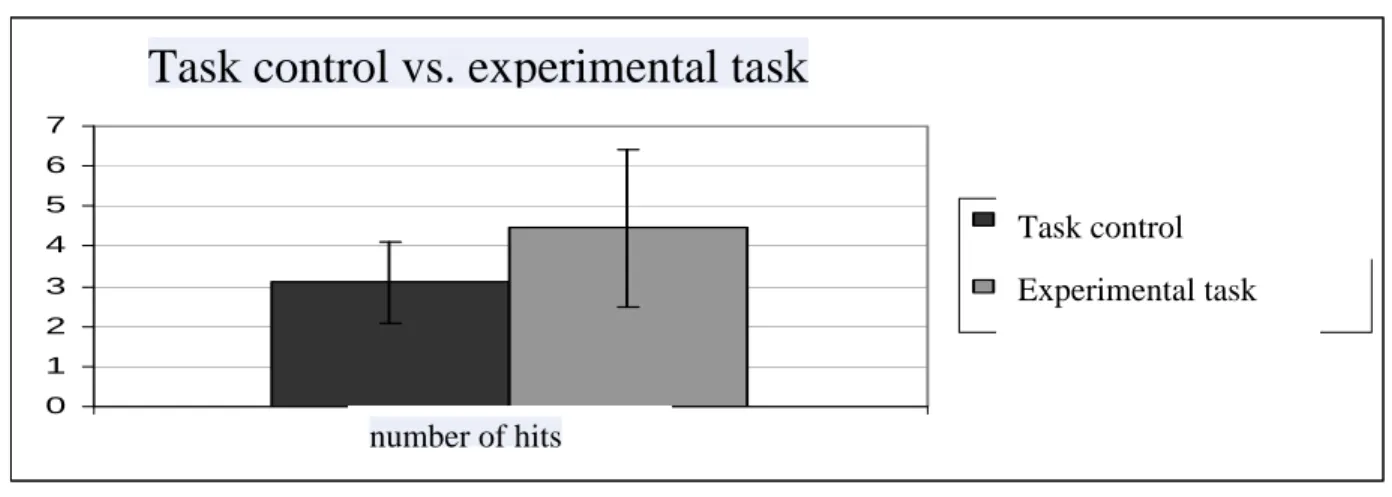
According to Table 1, by considering the control task (memory test before stimulation) compared to the post-stimulation (experimental task) for the group as a whole, the difference was statistically significant, showing that stimulation influenced, positively, the functions of memory, the group, resulting in greater power to the task of memorization. Stand out that this test has a reference to the short-term memory. In this case, the ANOVA performed resulted in F = 7.467, df 1.38 p 0.009 <0.05.
These data can be more easily interpreted in the plot made in Figure 1 (below).
Figure 1. Plot of mean scores and standard deviations of the group, the control and experimental tasks, identifying a significant increase in the number of correct answers in the memory task compared to the experimental task control.
By comparing the standard deviations before and after stimulation, would be observed that it had a differential effect "within the group," indicating that some individuals were more susceptible to stimulation than others. These differences, however, were not sufficient to cause a heterogeneity that could compromise the test inferential.
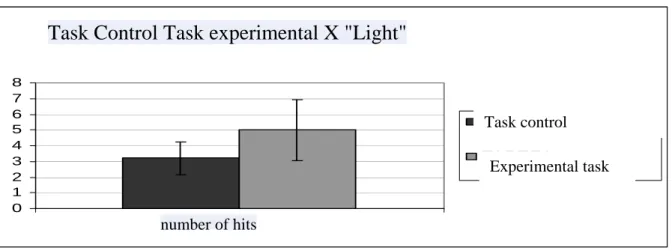
Table 2 shows the total N of individuals in the group, at one time task, and the results of the mean, standard deviations, minimum scores, maximum and level of significance between control and experimental time. Note that this table only describes the data of individuals who received photic stimulation (light). The significance of the comparison result shows that there is a significant difference between the time before and after stimulation on photic mode, and the ANOVA performed resulted in F = 6.68, df 1,18, p 0.019, <0 , 05.
Just as occurred with the standard deviation of the group, considering the photic stimulation (light) and noise (sound), together, photic stimulation differently influenced the performance of individuals in the group, increasing the heterogeneity of those at the time of memorization task post-stimulation. However, the group was moderately more effective at this time, making a differentiation result statistically significant, as shown above. Probably this heterogeneity possibly justify the absence of significant interaction observed in the comparison made in the form of sound stimulation (sound). That is, since this did not influence considerably the comparison between pre and post-photic stimulation in the modality, should influence the comparison of data before and after pacing mode noise.
This possibility is addressed in the presentation of relevant data, shown in Table 3 and Figure 3, below.
Figure 2. Difference between the mean scores of hits from the group in relation to pre and post- photic stimulation. Note that this figure also depicts the standard deviation for each time.
According to table 3, in which the scores before and after stimulation performed in the auditory modality trial, stimulation was passed resulting in better performance of individuals who received this type of stimulation, evidenced by higher
scores on the task of memorization, after sound stimulation. It should be noted, the same trend observed in previous periods, in which the heterogeneity of the group increases when the experimental task (the post-stimulation). Since this time, the standard deviation shown greater good. In fact, nearly doubling compared to the time of task control.
As predicted this heterogeneity is reflected in the inferential analysis, resulting in a not statistically significant when comparing pre and post- stimulation, and F = 1.699, df 1.18, p 0.209> 0.05.
Table 1. Average of correct answers, SD - standard deviation scores of correct minimum and maximum memory in the sequence of letters submitted to the group, task control and experimental.
____________________________________________________________________________
Task Subjects Mean SD Minimum Maximum Significance
Control 20 3.1 1.02 1 5
0.009
Experimental 20 4.4 1.96 0 8
____________________________________________________________________________
Table 2. Averages of correct answers, SD - standard deviation, scores of correct minimum and maximum storage in the sequence of letters submitted to the group in control and experimental moments, with hit rates far higher in the experimental time.
____________________________________________________________________________
Task Subjects Mean SD Minimum Maximum Significance Control 10 3.2 1.03 2 5
0.019 Experimental 10 5.0 1.94 2 8
Table 3. Average of correct answers, SD - standard deviations and scores of correct maximum and minimum on memorization of the sequence of letters presented in the experimental and control groups.
____________________________________________________________________________
Task Subjects Mean SD Minimum Maximum Significance Control 10 3.0 1.05 1 5
0.209 Experimental 10 3.9 1.91 0 7
____________________________________________________________________________
Figure 3 represents the statistical equality of the scores of hits in the memory test compared to control tasks, referring to the auditory stimulation, with their respective standard deviations.
Figure 3. Representation of the negligible difference between the scores of hits from the control group and the group received only auditory stimuli.
Studying Table 3 and Figure 3, respectively, we see, in a first instance, the big difference in the standard deviation of the group, when comparing the data for the task to control the experimental task. In a second instance, we notice that although this is so, the group performance when the experimental task was remarkably better, because it identifies a trend effect also of sound stimulation on individuals stimulated in this mode.
TAREFA CONTROLE X TAREFA EXPERIMENTAL
0 1 2 3 4 5 6 7
Nº DE ACERTOS
TAREFA CONTROLE TAREFA
EXPERIMENTAL
Figure 1. Plot of mean scores and standard deviations of the group, the control and experimental tasks, identifying a significant increase in the number of correct answers in the memory task compared to the experimental task control.
Task control vs. experimental task
number of hits
Task control Experimental task
TAREFA CONTROLE X TAREFA EXPERIMENTAL
"LUZ"
0 1 2 3 4 5 6 7 8
Nº ACERTOS
TAREFA CONTROLE TAREFA
EXPERIMENTAL
Figure 2. Difference between the mean scores of hits from the group in relation to pre and post-photic stimulation. Note that this figure also depicts the standard deviation for each time.
TAREFA CONTROLE X TAREFA EXPERIMENTAL
"SOM"
0 1 2 3 4 5 6 7
Nº ACERTOS
TAREFA CONTROLE TAREFA
EXPERIMENTAL
Figure 3. Representation of the negligible difference between the scores of hits from the control group and the group received only auditory stimuli.
DISCUSSION
After the presentation of the results it is, from this point is to highlight the relationship between cause and effect that may have generated the differences that were observed in the test scores of memory, in a comparative way between the time of testing before and after the stimulation effected manipulated.
The first comparison made between the time the control test (control) and experimental (test after stimulation), in which it was not considered separately the effects of sound stimulation or photic, the group of 20 subjects showed an average success rate measured in 3.2 ± 1.03, with the minimum score 1, maximum 5. As for the number of hits
Task control Experimental task
Task Control Task experimental X "Light"
Task control Experimental task
Task Control Task experimental X "Sound"
number of hits
time trial, when the memory task was performed after stimulation, the average was 4.4 ± 1.94 items with the same minimum score 0 and maximum of 8, noting that there is overall brain stimulation caused a beneficial effect on the ability of short-term memory. That is, the time control to the experimental, there was an improvement of 43.5% average score on the memory test.
Viewing of this result from the perspective of an inferential analysis, the result was significant within the definition of alpha <0.05.
Another approach of this study was about the pacing would be more effective the results of this sample for this group was divided into two subgroups of 10 subjects (N = 10) receiving a single photic stimuli and another that received only auditory stimuli. Of interest was the statistical comparison for each type of stimulation in pre and post-stimulation.
In the group that was stimulated only by photic stimuli (light, N = 10) was found as an average score on the test, when the experimental task, the value 5.0 ± 1.94 compared to the average for the same individuals at the time control that was 3.2 ± 1.03. The difference represents an improvement of about 56.6%.
It was observed that in the control task items ranged between 2 and 5 items, whereas in the experimental, these items ranged between 2 and 8 items, setting the percentage improvement already reported. In the case of inferential analysis, this difference was significant, with an alpha value <0.05. This result, therefore, is defined as supportive of the significant effects of brain stimulation in the modality photic (light) on memory function studied. For individuals who received only auditory stimuli was found as the average balance of the group, the experimental task, a value of 3.9 ± 1.91, whereas the control task, the average scores of these individuals was 3 , 0 ± 1.05. The statistical inference concerning the these data revealed a non-significant result, p
= 0.209,> 0.05.
Interestingly, despite the lack of statistical significance observed for the type of sound stimulation, the Crescencia on items, checked the task to control the experimental task, ie an increase of 1 to 5, for 0 to 7 items, representing an improvement of 75% in the number of items stored, a fact that is associated with the data obtained by Cardoso Machado, Silva (2006), who found significant results in motor learning using only auditory stimuli and proving the efficiency of stimulation for this purpose.
According to Brady (2002) Apud Marques Ribeiro, Borges, Guagliardi Jr (2005) it is possible to select a particular frequency range in the protocols already established for photic stimulation and noise when you want to train an individual in terms of performance, in this case, from memory.
Neurologically As theorized, the stimulation is given by the bombing in the retina with strobe light, which does effect the perception of the frequency of that light, the olivary nucleus and hence its receipt by the thalamus and the reticular system in conjunction diffuse this frequency is sent to the cortex in a few minutes, by imposition of these agents is to accompany it. This induction is benign, matching the hemispheres in the task of processing stimuli.
The data from this study, confirms the author quoted above, but the effects seemed to be not only these, as we shall see below. Due to the fact that the short-term memory, to be effective in tasks of memory you need, also, the effectiveness of a "temporary storage" effective. That is, so we can remember a series of items, it is necessary that we keep these are, for a period until the recall is charged. When temporary storage is not effective, some items may be lost (fragility of perceptual trace), resulting in an impaired ability to remember (Hasse, Lacerda, 2004).
Taking as reference the pre-and post-stimulation recorded from tests in this study, the improvement