Journal of Policy Science Vol.10
The Importance of the Malacca Dilemma in the Belt and
Road Initiative
Yu Z
hong※Abstract
In 2013, Chinese President Xi Jinping first proposed the idea of the Belt and Road Initiative, which aims, at no less than a revolution, changing the world’s economic map. It is also seen by many as the first shot in a battle between east and west for dominance in Eurasia. In this paper, we emphasize the importance of the Strait of Malacca in the Belt and Road Initiative, and this importance was analyzed by neo-liberalism. We take the traditional Malacca Dilemma as an example of the fact that even the Belt and Road Initiative is an attempt to change China’s energy strategy.First, the Middle East is involved in the majority of international anti-terrorism, and the conflicts had broken out what are bad for this type of initiative, meanwhile, this will probably lead to a decrease in the Middle East’s energy output. In this part, I am trying my best to explain that China will have to import more energy than before from other parts of the world, which means it will be impossible for China to get rid of the Strait of Malacca. On the other hand, China is enhancing its cooperation with ASEAN, which has been proven to have a lot of natural gas reserves, allowing China to adjust or optimise its energy structure. Due to the reasons given above, by using of neo-liberalism, this paper focuses on proving that the proposition of the Belt and Road Initiative makes the Strait of Malacca more and more important.
Key words: Malacca Dilemma, China’s Energy Strategy, ASEAN, the Belt and Road Initiative
※ Master Program, Graduate School of Policy Science, Ritsumeikan University
© The Policy Science Association of Ritsumeikan University:
1. Introduction
Chinese President Xi Jinping first proposed the idea of the Belt and Road Initiative in 2013. As part of the financing of the plan, in 2014, the Chinese leader also announced the launch of an Asian International Infrastructure Bank (AIIB),1 providing 47 billion dollars in seed funding for the project. China is building the world’s greatest economic construction and development project ever undertaken: the Belt and Road Initiative, which aims at no less than a revolutionary change in the economic map of the world.2 It is also seen by many as the first shot in a battle between east and west for dominance in Eurasia. The ambitious vision aims to resurrect the ancient Silk Road as a modern transit, trade, and economic corridor from Shanghai to Berlin. The ‘Road’ will traverse China, Mongolia, Russia, Belarus, Poland, and Germany, extending more than 8,000 miles, creating an economic zone that extends over one third of the circumference of the earth.
Meanwhile, the other part of the Belt and Road Initiative is the 21st-Century Maritime Silk Road, which also significant for Chinese and the world’s economic development. Such an initiative draws inspiration both from history and from the latest developments in the 21st century. The aim is to inject a strong impetus for enhancing political mutual trust, deepening economic cooperation, and promoting cultural as well as people-to-people exchanges among relevant countries through joint cooperation, common development, and regional integration. All countries along the Maritime Silk Road are welcome to plan, develop, and benefit from the initiative.3
On the afternoon of November 22, Chinese Prime Minister Li Keqiang visited to the Strait of Malacca by car after wrapping up his attendance at the series of leaders’ meetings about East Asian cooperation. This started his official visit to Malaysia.4 The historical channel and the busy nature of modern shipping indicate that the peaceful and friendly cooperation between China and Malaysia will certainly continue into the future. On the other hand, it also proves that the Chinese government attaches importance to Malacca due to concerns about the energy security of China.
2. Theoretical Framework
In this paper, we emphasize the importance of the Strait of Malacca in the Belt and Road Initiative, and this importance was analyzed by neo-liberalism. Because neoliberals are optimistic on the international cooperation and they believe that changes in preferences over strategies usually are sufficient to produce mutual benefit. Much of this change can come by more and better information-information about the situation, information about what the other side has done and why it has done it, and information about what the other side is likely to do in the
The Importance of the Malacca Dilemma in the Belt and Road Initiative
future. States can cooperate by reducing transaction costs (the costs and risks associated with reaching and carrying out agreements) and, in turn, the successful reduction of such costs can facilitate cooperation.
Then we take the traditional Malacca Dilemma as an example of the fact that even the Belt and Road Initiative is an attempt to change China’s energy strategy but that it will be hard to achieve the expected targets. First, the Middle East is involved in the majority of international anti-terrorism, and the conflicts that have broken out are bad for this type of initiative. Meanwhile, this will probably lead to a decrease in the Middle East’s energy output. Because of this, China will have to import more energy than before from other parts of the world, which means it will be impossible for China to get rid of the importance of the Strait of Malacca. On the other hand, China is enhancing its cooperation with ASEAN, which has been proven to have a lot of natural gas reserves, which will allow China to adjust its energy structure. Due to the reasons given above, this paper focuses on proving that the proposition of the Belt and Road Initiative makes the Strait of Malacca more and more important.
Keohane and Nye in the book of Power and Interdependence described, “Interdependence is an objective existence”, Keohane and Nye pointed out that in the world political interdependence refers to the mutual influence among countries or behavior.5 Interdependence depends on strong mutual influence and mutual connection. First of all, interdependence does not mean the consistency of interests. Second, the state of interdependence provides the possibility for cooperation; however, interdependence does not means it will lead to cooperation. Whether it is able to reach the cooperation depends on the factors of the game results. Finally, cooperation should not be viewed as an international state without conflicts, what should be thought as a response to conflict or potential conflict. Mutual dependence is the source of cooperation, with the deepening of mutual dependence, the cooperation among countries is easy to achieve, in other words, it can be said that interdependence provides possibility and opportunities for cooperation.
The book’s author of After Hegemony, Robert Keohane, and Thomas Crombie Schelling, an international relations scholars, they take use of the game theory, psychology, sociology and other disciplines to analyze the phenomenon of international conflicts. The model of prisoners’ dilemma is the most famous for explaining the international cooperation. In prisoners’ dilemma, two actors are expected to be in the best position, but in the two sides cannot communicate the premise, to the other side of the cooperation do not cooperate as the best strategy. The uncertainty of the premise, the behavior of the body may choose to cooperate may also choose to betray. The model shows that cooperation can be used as one of the options.
Robert Axelord written in his book, The Evolution of Cooperation, by using game theory to explain the cooperative problem, he used a computer program were repetitive calculations. The results showed that when the game chain extending, it leads that the behavior of the parties to
the game converging, what means that in complex game, actors will gradually choose cooperative strategy.6 The strategy of “TIT FOR TAT” can explain the prisoner's dilemma.7 Then the conditions of cooperation in the process of the game: 1) actors should have enough opportunities to interact with each other 2) actors in the interaction can clearly recognize the common interests that adopt the strategy of mutual benefits 3) to understand and trust each other 4) actors of betrayal will bear the cost of the corresponding price - the law. Thus it can be said that the game provides a choice for cooperation.
Keohane believes that the international mechanism has three forms: international institutions, international intergovernmental organizations, and international conventions.8 International system is one form of the mechanism, it promotes cooperation following several aspects: 1) International system by improving information supply and violators shall bear legal liability, reduce transaction cost of behavior body and uncertainty behaviors, such as, the ways to attract actors to participate in the cooperation 2) International system behavior redefine the interests of the state and change the behavior of the body preferences. 3) International institutions to the internalization of externalities, to build a mutually beneficial model. The international mechanism refers to a series of implicit explicit principles, norms, rules, and decision-making procedures that are formed by a set of established international relations that are gathered around the behavior of the actors. Because the difficulties and costs of the international mechanism, the rational behavior of the body to adjust the existing mechanism as much as possible.
3. The Outline of The Straits of Malacca from the viewpoint of energy security
3.1 The Strait of MalaccaThe Strait of Malacca is a narrow, 805 km (500 mi) stretch of water between the Malay Peninsula and the Indonesian island of Sumatra. The Strait of Malacca is one of the most important shipping lanes in the world despite being only 2.8 km wide. This strait is the main shipping channel between the Indian Ocean and the Pacific Ocean, linking major Asian economies such as India, China, Japan, and South Korea. Over 60,000 vesselspass through the strait each year,carrying about one-fourth of the world’s traded goods,9 including oil, Chinese manufactured products, and products from other countries. About a quarter of all oil carried by sea passes through the Strait, mainly from Persian Gulf suppliers to Asian markets. In 2007, an estimated 13.7 million barrels per day were transported through the strait, which increased to an estimated 15.2 million barrels per day in 2011.10 In addition, it is also one of the world’s most congested shipping choke points.
However, geopolitically, the Strait of Malacca fall under a number of different territorial and maritime jurisdictions. Primarily, the Straits are defined as falling between Peninsular Malaysia
The Importance of the Malacca Dilemma in the Belt and Road Initiative
(with a small portion of southern Thailand) and the island of Sumatra with its east and west limits bordering Singaporean and Indian (the Andaman and Nicobar Island chain) territorial waters. The International Hydrographic Organization, a non-governmental body in charge of documenting hydrographic and maritime limitations, has defined the Strait of Malacca as the following:
• On the west: From the northernmost point of Sumatra (Pedropunt) and Lem Voalan on the southern extremity of Phuket Island, Thailand;
• On the east: From Tanjong Piai on the Malaysian Peninsula and Klein Karimoen, Indonesia; • On the north: The southwestern coast of the Malay Peninsula;
• On the south: The northwestern coast of Sumatra to the eastward city of Tanjung Kedabu to Klein Karimoen, Indonesia.11
3.2. The Situation of Chinese Energy12
The Middle East, as the largest oil-producing region in the world, supplies the demand for oil all over the world, and now the proportion is more than 40%.13 Meanwhile, the storage capacity of natural gas in the Middle East is 5,682 million cubic meters, and with the development of the world’s industry, more and more countries are realizing that natural gas is a cleaner form of energy. For China, it is the same as the rest of the world, with the importing of oil and natural at 66% and 86%.14
China is now the second largest energy user in the world. It depends on the Malacca Strait for 85% of its imports,including 80% of its energy imports.15Beijing has primarily provided financial assistance to the littoral countries. In 2012, the Chinese government announced China’s Energy Policy 2012, which aimed to deepen and reform the country’s energy structure and transform its developmental pattern, giving prominence to the building of resources that will lead to an environmentally friendly society.16 In this file, the government introduced clear targets and briefly analyzed the current situation. On the other hand, the file also showed that China faces many challenges in terms of energy, such as the fact that the country’s energy-resource endowment is not high enough and that its per-capita shares of coal, petroleum, and natural gas are low. It also discussed the Malacca Dilemma, among other issues.
The construction and development of the Maritime Silk Road have an extremely important strategic significance for the economic and cultural exchange between China and the rest of the world. Strengthening the oil and gas cooperation between China and ASEAN is an important part of the construction and development of the Maritime Silk Road. At the termination of the Maritime Silk Road, in the north of Africa, is another important partner for China. As China continues to rise, its demand for oil will grow rapidly. In order to ensure its oil security, China has to acquire oil from the world because its domestic oil resources are not enough to meet its rapid
economic growth. Whatever path toward growth China takes, its huge oil demand will impact the world oil market and will influence the existing international oil order and system. As part of its energy strategy, China’s enterprises have gone to almost every corner of the world to buy oil or make investments in oil fields where there are opportunities, disregarding the potential for huge risks in some places. Among the activities of China’s national oil companies, their investments in some African countries are very outstanding, and apparently, China’s large imports of oil from Africa have attracted the eyes of the world. Thus, the oil ties between China and Africa, based mainly on China’s oil purchases and investments, are of increasing interest to many policymakers and experts.
The economic and political intervention from the United States, Japan, and other developed countries. The United States and Japan are the major trading partners of the ASEAN countries. Based on statistics, the trade among the United States, Japan, and ASEAN has exceeded the level of trade between ASEAN and China. In recent years, with the growth of China’s exports to ASEAN, a large number of inexpensive consumer goods and mechanical and electrical products have entered the ASEAN market. China has become a strong competitor with the ASEAN countries and even with other countries in Europe or with America. The close economic and trade exchanges offer huge benefits to China, the ASEAN members, and Japan, which has made the West feel uneasy. In 2002, the ASEAN Trade Advisory Council of the United States asked the U.S. government to take effective and powerful measures to prevent the establishment of the China-ASEAN Free Trade Area. In addition, it also urged the United States and ASEAN to establish a United States-ASEAN free trade area to counter China. At the same time, Japan also took various measures to interfere with the cooperation between China and ASEAN, hoping to play a central role in promoting the economic integration of East Asia in the future. The interference of Japan and the United States in different areas of the China-ASEAN oil and gas cooperation had a negative impact.
There still contained some disputes over sovereignty in the South China Sea. The South China Sea sovereignty dispute originated at the end of 1960s and the beginning of the 70s. The catalyst of this dispute was the discovery of China’s offshore oil and gas resources. The United Nations formulated a law for the sea, but the terms were imperfect, and the territorial demarcation principles were vague. The coveted oil and gas resources in the countries surrounding the South China Sea have the potential to cause many problems. At the beginning of the 1970s, the Philippines, Vietnam, and other ASEAN countries became involved in rampant illegal exploitation of oil in China’s territorial waters, a phenomenon that is ongoing. In 1982, to sign the Department in 1994 and the entry into force of the UN Convention on the law of the sea also contributed to the phenomenon of the surrounding countries carrying out illegal activities in the South China Sea Islands and the reefs, because the Convention “owns the island you can have in a certain sea area resources” provisions. The United Nations’ Convention on the law of the sea
The Importance of the Malacca Dilemma in the Belt and Road Initiative
asked the state party to submit its own exclusive economic zone and continental shelf in May 2009. It said that the Commission will be based on the state’s proposal to deal with the territorial dispute. After the announcement, the Philippines, Malaysia, and other countries ignored the nine segment lines within the area due to the fact that the Chinese territory, in the delimitation that the Commission submitted on the occupation of Chinese territory, was not recognized. China and the Philippines, Vietnam in twenty-first Century years ago in the South China Sea oil and gas cooperation, although there is a certain progress, but so far there is no big breakthrough, the main factors should be the main factor on the sovereignty dispute.
4. Facts and Trends of Chinese Energy Security
In accordance with the situation of China’s energy, some researchers have focused on elaborating countermeasures to solve the energy security problem. However, if researchers only identify the questions without searching for the reasons, it will lead us to fall. Many people have said that the best method to solve the energy security problem is to deepen energy innovation, heighten energy use efficiency, attend to the international energy stock, and build up a steady international oil supply. These are the necessary conditions for safeguarding energy security, according to researchers. Every country should develop ways of transporting oil, strengthening the ability to control energy transportation, and meanwhile, quickening the oil reser ve construction; these are some of the important methods that can be used to ensure oil security. Cooperation among countries by means of conferences, built to enhance military defense and to protect countries’ overseas interests, is also a necessary measure to ensure the nation’s energy safety, in which multiply energy structures will be the ultimate solution to energy safety. Finally, multilateral security cooperation is necessary for the East Asian countries.17
China’s territorial waters, a phenomenon that is ongoing. In 1982, to sign the
Department in 1994 and the entry into force of the UN Convention on the law of the
sea also contributed to the phenomenon of the surrounding countries carrying out
illegal activities in the South China Sea Islands and the reefs, because the Convention
“owns the island you can have in a certain sea area resources” provisions. The United
Nations’ Convention on the law of the sea asked the state party to submit its own
exclusive economic zone and continental shelf in May 2009. It said that the
Commission will be based on the state’s proposal to deal with the territorial dispute.
After the announcement, the Philippines, Malaysia, and other countries ignored the
nine segment lines within the area due to the fact that the Chinese territory, in the
delimitation that the Commission submitted on the occupation of Chinese territory,
was not recognized. China and the Philippines, Vietnam in twenty-first Century years
ago in the South China Sea oil and gas cooperation, although there is a certain
progress, but so far there is no big breakthrough, the main factors should be the main
factor on the sovereignty dispute.
4. Facts and Trends of Chinese Energy Security
In accordance with the situation of China’s energy, some researchers have
focused on elaborating countermeasures to solve the energy security problem.
However, if researchers only identify the questions without searching for the reasons,
it will lead us to fall. Many people have said that the best method to solve the energy
security problem is to deepen energy innovation, heighten energy use efficiency,
attend to the international energy stock, and build up a steady international oil supply.
These are the necessary conditions for safeguarding energy security, according to
researchers. Every country should develop ways of transporting oil, strengthening the
ability to control energy transportation, and meanwhile, quickening the oil reserve
construction; these are some of the important methods that can be used to ensure oil
security. Cooperation among countries by means of conferences, built to enhance
military defense and to protect countries’ overseas interests, is also a necessary
measure to ensure the nation’s energy safety, in which multiply energy structures will
be the ultimate solution to energy safety. Finally, multilateral security cooperation is
necessary for the East Asian countries.
1717 王朝峰,《论新世纪中国能源安全与对策》,04/2006.
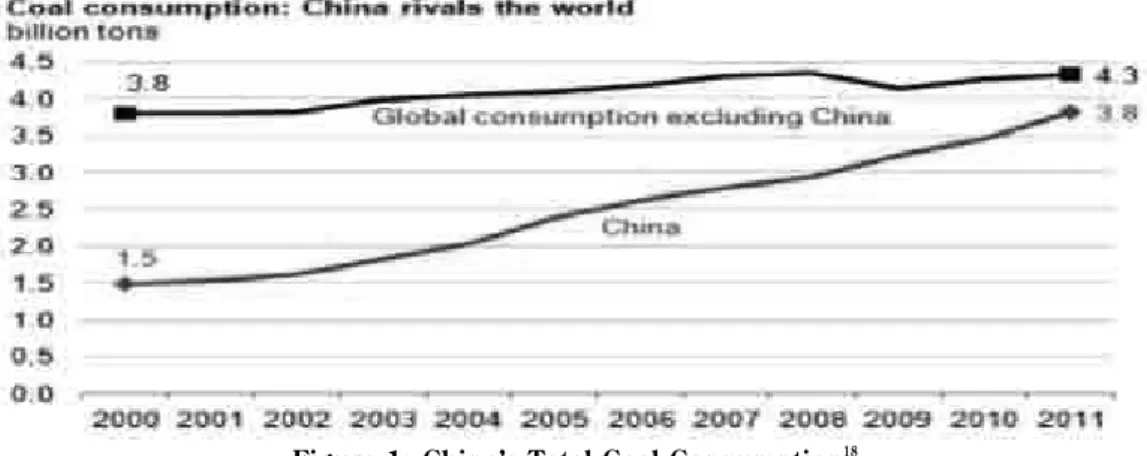
Figure 1: China’s Total Coal Consumption18
Even if all these measures are put into practice, it will not change the fact that the demand for energy is plentiful. Let us take coal as an example. In 2011, China used 3.8 billion tons of coal; this number represents almost half the world’s coal consumption. In accordance with Coal’s Dominance in China’s Power Generation, coal makes up about two thirds of the fuel used for power generation in China. According to Chinese estimates, the share of coal in power generation in 2012 may be as high as 75% to 77%. The volume of coal used in the generation of power is likely to remain the same in the future; China will account for a great part of the world’s coal consumption.
However, the consequences and costs of such a production-intensive and coal-reliant economy are dramatic and stark. Pollutants from coal-fired plants, whether sulfur dioxide (SO2) or PM 2.5, are choking urban China. Repeated occurrences of “airpocalypse” have become emblematic of the considerable downsides of a coal- based economy.19 More than a decade into China’s industrialization, the environmental and potential public health costs are no longer an abstraction but a grim reality, and these problems are becoming a social problem.
In the past decade, China has increased its energy production and has expanded its production of renewable and nuclear energy. The National Bureau of Statistics reported that the use of hydro, wind, solar, and nuclear power increased to 9.5 percent of total energy use in 2008. Meanwhile, some reports indicate that plans are underway to increase the share of renewable energy to 15 percent by 2020.20 Hydropower increased from one percent of China’s total energy consumption in 1949 to 7.4 percent in 2008; in that year, China’s hydropower capacity had reached 170 million kw, making China the largest hydropower-consuming country in the world. China’s wind-energy production has doubled every year in the past three years; its current capacity of 12.21 million kw ranks the fourth in the world.21 In 2008, the solar energy sector produced about 6,000 tons of polycrystalline silicon and 2 million kw of solar photovoltaic cells, while the nuclear power sector’s installed capacity was 8.85 million kw.22
The Importance of the Malacca Dilemma in the Belt and Road Initiative
Figure 2: China’s Oil Production and Consumption, 1965-2009 (million tons)
23When we read these reports, we gain a very strong impression of China’s energy
use and production. However, there still many problems. We will focus on an analysis
of China’s oil use. Based on the graph above (China’s Oil Production and
Consumption, 1965-2009, (million tons)), we found that the country’s oil
consumption in 2009 was more than 400 million tons.
Crude oil import from
1990
1997
2005
2006
2008
2010
Middle
East
39% 48% 46% 44% 46% 46%
Russia/Central Asia
n/a
n/a
11%
11%
10%
10%
Atlantic
Basin
n/a n/a 23% 5% 3% 3%
Asia Pacific
60% 26.2% 8% 4% n/a
n/a
Africa
0% 16.7%
n/a 32% 23% 22%
Others 0%
9.6%
12%
4%
18%
19%
Total
100% 100% 100% 100% 100% 100%
Table 1: China’s Crude Oil Imports by Origin
24(% share)
China’s demand for imported oil has changed in accordance with the global and
regional geopolitical and economic developments over time and in response to
geopolitical and transportation risks. Nevertheless, Middle Eastern countries have
always acted as the most important suppliers of about half of China’s imported oil.
Based on the calculations of the tables, China’s Crude Oil Import by Source (Figure 3)
and China’s Crude Oil Imports by Origin (Table 2), it is easy to support this
23 Source: BP Statistical Review of World Energy 2010
24 Source: The data are compiled from different sources by the author. China, General Administration of Customs (2005), IEA (2006), IEA (2001), FACTS Global Energy(2008), EIA(2010)
Note: Atlantic Basin source (3%) in 2010 is from Brazil
Figure 2: China’s Oil Production and Consumption, 1965-2009 (million tons)23
When we read these reports, we gain a very strong impression of China’s energy use and production. However, there still many problems. We will focus on an analysis of China’s oil use. Based on the graph above (China’s Oil Production and Consumption, 1965-2009, (million tons)), we found that the country’s oil consumption in 2009 was more than 400 million tons.
Table 1: China’s Crude Oil Imports by Origin24 (% share)
Crude oil import from 1990 1997 2005 2006 2008 2010 Middle East 39% 48% 46% 44% 46% 46% Russia/Central Asia n/a n/a 11% 11% 10% 10% Atlantic Basin n/a n/a 23% 5% 3% 3%
Asia Pacific 60% 26.2% 8% 4% n/a n/a
Africa 0% 16.7% n/a 32% 23% 22%
Others 0% 9.6% 12% 4% 18% 19%
Total 100% 100% 100% 100% 100% 100%
China’s demand for imported oil has changed in accordance with the global and regional geopolitical and economic developments over time and in response to geopolitical and transportation risks. Nevertheless, Middle Eastern countries have always acted as the most important suppliers of about half of China’s imported oil. Based on the calculations China’s Crude Oil Imports by Origin (Table 1), it is easy to support this conclusion. China has been trying to import crude oil from other parts of the world to decrease its dependence on imports from the volatile Middle East. This includes its investments in African countries such
as Angola, Sudan, Libya, and the Congo, and in Russian and Central Asian countries such as Kazakhstan. Investments in these Central Asian countries can also significantly decrease sea-lane transportation risks. The financial crisis has not changed China’s source of oil imports.
Even China had taken some measures to multiply its oil sources and to decrease its dependence on oil imports from the Middle East; no one can deny that the Middle East is the energy center of the world and still produces large proportions of the energy share. This situation will lasts for a long time, not for only China but for other countries in the world. Oil is an important energy for industry and even for people’s daily lives. During this period, Middle East will continue to play an important role in the global community.
Finally, let us pay attention to natural gas, which is thought to take the place of oil, because its clear. In China, a similar policy is spreading related to the air-pollution of PM 2.5.
Natural gas will be of crucial importance to this narration in the future. There is increasing market consensus that Chinese natural gas demands will balloon over the next decade, which has led some to go so far as to proclaim that the era of coal is yielding to a golden age of gas in China. There are indeed strong reasons for optimism that gas will get a significant boost in China’s energy mix, not least of which is the strong political support the idea receives.
Natural gas is not carbon-free by any means, but it is cleaner than burning coal and oil. It is, therefore, viewed as an important factor in reducing air pollution and emissions and as a “bridge fuel” in China’s transition to cleaner energy.
The potential for natural gas growth is enormous in China since it is today only about 4 to 5 percent of China’s energy mix, which is far lower than the world average of around 20 percent. By 2015, China anticipates doubling natural gas so that it represents 8% to 9% percent of its energy mix or between 230-260 bcm of gas consumption in total volume.25 While estimates vary about the total demand figures, virtually all projections anticipate rapid growth. According to the BP Energy Outlook, China will contribute 23 percent of the increase in global gas demand and is expected to reach the European Union’s 2010 gas consumption level by 2030.26 As shown in the table below, China, while starting from a low base, will have by far the biggest share of gas demand growth over the next decade.
The Importance of the Malacca Dilemma in the Belt and Road Initiative
Figure 3: Natural Gas Demand in Select Regions in the New Policies Scenario
27Chinese domestic production, however, is unlikely to keep up with this robust
demand growth, which has expanded by nearly 20% since 2010. China has imported
about one-third every year, and this is a trend that is unlikely to abate in the near term.
While it was initially thought that China’s vast domestic reserves of unconventional
resources such as shale gas could fill the gap between supply and demand, the role of
shale is likely to disappoint in the medium term.
Urbanization, the centerpiece of China’s growth strategy through at least 2020,
will also support natural gas because urban residential demand has been a major
driver of gas consumption (e.g., Chinese households almost exclusively cook with gas
stoves). Between 2005 and 2012, residential gas consumption ballooned by 260%,
thereby outpacing the consumption growth rate in the industry. This trend is likely to
pick up for the residential sector on the back of urbanization and as industrial growth
slows down. Expected natural gas demand for the power sector should also see
significant growth, although, in absolute terms, the amount of gas in the generation of
power will still represent only a fraction compared to that of coal.
The central aim of Chinese foreign policy continues to be the maintenance of a
stable international system. China may be competing for energy resources with other
countries, but this competition is unlikely to lead to direct confrontation. Similarly,
energy security concerns have not led the PRC to drastically increase its defense
expenditure. Economic factors triggered by China’s capitalist transition will continue
to deepen the country’s energy-import dependence, thereby increasing the prominence
of energy security in Chinese policy-making. The successful protection of energy
security will, in turn, depend, in large part, on whether China can manage its
geopolitical environment and avoid confrontation over energy resources. It will also
hinge on whether China’s energy production and distribution system can be reformed
to avoid ecological degradation and disaster.
5. The Belt and Road initiative and energy strategy
27 Source: IEA World Energy Outlook 2012.
Figure 3: Natural Gas Demand in Select Regions in the New Policies Scenario27
Chinese domestic production, however, is unlikely to keep up with this robust demand growth, which has expanded by nearly 20% since 2010. China has imported about one-third every year, and this is a trend that is unlikely to abate in the near term. While it was initially thought that China’s vast domestic reserves of unconventional resources such as shale gas could fill the gap between supply and demand, the role of shale is likely to disappoint in the medium term.
Urbanization, the centerpiece of China’s growth strategy through at least 2020, will also support natural gas because urban residential demand has been a major driver of gas consumption (e.g., Chinese households almost exclusively cook with gas stoves). Between 2005 and 2012, residential gas consumption ballooned by 260%, thereby outpacing the consumption growth rate in the industry. This trend is likely to pick up for the residential sector on the back of urbanization and as industrial growth slows down. Expected natural gas demand for the power sector should also see significant growth, although, in absolute terms, the amount of gas in the generation of power will still represent only a fraction compared to that of coal.
The central aim of Chinese foreign policy continues to be the maintenance of a stable international system. China may be competing for energy resources with other countries, but this competition is unlikely to lead to direct confrontation. Similarly, energy security concerns have not led the PRC to drastically increase its defense expenditure. Economic factors triggered by China’s capitalist transition will continue to deepen the country’s energy-import dependence, thereby increasing the prominence of energy security in Chinese policy-making. The successful protection of energy security will, in turn, depend, in large part, on whether China can manage its geopolitical environment and avoid confrontation over energy resources. It will also hinge on whether China’s energy production and distribution system can be reformed to avoid ecological degradation and disaster.
5. The Belt and Road initiative and energy strategy
When Chinese President Xi Jinping visited Central Asia and Southeast Asia in the autumn of 2013, he proposed a Silk Road Economic Belt and a 21st century Maritime Silk Road. Since then, the so-called “One Belt, One Road” initiative has been a controversial issue. At a summit of the Asia Pacific Economic Cooperation forum in November 2014, President Xi demonstrated his strong will to promote the initiative.
Of the Belt and Road initiative, the Eurasian Corridor or Land Bridge portion will cover the enhancement of infrastructure, including expressways, railways, pipelines, and optical fiber cables. The Silk Road Economic Belt plan is a grand strategic initiative that seeks to develop a new trade and transportation route linking China with Central Asia and Europe. There are various candidates for the route. The three basic candidates are given in the map.
When Chinese President Xi Jinping visited Central Asia and Southeast Asia in
the autumn of 2013, he proposed a Silk Road Economic Belt and a 21st century
Maritime Silk Road. Since then, the so-called “One Belt, One Road” initiative has
been a controversial issue. At a summit of the Asia Pacific Economic Cooperation
forum in November 2014, President Xi demonstrated his strong will to promote the
initiative.
Of the Belt and Road initiative, the Eurasian Corridor or Land Bridge portion
will cover the enhancement of infrastructure, including expressways, railways,
pipelines, and optical fiber cables. The Silk Road Economic Belt plan is a grand
strategic initiative that seeks to develop a new trade and transportation route linking
China with Central Asia and Europe. There are various candidates for the route. The
three basic candidates are given in the map.
Figure 4: Eurasian Corridor (Eurasian Land Bridge) candidate routes
28The Chinese government believes that the “One Belt, One Road” initiative is of
great significance to its energy security strategy. Energy security is vital to
industrialization and economic development. The international situation indicates that
the U.S. “return to Asia” strategy has increased the risk of blockade in relation to the
Malacca Strait and the South China Sea, which are both key points for China on the
energy transportation route. In preparation for such a blockade, China has apparently
been attempting to promote the so-called “March West” strategy for developing
ground transportation routes in response to the U.S. Asian strategy.
The government consistently maintains a strategic recognition that security must
have two components. The “One Belt, One Road” strategy has domestic and overseas
components. The overseas component covers the diversification of import sources,
import routes, and energy sources. East European countries that depend on Russia for
100% of their natural gas supply are fatally vulnerable to political supply disruptions.
China may be moving strategically to avoid such vulnerability.
In addition to a crude oil pipeline built between China and Kazakhstan, China
completed three pipelines—A, B, and C—from Turkmenistan in Central Asia to
China’s west-east natural gas pipeline via Uzbekistan and Kazakhstan in December
28 Source: Prepared form changjiangtimes.com (http://www.changjiangtimes.com/2012/10/417312.html)
Figure 4: Eurasian Corridor (Eurasian Land Bridge) candidate routes28
The Chinese government believes that the “One Belt, One Road” initiative is of great significance to its energy security strategy. Energy security is vital to industrialization and economic development. The international situation indicates that the U.S. “return to Asia” strategy has increased the risk of blockade in relation to the Malacca Strait and the South China Sea, which are both key points for China on the energy transportation route. In preparation for such a blockade, China has apparently been attempting to promote the so-called “March West” strategy for developing ground transportation routes in response to the U.S. Asian strategy.
The government consistently maintains a strategic recognition that security must have two components. The “One Belt, One Road” strategy has domestic and overseas components. The overseas component covers the diversification of import sources, import routes, and energy
The Importance of the Malacca Dilemma in the Belt and Road Initiative
sources. East European countries that depend on Russia for 100% of their natural gas supply are fatally vulnerable to political supply disruptions. China may be moving strategically to avoid such vulnerability.
In addition to a crude oil pipeline built between China and Kazakhstan, China completed three pipelines—A, B, and C—from Turkmenistan in Central Asia to China’s west-east natural gas pipeline via Uzbekistan and Kazakhstan in December 2009, October 2010, and May 2014, respectively. Their designed annual supply capacity is 55 million cubic meters each. China started the construction of the fourth or D natural gas pipeline in September 2014. When it is completed in 2020, the four pipelines’ combined annual capacity will reach 85 billion cubic meters. China also plans to construct a pipeline linking China to Iran via Pakistan and Afghanistan. If this pipeline is completed, China’s stable energy supply capacity will increase dramatically.
The 21st-Century Maritime Silk Road is that part of the Belt and Road initiative that goes over the sea. Historically, the maritime Silk Road refers to the ancient maritime trade and cultural route between China and other parts of Asia, Europe, East Africa, and the Middle East. Xi’s MSR is an initiative to restore the historical maritime prestige and influence that China once wielded as a maritime power. It is the counterpart of the Silk Road Economic Belt initiative that Xi announced in September 2013, which focuses on overland connectivity between China and Central Asia into Europe. The Chinese refer to this pair of initiatives as “One Belt and One Road.” At the Central Conference on Work Relating to Foreign Affairs in late November 2014, Xi announced his foreign relations objectives, which included the agenda to “turn China’s neighborhood areas into a community of common destiny ... and boost win- win cooperation and connectivity with our neighbors.”29
In the context of this plan, these two parts of Silk Road initiatives aim to promote bilateral and multilateral partnerships across Asia to consolidate China’s leadership status in the region and are linked to China’s continued efforts at national rejuvenation as a comprehensive national power.30 However, the National Development and Reform Commission is still drafting the exact plans for the two initiatives.31 As a result, while the plan is focused on developing maritime connectivity and infrastructure access across Asia, it remains a vague agenda that is thin on details.
6. Energy Cooperation Between China and ASEAN in the 21st-Century
Maritime Silk Road from Neo-Liberalism
6.1 Cooperation in Oil
China and ASEAN countries have traded oil and gas with each other for several decades. Cooperation between China and ASEAN countries in the field of energy began in the early 1980s. The period from the 1980s to the 1990s was a stable developmental stage. From the beginning of
the 1990s, the two sides of the oil trade accelerated bilateral energy trade. We collected data and found that, during the period 2001-2004, China’s oil imports from ASEAN countries increased from $3.1billion to $6.5billion, while the amount of oil exports increased from $1.25billion to $2.3billion.
In 2005, China imported 8 million tons of crude oil and 6 million tons of refined oil from ASEAN countries, which took China’s import volume of crude oil and refined oil to 7.5% and 22%.32 Even today, some changes are taking place in the trade scale and structure, and the China-ASEAN cooperation and trade in oil and natural gas continues to develop.
Table 2: China imports Crude Oil form ASEAN33
ASEAN Countries Volume (tons)
Thailand 589010 Vietnam 647080 Indonesia 684407 Brunei 79021 Malaysia 602992 Philippines 68039
In accordance with the data released by the Chinese national customs, in 2013 China imported about 2.67 million tons of crude oil from ASEAN countries. Most of this crude oil was imported from Indonesia and Vietnam, at about 680 thousand tons and 640 thousand tons, respectively; in 2013, China’s total import of crude oil was about 2.8 tons, while the trading volume with ASEAN countries took China’s total crude oil volume to about 1%. If we compare this with the 2005 figures, the proportion of China’s crude oil imports from ASEAN countries declined. In 2013, China also exported crude oil to Malaysia to the figure of about 19 thousand tons.
6.2 Cooperation in Natural Gas
Compared with its crude oil imports, China’s natural gas imports from ASEAN countries are much higher. ASEAN is one of the most important sources of natural gas for China. In 2006, China National Offshore Oil Corporation (CNOOC) and the Malaysia national oil company signed a natural gas trade agreement. According to the agreement, Malaysia will provide natural gas supply to Shanghai LNG station for 25 years; from 2007, Indonesia annually provided 2.6 million tons of liquefied natural gas to the Fujian Province; furthermore, in 2013, China imported 35.3 million tons of natural gas from surrounding countries. Regarding the volume of natural gas, Malaysia and Indonesia liquefied natural gas (LNG) account for 2.7 million and 2.4 million tons, which is about 14% of the total volume.
The Importance of the Malacca Dilemma in the Belt and Road Initiative
sea-lanes for the global oil and natural gas trade. According to EIA’s calculations, in 1993, the amount of crude oil that comes through the Malacca Strait represents 7 million barrels per day, whereas in 2011, the volume was 15 million barrels per day, which was about one third of the volume of global crude oil shipments. It represented almost one sixth of the world’s crude oil trade. Today, about 1.4 million barrels of crude oil pass through the Strait of Malacca every day, and these are processed in Singapore and Malaysia. The rest of the crude oil is transported through the South China Sea as channel exports to China, Japan, Korea, and other countries. The crude oil is processed in Singapore and Malaysia to be made into refined oil and is then transported through the South China Sea and enters the Asian market.34
In 2011, about 1,700 cubic meters of natural gas or more than 50% of the world’s LNG trade was transported through the South China Sea to meet the demand of different countries for natural gas. About half of this was transported to Japan, and the rest was transported to China, Taiwan, and other regions; about 75% of the LNG was from Qatar, Malaysia, Indonesia, and Australia.35 With the economic development of Asia, the future will see more LNG passing through the South China Sea channel to countries in need of natural gas. As energy channels, Malacca and the South China Sea are thus particularly important for China and the ASEAN countries. If the sea-lane was cut off, it would be a huge shock to the economy and society of China and the ASEAN countries.
6.3 The Opportunities for China-ASEAN cooperation
There is no doubt that the building of the free trade area between China and the ASEAN countries will promote and develop the regional economy and enhance cooperation in the trade of oil and natural gas. In recent years, China and ASEAN’s bilateral economic trade has been in good shape, with an annual average that has increased by more than 20% and the scale of trade continuing to grow.36 In 2011, the bilateral investment stood at 94 billion dollars, with China’s investment in the ASEAN countries increasing by 34%. With the deepening of economic exchange, personnel exchange is also increasing and reach 150 million.37 In the current economic situation, the economic development of the developed countries is generally beginning to slow down, but the FTA built between China and the ASEAN countries is continuing to grow and grow. In fact, the China-ASEAN free trade area is growing much faster than other areas in the world. Thus, governments and enterprises attach great importance to opening up markets and expanding cooperation. With the establishment of the China-ASEAN FTA, a greater stage is provided for bilateral governments to cooperate in oil and natural gas trading, which benefits all the countries involved.
Table 3: The ASEAN countries’ oil reser ves (unit: billion barrels)38
Nations 1993 2003 2012 2013 2013(Reserve and production ratio) Brunei 1.3 1.0 1.1 1.1 22.3 Indonesia 5.2 4.7 3.7 3.7 11.6 Malaysia 5.0 4.8 3.7 3.7 15.3 Thailand 0.2 0.5 0.4. 0.4 2.5 Vietnam 0.6 3.0 4.4 4.4 34.5 Cambodia 0 - - - -Burma 0.05 0.05 0.05 0.05 0.05 Singapore 0 - - - -Laos 0 - - - -Philippines 0.15 0.15 0.14 0.14
-Table 4: The ASEAN countries’ oil production (unit: thousand barrels per day)39
Nations 2009 2010 2011 2012 2013 Brunei 8.3 8.5 8.1 7.8 6.6 Indonesia 48.4 48.6 46.3 44.6 42.7 Malaysia 32.2 32.0 28.9 30.3 29.6 Thailand 14.6 14.8 15.2 16.4 16.6 Vietnam 16.7 15.3 15.5 17.0 17.0 Cambodia 0.6 - - - -Burma 18.1 20.3 20.0 20.0 20.0 Singapore 0 - - - -Laos 0 - - - -Philippines 24.4 32.9 26.6 20.0 21.0
Since the 1990s, the major oil-producing countries of ASEAN have not seen a dramatic change in their oil storage: Vietnam’s has increased a little, while Indonesia, Malaysia, Brunei, and Thailand’s are declining. The decline is most obvious in Indonesia, as the ASEAN’s largest oil producer.
Table 5: The ASEAN countries’ oil consumption (unit: thousand barrels per day)40
Nations 2009 2010 2011 2012 2013 Brunei 15.5 16.3 18.2 18.0 18.0 Indonesia 61.6 66.4 72.3 73.2 73.8 Malaysia 29.2 29.3 31.1 30.7 31.2 Thailand 44.2 44.3 46.6 49.6 50.4 Vietnam 14.6 15.6 17.0 17.2 17.4 Cambodia 36.3 26.3 33.0 43.0 47.5 Burma 26.5 26.7 27.0 27.4 28.1 Singapore 1169 1380 1238 1247 1292 Laos 3.16 3.16 3.0 3.5 3.5 Philippines 295 309 316 302 299
The Importance of the Malacca Dilemma in the Belt and Road Initiative
In the last 5 years, the oil consumption of the 10 ASEAN countries has maintained steady growth. The main oil-importing countries are Thailand, Philippines, Burma, Singapore, and Cambodia. Singapore is the most unique among the 10 ASEAN countries, because the territory is smaller than the others and has fewer oil and gas resources; however, Singapore has the world’s third largest oil-processing center with the capacity to process 120 barrels of crude oil per day. The oil-processing industry holds 11% of its gross industrial output value. Meanwhile, Singapore is outstanding in Southeast Asia: not only is it a center of financial trade and shipping, but it also has a special position in the operation of energy systems. Because production and consumption are slower than before, ASEAN countries have generally realized the importance of improving the domestic production of oil and natural gas.
The natural gas industry looks more promising.41 Natural gas reserves in Indonesia and Malaysia are plentiful and easy to exploit, while the scale of production is most abundant. With the huge production of natural gas, it is easy for these countries to meet their domestic demand, while in 2012, these two countries exported natural gas to the extent of 34.8 billion cubic meters and 30.3 billion cubic meters. In the last five years, the trade pattern has been stable.
Table 6: Proven natural gas reserves of 10 ASEAN countries (unit: trillion cubic feet)42
Nations 1993 2003 2012 2013 2013(Reserve and production ratio) Brunei 14.0 13.8 13.8 13.8 23.6 Indonesia 64.0 93.0 141.0 108.0 41.6 Malaysia 68.0 75.0 83.0 83.0 15.8 Thailand 8.5 13.3 10.6 10.06 6.8 Vietnam 0.6 6.8 24.7 24.7 24.7 Cambodia 0 - - - -Burma 9.8 10.0 10.0 10.0 21.6 Singapore 0 - - - -Laos 0 - - - -Philippines 1.6 3.8 3.48 3.48
-Table 7: Natural gas production in the 10 ASEAN countries (unit: 10 billion cubic feet)43
Nations 2009 2010 2011 2012 2013 Brunei 334 349 417 439 426 Indonesia 2557 2841 2693 2559 2486 Malaysia 2133 2171 2180 2180 2440 Thailand 1090 1281 1306 1458 1476 Vietnam 250 290 272 296 346 Cambodia 0 - - - -Burma 408 426 421 416 463 Singapore 0 - - - -Laos 0 - - - -Philippines 111 103 102 99 115
Table 8: The 10 ASEAN countries’ natural gas consumption (unit: 10 billion cubic feet)44 Nations 2009 2010 2011 2012 2013 Brunei 88 105 107 107 110 Indonesia 1344 1397 1320 1329 1356 Malaysia 1100 1144 1081 1103 1200 Thailand 1383 1592 1645 1796 1854 Vietnam 250 290 272 296 346 Cambodia 0 - - - -Burma 115 114 118 116 121 Singapore 285 295 310 331 370 Laos 0 - - - -Philippines 111 103 102 99 120
The economic structure of ASEAN countries is relatively simple and unitary, and its economy has developed a high level of dependence on energy. For some of the countries, such as Indonesia and Malaysia, oil and natural gas resources are relatively plentiful, whereas in Vietnam, oil and natural gas production and exports account for the majority of the country’s developing economy. For Thailand, Philippines, and Burma, the oil and natural gas is not as plentiful as in Indonesia, Malaysia, and Vietnam, which means that energy has to be imported; otherwise, these countries will have to develop their own industries to meet their demand for energy. On the other hand, the development of a domestic oil and gas industry is the best way to boost the national economy. Burma’s proven natural gas reserves are quite abundant, which makes the exporting of natural gas a possibility and create potential for the national economy to grow rapidly. At present, some problems exist related to exploiting oil and natural gas, which include a lack of funding, complex geological conditions, and the overly high cost of mining. Thus, Burma is promoting the pace of energy cooperation with foreign enterprises to exploit oil and natural gas. ASEAN countries are trying their best to exploit energies to participate in the global economy.
From 2011, some countries experienced political unrest, such as in the Middle East and North Africa, which has affected regional politics and the economy. At the same time, the rest of the world was becoming increasingly globalized. A direct effect of the unrest in the Middle East and in North Africa was the instability of oil and natural gas production, which led to fluctuations in the international price of oil and even led to a breaking off of the energy supply-chain all over the world. There was no doubt that the biggest risk of these events was experienced by China, which had imported crude oil from the Middle East and North Africa for a very long time.45 In order to improve its national energy security, China has clearly attempted to strengthen its development strategy of oil and natural gas cooperation with Russia, Central Asian countries, ASEAN countries, and other neighboring countries. At present, the country imports oil from the ASEAN countries, and although the proportion has declined, the volume of natural gas imports has grown. The adjustment of the national energy strategy further increases the strategic position of the ASEAN countries. It also promotes the multiplication of energy sources and the maintenance of energy security.
The Importance of the Malacca Dilemma in the Belt and Road Initiative
6.4 Cooperation Between China and ASEAN by Neo-Liberalism
Realists and neoliberals have different perspectives on what would have to change to increase cooperation in a particular situation.46 These differences can be understood by applying Robert Powell's distinction between preferences over strategies, or ways to reach goals, on the one hand, and changes in preferences over goals or outcomes, on the other47. Neoliberals are more optimistic than realists because they believe that changes in preferences over strategies usually are sufficient to produce mutual benefit. Much of this change can come by more and better information-information about the situation, information about what the other side has done and why it has done it, and information about what the other side is likely to do in the future48. States can cooperate by reducing transaction costs (the costs and risks associated with reaching and carrying out agreements) and, in turn, the successful reduction of such costs can facilitate cooperation. Institutions can play a large role here, and this helps explain why institutionalized cooperation can continue even when the initially propitious conditions have disappeared49. With what we had mentioned above, the cooperation between China and ASEAN is benefit for each other. In this process, China has clearly attempted to strengthen its development strategy of oil and natural gas cooperation, and adjusted the internal structure on energy to solve the problems on air pollution, meanwhile, the economic structure of ASEAN countries is relatively simple and unitary, and its economy has developed a high level of dependence on energy. Because the cooperation is benefit for bilateral, it probably will last for a long period.
7. The Challenges for China-ASEAN cooperation
Even though we have discussed the benefits of China-ASEAN energy cooperation from the viewpoint of neo-liberalism, the cooperation also faces some challenges:
(1) Mutual trust in politics
In terms of political exchange, mutual political trust is a prerequisite for China and the ASEAN countries, and this issue is currently one of the biggest obstacles to China-ASEAN energy cooperation.50 Oil and gas cooperation between China and ASEAN faces problems such as territorial controversy among the ASEAN countries; not only is it difficult to adjust international relations, security problems exist in the international community, and some of these problems are attributable to history. ASEAN countries hold different opinions about China’s development; some have said that China is a threat to ASEAN. These problems make it difficult for each country to practice oil and gas cooperation in the future.
(2) Internal contradictions among ASEAN countries
These contradictions in the ASEAN countries have lasted for a long time. As far as we can conclude, they take mainly three forms: 1) historical grievances and territorial sovereignty conflicts among ASEAN countries, which makes the relationships among ASEAN members volatile. During the 1970s and 1980s, Vietnam had invaded Cambodia, and although the current bilateral exchanges are frequent and vast. Disputes related to the sovereignty of islands have also taken place between Malaysia and Indonesia, Singapore and Malaysia, and Indonesia and Philippines, which reflects the difficultly of ASEAN cooperation as a whole. 2) It also a common phenomenon for members of ASEAN to experience degrees of political unrest, and domestic political parties can frequently be seen breaking out into partisan conflict. Burma has been dominated by the military for a long time, which leads to obvious social contradictions. In addition, terrorist incidents sometimes occur in the countries due to anti-government forces. When these forces become strong, disasters ensue for the country’s citizens. In recent years, the American war on terrorism has, to some extent, inflicted injuries on Islam and Muslims, not only the people but also the traditional culture, which has led to rising national emotion in the ASEAN countries. Because of the instability of the Political Bureau, foreign investment has been limited and unstable. Thus, international economic activities and trade are often disturbed, which is harmful to the region’s economic development and community and even to the formation of the free trade area. 3) There are great differences among the ASEAN countries, especially in terms of ethnicity and religion, and these can easily break out into cultural conflicts.
8. Conclusion
The construction and development of the Maritime Silk Road has extremely important strategic significance for economic and cultural exchanges between China and the rest of the world. Strengthening oil and gas cooperation between China and the ASEAN countries is an important part of the construction and development of the Maritime Silk Road. Oil and gas cooperation between China and ASEAN has a long history. At present, both sides share an interest in the Strait of Malacca and the South China Sea oil and gas channels. The construction of the China-ASEAN free trade area, the ASEAN countries’ oil and gas production decline, the rise in consumption, and the Chinese government’s emphasis on oil and gas cooperation with neighboring countries provide good opportunities for future of oil and gas cooperation on both sides. In order to promote oil and gas cooperation between China and ASEAN, it is necessary to take the following measures: maintaining close high-level exchanges between parties; expanding government co-operation; strengthening the construction of the China-ASEAN Free Trade Area; increasing oil and gas investment in ASEAN countries; and continuing to explore new ways and mechanisms of oil and gas cooperation in the South China Sea. These represent an effective
The Importance of the Malacca Dilemma in the Belt and Road Initiative
method for China to solve the urgent demand on energy.
However, these do not mean that the importance of the Strait of Malacca is decreasing. The Strait of Malacca is a sea-lane of enormous strategic importance. Its critical role as a global trade passageway is underscored by the fact that it facilitates a quarter of the world’s seaborne trade and a third of its crude oil transportation. The Strait of Malacca provides a critical passage that facilitates trade between the West and the East. It sits between the oil-producing regions of the Arabian Gulf and the huge consumer markets of Europe and South Asia, including the world’s most dynamic economies in the Far East, which includes China, the world’s most populous nation and now its second largest economy. The Strait of Malacca has played an immense role in shaping the history of the region and the world and will continue to command international attention due to its strategic location and importance to global trade and the littoral states’ socio-economic wellbeing and strategic interests.
Neoliberals are more optimistic on cooperation in this case than realists because they believe that changes in preferences over strategies usually are sufficient to produce mutual benefit. Much of this change can come by more and better information-information about the situation, information about what the other side has done and why it has done it, and information about what the other side is likely to do in the future. States can cooperate by reducing transaction costs (the costs and risks associated with reaching and carrying out agreements) and, in turn, the successful reduction of such costs can facilitate cooperation. Institutions can play a large role here, and this helps explain why institutionalized cooperation can continue even when the initially propitious conditions have disappeared.
The Strait of Malacca is one the largest business channels in the world. However, with the artificial threats that exist, no nation can unilaterally control all the variables involved, and every nation has a unique capacity and responsibility to help elaborate countermeasures to solve the problem of energy security. The prime methods for solving the energy-security problem include deepening energy innovation, heightening energy-use efficiency, attending to the international energy stock, and building up a steady international oil supply condition. These are the necessary activities that will safeguard energy security. East Asian countries, especially the Northeast Asian countries, mainly import energy from the Middle East, however, the transportation line is long and the situations are complex. For ensuring energy transportation security is an important issue that these countries facing. Under the new situation of this region, bilateral or multilateral regional cooperation have become an indispensable and important part of ensuring national energy security and economic security. Every country should develop the methods of transporting oil, strengthening its control over energy transport, and quickening the oil reserve construction. All of these are important methods for ensuring oil security. Organizing conferences among relative countries to enhance military defense and to protect countries’ overseas interests is also a necessary measure for ensuring nations’ energy safety, while a
multiple energy structure is the ultimate solution to energy security. Finally, multilateral security cooperation is necessary for the East Asian countries.
For China, the Strait of Malacca is an important energy and trade passageway and the only way for the 21st-Century Maritime Silk Road to pass through Asia. Without the Strait of Malacca, the initiative will be impossible. Moreover, China is cooperating with ASEAN countries on many oil and natural gas projects. From another angle, this proves that the Strait of Malacca is non-substitutable. However, China should pay more attention to the importance of the Strait, which can be compared to the nation’s lifeblood of energy. The Malacca Dilemma still cannot be solved, and to some extent, the Strait of Malacca has become more and more important for cooperative energy security.
Notes
1 Forthedetails, pleasethewebsiteofAsianInternationalInfrastructureBank (http://www.aiibank.org/
html/aboutus/AIIB/).
2 Jean-PierreLehmann, TheNewSilkRoad: AVisionaryDreamForThe21st Century, 27May, 2015. 3 URLLocatedat: http://www.china.org.cn/world/2015-01/30/content_34697352.htm
4 李克强访马来西亚百忙 为何还要专程去马六甲 ,(http://military.china.com/critical3/27/20151124/
20811815_all.html), Nov.24, 2015
5 RobertKeohane &Nye, PowerandInterdependence: WorldPoliticsinTransition, thirdedition, (Boston: Little
-Brown, 1989), p.4
6 RobertAxelrod, TheEvolutionofCooperation. NewYork: BasicBooks, 1984.
7 李格琴. 西方国际合作理论研究评述 [J]. 山东社会科学 ,2008.(7)
8 RobertKeohane &Nye, PowerandInterdependence: WorldPoliticsinTransition, thirdedition, (Boston: Little
-Brown, 1989), pp.68-70
9 Simon SheldonW., Safetyand Securityin the MalaccaStrait: The Limits ofCollaboration. Rep. 24thed. MaritimeSecurityinSoutheastAsia: U.S., Japanese, Regional, andIndustryStrategies. TheNationalBureau ofAsianResearch.
10 U.S. EnergyInformationAdministration, InternationalEnergyOutlook2013, July, 2013
11 InternationalHydrographicOrganization. Rep. 3rded, LimitsofOceansandSeas.. Vol.28. Monaco, 1953. 12 ZhongYu, TheNewenergyStrategyofChina: ComparisonBetweenWorldEnergyChinaOutlook2013
-2014and2014-2015, 創地共望 ,5号,2016年 13 OPECMonthlyOilMarketReport, May.12, 2015p.100 14 URLLocatedat: http://oil.in-en.com/html/oil-2364602.shtml
15 U.S. EnergyInformationAdministration, China’s Relianceon ShippingCrudeOilThrough theStraitsof Malacca, May, 2011
16TheStateCouncilInformationOfficeofthePeople’sRepublicofChina, China’sEnergyPolicy2012, Oct.24,
2012 (www.scio.gov.cn)
17 王朝峰,《论新世纪中国能源安全与对策》,04/2006.
18 Source: EIA (https://www.eia.gov/todayinenergy/detail.cfm?id=9751)
19Wong, Edward, “‘Airpocalypse’ SmogHitsBeijingatDangerousLevels,” NewYorkTimes, January16,
2014http://sinosphere.blogs.nymes.com/2014/01/16/airpocalypse-smog-hits-beijing-at- dangerous
-levels/?_php=true&_type=blogs&_r=0.
20 WorldDevelopmentReport2010, DevelopmentandClimateChange, TheWorldBank, Washington, DC. p.192 21 XinhuaNewsAgency, “China’snewenergyandrenewableenergyboominrecentyears,” China Daily,