Relationship between the Evaluation of Anxiety before the Impacted Third Molar Surgery
and the Autonomic Nervous Activity
Yumiko M ATSUDA , Mika S ETO and Toshihiro K IKUTA
Department of Oral and Maxillofacial Surgery, School of Medicine, Faculty of Medicine, Fukuoka University
Abstract
The relationship between the immediate autonomic response that occurs during local anesthesia and the preoperative anxiety level by using the State Trait Anxiety Inventory-X (STAI-X) during postural change on extraction of an impacted wisdom tooth were evaluated.
One hundred and twenty three healthy adult subjects were administered the STAI-X immediately before the extraction of impacted wisdom tooth with local anesthesia. According to STAI-X results, subjects were classified as Normal group (N group) as levels I, II and III, and High anxiety group (H group) as levels IV and V.
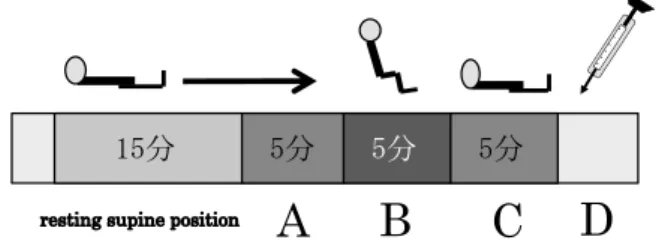
We conducted a modified Head-up Tilt test (m-HUT) that involved postural change from supine to sitting position with spontaneous breathing. The experimental study was commenced 15 minutes after the intravenous line was placed. The first phase of the experiment consisted of the resting state; data were collected for 5 minutes in the supine position (A) and for an additional 5 minutes after postural change to the sitting position
(B) . The patient was returned to the supine position (C) and during local anesthesia (D) .
The recorded ECG waveform data of 123 subjects in both N group and H group were compared for autonomic nervous activity. We selected 86 subjects exhibiting normal autonomic nervous activities in postural change of B from A were selected for further analysis. And they were further classified as Normal reaction and Normal group (NN group) and Normal reaction and High anxiety group (NH group) .
Power spectral analysis was conducted on the measurement point of A, B, C and D respectively. The high- frequency (HF) component represented as the cardiac sympathetic activity by the R-R interval variability.
The low frequency (LF) component represented as the interaction between baroreflex responses by cardiac sympathetic and parasympathetic activity. The LF/HF ratio reflected as the dominance of the cardiac sympathetic activity was calculated.
All subjects, in postural change of B from A, showed a significant reduction in HF and a significant increase in LF/HF and HR. When converting to C from B, in the H group, HF significantly increased, LF/HF decreased, and HR reduced significantly. In the selected 86 subjects exhibited normal autonomic nervous activity in postural change of B from A, The NN group showed no significant change in HF or LF/HF, and the NH group showed a continued downward trend in both HF and LF/HF during the local anesthesia (D) . The results suggest that the high anxiety group, as determined by analysis through STAI-X, tend toward an unbalanced hemodynamic condition during local anesthesia.
Key words: State-Trait Anxiety Inventory-X ( STAI-X ) , modified Head-up Tilt Test ( m-HUT ) , Normal reaction and Normal group ( NN group ) , Normal reaction and High anxiety group ( NH group)
Correspondence to: Yumiko MATSUDA, Department of Oral and Maxillofacial Surgery, School of Medicine, Faculty of Medicine, Fukuoka University, 7-45-1 Nanakuma, Jonan-ku, Fukuoka 814-0181, JAPAN
Tel: +81-92-801-1011 ext.3537 Fax: +81-92-801-1044
I. Introduction
Preoperative anxiety is experienced by the majority of patients undergoing surgery. An excessive degree of anxiety is known to result in a need for large amounts of drugs for general anesthesia or intravenous sedation
1, 2), delayed introduction, intensified postoperative pain, increased indefinite complaints, etc
3). The majority of complications that could occur during dental therapy have been attributed to cerebral anemia-like attacks that occur independently of any underlying disease and the vasovagal reflex (VVR) . According to Codzieba et al
4)reported that the time of emergence for these in more than half of the incidents is either during or immediately after the local anesthesia. VVR refers to a condition wherein autonomic nervous activity is suddenly ataxic, and the cerebral blood circulation rate cannot be maintained, triggering syncope or vertigo
5). Hemodynamics and autonomic nervous activity are therefore closely related, and are affected by anxiety and other forms of stress
6). During postural changes, blood pressure is maintain through metabolic mechanisms of the hormone system or the autonomic nervous system-mediated response of suppressed cardiac parasympathetic activity and simultaneously enhanced cardiac sympathetic activity. When an anomaly occurs in autonomic nerve function, this normal cardiovascular regulation response is impaired, leading to symptoms such as syncope and palpitations. Syncope without structural heart disease is often a neurally mediated response, and the head-up tilt test with postural change is a useful diagnostic tool
7). In the head-up tilt test, abnormal blood pressure and heart rate regulation during standing is detected by postural change from the supine position to the standing position. However, it has been possible to detect abnormalities by postural change from the supine position to the seated position
8). A heart rate variability analysis is one method for assessing autonomic nervous activity
9, 10). In a heart rate variability analysis, the periodic fluctuations in heart rate at every beat are measured non-invasively, and the frequency components are put through a power spectrum analysis
9).
There have also been many reports
8,13-15)on the usefulness of preoperative anxiety assessments with the State-Trait Anxiety Inventory-X(STAI-X) , which was created on the basis of Spielberger’s state-trait anxiety theory
11)and altered for Japanese subjects by Nakazato et al
12). Patient anxiety before extraction of impacted
wisdom tooth, which is generally performed in clinical practice in the field of oral surgery, is higher than patient anxiety before general dental treatment, and preoperative anxiety is predicted to be even higher among patients with a phobia of dental treatment.
In the present study, we used the STAI-X to assess preoperative anxiety in patients undergoing extraction of the impacted mandibular wisdom tooth with only a local anesthesia and investigated changes in autonomic nervous activity in the group of high-anxiety patient.
II. Patients and methods
The subjects consisted of 186 patients who consulted with Department of Dentistry and Oral Surgery, Fukuoka University Hospital for the extraction of impacted mandibular wisdom teeth between April 2011 and July 2013 and who had their STAI-X assessment recorded during the initial visit. We excluded patients with cardiovascular diseases that were perceived as affecting heart rate variability, respiratory diseases such as tachypnea, and metabolic diseases affecting autonomic nervous activity and patients receiving concomitant general anesthesia or intravenous sedation during treatment
9, 10)obtaining a final total of 123 subjects (52 men and 71 women) who underwent tooth extraction under only local anesthesia. Subjects were instructed to fill in the STAI-X immediately before tooth extraction, and were then divided into a normal group (N group)
consisting of people whose state anxiety stage was I, II, or III and a high anxiety group (H group) consisting of people whose state anxiety stage was IV or V (table 1) . The present study was approved by the Fukuoka University Hospital Ethics Committee (number 10-11- 05) , and informed consent was acquired from the patients when the surgery was explained.
1. Data collection methods
Data was collected in a quiet outpatient operating room
in isolation from general outpatients. The modified Head-
up Tilt test (m-HUT) is a test that is used for assessing
heart rate and blood pressure fluctuations that are caused
by the standing-up load of a normal head-up tilt. As during
a standing load, load testing (m-HUT) by postural change
to a seated position has been reported
8)to result in
suppressed cardiac parasympathetic activity and enhanced
cardiac and vascular sympathetic activity, and enable the
observation of normal nervous circulation regulation.
Fig.1 Yumiko Matsuda
15分 5分 5分 5分
A B C D
resting supine position
Fig. 1 Data collection procedure
(modified Head-up tilt)A: Supine position B: Seated position
C: Return to the supine position D: During local anesthesia
The present study used the m-HUT for postural change from the supine position to the seated position. Patients were brought to a horizontal supine position in a dental chair, fitted with an electrode of an electrocardiographic monitor (Bio View, 2 E 61 VX; San-ei Co., Ltd., Tokyo, Japan) at the chest CM5 position, and fitted with a cuff of a noninvasive blood pressure at the right upper arm and a pulse oximeter on the left middle finger.
After a 15-min rest following the fitting of the monitors, electrocardiographic data was collected for 5 min
(measurement period A) . The patient was repositioned to a seated position, and data were collected for 5 min
(measurement period B) . The patient was returned to the supine position, and data were collected for yet another 5 min (measurement period C) . All the patients in this study received local anesthesia of 2% lidocaine with epinephrine (1:80,000) , and electrocardiographic data was collected during the procedure (measurement period D) (fig. 1) . These sets of electrocardiographic data were directly entered into a computer through a memory electrocardiographic device (LRR-03; GMS, Tokyo, Japan) for simultaneous spectral analysis with a heart rate variability analysis system (MemCalc/Tarawa; Suwa Trust, Japan) .
2. Spectral analysis
Spectral analysis was done for each of the 5-min measurement periods (A, B, C, and D) . Segment integral values of a high-frequency (HF) component (0.15 to 0.40 Hz) that was thought to represent cardiac parasympathetic activity and a segment integral value of a low-frequency
(LF) component (0.04 to 0.15 Hz) that was impacted by both cardiac sympathetic and parasympathetic nervous activity were established from the R-R interval variation of the electrocardiogram in order to calculate the ratio of LF and HF (LF/HF) , which is thought to represent cardiac
sympathetic nervous activity. The responses of heart rate
(HR) to the postural change in measurement periods A to C were also examined.
3. Autonomic nervous activity during local anesthesia There was a focus on patients who exhibited autonomic nervous activity that is thought to be the normal response of a reduced HF and increased LF/HF during postural change from measurement period A to B, which was a postural change from the supine position to the seated position. Subjects were classified into a normal group (NN group) , whose autonomic nervous activity with respect to postural change was normal and whose preoperative anxiety stage according to the STAI-X was normal, and a high anxiety group (NH group) , whose autonomic nervous activity was normal and preoperative anxiety stage according to the STAI-X was high. The autonomic nervous activity during local anesthesia was comparatively examined.
4. Statistical analysis
Statistical analysis with respect to the spectral analysis values entailed Student t-tests for within-group comparisons and an analysis of variance and χ2-test for between-group comparison. Significance was established at P< 0.05. The statistical software used was SPSS Statistics20 (IBM Corporation, Armonk, NY, USA) .
III. Results
1. Autonomic nervous activity in all subjects
(1) Patient backgrounds (table 1)
None of the patients suffered disturbances in breathing, such as coughing or breath-holding, during data collection, and respiratory rates were in the range of 16 to 22 breaths/min. In all cases, treatment was completed without complications such as VVR. The patient backgrounds showed no significant differences in the N and H groups.
(2) Autonomic nervous activity for postural change in measurement periods A, B, and C (table 2)
i. Changes in HF
HF decreased significantly in both groups in response
to the postural change from measurement period A to B
and increased significantly in the H group in response to
the postural change from measurement period B to C.
Table 1 Subject backgrounds
N group(n=58) H group(n=65)
Age(years) 25.9±8.33 25.6±8.34
Height(cm) 164.8±9.98 165.4±8.18
Weight(kg) 60.5±14.56 58.7±11.47
・N group: Immediately before surgery, Normal anxiety group with state anxiety III or lower
・H group: Immediately before surgery, High anxiety group with state anxiety IV or V
Table 2 Autonomic nervous activity for postural repositioning of measurement periods A, B, and C
A(supine position) B(sitting position) C(supine position)
N group HF 780.4(298.3) * 500.9(170.6) 600.3(200.5)
(n=52) LF/HF 1.8(0.6) * 3.7(1.2) 3.4(1.2)
HR 68.6(10.8) * 75.4(11.3) 74.9(11.8)
H group HF 1005.6(202.2) * 600.4(235.9) * 750.8(240.2)
(n=71) LF/HF 1.6(0.8) * 3.8(2.0) 2.9(1.9)
HR 67.8 ( 12.4 ) * 74.2 ( 14.5 ) * 71.4 ( 13.8 )
・N group: Immediately before surgery, Normal anxiety group with state anxiety III or lower (*
:p<0.05)
・H group: Immediately before surgery, High anxiety group with state anxiety IV or V
・HF: Segment integral value of the high frequency component (0.15 to 0.40 Hz)
representing cardiac parasympathetic nervous activity
(msec2/Hz)
・LF/HF: The ratio between the segment integral value (LF)
of the low-frequency component
(0.04 to 0.15 Hz), impacted by both cardiac sympathetic and parasympathetic nervous activity, and HF; is thought to represent cardiac sympathetic nervous activity in a relative fashion.
・HR: Heart rate (bpm/min)
ii. Changes in LF/HF
The LF/HF ratio increased significantly for both groups in response to the postural change from measurement period A to B. There was no significant change in either group in response to the postural change from measurement period B to C.
iii. Changes in HR
HR increased significantly in both groups in response to the postural change from measurement period A to B and decreased significantly in the H group in response to the postural change from measurement period B to C.
The two groups were not significantly different from each other over each of the measurement periods.
2. Autonomic nervous activity in patients exhibiting a normal response to postural change
(1) Patient backgrounds
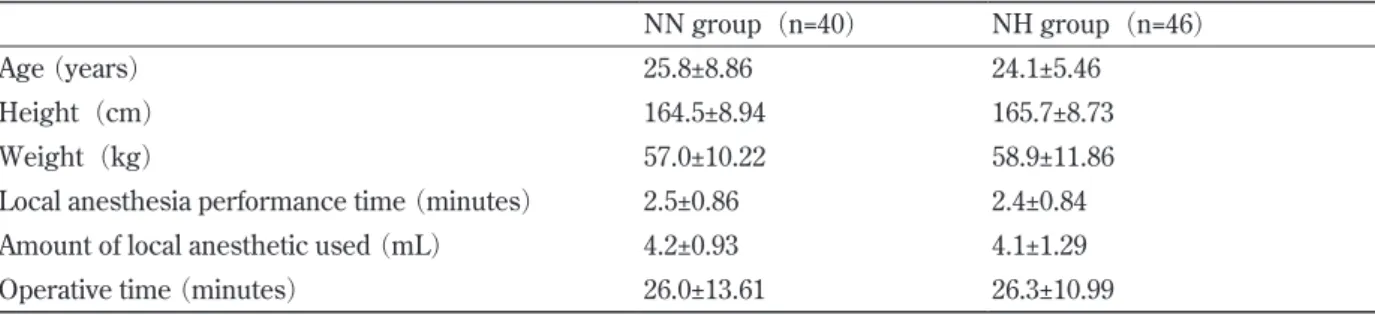
There were 86 subjects who exhibited the autonomic nervous response, which is thought to be normal, of reduced HF and increased LF/HF, in response to the postural change from measurement period A to B, accounting for 69.9% of the subjects. Of these, 40 patients had a state anxiety of III or lower in the STAI-X (NN
group) and 46 patients had a IV or V (NH group) . The NN and NH groups showed no significant differences in patient backgrounds (age, height, weight, local anesthetic performance time, amount of local anesthetic used, or operative time) (table 3) .
There were 13 patients in both the N group and H group whose HF and HF/LF both increased, and two patients in the N group and five patients in the H group had increased HF and reduced LF/HF. Three patients in the N group and one patient in the H group had both reduced HF and LF/HF (table 4) .
(2) Autonomic nervous activity for postural change in measurement periods A, B, and C
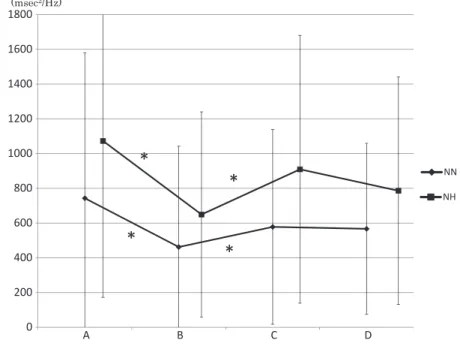
i. Changes in HF
HF was significantly reduced in both the NN group and NH
group in response to the postural change from measurement
period A to B. HF increased significantly in both groups in
response to the postural change from measurement period B
to C. The NH group showed a downward trend in response to
the postural change from measurement period C to D. In all
the measurement periods, there was no significant difference
between the groups (fig. 2) .
Table 3 Backgrounds of patients showing normal response to postural repositioning from measurement period A to B
NN group(n=40) NH group(n=46)
Age (years) 25.8±8.86 24.1±5.46
Height(cm) 164.5±8.94 165.7±8.73
Weight(kg) 57.0±10.22 58.9±11.86
Local anesthesia performance time (minutes) 2.5±0.86 2.4±0.84
Amount of local anesthetic used (mL) 4.2±0.93 4.1±1.29
Operative time (minutes) 26.0±13.61 26.3±10.99
・NN group: Normal group with state anxiety III or lower immediately before surgery and showing normal response to postural
repositioning.
・NH group: Normal group with state anxiety IV or V immediately before surgery and showing normal response to postural repositioning.
Table 4 Autonomic nervous activity for postural repositioning
A(supine position)→ B(sitting position) N group(n=58) H group(n=65)
M/F:25/33 M/F:27/38
HF ↓ LF/HF ↑ 40 46
(17/23) (20/26)
HF ↑ LF/HF ↑ 13 13
(6/7) (3/10)
HF ↑ LF/HF ↓ 2 5
(0/2) (4/1)
HF ↓ LF/HF ↓ 3 1
(2/1) (0/1)
・N group: Immediately before surgery, Normal anxiety group with state anxiety III or lower
・H group: Immediately before surgery, High anxiety group with state anxiety IV or V
・HF: Segment integral value of the high frequency component (0.15 to 0.40 Hz)
representing cardiac parasympathetic nervous activity
(msec2/Hz).
・LF/HF: The ratio between the segment integral value (LF)
of the low-frequency component
(0.04 to 0.15 Hz), impacted by both cardiac sympathetic and parasympathetic nervous activity, and HF; is thought to represent cardiac sympathetic nervous activity in a relative fashion.
ii. Changes in LF/HF
The LF/HF ratio increased significantly for both the NN and NH groups in response to the postural change from measurement period A to B. The NH group was significantly reduced in response to the postural change from measurement period B to C. The NH group showed a downward trend from measurement period C to D. The two groups were not significantly different from each other over each of the measurement periods (fig. 3) .
iii. Changes in HR
HR increased significantly for both the NN group and the NH group in response to the postural change from measurement period A to B, and it was significantly reduced in both groups in response to the postural change from measurement period B to C. There were no significant differences between the groups. The two
groups did not exhibit major changes in response to the postural change from measurement period C to D. The two groups were not significantly different from each other over each of the measurement periods ( fig. 4 ).
IV. Discussion
The STAI is an anxiety test that is very effective for
assessing anxiety because it allows us to simultaneously
assess the state anxiety that is briefly induced by a
stimulus that is deemed to be harmful and the trait anxiety
that could be considered a part of one’s personality and
that an individual is born with
11, 12). At the same time, it is
also regarded as having excellent reliability and validity
for assessing preoperative anxiety
13). There are five
stages to the assessment of anxiety in the STAI, in order
0 200 400 600 800 1000 1200 1400 1600 1800
D C
B A
NN NH (msec
2/Hz)
*
*
*
*
0 1 2 3 4 5 6 7
D C
B A
NN
* NH
* *
Fig. 2 Changes in HF
HF: Segment integral value of the high frequency component
(0.15 to 0.40 Hz)representing cardiac parasympathetic nervous activity.
A: Supine position B: Seated position
C: Return to the supine position D: During local anesthesia
NN group: Immediately before surgery, Normal anxiety group with state anxiety III or lower NH group: Immediately before surgery, High anxiety group with state anxiety IV or V
*
p < 0.05
Fig. 3 Changes in LF/HF
LF/HF: The ratio between the segment integral value
(LF)of the low-frequency component
(0.04to 0.15 Hz) , impacted by both cardiac sympathetic and parasympathetic nervous activity, and HF;
is thought to represent cardiac sympathetic nervous activity in a relative manner.
Legend is the same as Fig. 2
*
p < 0.05
50 55 60 65 70 75 80 85 90
D C
B A
NN
4 3
2 1
NH (bpm/min)
*
*
*
*
Fig. 4 Changes in HR HR: Heart rate
Legend is the same as Fig. 2
*
p < 0.05
of score: very high anxiety, stage V; high anxiety, stage IV;
normal, stage III; low, stage II; and very low, stage I. We have reported that the STAI-JYZ, which is a new Japanese- language STAI that takes cultural factors into account, is less suitable for assessing anxiety before invasive treatments than the previous version of the STAI-X
14). It has also been reported that using the STAI-X to assess the anxiety of patients that are scheduled for impacted wisdom tooth extraction and proactively incorporating intravenous sedation for patients at a state anxiety stage of IV or higher enables safe and comfortable treatment and that paying attention to state anxiety is more valid for assessing preoperative anxiety
8,15). For these reasons, we used the STAI-X in the present study, and we were able to properly assess patient anxiety.
With normal regulation of circulation by the autonomic nervous system, standing entails a retention of blood in the legs and abdominal viscera, which reduces the venous recirculation to the heart; this stimulus sets off the baroreceptor reflex, with suppressed cardiac parasympathetic nervous activity and enhanced cardiac sympathetic nervous activity, thus increasing the heart rate and vascular resistance in order to maintain blood pressure
7). Mathieu et al
9)have reported that assessing autonomic nervous activity allows them to predict dangerous complications that are induced by an upset in
the balance of autonomic nervous activity. There have been reports of increased blood pressure and increased heart rate during dental treatments in which local anesthesia was used
16)and of upset to the autonomic nervous balance, despite a lack of change in blood pressure or heart rate that is observed from the changes in autonomic nervous activity during local anesthesia
17). However, our extensive searches failed to find any reports in which the extent of preoperative anxiety and changes in autonomic nervous activity were assessed.
About 30% of the subjects in the present study showed
normal autonomic nervous activity to postural change
irrespective of the extent of anxiety that was assessed
by the STAI-X. This was thought to indicate that, among
the preoperative patients of impacted wisdom tooth
extraction, there exist some patients who could possibly
experience physiological changes, such as tension, or
complications that could potentially cause VVR and other
aspects of imbalance in autonomic nervous activity, all of
which cannot be assessed with the STAI-X alone. With
high anxiety patients who exhibited normal autonomic
nervous activity with postural change, significant
sympathetic nervous activity changes due to postural
change both from a supine position to a seated position
and from a seated position to a supine position were
seen. From these results it is evident that the autonomic
nervous activity balance of patients having a high degree of anxiety is greatly affected by posture. It is thought that with these kinds of patients, postural change should not be done frequently during examination and treatment and, from the standpoint of autonomic nervous balance, examination and treatment done as much as possible in a supine position would be efficacious.
Nakano et al
18)reported that even when 50 μg of epinephrine was added, the plasma epinephrine concentration was 235.9 pg/ml,. As a pharmacological effect of the epinephrine, an increase in heart rate was observed due to β receptor stimulating action. The epinephrine used in this study was 25.326 ± 0.93 μg for the NN group and 25.023 ± 1.29 μg for the NH group. No increase in heart rate was observed, and epinephrine is thought not to have significantly impacted the autonomic nervous activity.
These facts suggested, from the aspects of the heart rate variability of autonomic nervous activity, that patients undergoing impacted mandibular wisdom tooth extraction have relatively major mental and physical stresses. In addition, with patients in a highly preoperative anxious state who were assessed with STAI-X, there was no large hemodynamic variation during local anesthesia but significant changes in sympathetic nervous activity due to postural change were evident. In other words, with patients having a high degree of preoperative anxiety, rapid postural change should not be done frequently based on consideration of autonomic nervous balance is suggested.
This study has shed light on anxiety before impacted wisdom tooth extraction. We suggested that neuromodulatory complications can be effectively prevented by aggressive measures to reduce presurgical anxiety, such as the concomitant use of sedation or by avoiding easy postural change after local anesthesia. In addition, with regard to the 37 people who did not exhibit a normal reaction with postural change from A to B during the measurement period, the clinical number was small and an adequate analysis could not be carried out but there is a substantial possibility of screening for an autonomic nervous balance disparity and this is an issue for investigation in the future.
V. Conclusion
This examination of autonomic nervous activity demonstrated the existence of individuals whose autonomic nervous balance was unbalanced among patients preparing
for impacted wisdom tooth extraction. It also suggested that patients with high states of anxiety as assessed by the STAI-X were more prone to lose their hemodynamic balance because of postural change after local anesthesia.
We indicate that anxiety assessments using STAI-X are effective for predicting patients who are more likely to experience neuromodulatory complications.
References
1) Maranets I, Kain ZN.: Preoperative anxiety and intraoperative anesthetic requirements. Anesth Analg 89: 1346-1351, 1999.
2) Seto,M., Furuta, H., et al.: Sedative methods used during extraction of wisdom teeth in patients with a high level of dental anxiety, JKAOMS 37: 242-245, 2011.
3) Ip HY, Abrishami A, et al.: Predictors of postoperative pain and analgesic consumption: a qualitative systematic review. Anesthsiology 111: 657-677, 2009.
4) Godzieba A., Smektala T., Jedrzejewski m., et al:
Clinical assessment of the safe use local anaesthesia with vasoconstrictor agents in cardiovascular compromised patients: A systematic review. Med Sci Monit. Mar 10; 20: 393-8, 2014.
5) Massimo L., Cinzia F., Pietro G., et al: Independent role of reduced arterial baroreflex sensitivity during head-up tilt testing in predicting vasovagal syncope recurrence.
Europace 12: 1149-1155, 2010.
6) Georgions D. M., Rong Zhang., Benjamin D. L., et al:
Autonomic neural control of cerebral hemodynamics.
IEEE Eng Med Biol Mag. Nov–Dec; 28(6) : 54-62, 2009.
7) Andrea M, Riccardo C, Stefano G, et al: Characterization of the cardiovascular control during modified head- up tilt test in healthy adult humans. Autonomic Neuroscience: Basic and Clinical 179: 166-169, 2013.
8) Seto, M., Manabe, Y., et al: Autonomic Nervous System Activity During Autologous Blood Donation for Orthognathic Surgery. JOMS 63: 1096-1100, 2005.
9) Pushpa K., Deepa R., et al: Cardiac autonomic activity in overweight and underweight young adults. Indian J Physiol Pharmacol. 57(2) ; 146-152, 2013.
10) E.M. Dantas., C.P. Goncalves., A.B.T. Silva., et al:
Reproducibility of heart rate variability parameters measured in healthy subjects at rest and after a postural change maneuver. Braz J Med Biol Res, Oct 43(10) ; 982-988, 2010.
11) Spielberger C, Gorusch R, et al: Manual for the
State-Trait Anxiety Inventory, Palo Alto Consulting Psychologist’s Press, Minnesota, 1970.
12) Nakazato, K., Mizuguchi, T.: Development and Validation of Japanese Version of State-Trait Anxiety Inventory. Shinshin-Igaku 22: 107-112, 1982.
13) Kim WS, Byeon GJ, et al: Availability of preoperative anxiety scale as a predictive factor for hemodynamic changes during induction of anesthesia, Korean J Anesthesiol, 58(4) : 328-333, 2010.
14) Hayashida, E., Seto, M., Hamasaki, R., et al: Evaluation of the Prediction of the Anxiety Level at the Time of an Oral Surgery with the State-Trait Anxiety Inventory
(STAI): Comparison with the STAI-X and STAI-JYZ.
Med. Bull. Fukuoka Univ. 38(4) : 177-182, 2011.
15) Seto, M., Hamasaki, R., Sakamoto, Y., et al: Evaluation of the Prediction of Preoperative Anxiety Level and Efficacy of Intravenous Sedation with the State-Trait
Anxiety Inventory(STAI) : Comparison of the Old STAI and New STAI. J. Jpn. Dent. Soc. Anesthesiol. 40
(1) : 25-30, 2012.
16 ) Matsumura, K., Miura, K., et al: Changes in Blood Pressure and Heart Rate Variability During Dental Surgery. AJH 11: 1376-1380, 1998.
17) Matsui, T., Okano, H., Shida, T., el al: General Abnormality during Dental Treatment and Variation of R-R Interval Neurogenic Shock and Cardiac Neurosis. J.
Jpn. Dent. Soc. Anesthesiol. 14(3) : 425-432, 1986.
18) Nakano, M., Takahashi, Y., Hirosawa, T., et al: The Effects of Epinephrine in Local Anesthetics on Plasma Epinephrine and Hemodynamic Responses under Intravenous Sedation with Midazolam. J. Jpn. Dent.
Soc. Anesthesiol. 33(3) : 373-381, 2005.
(平成 26.2.28 受付,平成 26.6.12 受理)