Japan Advanced Institute of Science and Technology Author(s) Ferdous, Subarna
Citation
Issue Date 2018‑09
Type Thesis or Dissertation Text version ETD
URL http://hdl.handle.net/10119/15522 Rights
Description Supervisor:池田 満, 知識科学研究科, 博士
i
to Value Creation for the Shrimp Industries in Bangladesh
Subarna Ferdous
Japan Advanced Institute of Science & Technology (JAIST)
ii
A Value Chain Analysis Approach to Value Creation for the Shrimp
Industries in Bangladesh
Subarna Ferdous
Supervisor: Mitsuru Ikeda
School of Knowledge Science
Japan Advanced Institute of Science & Technology
September, 2018
iii to plate via a diverse chain. The standard chain and analysis of those chains
unlock the value and ensure the value creation activities in the shrimp industries. Considering that business marketing has been paying attention to the creation of value. For creating value, value chain analysis (VCA) is a way of understanding the creation throughout a vertical configuration. The key to value creation in shrimp industries is value chain analysis, developing standard value chain, guidelines for rapid appraisals of shrimp products chain performance, value co-creation with the consumers, e-traceability for the quality and safety, knowledge creation in shrimp industries, well marketing strategy with the consumer segment and others. Many studies identified that unlocking value through analysis, tracing the product information through technology, managing knowledge for both stakeholders and firm people;
inviting farmers and consumers in the production process and applying modern technologies convert the challenges into opportunities in the shrimp industries.
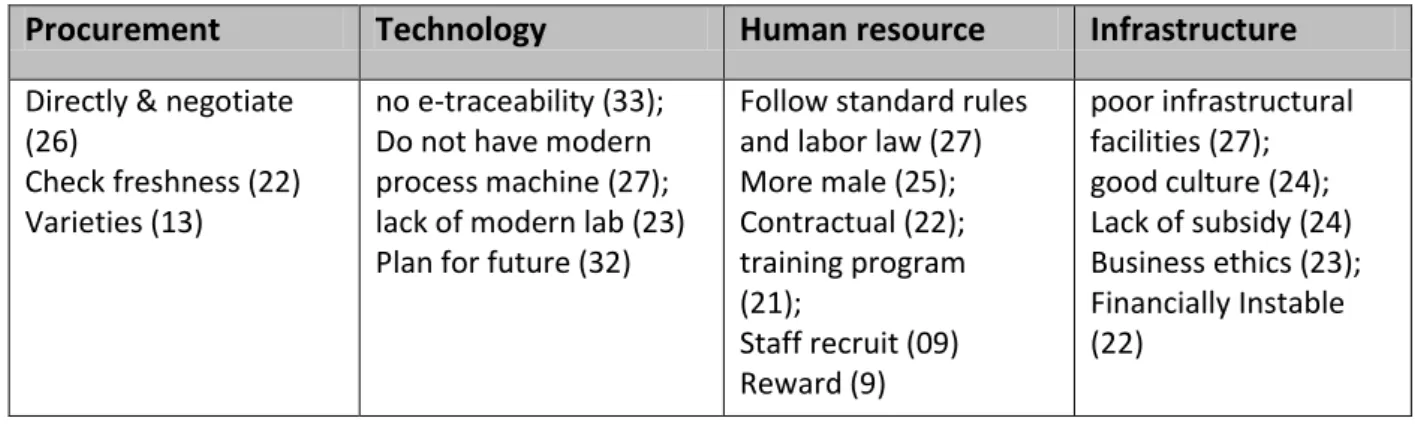
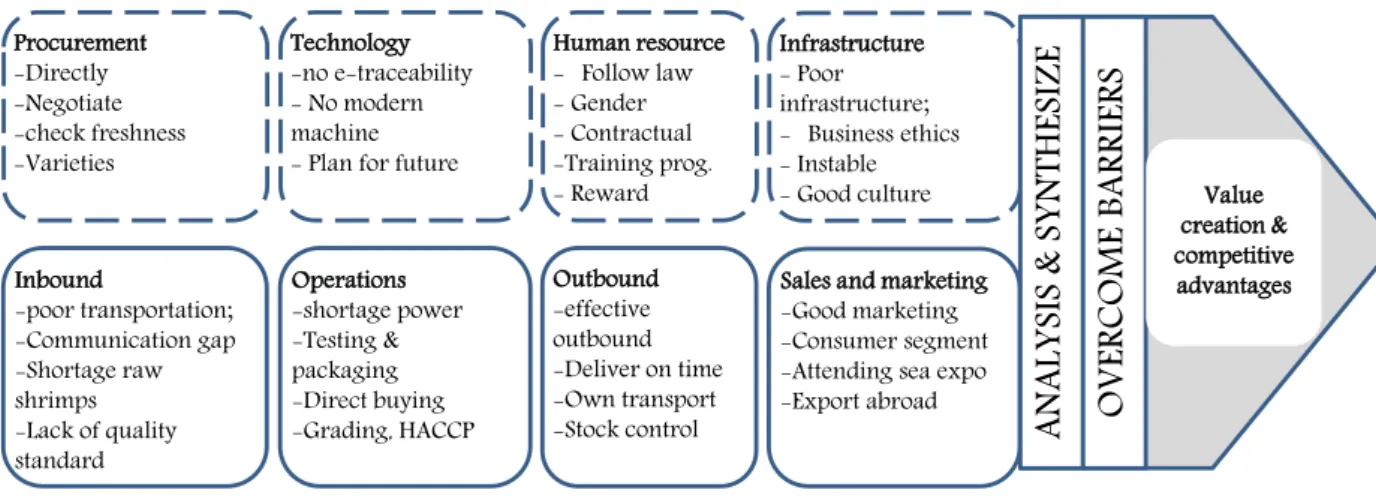
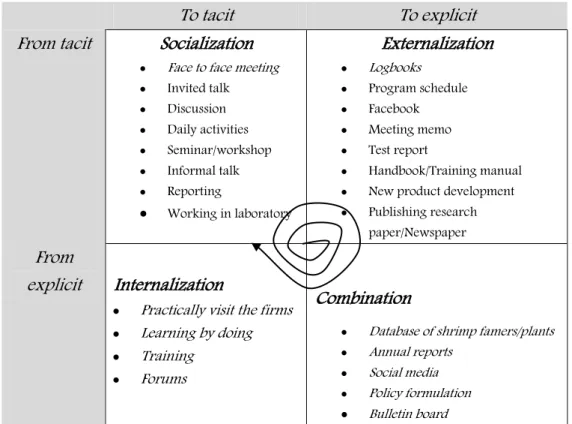
For the present study, we have empirically examined the value chain of shrimp industries with the help of Porter (1985) value chain and focused how the value chain activities facilitate the value creation through the analysis of the chain actors. We have conceptualized the e-traceability for the value creation activities in shrimp industries. We have also empirically examined the knowledge creation activities in the shrimp industry and utilized Nonaka and Takeuchi (1995)’s SECI model for mapping out the FIQC activities. For examining and exploring the value chain and knowledge creation activities, we have conducted two interviews with the shrimp processing plants and FIQC people. The methodology employed was a combination of qualitative and quantitative approaches.
The study found that poor transportation, communication gap between the stakeholders, shortage of raw shrimps, manual processing of shrimp products, less variety of value added products and lack of quality standard are the areas where shrimp industries were suffering. It was found from the study that some of the primary and secondary activities of shrimp industries did not mapping with the Porter’s framework. Based on Porter’s framework, the study suggested that by analyzing and synthesizing those gaps can lead the firm to offer more value and competitive advantages. In the knowledge creation activities, results show that the Bangladeshi FIQC officers are actively involved in facilitating knowledge creation and sharing initiatives with the farmers and firms people. By doing their daily visits to processing plants, discussion with the colleagues, informal discussion, maintaining meeting memo, formulating national policy and storing all information in the databases they are continuously creating knowledge for the shrimp industry.
iv By offering e-traceability, Bangladeshi shrimp industry will gain the
consumers and buyers trust.
Finally, we have come up with a framework where we have focused how the value chain, knowledge creation and e-traceability facilitate to value creation in the shrimp industries of Bangladesh. We found that analyzing the chain with the primary and supporting activities, conceptualizing the e- traceability system and creating new knowledge leads to offer more value creation in shrimp industries. The new value can be in the form of opening new market, gaining competitive advantages, consumer satisfaction, increasing exports and more profits in the industry. Lastly, we discussed the limitations and put some directions for the future works of this study. While there has been a very few studies on value creation of the shrimp industries in Bangladesh, the result of the present study will support to unlock the gap and offer new strategies for value creation. Apart from value creation, stakeholders, firm people, and other patrons of shrimp industries in Bangladesh will be made aware of the effect of value chain, knowledge creation and e-traceability. This study will bring many unattended topics of shrimp industries to open a debate and academicians/researcher/firm people will come forward to work on it.
Keywords
Value chain analysis (VCA), shrimp industry, knowledge creation, e- traceability, FIQC.
v extend thanks to the many people and organizations in Japan and Bangladesh who so generously contributed to the work presented in this dissertation. I am thankful to all of my FIQC colleagues and industry people in Bangladesh who helped me lots for collecting data and arranged industry visit programs.
Firstly, I am extremely grateful to my supervisor Professor Mitsuru Ikeda, for guiding me in the right direction, and for his honest criticism whenever he saw me deviating from the right track. Professor Ikeda has been supportive in many ways and without his support and guidance, I would not have succeeded. I am specifically indebted to Professor Ikeda for his constant faith in my lab work, and for his support. Profound gratitude goes to my second supervisor Dr. Hideaki Kanai and minor research supervisor Professor Youji Kohda, who has been supportive in many ways conducting my research.
I have made many beautiful memories in my academic and personal life in JAIST.
But these memories would not have been possible without the help of so many people in so many ways. Ikue Osawa, Liang Cui (Sai) & Wei Chen, you people were my family members and I have always felt fortunate to have had these people around me in JAIST.
My sincere gratitude is also due to the Monbukagakusho Honors Scholarship, JASSO and Mitani Foundation authority for considering me worthy of the scholarships. I would like to thank all members of Ikeda lab for their critique, suggestions and inspiration during the lab seminars and presentations.
My appreciation also goes to the many people of Department of Fisheries and ministry of Fisheries and Livestock in Bangladesh. To all my colleagues at theses department, thank you for all kinds of administrative supports rendered to my PhD journey.
Finally, I express my deepest gratitude to my family members. Nobody has been more important to me in the pursuit of this project than the members of my family. In this journey, I missed my father most. His continuous support and inspiration helped me to motivate myself all the time for this doctoral program. My mother was a true shelter for me while I was doing my PhD. My husband and two sons Arham and Afsan have been a source of immense strength throughout my journey at JAIST. They generously tolerate my absence. I always got their support and love. My sister and two nieces Asfia and Anusha were the sources of inspiration in this journey. I am also grateful to my mother in law for her support during my study period. To those listed above, to all those I have missed, and to the power that guides me, I extend my deepest gratitude.
This thesis is dedicated to all of you, with love.
vi Table of Contents ... …VI-IX List of Tables ... X List of Figures ... XI List of Abbreviations ...XII-XIII
CHAPTER ONE: BACKGROUND AND INTRODUCTION ... 1-11
1.1 Background of the study ... 1
1.2 Statement of the problem ... 5
1.3 Objectives of the study ... 6
1.4 Research questions ... 6
1.5 Significance of the study ... 6
1.6 Research methodology ... 8
1.6.1 Document analysis ... 8
1.6.2 Qualitative and quantitative approach ... 8
1.6.3 Theoratical approach ... 9
1.7 Terminology ... 9
1.8 Structure of the dissertation ... 11
CHAPTER TWO: LITERATURE REVIEW ... 13-37 2.1 Value and value creation in business ... 13
2.2 Value creation in food industry ... 15
2.3 Value creation strategies in shrimp industries: Theoretical lens……...18
2.3.1 Value chain and value chain analysis (VCA) ... 20
2.3.2 E-traceability: Food industry ... 23
2.3.3 KM and Knowledge creation ... 25
2.3.4 Value co-creation ... 27
2.3.5 Value addition ... 30
2.3.6 Market/Consumer segment ... 32
2.4 Shrimp industries and FIQC : Bangladesh Perspectives ... 34
vii
3.1 Background of the study.. ... …….39
3.2 Objectives of the study ... 40
3.3 Theoretical background: VCA and competitive advantages ... 41
3.3.1 Primary activities ... 42
3.3.2 Supporting activities ... 42
3.3.3 Value creation/competitive advantages ... 42
3.4 Methodology ... 42
3.4.1 Study population and sample ... …….. ... 43
3.4.2 Instrument development ... 43
3.4.3 Data collection ... 44
3.5 Analysis ... 45
3.5.1 Demographics ... 45
3.6 Findings ... 46
3.6.1 Familiarity of VC, brand names, CA and strategy to increase export . 46 3.6.2 Brand name and export of shrimp products ... 46
3.7 Primary activities of VC in shrimp industries in Bangladesh ... ….49
3.7.1 Inbound logistics ... 50
3.7.2 Operations ... 50
3.7.3 Outbound logistics ... 50
3.7.4 Marketing and sales/services ... 51
3.8 Supporting activities of value chain in shrimp industries ... 51
3.8.1 Procurement ... 51
3.8.2 Technology development ... 51
3.8.3 Human resource management ... 52
3.8.4 Firm infrastructure ... 52
3.9 Discussion ... 52
3.10 Theoratical framework ... 56
3.11 Conclusion and future studies ... 59
viii
4.2.1 Hazard Analysis and Critical Control Point (HACCP) ... 63
4.2.2 Good Aquaculture Practice (GAP) ... 64
4.2.3 Best Aquaculture Process (BAP) & Good Manufacturing Process (GMP).. 64
4.2.4 Traceability ... 64
4.3 E-traceability and shrimp products: Global and Bangladesh scenario . 65 4.4 Towards a framework of e-traceability: Bangladesh perspective ... 68
4.5 Challenges of the framework ... 72
4.6 Conclusions and implications ... 73
CHAPTER FIVE : KNOWLEDGE CREATION AND FLOW OF SEAFOOD INDUSTRIES IN BANGLADESH: A STUDY ON FIQC ... 74-88 5.1 Background and introduction ... 74
5.2 Objectives of the stuy ... 76
5.3 Theoretical lens: knowledge creation in shrimp industries ... 76
5.3.1 Socialization ... 77
5.3.2 Externalization ... 77
5.3.3 Combination ... 77
5.3.4 Internalization ... 77
5.4 Methodology ... 77
5.4.1 Sample area and population ... 78
5.4.2 Interview protocol and data collection ... 78
5.4.3 Instrument development and data analysis ... 78
5.5 Data analysis ... 79
5.6 SECI and value creation ... 82
5.7 Barriers of knowledge creation: FIQC ... 83
5.8 Discussion and findings ... 84
5.9 Conclusion and future study ... 88
CHAPTER SIX : DISCUSSION AND CONSLUSION ... 89-105 6.1 Answer to the Subsidiary Research Questions (SRQ’s) ... 89
ix 6.4.2 Implications for knowledge science ... 105 6.5 Limitations and future study ... 105
References…. ... ..107-121 Appendices ... 122-128 Appendix-1 ... 122-127 Appendix-2 ... 128 List of publications (Dissertation) …… ... 129
x
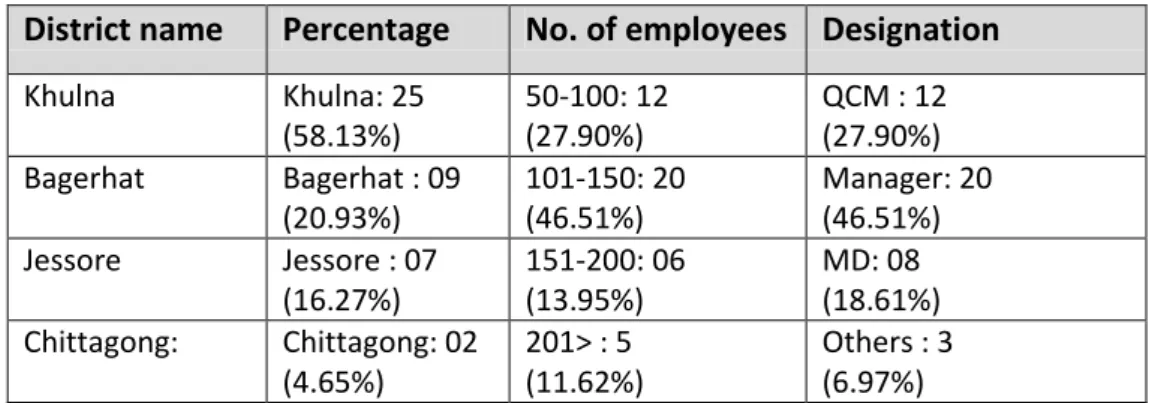
Table 3.2 : Communication and company website (N= 43)..……….43
Table 3.3 : Name of species, brand, products and processing……….44
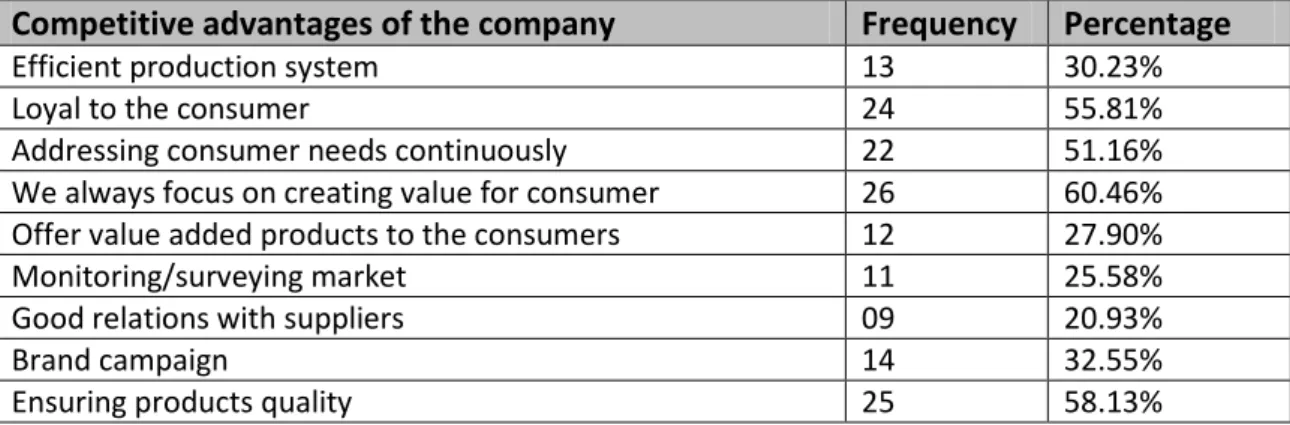
Table 3.4 : Competitive advantages and shrimp industry (N=43) ……….43
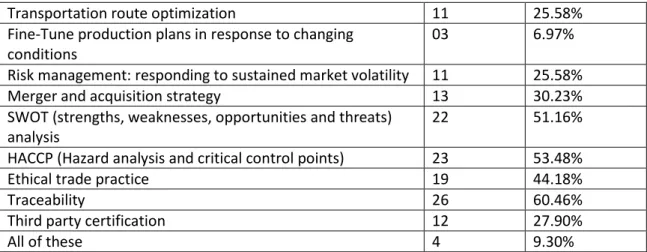
Table 3.5 : Strategy to increase export (N=43, multiple responses) …………..46
Table 3.6 : Global competitors and shrimp industry (multiple choices) ……..46
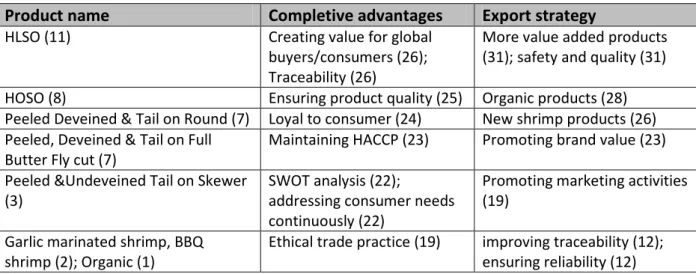
Table 3.7 : Brand, competitive advantages and export………..50
Table 3.8 : Primary activities………..51
Table 3.9 : Supporting activities………..52
Table 5.1 : Selective codes – Phases of SECI (Socialization) ……….74
Table 5.2 : Selective codes – Phases of SECI (Externalization) ………..75
Table 5.3 : Selective codes – Phases of SECI (Combination) ……….76
Table 5.4 : Selective codes – Phases of SECI (Internalization) ……….76
xi
Figure 2.3 : Organogram of FIQC under DOF (revised)……….….35
Figure 2.4 : Shrimp value chain in Bangladesh……….………36
Figure 3.1 : Shrimp firms value Chain Porter……….………54
Figure 4.1 : Electronic shrimp traceability in Bangladesh……….……….66
Figure 5.1 : Nonaka and Takeuchi (1995)’s model of knowledge creation……….79
Figure 6.1 : Shrimp value chain (Major building blocks) ………..…94
Figure 6.2 : VCA for value creation in shrimp industries………95
xii BAP Best Aquaculture Process
BBQ Barbecue BF Block Frozen
BFFEA Bangladesh Frozen Foods Exporters Association BFQ Better Fisheries Quality
BQSP Bangladesh Quality Support Programme DBE Digital Business Ecosystems
DD Deputy Directors
DIKW Data Information Knowledge Wisdom DNA Deoxyribonucleic Acid
DoF Department of Fisheries
DTC Development Technical Consultant EC European Commission
E-traceability Electronic traceability EM Emerging Markets
EPCIS Electronic Product Code Information Services ESE eServices Everywhere
EU European Union
FAO Food and Agriculture Organization FM Farm Managers
F2F Face to Face
FCV Food Consumption Value FDA Food and Drug Administration FGD Focused Group Discussion
FIQC Fish Inspection and Quality Control FRSS Fisheries Resources Survey System GAP Good Aquaculture Practice
GAqP Good aquaculture practice G-D Logic Good-Dominant Logic GDP Gross Domestic Product GMP Good Manufacturing Process GST Gulf Seafood Trace
HACCP Hazard Analysis and Critical Control Points HLSO Headless Shell on
HOSO Head on Shell on
ICT Information and communications technology IQF Individual Quick Frozen
xiii MOFL Ministry of Fisheries and Livestock
MRQ Major Research Question MT Metric ton
NGO Non-Government Organizations
NORAD Norwegian Agency for Development Cooperation NRCP National Residue Control Plan
PSO Principal Scientific Officer QR Quick Response
RCA Regional competent authority RFID Radio-frequency identification R & D Research and development
SaFaL Sustainable Agriculture, Food Security and Linkages
SECI Socialization, Externalization, Combination, and Internalization S-D Logic Service-Dominant Logic
SRQ Subsidiary Research Questions SSOQ Shrimp Seal of Quality Organization
SWOT Strengths, Weakness, Opportunities and Threats TQM Total Quality Management
UN United Nations
UNDP United Nations Development Programme
UNIDO United Nations Industrial Development Organization USA United States of America
USAID United States Agency for International Development VCA Value Chain Analysis (VCA)
1
Chapter One: Background & Introduction
1.1 Background of the study
Changes of agri-food chains have been occurred since 1990’s which have transformed the agri industries in many ways. These transformations have changed the industry stakeholders, farms, processing plants and other actors of these industries which lifted the millions of people’s life in many ways. Like the other industry, this transformation has also taken place in the shrimp food industry which changed the food industry process from farms to business (Islam, 2008).Among the shrimp exporting countries in the world, Bangladesh is one of the most important suitable regions for fisheries which have the world's largest flooded wetland and the third largest aquatic biodiversity in Asia after China and India (Shamsuzzaman,et.al.,2017).Countries like Bangladesh, this industry have important contribution in the national economy. Considering to food consumption, nutrition, employment and export, this industry’s contribution is substantial (Islam, et. al., 2014).
Bangladesh similarly, this industry faces challenge with number of barriers that are hindering growth. The linkages between various shrimp value chain actors, such as producers, processors and exporters, are fragmented. It is affecting product quality and decreasing the competitiveness of the sector (Oxfam, 2018).Moreover, lack of raw shrimps, limited access to financial resources and global market, safety and hygiene issues in the products, traceability problems, demand of value added products, insufficient marketing and promotional activities, and various preconditions of importing countries hinder the growth of this industry in Bangladesh (Nabeshima, 2016).For example, many courtiers like the United States, European Union (EU) and Japan have their own processing plants in the exporting countries. They allowed products to be imported by examining in these certified plants.Sea food particularly in the shrimp industry, farmers, processing plants, nationally and internationally consumers, buyers and supermarkets in many advanced and developing countries have been playing major actors in food chain (Reardon et. al., 2003). It is widely recognized that chain of shrimp products consumption have followed these changes over
2 the past few decades (Willer and Yussefi, 2011).The result of globalization has created the opportunities to lead the developing nations to offer their sea food products to the global consumers.
Nowadays, shrimp industries in developing countries are witnessing clear transformations due to changing the demand and need of global consumers and their food habits, imposing different safety regulations, limited access to global markets and so on. Transformation is leading towards changing the nature of shrimp industries as well as challenges. The undergoing changes occur in the format of value chain, value added products, HACCP, traceability and global competitions. Apart from these changes, shrimp industries around the world are facing many challenges in maintaining safety and quality issue, disease, production costs, international trade barriers and products quality control has become the biggest challenge facing the world’s shrimp industry. So, how can shrimp industries address this and can create more value for their consumers? To answer this, we have taken analyzing the value chain activities, traceability and creating new knowledge through which shrimp industries can overcome these challenges and create value. Firstly we will focus on value chain analysis.
Various activities like value chain analysis (VCA), value addition, value co-creation with the consumers, Hazard Analysis and Critical Control Points (HACCP), traceability, maintaining safety regulations, marketing and standard processing of products facilitate the value creation which is widely discussed in many literatures. Many studies in the field of organization, strategy and operations management noted that value creation as a process that improves competitive advantages and carry out to create potential value. At present in the business to consumer market, creating value and pro-environment for value creation is crucial importance for the success of a firm (Lindman, et.al. 2016). In a firm or organization, it must adopt a set of activities/chains that are essential for the consumers, meet the consumer needs so that consumers are willing to pay for the value. Value chain is a way of understanding the creation of value throughout a vertical configuration (Stabell and Fjeldstad, 1998).Gertner (2013) noted that “value chain analysis (VCA) is a powerful instrument for the company to identify its core activities as having the potential to accomplish competitive priority and create superior performances. P1” It has been used as a
3 powerful tool for management to unlock the value of firms that open the way to create more value.
In shrimp industry, value creation is a set of activities that a shrimp firm performed to design, produce, market and delivers valuable shrimp products to the market.All these activities can be represented using a value chain. Here value is created by acquiring raw materials and using them to produce something useful to the consumer. The more value a shrimp firm creates, the more profitable it is likely to be. And when shrimp firms provide more value to their consumers, it builds competitive advantage (Porter, 1985).Configuring value by maintaining standard activities are vital for competitive advantages (Stabell and Fjeldstad, 1998). If the chains and activities run efficiently, the company gains profit and consumer gets more value from the products.The standard chain of the shrimp products ensure the value creation and help the global consumers to choose the products. As a global commodity, shrimp exporting process reflects the whole chain i.e., pond to plate via a diverse chain. Alam, et. al., (2012) identified that shrimp farmers, aratdar, paiker, retailer and consumers are the five intermediaries in domestic supply chains; shrimp farmer, aratdar, retailers and consumer are the four intermediaries in local market and three overseas supply chains are identified for the shrimp marketing. Three overseas supply chains are namely the suppliers, processing plant and overseas consumer.Like other business industries, new product development, value creation and satisfaction of consumers depend on farms ability, examining value chain to find the gap, creating new knowledge, availability of tangible and intangible resources and management support. For the present study, we have focused only the processing plants of the overseas supply chain. To create more value, industries need to analysis the value chain activities based on the standard chain offered by Porter (1985).
Secondly, understanding what drives value for consumers, knowledge creation and traceability facilitate to create value for the consumers and industries. Malik and Malik (2008) discussed that to create new value, farms must create new knowledge through their research and development department. Therefore, it is critical for the farms to identify their knowledge assets and have the ability to leverage them.Based on Kaplan et.al, (2001)’s work, we can say that shrimp farms must be able to create new knowledge by combining
4 knowledge with the different activities and knowledge with resources, as well as change internal processes and structures. In shrimp industries, knowledge creation can begin with socialization by the government agencies and shrimp farm industries.Learning of individuals can transfer to groups and from groups to farm to harvest value creation in industries. Lee and Yang (2000) introduced the knowledge value chain model under the knowledge framework. They showed how KM guides the way a corporation performs individual knowledge activities and organizes its entire value chain. They suggested that corporate organizations may offer more value if they perform discrete activities under the knowledge value chain framework. Like knowledge creation, it was noted a food traceability system that provides detailed information on food production, processing, transfer, and distribution can create value in food exchange. Chang, Tseng & Chu (2013) discussed that global consumers are more aware of the food safety issues after the outbreaks of mad cow disease. Consumers become more concerned with the quality and safety of the food they eat. They identified that traceability and value creation has the relationship. Consumers care more for food that have food traceability labels. Consumers want to obtain sufficient information on the food before purchasing. To create value in food exchange, firms have begun to pay attention to the emerging issue of food traceability (Lupien, 2005). In the shrimp industry, shrimp products traceability influences the global consumers to buy the products that create value for the industry. Deploying traceability systems can improve food safety by enabling firms to identify and resolve food safety or quality problems (Chryssochoidis et al., 2009). Thus, an optimalfood traceability system can create food exchange value for consumers.Although Bangladesh has traceability system that is accepted by the EU commission, this system is not yet operating optimally. The large number of small- scale farmers makes it very difficult for Bangladesh to guarantee full traceability.
While there have been limited studies on value creation through traceability in food industry (Chang ,Tseng & Chu, 2013;Chryssochoidis et. al., 2009); role of seafood traceability in entire value chain perspective (Sterling, et. al.,2015); sea food export from Bangladesh and current status of traceability (Kabir, 2013); knowledge value chain model in corporate industry (Lee and Yang, 2000); Knowledge and value creation in professional service firms (Løwendahl, Revang and Fosstenløkken,2001) and role of knowledge in value creation
5 (Möller & Svahn, 2006), none have combined knowledge and traceability for the value creation in the context of shrimp industries in Bangladesh.Similarly, the extant literature is yet to provide empirical evidence linking value chain analysis with value creation in the shrimp industries in Bangladesh. Considering this, the present study investigates the role of VCA, traceability and knowledge for value creation in shrimp industries.
1.2 Statement of the problem
In shrimp firms or industry, shrimp value chain examines the full range of activities of the products which are needed to bring the product from its conception, through the different phases of production and delivery to final consumers. In Bangladesh, value chain and understanding how shrimp firms create value are still in the nascent stage. Analysis of value chains requires detailed micro-level data, which are not available in Bangladesh and are often difficult to obtain in most countries (Alam, et.al., 2012).Although the exportation and cultivation of shrimp in Bangladesh has been rapidly expanding for the last two decades, difficulties remain to adopt a standard value chain. The constraints are the lack of standard chain and skilled labor force, proper handling of shrimp from pond to processor, lack of traceability, lower level of production and services, lower quality, delay deliveries and shortage of raw materials. Murray and Little (2016) noted biosecurity investments &
exclusion of smaller farmers, market failures at processor level, lack of proper finance, the poor linkage with EU & other buyers are the challenges that Bangladeshi shrimp industries are facing. In case of market access, as a developing country Bangladeshi shrimp products do not get automatically market access to the global markets. Moreover, comparing with other exporting countries, branding and marketing are not in a good position.To address these challenges and overcome the limitations, Bangladeshi shrimp industries need to focus standard value chain, stimulate the knowledge creation activities and give priority to the traceability areas. Shrimp industries should think of value creating strategies by developing a robust and holistic approach that addresses major actors in the chain processing plants/firms, people and traceability.For these purposes, industries need to follow standard chains to provide quality products to the consumers and need to embrace a scenario where knowledge is created within the industry. We believe that value creation strategies by chain
6 analysis, knowledge creation and traceability can lead to a stronger relationship between the industry and its consumers, a more agile way of working and a cycle of offering quality products for the global markets.Combining these three constructs in the shrimp value chain, for the present study we frame the problem from theoretical view of applying VCA, knowledge creation and traceability can lead to quality products in shrimp industries.
1.3 Objectives of the study
For the shrimp industries to remain relevant to its local and international consumers, they must offer innovative shrimp products. Industries must work actively to create value for their consumers (Ferdous and Ikeda, 2015). Analyzing value chain, creating new knowledge for the different stakeholders in industry and maintaining traceability for the quality and safety shrimp products are some of the factors by which a firm can create value for their consumers. Considering these factors, the present study has focused the following major objectives;
To build a theoretical model for the value creation of the shrimp industries in Bangladesh.
To put some recommendations for the implication of this model in the shrimp industries.
1.4 Research questions
To address these objectives, we have formed one major research question (MRQ) and three subsidiary research questions (SRQs) which helps to find the way of the proposed research.
MRQ: What is the role of value chain analysis (VCA) for facilitating value creation in the shrimp industries?
SRQ1: How does shrimp industry perform the value chain activities?
SRQ2: How does e-traceability effect value creation in shrimp industries?
SRQ3: How is knowledge created in shrimp industries?
1.5 Significance of the study
In Bangladesh, shrimp is one of the most leading export products and this product has the plenty of demand in the international market. As a shrimp exporting country, Bangladeshis
7 blessed with pro-environment for the shrimp cultivation and amiable for shrimp production.
Shrimp farming is growing in Bangladesh due to suitable agro-climatic conditions, cheap labor force, international donor agencies, adequate water resources and the involvement of multinational corporations (Paul and Vogl, 2011).However, the industry is fighting with many obstacles at present.The problem of Bangladeshi shrimp industries are lack of standard value chain activities which relates with the inefficient management, high mortality rate, low quality shrimp, processing plants problems and lack of awareness.
Moreover, lack of traceability, almost non-existent of knowledge creation (research and development endeavors) and lack of coordination with the different stakeholders reduce the possibilities of expanding this industry. Maintaining a standard value chain and analysis of those chains, following the traceability and research or knowledge creation activities can bring the new opportunities which can unlock to create values for industries. Though exploratory and qualitative in nature, the present study has revealed the areas that value chain analysis, knowledge creation and traceability have positive effect on value creation by theoretically and later empirically. If the Bangladeshi shrimp industries follow the Porter’s (1985) value chain, identifying the gap and create new knowledge to fill up those gaps and follow the traceability system, industries will take a strong position in the global market.
The result of the study refers that the more value Bangladeshi shrimp firm creates, the more possibilities they have to offer better products to the consumers. The present study also focused how the firm managers perceive value chain, knowledge creation activities in firm and existing status of the traceability of the shrimp industries in Bangladesh. Value chain analysis in shrimp industries is useful which excel the firm’s ability to understand and optimize the activities that lead to create more value to firms and offer better products for the consumers. The proposed framework for this study will bring certain benefits and lead to offer better products and competitive advantages for the firms. This study helped raise awareness of the role of value chain analysis, knowledge creation and traceability in the shrimp industries in Bangladesh.One of the most important parts of this study is to examine the Porter’s (1985) value chain where relatively few researches have been conducted. Based on the Porter’s (1985) work, analyzing the primary and secondary value chain activities, a firm can ensure the value creation and competitive advantages. Based on SECI model given
8 by Nonaka & Takeuchi (1995), this study also focused how the FIQC officers create knowledge for the shrimp industries. Finally, it focused the existing status of traceability and proposed an e-traceability framework for the shrimp firms in Bangladesh. The proposed model based on value chain analysis, knowledge creation, and traceability could help both academicians, practitioners, industry people and other stakeholders to advance understanding of the relationships between VCA, knowledge creation and traceability in shrimp industries. As a result, the present study is significance to industry people and other stakeholders in shrimp industries for creating value in their products.
1.6 Research methodology
For the present study, we used mixed method approach to address the different research objectives and questions. We have chosen the qualitative email and face to face interviews, observation in some cases and theoretical reasoning. The methods employed in this study include the following:
1.6.1 Document analysis
For the value chain analysis (VCA), traceability in shrimp industries and knowledge creation activities, substantial amount of literatures have been studied in depth. Different online databases, relevant websites, brochures, office records and organizational information have been analyzed to get the key aspect and statistical information for this dissertation. The objectives of this document analysis were to get the theoretical framework and exploring the different VCA frameworks in shrimp industries. Moreover, we have examined and reviewed different VCA, traceability and knowledge creation frameworks to come with the theoretical framework for this study. This document analysis was also used to designing the questionnaires for this study.
1.6.2 Qualitative and quantitative approach
For the present study, we used mixed method approach. We had to rely on this methodology because of collecting, analyzing and integrating data were both qualitative (open ended) and quantitative (closed ended) in nature. In chapter three and five, to
9 examine the value chain analysis and knowledge creation activities in the shrimp industries, we relied upon the qualitative method for collecting data.
In chapter three, for the value chain analysis, we relied upon the exploratory qualitative research approach with semi-structured questionnaire. In depth, semi-structured interviews were conducted with the shrimp industry managers for getting a deeper understanding of the chain. It gave a better insight into the process we were studying. Merriam noted that, 'Qualitative researchers are interested in understanding the meaning people have constructed, that is, how they make sense of their work and the experiences they have in the world' (Merriam, 2015, p.6).Maxwell (2012) maintains that qualitative research is useful to understand the experiences of participants, the context in which they act, the influences on their behavior and the processes surrounding their behavior.
In chapter five, for the knowledge creation activities in shrimp industries, we also relied on the qualitative method for collecting data. Questionnaires with both open and close-ended questionswere sent to the Fish Inspection and Quality Control (FIQC) officers who were working in the FIQC officevia e-mail. For gaining the more responses, personalized individual e-mails with a link to a web-based questionnaire (including informed consent) were sent out to the FIQC people inviting them to participate in this study.
1.6.3 Theoretical approach
In chapter four, we used theoretical approach for conceptualizing the e-traceability framework for the shrimp industries in Bangladesh. We did not depend upon an experiment, manipulation of variables or empirical evidence. We generally did observation and study in depth of the e-traceability framework of shrimp industries in different countries.
1.7 Terminology
Aquaculture: The term ‘aquaculture’ relates with fish, shrimp, oyster and other aquatic farming. It implies cultivation of aquatic species under the controlled environment. For the present study, we use the term as shrimp farming.
10 Value chain: Porter (1985) first used this concept in his famous book ‘Competitive Advantage: Creating and Sustaining Superior Performance’. He defines value chain is a set of activities that a firm operates to perform in order to deliver a valuable product or service for the market. For the present study, we have showed the shrimp value chain where focuses how shrimp is farmed, processed and exported by the shrimp industries in Bangladesh.
Value Chain Analysis (VCA): VCA is a process where a firm put emphasis on its primary and support activities, then analyze these activities to unlock the value or find the gap which creates value to consumers or the organization.
Traceability: Traceability is the capability to trace something. In shrimp industry, it is the ability to verify the history and location of shrimp products. In shrimp traceability, shrimp products can be traced from farmer to collection centre to processing from hatchery to harvest. Under this system, consumers of shrimp products can trace the origins of what they are eating back to the producer.
Knowledge creation: The ability to create new knowledge is often treated as the heart of the industry’s competitive advantages. For the present study, we used the SECI (socialization, externalization, combination, and internalization) model of Knowledge creation given by Nonaka & Takeuchi (1995). We explain that how tacit and explicit knowledge of FIQC people and shrimp industry are converted into organizational knowledge.
Shrimp processing plants: Shrimp processing plants are those plants/organizations where raw shrimps are collected from the markets and transformed those raw shrimps into final products. It cleans, processes the shrimp based on their quality, freezing, preserving and adding value to those products in different ways.
Fish Inspection and Quality Control (FIQC): Fish Inspection and Quality Control (FIQC) is a branch of the Department of Fisheries (DoF). The Department of Fisheries (DOF), under the administrative control of the Ministry of Fisheries and Livestock, is a front line government agency focused on fisheries development in Bangladesh. FIQC people inspect the processing
11 plants, farms and hatcheries, conducted microbiological and chemical test and conducting various training program.
Hazard Analysis and Critical Control Points (HACCP): HACCP in shrimp industries is a systematic process of preventing approach to shrimp products safety from biological, chemical, and physical hazards in the shrimp production processes. These are the steps or procedures which can be utilized for the food safety and reduce the risks factors at minimum level.
Value creation: Creating value is the essence of business. In shrimp industries, value is created through the different activities. For the present study, we refer value creation is a process where shrimp industry benefitted to export their products by maintaining standard value chain analysis, traceability and creating new knowledge in the industry. The purpose of shrimp industry is to create value for consumers purchasing their products, as well as for other stakeholders in the industry who wants to see their stake appreciate in value.
1.8 Structure of the dissertation
The present study is organized into six chapters. The initial chapter of this study sheds light on the research background, problem statement, objectives of the study, research questions, significance of the study, research methods and terminology used in the dissertation. A good number of relevant literature on value chain, value chain analysis, knowledge creation, traceability and value creation have been discussed in the 2ndchapter of this dissertation. In chapter two, it is also discussed the present status of the shrimp industries, its value chain and focuses the shrimp exporting scenarios of Bangladesh. The review proceeds with the shrimp industry, its stakeholders and other actors in the chain process. Finally, we have reviewed the different theoretical lens and framework of the value creation to come up the model of the present study.
In chapter three, we have examined the value chain of the shrimp industries in Bangladesh with the help of Porter (1985) value chain frame work. In chapter four; we have come up with a framework of the e-traceability of the shrimp industries and suggested how to start
12 this in the shrimp industries in Bangladesh. In chapter five, we presented the result of knowledge creation activities of FIQC officers and showed how they create new knowledge with the shrimp industry. Finally chapter six summarized the findings of all objectives and research questions, and then we constructed a theoretical model. Finally, it is followed by the practical implications, limitations and future work of this study.
13
Chapter Two: Literature Review
The objectives of this chapter are pointing out the gap in the research and put focus the position of the present study in the context of previous research. This chapter is going to review the existing literatures on the value creation strategies of the shrimp industries globally and then put focus on the shrimp industries in Bangladesh. It address the value chain analysis, traceability, knowledge creation, value co-creation and value adding strategies in the shrimp industries. It also focuses the existing scenarios of the shrimp industries, different stakeholders’ position, exporting and other key enabling areas of value creation in this industry. This review focuses on major models and framework relating to value chain analysis, traceability and knowledge creation. After reviewing the substantial amount of literatures, we come up with the theoretical framework of this study.
2.1 Value and value creation in business
Value creation is the core concept in the management and organizational studies. It was well studied in both microlevel (individual, group) and macrolevel (organization theory, strategic management) research. Yet there is little consensus on what value creation is or on how it can be achieved (Lepak, Smith and Taylor, 2007). Value and value creation are the heart of business. Value is an elusive term and the nature of value has been discussed and debated since Aristotle (Vargo, Maglio and Akaka, 2008).In their paper on ‘Value and value co-creation: A service systemsand service logic perspective’ Vargo, Maglio and Akaka (2008) discussed the two general meanings of value, ‘‘value-in-exchange’’ and ‘‘value-in-use’’, which are the different ways of thinking about value and value creation.In business, value is determined the extent to which a good or service is perceived by its customer to meet his or her needs or wants, measured by customer's willingness to pay for it. It commonly depends more on the customer's perception of the worth of the product than on its intrinsic value.Anderson and Narus (1998) define value in business markets is the worth in monetary terms of the technical, economic, service, and social benefits a customer company receives in exchange for the price it pays for a market offering. The concept of value is of paramount
14 importance and numerous studies have demonstrated the key benefits that it can generate for consumers, firms and other stakeholders.
In the traditional conception of process of value creation, consumers were outside the firm.
Value creation occurred inside the firm (through its activities) and outside markets (Prahalad and Ramaswamy, 2004). The concept of the “value chain” epitomized the unilateral role of the firm in creating value (Porter, 1985).The relationships between consumers or buyers and industry are the centre to value-creation. Value creation is the ultimate goal of business and business begins with value creation. In industry, creating and delivering value to the markets in efficient ways generate profit for the industry. The purpose of any business industry or firm is to create value through different activities and sell or trade their products to consumers. Verdin and Tackx (2015) defined value creation as the perceived benefit to the customer. They noted it as the utility of a company’s offering for its customers. In food industry, it is the work of food industry people who acquire raw materials from farmers, process and deliver the furnished products to their consumers. In this way, industry people participate in value creation, creating value from various resources into something valuable to others.Without value creation, businesses wouldn't be in business at all.
Ulaga (2003) examined the capturing value creation in business relationships from the customer perspective. It was found from the business studies that value creation in buyer–
seller relationships is still in its infancy, and a sound understanding of how firms create and deliver value in business relationships is needed. Bröring & Cloutier (2008) shed light on value-creation in the new product development (NPD) projects and they found that buyer- seller relationship is important in new product development. Lindman, et.al. (2016) investigated the firm’s role in the value creation process. They defined a frame work of value creation. After classifying the chain and activities that firms carry out to facilitate the creation of value, they named the actionable framework as “value space”. They discussed that value space is both a practical and theoretically based framework which contributes to the development of a more holistic and “actionable” view on the role of firm in the value creation process. Lapierre (1997) found that providers and organizational customers do not perceive value as a static concept. Author identified that the value definition comprises a
15 time aspect and is associated with the exchange value during the transaction itself and value in use after the transaction.
Stark and Stewart (2011) focused five steps to creating more consumer value. They have discussed the five steps which starts from understand what drives value for consumers and ends with focus investments on most valuable consumers. They have also discussed the other three factors understand the value proposition, identify the customer segments and create a win-win price. In this write up, it was explored how the customer value leads the growth of business. In the organization level value creation, Porter (1985) explained that new value is created when firms develop/invent new ways of doing things using new methods, new technologies, and/or new forms of raw material.
From the above literatures and studies, we found that value and value creation in business goes beyond thevalue that can be realized through the configurationof the value chain (Porter, 1985), co-creation experiences: the next practice in value creationby the consumers (Prahalad and Ramaswamy, 2004), value creation in e-business (Amit and Zott, 2001),the formation of strategic networks among firms (Dyer and Singh, 1998), or the exploitation of firm specificcore competencies (Barney, 1991),consumer involvement and creating more consumer value (Stark and Stewart, 2011) and value creation by firms (Moran and Ghoshal, 1996).The reviewed literature suggests that no single entrepreneurship or strategic management theory can fully explain the value creation potential of business. Rather, an integration of the received theoretical perspectives on value creation through firms, consumer involvement, formation of networks between stakeholders, chain analysis and management support is needed. Finally, it can be said that value is the potential to serve with the help of firms, consumers, chain analysis and active participations of the other actors of the value chain.
2.2 Value creation in food industry
In the business world, every successful business creates something of value to their consumers. Without value creation, a business cannot exist. The more real value a firm creates for their consumers, the better business will be and the more prosperous offer for
16 the firm. Lindgreen and Wynstra (2005) present a review of the existing literature on value in business markets, from the perspective of both business marketing and purchasing and supply management. Like the other firms, the agro-food is facing global challenges in all fields of value creation. This continuous pressure strive them in their value creation activities. In food industry; value is captured partly by the firms and partly by the consumers. Toth (2015) identified that value creation through the food chain is always targeting at the final consumer. In food industry, value creation means adding value to a raw product or deliver the products that consumer wants. Creating value in food industry generates more profits which has significant impact on food industries. Offering value to the consumers through their products, firms earn competitive advantages. In food industry, agricultural producers receive a much smaller portion of the consumer’s dollar than do food processors, especially processors who produce brand name items (Anderson and Hanselka, 2009).Wilson & Goddard (2004) discussed the limited production capacity, global market forces, technological forces, global cost forces, and socio‐political macro‐economic forces have contrived to constrain the global marketing opportunities of wine industries in New Zealand. To overcome these barriers and to create and deliver value in the minds of the final consumer, they suggested constructing a conceptual value chain map of the wine industry.
Bourlakis, Maglaras & Fotopoulos (2012) investigate the differences in value outcomes within the Greek food chain by examining its key members and they found that the Greek food chain has still many characteristics of a traditional chain and many improvements are required to reach the “best value chain” status. Vellema and Van Wijk (2015) in their paper focus the partnerships intervening in global food chains and the emergence of co-creation in standard setting and certification. They address the question whether and how multi- stakeholder partnering makes internationally constructed standards fit local institutions. In a case study between the Utz Certified rooibos tea in South Africa and Aquaculture Stewardship Council certified shrimp in Indonesia, they have examined global and local interactions. It was found that co-creation in global value chains is plausible under specific conditions and it can create more value food value chain. Cucagna (2014) analyzed the differences in stages within the agri-food value chain by identifying which firms and actors excel in the value creation process.The modified economic value added, the percentage of
17 companies that create value and the persistent value creation was the three additional value creation measures. Taking the sample of 454 agri-food companies worldwide, this paper empirically analyzes value creation in the agri-food value chain. The results indicate that agricultural producers the most commoditized sector contribute the least amount of value to the chain, while further processing and retailing contribute significantly higher levels of value.Defining the value net attributes and analyzes the applicability of the value net as a value creation and business model in the food industry, Kahkonen (2012) suggested food sector firms or companies can apply the value net as business model. Various attributes or characteristics were found to be significant and useful for food companies.
Moreover, food firms and industries may create remarkable value by utilizing value nets.To define and describe how consumers may take part in firms’ value co-creation process in the food and beverage (F&B) industry, Tardivo, et.al. ,(2017) noted that by doing increasing awareness activities of the role of consumers by firms can play important role in value creation in food industry. Considering the tough time in the food sectors in Europe, Delivanis (2015) offers six steps to create more value in food industry. These are balance of power, operating profit, latent demand, targeted investment, holistic strategy and link performance to profit growth which can reshape the value creation process in food manufacturing.Introducing the concept of food consumption value (FCV), Dagevos and Van Ophem (2013) refers the FCV consists of four elements. They discussed that product value refers to food's features, process value refers to consumers' interest, location value refers to the setting in which food is purchased or consumed and emotional value refers to feel goods such as experience. This paper was the first exploratory study on the development of the new concept of FCV that examines consumer value beyond tangible product attributes and price.While the rise of value creation in business is well documented, little is knownabout the process by which agri-food supply chains have been configured to create value. A number of studies have examined the dynamics of buyer-seller relationships in agri- food supply chains and the changes in modern food retailing by Toth (2015); Anderson and Hanselka, (2009); Wilson & Goddard (2004); Kahkonen (2012); Tardivo, et.al., (2017);
Delivanis (2015) and Dagevos and Van Ophem(2013), these studies tend to overlook the value creation processes in agri-food industries over time.
18
2.3 Value creation strategies in shrimp industries: Theoretical lens
The value creation strategies for shrimp industries have been the subject of several studies over the years and afew of those studies focus on the present study. Value creation strategies in shrimp firms or industries are complex in nature. It often refers to the value chain analysis (VCA), e-traceability, knowledge creation, value co-creation, business to business relation, offering value added products and competitive advantages. Before focusing the major variables for this study, we begin this section by highlighting the value creation potential embedded inshrimp industries. Our literature review then elaborately focuses on major value creation strategies. For each of these perspectives, we describe the main theoretical approach, expose the main sources of value creation suggested, and discussthe theoretical implications of these major strategies.
Teti, Perrini & Tirapelle (2014) investigated a defined competitive strategy which brings about different value creation levels where value is defined shareholder value and social capital value. They found that different strategies like cost leadership, competitive strategies and standard chain generate considerably higher value for all the stakeholders.Merchant (2014) found three strategies for creating shareholder value for firms who venture into Emerging markets (EMs). In the shrimp aquaculture export industry, Vietnam has achieved the competitive advantages in food safety standards set by the markets. Yoshida (2017) discussed the standard food safety measurement, harmony withthe local buyer-supplier relationship within the industrial cluster and improving the industrial capability that have created more value in this industry in Vietnam. Ongsritrakul & Hubbard (1996) highlighted that Thailand’s shrimp export has increased to the EU market and it was all about the consistency of the quality of shrimps, hygiene and standards set by the EU.Ministry of Fisheries and Coastal Affairs (MFCA) in Norway has focused the electronic traceability, efficient management, access to market and research and development areas.
These all elements ensure the strategy for a competitive Norwegian aquaculture industry. In a paper, an evaluation of consumers’ preferences for certified farmed Atlantic salmon, Haghiri (2014) provided empirical insights about how consumers are interested in consuming certified farm raised Atlantic salmon. Even for having that, they are ready to pay
19 an additional premium price to purchase the product.Shrimp industries are presently adapting to these new difficulties to survive and grow inthe business and market places.
Various commercial business ventures have begun toapply the change programs such as continuous quality improvement, Six-Sigma,benchmarking, quality circle, adoption of ISO 9000 series, TQM and others.
Owusu & Darko (2017) have discussed the application and awareness of TQM in Ghana’s aquaculture industry. They found that Total Quality Management (TQM) is a way of guaranteeing high quality products and services in the aquaculture industry and industry can create value by applying it. Identify the level of good aquaculture practice (GAqP) among aquaculture farmers in Malaysia, Kamaruddin and Baharuddin (2015) found that pond management by brackish water fish farmers is better than freshwater fish farmer.
They have also found that physical and human assets were one of the most significant factors in the GAqP. GAqP also can create more value by increasing in farmers’ household income. Felzensztein and Gimmon (2014) focused on how fisheries industries can improve their long term competitiveness and profitability upon financial pressure.It was found that leadership strategy, customer oriented strategies and focusing environment attributes can ensure the competitive strategies in fisheries industries. For the Sustainable Fish Farming, Waite (2004) suggested five strategies to get aquaculture growth right. He suggested that technological innovation and transfer, focusing beyond the farm, shifting to sustainability, using modern information technology and consuming fish in the food chain can help to grow the aquaculture. In a cross cultural consumers segment in European Union (EU) aquaculture market, Reinders, et.al.,(2016) found that involved traditional, involved innovators and ambiguous indifferent are the important elements market positioning strategies for aquaculture products.Dora (2015) noted that for creating value and gaining sustainable competitive advantages for the marine products in Asean Economic Community, industry should focus on SWOT (Strengths, Weakness, Opportunities and Threats) analysis method to get the right strategy for value creation on seafood products. SWOT analysis helps to obtain the information from the analysis of the situation and separating the internal and external issues, identify the weakness and propose for working where it is required. Like other industries, value creation in shrimp industries are related with many factors. It was found
20 that a comprehensive value creation strategy often aligns broadly under the business strategy, financial strategy, and investor strategy in shrimp industries.
2.3.1 Value chain and value chain analysis (VCA)
Michael Porter (1985) first introduced the concept of ‘value chain’ in his prominent book
"Competitive advantage: creating and sustaining superior performance" where he explained how value is created within organizations. Considering the similarities, for the present study we have used his model in the shrimp industries/processing plants in Bangladesh. The Bangladeshi shrimp industry consists of different stakeholders among them the shrimp processing and preservation plants also known as shrimp industry/company/factory/firm.
There are 162 shrimp processing plants in Bangladesh each of them are business organization (Kabir,2013). In the organizational perspectives, Porter explained that a value chain is a set of activities that an organization carries out to create value or add value for its consumers. It provides a systematic way to divide an organization into the activities and examine how the activities are grouped for performing operations. Porter (1985) discussed that value chain activities are performed determines costs and affects profits, so this tool can help understand the sources of value for organization. Using this viewpoint, Porter described a chain of activities common to all businesses, and divided them into primary and support activities. After introducing the concept of value chain in the organizational perspective, it has become useful management strategy for many different industries and business firms. Taking a value chain approach to business firms or industries mean addressing the chain activities, identify the gap and reduce the gap by value adding activities at multiple levels of the value chain. Value chain analysis (VCA) is a continuous process of examining all the activities of value creation that help to identify all the value-creating activities of firms. In other word, VCA is a tool that focuses on the activity links. Porter (1985) treated it as the bridge between both the primary and secondary functions of a department, business unit, or enterprise. Grant (2010) discussed that the goal of VCA is to recognize, which activities are the most valuable to the firm. By looking those activities, the analysis reveals where a firm’s competitive advantages or disadvantages are. In general, by undertaking value chain analysis, firms can get benefit from low cost advantage,
21 differentiation and identification of core competencies and activities. In the whole shrimp sector of Bangladesh only the shrimp processing plants and the FIQC can be defined as organization. In this study, the value chain analysis was applied in the shrimp industries of Bangladesh in which most of them are private organizations of this sector.
For leveraging value, firms need to optimize their value chain activities. Porter (1985) described it as a series of activities (primary & secondary). The primary activities related directly to manufacture, sales and distribution, and secondary activities which support primary activities, such as planning, finance, research and development (R&D) and human resources. Donovan, et.al, (2013) present a review of eleven guidelines for value chain along six different dimensions and they build a useful framework for understanding markets and engaging with chain stakeholders. Porter (1985) and Kapilinsky and Morris (2001) discussed how the different phases of chain bring a product or service from conception and deliver to the consumers. Shank (1989) states value chain is value creating activities all the way from basic raw material to deliver products to the consumer. Kaplinsky (2000) identifies value chain is the full range of activities which are required to bring a product or service from conception to delivery to final consumers through the different phases. Trienekens (2011) shows value chain as a vehicle where every steps of business go through from raw materials to the eventual end user. The goal is to deliver maximum value for the least possible total cost. Ferris et. al., (2001) explain that value chain aims to provide information on profitability for the various agents along the market chain. Prajogo, McDermott and Goh (2008) found four elements namely marketing, research and development, procurement, and operations of value chain are associated with product quality and product innovation.
Fearne, Martinez and Dent (2012) show the operational misalignments and misallocation of resources which proper alignment and allocation with the chain can offer more value and economic sustainability. They propose why and how VCA is needed for the sustainable competitive advantage. Fearne et al. (2009) look at the wine value chain in South Australia to The UK the world’s largest importer of Australian wine. Along with other key features of this study, they showed the identification of the main activities along the chain, and their contribution towards value creation.