〈研究論文〉
The Effectiveness of Socialization in the Transfer of
Tacit Knowledge across Borders
Motoyuki Kanetsuna
*!.
Introduction
The tendency for companies to mature into multinational corporations is one of the central subjects of international business studies. Internalization theory has long regarded this phenomenon from the perspective of the transaction costs of the market (Buckley and Casson, 1976, 1998a, 1998b; Rugman, 1981; Rugman and Verbeke, 2001, 2003; Martin and Saloman, 2003). While this approach has made an important contribution to the field, a more persuasive explanation, proposed by Kogut and Zander (1993, 1996, 2003), states that multinational formation occurs not because companies seek to avoid the transaction costs of the market but because of their inherent organizational advantages over it. Among these benefits is the ability of organizations to transmit tacit knowledge more efficaciously than the market, even across national borders, which present numerous obstacles (von Hippel, 1994). In fact, this advantage of organization is the key force at work in the transformation of companies into transnational corporations (Kogut and Zander, 1993, 2003).
To proceed from this standpoint, it is essential to specify the mechanisms of organizations that make the transmission of tacit knowledge by them more efficient than those of markets. While Lord and Ranft (2000) explain such knowledge dissemination in terms of formal organizational structures, Minbaeva et al. (2003) cite human resource management. Whatever their merits, such accounts are inadequate, since the process of tacit knowledge transfer is more multifaceted than either allows. This study, which strives to grasp this complexity, is unique in three ways: First, it introduces the methodological refinement of dividing tacit knowledge into manual and heuristic variants. Second, it focuses on socialization as the process that permits corporations to transfer such knowledge more effectively than markets. Third, it explores why socialization operates in this manner.
" .
Knowledge
Transfer
and
Three
Organizational Mechanisms
1. Difficulties of Knowledge Transfer
Knowledge, whether implicit or explicit, is not easily transmitted across borders. Its movement
*長崎県立大学経済学部教授
is impeded, to begin with, by the characteristics of knowledge itself. Explicit knowledge, which is simple and not very system dependent, is easily coded, taught, and observed (Winter, 1987; Kogut and Zander, 1993, 1996; Szulanski, 1996, 2003), in comparison, tacit knowledge possesses the opposite of each of these characteristics and is, in addition, ambiguous and unproven (Winter, 1987; Kogut and Zander, 1993, 1996; Szulanski, 1996, 2003). With these traits, tacit knowledge is more difficult to transfer than explicit knowledge. The sources of knowledge, who may lack motivation or may not be reliable, also impact its transmissibility. In addition, the former deficit may affect the recipients of such transfers, as may deficiencies in their absorptive capacities (Teece, 1977; Rogers, 1983; Winter, 1987; Szulanski, 1996, Foss and Pedersen, 2002). The latter insufficiency has the most potent effect on receivers (Cohen and Levinthal, 1990; Szulanski, 1996, 2003), and it depends on their preexisting stock of knowledge (Dierickx and Cool, 1989), such as skills, a shared language, relevant experience, and an awareness of the locus of useful expertise (Szulanski, 2003). At the same time, strains in the relationship between source and recipient or infrequent communication may present further impediments (Teece, 1977; Rogers, 1983; Winter, 1987; Szulanski, 1996, Foss and Pedersen, 2002).
2. Manual Knowledge and Heuristic Knowledge
As we mentioned above, intuitive knowledge may be specified either as manual or heuristic. The former term refers to knowledge that has already been used in some parts of an
organization, such as the operational standards set within a parent factory1)
. In comparison, the recipients in host countries create heuristic knowledge. How do they do this? To begin with, they receive information that instructs them to do something in exactly the same manner as their sources. For example, these recipients learn to make products according to the operational standards of a corporation’s parent factories.
However, such individuals are not simply passive receivers of knowledge. Instead, through daily experience with production, they devise concepts and processes that exceed the operational standards already in use. In other words, the recipients are also active problem solvers (Koike, 2008; Koike et al., 2001), taking information that they are given and modifying it according to their own experiences and contexts. These solutions, components of heuristic knowledge, are created in problem-solving processes in host countries, and as such, display all of the traits of tacit knowledge, including complexity, high system dependency, and ambiguity. Thus, in the transfer of heuristic knowledge, the receivers, rather than simply applying taught concepts and methods (manual knowledge), create novel solutions to deal with the specific requirements and problems of host countries. By its very nature, such knowledge is more difficult to transfer than its manual alternative (Teece, 1977; Rogers, 1983; Winter, 1987; Szulanski, 1996, Foss and Pedersen, 2002). Moreover, the transmissibility depends on the knowledge creating capacity of host country recipients. In brief, the acquisition of this aptitude is more challenging than the conveyance
of manual knowledge.
3. Three Organizational Mechanisms and Effectiveness for Knowledge Transfer
As we mentioned above, various type of difficulties are encountered in the transfer of knowledge; however, organizations have the ability to overcome them (Kogut and Zander, 1993, 1996). Organizations use several mechanisms or administrative tools to coordinate internal operations (Martinez and Jarillo, 1989).
Three of these--hierarchical control, price control, and socialization--are the most relevant to the present study, since they manage the behavior of individuals (Hennart, 1993). Because deficiencies in the absorptive capacities of recipients constitute a critical obstacle to the effective transfer of knowledge, especially that with tacit qualities, the control of such individuals’ behavior so as to enhance their ability would limit this negative affect.
These mechanisms function differently. Hierarchical control manages employees’ behavior directly by the employment of instruction and monitoring2)
. In other words, hierarchical control relies on behavioral constraints. Therefore, high task programmability or explicitness of knowledge is a precondition for its use (Eisenhardt, 1985). Since employees are rewarded when they follow the orders of managers, the latter must observe those actions in relation to a desired output (Hennart, 1993). Such behavioral control of the individual is not available in the market. Price controls, in comparison, indirectly impact employee performance. Workers make their own decisions to generate a looked-for output and are
rewarded by the output they achieve (Hennart, 1993). No managerial supervision is involved; therefore, the explicitness of knowledge is not a precondition of this mechanism, but its effectiveness depends on an accurate measure of output. Socialization is also indirect, since employees’ choices are self-controlled. However, their efforts are not managed by relating output and reward but by creating the most suitable organizational context (Ouchi, 1980, 1981).
Socialization has two dimensions. The first of these, shared values, refers to common cognition, perception, norms, principles, and standards of behavior as what is important in life (Kagono, 1988). Socialized employees internalize these values, thus thinking and acting voluntarily according to them. As a result, managers are required to neither direct and monitor their employees’ behavior nor precisely measure output. Relationships based on trust--mutual respect, personal connections, and friendship--are another dimension of the organizational context (Ghoshal and Bartlett, 1997). When they are operative, individuals assume their partners will not act opportunistically or inappropriately (Misztal, 1996). Thus, each supports the others, producing joint effort, cooperative behavior, and positive interaction (Ring and Van de Ven, 1994; Ghoshal and Bartlett, 1997). This social dynamic also facilitates the exchange and combination of information (Nahapiet and Ghoshal, 1998; Tsai and Ghoshal, 1998) and induces innovative behavior (Scott and Bruce, 1994).
This study will concentrate on the role of socialization, rather than on those of hierarchy or prices, in the transmission of heuristic knowledge.
Several considerations govern this choice: First, heuristic knowledge is expressed in solving problems and thus occurs before managerial intervention. In addition, direction and monitoring often negatively impact individuals’ creativity ( Amabile , 1988 ; Oldham and Cummings, 1996), impeding novel thinking. In consequence, hierarchical control may not be an appropriate means for transferring heuristic knowledge. Second, since long-term experience is indispensable to the enhancement of the knowledge-creating capacities of recipients (Koike, 2008; Koike et al., 2001), the lack of such experience may reduce this aptitude. At the same time, since rewards are tied directly to output, recipients may hesitate to handle unknown problems or cope with changes. Finally, price controls may reduce the intrinsic motivation necessary in tacit knowledge conveyance (Osterloh and Frey, 2000), since individuals tend to exert efforts when they receive long-term rewards. Thus, price controls may also not be an appropriate mechanism for transferring heuristic knowledge.
Studies on multinational corporations have already paid much attention to socialization (Martinez and Jarillo, 1989; Baliga and Jaeger, 1984; Edstrom and Ghalbraith, 1977). However, since only a few of these explore the relationship between socialization and knowledge transfer (Bartlett and Ghoshal, 1989; Asakawa, 1999; Dhanaraj et al., 2004), the present inquiry will concentrate on its effectiveness in augmenting the heuristic abilities of recipients, seeking to elucidate the role of shared values and trust. The paper considers the following questions:
! Is socialization effective in overcoming
the difficulties of knowledge transfer?
" If so, why is it effective?
# How does each foreign subsidiary share
values and build relationships based on trust?
!.
Research Methodology
This study has an exploratory nature; therefore, it relies on a case study research model, which is appropriate when dealing with questions of why and how (Yin, 1994). It focuses on Japanese subsidiaries in Thailand, an important stronghold for Japanese multinational corporations given its political stability, policies favorable to foreign investment, the quality of its labor force, and so on. A number of industries are explored in order to ascertain whether differences in manufacturing processes influence the effectiveness of socialization. The databank series of Toyo Keizai Inc. “Kaigai Sinshutsu Kigyou Souran (List of Japanese Subsidiary in Foreign Countries)” contains empirical information on the subsidiaries studied. Data on eleven subsidiaries are taken from the series: five producing auto parts, and one each producing motorbikes , construction equipment, electronic parts, chemical materials, nonferrous metals, and synthetic fibers. Personal in-depth interviews with Japanese expatriates (sources of knowledge) and Thai managers and engineers (recipients of knowledge) form the core of this research. Interviews were carried out in an open-ended style, and these yielded, among other information, facts on sales, the numbers of local employees, the number of Japanese expatriates,
and the founding dates of the firms.
!.
Knowledge
Transfer
and
the
Effectiveness of Socialization
1. Manufacturing Processes of Eleven Japanese Subsidiaries in Thailand
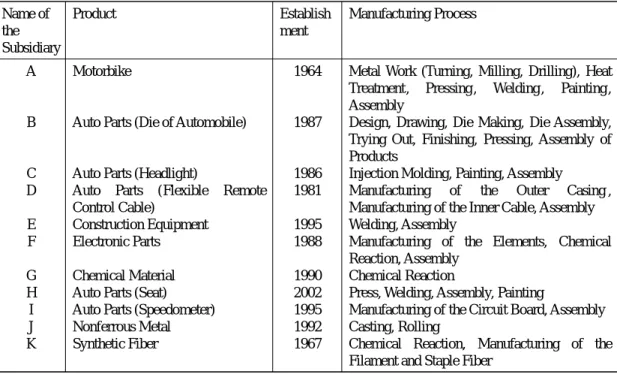
Table 1 lists the eleven Japanese subsidiaries and their production processes. Following Kogut and Zander (1993), the processes are grouped into four fundamental technologies:
・ Processes for changing the physical characteristics of materials (chemical reactions, refinement, heat treatment)
Case A, Case F, Case G, Case J, Case K
・Processes for changing the shapes of materials
(casting, pressing, rolling, bending)
Case A, Case B, Case C, Case F, Case H, Case
J
・ Processes for giving materials certain dimensions (turning, milling, drilling, sawing) Case A, Case B
・Processes for assembling different parts into a
unit (welding, soldering, gluing, screwing) Case A, Case B, Case C, Case D, Case E, Case F, Case H, Case I
These four technologies must be further broken down according to the methodologies of production. One approach centers on operational standards, which are mostly set in the parent factories in Japan and provide standardized procedures, times, and speeds for each manufacturing process. Following such a standard, a form of manual knowledge, each worker is able to make products according to a
Table 1. Japanese subsidiaries in Thailand Name of the Subsidiary Product Establish ment Manufacturing Process
A Motorbike 1964 Metal Work (Turning, Milling, Drilling), Heat
Treatment, Pressing , Welding , Painting , Assembly
B Auto Parts (Die of Automobile) 1987 Design, Drawing, Die Making, Die Assembly, Trying Out, Finishing, Pressing, Assembly of Products
C Auto Parts (Headlight) 1986 Injection Molding, Painting, Assembly D Auto Parts (Flexible Remote
Control Cable)
1981 Manufacturing of the Outer Casing , Manufacturing of the Inner Cable, Assembly E Construction Equipment 1995 Welding, Assembly
F Electronic Parts 1988 Manufacturing of the Elements, Chemical
Reaction, Assembly
G Chemical Material 1990 Chemical Reaction
H Auto Parts (Seat) 2002 Press, Welding, Assembly, Painting
I Auto Parts (Speedometer) 1995 Manufacturing of the Circuit Board, Assembly
J Nonferrous Metal 1992 Casting, Rolling
K Synthetic Fiber 1967 Chemical Reaction, Manufacturing of the
Filament and Staple Fiber
schedule and maintain the quality of products. The second approach, which is more complex, embraces several cases as follows.
! Manufacturing procedures that are
difficult to standardize
These include processes based on highly sophisticated skills. For example, such aptitudes are indispensable to making the dies of automobiles’ bodies (Case B). These are fabricated according to computer designs; however, cracks or strains inevitably appear in the iron plates of automobile bodies when these are executed, and these must be removed by using the highly refined skills of craft workers. These workers do not simply measure a die when finishing its production; instead, they listen to the sound of falling metal shavings to determine its final dimensions. Therefore, this operation is carried on in a soundproof room. It involves skills that are very difficult to standardize.
" The modification of operational standards
The operation standards set in parent factories are sometimes modified to conform to local conditions. For example, chemical reactions vary with alterations in temperature and humidity (Case G, Case K), meaning that these may not be identical in the parent and host countries. Such modifications are made during the beginning of the operations; they are not easily standardized in advance.
# The skills to cope with problems
Delays caused by defective products and machine malfunctions occur daily in factories3)
.
When they arise, employees must immediately investigate their causes and find solutions to them. Such problems are, however, so diverse that is virtually impossible to plan for them in advance; explicit procedures, mapped out beforehand, cannot cover such troubles, which occur in all manufacturing processes, even in simple assembly lines (Case I).
$ The skills to cope with changes
With alterations in daily operations, there are also changes in the numbers and type of products, their methods of production, and the working force necessary to make them (Koike, 2008). For example, when the demand for a chemical product grows, rapid production augmentation is necessary. The resulting change in the conditions of chemical reactions makes the factory producing it unstable (Case G). In this situation, workers need to adjust the heat and PH of the system. Again, it is difficult to handle such transformations by explicit procedures because of their complexity. This kind of change appears in all the manufacturing processes of the eleven subsidiaries.
In the four cases discussed above, employees confront immediate, unanticipated problems that require novel solutions. Therefore, these resolutions, created in the host countries, are examples of heuristic knowledge. They require that a recipient possess advanced problem-solving capacity, which takes far longer to develop than the skills needed to simply carry out a given operational standard. According to the interviews, the latter involves only three months of preparation, while the former demands ten
years. The lack of this capacity is the most critical factor impeding the transfer of heuristic knowledge.
2. Leaning Process to Improve the Heuristic Ability of Recipients
According to those interviewed, the most effective method to enhance heuristic capacity is learning by doing in daily operations; moreover, long-term experience is an essential component of this practical education. All interviewees pointed out the significance of this learning process, despite visible differences in manufacturing processes. The variety of problems that arise in production precludes the automatic application of prefigured models. However, familiarity with such difficulties allows employees to hit upon inventive solutions. Furthermore, the immediacy of problems compels recipients to come up with rapid responses. But they are only able to do so only if they are permitted to think for themselves, that is, if management does not simply impose solutions from above. On the other hand, the receivers of knowledge do not begin with a blank slate; they depend on the initial instruction that they receive in problem solving from the parent organization, the original source. Such knowledge is a base upon which they build, adapting it to meet their local needs. The recipients thus do not create appropriate solutions by themselves. Instead, the sources of knowledge extend ideas and make suggestions to permit better resolutions. The recipients gradually enhance their heuristic capacity during these learning processes. In other words, two factors are at work: One factor allows recipients to devise
solutions. The second factor provides inputs that lead to better solutions. Arriving at the appropriate combination of these two factors is crucial to enhancing the heuristic capacities of recipients, and this, in turn, depends on their existing abilities. Therefore, managers need to precisely evaluate such aptitudes.
Shared values and trust contribute to the development of the heuristic aptitudes of receivers. All those interviewed agreed with this assertion , regardless of differences in manufacturing processes. Acquired through the process of learning to resolve problems and overcome failure, these values lead to common perceptions and modes of behavior. At the same time, trust emerges when employees develop and are allowed to employ their technical skills in exceptional instances. Allowing recipients to find solutions also generates trust. Local engineers, in particular, in seeking challenging problems, augment their own capacities. By giving recipients such latitude, the sources of knowledge create trust and reinforce shared values.
3. Effectiveness of Shared Values and Trust
Shared values play a significant role in creating better solutions, and this is true for all of the subsidiaries4). The problem-solving process
consists of three stages. The first stage involves the perception of a difficulty. However, when factory operations begin in host countries, most recipients are not able to judge the importance or gravity of production problems. In such cases, they fail to inquire into the sources of the dilemma and do not propose solutions to them. They must first dispose of a shared perceptive
apparatus that allows them to identify a problem. The second state centers on the investigation of causes. It requires that recipients share standards of behavior about what kind of action is necessary to create the best solutions. For an effective problem-solving inquiry, the recipients must repeat their searches for causes five times, the method of “the five whys.” For example, suppose a recipient finds the cause of trouble A; that cause may, in turn, be the result of another trouble B. Therefore, the recipient needs to find the cause of trouble B. However, this cause may be the result of another trouble C, which requires further investigation. The searcher finds that it is impossible to arrive at effective solutions without finding the real cause of the problem. To carry out the method of the five whys, a recipient must appreciate the values contained in it and adopt its standards of behavior. Without inculcating these, he will not persist in seeking real causes, failing in his independent search. The third stage is the finding of solutions. Recipients must develop resolutions that are effective and that satisfy the sources of knowledge. In failing to fulfill the latter condition, they must explore other options. To increase the likelihood that proffered solutions are adequate, the recipients and sources of knowledge must share common perceptions of the productive process, including the standards to be maintained. Hence, the sharing of values plays a seminal role in the transfer of heuristic knowledge.
The sources of knowledge are also instrumental in the transmission of heuristic knowledge. The interviews reveal that recipients of knowledge listen to the advice of sources, accept difficult
challenges, and cooperate in finding better solutions. In exchanging knowledge, sources must explain the effectiveness of their suggestions and be sure that recipients grasp their meaning. This exchange is not always successful. If a relationship of trust exists, however, the recipients begin to tackle problems by following advice, even if they do not fully understand it. This result is similar to the knowledge-substitution effect (Conner and Prahalad, 1996). According to Conner and Prahalad, a manager has the right to give directions under the authority relationship in a firm. That means that a manager can demand that an employee act on the basis of his knowledge prior to the employee internalizing it. As a result, the employee can expand his ability without fully absorbing the manager’s knowledge, producing what Conner and Prahalad call a knowledge-substitution effect. Under market conditions, the recipient will use the source’s knowledge only when the latter is able to fully grasp it.
However, when such knowledge is tacit, the recipient is not able to internalize that knowledge immediately. In this case, the recipient cannot
Figure 1. Role of sharing the value and codes of conduct for knowledge transfer
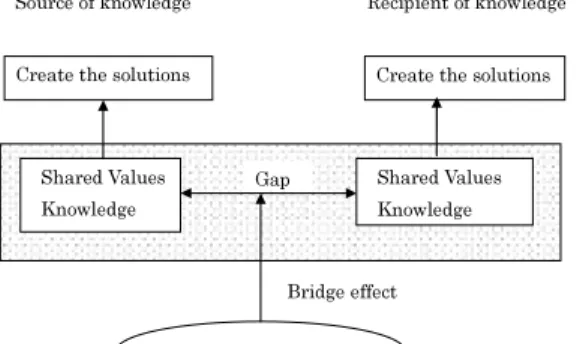
Figure 2. Role of relationship based on trust in knowledge creating process: The bridge effect
use the source’s knowledge under market contracting. Here, the advantage of organization over the market is evident. This perspective is based on the existence of authority in a firm. However, the same kind of effect occurs with the creation of trust, which closes the gap of knowledge between sources and recipients. This effect may be termed as the bridging effect of trust. It guarantees that the two parties cooperate in devising better solutions, even when the recipients do not fully share the sources’ knowledge or have failed to fully internalize their values.
4. Obstacles to Sharing Values and Forming Relationships based on Trust
However, serious obstacles impede the attainment of shared values and relationships of trust. According to the interviews, the necessity of meeting delivery dates, customers’ demands for goods of high quality, the frequent transfer of new technologies from the home country, and the high turnover rate in the host country are all restraining factors. As mentioned above, shared values and trust are built through the learning process; however, alone or in combination, these factors exert incessant pressure for immediate solutions to problems. Therefore, sources are not able to give host country recipients sufficient opportunities and time to arrive independently at novel solutions. Instead, these are devised and simply given to them. In these instances, it is crucial that sources explain their thinking and solutions in detail. The joint meeting of both sides provides a forum by which recipients may understand this method of problem solving (case
B). Although, ex post facto, such summarization of the problem-solving process compensates for the absence of recipient input.
!.
Conclusion
Following Kogut and Zanders’ works, this article demonstrates that organizations transfer knowledge more efficiently than the market; at the same time, the paper builds on their important work by revealing the more effective transmission of tacit knowledge by this means. The interviews that form its empirical core reveal that socialization is the most efficacious mechanism of transfer within corporations. Shared values and trust are built through daily learning processes that depend on both suggestions from sources and the freedom of recipients to seek better solutions. This phenomenon is found in all subsidiaries, all of which inculcate heuristic forms of knowledge created in the host countries, whatever their production processes.
This article focuses on Japanese subsidiaries in
Notes
Thailand. However, the effectiveness of socialization to transfer tacit knowledge, which it locates in these, may not apply in the same way to subsidiaries in other countries. A more general assertion would require research across a broader field. At the same time, it would be useful to look into other organizational mechanisms, along with that of socialization. The precise mix of each means may vary from country to country. Finally, it is important to investigate whether socialization impedes management diversity. According to some studies, it yields a homogeneous society and prevents the use of talent (Hennart, 1993). However, a relationship based on trust can bridge the gap in knowledge and values. To consider whether socialization is compatible with diversity management is a significant challenge for future study.
1)The parent factory has several functions. For example, it develops products and production methods, integrates international businesses , transfers technology to foreign subsidiaries, and trains workers from both the home and host countries.
2)We use the words “manager” and “employee” in
discussing these three organizational mechanisms. If we apply these words to knowledge transfer, manager refers to the source of knowledge and employee to its recipient.
3)All of these four situations involve problem solving.
However, the third case concerns defective products and machine troubles. Hence, it refers to a problem in a more narrow sense.
4)The terminology employed in each answer varied.
For example, a value is sometimes called mind, philosophy, and way of thinking or spirit. However, we believe that meaning of these answers can be regarded as the same.
References
Amabile, T.M. (1988) “A model of creativity and
innovation in organizations”, Research in
Organizational Behavior 10: 123-167.
Asakawa, K. (1999) “Barriers and solutions to the mobilization of intellectual capital” (in Japanese), Keio Business Forum 17(1): 203-219.
Baliga, B.R. and Jaeger, A.M. (1984) “Multinational corporations: control systems and delegation issues”, Journal of International
Business Studies 15(3): 25-40.
Bartlett, C.A. and Ghoshal, S. (1989) Managing
Across Borders: The Transnational Solution.
Boston, Mass: Harvard Business School Press. Buckley, P.J. and Casson, M. (1976) The Future
of the Multinational Enterprise. London: Macmillan.
Buckley, P.J. and Casson, M. (1998a) “Analyzing foreign market entry strategies: extending the internalization approach ” , Journal of International Business Studies 29(3): 539-562.
Buckley, P.J. and Casson, M. (1998b) “Models of the multinational enterprise”, Journal of International Business Studies 29(1): 21-44.
Cohen, W.M. and Levinthal, D.A. (1990) “Absorptive capacity: a new perspective on learning and innovation”, Administrative Science Quarterly 35: 128-152.
Conner, K.R. and Prahalad, C.K. (1996) “A resource-based theory of the firm: knowledge versus opportunism”, Organization Science 7(5): 477-501.
Dhanaraj, C., Lyles, M.A., Steensma, H.K. and Tihanyi, L. (2004) “Managing tacit and explicit knowledge transfer in IJVs: the role of relational embeddedness and the impact on performance ” , Journal of International
Business Studies 35: 428-442.
Dierickx, I. and Cool, K. (1989) “Asset stock accumulation and sustainability of competitive advantage”, Management Science 35(12): 1504-1513.
Edstrom, A. and Galbraith, J.R. (1977) “Transfer of managers as a coordination and control strategy”, Administrative Science Quarterly 22: 248-263.
Eisenhardt, K.M. (1985) “Control: organizational and economic approaches”, Management Science 31(2): 134-149.
Foss, N.J. and Pedersen, T. (2002) “Transferring knowledge in MNCs: the role of sources of subsidiary knowledge and organizational context”, Journal of International Management 8: 49-67.
Ghoshal, S. and Bartlett, C.A. (1997) The
Individual Corporation: A Fundamentally New Approach to Management. New York: Harper
Collins.
Hennart, J.F. (1993) “Control in multinational firms: the role of price and hierarchy”, In: G. Ghoshal and D.E. Westney (eds.) Organization
Theory and the Multinational Corporation.
London: Macmillan.
Kagono, T. (1988) Kigyo no Paradaimu Henkaku (Paradigm Change of the Firm). Tokyo: Kodansha.
Kogut, B. and Zander, U. (1993) “Knowledge of the firm and the evolutionary theory of the multinational corporation ” , Journal of International Business Studies 24(4): 625-645.
Kogut, B. and Zander, U. (1996) “What firms do? Coordination , identity , and learning ” ,
Organization Science 7(5): 502-518.
Kogut, B. and Zander, U. (2003) “A memoir and reflection: knowledge and an evolutional theory of the multinational firm 10 years later”,
Journal of International Business Studies
34(6): 505-515.
Koike, K. (2008) Kaigai Nihonkigyo no Jinzaiikusei (Human Resource Development in
Overseas Japanese Firms). Tokyo: Toyo Keizai Inc.
Koike, K., Thuma, H. and Ota, S. (2001)
Monozukuri no Ginou: Jidousha Sangho no Shokuba de (Formation in Japanese Auto
Industries). Tokyo: Toyo Keizai Inc.
Lord , M . D . and Ranft , A . L . ( 2000 ) “ Organizational learning about new international markets: exploring the internal transfer of local market knowledge”, Journal of
International Business Studies 31(4): 573-589.
Martin, X. and Salomon, R. (2003) “Knowledge transfer capacity and its implications for the theory of the multinational corporation”,
Journal of International Business Studies
34(4): 356-373.
Martinez, J.I. and Jarillo, J.C. (1989) “The evolution of research on coordination mechanisms in multinational corporations”,
Journal of International Business Studies
20(3): 489-514.
Minbaeva, D., Pedersen, T., Bjorkman, I., Fey, C. F. and Park, H.J. (2003) “MNC knowledge transfer, subsidiary absorptive capacity, and HRM”, Journal of International Business
Studies 34: 586-599.
Misztal, B. (1996) Trust in Modern Societies. Cambridge, England: Polity Press.
Nahapiet, J. and Ghoshal, S. (1998) “Social
capital , intellectual capital , and the organizational advantage ” , Academy of Management Review 23(2): 242-266.
Oldham, G.R. and Cummings, A. (1996) “Employee creativity: personal and contextual factors at work”, Academy of Management
Journal , 39(3): 607-634.
Osterloh, M. and Frey, B.S. (2000) “Motivation, knowledge transfer, and organizational forms”,
Organization Science 11(5): 538-550.
Ouchi, W.G. (1980) “Markets, bureaucracies and clans”, Administrative Science Quarterly
25(1): 129-141.
Ouchi, W.G. (1981) Theory Z . Reading, MA: Addison-Wesley.
Polanyi, M. (1966) The Tacit Dimension.
London: Routledge.
Ring, P.S. and Van de Ven, A.H. (1994) “Developmental processes of cooperative interorganizational relationship”, Academy of
Management Review 19: 90-118.
Rogers, E.M. (1983) Diffusion of Innovations, 3rd ed. New York: Columbia University Press. Rugman, A.M. (1981) Inside the Multinationals.
New York: Columbia University Press.
Rugman, A.M. and Verbeke, A. (2001) “ Subsidiary-specific advantages in multinational enterprises ” , Strategic Management Journal 22: 237-250.
Rugman, A.M. and Verbeke, A. (2003) “Extending the theory of the multinational enterprise : internalization and strategic management perspectives ” , Journal of International Business Studies 34: 125-137.
Scott, S.G. and Bruce, R.A. (1994) “Determinants of innovative behavior: a path model of
individual innovation in the workplace”,
Academy of Management Journal 37(3):
580-607.
Szulanski, G. (1996) “Exploring internal stickiness: impediments to the transfer of best practice within the firm ” , Strategic Management Journal 17 (Winter Special Issue): 27-43.
Szulanski, G. (2003) Sticky Knowledge: Barriers
to Knowing in the Firm. London: SAGE
Publications.
Teece, D.J. (1977) “Technology transfer by multinational firms: the resource cost of transferring technological know-how”, The
Economic Journal . 87: 242-261.
Tsai, W. and Ghoshal, S. (1998) “Social capital and value creation: the role of intrafirm networks”, Academy of Management Journal 41(4): 464-476.
von Hippel, E. (1994) “Sticky information and the locus of problem solving: implications for innovation”, Management Science 40(4): 429-439.
Winter, S.W. (1987) “Knowledge and competence as strategic assets”, In: D.J. Teece (ed.) The
Competitive Challenge : Strategies for
Industrial Innovation and Renewal .
Cambridge, MA: Ballinger.
Yin, R.K. (1994) Case Study Research: Design
and Method , 2nd ed. California: SAGE.