A Contrastive Analysis of American and
Japanese Online Communication: A Study of UMC
Function and Usage in Popular Personal Weblogs
著者
Kavanagh Barry
学位授与機関
Tohoku University
学位授与番号
11301甲第16484号
A Contrastive Analysis of American and Japanese
Online Communication:
A Study of UMC Function and Usage in Popular
Personal Weblogs
i Abstract
The goal of this thesis is to examine how Unconventional Means of Communication (UMC) function within American and Japanese popular personal weblog posts and their comments. UMCs were divided into non-verbal and verbal categories over a four year period from an 80,000 sentence corpora created by the author. The non-verbal category comprised of 4 types that included emoticons (text and graphic based), emoji also known as pictograms and codes or kigou such as the use of ★ or ❤. Verbal UMCs fell into the two categories of phonographic and logographic representations. The former consisted of unconventional phonetic spelling and phonetic laughter representations. The latter comprised of the multiple use of exclamation marks and logographical depictions of laughter. The purpose of UMCs as semantic, pragmatic and politeness highlighters is discussed and reasons given for their use. The data is compared between the American and Japanese corpus and further consideration is given to how they are used per gender. Within the face-to-face communication literature Japanese are described as having an implicit communication style geared toward harmonious interaction, while
Americans are described as being more clear and concise. Women are thought to display more positive politeness strategies than men, and Japanese is considered to be a negatively polite orientated language and culture. In addition to comparing how the function of UMCs this thesis also attempts to address how these descriptions are applicable to the online personal blog?
Results showed that Japanese blog users used significantly more UMCs than American personal blog writers and blog comment contributors. Japanese UMC usage reflected cultural themes such as language play, cute culture, and the technology from which it stems. In addition to expressing explicit semantic and pragmatic meaning these UMCs helped display the writer’s “public image” or positive face wants. Emoticons were found to highlight politeness strategies that led to a harmonious online environment and Japanese used significantly more to promote positive politeness which challenges the assumptions of Japanese being a negatively polite language and culture. In addition Japanese personal blog users relied on UMCs to compensate for the missing visual and auditory cues online. This it is argued is a reflection of Japanese face-to-face communication which is said to be reliant on non-verbal cues.
The function of UMCs to make explicit the comment meaning and intention was found to be the responsibility of the comment writer. This it is argued challenges the assumptions of
ii
Japanese being a listener responsibility culture where the listener needs to decipher the exact meaning of the intended utterance. In an online environment void of non-verbal cues Japanese writers used UMCs to aid in how their comments were to be interpreted. Common to both Japanese face-to-face communication and online blog communication is the need for
harmonious smooth communication, but the root to achieve this is different. Unlike face-to-face communication styles where verbal and non-verbal cues exist, the lack of them within the CMC environment gives rise to the use of UMCs that make online blog comments explicit in
semantic meaning and pragmatic intention. Blog writers were brought closer together through politeness strategies such as the showing of rapport and support.
Japanese women used significantly more UMCs than any other gender pairing and both American and Japanese women were found to use multiple UMCs attached to comments and emotive adjectives in comparison to the male data. Japanese men used significantly more UMCs than American women in some categories but this it is suggested is influenced by Japanese pop culture such as manga rather than gender alone. There was no evidence in the data that women through UMCs use more positive politeness strategies or adhere to more rapport talk than men.
iii Acknowledgements
This thesis could only be completed with the assistance and guidance of the people I would like to thank here. Firstly, I’d like to give gratitude to my supervisor Professor Satoshi Uehara who provided me with encouragement and guidance along the way and made me a better researcher. His time and efforts will not be forgotten. In addition I would like to thank my other committee members for their diligent efforts and advice in helping me finish this thesis. I’d like to thank Professor Masami Nagatomo for his insightful ideas and Professor Hiroyuki Eto for his valuable comments and guidance. Gratitude is also given to Professor Takeshi Nakamoto and Professor Andrew Burke for their ideas which helped me successfully complete the thesis. I am also grateful to Dr. Takako Kumagai for her time and efforts in providing me with statistical guidance and support in the analyzing of my data.
Finally, I would like to thank my family for their love and support throughout the time it has taken to complete this thesis. Without them the completion of this thesis would not have been possible. I apologize for the long hours spent on the thesis instead of being with them at home.
iv
Table of Contents
Chapter 1 Background to the Research 1
1.1 Research enquiry one: The function and usage of UMCs 4
1.1.2 Research enquiry two: UMC usage and culture 4
1.1.3 Research enquiry three: Emoticons and politeness strategies 6
1.1.4 Research enquiry four: Gender and UMC usage 7
1.1.5 Motivation for the study 8
1.1.6 About this chapter 9
1.2. CMC v FTFC 9
1.3. The personal blog 14
1.4. CMC theories 24
1.4.1 Cues filtered out theories 25
1.4.2 Social presence theory 25
1.4.3 Reduced social cues theory 26
1.4.4 Social Identity Model of Deindividuation Effects (SIDE model) 28
1.4.5 Social information processing (SIP) model 29
1.4.6 Hyper-personal model 30
1.5. The scripts of Japanese and English 33
1.6 Unconventional means of communication (UMC) online 34
1.6.1 Extra linguistic signs: Text based emoticons 36
1.6.2 American emoticons: History and origins 40
1.6.3 Japanese emoticons: History and origins 42
1.6.4 Graphic based emotions or the smilely 44
1.6.5 Emoji 47
1.6.6 kigou (codes) 50
1.7 Manipulation of grammatical markers (Multiple exclamation use) 51
1.7.1 Capitalization 51
1.7.2 Representations of laughter 52
v
1.8 The origin of Japanese UMCs: Deformed handwriting and cute culture 53
1.8.1 Language Play 53
1.8.2 Deformed characters and sub-cultures 53
1.8.3 Kawaii bunka 55
1.9 The origin of English UMCs 56
1.9.1 Language play 56
1.9.2 Comics 57
1.10 Organization of the thesis 57
Chapter 2 The literature review 59
2.1 Research Enquiry One: The function and Usage of UMCs 59
2.1.1 Unconventional means of communication (UMC) online: 60 A recap
2.2 The western emoticon 64
2.3 The Japanese kaomoji 65
2.4 Pragmatic function of the emoticon and kaomoji 74
2.5 The Pictogram / Emoji and codes (kigou) 79
2.6 Verbal UMCs 81
2.6.1 Unconventional notation: Unconventional phonetic spelling
and capitalization 81
2.6.2 Unconventional representations of laughter:
Logographic and phonetic 88
2.6.3 Unconventional use of grammatical markers:
multiple exclamation use 88
2.7 CMC theories and relational communication 89
2.8 Research Enquiry Two: UMC Usage and Culture 91
2.8.1 Perceived communication styles in Japanese and American cultures 93 2.8.2 Perceptions of Japanese non-verbal communication 95
2.8.3 Empirical studies of Japanese language use and culture 96
vi
2.8.5 Applicability of intercultural theories to online communication 100
2.9 Research enquiry three: Politeness Theory
(Emoticons and politeness strategies) 102
2.9.1 Brown & Levinson’s Politeness theory 102
2.9.2 The Universality of Brown & Levinson, criticism and adoption
of the Theory 105
2.9.3 Brown and Levinson applied to the CMC environment 114
2.10 Research Enquiry Four: Gender and Language Use 116
2.10.1 Gender and language usage within face to face communication 116
2.10.2 Gender and Online UMC Usage 120
2.10.3. Gender and language play 123
Chapter 3 Data and methods 125
3.1 Introduction 125
3.2 The blog interface and its mechanics. 127
3.3 Data and the personal blog directories 132
3.4 Data collection process 135
3.4.1 Extra-linguistic signs and the personal weblog interface 140
3.4.2 The counting of sentences within the corpora 146
3.4.3 Anonymity through a handle name 148
3.5How the UMCs were analyzed 149
3.5.1 UMC formal distinctions 151
3.5.2 Other non-comparable UMC data 154
3.5.3 The Peirce model 155
3.6 UMC function and classification 1 158
3.7 UMC function and classification 2 166
3.8 UMC function and classification 2b 170
3.8.1 Sentence Final Particle ‘ne’ highlighted by UMCs 170
3.9 UMC function and classification 3 173
vii
3.11 Demographics of blog writers, gender, age, profession 176
3.12 SPSS analysis and the coding of the data 176
Chapter 4 The findings: Presentation, Analyses and discussion 178
of the blog entries
4.1 The findings: The Blog entries data 178
4.1.1 Semiasographic extra-linguistic data: The text based emoticons 178
4.1.2 Semiasographic extra-linguistic data:
The graphic based emoticons (Smiley’s) 184
4.1.3 Semiasographic extra-linguistic data:
The emoji (pictograms data) 186
4.1.4 Semiasographic extra-linguistic data:
Kigou (code data) 193
4.2 Phonographic data 196
4.2.1 Phonographic data: Unconventional phonetic spellings 196
4.2.2 Phonographic data:
Unconventional phonetic laughter representations 198
4.3 Logographic data 200
4.3.1 Logographic data: Unconventional laughter representations 200
4.3.2 Manipulation of grammatical markers:
The use of multiple exclamation markers. 201
4.4 Blog Posts Gender Divided Analysis and results 203
4.5 Intercultural communication and politeness theory 206
4.6 A Discussion of the overall UMC data findings within the blog entries 208
4.7 Gender and the use of UMCs in blog entries 212
4.8 CMC theories, selective self presentation and the art of storytelling 212
4.9 Concluding comments 213
Chapter 5
viii
5.1 A comparison with the blog entries 216
5.2 Category 1 (type 1) Semiasographic Extra-linguistic Data:
The Text Based Emoticons 217
5.3 Category 1 (type 2) Semiasographic extra-linguistic data: The graphic based
emoticons (Smiley’s) 236
5.4 Category 1 (type 3) Semiasographic extra-linguistic data:
The emoji (Pictograms) 243
5.5 Category 1 (type 4) Semiasographic extra-linguistic data:
Kigou (codes) data 249
5.6 Category 2 The Phonographic data 255
5.6.1 Phonographic data: Unconventional phonetic spellings 255
5.7 Category 2 Phonographic data:
Type 2: Unconventional laughter phonetic representations 267
5.8 Category 3 Logographic data 269
5.8.1 Logographic data: Unconventional laughter representations 269
5.9 Manipulation of grammatical markers: The use of multiple exclamation
markers. 272
5.10 Un-comparable data categories 277
5.11 A Discussion of the findings 277
5.11.1 The Cultural parameters that affect UMC distribution and usage 280
5.11.2 The effect of the absence of cue and other factors 287
5.11.3 Technology, language play and the phenomena
of cute kawaii culture 288
5.11.4 Cute culture 289
5.11.5 Anonymity and its influence on UMC usage 290
5.19 Closing comments 293
Chapter 6
The use of emoticons to highlight Politeness strategies 295
ix
6.2 Results 297
6.3 Positive politeness strategies: Emoticon examples 300
6.3.1 Comment openings / closings 300
6.3.2 Expressing gratitude / thanks 302
6.3.3 Expressing solidarity 303
6.3.4 ‘Requests’ as solidarity markers 305
6.3.5 Compliments 307
6.3.6 Jokes 308
6.4 Negative politeness strategies 308
6.4.1 Requests 309
6.4.2 Hedging 310
6.4.3 Modesty and embarrassment 311
6.5 The use of kamo and kana with an emoticon 312
6.6 Sentence Final Particle ‘ne’ highlighted by emoticons 313
6.7 Discussion 317
Chapter 7
Gender and UMC Usage 321
7.1 Japanese Female v Japanese Male Comment Data 322
Semiasographic Extra-linguistic Data: The Text Based Emoticons
7.2 Semiasographic Extra-linguistic Data:
The Graphic Based Emoticons (Smiley’s) 334
7.3 Semiasographic Extra-linguistic Data: The Emoji (Pictograms) 338
7.4 Semiasographic Extra-linguistic Data: The kigou (code) data) 344
7.5 The Phonographic Data: Unconventional phonetic spelling 348
7.6 Phonographic data: Unconventional Laughter Phonetic Representations 354
7.7 Logographic Data: Unconventional Laughter Representations 356
7.8 Logographic Data: The Use of Multiple Exclamation Markers 358
7.9 American Female v American Male Comment Data.
x 7.10 Semiasographic Extra-linguistic Data:
The Graphic Based Emoticons (Smiley’s) 369
7.11 Semiasographic Extra-linguistic Data: The Emoji (Pictograms) 371
7.12 Semiasographic Extra-linguistic Data: The kigou (Codes) 372
7.13 Phonographic Data: Unconventional phonetic spelling 373
7.13.1 Capitalization 376
7.14 Phonographic Data: Unconventional Laughter Phonetic Representations 379
7.15 Logographic Data: Unconventional Laughter Representations 380
7.16 Logographic Data: The Use of Multiple Exclamation Markers 381
7.17 Complete Gender and Language Pairing Results 385
7.17.1 The Semaisographic extra-linguistic signs data 385
7.17.2 The Phonographic Data 389
7.17.3 The logographic data 391
7.18 Complete Gender Pairings and Politeness Strategy Results 392
7.19 A Discussion of the Overall Gender Data Findings 399
7.19.1 How does American and Japanese UMC Deployment Reflect
the Face to Face Literature Descriptions Concerning Language and
Gender Usage? 399
7.19.2 Through UMCs Are Female Blog Writers Inclined to a More
Rapport Orientated Communication Style than Males? 405
7.19.3 Do Women use more UMCs and through them use more Positive
Politeness Strategies than men? 407
Chapter 8 Conclusion 409
8.1 Introduction 409
8.2 A summary of chapters 1-3 409
8.3 Chapter 4: The Blog entries 411
8.4 Chapter 5: The Blog Comments 414
8.4.1 Japanese Blog Comments 414
xi
8.5 Chapter 6 Politeness Strategies 420
8.6 Chapter 7: UMC and Gender 422
8.7 A Theoretical Framework for Understanding Online Personal Blog
Communication 426
8.8 Concluding comments 429
8.9 Limitations of the Study 433
8.10 Future Study Suggestions 433
Appendix A 435
Examples and descriptions of how blog data was entered and coded
Appendix B 440
Gender and the use of UMCs in blog entries: Full data tables
Appendix C 467
Full tables of results for each gender pairing within the blog comments data
Appendix D 476
Full tables of results for each gender pairing within the blog comment politeness data
References 485
List of tables
Table 1.1 Types of CMC 13
Table 1.2 Japan’s Blog Usage Statistics 17
Table 1.3 America’s Blog Usage Statistics 18
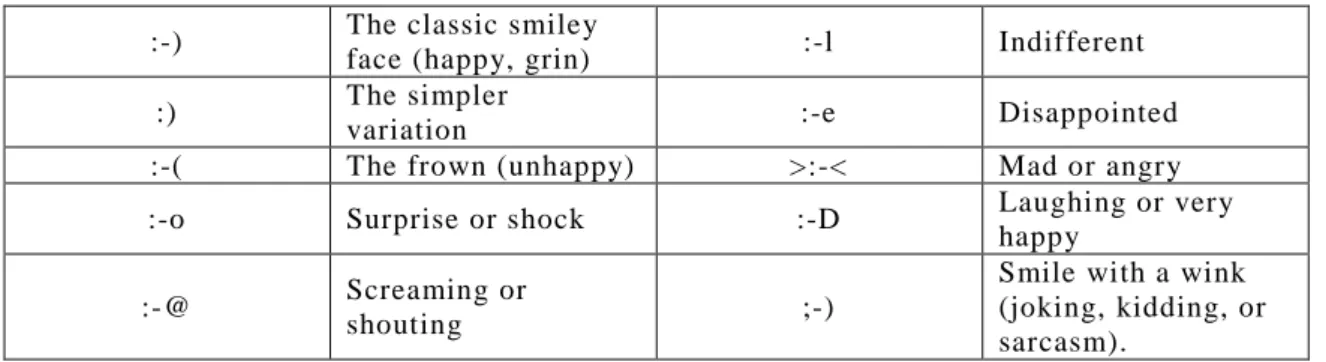
Table 1.4 Japanese and English Online UMCs 35
Table 1.5 A Comparison of 1 Byte and 2 Byte Combinations / Letters 37
Table 1.6 English Text Based Basic Emoticons 39
Table 1.7 Japanese Text Basic Emoticons (Kaomoji) 39
Table 2.1 Kaomoji and Onomatopoeia Use 68
Table 2.2 Types of Japanese Unconventional Spelling and
xii
Table 3.1 The Corpus Data 135
Table 3.2 Data Collected from Blog Ranking Directory 138
Table 3.3 The Japanese Blogs Blog Hosting Sites 139
Table 3.4 The American Blogs Blog Hosting Sites 139
Table 3.5 Blog Articles Sentence Numbers 148
Table 3.6 Blog Comment Sentence Numbers 148
Table 3.7 Blog Authorship: Handle name V Real name 149
Table 3.8 UMC Classification and Types 150
Table 3.9 Kataoka Study Based on the Peirce Model 157
Table 3.10 Extra-linguistic Signs Based on the Peirce Model 159
Table 3.11 Politeness Strategies Divided 167
Table 3.12 Ne + emoticon and the Politeness Strategies they highlight 172
Table 3.13 Gender Divided Japanese Comment Data 175
Table 3.14 Gender Divided American Comment Data 175
Table 4.1 Semiasographic extra-linguistic Data: Text based emoticons 179 Table 4.2 Semiasographic extra-linguistic Data:
The Graphic Based Emoticons 184
Table 4.3 Semiasographic Extra-linguistic Data: The Emoji 186
Table 4.4 Semiasographic Extra-linguistic Data: The Kigou 193
Table 4.5 Phonographic Data: Unconventional Phonetic Spellings 196
Table 4.6 Phonographic Data:
Unconventional Phonetic Laughter Representations 198
Table 4.7 Logographic Data: Unconventional Laughter Representations 200
Table 4.8 Multiple Exclamation Marker Data 202
Table 4.9 Summary of Results: The Semaisographic Results 204
Table 4.10 Summary of Results: The Phonographic Results 205
Table 4.11 Summary of Results Table: The Logographic Results 206
Table 4.12 Japanese Text Based Emoticons that index Politeness Strategies 207
Table 4.13 Positive and Negative Politeness Strategies Divided 208
xiii Table 5.2 Semiasographic Extra-linguistic Data:
The Text Based Emoticons 218
Table 5.3 Semiasographic Extra-linguistic Data:
The Graphic Based Emoticons 237
Table 5.4 Semiasographic Extra-linguistic Data:
The Emoji (Pictograms) 243
Table 5.5 Semiasographic Extra-linguistic Data: The kigou (codes) 249 Table 5.6 Phonographic Data: The Unconventional Phonetic Spellings 256 Table 5.7 The Unconventional Phonetic Spellings
with the Inclusion of Capitals 257
Table 5.8 Phonetic Representations of Laughter 267
Table 5.9 Logographic Data: Unconventional Laughter Representations 270
Table 5.10 Multiple Exclamation Marks 273
Table 5.11 A Summary of Japanese and American UMC Function
and Roles 279
Table 5.12 Japanese UMC Usage and Cultural Parameters 285
Table 5.13 Blog Characteristics 290
Table 6.1 Politeness Strategies Divided 296
Table 6.2 Overall Findings 298
Table 6.3 Positive Politeness Strategies 299
Table 6.4 Negative Politeness Strategies 300
Table 6.5 Ne + Emoticon and the Politeness Strategies they highlight 314 Table 7.1 Semiasographic Extra-linguistic data:
The Text based emoticons 323
Table 7.2 Semiasographic Extra-linguistic Data:
The Graphic Based Emoticons 334
Table 7.3 Semiasographic extra-linguistic data: The Emoji (Pictograms) 339 Table 7.4 Semiasographic Extra-linguistic Data: The kigou (codes) 344
Table 7.5 Phonographic Data: Unconventional Phonetic Spellings 349
xiv
Table 7.7 Logographic Representations of Laughter 356
Table 7.8 Multiple exclamation mark usage 359
Table 7.9 Text Based Emoticons 363
Table 7.10 The Graphic Based Emoticons 369
Table 7.11 The Kigou (codes) data 372
Table 7.12 Phonographic Data: Unconventional Phonetic Spellings 373
Table 7.13 Phonographic Data: Capitalization 376
Table 7.14 Phonetic Representations of Laughter 379
Table 7.15 Logographic Representations of Laughter 380
Table 7.16 Multiple Exclamation Mark Usage 381
Table 7.17 Summary of Results: The Semaisographic Results 386
Table 7.18 Summary of Results Table: The Phonographic Results 389
Table 7.19 Summary of Results Table: The Logographic Results 391
Table 7.20 Politeness Strategies Divided 393
Table 7.21 A Summary of Japanese v American Emoticons as Politeness
Markers 395
Table 7.22 Summary of Overall Characteristics of UMC Usage in Blog
Comments 405
Table 7.23 Summary of Results of Emoticons as Markers of Politeness
Strategies within the Japanese and American Data Sets 406
Table 7.24 Summary of Results of Emoticons as Markers of Politeness
Strategies across Each Language 407
Table 7.25 Emoticons as Markers of Politeness Strategies in the Japanese
and American Data 407
Table 7.26 Summary of Results of Emoticons as Markers of Politeness
Strategies across Each Language Set 408
Table 8.1 The role of UMCs in Japanese Blog Entries 412
Table 8.2 A Model for Understanding Japanese Face to Face
xv
Table 8.3 A Model for Understanding Japanese UMC Usage in
Blog Comments 418
Table 8.4 A Model for Understanding American UMC usage in
Blog Comments 419
Table 8.5 A model for Politeness in Japanese and American
Blog Comments 422
Table 8.6 Total UMC Frequency across Gender 424
Table 8.7 A Model for Gender and UMC Usage in Japanese and
American blog comments 426
List of figures and graphs
Figure 1.1 Age Distribution of Over 100 Million Blog Users
Worldwide 15
Figure 1.2 Gender Distribution of Over 100 Million Blog Users
Worldwide 15
Figure 1.3 Distribution of Over 100 Million Blog Users Worldwide
by Country 16
Figure 1.4 Smiling emoticon 43
Figure 1.5 Tearful Emoticon 43
Figure 1.6 Keiyu Sweatmark 44
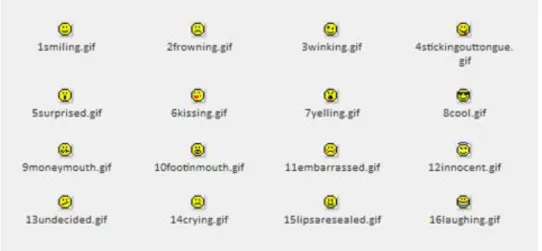
Figure 1.7 The Initial Online Graphic Emoticons (Smiley’s) 45
Figure 1.8 Examples of Current Graphic Emoticons 45
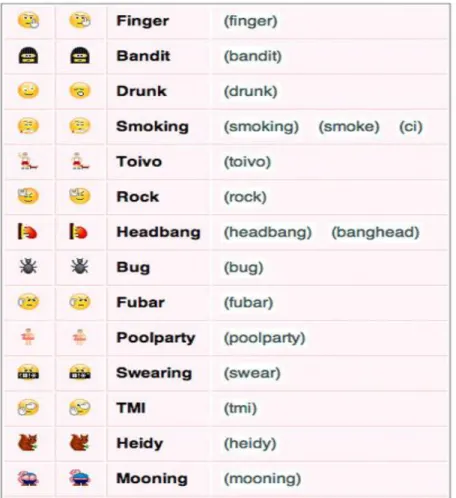
Figure 1.9 Graphic Emoticons Found on Skype 46
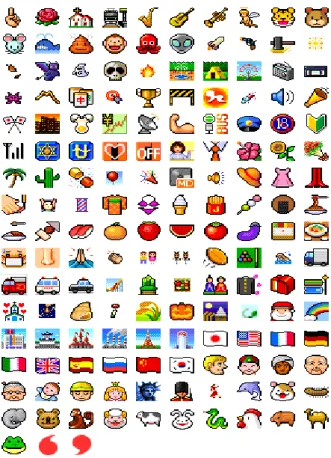
Figure 1.10 Emoji Variation 48
Figure 1.11 Cute Handwriting (Hentai Shojo Moji) 54
Figure 3.1 Yahoo blog interface 128
Figure 3.2 American blog interface 128
Figure 3.3 Japanese Yahoo blog. Avatar and profile example 130
Figure 3.4 Directory Homepage 133
xvi
Figure 3.6 Ameba Blogs blog Directory Ranking 135
Figure 3.7 FC2 Blog Comment Interface 141
Figure 3.8 Yahoo Blog Comment Interface 142
Figure 3.9 Comment User Icons 143
Figure 3.10 Ameba Blog Comment Interface 143
Figure 3.11 Ameba Blog Interface kaomoji examples 144
Figure 3.12 American Blog Comment Interface 145
Figure 3.13 American Blog Comments 145
Figure 3.14 Comment Links 175
1
Chapter 1
Background to the Research
The goal of this thesis is to examine how Unconventional Means of Communication (UMC) function within American and Japanese popular personal weblogs. UMCs were divided into non-verbal and verbal categories over a four year period from corpora created by the author. The non -verbal category comprised of 4 types that included emoticons (text and graphic based), emoji also known as
pictograms and codes or kigou such as the use of ★ or ❤ . Verbal UMCs fell into the two categories of phonographic and logographic representations. The former consisted of unconventional phonetic spelling and phonetic laughter representations. The latter comprised of the multiple use of exclamation marks and logographical depictions of laughter.
From a corpora of nearly 80,000 sentences the purpose of UMCs as semantic, pragmatic and politeness highlighters is discussed and reasons given for their use. The data is compared between the American and Japanese corpus and further consideration is given to how they are used per gender.
Within the face-to-face communication literature Japanese are described as having an implicit communication style geared toward harmonious interaction, while Americans are described as being more clear and concise. Women are thought to display more positive politeness strategies than men, and Japanese is considered to be a negatively polite orientated language and culture. In addition to comparing how the function of UMCs this thesis also attempts to address how these descriptions ar e applicable to Computer Mediated Communication (CMC)? Specifically, is the face-to-face literature which describes American and Japanese linguistic and
communicative behavior duplicated through the use of UMCs in the online personal blog? The face-to-face and CMC platforms are very different; the former usually means your interlocutor is visibly present, the latter usually means a text based communication platform where the interlocutor may not be present and may also not communicate with you in real time. How then would this influence online
- 2 - communication and the use of UMCs?
In order to address these questions, the use of UMCs as expressed through the medium of CMC and within the popular personal weblog was examined in relation to and in comparison with the face-to-face communication (FTFC) literature. This
literature falls within the areas of intercultural communication, politeness and gender, and is discussed briefly within this chapter and in more detail within the literature review in chapter 2.
CMC is communication conducted predominately online with or without the aid of visual and auditory cues or a seen or heard human presence. With the use of a microphone or webcam as in the popular Skype programme, families and friends can be brought together from around the world in what is perhaps the closest thing to face –to-face communication that CMC and its technology provide us. However, without the use of webcams and microphones which make up the bulk of online CMC these auditory and visual cues or pieces of information are missing. In essence a human visual or auditory presence is not felt. This is essentially what makes CMC and FTFC different, and since its conception researchers have proposed CMC theories that have examined the social psychological effects of these missing cues. Examples include the effect it has on interpersonal relations and how CMC users adopt the existing
technology to invent innovative ways to compensate for this lack of a social presence
(Walther, 1992, 1996). This research aims to examine and compare how Japanese and
American blog writers convey semantic and pragmatic meaning in text based online personal blogs through the use of unconventional means of communication (UMC).
The personal blog of which the data comprises is an ongoing diary or commentary by an individual and is considered to be the traditional, most common blog type. Personal bloggers can discuss their thoughts on a whole wide range of experiences, opinions and ideas through the posts they write. These posts are essentially for a wide audience or readership and are not aimed at one person in particular. In essence, it is a one to many communication process. P ersonal diary bloggers, however, can write on each other ’s blogs. These comments may display the opinion of the writer or give encouragement and support to the blog writer. Comments
- 3 -
can be posted online anonymously where no name is given, or through a handle or real name. These blog comments allow the reader to ‘speak’ directly to the blog author and for the blog author to reply to such comments. These interactions are essentially one to one in nature. This study will look at the usage of UMC in both the blog posts and comments, but the bulk of the results and data will look specifically at the comments themselves and these one to one interactions. Chapter 4 looks at UMC function within the blog entries or posts and how they function. The remaining chapters, however, look at how blog interaction between the blog author and comment writer and their UMC usage mirrors or is in contrast to face-to-face interactions as depicted within the literature.
Some of the questions this thesis aims to address comprise of the following: How do Japanese and Americans compensate for the lack of auditory and visual cues in their blogs? What function do UMCs have? What role do they play in maintaining good interpersonal relations? Are there differences in their function and use according to language and the gender of the user?
The research focus is divided into four areas of enquiry: a. The function and usage of UMCs
b. UMC usage and culture
c. Emoticons and politeness strategies d. Gender and UMC usage
These areas of enquiry are described below and a more detailed examination of the issues and studies involved within these areas are given in the literature review in chapter 2.
- 4 -
1.1 Research Enquiry One: The Function and Usage of UMCs.
Early research on emoticons looked at how they were used to compensate for the lack of non-verbal cues online, and as the name emoticon suggests they are icons that express emotion (Derks et al., 2007). Subsequent studies looked at how they were used according to gender, how they are used to create impression formation, and how they were used for socio-emotional chat (Luor et al., 2010; Fullwood & Martino, 2006). Very few studies have looked at the pragmatic function of emoticons. In addition no studies have compared the function and usage of Japanese and American emoticons. Extra linguistic signs such as emoji or pictograms and symbols such as ♪ ,★ and ♡ have also been largely neglected in the literature and their usage and function has not received adequate investigation especially within online synchronous communication such as the online personal weblogs. Further still linguistic based UMCs
(phonographic and logographic representations) have received very little attention in both the Japanese and English based CMC literature. This area of enquiry aims to address that gap. The two main enquiries to be addressed are stated below.
Research enquiry one: The function and usage of UMCs.
a. How do non-verbal and verbal UMCs function to express or supplement,
semantic meaning and pragmatic intention within American and Japanese online personal blog articles and their comments?
b. Are there technological parameters that affect their distribution and usage?
1.1.2 Research Enquiry Two: UMC Usage and Culture
The second research enquiry will attempt to examine (1) how UMC usage is a reflection of the culture that it comes from, (2) how face -to-face communication
influences UMC usage, and (3) how popular culture impacts the types and forms of UMCs that are found in online personal blogs.
- 5 -
high context culture, and Japanese face -to-face communication (FTFC) is described as indirect, implicit and vague with a reliance on non-verbal communication (Doi, 1973, 1996; Tsujimura, 1987; Hall, 1976; Akasu & Asao, 1993; McClure, 2000; Midooka, 1990; Yamada1997).
America is described as low context culture, and American FTFC is
categorized as direct, explicit and more reliant on words for effective communication (Gudykunst & Matsumoto; 1996, Hall; 1976, Lewis; 2005, Hofstede; 1980).
Interestingly however, these descriptions, as intuitive as they may be, are mostly based on opinion, observation and anecdotes as opposed to concrete empirical evidence.
There are studies, however, that aimed to test these observations and will be given full coverage in chapter 2. The empirical evidence as demonstrated through these studies seems to suggest that Japanese communication can be vague and implicit making interaction primarily a listener responsible process. The listener, therefore, needs to understand what the speaker means even if they are not explicit in their dialogue. If Japanese is primarily a listener responsible language that is also implicit, how is this reflected online? In addition, how do these concepts relate to UMC usage?
The emphasis within this thesis is not on perceived assumptions of the linguistic and communicative patterns of Japanes e or Americans, but what they
actually do through the empirically tested data within this study and how this reflects the empirically tested data that has examined face -to-face communication styles. The second research enquiry, therefore, examines how thes e cultural characteristics of language and communication styles are reflected in online blogs through the use of UMCs and the language they are attached to. The two main enquiries to be addressed within this research area are stated below.
Research enquiry two: UMC usage and culture
a. Does UMC usage mirror the language and culture from which it stems from? b. Are there cultural parameters that affect their distribution and usage?
- 6 -
1.1.3 Research Enquiry Three: Emoticons and Politeness Strategies
Japanese culture is considered to be a negative politeness culture ( Ide, 2006) and American culture perceived as a positive politeness one in terms of language use and cultural orientation (Brown and Levinson, 1987). Positive politeness is the
expression of friendliness, camaraderie and intimacy. However, Japanese is considered to be a negative politeness language and culture based on its use of honorifics (Ide, 2006). The argument suggests that deference, therefore, cannot be expressed without employing the honorific polite style.
Ide (1991b) suggests that Japanese linguistic politeness is therefore the conforming to social conventions which stipulate a set of linguistic forms. Negative politeness strategies allow the speaker to maintain harmony with their
listeners, a concept deeply embedded within Japanese culture (Shigemitsu, 2001, 2002) Negative politeness strategies as reflected in keigo or honorifics aid in the avoidance of potential conflicts among speakers and promote the maintenance of good
interpersonal relations between people (Ide.et al,1986). This leads to the question as to how these politeness strategies are reflected in UMC usage and are these negative politeness assumptions held true in an online environment. In addition, Japanese interaction is said to stem from a need to create harmonious dialogue. How then is this reflected online through the use of extra-linguistic signs such as emoticons? If it is true that Japanese rely on harmonious communication styles as a means of getting along, how is relational communication achieved in a text based medium that lacks a social visible presence? The two research questions below aim to address these issues.
Research enquiry three: Emoticons, politeness and language usage
a. How are expressions of solidarity and interpersonal communication realized through emoticons in this text based faceless medium?
b. How do emoticons supplement the verbal language content? Are emoticons used in conjunction with particular politeness strategi es?
- 7 -
1.1.4 Research Enquiry Four: Gender and UMC Usage
The sociolinguistic literature is abundant with studies that describe how men and women have vastly different talking styles (Eckert&McConnell-Ginet, 1992; Holmes, 1995; Lakoff, 1973; Mulac, Bradac, & Gibbons, 2001; Tannen, 1990). Tannen (1990) divides this seemingly different way women and men talk by using the term report talk and rapport talk. She states that for women the language of
conversation is largely the language of rapport which promotes intimate relationships that stress common ground and comparable experiences. These descriptions parallel some of Brown & Levinson’s (1987) positive politeness strategies.
Pilkington (1998) found that women in interaction with the same gender groups use a large number of positive-politeness strategies while men in analogous situations do not. In additional, non-verbal studies conducted by Hall (1984) found that in comparison to males, females are more likely to use non -verbal cues, are better verbal encoders and decoders, and smile and laugh more in conversation.
Japanese honorifics, which Brown and Levinson (1987) use as a reason to label Japanese as a negative politeness language have been shown to be used more often by Japanese women than men (Ide, 1991a; Ogino, 1986). Studies that suggest Japanese women use more politeness strategies than their male counterparts, however, are lacking in the literature. One of the questions this thesis addresses is will these results as reflected in these studies be duplic ated online through UMC use?
Some studies have aimed to look at the online behavior of the sexes. The majority of this research is on emoticon usage and suggests that women use more emoticons than men. These studies relate to women being more emotionally expressive than men (Eckert & McConnell-Ginet, 1992; Holmes, 1995).
Very few studies, however, have examined linguistic based UMCs (phonetic spelling, laughter representations etc). This research aims to address that.
Research enquiries four: Gender, language and UMC usage
- 8 - concerning language and gender usage?
b. Through UMCs, are female blog writers inclined to a more rapport orientated communication style than males?
c. Do women use more UMCs and through them use more positive politeness strategies than men?
1.1.5 Motivation for the Study
There is a growing body of research on the relatively new discipline of CMC and the new innovative forms of language and extra -linguistic signs that it produces. These studies will be given coverage within the next chapter that will focus on the literature review. However, very few studies have examined the pragmatic usage of UMCs in relation to politeness strategies and how they function to enable smooth cyberspace communication. Most of the current studies simply focus on how emoticons are used to express emotion with no significant research that examines other UMCs such as phonetic spelling. Studies tend to be descriptive rather than analytical and do not examine the function and role these unorthodoxies play.
Most of the written English CMC literature ju st focuses on emoticon usage and is mainly concerned with just English language based online analysis. In addition, very few studies have given a contrastive analysis of two online languages, and very few still have analyzed the role that culture plays in determining UMC usage and how these oral and visual depictions can mirror offline interaction or present a new style of communication that differs from its face-to-face counterpart.
CMC as a field of study will continue to grow as people become more networked with each other through computers. The technology available allows for inventive ways of communicating with each other, and this communication is done primarily behind a computer where the writer can choose to be anonymous. The writer may know little about to whom they are interacting with and the only cues they have of this person is through the text they write or the UMCs they use which can not only present semantic and pragmatic information but also hint as to what the person is like
- 9 -
or wishes to be perceived as. The online platform, therefore, differs greatly to traditional face-to-face interactions, and, therefore, may produce differing forms of communication styles. These differing styles may challenge our assumptions of how Japanese and Americans communicate and open up the possibilities of further research questions that can be pursued.
American and Japanese communication styles are often cited within the ever growing literature as being widely different. This was the motivation for choosing American blogs over British or Australian blogs where the face to face communication literature is less substantial. In addition American blogs far outnumber any other English speaking nationality blogs within the blogosphere. (see page 17 in this chapter). This concept is discussed again latter within this chapter.
1.1.6 About This Chapter
This introductory chapter will initially clarify the nature of Computer
Mediated Communication (CMC) in relation to face -to-face communication (FTFC), and then outline the background issues relevant to the study.
Firstly, definitions, history and the types of CMC will be given followed by descriptions of the online personal diary CMC genre. As CMC is referred to in relation to FTFC an examination of CMC theories which addr ess how CMC differs from FTFC is given in a separate section. This is followed by descriptions of the Japanese and American (alphabet based) online UMCs detailing their structure, history and cultural relevance.
1.2 CMC vs FTFC
As previously described CMC is communication done predominately online with or without the aid of visual and auditory cues or a seen or heard human presence. This is essentially what makes CMC and FTFC different. The CMC environment and the technology afforded them allow users to create unique ways to compensate for the
- 10 -
lack of vocal tone and facial expression (Walther, 1992, 1996).
CMC theories that address this lack of human presence will be examined in this
chapter, and the research on CMC with regard to these issues in relation to UMC usage is described in the literature review chapter.
In an all text based CMC environment, messages are typed on the computer keyboard. The user may know the person who they are interacting with, or may know the person by name but may never have met him or her. Alternatively, they may ‘know’ the person by a fictitious handle name, or the message may be completely anonymous, a nameless person who interacts with someone, for example, on a discussion bulletin board would be an example of this. Time frame or chronemic time related messages differ according to the CMC platform the user is engaged in, synchronous
communication as in chat rooms is done in real time whereas asynchronous CMC as in e-mail has no time constraints and the user can respond and interact at their leisure. How then does CMC (as represented by personal weblogs) differ from FTF
communication?
The list below, although not exhaustive, gives a brief overview of the main differences CMC, in particular asynchronous communication, has with FTFC.
Asynchronous online communication characteristics 1. Conversation is essentially asynchronous
2. Visual or audio clues of the interlocutor are missing, which can mean: Rank, age, gender, position, occupation of the interlocutor can be unknown (especially in anonymous communication)
Appearance is unknown Voice is unheard
3. Communication is text based, which means:
No Back channeling or aizuchi, interruptions or turn taking, false starts are not present. Emotion, tone or nature of the message is difficult to interpret. A Possible result of this is ‘flaming’.
- 11 -
5. Easy access to communicate with people (known or unknown) on a global scale
The relatively new field of CMC forms the backdrop to this research. It is a discipline that attracts a variety of scholars from different fields and has already generated a vast interdisciplinary research literature. Herring (1996a) defines CMC as “communication that takes place between human beings via the instrumentality of computers” (p.1). The term was introduced in the 1980 s and gained popularity in the 1990s. A reputable journal of the same name was also launche d, and the discipline is now growing nearly as fast as the computer technology and media that it aims to research. However, as Crystal (2011) states, the term may now be too broad from a linguistic point of view as it encompasses all forms of communication such as music, video, and photographs as well as language in the true sense of the word. The
development of new forms of communication technologies such as mobile devices which can be used for mailing, use of social network services and blogging may also not fall under the term of ‘computer ’ mediated in the traditional sense. Communication technologies have now moved beyond computer use. Mobile phones may now be
considered ‘on the move’ computers but voice calls, and televised mediated conversation via text messages may sit awkwardly under the description of the computer.
An influx of new terms that have attempted to define the field, Baron (2004) suggests ‘Electronically Mediated Communication ’ (EMC), Thurlow & Mroczek (2011) put forward the term ‘Digital Discourse’. For Crystal (2011) however these terms remain too broad and subsequently blur the distinction between language and other forms of communication and proposes the name ‘Internet Linguistics’ to cover the scientific study of all manifestations of language in the electronic medium.
A universally accepted term, however, one that is not too narrow or broad, has yet to be decided. For the purpose of this thesis ‘CMC’ will be used as the descriptive label paralleling Herring’s (2013) thoughts that the term is based on established
tradition and is currently the preferred choice among communication scholars. My own personal definition of CMC is written discourse that is conducted through the medium
- 12 -
of the computer which sits comfortably with my interpretat ion of the personal online blog.
Let us now take a brief look at CMC history. Crystal (2005) writes that
the emergence of a new branch of an academic discipline does not take place very often, but the arrival of the internet has had such an impact on lan guage that I believe the time is right to recognize and explore the scope of a putative ‘internet linguistics (p.1).
This has since led to the publication of his book in 2011 titled Internet linguistics. In her introduction to the book ‘Pragmatics of Computer Mediated
Communication’ Herring (2013) states that the collection of papers within the book can be interpreted as the state of the art ‘in an emergent field rather than as a distillation of time-honored knowledge’(p.4). These observations are testament to the fact that even after a large body of research has been done within CMC, the scope and speed of change that technology provides, means there is still a lot of gaps within the research that have not been filled as this discipline continues to gr ow.
The advent of the internet allowed millions of people to connect with each other online, and this connection led to people communicating with each other on a wide scale. In 1990, the internet, devised by computer scientist Tim Berners -Lee, was originally a means of enabling high energy physicists in different institutions to share information within their field. This then spread to other fields, and is now all -inclusive in subject matter, and designed for multimedia interaction between computer users anywhere in the world (Crystal, 2010).
In the 1990’s search engines started to appear enabling users to search for the material they needed, and in 1998 the now world famous ‘Google’ made its
introduction. Along with these search engines and earlier functio ns that were
transported into the web the exchange of information and communication became a lot easier. The web became a device for the transmission of written language online. It is this written language that has fascinated linguists from various discipl ines and has
- 13 -
gradually seen a body of work develop and is still developing. The type of CMC that the research has examined is also varied.
Herring (2002) states that CMC varies according to the technology on which it is based and to the context it is used in. Synchronous CMC, such as chat rooms and instant messaging, is carried out in real time with a physically present interlocutor and differs from asynchronous text based communication that takes place through weblogs, internet forums and e-mails where communication is not conducted in real time. These distinctions influence message length, complexity, language use, formality and
interactivity as a result of time, and temporal constraints on the processing and writing of the message (Ko 1996). Herring (2002 ) also claims that user demographics , such as age or gender, can influence the CMC technology used and the communication style employed.
Both modes of communication can be transmitted from one user to many, or more personally as one user to another as in e -mails or blog comments. Common to all forms of CMC when visual equipment, such as webcams , is not present is that
non-verbal communication, and the expression of emotion, is greatly limited in comparison to physical face-to-face communication.
Table 1.1 Types of CMC Asynchronous Synchronous 1 to 1 E-mail Weblog comments IM (Instant messaging) Chat rooms
1 to many Bulletin boards, listservs, weblogs articles
Chat rooms
Internet Relay Chat (IRC)
(For more detailed descriptions of the types of CMC as illustrated in the above table, please refer to Baron, 2004, Crystal, 2004, Herring, 1996b.)
The field of CMC that this thesis will specifically focus on revolves around text based CMC through weblogs whereby users communicate via the written word that is read and replied to at a later time and this is defined as an asynchronous mode of CMC. This is in contrast to messages sent and replied to in real time as in synchronous forms of CMC.
Attention will now turn to the online blog as an online genre of writing, an introduction to its history and background and the types that exist.
- 14 -
1.3 The Personal Blog
The data on which this study is based came specifically from online personal weblogs or the online diary which forms the basis of the traditional and popular blog form. They can be categorized as an asynchronous mode of CMC derived from usually one writer. Their thoughts, opinions and description of events from the trivial to the dramatic, are written in diary-like entries to a broad audience without a specific reader in mind. Blog creators can write using a handle name or pseudonym or use their real name if they wish.
Entries on these blogs are usually posted in reverse chronological order on a daily or weekly basis and invite comments from their readership after each article or entry.
The author of the blog can respond to and interact with those who leave comments on their entries. Blogs can gain an extensive following of ‘fans’ who
comment on each other ’s blogs, which can lead to the formation of a blog community. These written blog comments are effectively interactions between two people, and this thesis will concentrate on these comments. The function of UMCs within the blog articles or posts was analyzed and the results are discussed in chapter 4. These UMCs however are written for the blog readership rather than one specific reader. UMCs included in comments were written for one particular reader. The interaction therefore is 1 to 1 focused.
The term ‘weblogs’ was first coined by John Barger in December 1997, and the terms blog and blogging were included in the Oxford English dictionary in 2003 and subsequently ‘blog’ was elected as Merriam-Websters word of the year in 2004 (Puschmann, 2013).
There are many statistical surveys that have been conducted by various organizations which aim to track and document the demographics of blog user s.
Surveys such as Sysomos in an analysis of more than 100 million blogs (nationality of blog writers not specified but the assumption is that it includes all blogs and genres within the blogsphere) found in 2010 that 53.3% of all blog users are within the 21-35 years of age bracket with the explanation that this generation or demographic group grew up with the blogging revolution.
- 15 -
Figure 1.1 Age Distribution of Over 100 Million Blog Users Worldwide From: Sysomos Inc (2010)
In terms of gender the survey suggests that the blogsphere is equally balanced in terms of gender and blog usage which they claim is a gender neutral environment.
Figure 1.2 Gender Distributions of Over 100 Million Blog Users Worldwide From: Sysomos Inc (2010)
- 16 -
Blogging has now gone global, written in many languages by vari ous communities across differing genres of weblog. Figure 1.3 ranks the distribution of over 100 million blog users worldwide according to country. America accounts for 29% of bloggers in the world with Japan lying 3rd at 4.9%. However, Sysomos suggests that 81% of Japanese web users visit blogs each month, which ranks them under the ‘spectators’ category. They suggest that blogging has become a part of Japanese culture with as many as 1 million blog posts written each month.
Figure 1.3 Distributions of Over 100 Million Blog Users Worldwide by Country From: Sysomos Inc (2010)
Technorati, an Internet search engine that monitors the blogsphere, has
conducted a variety of surveys investigating the demographics, populations and gender of blog users. Sifry (2007) writes that in a 2006 survey that examined blog posts by language, Japanese was ranked first at 37% of the total posts in the 4th quarter of the
- 17 -
year. English was second at 36%, followed by Chinese (8%) and Italian (3%). This seems to concur with the Sysomos finding that Japanese post over a million blog posts a month.
English, as a global language, is understandably ranked high, but considering that Japanese is predominantly only spoken in Japan these figures are quite remarkable. Kirkpatrick (2008) writes that in an additional 2008 Technorati survey it concluded that the number of global weblogs has surpassed one hundred million. In the following year their ‘state of the blogpsphere’ report found that the majority of the 2,828 US bloggers surveyed were male aged between 14 -44, educated and with a substantial income (McLean, 2009). Table 1.2 gives a summary of the findings according to a December 2011 social digital mobile Japanese survey. These results clearly indicate the popularity of blogs in Japan, although the data does not state what kind of blog .
Table 1.2 Japan’s Blog Usage Statistics 81% of Japanese web users visit blogs each month Audience for blogs in Japan is at 73,500,000
The average Japanese user spends about 63 minutes on blogs each month Combined blog reading adds up to around 6 million years every year.
The Japanese are the most enthusiastic bloggers on earth, making more than 1,000,000 blog posts each month
7,000,000 Japanese internet users have their own blog From Digital Media in Japan (2012)
Table 1.3 gives a brief summary of American blogging habits based on surveys
investigating blog user habits. The surveys do not indicate what kind of blogs but the statistics show that blogging is an online habit that is also widespread within the United States.
- 18 - Table 1.3 America’s Blog Usage Statistics
59% of bloggers spend just one or two hours per week tending their blog One in ten bloggers spend ten or more hours per week on their blog. 42,000,000 blogs in the US
329 million people view a Blog monthly 25 billion pages viewed monthly
500,000 daily new posts 400,000 daily comments
From Crestodina (2014), John Rampton (2012), The Pew Charitable Tru sts (2006)
Pew Internet and American life project published results in 2006 that stated that blog readers were likely to be male, educated, and computer savy. In addition, 55% of American bloggers use a pseudonym or handle name, with 45% writing in their real name. In contrast to this in a survey conducted by the Japanese Ministry of
Internal Affairs and Communication in 2009 (as cited in Kimura, 2010) 31% of
respondents stated they wrote anonymously, with 59% using a handle name. Bloggers using their real name amounted to a mere 2%.
However, these surveys as outlined above do not take into account the genre or types of weblog that exist and merely give collective overviews of every type of blog when publishing their findings. A discussion of the different types of blog is therefore needed to explain the evolution of the weblogs and the diverse forms that it is
composed of.
Weblogs are defined as web-pages that are consistently updated that consist of archived posts in a typically reverse chronological order (Nardi et al, 2004). Lomborg (2009) describes the weblog as a complex communicative genre, and it has been categorized by Herring et al. (2005) under the following 5 definitions.
1. Diaries / personal weblog. The writer expresses their feelings on experien ces and their life.
- 19 - blog user.
3. K-blogs. This blog classifies information via other resources on a particular topic.
4. Mixed. At least two of the above are included in the blo g. 5. Other. Unclassifiable using the criteria stated in 1 -3.
K-blogs or knowledge blogs are created by educators, institutions or
corporations and aim to share knowledge of a particular topic. Private individuals tend to write personal journals or filter bl ogs which according to Blood (2002) allow for the freedom of self expression and empowerment.
Blood (2000) writes that the original weblog was a link driven site. These so -called ‘filter blogs’ allowed the author to post links to internet content with blog author comments. Barger (1999), the man who coined the term weblogs describes these early manifestations of the blog as “a web page where a weblogger ‘logs’ all the other web pages she finds interesting” (cit. by Blood, 2004, p. 54). These weblogs were written by a computer literate web enthusiast who had knowledge of HTML and the relevant technical skills. The late 1990’s saw the introduction of do it yourself weblog tools such as Blogger. These tools allowed less technically literate users to post articl es about their everyday life. Updated on a regular basis these blogs gradually built up a following and then a community whereby users posted links to each other ’s blogs and through the introduction of blog comments allowed readers to engage in a form of written conversation with each other. Like the ‘filter blog’ these blogs were date
stamped in reverse chronological order but became more author centric rather than web content focused. Entries concentrated on their thoughts and feelings on the trivial to issues of a more serious nature. Blood (2000) writes that these free, easily accessible and user friendly tools allowed for the move away from filter blogs to a more journal style of blogging.
The first online journal or diary first appeared in 1995 in Eng lish (Karlsson, 2006) and the same year in Japanese (Kawaura, 1998). It was in 2000 that the blogs made the online diary widespread and gave it a more interactive format where readers
- 20 - could leave comments on blog posts.
The online diary or personal weblog is now the most popular genre of blog among general users (as opposed to journalist or corporate blogs). Tecnorati in 2009 reported that 53% of those surveyed regarded their blogs as ‘personal musings’ and Viegas (2005) found that to be 83% in a similar survey, albeit on a smaller scale. Herring et al (2004)’s sample of blogs collected in 2003 consisted of diary weblogs at 70.4%, 12.6% as filter blogs, 3% as K-blogs, 9.5% as mixed and the rest falling under ‘other’. However, at the time of writing, there are many more forms of blogs emerging as technology develops such as photoblogs, audioblogs and microblogs.
Nevertheless, the personal weblog seems to be the most popular form of self expression and blog genre on the web.
Puschmann (2013) states that “blogs share characteristics with genres that are author-centric in terms of mode and sequential in terms of text organization, such as the diary and the personal letter, and these common characteristics are sometimes suggested to have been inherited by the blog in a genealogical sense” (p.3). Karlsson (2006) dismisses suggestions by Blood (2000) that the online journal / diary weblog is simply the transition of the paper diary to the computer screen. Karlsson (2006) calls the paper diary the blogs “evident offline antecedent” (p.1) but stresses that the diary is not merely a reproduced form in digital mode but a hybrid that draws upon online and offline genres.
These genres include the traditional paper diary, advice columns as found in print media and the personal homepage (a new genre of online writing that did not exist before the internet). Herring et al. (2005) states “a question that arises is whether blogs are an emergent or a reproduced genre. Our analysis suggests that blogs are neither unique nor reproduced entirely from offline genres, but rather constitute a hybrid genre that draws from multiple sources, including other communication genres ” (p.3).
The traditional diary which is a deeply personal narration of even ts and
personal feelings is in theory not intended to be read by anyone (with the exception of the author), or members of the general public. In contrast, the online personal weblog
- 21 -
has been given a public platform. The majority of these blogs allow reader s to write comments after blog posts, commentating on the post, and the author, in what is paramount to one-to-one communication between a blog author and a blog comment writer. These comments can be made public or if the writer wishes can remain hidden from public view by selecting the appropriate option from the blog tools menu.
The discussion within this section has proved that the weblog is not just one single genre and the works of Lomborg (2009), Herring et al (2005) and Karlsson (2006) have attempted to create a topological framework for the classification of these weblogs. However, while the question of blog genre is an interesting one, it is beyond the scope of this paper but remains a question that will need further research. The focus will now turn to why do people write personal online b logs.
Miura & Yamashita (2004) found in their study through a survey of blog and personal blog users that the main difference between them is that the personal blog writer’s intention or motivation for writing the blog is, along with self disclosure of personal events or information, the enjoyment of interacting with others. On the other hand, a blog user’s main objective is the offering of information and the sharing of knowledge.
According to Miura & Kitayama (2005),whoasked the question “What is the motivation to write”? Blogs user’s responses consisted mostly of 1. The ability to write a personal journal, 2. An outlet to express their feelings and 3 .The chance to
communicate their opinions.
In a similar study in reference to blog benefits Yoshida (2006) found that users noted that blogs were a good method to get rid of stress and that they could be utilized as a communication tool and to aid in self understanding.
Jung et al. (2007) state that blogging allows its users to create ‘a virtual space where they strategically construct their desired identities ’. In an online environment, where nobody knows your real identity, the opportunity to create a persona, through your real name or handle name is an option. Through this option users can create a unique online identity that may differ considerably from their own one, an alter ego if
- 22 -
you will. The writer can then be seen to be appealing to their positive face, a face that wants to be liked and admired.
Other studies have shown that it is women more so than men who write personal blogs (Chen, 2012). Some research suggests that these female authors’ personal blogs mirror face to face communication in that these women seek social outlets, the opinions of others and to express emotion and release tension (Huang et al., 2007; Nardi, Schiano, & Swartz, 2004). In addition, Chen (2012) suggests that the need for self-disclosure and the need for affiliation certainly play a role in why women write personal blogs. These findings seem to parallel the motivations found in research on Japanese blog user motivations.
The personal online blog, therefore, seems to fulfill the need to express emotion or embrace self disclosure (under a real or handle na me) and the writing of blog articles or entries can accomplish this. The writing of comments on these blog posts in turn accomplishes the need to interact with others, to find affiliation and to seek or exchange opinions.
The diary is regarded as a female written genre both in Japanese and English. The personal blog unlike filter or political blogs is also more likely to be written by women (Chen, 2012).
In Japan there has been a long tradition of diary writing before the creation of the internet, for example, the tradition of students keeping written diaries that were assigned as homework assignments in the summer school holidays.
Iwamoto (2002) suggests that literature in diary form has been prosperous since medieval times and that the diary form is firml y a part of Japanese culture.
Harden (2007) writing in the Washington Post, described the Japanese as ‘blog wild’ stemming from their dominance of the blogosphere when at that time of
publication 31.3 million Japanese people blogged with 40% of Japanese bl ogging done on mobile phones by some estimates. However, according to Digital media in Japan (2012), in a survey of mobile behavior, 17% of Japanese and 21.3% of Americans use their mobile phones to access social networking sites or blogs.
- 23 -
‘tamer beast’ in Japan than in America. Japan’s conformist culture has embraced the blog for a non-confrontational medium for getting along, in comparison to Americans ’ use of the blog for abrasive self-promotion. In terms of content the article suggests there are striking differences as the following quote suggests (2007:para.5).
Bloggers here (Japan) shy away from politics and barbed language. They rarely trumpet their expertise. While Americans blog to stand out, the Japanese do it to fit in, blogging about small stuff: cats and flowers, bicycles and breakfast, gadgets and TV stars. Compared with Ame ricans, they write at less length, they write anonymously, and they write a whole lot more often.
In addition to content Joichi Ito, a board member at Technorati suggests within the newspaper article that "Behavior is more important than technology," and that "In Japan, it is not socially acceptable to pursue fame." (2007:para.6). These online
behavioral observations would point to the Japanese proverb that the nail that sticks up gets hammered down. In addition the Washington Post states that 40% of English speaking bloggers used the blog as a tool to raise the visibility of their authority in their field compared to 5% of Japanese. In contrast, Japanese bloggers said their primary aim was to create a record of their thoughts and information that they have collected.
These observations, however, are perhaps subjective and are not rooted in empirical evidence, but these notions will be again be referred to in the results chapter. Having discussed the genre of CMC and the personal online blog the next step is to enter a theoretical discussion of the mode or medium in which these written
communications occur. This will then lead us into the question of how people
communicate via computers in non face-to-face situations where visual and auditory cues remain non-existent.