GOVERNMENT–NGO PARTNERSHIP FOR COMMUNITY-BASED TB CONTROL IN RURAL AREAS OF INDONESIA: A CASE STUDY
by Sisca Wiguno September 2014
Thesis Presented to the Higher Degree Committee of Ritsumeikan Asia Pacific University
in Partial Fulfilment of the Requirement for the Degree of
ii
Acknowledgement
All glory to Jesus who has made everything beautiful in His time.
This research would not be accomplished without the guidance of my
sensei at APU and Indonesia. To my supervisor Prof. Serik Meirmanov, thank
you for your willingness to understand me and lead me back on track when I felt lost throughout the process of this research. To Prof. Nader Ghotbi, though you are not my direct supervisor I am grateful for your continuous support for my study. I thank you for your contribution in shaping this research. I also want to express my gratitude for Prof. Ko Yiu Chung and Prof. Nugroho Abikusno. Despite your busy schedule, you spared your time to read the first draft of my thesis. Your comments had helped me to improve the content of this thesis.
The hospitality that I received from the people at Kayong Utara District Health Office and Alam Sehat Lestari (ASRI) made this study possible. To all the respondents of this study whom I could not name one by one, I express my appreciation for your perceptivity and openness in sharing your information with me. Your passion in your work had motivated me to do my best for this research.
Part of the expanses of this research was assisted by the funding that I received from Ritsumeikan Center for Asia Pacific Studies (RCAPS) Research Fund. I am also a full recipient of Joint Japan/World Bank Graduate Scholarship Program. I want to thank these organizations for the financial support which enable me to pursue my master degree and finished the thesis requirement.
iii
For my family back home, thank you for being there for me. Your love keeps me going on. Thank you for your support to my every decision however unconventional it may seem. Lastly, to Dear, Alif and Piggy, I am glad to meet you here at APU. We have come this far to the end of our school life. Let's keep the friendship grows.
iv
Table of Contents
List of Tables ... viii
List of Figures ... ix Abstract ... 1 Chapter 1: Introduction ... 3 1.1 Background ... 3 1.2 Purpose of Study ... 4 1.3 Research Questions ... 5 1.4 Research Objective ... 5
Chapter 2: Review of Literature... 6
2.1 Tuberculosis control: An Overview ... 7
2.1.1 The DOTS Strategy ... 7
2.1.2 Stop TB Partnership ... 8
2.1.3 TB burden of disease: globally versus Indonesia ... 9
2.2 To Engage All Care Providers: Public–Private Mix Approaches ... 11
2.2.1 PPM rationales ... 11
2.2.2 PPM approaches ... 12
2.2.3 PPM in Indonesia ... 14
2.3 NGOs involvement for TB Control: Why It Matters? ... 15
2.3.1 Roles of NGOs in TB-related activities ... 15
2.3.2 Government–NGO partnership for TB achievements ... 16
2.3.3 Government–NGO partnership for TB challenges ... 17
v
2.4 Community Participation for TB activities ... 20
2.4.1 Community involvement for health ... 20
2.4.2 Linking community-based TB activities with the work of NGOs ... 20
Chapter 3: Methodology ... 23
3.1 Epistemology ... 23
3.2 Case Study Approach ... 23
3.3 Theoretical Framework ... 24
3.3.1 Theory development ... 24
3.3.2 Study propositions... 25
3.4 Defining the Case ... 26
3.5 Description of the Setting ... 27
3.6 Field Work ... 27
3.6.1 Preliminary visit ... 28
3.6.2 Data collection in the field ... 29
3.7 Ethical Consideration ... 30
3.7.1 Informed consent process... 30
3.7.2 Confidentiality ... 31 3.8 Selection of Respondents ... 31 3.9 Data Collection ... 33 3.9.1 Documents ... 34 3.9.2 Participant observation ... 35 3.9.3 In-depth interview ... 37 3.10 Data Analysis ... 38
vi
3.10.1 Data management ... 38
3.10.2 Data analysis strategy: template analysis ... 39
3.10.3 Data triangulation ... 43
Chapter 4: Findings ... 44
4.1 Health Care Services in the Study Area ... 45
4.2 Government–NGO Partnership for a Community-based TB Program ... 47
4.2.1 Community-based TB program: an overview ... 47
4.2.2 The partnership background ... 49
4.3 The Description of Actors Involved in the Partnership ... 50
4.3.1 DOTS workers ... 50
4.3.1.1 Roles and responsibilities... 50
4.3.1.2 Incentive system ... 52
4.3.1.3 DOTS workers' background ... 52
4.3.2 Coordinators ... 53
4.3.2.1 Coordination at government sector ... 53
4.3.2.2 Coordination at ASRI... 54
4.3.2.3 Coordination between government sector and ASRI ... 55
4.3.3 Health providers: government, ASRI, private providers and specialists ... 55
4.3.3.1 Government and ASRI ... 55
4.3.3.2 Private health providers ... 56
4.3.3.3 Specialists... 56
vii
4.4.1 Case finding activities ... 57
4.4.2 Case holding activities ... 60
4.4.3 Document ... 62
4.4.4 Supplies ... 63
4.4.5 Trainings ... 64
4.4.6 Supervision... 64
4.5 Factors Related to the Sustainability of the Partnership ... 65
4.5.1 Opposing factors ... 65
4.5.2 Supporting factors ... 68
4.6 The Partnership's Outcome for TB Control in Kayong Utara District ... 70
4.6.1 Improved case finding ... 70
4.6.2 Identification of extra-pulmonary and paediatric TB cases ... 72
4.6.3 Increased community awareness as part of the achievement of community participation ... 75
4.6.4 Area of coverage ... 77
Chapter 5: Discussion ... 79
5.1 Community-based TB Program: A Case of Government–NGO Partnership in Rural Area of Indonesia ... 79
5.1.1 The partnership model: what have been put in place? ... 79
5.1.2 The gaps of partnership and potential improvements ... 81
5.2 Lessons from Government–NGO Partnership in Kayong Utara District ... 84
5.2.1 The government sector: building staff's interest for the partnership .. 84
viii
5.2.3 The community health volunteers: there are other things than
incentives ... 87
5.2.4 The partnership: strong leadership ... 88
5.2.5 The monitoring system: when do we need to measure community- based TB activities achievements? ... 89
5.3 Limitation of the Study ... 90
Chapter 6: Conclusion ... 91
ix List of Tables
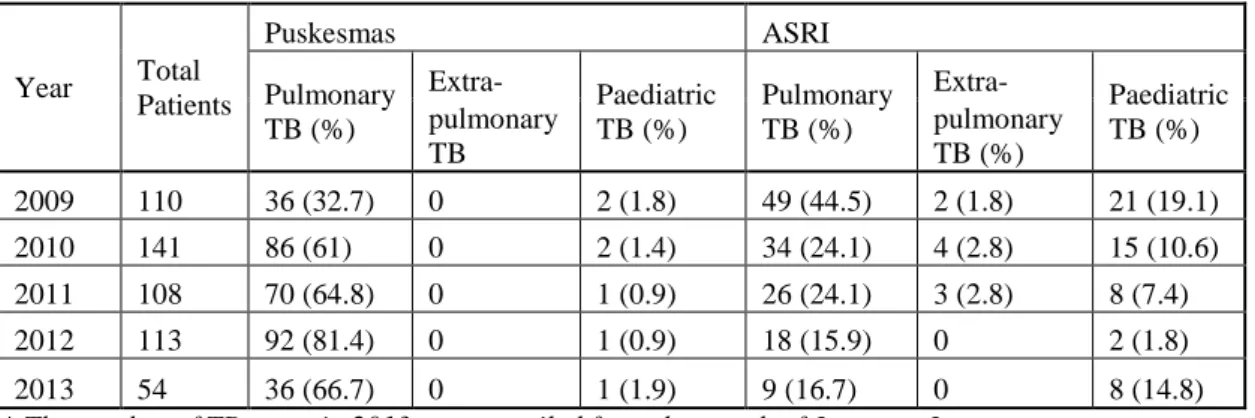
Table 3.1: List of respondents ... 32 Table 3.2: List of codes ... 42 Table 4.1: Distribution of extra-pulmonary and paediatric TB cases based on
health provider at Kayong Utara District, 2009–2013 ... 72 Table 5.1: Key service components in TB control program ... 80
x
List of Figures
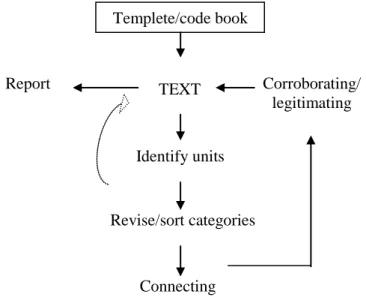
Figure 3.1: Template analysis process ... 39 Figure 4.1: Number of all new TB cases based on health providers at Kayong
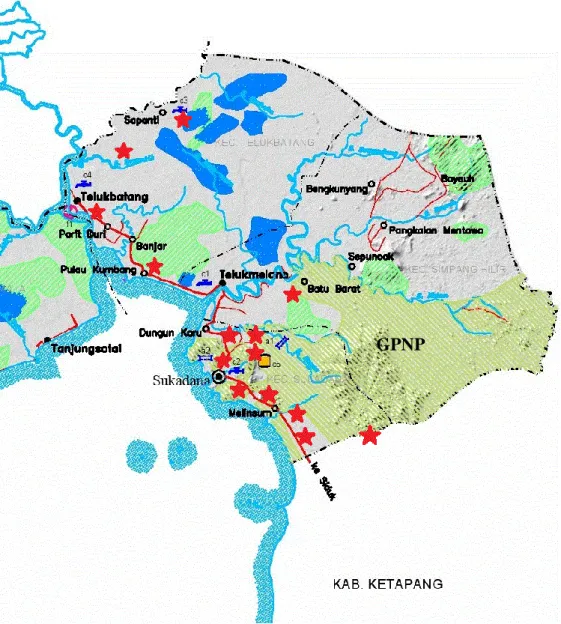
Utara District, 2009–2013 ... 71 Figure 4.2: DOTS Program area of coverage ... 77 Figure 5.1: Government–NGO partnership model at Kayong Utara District ... 80
1 Abstract
Tuberculosis (TB) is one of the major health problems in Indonesia. Scaling up for Public–Private Mix (PPM) approaches have been initiated with the goal of engaging all health providers for TB control. In rural areas of Indonesia, NGOs support the local government health sectors by providing care to the population. They commonly engage in community-based activities. Despite this collaboration, there are few studies on government–NGO partnership for TB control in Indonesia. This study presents a case of government–NGO partnership for community-based TB program in West Kalimantan, Indonesia.
This study is an original study. Qualitative methodology with a case study approach was utilized to describe and explore the partnership. The study aimed to understand how the partnership contributes to TB control in the area. Data were collected through examination of official documents, participant observations, and in-depth interviews. Using a purposive sampling method, 17 respondents were selected for interview. The respondents came from the government, NGO and the community. This study used template analysis to analyze its data. Coding and network building were performed using Atlas.ti qualitative software.
The study reveals that the partnership resulted in improved TB case finding to approximately 38% from 2009–2013, identification of extra-pulmonary and paediatric TB, increased community awareness and wider TB service area of coverage. It may be suggested that the local government should encourage their staff to enhance and strengthen the partnership. The NGO willingness to adopt the
2
national TB guideline was crucial in building a mutual understanding between partners. In limited settings, optimizing the existing collaboration is a better option compared to a hasty decision of expanding the activity. The study argues about the importance of better monitoring and supervision of the achievements of community-based activities. The study points to strong leadership as a significant factor that helps sustain the public–private collaboration in the midst of a high turnover of staff at the primary care level.
3
Chapter 1: Introduction
1.1 Background
According to Global Tuberculosis Report 2013, Indonesia demonstrates the fourth highest incidence of tuberculosis (TB) in the world after India, China and South Africa (WHO, 2013). In 2012 alone, there were approximately 460,000 people diagnosed with TB (WHO, 2013). With its vast geographical variation, Indonesia faces relevant challenges of TB control which raise the need of area specific planning and unique collaboration between actors providing health care. In the eastern part and remote areas of Indonesia, the government capacity is not as strong as in the central—i.e. Java and Bali Islands. Thus, the partnership between local government health offices and non-government organizations (NGOs) in these areas should be considered an opportunity to improve TB control (Basri, Heitkamp & Mehta, 2007). With the nature of its work, NGO usually run its activities in a close proximity with the population it served. It bridges the gap between public health sectors and people in the community. Moreover, NGO is commonly engaged in community-based programs which empower community's participation. There is a general recognition of NGO's role in Indonesia health sector. However, accurate information on the number of NGOs providing health care services—particularly the one engaged in TB-related programs—is unavailable. WHO Country Cooperation Strategy 2007–2011 gave the overall figures range from 8,000 to 13,000 as the approximate number of NGOs working in the health sector in the whole country (WHO, 2008a).
4
As shown in several researches conducted in Indonesia, public–private mix partnerships for Directly Observed Treatment Short-course (DOTS) implementation have been initiated. The focus of such partnerships is to engage Indonesia National Tuberculosis Programme (NTP) with private sectors. Hospital DOTS Linkage (HDL) was initiated as a program to partner NTP with public and private hospitals mostly in Java and Bali Islands (Irawati et al., 2007; Probandari, Utarini, & Hurtig, 2008). A study to explore the potential of engaging private medical practitioners with NTP for TB control was also conducted in Jogjakarta— a city located in central Java (Mahendradhata, Utarini, Lazuardi, Boelaert, & Stuyft, 2007). The HDL and private medical practitioners' engagement initiatives provide knowledge on the effort to increase private sectors involvement for TB control in Indonesia. However, studies which explore the partnership between government sector and NGO—particularly in rural areas outside Java and Bali Islands—are limited.
1.2 Purpose of Study
Acknowledging the gap of knowledge mentioned above, this research aims to describe and explore a government–NGO partnership for TB control in rural area of Indonesia. Through this case, this research will argue the importance of NGO involvement in TB-related activity in rural area of Indonesia. This research will also add knowledge about community participation on TB-related activity through NGOs' program. In response to the need of strengthening partnership with all the available partners, this study will hopefully make a contribution to the effort of TB control in Indonesia.
5 1.3 Research Questions
General:
How does the partnership improve TB control in rural area of Indonesia? Specific:
What is government–NGO partnership for community-based TB program? Who are involved in community-based TB activities and what are their
roles?
What are the areas of collaboration?
What are the factors related to the sustainability of the partnership?
How has the combination of these factors affected TB control in the research area?
1.4 Research Objective
The research objective of this study is to understand the concept of government–NGO partnership for TB control in rural area and identify the factors contributing to its success.
To achieve the objective of this study, qualitative methodology with a case study approach is applied. The study selects a government–NGO partnership for community-based TB program in Kayong Utara District, West Kalimantan as its case.
6
Chapter 2: Review of Literature
Following HIV, tuberculosis (TB) is the second leading causes of death from infectious diseases worldwide (WHO, 2012a). It remains one of the major global health problems. TB is an infectious disease caused by bacteria—
Mycobacterium tuberculosis. The common site of TB infection is lungs
(pulmonary TB) but it can affect any other organs as well (extra-pulmonary TB). It is also possible for a patient to develop multi-sites TB infection which commonly affects the lung plus another organ. The spreading of the disease is through the air; usually it happens when people with pulmonary TB expel the bacteria—e.g. through coughing or spitting. To diagnose TB, the most widely use method is sputum smear microscopy; however, it is limited to pulmonary TB cases only. From public health point of view, it is deemed important to detect pulmonary TB cases since these are the most infectious form of TB (WHO, 2012a). HIV/AIDS bring a new challenge in the effort to control TB. With their low immunity, people with HIV infection have a higher possibility to get TB. If left untreated TB has high mortality rates. Within sputum smear-positive and HIV negative cases of pulmonary TB, approximately 70% died in the course of 10 years (Tiemersma et al. in WHO, 2012a)
According to the guideline of International Standards for Tuberculosis Care (ISTC), treatment for patients who have never been treated for TB requires the minimum duration of six months period (TBCTA, 2006). During the first two months, the patients have to take at least four regimens of drugs daily (initial phase). It is followed by two regimens of drugs every consecutive day or 3 times a
7
week for four months (continuation phase). One of the biggest challenges of TB treatment and care is the development of multi-drugs resistance TB (MDR-TB). MDR-TB is developed as a result of suboptimal regimens and treatment disruptions. Thus, it is largely considered man-made. MDR-TB patients need to undergo 18-24 months duration of treatment which consists of at least 6 months therapy of daily injectable agent.
This review of literature is divided into four sections. The first section provides general overview about TB control—TB initiatives and TB targets. Section two discusses the forth component of Stop TB Partnership—to engage all care providers through Public–Private Mix approaches. Section three argues the importance of NGOs contribution for TB control. Lastly, section four explores community participation for TB activities. At the end of each section, additional information about TB situation in Indonesia is added.
2.1 Tuberculosis Control: An Overview 2.1.1 The DOTS Strategy
In 1993, the World Health Organization (WHO) declared TB as a global public health emergency. Since then several initiatives have been made to improve TB care and control at the national and international level. WHO launched the Directly Observed Treatment Short-course Strategy or DOTS Strategy in 1995. This strategy consists of five components: 1) sustained political and financial commitment, 2) diagnosis using sputum-smear microscopy, 3) regular supply of first-line anti-TB drugs, 4) standardized short-course anti TB treatment given under direct and supportive observation (DOT), and 5) standardized system for
8
recording and reporting the number of cases detected by national TB control programmes (NTPs) and the outcome of treatment (WHO, 2012a). During its implementation from 1995 – 2006, WHO successfully introduced this strategy to almost all countries (WHO, 2012a). In 2005, DOTS strategy has achieved global TB target established for that year; the case detection of 70% of the total estimated sputum smear-positive cases and treatment success of 85% of these cases (Glaziou, 2011; WHO, 2012a).
2.1.2 Stop TB Partnership
In 2006, the Stop TB Strategy was developed as a continuation of the effort to control TB after the term of DOTS Strategy came to an end. The new strategy was established by the Stop TB Partnership—a unique international body which coordinate actors all over the world in fight against TB (Stop TB Partnership, n.d.). The partnership itself was founded in 2001. Currently, around 1100 partners in more than 100 countries contribute in this collective force. The partners include international and technical organization, government programmes, research and funding agencies, civil society organizations (CSOs), NGOs, foundations and private sectors (Stop TB Partnership, n.d.). The goal of the Stop TB Strategy is "to dramatically reduce the global burden of TB by 2015 in line with the Millennium Development Goals (MDGs) and the Stop TB Partnership targets" (WHO, 2012a). The specific targets of the strategy are to reduce the prevalence and deaths due to TB by 50% using 1990 as the baseline by 2015 and to eliminate TB as a public health problem by 2050 (WHO, 2012a). There are 6 components to be addressed to accomplish the targets: 1) pursue
high-9
quality DOTS expansion and enhancement, 2) address TB/HIV, multi-drugs resistance TB (MDR-TB), and the need of poor and vulnerable populations, 3) health care system strengthening based on primary health care, 4) engage all care providers, 5) empower people with TB, and communicate through partnership, and 6) enable and promote research (WHO, 2012a). According to these components, this study highlighted the engagement of all health provider and community empowerment such as mentioned in component 4 and 5 of the Stop TB Strategy.
2.1.3 TB burden of disease: globally versus Indonesia
Based on the latest WHO report on global tuberculosis, 8.6 million people were estimated to develop TB in 2012 (WHO, 2013). Out of this number, 1.3 million died from the disease. Since the majority of the cases are preventable, the figure is unacceptably large. TB burden of disease is commonly measured by incidence, prevalence and mortality. For about a decade, the TB incidence has been going down globally; the rate of decline is measured 2% per year (WHO, 2013). By the year of 2012, TB prevalence showed 37% reduction compared to the 1990 baseline (WHO, 2013). However, it is predicted that the target of 50% reduction of prevalence will not be achieved by 2015. In the contrary, TB mortality rate has already been reduced to 45% (WHO, 2013). Thus, the target of bringing down the mortality rate is considered within reach.
As mentioned in the introduction, Indonesia ranked number four of the five countries with the largest number of TB incident cases in the world. In 2012, Indonesia TB burden of disease in term of incidence, prevalence and mortality
10
rates were: 185 per 100,000 population incidence, 297 per 100,000 population prevalence, and 27 per 100,000 population mortality (WHO, 2013). These number are regularly updated every year by WHO. Nevertheless, there are considerable challenges in providing the most accurate data since these data are largely based on the national surveillance system (WHO, 2013). In countries where many health providers provide services, it is important to capture all the cases treated by these providers—apart from only government provider—as to get the actual number of TB cases (WHO, 2013; Lönnroth et al., 2004). Other challenges are associated with patient's reluctance to seek care or seek care but remain undiagnosed (WHO, 2013). Hence, these two indicators—case detection rate and treatment success rate—are useful to project the activities of TB control. Case detection rate is an indicator that calculates the number of new and relapse TB cases that were notified by NTP divided by the incidence of that year. There are categories of definition for treatment outcome of TB which will not be discussed in this section. Nevertheless, the commonest indicator used to project the outcome is treatment success for new smear-positive TB cases. Although nationwide Indonesia has achieved the global target of case detection rate >70% in 2011 and treatment success rate >85% in 2000, it does not mean TB is no longer an issue (WHO, 2013). With a large population disperse in many islands; TB achievements differ between 33 provinces of Indonesia. The next section explores the topic of Public– Private Mix (PPM) as one of the Stop TB Strategy components to engage all care providers for TB control. Through examples from different countries, the discussion aims to compile information about what has been done so far in regard
11
of PPM approaches in addition to the lessons that can be learnt from the case of PPM in Indonesia.
2.2 To Engage All Care Providers: Public–Private Mix Approaches 2.2.1 PPM rationales
It is acknowledged that in many poor-resources countries with a high TB-burden, varying types of health care providers provide health services. In one setting private commercial sectors such as private hospitals may dominate the services; in others there are NGOs or private providers such as health clinics run by general practitioners or nurses. Many of these providers are unregulated and not linked to NTP's public sectors. The failure to engage these providers may hamper the effort to control TB. It may result in diagnosis delay, inappropriate or incomplete treatment, and most importantly it will increase TB drugs resistance— one of the grave problems of TB treatment (WHO, 2010). From patient's point of view, unregulated TB care may create unnecessary financial burden related to diagnostic examination and treatment costs and various consultations with several providers. These were the backgrounds which initiated PPM approaches. The Stop TB Partnership subgroup on Public–Private Mix was created on 2002. Since then, 73 countries has reported data regarding PPM activities to WHO (WHO, 2013). Project evaluations have shown that PPM approaches could enhance case notification from 10 to 40% of the total notifications. This significant contribution underlines the importance of engaging all care providers to achieve the goal of TB control and eradication.
12 2.2.2 PPM approaches
The engagement of public and private providers with NTP should be planned based on the health care situation of each country. It is possible that a successful approach in one country may not produce the same result in another country. Based on PPM Toolkit developed by WHO, these steps need to be taken to ensure proper implementation of PPM approaches (WHO, 2010). Before engaging health care providers in such initiative, a national situation assessment is required; it determines the need and possible way of conducting PPM approaches. Next, it is crucial to create a PPM focal point at the central level to coordinate and facilitate the implementation. Operational guidelines need to be put in place to provide clear guidance about roles and responsibilities of each partner. Proper preparation, mapping of provider, advocacy and communication are also needed when the approaches are being implemented locally. Lastly, supervision is important to monitor the progress of such activities.
Though the term itself suggests collaboration between public and private sectors, PPM approaches may also include collaboration between public and public sectors. Global TB Report (WHO, 2013) and several studies provide information about various way of PPM implementation. It covers a range of public providers such as public and teaching hospitals in Indonesia and India (Probandari, Utarini, & Hurtig, 2008; Ambe et al., 2005); also, private for-profit providers such as private medical practitioners in Vietnam and Pakistan (Quy, Lan, Lönnroth, Buu, Dieu, & Hai, 2003; Ahmed, Ahmed, Laghari, Lohana, Aji, & Fatmi, 2009), allopathic practitioners in India (Murthy, Frieden, Yazdani, &
13
Hreshikesh, 2001), a mining company in Indonesia (Ardian et al., 2007), and pharmacists in Vietnam (Lönnroth, Karlsson, Lan, Buu, & Dieu, 2003). In countries where drugs are loosely regulated, pharmacists play a significant role in providing medical advices—including treatment for TB (Lönnroth, Karlsson, Lan, Buu, & Dieu, 2003). Some examples of not-for-profit organizations involvement could be found in Bangladesh and South Africa (Ullah, Newell, Ahmed, Hyder, & Islam, 2006; Kironde & Neil, 2004). There were also cases where NGOs played a role as intermediary organizations for PPM implementation. In India, three NGOs worked together with India National TB Programme to develop referral and information system tools, sensitize providers about PPM, conduct trainings and field supervision (Ambe et al., 2005). 'Sun Quality Health' (SQH) is the brand name of social franchise scheme developed by an international NGO in Myanmar (WHO, 2010). It provides quality-controlled and highly subsidized TB diagnosis and treatment through engaging licensed general practitioners (GPs) in the scheme. In return of the services provided by GPs, SQH gives benefits to the partnering GPs such as trainings, leaflets and signboard to be used at GPs' clinics, and access to DOTS branded patient kits which contain TB drugs and supplies (Lönnroth, Aung, Kluge, & Uplekar, 2007). In the case of Timor Leste, after the war had ended a local NGO took the lead to coordinate Timor Leste National TB Programme (Martin, Kelly, Grace, & Zwi, 2006). Cross cutting intervention which addresses TB-associated financial barriers and poverty reduction was introduced in Peru through socio-economic interventions by social security organizations (Rocha et al., 2011).
14 2.2.3 PPM in Indonesia
According to Global TB Report (WHO, 2013), in 2012, every fourth case of TB in Indonesia was notified by non-NTP providers. This fact underlines the importance of PPM as one of the approach that might effectively support TB control activities in Indonesia.
Indonesia started its first PPM approaches in 2000 through Hospital DOTS Linkage (HDL) project (Kemenkes, 2011; Irawati et al., 2007). This project aimed to increase the implementation of ISTC guideline amongst hospitals. Jogjakarta, a city in Central Java, was selected as a pilot study for this project. However, up to the year of 2011, only 38% of the total hospitals in Indonesia were participating in HDL and providing TB treatment according to ISTC (Kemenkes, 2011a). Based on Kemenkes report on PPM (2011a), approximately 40% of TB patients' respondents chose hospital and private medical practitioners as their first encounter to health providers. Considering this fact, the HDL achievement is perceived to be low. Recommendations were made to scale up hospitals' participation through policy and regulation. Several studies have been conducted to explore the challenges of HDL project. One study revealed the importance of commitment, good system and communication (Probandari, Utarini, & Hurtig, 2008). Further, it explored clinicians' reluctance to follow ISTC regimen; they argued TB treatment should not be standardized between hospital and primary health centre (Probandari, Utarini, & Hurtig, 2008).
Other PPM approaches that have been launched include the engagement of health clinics at government's institutions—e.g. police department, prisons, private
15
medical practitioners, health facilities run by private companies, NGOs and CSOs (Kemenkes, 2011a). Despite the slow progress and various challenges, some approaches showed better achievement than the other. Furthermore, for areas with adequate health facilities and strong support of NTP, improving diagnostic quality within DOTS services and strengthening the health system is considered more rational than engaging all providers under the umbrella of PPM (Ahmad, Mahendradhata, Utarini, & de Vlas, 2011; Mahendradhata, Utarini, Lazuardi, Boelaert, & Stuyft, 2007). This emphasizes the need to develop the best solution not only for a country as a whole but specifically for different area of services. The next section focuses on NGO involvement for TB control as part of PPM approaches. It discusses the potential role of NGOs in supporting TB activities— especially in rural areas of Indonesia.
2.3 NGOs Involvement for TB Control: Why It Matters? 2.3.1 Roles of NGOs in TB-related activities
In poor-resources and developing countries, NGOs may dominate as the only few available health providers. There are several benefits to partner with NGOs for TB-related activities due to its nature of work. NGOs commonly fill in the gap of health services by providing care in areas which are less covered by government sectors such as remote places (Zachariah, Teck, Harries, & Humblet, 2004), conflict zones (Martin, Kelly, Grace, & Zwi, 2006), refugee camps (Minetti et al., 2010), or slum dwellings (Ambe et al., 2005; Rangan, Ambe, Zallocco, & Porter, 2003). NGOs are noted to have access to marginal communities and vulnerable populations; it works in close proximity with the people it served.
16
Greater flexibility can also be found in NGOs work; it enables NGOs to create or modify its activities according to the need (WHO, 2010).
Based on NGO's strengths and resources, NGOs roles for TB care and control can be divided into: 1) service delivery, 2) health promotion and information exchange, 3) policy setting, 4) resource mobilization and allocation, and 5) monitoring quality of care and responsiveness (WHO, 2010). Bangladesh presents one of the best examples of extensive collaboration between NTP and NGOs which cover the whole country. In 1995, the Memorandum of Understanding (MOU) between the government and six NGOs was established. As Ullah, Newell, Ahmed, Hyder, & Islam (2006) summarized in their study, the area of collaboration includes policy, program implementation, case finding and case holding, training, drug supply, monitoring and supervision, and behavioural change communication. As a result of this collaboration, since 2002, NGOs and private sectors are responsible for more than half of the entire NTP activities in Bangladesh—both in urban and rural area (Ullah, Newell, Ahmed, Hyder, & Islam, 2006).
2.3.2 Government–NGO partnership for TB achievements
The partnerships between government and NGO produce several achievements. The cases of India, Bangladesh and Timor Leste showed gradual improvements in term of DOTS population coverage, case detection rate of new smear-positive cases and treatment success rate (Ambe et al., 2005; Ullah, Newell, Ahmed, Hyder, & Islam, 2006; Martin, Kelly, Grace, & Zwi, 2006). However, Bangladesh experience also showed that the partnership with NGOs alone may not
17
be sufficient to improve case detection rate. The partnership managed to increase the case detection rate from 24% to 32% in the span of four years. But, compared with the claimed DOTS population coverage of 95%, the gaps between coverage and case detection revealed problem of access and insufficient coordination with another large health provider—private practitioners (Ullah, Newell, Ahmed, Hyder, & Islam, 2006).
Apart from the 'measured' achievements such as the indicators mentioned above, the collaboration with NGOs produces another accomplishment as well. Increased community awareness and participation for TB control was improved partly because of the work of NGOs within close proximity to the communities (Ullah, Newell, Ahmed, Hyder, & Islam, 2006; Rangan, Ambe, Zallocco, & Porter, 2003; Zachariah, Teck, Harries, & Humblet, 2004). It tackled issues of TB stigma and misconception, provided proper knowledge about TB disease and treatment, and encouraged community member participation to eradicate TB in their areas.
2.3.3 Government–NGO partnership for TB challenges
The above discussion shares several accomplishment of engaging NGOs as one of the actors for PPM approaches. Nevertheless, there are challenges encountered by the partnership. Thus, this sub-section reviews findings from various studies which explored limitations and problems of such activities.
Kironde & Nasolo (2002) explored the barriers to NGO involvement in community-based TB treatment in South Africa. The most prominent issue arose in the study was lack of financial resources. It resulted in inability to sustain the
18
activities. Although the NGOs received funding from the government, the amount was considered insufficient. NGO's dependency on external funding was also found in a study in Bangladesh (Ullah, Newell, Ahmed, Hyder, & Islam, 2006). Other barriers acknowledged include issue of payment of volunteer, competition, collaboration, and human resource limitations (Kironde & Nasolo, 2002). The study discussed two different perspectives related to issue of collaboration: among different NGOs and between NGO and government health sector. In the case of South Africa or Bangladesh where many NGOs provide services, lack of collaboration often creates duplication of services, increases competition to get the money from funding agencies, and in the end weaken the actual effort to control TB. Lack of collaboration between NGO and government may also result in duplication of activities and lack of mutual trust which in turn hinders the continuity of the partnership (Ullah, Newell, Ahmed, Hyder, & Islam, 2006). Thus, communication is crucial to counter any misunderstandings arise during the process of collaboration. Lack of uniformity to provide TB standard of treatment and quality of care between different NGOs may also counteract NTP's goal to control TB (Ullah, Newell, Ahmed, Hyder, & Islam, 2006). From public health point of view, it is important for a country to adopt the same standard of treatment as to reduce the chance of TB drugs resistance and ensure treatment success (WHO, 2012).
2.3.4 NGO activities in Indonesia
NGOs presence has been rooted in Indonesia since the late 1970s. During those times, NGOs mostly engaged in socioeconomic related projects. After the
19
fall of President Suharto in 1998, there was an increase in the external funds granted through NGOs. It resulted in the expansion of NGO's works and opened the opportunity for many other NGOs to start its activities in Indonesia (WHO, 2008a). Though NGOs contributions in health sector has been acknowledged, the exact number of NGOs providing health services remains unknown, so is the number of NGOs participating in TB-related activities. WHO Indonesia Country Cooperation Strategy (WHO, 2008a) estimated approximately 8,000 to 13,000 NGOs are officially registered. It roughly divides the NGOs into three broad categories: large international NGO, local grassroots NGOs and NGOs associated with government of Indonesia through its ministries (WHO, 2008a).
According to the Indonesia Ministry of Health report on PPM activities (Kemenkes, 2011a), in 2010 there were 50 partners registered as members of
Gerdunas (Gerakan Terpadu Nasional or National Integrated Movement)—a
cross-sector movement to accelerate TB control measure. Out of the 50 partners, only 32 were active. These partners consist of government bodies, educational institutions, professional institutions, foundations, religious organizations and NGOs (Kemenkes, 2011a). Limited information regarding NGOs activities— particularly in the rural areas—create a gap of knowledge of NGOs involvement for TB control in Indonesia which this study tries to fill.
20
2.4 Community Participation for TB activities 2.4.1 Community involvement for health
People participation for health can be dated back since the Declaration of Alma-Ata in 1978 (WHO, n.d.). Community involvement was recognized as the essential element for primary health care and the work of many public health interventions. Nevertheless, the health reform under Millennium Development Goals focuses more on the technical aspect of health system which resulted in less attention to community participation and social values (WHO, 2008b). The ongoing challenges posed by major epidemics and the role of civil society to tackle some of these issues brings back the awareness of people contribution. It exposes health system limitations in term of inequality of coverage and access to health services. The existence of basic health services in certain administrative area can not be used to justify the availability of health care especially when it is barely accessible. Thus, greater involvement of communities and civil society organizations might contribute to the various function formally held by government health sectors. However, as mentioned in WHO report about community involvement for tuberculosis care and prevention (WHO, 2008b), the 'partnership' or 'participation' should refer to the context of shared responsibilities rather than replacing the roles of government health sectors.
2.4.2 Linking community-based TB activities with the work of NGOs
Previous section discusses the benefits of engaging NGOs in TB activities to provide wider coverage and achieve higher accomplishment. These goals can be achieved particularly because NGOs have the capability to reach remote areas and
21
marginalized groups. In their works, several NGOs collaborate with local communities. By doing so, they can understand the local contexts better while at the same time empowering the communities they served. Regardless recommendations on community engagement in TB activities through PPM, the implementation of it remains weak. The operational guideline to integrate community-based TB activities into the work of NGOs was developed to support the actors involved in these activities—NTPs, NGOs, and CSOs (WHO, 2012b). The underline concept is to include TB activities into the existing community-based projects run by NGOs or CSOs.
There is a broad range of community-based TB activities that can be found in the literatures—with or without the intermediary support of NGOs or CSOs. Some of these examples include "TB club" in Bangladesh, Ethiopia and Nicaragua (WHO, 2008b; Demissie, Getahun, & Lindtjørn, 2003; Macq, Solis, Martinez, & Martiny, 2008), TB sensitization through religious gatherings in Indonesia and Bangladesh (Amiruddin, Ibnu, & Rahman, 2014; Rifat, Rusen, Mahmud, Nayer, Islam, & Ahmed, 2008), and community involvement in primary health center's activities as community health volunteers—known as kader in Indonesia and
barangay health workers in the Philippines (WHO, 2008b). Community-based TB
activities can also be initiated in particular working groups such as shown in South Africa among the farm workers (Clarke, Dick, Zwarenstein, Lombard, & Diwan, 2005).
Similar to the previous discussion on the potential benefits of government– NGO partnership, community engagement may improve TB perception among
22
community members. It reduced TB stigma and discrimination, increased awareness and behavioural changes, and facilitated TB treatment activities (Demissie, Getahun, & Lindtjørn, 2003; Macq, Solis, Martinez, & Martiny, 2008). Moreover, it helps the identification of TB suspected cases through active case finding (Amiruddin, Ibnu, & Rahman, 2014; Clarke, Dick, Zwarenstein, Lombard, & Diwan, 2005). These activities give community health volunteers a sense of pride as they are able to contribute to the well-being of their family and community (WHO, 2008b). While incentives are provided, it allows volunteers to support their family income (WHO, 2008b).
23
Chapter 3: Methodology
This study is based on primary data collected through field work. Qualitative methodology with a case study approach was selected to best answer the research questions. The data consist of documents, participant observations, and in-depth interviews. For in-depth interviews, 17 respondents were purposefully selected. The interviews data were transcribed and analysed using a template analysis approach. Qualitative data analysis software, Atlas.ti, was utilized for coding and network development. Triangulation between sources of evidence was performed to ensure the validity of the information received. 3.1 Epistemology
This study is based on a constructionist stance, implying that social reality is constituted by meanings people constructed through social interaction (Thomas, 2004). The understanding can be achieved through interpretation of the reality in its context (Thomas, 2004). Thus, the knowledge generated in this study is the interpretations which arise in the course of the interaction between researcher, respondents and the people observed at the study site.
3.2 Case Study Approach
A case study approach was selected since it provides a method for in-depth exploration of an issue—in this case a partnership—through one or more cases within a bounded system (Stake, 1995). This approach helped to define government–NGO partnership for TB control in the research area, described the actors involved and their roles, and identified factors which contribute to sustainability of the partnership.
24
Yin (2009, p.47-53) provides rationale for a holistic single-case design. Following this design, this study aims to provide a deep description of a case that represents typical situation where the findings can provide information about the experiences of similar cases (Yin, 2009). Looking from this point of view, type of activities conduct by government–NGO partnerships in Indonesia are generally differs; it largely depends on the type of NGO and its objectives, local government capacity, and location of the partnership. However, the factors contribute to sustainability of partnership may represent similarity and can be induced to other cases of government–NGO partnership in Indonesia. This study could also be seen as a longitudinal case; it provides opportunity to study the case at two different points of time—before and after the partnership. During this interval, certain conditions that might change over time can be observed (Yin, 2009).
3.3 Theoretical Framework 3.3.1 Theory development
Yin (2009) underlined the importance of theory development in case study approach. The theory provides guidance to determine what data to collect and what strategies to use for analysis (Yin 2009). It reminds researchers about the single focus that persuade them to conduct the study (Creswell, 2007). Review of literature provided abundant information about government–NGO partnership and community-based TB activities. Thus, I utilized the information gathered for the development of this study theory and propositions.
Zafar Ullah, Lubben, & Newell (2004) in their study produced a generic model for partnership in TB control. The model links essential service components
25
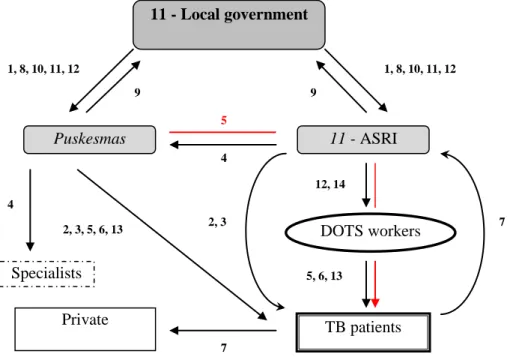
which are needed to deliver quality care and the partners involve in the collaboration or partnership. The study identified 16 key service components for TB programmes. These components are:
1. Provision of policy guidelines
2. Provision of quality diagnostic services 3. Provision of laboratory facilities
4. A referral mechanism 5. Provision of DOT 6. Late patient tracing
7. Decisions on levels of fee for services 8. Provision of supplies and logistics
9. Recording and reporting of treatment outcomes 10. Monitoring and supervision of service activities 11. Coordination
12. Training
13. Health education
14. Community mobilization 15. Quality assessment of diagnosis 16. Feedback
3.3.2 Study propositions
Based on the prior knowledge, this case study will identify service components available in the existing partnership and develop a model of partnership in the study area. Further, the case study will explore the factors which
26
support and hinder the partnership. The findings of these factors will lead to the question of how the partnership affects TB control in the area. As shown in the study in Bangladesh (Ullah, Newell, Ahmed, Hyder, & Islam, 2006), India (Ambe et al., 2005) and Indonesia (Ardian et al., 2007), this case study expects to discover improvement in TB national target achievements as the result of partnership. In addition, the study anticipates finding increased community awareness and participation as the result of community-based TB activities which were initiated by the NGO.
3.4 Defining the Case
As an instrumental case study, the selection of the case has to focus on how much insight and understanding would be gained to answer the research questions (Stake, 1995). However, Stake (1995) also suggests researchers to consider field work limitation such as time and access. In response to this, he recommends researchers to pick a case which is easy to get and where the people involve show openness to the idea of study (Stake, 1995). Following these strategies government–NGO partnership for TB control at Kayong Utara District was selected as a case. The case location at rural area in West Kalimantan corresponded well to the objective of the study—to understand the concept of government–NGO partnership for TB control in rural area and the factors related to its success. The partnership at Kayong Utara District also offered an interesting case of partnership with the involvement of community-based TB activities in a relatively small scope context. It was doable for a small scale research considering the limitation of time, access and funding. Lastly, during preliminary visit the
27
district government and NGO expressed positive responses toward the proposal to conduct this study in their respective area.
3.5 Description of the Setting
The study was conducted in Kayong Utara District, West Kalimantan Province. As part of the government administrative proliferation, Kayong Utara was detached from the originally Ketapang District and established as a new district in 2007 (Badan Pusat Statistik, 2013). It comprises of approximately 4,568.26 km2 landmass—including 103 islets located at Karimata Strait in the west part of the district. According to Badan Pusat Statistik (2013), the total population of Kayong Utara District in 2012 was 99,495 inhabitants with the population density approximately 22 persons/km2. The district is divided into 6 sub-districts: Sukadana, Simpang Hilir, Teluk Batang, Seponti, Maya Island and Karimata Islets. The sub-districts are further divided into 43 villages (Badan Pusat Statistik, 2013).The population average income is approximately 76 USD per month (Badan Pusat Statistik, 2009). Water transportation is the commonest transportation use by the majority of population; it connects Kayong Utara District with other villages, districts and Pontianak City—the capital city of West Kalimantan Province. The land infrastructure connects Kayong Utara with other districts in West Kalimantan; however, many are not in a good condition.
3.6 Field Work
I spent two and a half years (2006–2009) fulfilling my government mandatory service as a general practitioner in one of the hospitals in West Kalimantan. During those times, I heard about Alam Sehat Lestari's (ASRI) work
28
and got acquainted with ASRI's cofounder. In 2009, I got a chance to visit the area and went for trekking at Gunung Palung National Park (GPNP). I briefly stopped by at ASRI clinic and saw its activity.
According to Creswell (2007, p.125), it is beneficial to identify a "gatekeeper"—an insider in a cultural group—when starting a case study. Hence, when designing this study, the connection with ASRI's cofounder was re-established and additional information about ASRI's programs were gathered. When the proposal to conduct a preliminary visit was offered, the contact agreed to take me to Kayong Utara District Health Office and introduce me with the associate officers.
3.6.1 Preliminary visit
Preliminary visit was conducted on 2–15 March 2013. During this period, I built rapports with Kayong Utara district health officers and ASRI staff. I introduced myself to the head of DHO, Kepala Seksi P2M (Communicable Diseases Center Section Officer), and Wasor TB (District Tuberculosis Officer) at Kayong Utara DHO and explained my plan to conduct a research in the area. The request for permission to conduct the research was submitted to DHO and ASRI and granted. I also spent my time to understand ASRI programs by attending daily morning meeting and talked with ASRI staff. Specifically, I allocated time to gain more knowledge about ASRI DOTS Program by observing the activity of TB doctor, DOTS coordinator and DOTS workers. I followed ASRI doctors during TB patients' consultation, observed DOTS coordinator managing TB data, and accompanied a DOTS worker during her home visits. I took time to understand
29
how TB data is collected at government sector and ASRI. Issues related to TB data input were acknowledged and discussed extensively with district TB officer at DHO and DOTS coordinator at ASRI. I also gained the access to related documents to the partnership such as Memorandum of Understanding (MOU) and referral letters. The preliminary visit was coincided with several research related meetings such as TB monitoring and evaluation meeting at DHO and DOTS workers monthly meeting at ASRI. I took this opportunity to participate as a non-participant observer.
All of these observations, formal and informal discussions, and meetings with the actors involve in TB control at the study area had provided valuable insight into the context of partnership; it served as a backbone for theoretical framework development and refined research questions. Apart from that, the second visit—from the last visit in 2009—had helped me to see the changes that took place in the district within the last four years. Despite remaining challenges, the growth of Kayong Utara as a new district has brought improvements in term of infrastructures, official buildings and medical personnel.
3.6.2 Data collection in the field
After a consultation with DHO and ASRI staff, it was decided that the research to be conducted after Idul Fitri Holiday—the biggest Muslim celebration following Ramadan—which fall in the middle of August that year. I went back to the field and spent the time for data collection from 18 August–22 September 2013. During these five weeks, I rented a room at one of the ASRI's houses for staff at Sukadana—the capital town of Kayong Utara District. I was fully aware
30
about the context of the research which would require a fair amount of information from both government and NGO sector. Thus, since the start of data collection I was careful not to be associated with ASRI and repeatedly explained that I am an independent researcher from a university. I avoided using ASRI's car to go to government offices (DHO office and Puskesmas/community health centre). The DHO office, ASRI clinic and Sukadana Puskesmas are located within close proximity to each other, to visit these places I preferred to go by myself using a bicycle. I also hired local community member as my private motorcycle driver to take me around for visits to Puskesmas outside Sukadana. The data collected during this period consist of documents, participant observations and in-depth interviews. The interview's records were transcribed within 48 hours to enable me explored emerging themes and double checked queries information. 3.7 Ethical Consideration
3.7.1 Informed consent process
I prepared the informed consent draft by following the example given by Creswell (2007, p.124). This draft was reviewed by my research supervisor. Upon approval, I translated the draft to Indonesian language. Second opinion from an Indonesian friend was requested to ensure proper translation and correct usage of words. Following recruitment of respondents, I explained verbally the purpose of the research, the right of the respondents not to answer particular questions without being questioned, and research confidentiality. The respondent's participation was based on voluntarily basis means no compensation or incentive were provided. These were the items mentioned on the written informed consent
31
form. After the explanation, I asked respondents' willingness to participate in the study by signing the form.
3.7.2 Confidentiality
Having the experience of work in a similar context in Indonesia, I understand one of the biggest challenges of conducting this study was how to get the trust of the respondents so to speak freely. Since the study aimed to explore the partnership, it was important for respondents to share their point of views without being afraid to be exposed and create 'problems' for their workplace in future. This issue was especially crucial since the area of study is relatively small—a place where people know their neighbours well. The issue of confidentiality was discussed thoroughly during verbal informed consent. I underlined my intention not to use any name to indicate respondents' relation to particular comments or discussions. As a result, I tried my best to carefully present the findings so the connection between the respondent who provided the information will remain anonymous. Any 'out of the record' information shared during the interviews was not recorded and mentioned in this study.
3.8 Selection of Respondents
The selection of respondents for this study was based on theoretical sampling (Rice & Ezzy, 1999, p.48). The field knowledge gathered during preliminary visit combined with the theoretical framework provided guidance in the selection process. From this point of thinking, I tried to ensure the complexity of the partnership was being represented.
32
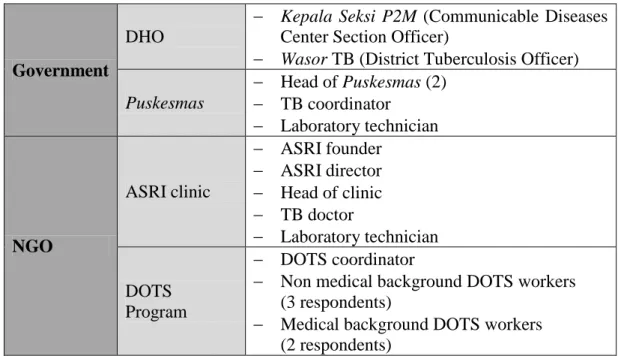
The partnership in this study was comprised of government sector, NGO and DOTS Program. The respondents were purposefully selected based on their role, knowledge and length of involvement in the partnership. A total number of 17 respondents were interviewed in this study. Table 3.1 provides respondents' information based on their place of work and position.
Table 3.1: List of respondents
Government
DHO
Kepala Seksi P2M (Communicable Diseases Center Section Officer)
Wasor TB (District Tuberculosis Officer)
Puskesmas Head of Puskesmas (2) TB coordinator Laboratory technician NGO ASRI clinic ASRI founder ASRI director Head of clinic TB doctor Laboratory technician DOTS Program DOTS coordinator
Non medical background DOTS workers (3 respondents)
Medical background DOTS workers (2 respondents)
As described in detail on findings, DOTS Program is a program run by ASRI. However, as the key element of partnership, I felt the need to explore the program by including a fair amount of respondents in the interview. One medical background DOTS worker respondent worked at government sector as a nurse. However, during the study she was classified as a DOTS worker for her role in the partnership.
33 3.9 Data Collection
Case study could explore broad range of issues and give voices to emergent topics on real life situation (Flyvbjerg, 2011). To achieve this goal, Yin (2009) emphasized the importance of multiple data collection which could enhance the validity and reliability of a case study. He further concluded by not doing so "the invaluable advantage of the case study strategy will have been lost" (Yin, 2009).
Critic has been raised to the notion of case study as a methodology which contains bias toward verification due to researcher's pre-conceived point of views (Flyvbjerg, 2011). Elaborate data collection as multiple sources of evidence will serve the ground for the development of 'converging line of inquiry'—a process of triangulation and corroboration (Yin, 2009). This 'safeguard' will help researchers reduce the bias which might arise during the study. Furthermore, Flyvbjerg (2011) noted researchers who have conducted a case study generally report after data collection phase they realized that their pre-conceived views were wrong. It led them to revise their hypothesis on essential points (Flyvbjerg, 2011). This information implied the nature of a good case study; the finding should be derived from triangulation of multiple sources of evidence rather than pre-conceived ideas of the researcher. It also showed, when conducted properly, case study is a sound methodology with its own strength to be used in research.
Based on the understanding described above, this study collected data from documents, observations and interviews as its sources of evidence.
34 3.9.1 Document
There were two types of documents collected for this study: documents related to the context of partnership and archival records. Memorandum of Understanding (MOU), referral letters, invitation letters and DOTS worker's contract are documents which were significant to the context of partnership. Archival records were subtracted from DHO and ASRI TB patients' register. All of this information was mostly gathered during preliminary visit. From it, I obtained valuable information about the initial concept of the partnership and TB status in the study area. TB patients' register provided insight about TB situation in the district before and after the partnership. Demographic information, TB patient's characteristics and TB treatment categories were some of the information which was retrieved from TB patients' register and gave description about TB status and TB control activities in this district.
As noted by Yin (2009), documents are useful to corroborate and augment evidence from other sources. However, there will be times when documents produce contradicting information rather than corroborating. In this situation, Yin (2009) suggested researchers to pursue the problem and make further inquiry into the topic. As mentioned earlier, during preliminary visit, I realized there were several problems related to archival records. I discovered DHO and ASRI had different standard of recording TB patients' data, ASRI TB patients' data were not properly inputted into DHO data, and there was possibility of discrepancy between DHO and Puskesmas data. These problems made me aware of the level of accuracy of the archive. Though the archival records could be highly relevant, it is
35
important to ascertain how the records were produced and its accuracy (Yin, 2009). I discussed this matter thoroughly with person in charge of data recording at DHO and ASRI. I tried my best to clean up the data by converging ASRI's register into DHO's and removing duplicate calculation. Upon arrival in Japan, I notified my research supervisor about this issue. The quantitative data presented in this paper was the result of consultations and has been agreed by the supervisor. 3.9.2 Participant observation
Observation is one of the basic sources of information which closely relate to field study. Depending on the study, researcher may choose to be perceived as outsider or insider—or somewhere in between (Ulin, Robinson, & Tolley, 2005; Yin, 2009). In participant observation, researchers make effort to get closer by performing variety of roles during the process of observation (Yin, 2009). This attempt hopefully will result in acknowledgement and trust from the people in the study area which is crucial to understand the different layers of the case. This was the stance that I took during preliminary visit and data collection period. I was engaged in several activities—some were not research related— at DHO and ASRI. I visited DHO office several times to introduce myself and got acquainted with DHO staff particularly under Communicable Disease Centre office. This introduction has helped to create comfortable atmosphere especially at government office where bureaucracy is usually strong. At ASRI, I was participating at regular morning meetings where I could hear day to day updates and challenges. I also offered my help as a volunteer at ASRI's other programs—
36
aside from DOTS Program—on my free time. I visited 3 Puskesmas, joined DOTS workers' meeting, and accompanied a DOTS worker during her house visits.
I started to feel the acceptance of the people at the study site when they included me at their out of work activities such as an open house ceremony at district TB officer, a wedding celebration or an invitation to spend after work hours with ASRI's team. It was also apparent that after some time people did not hesitate to speak freely in front of me concerning their work related problems. Nevertheless, I was aware about the pitfall of participant observation. Yin (2009) warned against the potential bias produced by this activity. It can limit researchers flexibility to work as external observer and may at times creates conflicting interest when researchers have to assume certain position or advocacy role at the study area (Yin, 2009). The participant observer may also has the tendency to become supporter of the group or organization being studied (Ulin, Robinson, & Tolley, 2005; Yin, 2009). This issue was particularly true since this study involved two organizations. It was important for me to keep my neutrality for both side of the partners—government and ASRI. Thus, as suggested by Creswell (2007), I developed a habit of jotted down reflective notes during the observation and transferred it into word files after the observation finished. Most of the observation word files were produced on the same day of the activity to maintain as much information as possible and keep the nuances of the situation observed. While writing these files, I had the opportunity to reflect on the observations in relation with my research questions and double check the information gathered with other sources of evidence. During DOTS workers' meeting and DOTS
37
worker house visits, I tried to limit my participation in the discussion when it was deemed unnecessary. One of the house visits that I followed was at Seponti sub-district. Due to access difficulty to reach this area, I had to spend the night at the DOTS worker's house. I seized the opportunity to visit Seponti Puskesmas, conducted interview with the head of Puskesmas and the DOTS worker and observe the challenges of health service at remote area of Kayong Utara District. 3.9.3 In-depth interview
Through in-depth interview, I got the opportunity to explore people knowledge and understanding about the partnership. Ulin, Robinson, & Tolley (2005, p. 81-89) provided practical guidance toward in-depth interview such as tips how to frame qualitative questions and stages of interview. Yin (2009) also underlined the need to follow researchers' line of inquiry according to their case study protocol. However, the unbiased manner needs to be carried out when the actual questions are being asked (Yin, 2009). The interview protocol was developed before I went to the field study following the example given by Creswell (2007, p.136). It served as a reminder for me to follow the line of inquiry while at the same time allowed me to frame the questions in different forms depending on the respondent (Crabtree & Miller, 1999). The flexibility of in-depth interview protocol also gave me chances to explore new themes which are not covered in the guideline (Matthews & Kostelis, 2011; Thomas, 2004).
Prior to the arrival at the field site, I kept in contact with some potential respondents through emails and phone messages. I expressed my interest to interview them. On the first week of the field study, I formulated list of interview
38
schedule based on the availability of respondents. Most of the interviews were conducted in the offices at DHO, ASRI clinic or Puskesmas. Two interviews were conducted at respondent's houses. Approximately each interview lasted for 45 minutes. All interviews were conducted in Indonesia language. Several respondents used local dialect but I did not have difficulty to understand the context of discussions. All interviews were recorded; verbatim transcription was produced on the same day of the interview or under certain circumstances in less than 48 hours after the interview. The short gap between an interview and data transcription allowed me to double check unclear comments and do triangulation with other respondents or other sources of evidence. The files were labelled according to the initial name of respondent, place of work, date of interview and number of interview (Creswell, 2007). Further, a special code label was created to keep the anonymity of respondents.
3.10 Data Analysis 3.10.1 Data management
Data analysis is an iterative process which started as soon as data collection begins (Creswell, 2007; Stake, 1995; Ulin, Robinson & Tolley, 2005). Creswell (2007) described it as a spiral image where researchers are expected to move into an analytic circles rather than fixed linear approach. In qualitative study, data analysis usually starts with data management. In this early phase, researchers organized their data by writing field notes, transcribing interviews records, labelling and storing (Creswell, 2007). This study was conducted by a sole researcher; acknowledging the challenges of data management, I attempted to